

Meet Sunday Blessings Auckland, the community-driven initiative combating food insecurity

It’s always a good time to think about what you could be doing to give back to the community and those in need. It can, however, occasionally be a little confusing trying to figure out what the best use of your funds or your time will be. In this new series, we’re highlighting initiatives that we deem worthy of your support. First up is Auckland community-driven food service Sunday Blessings

The philosophy
Sunday Blessings Auckland was formed in 2018 to address its founders’ commonly held belief that no one should have to rummage through a rubbish bin for food. That same year, a report by the United Nations, Food and Agriculture Organization, and the World Health Organization found that 14 percent of New Zealanders experience regular food insecurity. This figure is likely to have grown significantly in the aftermath of Covid-19, and Sunday Blessings Auckland aims to combat this by providing nourishing, hot meals to those in need.

Who they are
Sunday Blessings Auckland was founded by Laurie McLeod, Audrey Van Ryn and Danielle LeGallais, and involves a rotating roster of kind volunteers who get involved every week. 

What they do
Utilising community surplus food and volunteers, Sunday Blessings Auckland feeds around 160 people every Sunday at the Ellen Melville Centre on Freyberg Place, in the Auckland CBD, having served more than 26,000 meals since it was formed. The once-a-week service is often increased with an impromptu meal when they have a surplus of food donations, and the initiative helps to alleviate food waste overall by working with local hospitality businesses to repurpose their excess food. 

Co-founder LeGallais also frequently speaks to audiences about how to get involved in community work, simultaneously aiming to help shift negative preconceptions about the un-homed. This year, as well as the food-focused aspect of Sunday Blessings, LeGallais says the team will be moving into offering advocacy services in an effort to empower the community.

Who they work alongside
Sunday Blessings partners with various other important initiatives and charities to offer even more than a nourishing meal at the gathering site. These include Orange Sky, which provides free laundry and showers to people experiencing homelessness, and registered charity Tender Love & Care.

Not-for-profit repurposed clothing initiative Koha Apparel joins Sunday Blessings once a month, and loyal yet unofficial supporters include Glendowie Primary School’s staff and students, both St Georges and Kings College rowing clubs, and community group Brown Pride NZ.

Several hospitality organisations and retailers also regularly support eliminating food insecurity with less waste practices using Sunday Blessings, including Bluebells Cakery, AUT Events and its Newsfeed Cafe, Refuel Cafe in Onehunga and more.

How to get involved
A roster on the Sunday Blessings website that is simple to complete makes it very easy to get involved. Find links to two Google Doc sheets, one to volunteer for serving and one to volunteer to cook. Anything could be on the menu, including baked cakes and biscuits, pizzas, stews, soups, sausage rolls or sandwiches. Sunday Blessings is unique in that it takes perishable items for people to eat (as long as they’re still unspoiled, of course).

It’s also a great thing to get the whole family involved in, especially young children, who will benefit from seeing the value of compassion at a young age. As the Sunday Blessings team says: “don’t underestimate the power of a warm smile from someone giving their time and food.”


Culture

Helmets off: LEGO x Scuderia Ferrari brings the grid to your shelf
Your May culture guide: Everything to see, do and book tickets to this month
What to see at the Aotearoa Art Fair 2026

Kate Spade New York’s vibrant new fragrance is here to inspire joy with every spritz

Fragrance has the power to influence our emotions and moods, so why not reach for something uplifting? Kate Spade New York’s newly-launched, eponymous fragrance is inspired by the fashion house’s vibrant, clever essence, which has celebrated women and their sense of individuality since its launch in 1993.

A joyfully feminine perfume, Kate Spade New York harnesses a combination of fruity and floral notes— in particular, wild strawberry. Perfumer Marie Salamagne of renowned Swiss fragrance company Firmenich aimed to pay tribute to the lush red fruit, capturing its unique scent and tempering it with rose essence.

A top note of bergamot adds a sparkling, citrus element, while the floral heart combines that rose essence with freesia. Base notes of ambroxan and cashmeran add a slightly musky, woody depth, ensuring this fragrance is not simply sweet frivolity.

For Kate Spade New York’s launch, dancer Maddie Ziegler lent her rhythmic talents in a free-spirited campaign capturing spontaneous celebration. Shot against the iconic New York City skyline, Ziegler and her friends embody the unbridled joy that comes with feeling authentically yourself — a sensibility we hope to channel, while smelling delicious in the process.

Wellbeing

We sit down with Lukis Mac & Hellé Weston — the Kiwi wellness experts teaching Hollywood’s most notable names how to benefit from breathing
Not all toothpaste is created equal. Here’s what you might be doing wrong
Is the 20,000-step day actually worth it in 2026?
Garance Doré' via wearedore.com.

Auckland Writers Festival is back with a bang and these are the best sessions to book

After having to be cancelled in 2020 due to unfortunate circumstances we’re all very familiar with, Auckland Writers Festival is back with a bang this year. Bringing us a smashing selection of the best writers and thinkers from here and abroad, the Festival is a place for all to celebrate the world of books and ideas, enriching the culture of our city from the 11th — 16th of May. 

If you’d like some guidance on what to book from the excellent selection of sessions, here are the events we’re looking forward to seeing at the 2021 Auckland Writers Festival.

Left: Neil Gaiman. Right: Kazuo Ishiguro.

The Universe of Story: Neil Gaiman
Famed British author Neil Gaiman will be here in person (he’s currently living in Hawke’s Bay with his partner, musician Amanda Palmer) to espouse on the art of storytelling that he’s beloved for the world over, following the recent publication of updated collection The Neil Gaiman Reader: Selected Fiction. Containing 50 of his short stories plus excerpts from American Gods, Neverwhere and more, the book showcases Gaiman’s range and prowess as one of the world’s most talented contemporary writers — one that has sold over 50 million books, no less. Catch him in conversation with author Nic Low on Sunday, 16th of May.

A Nobel Life: Kazuo Ishiguro
Those who have read his books can’t help but love the restrained yet poignant prose of Nobel Laureate Kazuo Ishiguro. The author of acclaimed novels like The Remains of the Day and Never Let Me Go has released a brilliant new book that is, once again, garnering hefty praise. Klara and the Sun tells the story of an artificial being in search of the family that will fulfil the purpose she was created for. Through Klara’s eyes we see both beautiful and cruel aspects of human nature anew, and ask the question: what does it mean to love? See Ishiguro in conversation with Michelle Langstone via livestream on Saturday, 15th of May, discussing his life’s work.

Left: Patricia Grace. Right: Garance Dore.

From the Centre: Patricia Grace
One of New Zealand’s most celebrated authors, Patricia Grace will be talking about the experiences that have shaped her life, books and distinctive voice following the publication of her new memoir From the Centre: A writer’s life — out on the 4th of May. Having penned multiple beloved novels, short stories, and children’s books including Potiki, Cousins (which has been adapted into a major film, in cinemas now) and Tu, Grace is sure to have plenty of wisdom and inspiring words to share, in conversation with Nic Low on Saturday, 15th of May.

A Question of Style: Garance Doré
One of the original fashion bloggers that kicked off the influencer movement, Garance Doré’s story is far from predictable. Having found what others would deem the pinnacle of success in the fashion industry, Doré walked away from it all in 2015 shortly after publishing her first book — New York Times bestseller Love X Style X Life — to find what made her truly happy. With a weekly subscription newsletter sharing personal, philosophical and often hilarious insights about her life, Doré speaks with Wendy Petrie via livestream about her journey on Friday, 14th of May.

Left: Ai Weiwei. Right: Behrouz Boochani.

Conversations: Ai Weiwei
The chance to hear directly from such an important, cultural figure is one we are excited about, as Ai Weiwei joins the festival via livestream to discuss his latest book Conversations. Chronicling candid discussions with critical thinkers, including Andrew Solomon and Evan Osnos, Weiwei touches on his relationship with China, the meaning of citizenship, how to make art, and technology as a tool for freedom of oppression. He will be talking to film-maker Chelsea Winstanley on Friday, 14th of May.

No Friend but the Mountains: Behrouz Boochani
Sometimes, in life, it’s good to have things put in perspective, and Behrouz Boochani’s story is sure to help with that. The Kurdish-Iranian journalist became a political prisoner after fleeing from Iran in 2013, detained indefinitely in the Australian-run Manus Regional Processing Centre, Papua New Guinea. On a smuggled mobile phone, he chronicled six years in the centre, tapped out in Farsi in a series of single messages, and subsequently translated into English by Omid Tofighian. The result was his book No Friend But The Mountains: Writing from Manus Prison, which went on to win a host of literary prizes. Now resident in New Zealand, Boochani speaks with Julie Hill on Friday, 14th of May.

From left: Reb Fountain, Tom Scott, Marlon Williams, Moana Maniapoto.

A Celebration of Song: Reb, Tom, Marlon & Moana
The craft of songwriting is often just as much of a beautiful mystery as authors penning novels. Three of Aotearoa’s most esteemed musicians Reb Fountain, Tom Scott and Marlon Williams, will join fellow singer Moana Maniapoto to dissect their artistry and inspirations. Completing the conversation will be acoustic performances, making this session one to prioritise for both literary and music fans on Thursday, 13th of May.

Culture

Helmets off: LEGO x Scuderia Ferrari brings the grid to your shelf
Your May culture guide: Everything to see, do and book tickets to this month
What to see at the Aotearoa Art Fair 2026
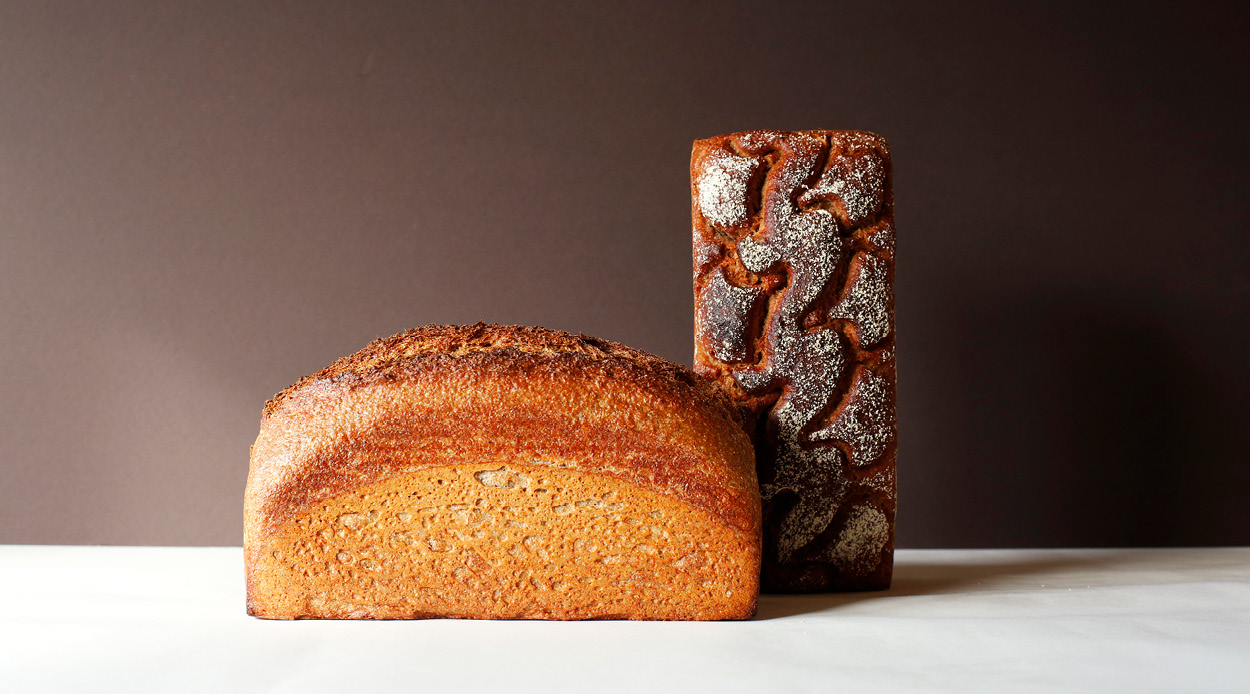
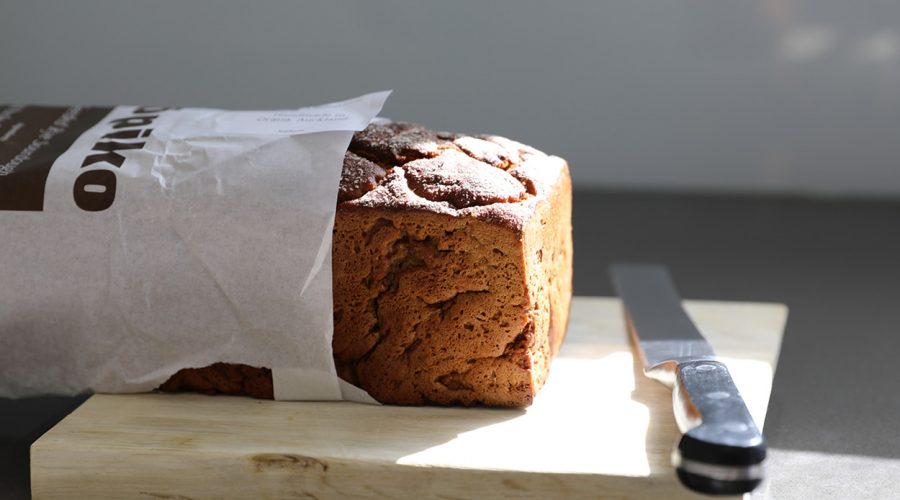
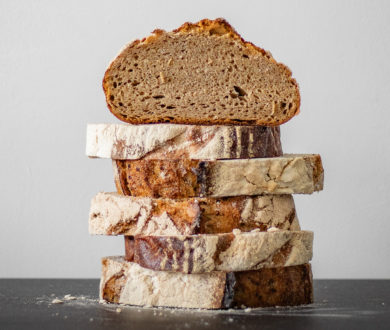
Kōpiko wholewheat sandwich sourdough

Meet the by-delivery micro-bakery bringing delicious, highly nutritious sourdough to your door

It’s no secret how much work goes into creating a delicious loaf of sourdough — many of us became well acquainted with the lengthy process during the first lockdown, and no doubt just as many decided it was best left to the experts. 

For Maya Handley, a love for making sourdough began years before the concept of a pandemic had even entered our consciousness, leading her to create local micro bakery Kōpiko.

Now based in Oratia, West Auckland, Handley first began baking when she lived in the States for nearly 13 years — predominantly in New York. Having grown up in Auckland, Handley moved to America in 2005 where she initially worked in advertising before studying photography, pursuing a successful career as a freelance photographer in fashion and for architectural publications. Clearly, creativity runs strong in her family, as her sister Greta Villiger is Head of Design Pre Collection for fashion house Loewe. 

It was during a regular trip upstate with her young family that Handley began making sourdough, mainly out of necessity due to the lack of well-stocked grocery stores in the area. What she found was the gentle rhythm of the loaf-making process reflected many of the aspects she loves in photography. 

“It suited my personality and I was already in that mode of paying close attention to light, working within the constraints of the frame and my chosen device,” she tells me. “With bread making, it’s also quite repetitive and requires paying attention to subtle changes in something with three ingredients. Shifts in temperature, how it feels, the humidity on the day — all of these make a difference to the final outcome.” 

As her bread fan base grew, Handley decided to enrol in Artisan Bread Making at the International Culinary Centre, learning from bread coordinator and chief instructor Johnson Yu, and upon returning to New Zealand in 2018 she established Kōpiko bakery. 

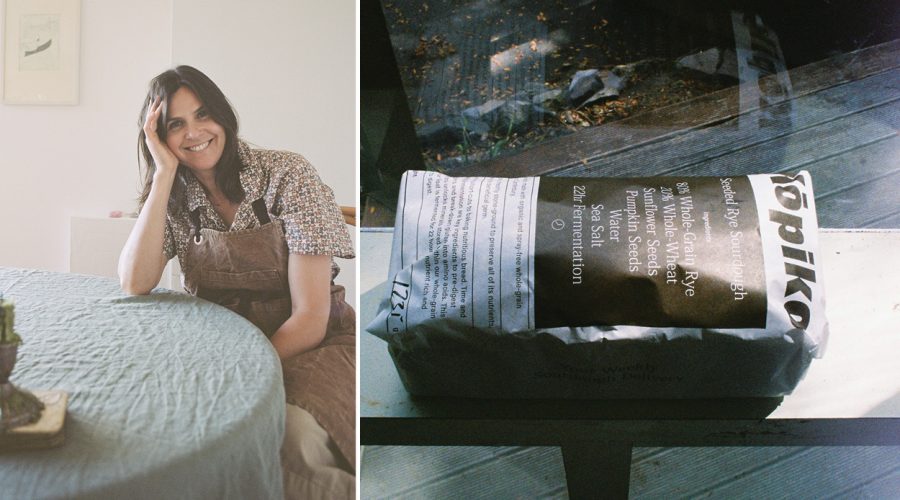
Left: Maya Handley.

Of chief importance to Handley’s loaves is the use of 100 percent local grain that has been stored without chemicals (many grains are stored with chemicals to preserve it for a longer amount of time). She also incorporates the whole grain into her bread, upping the nutritional value immensely. “Most bread, even wholemeal bread, has large proportions of sifted white flour which sifts out the germ and bran,” she says. “The wheat germ is what contains the majority of the mineral and vitamin content, while the bran contains the fibre. Getting rid of these removes much of the nutritional potential of bread.”

Add to this the slow fermentation process, which helps the grain to be more easily digestible, plus the use of only sourdough starter and no instant yeast, and you have some of the most nutritious bread we’ve ever tried. It’s also extremely tasty, with a complex and savoury flavour that provides the perfect base to any topping from simple butter and sea salt to avocado, peanut butter and more. 

So, how can you get your hands on a loaf of Kōpiko bread? Handley has created a genius business model whereby bread is available to purchase online by subscription on a weekly, fortnightly or one-off basis. This in turn allows Handley and her assistant baker Bridget McCarthy to plan exactly how many loaves they need to bake, and avoid any food waste. 

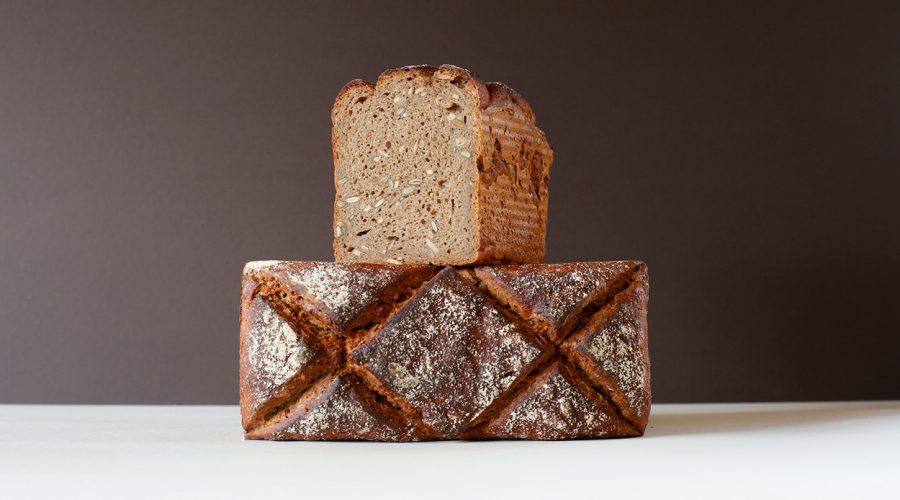
Kōpiko’s seeded rye sourdough

Forget queuing in a store — Kōpiko delivers to a wide range of Auckland suburbs, from out west to central suburbs like Grey Lynn and Herne Bay, to Kingsland, Morningside and Mt Albert. They also set up at The Shed Collective food market in Oratia, and Titirangi Village Market every week — the markets are usually where they will test out new flavours in development, like an instantly popular oat porridge sourdough that sold out in half an hour.

While setting up Kōpiko has certainly been a labour of love, Handley says the process thus far has been extremely rewarding. “I didn’t know how much satisfaction I would get from seeing happy customers and having people come each Saturday to get their bread,” she enthuses. “That’s really rewarding and makes the work feel so worthwhile.”

She was stoked that people were trying their hand at sourdough baking during lockdown, because it has certainly fostered a wider appreciation for the craft. “I’ve noticed at the markets, people saying “oh my gosh, I had no idea how long it takes to make a loaf of sourdough,” she laughs. “Now people know all the effort and care that’s gone into making it. It’s like anything you try yourself, it gives you a greater appreciation for people that do it for you.”
Gastronomy

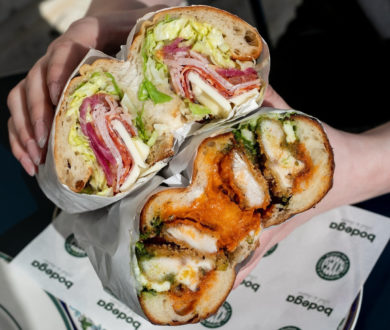
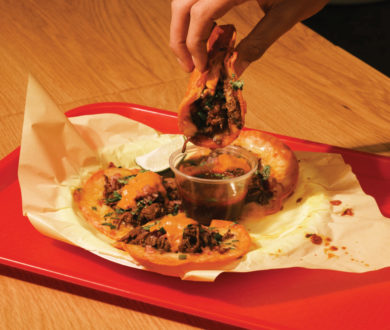
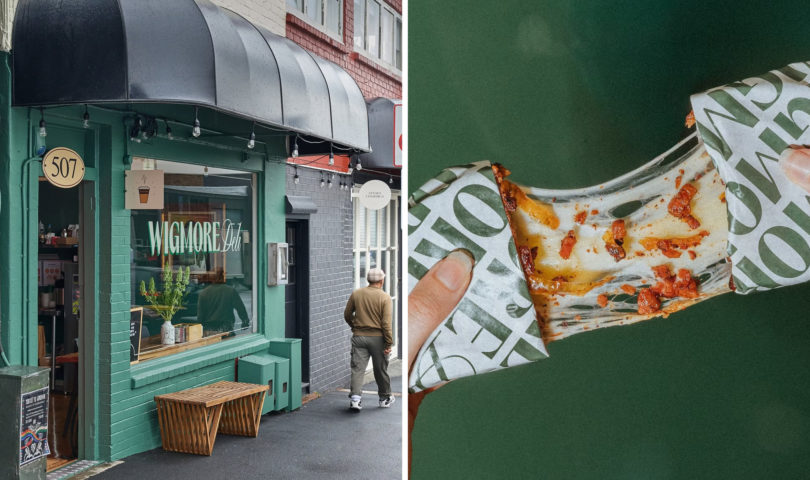
Meet Wigmore Deli, the new Kingsland spot raising the sandwich bar
Auckland’s best vegetarian & Vegan restaurants: Complete 2026 dining guide
Right place, right time: The seafood tower and spicy pineapple margarita that are calling you to take action
The Curatorial House by Arent&Pyke features the Bibendum armchair by Eileen Gray for Classicon from Matisse.

Add a luxurious, tactile touch to the home with these velvet furniture pieces

Sumptuous and sexy, velvet has long been associated with luxury. From its tactile softness to the deep, jewel-like tones in which it is often rendered, this fabric might feel like the ultimate expression of opulence, but that does not exclude it from the modern home. When used correctly, a velvet piece is the perfect way to lend depth to a monochromatic, contemporary space — here’s how. 

From left: Moooi Amami Pouf from ECC, Gan-Rugs Grapy from Matisse; Reflex Plisse Bench Seat from Sarsfield Brooke; Coco Republic Sara Scatter Cushion from Coco Republic; Poliform Mad Armchair from Studio Italia.

1. Subtle centrepiece
Choose a velveteen pouf like this Amami one by Moooi to inject a soft sophistication into your living room. 

2. Sculptural seating
If your style is more bold, try adding an eye-catching piece like Gan-Rugs’ Grapy (by Kensaku Oshiro) to your space. As much a conversation-starter as it is a genuinely comfortable place to put your feet up. 

3. Understated addition 
A more subtle approach might be to inject a swathe of velvet via a piece like Reflex’s Plisse Bench Seat. While it doesn’t cry out for attention, it will most definitely get it.

4. Just a touch 
If you would rather just dabble in this trend, employ it with a lighter touch. Accessories like Coco Republic’s Sara Scatter Cushion will offer a hint of velvet without ever feeling too much.

5. Everyday luxury 
Why not embrace velvet in something you walk past and use everyday? A piece like the Poliform Mad armchair will offer comfort and luxury in equal measure.

Design

Nature and nostalgia collide in this striking residence set in the picturesque Dandenong Ranges
Inside DO House: A Study in Soft Minimalism
How Powersurge became the quiet constant in a Stanmore Bay home’s second chapter

Get excited, this wildly popular doughnut spot has set up shop in the city

When we found out Grownup Donuts had opened a new outpost in the CBD, needless to say we were immediately trying to think of excuses to leave the office and travel over to that side of town.

Fabricated errands or not, we suggest you follow suit to the new site at number 2, Anzac Ave, for some of the best doughnuts in Auckland.

Founded by Daniel and Annie Black, Grownup Donuts started life as a regularly appearing stall around the city’s markets, and has now expanded to three permanent locations — Henderson Valley, Wairau Valley, and the new central city spot.

Grownup Donuts

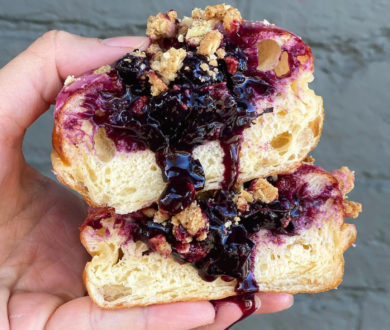
The company’s sweet delights are unique in that they are handmade every single day by the team of passionate bakers (who work, impressively, from 3AM), and are filled to the brim with original fillings. The philosophy centres around decadent treats that are supremely flavourful, but aren’t overly, artificially sweet or oily — crafted without added colours, preservatives or additives, these doughnuts are the real deal.

While the flavours change fortnightly, you can expect the likes of Belgian chocolate with roasted macadamia butter, or raspberry cheesecake; black sesame cream custard, passionfruit cheesecake — and much more.

Plant-based eaters can also rejoice because Grownup Donuts offers vegan flavours, which include mouthwatering combinations like crème brûlée with coconut cream, Belgian chocolate coconut and strawberry jam.

Grownup Donuts

If you’re based in the city for work or study, or find yourself there in your downtime, and have even a slight sweet tooth, we suggest you make your way to the new store.

Available as a single serve filled doughnut, or in multiples from four and up to 100, bringing a box back to the office would ensure you suddenly have a lot of new friends. Although, we wouldn’t blame you if they didn’t make the journey.

Opening hours:
Wednesday, Thursday & Friday: 9AM — 6:30PM (unless sold out prior)
Saturday & Sunday: 10AM — 5PM (unless sold out prior)
Closed Monday & Tuesday

Grownup Donuts
2 Anzac Avenue
(on the corner next to the barbershop, access via Beach Rd)

Gastronomy

Meet Wigmore Deli, the new Kingsland spot raising the sandwich bar
Auckland’s best vegetarian & Vegan restaurants: Complete 2026 dining guide
Right place, right time: The seafood tower and spicy pineapple margarita that are calling you to take action
Whittaker’s chocolate ANZAC biscuits recipe

This foolproof recipe will see you honouring ANZAC Day with a batch of delicious biscuits

A day to remember the sacrifices made by our forebears, ANZAC day offers an opportunity to stop and reflect with gratitude on the freedoms we take for granted. Alongside wearing a poppy and attending a dawn service, one of our favourite ways to commemorate the day is with a big batch of ANZAC biscuits, a nod to the versions that army wives and girlfriends would send their soldiers in the Australian and New Zealand Army Corps during the wars (this particular formula favoured for containing ingredients that wouldn’t spoil easily).

Offering a slightly updated take on a classic, this recipe sees the traditional biscuit decadently dipped into Whittaker’s dark chocolate, taking the chewy, moreish morsels to a whole new level.

In our opinion, ANZAC biscuits are best when shared, so this ANZAC day, once you’ve paid your respects, whip up a batch or two of these tasty treats and invite some friends and family around to enjoy a cup of tea and a bikkie.

Whittaker’s chocolate ANZAC biscuits recipe
Prep time: 20 minutes
Cook time: 20 minutes
Makes: 20

Ingredients
1 cup rolled oats
1 cup flour
1 cup desiccated coconut
1 cup soft brown sugar
¼ cup golden syrup
125g butter
2 tbsp boiling water
½ tsp baking soda
250g block Whittaker’s 50% Dark Chocolate

Method
1.
Preheat oven to 160°C fan bake and line two oven trays with baking paper.
2. Combine rolled oats, flour, coconut and sugar in a bowl.
3. Heat together butter, golden syrup and water in a small saucepan until butter melts and then stir in the baking soda. Mix this into dry ingredients until well combined.
4. Roll the mixture into small balls (approx. 20) and place on trays, allowing sufficient room between each for spreading. Flatten each ball slightly with a fork.
5. Bake for 15 minutes (for a chewy biscuit) or 20 minutes for a crunchier biscuit.
6. Allow the biscuits to cool on the trays for 5 minutes before transferring to a wire rack to cool completely.
7. Once cool, melt a block of Whittaker’s 50% Dark Chocolate in a small bowl. Dip half of each biscuit in chocolate and place on a wire rack until set.
8. Keep in an airtight container for up to a week.

Gastronomy

Meet Wigmore Deli, the new Kingsland spot raising the sandwich bar
Auckland’s best vegetarian & Vegan restaurants: Complete 2026 dining guide
Right place, right time: The seafood tower and spicy pineapple margarita that are calling you to take action
Witchery X Matecevski White Shirt for Ovarian Cancer Research.

Make a purchase for good with these worthy causes to support

We’re always gratified to see a brand use its reach to influence customers for good, and there are currently several causes you can get behind while indulging in a spot of retail therapy. Here are three on our radar.

Witchery X Maticevski OCRF White Shirt
Witchery’s white shirt for ovarian cancer campaign has been running for 13 years now, and the issue it highlights is still as important as ever — with some frightening statistics.

The fifth most common cause of female cancer deaths in New Zealand, one woman dies of ovarian cancer every 48 hours and around 300 women are diagnosed with the disease every year on our shores.

While there are often no signs of early-stage ovarian cancer, see the New Zealand Cancer Society for potential signs and symptoms.

Over 50 percent of the community incorrectly believe that a smear test diagnoses ovarian cancer — it does not.

Currently, invasive surgery is the only way of detecting and accurately diagnosing ovarian cancer. Organisations like Witchery are donating towards cancer research in the hopes of developing an early detection test which could save the lives of 1.3 million women worldwide, over a decade

When detected and treated early, 80 to 100 percent of women will survive beyond five years, while only 20 to 30 percent will if it’s diagnosed at a late stage.

Designed in collaboration with renowned Australian designer, Toni Maticevski, sales of Witchery’s latest white shirt will see 100 percent of gross proceeds go to the Ovarian Cancer Research Foundation.

Cos

Cos X OutLine
Helping LGBTIQ+ New Zealanders access support, information and a sense of community, OutLine is an extremely valuable national service. In a new charity partnership for Pride 2021, fashion retailer Cos has set up donation collection points for the organisation in its stores across the country until Sunday, 23rd of May.

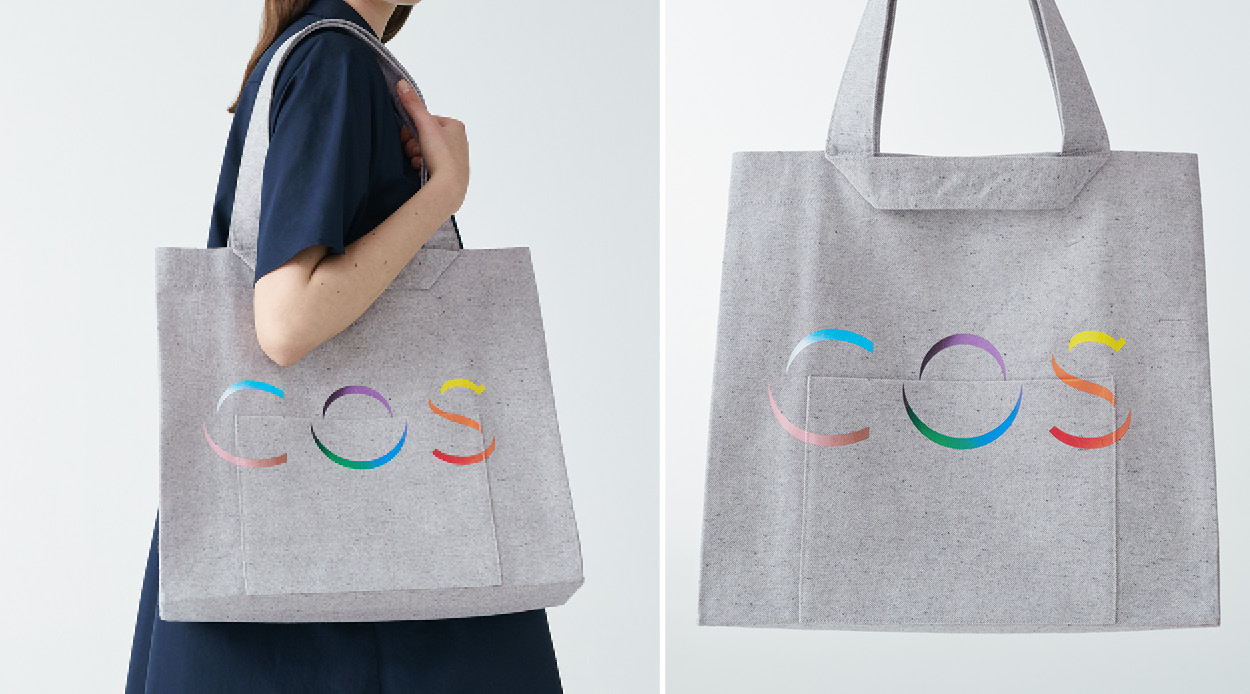
In addition to collecting donations, a rainbow Pride, limited edition repurposed cotton tote bag will be given with each donation of $30 NZD and above, while stocks last. A way to give new life to leftover fabric, the tote is made from excess cotton unused by other designs. It’s durable, designed to last and 100 percent recyclable.

OutLine is an all-ages rainbow mental health organisation. They provide a nationwide, free and confidential 0800 support line for people who want to speak to a trained volunteer from the rainbow community, and also provide face-to-face specialist rainbow counselling and an Auckland-based trans and non-binary peer support service.

Donations raised from the Cos X OutLine campaign will be used to subsidise rainbow specialist counselling sessions for those who require financial assistance and provide training and regular supervision for the organisation’s volunteer call-takers.

Camilla & Marc
Camilla Freeman-Topper and Marc Freeman of label Camilla and Marc

Camilla and Marc — Ovaries. Talk About Them
Another fashion brand taking a stand to help in the fight against ovarian cancer, Camilla and Marc launched ‘Ovaries. Talk About Them’ in 2020 to provide awareness and to directly fund research into an early detection test.

Having sadly lost their own mother 27 years ago to the disease, label founders and siblings Camilla Freeman-Topper and Marc Freeman have been motivated by their devastating, personal experience to provide awareness of, and wide scale direct research funding for, an early detection test led by Professor Caroline Ford at Ovarian Cancer research, UNSW.

A unisex line of limited-edition T-shirts and hoodies created by the brand sold like hot cakes, and while you had to be quick to snap up one of those, it’s still possible to donate directly to the campaign here.

Wellbeing

We sit down with Lukis Mac & Hellé Weston — the Kiwi wellness experts teaching Hollywood’s most notable names how to benefit from breathing
Not all toothpaste is created equal. Here’s what you might be doing wrong
Is the 20,000-step day actually worth it in 2026?
Budge Over Dover by YSG Studio. Photo: Prue Ruscoe.

This eye-catching interior trend is the perfect way to add interest to any room

If a spare wall is looking too sparse, we suggest turning it into a curated display of special objects and curiosities with some wide-set, carefully-painted shelves.

Designed to show off anything that would be wasted behind closed doors, a good display case will add dimension and intrigue to your space.

If you are curating your display from scratch, we suggest taking care to make sure there is some cohesiveness between the objects and artworks on show. They may all be completely disparate, but perhaps a somewhat consistent palette, or aesthetic, will help tie everything together.

Painting the shelves to match the wall behind it, as in the project pictured above by YSG Studio, will highlight your chosen objects further, allowing them to take centre stage and enhance the space.

Now you’ve created your display wall, consider these beautiful, design-led functional pieces and objet d’art for filling those shelves.

Curated shelf get the look

Clockwise from left: Alentes Footed Bowl from ECC; Sun Tray from Powersurge; Menu Troll Vase from Tim Webber; Dancing Duo Candlesticks from Fourth St; Dane Accent Vase from Coco Republic; Rosenthal Mini Vase Fast from The Studio of Tableware; Knurl Sun Candleholder Set from Powersurge; Hem O Oak Fruit Bowl from Tim Webber.


Design

Nature and nostalgia collide in this striking residence set in the picturesque Dandenong Ranges
Inside DO House: A Study in Soft Minimalism
How Powersurge became the quiet constant in a Stanmore Bay home’s second chapter

Heard of greenwashing? In honour of Earth Week 2021, here’s how to spot it and be an eco-conscious consumer

Greenwashing; when a company tries to portray itself as more environmentally minded than it actually is, has intensified in recent years as consumers have warmed to sustainable and organic products and services. Brands, trying to capitalise on that trend, often try to outdo one another with eco-credentials.

But in the rush to be seen as green, companies often exaggerate claims, or simply make things up. Ecostore Groups CEO, Pablo Kraus gives his insight into the local greenwashing game and what we as consumers can do to be more aware of it.

“In the self care aisle of the supermarket we are bombarded with countless ways to save the planet, to the point that it’s becoming difficult to find a product that’s not pushing an ethical claim.

Driven by consumers keen to do their part, the green space has become a highly profitable arena, but we need to be doing more than just buying bottles featuring pictures of happy healthy critters or smiling babies. It’s up to individuals to be more informed about what they buy, and why.

A recent study showed that New Zealand is globally well ahead of the game, with 30 percent of us wanting to buy sustainable, responsible products. In Australia it’s 30 percent of consumers are thinking green and surprisingly China has the largest group of conscious consumers, at more than 600 million people. 

Ecostore Groups CEO Pablo Kraus

Many companies see this as a tantalising opportunity, which has led to a significant rise in greenwashing, where brands provide misleading information about their products’ environmental impact.

Ultimately the choice to go green is in the hands of you, the consumer. By arming yourselves with more information, you can make the right choices for the betterment of both yourself and the planet. 

To determine if a brand is legitimately ethical, it comes back to authenticity and credibility. Whether brands are being transparent. Do they for example disclose all of their ingredients? Can they back up their claims? Where was their product manufactured? Where and how do they source their ingredients? And do they have a clear purpose as a business and a brand?

Understanding which companies have a clear purpose should drive purchasing decisions’. Do their ingredients contribute to making safer products? Are they sustainable and renewable, making products safer for our environment? And does the company have a transparent supply chain?

Ecostore was founded on the precautionary principle 27 years ago. If there is any doubt about an ingredient, a material we use, a company or a service we use, we will find a safer alternative. Today we continue to proudly develop, manufacture and pack our home, body and baby care products at our own carboNZero certified factory in Auckland and share them with the world. 

Ultimately the environmental responsibility is in the hands of the consumer. By understanding and recognising the red flags of greenwashing, and choosing products that can actually back up their bold claims, manufactured by companies that are genuinely committed to the eco cause, consumers endorse brands that are doing the right thing for us all. This choice impacts the future of our planet and will reverberate through generations to come.”

The 5 Sins of Greenwashing

1. Compostable Packaging
The intention may come from the right place but consumers need to refer to the packaging and either dispose of this in a home compost, or seek out a commercial composting facility.

The most important thing for consumers to understand is that compostable packaging cannot go into your recycling bin, because if it ends up in landfill it releases methane gas, which is 80 times more potent than CO2, a key contributor to climate warming.

2. Natural packaging
Natural materials used alongside conventional packaging, such as a bamboo lid on a plastic bottle, can create the illusion of eco credentials. These products contaminate the recycling stream and divert straight to landfill with the rest of the plastic attached to them. Instead, look for fully recyclable, reusable or closed loop products.

3. Where is it manufactured?
Products produced internationally have a far greater carbon footprint than locally-made NZ products. If the product is produced by a third party manufacturer, which may make products for companies that test on animals, you could also unintentionally support something that doesn’t align with your values.

4. You get what you pay for
Good quality is never cheap and cheap quality is never good. Making products that are better for the environment is not easy nor is it cost-effective. Any brand claiming to look out for the environment, at a much lower price point, should be treated with suspicion. Either it doesn’t actually work or it could be using a harsh natural chemical that’s bad for your health and the planet.

5. The natural tag
Just because a product claims to be natural, doesn’t make it environmentally friendly. As an extreme example, oil comes from the ground and is therefore natural, however when it’s released into the environment the impact can be severe.

When it comes to household cleaners and cosmetic products keep an eye out for Benzalkonium Chloride, a chemical used for its antibacterial properties. This organic salt is highly toxic to aquatic organisms, a cause for concern considering these products are often washed down the drain. At Ecostore, we eliminate the need for harmful Benzalkonium Chloride by formulating our products with a low pH to provide anti-bacterial/disinfection.

Another example, Cocamide DEA/MEA, is derived from the reaction of coconut oil and an organic chemical compound and can be found in many shampoos and cosmetic products. It is also a skin, eye and respiratory tract irritant and classified as possibly carcinogenic to humans.

At Ecostore we prefer to use APGs, Sodium Coco Sulfate and Sodium Lauryl Amphoacetate as our surfactants, which have comparatively milder effect on the skin and your health.

Wellbeing

We sit down with Lukis Mac & Hellé Weston — the Kiwi wellness experts teaching Hollywood’s most notable names how to benefit from breathing
Not all toothpaste is created equal. Here’s what you might be doing wrong
Is the 20,000-step day actually worth it in 2026?