



Stanmore Bay still keeps the easy rhythm of a classic New Zealand seaside settlement. Creosote-stained baches sit alongside newer interventions, and the streetscape feels agreeably removed from the city, a few bends of the Whangaparāoa Peninsula away from Auckland’s gravitational pull.
It is the kind of place you arrive at slowly, which is precisely the point of the house Jessop Architects has quietly evolved here. The project, known simply as Stanmore, began as a young couple’s first home together, bought not long after university. The brief, when it came, was not to erase what they had fallen for, but to let it grow up.
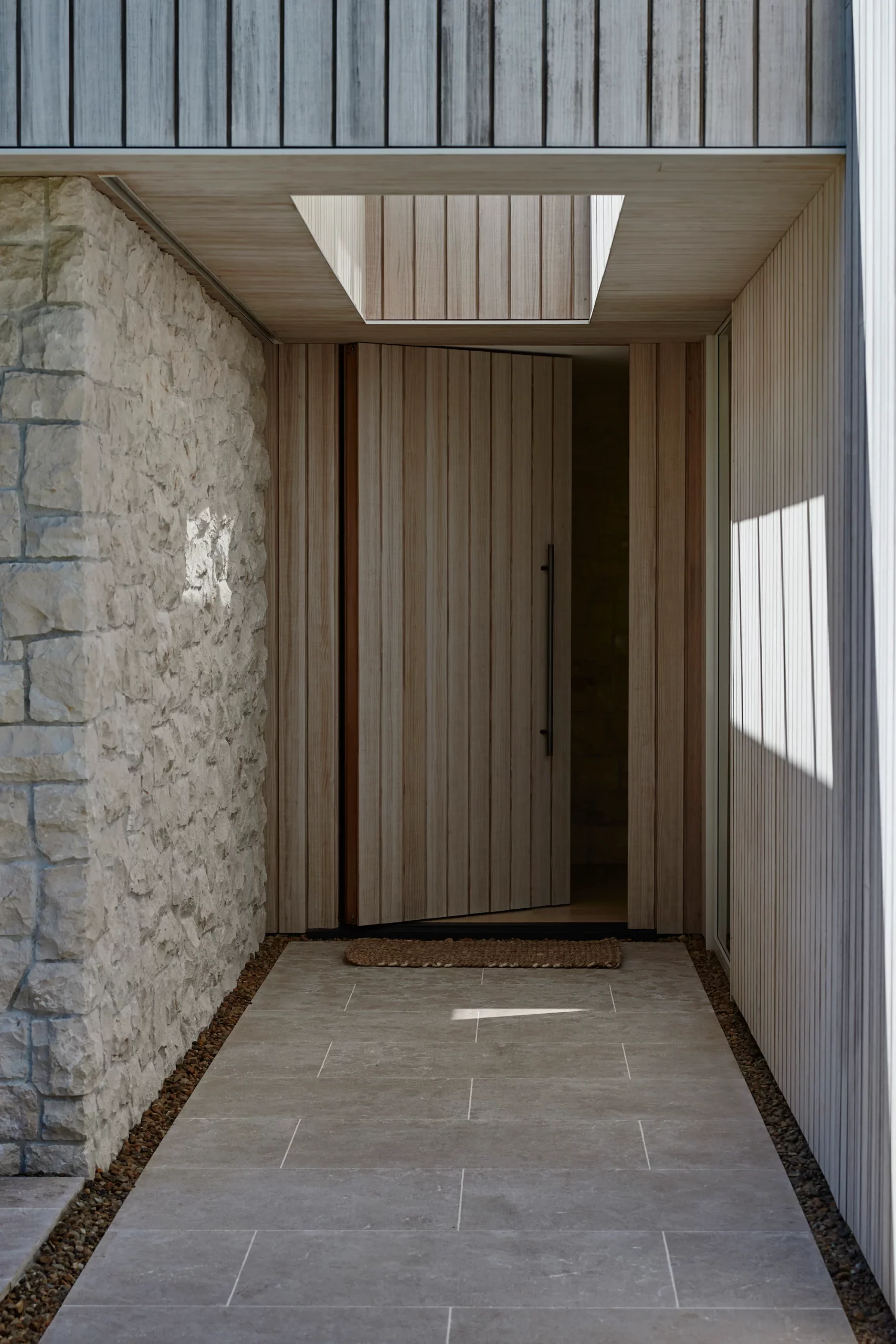
Jessop’s response is a study in restraint. Rather than overwrite the original cottage, additions thread through the site with deference to the mature pōhutukawa, their canopy left to shape both the approach and the outlook. Arrival is deliberately unhurried: you cross the lawn, pass beneath the trees, and only once you are inside does the water reveal itself.
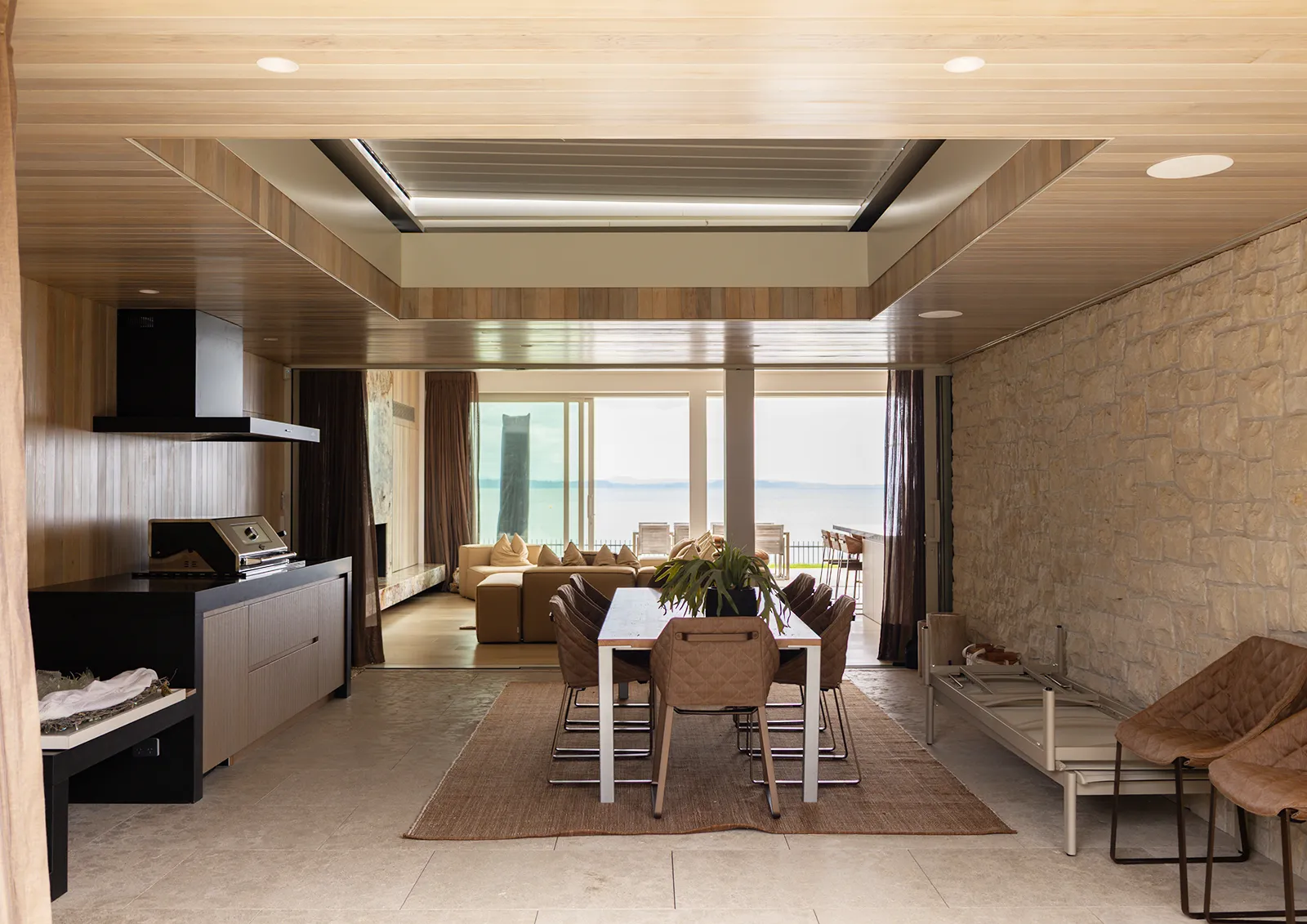
A sheltered courtyard on the inland side is the project’s quiet masterstroke. Where many coastal houses commit entirely to the sea, Stanmore gives itself two considered aspects: the water on one side, a protected, north-facing garden room on the other. It is an unshowy way of doubling the house’s usable life through shoulder-season afternoons and early evenings.
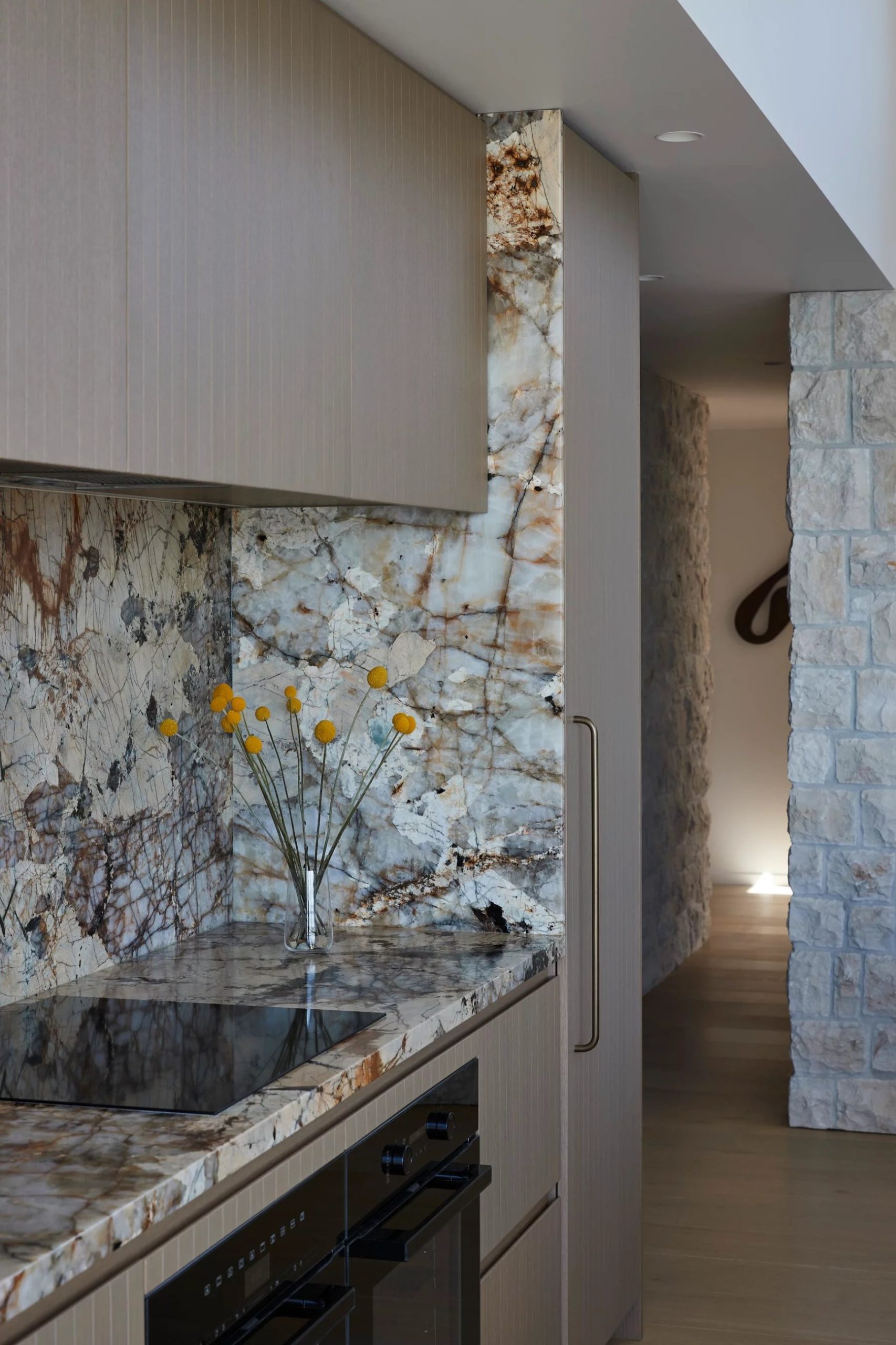
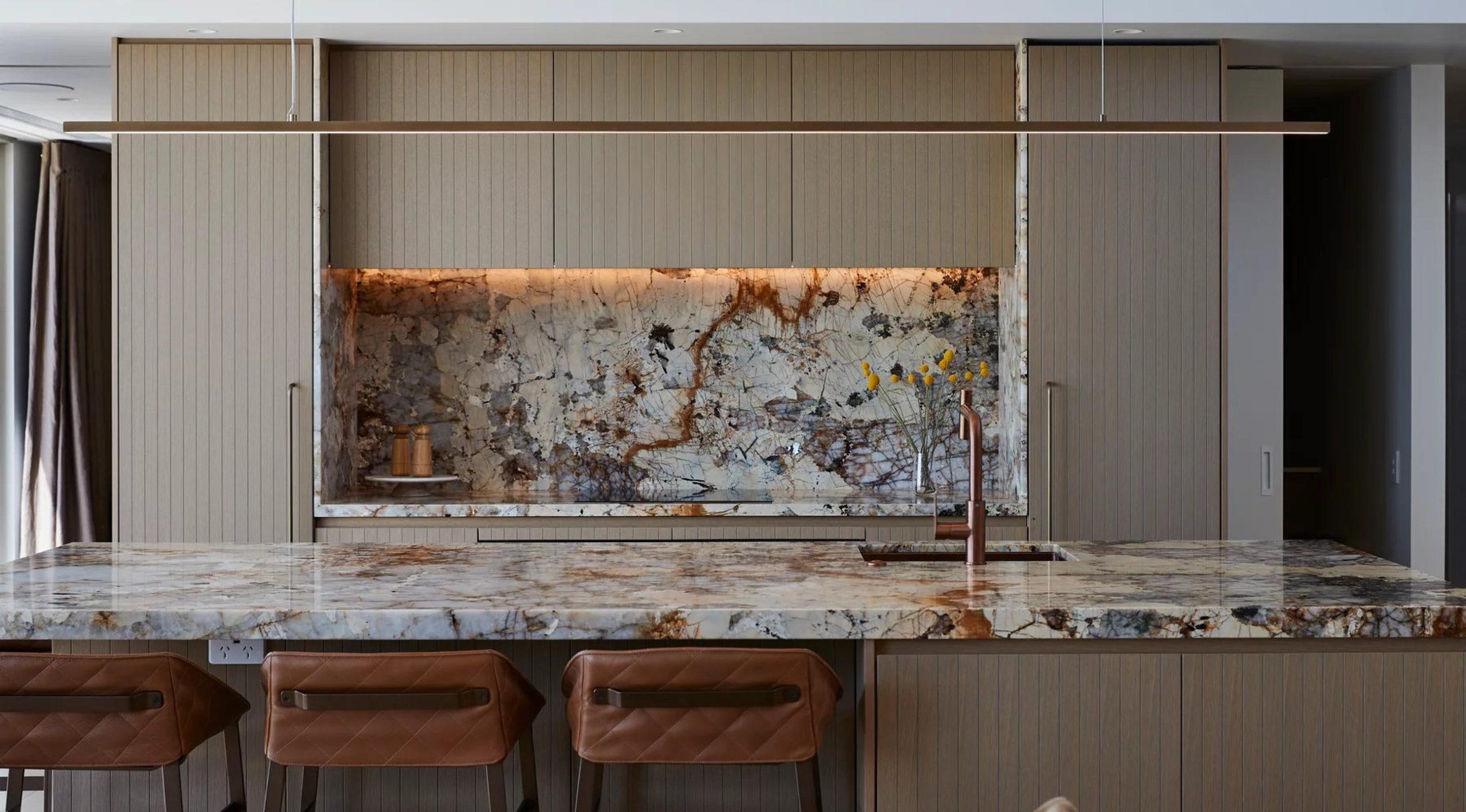
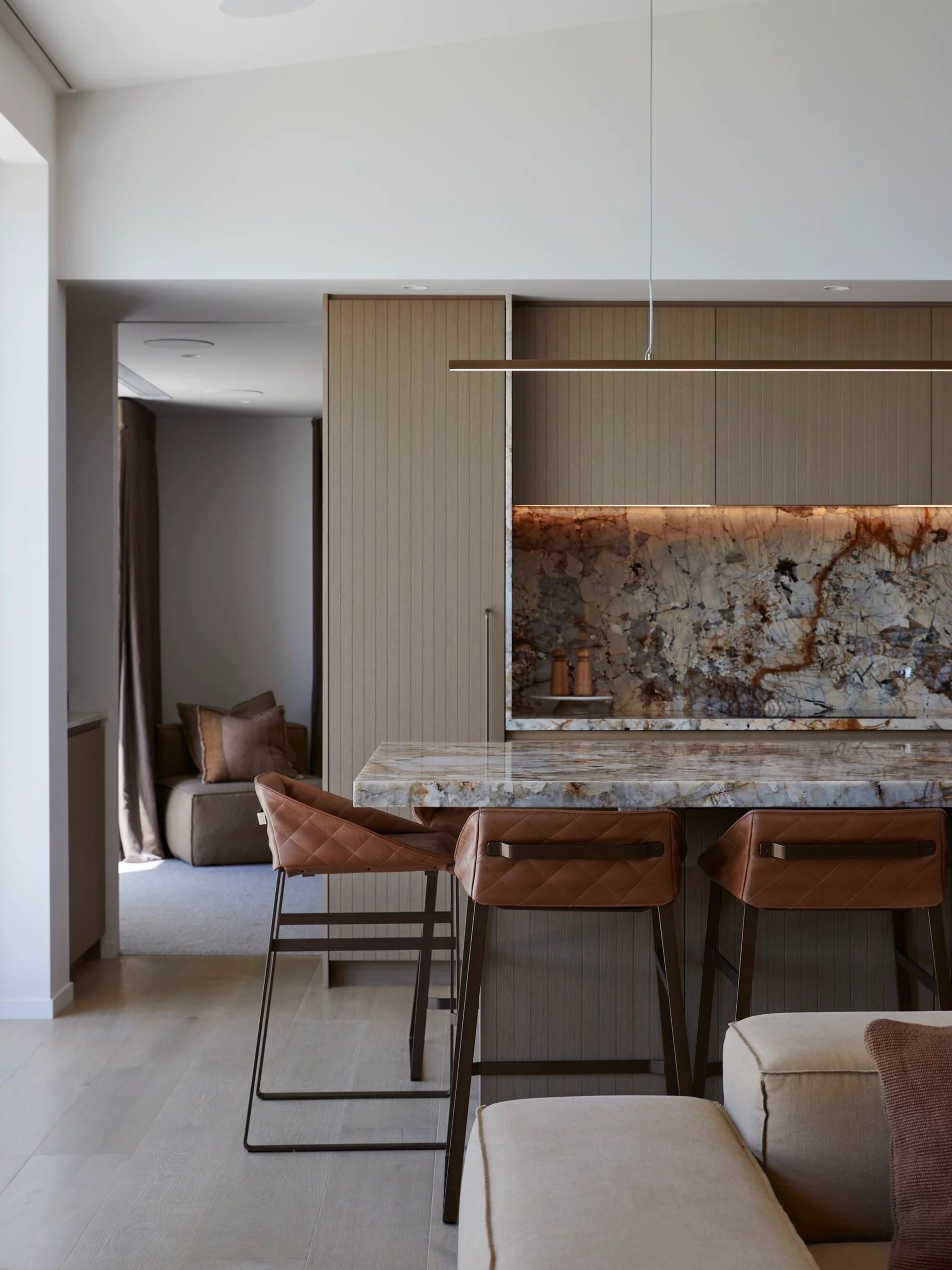
Inside, the palette does its work without raising its voice. Sandy stone tones run through the interiors, grounded and durable rather than decorative, paired with warm timbers and the kind of deft joinery that rewards a second look. Cabinetry is fitted with Powersurge’s Entrada Round Bar Handle and Beam Handle, discreet, well-weighted, the sort of detail you register with your hand before your eye.
Above the island, Powersurge’s Lateral Pendant draws a single clean horizontal line through the main living space, a quiet echo of the sea beyond the windows. It is specification rather than feature, which feels right for a house that never tries to perform.
What Jessop has built here is, in the end, a family home that still reads as a first home loved into its second chapter. The pōhutukawa remain, the bach-era rhythm of the bay is intact, and the interiors feel patinated rather than polished. It is a renovation that understands the difference between evolving a house and replacing it.