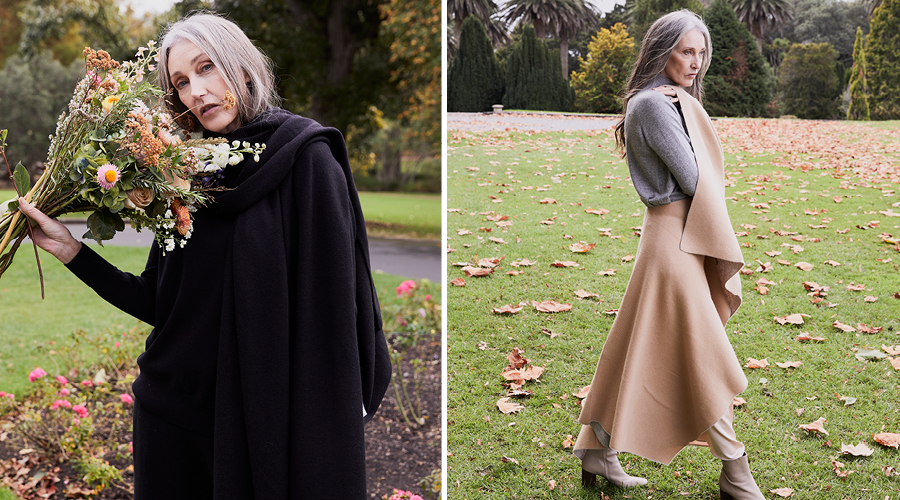
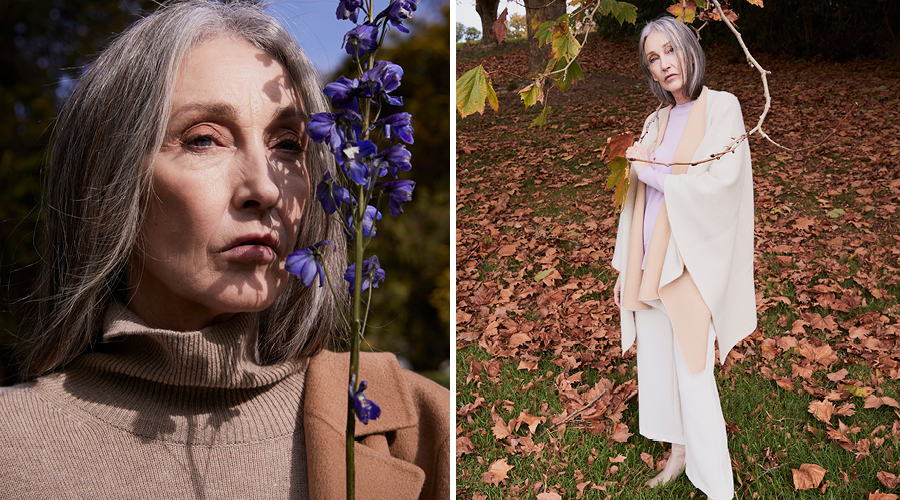
There can be no denying that cashmere reigns supreme as the textile of winter. Impossibly soft, long-wearing and versatile, it offers the perfect foundation for any wardrobe, especially as we face down the colder months. That said, not all cashmere is created equal. Which is why we have been waiting for Muse’s new collection to drop before stocking up — and finally, it’s arrived.
Designed by Owner Olivia Healy and her Muse team, the new cashmere is building on the reputation it has been steadily earning since the beginning. A reputation for quality, flattering shapes and timeless pieces that will last far beyond a single season. Here, the underlying idea of ‘elevated basics’ rings true, where the finest fibres sourced from a family-owned mill in Nepal have been fashioned into a variety of styles both classic and new, designed to take us effortlessly from day to evening. The double-faced cashmere wrap (a longstanding favourite) is, of course, making its return this season, as well as a line up of luxurious scarves and a two-piece set comprising the Joe pants and Sophie crewneck, landing as the perfect pieces for travel or to simply lounge around in.
Alongside the styles made from 100 per cent cashmere (which makes up the majority of the collection) two silhouettes — the ankle-length Fleur dress (with a sleek leg slit) and the ribbed Milly tee — have been made from a beautiful cashmere/merino blend, which adds a new dimension and heightened wearability to the line-up.
And while on the whole, the palette could be described as deliciously autumnal, where rust tones meet soft grey, ivory, almond and mushroom, pops of lilac, blush and light blue are also present, to counter any misconceptions that winter knits should adhere to some kind of monochromatic mandate.
To celebrate the fact that Muse has released its new season of cashmere just in time for the midyear chill to set in, we are giving one lucky Denizen the chance to win $2,500 to spend in-store at Muse Boutique. To enter and for more details, click here.
*This competition has now closed. Congratulations Sophie Ahern.*
Although tucked away on Chancery Street, the blue glow of the Luna’s Express signage makes passers-by stop and take note, intrigued by the new opening and drawn in by the warm, yellow walls and cosy fit-out that lie beyond the glass frontage.
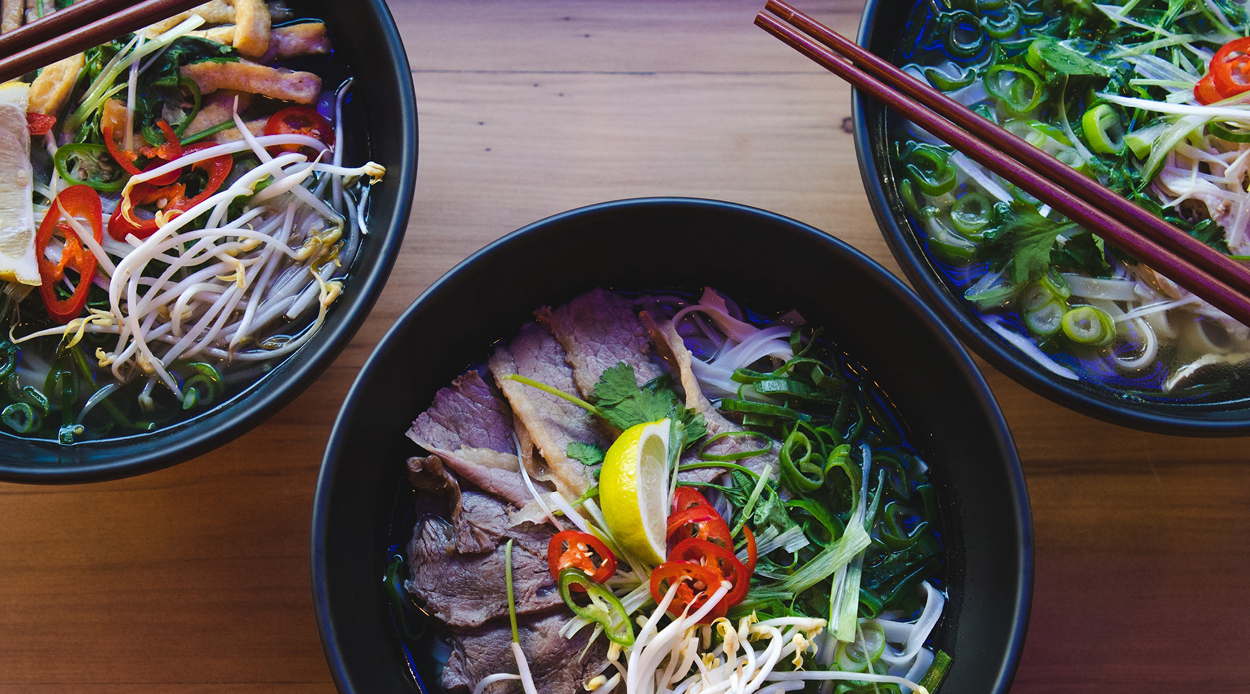
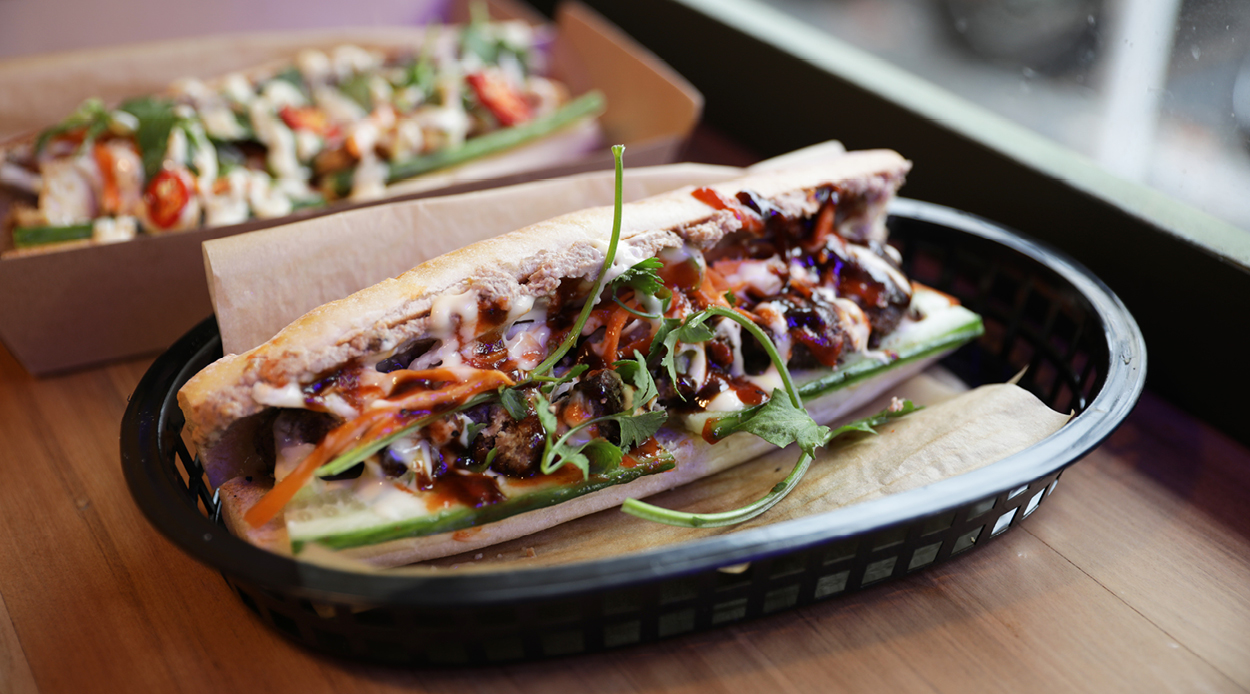
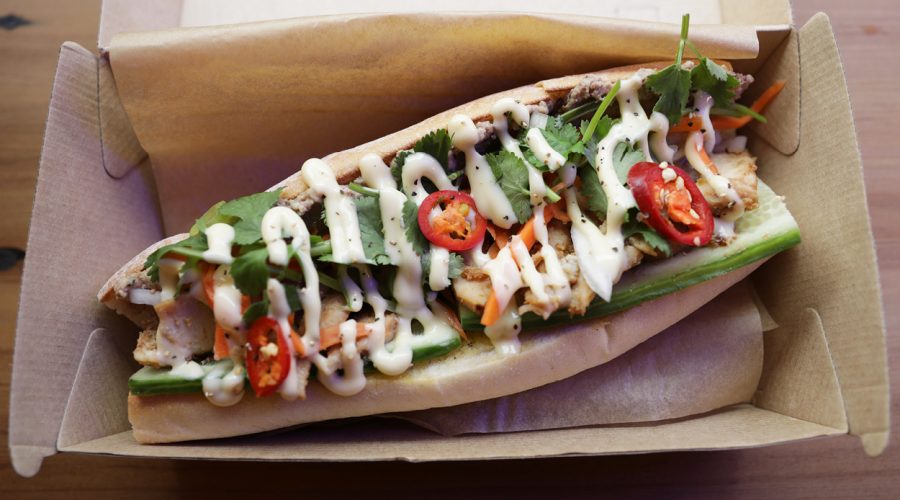
Stepping over the threshold we’re greeted by the owner, Malisa, who explains the name of the new opening as a homage to her mum, Luna. “All the recipes are hers,” she says, walking us through the menu which is set up as a smorgasbord of make-your-own Vietnamese phở and Bahn Mi. “We wanted to be able to talk to the customers and help them customise their orders,” Malisa says, “the menu covers traditional dishes from both North and South Vietnam… so diners can choose from a range of flavours and types of Viet food… they could have a different dish every time they came here if they wanted.”
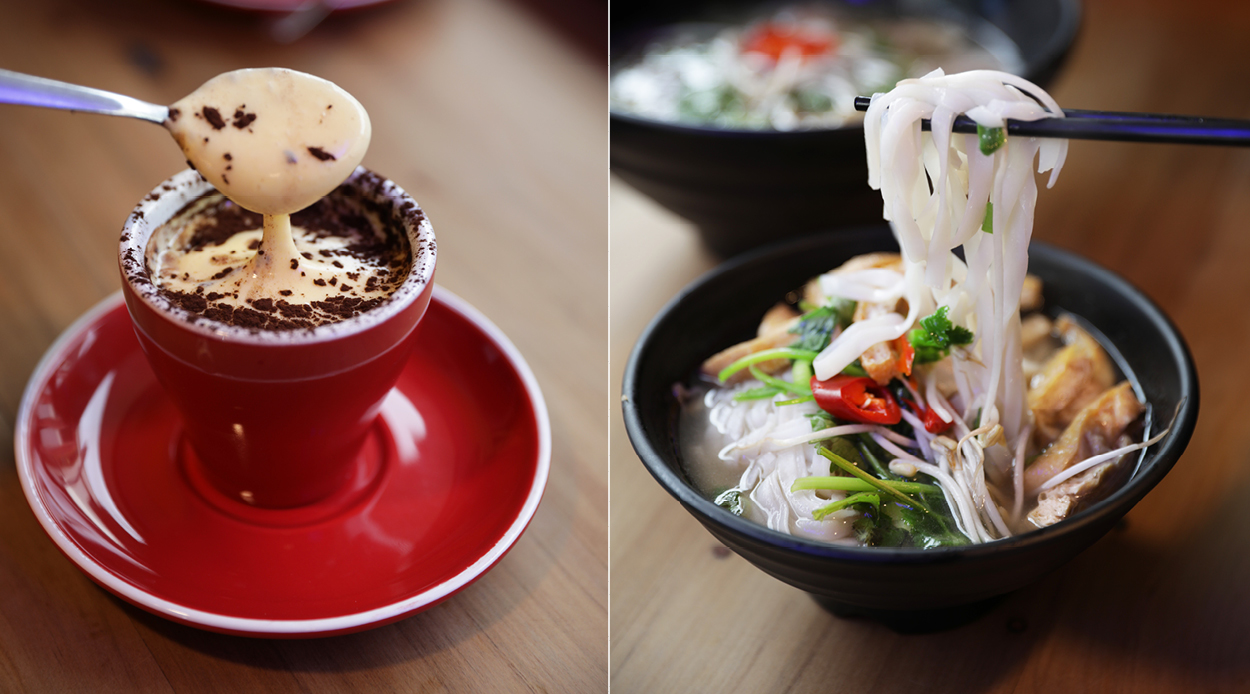
That the popularity of Vietnamese food has been on the rise is undeniable. Phở — a traditional Vietnamese broth soup served with rice noodles and various accoutrements like beef, sprouts, chilli and spring onion — has emerged as a universally-loved dish that manages to be warming without being heavy, and is satisfying in a distinctly light, healthy way. Luna’s Express takes its appeal one step further, by making the rice noodles fresh every day (with Malisa telling me she usually starts around five or six in the morning) and brewing the broths — a traditional and a vegan one — from scratch as well, which usually takes around 12 hours. The vegan broth is, while not necessarily authentic to the cuisine, something Malisa created using root vegetables in order to ensure that Luna’s can cater to anyone. And the fact that this level of care has gone into the creation of the dishes, becomes clear in the quality of the food and its flavours.
The phở is warm and fulfilling, the Bahn Mi perfectly proportioned and bursting with tasty meats and sauces, and when Malisa brings out the egg coffee and egg chocolate at the end of the meal as a “special treat,” it’s an unexpected delight. Egg coffee is a traditional drink in Vietnam that started when the country was suffering from a milk shortage. It is made with egg yolk, condensed milk and cream — so if you can imagine a texture similar to melted ice-cream but far fluffier and with a more complex, sweeter quality, that’s it. And it really is a treat.
Although the ‘Express’ in Luna’s name is an accurate representation of its service (our bowls of pho arrived at the table very quickly), don’t be mistaken in thinking that there have been any corners cut on quality. Malisa is clearly dedicated to making Luna’s Express a business that is as holistic as its food. “All the packaging is compostable,” the owner explains, “and we’re trying to make Luna’s as close to zero waste as we possibly can,” a commendable goal.
While we were slurping our phở, a number of people who clearly worked around the area wandered by, peering inquisitively inside. Luna’s is, after all, the perfect lunchtime spot for the inner-city set. With fresh ingredients, a friendly atmosphere and food that will suit any proclivity and save you from having to suffer through a 3pm slump, it’s setting itself up as the ultimate antidote to office hours and is, without a doubt, some of the freshest Vietnamese we’ve ever tried.
Opening hours: Monday – Friday, 7am until 4:30pm Saturday, 11:30am until 5pm Sunday, closed
Florence Cools more than lives up to her name. After starting multi-brand fashion store DAMOY (widely-acknowledged as a preeminent destination for the fashion-savvy) in Antwerp a few years ago, she recently launched her own brand, La Collection, to much acclaim. Balancing sleek femininity with practical, wearable shapes, the label has been garnering something of a cult following for the way it imbues the everyday wardrobe with effortless luxury. Now stocked at Muse Boutique, we thought we’d ask Florence about the inspiration behind her lauded collection, and why women in New Zealand will fall in love with it as quickly as the rest of the world has.
Take me back to the beginning… What is your fashion background? I studied fashion technology and then afterwards, I opened my own multi-brand store in Antwerp, followed by a multibrand wholesale agency. But looking back, the fashion industry has always inspired me. When I was a child I would spend time sketching mannequins with my own designs and I always made clothes for my Barbie dolls.
What was your vision for La Collection when you started it? I wanted to create a timeless, high-quality label made up of elevated, staple pieces every woman should own.
What does La Collection stand for now? Pretty much that. All of our pieces are made from premium, luxurious fabrics — most of which have been created especially for La Collection. This way, our simple, refined silhouettes come out the best way possible and the pieces are ones you can keep in your closet forever!
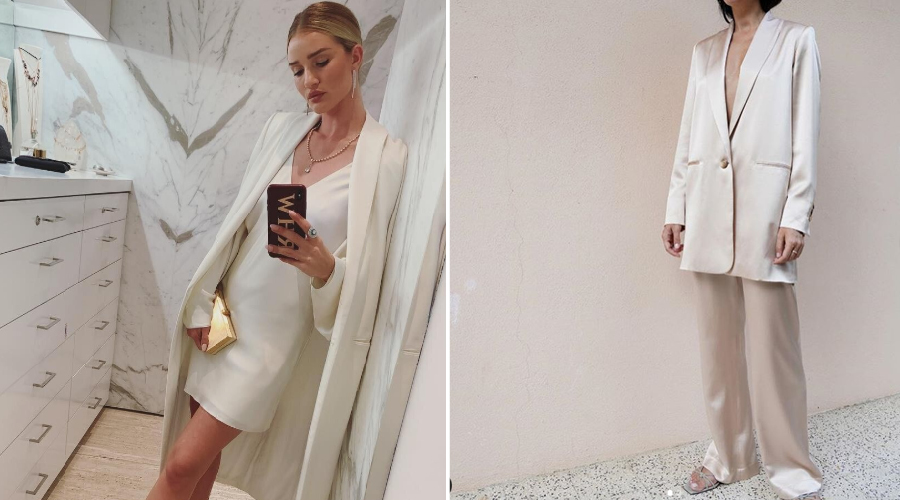
Left: Rosie Huntington-Whiteley in La Collection coat | Right: La Collection Amandine blazer and Gabrielle trousers from Muse Boutique
Who do you envisage as the LA Collection customer? It’s very much a label for the powerful woman. Someone who is confident and expresses her feminity with a statement shoulder or a loose-fit dress. A woman who doesn’t need to wear super tight or near-naked clothes to feel sexy. All of our pieces have a no-nonsense feel and that combo of straightforward femininity makes them work so well.
Who or what is most inspiring you at the moment? I get a lot of inspiration from Paris, the streets, the buildings, galleries and museums. But I also love to watch old movies and read vintage magazines, I get so inspired by the classic style icons.
Describe your personal style? I would call it very easy-chic, minimal, and feminine but strong.
Is there any advice or motto you live by when it comes to fashion and dressing? Less really is more! I love a naked neckline, one without too much jewellery. A motto I live by is to not to try too hard. Our La Collection pieces are so easy to combine which I think is what a lot of women want from their everyday wardrobes.
What are three, essential items every woman’s wardrobe should have? A long black silk dress, a tailored suit and a long coat.
Why do you think New Zealand women will love La Collection? I think the fact that our pieces are very transeasonal will make them appeal to New Zealand women. Pretty much everything in the collection can be worn from season to season and each piece has been designed to last a lifetime (both style- and quality-wise).
What does the future hold for La Collection? To be honest, I never plan too far ahead. I live by a ‘life is what happens when you’re making other plans’ kind of mentality, which keeps things more spontaneous and organic. But what I want for La Collection is for it to reach a global audience, to be able to take our timeless fashion around the globe and to be able to dress all the powerful women out there!
The theatrical Japanese dining experience, Akai Doa 2.0 has made a real impression since returning to Las Vegas on K’Road. With various light installations by Angus Muir setting a celebratory tone and delectable degustations by Azabu’s Head Chef, Yukio Ozeki, keeping punters impressed, the pop-up has, despite only opening a few months ago, already hosted a number of acclaimed culinary events. But none has been as hotly-anticipated as the one that is set to start this Friday and run throughout the month of June.
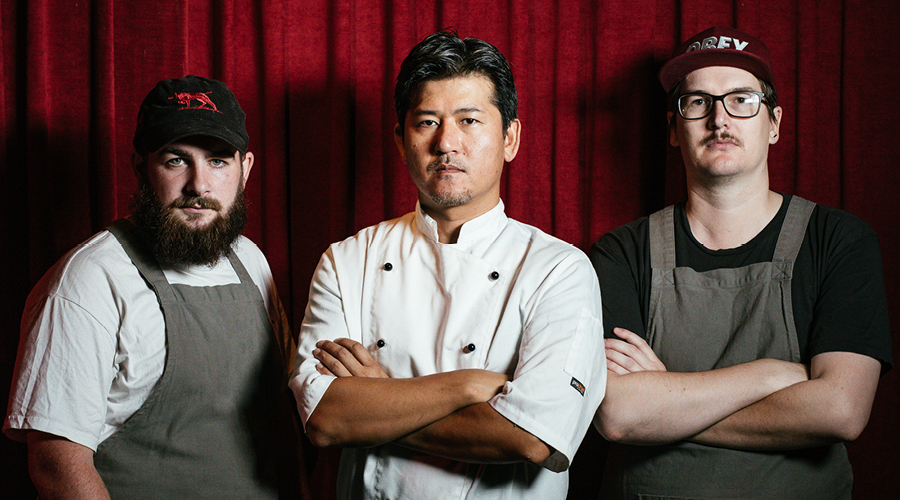
Looking to take Akai Doa 2.0 up another notch, Yukio Ozeki is joining forces with acclaimed chefs, Kyle Street and Jordan Macdonald from Culprit and the resulting event is shaping up to be the ultimate culinary collaboration. Beginning this Friday, 6th June, and running until 11th July, Akai Doa x Culprit will take place on Thursday, Friday and Saturday evenings and will see head-to-head culinary battles where the chefs will engage in one-upmanship to tantalise diners’ taste buds. Comprising eight courses in total (Street and Macdonald will create four courses, as will Ozeki), the menu is expected to be an intriguing, experimental Asian-fusion affair, making the event a gastronomic experience you won’t want to miss.
For more information and to book an evening at Akai Doa x Culprit, click here.
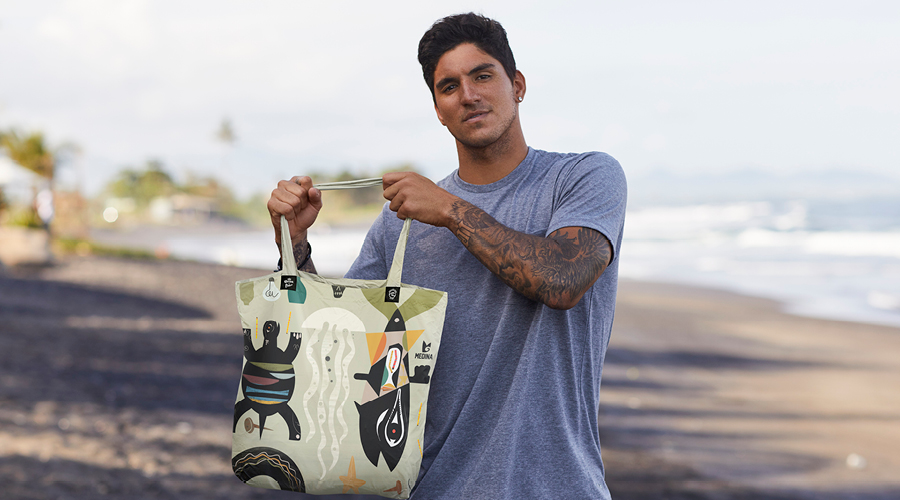
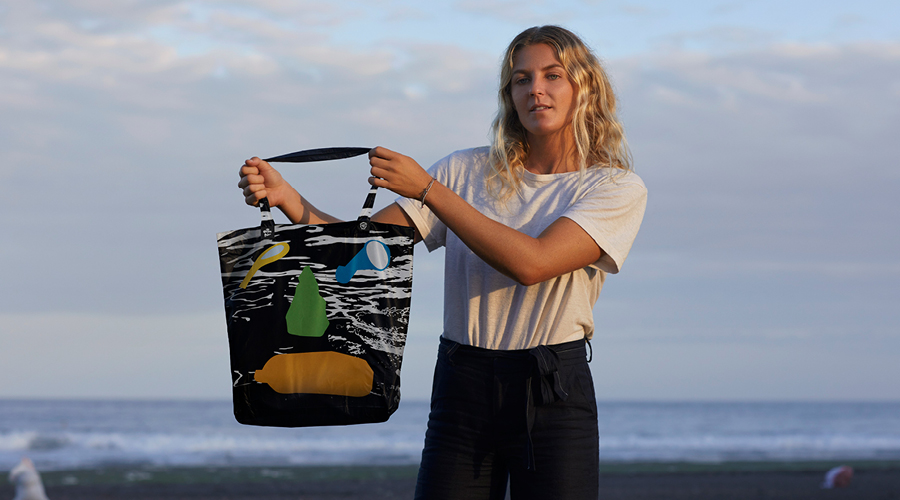
On a mission to protect the world’s oceans from the widespread scourge of single-use plastic, Corona, Parley for the Oceans and the World Surf League have joined forces with a line-up of pro-surfers and artists to create a reusable bag made from Ocean Plastic. In a bid to support the recent single-use plastic ban in Bali, the parties involved have pledged that for every one of these bags sold, three reusable bags will be donated to the Balinese community and 20 plastic-bottles-worth of plastic will be removed from the area’s oceans and coastlines.
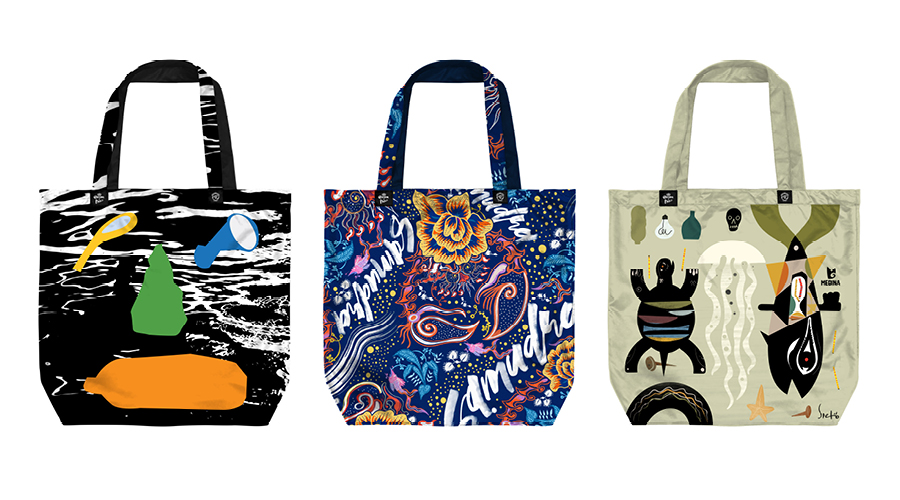
The bags themselves have been designed by Stephanie Gilmore, Gabriel Medina and Rosy Hodge (internationally-renowned surfing legends) in collaboration with artists Nadia Hernandez, Speto and Gemma O’Brien. Offering three distinct designs the unique bags are eye-catching, illustrated representations of vibrant marine environments that Corona, Parley for the Oceans and the World Surf League are determined to protect.
To say plastic is a problem is to seriously understate the issue. It has come to be absolutely vital (if we want to continue enjoying the beauty of our oceans and their inhabitants) that plastic waste is addressed without delay. And considering that around five trillion plastic bags are consumed globally every year — 10 million of which are estimated to be coming into circulation in Indonesia every day — this is not a niche issue by any means.
That said, it’s heartening to hear about the kinds of initiatives that have come from the partnership between Corona and Parley for the Oceans. Initiatives that have seen 537 clean-ups take place across 23 countries, involving around 25,000 volunteers and resulting in more than three million square metres of beaches cleaned. This latest drive is just one example of how Corona and Parley for the Oceans are working tirelessly to not only stop more single-use plastic from entering circulation but to figure out how to direct the plastic already out there into something that is good for the environment. Ultimately, their aim is to provide every local household in Bali with its own reusable bag so that the old, plastic iterations can fade away seamlessly.
To learn more about this initiative and to purchase a bag for yourself, click here.
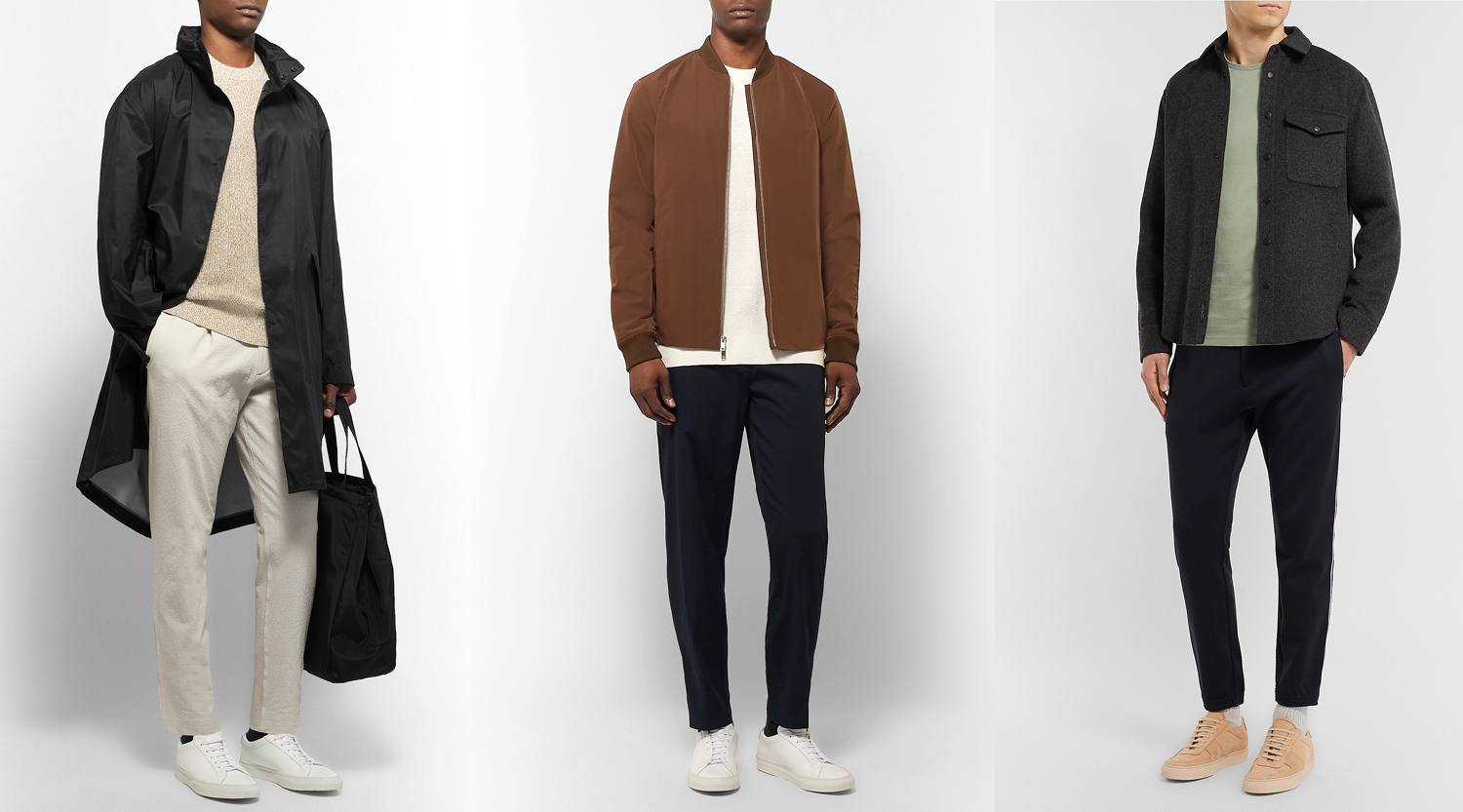
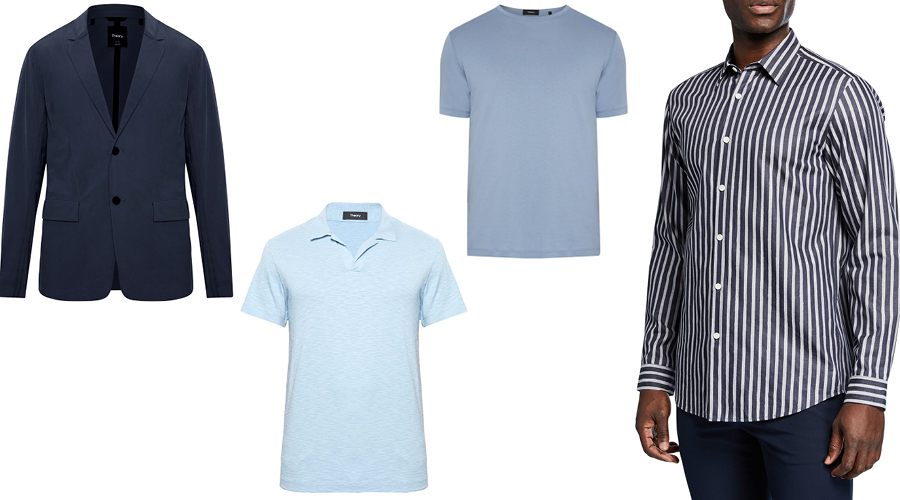
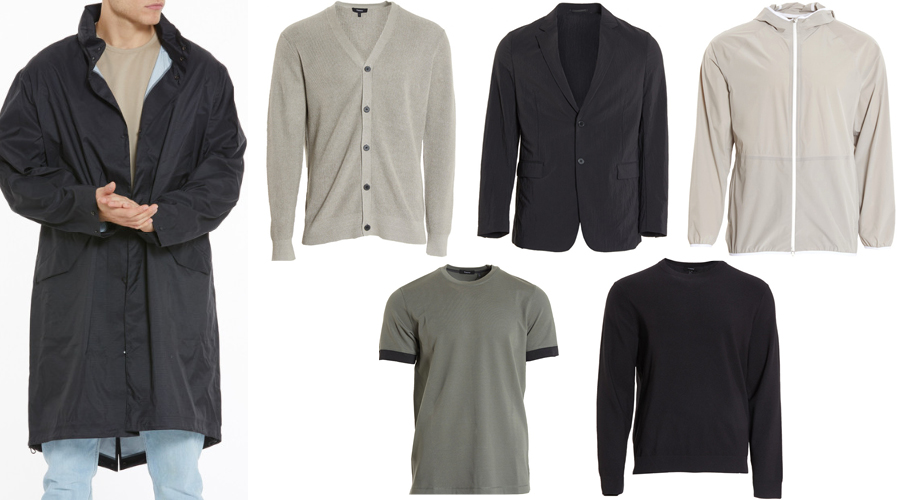
While it might be true that, generally speaking, men’s fashion is a far more straightforward affair than women’s, it doesn’t mean that men should be exempt from the same kinds of sartorial considerations as the fairer sex. Namely, how to curate a wardrobe that is wearable, fashion-forward and representative of individual style. But in order to do this (and do it well) guys need to ensure that they have a solid foundation in place. This means a series of versatile T-shirts, everyday knitwear, simple shirting and jackets that can be worn over anything — criteria that aren’t as easy to fulfil as one might initially think.
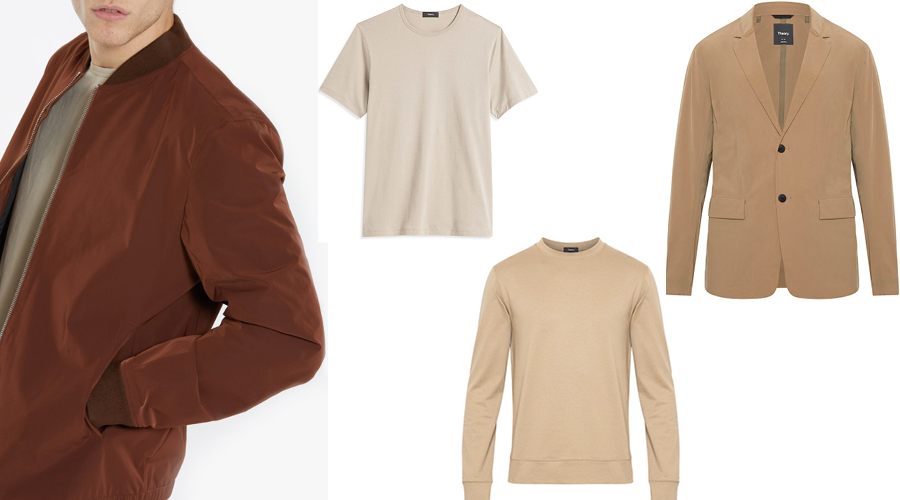
Luckily, there’s one recently-landed collection that covers all the necessary bases. Theory menswear, available locally from Superette International, offers a raft of well-made, easy-to-wear pieces that provide the ultimate building blocks for outfits that are cool (without trying too hard) and masculine (without being overt about it). It’s also a collection with a tonal spectrum that veers away from boring winter black — which is important for breaking bad seasonal habits.
Really, it’s a collection that any man, with any level of style acumen, can get on board with. In a bid to help you build the perfect wardrobe, we have rounded up three essential starting points.
Alongside being the most awarded winery in New Zealand (a lofty achievement considering the vast and varied industry here) Villa Maria is proudly family-owned and has been since its inception some 50 years ago. It’s one of the reasons why time spent at its Vineyard Café, just out of Auckland City, is guaranteed to be a warm, inviting experience. That the idea of family has been central to this winery’s ethos since the beginning, has resulted in something of a trickle-down effect, where everything from the service to the care with which the food is created is imbued with a wholesome, comforting sensibility.
So when Villa Maria switches up its Vineyard Café menu — which tends to coincide with the changing seasons — we start making plans to leave our usual inner-city haunts behind, and head out to Villa Maria instead, for an afternoon spent perched on its picturesque terrace, glass of award-winning wine in hand, sampling the latest menu offerings with high expectations.
And rightly so. With Villa Maria recently introducing its new winter menu, it’s easy to see why we deem the winery such an enticing destination. Between dishes that showcase some of the freshest local produce, like the artisanal cheese platters, the warming venison pie starter, and the deliciously tender beef short rib, two new additions, in particular, stand out.
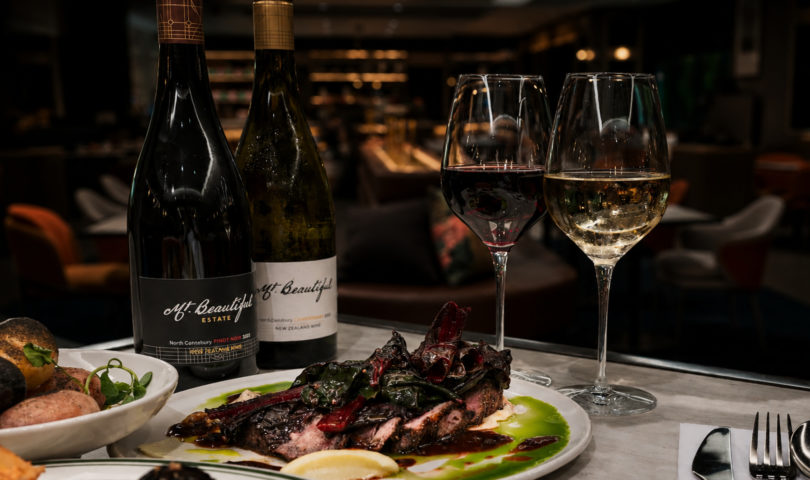
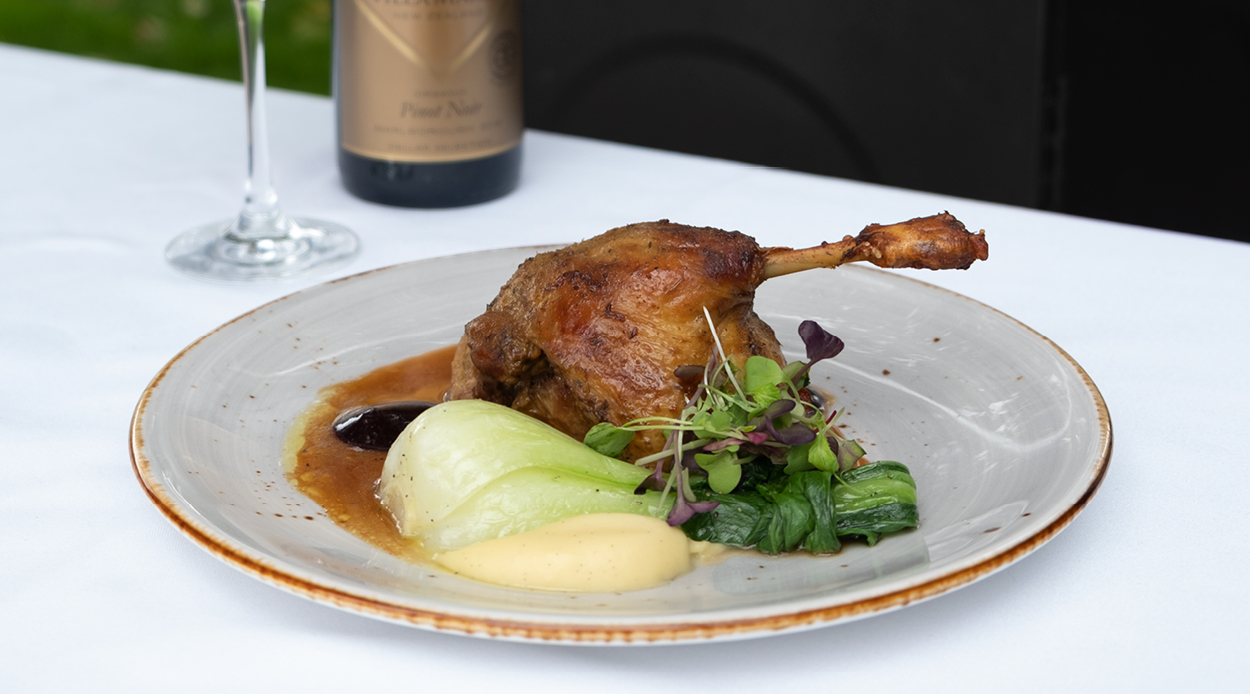
The first is the duck confit — a classically comforting option for winter — which is served Balinese style with the beautifully fragrant meat accompanied by creamed parsnip, bok choy, pickled cherries and Grandmariner jus.
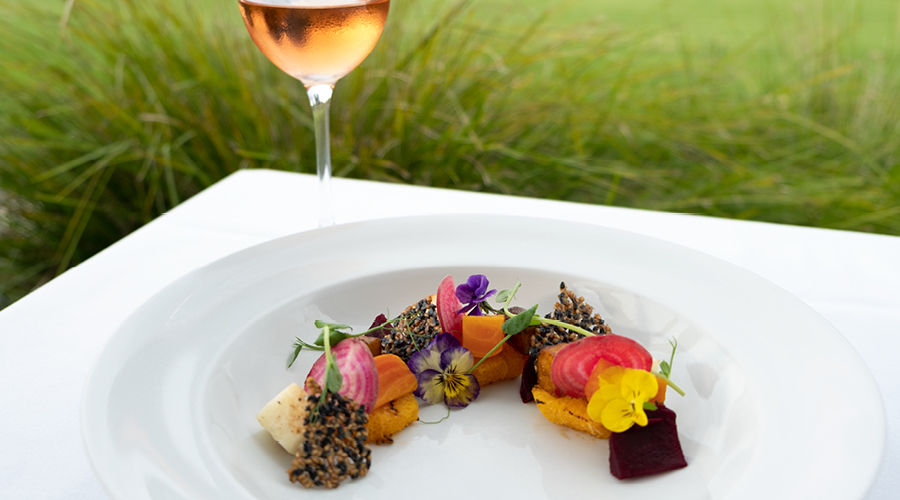
Halloumi salad served with Villa Maria Cellar Selection Marlborough Pinot Noir Rosé ‘18
The other highlight (although really, picking only two is almost impossible) is the fresh halloumi salad, served with juicy segments of grilled orange, sweet baby beetroot, roasted pumpkin and cucumber, and finished with a sesame dressing.
To up the stakes on both dishes, opt for the Villa Maria wine match and revel in a culinary experience the like of which you’d be hard-pressed to find anywhere else in the city.
It’s ten o’clock in the morning in Auckland, and I’m sitting in a conference room waiting to video call with one of New Zealand’s most successful entrepreneurial exports. He’s in San Francisco, so when my screen flickers to life to reveal him in a similar room, it’s lit with a three-pm glow. Perhaps it’s because we’re competing with the lackadaisical nature of his late-afternoon time zone that the technology we are relying on refuses to work. Or, at least, that’s what I think as he shrugs apologetically through the screen after a few failed attempts to switch the sound on.
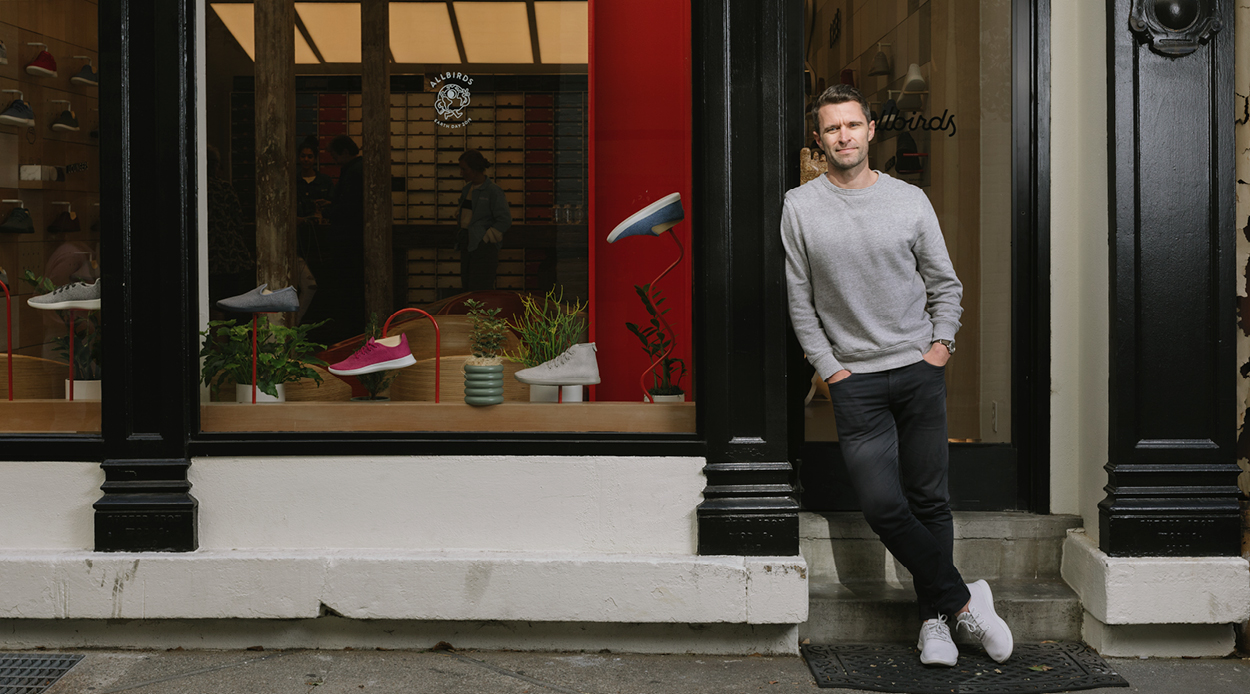
“I’m so sorry about that,” Tim Brown says, his first words after the two of us decided to cut our losses and chat over the phone instead. It feels like a somewhat ironic start to an interview with someone for whom tech innovation has played such a pivotal career role. If you weren’t already familiar with Tim Brown, you wouldn’t have been able to remain in the dark much longer. With Allbirds, his Silicon Valley start-up now reportedly valued at an eye-watering US$1.4 billion, the former professional football player (Brown’s previous career saw him representing New Zealand as the captain of the All Whites) alongside his business partner Joey Zwillinger, is being hailed as a pioneer in the realm of sustainable footwear, having created a shoe that, soon after its launch in 2016, Time Magazine dubbed ‘the most comfortable in the world.’
“It felt like a bit of a nod to all the hard work that had been done with our material innovation,” Brown tells me, speaking about how this initial accolade for the brand was a significant moment in his entrepreneurial journey. “We launched three years ago with four employees out of the garage of my business partner’s mother-in-law,” he explains, underlining how, despite the appearance of very quick success with Allbirds, it hadn’t been an overnight triumph. “It was a bad idea for seven years before it was a good one,” Brown chuckles, citing the years of research and painful trial and error it took to create the shoes that Allbirds is now renowned for. And it has to be said, they certainly live up to their reputation.
The distinguishing feature of Allbirds shoes is their revolutionary fabric. Made from superfine New Zealand merino wool, Allbirds’ signature styles are impossibly soft, water-resistant, temperature-regulating and machine washable and at the time of their release were, as Brown says, “something that really hadn’t been done before.” But rethinking the traditional footwear model has been Allbirds’ driving mandate since the beginning. “We took a contrarian approach to building a business in footwear based on years of seeing how the industry had done it, with a belief that there was an opportunity to do it differently,” Brown says, explaining how, while simple design and superior comfort were and still are key factors in the brand, it was the idea of sustainability that transformed Allbirds from a good business into a groundbreaking one.
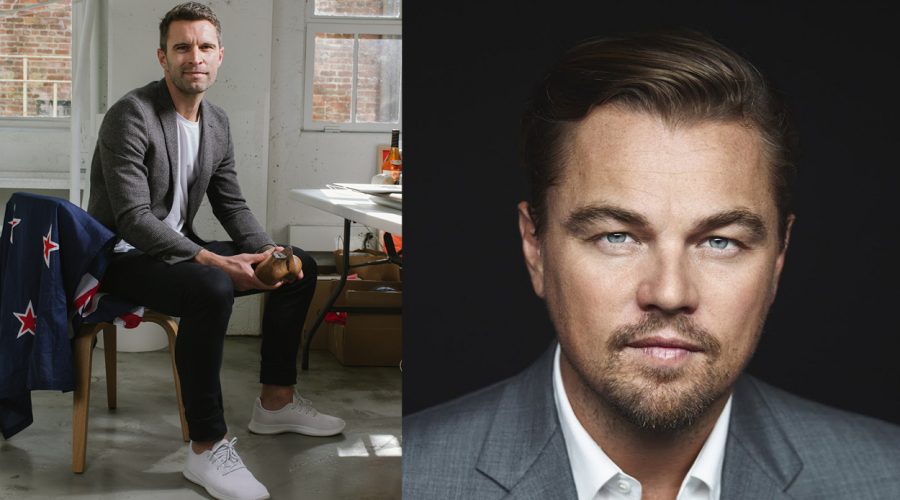
“I think the realisation of the larger purpose of the business took some time,” Brown articulated, “but it’s been critically important to unearth because it’s the driving force — the difference between doing something really well and doing something great.” Although sustainability in the wider context of fashion has become a topic of increased discussion and debate, its zeitgeist-y nature making it the crusade of choice for fashion-weary Millennials, in the footwear industry, there has been a conspicuous ignorance of the issues. Globally, the industry emits a staggering 700 million tonnes of carbon dioxide every year, with an annual production of around 20 billion pairs of shoes. It’s as prolific in production and sales as it is detrimental to the planet, and, until Allbirds came along, there were very few companies endeavouring to change those statistics. Brown and his company is one of the few existing in the sustainable fashion space whose commitment to the cause goes beyond ‘greenwashing,’ to produce very real, tangible change. So much so, that Allbirds attracted early funding from a number of environmental bigwigs, like the actor Leonardo DiCaprio, who made an undisclosed investment in the business last year.
Allbirds has attracted significant investment from some heavy-hitters, including actor Leonardo DiCaprio (right).
The wool used in Allbirds’ original sneakers comes through organisations like ZQ Merino that work to ensure high standards of farming, environmental management and animal welfare. And after the first collection landed to much acclaim, Brown and his team released a second major material innovation that saw a slightly sportier range of shoes fashioned from South African tree fibre. Breathable and flexible, the brand’s TENCEL™ Lyocell fabric uses 95 per cent less water than traditional materials like cotton and is FSC Certified (meaning it meets strict requirements around forest conservation). The ethos of sustainability even extends to the smaller details. The laces in Allbirds’ shoes are made from recycled plastic bottles. The packaging is made from 90 per cent recycled cardboard. The eyelets come from a bio-based material created thanks to microorganisms that consume plant sugars. And Brown tells me that they have recently released another milestone innovation, in the form of an eco-friendly EVA which, in its synthetic form, is one of the most commonly-used materials in the soles of shoes. “It’s basically a green EVA made from sugar cane,” Brown explains, “carbon negative in its raw form.”
Notable beyond the astonishing science at play is the fact that Brown decided to make this pioneering new material (aptly named SweetFoam™) open-sourced to the wider industry. “I found out today that there have been an enormous number of other companies that have come to test it out and use it,” he tells me, “so it feels like a completely new model for how to do business in the footwear space.” It’s something Brown says reminds him that Allbirds is just a “tiny drop in an enormous market”, and although it’s true, it feels compellingly humble considering the significant waves that his “tiny drop” has initiated.
Perhaps this comes down to his work ethic. Explaining the painstaking development process of SweetFoam™, the entrepreneur tells me, “we spent two years working on it and eventually released it as a flip-flop,” quickly clearing his throat before correcting himself, “jandal.” It’s a slip of the tongue that reminds me of Brown’s inherent Kiwi-ness. Regardless of the Silicon Valley origins of his business, he still embodies the archetypal traits that have long given New Zealanders the ability to punch above our weights. They are traits like a dauntless work ethic, a quick humour and a propensity to be humble and it’s clear that part of Allbirds’ success lies in the fact that, in many ways, it embodies the same values as its co-founder. “I think the Allbirds brand has been built with a Kiwi sensibility,” Brown says, “going after something very, very serious, like sustainability, but not taking ourselves too seriously in the pursuit of that challenge.” And he’s right. The quirky, cartoon motifs that weave through Allbirds’ branding combined with their cutesy environmental puns make talking about a subject as dense and often discouraging as the future of the environment far more approachable.
But Brown is keenly aware of his mission and the urgent need for change beyond simply encouraging people to reconsider the environmental cred of their trainers. Recently, he announced the Allbirds Carbon Fund, and with it, the fact that Allbirds was transitioning into an entirely carbon-neutral business. The fund has seen a self-imposed, internal carbon tax put into place, related to every tonne of carbon dioxide Allbirds emits (from the sheep on the merino farms to the lights in the office). Proceeds from the fund are put towards supporting various emissions reduction projects, and with every pair of shoes bought, the Allbirds customer can decide which of these projects they would like a portion of their purchase put towards. It’s an unprecedented move and something Brown says he feels particularly excited about. Alongside the fund, Allbirds recently released a new style of shoe that feels like a culmination of all the work Brown and his team have done so far. Made from the company’s tree-derived material with soles of comfortable SweetFoam™, the Tree Breezer slip-on flats are an entirely new look for the brand and signify a definitive new chapter in its development.
But despite the incredible breakthroughs, the widespread recognition and the external acknowledgement of his success, Brown doesn’t come across as someone who could ever rest on his laurels. When asked what kind of advice he would give to other young entrepreneurs, Brown insists the importance of trusting your gut and listening to your instincts. “I think the idea of challenging conventional wisdom and doing something that people haven’t thought of before necessities that people will probably think it’s a little silly,” he says, underlining how in the beginning he had to forge on, relying on a mix of bravery and confidence in the face of numerous people maintaining that what he was trying to achieve simply couldn’t be done.
On the cusp of welcoming his second child, I asked Brown about the idea of legacy and what he hoped to leave behind for his children and in turn, theirs. “When Joey and I got together we genuinely imagined a business that we would tell our grandkids about,” Brown replies, “a business based in sustainability and one that was, hopefully, part of the leadership in a revolution of the way things were made.” It’s a vision he’s on track to achieve. But for all of his success and for all of the ways he is shaping the conversation of sustainability in fashion, Brown is just one person who has set out to make a difference in a world where people striving to do that in a meaningful way are few and far between. And if that isn’t heroism in action, I don’t know what is.
To read more about Tim Brown’s inspiring journey with Allbirds, pick up a copy of the latest issue of Denizen magazine, out now. Or click here to subscribe.
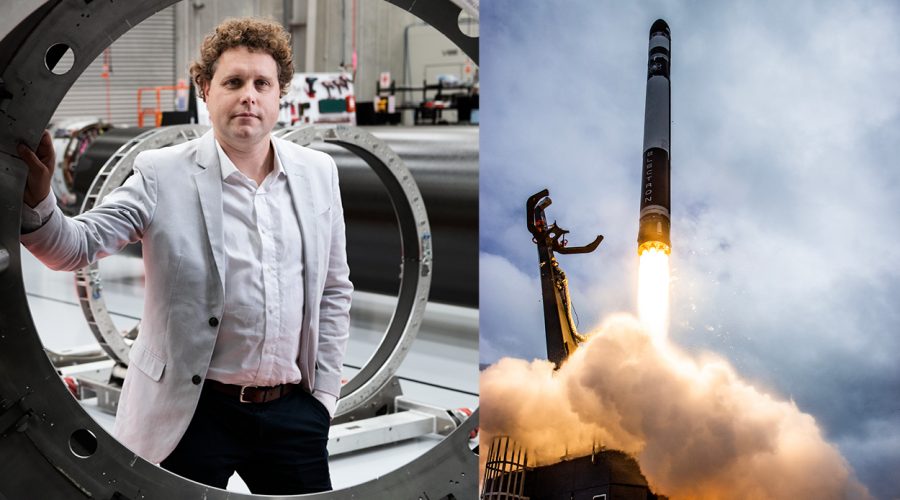
n the history of mankind, only two private companies have ever succeeded in delivering satellites to orbit. One is Elon Musk’s SpaceX, the other, Peter Beck’s Rocket Lab. And on the evening of Sunday the fifth of May, the latter launched its sixth successful flight to put satellite number 28 into orbit, from its launch site on the Mahia Peninsula in Hawke’s Bay. “It was a wonderful, wonderful launch,” Rocket Lab’s CEO and founder says enthusiastically. It’s the day after, and I’m speaking with Peter Beck on what I can only imagine has been a day of celebration — Sunday’s launch had been a particularly important one. “We had the U.S. Air Force as a customer,” Beck explains, “the payload mass was really high and we had a lot of new technologies on board.” But despite the high stakes and the fact that thousands of hours had gone into the launch, on the phone, Beck seemed eminently cool in a way I eventually came to recognise as his default mode. Calmly explaining that by succeeding in its latest mission of putting three new satellites into orbit, Rocket Lab had maintained its 100 per cent launch success rate, revealing an almost unprecedented statistic in an industry where, as the entrepreneur says, “you’re fighting physics the whole time.”
With his company, Beck is on a mission to deliver frequent, reliable and affordable launch services for small satellites, facilitating growth in an industry he sees as vital to the development of life on Earth. Explaining the huge potential of increasing the number of smaller satellites in space, Beck underlines the possibilities as everything from “global internet coverage… to better crop monitoring, to being able to monitor illegal fishing… so many things that make a real difference.” The fact that satellites are shrinking in size is really just a reflection of the technological advancements of the last decade. “If you put a satellite on a table and started pulling it to bits,” Beck articulates, “you would basically find everything that’s in your phone.” Looking at my phone, it was hard to imagine it whizzing around the Earth, suspended in the vast expanse of space, but in Beck’s explanation, satellites shrinking down to the size of shoeboxes was an inevitability. Where he and Rocket Lab came in, was in facilitating their deployment into low Earth orbit at an unprecedented frequency. “We have the ability to launch from our Mahia site up to 120 times a year,” Beck reveals, highlighting one of Rocket Lab’s core benefits. “The launch vehicle offers the democratisation [of small satellites],” the entrepreneur explains, pointing to how his Electron rocket had been designed specifically to deliver small satellites to precise orbits on their own schedules (something that, until Rocket Lab’s Electron rocket and the company’s private launch site came along, hadn’t really been a possibility). “You can’t build these networks without a small vehicle,” Beck says, “that is the key to unlocking all of the potential.” With Electron, Rocket Lab has established itself as a pioneer in the new frontier of satellite deployment. Made entirely in-house by the company, Electron has opened possibilities for private companies, research organisations and governments to get satellites into orbit faster and more cost-effectively than with traditionally, large launch vehicles that launch infrequently and at 10 times the cost. Beck’s foresight has created room for exploring previously unbroached possibilities and his groundbreaking facilities are turning those things into a reality.
Despite being an American company, (its official headquarters are in Huntington Beach, California) Rocket Lab has factory facilities and a launch site in New Zealand, and its founder is, of course, a New Zealander. Telling me, in his slight Invercargill twang (an ‘r’ sound that only another Kiwi could pick up on), how he founded Rocket Lab in 2006, it was a decision he explains as the culmination of his life-long fascination with space. “When I was very, very young,” Beck tells me, “my dad would take me outside and we would look up to the stars. One time he pointed out a satellite to me, explaining that people had put it up there, and that the rest of the stars were suns, and that those suns could have other planets around them, and that those planets could have people on them.” It was a moment Beck cites as having ignited his obsession with what lay beyond the Earth’s atmosphere and marked the beginning of his journey into space.
Left: Peter Beck with a rocket component from Stage 1 at Rocket Lab’s Mount Wellington facilities | Right: Lift-off of R3D2 mission from LC-1. Launch 5
You might ask, as I did, how one equips oneself to face the complications of space with as much self-assurance and success as Beck has. For starters, he never lost sight of his vision, explaining how even in high-school (which was when he started making rockets, by the way) his career advisor had called his parents to tell them that Beck’s aspirations were simply not achievable, and that really, he should aim for a career in engineering that was a little more grounded (literally) in reality. Refusing to let small-mindedness deter him (an ethos he maintains to this day), Beck decided to undertake a trade, starting an apprenticeship at Fisher & Paykel as a tool and die maker and honing his aesthetic sensibilities by spending time in the company’s design office. From there, it was a string of jobs — one for a super yacht business where he learnt how to manage big projects, another for a government research lab where he learnt about advanced materials, structures and superconductors — all while continuing to build his own rockets on the side, that prepared him for the discipline he would need to build and run a company. “My plan was always to work for NASA or one of the big aerospace companies in America,” Beck tells me, but when I realised that they weren’t doing what I felt was important and that needed to be done, I came back to New Zealand and founded Rocket Lab.”
Launching his first rocket into space in 2009 (making Rocket Lab the first private company in the Southern Hemisphere to do so) Beck tells me that it took a few years of building credibility in the industry before he could start calling on Silicon Valley investors to raise the nearly half-billion dollars needed to achieve his vision (an eye-watering sum). But his journey to reach the level of undertaking the successful launches he does now, was incremental. “Like any start up,” Beck tells me, “it was a 10-year overnight success,” and considering the numerous barriers of entry posed by an industry as vast and scientific as ‘space,’ the fact that Rocket Lab is not only launching its own Electron rockets but is launching them with consistent success from its very own site on behalf of customers as significant as NASA and the US military, almost beggars belief. “Space is incredibly hard,” Beck says, delivering what is possibly the understatement of the century, “usually it takes a country of resources, energy, effort and finances to do what we’ve done… and history is littered with failure.”
It isn’t hard to imagine why so many, companies and governments alike, have failed in their attempts to achieve anything close to what Rocket Lab has. “Physics is always a bit of a pain,” Beck chuckles, outlining how the nature of his work constantly teeters on the edge of what is scientifically possible. “Then from a regulatory standpoint,” he continues, “before we even began we had to convince the governments of both New Zealand and the United States to sign a bilateral treaty and the New Zealand government had to get a whole new set of legislation passed into law, before creating a space agency.” It’s a series of exceedingly complex barriers to overcome, to simply be allowed to start a business, not to mention, as Beck reminds me, having to (once the laws allowed) find and build a launch site and a number of tracking stations around the world.
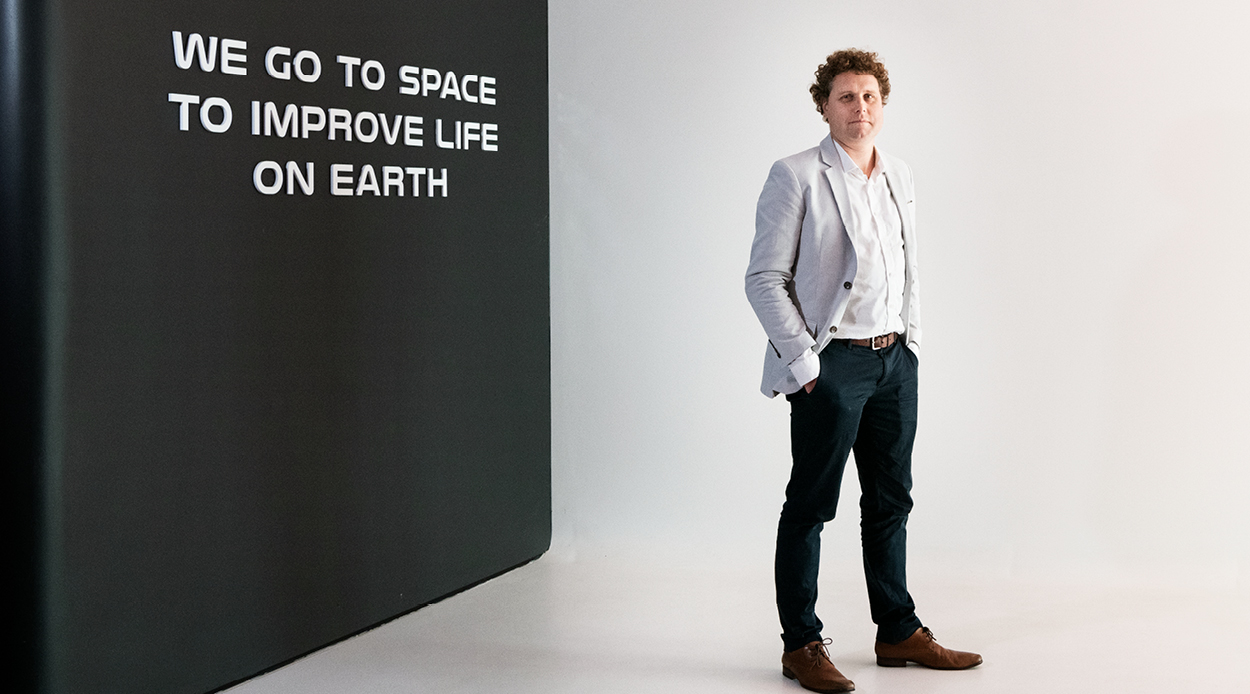
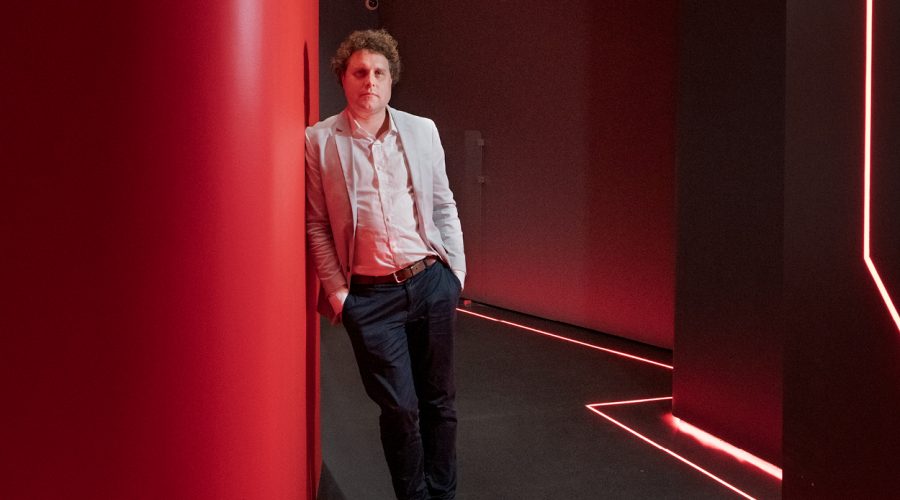
Walking into Rocket Lab’s Auckland facility, it’s the video feeds from these tracking stations that are some of the first things I see. Entering the Mount Wellington headquarters is an experience as close to what I can imagine stepping onto a spaceship would be. A sliding door gives way to a white corridor, ringed with red LEDs that leads to a black wall reading, ‘WE GO TO SPACE TO IMPROVE LIFE ON EARTH.’ In the foyer, the red LEDs continue, lining the black walls and floor in a futuristic glow. From behind a soundproof wall of glass, visitors are given a glimpse into an operations room that looks like something straight out of Star Trek. Rows of computers flickering with various formulas and designs sit in front of a wall of screens, some streaming live feeds from tracking stations in Cork and the Azores, others showing the footage from Sunday’s launch and one with a world map that seemed to be tracing various satellites in orbit. On one wall, a timeline mural had been erected, chronicling Rocket Lab’s journey from its inception to now, ending with the recent announcement of a second launch site being built at the Wallops Flight Facility in Virginia (also the site for many of NASA’s rocket launches). In 2018, the timeline showed me how Rocket Lab had completed three successful orbital launches of Electron rockets with irreverent names like ‘Still Testing,’ and ‘It’s Business Time,’ that, although eliciting a snigger from me, were undertaking some really very serious business (the third launch included 13 satellites for NASA). In 2017, the timeline read, ‘Reached 1 billion dollar valuation and became a space unicorn.’ Only a New Zealander, I thought, looking at the mix of incredible achievements and funny interjections on the wall, could approach the seriousness of space innovation with such a dry sense of humour. At the back of the room, I noticed a circular plaque that commemorated the opening of the incredible facility in which I was standing. On it, noted the date, October 2018, alongside the person who officiated the opening, ‘William Shatner, a.k.a. Star Trek’s Captain Kirk.’ The plaque itself was even designed after the shape of the U.S.S. Enterprise (the TV show’s iconic spaceship). Learning that Beck actually designed most of the facility himself, it made sense. Standing in the foyer I was struck by the amount of passion, dedication and undying belief that someone would need to have to make all of this possible. By simply seeing space, not as an insurmountable, unknowable entity (like most of us do) but as an exciting new domain filled with untapped potential, Beck really has gone boldly where no man has gone before.
Peter Beck in Rocket Lab’s Mount Wellington facilities
At its core, Rocket Lab’s success reflects its founder’s straight-forward approach and quiet self belief. He has a never-say-die attitude without any of the recklessness that usually accompanies that, which is part of the reason why, when you look at Rocket Lab’s steady reliability against the media storm that often surrounds its competitors, it’s Beck’s company that stands out as a leader.
Part of this is due to his inherent, Kiwi nature, with Beck telling me how “New Zealanders are very fair and respectful in business.” And it’s true. We do have a reputation for conducting ourselves with integrity and possessing an understated drive that has served people like Beck exceptionally well professionally. But the businessman also speaks to issues he has noticed with the culture of entrepreneurism in New Zealand. Issues he is working to change. “We don’t teach entrepreneurism in our schools,” he tells me, “nobody aspires to be an entrepreneur in this country like you aspire to be a doctor or a fireman… nobody says to you when you’re growing up, hey you can just follow your dream and do what you want to do — you can build a big company and do something that nobody has done before.” So for Beck, what his success allows him to do is use the experience, knowledge and connections he has gained with Rocket Lab, to mentor Kiwi entrepreneurs who he says have “no shortage of wonderful ideas or innovation,” encouraging them to approach their businesses with a big picture mindset. “I try to take really great New Zealand entrepreneurs and bring them onto the world stage where they can get proper funding and go big,” Beck tells me. And normally, where I would have been surprised that someone as presumably busy as Beck would set aside time for such altruistic pursuits, by that point, I had learned not to be surprised by anything.
To me, Peter Beck is a leader in the truest sense of the word. When I asked him who some of his heroes were, he didn’t skip a beat. “It’s going to sound a bit cliché, but it’s actually the team here,” he says, signalling around him. “The shit we do is unbelievable, and I see time and time again where our engineers do modelling that other engineers and experts from some of the biggest aerospace companies in the world said wasn’t possible… and our team works overnight and does it.” Citing his team as the best in their field (and really, they are), it’s clear that Beck’s ability to attract global talent, and people with passion that equals his, will ensure Rocket Lab’s success well into the future. “I guess I’d like to leave a legacy for humanity, really,” he tells me in the same straightforward tone he’d probably also use to say “I guess I’ll go to the supermarket now.” But that’s exactly what he’s doing by redefining our access to space and pushing the boundaries of possibility. “That’s the one thing space can do,” he explains, “if you can deploy infrastructure on orbit, you get the opportunity to affect millions and millions of peoples lives… Really, I’ll call it a success if the world we live in, in five years time, looks very different from this one. That’s where I’ll call a win.”
To read more about Peter Beck’s incredible story, pick up a copy of the latest issue of Denizen magazine, out now. Or click here to subscribe.
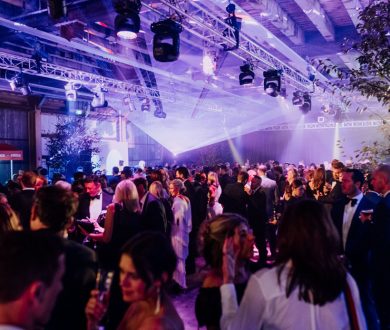
Last Friday evening saw an assortment of geometric lasers, undulating light installations and a neon archway illuminate Shed10 as it prepared to welcome a crowd of convivial partygoers, descending on the venue to celebrate our 2019 Denizen Heroes. The annual gala, presented by Chivas Regal proved an evening to remember. Mind-bending light features, courtesy of Angus Muir Design bathed the expansive spaces in an intriguing, after-dark glow, while the rousing tunes of guitarist ARLI, Nathan and Jaimie Haines and The Sweet Mix Kids ensured that once formalities we over, hitting the dance floor felt the only appropriate thing to do.
A purpose-built portrait studio took over one corner of the gala, where photographer extraordinaire Olivia Kirkpatrick snapped perfectly composed pictures of attendees (see those photos here), and dotted around the space were various food stalls, including a Chivas gelato stand offering deliciously creamy Chivas-infused Miann morsels coated in chocolate.
With the Chivas Regal bar serving an array of tantalising cocktails (devised by drinks specialists Black Pineapple Co.) including the crowd-pleasing Chivas Collins, the Shiso Heroic and the New Old Fashioned, and a jovial spirit driving a collectively good vibe on the night, it might have been our fourth Heroes Gala, but it was certainly the best one yet.
For more exclusive access to what the city has to offer, engaging content, excellent imagery and thought provoking commentary on the life that surrounds you, subscribe to Denizen magazine now.