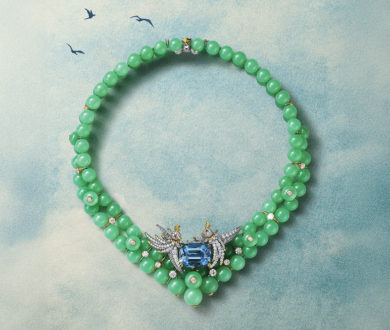



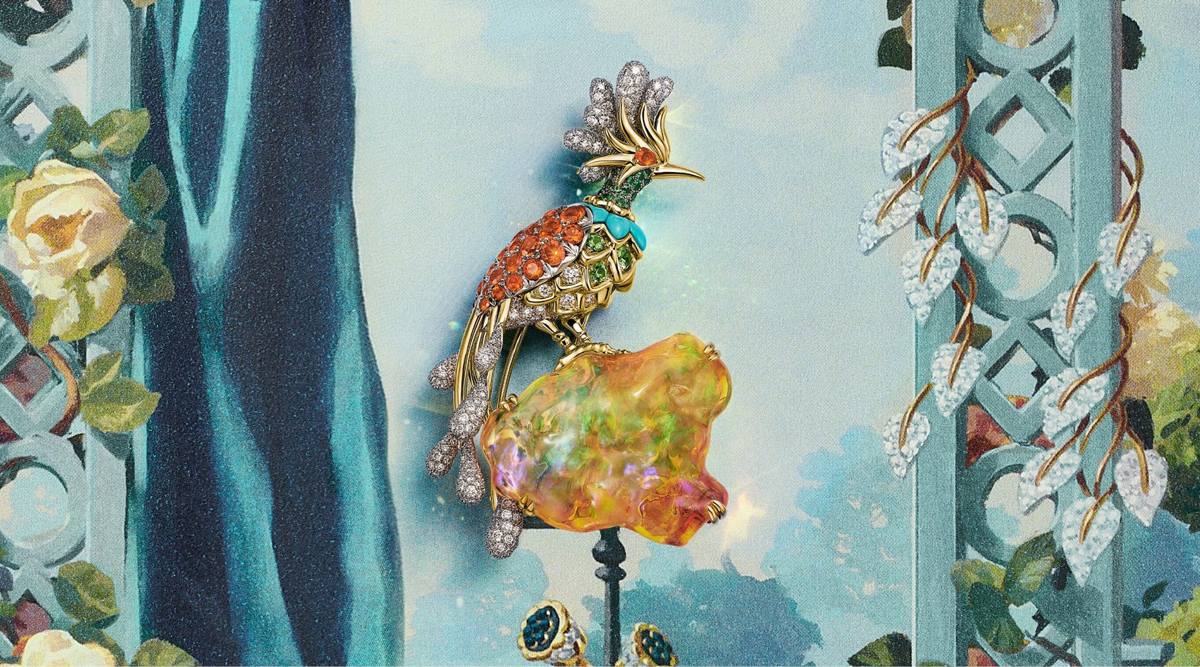
In Tiffany & Co.’s Blue Book 2026: Hidden Garden, nature is treated less as ornament than as a source of character, movement and transformation. Across the collection, Jean Schlumberger’s enduring fascination with flora and fauna returns through a contemporary lens, but it is the Paradise Bird chapter that gives the maison’s garden its most animated presence.
The chapter draws from one of Tiffany’s most recognisable design codes: Schlumberger’s Bird on a Rock. First conceived as a bird perched atop a remarkable gemstone, the motif has endured because it gives important stones a sense of wit and vitality, shifting high jewellery away from pure formality and into something far more distinctive. In Hidden Garden, that idea is expanded into a series of fantastical brooches, where each bird appears to have alighted by instinct on a gemstone chosen as much for its personality as its rarity.
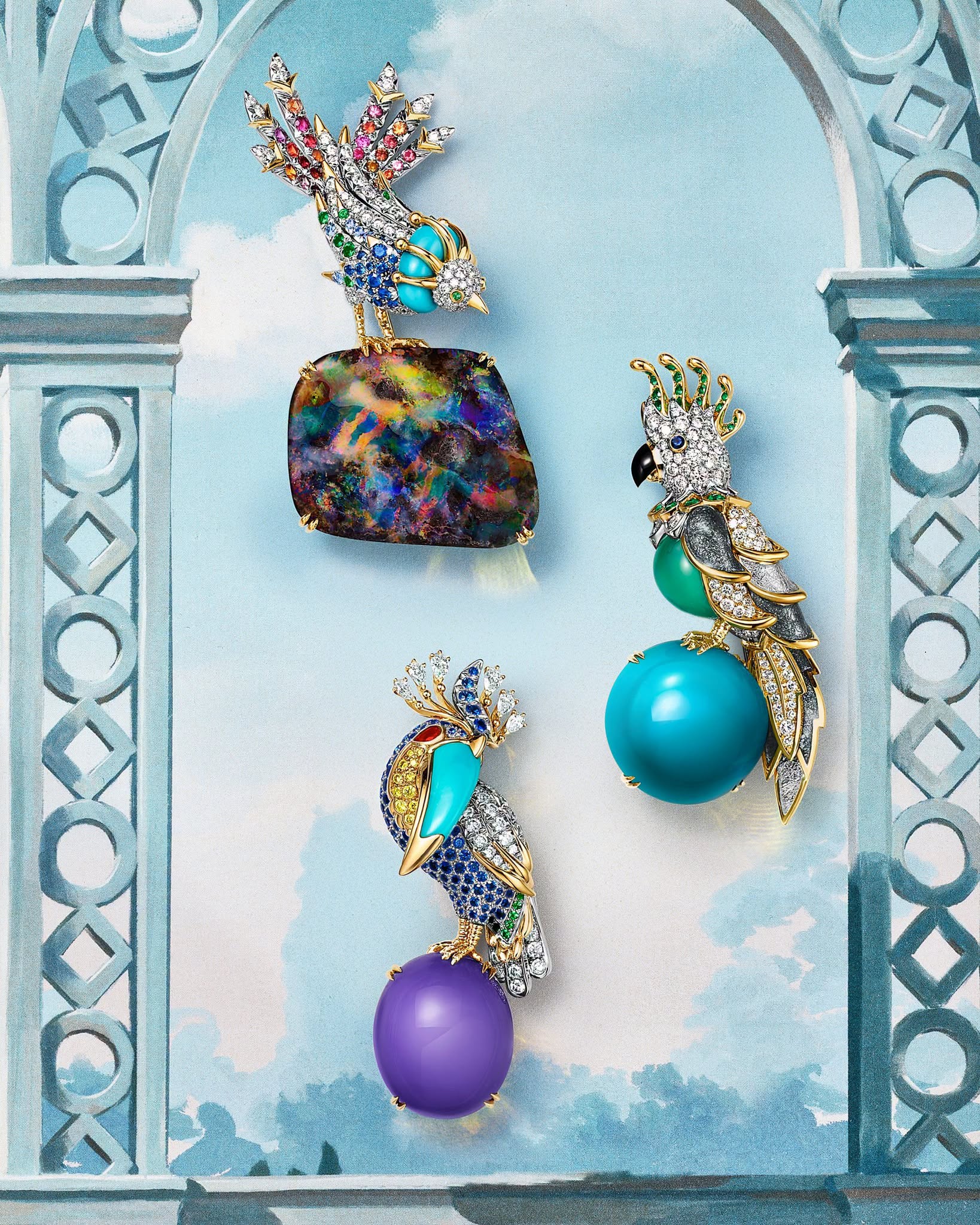
At the heart of the chapter are stones that do not behave as passive centrepieces. Australian boulder opal, American chrysocolla and Namibian unenhanced purple chalcedony each set the tone for the jewel that surrounds it, dictating the colours, textures and secondary stones used across the bird’s body. Rather than imposing a design onto a gem, Tiffany lets the stone lead. The result is a more nuanced kind of harmony, where a flash of enamel, a sweep of diamonds or a vivid coloured stone feels connected to the centre stone’s own internal world.
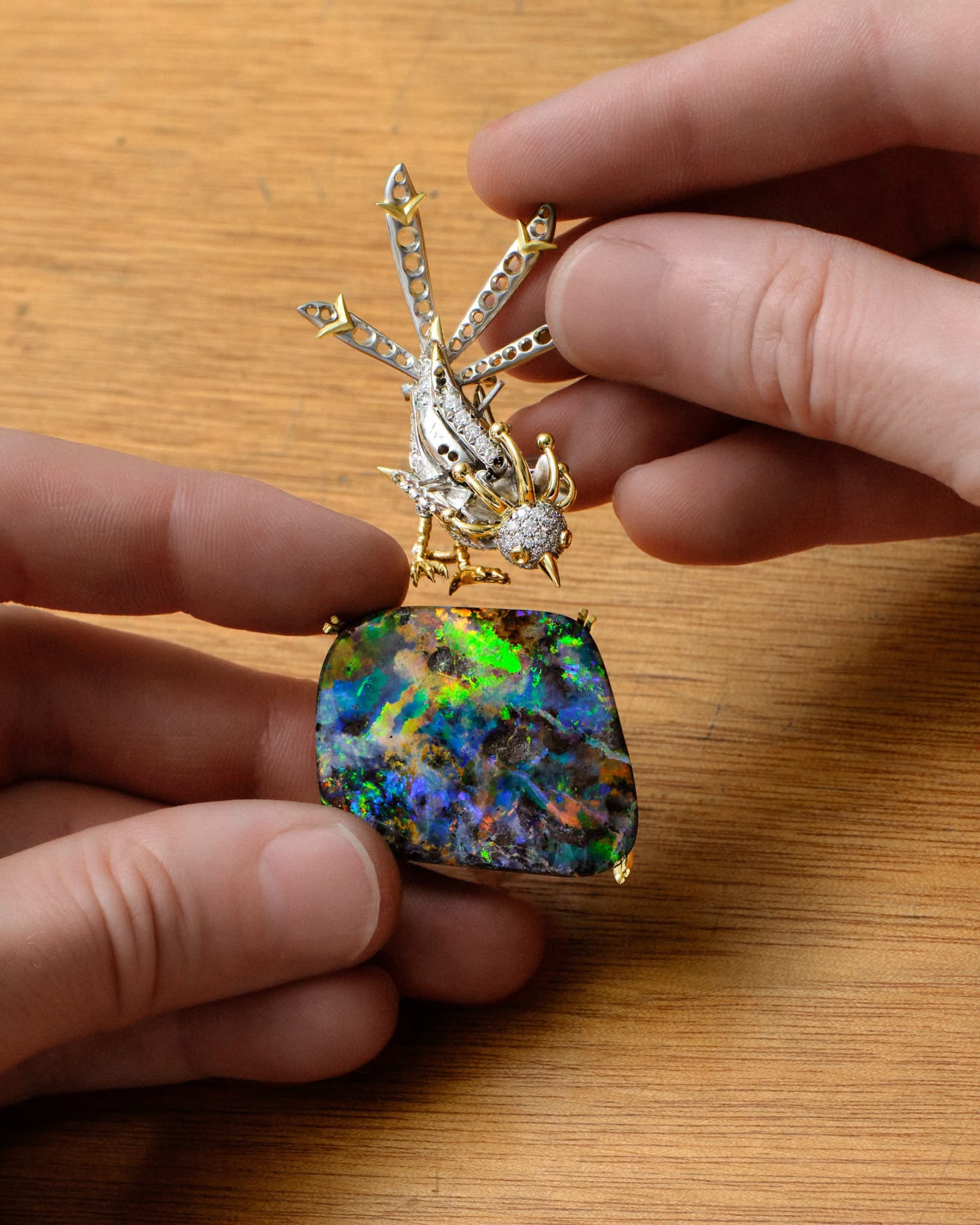
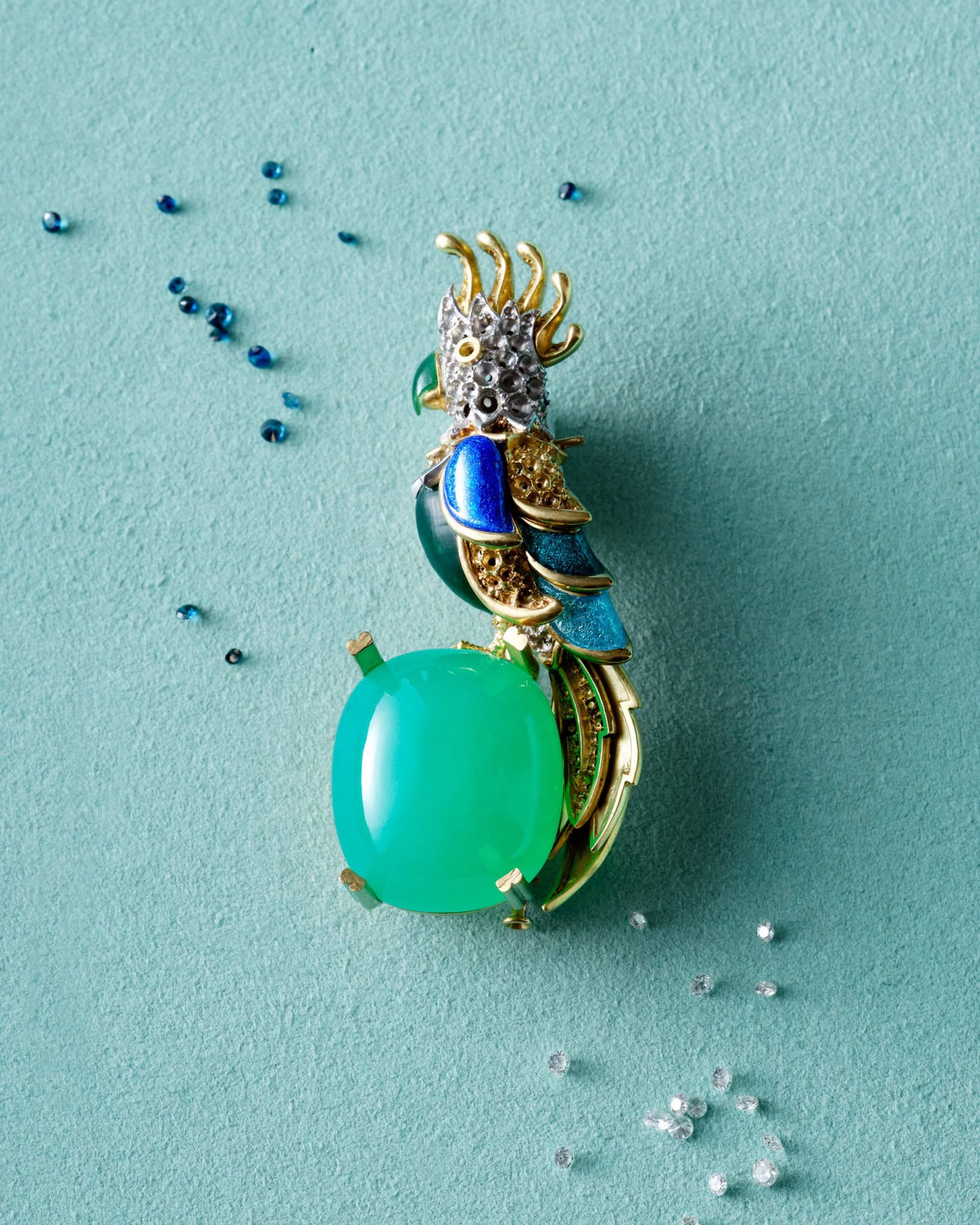
This is where the pieces become most compelling. A bird perched on boulder opal seems to borrow from the stone’s shifting fire, its plumage heightened by colour that feels alive in motion. Another, anchored by chrysocolla, takes on a cooler, more mineral quality, as though the bird has emerged from the stone itself. The purple chalcedony pieces introduce a different mood again, with their softly saturated centre stones giving the surrounding gem work a more dreamlike intensity.
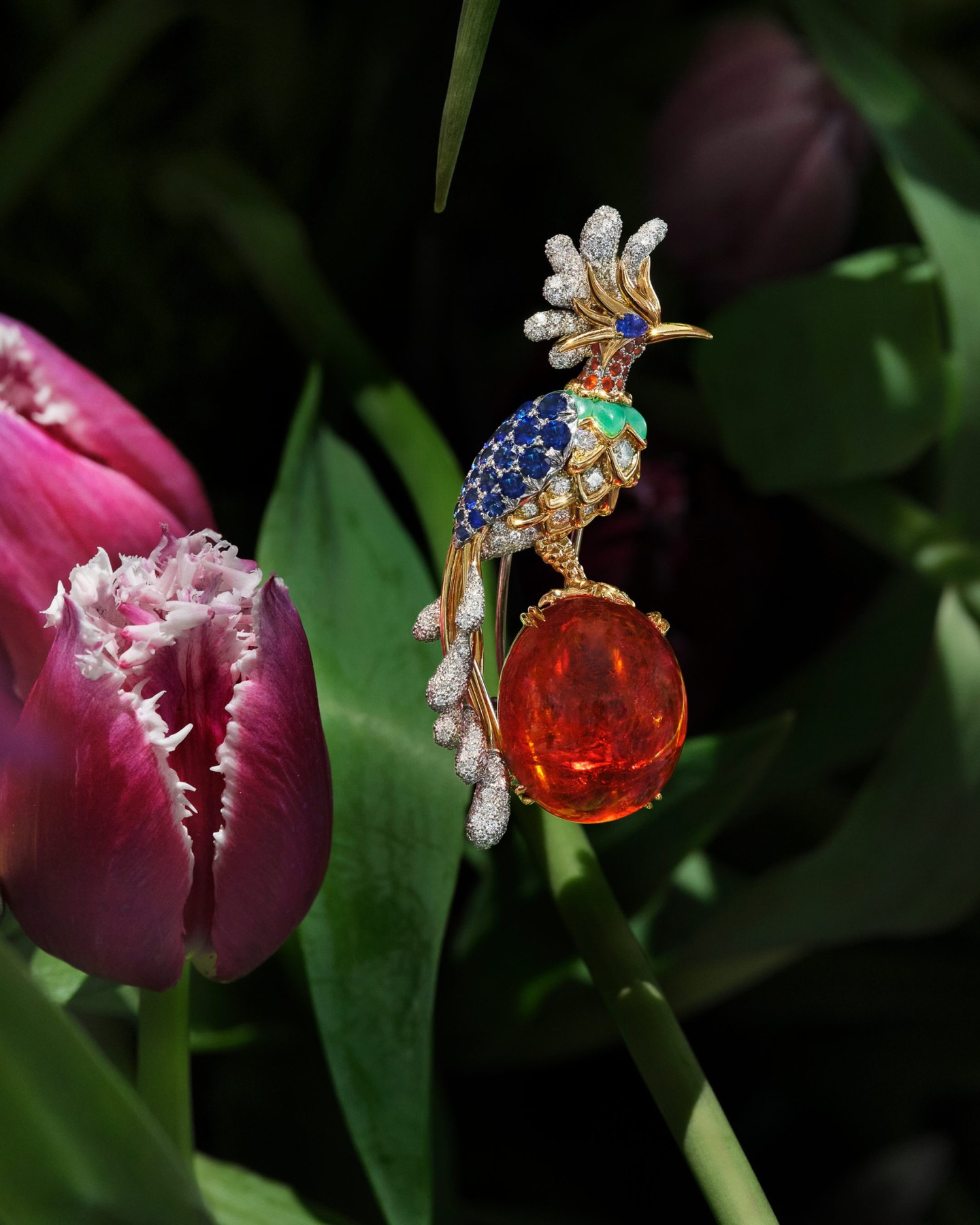
For all their fantasy, the brooches never lose the precision that high jewellery demands. Their appeal sits in the tension between imagination and control: the curve of a beak, the lift of a crest, the exact placement of gemstones across a wing. These details give the birds their character. They also make clear that the chapter is not simply revisiting an archival motif, but allowing it to evolve.
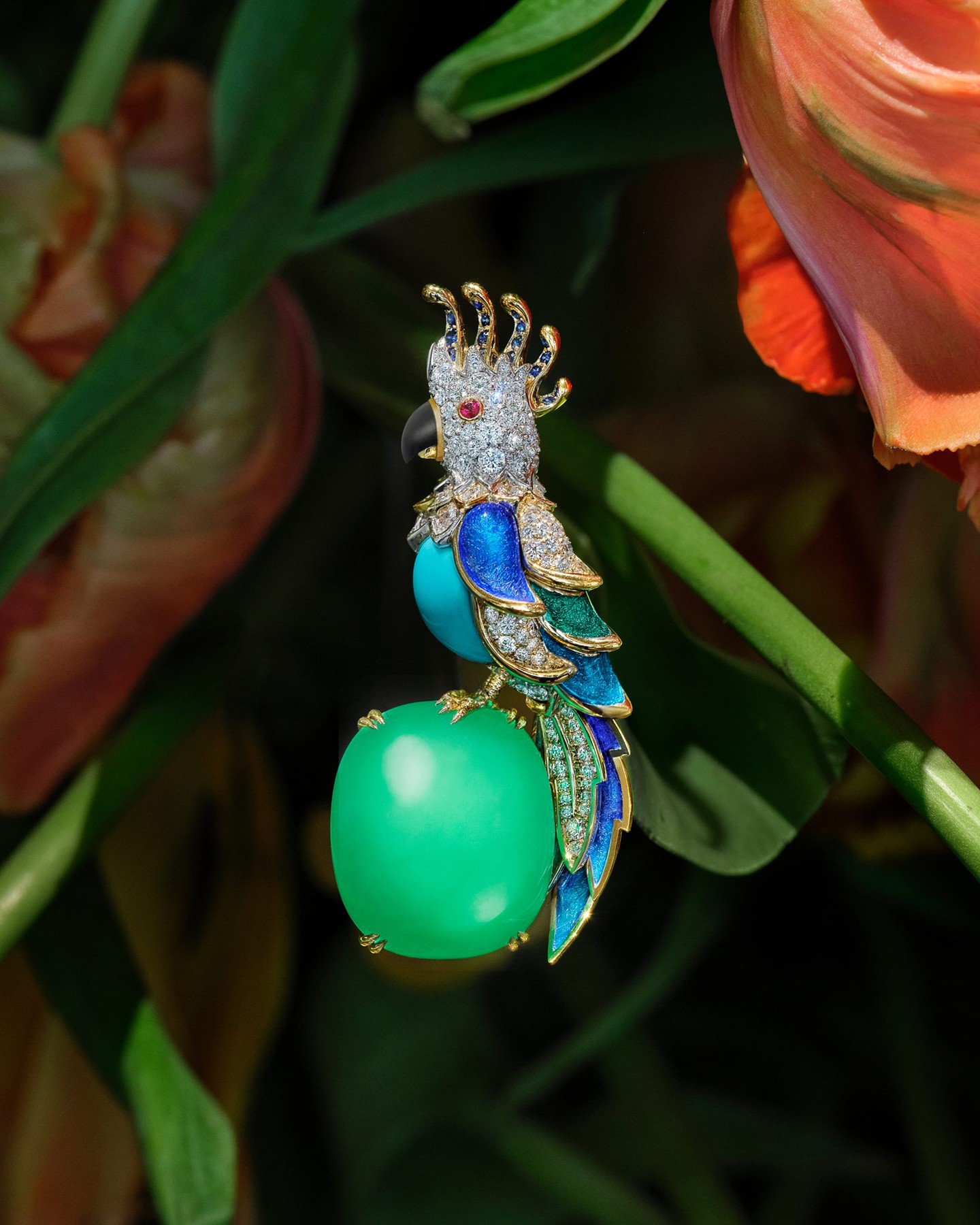
In the Paradise Bird chapter, Tiffany & Co. finds a way to make rarity feel spirited. The stones remain extraordinary, but they are not treated as static trophies. They become perches, bodies, habitats and points of departure, each one shaping the creature that sits above it. The garden may frame the collection, but these birds give it life.