


In partnership with Tiffany & Co.
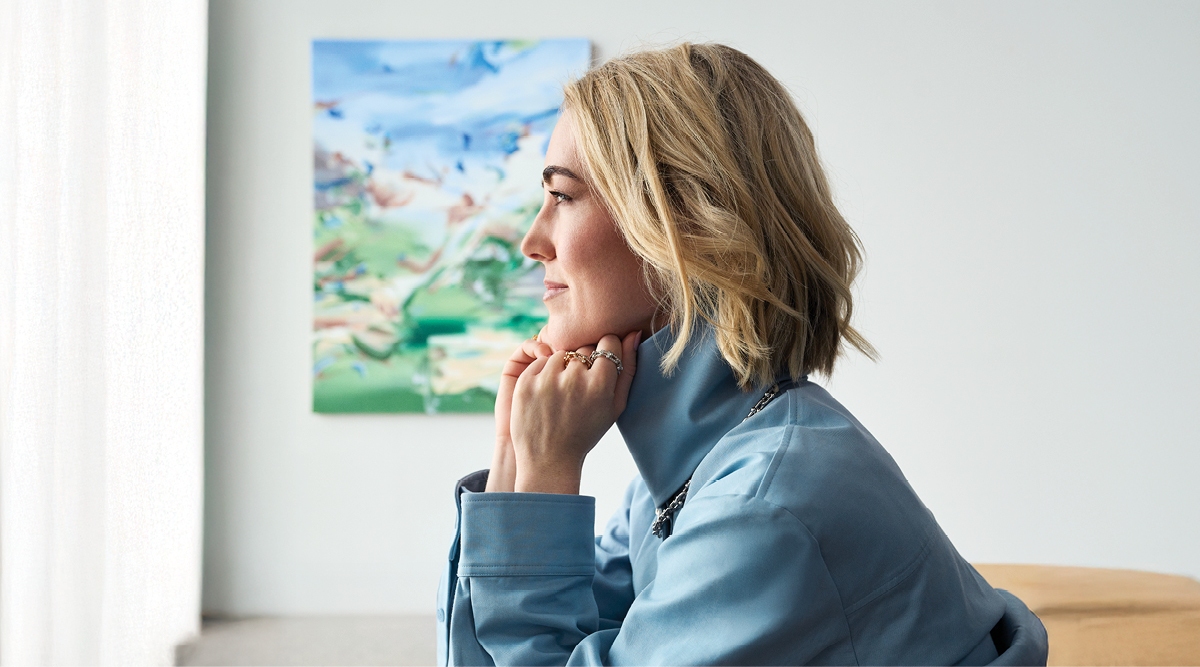
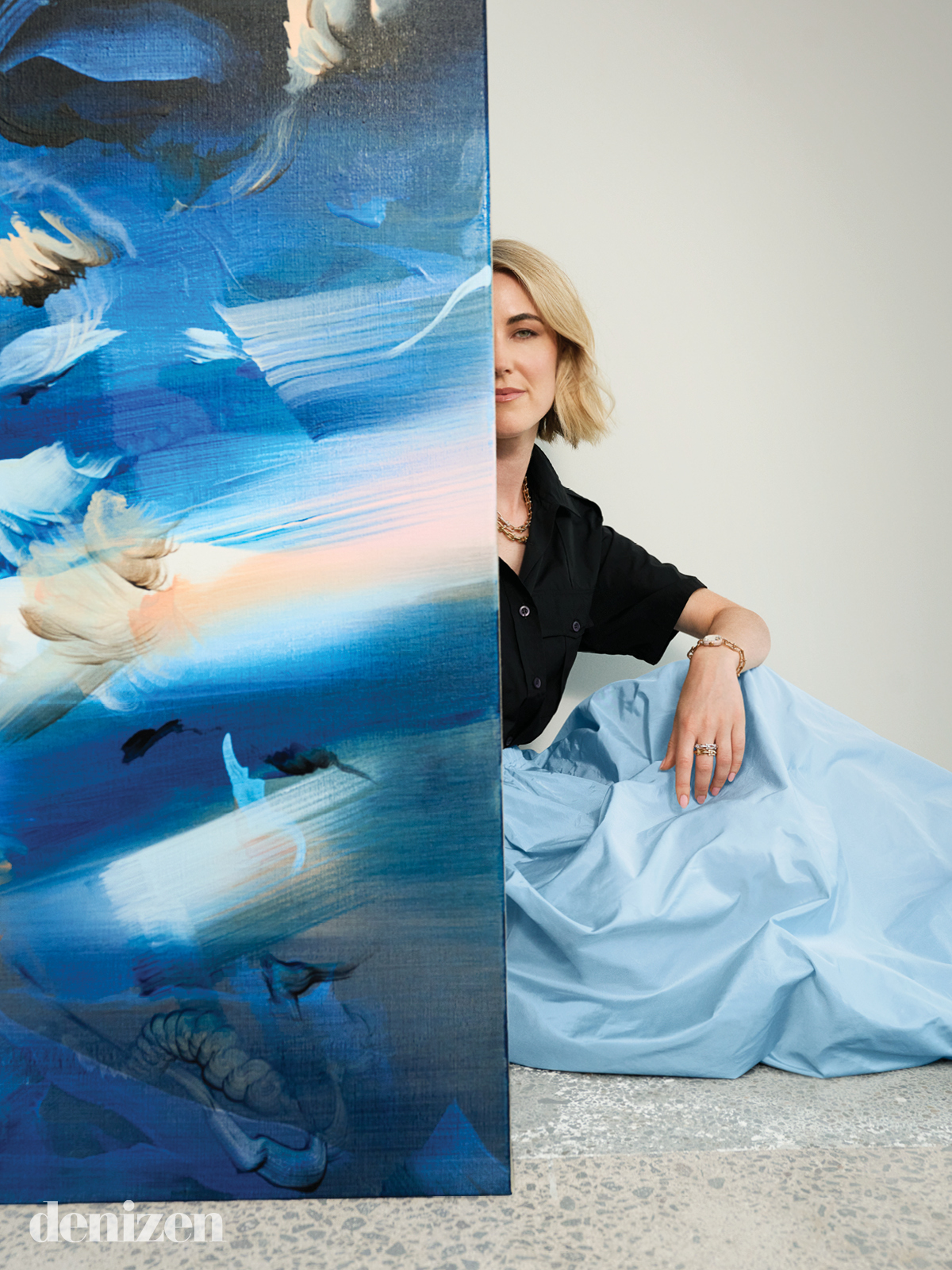
Abstract art has always lived on the edge of explanation, where instinct overtakes literal depiction, and the subconscious begins to steer the brush. When artists such as Hilma af Klint and Wassily Kandinsky turned away from representation in the early 20th century, they believed the painter could act as a conduit for something deeper than conscious thought. A century later, Auckland artist Grace Wright advances that lineage through a practice that feels both intuitive and rigorously controlled. Her canvases unfurl through coiling gestures and layered colour that echo the elements of Baroque painting and the rhythms of the natural world. Wright describes painting as an act of listening rather than imposing, allowing the work to surface through her, where instinct meets discipline, and the previously intangible gathers itself into poetic painted form.
Grace Wright does not speak of her painting as if she were inventing something. She speaks as if she is discovering it. The distinction is subtle but important. For Wright, the canvas is not a surface waiting to be filled with ideas. It is a place where something already forming begins to reveal itself. The artist’s role is not to impose meaning but to remain open, attentive, and disciplined enough for the work to arrive. She describes it with a quiet certainty that feels rare in an era where artistic identity is often framed through personality. “In the best paintings,” she says, “I feel like I’m almost channelling something. The work comes through me. My role is to create the conditions where that can happen.”
Those conditions are not mystical. They are carefully cultivated through rhythm, repetition and focus. Wright speaks about entering the studio with the same clarity an athlete might use to describe stepping onto a field of play. The creative state she seeks is not accidental. It is something she has learned to access deliberately. “You get good at going into the studio and switching that state on,” she explains. “Professional athletes do the same thing. They know how to move into a high-performance mindset rather than waiting for inspiration.” Yet within that disciplined approach, there remains space for something less controllable. The strongest works, she believes, emerge when the artist allows the painting to guide its own evolution. “Sometimes it feels like the work is calling me,” she says. “Like it’s saying, hurry up, get to the studio.”
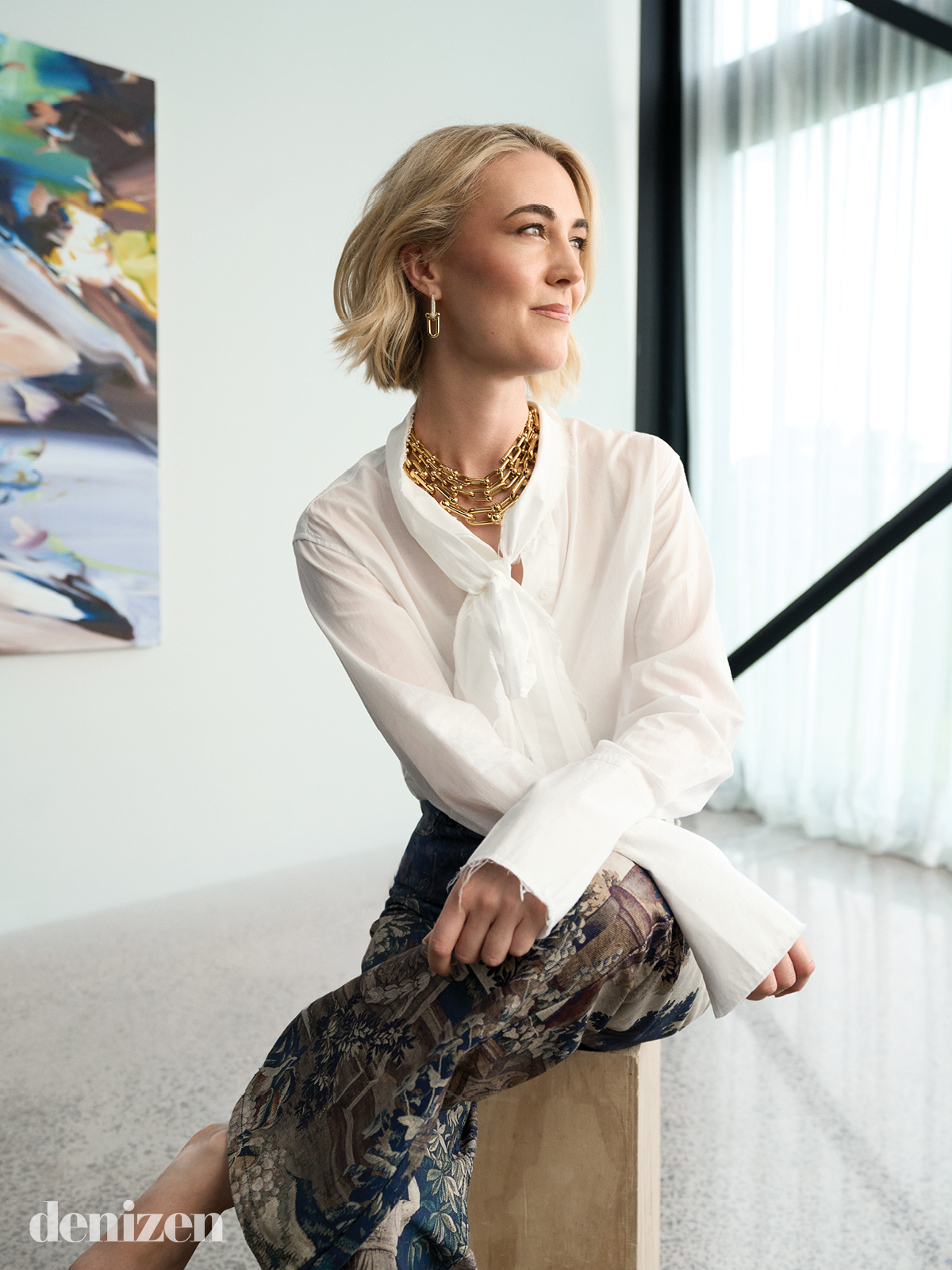
Rhythm sits at the centre of how Wright enters that state. Before painting became the primary language of her practice, she spent years immersed in music, studying piano, playing bass guitar and composing orchestral arrangements during her school years. Those experiences shaped how she understands structure and movement. “When I listen to orchestral music now, I can hear how the different parts move together,” she says. “You’ve got these melodies and rhythms layering over one another to create an atmosphere. That’s very similar to how the paintings develop.” The connection is not metaphorical. Music accompanies sessions in her studio. Wright gravitates towards cinematic scores whose expansive emotional landscapes shape the tempo of her work. Pieces from films such as Interstellar or Oppenheimer create an atmosphere in which gestures begin to unfold almost choreographically. “The music changes how I move,” she says. “Sometimes the brush turns slowly, and the gesture unwinds across the canvas. Other times, the movements are faster.”
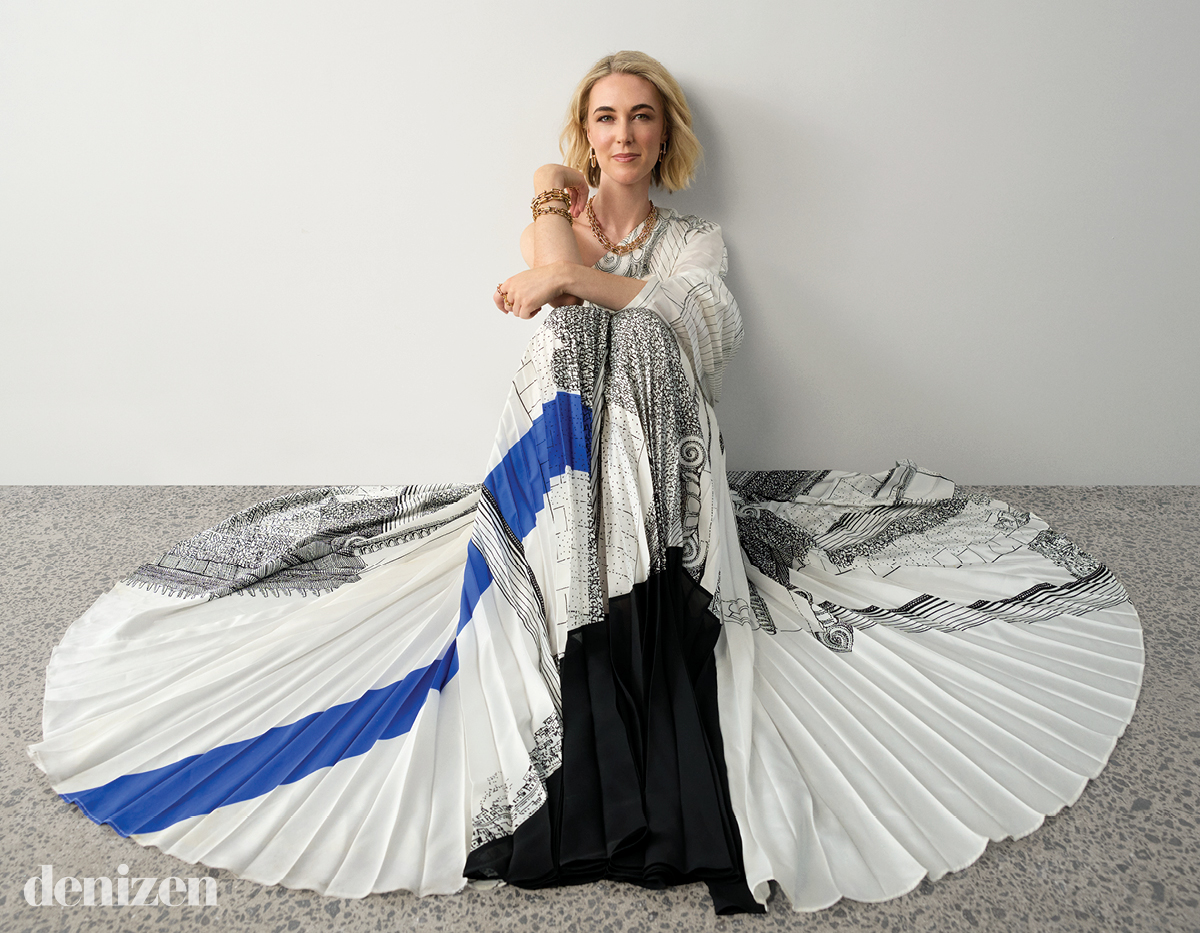
“Even when I step back and then move forward again, I’m still inside that rhythm.” What appears on the canvas carries the imprint of those movements. Wright often loads two colours onto a brush at once, allowing the pigments to twist and fold across the surface as the gesture unfolds. The result is a mark that feels dimensional and alive, almost bodily in its form. Yet the paintings do not emerge in a single dramatic burst. They grow gradually through a process of layering and returning. Wright tends to work in intense, focused sessions before stepping away to allow the surface to settle. “After a session, I’ll often lay the canvas flat and let it dry,” she says. “Then I come back to it again a couple of days later.” To prepare for a show, pieces develop simultaneously. While one painting rests, another moves forward, and gradually the studio fills with canvases occupying different stages of evolution.
“Having a base for my practice in Europe enables me to see these historic paintings in the real and to continue pushing the boundaries of my practice through experimentation.”
As a body of work accumulates, relationships begin to form between the paintings, Wright sees them less as isolated pieces and more as a network of energies interacting across the room. “There’s incredible momentum when you’re working on a whole show,” she says. “The works start feeding off each other.” She describes the arrangement as a kind of constellation, each canvas occupying its own position within a larger system. Some paintings lean toward complexity and density, while others remain deliberately restrained. Some carry tension while others release it. Together, they establish the exhibition’s atmosphere, much as individual instruments contribute to a larger composition. “They still all have their own identity,” she says. “They feel like separate entities once they’re finished.”
That sense of independence is central to how Wright understands authorship. She does not see the paintings as autobiographical reflections. Instead, she speaks about them as works that exist beyond the artist who made them. “Even when I was at art school, I always felt the work was separate from me,” she says. “There’s me, and then there’s the painting. I’m more like the guardian of it.” The idea removes a certain pressure from the act of making. Rather than forcing the work toward a predetermined outcome, Wright remains attentive to what is already emerging on the surface. It’s a dance between intention and intuition. “On the one hand, I’m letting the painting guide what comes next, and on the other I’m stepping back and making decisions from a more conscious place”. Understanding when a painting is finished comes almost instinctively. “I know it’s done when the energy starts circulating through it on its own,” she says. “It feels like it has its own gravity.”
Alongside this physical process runs a philosophical curiosity that has deepened throughout Wright’s career. She has long been drawn to the intersection of spirituality and science, particularly the language physicists use when describing forces that cannot be directly observed. The appeal lies not in mastering scientific theory but in the imaginative reach of the ideas themselves. “I love the way some scientists write about trying to understand something that is still unknowable,” she says. “They’re trying to imagine the unimaginable.” These ideas formed the basis for her 2025 exhibition Grand Illusions at Auckland-based gallery Gow Langsford, which has represented Wright since 2020. Drawing upon her fascination with physics, these large immersive works were neither literal representations of the natural world nor entirely invented. They were attempts to visualise structures that sit beneath visible reality. “I was trying to describe something you can’t quite see,” she says. “Like what a quantum field would look like, or time slowing down around a planet. ”
This interest in physics is a natural extension of Wright’s fascination with the spiritual potential of abstract painting, which she explored during her Master of Fine Arts at Elam School of Fine Arts in 2018 and 2019. Her graduating thesis explored how abstraction was an ideal vehicle for embodying a spiritual experience, both for the audience and the artist. Yet while this sense of connection was important for many artists in the early 20th century, regardless of gender, it was often used to discredit the work of women artists. “Working at a large scale allows me to push against that, much like Hilma [af Klint] did. In history, large paintings were often the domain of men. I’m inspired by the feeling you get when you stand in front of a work that totally immerses you; it’s a spiritual sense in which you’re catapulted into the present and aware of your body in space. My work is an attempt to recreate that sense of monumentality but to do so as a female body.”
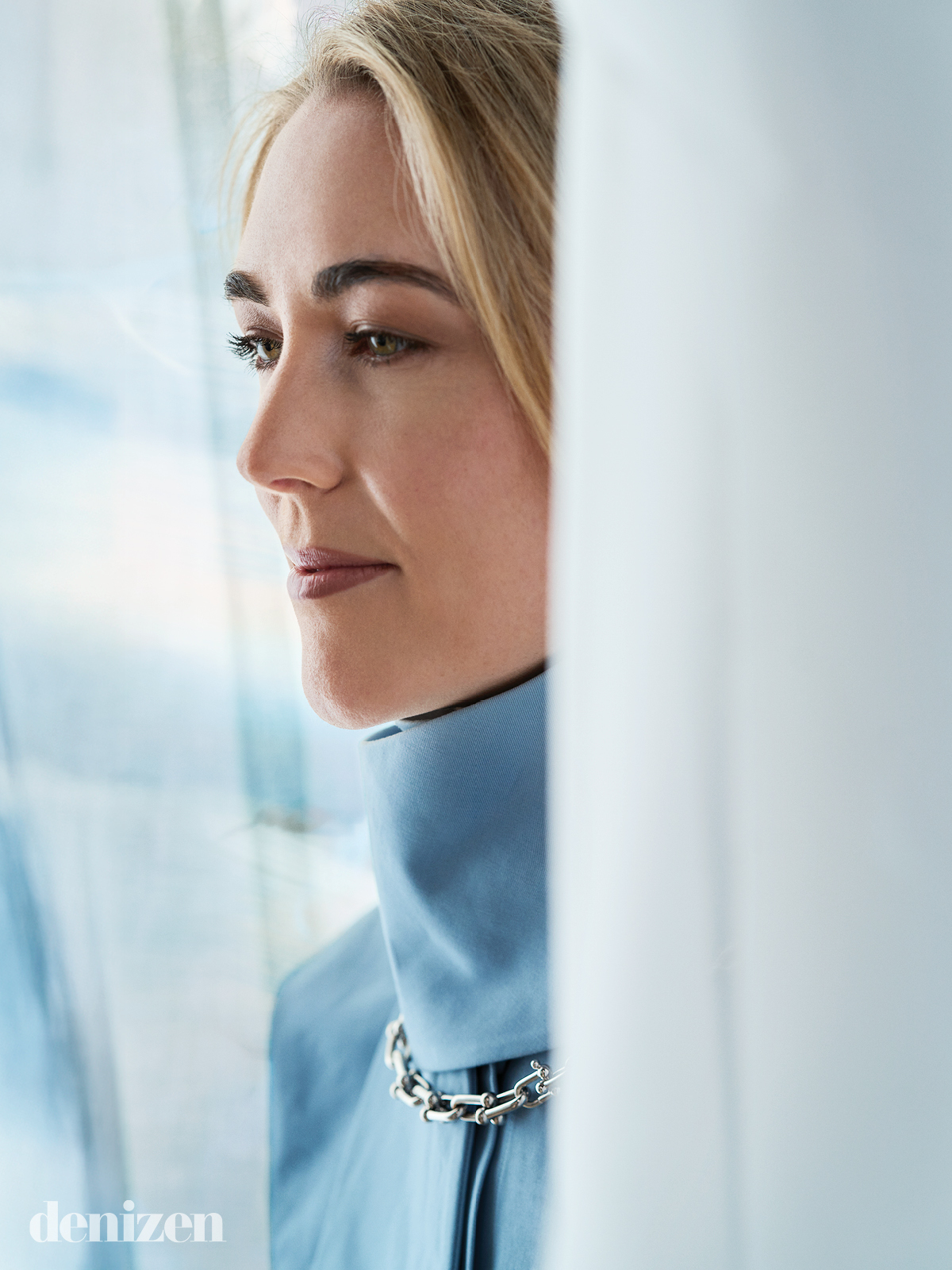
Her time working in Paris has sharpened that sense of inquiry. For several years, Wright has spent extended periods living and painting in the city, often returning for two-month stints. The change of environment has gradually shaped how she thinks about time, history and artistic continuity. “Paris has this extraordinary layering of culture,” she says. “You’re surrounded by centuries of art, architecture and philosophy.” The city’s atmosphere encourages a slower, more reflective rhythm. It is also an opportunity to experiment. “During my Master of Fine Arts, I experimented with oil paints, which suddenly opened this historical atmosphere in the work that I’ve been playing with ever since.” Drawing upon the formal components of Baroque painting, such as chiaroscuro lighting and strong diagonal forces, allows Wright to create an immediate sense of drama and tension in her work without referencing actual bodies or landscapes. “Having a base for my practice in Europe enables me to see these historic paintings in the real and to continue pushing the boundaries of my practice through experimentation” Museums become part of daily life. A morning in the studio might be followed by an afternoon standing before works created hundreds of years ago. “Those paintings are still completely alive,” she says. “They were made centuries ago, but you’re experiencing them now.” The thought has stayed with her. Painting possesses a strange temporal quality. The gesture made by an artist centuries earlier remains physically present in the paint surface, waiting to be encountered again.
“I was trying to describe something you can’t quite see. Like what a quantum field would look like, or time slowing down around a planet.”
If Paris reveals the density of human history, Antarctica offered Wright a glimpse of something even more expansive. She travelled there recently, drawn by the starkness of a landscape almost entirely untouched by human intervention. The experience left a lasting impression. “It gives you a sense of the truth of nature,” she says quietly. “You realise how small human life actually is.” Antarctica exists outside the rhythms of civilisation. Wildlife moves through the environment with an ease that highlights the fragility of human presence. What struck Wright most was the altered sense of time. In the dry polar climate, objects remain visible far longer than they would elsewhere. Decay slows almost to a standstill. “You might see something that’s been there for decades,” she says. “Time feels compressed there. The past is still present.”
That realisation fed directly into her thinking about painting and duration. Wright often returns to a concept borrowed loosely from physics, the suggestion that time may not exist in the fundamental equations governing the universe. Painting behaves in a way that is strangely similar. The moment of creation may lie in the past, but the work itself remains active in the present. “When you stand in front of a painting from the 1500s, you’re seeing it now,” she says. “So the idea of time collapses.” The paint surface carries the gestures of the artist’s hand across centuries. But the encounter and the impression it leaves recur each time someone stands before it, regardless of the passage of time.
“I’m inspired by the feeling you get when you stand in front of a work that totally immerses you; it’s a spiritual sense in which you’re catapulted into the present and aware of your body in space.”
It is this quality that shapes how Wright imagines the future life of her own work. She does not frame the question in terms of legacy or recognition. Instead, she returns to the simple fact that paintings continue to exist long after the circumstances of their creation have faded. She likes the idea that someone centuries from now might encounter one of her canvases and respond to it through the lens of their own time. “I would love to think that in two hundred years someone might stand in front of one of my paintings and experience it in a way that feels relevant to them,” she says. “The interpretation might be completely different from how we understand it now.” The cultural context will inevitably change. Yet the painting remains present, still carrying the energy embedded within it when the work was first made. “That’s what happens when we look at historical paintings,” she says. “They were created in another era, but they still can resonate with us now.”
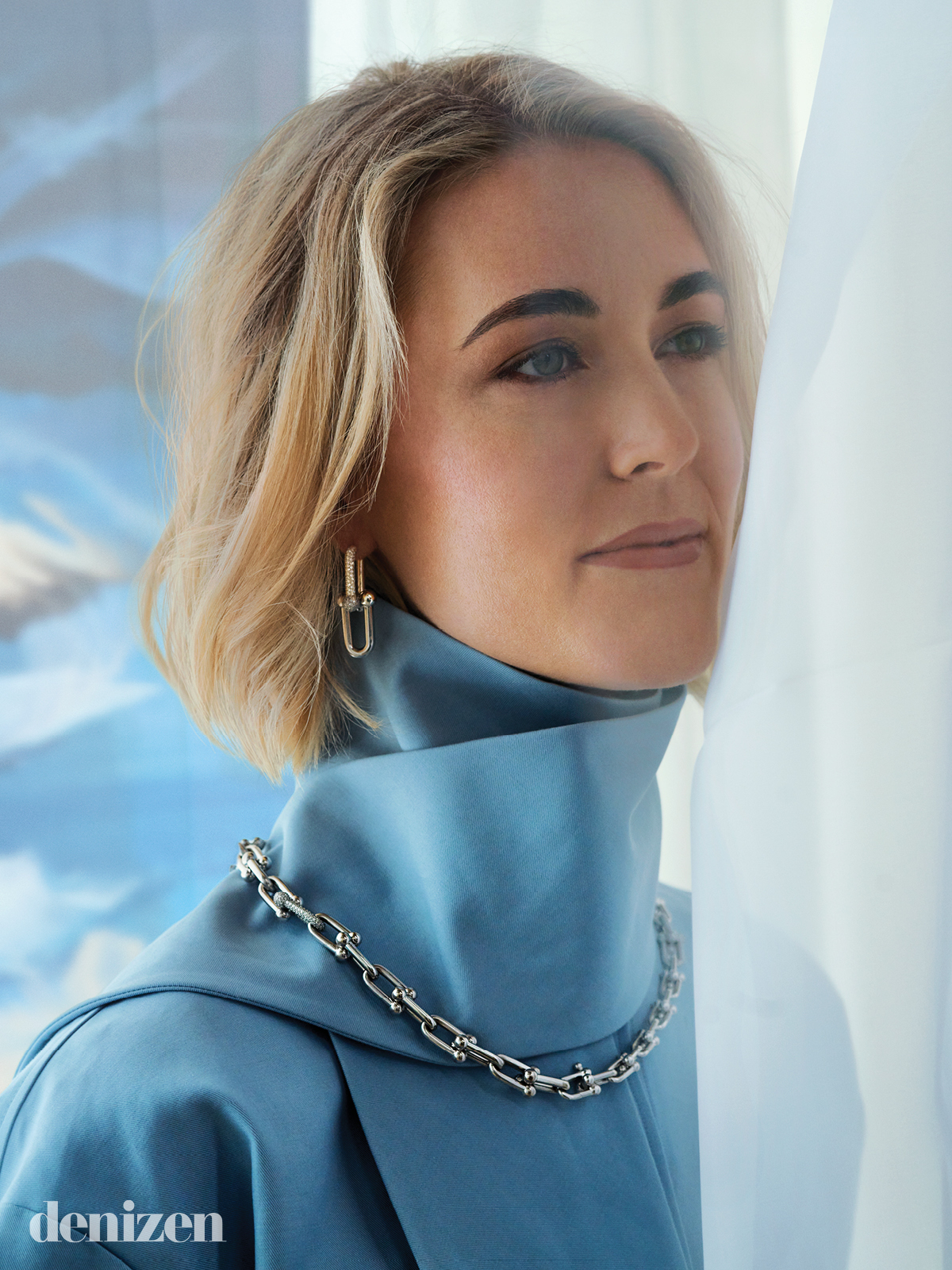
For Wright, that continuing presence is the most compelling aspect of painting as a medium. It transforms the act into something that extends far beyond the moment it was created. The gestures laid down today may continue speaking long after the artist herself is gone. Each painting becomes a point of contact between different moments in history, allowing viewers to bring their own experiences and interpretations into the work. “The meaning can evolve,” she says. “What matters is that the painting still feels alive.”
That sense of aliveness is ultimately what Wright seeks each time she enters the studio. The process begins with colour, movement and rhythm, but gradually something else emerges. Layers accumulate, gestures settle, the atmosphere deepens. At a certain point, the work begins to stand on its own terms. The painting no longer needs guidance. It carries its own momentum. When that moment arrives, Wright steps back and lets it go. The canvas leaves the studio and begins its life in the world, encountering viewers who will see it through entirely different lenses. The artist begins the process, but the work continues long after she has finished. “I’m just the guardian of it,” Wright reflects thoughtfully. “The painting exists beyond me.”
Grace Wright is represented by Gow Langsford. Her work will be on view at the Aotearoa Art Fair, 30 April – 3 May 2026, Viaduct Events Centre, Auckland.
Photography — Veronika Sola | Styling — Claire Sullivan-Kraus | Creative Direction — Anna Saveleva | Videography — Kevin Ku | Hair & Makeup — Emily Zganiacz