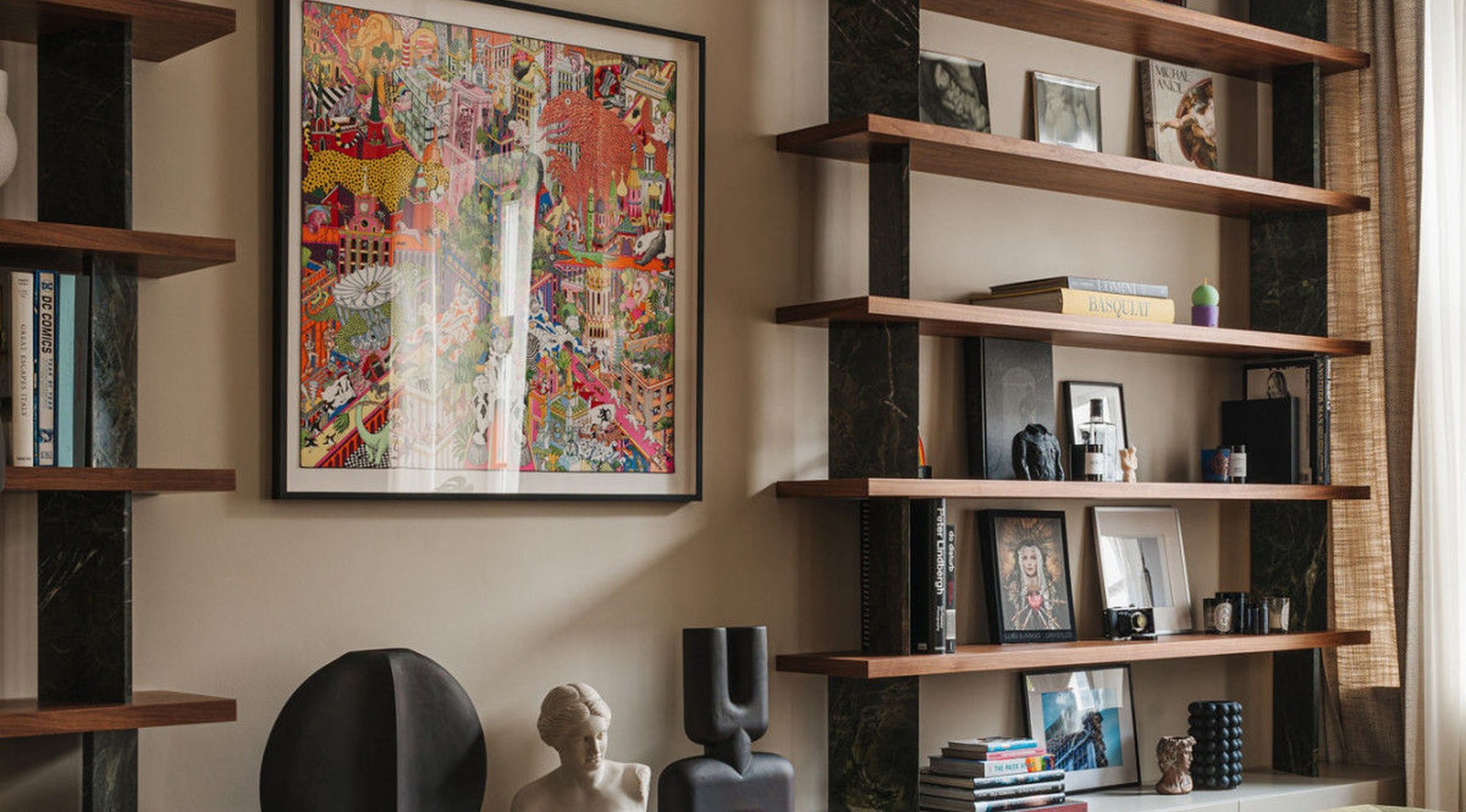
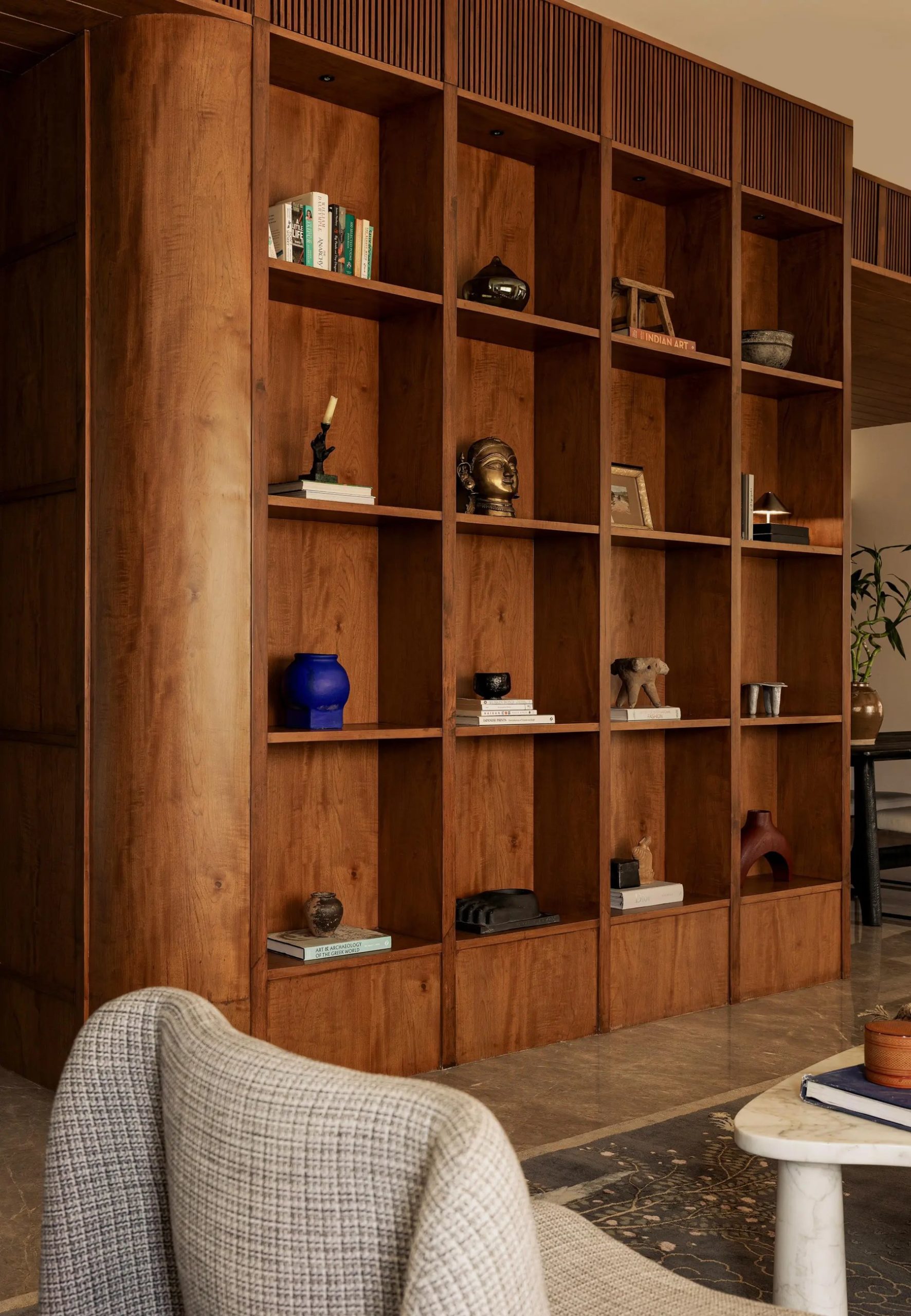
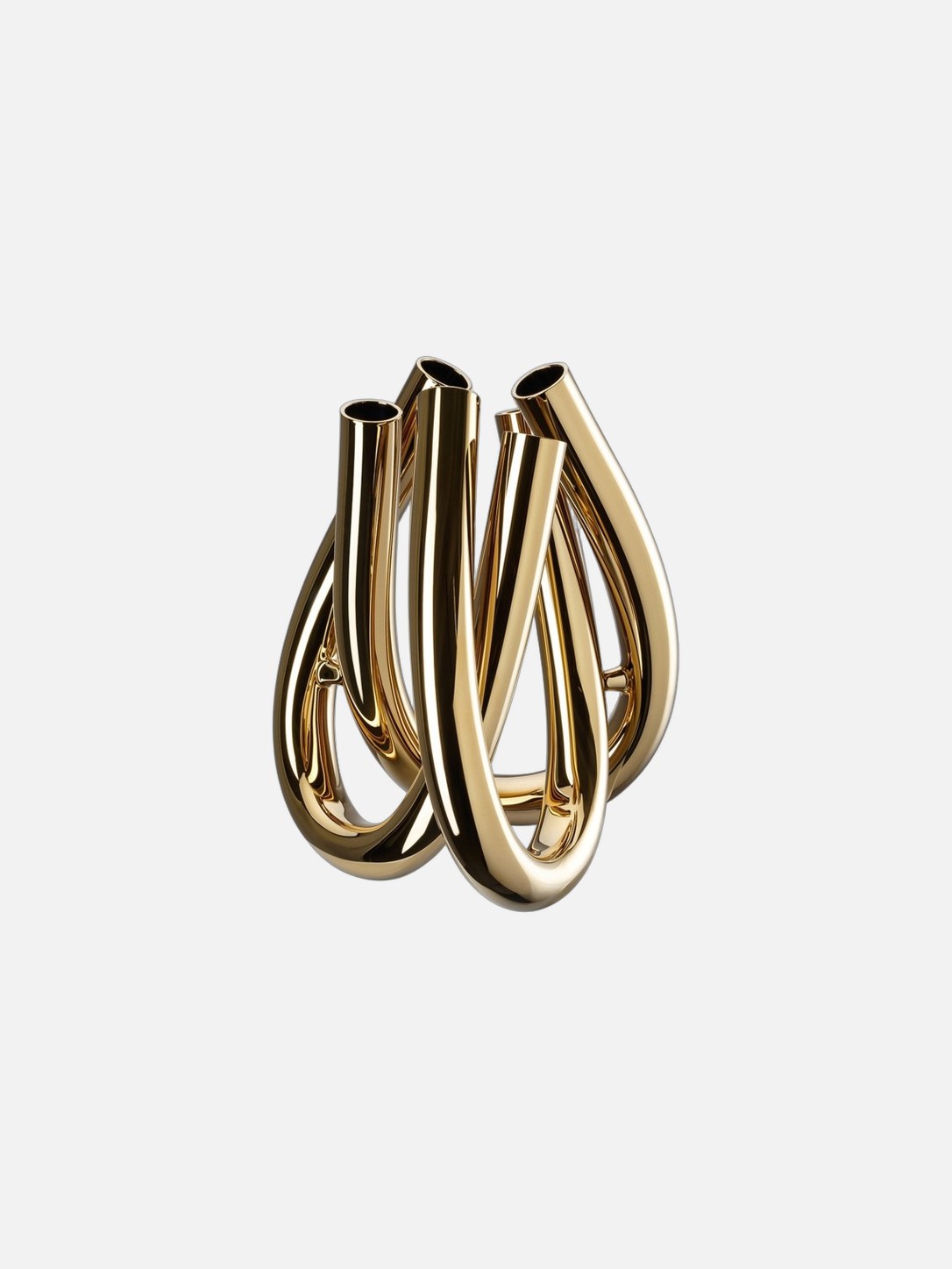
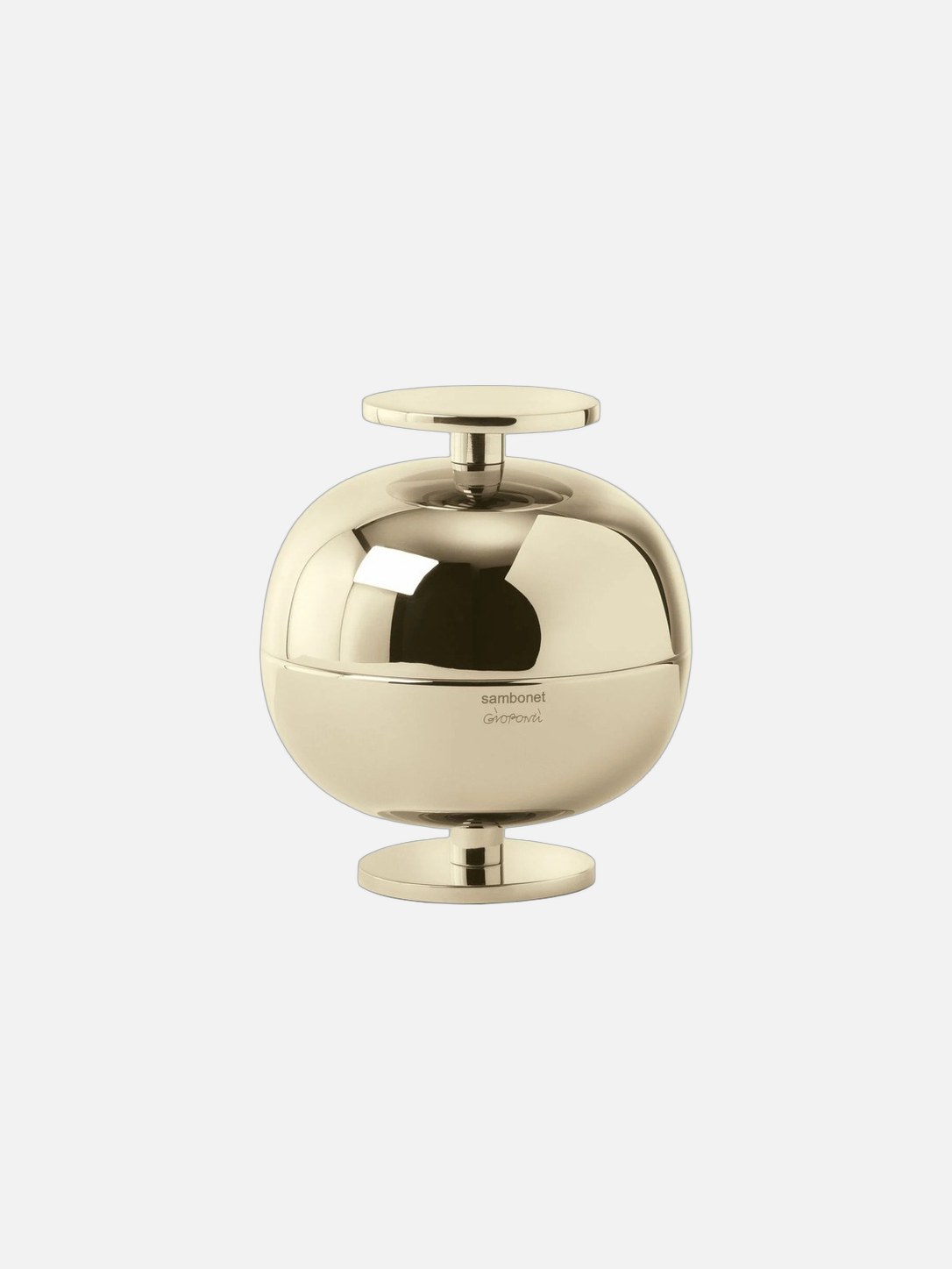
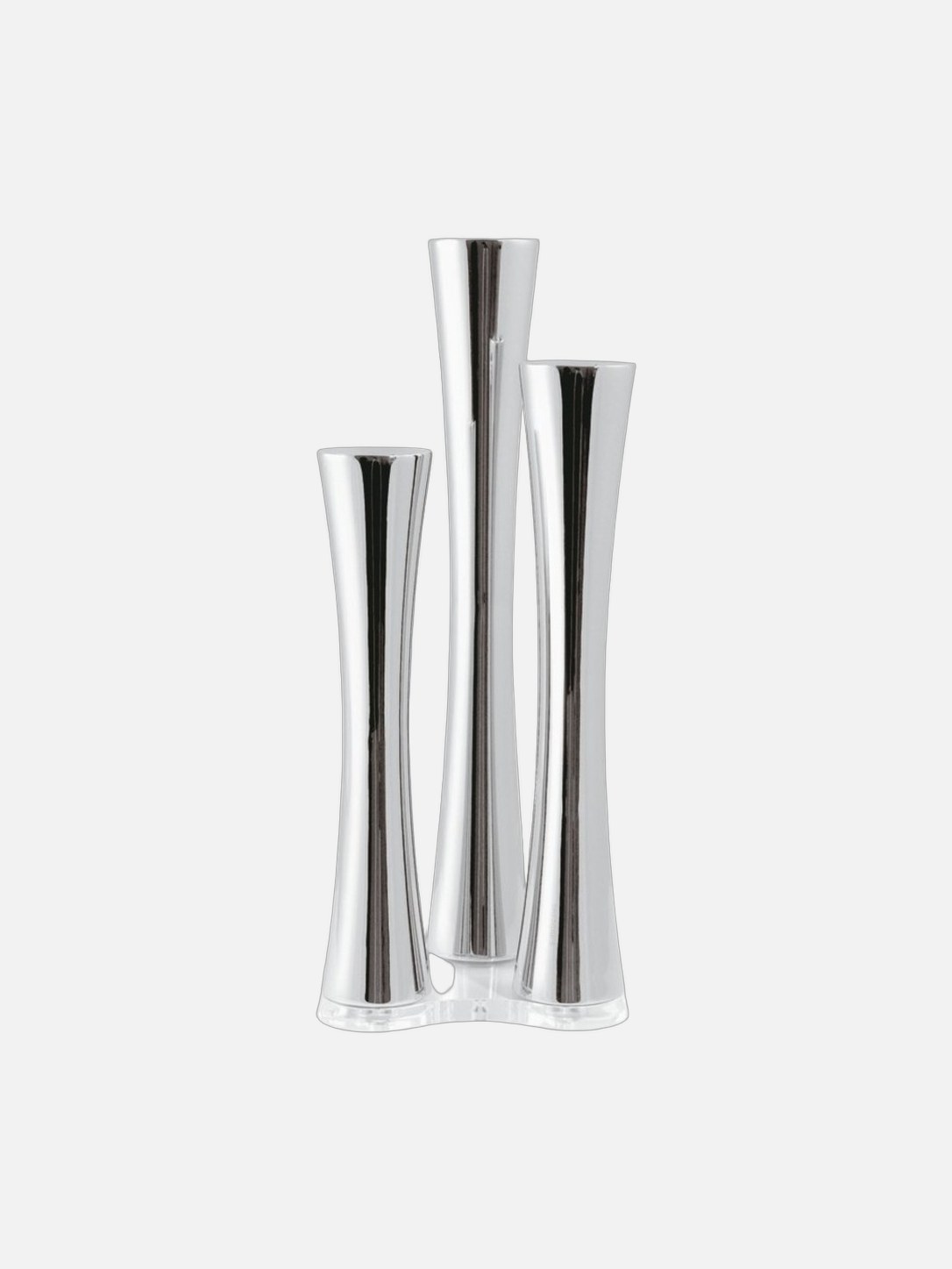
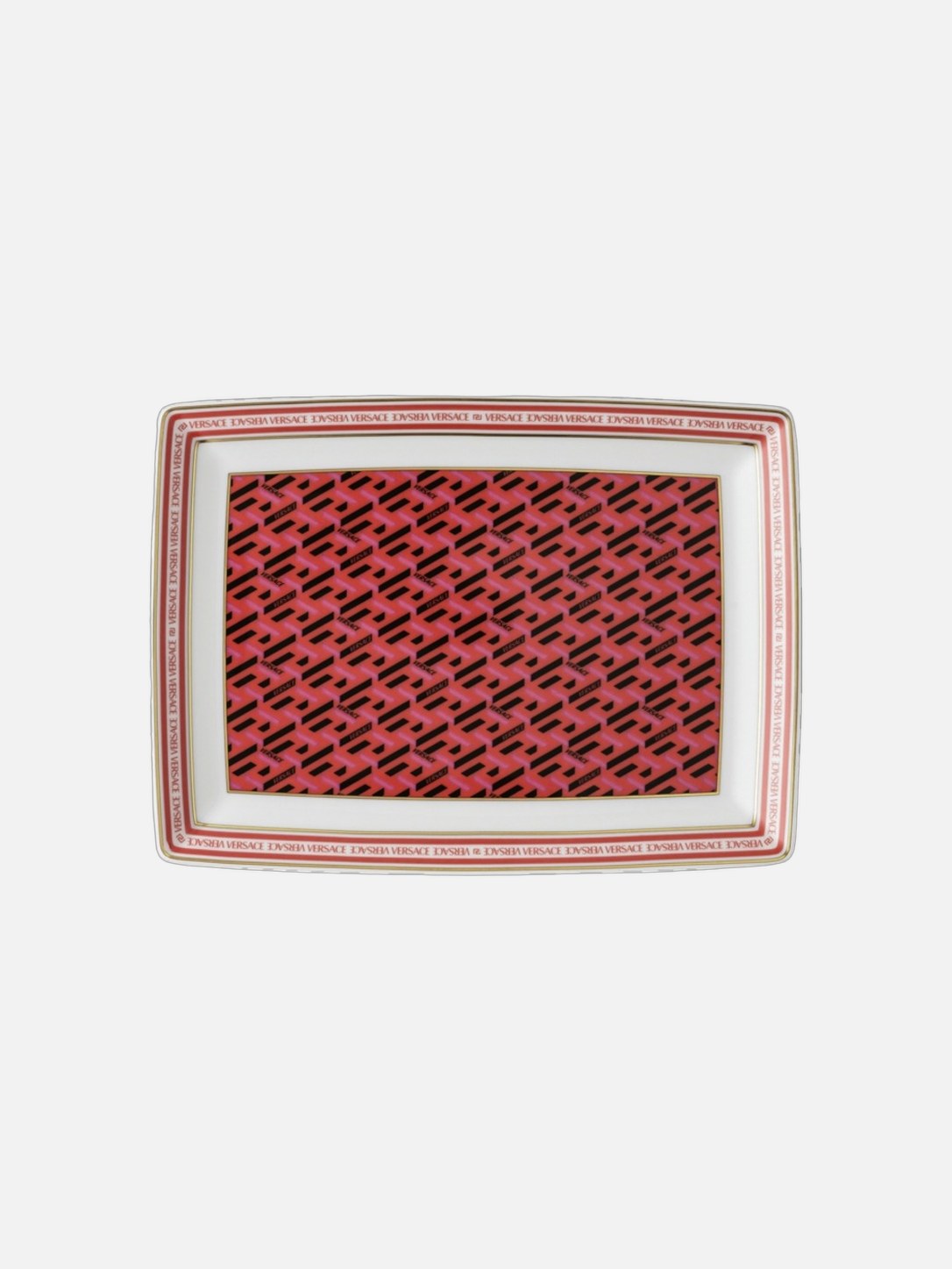
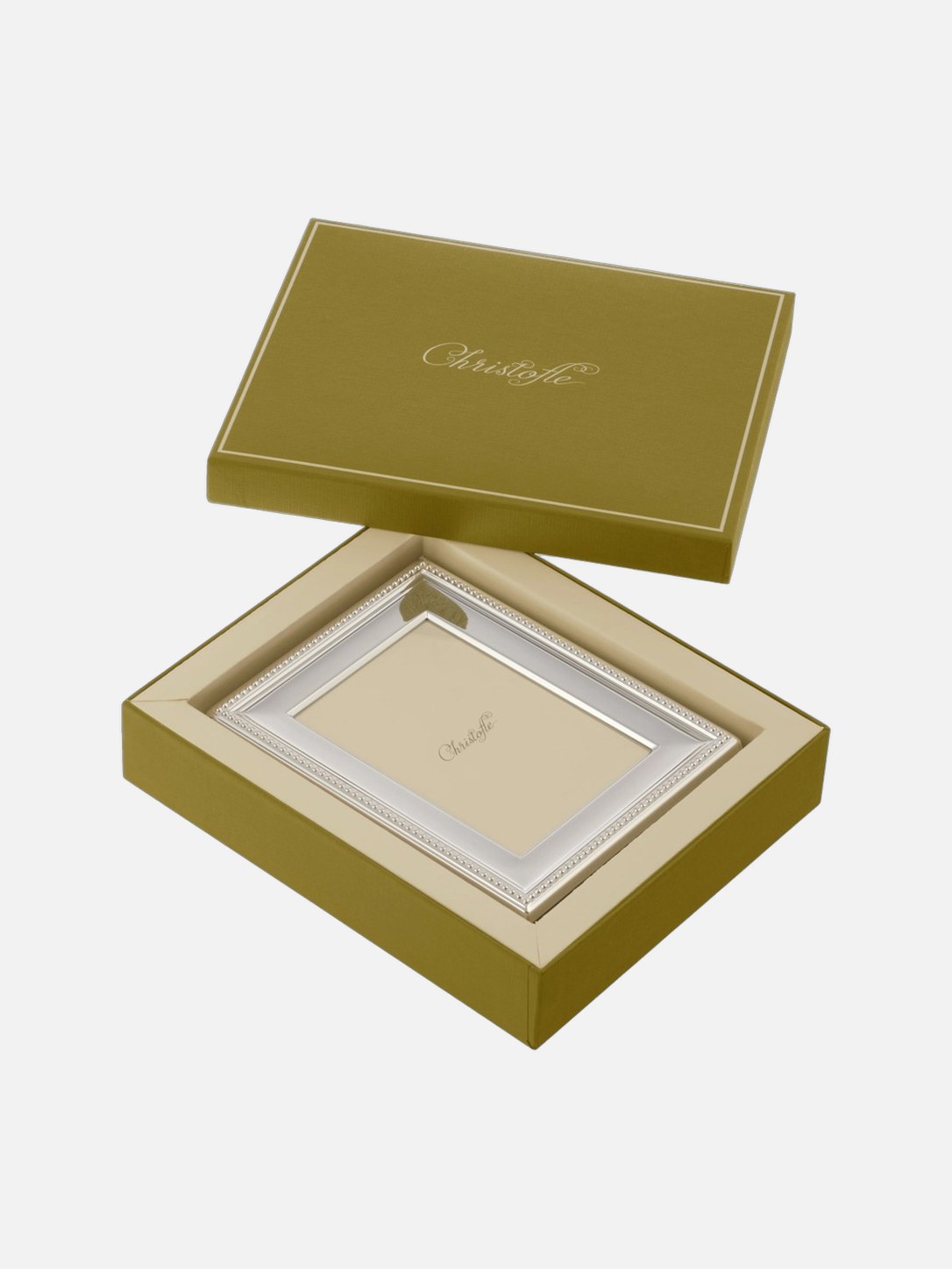
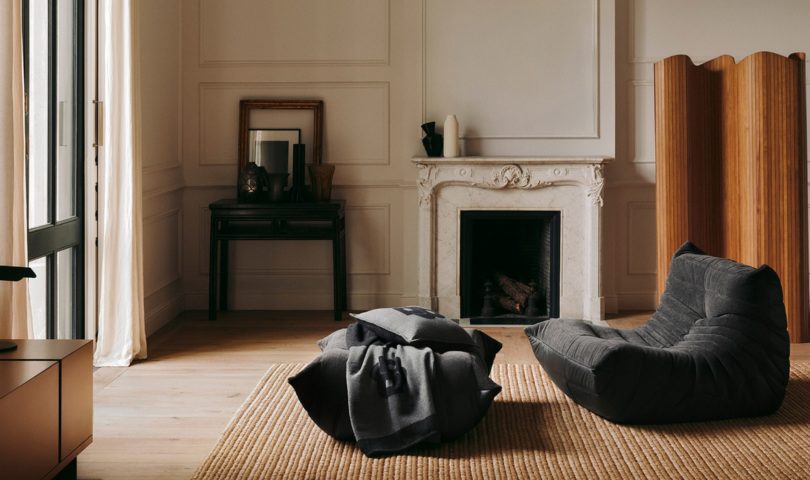
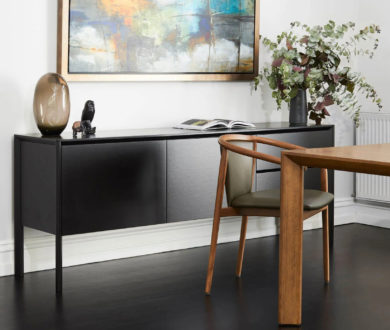
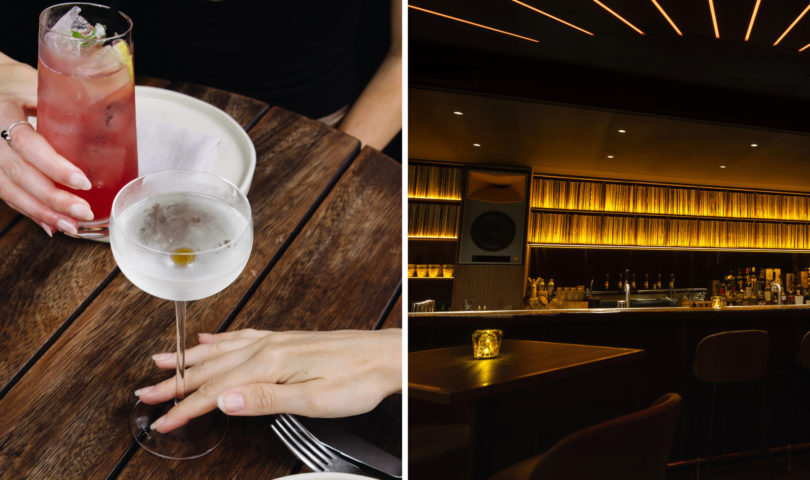
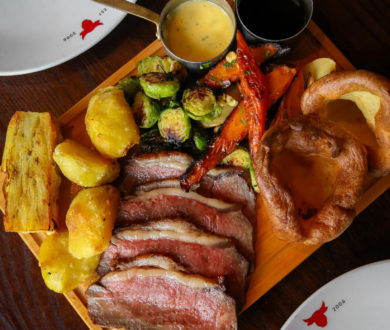
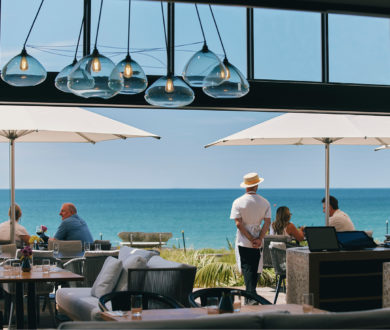
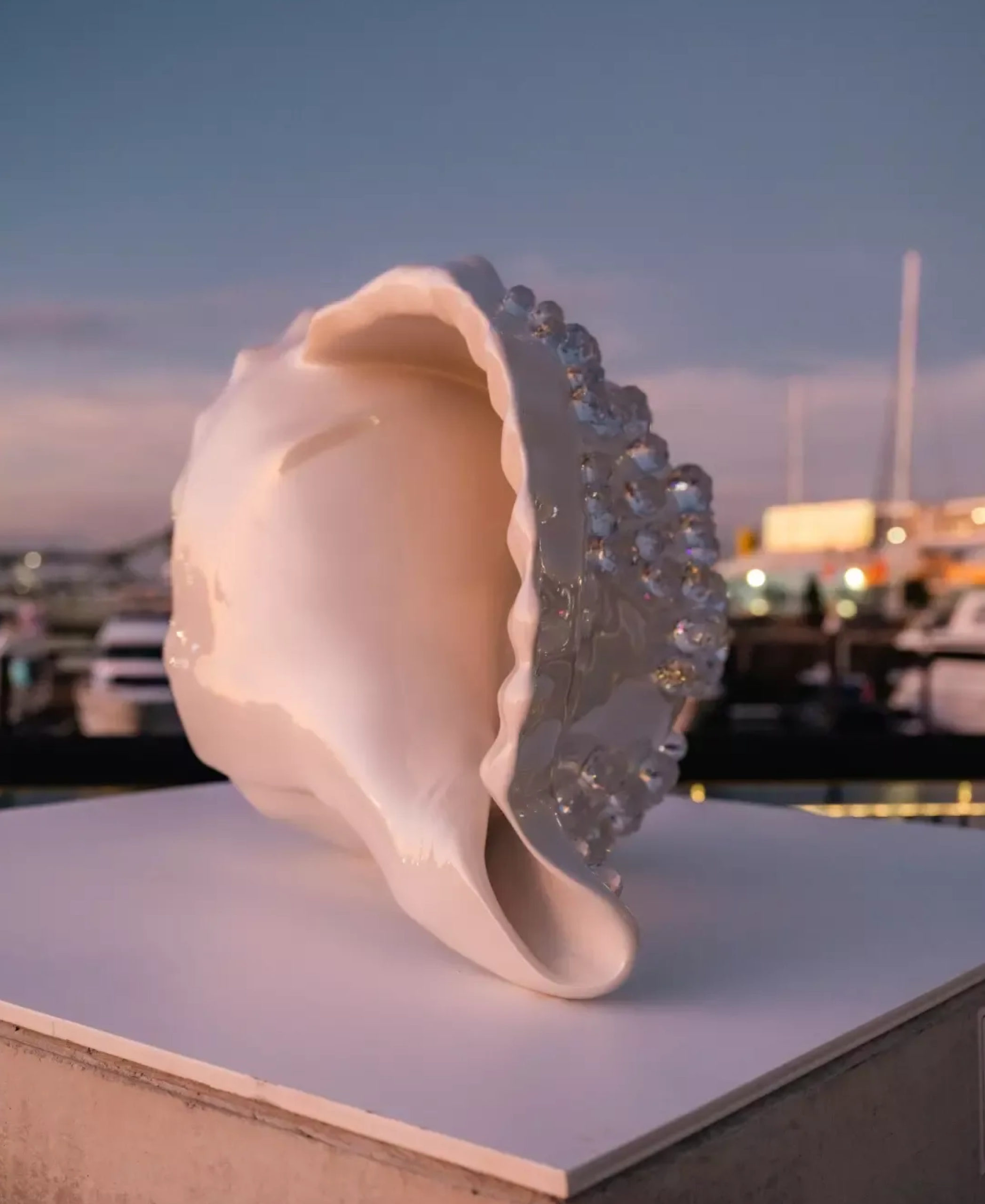
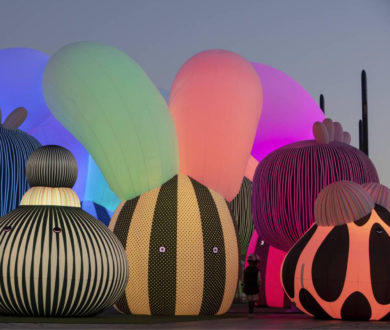
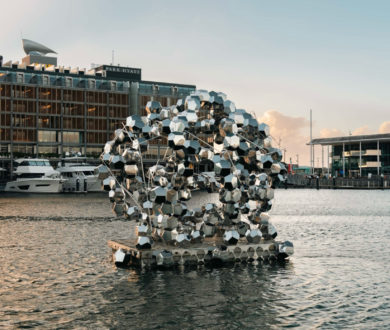
Treat shelving as a gallery rather than storage. Layer sculptural ceramics, organic vessels, art books and personal curios in varying scale and texture, letting the contrasts do the talking — a paper-bag porcelain vase from Rosenthal beside a hammered silver bowl, a Giò Ponti sphere catching light next to a stack of well-thumbed monographs. The trick is restraint with a point of view: every object earns its place, and the arrangement reads as instinct rather than inventory.
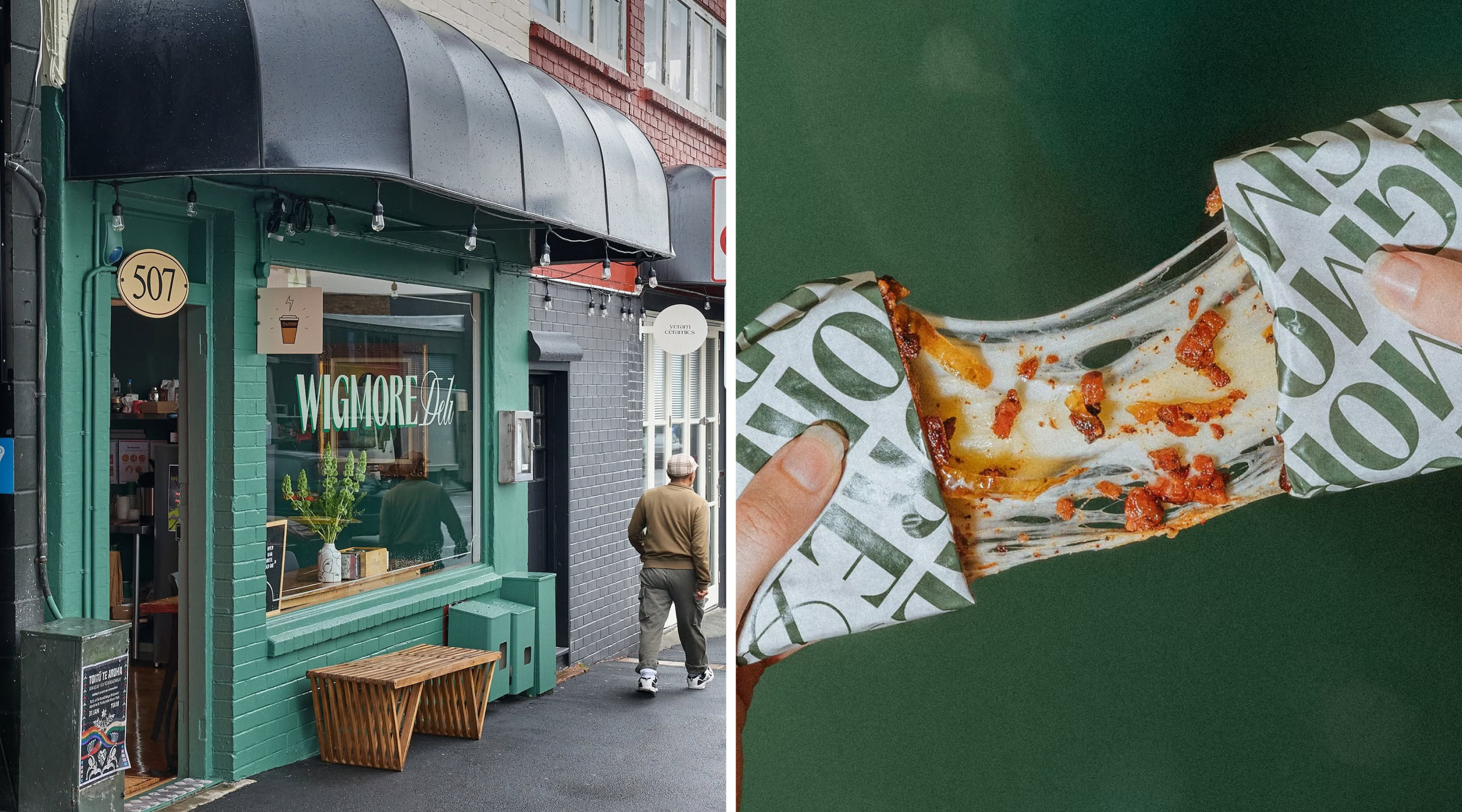
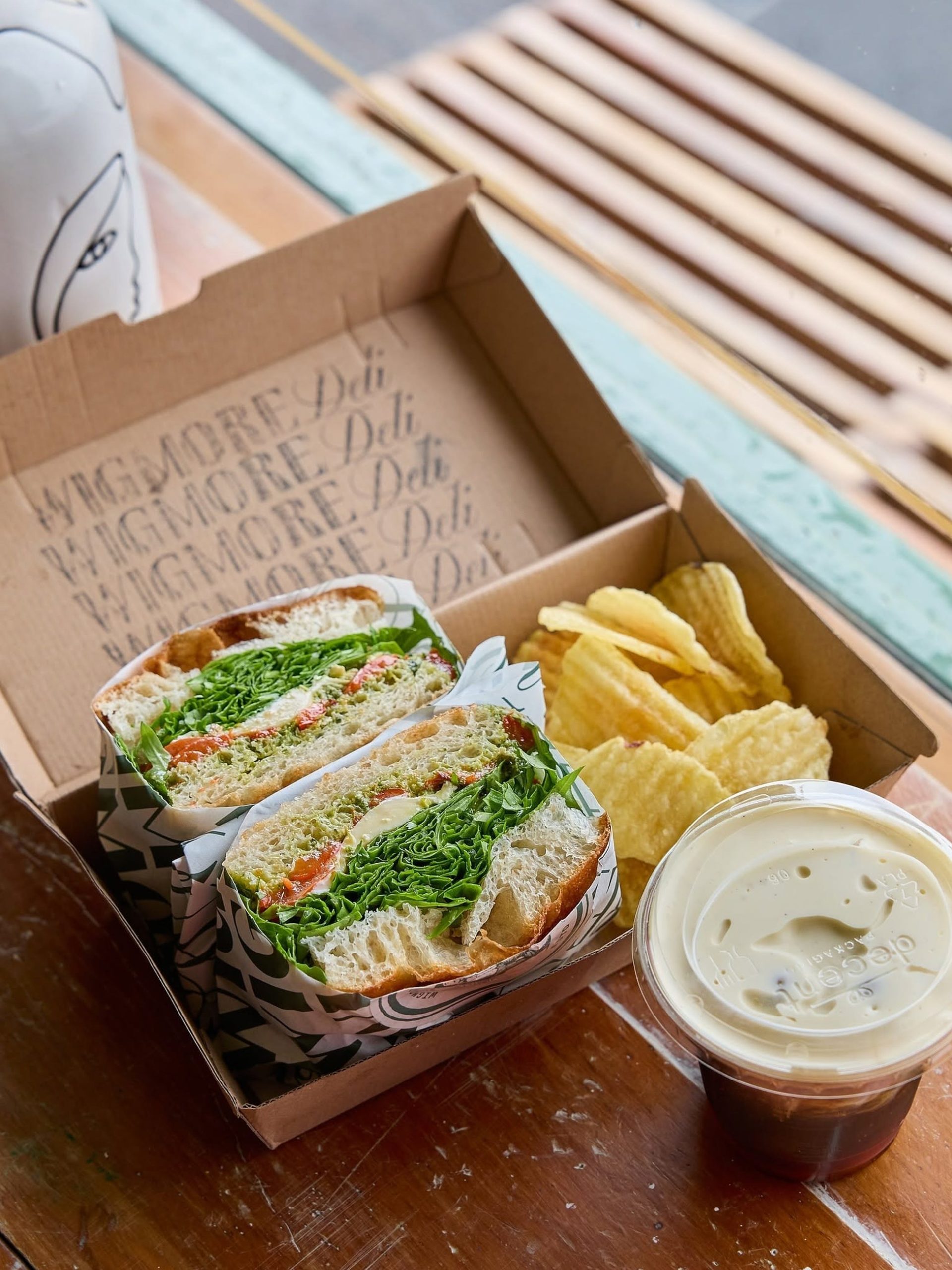
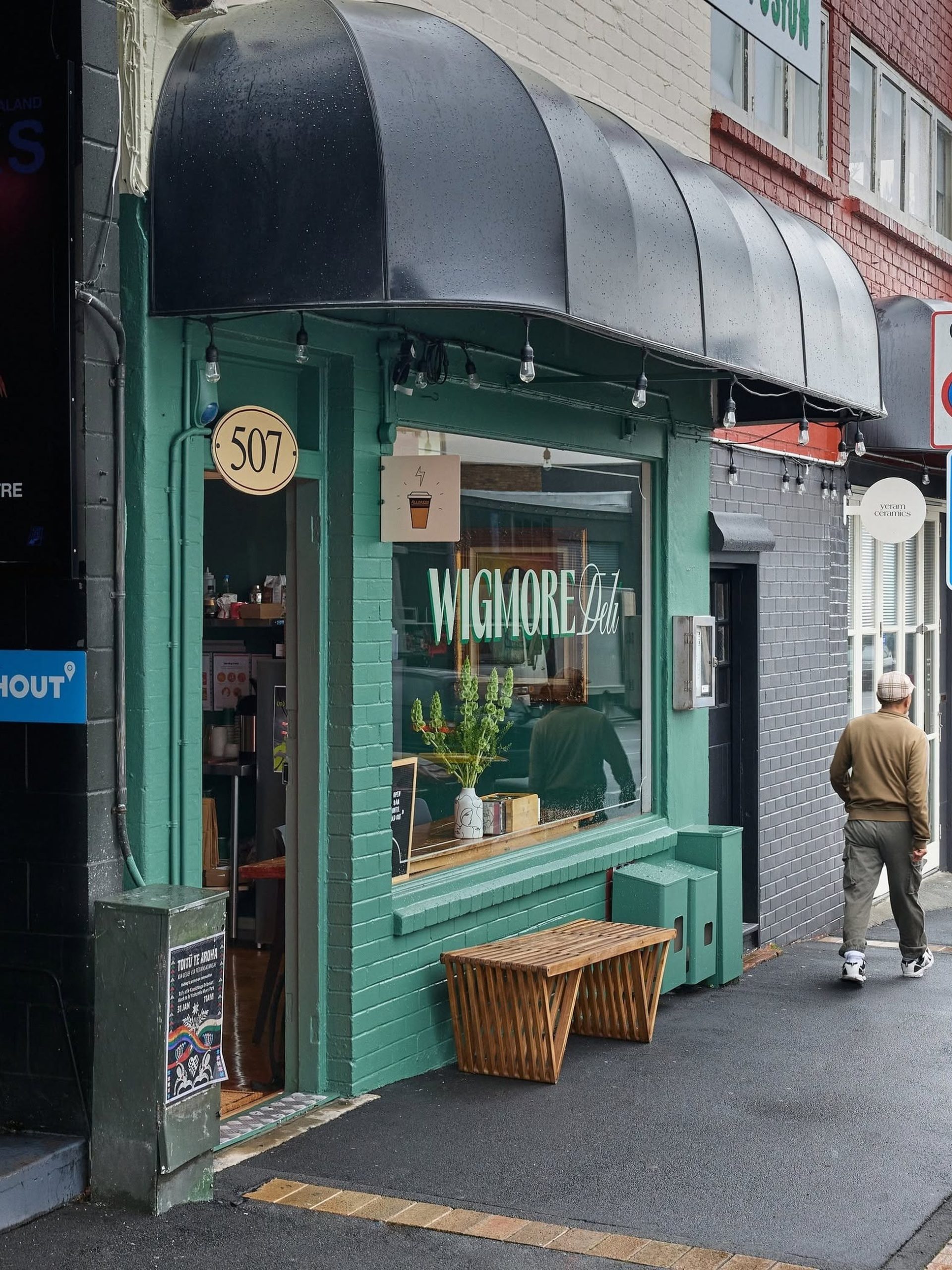
There’s a particular kind of eatery that doesn’t announce itself so much as simply appear, fully formed and quietly confident, on a stretch of road you thought you already knew. Wigmore Deli is that place. A compact, sage-green shopfront with branded wrapping paper, a short menu, and the kind of self-assured energy that makes you wonder how the Kingsland strip ever functioned without it.
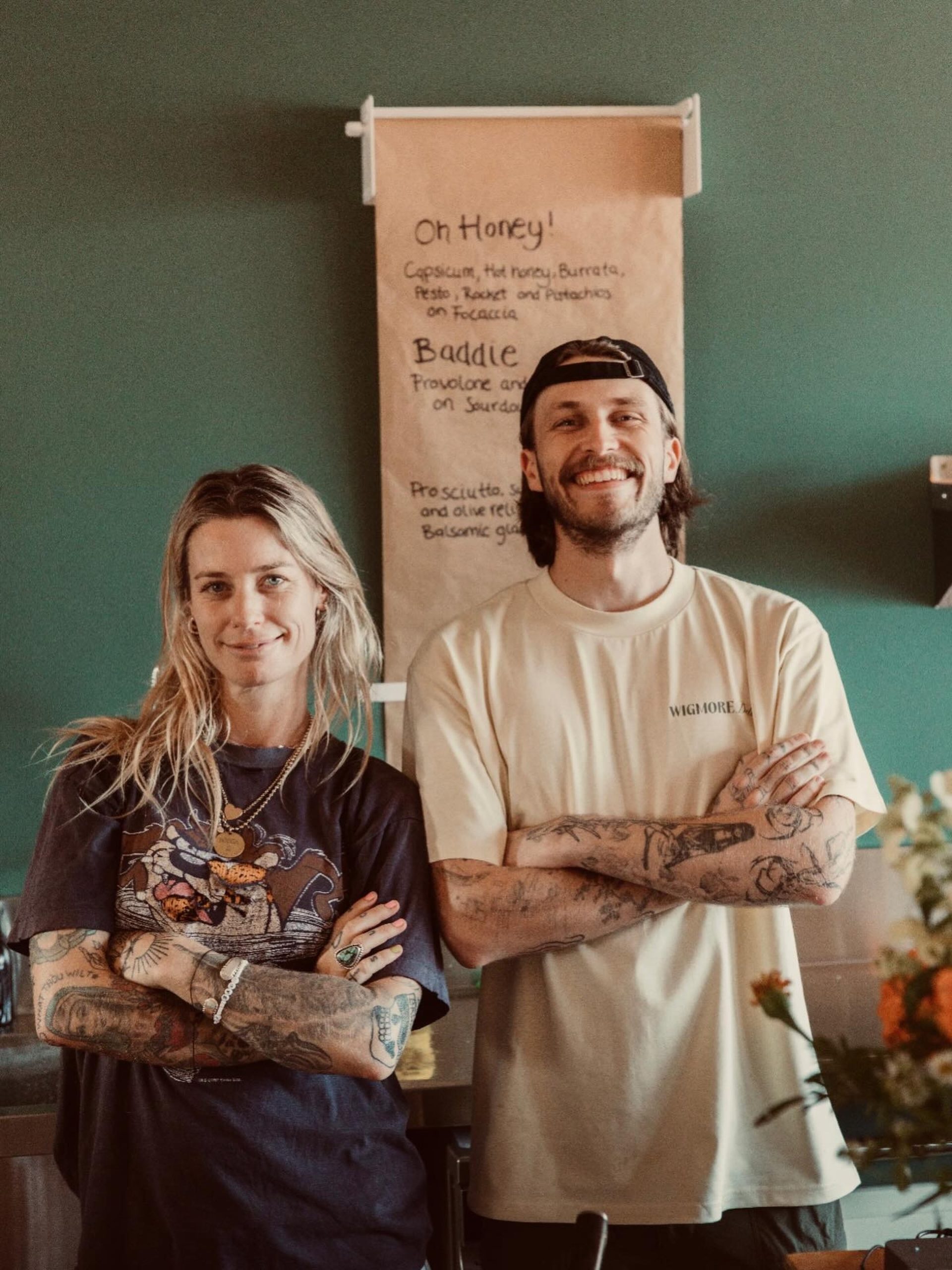
Gin Wigmore (left) and Aiden Williams (right)
Wigmore Deli’s signature lunch box: artisan ciabatta, crisps, and house sauce.
Behind the counter is a duo that makes more sense the longer you think about it. Gin Wigmore (yes, that Gin Wigmore) is the driving force, a passion project brought to life with the same bold instinct she’s applied to everything else in her career. Alongside her is Aiden Williams, the sandwich architect, who can be found behind the grill from open until sold out, working with the kind of focused intensity usually reserved for fine dining.
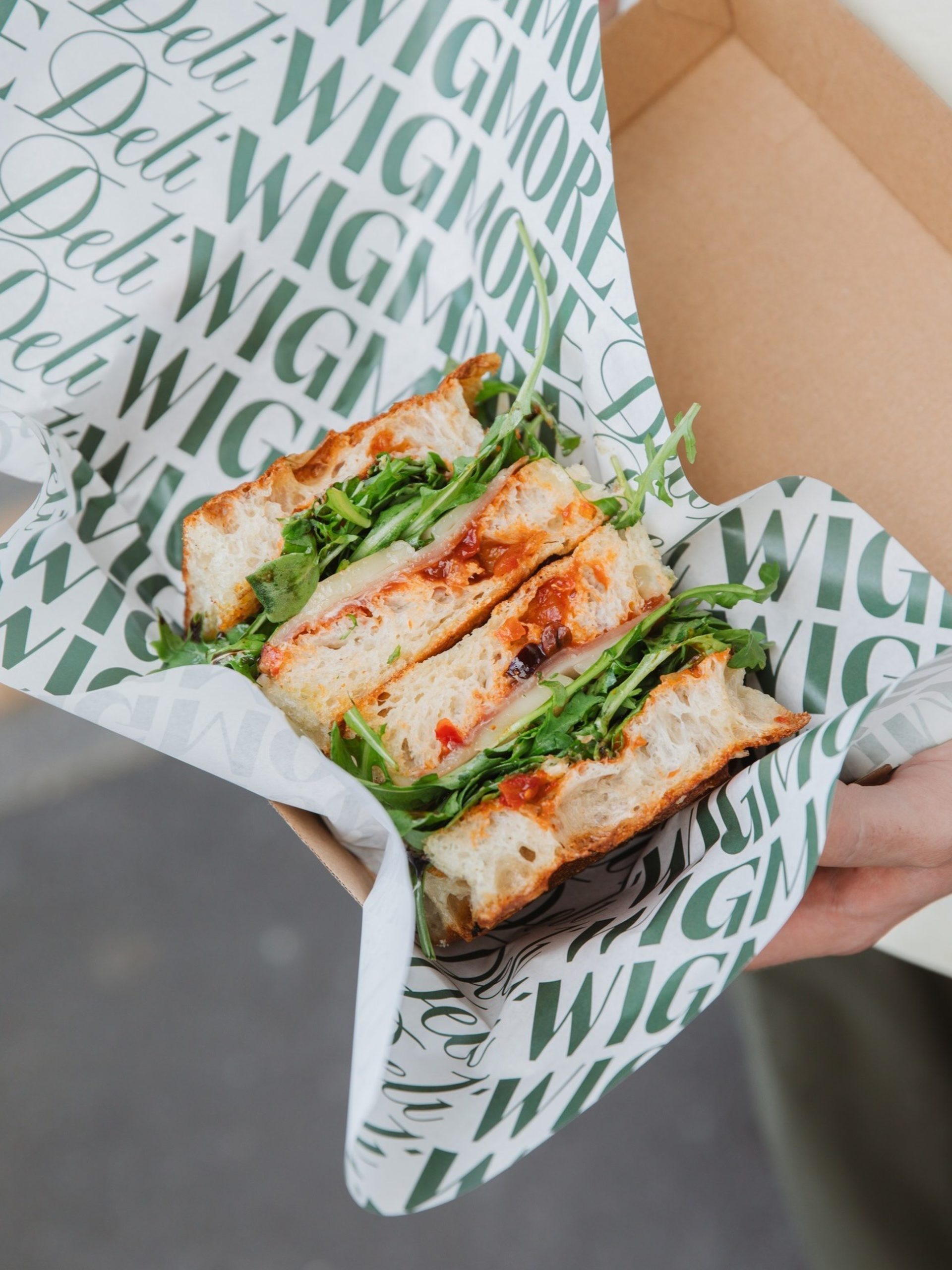
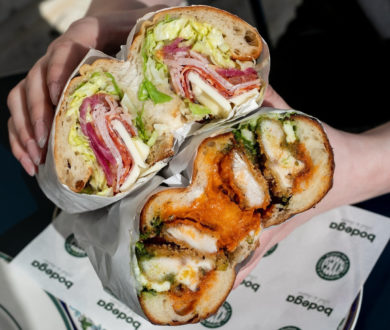
The menu is deliberately concise, and better for it. Every sandwich is made fresh in front of you on focaccia from Bea Bea’s Bakery, and you’ll choose between having yours served as-is or toasted until the edges turn golden and crisp. The Prosciutt-Hoe (the deli’s sense of humour is as sharp as its menu) is the one generating the most conversation. Prosciutto layered with a sundried tomato and olive relish, provolone, rocket, and a slick of balsamic glaze, finished with freshly grated parmesan and pressed until the cheese pulls. It’s the kind of sandwich that makes you eat slightly too fast and immediately consider ordering another.
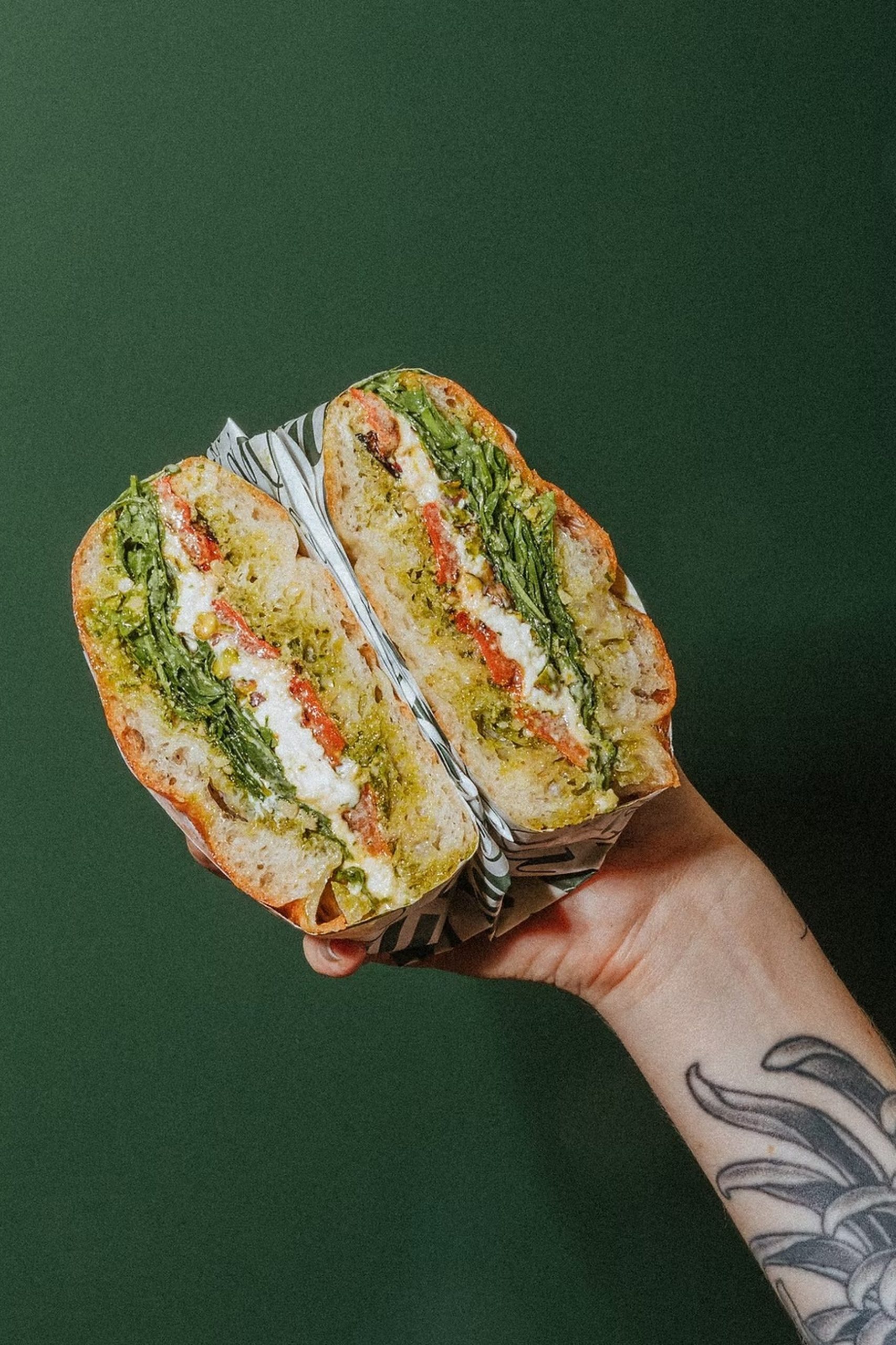
“OH! HONEY!” with Burrata, pesto, roasted pepper, pistachio, hot honey and rocket on focaccia
For something on the cooler end of the spectrum, the Oh! Honey! is its perfect counterpart. Roasted capsicum, burrata, hot honey, basil pesto, rocket, and crushed pistachios on soft focaccia. It sounds busy on paper but arrives with every element pulling in the same direction, the hot honey cutting through the richness of the burrata with a slow, sweet heat.
Wigmore Deli’s pantry shelf, stocked with cult Italian staples and house favourites.
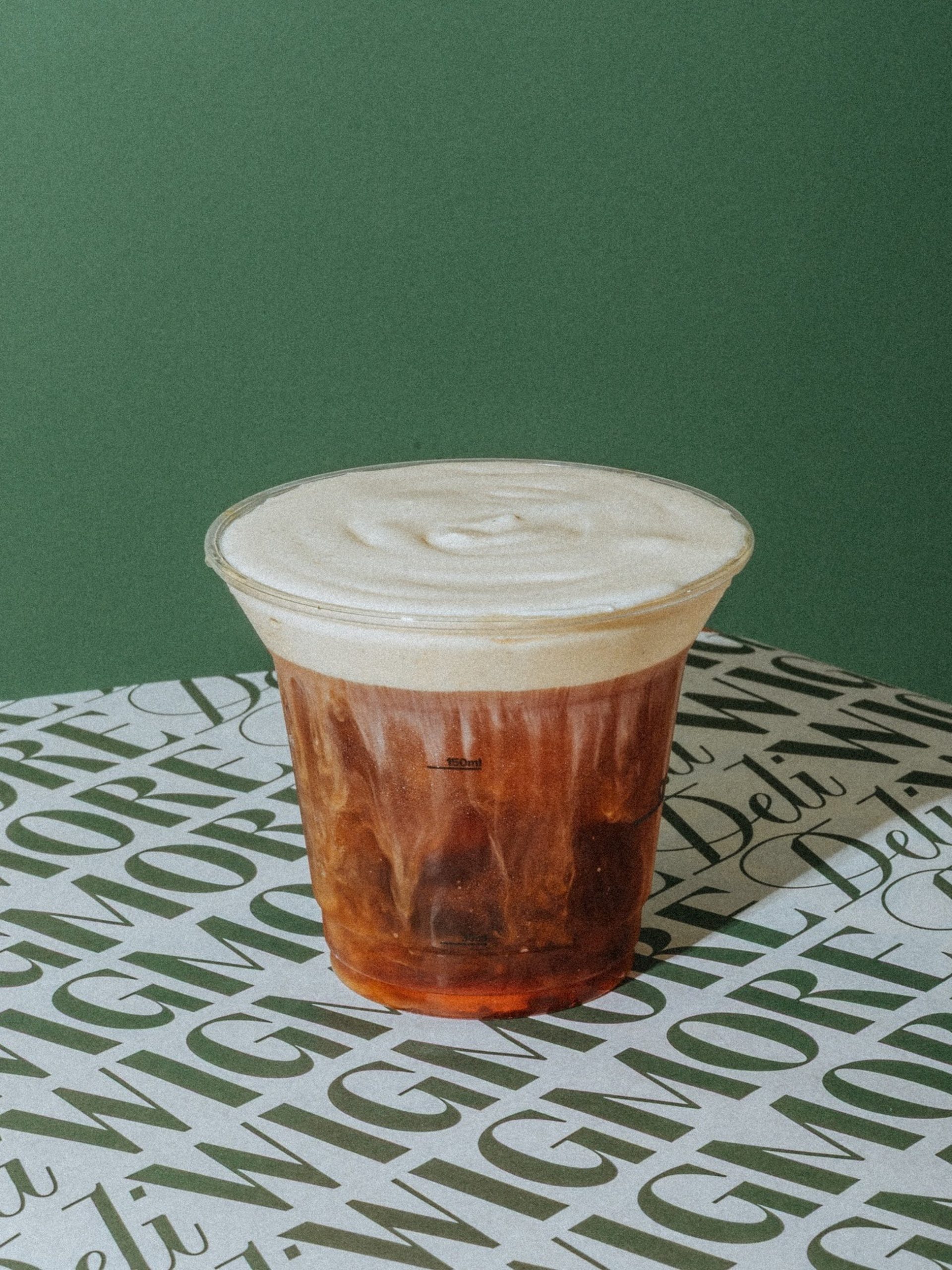
Wigmore Deli’s signature cold brew, crowned with house cream foam.
Wigmore also stocks a range of specialty pantry items you won’t find at the supermarket, many of which feature in the sandwiches themselves. On the drinks side, Allpress espresso runs through the machine, but the move here is the cold brew with vanilla sweet cream. Get in early: they’re open Tuesday to Sunday and close when they sell out, which may be sooner than you think.
Opening hours: Tuesday to Friday, 10 am – sold out Saturday & Sunday, 9 am – sold out
When it comes to plant-based eating, there’s a growing local scene dedicated to vegetable-focused fare. Whether you’re a full-time vegan, vegetarian, flexitarian, or dining with someone who fits the aforementioned criteria, these are the best plant-focused eateries in Auckland, from cafes and bakeries to restaurants and bars worth a visit.
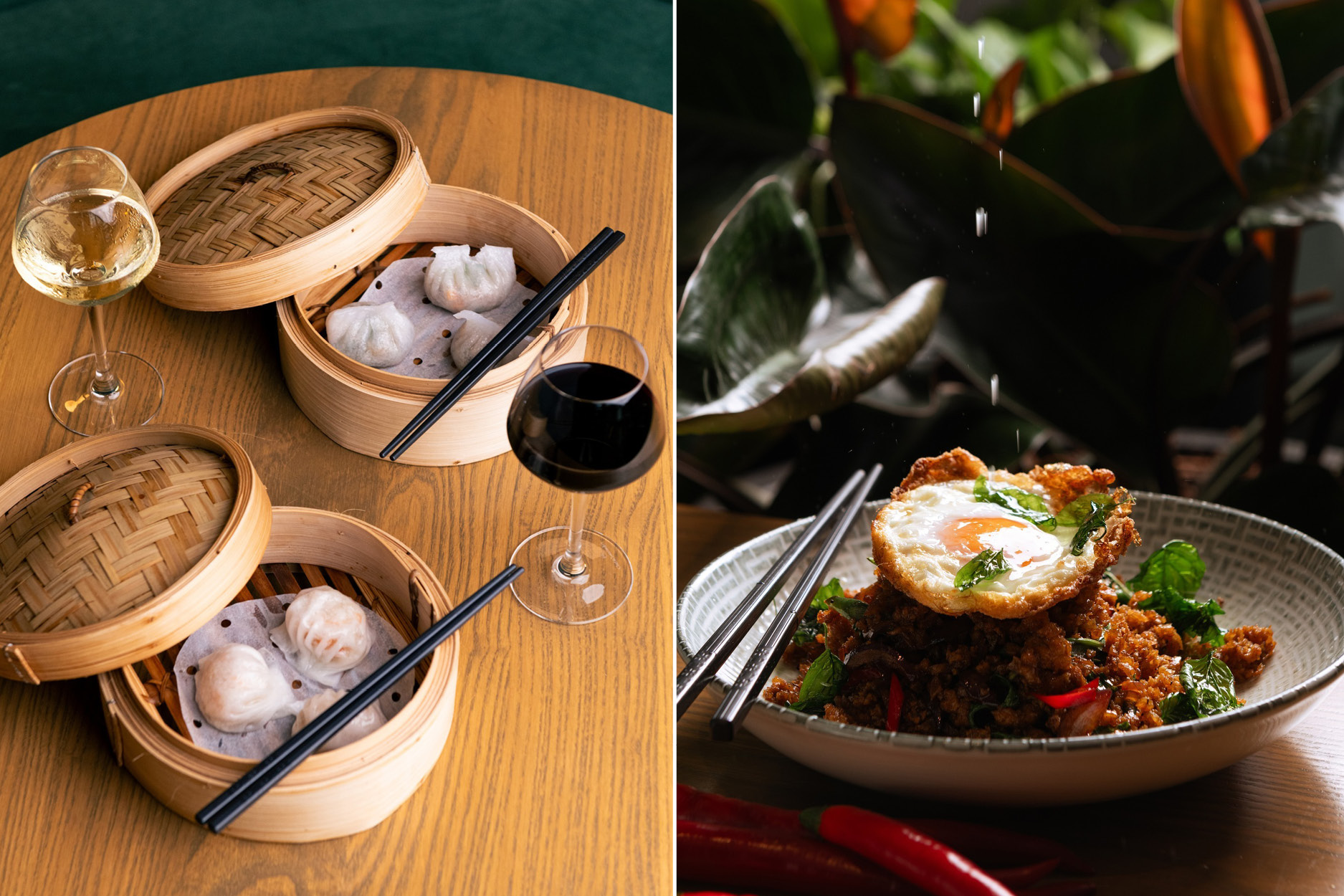
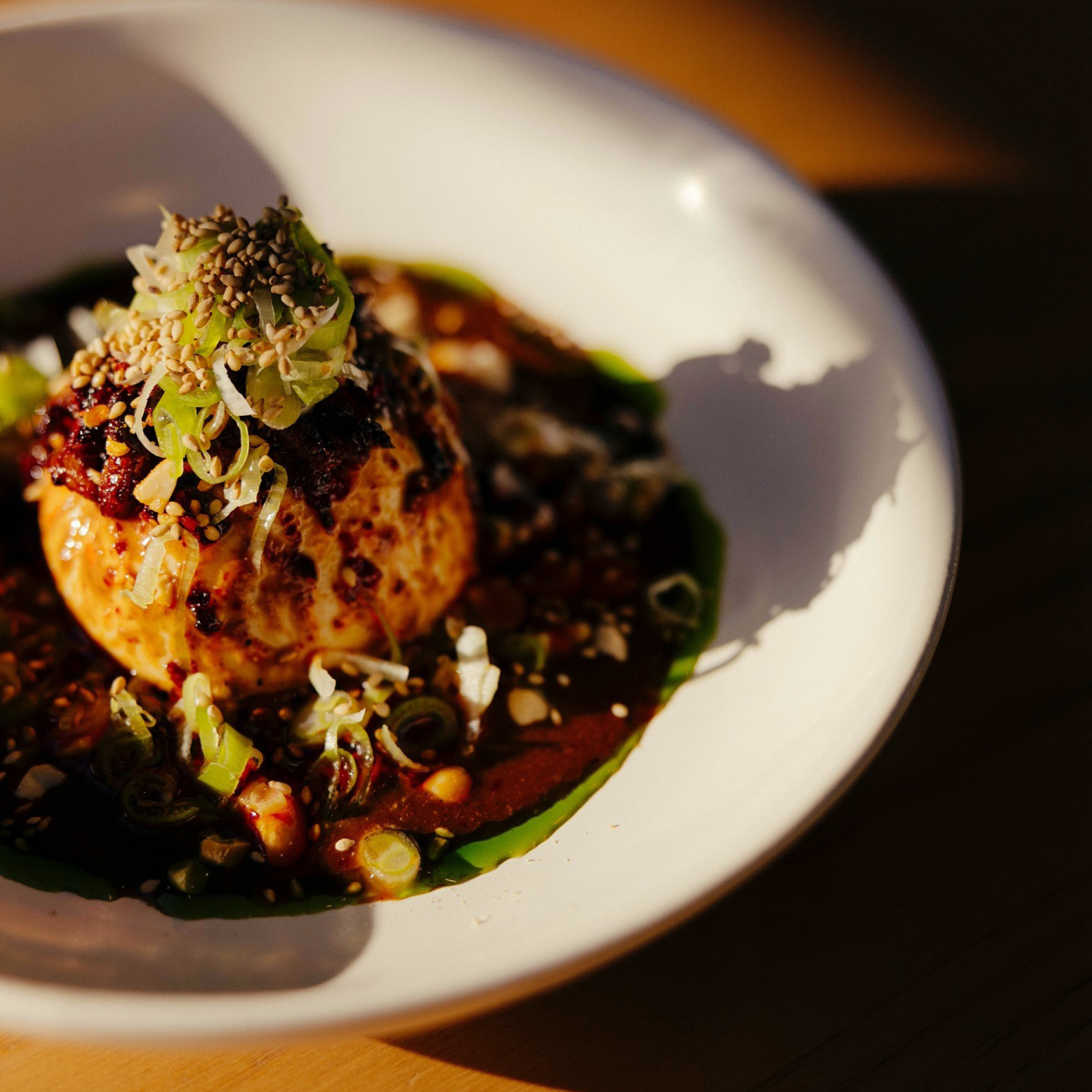
Inner-city restaurant East is an entirely vegetarian venture, with 75 percent of the menu dedicated to vegan dishes. A bold concept that was originally brought to life in 2021, thanks to a team of passionate experts, East’s modern Asian menu is a flavourful marvel from start to finish, filled with vibrant and complex pan-Asian dishes that taste as good as they look. And if that all wasn’t enough, recently, East runs Auckland’s first ever vegan Yum Cha service, held every Sunday at the restaurant from 12pm until 3pm. There, diners can delight in all the classic Yum Cha dishes, reimagined with a tasty, plant-based twist.
Having re-opened in a new spot on Dominion Road mid-way through 2023, vegetarian favourite, Forest, is better than ever before. Helmed by clever chef Plabita Florence, this delicious and innovative spot pushes plant-based cuisine beyond your wildest expectations. At Forest, diners will find a more traditionally structured, a la carte menu that marries mainstay dishes with seasonal specials and still plays into Florence’s experimental, exciting and exceptional culinary approach. From entree-sized snacks to larger mains that are designed to share and a number of mouthwatering sides and add-ons, the food offering at Forest is, as expected, a gastronomic journey.
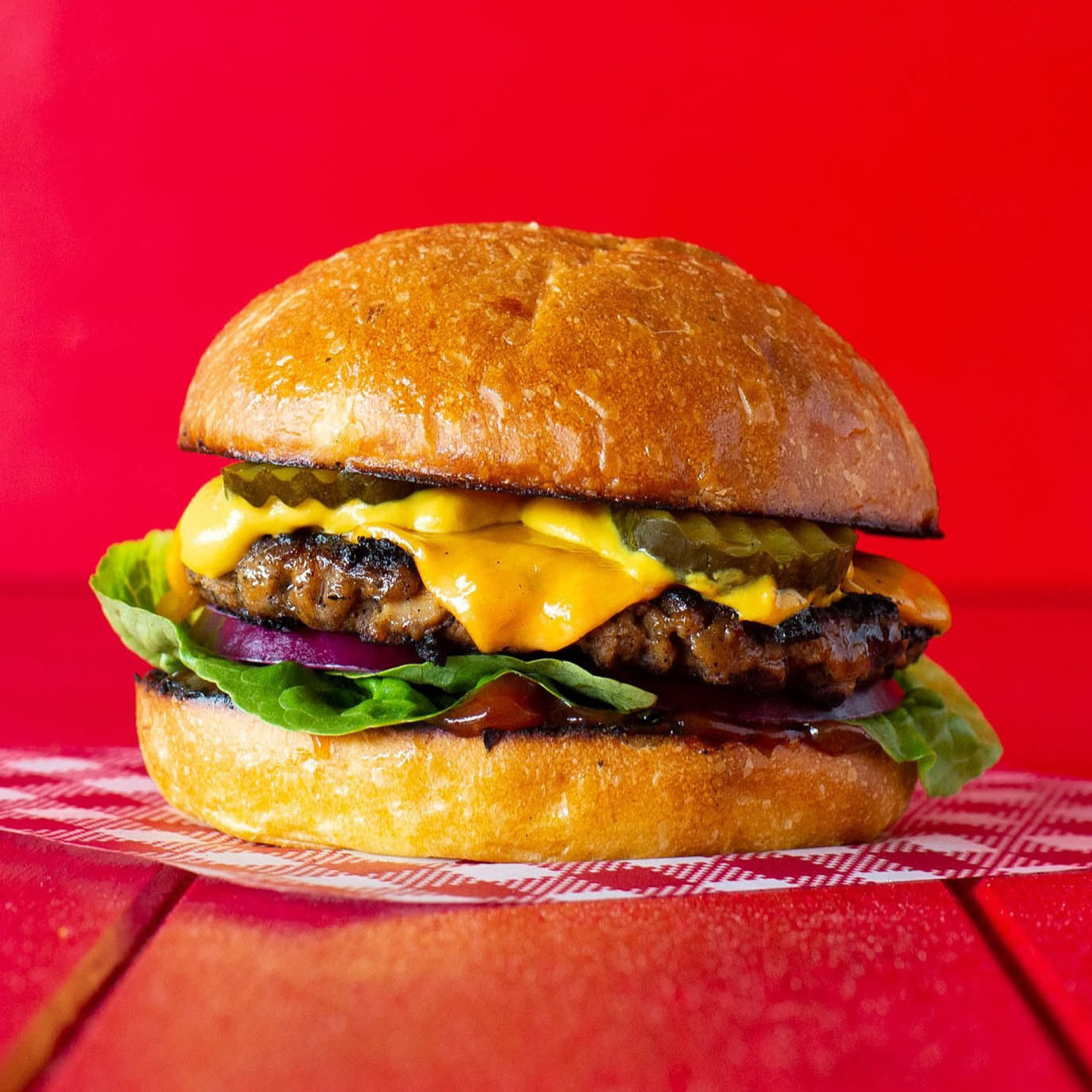
Originally a food truck, Wise Boys has been serving its mouth-watering vegan burgers to the masses since it opened a brick-and-mortar store in Grey Lynn in 2019 and a Commercial Bay outpost a few years later. With a menu of banging burgers featuring the likes of crispy fried ‘chicken’, smoky ‘bacon’ and BBQ jackfruit alongside a range of tempting sides, shakes and soft-serve sundaes, the hardest part is choosing what to order.
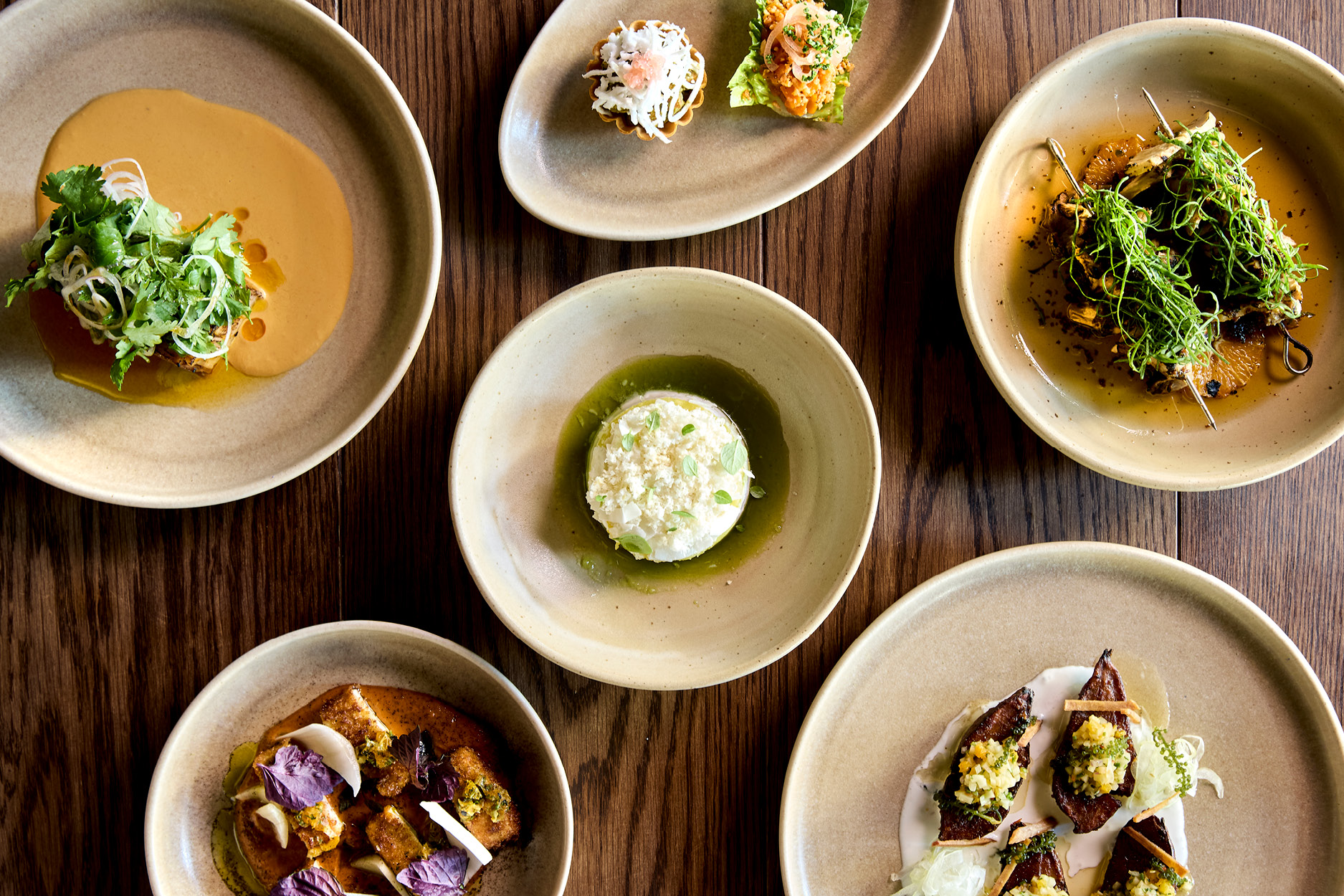
Metita, the elegant SkyCity restaurant helmed by Michael Meredith, continues to chart new territory in contemporary Pacific cuisine — pushing the envelope further recently with a fresh focus on plant-based dining. In a move that honours the region’s produce-driven roots, the restaurant now offers a dedicated vegetarian and vegan menu, brimming with vibrant, thoughtful dishes that celebrate both tradition and technique. From the smokey intensity of charred corn tartlets with palusami purée to the umami-rich pairing of grilled oyster mushrooms and ulu, each plate is a lesson in flavour and finesse.
This off-the-beaten-track cafe makes for a cheap and cheerful lunch. Water Drop Vegetarian Cafe is situated in Flat Bush at the impressive Fo Guang Shan Buddhist Temple, and no walk around the grounds is complete without a steaming laksa, BBQ bun or wonton noodle dish — all meat-free, of course.
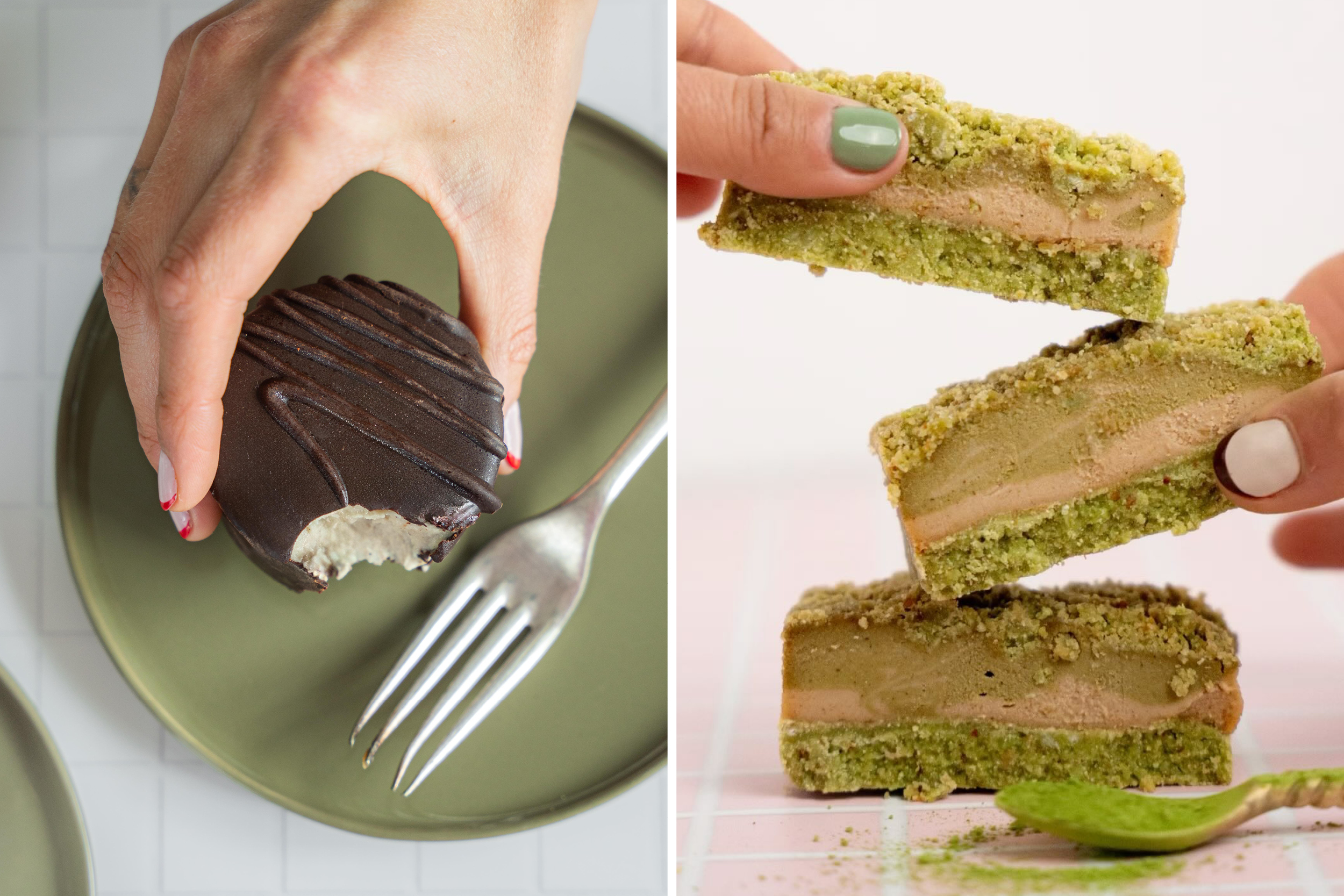
Lovers of health and raw foods will appreciate Olivia from Breakfast Babes’ selection of delicious raw treats available online and at select retailers country-wide (including newly-opened boutique fitness studio, Redroom). If you find yourself craving a 3pm, guilt-free pick-me-up, you’ll certainly find a moreish treat sure to satiate your cravings.
A welcome addition to Westmere, Esarn Rocket is a lively Thai eatery serving up bold, homespun flavours with a fresh, contemporary spin. Alongside its crowd-pleasing classics, the menu offers an impressive range of vegetarian and vegan dishes — from crispy spring rolls and green papaya salad to fragrant tofu curries and stir-fries bursting with seasonal veg. Vibrant, affordable, and packed with flavour, Esarn Rocket makes plant-based dining feel anything but an afterthought.
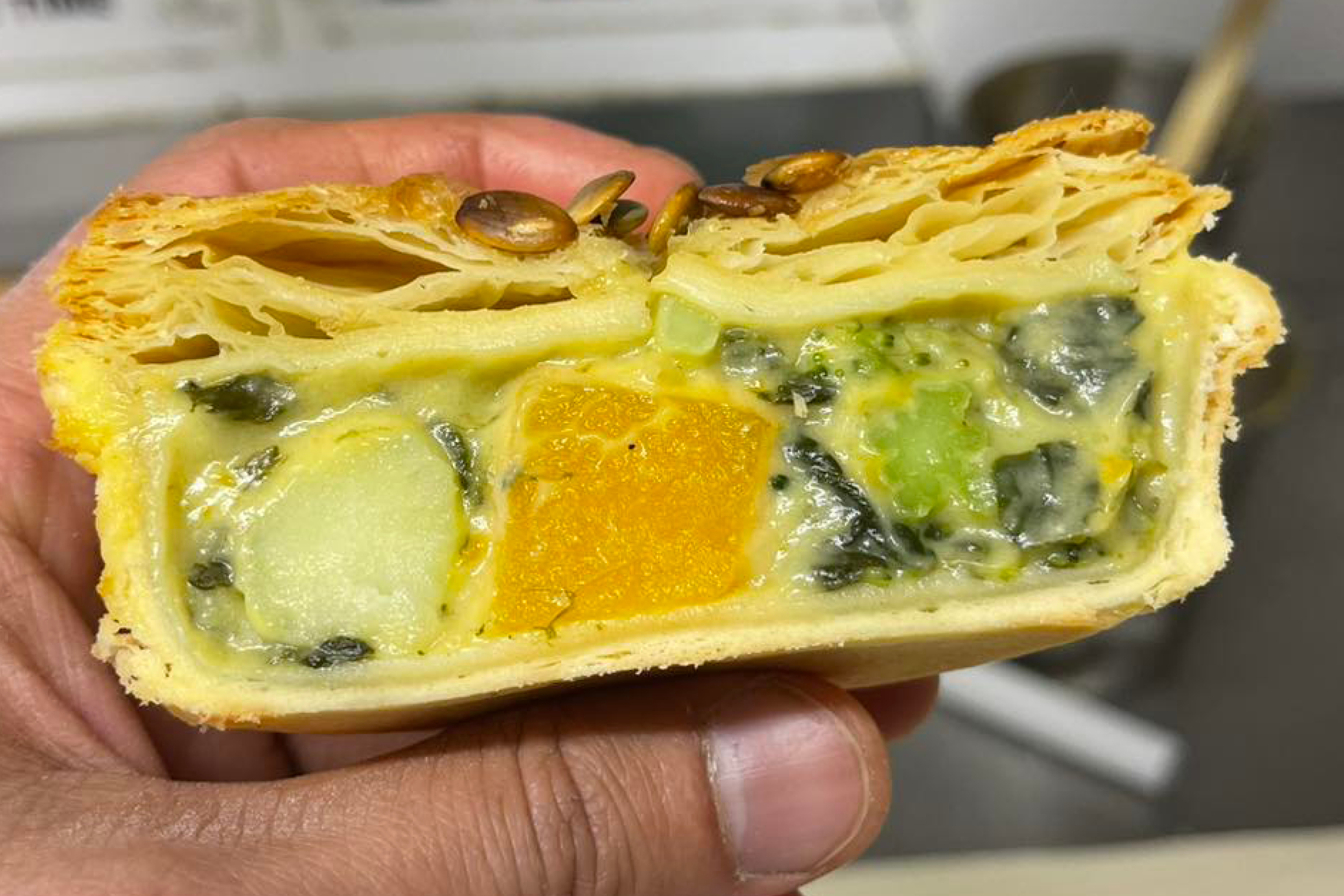
Next time you find yourself in Ellerslie, follow the queue to Richoux Patisserie, the low-key bakery serving award-winning meat and vegan pies. With clever vegan renditions of mince and cheese pies, sausage rolls, doughnuts and custard tarts (to name just a few), this beloved bakery puts the utmost care into every one of its creations.
There’s always a line outside Sandringham’s Paradise, and for good reason. Whether you dine in, takeaway or peruse the buffet, there is plenty to satisfy vegetarian appetites. Choose from delights such as the vege manchurian, which sees dense vegetable dumplings fried and coated in an irresistible sauce, bagarey baigan with eggplant cooked in a tamarind gravy, or wholesome daal tadka with lentils, cumin and red chillies.
With big, bold flavours and a special vegetarian and gluten-free menu to boot, Hello Beasty ticks all our boxes for dining out with dietary requirements. The KFC (Korean fried cauliflower) gives the real deal a run for its money, plus dishes like the grilled mushroom pancake and charred broccolini can easily be tweaked to suit a vegan appetite.
Middle Eastern restaurant Ima has plenty to satiate non-meat-eaters throughout its delicious all-day menu. For lunch, we’d recommend the sabich pita. Described as the ‘king of sandwiches’, it’s filled to the brim with smooth hummus, charred eggplants, slices of fried potatoes, boiled eggs, tahini and amber, a fragrant Iraqi condiment. The vegetarian Middle Eastern platter for two will also hit the spot, comprising falafel, hummus, labneh, salad, pickles, olives, Lebanese cauliflower and spanakopita with pita.
With locations in Ponsonby, the CBD, and Milford, Khu Khu is an entirely vegan Thai restaurant that doesn’t skimp on flavour and finesse. Owner Michael Khuwattanasenee found himself struggling to find plant-based options when dining out, particularly in Asian eateries given their proclivity for not just meat, but also animal-based ingredients like fish and oyster sauces. Khuwattanasenee took matters into his own hands, reinventing the classics to create tempeh pad thai, kumara spring rolls, ‘duck’ drunken noodles and warming curries.
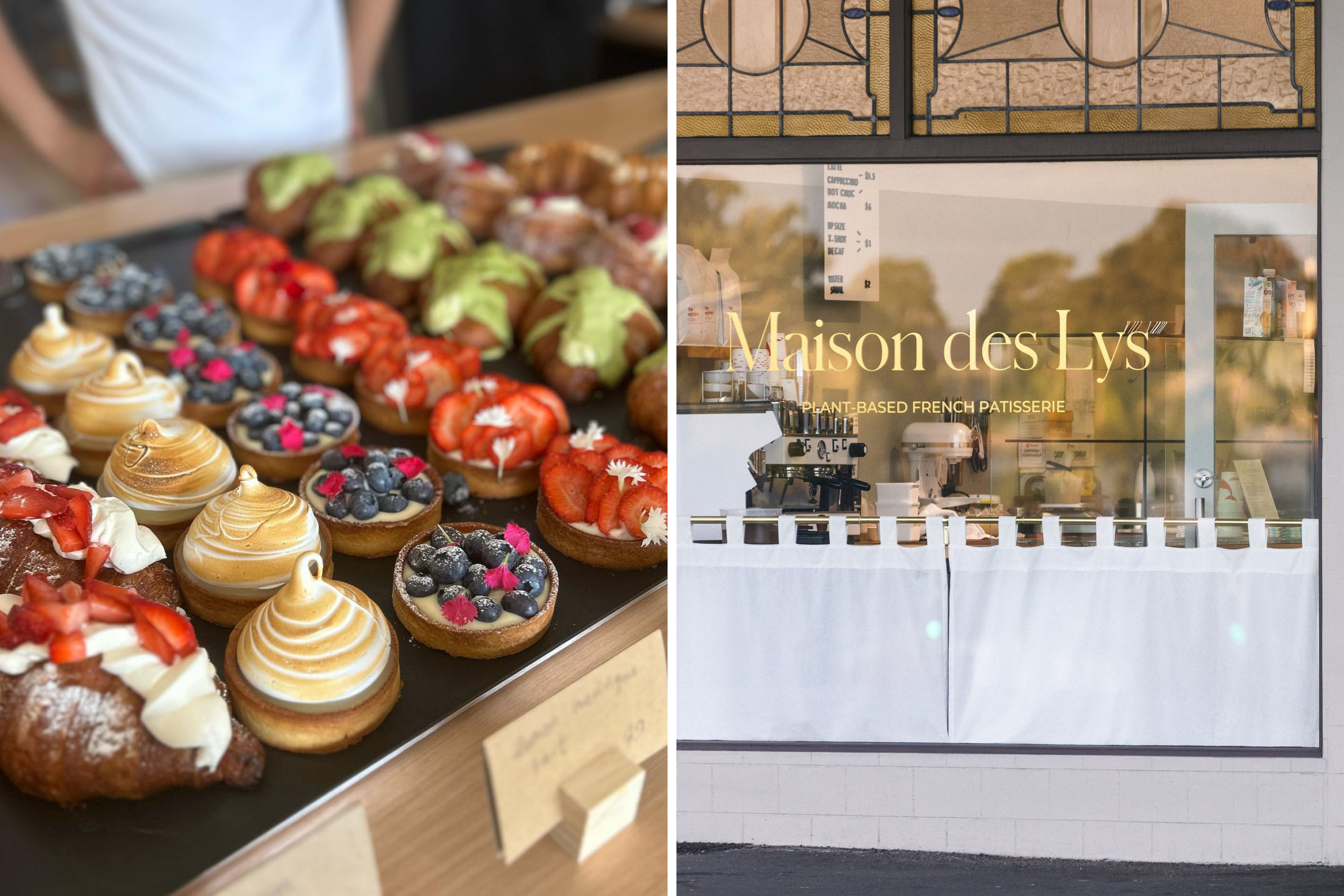
Since opening, the days where this plant-based patisserie hasn’t completely sold out are few and far between. Here the croissants are buttery and flakey, the delicate pastries perfectly made despite being entirely vegan, and the ‘ham’ and ‘cheese’ offering a personal favourite of the Denizen team.
If you’d like to chow down on some meat-free fare alongside a fellow steak-loving diner who wouldn’t be seen near a leaf of spinach, you’re both bound to find something to love at Devonport’s Vondel. The all-day eatery caters to both preferences, with a vegan crispy ‘chicken’ burger sitting next to a Wagyu beef burger on the menu. No need to compromise here.
The original raw, organic, vegan eatery, Little Bird is still going strong. Pop into its humming Ponsonby spot for the likes of the famous Bird Bowl, kimchi pancakes, dahl dosa and kumara hotcakes, or one of its utterly satiating smoothies and shakes — and make sure you don’t leave without a raw sweet treat.
Not only is this inner-city haunt home to some of the city’s most beloved vegan food, it serves up authentic Thai dishes without the addition of fish sauce or shrimp paste. At Sunflower, flavour isn’t compromised either, the joint famously serving up some of the most sought-after ‘prawn’ fried rice in town.
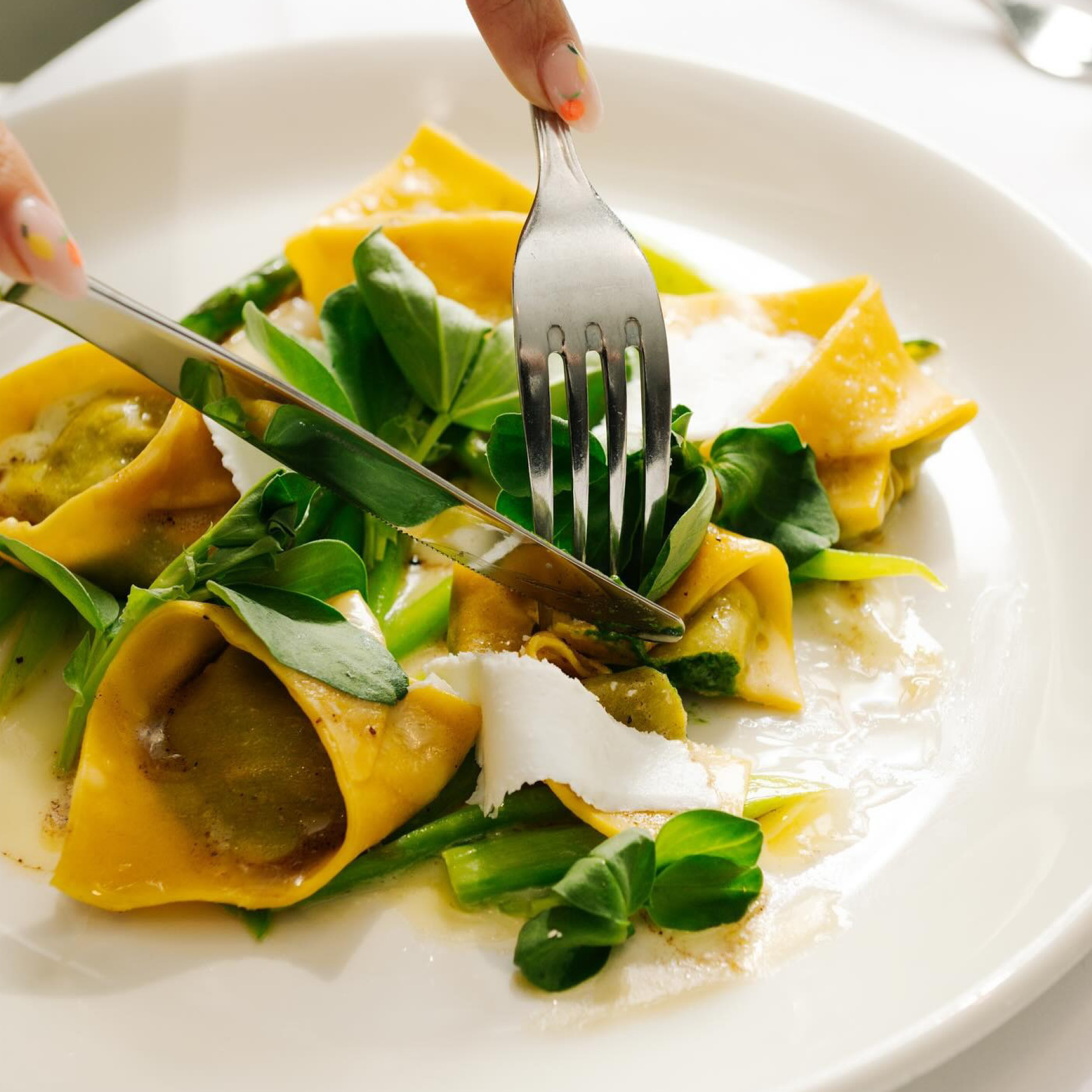
Infamous for its mac and cheese with ham off the bone, Soul Bar & Bistro offers a vegetarian version of this dish as well. In fact, Soul offers a wholly vegetarian menu, filled with meatless renditions of its regular dishes. For vegetarians, the ricotta filled tortelli with sunday sauce and calabrian chilli is too good to miss, while vegans can try an irresistible take on Soul’s ever-popular green goddess salad.
For those in the know (and vegans often are about these things), Jervois Road’s Janken has been touted as one of the best destinations in the country for plant-based foods. Offering a modern slant on traditional Japanese flavours, here the vegan offerings are plentiful, with ramen, sushi, and even a vegan Benedict breakfast.
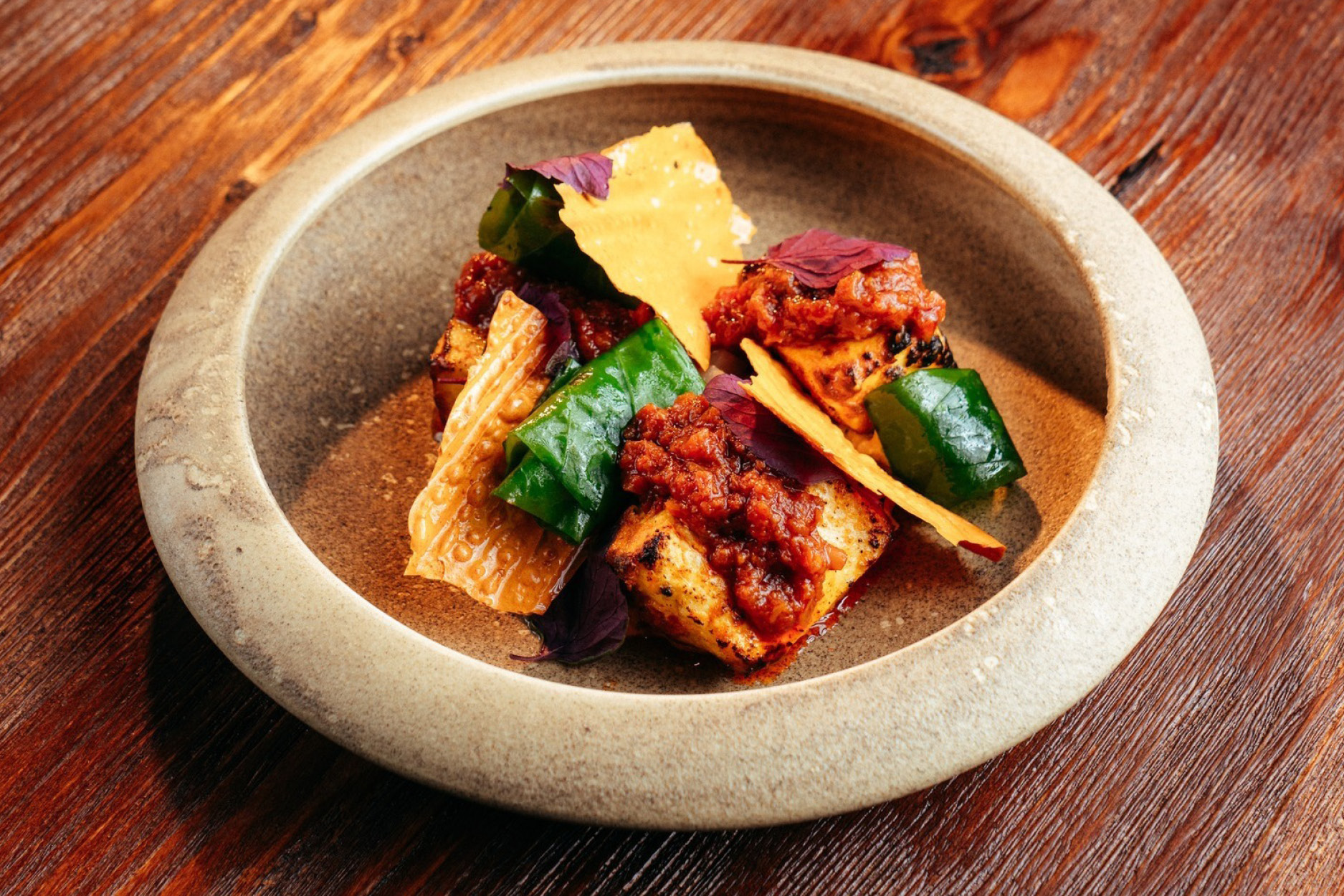
At SkyCity’s Cassia, those who shy away from meat will find plenty of flavoursome dishes to dive into on Sid Sahrawat’s lauded menu. From the famous pani puri with potato, chickpea, and mint to the stir fry paneer with chickpeas, kumara, and vindaloo sauce, Sahrawat has always been known for the innovative and utterly delicious ways in which he reimagines vegetables on his menus.
For those who want to eat plant-based but still treat themselves, Tart Bakery’s sweet and savoury treats are the pinnacle. With a prime location in Grey Lynn, the bakery’s delicious European-style bread, pasty, pies, doughnuts and sandwiches are made fresh every day and all its food is vegan and free of animal products.
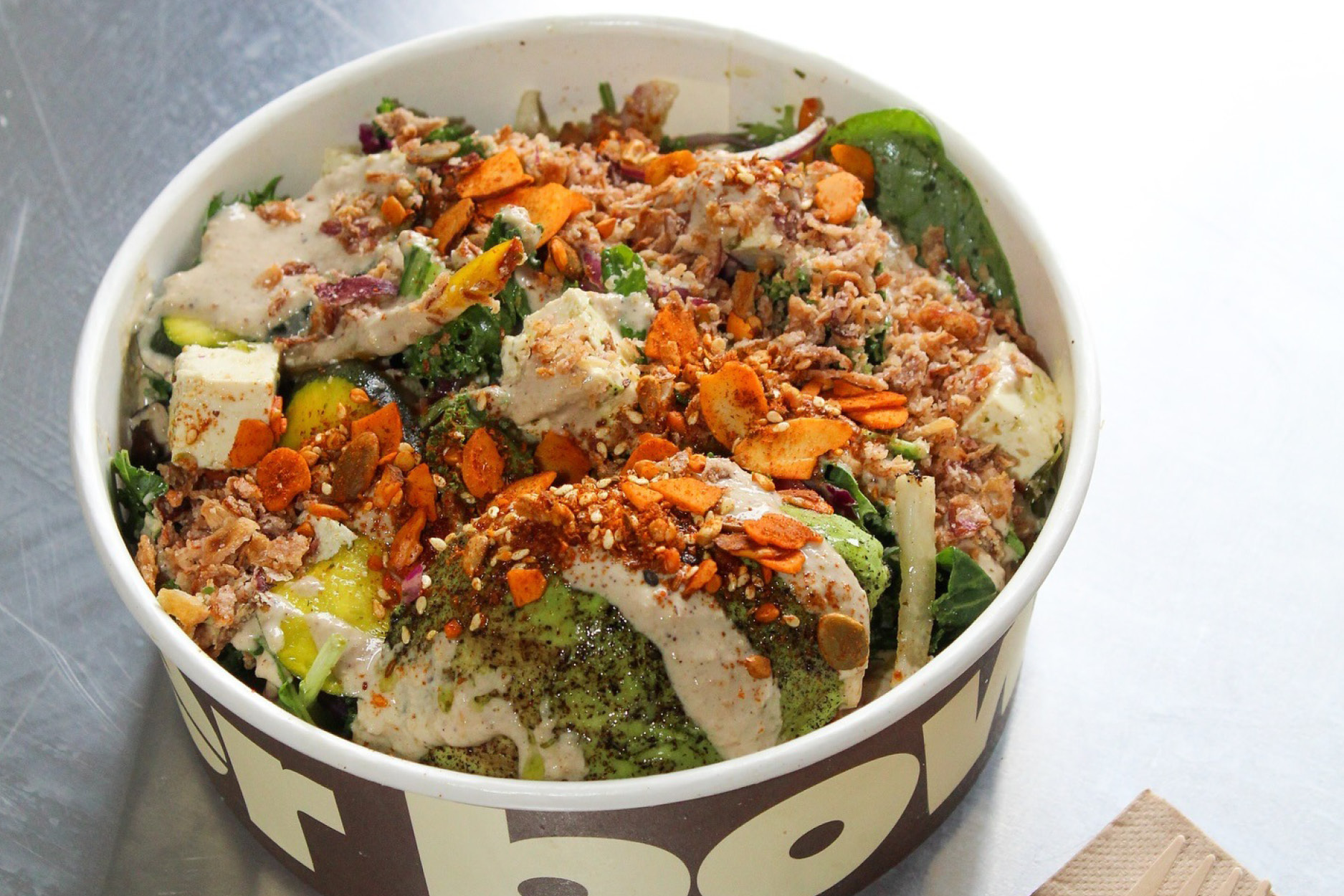
Having only opened its doors recently, Bowler has already become a fixture on Team Denizen’s weekly rotation, and for good reason. Serving nutritious and delicious salad bowls that you’ll actually want to eat, with plenty for both vegetarians and carnivores alike, alongside acai bowls and epic smoothies, this drop-in is well worthy of your attention.
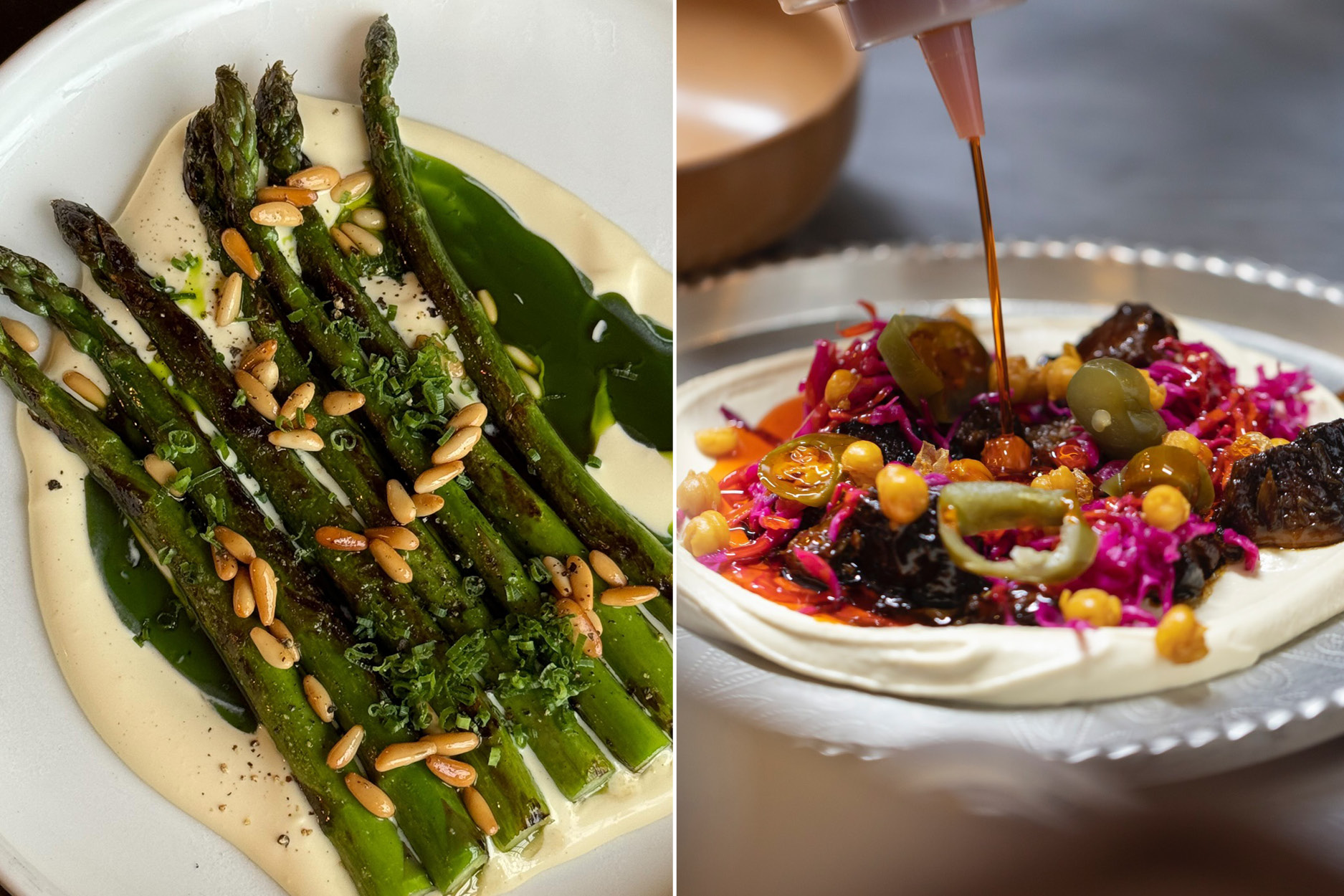
St Kevins Arcade’s beloved Lebanese eatery, Gemmayze Street, is the perfect spot for vegetarians and non vegetarians to come together in culinary bliss, with plentiful options for both. Here, the hummus is famous and an essential order, as is the babaganouj which pairs smokey eggplant with cumin and pomegaranate, and vegetarians shouldn’t look past the jazar roasted carrots with cashew, fennugreek, and spiced granola. Simply sublime.
The number keeps climbing, from 10,000 to 12,000 to the new ceiling currently doing the rounds on TikTok. But the question isn’t how many steps. It’s what your body is doing while you take them, and where in Auckland you’d want to be doing it as the leaves turn.
Somewhere between the original 10,000-step myth (a 1960s Japanese marketing campaign for a pedometer called the Manpo-kei, never a clinical recommendation) and the current ceiling of 20,000 steps a day being championed by every second wellness account, the goalposts moved. They are still moving. Open Instagram on any given Tuesday and you will find someone in a matching set, AirPods in, captioning their pre-work loop with a number that would have, until recently, qualified as a half-marathon.
The hot girl walk, a phrase that began as a TikTok in-joke and somehow calcified into a wellness category, is now its own genre. Two hours, podcast on, iced matcha in hand, ideally with a view. The aesthetic has matured; the mileage has not. What started as a gentle middle-finger to gym culture is now being rebranded as a performance discipline, complete with Garmin screenshots and recovery scores. Which raises a question worth asking before you lace up: when does a daily walk stop being good for you and start being something else entirely?
What the science actually says
The 10,000-step figure was never grounded in research. The studies catching up to it now are far more interesting, and far less prescriptive. Large-scale meta-analyses have consistently found that the steepest health gains occur somewhere between 7,000 and 8,000 steps a day, with mortality risk continuing to drop until around 10,000 to 12,000, then plateauing. After that, the curve flattens. Walking more is not actively harmful, but the additional cardiovascular benefit is marginal.
Which is to say: the leap from 10,000 to 20,000 is largely a leap in time spent, not in measurable health return. For an average stride, 20,000 steps is roughly 14 to 16 kilometres, between two and three hours of walking. That is a meaningful chunk of any day. Whether it is the best use of those hours depends entirely on what else your body needs.
“The 10,000-step figure was never grounded in research. It came from a 1960s pedometer campaign.”
The question worth asking is the one most step-count enthusiasts skip entirely: what problem are you actually trying to solve? If your goal is cardiovascular health, glucose stability, and stress regulation, the data is clear that you do not need to walk for three hours a day to get there. If your goal is body composition, walking alone will not build the muscle mass that becomes increasingly precious from your mid-thirties onward. If your goal is mental clarity and a meditative pause in your day, then the question becomes less about the step count and more about what the walk is replacing. A good thing, until it starts replacing a strength session, a proper meal, or a full night’s sleep.
What the trackers are telling you (and what they’re not)
Fitness tracking has matured considerably. The current generation of wearables, the Oura Ring 4, the Whoop 5.0, the latest Garmin and Apple Watch iterations, measure far more than steps. Heart rate variability, resting heart rate, sleep architecture, stress load, training readiness: the data set is comprehensive enough that a step count, in isolation, looks almost quaint. The smarter question your tracker is now equipped to answer is not how far you walked, but at what cost.
If your readiness score is dropping, your resting heart rate is climbing, and your HRV is suppressed, the additional 8,000 steps you are grinding out every evening may be the reason. Walking is restorative, until volume tips it into another stressor stacked on top of work, parenting, and a 6am reformer class. The metric that matters more than steps, for most people, is whether the walking is leaving you energised or quietly draining the battery.
So, should you do it?
The honest answer, in the Denizen tradition of being unimpressed by absolutes: it depends entirely on you. For an under-active office worker whose default is 4,000 steps a day, building toward 10,000 is genuinely transformative. For someone already strength training four times a week and sleeping seven and a half hours a night, adding two-hour daily walks may yield diminishing returns, or worse, undermine recovery. The 20,000-step ceiling is not a target. It is a number that looks impressive on a screenshot.
If you want a working principle: aim for 8,000 to 12,000 steps as a baseline, prioritise sleep and resistance training above mileage, and use longer walks (the genuine hot girl walk territory) as a deliberate ritual rather than a daily obligation. Two long, considered walks a week in beautiful surroundings will do more for your nervous system than seven joyless laps of the block trying to hit a number.
Where to walk in Auckland this Autumn
The weekend is where the walk earns its keep. Midweek mileage is maintenance; Saturday and Sunday are where a route becomes a ritual, a long lunch becomes the destination, and the hour you spend outdoors does the quiet work of reorienting you for the week ahead. Autumn is the season that rewards this best. The light shifts amber, the humidity finally breaks, and the trees that don’t exist in our largely evergreen landscape (the imported oaks, planes, liquidambars and elms) spend a few short weeks doing their best impression of a New England postcard. Four routes worth rerouting your weekend for.
The waterfront, Wynyard Quarter to Mission Bay. The flat, uninterrupted stretch from Wynyard around past the Viaduct, along Quay Street, through the Tamaki Drive curve to Mission Bay is Auckland’s most reliable walking corridor, and the one the whole city seems to have on its Saturday shortlist. Roughly 12 kilometres return if you go the full distance, with the harbour on one side and a steady sequence of coffee stops on the other. Best done early, when the light catches the water and the joggers haven’t yet outnumbered the walkers. Stop at Hello Beasty for a long lunch if you’ve earned it, and let the walk home sort out the wine.
Curran Street to Silo Park. Auckland’s Saturday-morning power route, and deservedly so. Start at Curran Street, pick up the Westhaven Marina promenade, and follow it past row after row of masts (there is something genuinely settling about the sound of rigging against aluminium in autumn light) all the way around to Silo Park. Roughly seven to eight kilometres return, flat enough to keep the pace honest and scenic enough to forgive the crowd. Break midway at Bravo at Cracker Bay for a coffee with a view of the boats, or save your appetite for the way home and finish at First Mates, Last Laugh, which at golden hour is arguably the best reward in the city.
The Domain, in full autumn dress. Auckland’s oldest park is at its most cinematic on a Sunday morning in April and May, when the deciduous canopy around the Wintergardens turns through every shade of copper and half the city seems to be out with a dog or a paper. The loop from the museum down through the formal gardens, past the duck pond and back via the sports fields is around four kilometres of gentle undulation. Enough to feel like a proper walk without swallowing the morning. The Wintergardens themselves are worth the detour: the cool house in particular feels like another country in autumn. Follow it with brunch at one of Parnell’s better tables and the weekend has effectively structured itself.
Cornwall Park, when the leaves are turning. There is no better weekend walk in Auckland in autumn than the avenue of plane trees along Pohutukawa Drive at Cornwall Park. The trees, planted in deliberate ranks, drop their leaves in a window of maybe three weeks in late April and early May. A gold-and-rust corridor that feels engineered for the camera roll but earns its reputation honestly. Loop up to the One Tree Hill summit for the view, down through the working farm (sheep, unfazed, make a strong case for the simple life), and finish at the Cornwall Park Cafe for the kind of Sunday lunch that closes the week properly. Around five to seven kilometres depending on your route, and the closest Auckland gets to a genuine seasonal moment.
The point
The 20,000-step trend, like most wellness trends, is a useful provocation wrapped around a misleading conclusion. Walking is one of the most powerful things you can do for your body, your brain, and your relationship with the city you live in. Doing twice as much of it does not make it twice as good. What makes it good is the same thing that makes any health practice good: the right dose, in the right context, doing a job your body actually needs done.
Find the route that makes you want to leave the house. Wear the tracker if it helps you stay honest, ignore it if it doesn’t. The number on the screen is not the point. The hour you spent under the plane trees is.
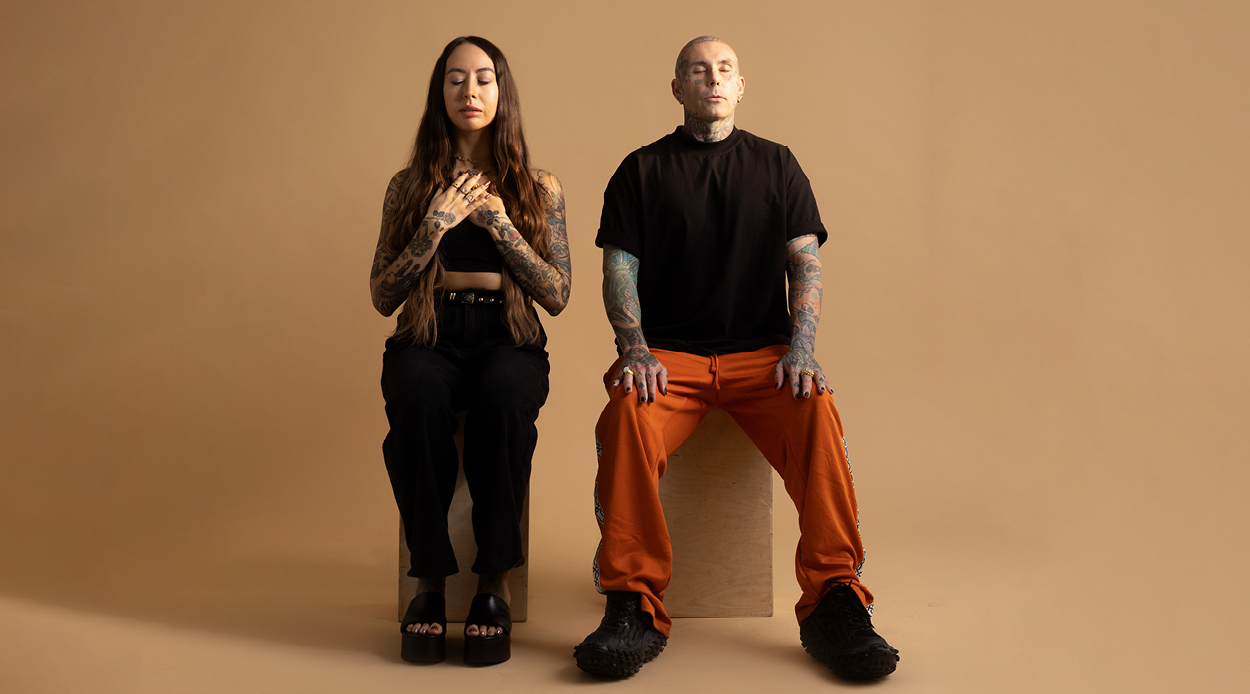
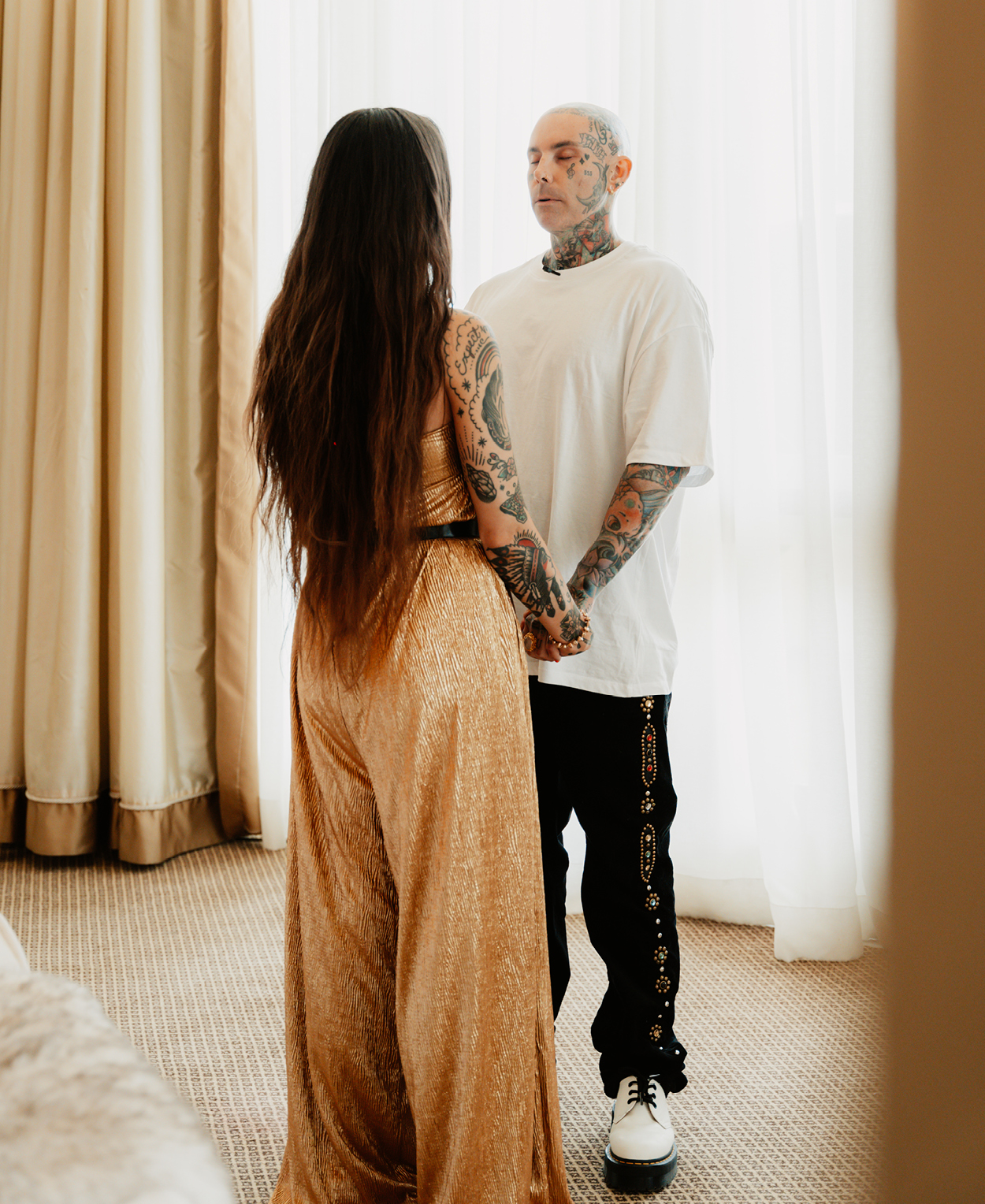
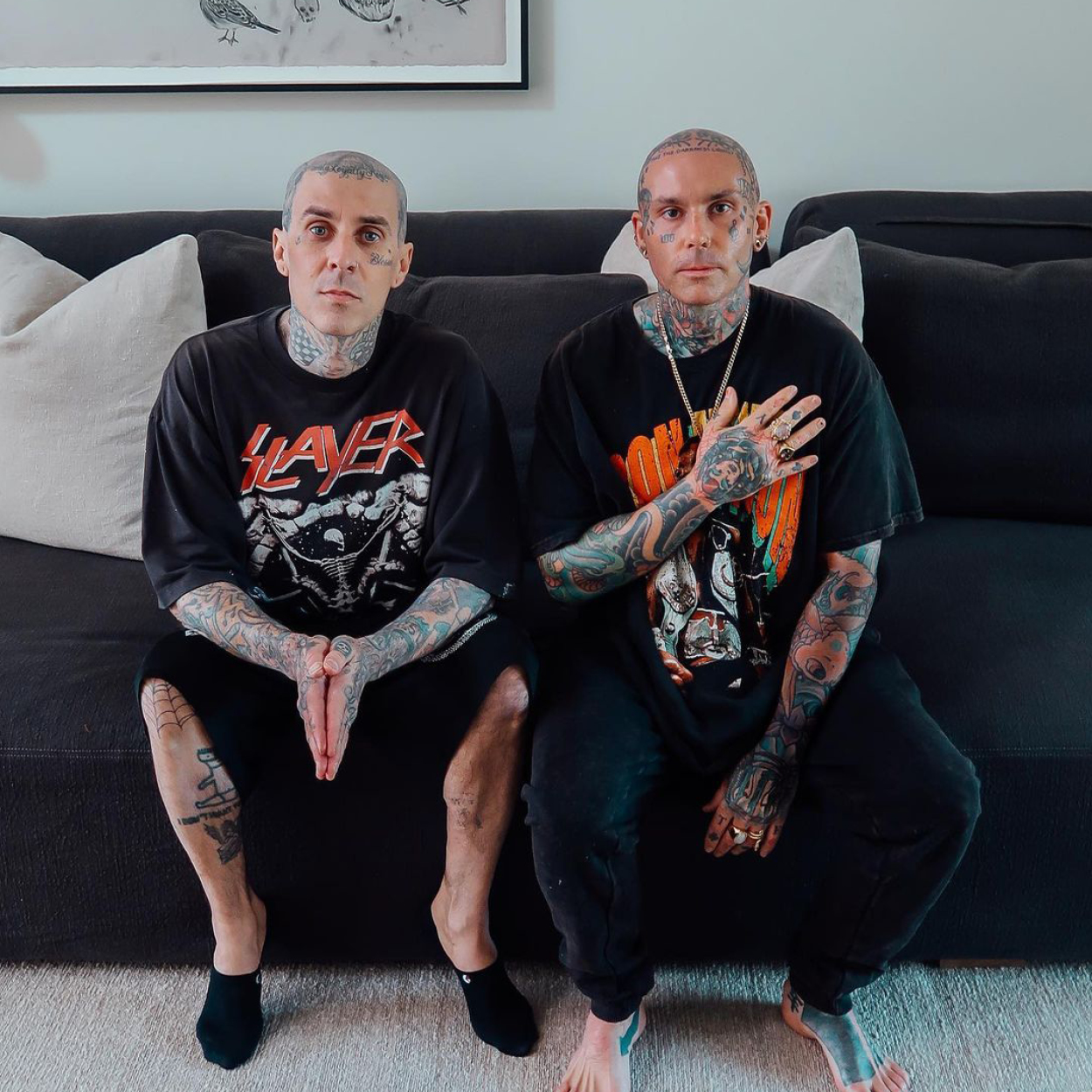
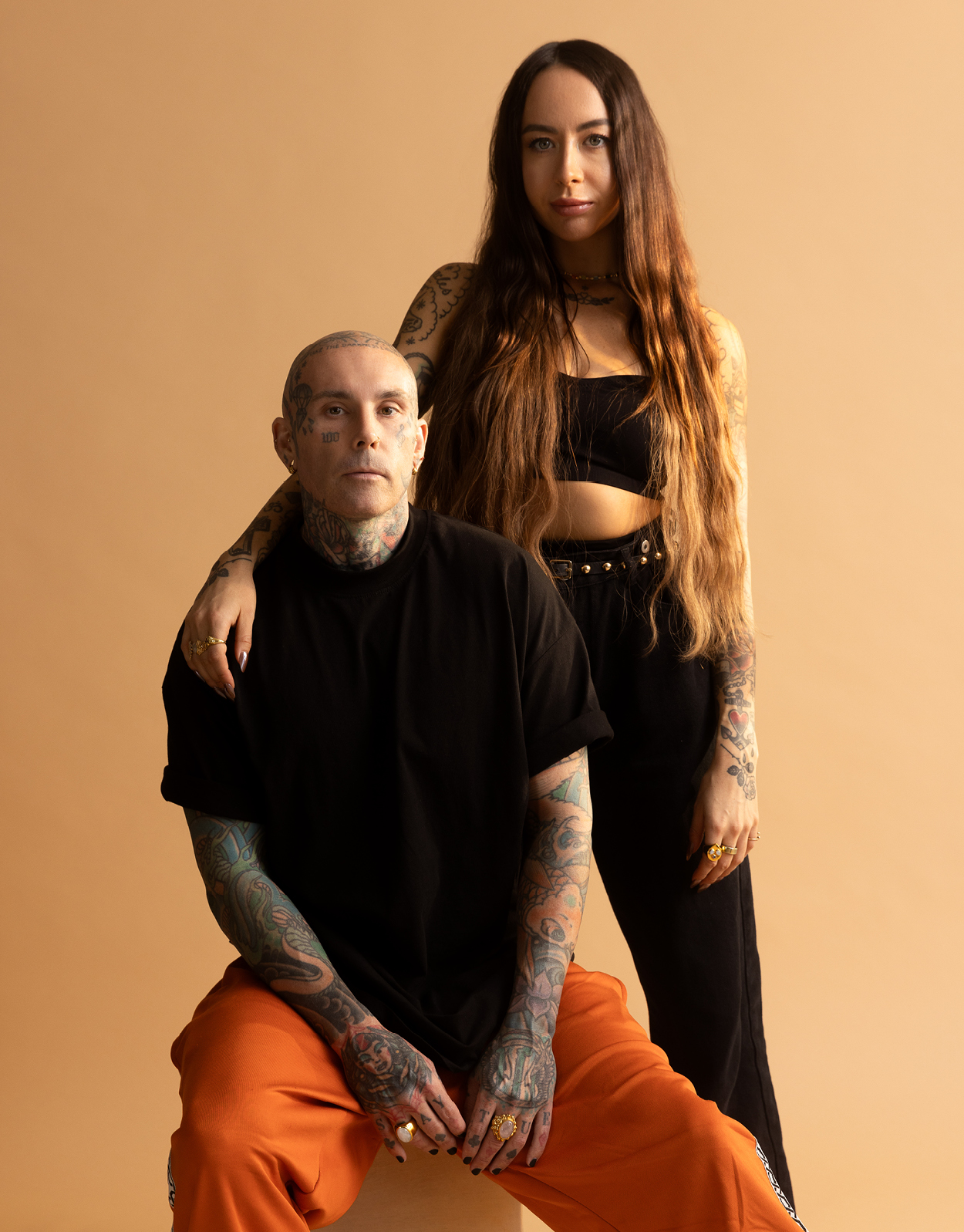
In the last decade, breathing has become a discipline that leaders in the wellness space are harnessing with increasing precision and incredible results. From Wim Hof’s groundbreaking explorations into breath control to journalist James Nestor’s scientific immersion in breathwork (and his bestselling book about it), breathing has become an art, and mastering it has become the key to unlocking mental and physical health on an unprecedented scale. Lukis Mac and Hellè Weston are two figures who have been working in this space for years. The Co-Founders of Owaken Breathwork (and real-life partners), New Zealanders Mac and Weston are now based in Los Angeles after taking their transformative coaching around the world, where they consult regularly with some of Hollywood’s most prominent names — including Travis Barker and Kourtney Kardashian, Megan Fox, Machine Gun Kelly and Jake Paul — as well as politicians, entrepreneurs, industry leaders and more.
Left: Hellé with Megan Fox. Right: Lukis with Machine Gun Kelly
Every morning for the last few months I have spent five minutes breathing. Quietly, eyes closed, I inhale through my nose and exhale through my mouth in a sequence of 10, then 20, then 30, holding my breath for the same amount of seconds between each set. The first time I did it, the sudden disruption to my natural breathing pattern made me panic. The second time, I felt more comfortable in the discomfort. The third time, I felt almost euphoric and now, it brings me a calmness and clarity that feels real and grounded.
The simplicity of it is almost laughable. After all, breathing — the intake of oxygen and expulsion of carbon dioxide — is a natural and instinctive process. We do it every day, usually without thinking. So how can something so straightforward be used in such a transformative way, and why didn’t I know about it sooner?
Breathwork has only really emerged as a recognisable wellness modality in the last few decades, although it has been around for millennia. And while its roots lie in ancient Eastern practices like Yoga, Buddhism and Tai Chi, its benefits have also been harnessed in various industries where managing stress is a requirement. (Like in the military, for instance, where techniques like box breathing are often taught to soldiers as an antidote to the environmental stressors that come with their work.)
That said, the concept of stress management, particularly in our modern world, has become increasingly commodified, where whole industries have sprung from the pursuit of a stress-free life. More recently (and in tandem with the boom of social media) people have started to realise the profound impacts that something like a purposeful breathing practice can have on their longterm health, and this recognition has created space for breathwork to flourish, and for a number of experts to come to the fore.
Two such experts who have built their careers on the power of breath are Lukis Mac and Hellè Weston. Partners in both business and life, Mac and Weston started their company Owaken Breathwork after years of researching, studying and experiencing various modalities in pursuit of something that would heal trauma, deliver optimised health and transform their mindsets. Breathing ticked all the boxes.
“It’s mind blowing to see the way this practice has helped people… We get people writing to us all the time explaining how they’ve been able to release stress, find answers and just function better in their daily lives .”
For Mac and Weston, the interest in holistic wellness sprung from upbringings in which mental health was an issue; first, in the adults who raised them, and then, in themselves too. Both grew up in West Auckland, and while Mac describes his mother as very loving, encouraging and supportive, it was his father’s episodes of depression, anxiety and addiction issues (leading to him tragically taking his life when Mac was only seven years old) that left a lasting legacy. “Growing up, I didn’t really know how to process my emotions,” Mac tells me, “so I ended up struggling with depression and anxiety myself for years.” Weston tells a similar story. “My family had a lot of mental health challenges too,” she says, “and there was this stigma around seeking help, where going to any kind of therapy was frowned upon.”
When the pair first came together in 2007 (at the time, Mac a tattoo artist and Weston a fashion stylist) it was the shared desire for deeper understanding that connected them, and the ensuing journey of self discovery that strengthened their, now 19-year relationship. “We were reading books, trying different therapies, travelling and studying holistic modalities for over 10 years,” Mac tells me, before Weston jumps in, “and when we first started, it was pretty weird.” They laugh. Indeed, the idea of ‘natural health’ was, until fairly recently, thought of as too fringe for most, with Weston explaining that even the couple’s close friends and families didn’t initially understand what they were doing, or why. “Finding each other was so important, because it gave us permission to finally make these kinds of practices part of our everyday lives, and to be more open about them with other people.”
Left: Lukis training Jake Paul. Right: Hellè during an Owaken Breathwork session
While travelling in Bali, the seeds for what would eventually become Owaken were planted when Mac and Weston had their first experience with breathwork. It was transformative. As Mac tells me, “For so many years I had lived in a state of survival, stress and struggle that was dictating my life, and breathwork allowed me to open up to my emotions, to connect the dots of what I was feeling and to deal with past experiences that I hadn’t been able to process. It was the start of when everything changed for me… the anxiety and depression I had been dealing with for as long as I could remember were suddenly no longer a part of my life.”
According to Mac and Weston, the effectiveness of breathwork can be attributed to its “bottom-up” approach. “With more traditional therapy,” Weston explains, “we’re processing things consciously and intellectually and then dealing with the emotions after, whereas in breathwork, we start with the body which allows things that have been stored, that you might not even realise are there, to come to the surface and be addressed.” In this way, breathwork (particularly the kind practised by Mac and Weston) is a somatic therapy, which is the classification for treatments that focus on the body, built on the idea that our bodies’ tendencies to trap emotions and experiences can lead to debilitating conditions when left unaddressed. To the uninitiated this might sound a bit abstract and confusing, but underlying it all is a simple call for us to connect with ourselves on a deeper level, and the results are astounding.
“It’s mind blowing to see the way this practice has helped people,” Mac says, “We get people writing to us all the time explaining how they’ve been able to release stress, find answers and just function better in their daily lives.” Here, Weston adds, “I mean, we’ve all got something from our childhoods that we need to process, right? And I think you can spend years in therapy and never get to the root of that.” She continues, “I often get people saying that they haven’t been able to cry in years or even decades,” she says, “and then, through our breathwork, they can finally access grief or pain and release it… it’s really beautiful to be able to facilitate that process.”
Lukis with Travis Barker
In 2017, the duo founded Owaken Breathwork, pulling from their vast knowledge and experience to help people around the world. And what started as a few events in Australia quickly blossomed into an international movement. Now, the pair (and their business) is based in Los Angeles where they have become widely sought-after by big names in Hollywood for their breathwork events and private coaching. Mac’s one-on-one work with Blink-182 drummer Travis Barker, for instance, has been credited as a key reason why the famous musician was able to fly again, having sworn off planes for 13 years after surviving a horrific crash in 2008. The night before Barker’s first flight in over a decade, Mac was on hand to run him through a breathwork session that made the experience “the easiest ever,” according to the artist, who also told Nylon magazine and Rick Rubin on his podcast Tetragrammaton, that his sessions with Mac have not only allowed him to go deeper into his subconscious but that mindful inhalation and exhalation makes him “laugh, cry and feel high.” As Mac explains, “Travis was really able to heal his relationship to what he had been through, to not only start flying again but to start playing music again and touring, which was massive for him.”
“People are watching those that they admire or idolise prioritising their own health and wellbeing…it’s changing the paradigm around what is considered ‘normal’ and encouraging people to try something new.”
It was massive for Mac and Weston too, whose associations with figures like Barker and his wife (Kourtney Kardashian) gave the duo a profile that suddenly saw them inundated with requests. It put their work on the world stage, and crucially, gave other people permission to embrace breathwork as something that might be able to help them, too. “The biggest area where we’re seeing the needle move is around social media and popular culture,” Weston says. “People are watching those that they admire or idolise prioritising their own health and wellbeing, from actors and musicians to athletes and entrepreneurs, and it’s changing the paradigm around what is considered ‘normal’ and encouraging people to try something new.” Mac and Weston’s work has also been buoyed by a collective, post-Covid realisation of the importance of self-care and of eschewing burnout-inducing routines and the kind of corporate culture that once, was so celebrated.
In fact, a lot of the work that Mac and Weston do is as much about a collective experience as it is an individual one. It functions on a number of levels. In Owaken’s events, the duo holds space for a vast number of people in a single room, guiding them through a series of intensive breathwork techniques for four hours, and watching incredible breakthroughs on a mass scale. While in one-on-one sessions, Mac and Weston work with their clients for around two-and-a-half hours, and it’s a more personalised experience. “With Owaken, there’s the therapeutic work, which is more focused on emotional detox in intensive sessions,” Weston explains, “and then there’s the daily maintenance work, which can be anywhere from five to 30 minutes a day which can be mindful breathing, meditation, journaling… and both are as important as each other.”
Lukis & Hellé
Alongside their events and in-person sessions, the pair have launched an Owaken app that has been designed to encourage and support daily practice, and also give those who are curious about the work a good place to start. For Mac and Weston, a typical day might begin with their Owaken Daily five minute breathing (the same one that I have been doing every morning), before going into a 30-minute meditation, a journaling practice, a cold-plunge and sauna session, a workout and then a walk. And that’s before the working day begins. “It sounds intense,” says Mac, laughing, “but it’s become a non-negotiable for us, and I really notice a change when I’m travelling or out of routine.”
Beyond the routines and techniques and practices, what Mac and Weston are really doing with Owaken is to remind us all of our vast capacity for change. “Watching over and over again how the lives of the people can transform through something as simple as breathwork, really solidifies how powerful we are as human beings, and how we can create positive change in our lives,” Mac tells me. Weston adds, “Working with the breath, you quickly realise that we have this incredible tool right under our noses… it’s natural, you can do it for free and it can lead to rapid and profound healing, and I just want more people to know about it.”
Given Owaken’s evolution, it would seem that people do want to know about it. In fact many people, including myself, are more open than ever before to exploring alternative avenues of health, thanks to the work of practitioners like Mac and Weston and their growing visibility in popular culture. And if my personal experience with an easy, five-minute daily practice is anything to go by, it truly is the simplest way to affect real, lasting change. “Think about how we tell ourselves or the people we care about to ‘take a breath’ in moments of distress or crisis,” Weston says, “we all intuitively know how good breathing is for us… it’s just deepening our relationship with that instinct, and harnessing it properly.”
So whether you’re someone who is searching for answers, craving change or is simply curious, Mac and Weston’s breathwork is certainly one path to achieving calm in the face of the relentlessness of modern life. Sit back, take a breath and see for yourself.
Protein has become a hot topic as of late, and it’s little wonder. We’re finally wising up to just how vital it is for our overall health — from mental clarity to fatigue, cravings to cognitive function, and so much more in between. It is, essentially, the most fundamental component to our diets, and most of us aren’t getting our fill. For women, adequate protein intake is also increasingly more essential as we age.
If you suspect you’re not getting enough, chances are, you’re probably right. Some of the signs include weakness and fatigue, cravings and increased hunger, frequent sickness and slow healing, loss of muscle and joint pain, unexplained hair loss, brain fog, mood changes, brittle nails, and swelling. Protein is one of the body’s main building blocks, and it plays a crucial role in the structure and function of muscles, skin, enzymes, and hormones, so it’s hardly surprising that low intake (or in more severe cases, deficiency) has such a far-reaching impact.
So, how much protein do we actually need? The exact amount depends on several factors, such as your age, level of physical activity, and fitness goals, but as a loose guide, the official recommended dietary allowance for adult females is around 46g daily, and for adult males, between 52–56g daily — equating to roughly 0.8g per kilogram of body weight. It’s worth noting, however, that many nutrition experts now consider this a baseline to prevent deficiency rather than an optimal target, with a growing consensus suggesting 1.2–1.6g per kg of body weight as a more practical daily goal for general health. If you’re trying to gain muscle, this number goes up again to around 1.4–2g per kg of body weight daily.
The good news is that upping your intake is simpler than you might think. Fatty fish, lean meats, eggs, legumes, nuts, and low fat dairy are all great high-protein foods that can easily be woven into your daily diet. Egg whites are almost entirely protein (although eating the yolk provides additional nutritional benefits), cottage cheese is incredibly protein-rich, chicken breast packs almost half of a women’s daily intake into a single serve, and Greek yogurt is also a high-protein option to enjoy throughout the day.
If you’ve been considering ditching the oat milk and switching back to dairy, you’ll be upping your intake in the process (a cup of milk provides over 8g of protein), and if your diet is more flexitarian or plant-based than carnivorous or diary-heavy, lentils, almonds, quinoa, pumpkin seeds, and peanut butter are all great protein sources.
Salmon, white fish, and shellfish are perhaps one of the best and most delicious, nutritious ways to up your intake, boasting one of the highest protein contents of any food — a fillet of white fish boasts a whopping 30g of protein alone. And, of course, if you’re still struggling to meet your daily requirements, a protein powder is always an optional supplement.
Ultimately, if you’re feeling any of the symptoms related to a diet lacking in protein, consider this your sign to take a few simple steps to increase your intake. The gains will extend well beyond muscle mass alone.
Auckland, for a brief window, is showing off. And we are here for it. Endless sunshine and clear skies are the perfect antidote to doom and gloom, and to getting out to celebrate life.
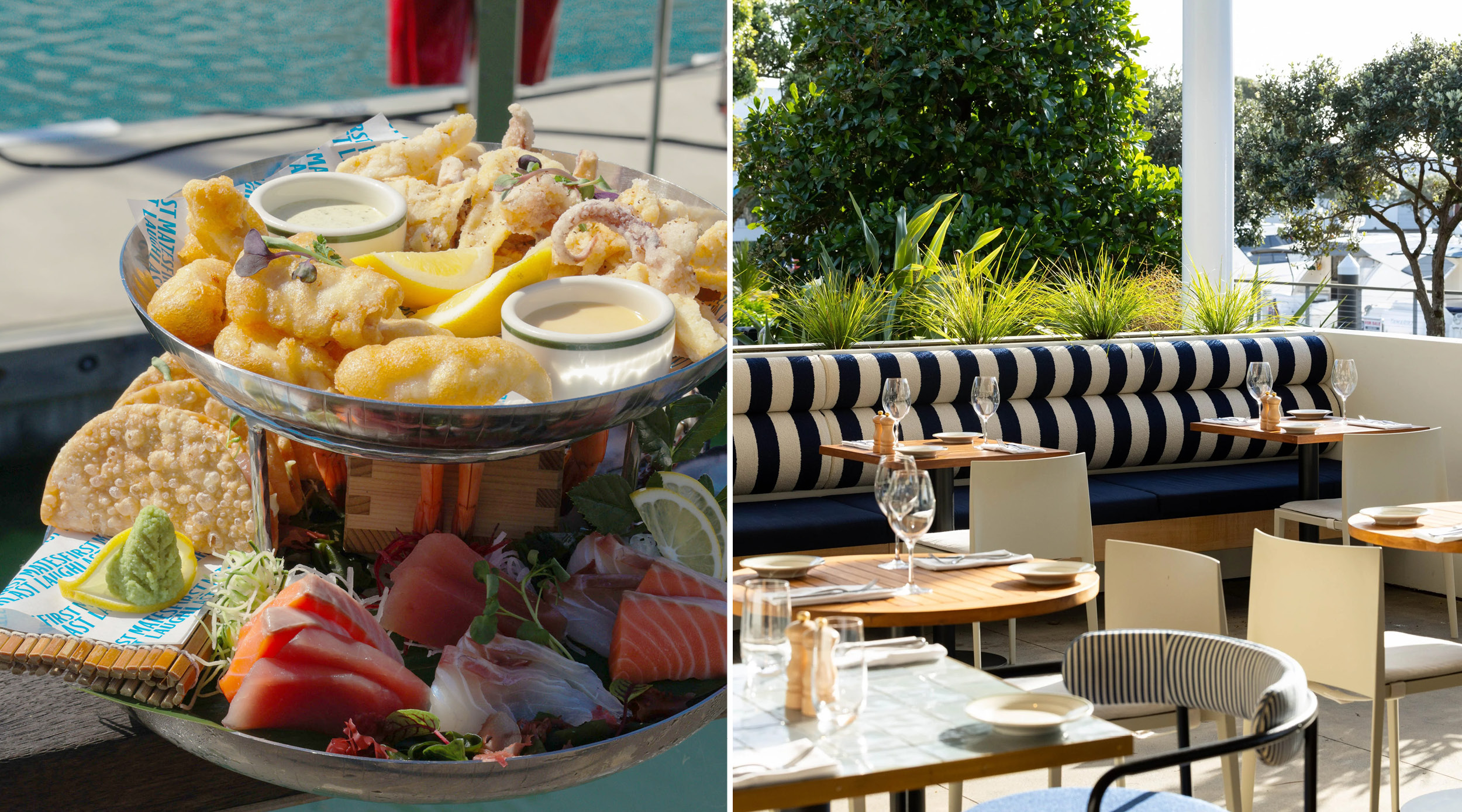
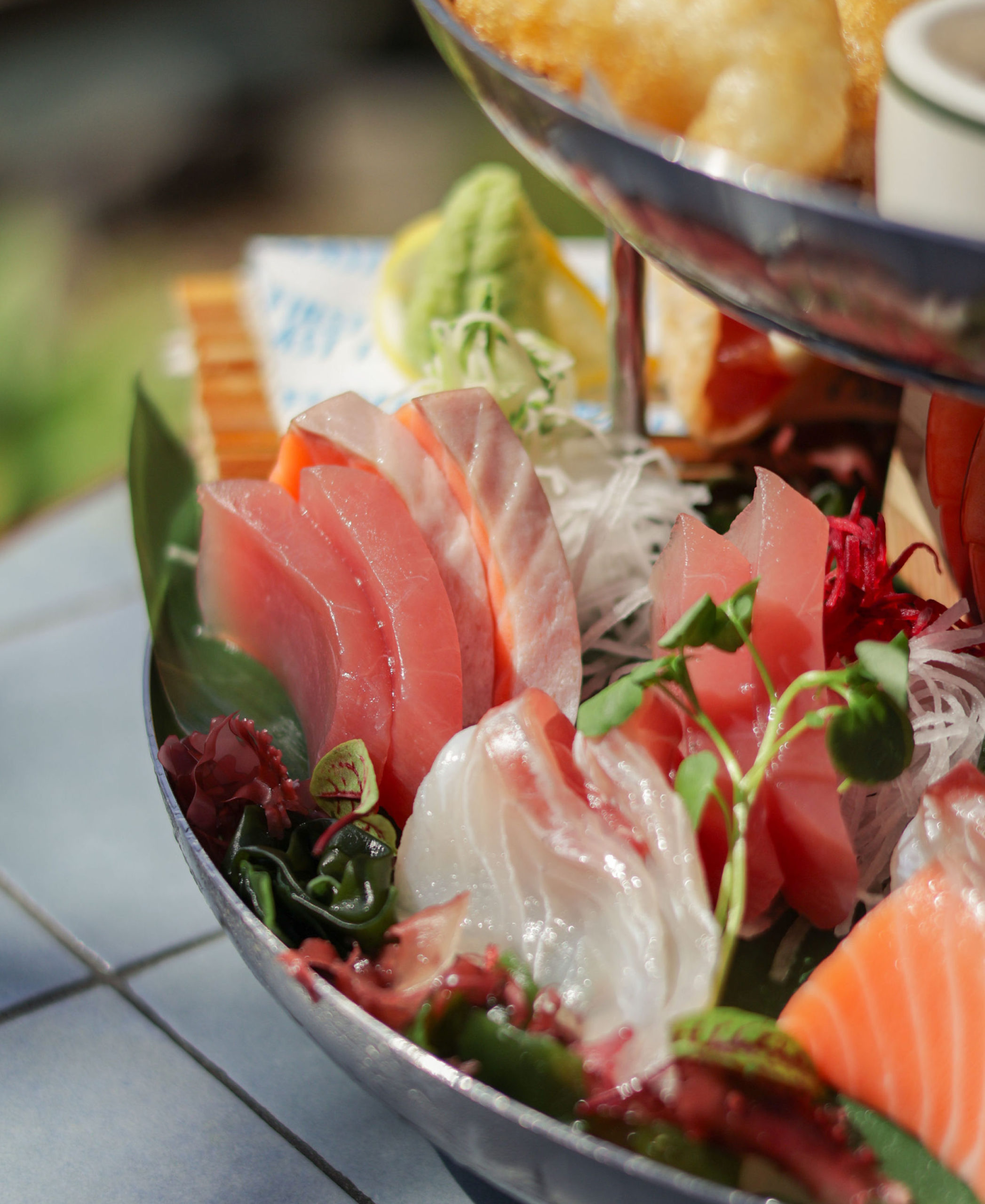
So, while the Côte d’Azur vacation may still be a few months, or even a lifetime away, fear not, as we have a suitable alternative. Secure yourself at a table at Westhaven’s First Mates, Last Laugh, and order the seafood tower. Arguably, the grandest tower in town, and sure to rival the one served at the iconic Club 55, with a half crayfish lording over oysters, prawns, sashimi, tuna taquitos, Szechuan pepper squid and gurnard goujons. This is an order that lands with confidence, knowing it is the best-looking thing in the room. Nearby tables look over with remorse and regret, immediately changing their own order.
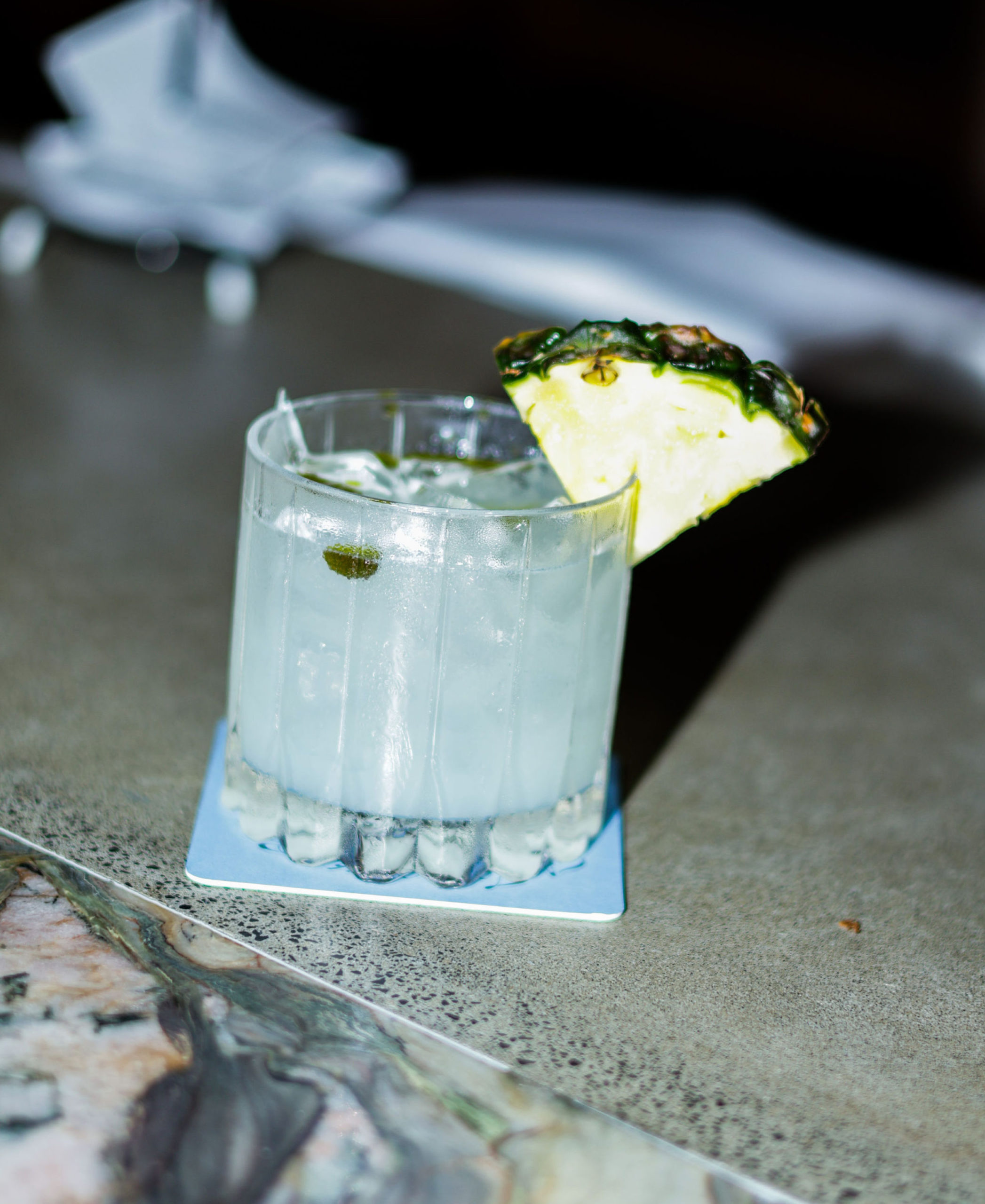
The decadent theatrics don’t stop here, particularly if you’re faintly competitive. Because we’re to celebrate the sunshine and good times after all. And so one must also order continuous rounds of their Spicy Pineapple Margarita, just to assert your gastronomic prowess. Tequila, coconut, pineapple, chilli, kaffir lime. Bright, sharp, and just reckless enough to seal the deal.
Spicy Pineapple Margarita
Seafood Tower
Judith Tabron’s marina-side playground has become renowned for this knack of knowing just when to serve, just what we all need. This is Auckland, perfectly presented at its very best. With boats bobbing, the low sun shimmering across the water, and the vibrancy of being among people just like you, who’ve made very good life choices, it makes for a very good time.
Ignoring this call to honour your city in such an appropriate manner, as it shines brightly, could be considered treasonous, but let’s leave politics off the table for now. Act quickly, we all know this moment in time is fleeting, life is not improved by being a bore. Life rewards those who show up at the right place just at the right time.
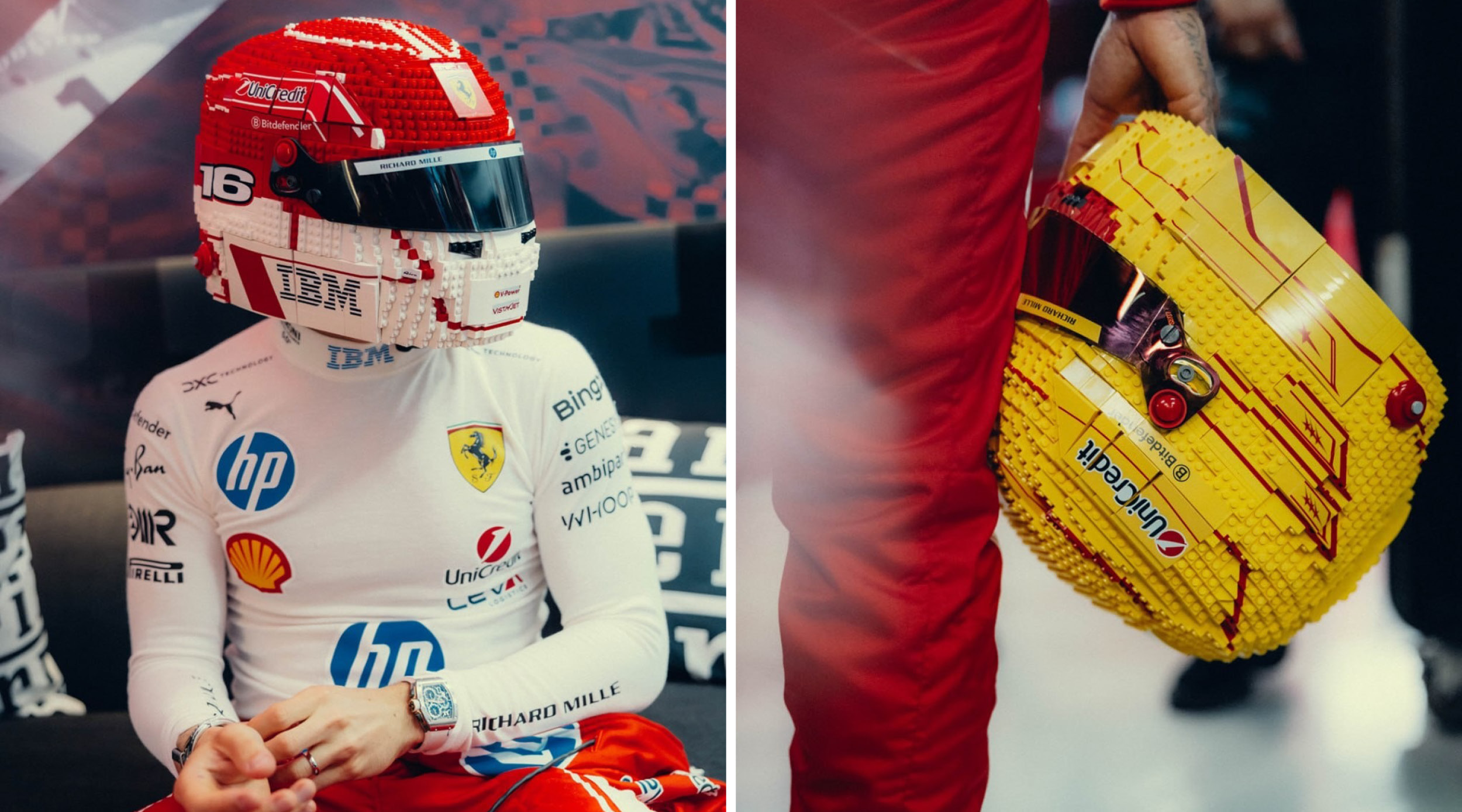
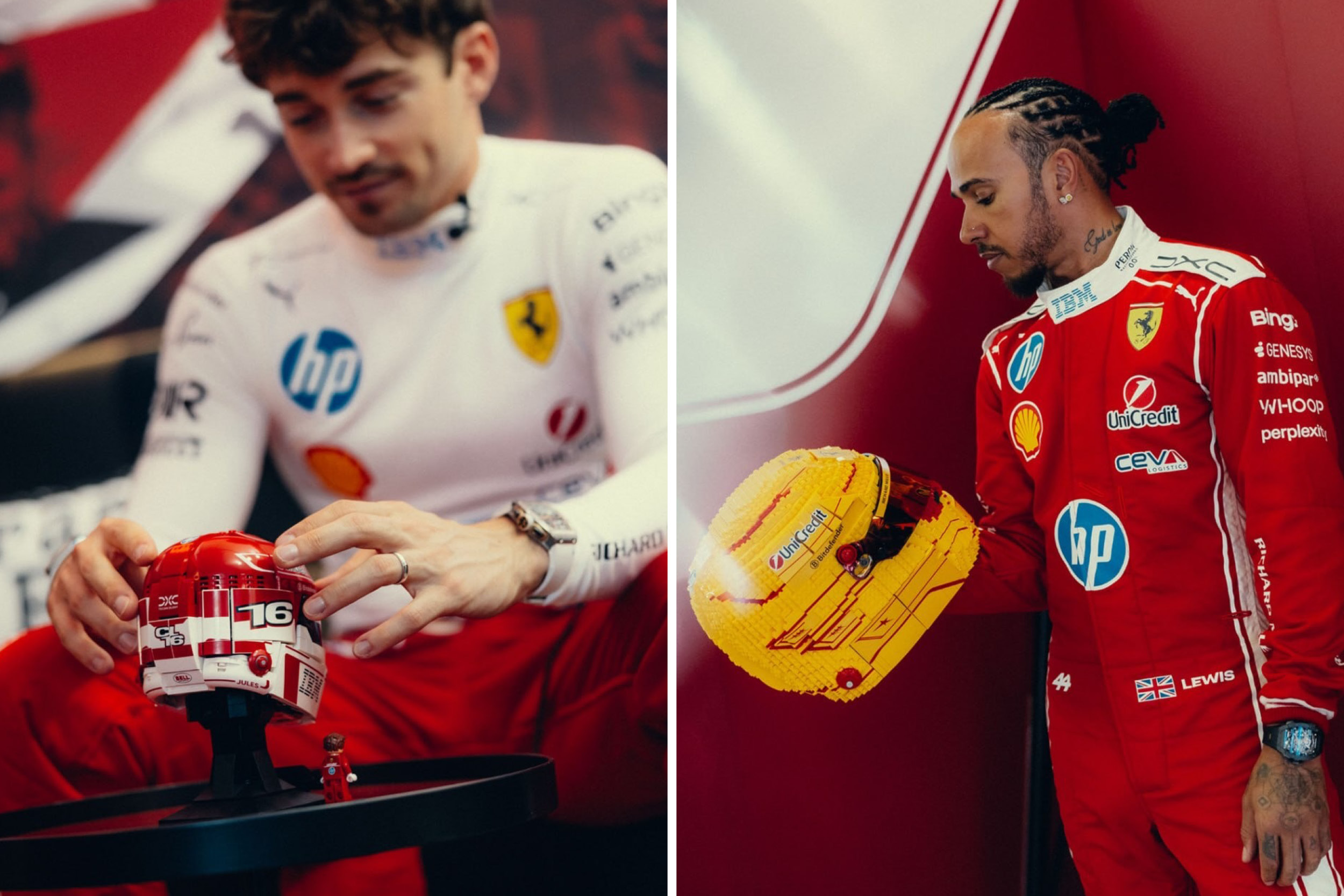
Formula One’s 2026 season has extended the spectacle beyond the grid, arriving in brick-built form. Two sharply executed LEGO helmets that celebrate Scuderia Ferrari drivers Charles Leclerc and Lewis Hamilton. First revealed trackside, when both drivers appeared carrying life-sized, brick-built versions of their helmets, the actual sets feature Leclerc’s 886-piece helmet that captures his personal nuances from his signature number 16 to tributes to his late father and Jules Bianchi.
left: Charles Leclerc.Right: Lewis Hamilton
Hamilton’s 884-piece counterpart leans into bold iconography, with his unmistakable number 44 and a first-of-its-kind minifigure clad in Ferrari red, marking the new chapter in his career. Available for pre-order now and launching globally on 1st May, these sets prove that Ferrari still knows how to make an entrance.
Scuderia Ferrari HP Lewis Hamilton Helmet from Lego
Scuderia Ferrari HP Charles Leclerc Helmet from Lego
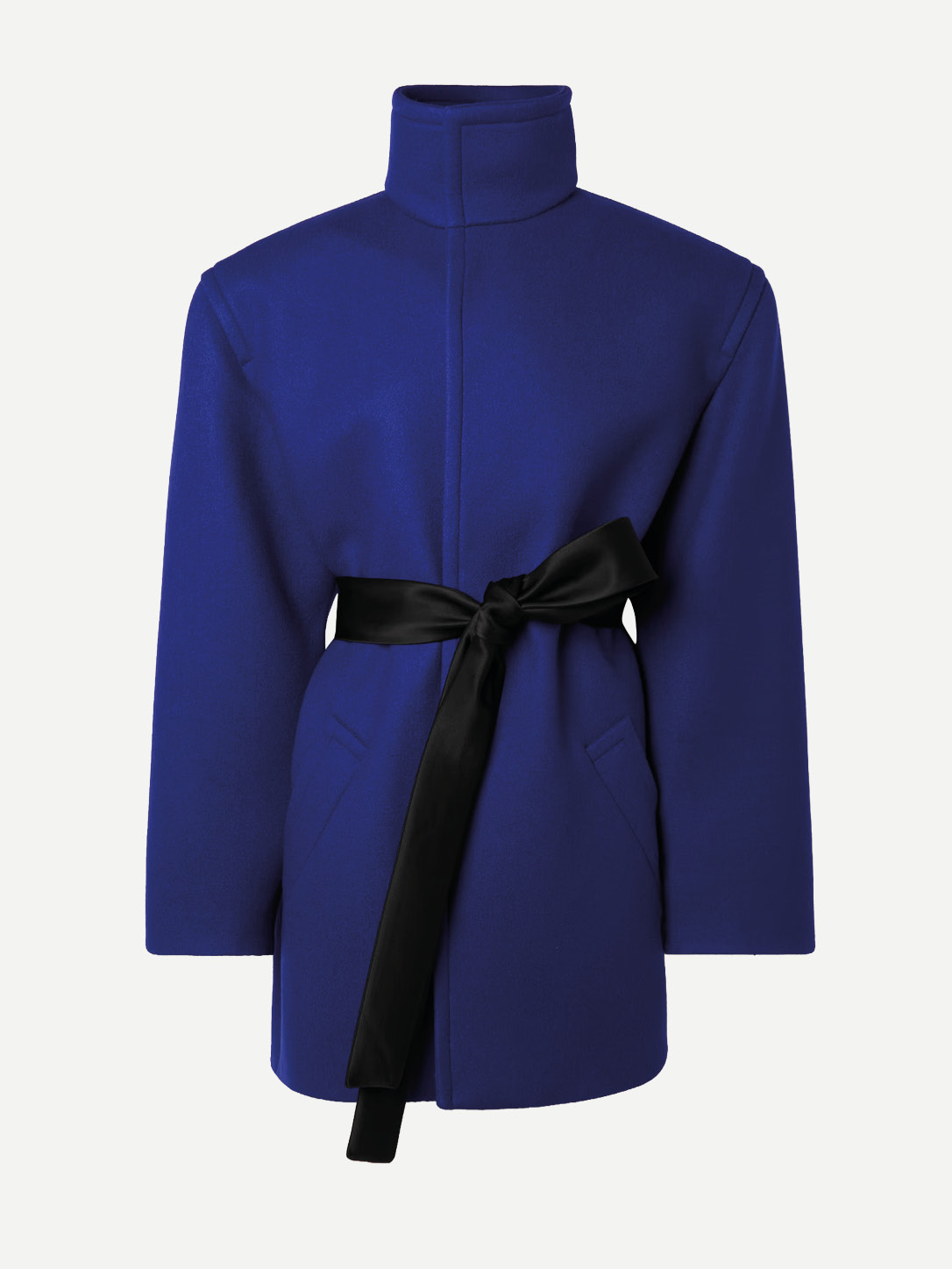
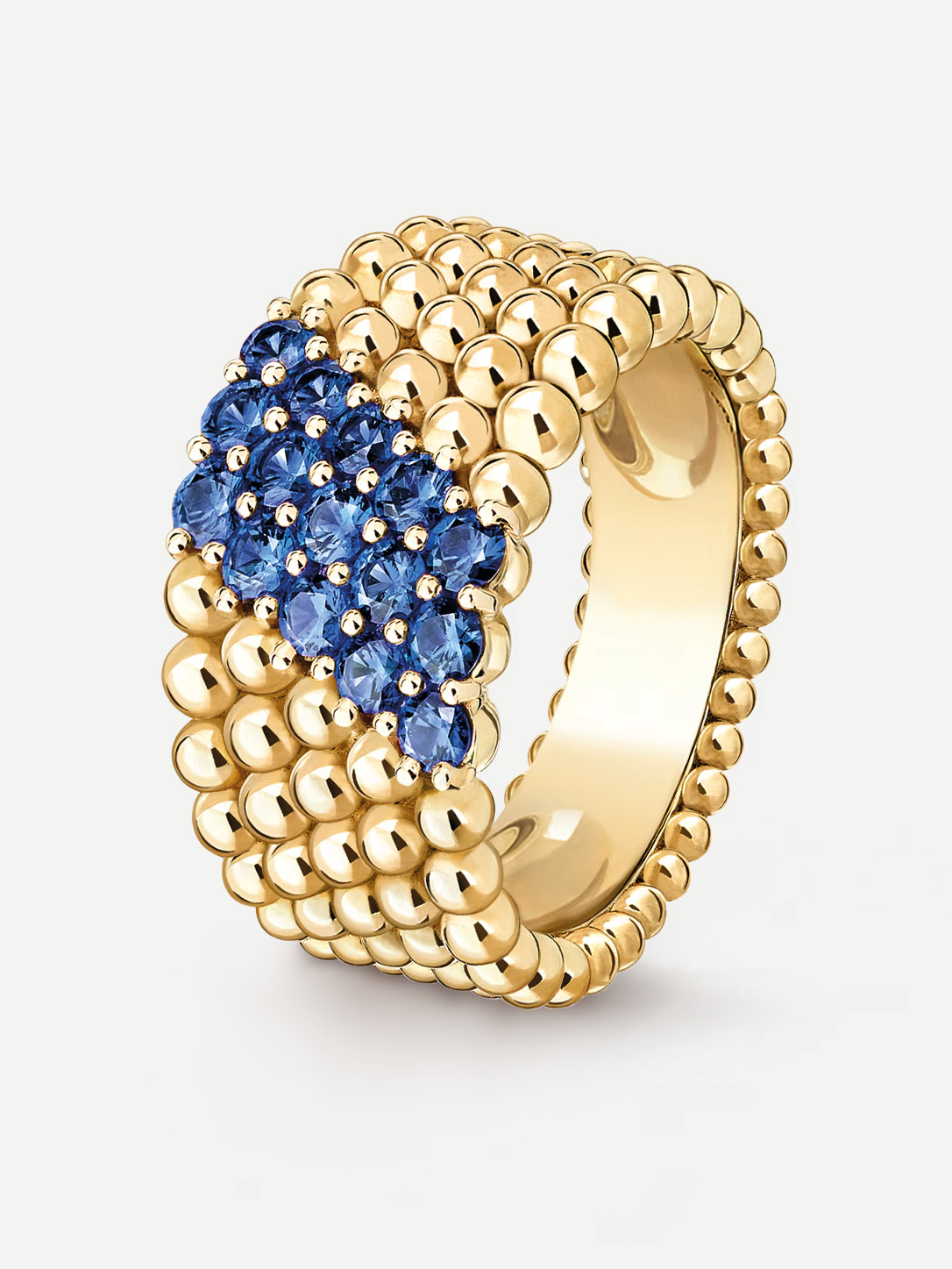
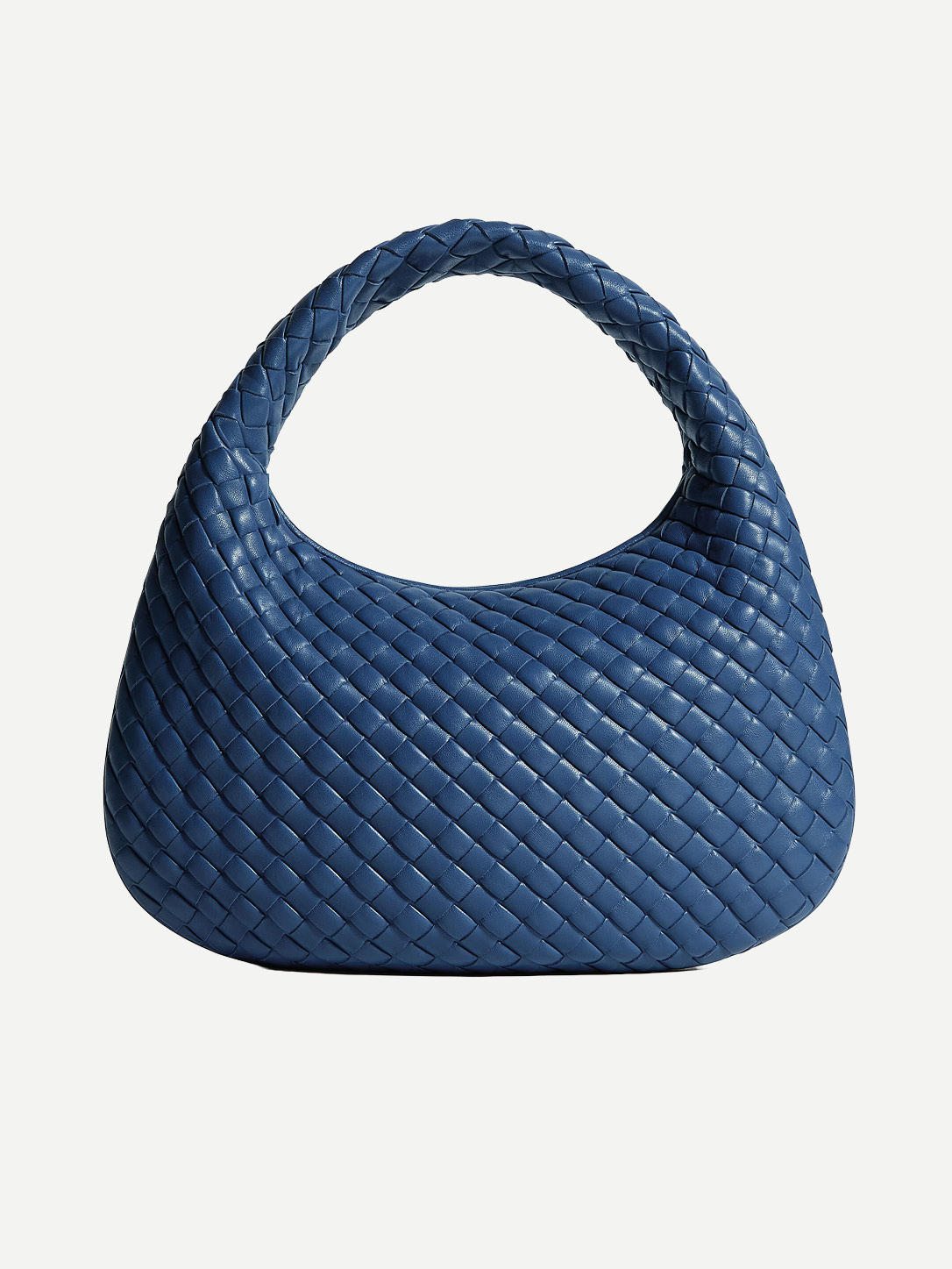
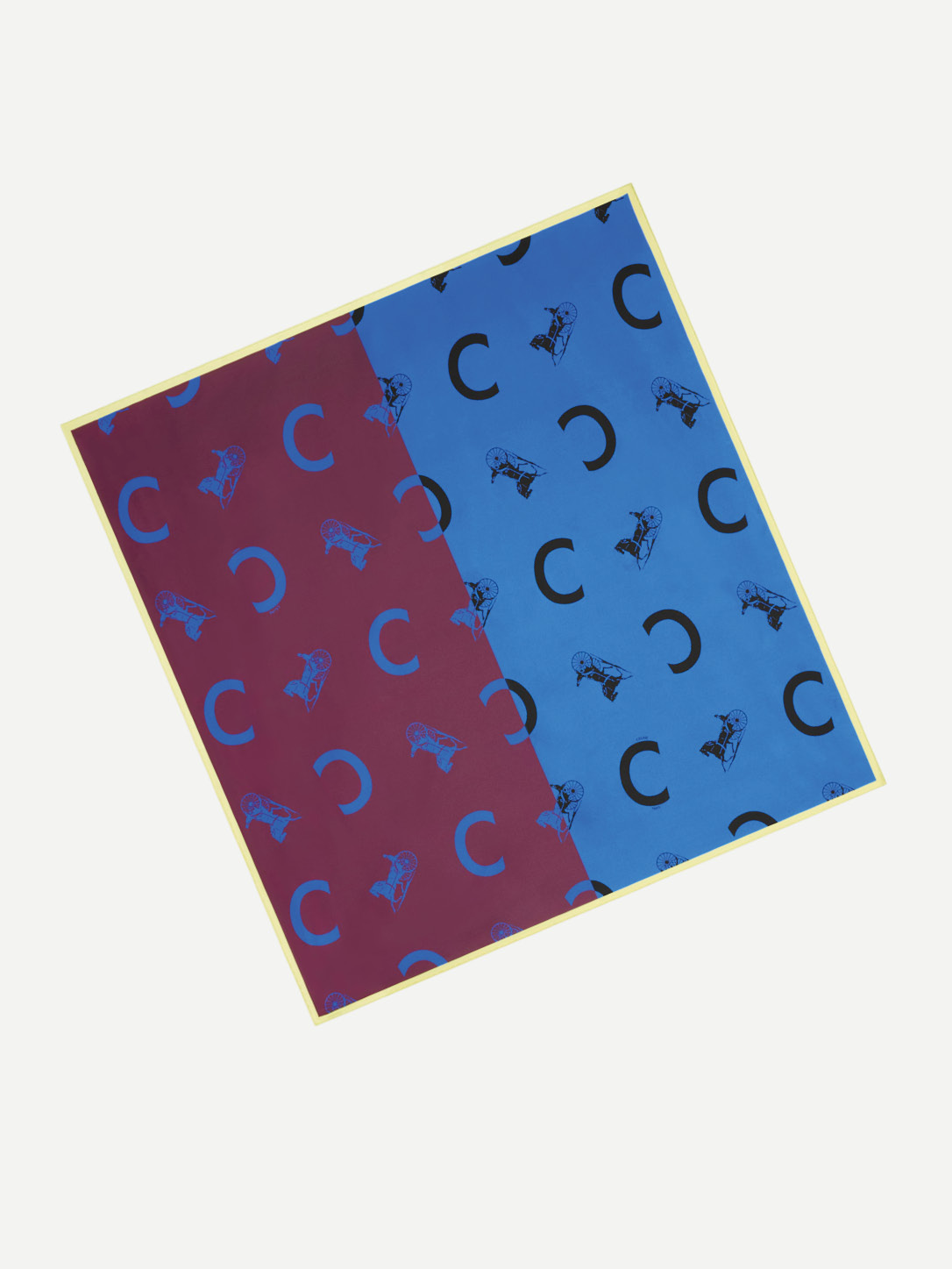
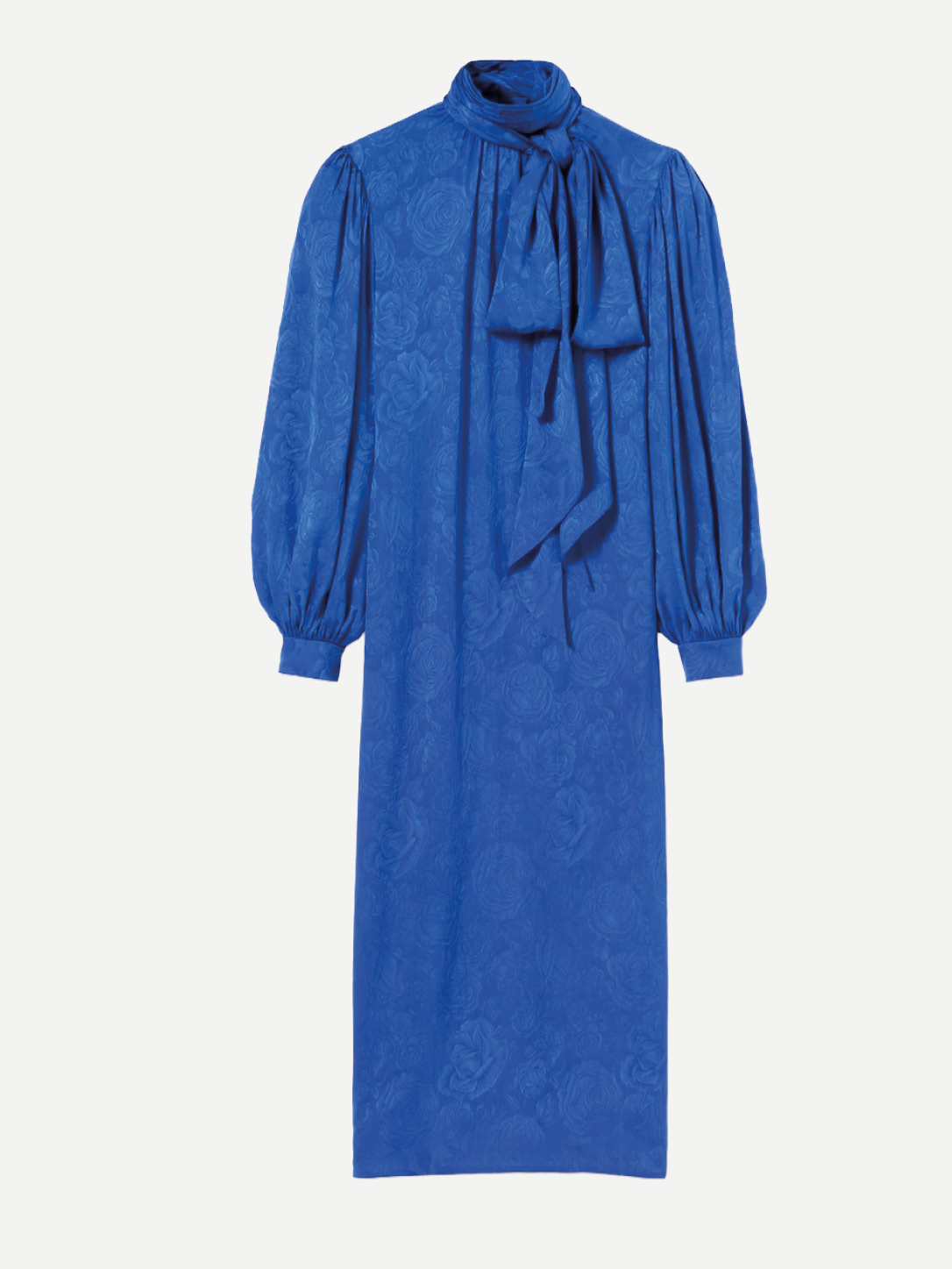
Cobalt blue has become the colour of the moment. Designers from Celine and Saint Laurent to Gucci and Bottega Veneta have gone all in, sending head-to-toe looks down the runway in vivid sapphire tailoring, billowing azure silks and richly textured coats. What makes the shade so compelling is its emotional duality: it carries the depth of a classic navy but pulses with an optimism usually reserved for brighter, warmer tones. After years of muted “quiet luxury” palettes, cobalt feels like a confident corrective, bold without being brash. Whether in woven leather accessories, jewel-set rings or sleek pumps, the shade flatters every skin tone and elevates every silhouette. This is blue at its most arresting: not melancholy, but vividly alive.
May is the busiest cultural month on Auckland’s calendar, and this year it delivers with particular force. It’s NZ Music Month, the Comedy Festival takes over every stage in town, the Writers Festival arrives at the Aotea Centre, and Fran Lebowitz closes the month with her singular New York candour. Fill the diary without apology.
Where:Spark Arena, Auckland When:Saturday 2nd May 2026
The British folk-rock band returns to New Zealand for the first time since 2019, bringing the full arena-scale production that has defined their live reputation. The Prizefighter Tour supports their sixth studio album of the same name, co-produced with The National’s Aaron Dessner and featuring collaborations with Hozier, Gracie Abrams, Chris Stapleton and Gigi Perez. It arrives less than a year after RUSHMERE debuted at number one in the UK and fuelled a sold-out global run. With Aotearoa’s own Folk Bitch Trio as special guests, it’s a Saturday night worth clearing the calendar for. Book tickets →
Reuben Paterson, Koro, 2023, Cast aluminium with automotive paint and cut glass crystals 739 x 679 x 1352mm
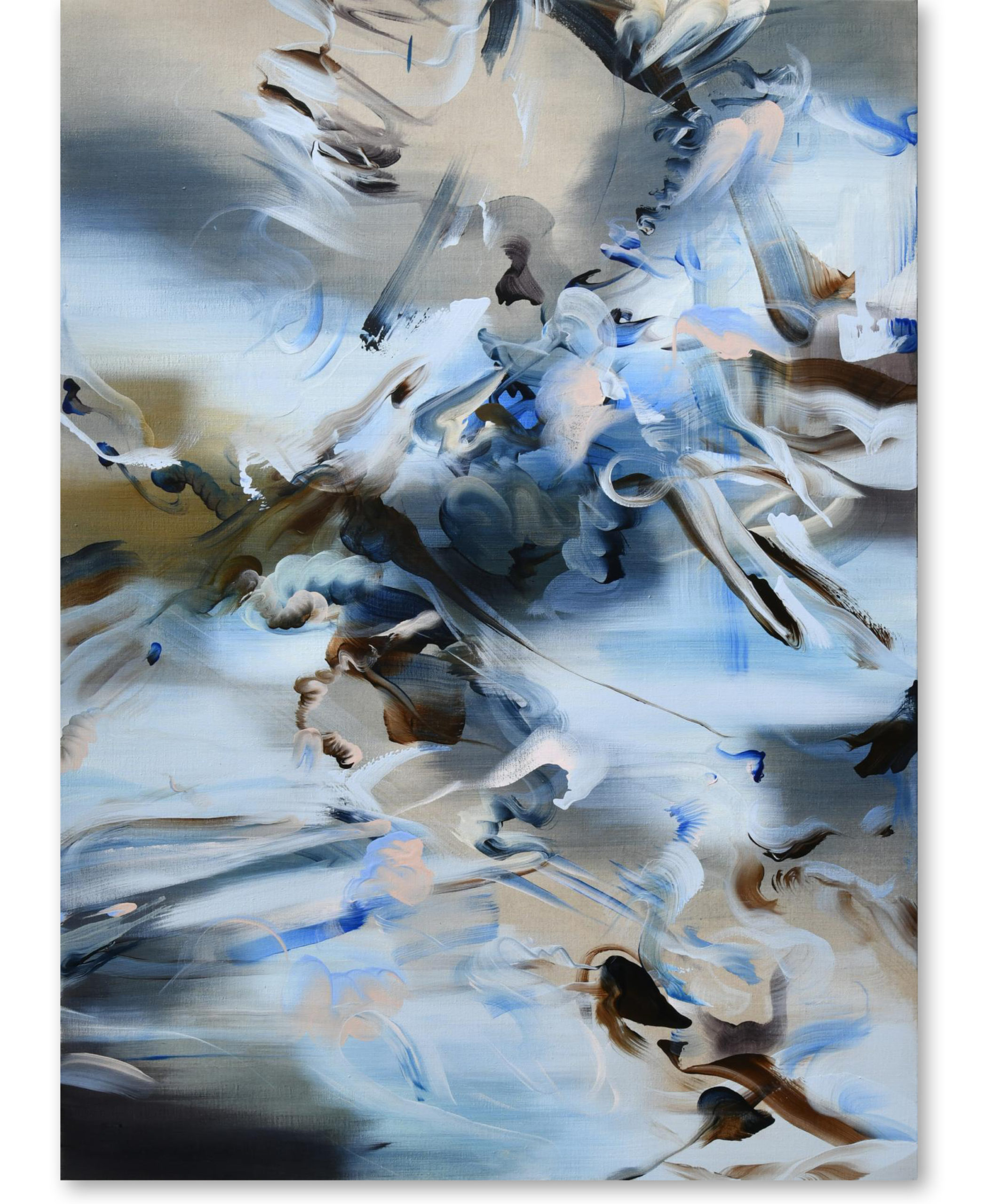
Grace Wright, Geometrical Reality 2025, acrylic on linen, 1800 x 1300mm
Where:Viaduct Events Centre, Auckland Waterfront When:30th April – 3rd May 2026
The country’s premier contemporary art fair returns for its largest edition yet, with more than 60 galleries and over 200 artists from New Zealand, Australia, London and the Pacific spread across all three levels of the Viaduct Events Centre. The sheer breadth of the offering (painting, sculpture, photography, ceramics, installation) makes this the best single place to take the temperature of the contemporary art scene in Aotearoa. Among the highlights, Lisa Reihana’s landmark digital panorama In Pursuit of Venus [infected], which represented New Zealand at the 2017 Venice Biennale, is showing outside an institution for the first time. Whether you’re a serious collector or simply enjoy spending an afternoon surrounded by interesting things to look at, the Art Fair rewards the visit, and the waterfront setting doesn’t hurt. We’ve already published our full guide to what to see at this year’s fair. Book tickets →
Where:The Civic, Queen Street, Auckland CBD When:Until 3rd May 2026
If you haven’t seen it yet, the clock is ticking. The West End and Broadway smash (eight Olivier nominations, a Forbes best-musical-of-the-year nod, and powered by an era-defining playlist of Max Martin pop anthems) closes its New Zealand debut run at the Civic on 3 May. Created by Emmy Award-winning Schitt’s Creek writer David West Read and performed by a company of outstanding Kiwi talent, it is funny, surprisingly moving, and the kind of show people see twice. Don’t be the person who waits too long. Book tickets →
Where:Various locations Auckland-wide When:1st – 24th May 2026
Now in its 33rd Auckland edition, the Comedy Festival takes over every stage in town for almost the entire month, with more than 150 performers across over 550 shows at venues including The Civic, Aotea Centre, Q Theatre, Basement Theatre, The Classic and the Bruce Mason Centre. The Best Foods Comedy Gala on 1 May, hosted by the indomitable Dai Henwood, is the marquee opening night (filmed for broadcast on Three), while the Last Laughs Awards Gala on 24 May, hosted by Guy Montgomery, closes things out with the Billy T and Fred Award announcements. In between, the programme runs deep: local favourites Brynley Stent, Paul Ego, Tom Sainsbury and James Nokise share the month with international acts including Emmanuel Sonubi, Sofie Hagen and Elf Lyons. Pick a name you know, or take a chance on someone you don’t. The festival reliably rewards both approaches. Browse the programme →
Where:Queens Rooftop, Auckland CBD When:Every Sunday in May, 2–5pm
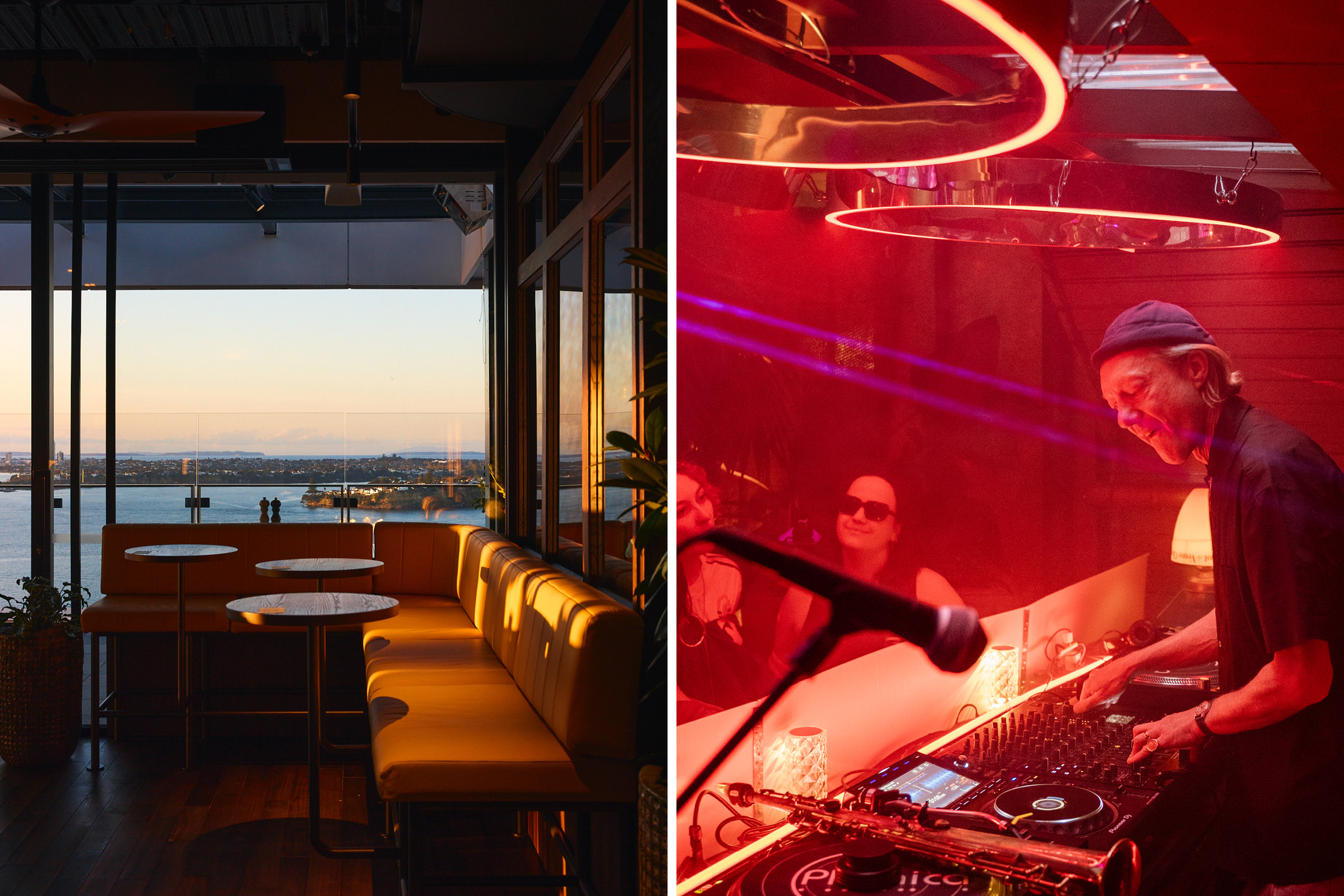
May is NZ Music Month, this year themed Our Sounds, Our Spaces, and the city is full of ways to mark it. Our pick of the bunch is Nathan Haines’ Sunday jazz residency at Queens Rooftop: four afternoons of live jazz from 2 to 5pm, with vinyl DJ sets from Haines himself and a curated Teremana Tequila and Cointreau cocktail menu for each session. The lineup runs Michal Martyniuk Trio (3 May), Elisa, aka Rachel Clarke, on Mother’s Day (10 May, an inspired bit of programming), Coco Charles (17 May) and Joe Kaptein Trio (24 May). A rooftop, a cocktail and an afternoon of jazz curated by one of the country’s finest. It’s hard to think of a better way to spend a Sunday in May, and it’s particularly worth noting as a Mother’s Day destination. More information →
Where:Aotea Centre and venues across Auckland CBD When:12th – 17th May 2026
The 27th Auckland Writers Festival is one of the largest literary events in the Southern Hemisphere, and this year’s programme (more than 220 artists across over 170 events) delivers a week that could comfortably fill a diary on its own. The headline names speak for themselves: Patrick Radden Keefe (Say Nothing, Empire of Pain) opens proceedings, Maggie O’Farrell appears virtually, and the programme features Jacinda Ardern, Mick Herron, RF Kuang, Catherine Chidgey, Amitav Ghosh, Jimmy Wales and many more. The Ockham New Zealand Book Awards ceremony takes place on 13 May, and the Festival Gala Night on the 14th. Whether you’re there for a single session or blocking out the full week, the Writers Festival is one of those events that makes Auckland feel like the city it wants to be. Browse the programme →
Where:Auckland Town Hall & The Civic When:15th – 17th May 2026
Three Auckland dates, two at the Town Hall (15 and 16 May) and a third added at The Civic (17 May) after the first two sold out almost immediately, for a tour that carries genuine emotional weight. This is Fat Freddy’s Drop’s first run of shows since the sudden death of founding member Chris ‘MU’ Faiumu, and they’ve chosen to honour his memory by performing Based On A True Story in full. The album spent 111 weeks in the New Zealand Top 40, won eight NZ Music Awards and remains one of the most beloved records in the country’s history. Tickets are looking sold out across all three nights, but keep an eye on official resale channels. Releases do happen, and this is one worth being persistent for. More information →
Where:Auckland Art Gallery Toi o Tāmaki, Wellesley Street East When:Until 17th May 2026
Still running and still essential, and closing on 17 May, so the window is narrowing. The first solo exhibition of Louise Bourgeois ever mounted in Aotearoa draws together over six decades of work from an international private collection, many pieces exhibited publicly for the first time. Bourgeois (1911-2010) remains one of the most psychologically charged and influential artists of the last century, her practice animated by memory, the body, family and the subconscious. If you missed it in April, May is your last chance. A guided tour of the exhibition takes place regularly; check the Gallery website for session times. Don’t leave this one to regret. More information →
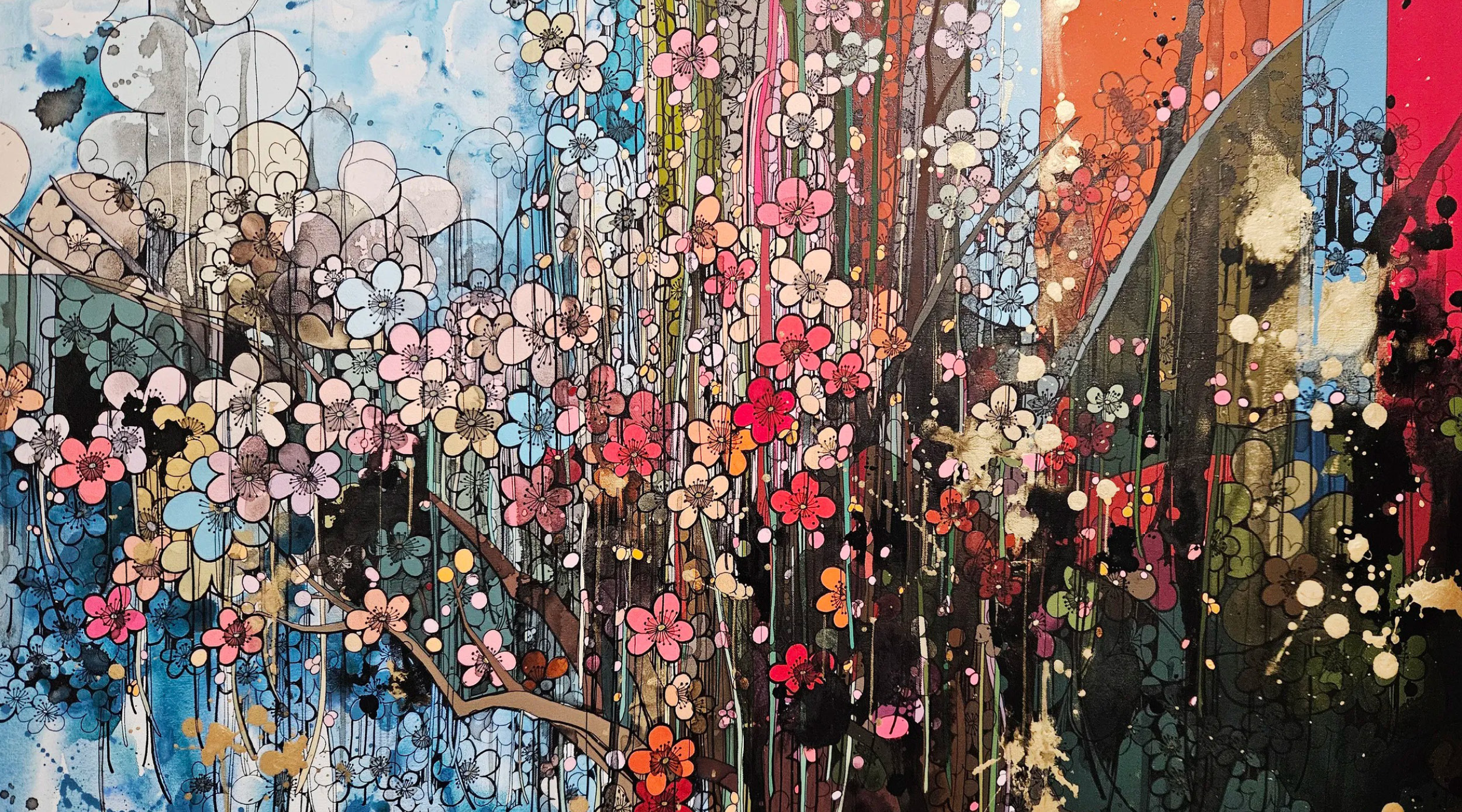
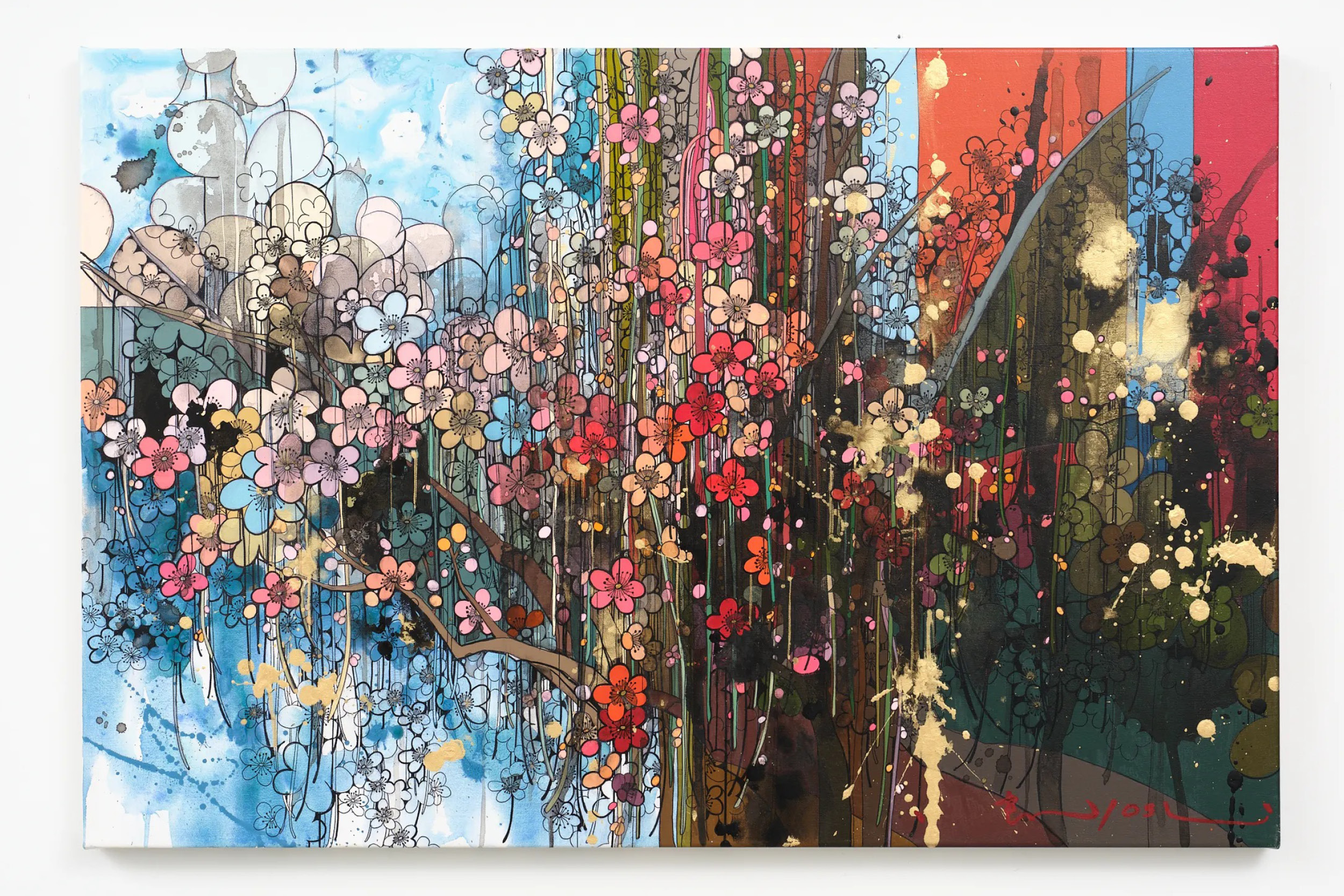
Shintaro & Yoshiko Nakahara Come Around, 2026 acrylic and ink on canvas 915 x 615 mm
For something more intimate, Sanderson Contemporary presents a new body of work by Japanese-born, Auckland-based artist duo Shintaro and Yoshiko Nakahara. The husband-and-wife pair, both trained at separate art schools in Tokyo and both former horologists, have, over the years of collaboration, developed what they call the “third artist”: Shintaro works in bright, solid colour and calligraphic forms; Yoshiko responds with painstakingly detailed black ink strokes and washes. The result is contemplative, precise and quietly beautiful. The exhibition opened as part of the Aotearoa Art Fair VIP programme and runs through most of May, a fine and more intimate counterpoint to the larger institutional offerings elsewhere this month. Free entry. More information →
Where:Kiri Te Kanawa Theatre, Aotea Centre When:Thursday 28th May 2026, 7.30pm
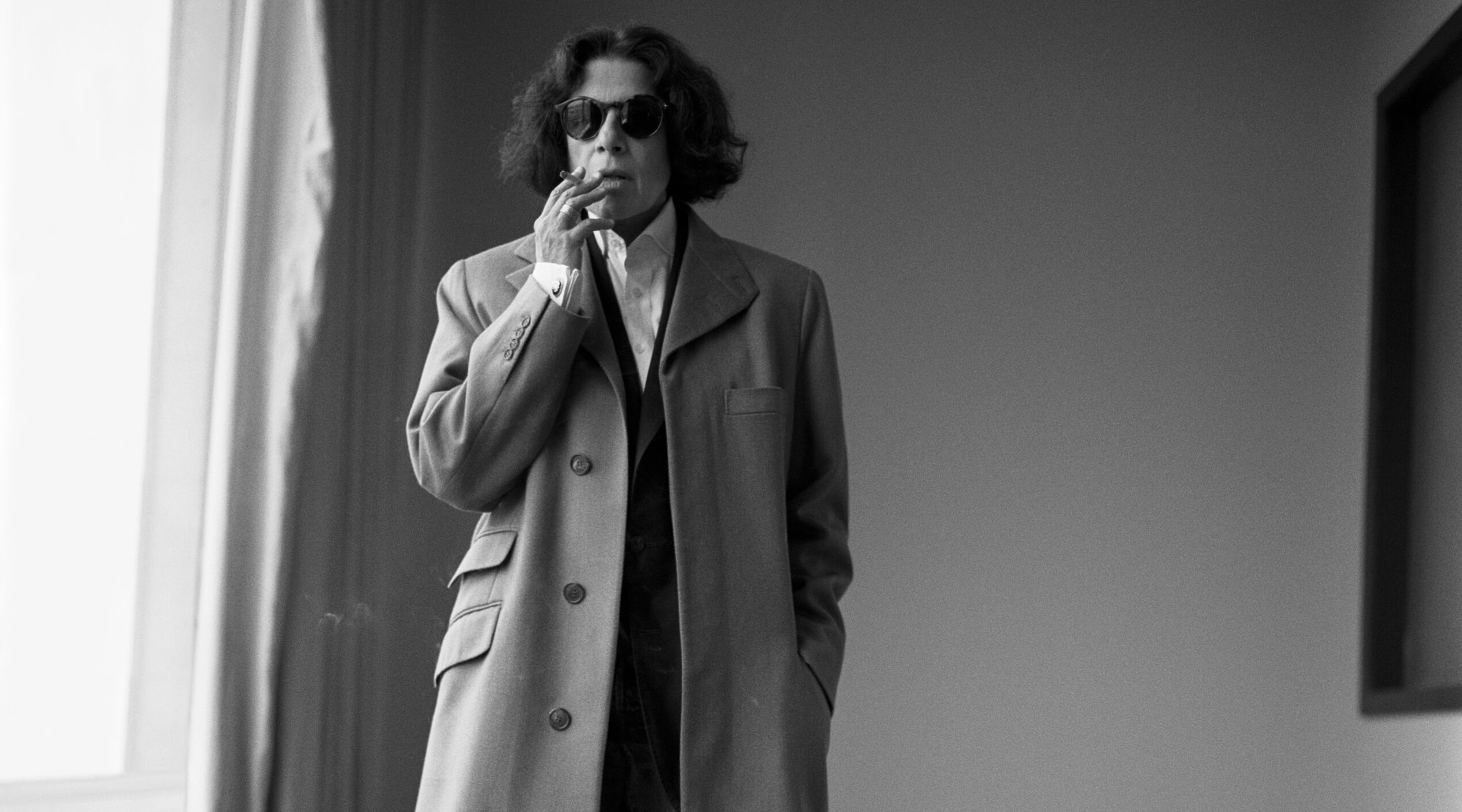
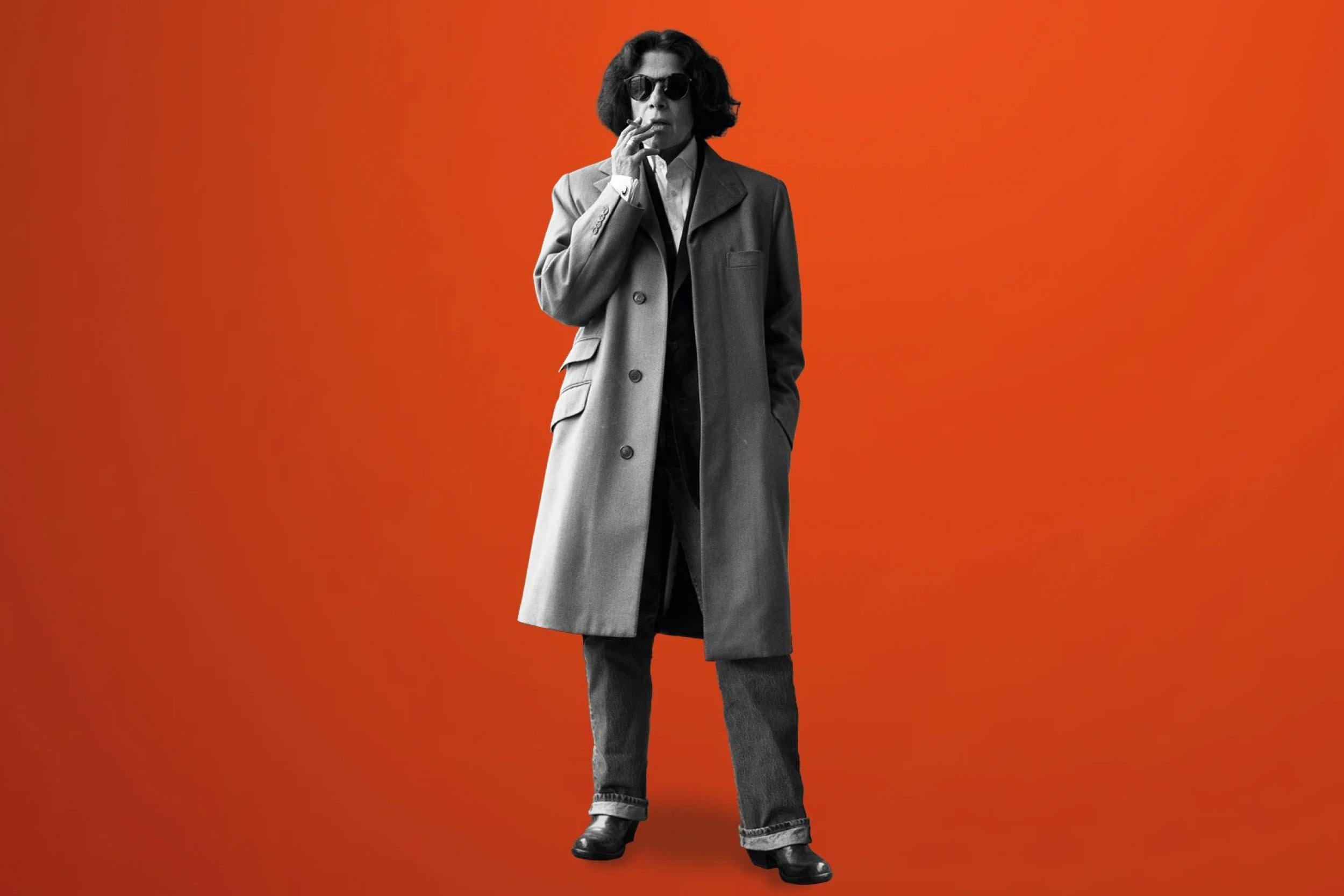
The month’s final word goes to New York’s sharpest tongue. Fran Lebowitz, author, cultural commentator and the star of Martin Scorsese’s hit Netflix series Pretend It’s a City, arrives in Auckland as the last stop on a run through Sydney Opera House, Perth, Adelaide, Brisbane and Melbourne. Presented by the Auckland Writers Festival and FANE, An Evening with Fran Lebowitz is exactly what it sounds like: ninety uninterrupted minutes of the most acerbic, funny and unapologetically opinionated cultural commentary you’ll hear all year. On politicians, on AI, on people who walk too slowly, on billionaires. Nothing is too great or too small for her baleful glare. One night only. Tickets from $90. Book tickets →
Where:Auckland War Memorial Museum, The Auckland Domain, Parnell When:Until 1st June 2026
Extended through to June due to exceptional public interest, Auckland Museum’s blockbuster touring exhibition from the Australian Museum remains one of the best things to do in the city. Step inside a specially designed digital oceanarium, come face-to-fin with scientifically accurate life-sized models, and get hands-on with touchable fossils and teeth. The exhibition spans 450 million years of evolution and weaves together cutting-edge science, indigenous perspectives and immersive design with real rigour. It’s pitched perfectly for curious minds of any age, and the extension means there’s no excuse left for not having seen it. More information →
For more exclusive access to what the city has to offer, engaging content, excellent imagery and thought provoking commentary on the life that surrounds you, subscribe to Denizen magazine now.