Mulleti

A taste of Rome has arrived in Ponsonby Central

Inspired by the neighbourhood bakeries of Rome, where locals gather throughout the day for pizza, baked pasta and aperitivo, Mulleti has opened in Ponsonby Central with a format that feels both refreshingly simple and deeply rooted in tradition.

For Enis, whose 14-year journey at Dante’s helped establish the venue as one of New Zealand’s most recognised pizzerias, the opening marks the latest chapter in a career dedicated to Italian food culture. Yet while Rome provided much of the inspiration for the concept, the heart of Mulleti lies much closer to home.

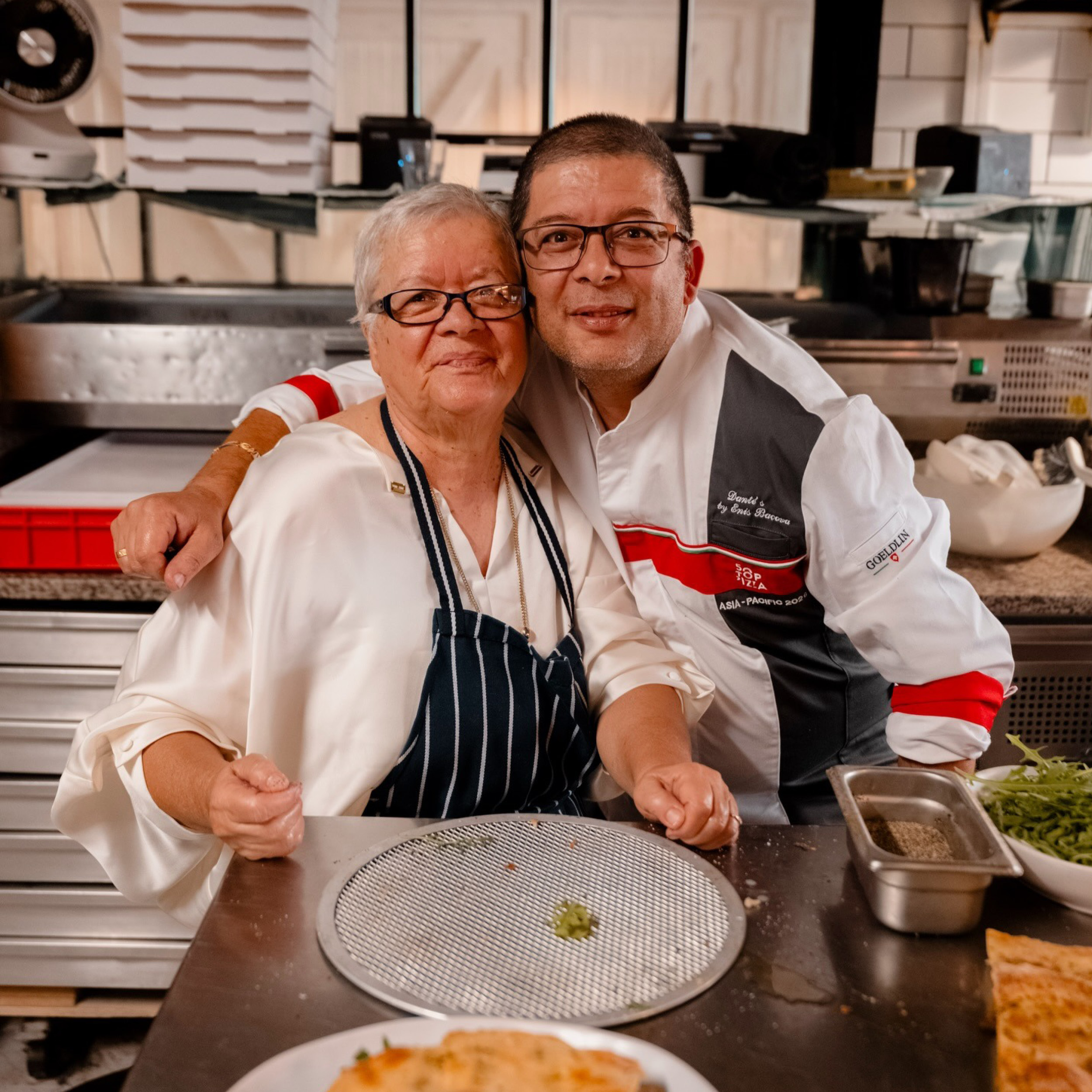
Enis Baçova and his mother

Carrying the subtitle Nonna’s Kitchen, Mulleti is a tribute to the Baçova family’s matriarch, whose warmth, generosity and love of cooking shaped both siblings long before hospitality became their profession. Together, Enis and Riljeta set out to create a place that captures the spirit of a traditional Roman forno while retaining the familiarity and comfort of a family kitchen, resulting in a venue that feels both distinctly Italian and deeply personal.

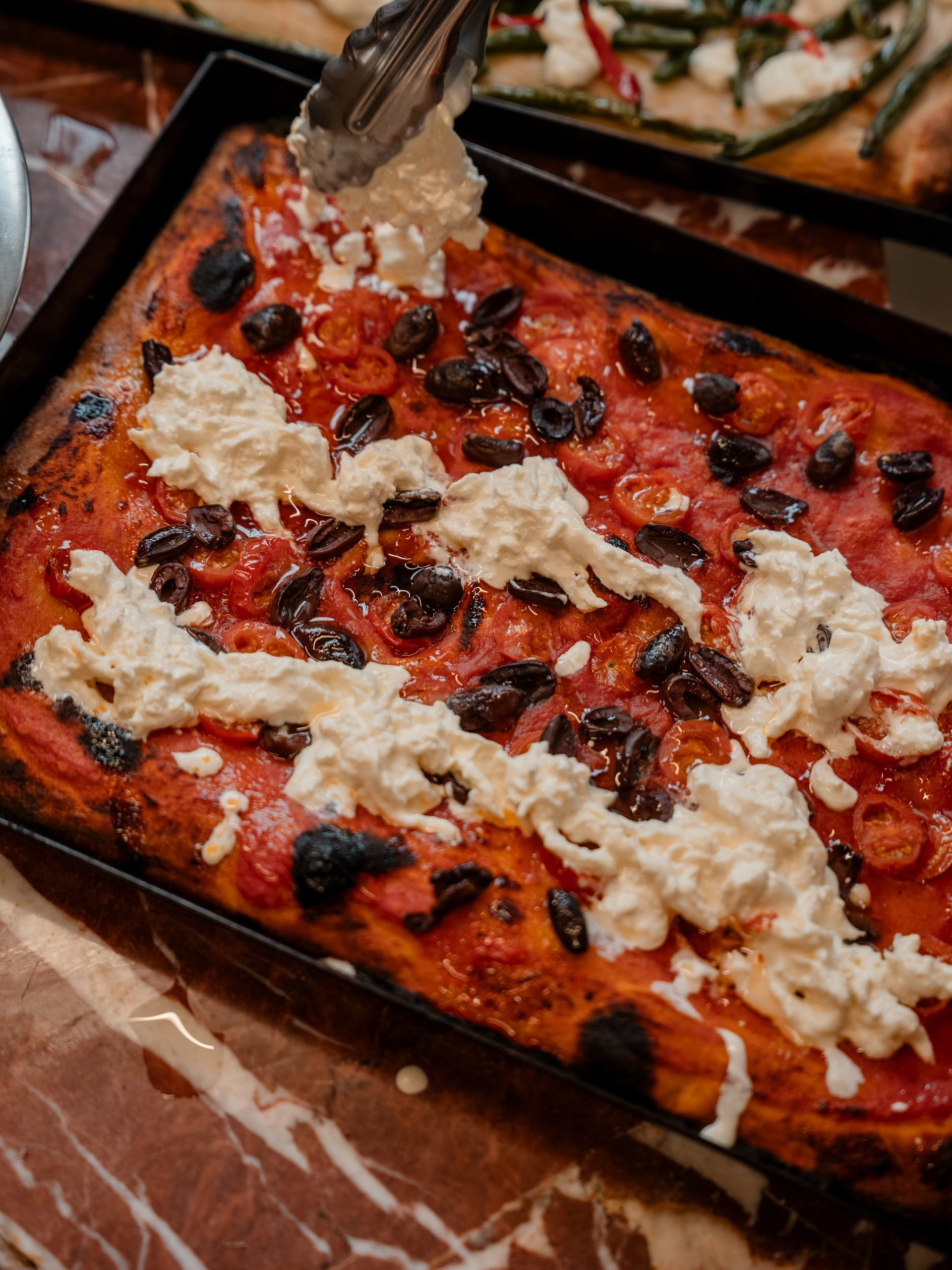
At the centre of the offering is pizza sold by weight, a traditional Roman approach that allows guests to choose exactly how much they would like before it is cut, weighed and served. The format encourages exploration, whether that means sampling several flavours in a single visit or sharing a selection among friends gathered around the table. Alongside the pizza sits a menu of pala romana sandwiches, supplì, frittatine, pasta al forno and classic Italian desserts, with combinations ranging from mortadella, burrata and pistachio to mushroom, stracchino and truffle, alongside rotating baked pasta dishes inspired by traditional Italian home cooking.

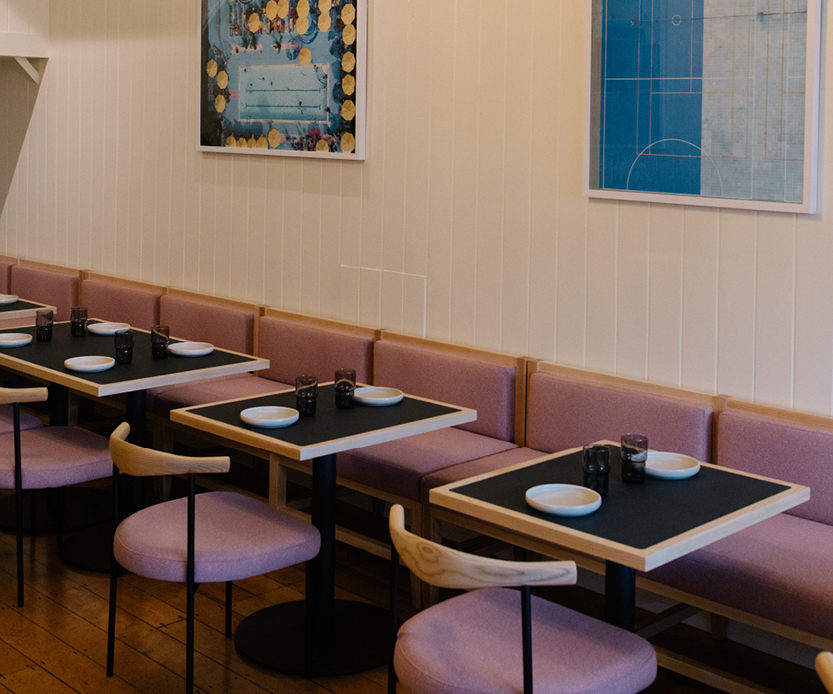
The space itself draws on the neighbourhood bakeries of Rome, where displays of pizza, fritti and baked pasta create an immediate sense of abundance and invite guests to discover something new. Warm, informal and intentionally uncomplicated, Mulleti has been designed to accommodate everything from a quick lunch or takeaway dinner to a lingering aperitivo before the evening begins.

That aperitivo culture sits at the core of the experience Enis hopes to share. A moment to pause, gather and enjoy good food in good company, it reflects the rituals that continue to define daily life across Italy and the values that inspired Mulleti from the beginning. Beneath the Roman influences and years spent refining his craft sits a simple ambition: to share a little of Nonna’s table with the wider neighbourhood.

mulleti.co.nz

Ponsonby Central
Ponsonby

Gastronomy

A seafood-led bistro just steps from Takapuna Beach
Auckland’s acclaimed eatery Amano names Dino Executive Chef
Is this Auckland’s favourite Mexican restaurant?
Rebe and Harry Healy

Fashion designer Rebe Healy opens the doors to REBE, a permanent boutique

Campaign imagery — Holly Burgess
Showroom imagery — Hope Patterson

Fresh from announcing its continued international expansion, REBE has opened the doors to its first permanent showroom in Ponsonby, establishing a dedicated home for the New Zealand womenswear label as it enters an exciting new phase of growth.

Located at 12 Fitzroy Street, the new space serves as both a showroom and a studio, offering customers a more intimate connection to the brand while functioning as the creative and operational heart of the business. Designed to feel more personal than traditional retail, visitors are invited to explore the latest collections, meet the team and gain a glimpse into what is happening behind the scenes.

REBE Pre-Fall ’26 collection

The opening coincides with the arrival of REBE’s new Pre-Fall ’26 collection, which reflects a continued evolution of the brand’s design language through stronger silhouettes, elevated fabrications and a growing confidence in its distinctive point of view. Structured outerwear, sculptural tops and elevated separates sit at the core of the collection, continuing the label’s focus on timeless pieces designed to endure beyond a single season.

The showroom also marks a new chapter for the business, with Harry Healy stepping into a formal leadership role overseeing strategy, operations and growth, while founder Rebe Healy continues to lead the brand’s creative direction. Alongside the opening, REBE has announced a partnership with Australian sales agency Catinella and confirmed plans to show in Paris from Resort 2027, signalling a significant step forward for the New Zealand label as it continues to expand its international footprint.

Opening hours: Wednesday – Saturday, 10am–5pm

rebe.co.nz

Coveted

Van Cleef & Arpels’ Fascinating Egypt: Inside one of high jewellery’s most anticipated annual events
Gucci’s transports us to Monte Carlo with a dreamy European summer escapade
GLANZSTÜCKE: The Van Cleef & Arpels exhibition in Vienna that every design lover should see
Chef Wallace Mua

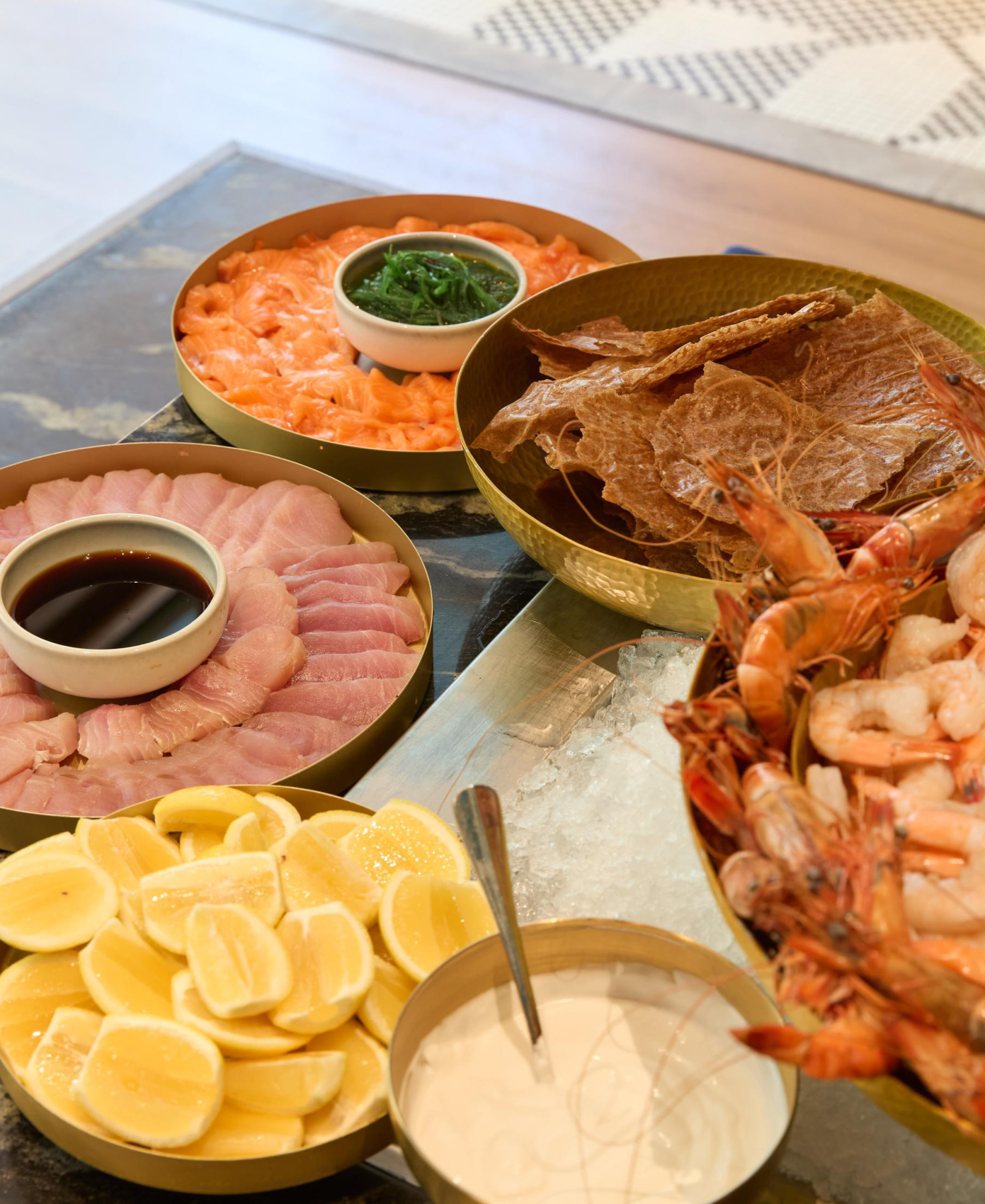
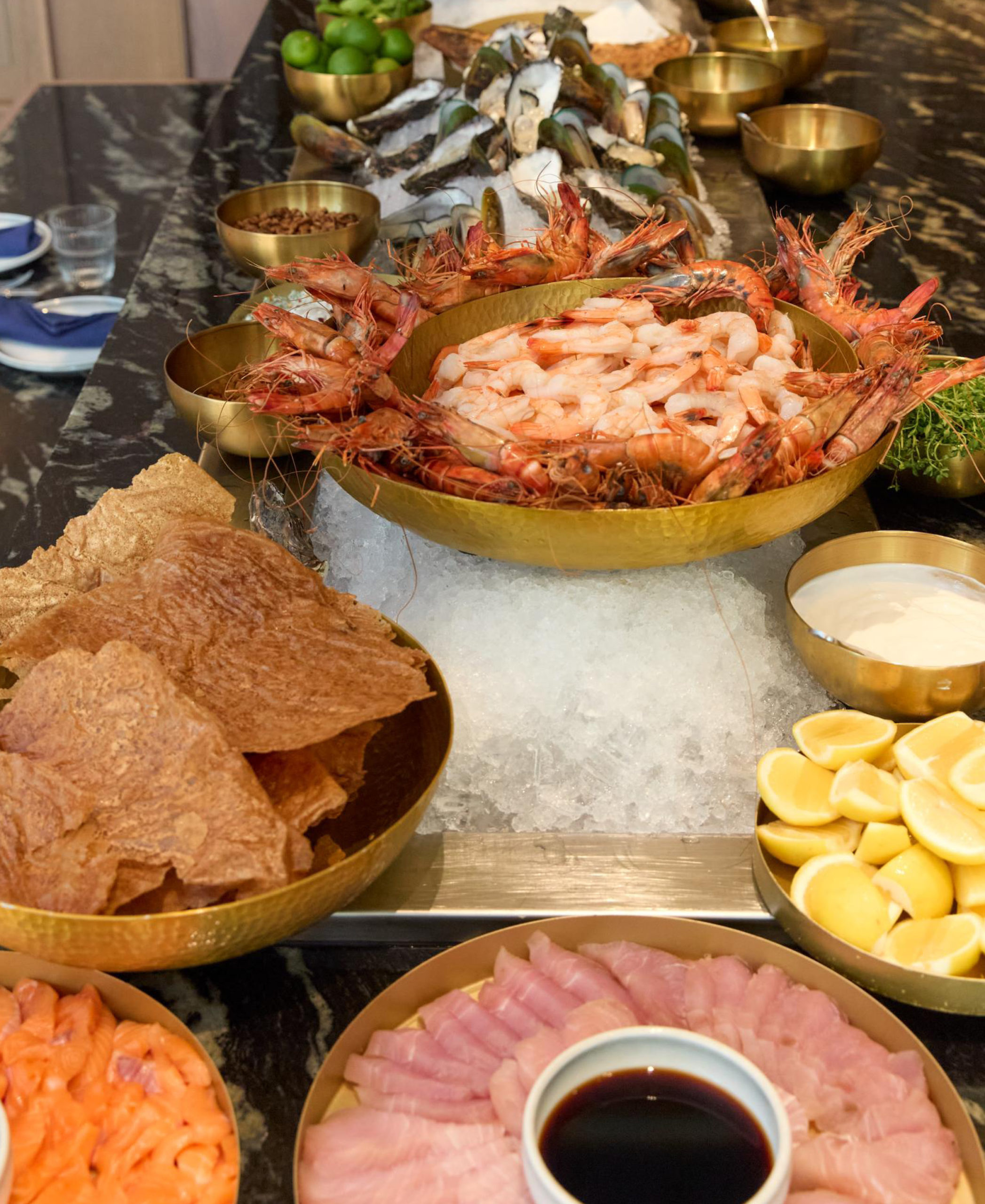
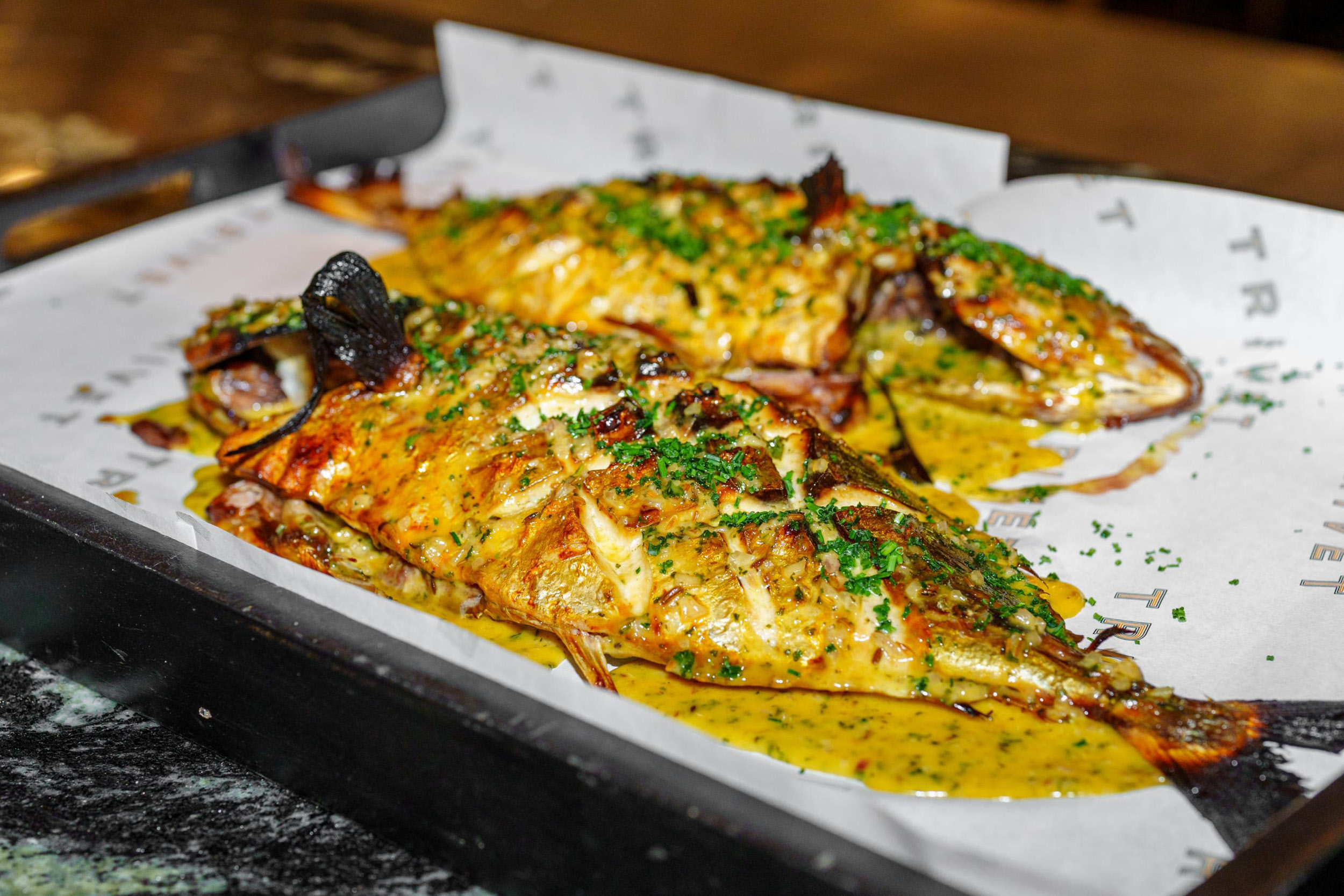
Trivet’s weekend feast serves seafood, lamb and Pacific favourites in generous style

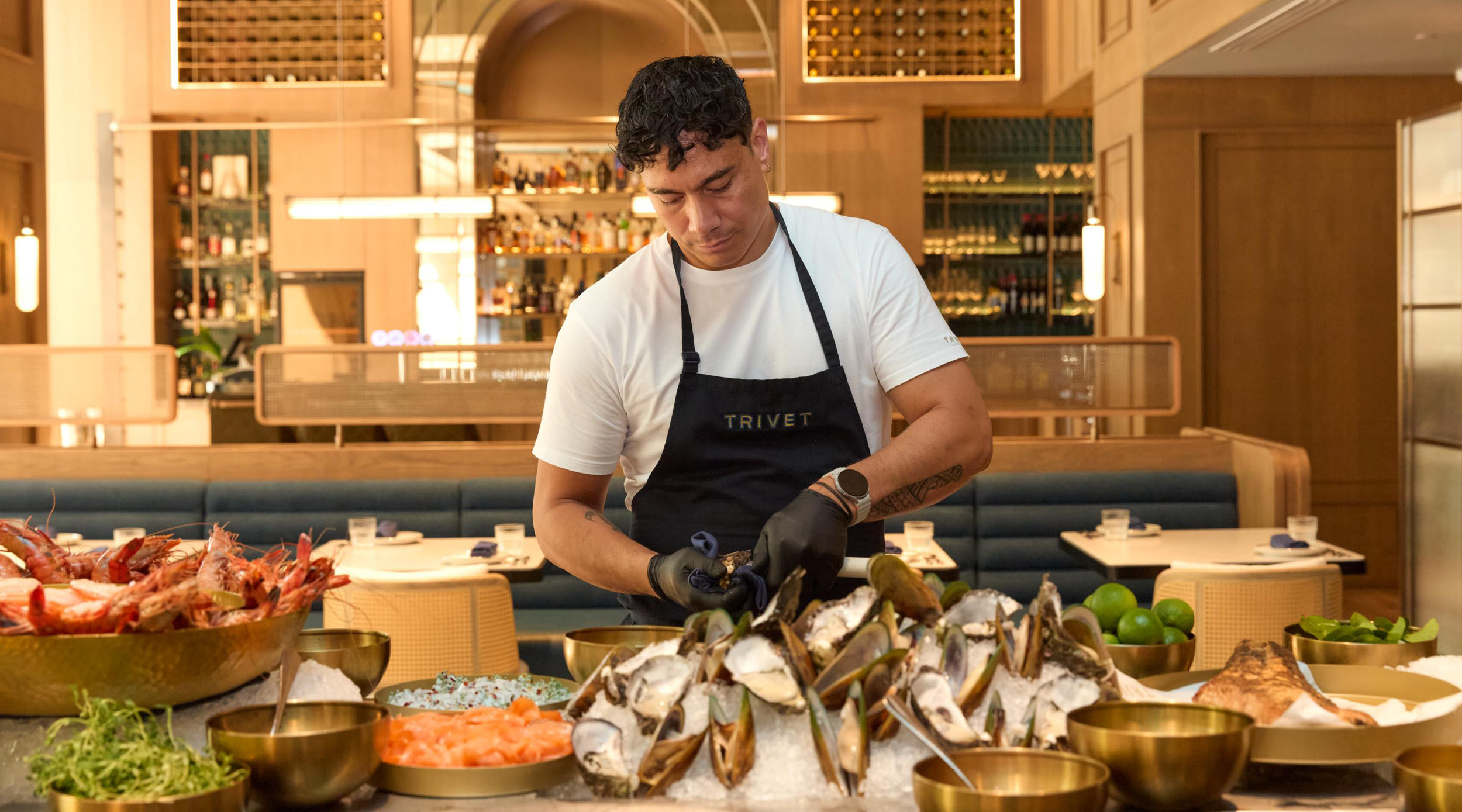
For weekends when you want to gather friends or family without the rigmarole of hosting, cooking, and cleaning up, Trivet’s weekend lunches require very little effort for a large, indulgent reward. The restaurant, located within Auckland’s JW Marrit hotel, serves a Kai Moana Pasifika Buffet, a generous shared feast that celebrates the flavours of Aotearoa and the Pacific with abundance.

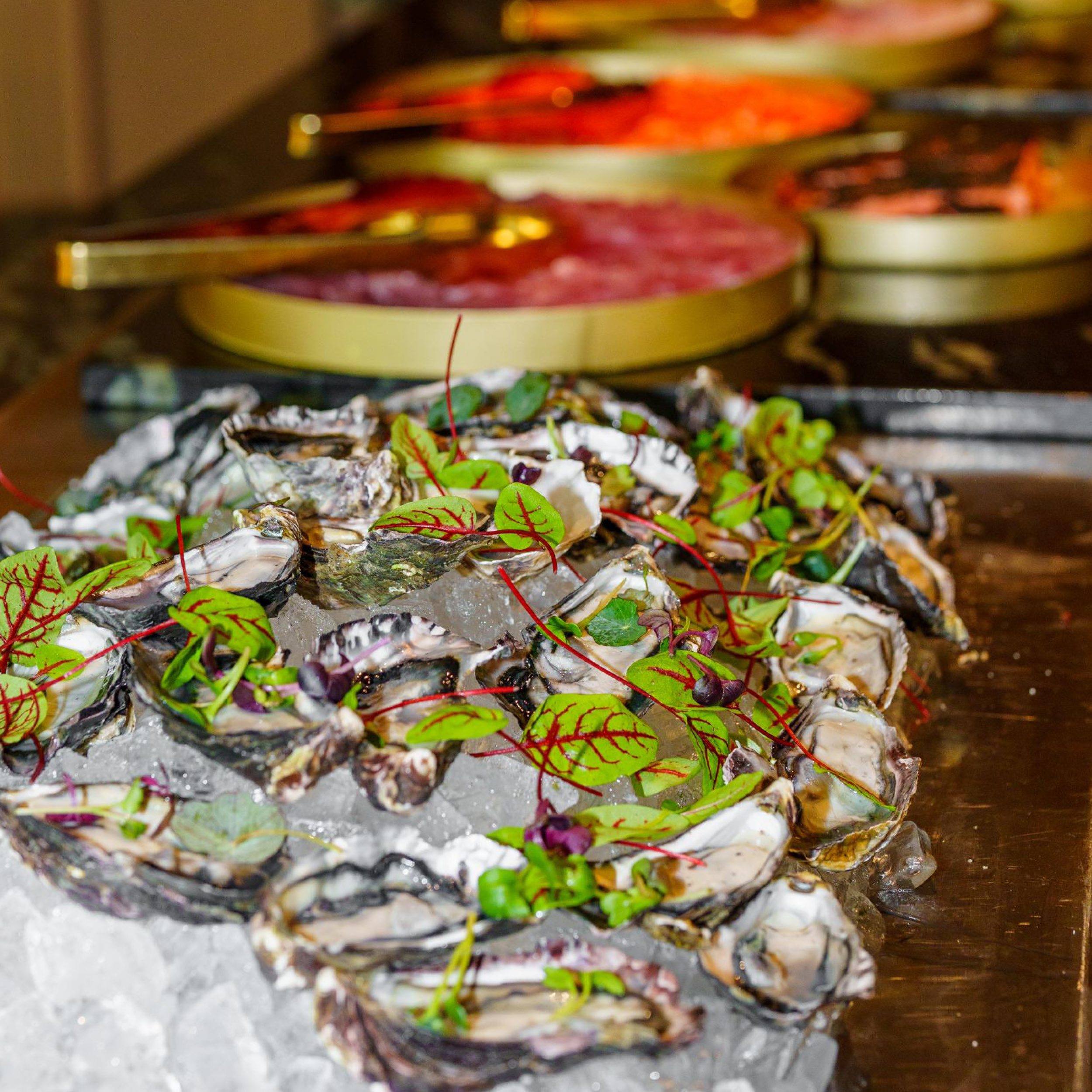
Served every Saturday and Sunday from 12.30 pm, the feast is designed as a long lunch rather than a quick grazing session, built around the kind of food best shared and returned to. The offering moves from a fresh seafood raw bar to umu-style meats, seafood favourites, Kiwiana classics and Pasifika-inspired dishes, bringing together familiar comfort and island generosity in a way that feels both relaxed and celebratory.

Among the highlights are Trevally Oka, Tiger Prawns, local steamed Mussels and traditional Palusami, alongside roasted lamb leg, kūmara, chop suey and dishes made for second helpings. To finish, a house-made dessert bar keeps the sense of occasion firmly intact, because restraint, on the weekend, has always been a suspicious virtue.

For families, it is particularly ideal. Children aged five and under dine for free, while those aged six to 12 receive 50 per cent off, making Trivet’s Kai Moana Pasifika weekends an easy answer for those looking to gather over food that feels generous in spirit as well as scale.

 At $95 per person, this is a weekend gathering that’s abundant, flavourful and designed for lingering longer. Book here.

trivetdining.co.nz

Gastronomy

A seafood-led bistro just steps from Takapuna Beach
Auckland’s acclaimed eatery Amano names Dino Executive Chef
Is this Auckland’s favourite Mexican restaurant?

Is the 20,000-step day actually worth it in 2026?

The number keeps climbing, from 10,000 to 12,000 to the new ceiling currently doing the rounds on TikTok. But the question isn’t how many steps. It’s what your body is doing while you take them, and where in Auckland you’d want to be doing it as the leaves turn.

Somewhere between the original 10,000-step myth (a 1960s Japanese marketing campaign for a pedometer called the Manpo-kei, never a clinical recommendation) and the current ceiling of 20,000 steps a day being championed by every second wellness account, the goalposts moved. They are still moving. Open Instagram on any given Tuesday and you will find someone in a matching set, AirPods in, captioning their pre-work loop with a number that would have, until recently, qualified as a half-marathon.

The hot girl walk, a phrase that began as a TikTok in-joke and somehow calcified into a wellness category, is now its own genre. Two hours, podcast on, iced matcha in hand, ideally with a view. The aesthetic has matured; the mileage has not. What started as a gentle middle-finger to gym culture is now being rebranded as a performance discipline, complete with Garmin screenshots and recovery scores. Which raises a question worth asking before you lace up: when does a daily walk stop being good for you and start being something else entirely?

What the science actually says

The 10,000-step figure was never grounded in research. The studies catching up to it now are far more interesting, and far less prescriptive. Large-scale meta-analyses have consistently found that the steepest health gains occur somewhere between 7,000 and 8,000 steps a day, with mortality risk continuing to drop until around 10,000 to 12,000, then plateauing. After that, the curve flattens. Walking more is not actively harmful, but the additional cardiovascular benefit is marginal.

Which is to say: the leap from 10,000 to 20,000 is largely a leap in time spent, not in measurable health return. For an average stride, 20,000 steps is roughly 14 to 16 kilometres, between two and three hours of walking. That is a meaningful chunk of any day. Whether it is the best use of those hours depends entirely on what else your body needs.


“The 10,000-step figure was never grounded in research. It came from a 1960s pedometer campaign.”


The question worth asking is the one most step-count enthusiasts skip entirely: what problem are you actually trying to solve? If your goal is cardiovascular health, glucose stability, and stress regulation, the data is clear that you do not need to walk for three hours a day to get there. If your goal is body composition, walking alone will not build the muscle mass that becomes increasingly precious from your mid-thirties onward. If your goal is mental clarity and a meditative pause in your day, then the question becomes less about the step count and more about what the walk is replacing. A good thing, until it starts replacing a strength session, a proper meal, or a full night’s sleep.

What the trackers are telling you (and what they’re not)

Fitness tracking has matured considerably. The current generation of wearables, the Oura Ring 4, the Whoop 5.0, the latest Garmin and Apple Watch iterations, measure far more than steps. Heart rate variability, resting heart rate, sleep architecture, stress load, training readiness: the data set is comprehensive enough that a step count, in isolation, looks almost quaint. The smarter question your tracker is now equipped to answer is not how far you walked, but at what cost.

If your readiness score is dropping, your resting heart rate is climbing, and your HRV is suppressed, the additional 8,000 steps you are grinding out every evening may be the reason. Walking is restorative, until volume tips it into another stressor stacked on top of work, parenting, and a 6am reformer class. The metric that matters more than steps, for most people, is whether the walking is leaving you energised or quietly draining the battery.

So, should you do it?

The honest answer, in the Denizen tradition of being unimpressed by absolutes: it depends entirely on you. For an under-active office worker whose default is 4,000 steps a day, building toward 10,000 is genuinely transformative. For someone already strength training four times a week and sleeping seven and a half hours a night, adding two-hour daily walks may yield diminishing returns, or worse, undermine recovery. The 20,000-step ceiling is not a target. It is a number that looks impressive on a screenshot.

If you want a working principle: aim for 8,000 to 12,000 steps as a baseline, prioritise sleep and resistance training above mileage, and use longer walks (the genuine hot girl walk territory) as a deliberate ritual rather than a daily obligation. Two long, considered walks a week in beautiful surroundings will do more for your nervous system than seven joyless laps of the block trying to hit a number.

Where to walk in Auckland this Autumn

The weekend is where the walk earns its keep. Midweek mileage is maintenance; Saturday and Sunday are where a route becomes a ritual, a long lunch becomes the destination, and the hour you spend outdoors does the quiet work of reorienting you for the week ahead. Autumn is the season that rewards this best. The light shifts amber, the humidity finally breaks, and the trees that don’t exist in our largely evergreen landscape (the imported oaks, planes, liquidambars and elms) spend a few short weeks doing their best impression of a New England postcard. Four routes worth rerouting your weekend for.

The waterfront, Wynyard Quarter to Mission Bay. The flat, uninterrupted stretch from Wynyard around past the Viaduct, along Quay Street, through the Tamaki Drive curve to Mission Bay is Auckland’s most reliable walking corridor, and the one the whole city seems to have on its Saturday shortlist. Roughly 12 kilometres return if you go the full distance, with the harbour on one side and a steady sequence of coffee stops on the other. Best done early, when the light catches the water and the joggers haven’t yet outnumbered the walkers. Stop at Hello Beasty for a long lunch if you’ve earned it, and let the walk home sort out the wine.

Curran Street to Silo Park. Auckland’s Saturday-morning power route, and deservedly so. Start at Curran Street, pick up the Westhaven Marina promenade, and follow it past row after row of masts (there is something genuinely settling about the sound of rigging against aluminium in autumn light) all the way around to Silo Park. Roughly seven to eight kilometres return, flat enough to keep the pace honest and scenic enough to forgive the crowd. Break midway at Bravo at Cracker Bay for a coffee with a view of the boats, or save your appetite for the way home and finish at First Mates, Last Laugh, which at golden hour is arguably the best reward in the city.

The Domain, in full autumn dress. Auckland’s oldest park is at its most cinematic on a Sunday morning in April and May, when the deciduous canopy around the Wintergardens turns through every shade of copper and half the city seems to be out with a dog or a paper. The loop from the museum down through the formal gardens, past the duck pond and back via the sports fields is around four kilometres of gentle undulation. Enough to feel like a proper walk without swallowing the morning. The Wintergardens themselves are worth the detour: the cool house in particular feels like another country in autumn. Follow it with brunch at one of Parnell’s better tables and the weekend has effectively structured itself.

Cornwall Park, when the leaves are turning. There is no better weekend walk in Auckland in autumn than the avenue of plane trees along Pohutukawa Drive at Cornwall Park. The trees, planted in deliberate ranks, drop their leaves in a window of maybe three weeks in late April and early May. A gold-and-rust corridor that feels engineered for the camera roll but earns its reputation honestly. Loop up to the One Tree Hill summit for the view, down through the working farm (sheep, unfazed, make a strong case for the simple life), and finish at the Cornwall Park Cafe for the kind of Sunday lunch that closes the week properly. Around five to seven kilometres depending on your route, and the closest Auckland gets to a genuine seasonal moment.

The point

The 20,000-step trend, like most wellness trends, is a useful provocation wrapped around a misleading conclusion. Walking is one of the most powerful things you can do for your body, your brain, and your relationship with the city you live in. Doing twice as much of it does not make it twice as good. What makes it good is the same thing that makes any health practice good: the right dose, in the right context, doing a job your body actually needs done.

Find the route that makes you want to leave the house. Wear the tracker if it helps you stay honest, ignore it if it doesn’t. The number on the screen is not the point. The hour you spent under the plane trees is.

Wellbeing

A cleaner way to clean: Why we’ve been thinking about stain removal all wrong
Why do 10-year-olds have 10-step skincare routines? Our Editor weighs in on the tween skincare craze
Hit the pavement with Auckland city’s best running routes

The team behind Miso Ra and Pici’s co-founder have opened a new ramen bar in the CBD

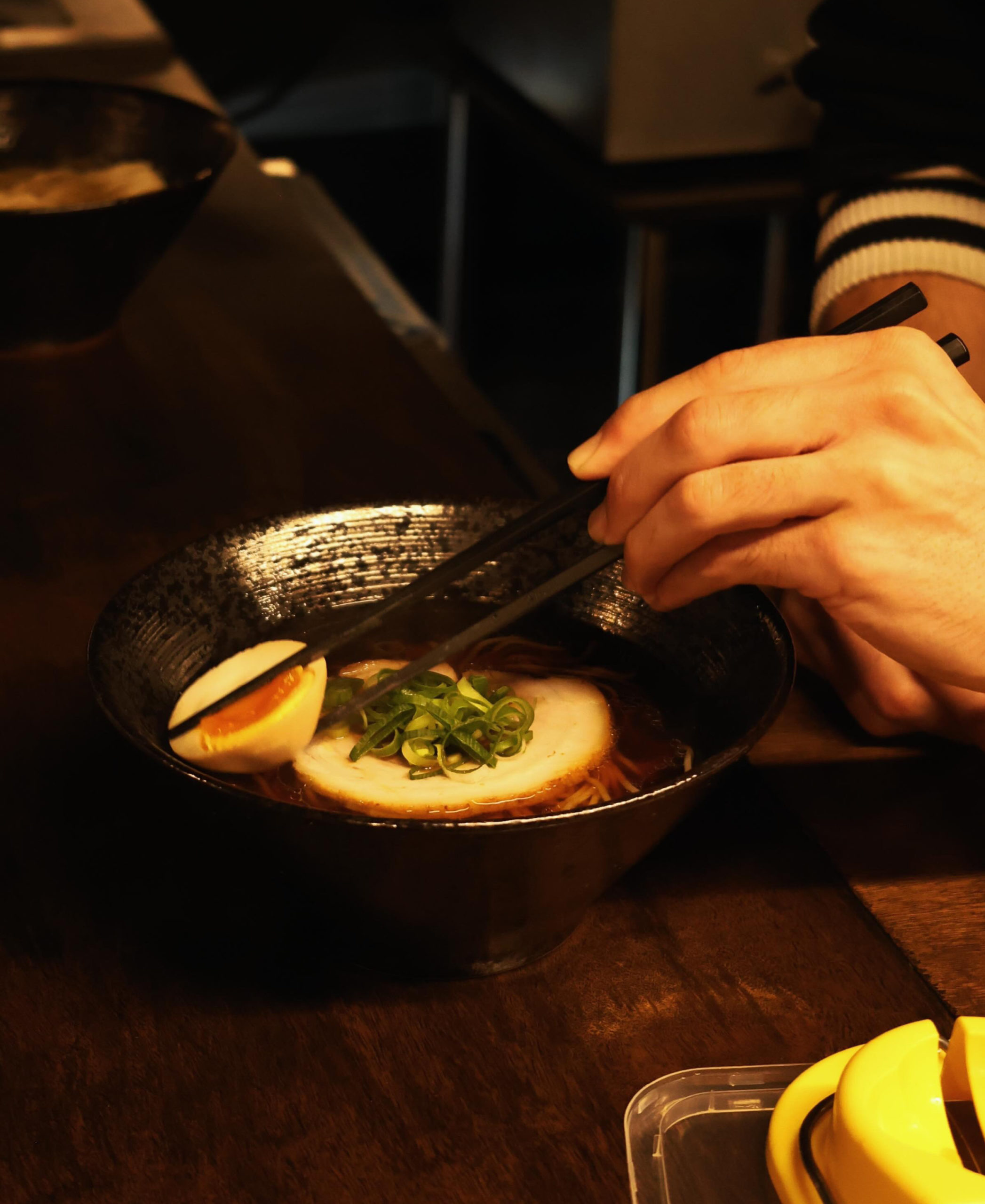
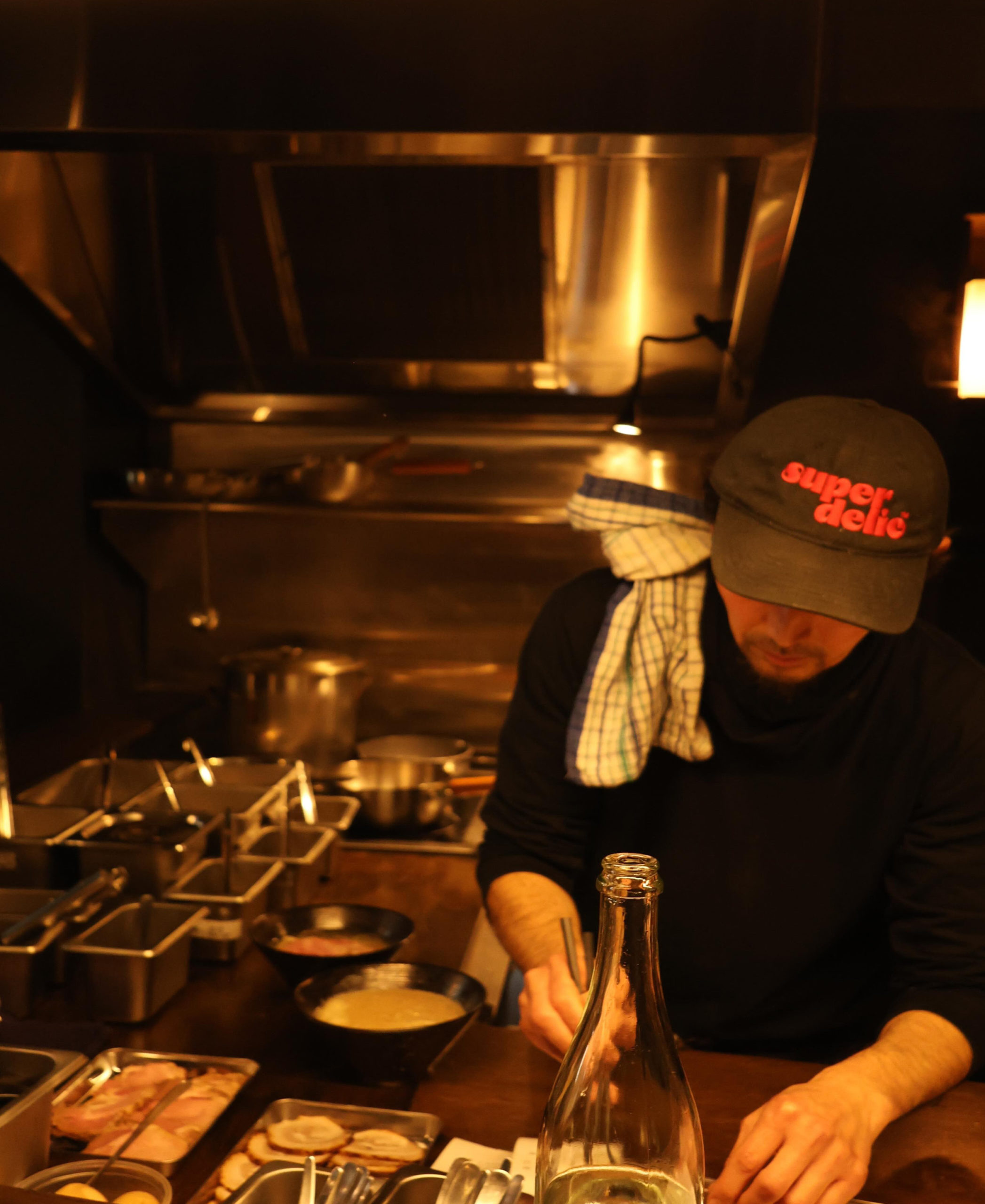
Auckland has welcomed a new addition in the form of Den Ramen Bar, a collaboration between the team behind much-loved food truck Miso Ra, Pici co-founder Kaz Suzuki, and events specialist Isabel Buckley.

Created in response to what the founders felt was missing from Auckland’s dining scene, Den takes its cues from the specialist eateries found throughout Japan, where restaurants often dedicate themselves to doing one thing exceptionally well. Here, the focus is ramen, supported by a concise menu of izakaya-style snacks and drinks.

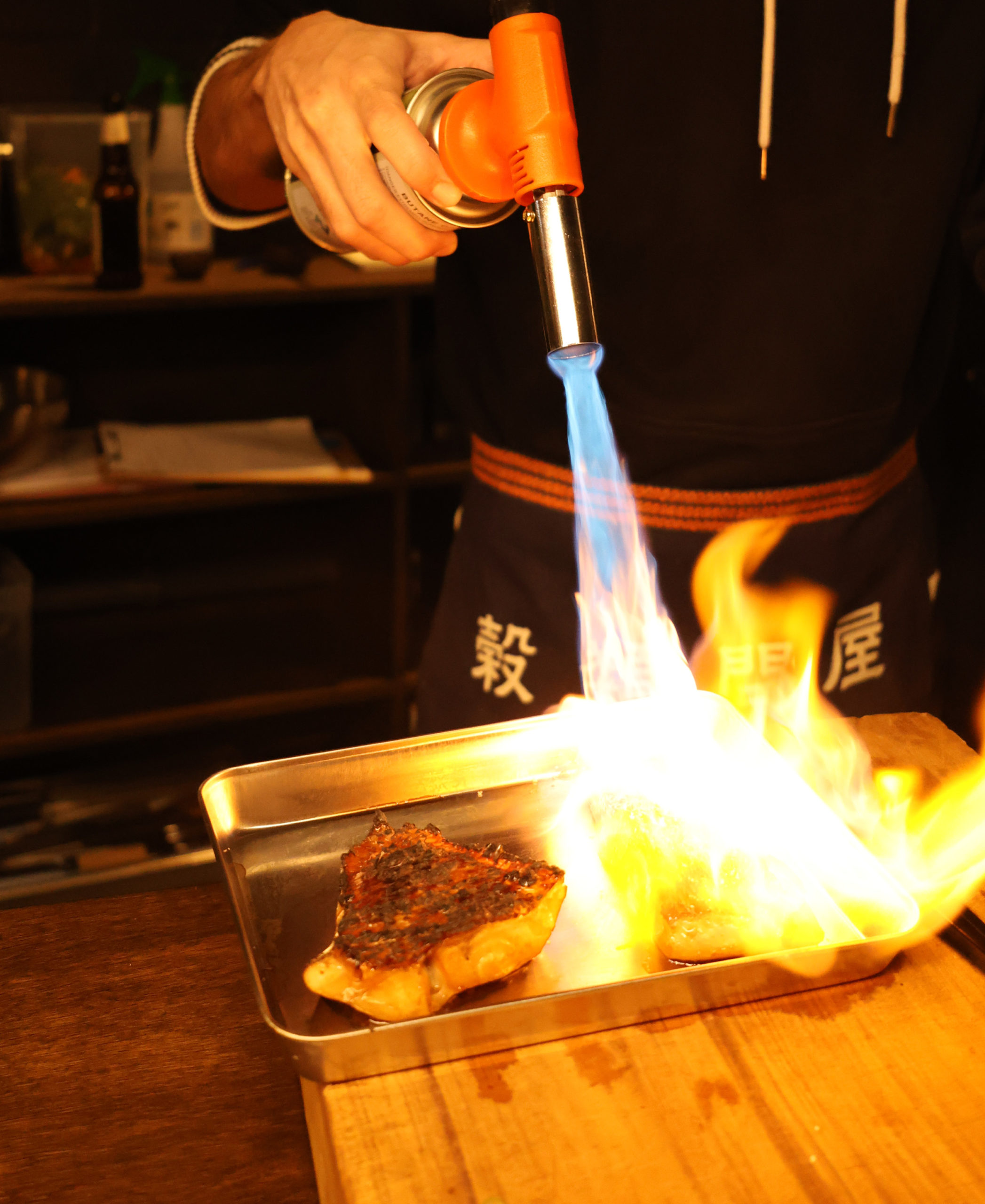
The menu centres on four ramen offerings, including a Shoyu topped with chashu pork belly, egg and nori, and a rich vegan-friendly Miso Ramen made using miso crafted by Fraser, chef-owner of Lillius. Alongside the bowls, guests will find snacks such as braised Japanese radish with yuzu miso, raw tuna with umeboshi vinaigrette, and grilled gurnard finished with a soy-orange glaze.
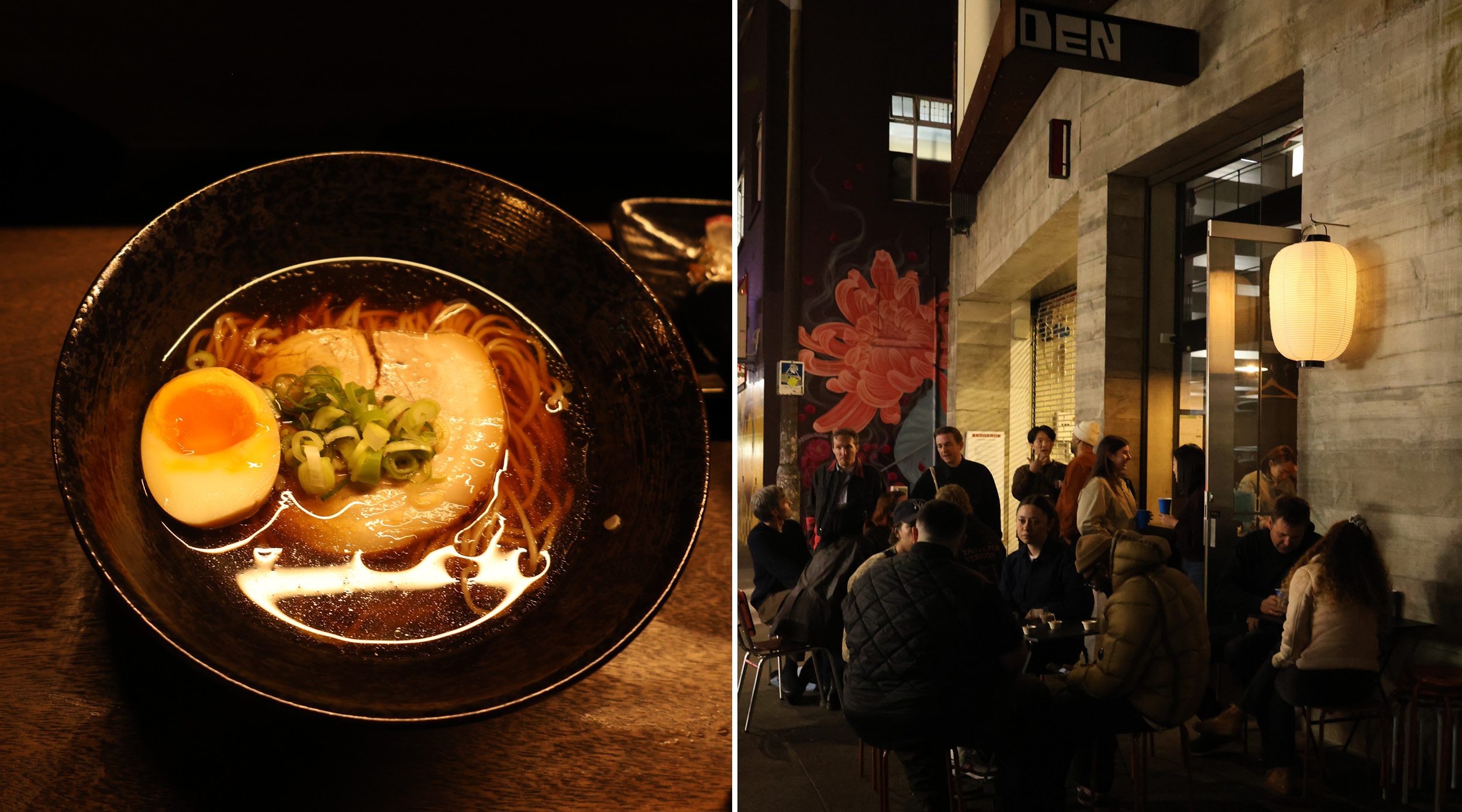
Inside, low lighting, dark timber and handmade details create the intimate atmosphere the team envisioned, with much of the fit-out completed by the founders themselves. The result is a space that feels warm, welcoming and quietly transportive.

Whether stopping by for a quick bowl or settling in for drinks and snacks before ramen, Den offers the kind of understated experience that has long made neighbourhood ramen bars a fixture of Japanese dining culture.

Opening hours: 5pm till late, Thursday – Monday

denramen.co.nz

Gastronomy

A seafood-led bistro just steps from Takapuna Beach
Auckland’s acclaimed eatery Amano names Dino Executive Chef
Is this Auckland’s favourite Mexican restaurant?
Photo: Simon Devitt

The locally crafted pendant that solves a design dilemma with aesthetic brilliance

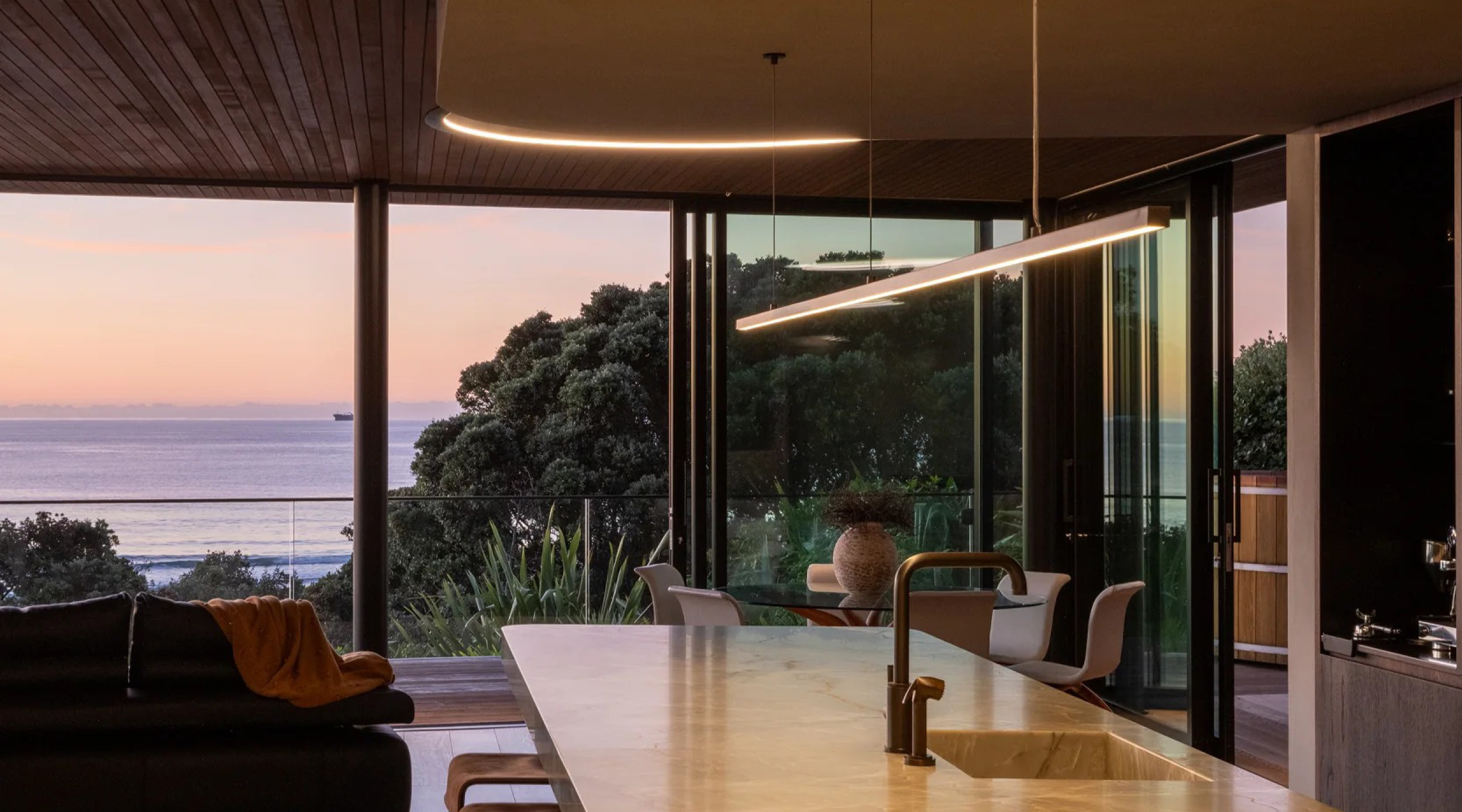
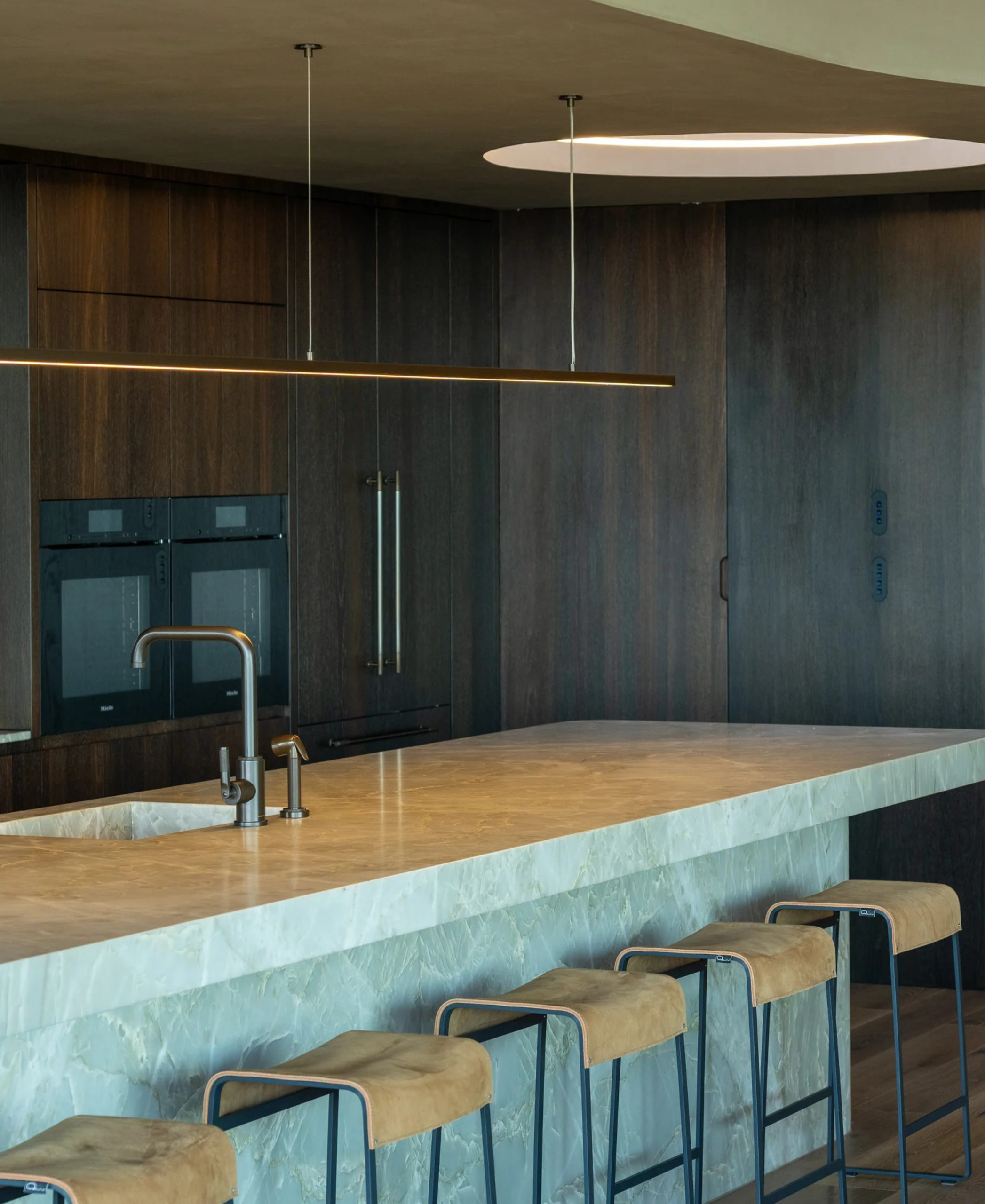
Designed by Todd Stevenson and handmade in Tāmaki Makaurau from solid brass, Powersurge’s Lateral Pendant resolves the question of what to hang above a long dining table or kitchen island as a single horizontal stroke of light. The thin rectangular light is customisable in lengths up to four metres. The dimmable LED light allows for practicality and restraint for those moments when the natural light is still the star of the show. As expertly executed in this New Plymouth Residence by Rowson Kitchens and KR Architecture, where it runs the length of the kitchen island and holds its own against a Tasman Sea sunset.

Lateral Pendant from Powersurge

powersuge.co.nz

Design

How new furniture brought fresh life to this Auckland character villa
Milan 2026: The standout lighting designs that do more than illuminate
What lies beneath: The most significant design trend this year is where you’d least expect it

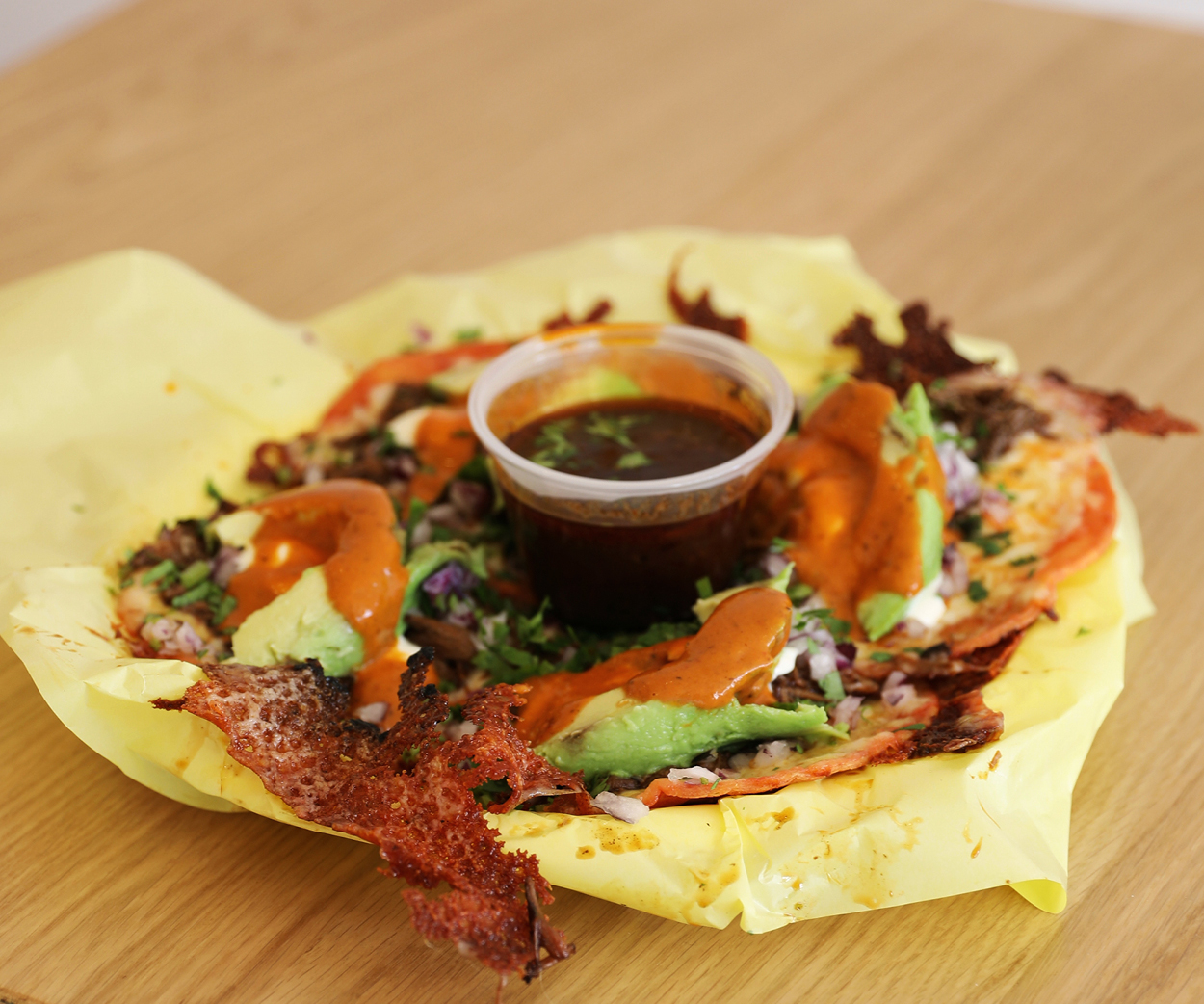
Denizen’s definitive guide to the best Mexican in Auckland

Is there anything quite as satisfying as tucking into a flavourful, vibrant plate of Mexican ? Luckily, in Auckland there are certainly no shortage of tasty taquerias and casual cantinas to find your fix, from cheap and cheerful to more elevated takes, and a veritable spectrum in between. Here, we round up a (non-exhaustive) edit of some of the best in the game, perfect for indulging in when the craving strikes.

Gastronomy

A seafood-led bistro just steps from Takapuna Beach
Auckland’s acclaimed eatery Amano names Dino Executive Chef
Is this Auckland’s favourite Mexican restaurant?

Bar Ziti and Flush Golf are now serving breakfast, just in time for FIFA’s kick-off

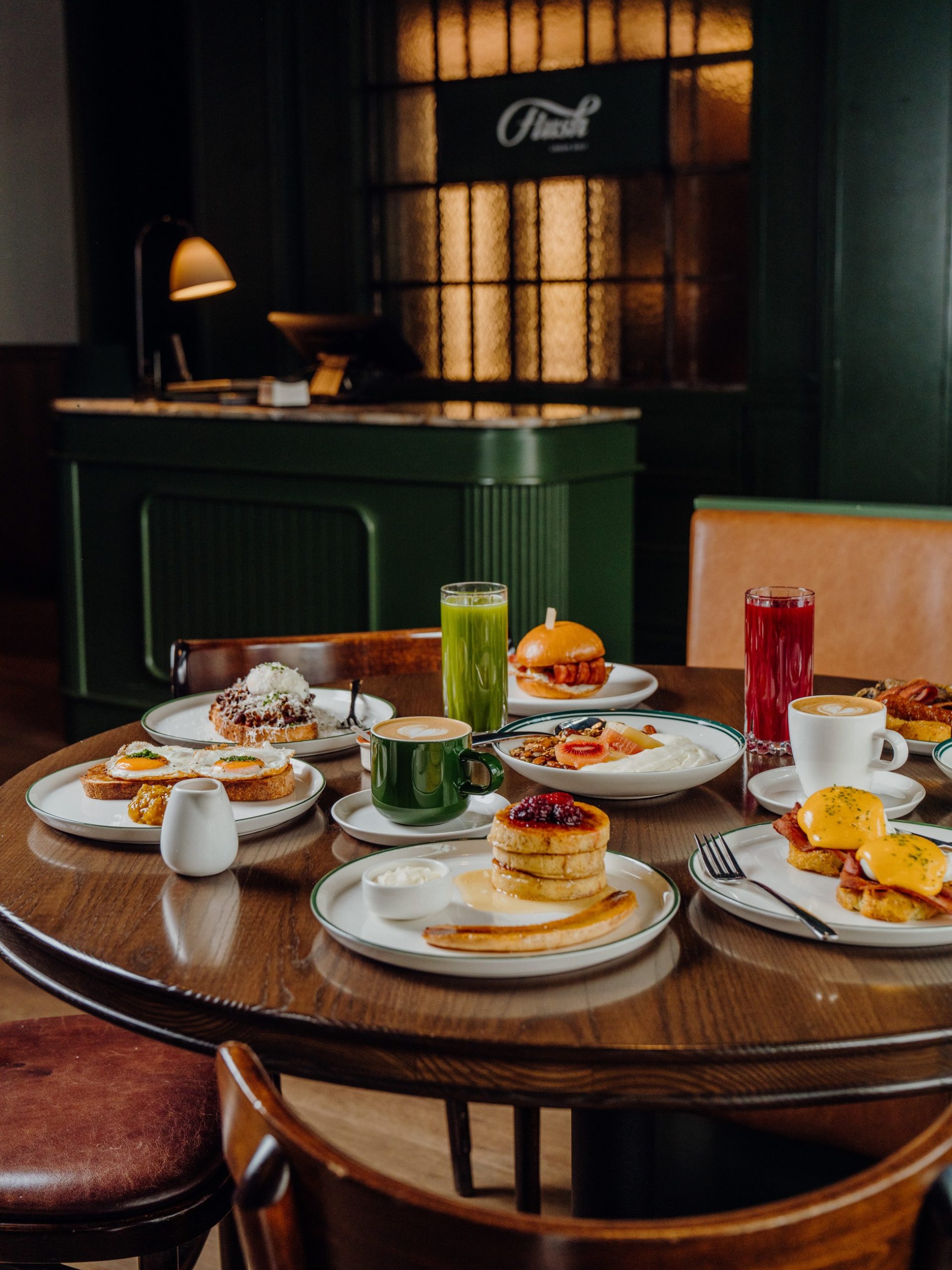
For those setting alarms for FIFA Club World Cup kick-offs, squeezing in an early round on the simulator, or simply looking for a more interesting alternative to the usual morning coffee run, Bar Ziti and Flush Golf have introduced a new breakfast offering that makes a compelling case for starting the day a little earlier.

Available from 7am on weekdays and 9am on weekends, the menu leans towards the kind of generous, comfort-driven dishes that suit both sports fans settling in for a match and those easing into the morning at a slower pace. Ricotta Pancakes arrive topped with honeyed caramelised banana, the Big Breakfast comes loaded with eggs, bacon, lamb merguez and rosti, while Eggs Benedict swaps the traditional English muffin for a crisp potato rosti finished with paprika hollandaise.

Stack of golden pancakes with caramelised berries, banana, and whipped cream on a white plate.
Ricotta Pancakes
Person cutting into a poached egg on sourdough toast with a full café breakfast spread.
Flush Big Breakfast
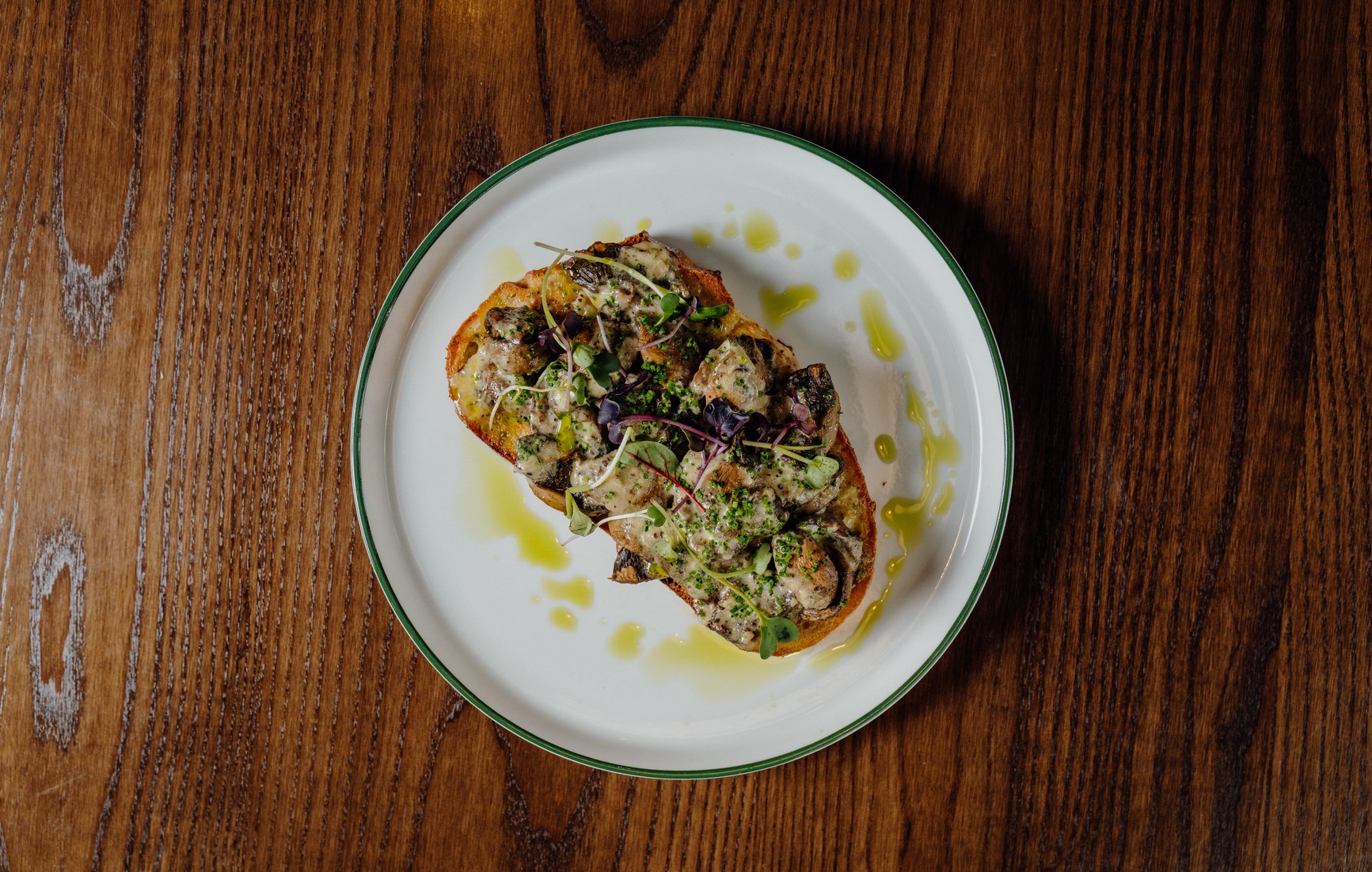
Mushroom Bruschetta

The setting remains one of the city’s more entertaining places to spend a few hours. While Bar Ziti continues to deliver its familiar mix of good food and easy hospitality, Flush adds a playful dimension, allowing guests to move seamlessly from breakfast and coffee to a virtual round of golf without leaving their table-side conversations behind.

Breakfast Bap
Breakfast at Bar Ziti & Flush Golf

For one week only, there’s an added incentive. From June 15th until June 21st, diners can enjoy half-price Allpress coffee with breakfast or lunch when dining in, making those early FIFA kick-offs feel considerably more manageable.

Breakfast, football, coffee and a few holes before lunch. There are certainly worse ways to spend a winter morning.

savor.co.nz/bar-ziti

Gastronomy

A seafood-led bistro just steps from Takapuna Beach
Auckland’s acclaimed eatery Amano names Dino Executive Chef
Is this Auckland’s favourite Mexican restaurant?
Ariana Grande for Swarovski

Ariana Grande fronts Swarovski’s bold new collection defined by confectionery colour, crystal craft and expressive modern jewellery

Colour has become one of fashion’s most expressive languages, and while much of the industry continues to lean into restraint and tonal subtlety, Swarovski has carved out a distinctly more exuberant visual direction, defined by vibrancy, personality and a deliberate sense of joy. The House’s latest collection, created under Global Creative Director Giovanna Engelbert and fronted by Global Brand Ambassador Ariana Grande, continues that evolution with crystal designs inspired by confectionery tones, fruit motifs and a playful, expressive sensibility that feels entirely of the moment.

Woman in pink outfit wearing layered Swarovski crystal jewellery holding a rainbow lollipop.
Ariana Grande wears Swarovski Millenia Collection

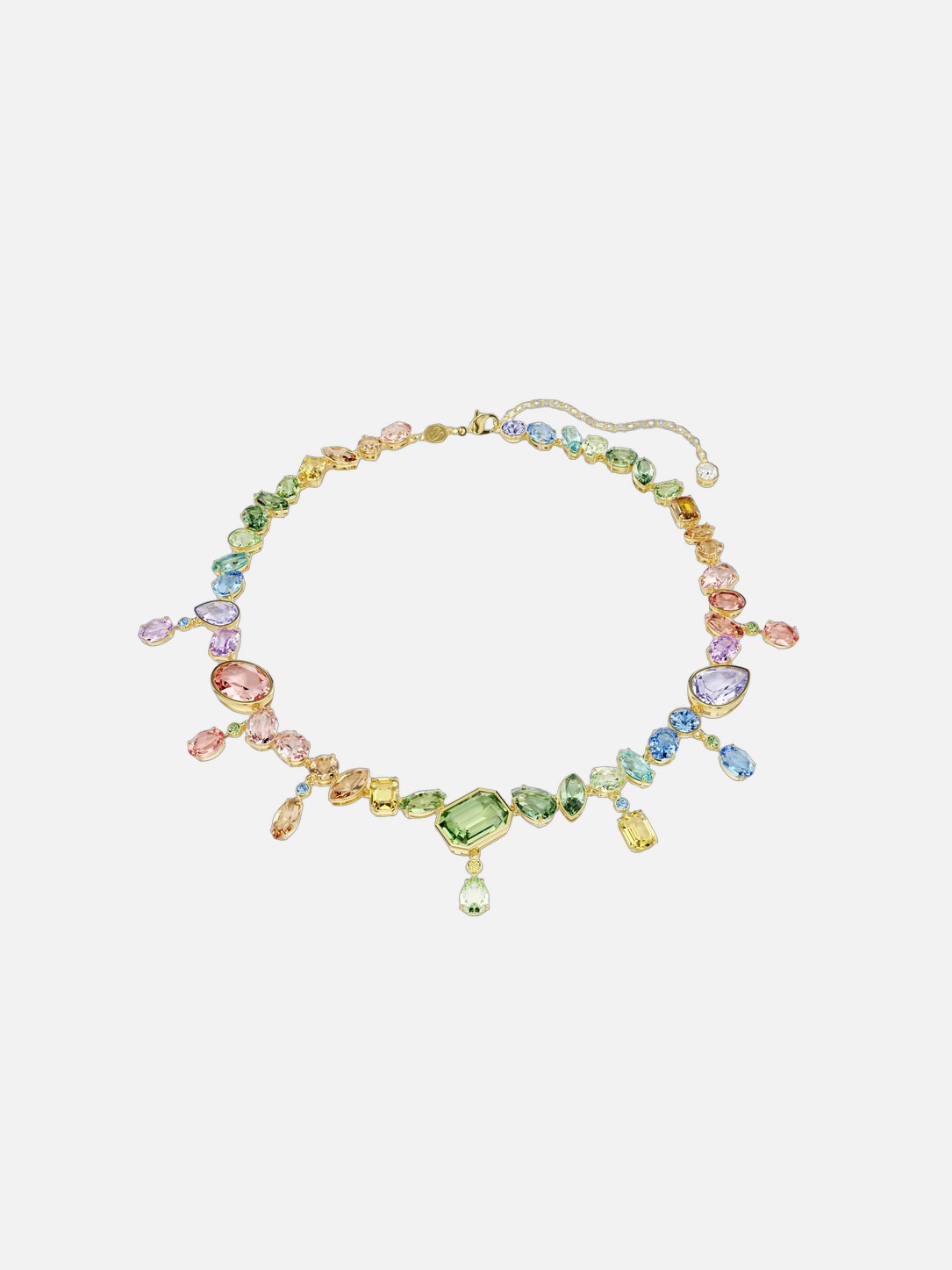
Original5737443
Gema Necklace from Swarovski
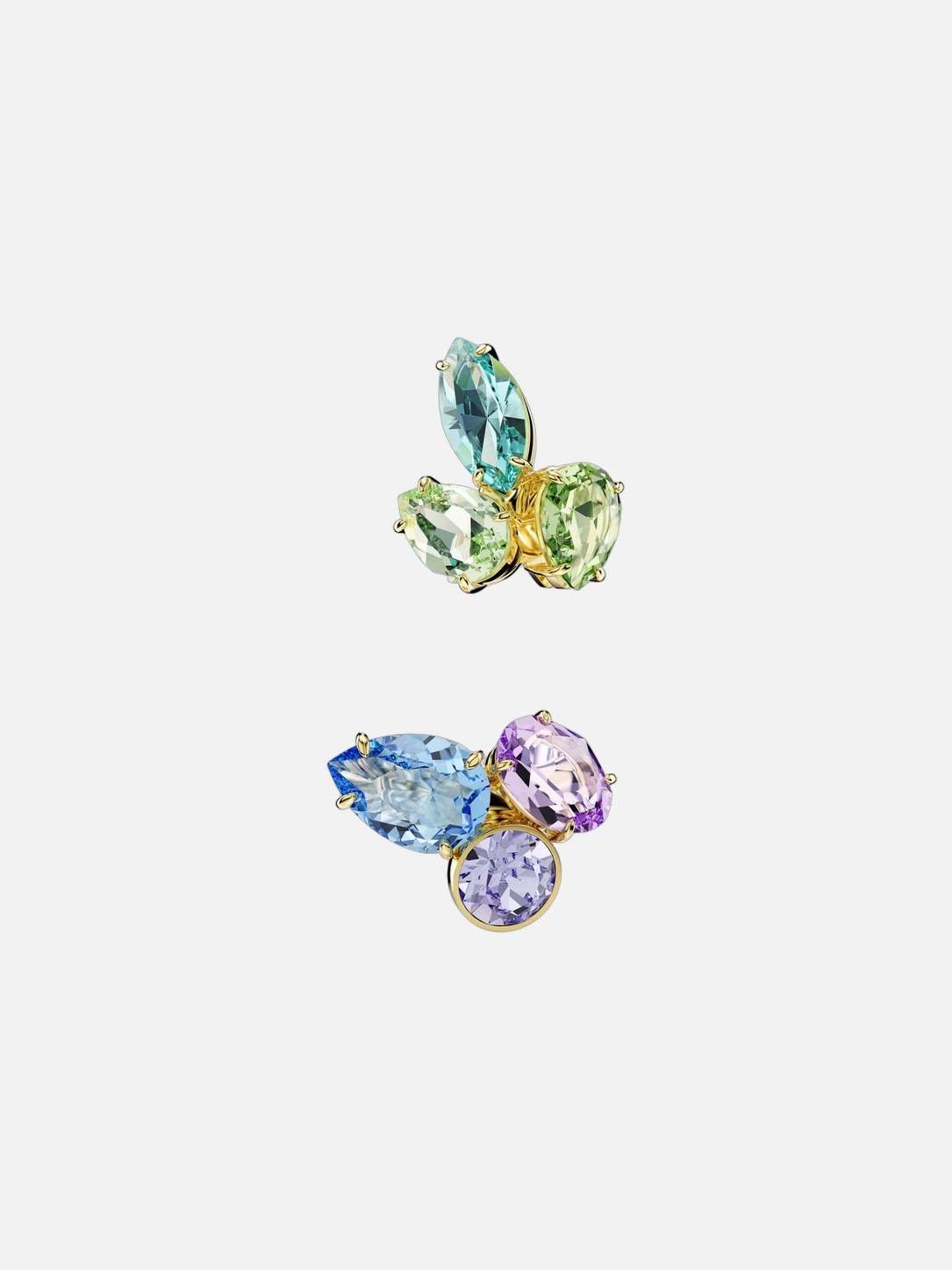
Original5741585
Gema ear cuffs from Swarovski
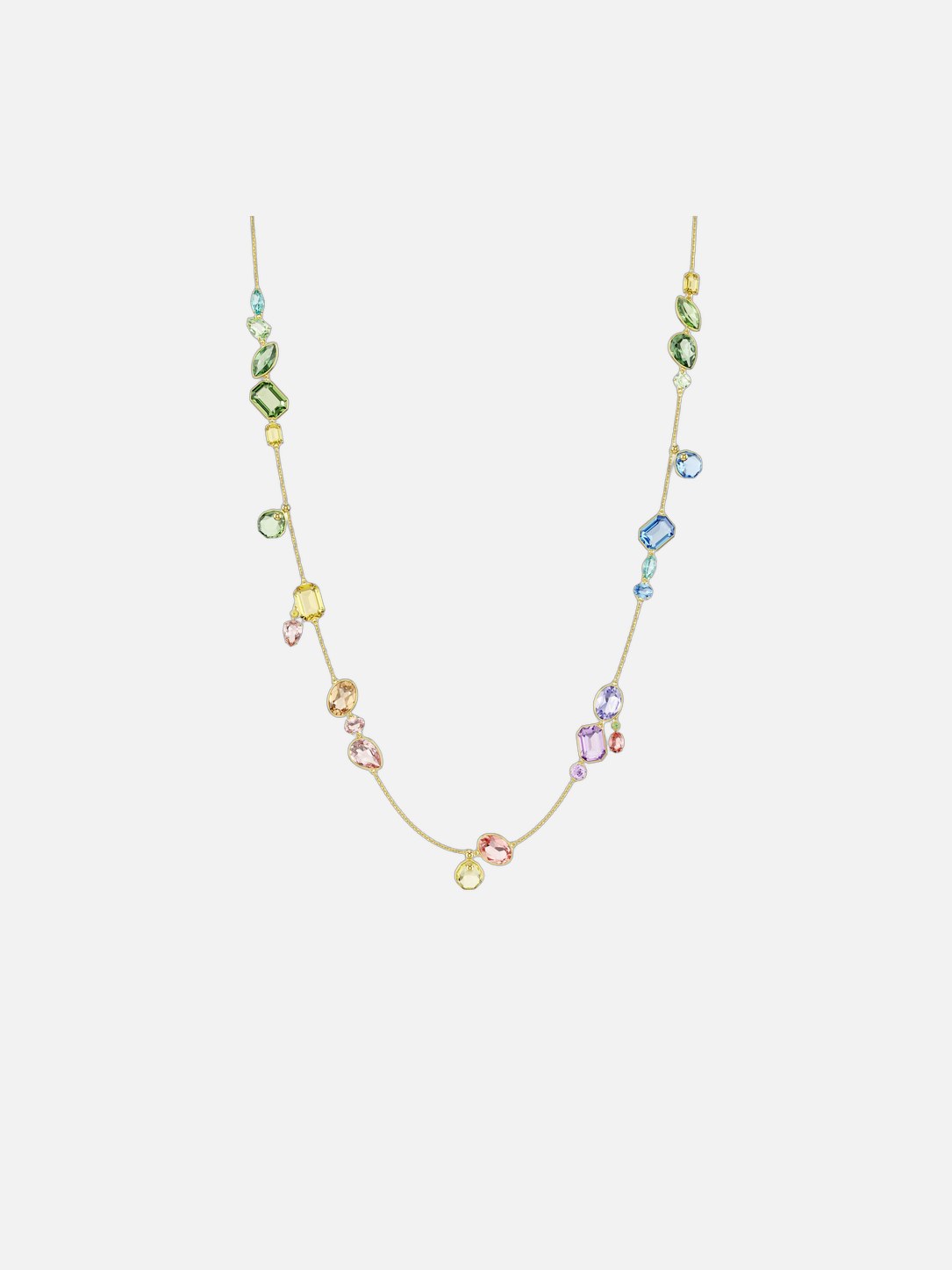
Original5737457
Gema strandage from Swarovski
Original5742675
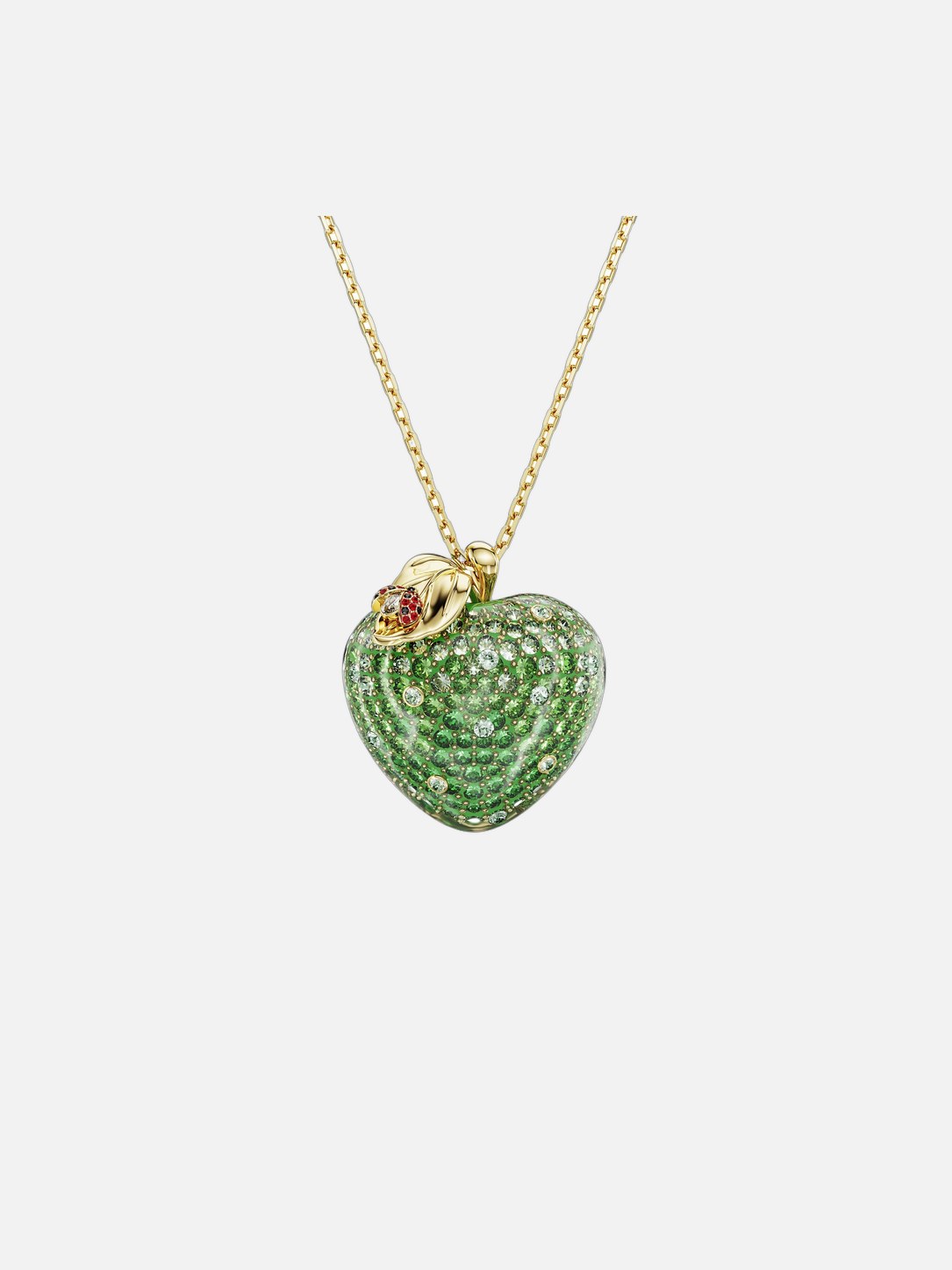
Idyllia pendant from Swarovski

At a time when dressing is increasingly guided by instinct rather than occasion, the collection reflects a broader cultural shift towards jewellery that integrates seamlessly into everyday style, functioning less as an accent and more as a form of self-expression. Swarovski responds to this with pieces that prioritise mood over convention, using saturated colour and sculptural detail to create designs that feel confident, individual and unapologetically expressive.

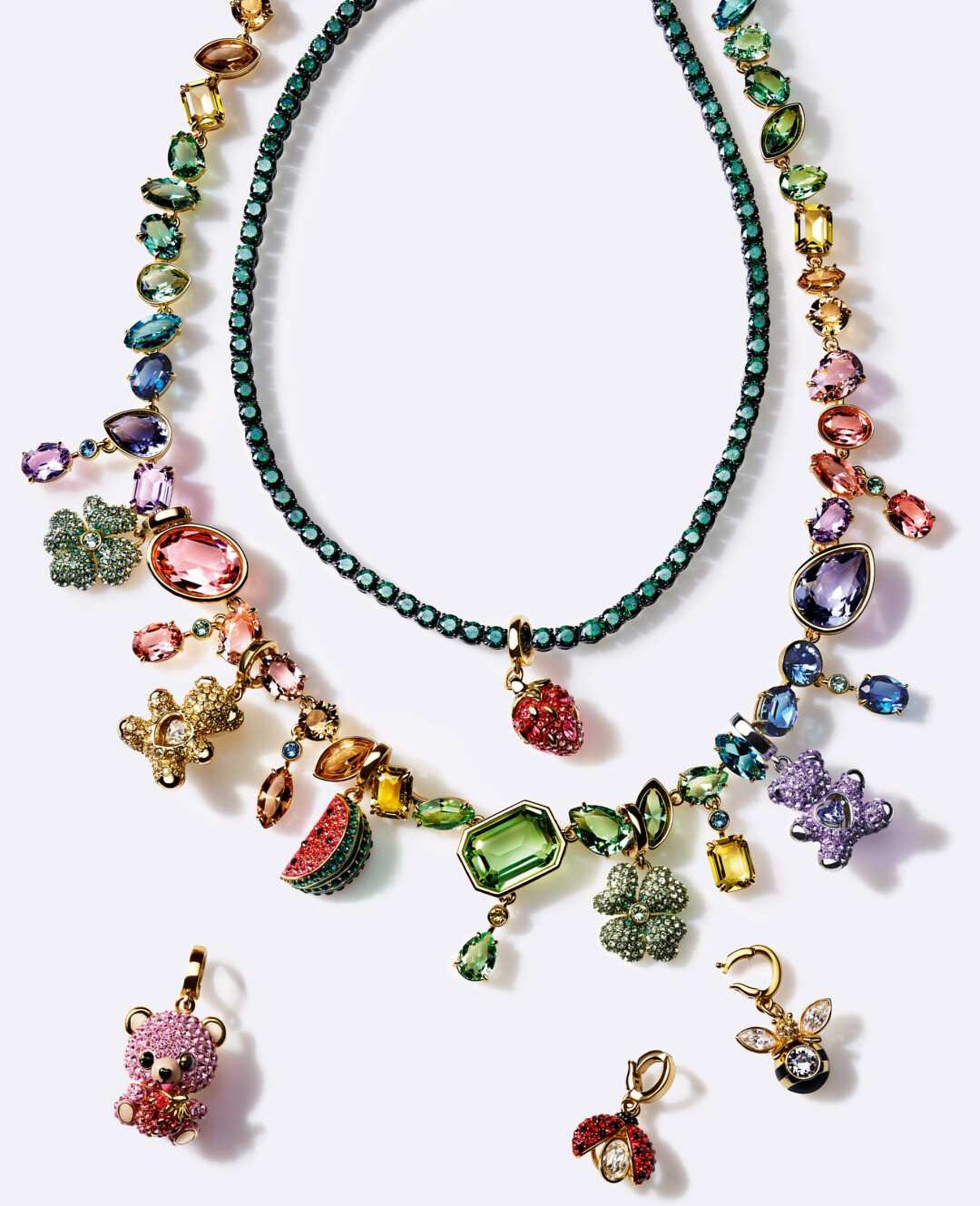
Two Swarovski crystal necklaces with colourful gemstone charms including strawberry, watermelon, and teddy bear motifs.
Idyllia charms collection from Swarovski

Ariana Grande embodies this energy throughout the campaign, where layered styling and bold crystal combinations reinforce the collection’s more-is-more aesthetic while retaining the brand’s polished sense of glamour. Jewellery is framed not as something distant or precious, but as an extension of personality that invites experimentation.

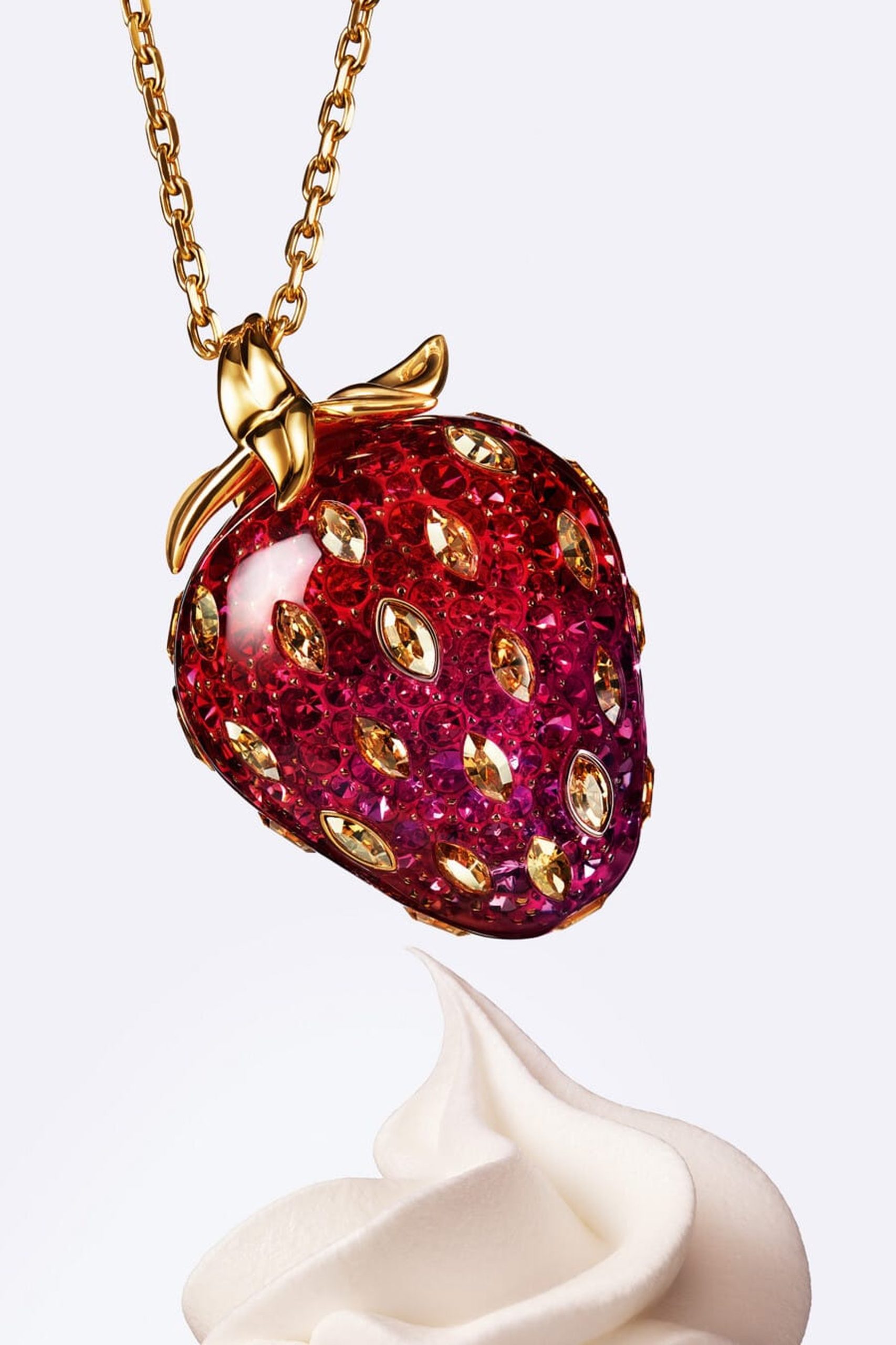
Gold-tone Swarovski strawberry pendant encrusted in red and amber crystals hovering above whipped cream.
Idyllia pendant from Swarovski

Original5743130
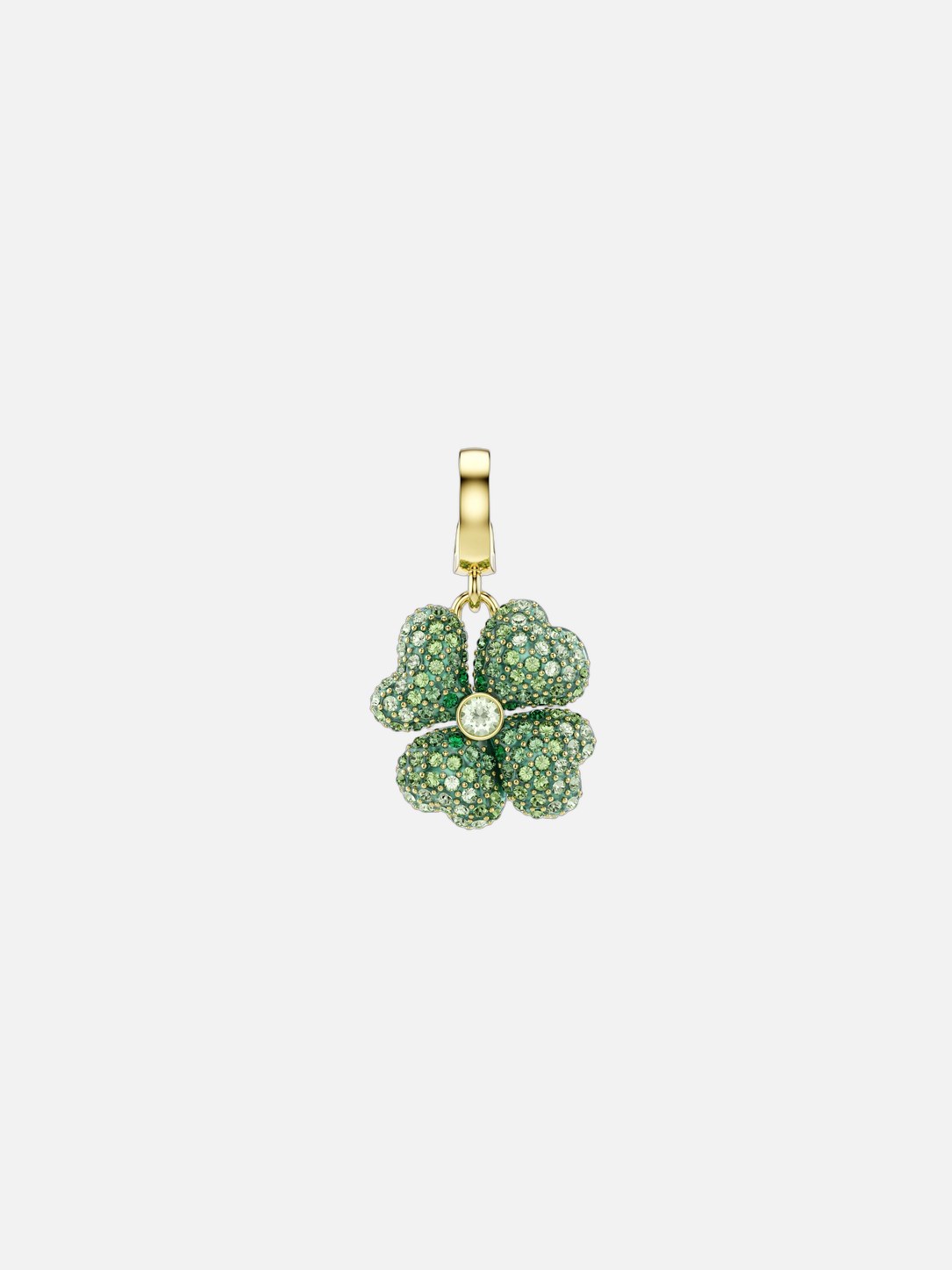
Idyllia clover charm from Swarovski
Original5738357
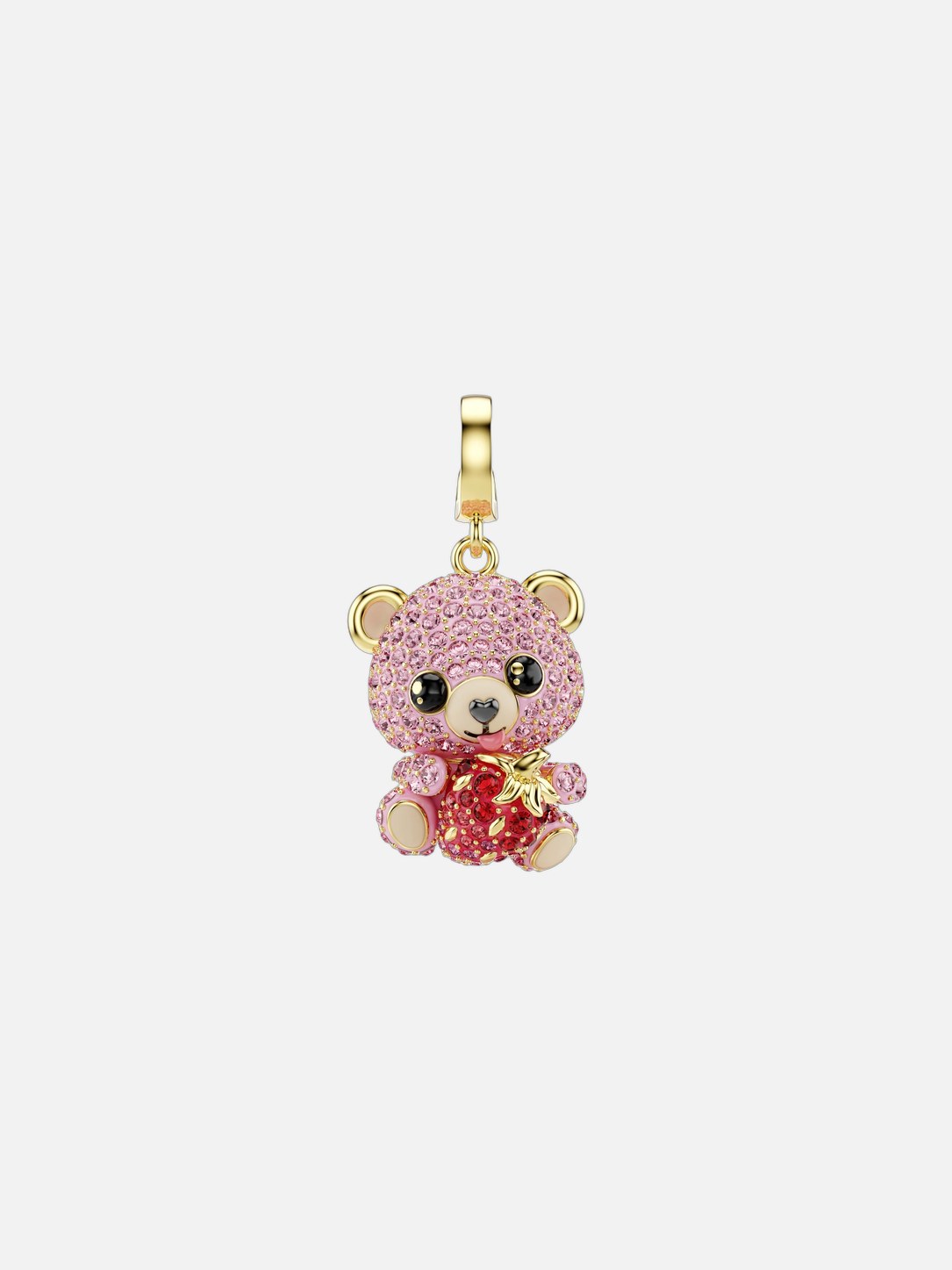
Idyllia Teddy charm from Swarovski
Original5743134
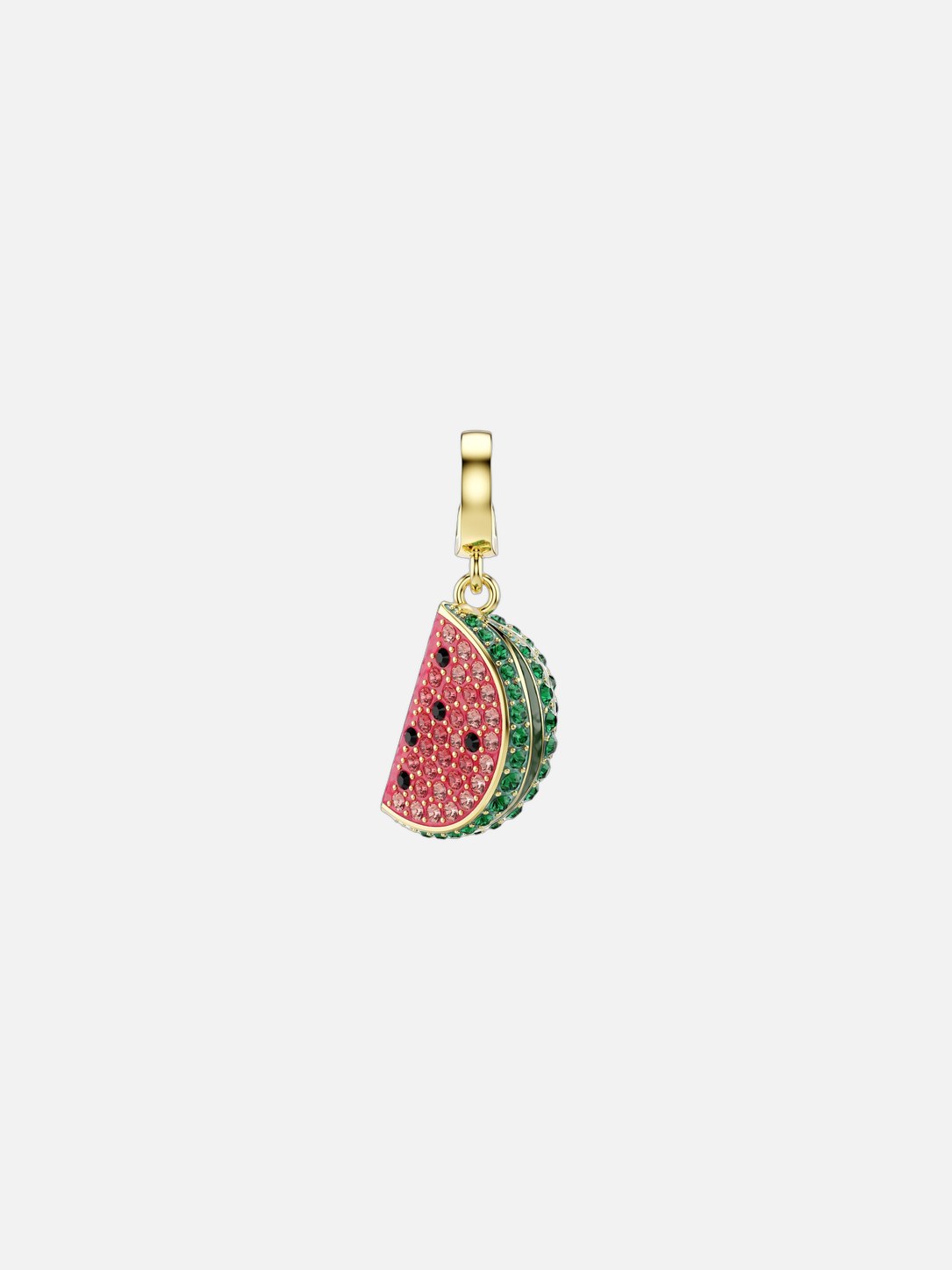
Idyllia watermelon charm from Swarovski
Original5743132
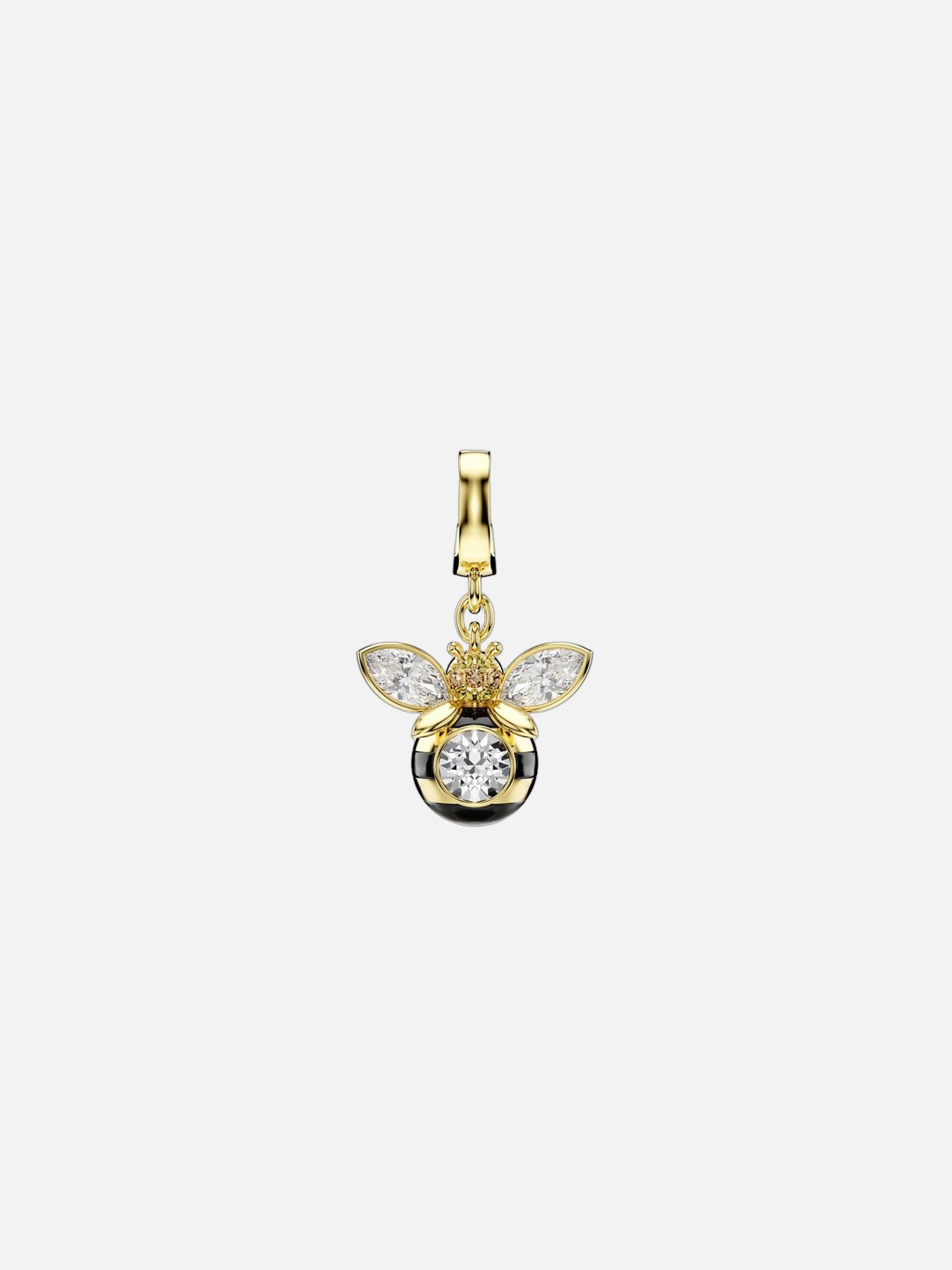
Idyllia bee charm from Swarovski

Among the standout designs are strawberry-inspired pieces that reinterpret familiar natural forms through precision-cut red crystals suspended in resin, creating depth, luminosity and a refined sense of play. Alongside these, a growing universe of charms—fruits, bees and symbolic motifs—speaks to the ongoing demand for personalisation, allowing wearers to build combinations that feel uniquely their own.

Four colourful Swarovski crystal watches draped over twisted candy lollipop props in blue, green, pink and gold.
Millenia watches from Swarovski

The collection’s colour story extends into Swarovski’s watch designs, where the Millenia family is reimagined through candy-inspired tones, reinforcing the brand’s commitment to expressive, contemporary dressing.

Overall, the collection reflects a growing appetite for fashion that prioritises feeling over formality, embracing decoration as a deliberate expression of identity rather than excess.

swarovski.com

Coveted

Van Cleef & Arpels’ Fascinating Egypt: Inside one of high jewellery’s most anticipated annual events
Gucci’s transports us to Monte Carlo with a dreamy European summer escapade
GLANZSTÜCKE: The Van Cleef & Arpels exhibition in Vienna that every design lover should see

A cleaner way to clean: Why we’ve been thinking about stain removal all wrong

Everyone has an emergency stain story. Red wine on a white shirt. Foundation on a collar. Grass stains, tomato sauce, coffee, turmeric, the entire visual résumé of modern life embedded into the fabric fibres of our existence with infuriating regularity. And what most people reach for almost instinctively is the same product they’ve relied upon for a lifetime. Heavy-duty soakers and stain removers that promise industrial-strength results through chemistry powerful enough to be genuinely alarming.

A recent office stain incident brought this to our attention when, upon attempting to read the instructions on the back of a handy little bottle of hope, we were shocked to discover the recommendation that eye protection be worn when applying the stain remover, due to the risk of serious eye damage or blindness upon contact. Furthermore, any contact with skin requires immediate flushing with water. And this was before even reaching the actual instructions for removing the stain.

For decades, consumers have been conditioned to believe that the harsher the formula, the better the clean. Serious stains require serious chemicals. That has long been the accepted narrative. But reading the fine print can feel strangely disproportionate to the domestic task at hand. Avoid inhalation. Avoid eye contact. Risk of serious irritation. Suddenly, the modern laundry feels like it requires a Hazmat suit.

So what are the alternatives? Long established as New Zealand’s authority in responsible home and body care, Ecostore has developed formulations that strip away much of the chemical aggression consumers have come to associate with effectiveness, while still delivering genuinely impressive results on stubborn stains. The surprise is not that it works. The surprise is that so many people still assume it won’t. 

Formulated with plant and mineral-based ingredients and designed to be safer for both people and planet, Ecostore’s laundry soaker approaches stain removal without the usual chemical theatrics. No overwhelming fumes. No sense that protective eyewear might be a sensible precaution before tackling a wine spill. Just a formulation that quietly and effectively gets on with the job, much to the surprise of anyone game enough to rethink an entire category they have been conditioned to distrust.

With our daily lives increasingly focused on what we put into our bodies, it seems equally important to consider the products we expose ourselves to inside our homes. The long-ingrained marketing narrative from chemically laden household brands has always traded on trust and familiarity. As consumers, many of us continue to buy the products our parents used without ever questioning the ingredients or reading the fine print, because nostalgia is a remarkably effective sales tool.

In a time where we are increasingly focused on improving the way we look after ourselves, there is still plenty left to reconsider. Ecostore’s approach feels intelligent rather than ideological, delivering superior stain removal without the bravado. After more than two decades developing safer alternatives for modern homes, the brand has quietly built products that challenge the old assumption that powerful cleaning must come at a cost to the user or the environment. Perhaps it’s finally time to let the consequences of the chemical-laden alternatives really soak in.

ecostore.com

Wellbeing

Is the 20,000-step day actually worth it in 2026?
Why do 10-year-olds have 10-step skincare routines? Our Editor weighs in on the tween skincare craze
Hit the pavement with Auckland city’s best running routes