


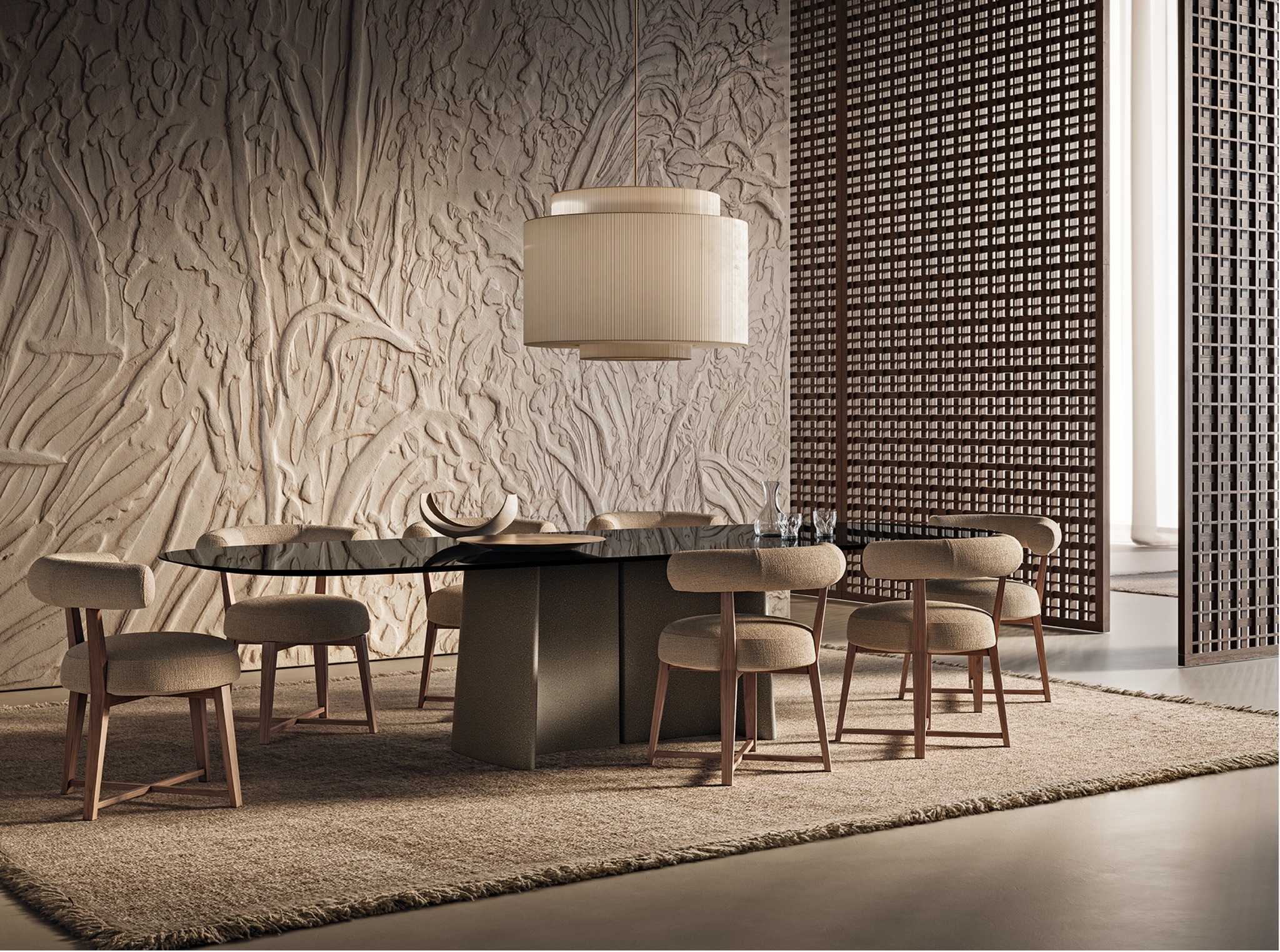
This year, I found myself on the floor looking under tables more often than I care to admit, drawn less to what sits on top and more to what is doing the work beneath, where the real design conversation now appears to be taking place. The dining table is no longer content to serve as a functional surface alone; it assumes responsibility for setting the tone of a room, with increasingly sculptural bases that demand attention, particularly when paired with smoked glass tops that reveal rather than conceal
their construction.
At B&B Italia, which is marking its sixtieth anniversary, Ronan Bouroullec’s Abaco table drew directly from the architectural language of the company’s headquarters, originally conceived by Renzo Piano and Richard Rogers, allowing structure to dictate aesthetic in a way that feels both rational and expressive. This same logic extended through the Abaco armchair, where leather elements are visibly held between the two halves of each wooden leg, making the method of construction impossible to ignore, while a broader presentation of works, including contributions from Michael Anastassiades and Jasper Morrison alongside reissued and limited-edition pieces, affirmed the brand’s ongoing dialogue between past and present.
That architectural instinct carried through to Flexform, where Sebastian Herkner’s Tara table continued the sculptural exploration of the base, while the Soreto mirror by Fumie Shibata demonstrated a similar sensitivity to form and material, with its softly curved, leather-wrapped frame introducing a quiet cohesion that extends beyond any single category.
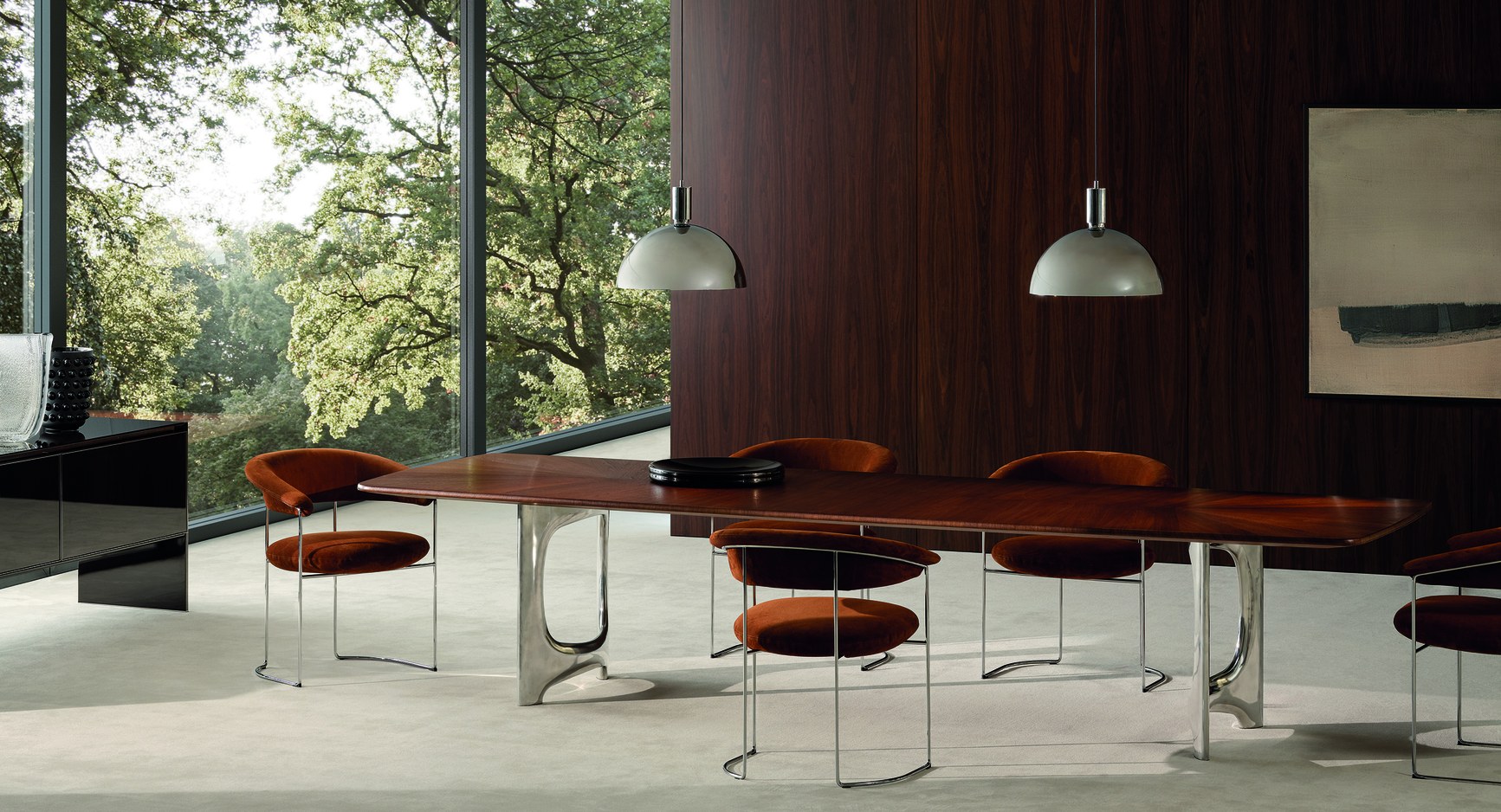
At Minotti, Hannes Peer’s Blaine table and Marcio Kogan’s Bézier dining table approached the idea from different angles, although both reinforced the growing importance of the base as a defining element, with the Bézier in particular using its organic form not only as an aesthetic gesture but as a functional one, shaping the way people gather and interact around it.
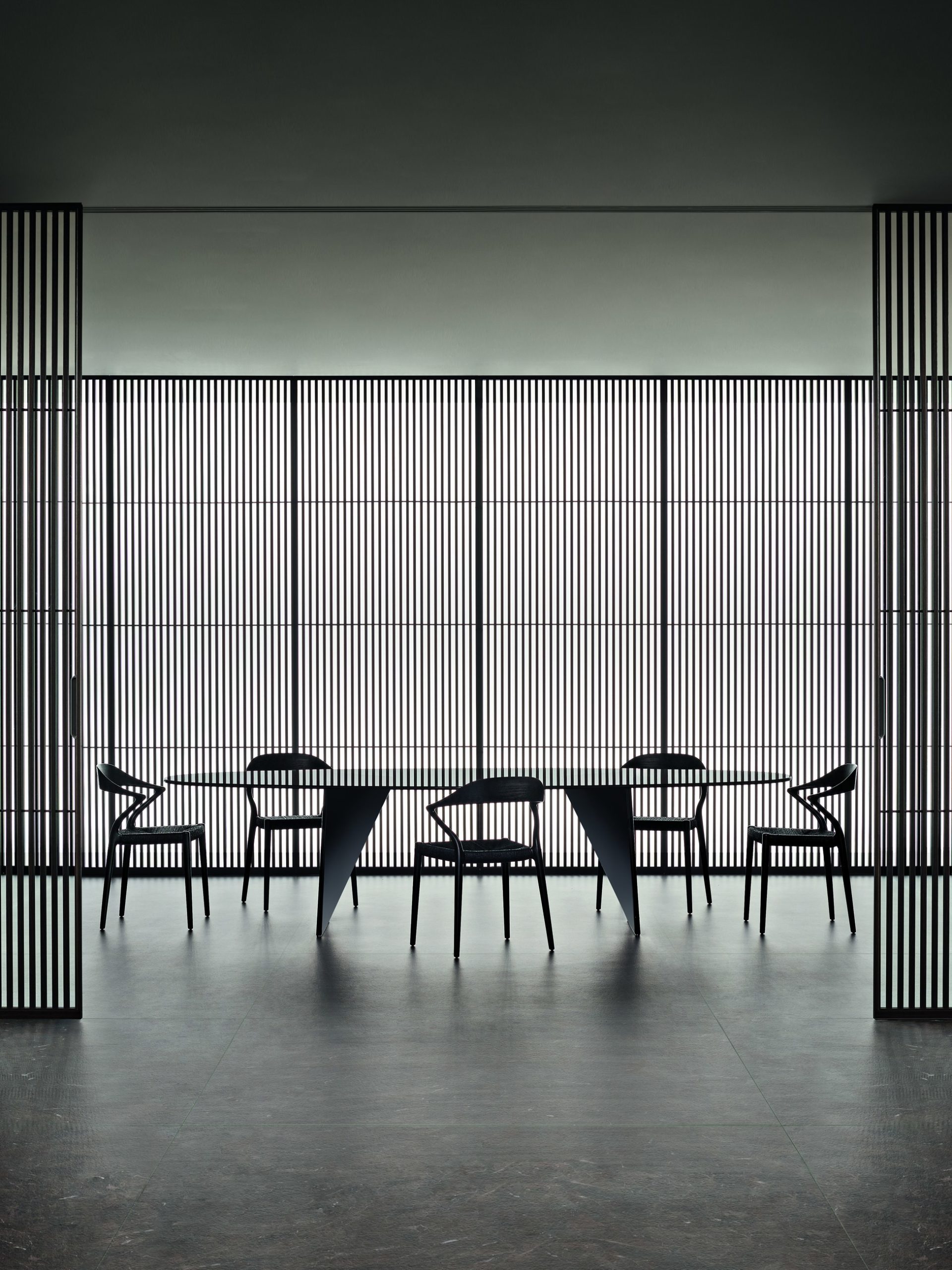
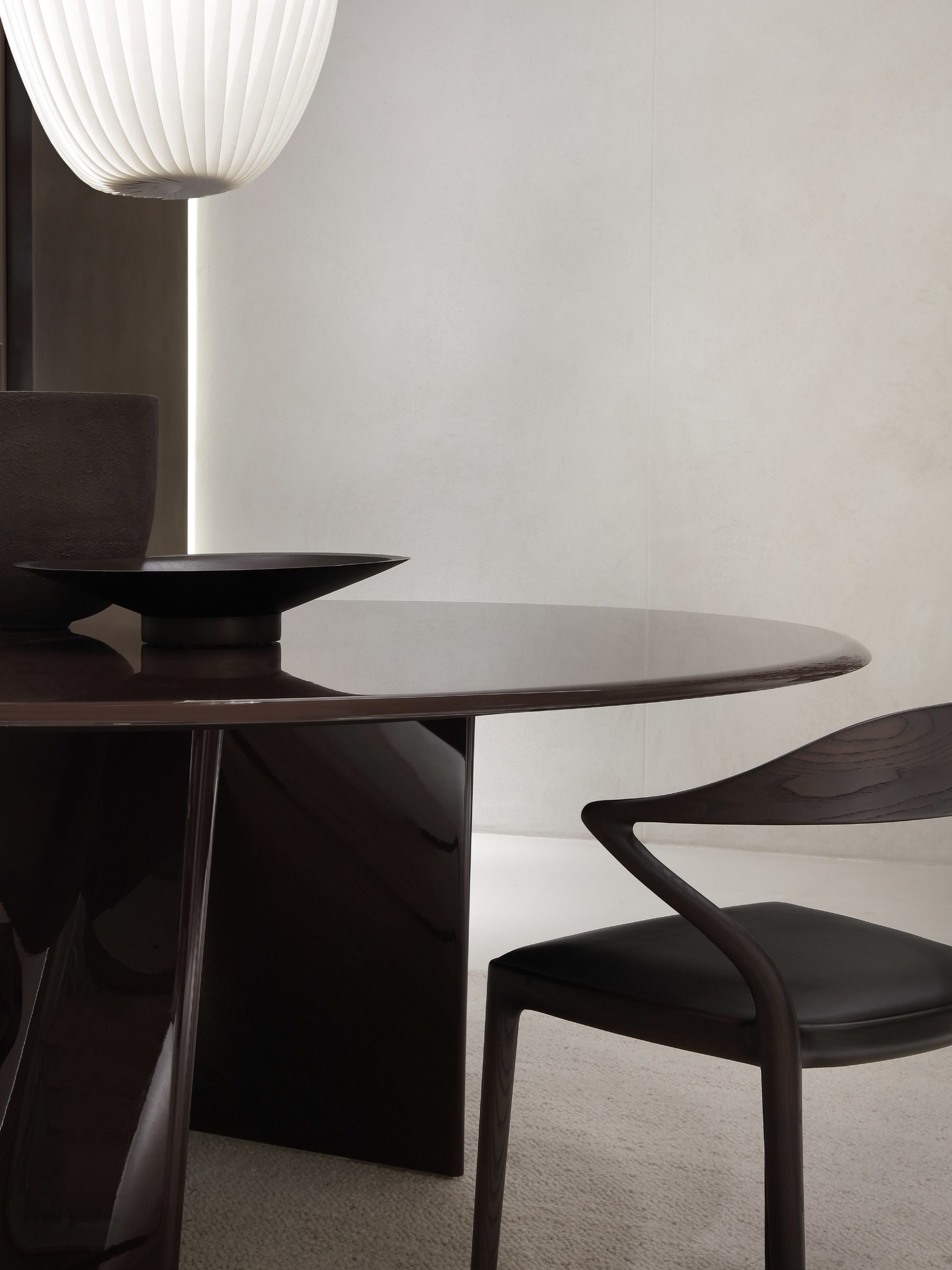
Precision remains central to Rimadesio, where the Lambda table expressed this through clarity and engineering discipline, while the Ori chair, carved from a single piece of solid ash, revealed the same commitment to craftsmanship through its carefully resolved joints and distinctive backrest. All produced within the brand’s solar-powered facility in Giussano.
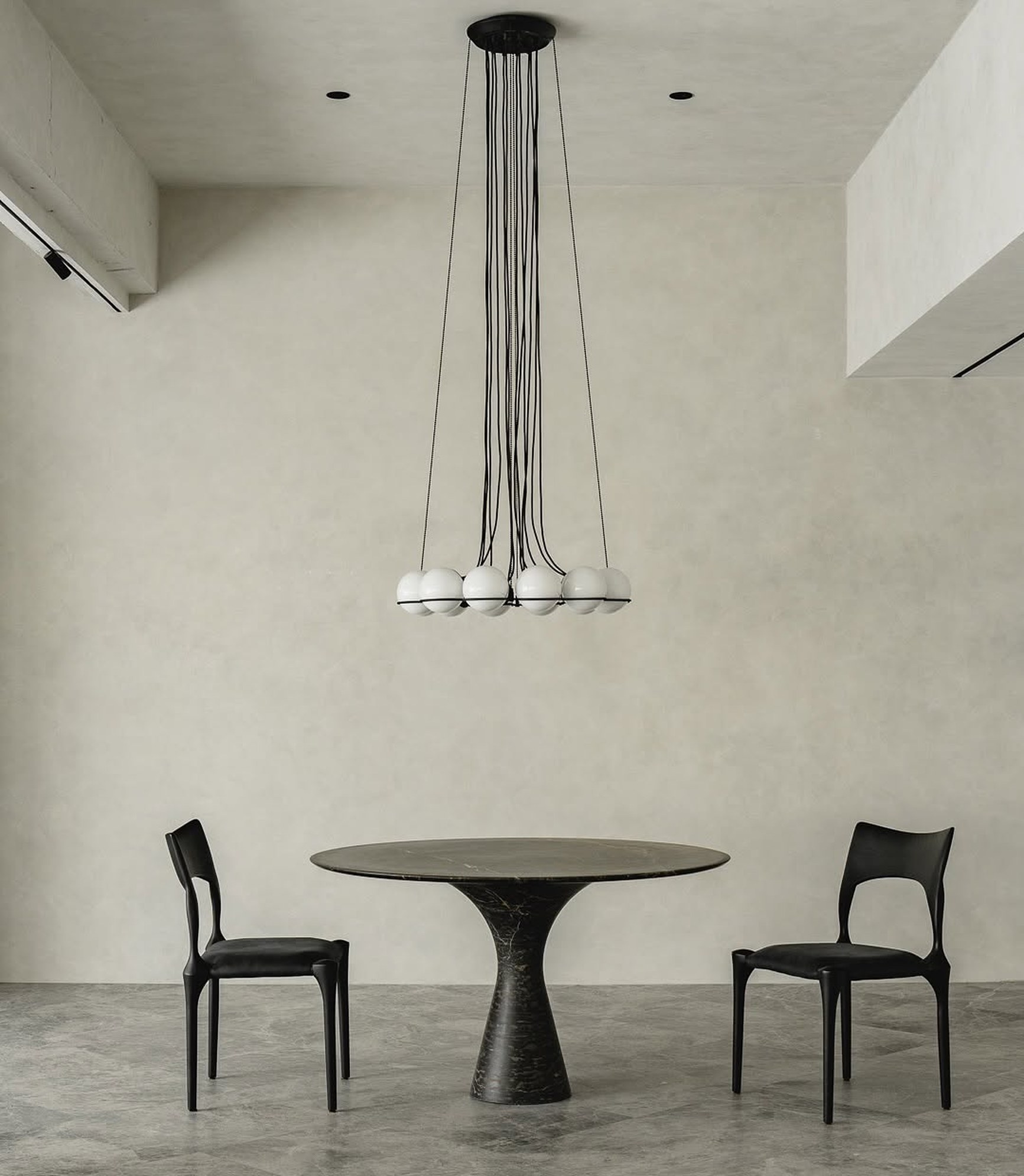
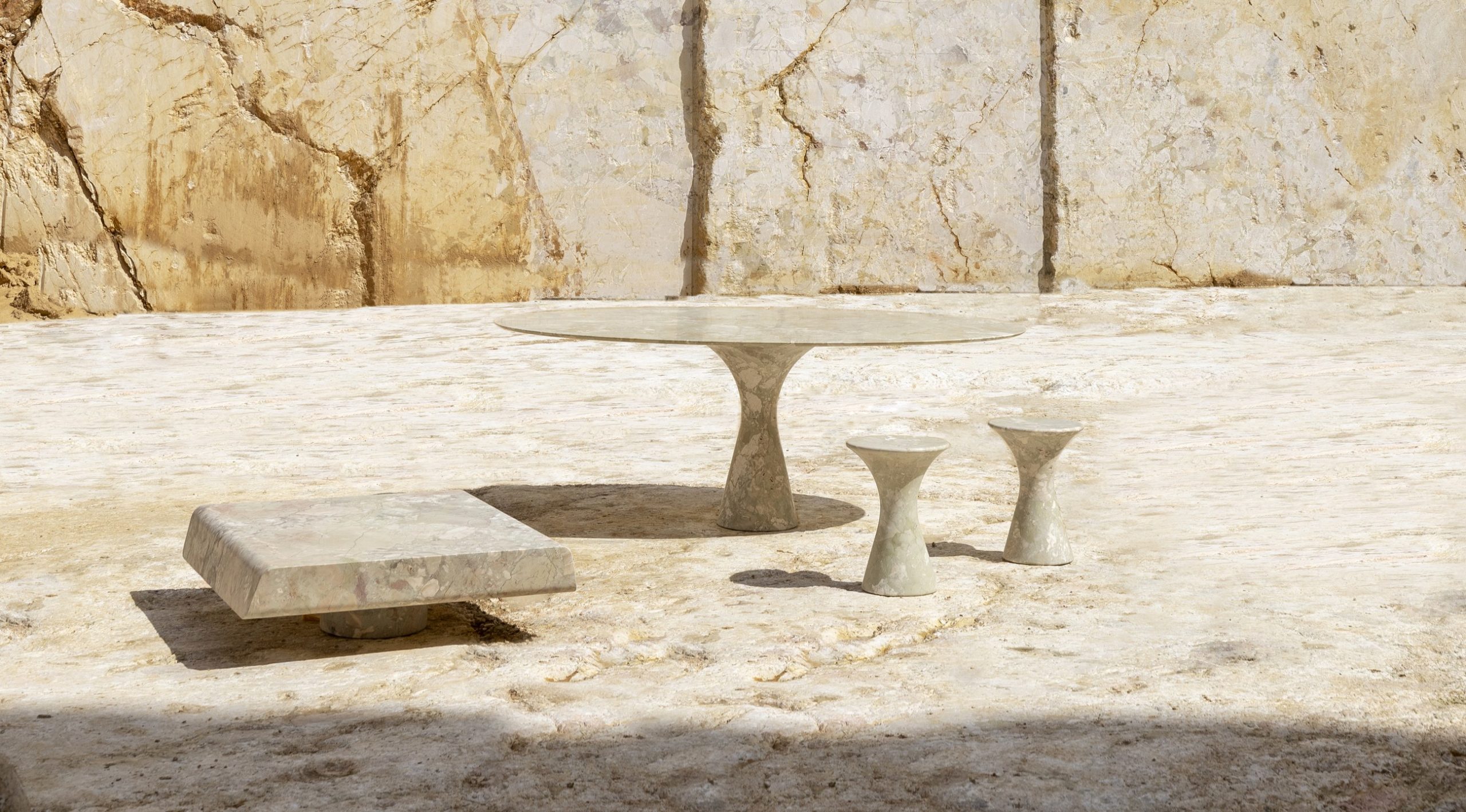
Material took on a more monumental presence in the Brera Design District, where Alinea presented marble tables that felt almost geological in their permanence, with the Angelo M dining tables formed from solid stone in a continuous curve, and the Via Via low tables introducing a sense of movement through opposing forms that create a subtle but persistent tension within the material itself. Each piece is signed and numbered, which feels appropriate given the scale of the gesture and the suggestion that these objects are intended to outlast their immediate context by several centuries.