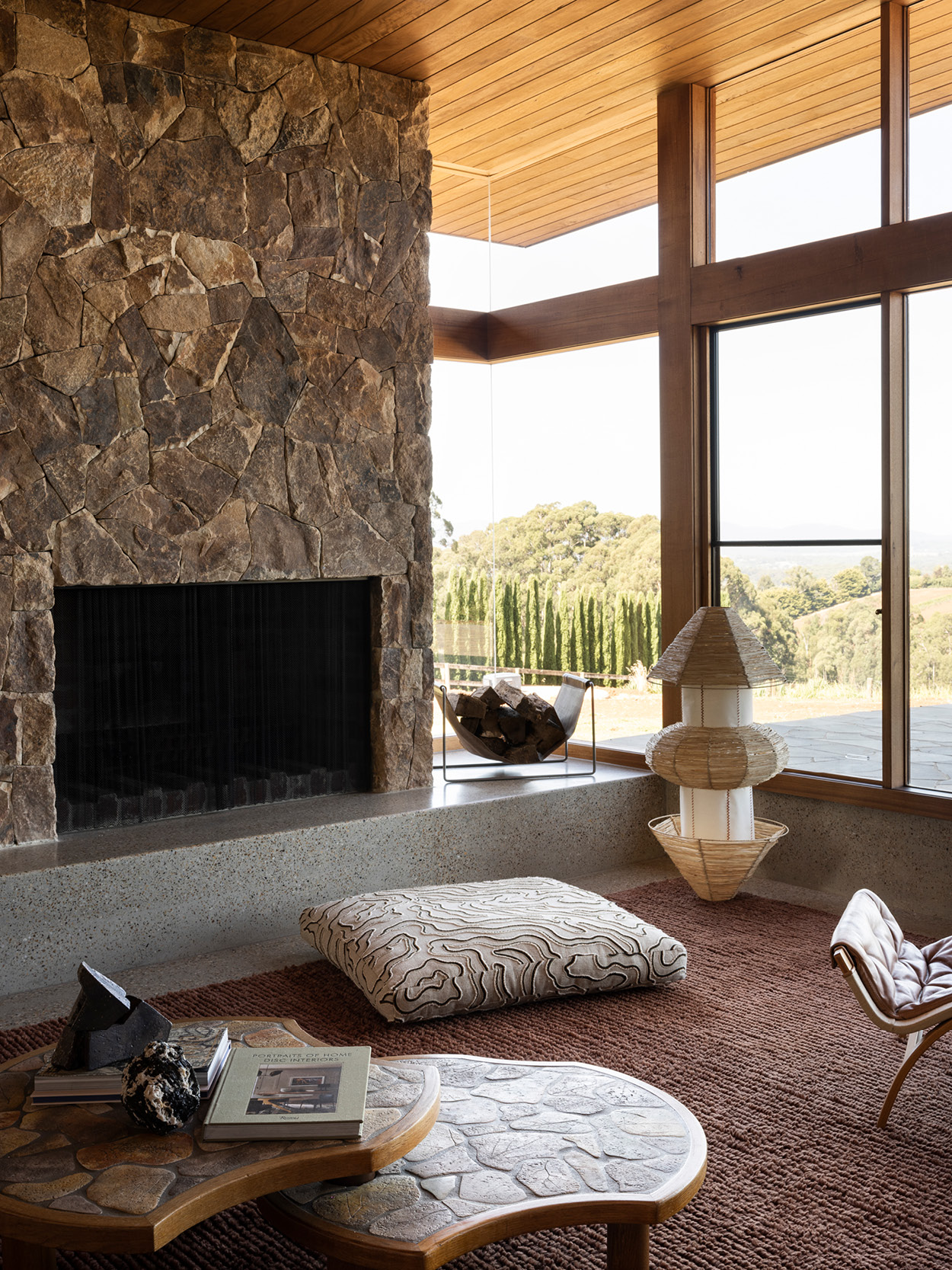
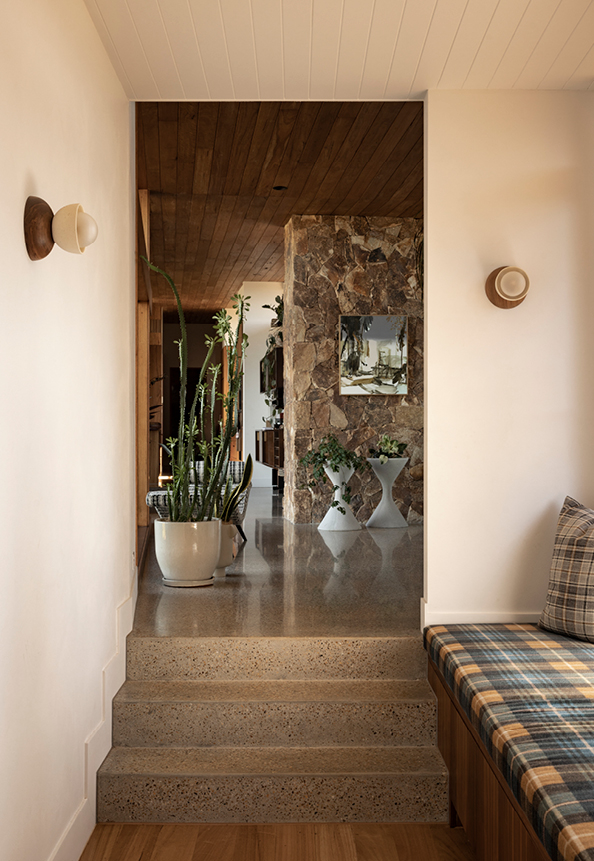
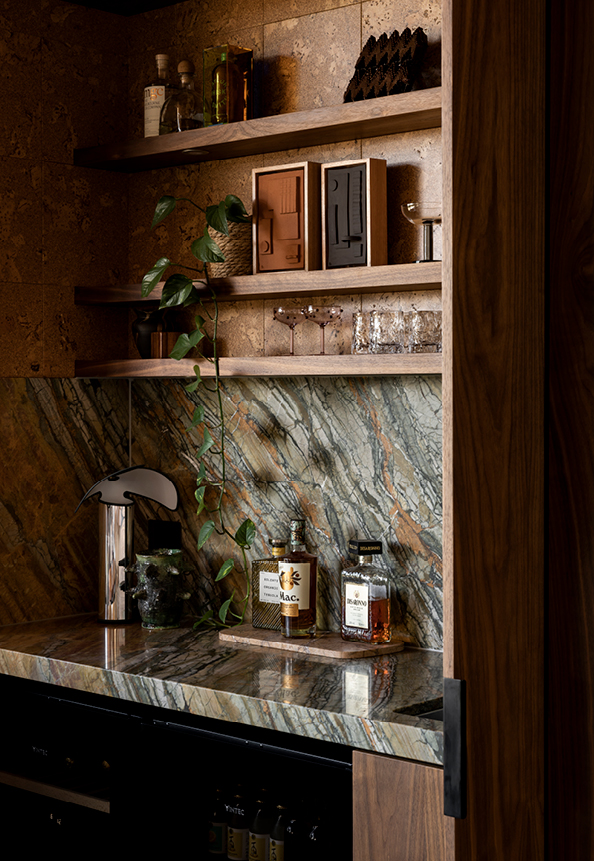
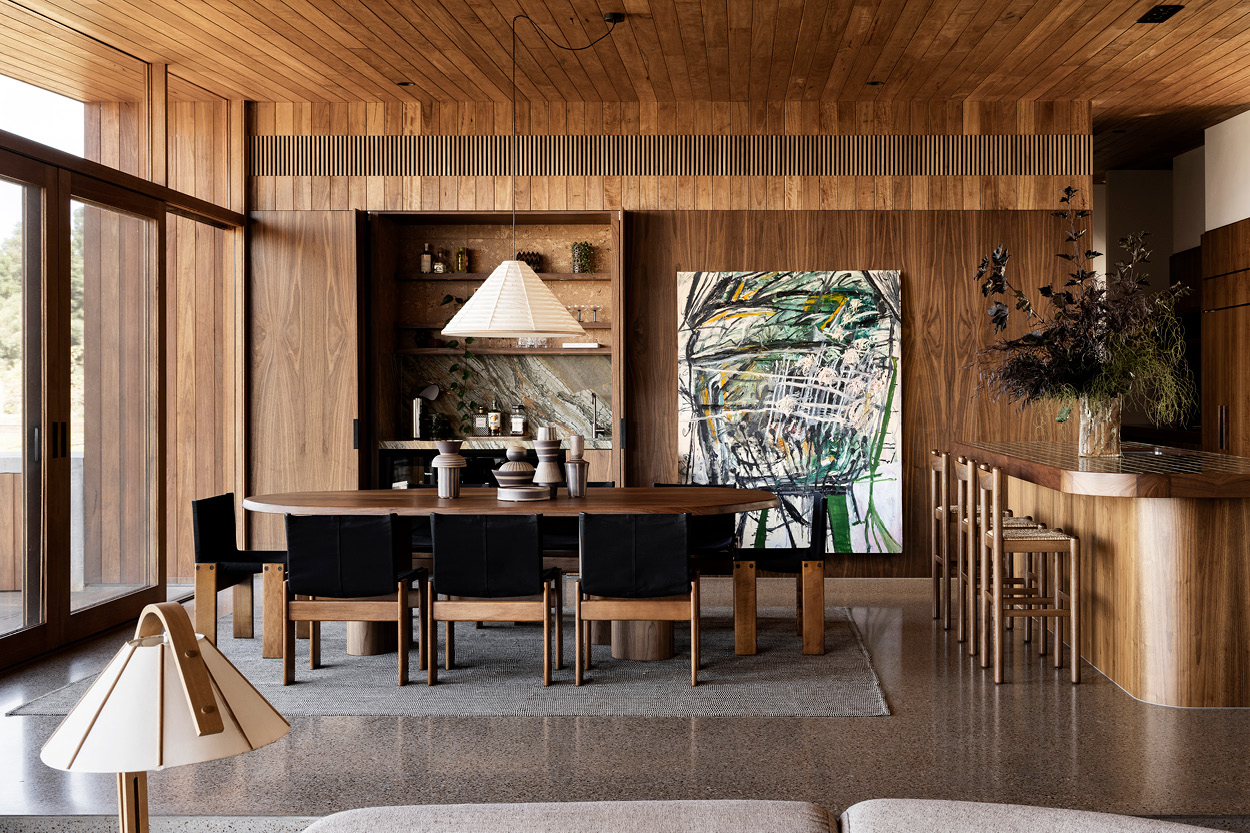
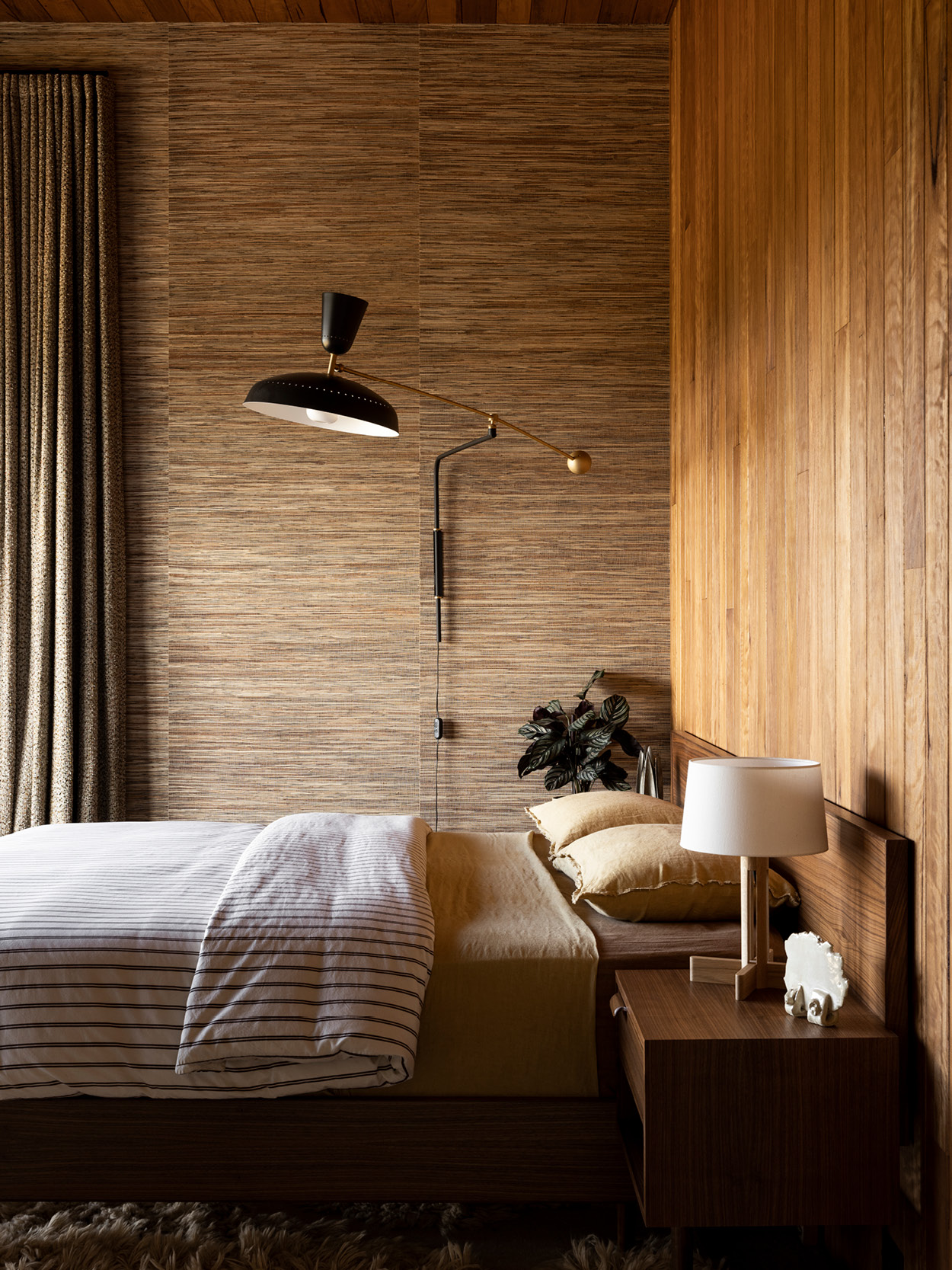
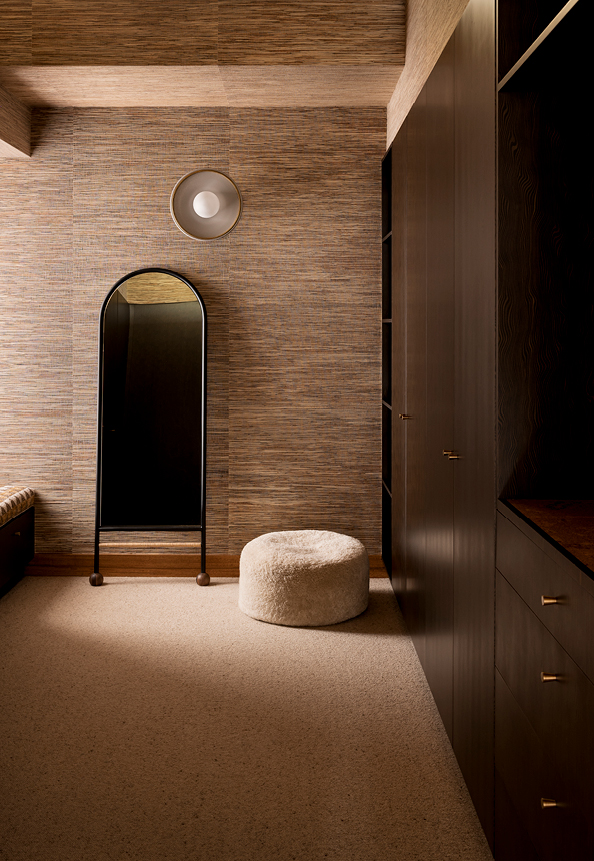
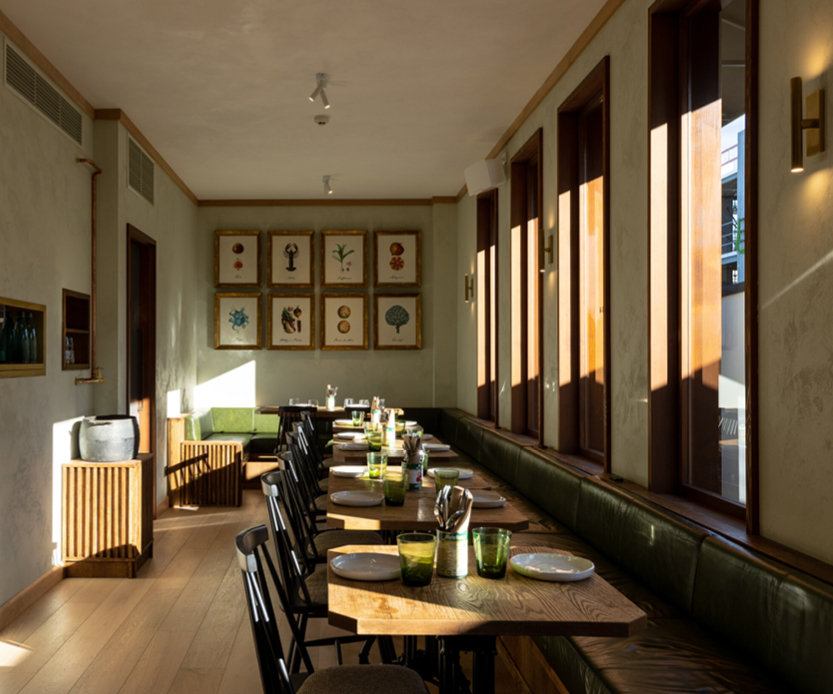
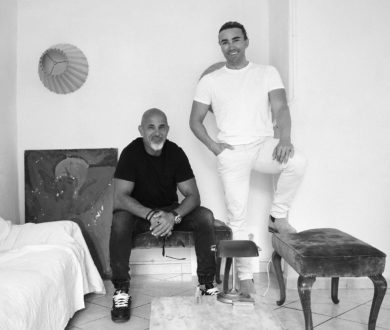
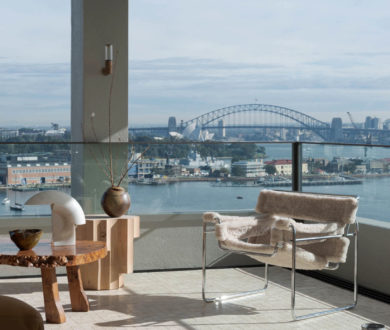
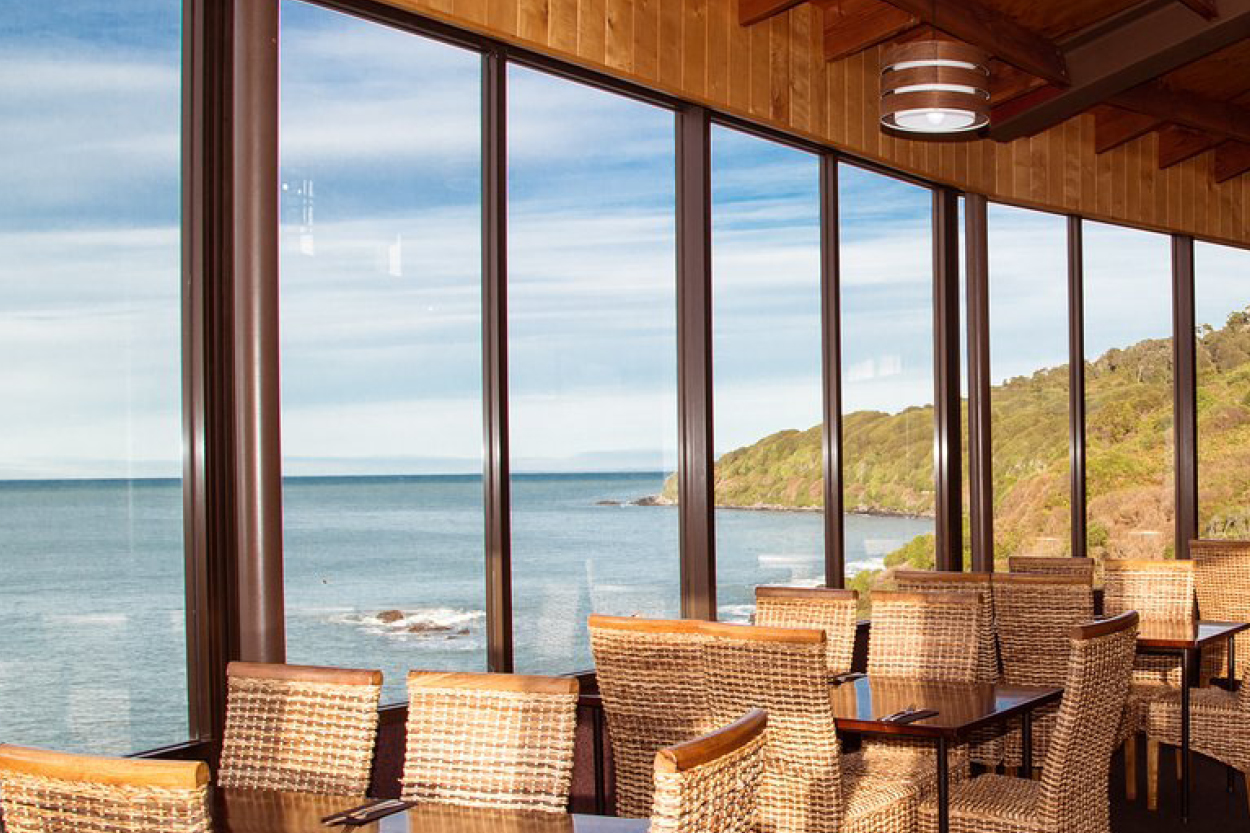
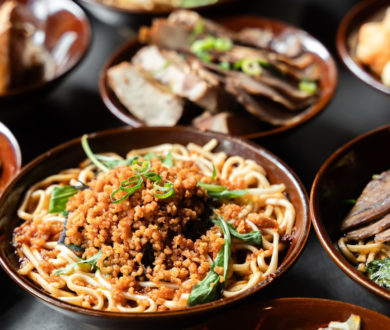
In creating Red Crest House, the architects at Dion Keech, aided by Loopea Design Studio and interior expert Simone Haag, dreamt up a warm, inviting and inherently liveable contemporary residence, where nature is integral to the design.
Nestled amidst the picturesque Dandenong Ranges in Victoria (just outside of Melbourne), the Red Crest House is a beacon of architectural balance and careful design. Here, a mid-century-modern architectural code is married with a series of contemporary spaces, where every part of the home capitalises on the captivating allure of its breathtaking natural landscape. Overlooking a pastoral valley, with views that aren’t revealed until one steps over the threshold, this architectural marvel exudes an undeniable nostalgic charm while exquisitely capturing the essence of its surroundings, and is a haven of cosy, private domesticity (albeit with an undeniably unique design).
“Warm and textural, the interior has been painstakingly designed to evoke a sense of tranquillity and relaxation, finished with an overarching colour palette of earthy hues and materials.”
Set on a rolling hillside, Red Crest House unfolds gracefully, its elongated shape harmonising with the undulating terrain. Here, it seems, architecture and nature have been made to converge seamlessly, where a verdant backdrop of majestic gums serves not only as an arresting panorama but also as a catalyst for accentuating the home’s mid-century silhouette.
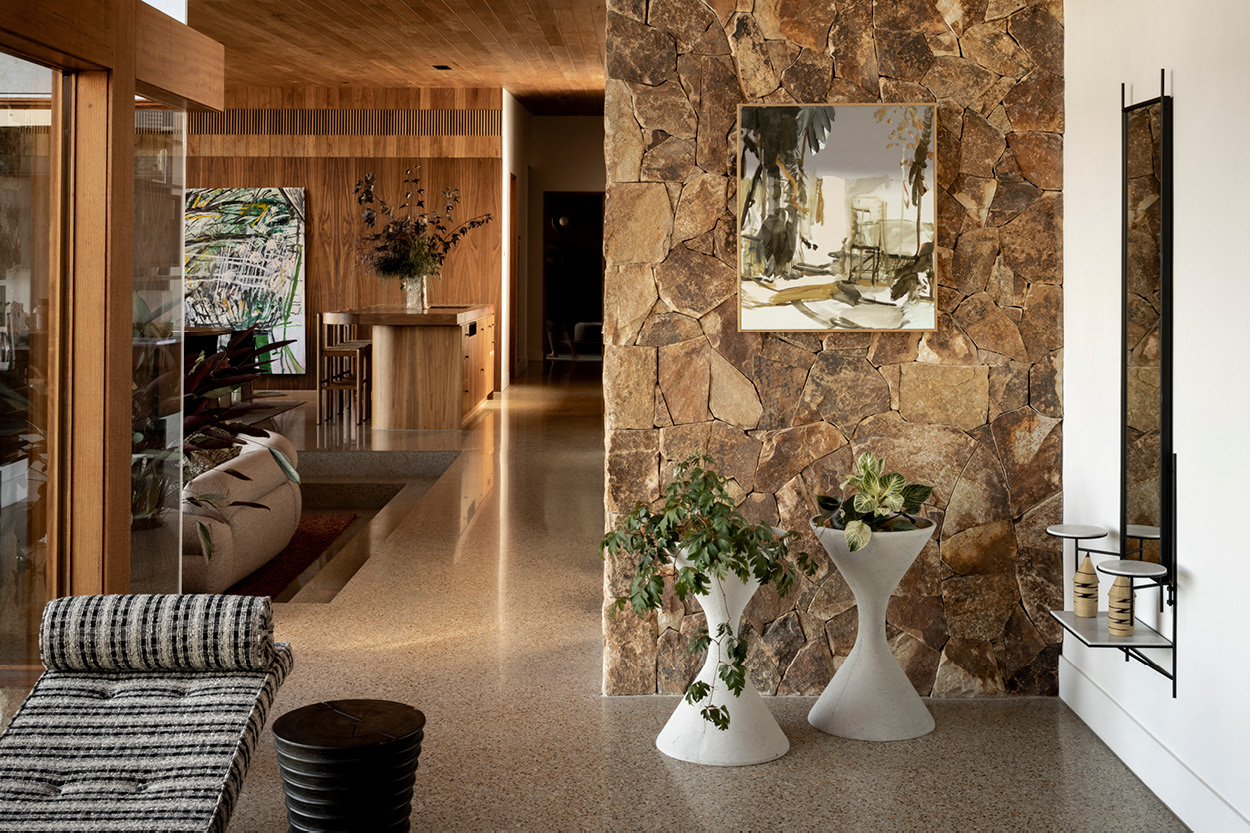
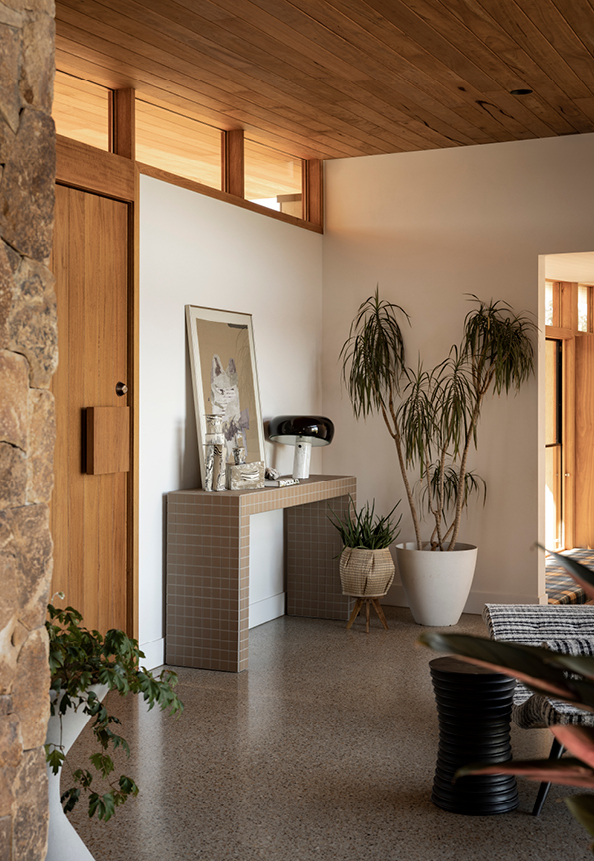
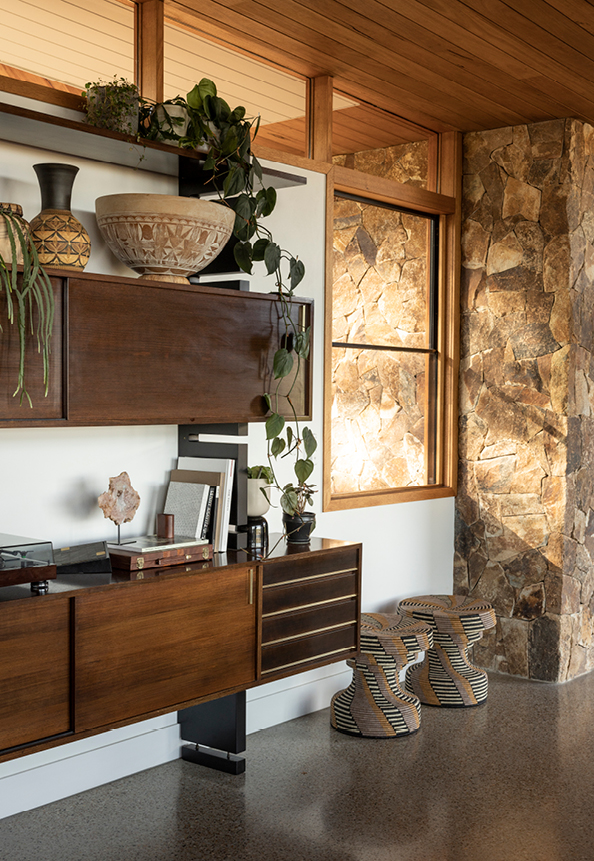
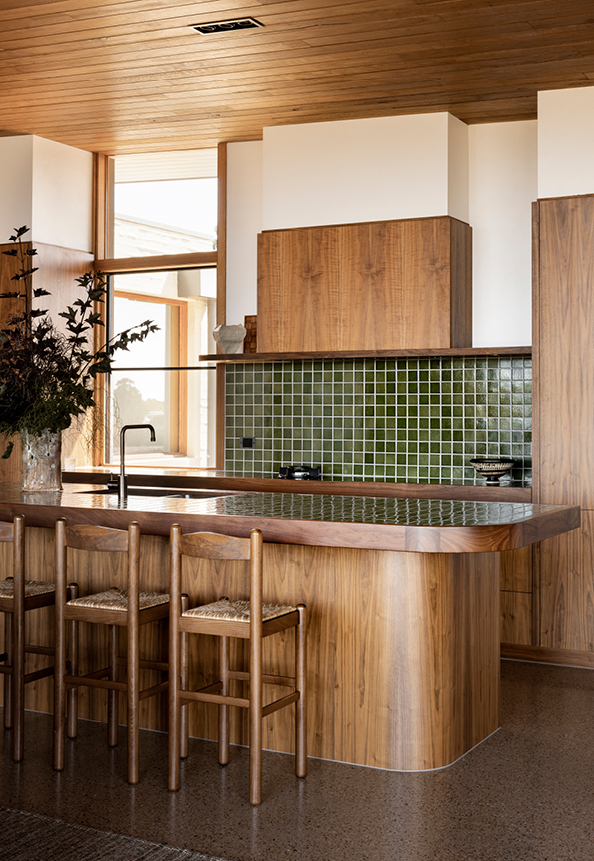
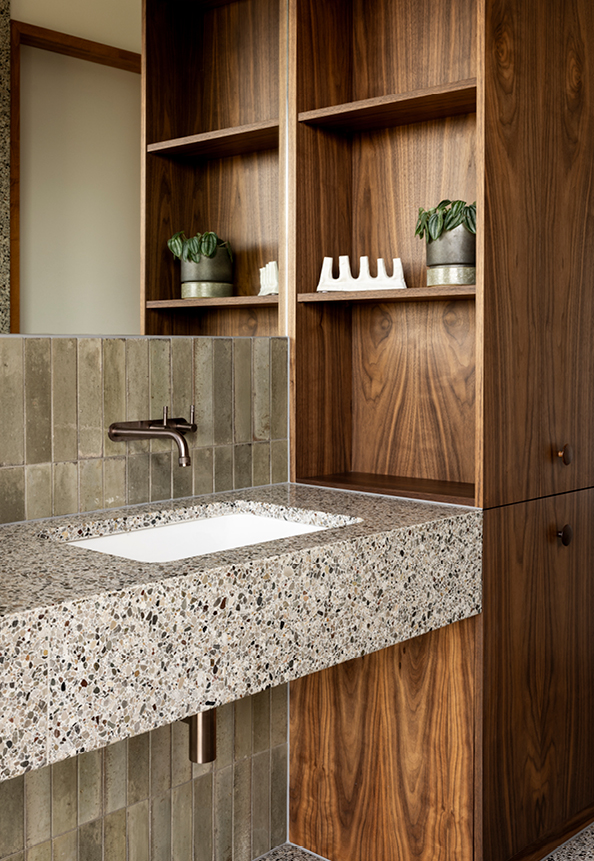
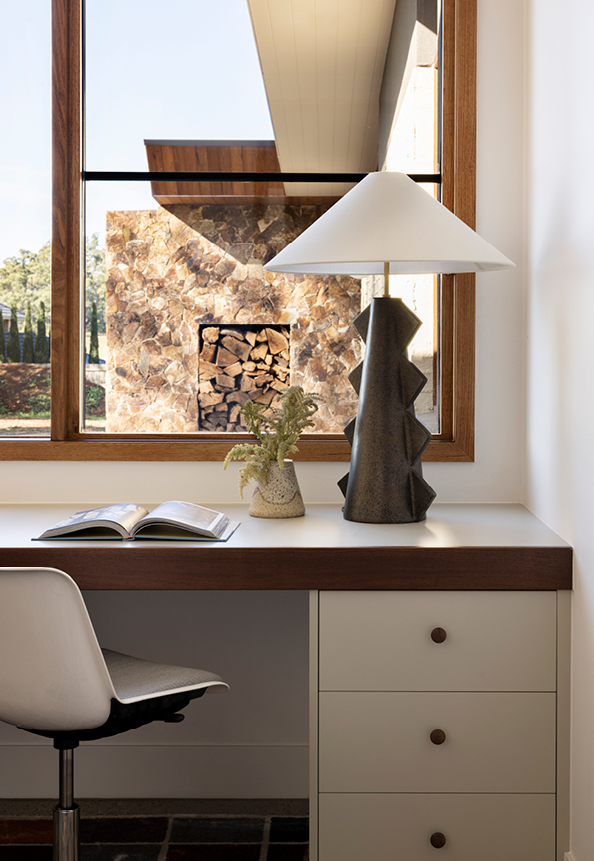
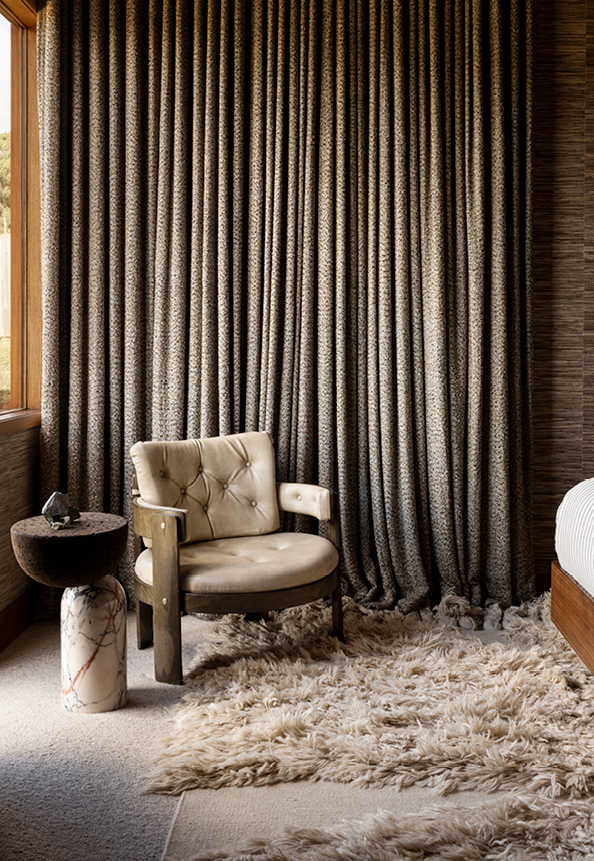
Inside, a series of carefully curated spaces complement the architecture. Warm and textural, the interior has been painstakingly designed to evoke a sense of tranquillity and relaxation, finished with an overarching colour palette of earthy hues and materials like hand-cut tiles, honey-toned timber, buttery leathers, brass, linen and cork, set against geostone concrete floors, Fibonacci Freckle terrazzo and terracotta aggregate. The risks that the design teams at Dion Keech and Loopea Design Studio were able to take here, from using bold geometric patterns and highly-tactile material finishes to the focus on patinas and natural expressions over overt embellishment, clearly paid off, and created a unique canvas on which Simone Haag could, as the final step, leave her distinct mark.
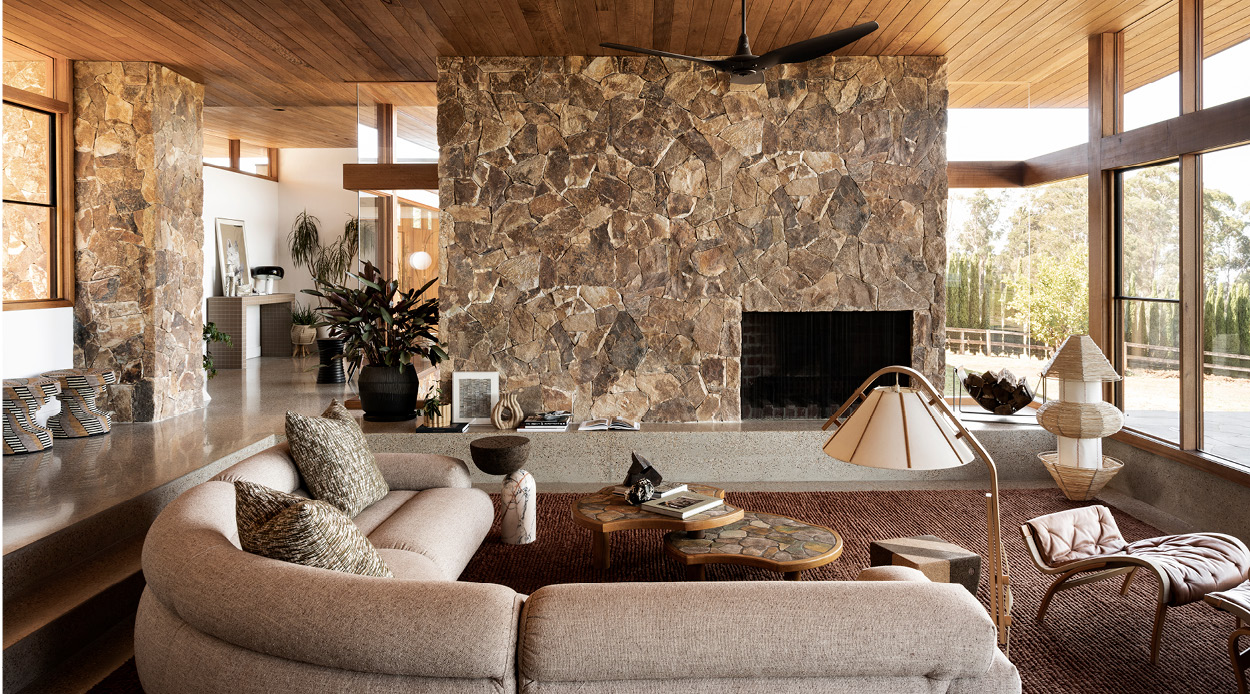
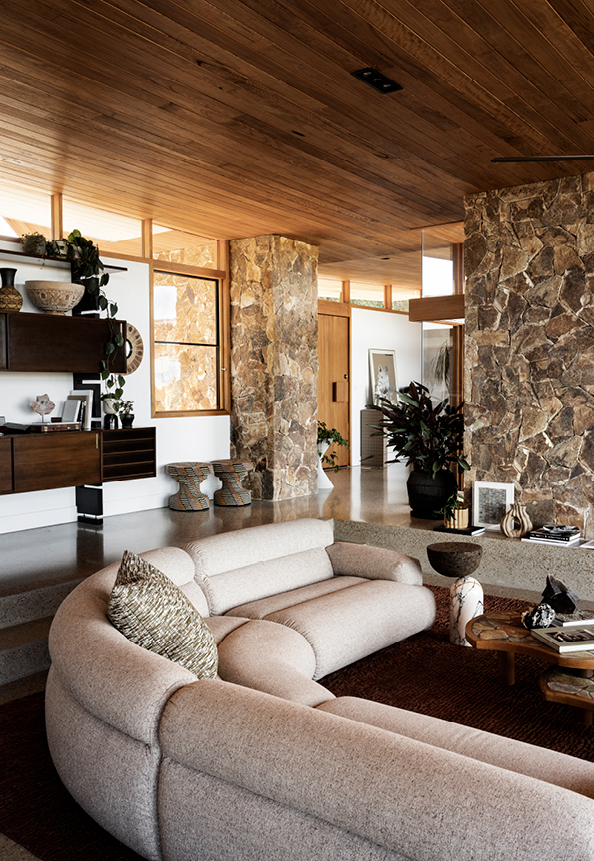
Nowhere is the design ethos of this home as clear as in the open-plan kitchen and living space. Surrounded by expansive windows, an impressive stone-clad fireplace takes centre stage, while a cleverly sunken lounge brings residents to the same level as the earth outside, which has the compelling effect of drawing nature in. In fact, this was something that interior designer Lisa Luppino endeavoured to do in every aspect of Red Crest’s interiors — forging a strong connection between the home and its natural surroundings via meticulous materials and spaces that maximised the environment.
“Simone Haag was brought in for the final styling and decorative touches, creating balance between the home’s mid century modern vibe and the contemporary requirements of its residents.”
Renowned interior expert Simone Haag was brought in for the final styling and decorative touches, creating balance between the home’s mid century modern vibe and the contemporary requirements of its residents. Through a selection of carefully sourced, vintage pieces (including a Morentz coffee table found in the Netherlands that mirrored the hues of the landscape, a shelving unit from eModerno that worked to showcase the owners’ records and curios, and a series of Japanese pendants), alongside a variety of new additions too, Haag was able to bring depth and personality to Red Crest’s array of spaces, elevating their material palette with a more curated, bespoke feel. Again, she also played on the idea of bringing the natural world inside via abundant foliage, used throughout the home to deepen its connection with its jaw-dropping setting.
Ultimately, Red Crest House is a testament to the collaborative design effort that brought it to life. By honouring the land on which this home stands and celebrating its colours, textures and forms, the architects, designers and stylists have created a calm, cohesive residence that seamlessly integrates the built environment with nature.
“Ultimately, Red Crest House is a testament to the collaborative design effort that brought it to life.”
From its clean, simple architecture to its warm, earthy interior to its perfectly put-together furnishings, all set against an Australian landscape that would stop anyone in their tracks, this home is an ode to the creative fusion of elements that, together, create a harmonious (and timeless) whole. Every aspect of this architectural masterpiece speaks to a reverence for nature and a commitment to creating spaces that resonate with warmth, authenticity and beauty, and one can only imagine the feeling of basking within this home’s transcendent beauty, as the setting sun casts a warm glow over the Dandenong Ranges.
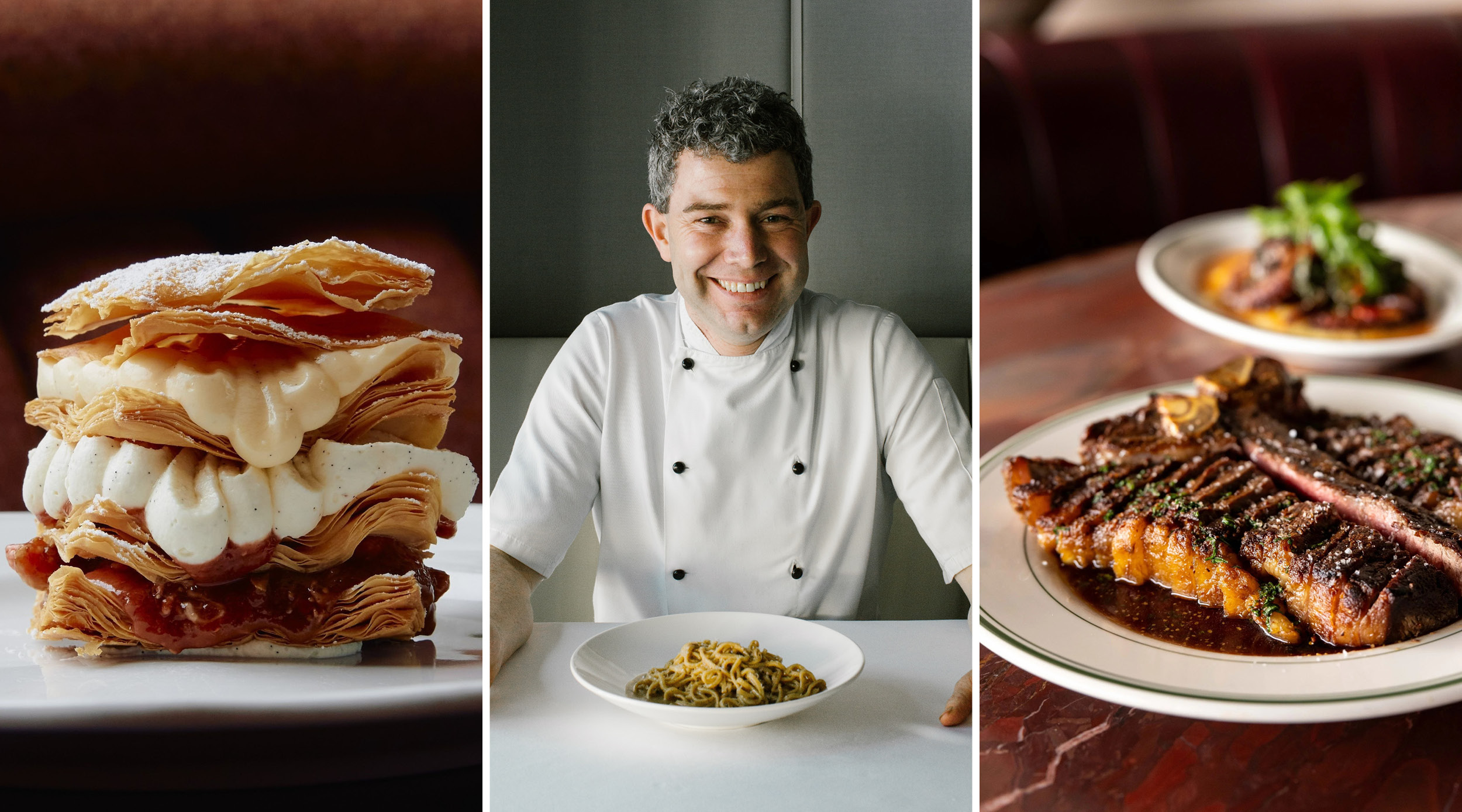
For more than 16 years, Gavin Doyle has helped shape New Zealand’s modern dining landscape. Today he serves as Group Executive Chef for Foley Hospitality, overseeing a portfolio of restaurants that stretches from Auckland to Wellington and Queenstown. The role requires equal parts culinary leadership and logistical choreography, with Doyle moving between kitchens including SOUL Bar & Bistro, Andiamo, Jervois Steak House, Somm Wine Bar & Bistro, The Brit, Shed 5, Pravda Café & Grill, working closely with the chefs leading each venue.
Doyle’s culinary story began in Dublin, where hospitality was part of everyday life. His father spent more than forty years in the industry across hotels, restaurants and wine merchants, quietly instilling a fascination with food, wine and the way restaurants bring people together. Although he initially enrolled in a computer science degree, the pull of the kitchen proved stronger. Switching to professional cookery eventually led to a Culinary Arts degree with honours and a formative scholarship at Sydney’s famed Tetsuya.
Along the way, kitchens across the world left their mark. Time spent staging at Flour + Water sparked a deep fascination with pasta, later shaping the pasta programme at SOUL Bar & Bistro, where Doyle served as Executive Chef for many years. Travel through Europe and the United States further broadened his perspective, while early years working under Dylan McGrath in Dublin provided the discipline and standards that continue to underpin his culinary skills today.
After Hours — Gavin Doyle
Group Executive Chef, Foley Hospitality
“When I do manage to escape the kitchen, I try to eat everywhere I can, from new openings to long-standing favourites. In Auckland, Beabea’sis doing some of the best pastries and bread in town right now. I’m also a big fan of Lilian. It’s exactly what a neighbourhood restaurant should be, relaxed, confident and centred around excellent produce. I’m also keen to try Forest, everything coming out of that kitchen looks fantastic.
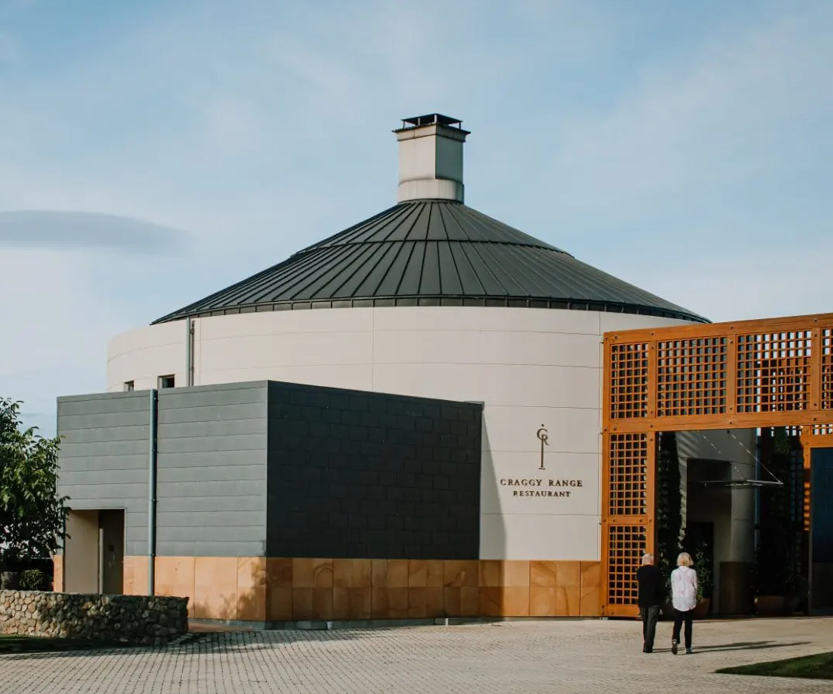
One restaurant that consistently impresses me is Craggy Range Restaurant. Casey and the team have the whole experience dialled in, exceptional food, thoughtful service and a wine programme that’s genuinely world class. Add the vineyard setting and it becomes something very special.
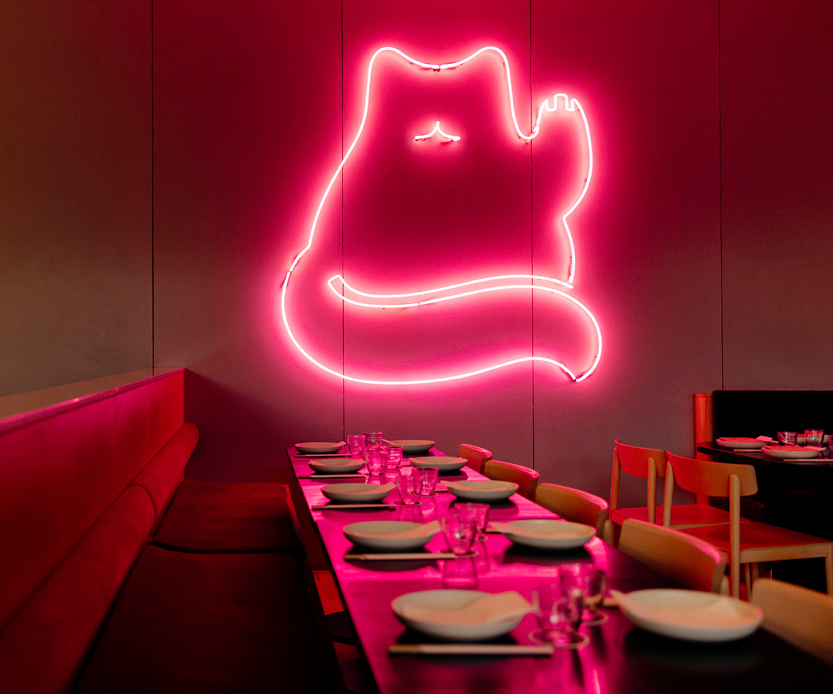
Back in Auckland, Hello Beasty is somewhere I return to regularly. The atmosphere, the service and the energy in the room are always fantastic, and the food never disappoints. It’s simply a fun place to spend an evening.
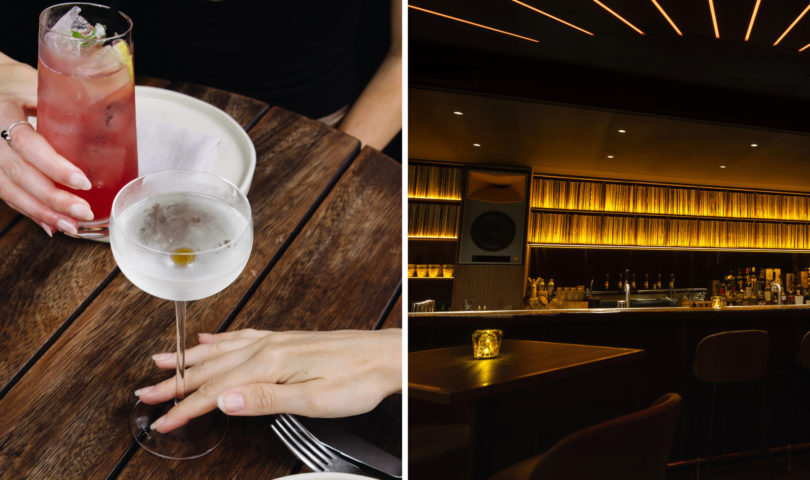
When I do get a proper break, I often head to Melbourne and make a point of visiting Gimlet at Cavendish House. It’s one of those restaurants that just gets everything right, from the room to the food to the drinks.”
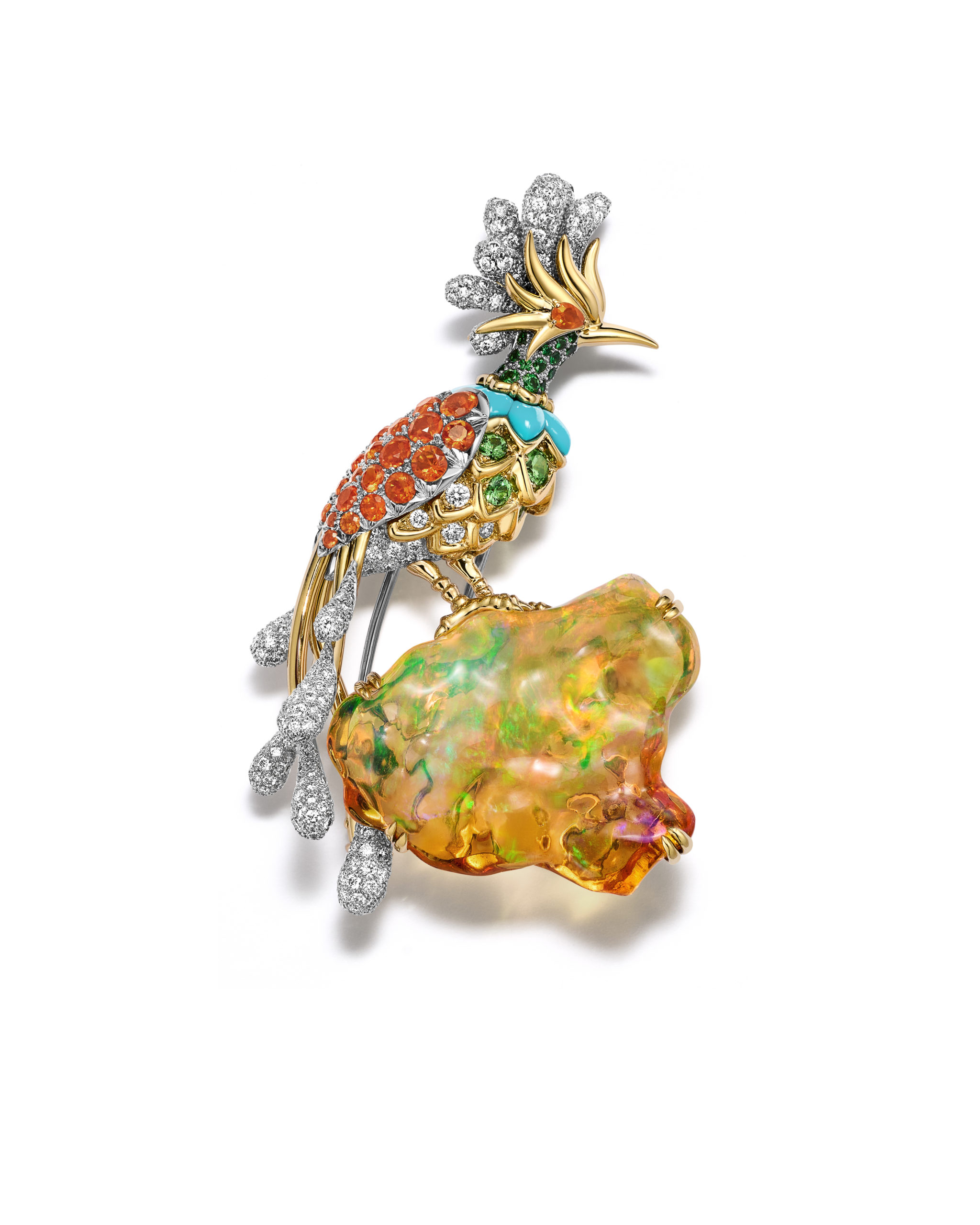
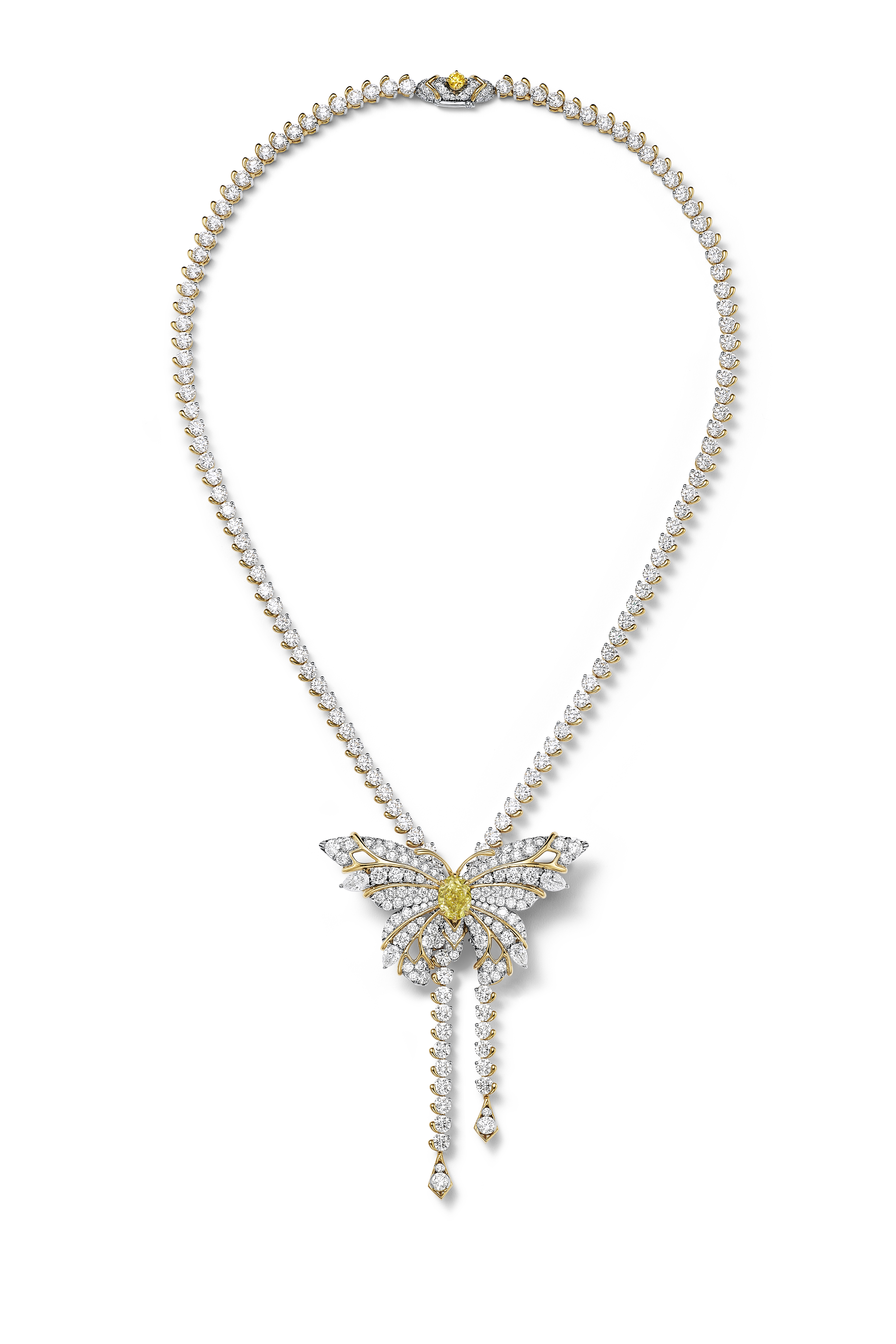
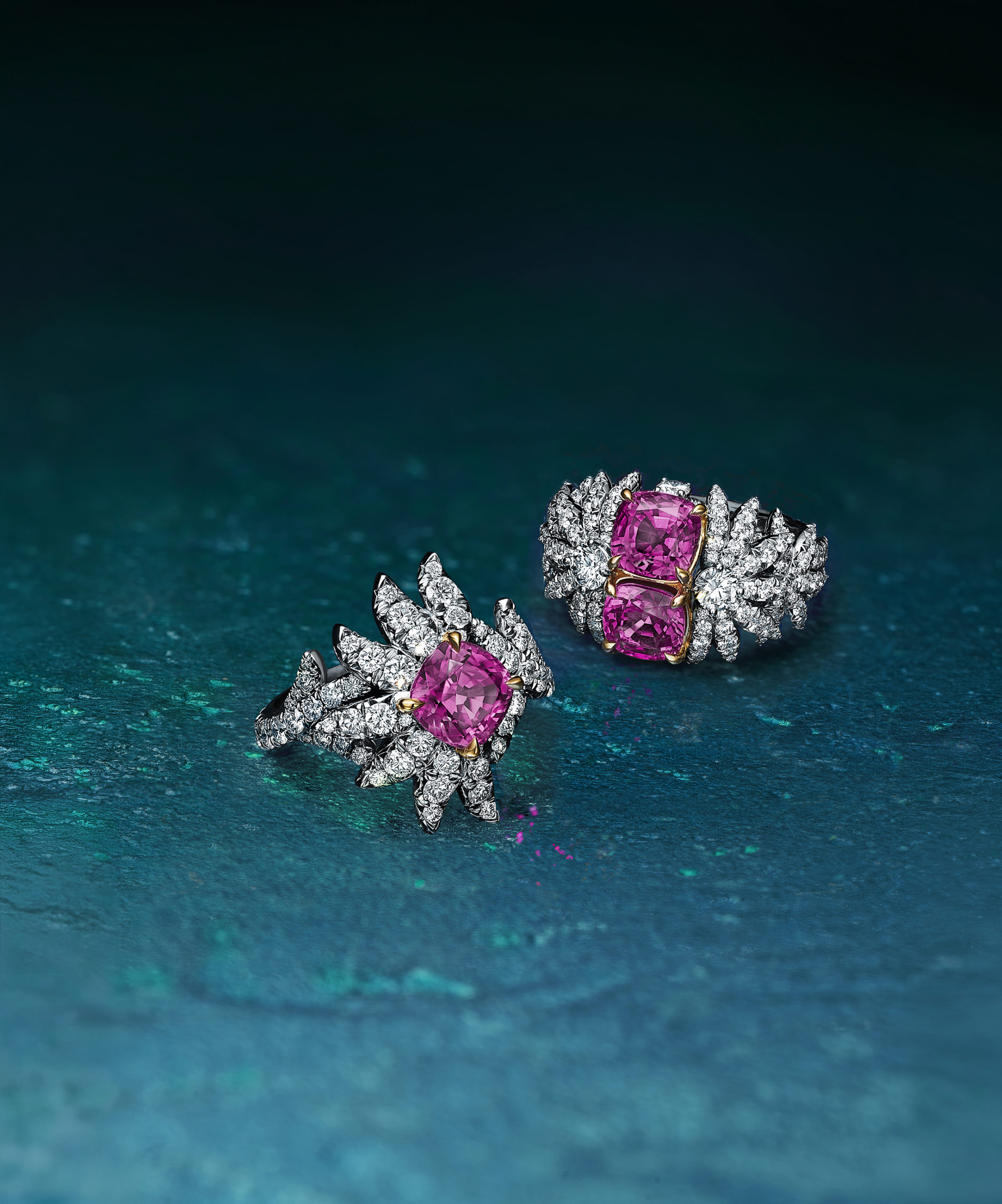
There is a particular kind of creative confidence required to return, season after season, to the same source material and find something new. Tiffany & Co. has been doing this for nearly two centuries, and with Blue Book 2026: Hidden Garden, chief artistic officer Nathalie Verdeille demonstrates that the house’s most enduring design language — the flora, the fauna, the hand-formed vines and sculpted wings of Jean Schlumberger’s extraordinary archive — remains genuinely alive rather than merely preserved.
Tiffany Blue Book 2026: Hidden Garden collection
This is Verdeille’s fourth Blue Book collection, and it arrives with the quiet assurance of a maison that has nothing to prove. Where previous releases have tested the boundaries of the house’s identity, Hidden Garden leans into it: the natural world rendered in platinum and gold, exceptional gemstones chosen not for spectacle but for specific, deliberate character.
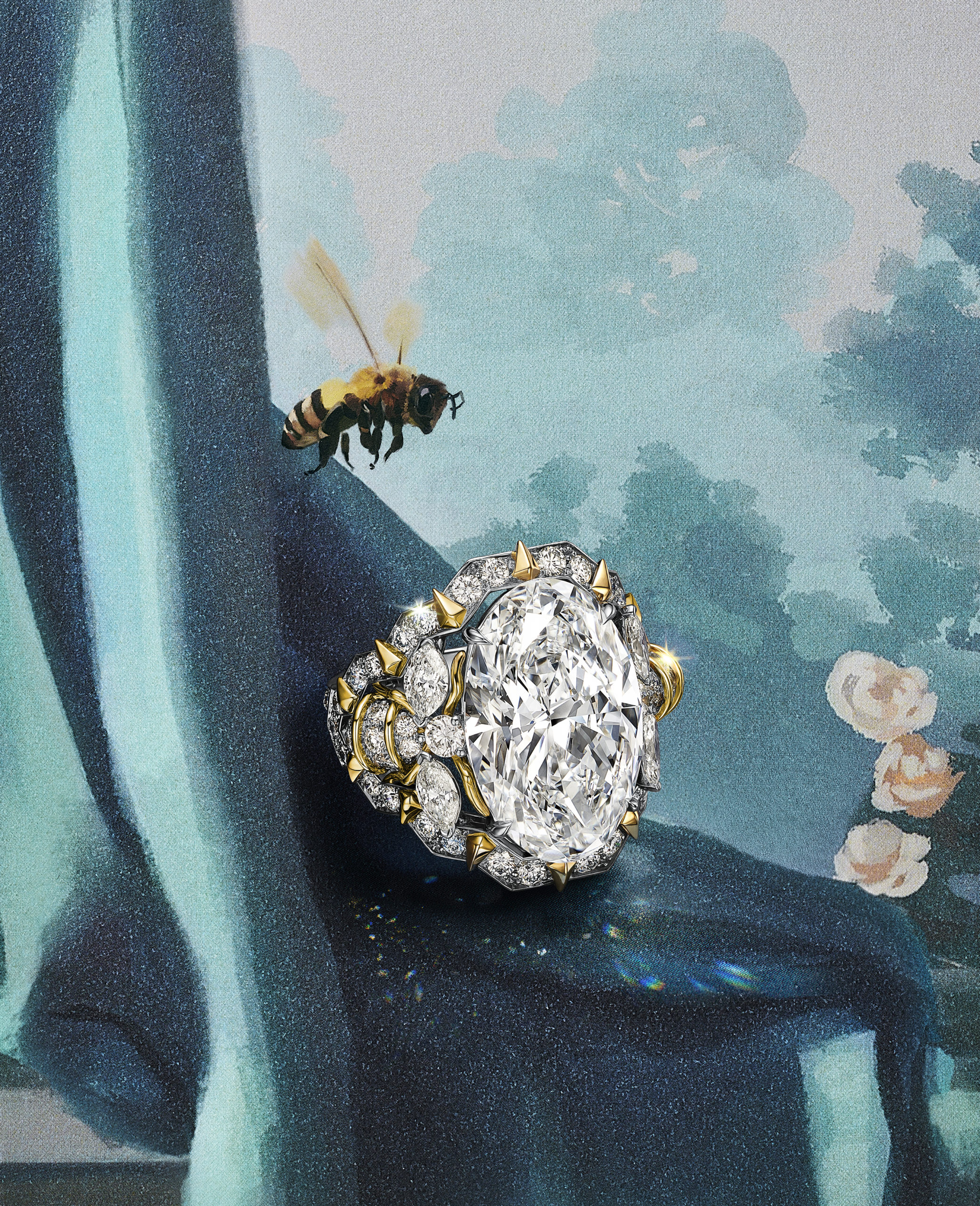
The spring launch unfolds across eleven chapters including Monarch, Butterfly, Bee, Jasmine, Bloom, Marguerite, Parrot, Paradise Bird, Bird on a Rock, Twin Bud, and Palm. Each draws from Schlumberger’s archival vocabulary and reinterprets it through Verdeille’s contemporary lens. The governing idea is transformation: not the dramatic kind, but the quiet, almost imperceptible shifts that define the natural world. A bud on the verge of opening. Wings caught mid-movement. Vines that appear to grow in real time around the wrist.
The Butterfly chapter is perhaps the most tonally complex. Unenhanced padparadscha sapphires, that rare and contested intersection of pink and orange, are set alongside Montana sapphires of a particular denim blue, a pairing that shouldn’t resolve as well as it does. The result is less illustration than impression: the fragile iridescence of wings captured in stone rather than documented in it. Select pendants detach to be worn as brooches, a nod to the house’s longstanding tradition of transformable design that functions here as more than a technical flourish. It mirrors the chapter’s own subject.
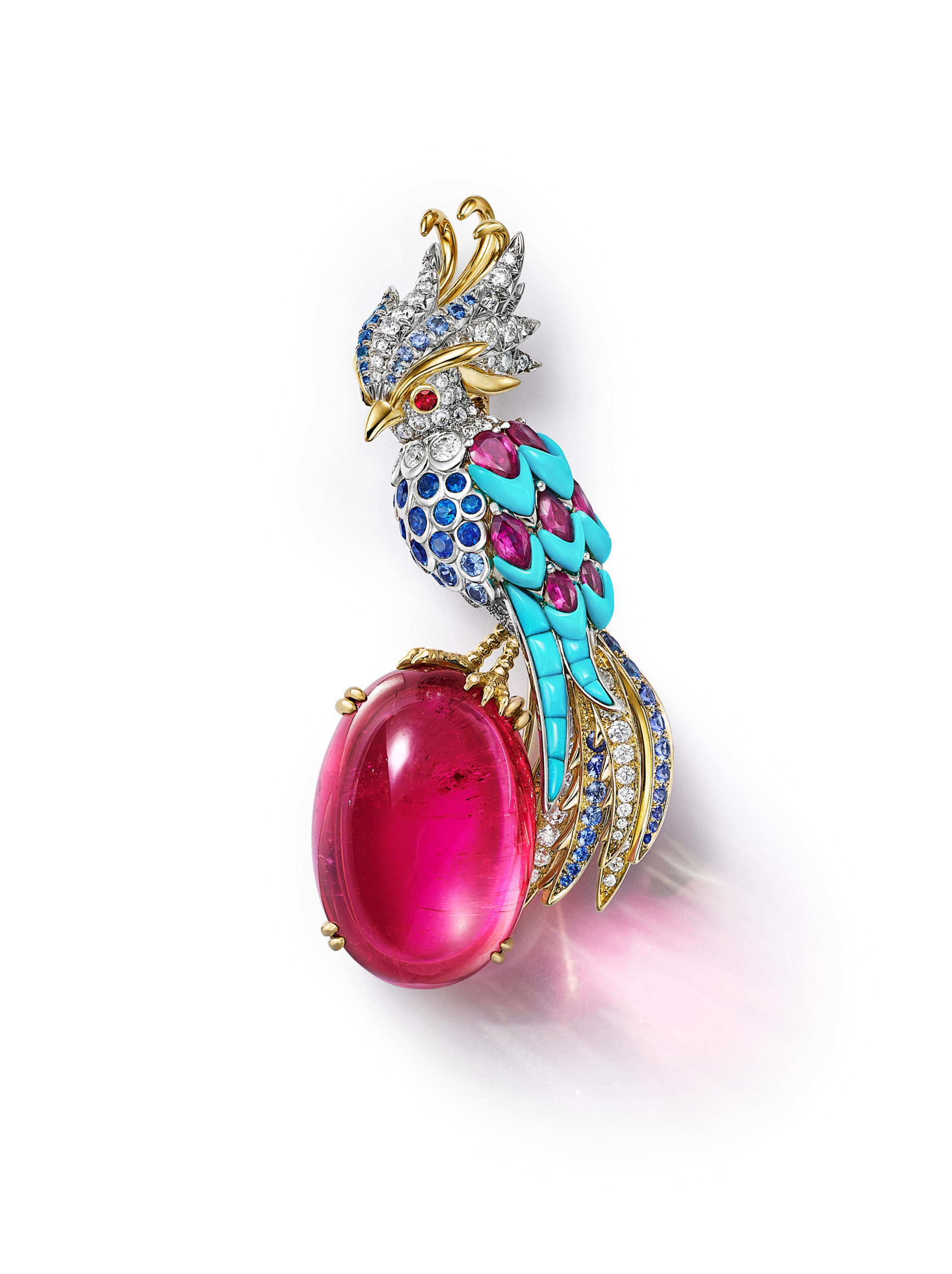
The Parrot brooches are where the collection’s technical ambition becomes most visible. Paillonné enamel, hand-applied in a painterly sequence of dark blue, duck green, and Tiffany Blue®, creates feathered surfaces whose tonal shifts evoke actual iridescence rather than its representation. This is an ancient technique, passed down through generations of Tiffany artisans, deployed here in service of something genuinely chromatic and alive. Paired with unenhanced blue and purple sapphires, the silhouette achieves the particular balance of specificity and fantasy that defined Schlumberger’s original 1960s parrot brooches.
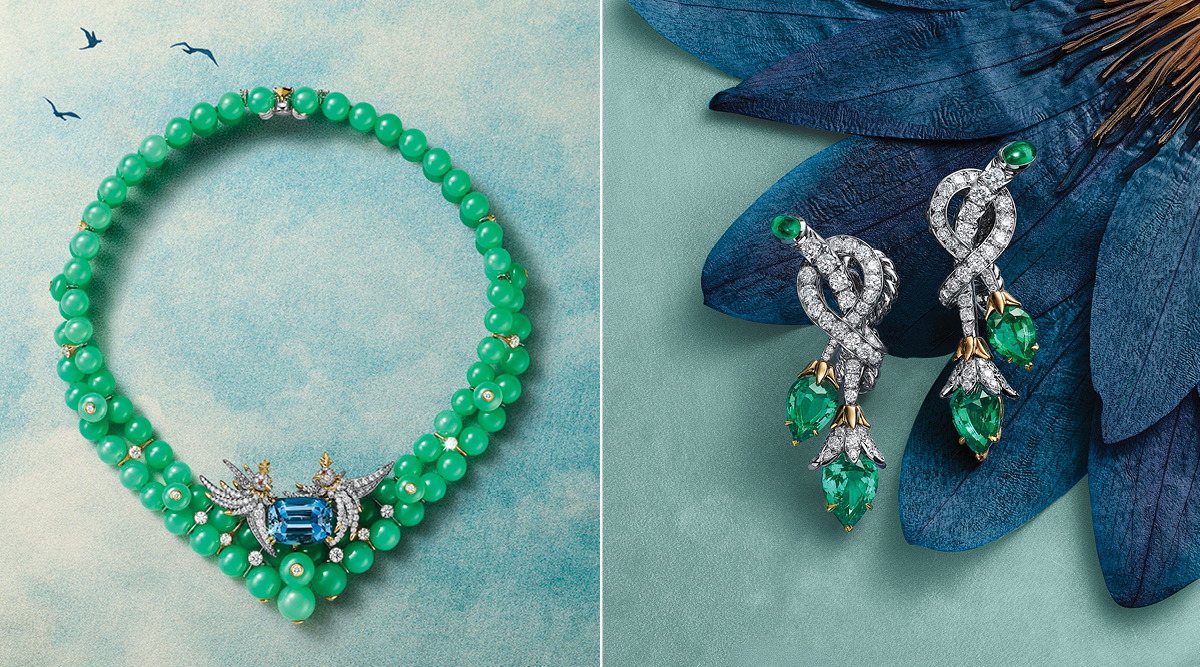
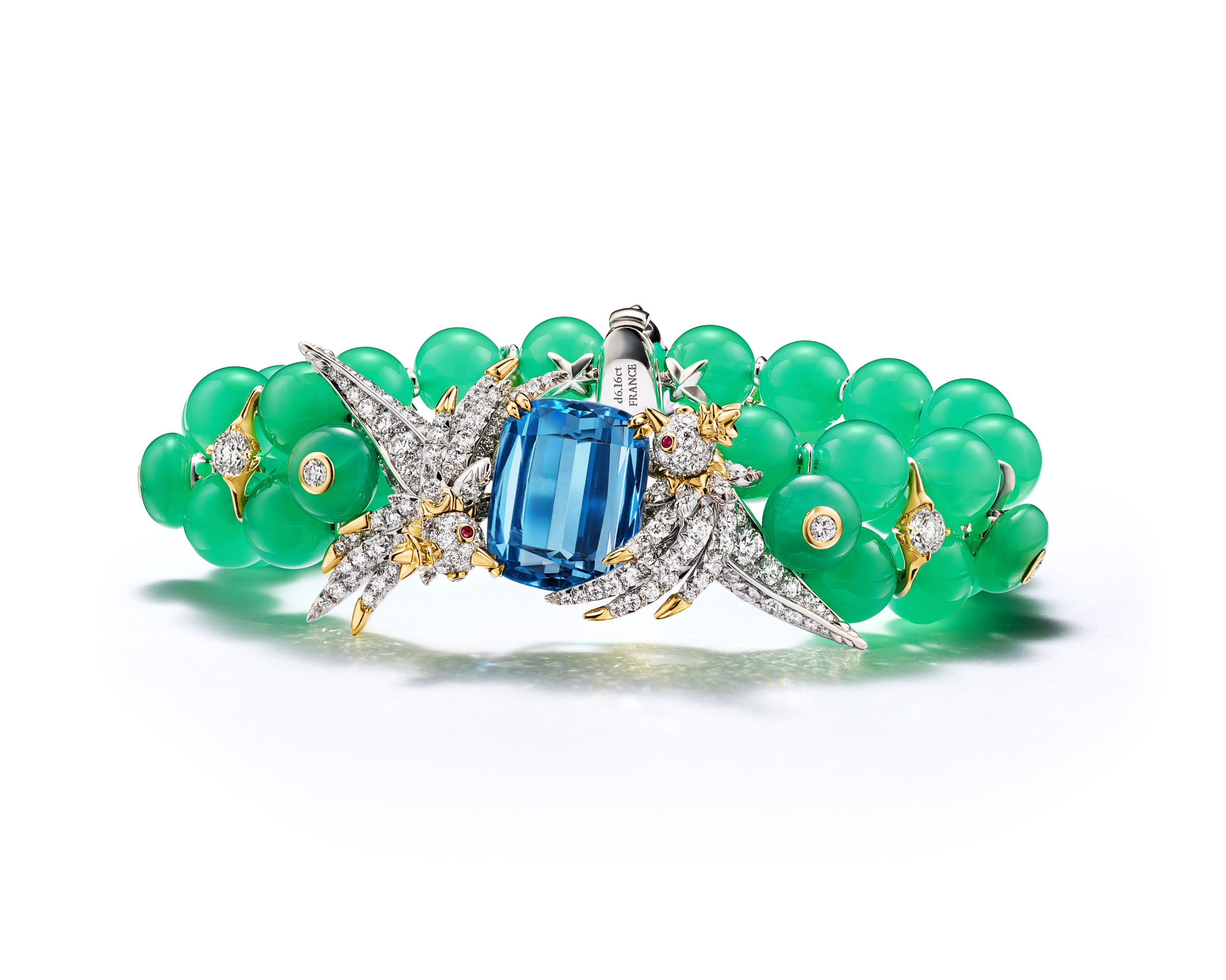
Bird on a Rock, one of Schlumberger’s most celebrated designs, is reimagined here with cushion-cut Santa Maria aquamarines from Brazil, their saturated blue deepened further by custom-cut chrysoprase beads in vivid green. The transformable necklace at the suite’s centre features an aquamarine of over 22 carats; worn as a brooch, it becomes something more intimate. The scale shifts, and so does the relationship between the piece and the person wearing it.
Blue Book 2026: Hidden Garden will continue through summer and fall expressions, each introducing new chapters. What the spring launch establishes is a collection that understands its own inheritance clearly enough to be generous with it: not reverential in a way that calcifies, but fluent in a way that opens forward.
The Aotearoa Art Fair returns to Auckland’s waterfront from 30 April to 3 May, and if you’re planning to spend your days immersed in the country’s most compelling contemporary art, you’ll want to eat accordingly. The Britomart and waterfront precinct has you well and truly covered, with five restaurants that between them handle everything from a long Italian lunch to a sharp Japanese cocktail, all within easy walking distance of the fair. Here’s where to book.
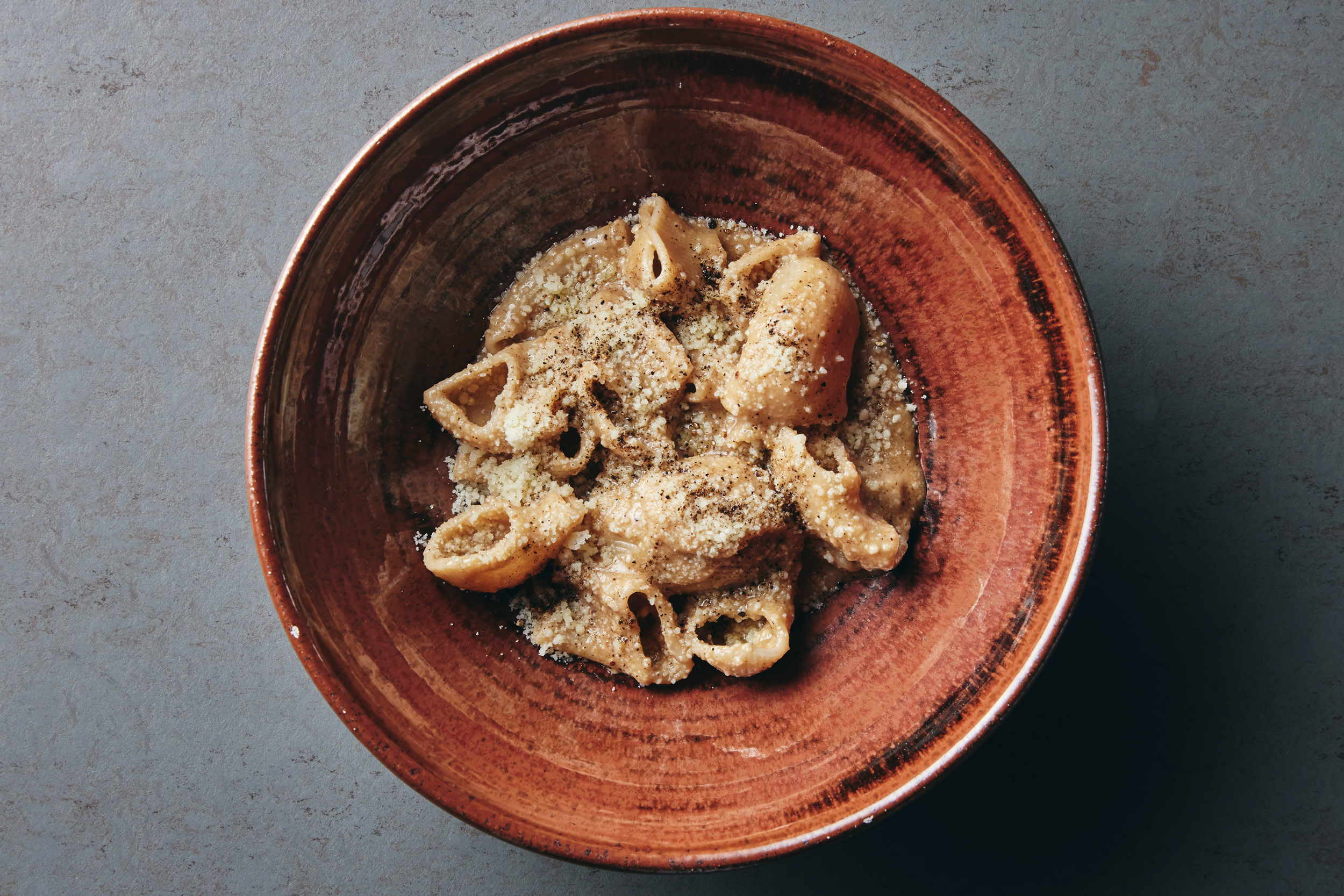
The anchor of Britomart’s dining scene and the restaurant that still sets the standard for produce-driven eating in the city centre. Amano’s menu shifts with the seasons and treats its ingredients with serious intention. The pasta programme alone is reason enough to book: think Hawke’s Bay suffolk lamb ragu with pappardelle, scampi chitarra, and a cacio e pepe that knows exactly what it’s doing. Whether you’re after a considered dinner after an evening preview or a relaxed lunch between gallery sessions, this is the table that consistently delivers. Book here.
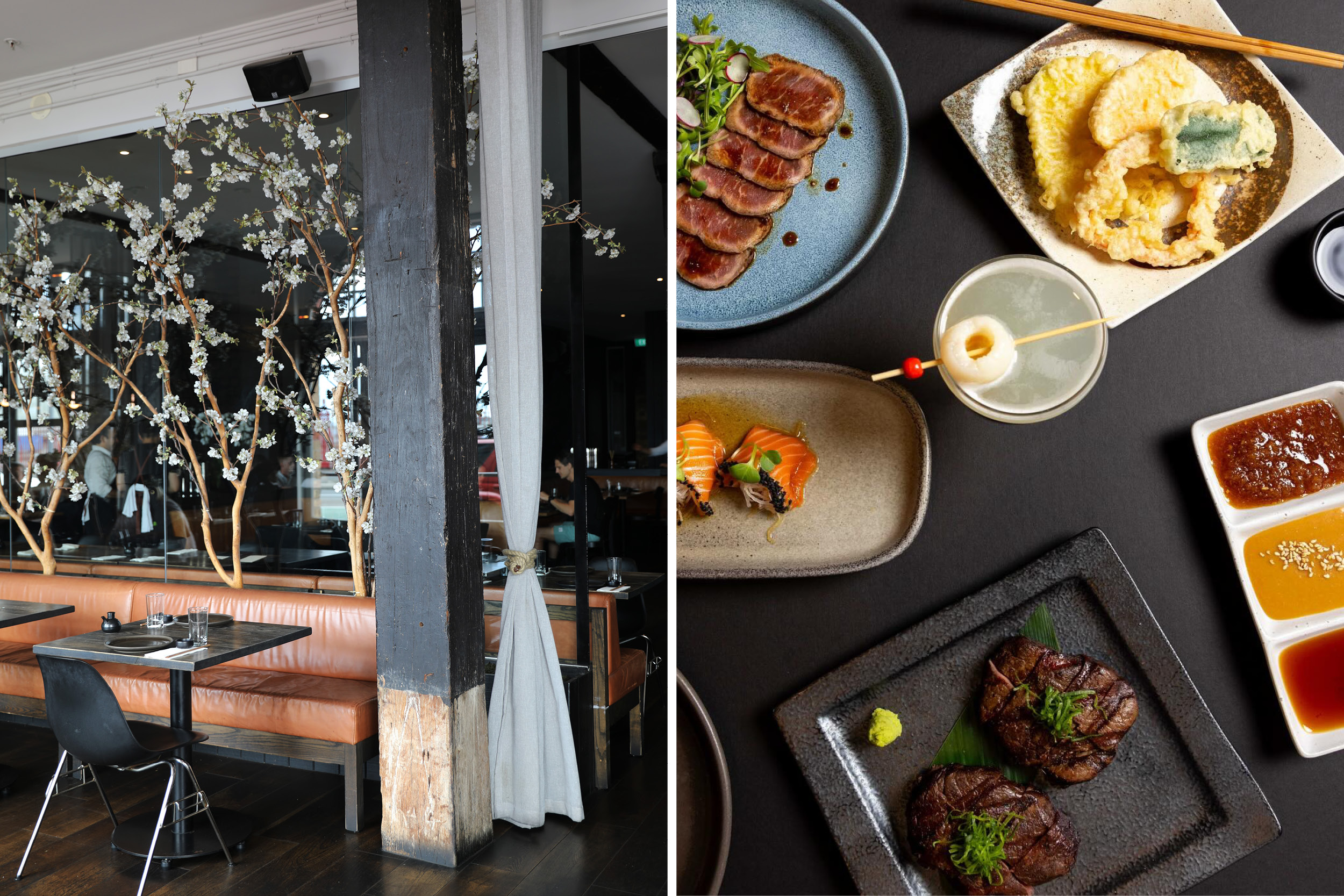
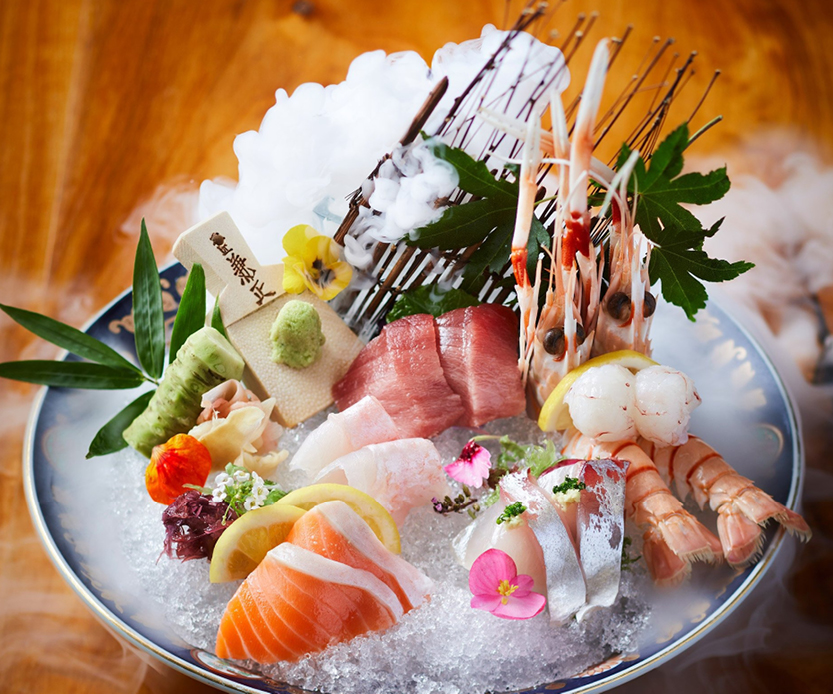
When the art has sharpened your senses, and you want a meal that matches, Ebisu is the answer. Ebisu’s menu is precise, generous, and endlessly rewarding, whether you’re working through a sashimi selection or settling in with something from the robata grill. It’s the kind of place built for sharing, where plates arrive and the table gets involved. The cocktail edit here deserves particular attention too. It’s one of the more quietly accomplished drinks lists in the precinct, and the kind of place where one round becomes two without anyone complaining. Book here.
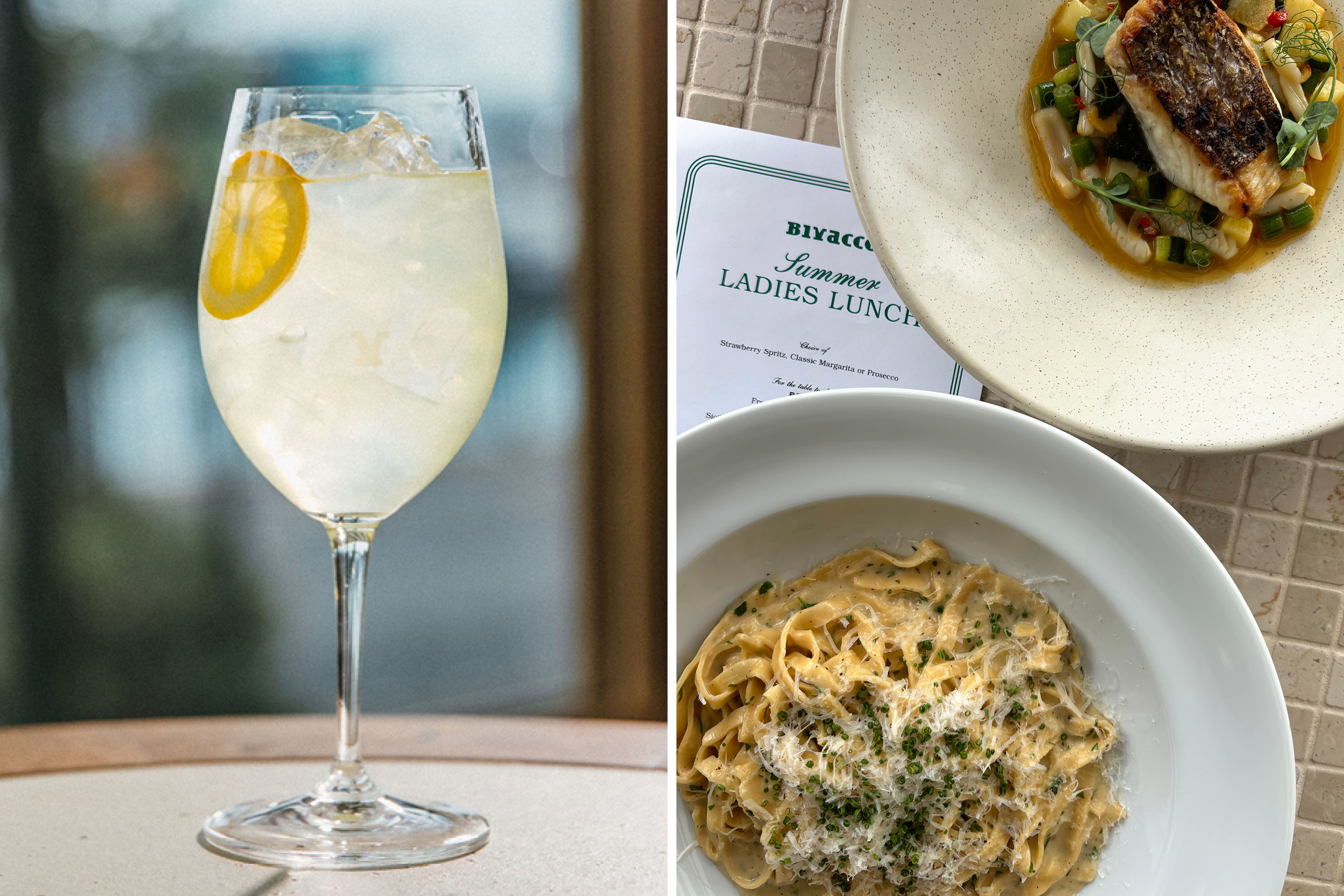
Situated right on the water, and the one with the most options for building an Art Fair day around. For Thursday and Friday art fair goers, Bivacco’s aperitivo hour is made for you: running from 4pm to 6pm with $15 margaritas, $15 limoncello spritzes, $10 Peronis, and complimentary bites. It’s the waterfront equivalent of easing into an evening the Italian way. A spritz in hand, a few plates on the table, and absolutely no rush.
For those visiting over the weekend, Bivacco’s Ladies’ Lunch on Saturdays is worth planning for. A three-course Italian-style menu with cocktails for $49 per person, available from 11am to 3pm. Book it before or after the fair and turn a Saturday gallery visit into something significantly more indulgent. Book here.
A light-filled conservatory setting in the heart of Britomart that feels a world away from the bustle outside. Ortolana’s menu is built around seasonal, locally sourced produce, and every dish is beautifully executed and designed for sharing over a long table. It works just as well for a late brunch with friends as it does for a relaxed dinner after a day on your feet, and the wine and cocktail list is pitched perfectly for either occasion. Book here.
If you’re after something sharper and more spontaneous, Bar Ziti is the answer to the post-fair wind-down. The happy hour runs Monday to Friday from 4pm to 6pm and all day on Sundays, which aligns neatly with an Art Fair exit strategy. With cocktails, wines, and pizzas all at happy hour prices, it’s the kind of offer that turns a quick drink into a very good evening. No bookings required.
The Aotearoa Art Fair runs from 30 April to 3 May at the Auckland waterfront.
For most of us, the day begins with two imperatives. Coffee, and a fierce foaming blast of mint so sharp it could strip paint. The ritual is so ingrained that we rarely question it. If your mouth is not tingling and frothing, have you really brushed your teeth at all?
That bracing minty hit is not accidental. It is a legacy. Early 20th-century toothpaste brands trained consumers to associate flavour and foam with efficacy. The stronger the sensation, the more convincing the promise. Fresh breath became synonymous with oral health. Our senses over took any scientific reasoning.
Yet dentists will tell you something far less glamorous. Toothpaste’s primary role is not to overwhelm the mouth but to support the mechanical action of brushing. What matters is how well the bristles reach the tooth surface, how gently plaque is lifted, and how carefully enamel and gums are treated over time. Excess foam can create the illusion of thoroughness. You feel clean, therefore you assume you are.
This is where Ecostore enters the morning routine, not as a moral position but as a practical one. Long regarded as one of New Zealand’s most trusted authorities in responsible home and body care, the brand approached oral care by quietly removing the theatrics. No SLS to manufacture foam. No triclosan. No parabens. No artificial sweeteners masquerading as freshness. Instead, plant and mineral based ingredients selected for their performance and their compatibility with the body. Native kānuka oil and magnolia bark extract support gum health, while peppermint and clove essential oils provide a clean finish without the aggressive sting that has long been mistaken for effectiveness.
For anyone conditioned to believe that a mouthful of foam signals a professional level clean, brushing with Ecostore can feel like rewriting an old script. The foam is restrained, the flavour measured, and the sink no longer resembles a foam party. But it’s what is happening inside the mouth that tells a more compelling story. Gums feel calm rather than sensitised. Teeth feel polished rather than scoured. The freshness that remains is clean and balanced, not chemical. It prompts a revealing question. Have we spent decades equating that foaming sensation with health simply because advertising told us to?
The range also reflects a pragmatic understanding of modern consumers. Ecostore’s Whitening with Fluoride option acknowledges that many people still want the enamel strengthening and cavity protection fluoride offers, while the formula itself remains low abrasive and uses baking soda to brighten teeth gently rather than strip them back with aggressive polishing agents. For those who prefer to avoid fluoride, that option remains within the range. The intelligence lies in the flexibility. It recognises that what we once accepted as the gold standard of cleanliness was often designed to appeal to our instincts rather than our long term wellbeing.
Not all toothpaste is created equal. Some rely on sensation to sell the illusion of effectiveness. Others rely on careful formulation and a quieter kind of confidence. The question is whether we are ready to choose the option that is clearly better for our teeth, and arguably better for the planet too.
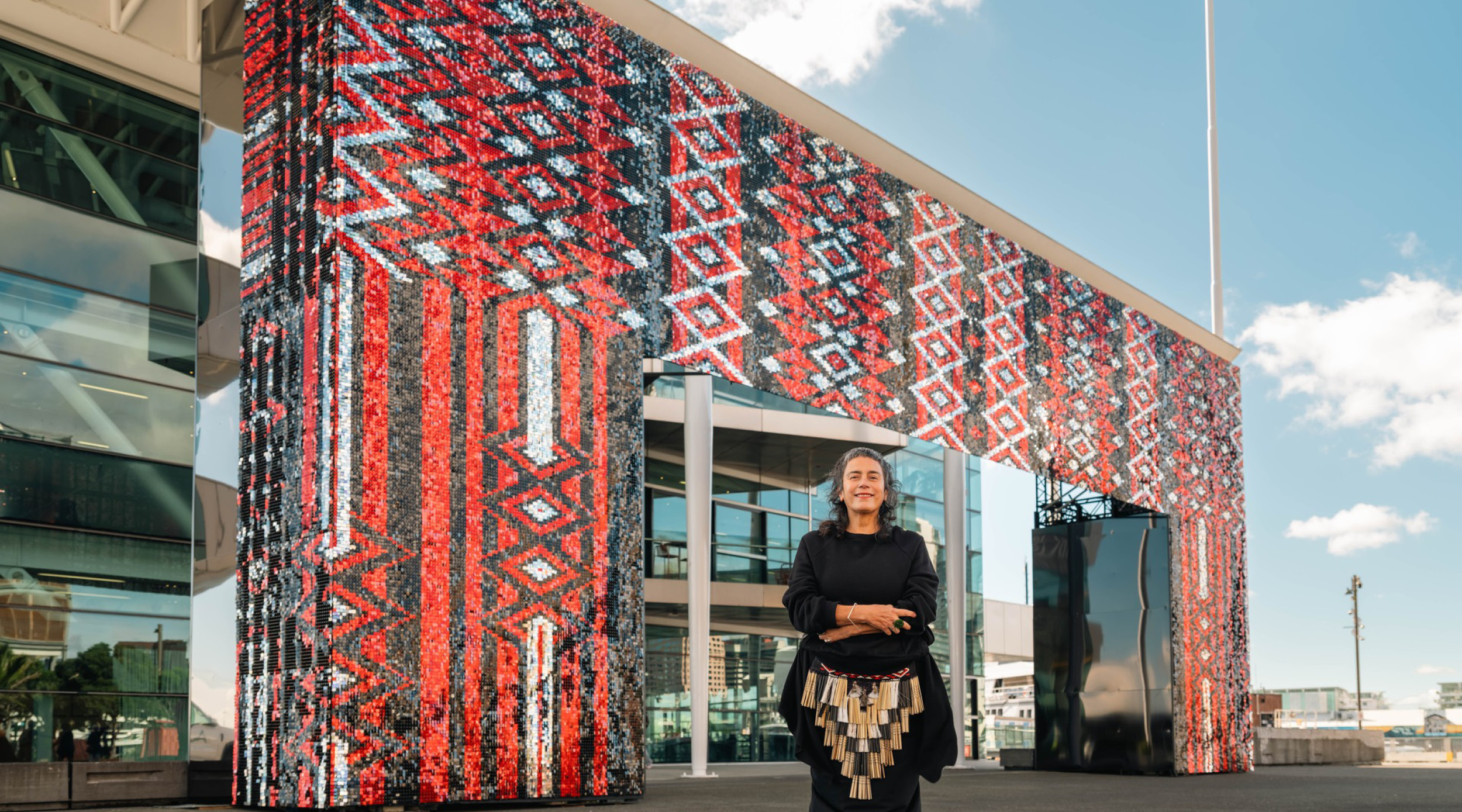
The 2026 Aotearoa Art Fair is the biggest yet, with 65 galleries from 25 countries and more than 200 works on display. Auckland is fast becoming a serious stop on the international contemporary art circuit. Held at the Viaduct Events Centre from 30th April to 3rd May, this year’s show holds space for the Māori and Pacific practices that give it genuine cultural specificity alongside blue-chip international names. Solidifying this is Lisa Reihana’s ANZAC, an installation eight metres high and twenty metres long, composed of 180,000 shimmering discs, which surround the entrance to the fair. Reihana, who represented New Zealand at the 2017 Venice Biennale, has spent more than three decades using film, photography and installation to centre Māori and Pacific perspectives in history, and the work is a fitting threshold to what lies inside.
Below are the booths and works worth prioritising.
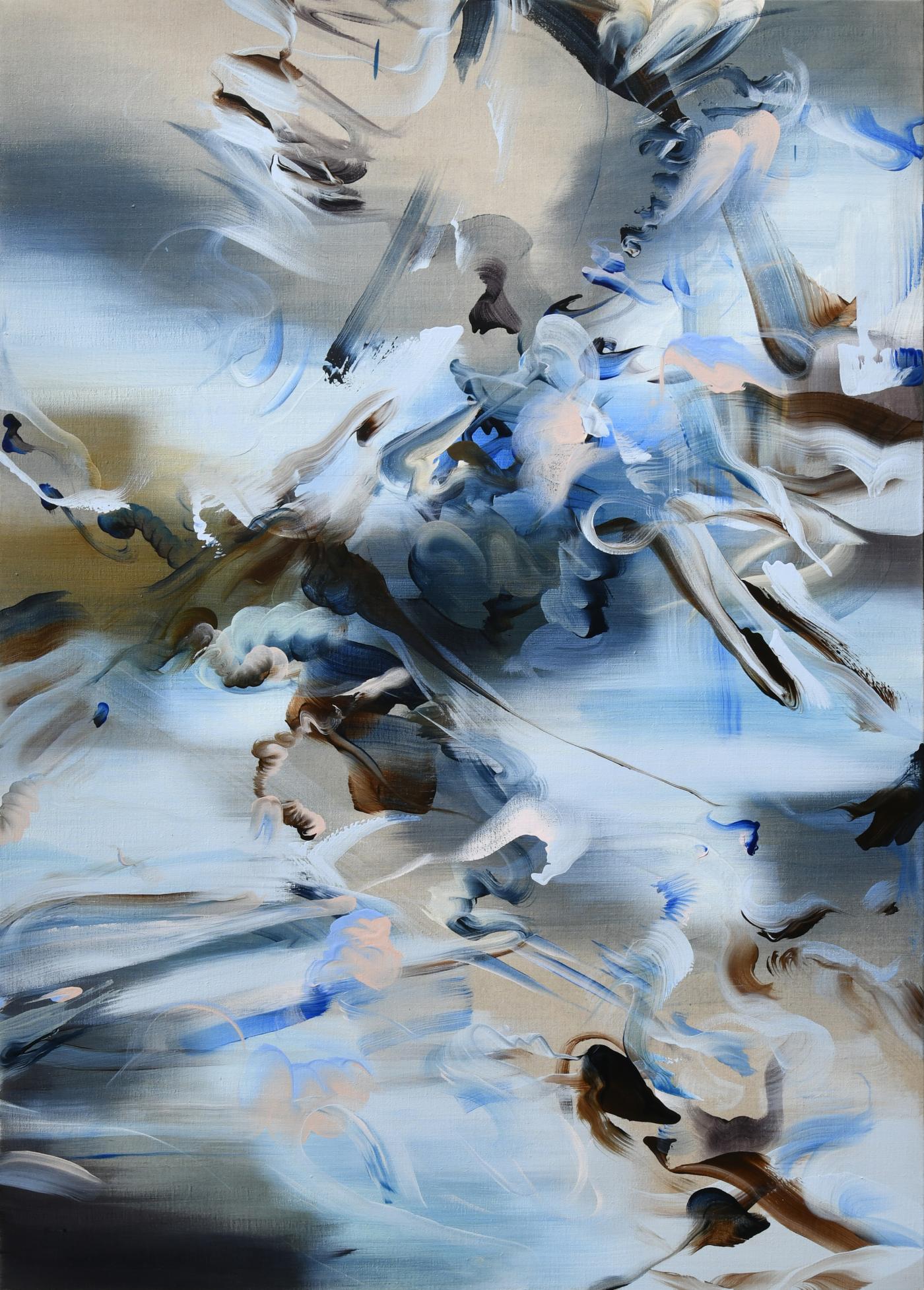
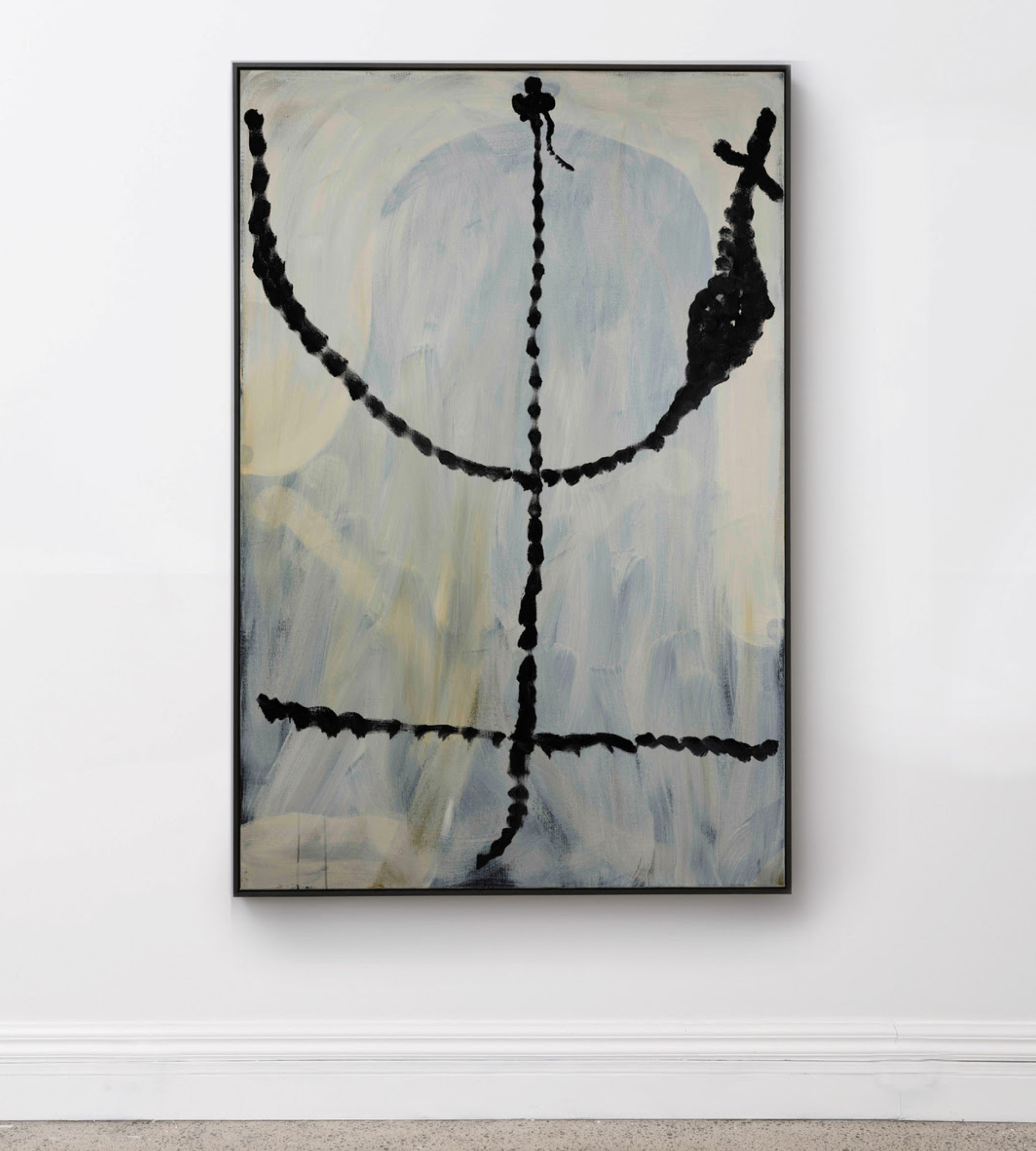
Denizen’s current issue cover star, Grace Wright, shows with Gow Langsford, one of the fair’s anchor presentations, and her large-scale acrylics on linen are worth seeking out up close. Commanding and weather-like, these are paintings in a state of perpetual motion. The booth also pairs international sculptural weight from Lee Bae (South Korea) and Tony Cragg (UK) with Claudia Kogachi’s canvases, which layer personal narrative with a confident contemporary visual idiom.
Grace Wright, Geometrical Reality, 2025, acrylic on linen
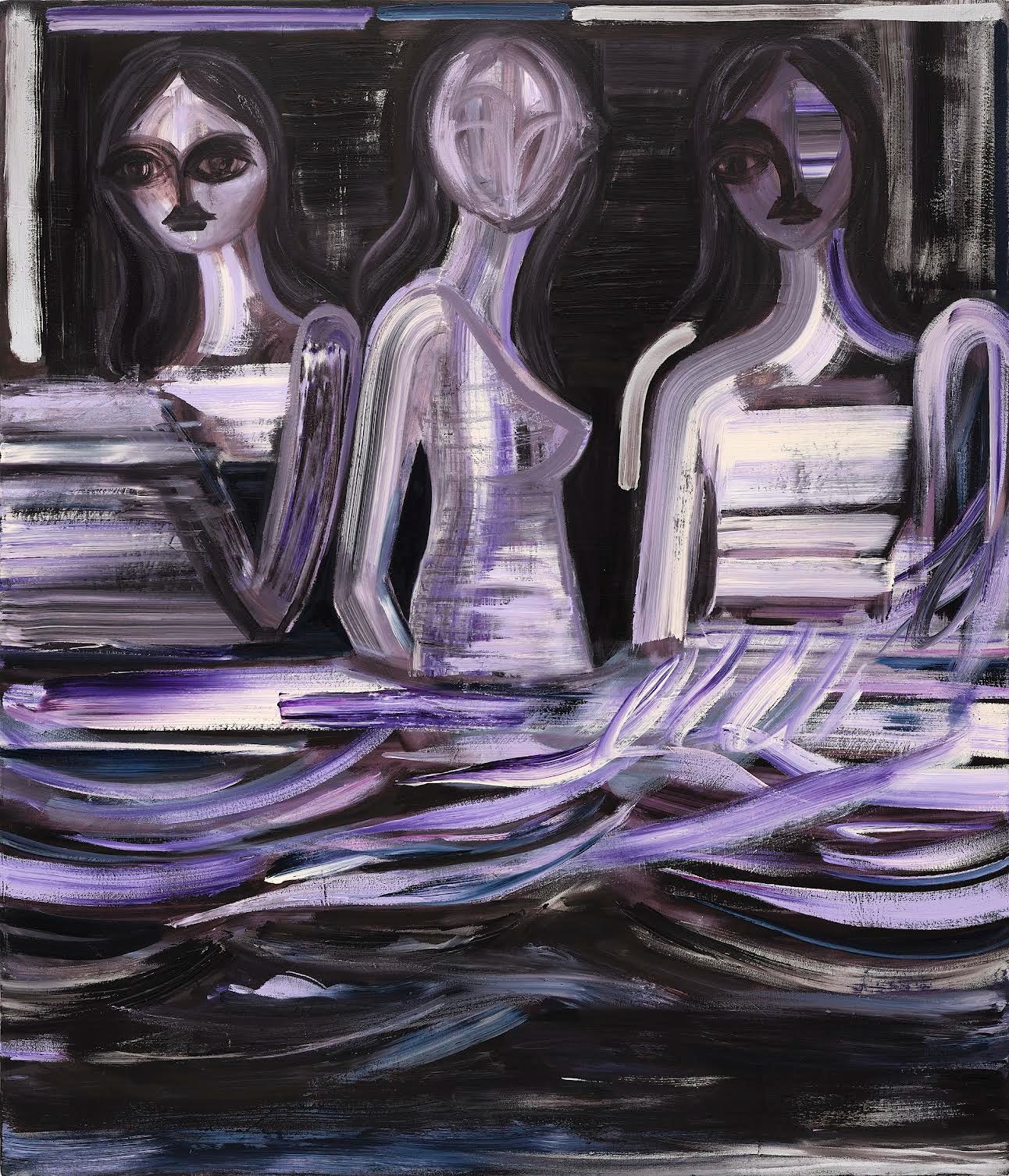
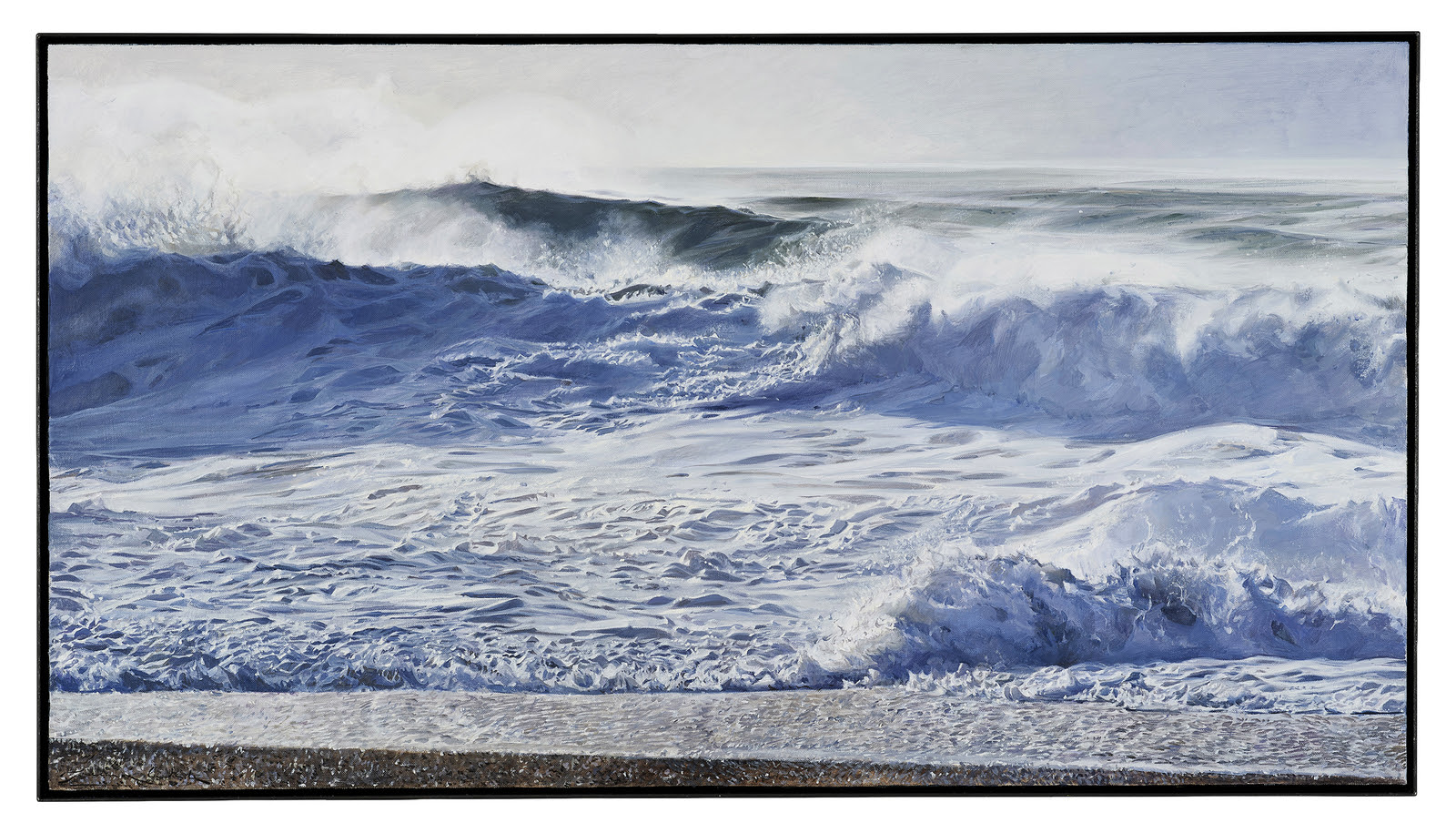
A considered group presentation across four artists. Natasha Wright’s large-scale oils and works on paper deal directly with the female form and gaze. Julia Holderness brings hand-painted ceramics and watercolours drawn from her studio archive, quietly revisionist work in the history of female painting in Aotearoa. Simon Kaan (Kāi Tahu, Kāti Mamoe, Waitaha) offers meditative paintings of waka set against dissolved horizons of sea and sky, while Freeman White rounds out the booth with bold, animated seascapes.
Natasha Wright, Sway, 2026 Oil on canvas 1525 x 1780 mm, Sanderson
One of the more intriguing group presentations at this year’s fair. The Föenander booth features new work by Israel Tangaroa Birch, Lottie Consalvo, Mbali Dhlamini, Anton Forde, Nick Herd, Roger Mortimer, Neal Palmer, Monica Rani Rudhar, Vipoo Srivilasa and Jessica Swney. A broad cross-section of contemporary practice that is worth exploring.
Israel Tangaroa Birch, Poutama Tree of Knowledge, Föenander Galleries
Lottie Consalvo, Reverent Tree, 2026, acrylic on canvas, Föenander Galleries
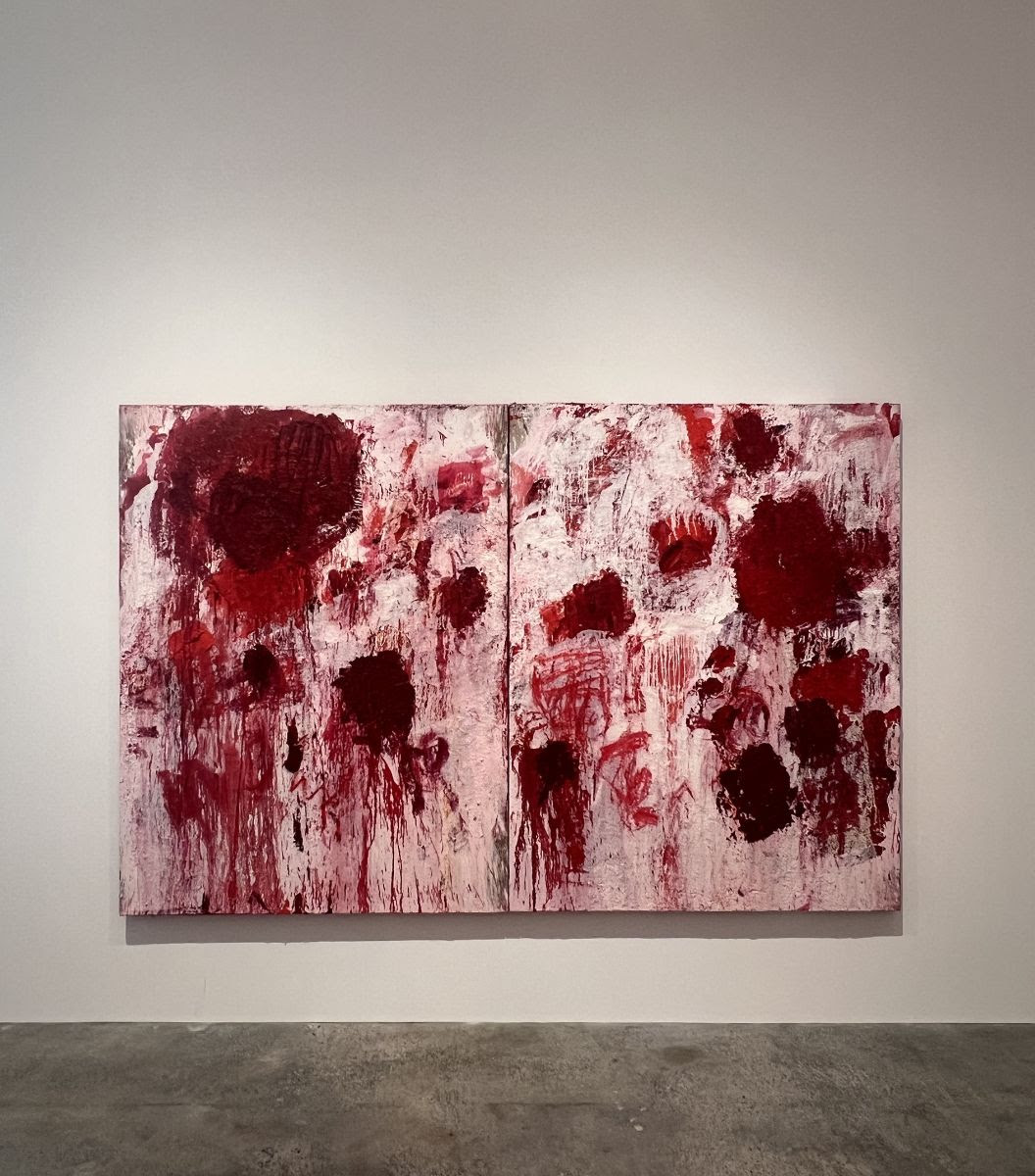
A solo presentation of new large-scale paintings by Judy Millar, one of the most consistently compelling abstract painters working in Aotearoa. Millar’s practice critically re-examines the gestural tradition she operates within, producing work that is both physically commanding and conceptually precise. These are paintings that require real space to be read properly; the fair setting is ideal.
Judy Millar in her studio with new works for the Aotearoa Art Fair 2026, Michael Lett
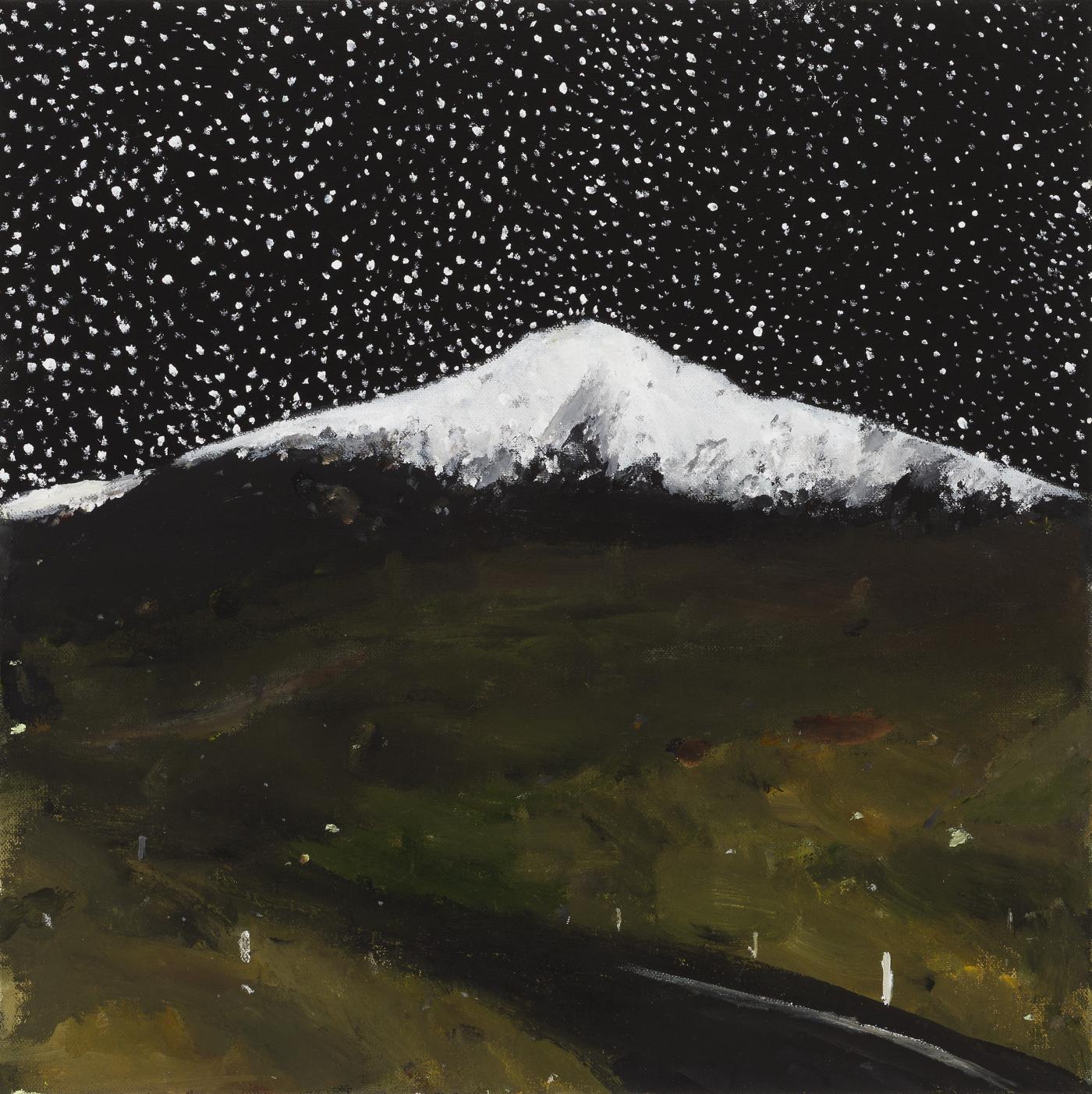
Ponsonby’s {Suite} brings something genuinely unusual: 50 small paintings by Richard Lewer, the Hamilton-born, Melbourne-based artist who has built an extraordinary reputation as a contemporary social realist on both sides of the Tasman. The full compendium is a kind of snapshot social commentary: personal, precise and frequently surprising. Following major institutional shows at the Geelong Gallery and National Gallery of Australia, this is a significant moment to encounter Lewer’s work in New Zealand.
Richard Lewer, Drive to the Snow, 2026, {Suite} Galleries
A strong showing across painting and sculpture with international reach. Aida Tomescu’s large-scale oils on Belgian linen are richly material and chromatic, shown alongside new work from Erin Lawlor, Lucienne O’Mara, Bill & Pip Culbert, Matthew Allen and Tomislav Nikolic. Germany-based Jan Albers also features through the Fox Jensen McCrory arm. A booth for those who respond to painting with formal rigour and strong material intelligence.
STARKWHITE’s presentation for the 2026 Aotearoa Art Fair brings together key artists from home and abroad in a sumptuous exploration of the sculptural object. A large central platform supports a metropolis of sculptural work by artists including Mikala Dwyer, Anselm Reyle, Seung Yul Oh, and Mark Whalen.
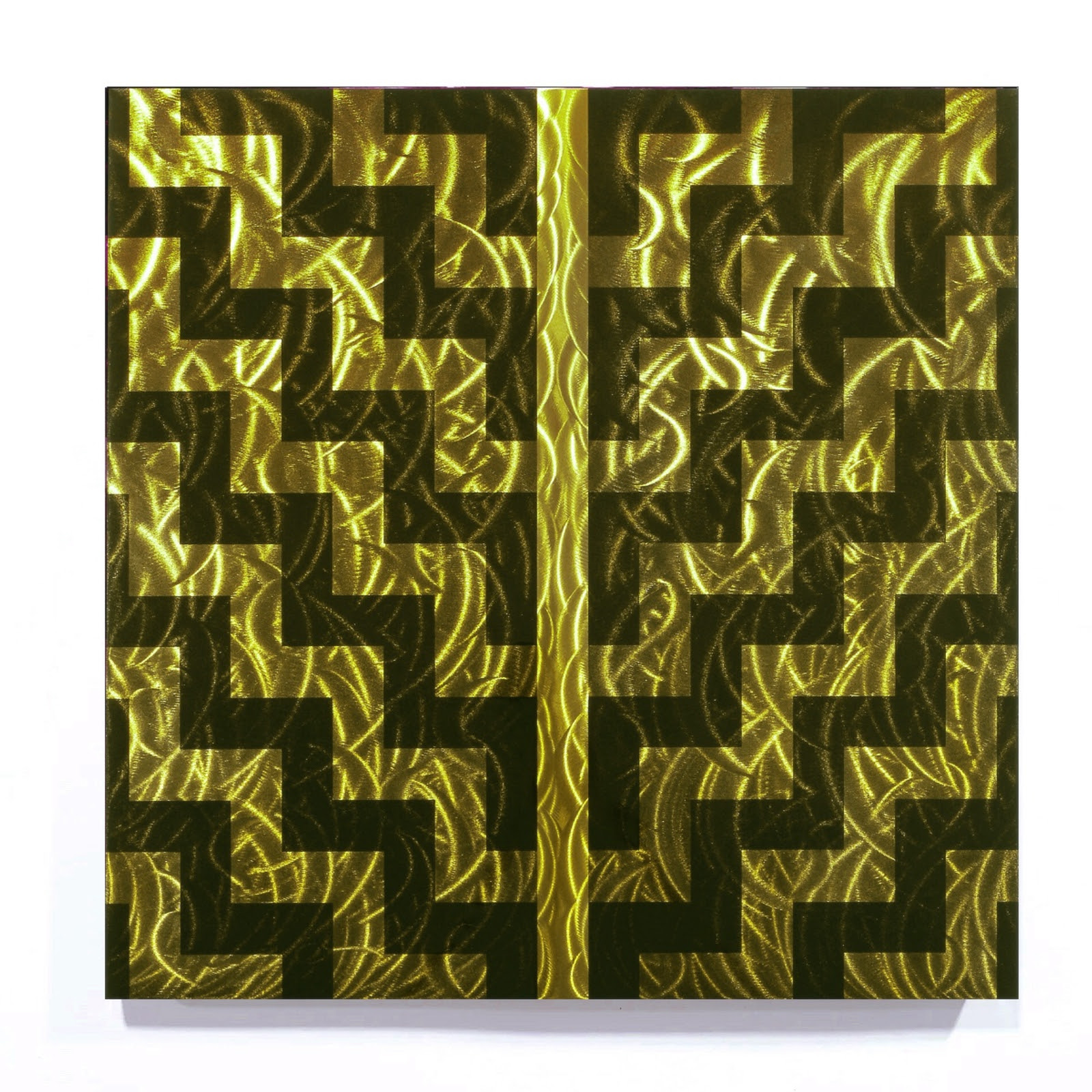
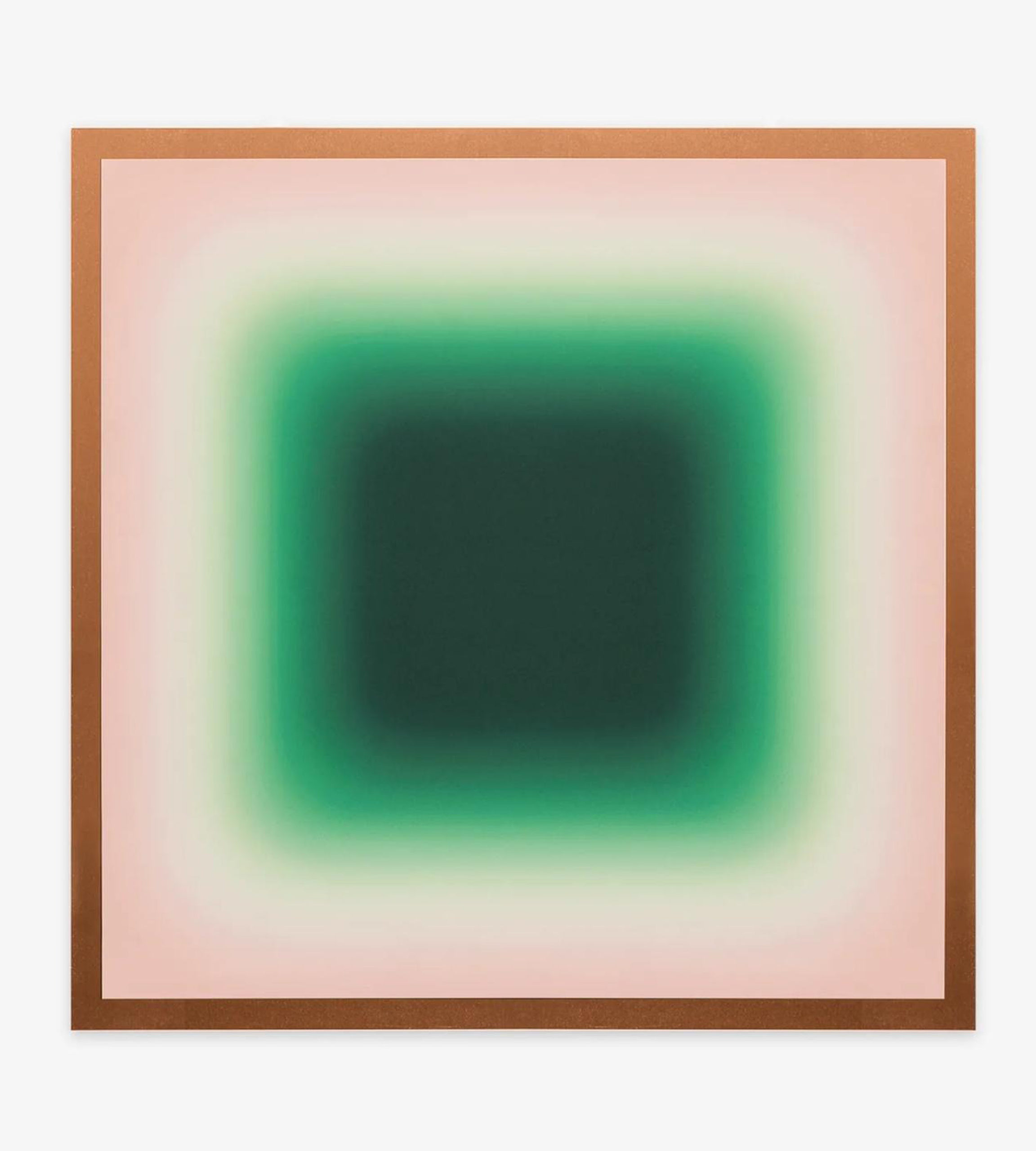
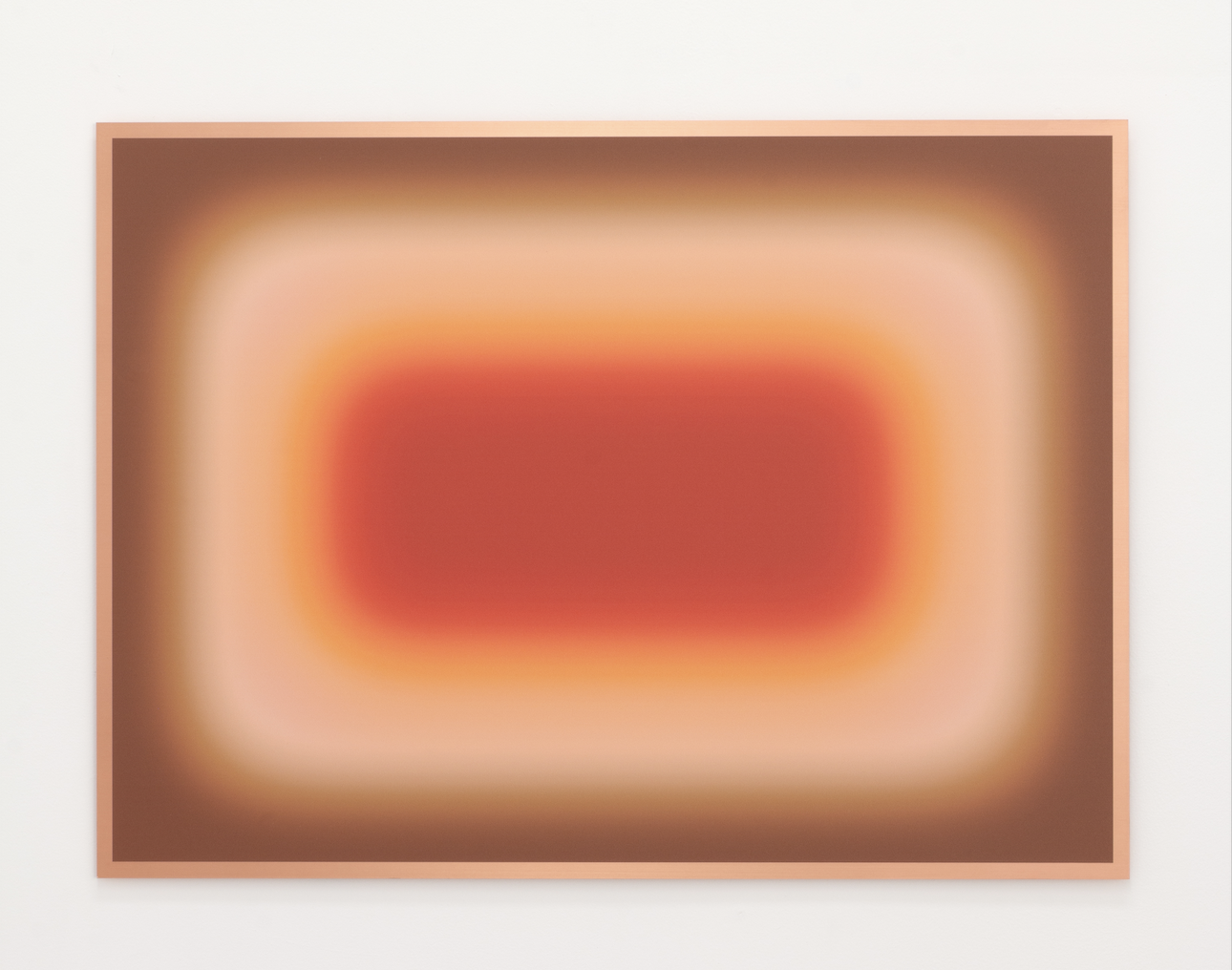
Jonny Niesche, moon moth lust in warm copper, 2022, Starkwhite
To coincide with the fair, Starkwhite releases Autumn Spice, a new limited-edition print by Jonny Niesche, executed in copper, the work will be released at 12 pm on Thursday, 30th April. Please register your interest at [email protected]. The reflective, warm-toned surface speaks directly to Niesche’s longstanding preoccupations with beauty, surface and desire. A collectable edition that does justice to the artist’s practice.
Black Door brings together four artists whose practices share a preoccupation with landscape, perception, and layered surfaces. Christine Cathie and Ryan Carter manipulate and sculpt glass to reveal and conceal imagery; Kaye McGarva bends perception through illusionistic painting; Mark Wooller works with maps and cartography to trace layered histories of place. Together, a coherent and thoughtful curation.
Kaye McGarva, Earth Tones, 2026, Black Door Gallery
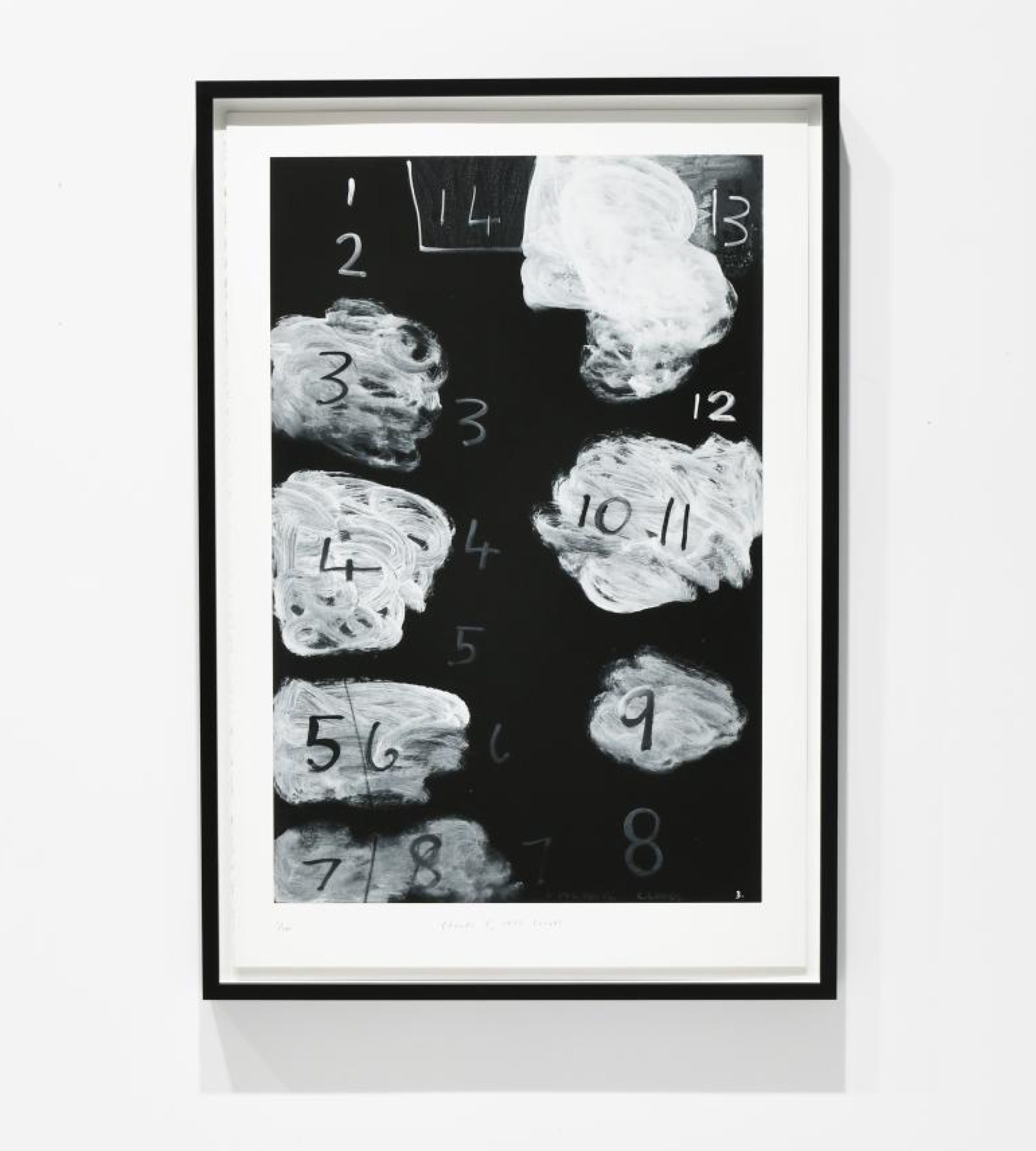
The Trust presents its first authorised limited edition: Clouds 3 (1975/2024), a beautiful archival screen print in an edition of 100. Proceeds fund the Colin McCahon Legacy Project, the digital catalogue raisonné of his 1,850+ works. A rare opportunity to acquire something genuinely connected to the McCahon estate, at an accessible price point.
Colin McCahon, Clouds 3, 1975, The Colin McCahon Trust
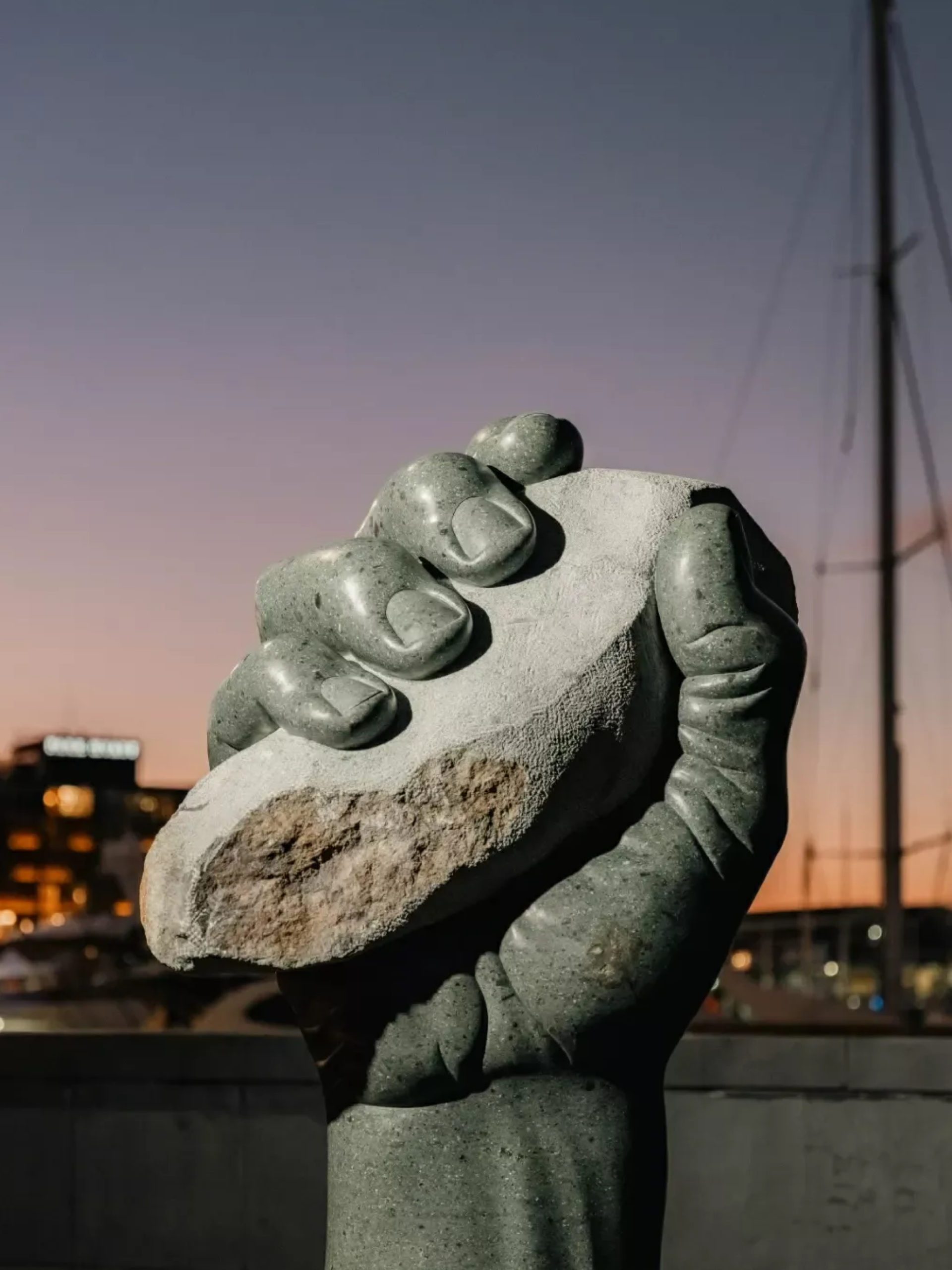
Running alongside the fair from 10 April to 4 May, the Aotearoa Art Fair Sculpture Trail (presented by Viaduct Harbour in association with Auckland Live) expands significantly in 2026 with 24 large-scale works by 18 artists installed across the waterfront precinct. Free and open to the public, it is the most accessible entry point to the fair’s broader programme.
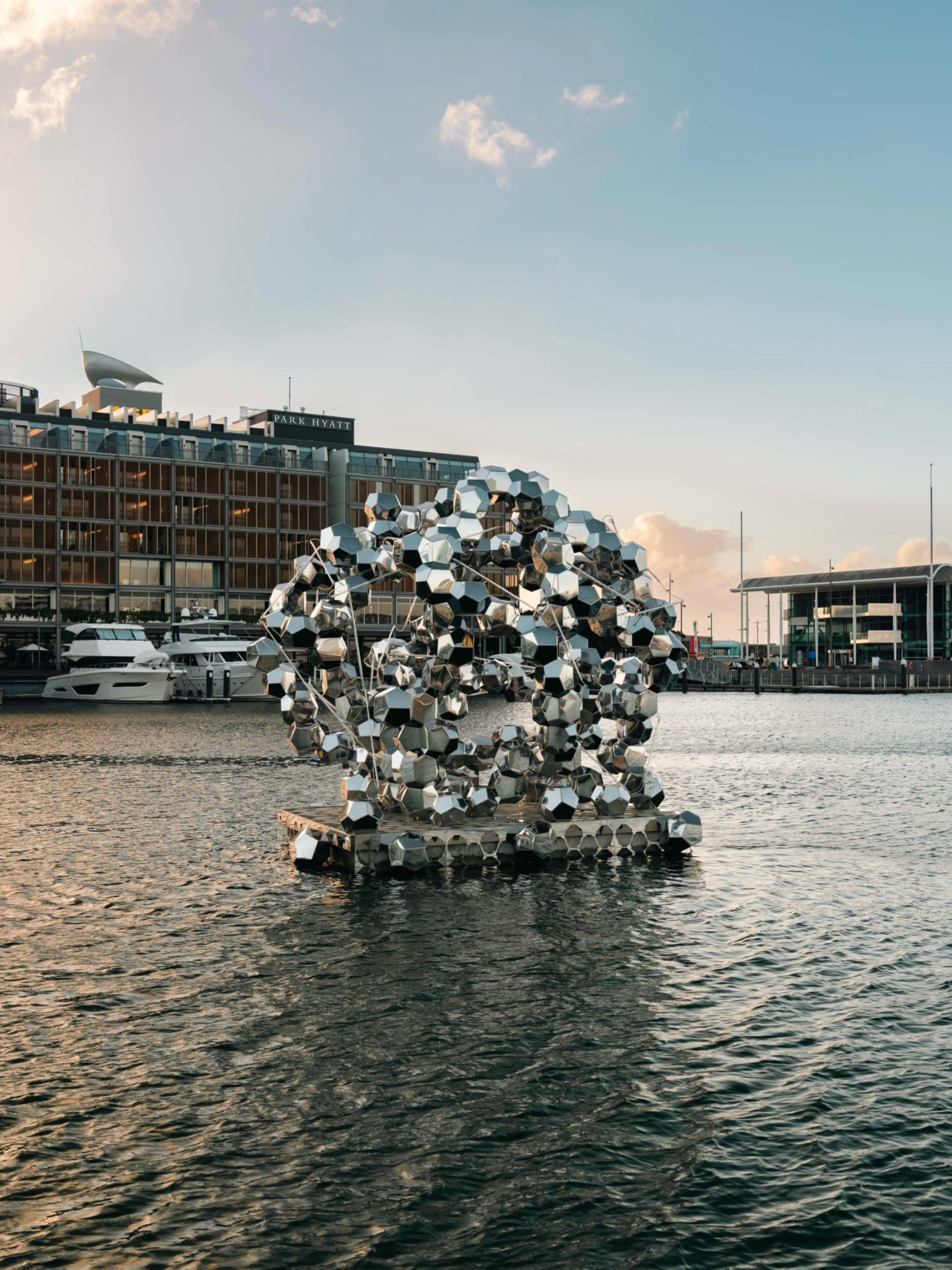
Highlights include Lisa Reihana’s ANZAC Waharoa at the entrance to the Viaduct Events Centre; works by Peata Larkin, Reuben Paterson and Sione Faletau; flag works by A’aifou Potemanidrawing on Pacific siapo; a major floating mirror-polished sculpture by Gregor Kregaranchoring the harbour edge; and international names including Bernar Venet and Turner Prize-winner Martin Creed. A genuine outdoor exhibition in its own right that can be appreciated by young and old.
Cumulus Structure by Gregor Kregar
Blood from Stone by Josh Olley
The Aotearoa Art Fair is on from Thursday, 30th April until Sunday, 3rd May. Book your tickets here.
Canada Loucks leads the kitchen at Andiamo, the enduring Herne Bay favourite that has long set the tone for relaxed, neighbourhood dining in Auckland. As Head Chef, Loucks oversees a busy kitchen where consistency, creativity and pace must align service after service. The role calls for calm leadership and a deep understanding of her craft, guiding a team while ensuring the restaurant continues to serve the delicious dishes that locals return for time and again.
Loucks’ path into the kitchen began with curiosity rather than a fixed plan. Growing up surrounded by family members who loved to cook, food was a constant presence, with gatherings often turning into lively recipe exchanges. As a teenager, that curiosity quickly became an obsession, devouring cookbooks borrowed from the school library and experimenting constantly at home. Growing up largely plant-based also shaped her early approach to cooking, with experimentation she crafted her technique by building depth and flavour through herbs, spices.
In 2016, Loucks enrolled at the New Zealand School of Food and Wine, studying professional cookery alongside hospitality, wine and spirits. From there, six formative years at the iconic Euro under chef Gareth Stewart helped shape a collaborative approach to the kitchen. Today at Andiamo, Loucks combines those influences with flavours drawn from travels through Asia, while remaining passionate about mentoring younger chefs and creating a positive, supportive kitchen environment.
After Hours — Canada Loucks
Head Chef, Andiamo
“When I do get the chance to eat out, I tend to gravitate towards places that deliver great flavour without too much fuss. Belly Worshipis somewhere I’ve returned to countless times. It’s quick, incredibly tasty and always satisfying.
Sushi is something I crave regularly, and Auckland has some excellent spots. Gurume Sushi,& Sushi,Jankenand Sora Sushi are all go-tos, particularly Sora with its great sake selection.
For drinks, Caretaker is always impressive. I love the creativity behind the cocktails and the attention to detail in every drink.
One restaurant that consistently impresses me is Cocoro. After more than two decades, it’s still operating at an incredibly high level, with precision and consistency that never disappoints. There are so many places that I love, Goat, Rhu, Ragtag, Advieh and Spiga are all places I enjoy and return to for their atmosphere and excellent food.”
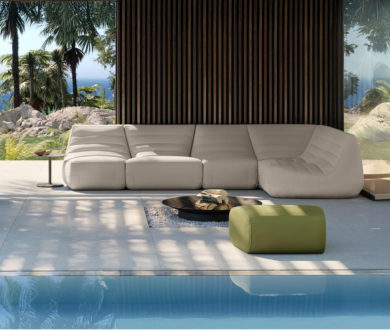
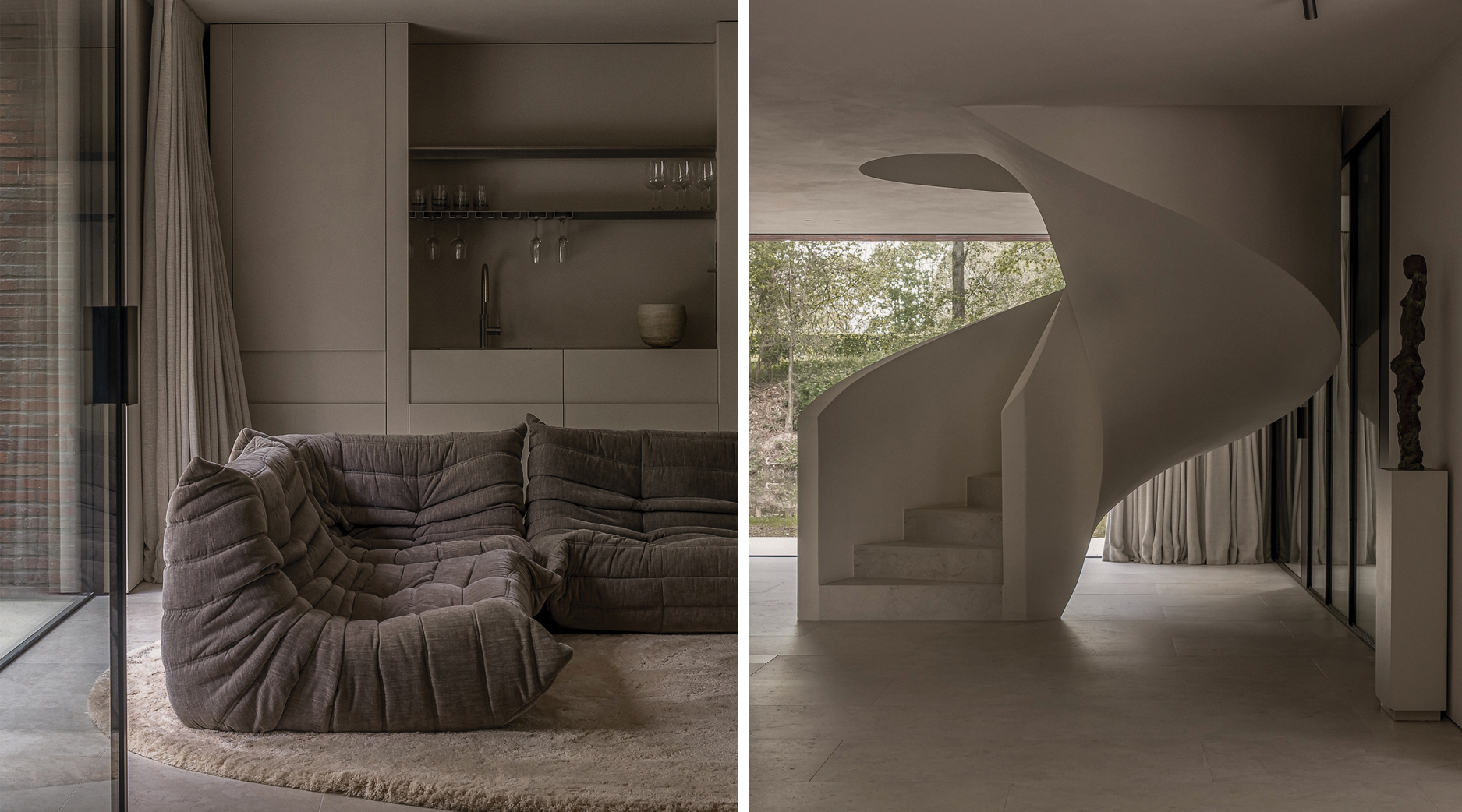
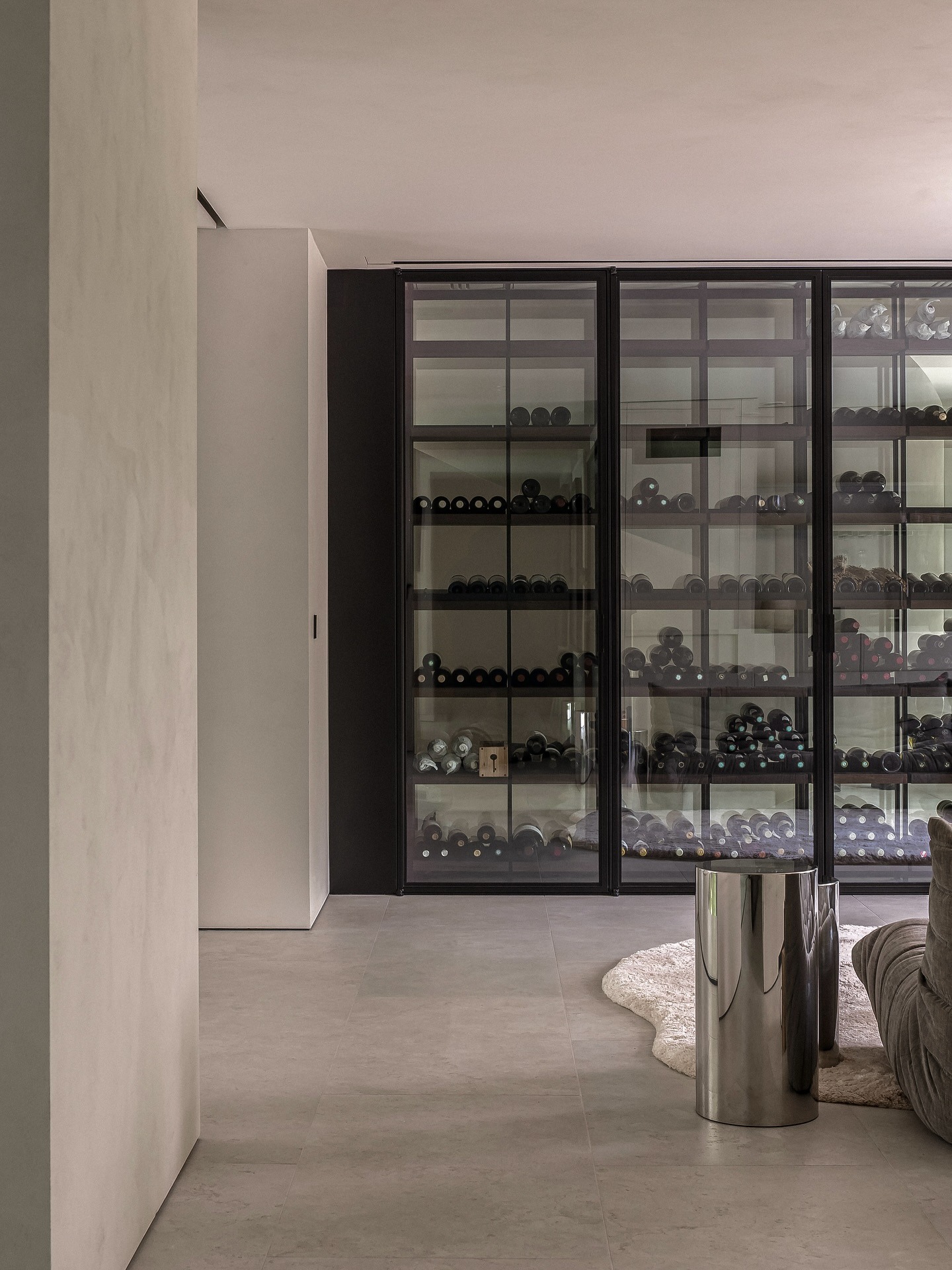
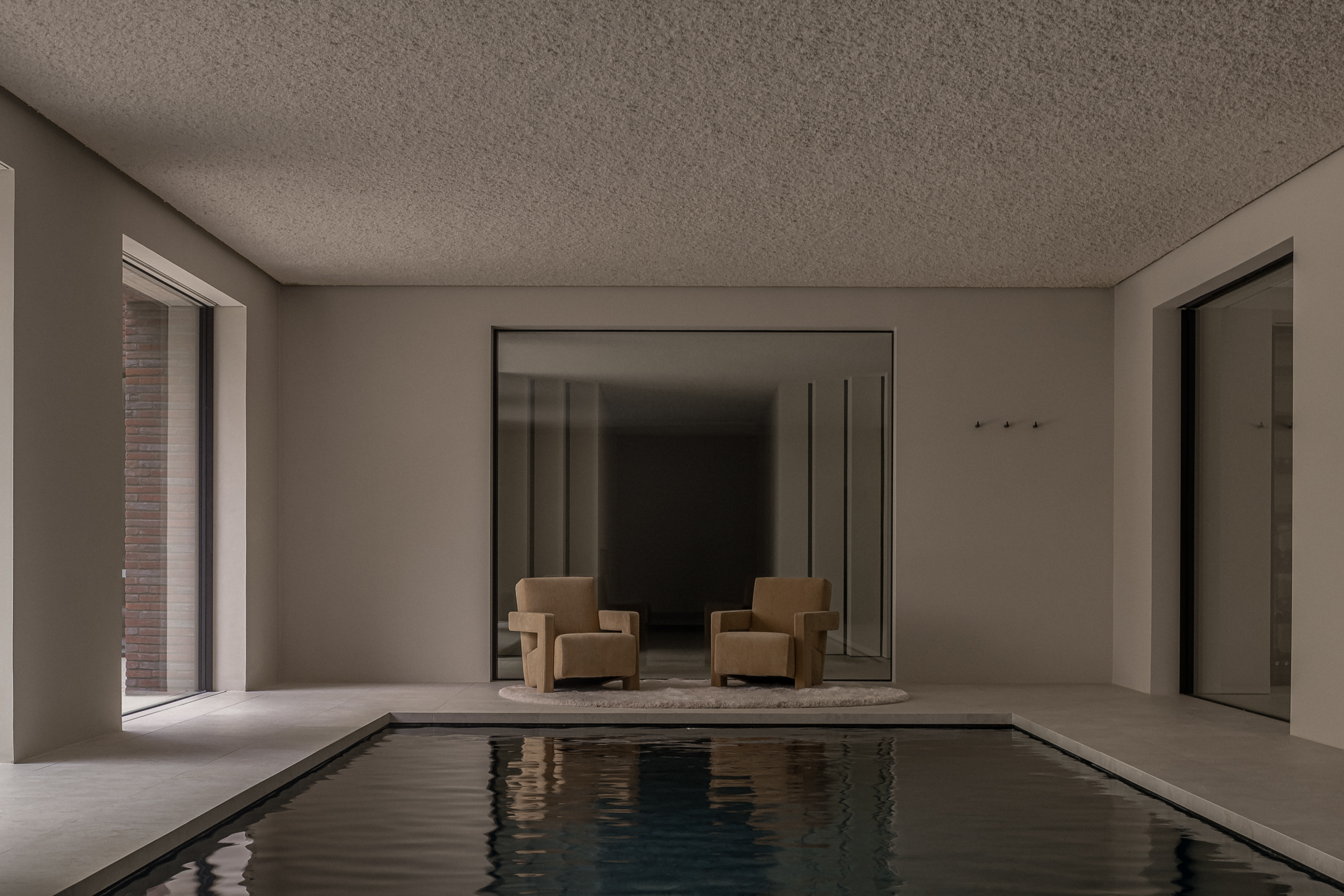
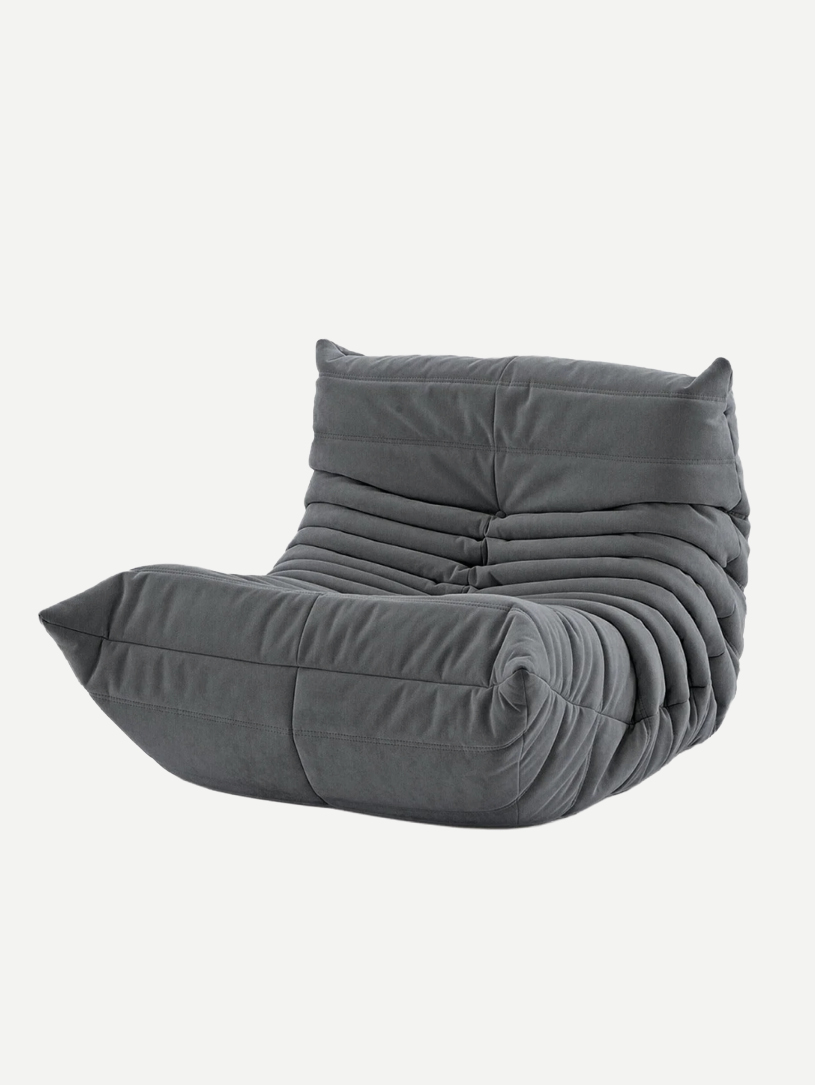
Designed by Simon de Burbure Architects, DO House is a quiet meditation on warmth, restraint, and the power of organic form. Set against a backdrop of textured plaster ceilings, limewashed walls, and full-height glazing that draws the surrounding greenery indoors, the interior unfolds in layers of warm beige and natural tone. At its heart, in the pool zone designed for slowing down, sits one of design’s most enduring icons: the Ligne Roset Togo.
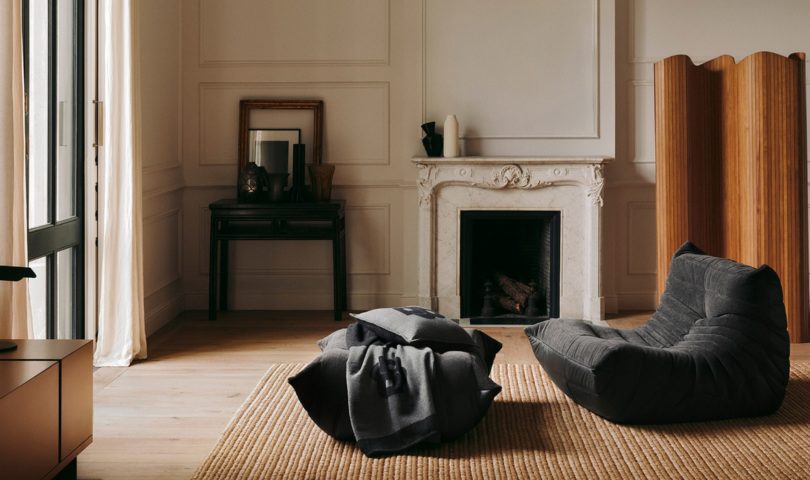
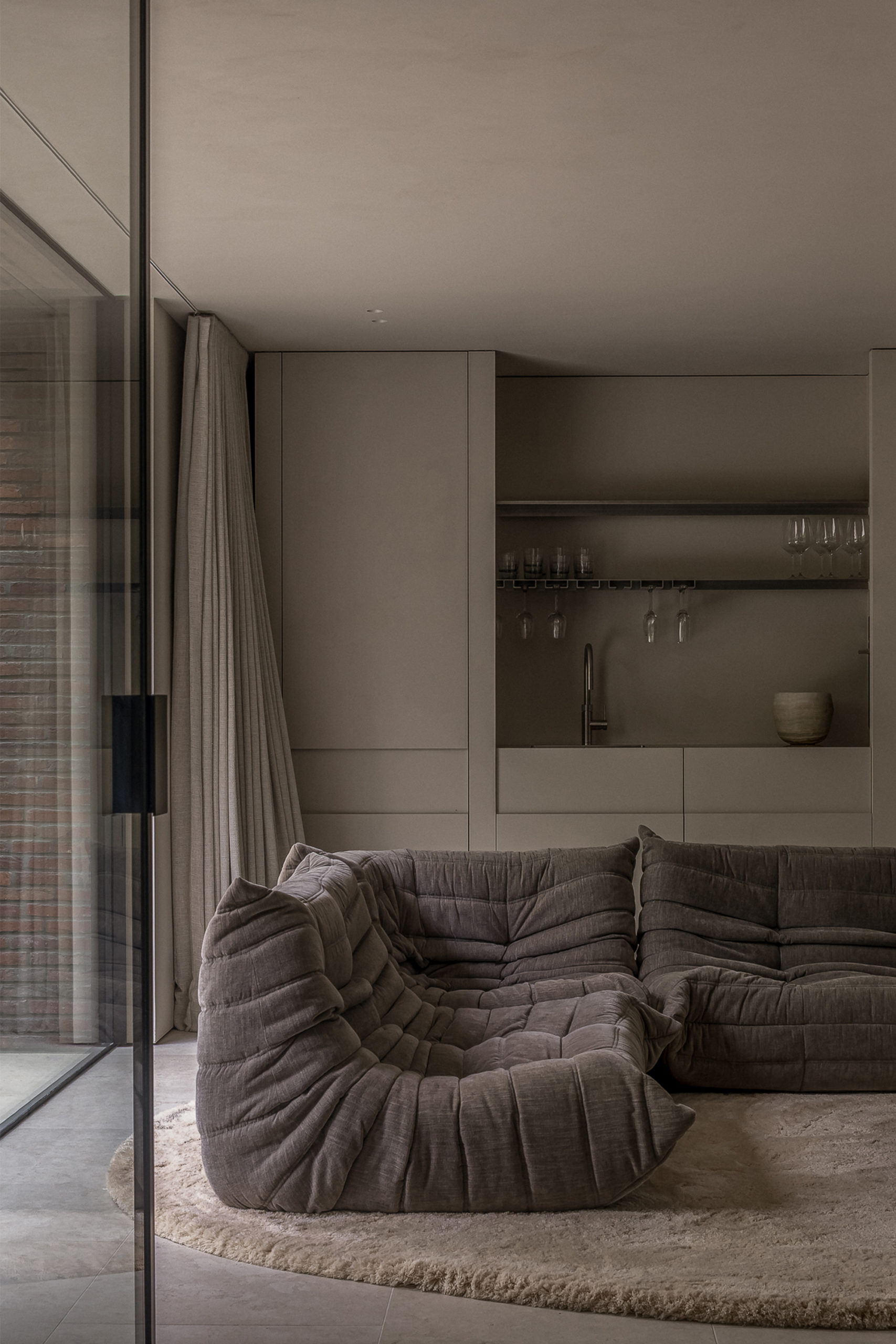
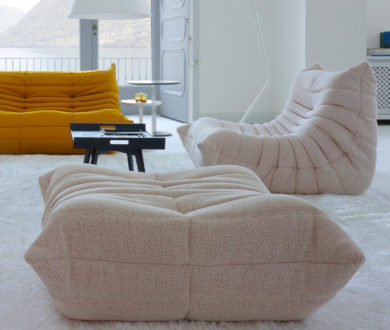
The pool zone is conceived as a space to decompress, a soft retreat from the more formal rhythms of the home. Here, a Togo sectional in soft grey-taupe linen takes centre stage, arranged in an L-configuration that hugs the corner of the room. Designed by Michel Ducaroy in 1973, the Togo’s quilted, floor-hugging silhouette is the perfect counterpoint to the architecture’s clean lines. Its rumpled, pillowed form softens the precision of the bespoke joinery and integrated bar beyond, transforming what could have been an austere palette into something enveloping. It is furniture that invites you to sink in, linger, and let the day slow down around you.
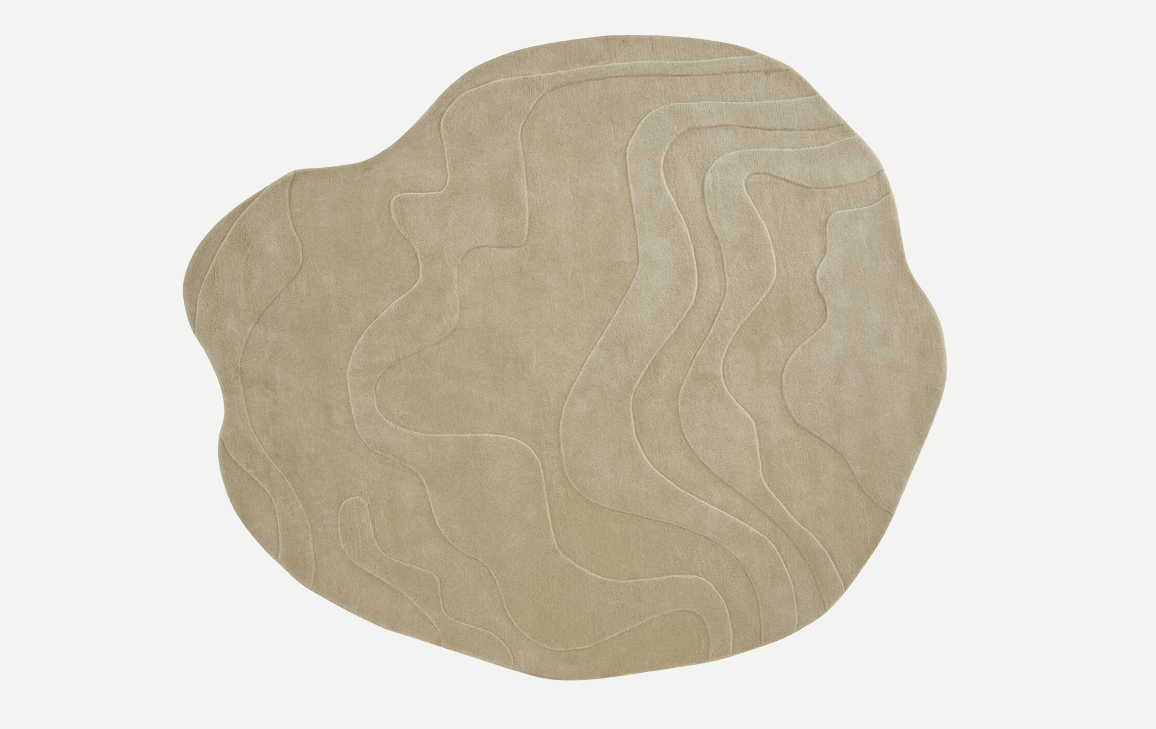
A circular wool rug beneath the sectional anchors the arrangement, its organic shape echoing the curves of the seating and pulling the composition into intimate focus. The pairing is deliberate, sculpture meeting sculpture, with the architecture stepping back to let the furniture breathe.
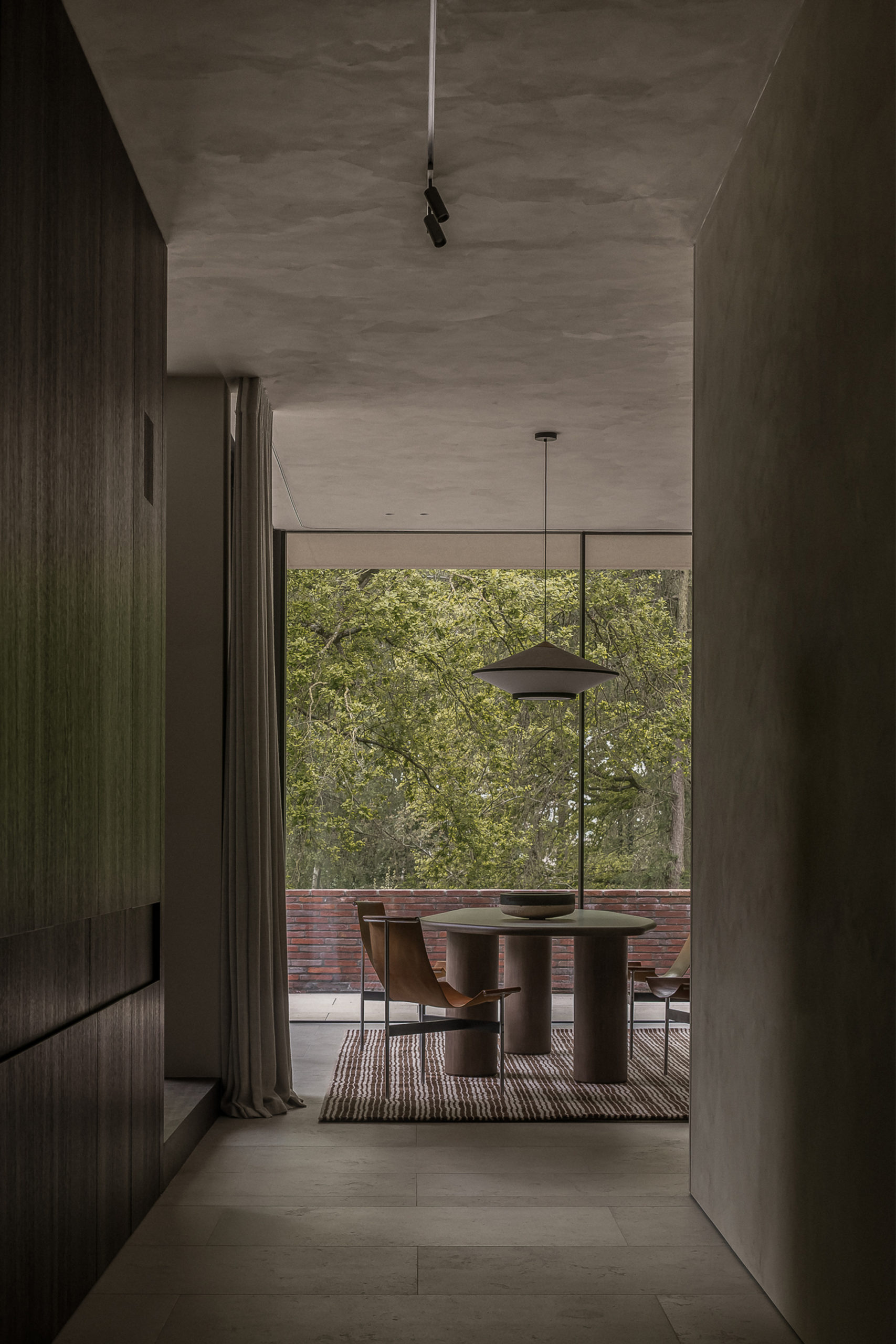
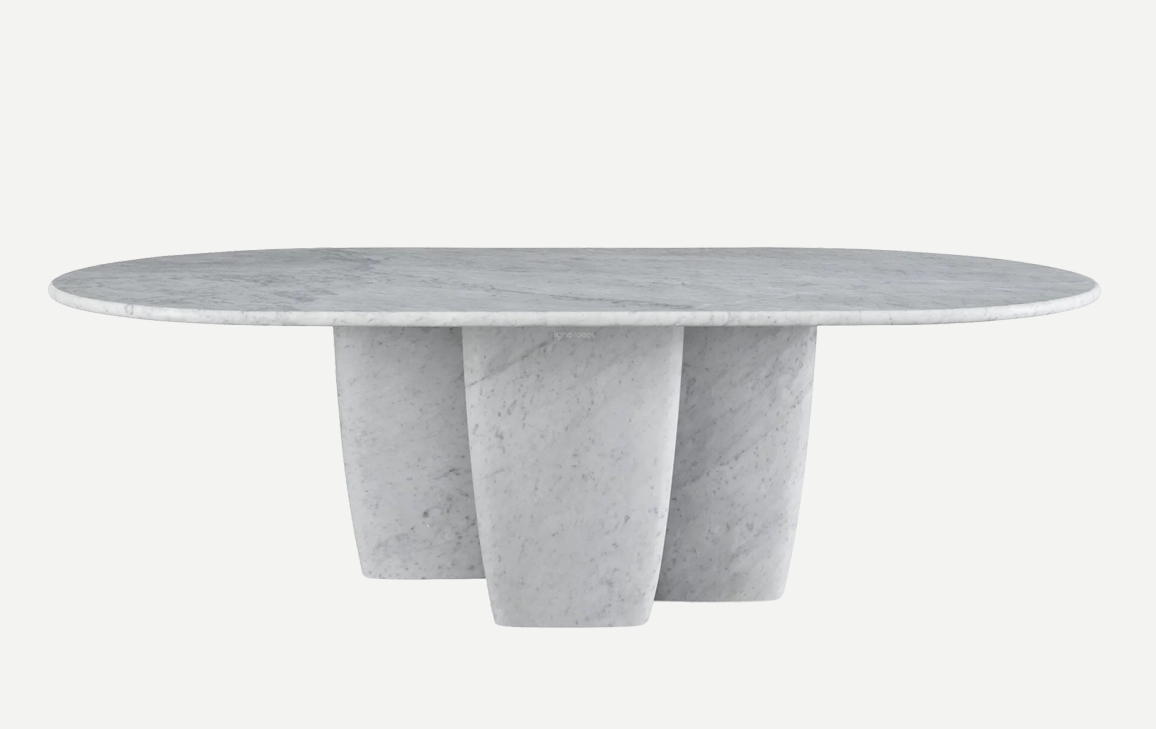
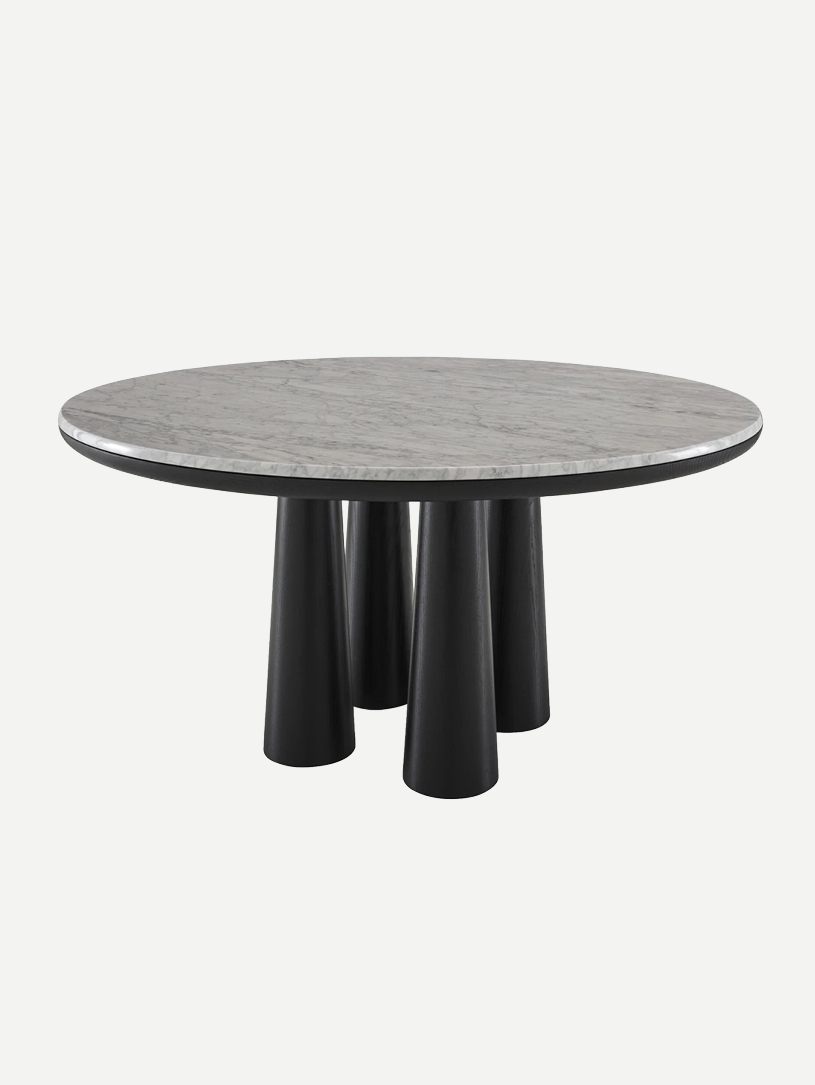
The same design language continues into the dining space, where a rounded pedestal table sits framed by floor-to-ceiling glass overlooking the garden. Leather sling chairs with gently curved frames flank the table, their cognac tones bringing warmth against the cooler concrete and plaster surfaces. A striped runner grounds the arrangement without disrupting the room’s quiet palette.
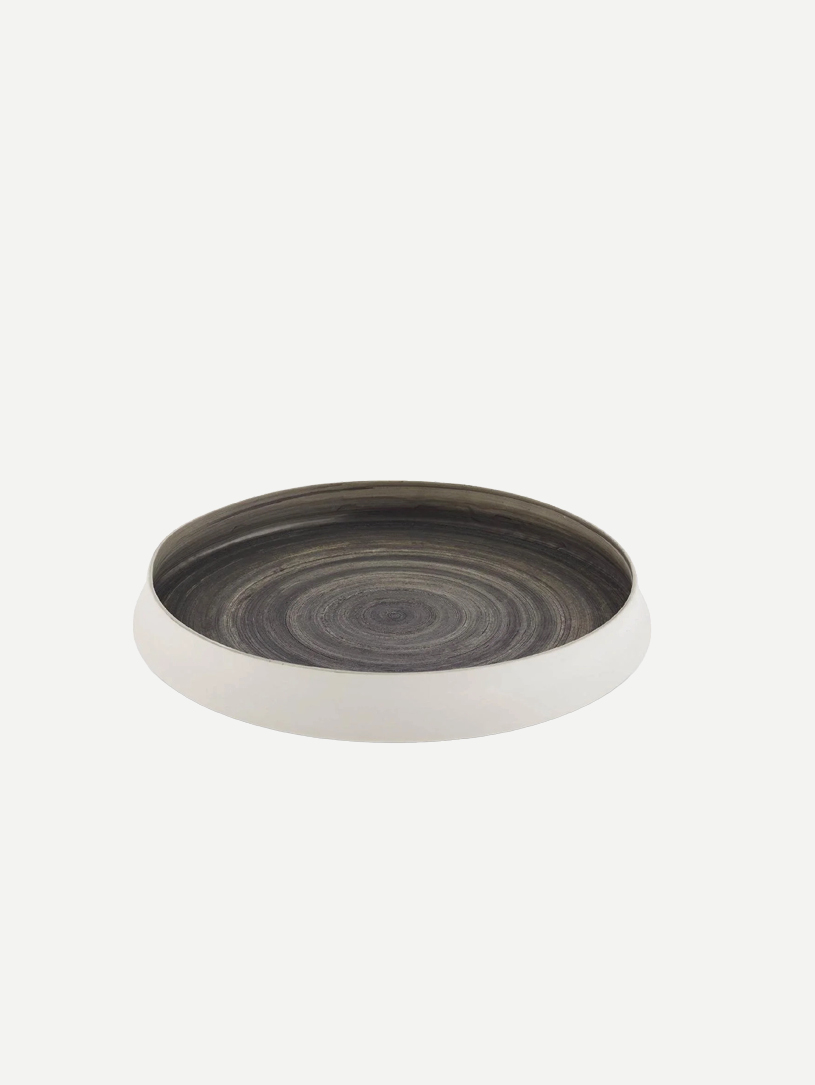
Every silhouette has been softened. Every material chosen for its tactility, from the slub of the Togo’s linen to the patina of leather and the hand-thrown ceramic vessel resting on the table.
What Simon de Burbure Architects has achieved at DO House is a masterclass in how minimalism, when grounded in organic form and genuine comfort, can feel deeply inviting rather than austere. In the pool zone, the Togo doesn’t simply furnish the space. It sets its emotional temperature, becoming the piece that turns a beautifully composed retreat into a place to truly unwind.
There is a particular kind of nerve it takes to photograph eighty-four looks yourself and call the result a near-lookbook. Not a campaign in the operatic sense the fashion industry has conditioned us to expect, with its cinematic conceits and celebrity casting and auteur-signposting at every turn. Just eighty-four images. Eighty-four individuals. A collective, Gucci calls them, and the word does more work than it first appears to.
Generation Gucci, which arrived out of Milan this week, is Demna’s opening statement as the House’s artistic director, and it reads less like a manifesto than a mission brief. The designer, whose tenure at Balenciaga reshaped luxury’s relationship to irony and spectacle, has arrived in Florence with what can only be described as a deliberate exhalation. There is no shock here. No provocation for its own sake. Instead, there is an almost obsessive attention to what a Gucci garment has always been asked to do, which is to carry the weight of a century of Italian craftsmanship without appearing to carry anything at all.
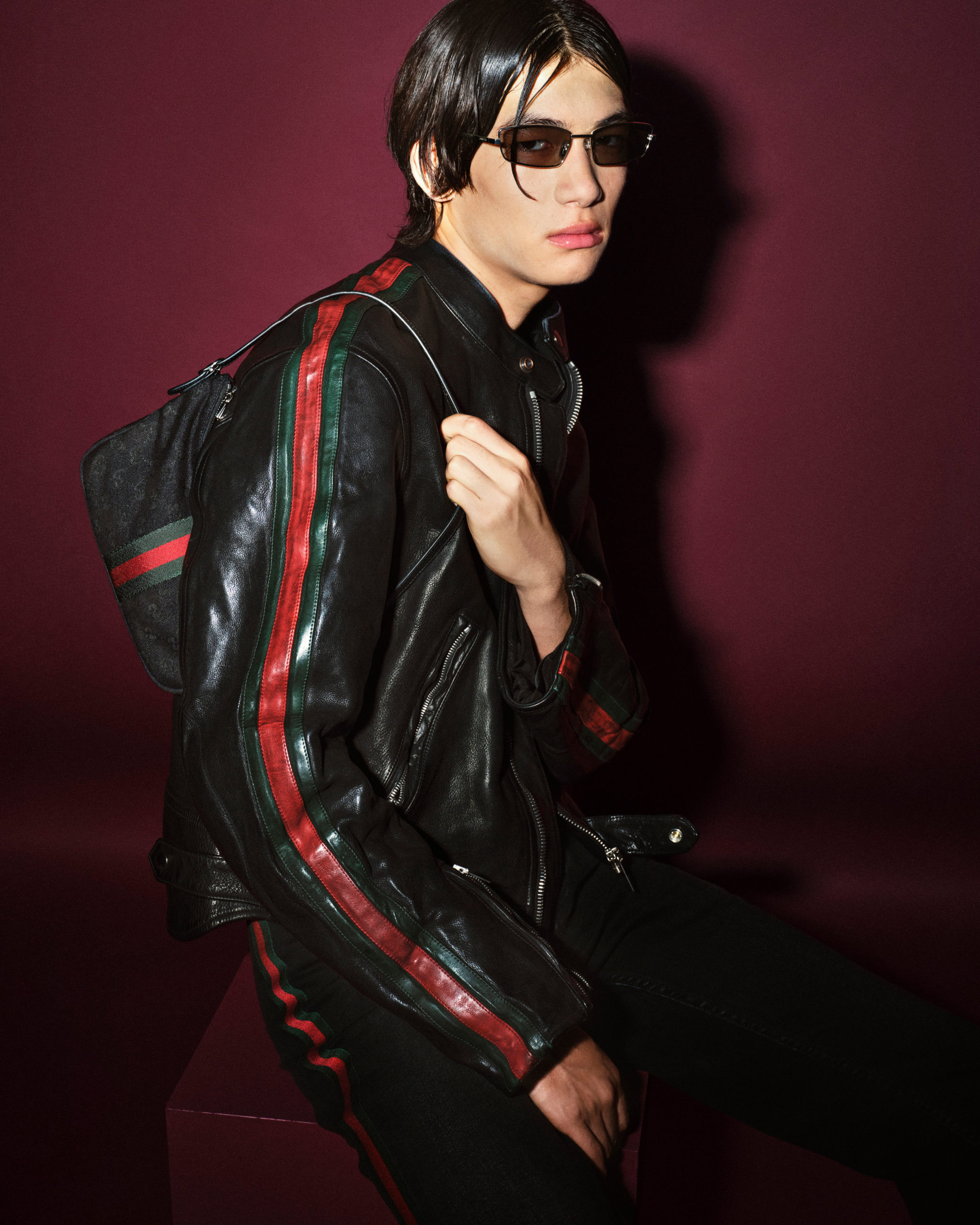
The collection draws from across the House’s decades, but the editing is where Demna’s intelligence becomes visible. Two-piece suits with slim-fit trousers feel lifted out of a specific Gucci memory and dropped into the present without translation. Head-to-toe leather and suede appear in the womenswear as an argument for tactility. Textured coats are introduced with what the House calls lightness, and the word, repeated across the collection notes, begins to function as a thesis. Lightness as the discipline of leaving things out. Lightness as a rebuke to the heaviness luxury has accumulated in recent seasons.
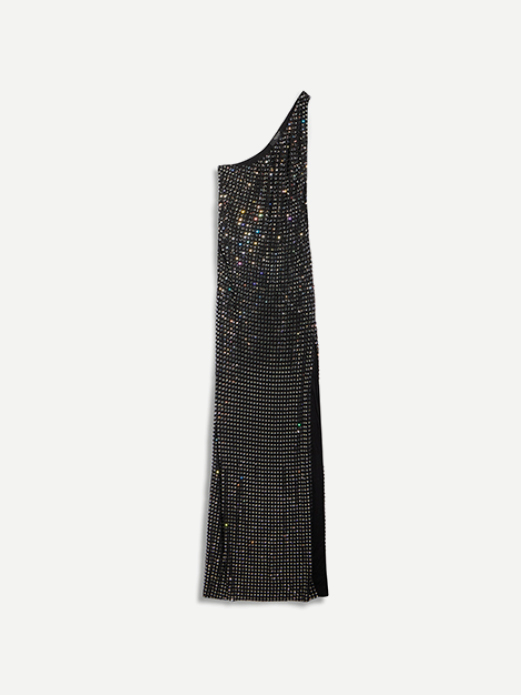
The party wardrobe, with its underwear-inspired pieces layered beneath silk blousons and its minimal gowns in fluid jersey and chiffon, nods to the Gucci that once defined the cultural imagination of going out. But it does so without the maximalism that has become the House’s shorthand. Valigeria-inspired ballerinas, now offered in men’s sizes, and streamlined loafers built with the unstructured lightness of dancing shoes, suggest a wardrobe designed for movement rather than for posture.
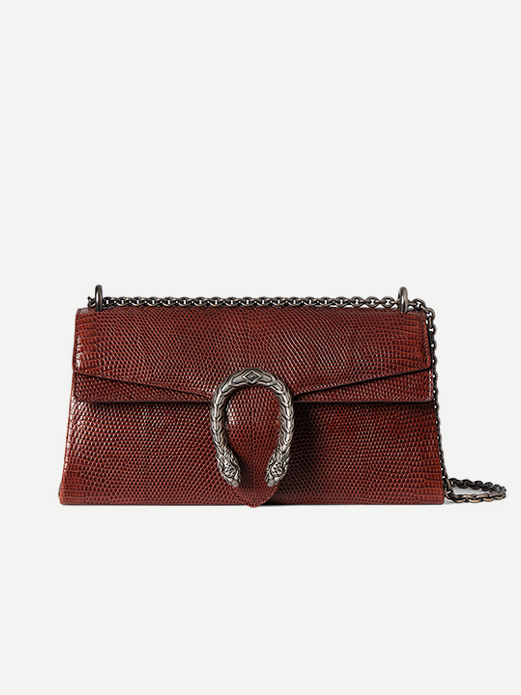
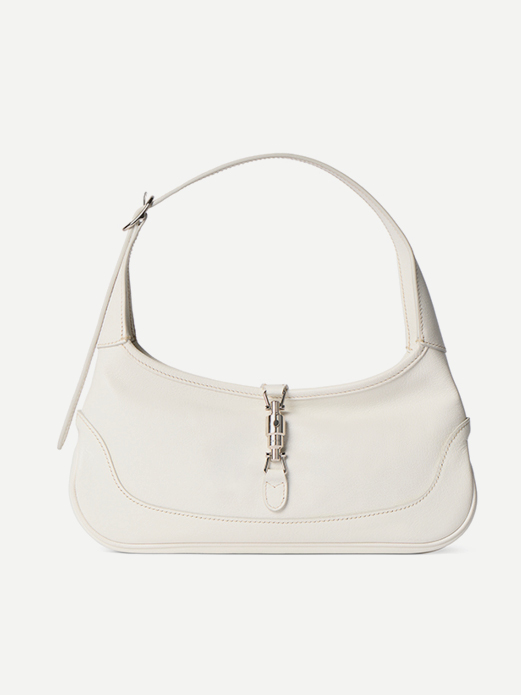
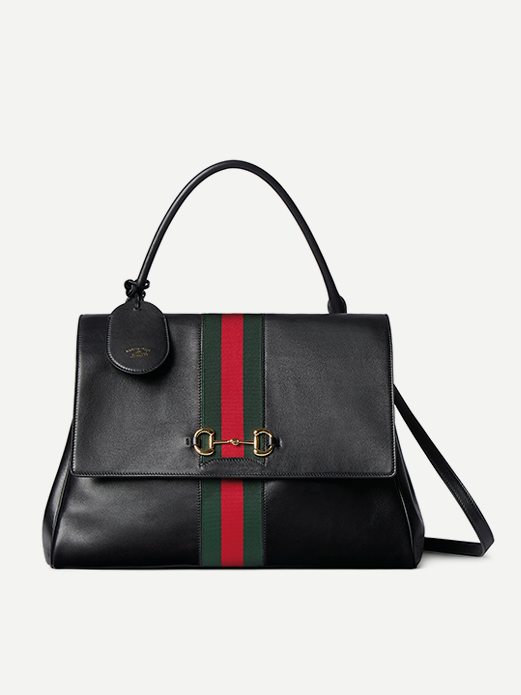
Then there are the accessories, which is where any serious Gucci conversation eventually lands. The Jackie 1961 returns in new proportions. The Dionysus sharpens into something more angular, more architectural. The Lunetta Phone+ arrives as a piece of genuine contemporary design. And the Paparazzo, the collection’s clearest thesis object, gathers the Web stripe and the Horsebit hardware into a single bag that the House describes, with a small, wry confidence, as defining Gucciness itself.
That neologism is worth pausing on. Gucciness is not Gucci. It is the distillation, the thing a Gucci object possesses that lets it belong equally to a morning coffee and an evening out. It is the kind of word a designer uses when he is trying to name something he intends to keep.
In a season where so much luxury still confuses volume for relevance, there is something almost radical about a campaign that simply shows you eighty-four looks and trusts you to understand.
The best part of a long weekend is eating your way through it. Somewhere between the coastal town with the pie shop you’ve been meaning to try and the winery restaurant you keep hearing about, a road trip becomes a reason in itself. New Zealand’s regional dining scene has quietly hit its stride. The openings worth travelling for are no longer confined to the main centres — they’re tucked into restored homesteads, lining provincial main streets, and perched on vineyard slopes from the Bay of Islands to the bottom of the South. Below, our 2026 edit: the places worth the drive, the ferry, or the full weekend away. A word to the wise — check opening hours before you go. Holiday trading is a moving target.
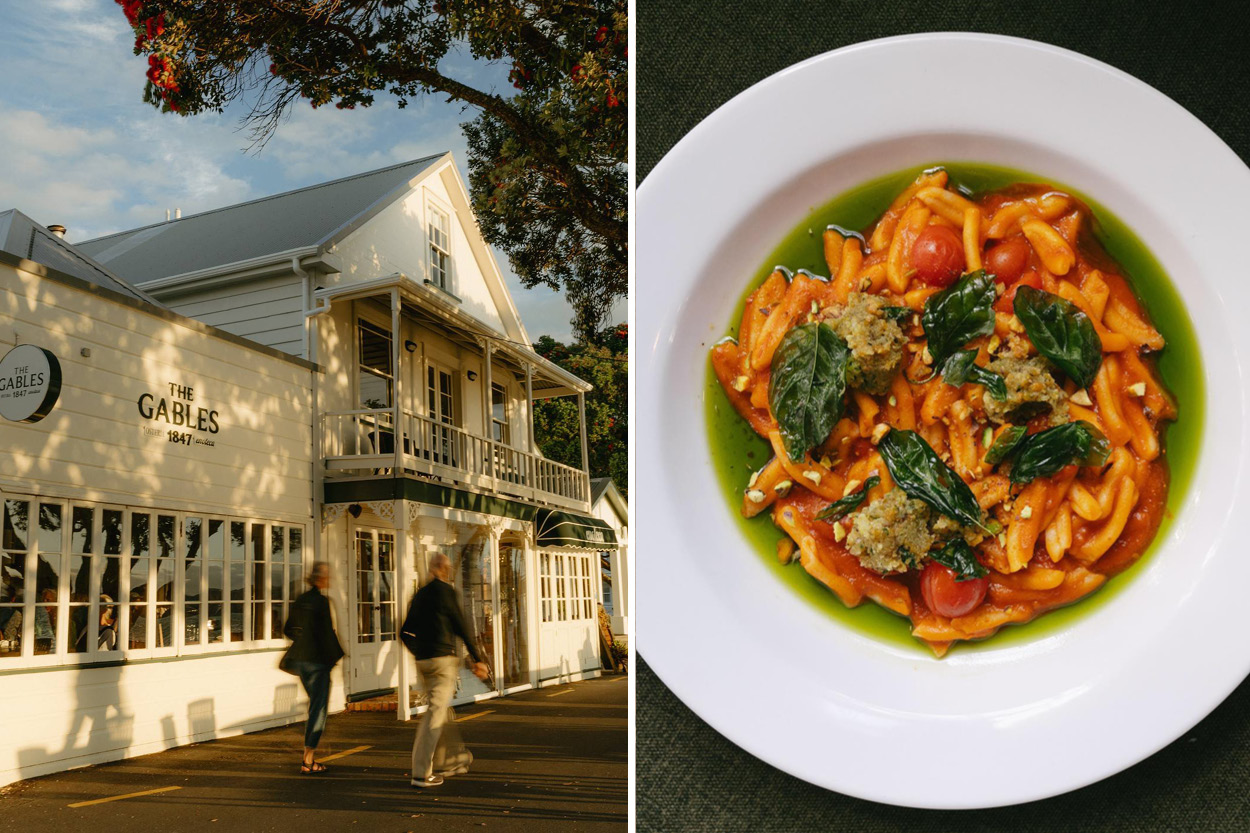
Housed in an 1847 heritage building on Russell’s waterfront, The Gables pairs fresh pasta and approachable Italian fare with a wine list that roams confidently between Northland and Italy. Old-world bones, osteria warmth — the kind of long lunch that makes you reconsider the drive home.
Wood-fired pizza, cold beer, picnic tables under the trees. Hone’s is the uncomplicated answer to a Russell afternoon, and no amount of fine dining nearby has dulled its appeal.
Perched on sunlit slopes overlooking the Bay of Islands, Omata Estate marries boutique wines with unforgettable dining. The Omata Kitchen serves gourmet platters and wood-fired pizzas crafted with locally sourced ingredients, perfectly paired with the vineyard’s finest drops.
With unparalleled waterfront vistas, an assortment of delicious sharing plates, and an impressive cocktail menu featuring the all-important expertly-made Negroni, this charming addition to the far North has become a regular stop on any discerning road-tripping itinerary.
Nestled in the heart of Paihia, Terra pairs sweeping ocean views with an innovative à la carte menu. Showcasing local ingredients, sustainable practices, and global culinary flair, this modern eatery delivers unforgettable dining. While there, don’t miss the creative beverage offerings and vegetarian-friendly dishes that highlight the vibrant Far North.
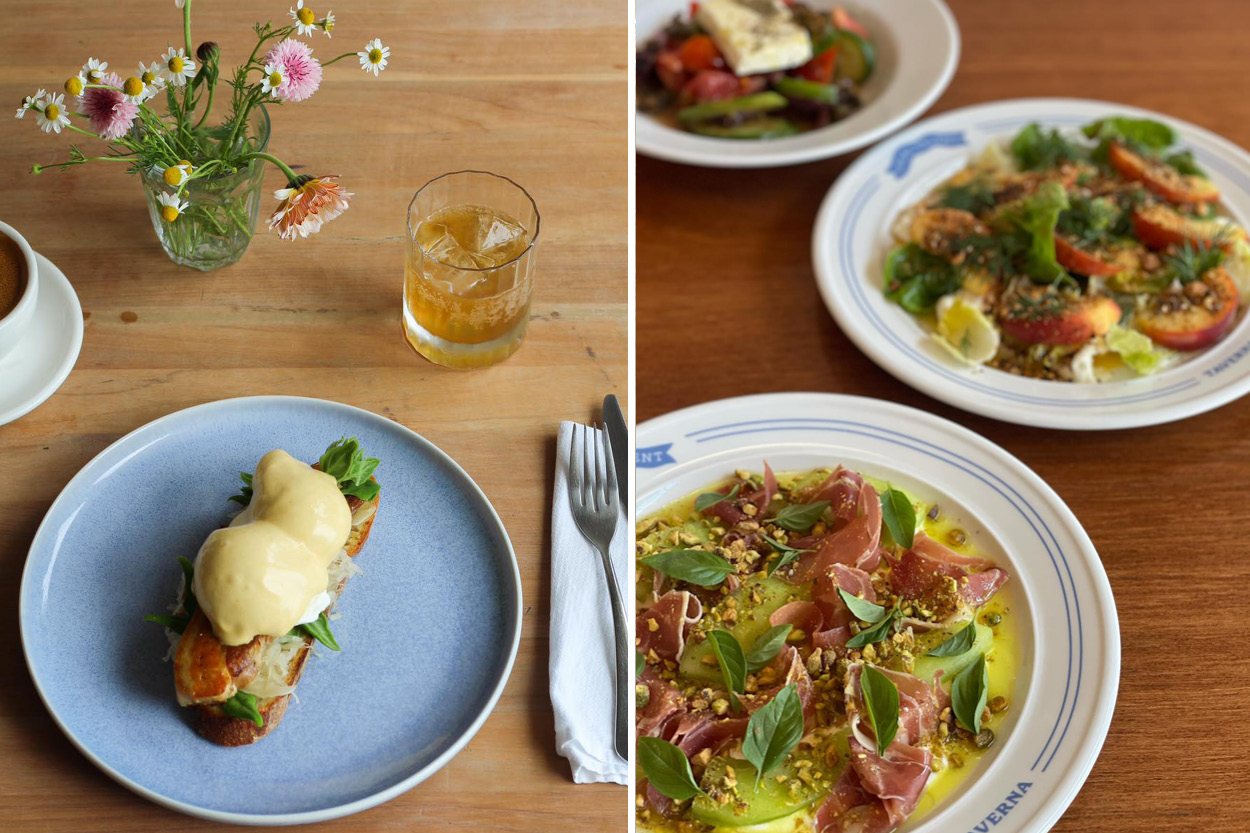
A relative newcomer, Local Talent Taverna beckons visitors with its unpretentious charm and a menu brimming with Mediterranean flavours. In this unassuming space, Matt Hawkes (of Wellington’s cult-favourite Mason) captures the essence of Northland’s local produce, with a distinctly European flair.
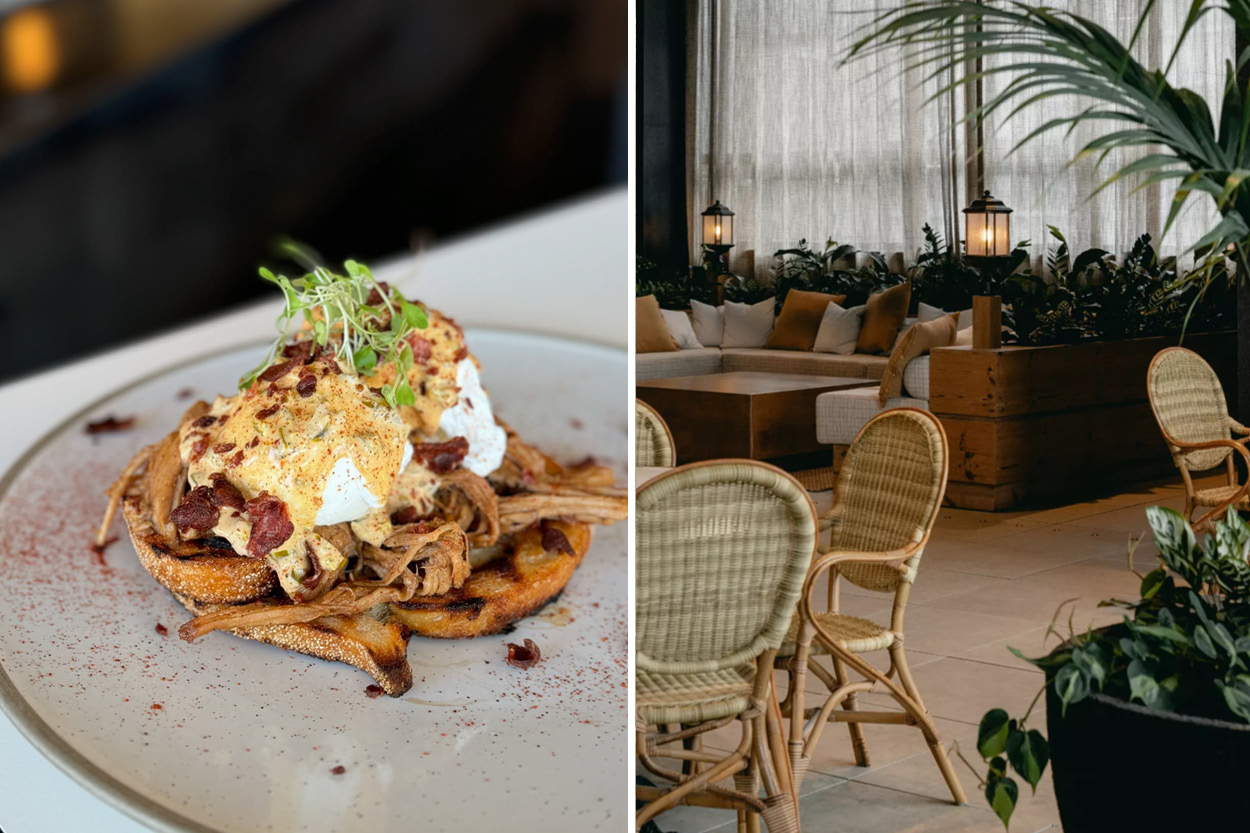
Left: The Farmer Daughter. Right: Local Talent Taverna
Nestled by the Omaha Estuary, this local eatery blends coastal charm with seasonal, locally sourced fare. Owner Kate Rose’s vision transformed a former takeaway spot into a 120-seat haven featuring sunlit decks, native Pohutukawa, and an open kitchen. Open daily for breakfast and lunch, with dinner service Thursday to Saturday, this is an essential stop if you find yourself in the area.
Sampling the tasty lineup of brews at McLeod’s Pizza Barn is crucial to any traveller, and so is getting stuck into its pizza. There’s a laundry list of tasty options to try, from classics like the Margherita with basil pesto, tomato and a double helping of mozzarella to more creative flourishes.
The Best Of
Bay of Plenty & Coromandel
Left: Elizabeth Café & Larder, Tauranga. Right: Picnicka, Tauranga
This Shaw Road destination is so much more than just a perfect coffee refuelling stop, set to the sounds of the rolling surf. While the fish and chips are truly excellent, the Coconut Chicken pizza with kasundi and cashew & coriander pesto is unbeatable and best devoured with feet firmly planted in the sand. Add it to your bucket list.
Embracing the tradition of gathering and eating around a communal fire, Camina harnesses the ancient cooking style to craft delicious fare perfect for sharing. With a menu that celebrates local produce, an incredibly friendly group of staff and an impressive drinks list that heroes locally-brewed beer, New Zealand wines and gin cocktails, this is one spot you don’t want to skip.
This eatery in Kuaotunu, Whitianga, is the ultimate laid-back destination adored by holiday-goers from all parts of the Coromandel. Admire the million-dollar view as you enjoy craft beers and devour smoky wood-fired pizzas. Destinations like this are a reminder that some humble restaurants are legacy for good reason.
Breadhead, the bakery born out of Love Rosie Bakery, expanded from a small shop into a charming cafe, offering a space for customers to savour their heavenly bread and pastries. With Brent Beamish’s self-taught baking skills at the forefront, Breadhead is enticing with its array of treats, including miso tahini sourdough, fluffy pastries and doughy-soft sandwiches, all crafted with a commitment to quality ingredients and attention to detail.
Tucked into the heart of Mount Maunganui, this retro-style diner serves up American comfort food with flair — think Philly cheesesteaks, breakfast burritos, and curly fries. Warm, welcoming and full of nostalgic charm, it’s a go-to for locals craving bold flavours, easygoing vibes, and a spot of comfort food by the beach.
A relative newcomer to the Mount, this enticing spot specialises in chewy, hand-rolled bagels, sweet pies, and great coffee. With a hidden, leafy garden out back, lovely staff, and some of the best coffee in the area — not to mention delectable food, which runs the gamut from stacked bagel sandwiches brimming with local produce, to the infamous sweet pies with flavours like Burnt Caramel and Malteser Mousse on rotation, this is one spot you won’t want to skip.
Location:Waiheke Island A winery restaurant that takes both halves of the equation seriously. The food is precise; the estate-grown wines are the reason to linger.
The Heke is a must-visit destination in Onetangi — home to a wood-fired restaurant as well as the award-winning Waiheke Whisky and Waiheke Brewing Co. Owned by two Waiheke families, who have created a welcoming feel, you can park up at one of the many outdoor tables, watch the kids bounce around on its jumbo bouncing pillow and have a thoroughly lovely afternoon.
Nowadays, Onetangi is a world-class culinary destination with a line-up of sophisticated eateries with sweeping views of its beautiful beach. But before all this, there was Charlie Farley’s, a laid back restaurant and bar that locals and visitors alike kept coming back to. After a refurbishment, and the new moniker of Charlie’s, this Tropicana-inspired eatery sets the scene for an array of crowd-pleasing dishes. Open for breakfast, lunch and dinner — and complemented by suitable cocktails all day long — Charlie’s is holding its own among the newcomers.
On the ridge above Cowes Bay, Waiheke Distilling Co. has unrivalled views of the ‘other side’ of the Island, looking out to Pakatoa Island and the Coromandel beyond. The artisan gin producer led by Liz Scott and Glen Cadwallader champions the local botanicals that grow in abundance in the area, while also allowing visitors to enjoy the beauty of the surroundings. Not only the birthplace of brand new gins, but home to a stunning garden bar as well, they deserve to pour themselves a drink — for a job well done.
On the far Eastern side of the Island, Man O’ War is a complete slice of paradise. It’s where you will find 75 of Waiheke’s 100 vineyards. At the start of it all, the winery’s exquisite beachfront Tasting Room spills out onto a lawn where long lunches can be indulged in, before a stroll along the tranquil Man O’ War Bay. With covered and outdoor park bench seating, and plenty of room for little ones and pets, you can get that picnic feeling all year round.
The most romantic spot on the Island, in our opinion, Mudbrick Vineyard & Restaurant is a charming estate to while away the hours on Waiheke. The Restaurant offers a sensory culinary experience while its modern bistro, the Archive, serves island-inspired dishes in a relaxed setting. With an outdoor bar and charming private dining rooms also available to book, Mudbrick sparkles as much as its view of the Hauraki Gulf.
A little bit off the beaten beach track, Casita Miro is found in the frondescence of the Miro Vineyard. Set back from Onetangi Bay with views to the township and sea, Casita Miro is a Spanish-inspired tapas restaurant that appears more like a greenhouse than a dining room. With a colourful tiled ascent and courtyard, charming gardens and twinkling fairy lights at night, it lends itself to truly unique and memorable occasions.
Nestled in a valley of olive trees, Stonyridge Vineyard & Cafe offers an enchanting experience. The ongoing dream of owner Stephen White, it’s situated on an ideal north-facing site to both harvest vino and welcome visitors. Enjoy Stonyridge’s platters and seasonal plates with a glass of the estate produced Waiheke Bordeaux wines under the shade of its vines, which grow overhead — and all around.
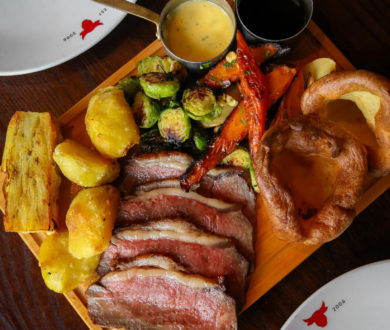
On the aforementioned Onetangi promenade, 372 takes casual dining up a notch while keeping a breezy island vibe. Run by Luke and Helen Carter, who, in fact, originally set up their neighbouring stalwart (Charlie’s) — 372 feels like a luxury resort offering with an expansive front deck overlooking the beach, and a sheltered patio with a showcase bar towards the back. The menu subscribes to summery by-the-beach food with an elevated edge.
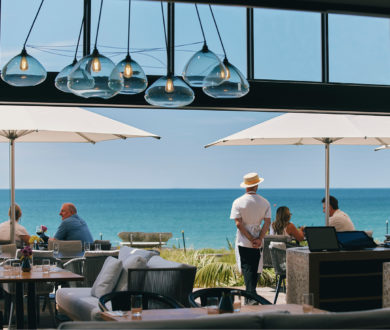
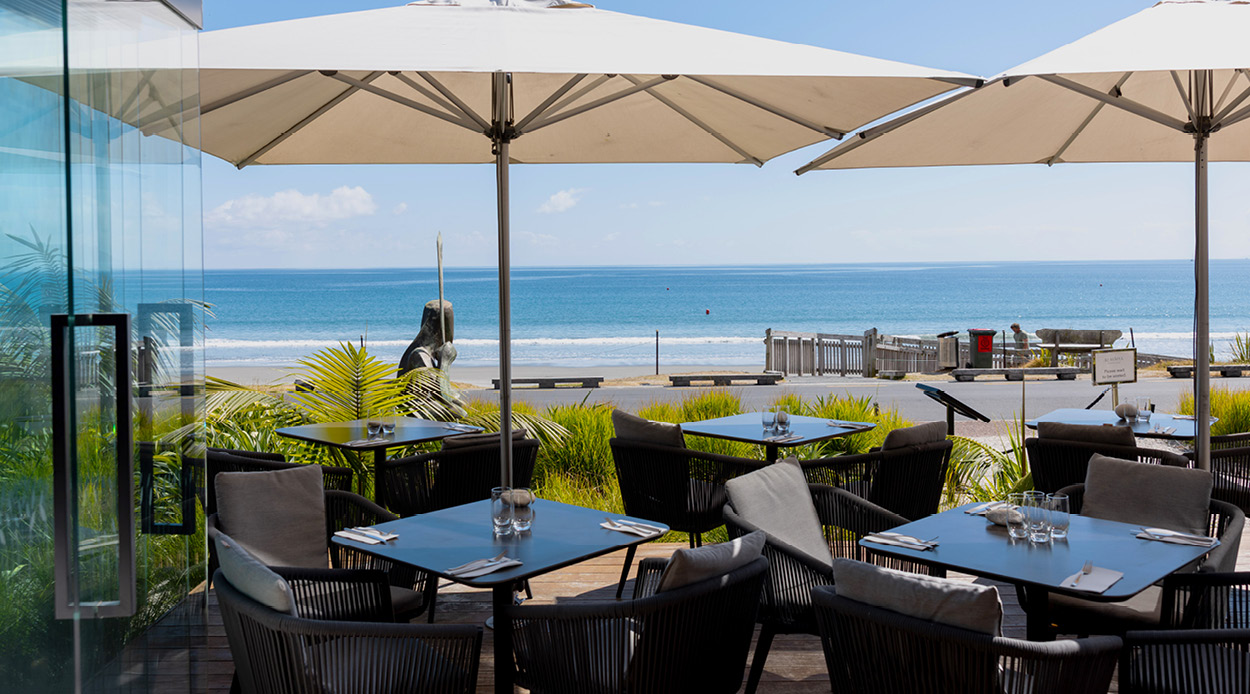
Set right on Onetangi Beach, Ki Māha is elevated beachside dining at its most assured. The menu pairs sustainably harvested seafood and ethically farmed meats with locally sourced seasonal produce, framed by some of the best sea views on the island. The name draws on the Māori kīwaha noho māha, haere māha, evoking contentment in a special place; the cooking, drinks list and setting all live up to it.
At the end of a country lane in the Awaawaroa Valley, Poderi Crisci is an Italian family-owned vineyard and restaurant. As such, it’s a stunning destination vineyard, which appreciates the art of al fresco food and wine, and fine gardens. The main restaurant is inspired by the finest traditional cuisine of the chefs’ homeland, prepared with local produce and modern touches. Next door, La Locanda is a breath of fresh air, for those who prefer a more casual outing — still with freshly shucked Te Matuku bay oysters accompanied by a glass of Poderi Crisci Arneis.
Te Motu Vineyard is a hidden jewel in the island’s already impressive wine stable, but has fast become one of the most popular Waiheke restaurants. The estate is nestled in the stunning Onetangi Valley, and epitomises every element of the ultimate Waiheke experience. Famed for their award-winning reds (of which we recommend sampling the entire cellar), The Shed’s restaurant offerings are created to complement the varietals, with a modern-rustic approach that harnesses the best of local produce in an un-intimidating way. An essential on every Waiheke itinerary, we think.
They say good things take time, and this is exemplified at daytime eatery Akitō, named after the word for doing things slowly in te reo. Owners Shantala Tengblad and Simon McNeish’s approach their cooking and food practises with patience, love and attention, especially with their plant-focussed pickling, preserving and fermentation. With inventive twists on typical brunch and lunch fare, this holistic eatery on Ocean View Road, Oneroa, is certainly one of the best Waiheke restaurants.
Josh and Helen Emett were regulars at The Oyster Inn since it opened in 2012, and made their presence official in 2020 when they became the new ‘innkeepers’, taking the restaurant and hotel on an exciting new trajectory. Situated above the shops on Ocean View Road, it has charming views of Oneroa Beach and of spectacular sunsets on a good day. The coastal-inspired bistro menu features fresh seafood dishes and seasonal crowd-pleasers. The namesake oysters come from Waiheke’s own Te Matuku, harvested fresh daily.
When thinking of where to wow visitors to Waiheke Island, Cable Bay is often first in mind. Both its award-winning dining room and the more casual wine bar have served many intimate dinners and laughter-filled lunches for over a decade, all to the stunning backdrop of its sweeping views back to Auckland city. With an ever-revolving display of produce, Cable Bay’s focus on seasonal goods means that we’re met with different, garden-fresh fare on every visit. The short meander back to the ferry through native bush afterwards completes the full experience.
Sip, savor, and unwind at Soho’s chic new Cellar Door on Waiheke Island. Nestled in lush vineyards on Onetangi Road, this industrial, New York-inspired oasis offers award-winning wines, Soho street food bites, and a picturesque spot to while away an afternoon to nature’s stunning soundtrack. A perfect blend of Waiheke charm and Rock’n’Roll flair, this newly-opened spot is a paradise for wine lovers.
Built on the nostalgia associated with ice cream and balmy kiwi summers, Island Gelato Co. has long been the go-to spot for a taste of island paradise. Owners Ana Schwarz and Geoff Tippett opened their gelateria originally as a pop-up in Oneroa many years ago, and — multiple new openings on the mainland and a new location on the Island (up Ocean View Road) later — it still has us lining up for more.
Whether you’re out for a casual dinner, ordering takeaways to be enjoyed on the beach, or slurping a few Bloody Marys the ‘morning after’, The Courtyard is the place to go. Set off the main stretch in Oneroa, the carefree Waiheke restaurant has a bach-like feel to it, with a mix of indoor and outdoor dining and enviable water views. Stop by no matter the time of day and enjoy a relaxed atmosphere, with refined food.
The perfect spot en route to the West Coast beach, it’s easy to see why The Shack is a favourite among locals. Open for breakfast and lunch, the rustic menu is filled with favourites like waffles, chilli scramble and a tasty cheeseburger. There are also vegan and gluten-free options aplenty, ensuring no diner is left behind.
Whether you seek the perfect pick-me-up with their invigorating coffee and seriously good cakes or crave a truly gratifying lunch, this joint has you covered. With a laser focus on bold, robust flavours, Cream Eatery takes pride in crafting dishes that showcase the true essence of ingredients, allowing their natural allure to shine through every bite.
Hamilton natives Anh and Pat Chaimontree do an outstanding job plying the people of Hamilton with their delicious Vietnamese eats. Trained in the addictive cuisine since watching her grandmother cook as a child, Anh has carefully honed her craft to creatively deliver flavoursome, family-style fare, from street food dishes through to fresh noodles and salads.
Quite likely the best thing to happen to the ‘Tron since the Botanical Gardens, Lisa and Brent Quarrie’s cafe by day and gastropub by night — complete with glittering hand-blown Monmouth glass pendants overhead — is a highlight within Hamilton’s burgeoning artisanal food scene.
A rarity in these parts, Embra’s unflinching offering is easily on par with some of the best in major cities, and it’s small boutique and back-street nature makes it all the more endearing. Boasting a celebration of modern Kiwi cuisine, French and British cooking techniques and locally grown produce, the set menu is a constantly evolving work of culinary art.
Less of a destination and more of an essential for those passing through, Cafe Baku’s plentiful cabinet offerings never fail to impress. From housemade salads to fresh, stuffed sandwiches (and the hallowed Allpress coffee), it is as reliable as it is enjoyable.
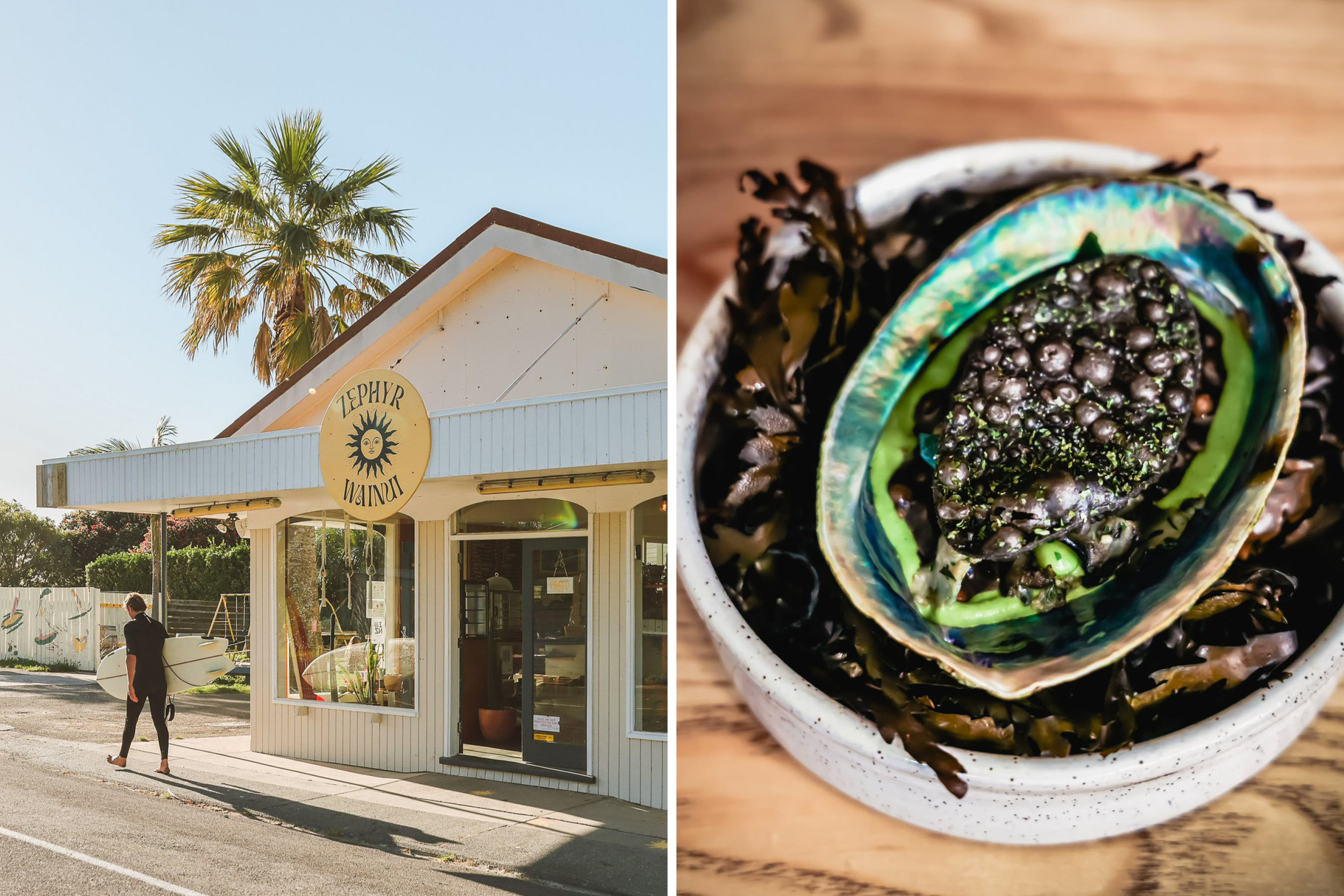
Zephyr is the epitome of Gisborne’s surf culture. The plant-based cafe is the brainchild of four friends who wanted to use delicious food to better the world. Perfect for a post-swim smoothie bowl, or the beloved Brekky Burritos, this Wainui Beach outpost feels straight out of Byron Bay.
This eatery quickly reached stalwart status in Taranaki for exhibiting nothing short of brilliance. Loved by locals as much as it is us out-of-towners, the bistro offers a new take on shared dining that always promises deliciousness.
At this widely-acclaimed Hawke’s Bay stalwart, Michelin-quality food is served in a relaxed atmosphere, with focus placed on freshness, flavour and dishes that promise to surprise and delight diners. Offering a set, five-course menu that changes daily (depending on the ingredients available), this restaurant is the kind of elevated dining experience that puts a unique twist on classic fine dining.
Drop into this fun, lively wine bar and wine shop for a glass of whatever takes your fancy, whether it be a bottle of something from overseas or a lauded local — the extensive wine offering here is highly-curated and ever-evolving. Alongside its wine list, Matisse offers tasting sessions, a seasonal menu of delectable sharing plates and tapas and an array of cocktails, craft beers and ciders.
After enduring extensive damage from a fire, Black Barn Vineyards’ bistro has emerged from the ashes, presenting a renewed ambience and an evolved menu. Chef Regnar Christensen crafts a culinary journey that features culinary delights that are as stunning to behold as they are to devour.
Y’a Bon is a modern artisanal bakery in Hastings, celebrating Hawke’s Bay living through a French lens. Founded by Moïse Cerson, a Paris-trained patissier, the bakery emphasises simplicity, quality, and community. Patrons can watch bakers at work through expansive glass windows adjoining Cupple café, which serves Firsthand Coffee.
Fresh, foraged flavours are what you will find at Napier’s contemporary restaurant, Bistronomy. The menu changes along with the season and the dishes only feature the best of the best ingredients, ensuring that everything that comes out of its kitchens is top quality.
St Martha in Havelock North is a vibrant all-day eatery offering garden-to-plate breakfasts, brunches, and lunches, complemented by premium Hawthorne coffee, house cocktails, and fresh smoothies, served in a stunning, design-led setting.
Set amid lush gardens with views of Te Mata Peak, Off The Track offers a relaxed, family-friendly dining experience. The menu features fresh, local ingredients, including herbs from their own garden, and caters to various dietary preferences with vegetarian, vegan, and gluten-free options. With outdoor seating and a children’s play area, it’s an ideal spot for casual meals and gatherings.
Run by none other than Mr Vinci himself, this Napier hotspot is serving up pizza pie just as it should be; big, thin-crusted and extremely tasty. Lord knows we love a good slice of the aptly named Banger.
If you’re looking for something different from the usual winery-based dining in Hawkes Bay, Central Fire Station Bistro in Napier is serving up a crowd-pleasing menu. In one of the art deco buildings that make the city so quaint, and like all good eateries, there’s a strong focus on local, seasonal produce, a fitting choice as the region is abundant with its offerings.
At this simple neighbourhood restaurant, expect to enjoy utterly delicious food and wine in a cosy, laid-back atmosphere. On the menu, classic dishes collide with modern flavours, with a variety of dishes to suit any persuasion (including a dedicated kids section). Alongside your dinner, enjoy a glass of wine from Mary’s award-winning line-up or a cocktail or two if you’re that way inclined.
It is fitting that ‘Sazio’ means ‘full’ or ‘satisfied’ in Italian because that is exactly how you’ll feel after dinner at this delicious Hastings restaurant. With menus that hero delicious pasta and authentic, Italian dishes, Sazio’s food shines in its simplicity, with a focus on good quality ingredients and exceptional flavours. Expect it to be busy — for good reason.
Helmed by a chef who cut his teeth working in Michelin-starred restaurants overseas, Malo serves modern restaurant food with a sophisticated twist, harnessing the potential of seasonal local produce to offer a fresh take on European-inspired cuisine.
The Best Of
Wellington
Left: Highwater Eatery, Wellington Right: The Runholder, Martinborough
Taranaki Street’s August Eatery has all the makings of a classic. The menu feels a little Honey Bones-esque while still offering its own slant on staples like Istanbul Eggs and pappardelle pasta for breakfast.
Taking up residence on Aro Valley’s main drag, this intimate 30-seater restaurant feels more akin to a delicious dinner party with friends. The set menu evolves every day, focussing on (as they all do) fresh, seasonal produce that pays homage to the surrounds. With two sittings every night, while the menu is never guaranteed, the execution is always delightful.
Found tucked away in lower Cuba Street, the open kitchen’s crown jewel is the charcoal oven imported from Spain, which informs everything Mediterranean inspired on the menu. Complete with local craft brews and an excellent wine list, it’s an intimate destination we recommend for lunch and dinner.
GPO transcends the boundaries of hotel dining by offering an enchanting retreat for indulging in modern European cuisine. With a menu that showcases ‘fruits of the sea’ alongside beautiful hand-crafted pastas and more, this culinary gem beckons any traveller seeking something new.
Kisa is Wellington’s answer to fresh, Middle Eastern fare. With a prime corner position on the infamous Cuba Street, the menu is casual yet chic, beginning with an impressive dips menu that extends all the way to indulgent dishes designed to share.
Taking up residence where former cult-favourite Mason once stood, Margot’s menu describes itself as a seasonal work in progress. It is part wine bar, part dining destination, that offers an ever-changing raft of sumptuous small plates to share.
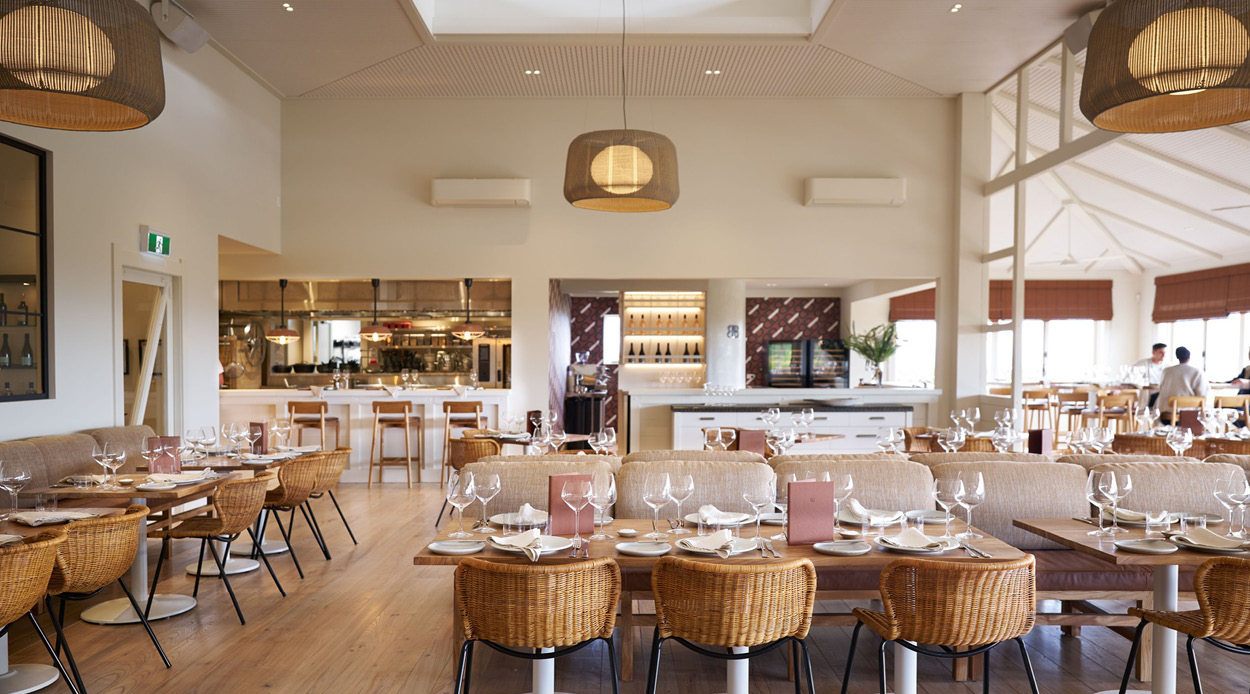
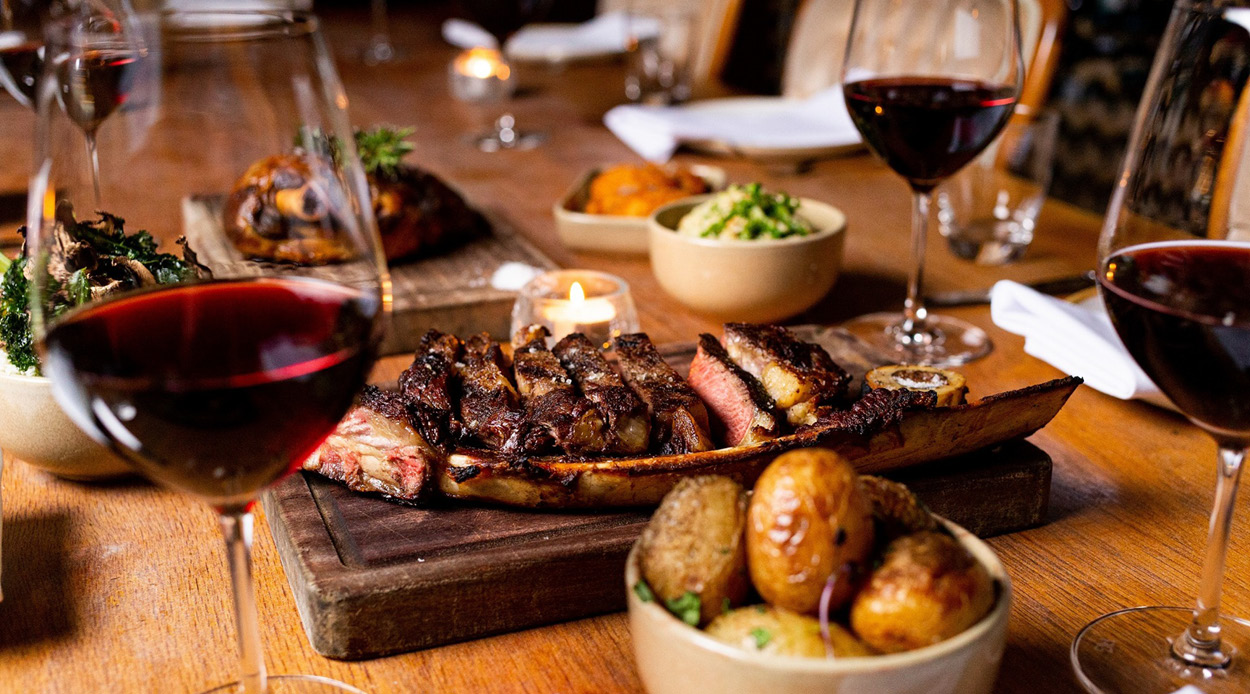
Nestled on the edge of the famed Martinborough Terrace amid Wairarapa sits The Runholder, an expansive new hospitality beacon by Foley Wines that celebrates the best of the region’s spoils. With its restaurant, tasting room, cellar door, distillery, private dining room and subterranean barrel hall, The Runholder sits pretty on a run of land at Te Kairanga vineyard — a plot originally held by Martinborough’s pioneering namesake, John Martin. Here, you’ll find exquisite local food and drink, striking views, and endless ways to while away a day in paradise.
Built by the Dixon family, who felled their own trees, The Mussel Inn is an off-beat institution in Onekaka that brews its own beer, serves wholesome fare and features live music.
With a menu of imaginative seasonal dishes designed for sharing, accompanied by a thoughtfully curated wine selection, including rare and natural wines. Arden invites you to indulge in a gastronomic experience that celebrates the richness of local produce and intimate dining.
Fine European cuisine hasn’t always been synonymous with Nelson, but Le Plonc’s inspired offering is worth discovering. (In fact, it has quickly made it as one of the best restaurants in New Zealand.) Using local wildlife photographer Craig Potton’s works as the starting point (whose gallery is co-incidentally next door), the degustation menu is complemented with divine French wines, culminating in a truly memorable meal.
Serving up a raft of utterly delicious fare that harnesses the mouth-watering potential of charcoal-fire cooking, Harvest is a must-visit for anyone stopping in Blenheim. For the team at Harvest, ‘authenticity’ is the name of the game, where ever-changing seasonal menus tap into the best local produce, and the culinary maestros in the kitchen whip up most of their dishes in a Mibrasa Charcoal oven (the kind used in a number of Michelin Star restaurants around the world). Here, diners will not only discover exceptionally tasty food but they will be treated to world-class hospitality in a breathtaking, Marlborough setting.
Appearing to levitate above the water on Nelson’s winding waterfront, Boat Shed’s seasonally inspired menu celebrates elevated New Zealand produce every day. Here, make the most of the nearby port’s bounty with freshly caught seafood, and an outlook that truly feels like summer, no matter the weather.
Hopgoods & Co is a Nelson institution, with the bistro taking up residence in the heart of the city, serving seasonally based bistro-style food with the best of the region’s artisan produce. Intimate and chic, it’s always delicious.
Far from the winery destinations, Arbour is undoubtedly one of New Zealand’s finest regional restaurants. It is perhaps the grandest showcase of Marlborough’s bountiful offering and delivers a four-course tasting menu and a seven-course dining experience.
Found on the coastline between the Marlborough Sounds and the expanse of Christchurch is Kekerengu’s The Store. Some 60km north of Kaikoura, the rugged coastline makes for a beautiful holiday drive, and The Store is the perfect pitstop. It’s been a mainstay for almost three decades, serving much of the same locally sourced fresh fish. The breathtaking views of the beaches beyond are just a welcome addition you can expect to find around these parts.
Inati’s captivating fare, meticulously prepared and sourced from the finest local ingredients, adds a new element to Christchurch’s dining scene. From the intriguing Boeuf-nuts to the evocative Donkey Carrot, Chef Simon Levy’s culinary artistry unfolds amidst a thoughtfully designed space, promising a seriously unforgettable meal.
Earl will transport you with its European bistro-style classics and warm, welcoming atmosphere. The all-day eatery and wine bar is not only one of New Zealand’s best restaurants but is a must-visit for fans of unpretentious food with an emphasis on flavour and premium ingredients.
At the southern destination’s Gatherings, organics take precedence. Boasting the official title of the country’s first natural wine bar, the drinks offering is just a wonderful complement to the food, which by our judgement, is second to none. Featuring modern, innovative fare, that loosely nods to Mediterranean cuisine, it is essential dining for any Christchurch vacation.
This excellent spot offers a unique taste of the South Island that needs to be on your radar. Bessie specialises in dry-aged cuts, so vegans need not apply, and trust us, they’re not exaggerating when they claim to be ‘Canterbury’s best’. With a complimentary wine menu that promises to keep you perfectly libated, Bessie is a Christchurch favourite.
This popular brunch spot, with it’s killer coffee and mid-century modern / Scandi aesthetic, never misses. Located in a light, airy, architecturally-designed industrial space on Manchester Street, here, you’ll find a European-influenced menu, Lyttelton Coffee Company coffee, a cabinet brimming with grab-and-go goods, and an eclectic crowd — with a place for everyone.
This modern Euro-Asian eatery is best-known for it’s creative Korean, Chinese, and Southeast Asian fare, served in a dimly-lit, moody space in the heart of Christchurch city. With striking views out to the Avon, beautifully conceived interiors, and an inventive menu sure to satisfy, this inner-city go-to should be at the top of your dining agenda when visiting the Garden City.
A town traditionally considered a pit-stop, Barkers’ new eatery is the perfect spot to while away some time in South Canterbury. Half shopfront for the now-impressive New Zealand food brand, the eatery is what has us coming back. Serving Allpress Coffee (a rare commodity around these parts), the menu showcases Barkers’ brilliance with delicious local slants on eggs benedict, French toast, and burgers for later in the day. We’d also suggest the Tasting Platter, where local cheeses and produce have been expertly paired with some of Barkers’ emblematic condiments.
Anyone undertaking the harrowing journey south to the snow will be familiar with Fairlie Bakehouse — or, more specifically, the pies. With 4000+ Google reviews and counting, it’s fair to say that these pies are unrivalled and are an essential contribution to a car of happy travellers.
Set on a piece of historic land in Arrowtown, Ayrburn is the spectacular new dining precinct that is shaking up New Zealand’s culinary scene. Here, you’ll find original farm buildings now housing a series of exceptional hospitality venues that will offer visitors a vast array of experiences. From delicious, family-friendly eateries to intimate bars, fine dining restaurants, picnic spots, a gelateria and more, you’ll find something for every taste and proclivity.
Loved for its passionate commitment to being both organic and 100% sustainable, the Sherwood kitchen is very much focused on a homegrown ethos. With a philosophy of things “not having to travel far” to make it onto your plate, the team at Sherwood have an extremely deft way of working locally grown produce into unspeakably delicious dishes.
Odd Saint complements its owners’ previous impressive destinations but also sits as a unique establishment — a bistro-style eatery that puts a deliciously creative spin on an otherwise traditional menu, offering what the owners call ‘global soul food’.
Perhaps the region’s most familiar destination, there is good reasons the crowds habitually frequent Amisfield’s restaurant and cellar door. Helmed by Executive Chef Vaughan Mabee, the flavour profiles on this menu are so authentically regional, you can see how the entire team are doing all that they can to honour both the specialness of the environment and the species that live there.
Formerly (and fondly) known as Akarua, Mora Wines & Artisan Kitchen recently stepped into its second culinary chapter. Renowned for its magical outdoor courtyard and its cottage garden festooned with flowers, Mora is the ideal spot to dine with a group without compromising on fanciful fare.
With a menu inspired by the intricate cooking techniques of Northern Italy and showcasing premium, Central Otago produce, Aosta is the South Island venture from renowned chef Ben Bayly and is one of the best restaurants in New Zealand. Putting a Kiwi spin on fine Italian food, this incredible restaurant has become a fast favourite among locals and visitors alike.
An extension of the Rodd & Gunn clothing empire, The Lodge Bar is the place to sample the best food and wine our country has to offer. Located on the lakefront side of their retail store, the picturesque setting is made all the better by the seasonal menu, designed by famed Kiwi chef Matt Lambert, formerly of New York City’s Michelin-starred Musket Room.
Authentic Tex-Mex, frozen margaritas and legendary service collide at Miss Rita’s Cantina, the latest eatery to open its door in Queenstown’s newest hospitality precinct below the Skyline Gondola. Sure to deliver a seriously good time for the whole family, the all-day eatery is bright, airy, and all about kicking back and relaxing over great food and delicious drinks. Sublime.
This vibrant modern-Mexican eatery is nestled down the end of The Precinct laneway, tucked off the main street, and offers the perfect escape. Take to one of the sun-drenched outdoor tables and order a round of margaritas and a selection of snacks, or tuck into one of the intimate booths inside for tacos, a tasty ribeye from the grill, and a namesake Paloma. No mater what you’re in for, dining at Paloma feels like a celebration, any day of the week.
Kamino Coffee Shop & Eatery in Wānaka offers a stylish, sunlit space serving artisan coffee from Dunedin’s Common Ground, inventive milkshakes, and a menu of fresh bowls, sandwiches, and pastries. Relax in the courtyard or rooftop terrace for a vibrant, all-day dining experience.
A local go-to, and for good reason, Big Fig serves up an array of salads and tasty hot dishes from an ever-rotating cabinet, served by the plate, alongside a considered menu of made-to-order dishes. Select your favourites, grab a coffee, and settle into one of the cosy couches or perch outside and soak up the striking lake views. It’s slow food, served fast.
Always bustling with locals and visitors alike, Scroggin is one of Wānaka’s best cafés. Inspired by New Zealand’s backcountry huts, it offers a warm, inviting space to enjoy seasonal dishes and house-baked pastries. Owner Lucy Conway’s passion for quality and community shines through every detail.
On Clyde’s charming main street, Olivers is a sun-drenched café by day and an atmospheric restaurant at nightfall. As well as the calibre of wines you’d expect from Central Otago, the on-site Victoria Store Brewery pulls craft beers.
This iconic southern restaurant has been a pioneer of woodfired cuisine, noted as routinely serving up some of the country’s most delicious meats — the kind that you would only find around these parts. It’s not every day you’ll find us in Dunedin, so when you do, No7 Balmac becomes essential dining.
A trip to Dunedin wouldn’t be complete without a visit to Moiety, a sophisticated restaurant located in the historic warehouse precinct. With its five-course offering flawlessly showcasing local produce at its finest, each plate is like a work of art.
Here, the team from No.7 Balmac presents an impeccable Italian restaurant at Saint Clair Beach, Esplanade, which serves up a slice of the good life. With interiors by Cheshire Architects, it’s cosy even when the waves are crashing.
Nestled in Dunedin’s quaint, beachy suburb of St Clair, The Junction is a laid-back drop-in specialising in perfect coffee, tasty sandwiches, nourishing salads, hot pies, and a cabinet packed full of wholesome, homemade treats — from carrot cake to cookies, scones to slices. A perfect place to call in solo, with the kids, for a quick coffee with a friend, or to stock up for a beach picnic.
One of Dunedin’s most famous institutions, Plato is the place to go if you’re looking for fresh seafood cooked to perfection. A treasure trove of quirky decor with a consistently lively vibe, here, you’ll find an extensive menu and considered drinks list featuring in-house Birch Street Brewery beers.
Big Lizard, the new venture from once beloved institution Side On’s founders, brings inventive sandwiches, pastries, and specialty coffee to the vibrant Vogel Street. Expect bold flavours, creative combinations, and a laid-back, always welcoming atmosphere.
A trip to Dunedin isn’t complete without a meal at this serene farm-to-table café nestled in native bush on the Otago Peninsula. Open Friday to Sunday, it offers a seasonal menu of 5–6 dishes, complemented by fresh pastries and award-winning preserves. With a cosy 25-seat capacity, bookings are recommended. It’s a perfect retreat just 25 minutes from Dunedin’s city centre.
Adjø is a cosy Dunedin café and wine bar offering Nordic-inspired fare — think hearty porridge, smørrebrød, and house-made schnapps — served with warmth, creativity, and a touch of Scandinavian charm.
Think of this as Southland’s answer to Orphans Kitchen. It’s eclectic and, dare we say it, slightly hipster, with a thorough yet sincerely delicious coffee menu, and an all-day eats menu that ranges from bagels and Turkish eggs to pork belly bao buns.
At the tip of the South sits Oyster Cover Restaurant & Bar, where the focus is on both food and expansive views. Even if oysters aren’t your thing, plenty of local delicacies like a fresh seafood chowder, and at times, an iconic Southland Roll can be found.
For more exclusive access to what the city has to offer, engaging content, excellent imagery and thought provoking commentary on the life that surrounds you, subscribe to Denizen magazine now.