


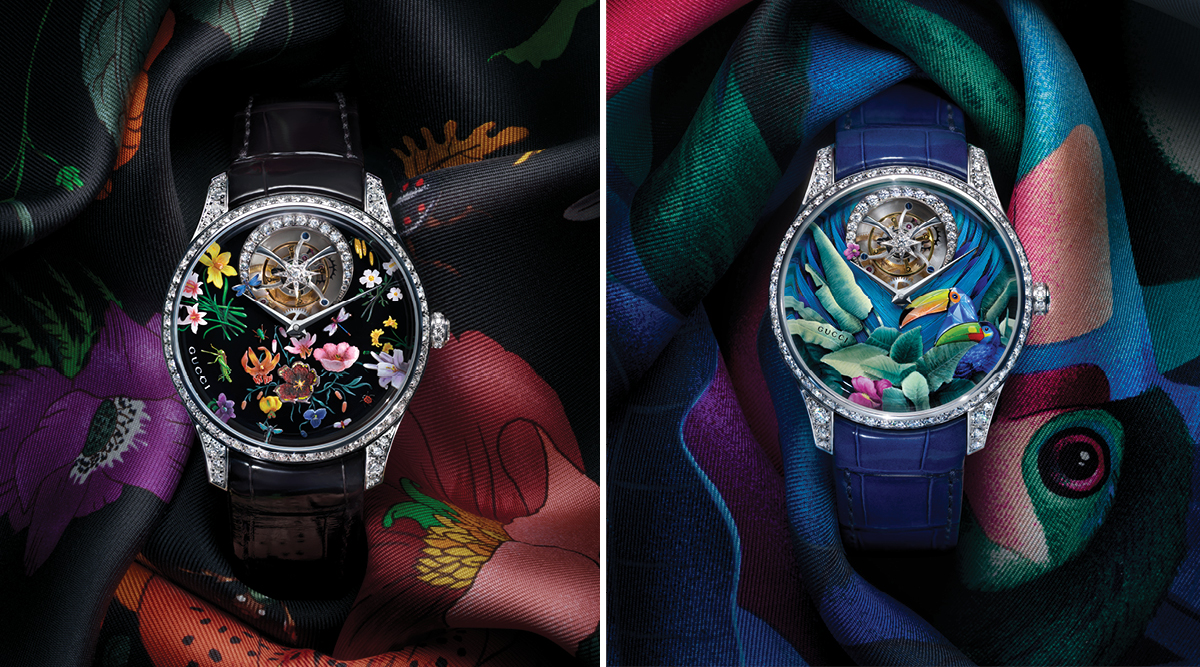
Gucci occupies an unusual position in watchmaking. It is, first and always, a fashion house, which means a portion of its watch output will inevitably be read through that lens: beautiful objects designed primarily for brand recognition and wrist presence, elegant without demanding the kind of close technical attention that keeps serious collectors awake. But to spend too long on that observation would be to miss the point of Gucci’s 2026 collection, because the Métiers d’Art pieces exist in a different register. This is where the house’s archive, some of the most exquisite artisanal techniques in the industry, and a French feather artist named Nelly Saunier converge on four 40mm white and rose gold tourbillons that are, without qualification, among the most extraordinary watches I saw in Geneva this year.
G-Timeless Métiers d’Art: Flora
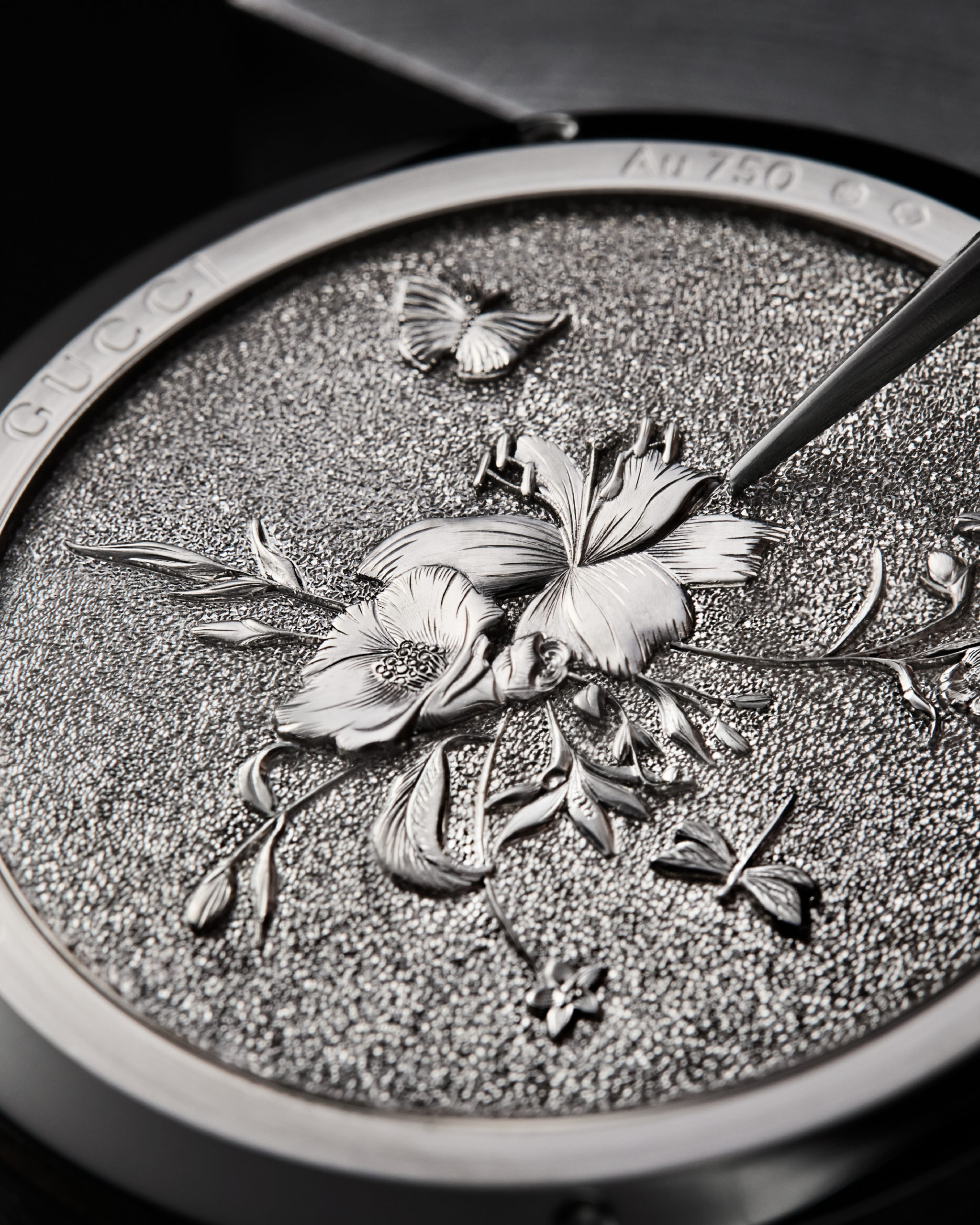
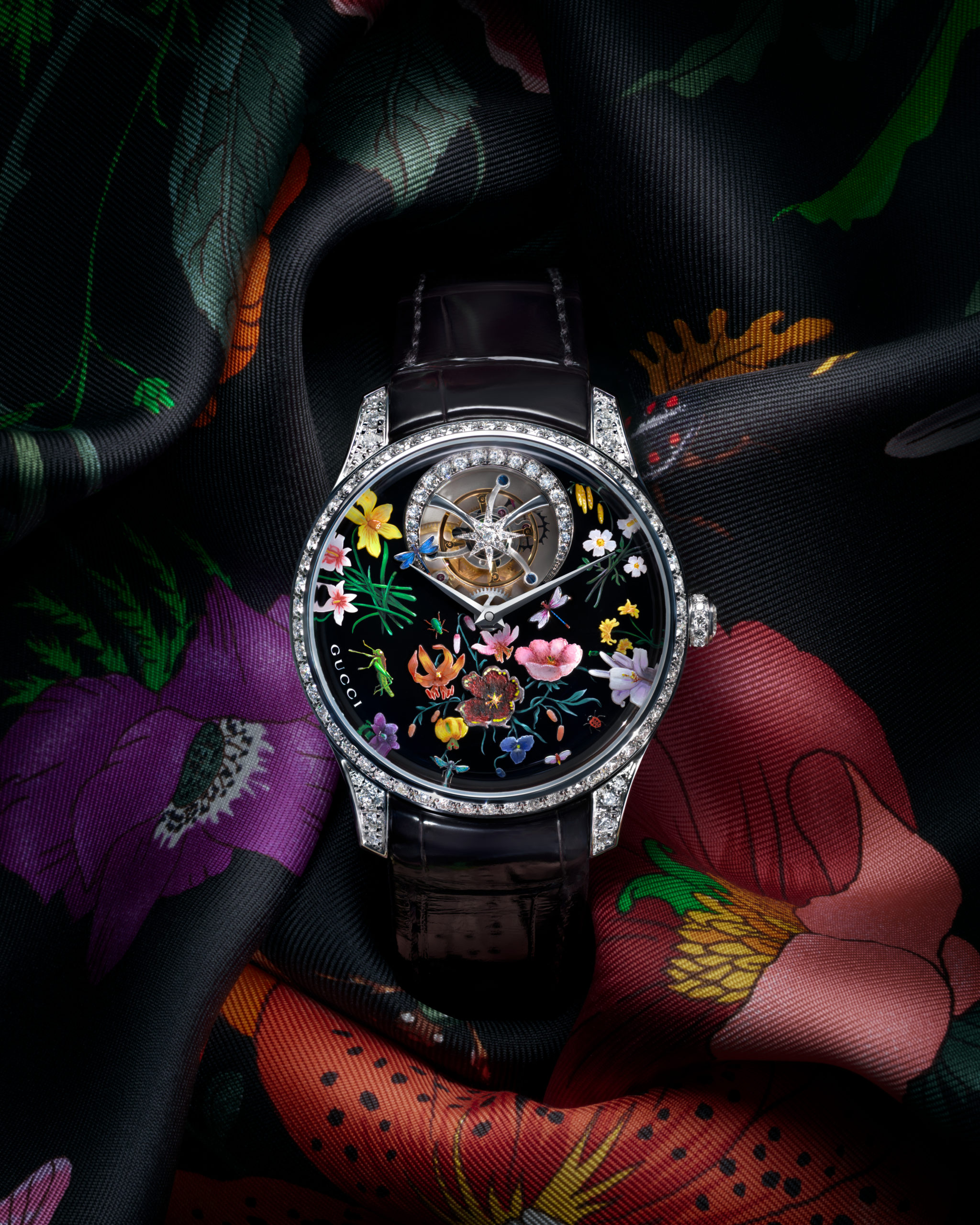
Vittorio Accornero created the Flora print for Gucci in 1966, originally as a silk scarf for Grace Kelly. Sixty years later, it becomes the subject of a white gold tourbillon featuring micro-painting, hand engraving, and individually set minerals to recreate its fluid botanicals on an onyx dial base. Pink opal, blood jasper and mother-of-pearl are each inlaid separately, refined by laser and finished by hand. The case carries miniature white gold creatures, a grasshopper and a dragonfly, rendered with fine engraving and micro-painting at a scale that makes you pause and think about the people who do this work, and what their eyesight is like by Friday afternoon. Viewing it in person at Gucci’s offsite presentation at The Woodward Hotel, the exacting detail has to be seen. A diamond-set case, a diamond-set tourbillon at twelve, and sixty years of history compressed into something you can wear on your wrist.
G-Timeless Métiers d’Art: The Crane
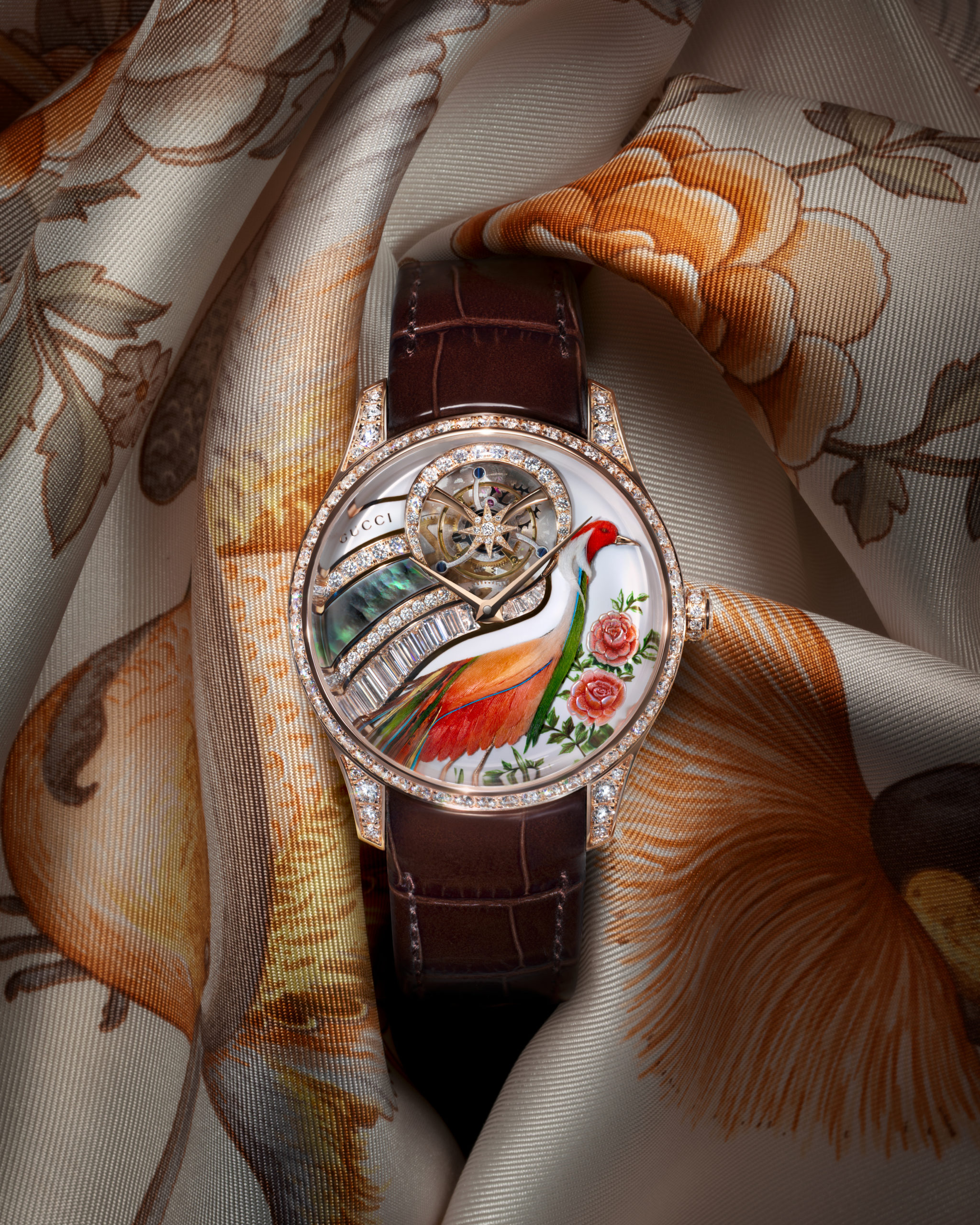
The second Métiers d’Art piece takes an archival scarf design from the early 1980s. A rose gold case, diamonds, a white grand feu enamel dial, and at the centre, a crane outlined in rose gold and brought into three dimensions by Nelly Saunier, the French feather artist who works exclusively with feathers gathered during natural moulting, each one selected by hand for hue, texture and reflective quality. The gradient Saunier achieves here, moving from the body of the bird outward through the composition, can only be appreciated in person. Flowing channels of diamonds and baguette cuts alternate with mother-of-pearl. Blooming flowers, engraved and micro-painted, complete the upper register.
G-Timeless Métiers d’Art: The Toucans
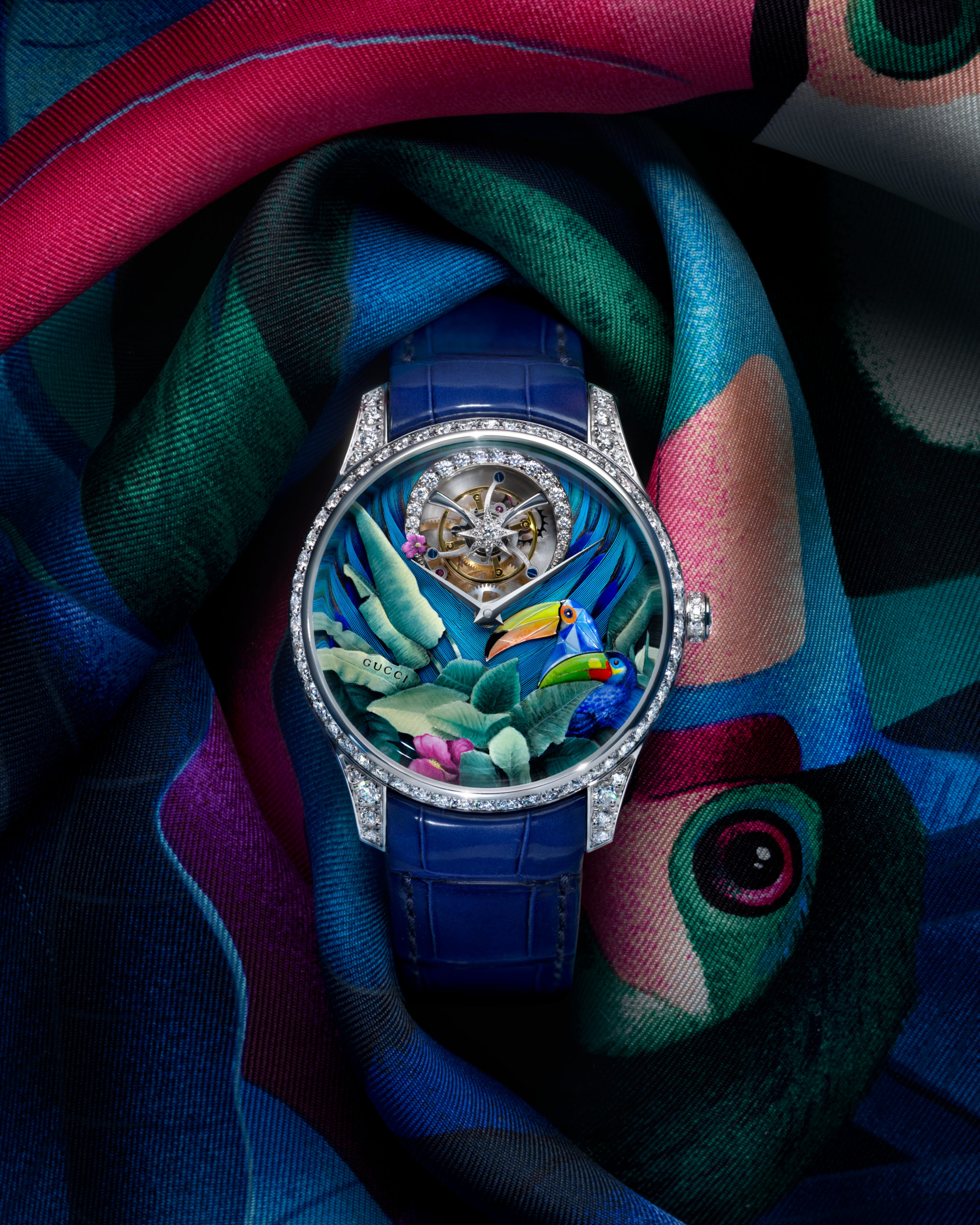
The third piece in the Métiers d’Art series revisits an archival print from the 1980s in a white gold and diamond case, and it is perhaps the most quietly intricate of the four. Saunier’s feathers form a tonal blue and aquamarine gradient across the dial, a composition that shifts as the light moves across it. The toucans are cut from mother-of-pearl and hand-painted on both faces, a detail that only the maker and the collector who thinks to turn the piece in the light will ever fully appreciate. Green foliage surrounds them in hand-engraved mother-of-pearl. At twelve, the tourbillon carries a fuchsia-pink flower in micro-painted mother-of-pearl, an unexpected accent that lifts the composition.
G-Timeless Métiers d’Art: The Tiger
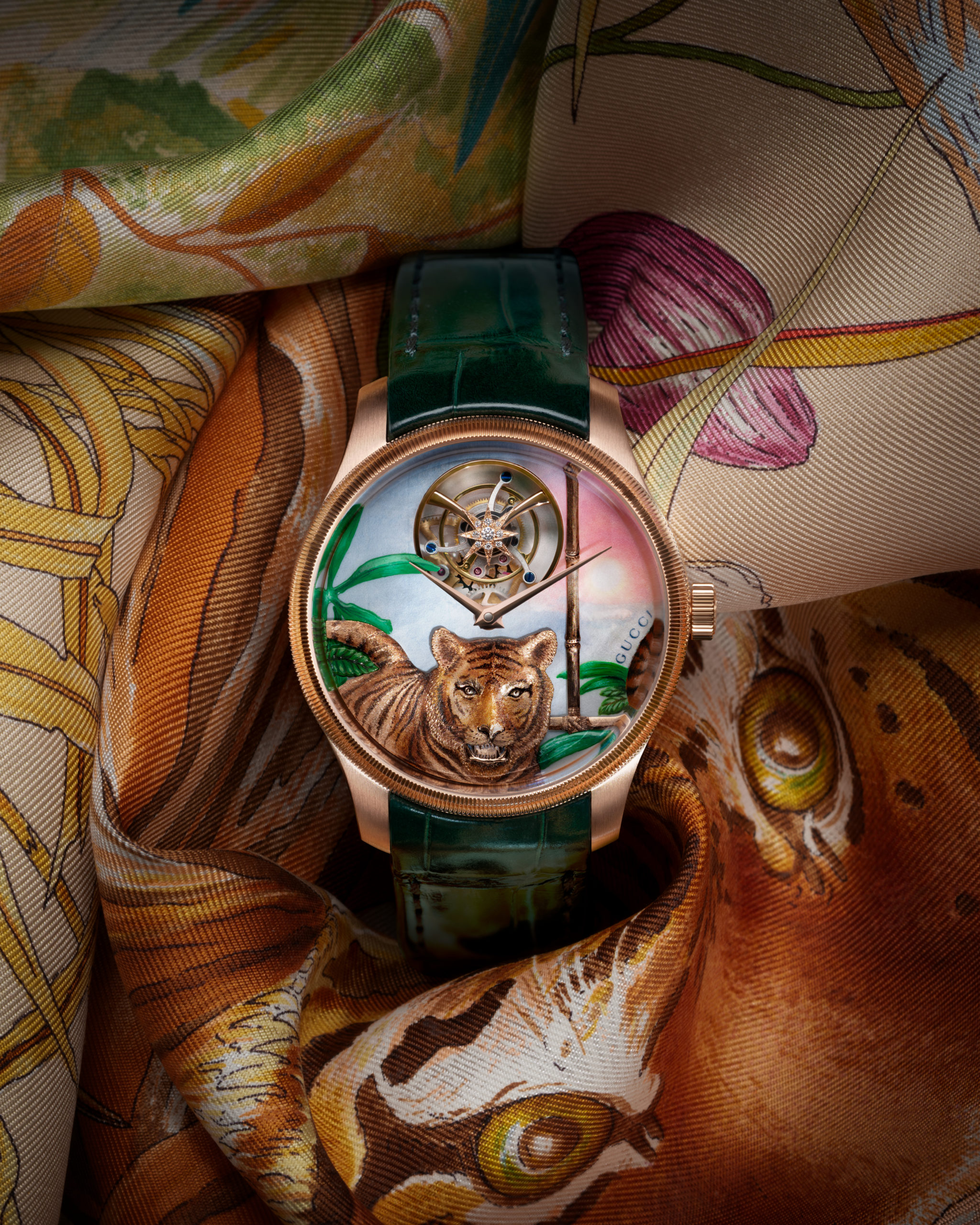
The fourth Métiers d’Art watch draws on Gucci’s Animalia scarf prints from the late 1970s, placing a hand-painted rose gold tiger against a mother-of-pearl dial, where micro-painting evokes a blazing sun dissolving into haze beneath the surface. The natural iridescence of the mother-of-pearl becomes part of the composition rather than a neutral background, and the effect in person is more alive than any of my photographs or videos have managed to convey. A hand-engraved bamboo accent in rose gold, a callback to the house’s archive, and a diamond-set star on the tourbillon at twelve. The most structurally unified of the four, with every element returning to a Gucci reference, and the one I found myself returning to most.
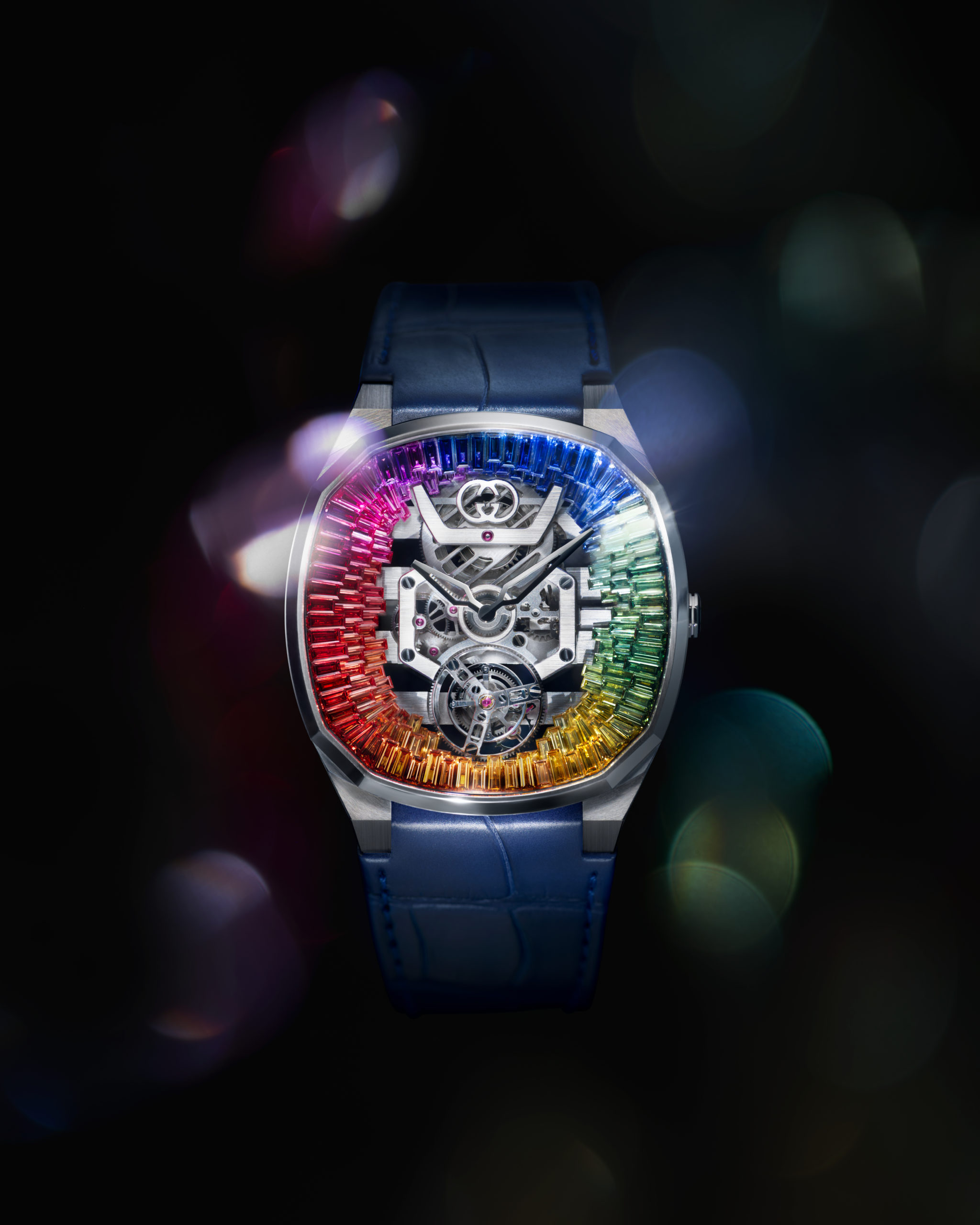
Gucci 25H with Rainbow Sapphires
Previous iterations of the 25H have always carried horological credibility thanks to its amphitheatre silhouette, the ultra-thin 8.4mm case, and a skeletonised movement that treats the mechanics as decoration rather than concealing them. The 2026 version retains all of that and adds the drama of rainbow-coloured baguette sapphires, each selected for shade and set by hand in graduated tones around the open-work dial. The result intensifies what was already a watch with something to prove. Completed by a blue alligator strap, this is a timepiece for someone who appreciates both colour and complication.
Horsebit and Bamboo
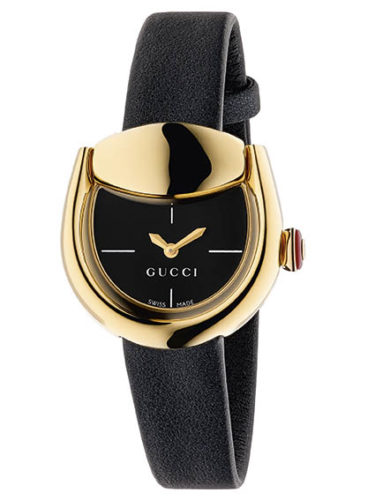
There is a particular confidence required to bring back an icon. Not the confidence of novelty, but of knowing something was right the first time. The Horsebit has been in Gucci’s vocabulary since the late 1940s, and its return in 2026 across five variants, including sculptural chain bracelets in polished steel that wear as much like jewellery as timepieces, feels earned rather than opportunistic. The burgundy leather and powder pink iterations are exactly what they should be, and the chain variants in particular are tactile and substantial in a way that photographs simply do not capture.
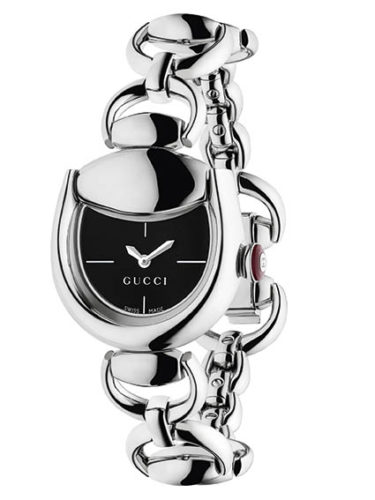
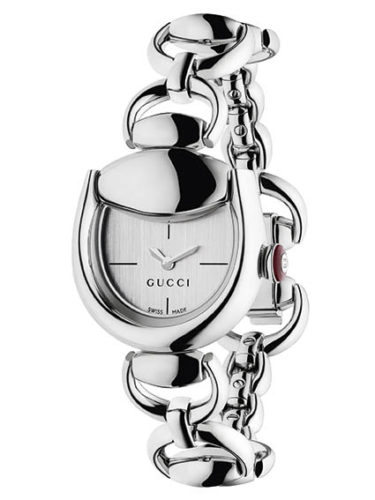
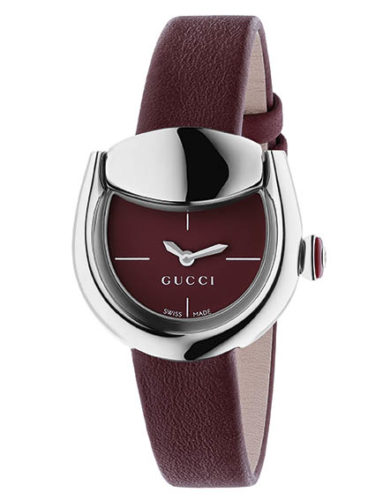
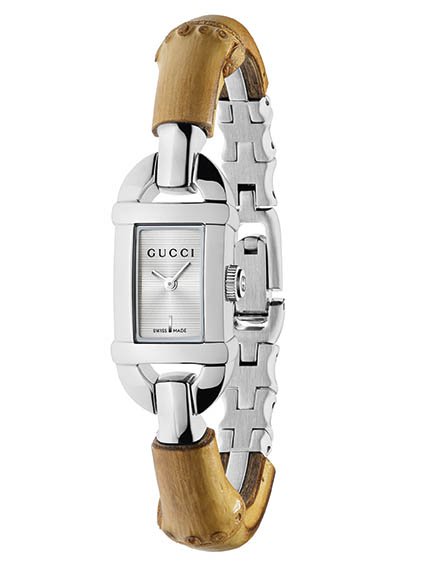
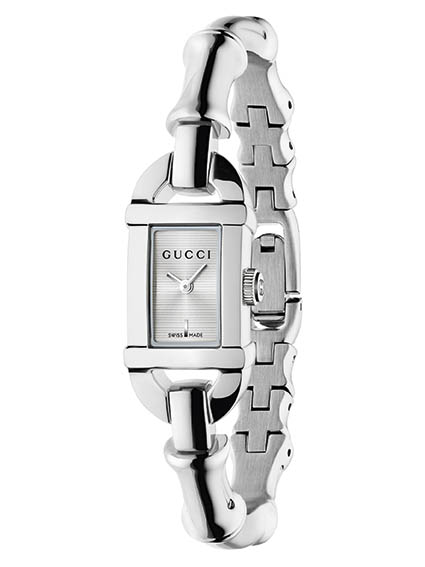
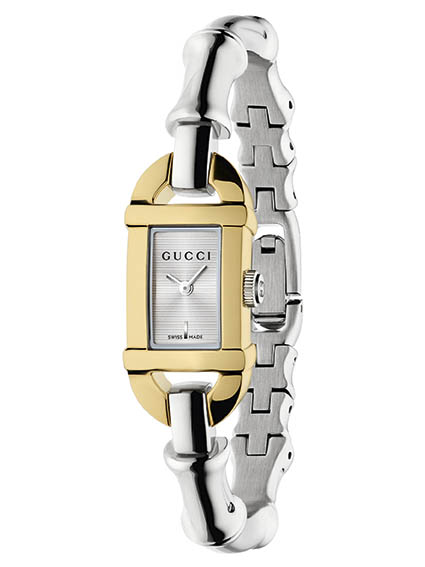
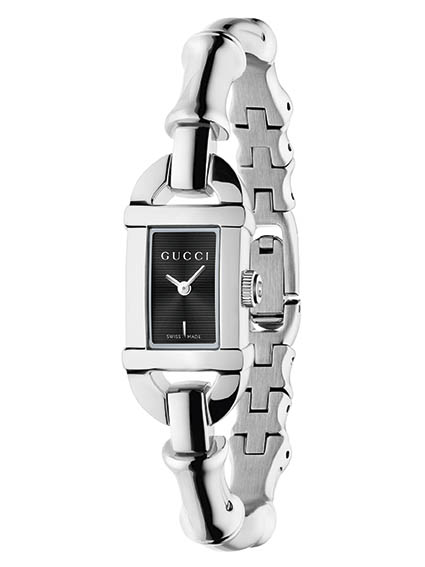
The Bamboo, available in 22 x 17mm in four versions, follows the same logic. The wooden bracelet variant has a material warmth that only comes from a house that understands craft. These are not reissues. A restatement.