


There is a particular kind of creative confidence required to return, season after season, to the same source material and find something new. Tiffany & Co. has been doing this for nearly two centuries, and with Blue Book 2026: Hidden Garden, chief artistic officer Nathalie Verdeille demonstrates that the house’s most enduring design language — the flora, the fauna, the hand-formed vines and sculpted wings of Jean Schlumberger’s extraordinary archive — remains genuinely alive rather than merely preserved.

This is Verdeille’s fourth Blue Book collection, and it arrives with the quiet assurance of a maison that has nothing to prove. Where previous releases have tested the boundaries of the house’s identity, Hidden Garden leans into it: the natural world rendered in platinum and gold, exceptional gemstones chosen not for spectacle but for specific, deliberate character.
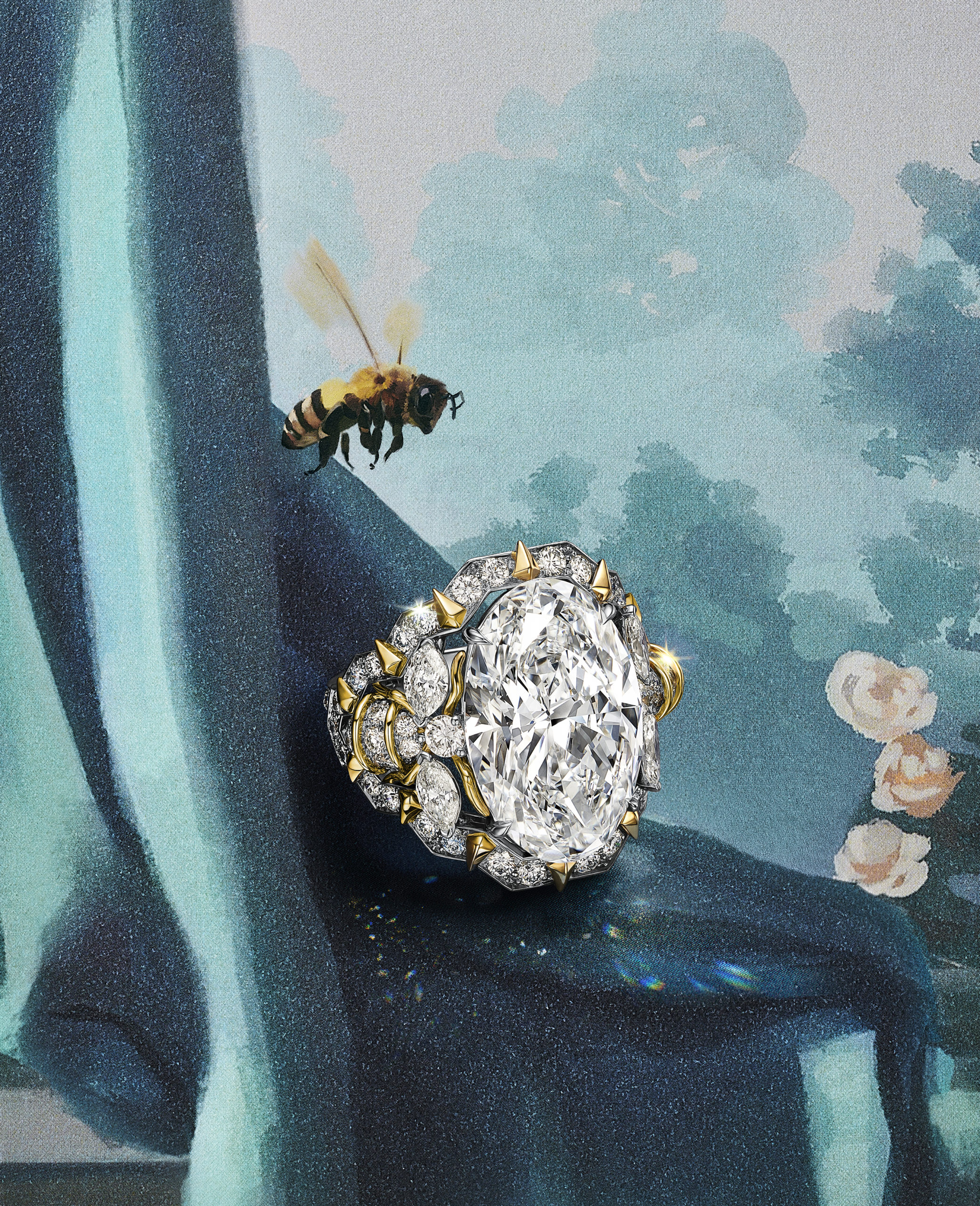
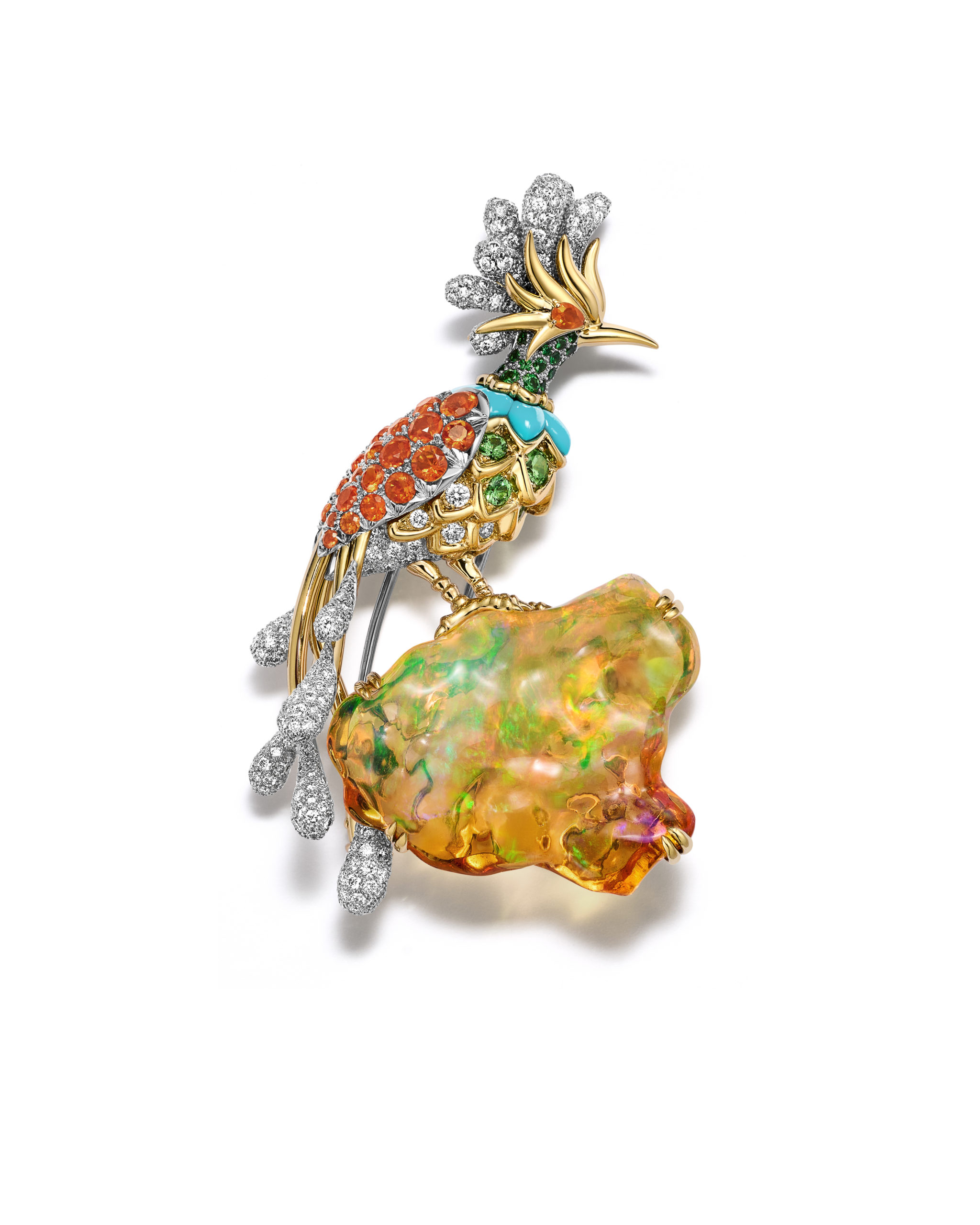
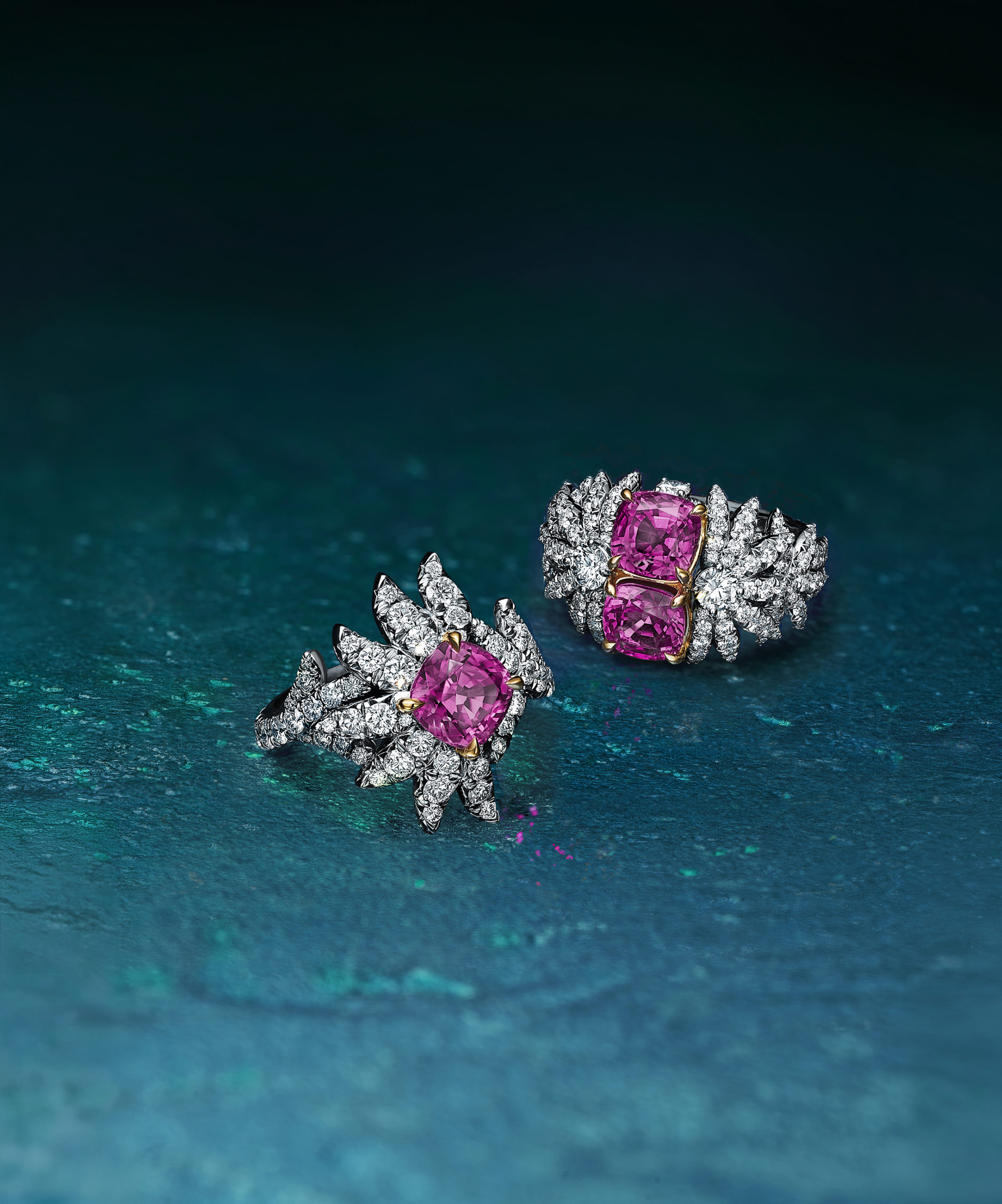
The spring launch unfolds across eleven chapters including Monarch, Butterfly, Bee, Jasmine, Bloom, Marguerite, Parrot, Paradise Bird, Bird on a Rock, Twin Bud, and Palm. Each draws from Schlumberger’s archival vocabulary and reinterprets it through Verdeille’s contemporary lens. The governing idea is transformation: not the dramatic kind, but the quiet, almost imperceptible shifts that define the natural world. A bud on the verge of opening. Wings caught mid-movement. Vines that appear to grow in real time around the wrist.

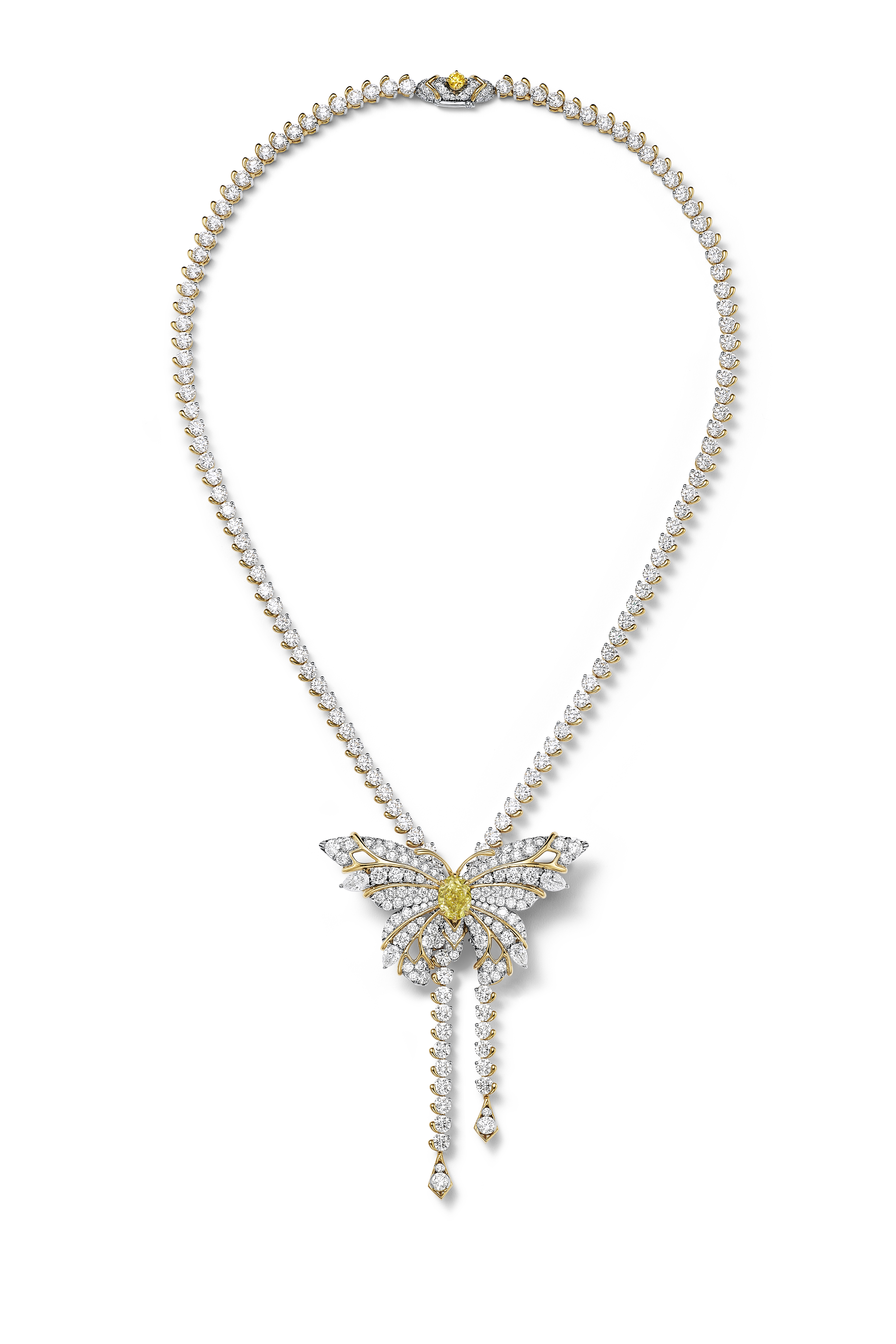
The Butterfly chapter is perhaps the most tonally complex. Unenhanced padparadscha sapphires, that rare and contested intersection of pink and orange, are set alongside Montana sapphires of a particular denim blue, a pairing that shouldn’t resolve as well as it does. The result is less illustration than impression: the fragile iridescence of wings captured in stone rather than documented in it. Select pendants detach to be worn as brooches, a nod to the house’s longstanding tradition of transformable design that functions here as more than a technical flourish. It mirrors the chapter’s own subject.
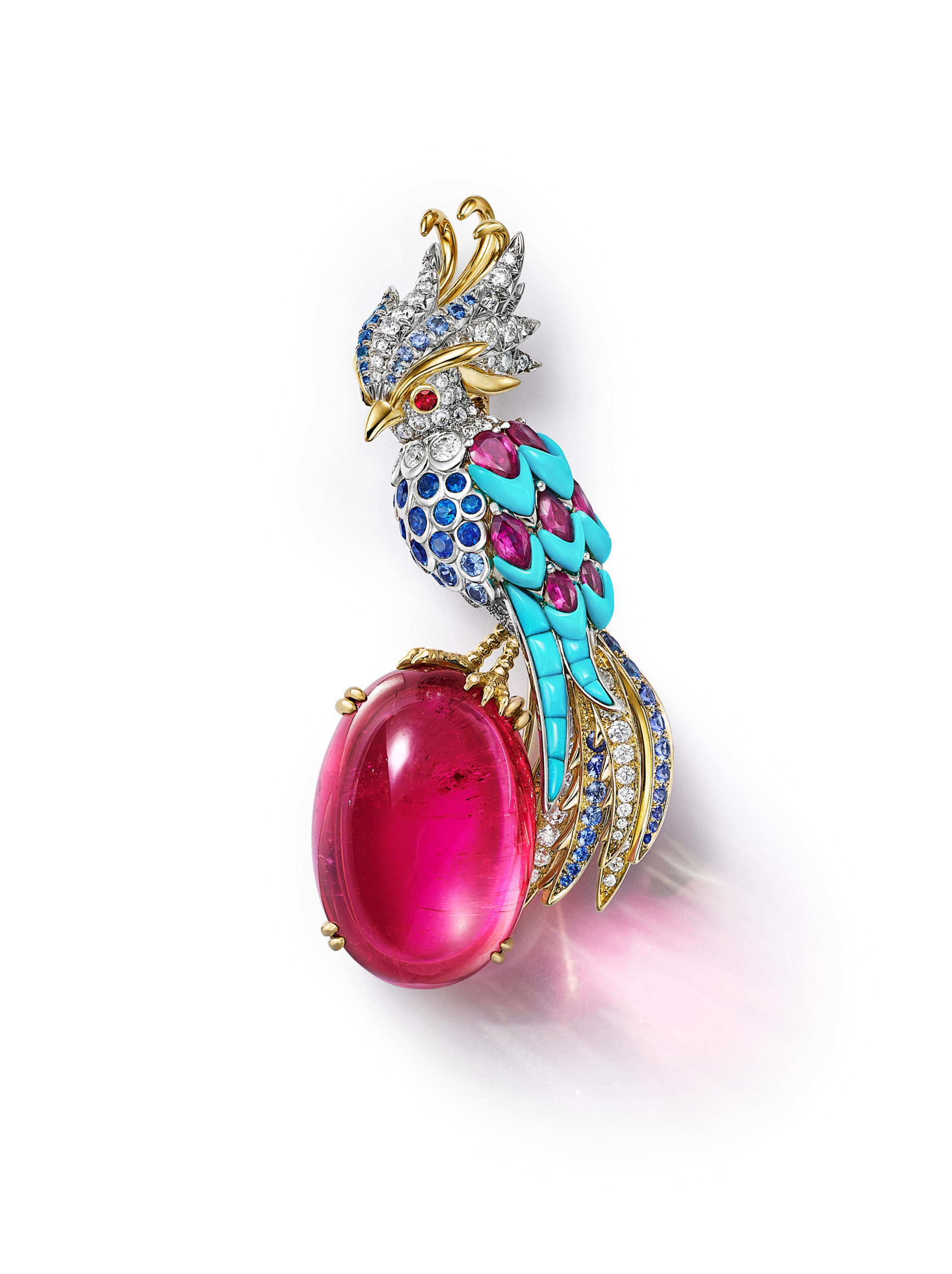
The Parrot brooches are where the collection’s technical ambition becomes most visible. Paillonné enamel, hand-applied in a painterly sequence of dark blue, duck green, and Tiffany Blue®, creates feathered surfaces whose tonal shifts evoke actual iridescence rather than its representation. This is an ancient technique, passed down through generations of Tiffany artisans, deployed here in service of something genuinely chromatic and alive. Paired with unenhanced blue and purple sapphires, the silhouette achieves the particular balance of specificity and fantasy that defined Schlumberger’s original 1960s parrot brooches.
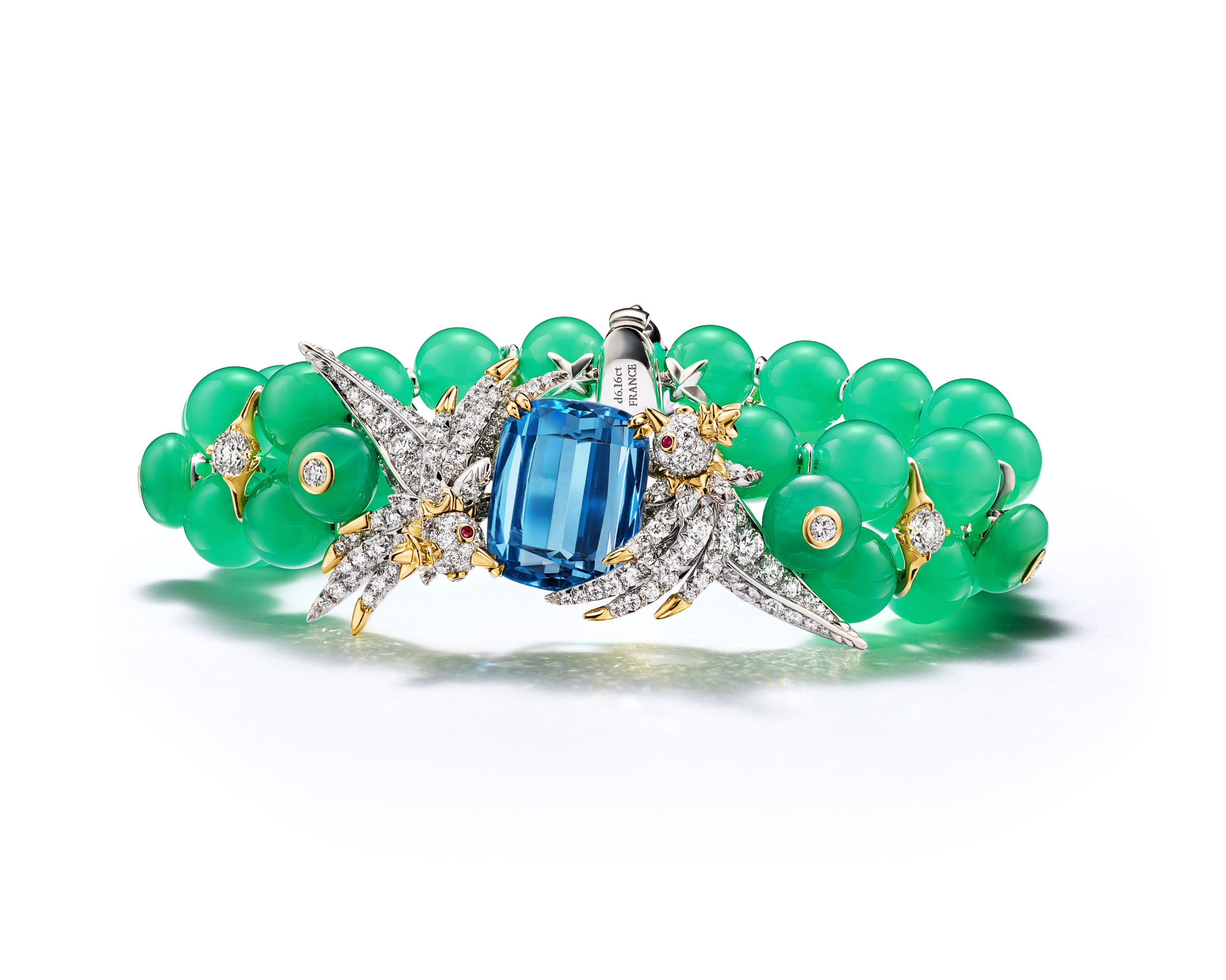
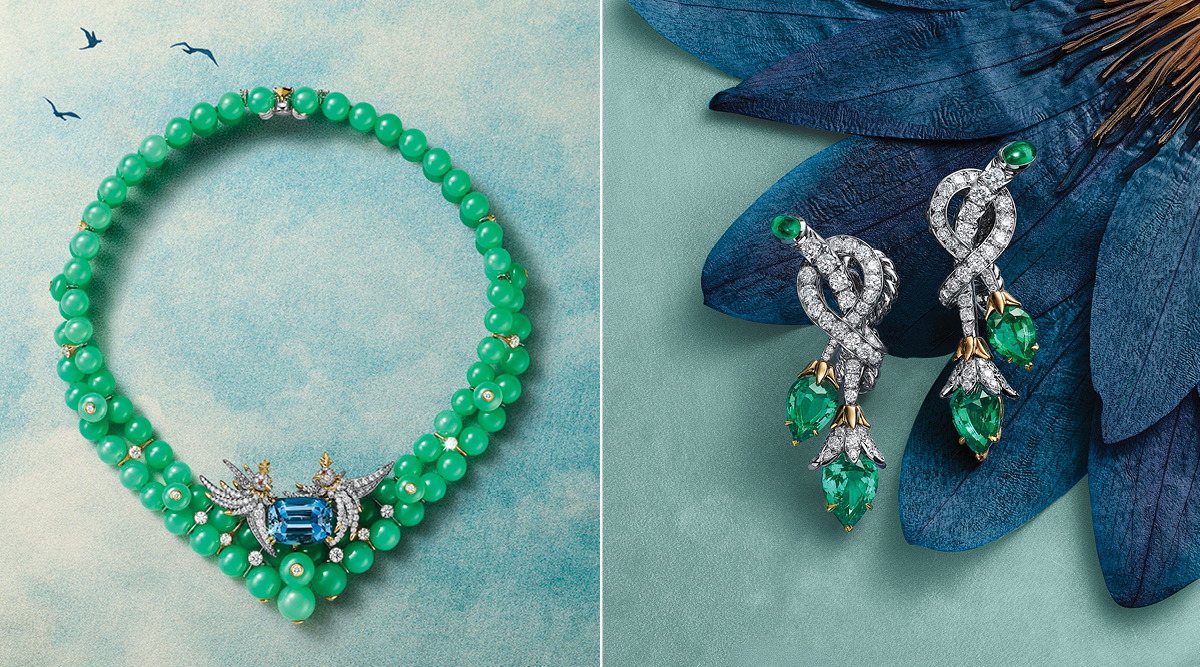
Bird on a Rock, one of Schlumberger’s most celebrated designs, is reimagined here with cushion-cut Santa Maria aquamarines from Brazil, their saturated blue deepened further by custom-cut chrysoprase beads in vivid green. The transformable necklace at the suite’s centre features an aquamarine of over 22 carats; worn as a brooch, it becomes something more intimate. The scale shifts, and so does the relationship between the piece and the person wearing it.

Blue Book 2026: Hidden Garden will continue through summer and fall expressions, each introducing new chapters. What the spring launch establishes is a collection that understands its own inheritance clearly enough to be generous with it: not reverential in a way that calcifies, but fluent in a way that opens forward.