



Lighting has moved well beyond its supporting role and now operates as one of the most decisive elements in how a space is read, shaping atmosphere with the same authority as architecture, while quietly dictating how everything else is experienced.

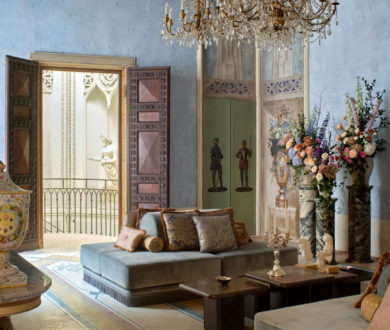
This was evident in the approach taken by Tom Dixon, who chose to inhabit Mua Mua, a 12-room micro hotel within the historic Mulino Estate originally designed in 1929 by Chiodi and Gio Ponti, using it not simply as a backdrop but as a fully realised environment in which his collections could exist as part of daily life rather than isolated in a display. Each room revealed a different layer of the collection, where Flare pendants in borosilicate glass introduced a soft, diffused glow against reflective metallic finishes, while Whirl Copper brought a sense of movement through its spiralling geometry, and the Bell Portable, finished in high-gloss burgundy, demonstrated a more refined control of light through improved dimming and adjustable temperature, all of which contributed to a setting that felt lived in rather than staged.
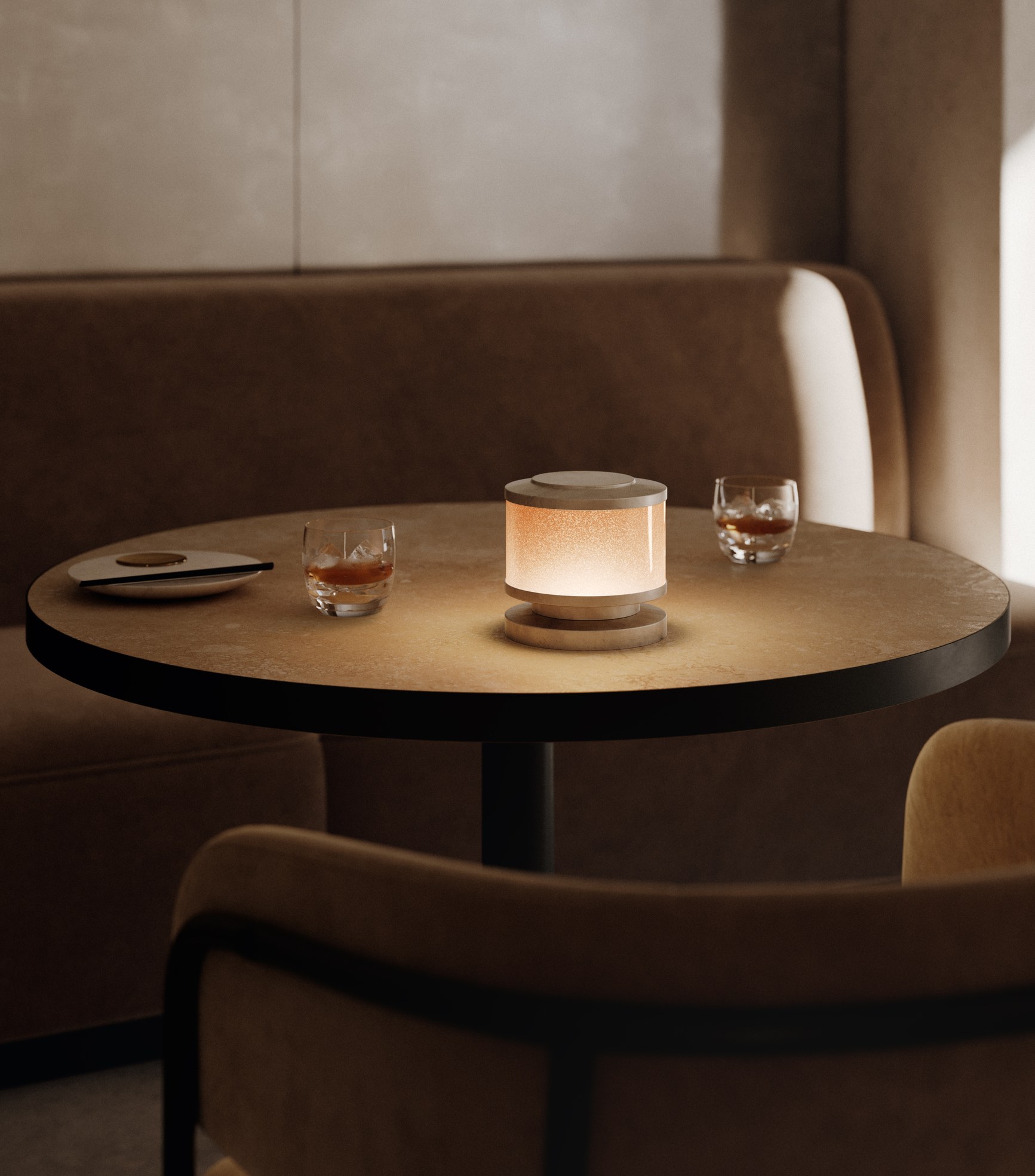
Within the Durini Design District, VeniceM approached lighting from a more material perspective, presenting “Unseen Stylos” as a study in form and composition, where cylindrical diffusers in satin antique blown glass, rendered in white, caramel, and soft pink, are combined with turned metal inserts to create a sequence that unfolds gradually across ceiling, wall, and floor applications. The effect is less about singular objects and more about continuity, with light diffused in a way that feels considered and quietly atmospheric, grounded in the traditions of Murano craftsmanship while pushing toward something more contemporary.
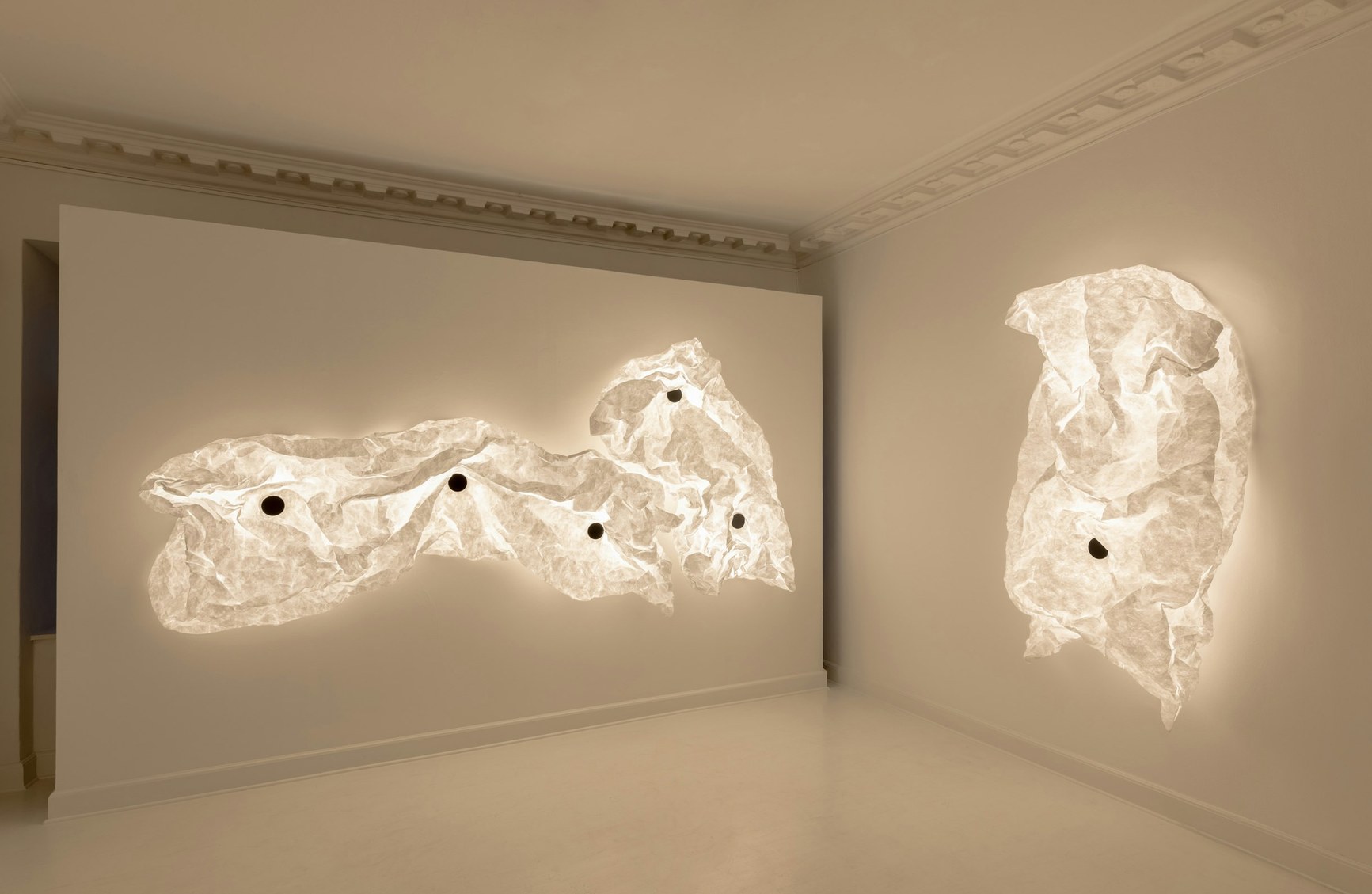
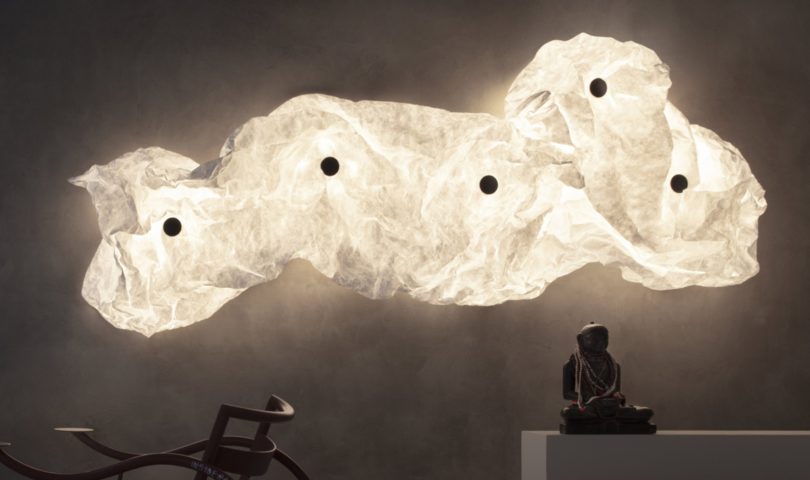
A more tactile and experimental direction emerged through Flos, which presented its collaboration with Erwan Bouroullec in the form of the Maap wall lamp, a sculptural, mouldable piece that invites direct interaction, allowing the form to be shaped by hand rather than fixed in place. The surface responds to touch, bending and shifting to create a light that feels less like a static object and more like a material intervention, reinforcing the idea that lighting can be as responsive and expressive as the environments it inhabits.