As the coming weekend seems to be relegating us to indoor activities, it could be said that there’s no better way to spend it than eating some seriously good food. If you haven’t already reserved your table at Onemata’s long lunch, these are the food events, new menus, restaurant takeovers and one limited-time burger that you really have to try this weekend.
Paella & Pinchos
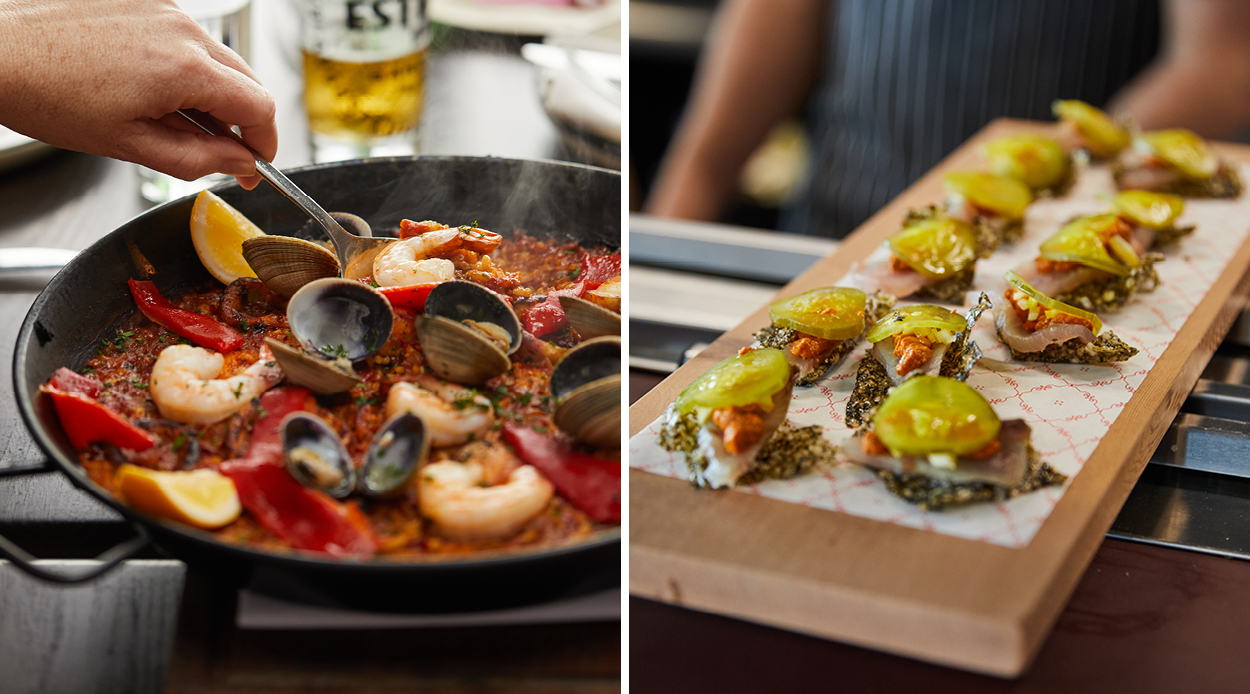
Paella & Pinchos at MoVida
If you’re looking for a taste of Spain this weekend, paradise is found at MoVida. The Paella & Pincho Saturdays series officially starts this weekend, evoking much of the culture from which MoVida found its roots. From midday until 4pm, this stunning restaurant is the perfect place in which friends and family can gather to graze on pinchos and hearty paella. Spanish wine will be flowing as the perfect accompaniment to the deliciously flavoursome fare. It’s the kind of afternoon that will feel distinctly European and perfectly suited to weather like this. Find out more about the menu and what’s on offer here.
Chaat Street’s Limited-Time Dabeli Burger
Dabeli Burger from Chaat Street
Every year, Burger Wellington holds the capital city in a chokehold. Hundreds of restaurants all vy for the title of the best burger in town, and last year the undeniable winner was Chaat Street — a restaurant that officially opened its Auckland destination in Parnell earlier this year. The burger in question, which is back on the menu in Auckland for a very limited time (until Sunday, the 2nd of July), is the Dabeli. This vegetarian delight is made up of a crispy, spiced potato patty paired with Fix & Fogg’s Smoke and Fire peanut butter, coriander, crispy chickpea noodles and tamarind chutney in a masala butter brioche bun and is best served with a cold can of Garage Project’s All India Permit beer. Everything you need to know is here.
Jervois Steak House’s New Dessert Menu
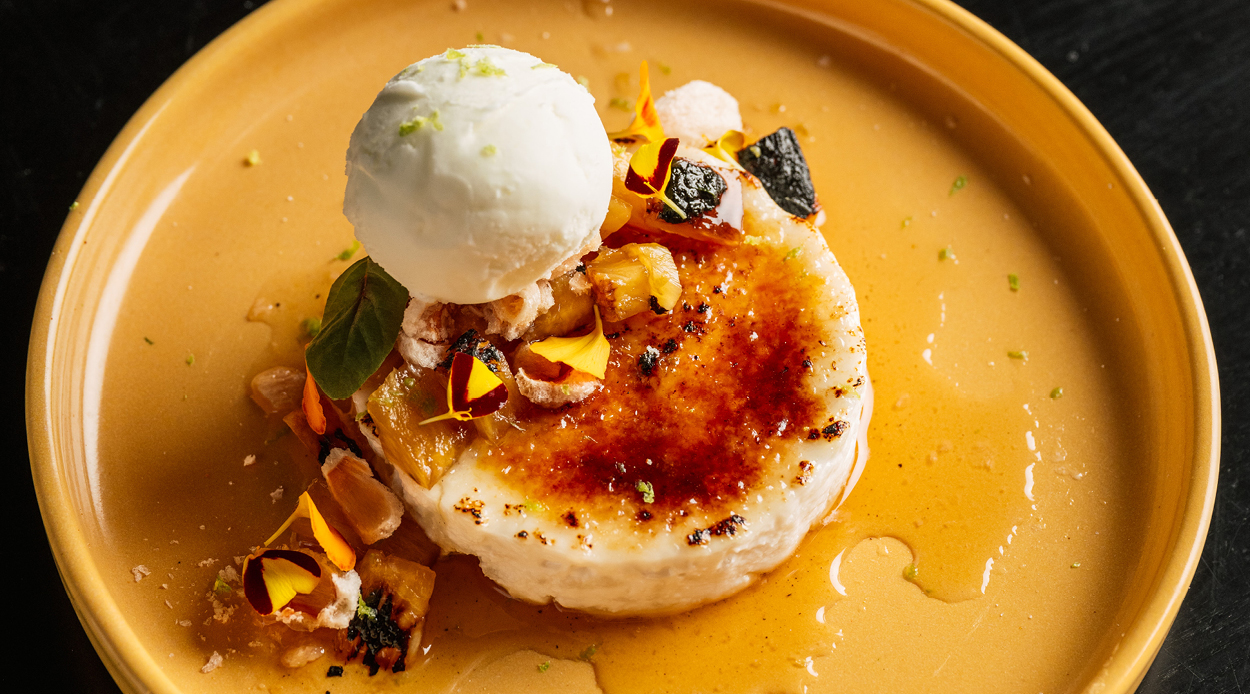
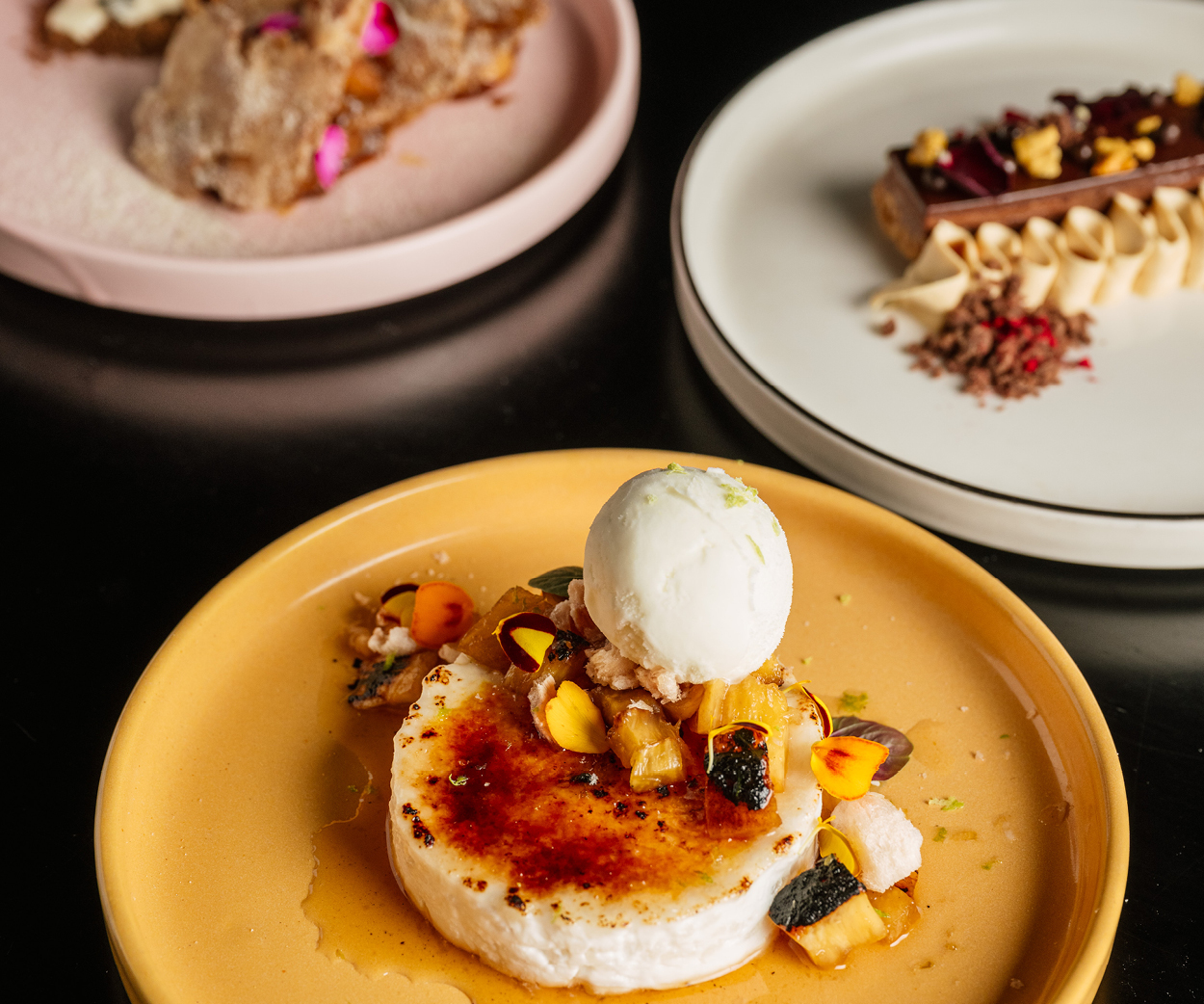
Bruleed Coconut Rice Pudding, Spiced Granny Smith Apple & Manjari chocolate torte from Jervois Steak House
If you’re in the mood for some indulgent sweetness this weekend, look no further than Jervois Road Steakhouse. They’ve just introduced three irresistible desserts bound to satisfy your cravings. First up, is the Bruleed Coconut Rice Pudding with its perfectly grilled spiced rum pineapple, accompanied by a refreshing kaffir lime and coconut sorbet. For chocolate lovers, the Manjari chocolate torte with caramelised white chocolate ganache, Kahlua toffee, and a delightful touch of honeycomb is an absolute must-try. And these are all rounded out perfectly by the Spiced Granny Smith Apple, featuring brown butter filo shards, a tangy apple curd, velvety vanilla ice cream and a crunchy hazelnut finish. Our suggestion would be to round up a crowd and order one of each. You can book your table here.
The Sustainable Suite at Origine
Left: Mixologist Egor Petrov Right: Limited-time Maker’s Mark and Taylor Pass honey cocktails at Origine
For a short time, Origine’s private space, Le Bar, has transformed into The Sustainable Suite — a vision of Maker’s Mark and Taylor Pass honey. Here, you can indulge in a number of cocktails from mixologist Egor Petrov, including the Gold Rush, a modern twist on the whisky sour. These pair perfectly with a series of snacks from Ben Bayly that embody the brand’s vision for the space. Bookings aren’t essential but can (and should) be made here.
The House of Suntory Bar
The House of Suntory Bar
This weekend, mark your calendars for an unforgettable Suntory experience as the legendary Japanese spirit maker celebrates a milestone occasion. Celebrating its centenary, the brand has pulled out all the stops, offering two exclusive nights of pure opulence. Hosted on the famous sixth floor of Seafarers, guests will be immersed in a world where the House of Suntory Whisky takes the lead, offering an extraordinary journey of flavour and craftsmanship. Pair that with expertly-crafted cocktails and a mouthwatering selection of bar snacks, perfectly designed to complement the whisky, and you have a weekend food event that will leave you craving more. Take advantage of this one-of-a-kind opportunity to savour the best of Japanese cuisine and indulge in the dream drops of whisky lovers everywhere. Open exclusively on Friday, the 23rd of June and Friday the 30th of June from 9pm. All the details are available here.
With inclement weather on the horizon, there’s no better time than now to get stuck into a new series or treat yourself to a night at the cinema. Here, we round up some of the best new films and recently-released TV series to watch this weekend.
In this raunchy new comedy, Jennifer Lawrence stars as a delivery driver down on her luck. In a bid to make some money, she answers a Craigslist ad by a couple who are looking for someone to seduce their son before he goes to college. Hilarity ensues.
Watch nowin Cinemas
Extraction 2
Once again proving his chops as one of the most formidable action stars on our screens today, Chris Hemsworth is back as Black Ops gun-for-hire, Tyler Rake in another nail-biting Extraction instalment. This time, Rake is tasked with the dangerous mission of rescuing the imprisoned family of a ruthless Georgian gangster. If you’re in the mood for heart-racing action, put this on your watch-list STAT.
Watch now on Netflix
Elemental
A film that you’ll likely enjoy as much as your kids will, Disney’s new animation Elemental is a heart-warming tale, set in a city where fire, water, land and air residents live together, a fiery girl and a cool, laid-back guy make an unexpected connection. A story about family, love and the ways in which our differences can bring us together, this is a perfect watch for you and your little ones.
Watch now in Cinemas
The Covenant
Starring Jake Gyllenhaal and Dar Salim, Guy Ritchie’s latest film centres around John Kinley, a US Army special operations sergeant (Gyllenhaal) and his Afghan interpreter (Salim) as they fight the Taliban. Touted by many who have seen it as one of Ritchie’s best films to date, this is an unexpected (and more thoughtful) departure from Ritchie’s typically stylised oeuvre and is a movie that will keep you enthralled from start to finish.
Watch now on Prime Video
New Series
Platonic
Seth Rogan and Rose Byrne star in this new comedy about a pair of former best friends approaching mid-life whose reconnection threatens to destabilise both of their lives in a hilarious way.
Watch now on Apple TV+
City on Fire
Set in New York, this thrilling mystery follows the investigation of a young NYU student’s murder on the Fourth of July. Over the episodes a web of interconnected secrets that tie together the City’s downtown music scene and a wealthy uptown family slowly unravel. With an all-star cast, including Jemima Kirke, Nico Tortorella, Chase Sui Wonders and Wyatt Oleff this series is a must-watch for fans of gripping crime dramas.
Watch now on Apple TV+
The Crowded Room
Starring and executive produced by Tom Holland, The Crowded Room is a highly anticipated limited series coming to Apple TV+. Also starring Amanda Seyfried and Emmy Rossum, this captivating thriller is set in Manhattan in the summer of 1979 and follows the story of Danny Sullivan, a young man arrested for a shocking crime, and the unlikely investigator who must unpack the mystery behind it.
Watch now on Apple TV+
The Idol
This seductive and edgy drama starring The Weeknd and Lily-Rose Depp has both captivated and divided audiences. Co-created by the Grammy-winning artist, along with Reza Fahim and Euphoria’s Sam Levinson, The Idol series follows a steamy love affair between a female pop star (Depp) and the charismatic leader of a secretive LA cult (The Weeknd). It is a must-see TV event for those seeking an addictive, high-glamour experience.
Watch now on Neon
The Full Monty
Picking up where the iconic ’97 film of the same name left off, this new, eight-part series takes audiences back to Sheffield and the beloved cast of characters, 25 years later. Reuniting the original cast and introducing a host of newcomers too, the series examines each of their lives and struggles against the current backdrop of austerity and economic downturn and is thoughtful, heartfelt and hilarious in equal measure.
Watch now on Disney+
Secret Invasion
Upcoming series, Secret Invasion, promises to be a thrilling addition to the ever-expanding Marvel Cinematic Universe. Set in present day, the story follows Nick Fury as he uncovers a covert invasion by the shapeshifting Skrulls, who threaten to take over Earth. Teaming up with familiar allies, including Talos the Skrull, Fury leads the charge to stop the imminent attack and safeguard humanity.
Watch now on Disney+
I’m a Virgo
With an absurd but ultimately hilarious premise, I’m a Virgo follows Cootie, a 13-foot-tall man who, having been hidden away his entire life, finally escapes to experience the real world and everything it has to offer. From forming friendships to finding love to even meeting his idol, Cootie embarks on a journey of discovery and takes us along for the ride too.
Watch now on Prime Video
Class of 09
This new thriller series follows four central characters, FBI agents, across a sprawling thirty-year timeline, from their training days to the ways each one rises through the ranks of the intelligence organisation. As they grapple with the immense changes happening in the US criminal justice system thanks to the introduction of artificial intelligence questions of humanity, justice and the importance of choice come to the fore.
Versatile and elegant but always underrated, the power of the dark blue paint trend is finally getting the recognition it deserves. Here, we turn to the experts at Resene to explore why this hue is having a real moment.
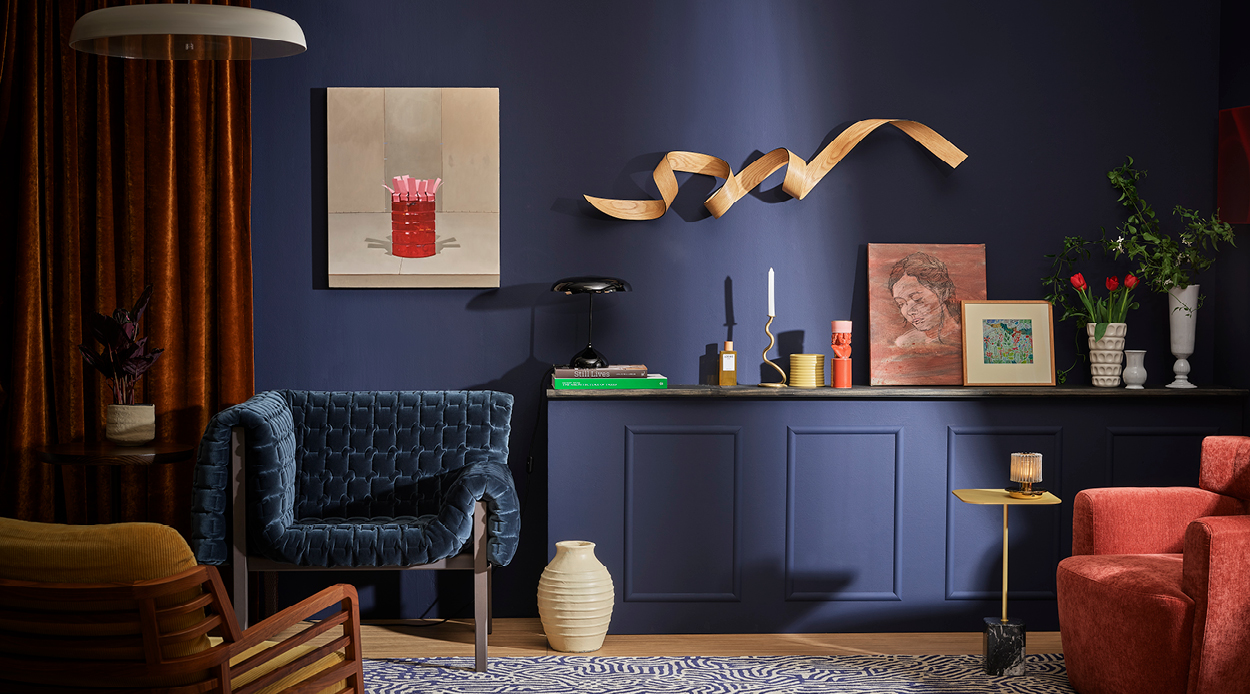
In the world of interior design, dark blue walls are making a splash, with navy and deep, oceanic hues undoubtedly trending, and for good reason. Not only do these colours add depth and dimension to any space, but they deliver an air of elegance too, particularly when lighter neutrals don’t work.
Walls and sideboard painted in Resene SpaceCote Flat and Resene Indian Ink, Sideboard top finished in Resene Colorwood Pitch Black, styling credits below*
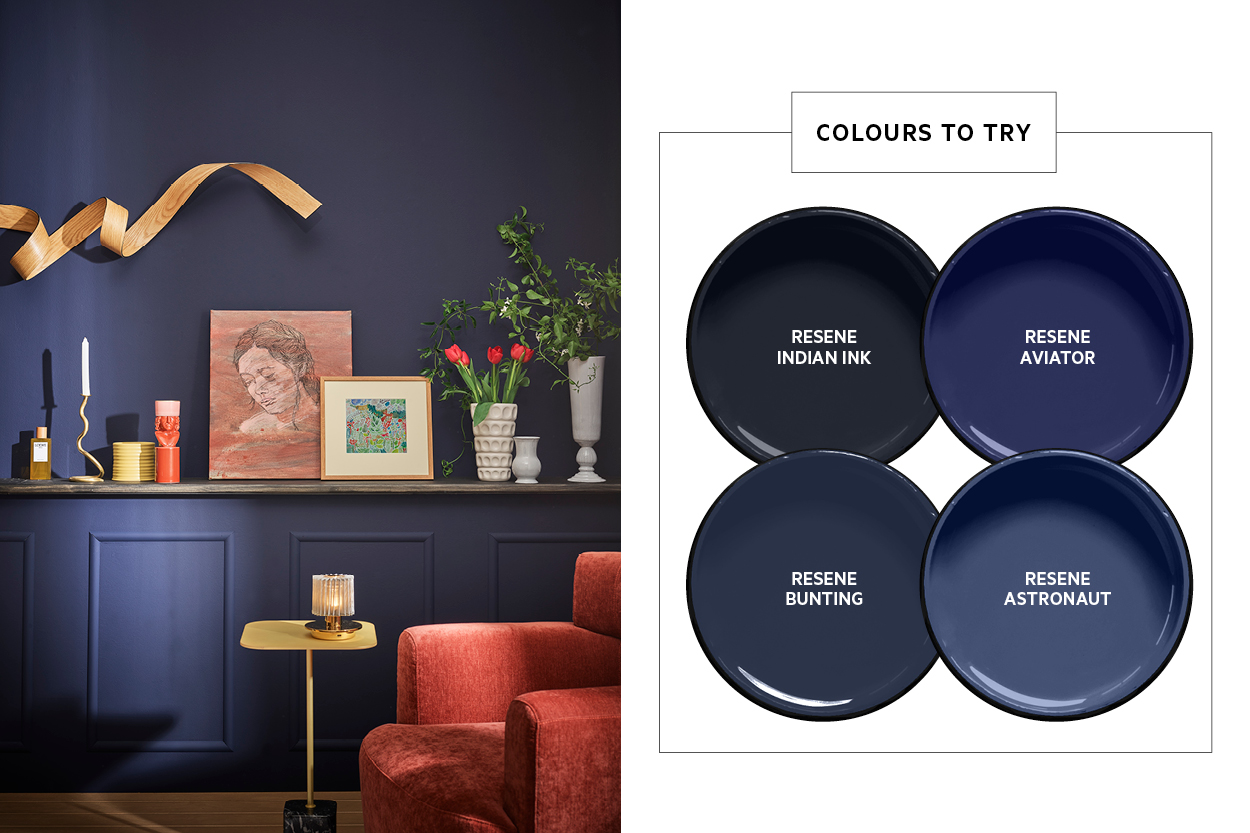
When it comes to choosing the right shade of blue, it’s important to consider the mood you want to set in your home. Darker tones like Resene Indian Ink, Resene Bunting and ink stains like Colorwood Pitch Black can create a sense of calm and tranquillity, perfect for a bedroom or a cosy living room. While on the other hand, slightly brighter shades, such as Resene Aviator and Resene Astronaut, can lift the energy and vibe of a space.
One of the biggest advantages of using dark blue in your home is its versatility. This kind of palette can act as a neutral, pairing well with a range of colours, from warm golds and browns to crisp whites and greys, and even a splash of vibrant colour like bold red or green. This means that you can easily mix and match furniture and decor to create a cohesive look that feels both stylish and comfortable.
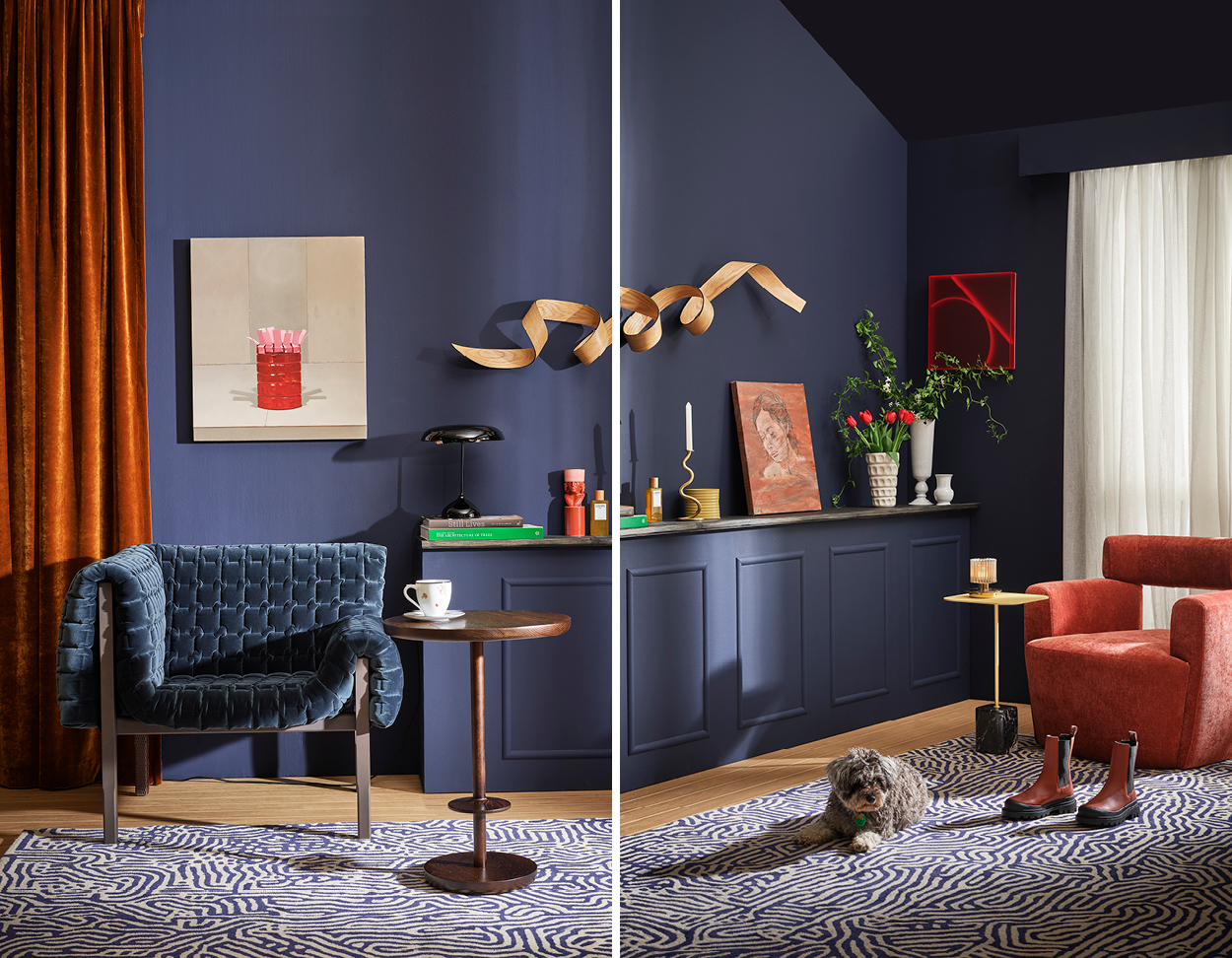
Both: Walls and sideboard painted in Resene SpaceCote Flat and Resene Indian Ink, Sideboard top finished in Resene Colorwood Pitch Black and floor finished in Resene Colorwood Bask, styling credits below**
Matte and low-sheen finishes, like the Resene SpaceCote paint range, will help bring out the depths in your dark blue. Consider continuing your colour onto your ceiling for a cosy cocooning look with timeless appeal.
So, whether you’re looking to create a serene oasis in your bedroom or add a touch of sophistication to your living room, consider incorporating dark blue walls into your home — they’re sure to make a lasting impression.
*Cupidon occasional table from Ligne Roset, Cyrus occasional chair from Soren Liv, Medusa candle holder, In The Sun table lamp and vases from Tessuti, Loewe fragrance, honeysuckle candle and Ginori candle all from Faradays, Fluid XIII by Ray Haydon, Izzy by Brendan McGorry and Line Against Circle by Kāryn Taylor all from Sanderson Contemporary.
**Left image: Ruché armchair, Écume rug and Sitar table lamp from Ligne Roset, Turn side table from Snelling Studio, Coffee table books and Medusa candle holder Tessuti, Thrum I by Damien Kurth from Sanderson Contemporary Right image: Cupidon occasional table from Ligne Roset, Cyrus occasional chair from Soren Liv, Medusa candle holder, In The Sun table lamp and vases from Tessuti, Loewe fragrance, honeysuckle candle, Chelsea boots and Ginori candle all from Faradays, Fluid XIII by Ray Haydon, Izzy by Brendan McGorry and Line Against Circle by Kāryn Taylor all from Sanderson Contemporary.
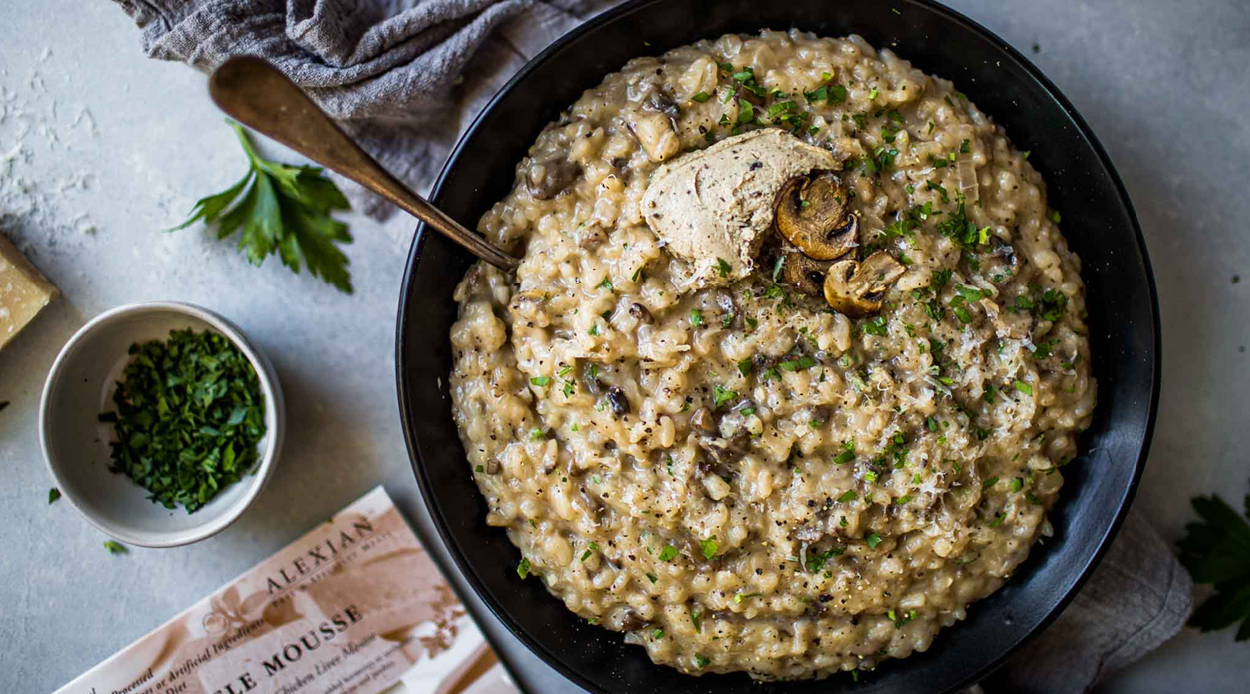
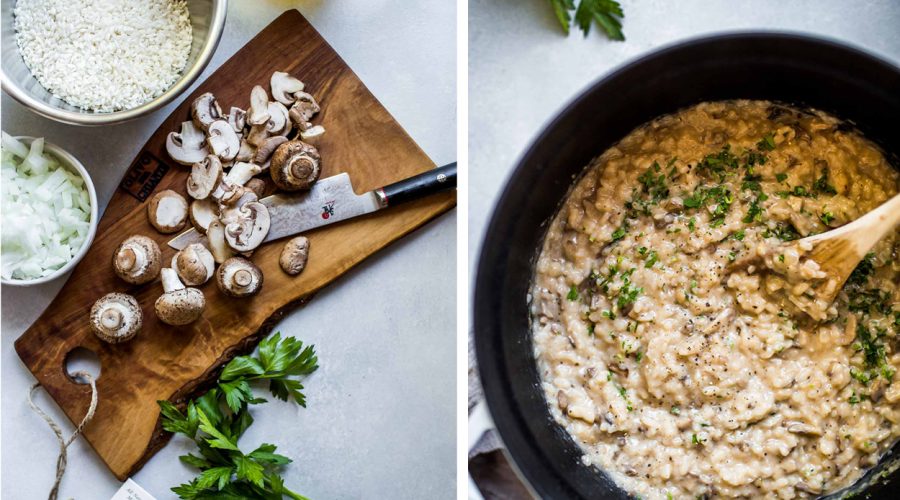
Fans of risotto understand that the best exercise comes from standing at the stove stirring this Italian staple. The rich aromas and flavours are all the reward you need for building your biceps in the kitchen and this mushroom and truffle risotto recipe from Italian food haven Non Solo Pizza delivers on all sensory fronts.
This simple recipe is elevated to restaurant quality by the addition of truffle but feel free to tap into your inner Nonna by adding some of your favourite greens, such as chopped kale or baby spinach.
NSP’s Mushroom and Truffle Risotto Recipe
Serves 4
Ingredients 100g butter, unsalted 250g of assorted fresh mushrooms, roughly cut in similar-sized pieces 1 shallot, chopped 1 garlic clove, chopped 250g arborio risotto rice 100ml white wine 750ml of vegetable stock, plus more if needed 20g dry mushrooms, soaked in water 1 tbsp truffle paste Sea salt & cracked pepper Olive oil
To serve 50g parmesan cheese Truffle oil
Method 1. To begin the risotto, use 50g of the butter to fry the fresh mushrooms in a saucepan until light brown in colour. 2. Add the shallot and garlic and cook until soft for a further 30 seconds. 3. Stir in the rice and cook until transparent. 4. Pour in the wine and stir in well. 5. Add stock a little at a time, stirring constantly until all is absorbed and creamy and the rice is cooked. 6. Add more stock if the rice is still slightly undercooked. 7. Drain the soaked mushrooms and stir them into the rice, along with the truffle paste. 8. Season with sea salt and freshly milled pepper and a little olive oil and the remaining 50g butter. 9. Stir in the parmesan cheese and truffle oil and serve.
Having been raised surrounded by the profound effects of conservation in practice, Suzan Craig has dedicated the last 20 years of her life to regeneration and biodiversity. Purchasing a beautiful piece of land on a remote part of Northland’s coastline just under two decades ago, Craig embarked on the painstaking process of restoring it to its biodiverse origins, proving in the process the immense impact that just one person with a bold idea can have on our precious environment. Called Tahi, Craig’s land is now home to a breathtaking array of native plants and animal species (thanks to the half-a-million native trees she has reintroduced) and stands as a beacon of biodiversity that its steward hopes will offer a blueprint for similar projects here and around the world. At Tahi, Craig not only offers tours, luxury eco-stays and educational programmes but she also has a thriving mānuka honey business and has recently launched a powerful natural skincare line, expertly formulated using botanical ingredients. Here, we sit down with the Switzerland-based New Zealander to talk about her incredible commitment to conservation, and why we need systemic change if we are to build a truly sustainable future and safeguard our environment for generations.
It has been said that a society grows great when old men plant trees in whose shade they shall never sit. Well, I don’t know about old men, but I recently met a woman who proves why this ancient proverb still rings true, and why its sentiment is now, more important than ever.
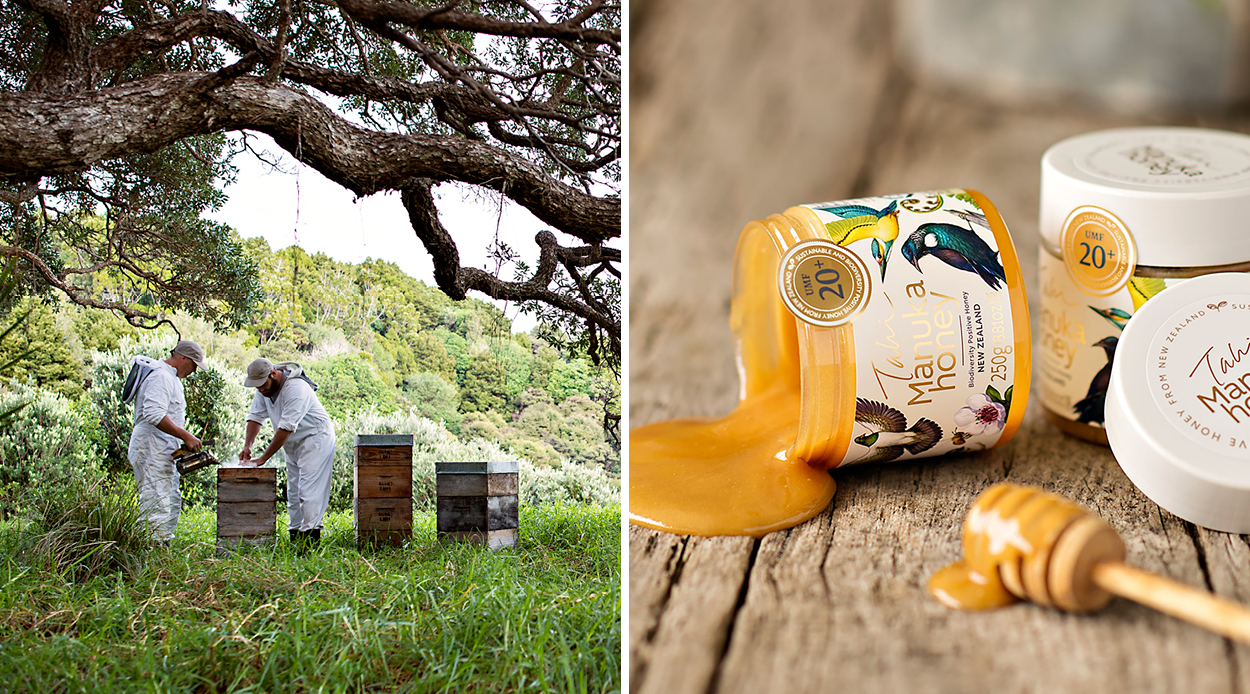
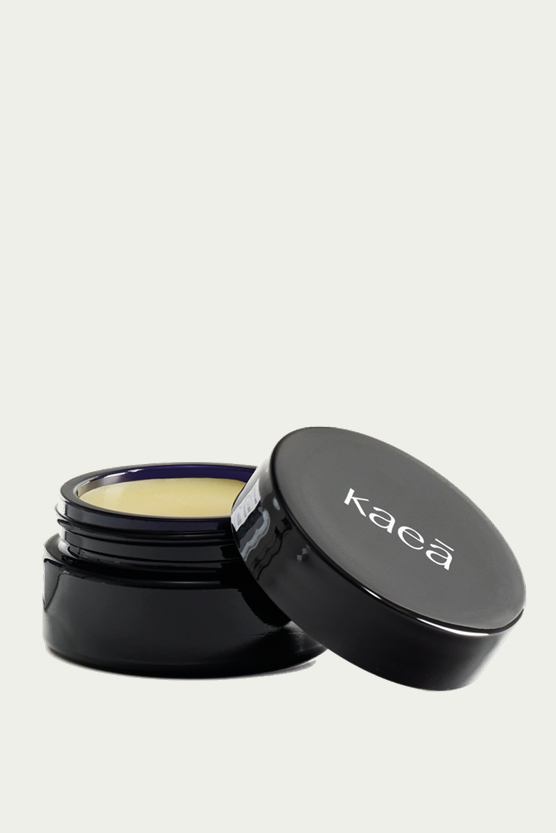
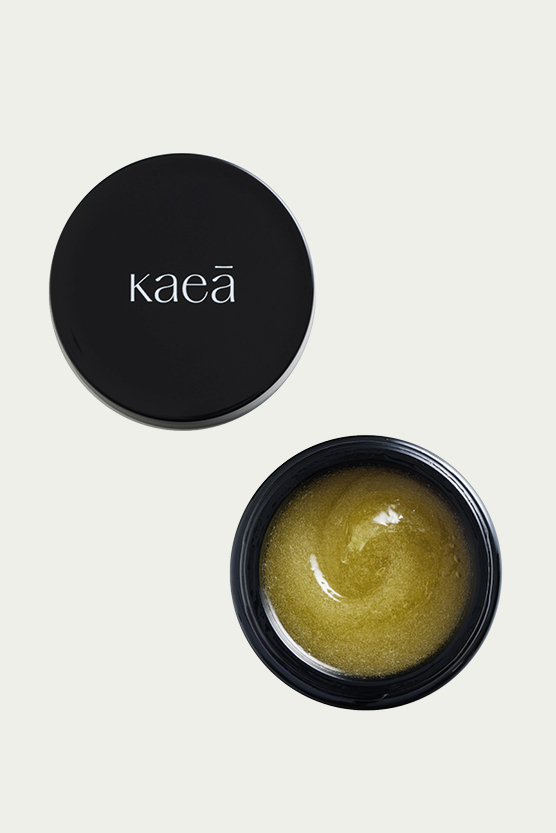
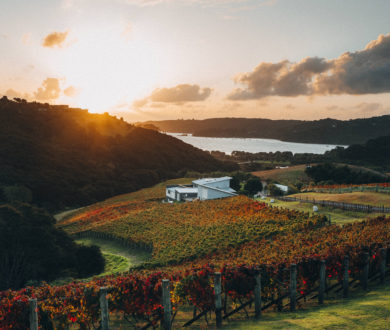
But Suzan Craig has done more than plant trees. Almost twenty years ago, the Switzerland-based New Zealander purchased a remote piece of land by the water near Whangarei that, in her words, was nothing more than a “dilapidated cattle farm.” Armed with a bold, ambitious vision and a passion for conservation, she transformed the 780-acre site into Tahi, spending years painstakingly restoring the ecosystems and bringing its rich, natural biodiversity back to life. Here, not only has Craig planted nearly half a million native trees, but she and her team have reintroduced 15 wetlands, and now, Tahi is home to 72 native species (from fewer than 20), attracts more bird species than most national parks in New Zealand and has a thriving, on-site mānuka honey business (exported around the world and available in stores like Harrods and Selfridges). It has also become one of the biggest employers in the region, establishing itself as a significant and respected part of its Northland community and draws people from around the country and all over the world to its exquisite nature sanctuary. If all that wasn’t enough, Craig also recently launched her first skincare line, Kaeā, a collection of expertly-formulated, clinically proven products that harness the power of active, botanical ingredients, (some of which are sourced from Tahi itself).
And while Tahi is already a multi-faceted business, is sustainable on a number of levels and is award-winning for its conservation efforts, if Craig is to see her ultimate vision realised, then Tahi’s immediate work will have far bigger implications than what we can see and experience now. She wants to plant the kinds of trees in whose shade we can collectively take refuge for decades (for generations, really). And she wants others to understand why embracing a long term vision is so crucial, particularly when it comes to biodiversity, climate change and the idea of planting trees as a widespread strategy for saving our environment.
But first, a look back to where it all began. Suzan Craig was raised surrounded by conservation in practice. After all, her father is Dr. John Craig (ONZM), a prominent conservation biologist and landscape ecologist who was one of the instigators and central figures of the Tiritiri Matangi Island restoration project. In 1974, a group affectionately called the ‘spade brigade’ launched the Supporters of Tiritiri Matangi, which saw them plant more than 280,000 trees on the small island off the coast of Auckland. They also mapped out an action plan to create a world-class wildlife sanctuary that would inspire new generations of conservationists. It was groundbreaking, and as word of its work spread, so too did the number of people volunteering to be a part of its story. Soon, the restorative effects started showing and now, the Island is a richly-diverse destination that is carefully cared for and full of rare native species. It was an ahead-of-its-time example of why biodiverse ecosystems are so important, and created something of a blueprint for how to reintroduce them successfully.
As a young girl, watching the Tiritiri Matangi project come to life, Craig was afforded a front row seat to the immense impact that strategic conservation could have on even just a small ecosystem. “I saw what regeneration could do,” she tells me, “and the huge power of one tree.” And when she eventually went off to work in commodities trading overseas (creating a revolutionary system for risk management), conservation remained close to her heart. “It had always been there,” she explains, “so when I was fortunate enough to be able to buy a piece of land back home, it was with restoration in mind. I wanted to slowly restore the ecosystems, and that’s what we have done at Tahi.”
“… there is currently no financial incentive comparable to pine for land-owners to regenerate or restore their land to its natural biodiversity, which ironically, is exactly what is needed if we’re to create an environment that is truly sustainable ”
Now, Tahi has been a work in progress for almost 20 years, and while its achievements to date are significant, its nature is ever-evolving. (The reality of any conservation project and certainly the case for Tiritiri Matangi which is still enacting new Biodiversity Plans and introducing new species.) For Craig, moving from the fast pace of the trading floor to the glacial pace of life as an ‘ecopreneur’ was certainly a shock but also, she tells me, hugely rewarding. It’s a mindset shift that we should all be thinking about when considering any work that impacts the environment. “With regeneration, you have to really plan 10, 20, 30 years into the future,” Craig explains, “it can take up to five years for the soil to heal so that it can facilitate and nurture native plants and species.” She continues, “Now, at Tahi, to see the incredible bird life returning and the fish flourishing in the sea that borders the land has been so inspiring… It offers a massive sense of hope I think, because what we have done here could be done globally, and while that seems like a really big, ambitious idea which it is, if you look at where we started and where we are now, it’s achievable. If we can influence a few people beyond our borders then we’ve succeeded.”
To look at Tahi as a model of conservation within the context of the carbon credit system propelling New Zealand’s pine plantations, is interesting. The idea of planting trees to save the environment is a familiar concept but there is far more nuance to the issue than most people understand. For starters, while there is a huge push at government level to plant trees that will sequester carbon (both here and around the world), most if not all of the financial incentives are tied in with carbon credits, and here, the most economically viable crops to plant are pinus radiatus — a non-native species that, long term, offer very little to our natural ecosystem. Even so, crops are being planted across New Zealand every day because they are cheap to grow and easy to manage.
Unfortunately, there is currently no financial incentive comparable to pine for land-owners to regenerate or restore their land to its natural biodiversity, which ironically, is exactly what is needed if we’re to create an environment that is truly sustainable for decades to come. If you analyse biodiversity as a prospect on paper, the numbers just don’t stack up. (Which unfortunately isn’t at all representative of its huge value off paper — in the real world.) And, as carbon credit value drops (which some experts predict will happen around 2040) there will need to be another solution in place for long term environmental and economic sustainability — a call that biodiverse regeneration is perfectly equipped to answer, if only it could get the support it needs from the top. New Zealand’s move to permanent pine plantations, which can deliver huge financial windfalls for land-owners all in the name of environmental regeneration, is an issue for our future, and is something about which Craig feels passionately.
“We need to start placing economic value where the real value is,” she explains. “Biodiverse, native forests not only give more back to the environment over time, but they support native species to thrive, which has a measurable impact on our lives, too… but it takes a lot of time and money to manage, so the change here has to be systemic.” Craig argues that if New Zealand could just back biodiversity in a big way through our Emissions Trading Scheme (ETS) then perhaps the significant set-up and maintenance costs of regenerating a biodiverse forest could be subsidised. And if Tahi is anything to go by, not only does biodiversity benefit the land, it cultivates a community and delivers jobs to people, too. It just takes a bit of innovative, creative thinking. “New Zealand is playing the short term when we could be leading in this space,” Craig emphasises. “We need some more bold, brave people to showcase what is possible and to demonstrate that there is actually a viable financial model here, if you go deeper.”
This message is something that Craig is focused on expanding on through her work at Tahi. Not only via direct advocacy, but by creating the conditions in which people can learn more, including offering walks and tours of Tahi, luxury eco-stay accommodation on the property and running programmes for children in schools. Beyond New Zealand, Craig’s message of sustainability has been taken to the world via her premium Tahi mānuka honey products, and more recently, her new skincare line too. “That’s why I have the birds on our packaging for both,” Craig reveals, “not only are birds the single biggest indicator of biodiversity, but they are the symbol that takes our message to the world.”
For anyone unfamiliar, Tahi mānuka honey is exceptional. This biodiverse-positive honey is kept as close to the raw product as possible, harvested using only ethical bee-keeping practices and undergoing no overheating or pasteurising to ensure its potent properties can deliver a full spectrum of benefits. Every jar is fully traceable, and is free from GMO and GE with no added water, sugar and certainly no chemicals. As pure and authentic as mānuka honey can get, it is the perfect vehicle for Craig to spread Tahi’s message, a physical representation of the integrity with which she stewards her land.
Similarly, Craig’s newly-launched skincare line Kaeā has been a true labour of love, offering something unique in what is fast-becoming a highly-saturated but sought-after space. Kaeā’s products are potent and multipurpose, and with only four in the line at the moment, are easy to add into any routine or tailor to individual skin types. But it wasn’t a straightforward road to launch, with Craig explaining how she had to approach the process meticulously and in collaboration with global experts at every stage.
“I was suffering from terrible rosacea,” Craig reveals, “and I had gone through this really long journey of trying every cream and nothing worked, so I was about to go on prescription medication when I thought that I would try some of our Tahi mānuka honey. It made a huge difference.” Knowing she couldn’t very well wear honey on her face every day, Craig decided to create a minimalistic, natural skincare line that harnessed the makuna’s healing and protective powers, calling on world-renowned formulator Daniele Ryman to help her bring her vision to life. “I had very clear, non-negotiable baselines,” she explains, “which were to take the purest, most powerful botanical ingredients and turn them into high-performance products using waterless formulations and no additives.”
The whole process took five years. But not only was Craig able to meet the high standards she set for herself, she managed to get all of Kaeā’s products clinically tested and proven, and now, has a skincare line that is making waves both here and overseas. “We were recently picked up by a new spa in Switzerland,” she tells me, of the luxurious new space at the Villars Palace Hotel. In fact, Craig says, the hotel team loved the line so much that they put Kaeā in their official spa name — a testament to the way she has balanced efficacy with luxury in each of her products.
Importantly, Craig reinvests 100 percent of all profits made from her honey and Kaeā, back into Tahi. That has always been her pledge. Because ultimately, what she is advocating for through her various eco-ventures, is an approach to sustainability free from the green-washed buzzwords that have been so widely and casually co-opted by corporations. To her, true sustainability is as much about caring for people as it is about caring for the land. You can’t have one without the other. It’s an idea that only really works when its environmental schemes run in parallel with economic considerations; and when communities can be created and cultures cultivated around it. Because in order to get buy-in from people at every level, sustainability needs to be more than just a badge or a byline. It has to feel real, tangible and lasting. Suzan Craig knows this better than most.
“Tahi is a micro example, but we’re expanding” she explains, “and now we are looking at ways we take the rigorous methodology they use in forestry, for example, and apply it to a biodiverse context.” She continues, “eventually I’m hoping that Tahi can be made fully financially sustainable, so that it doesn’t require any one person to support the restoration and regeneration, it becomes a whole ecosystem within an ecosystem — the community, the financial model and the actual land, and that ultimately, our version of sustainability becomes a financial model that can be replicated here and around the world.”
It’s an ambitious goal indeed. But what Craig is aiming for is something that will benefit all of us, and our children, and their children. She is reimagining the model of regeneration, and hopefully building something that will shift the dial on our approach to sustainability, collectively and systemically. Beyond the honey, beyond the skincare, it’s a message of very real hope for the future, and that’s something we can all get behind.
In a bid to optimise the space, functionality and sleek appearance of the Jervois Road Apartments, the architects at Monk Mackenzie turned to Fisher & Paykel for solutions that ticked all the boxes.
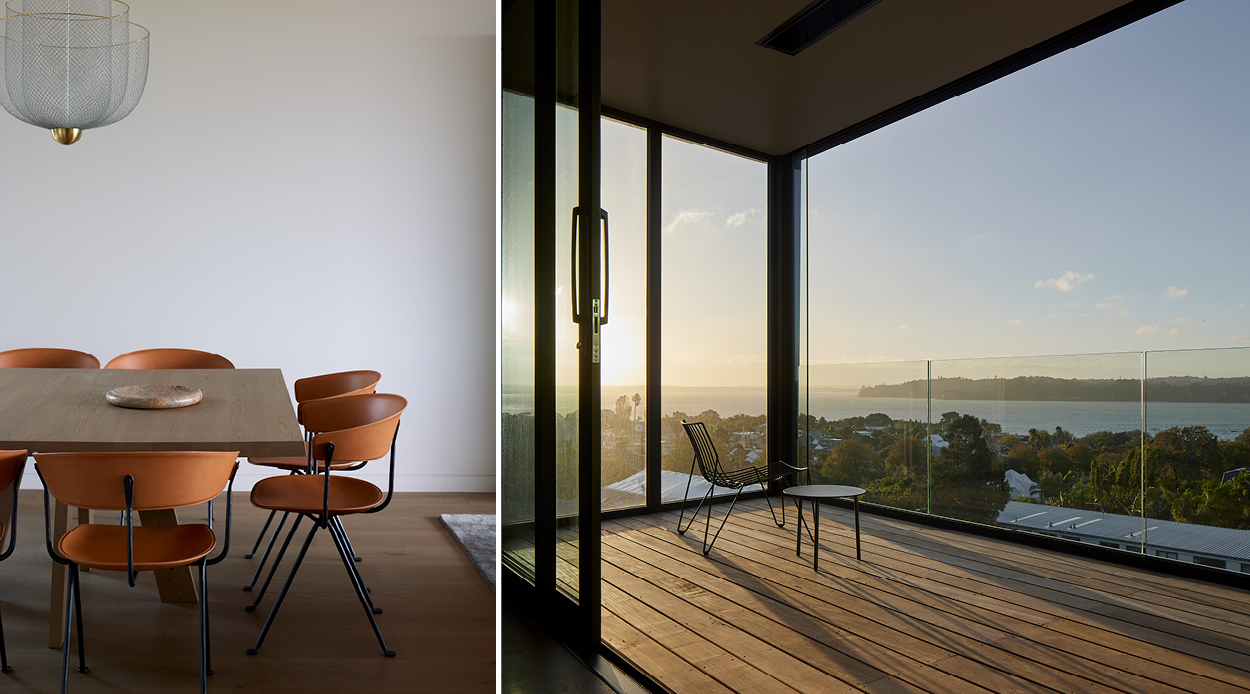
In designing the impressive Jervois Road Apartments (named after the street on which they stand) architecture firm Monk Mackenzie wanted to create something that felt luxurious and private, reimagining the idea of the typical city dwelling to optimise space for its residents, and to offer something that felt unique and elevated.
Combination Steam Oven, Minimal Oven, Rangehood and Induction Cooktop
From the undulating metal-screen facade that gives the building a strong but graceful presence on the street, to the ways in which the architects managed to maximise the sea-views for residents from the back of the building, Jervois Road is a masterclass in how we should be answering the call for higher-density housing solutions, in a way that both maintains the beauty of our city’s suburbs and keeps residents connected to nature.
In each apartment, the team at Monk Mackenzie had to strategically explore how they could offer luxury, privacy and highly-bespoke interiors that were beautiful but still practical and fit for purpose. Thinking about the ways in which the contemporary apartment-dweller in Auckland might live, they created spaces that feel warm and homely, but that are also inherently low-maintenence and filled with essential, modern amenities that have been designed to keep a household running smoothly.
The best example of this idea is in the kitchen, where the designers opted for a suite of integrated Fisher & Paykel appliances, as much for their renowned functionality as for their minimal, sleek appearance. The Minimal Combination Steam Oven, for instance, has been mounted on the wall in a genius move that makes it more accessible than ever. That, combined with its subtle glass frontage with very few buttons or colour allows it to almost disappear, highlighted only when in use. It’s a similar idea with the Rangehood and the Induction Cooktop, alongside an Refrigerator Freezer and Wine Cabinet are totally hidden from view, tucked into the kitchen’s dark oak cabinetry. And for anyone who hates bending down to load the dishwasher, two Fisher & Paykel Integrated Dishdrawers have been placed either side of the sink, taking the hassle out of washing up.
From its striking material palette to its sumptuous furnishings to its practical considerations, the Jervois Road development offers the perfect solution to city-fringe living, and truly elevates the apartment like never before.
As the winter solstice approaches, there is an undeniable allure in embracing the longest night of the year. It’s something that many local hospitality stalwarts have recognised, with a raft of new menus and memorable events creeping onto the calendar. Few are as enticing, however, as the offering at Faraday’s Bar, a cosy-yet-chic experience that embraces the beauty of the winter season.
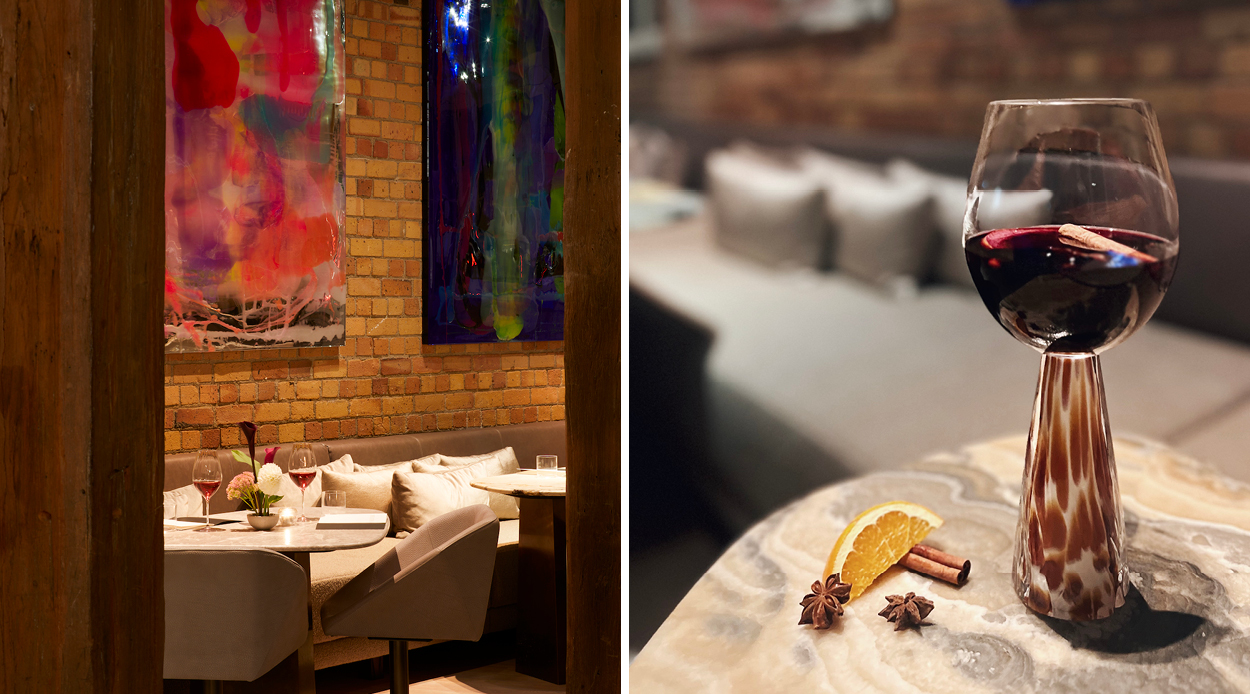
This Thursday, Faraday’s Bar will mark winter solstice with an enchanting evening of live jazz, mulled wine, and an exquisite one-night-only winter dessert. Hosted in the heavenly Cheshire Architects-designed space, the luxury emporium offers exactly the kind of cosy comfort we seek on wintry nights like these.
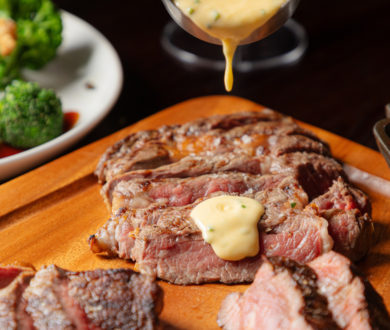
Of course, Faraday’s Bar’s usual menu will be on offer for the evening, too, with a selection of delicious bites that includes wood-fired bread and whipped Goats Cheese with honeycomb and truffle oil and a crowd-pleasing Market Fish Crudo with avocado and roast pineapple. Those seeking a heartier meal can indulge in such, courtesy of the curated menu by renowned Chef, Anthony Price (of Private Fine Dining). Our favourite dish to order this winter is the Peppered Venison Tataki, served with Tsuyu dressing, truffle frites and chives. Those ordering far enough in advance can also enjoy a selection of Price’s Tamaki Boxes and the seriously sumptuous Hibachi Grilled Scotch Fillet — a must-order from the menu.
For anyone looking to really treat themselves on the longest night of the year, Faraday’s Bar is offering a couple of solstice specials, including a warm and perfectly-spiced mulled wine and a limited-edition winter tartlet. Here, delicate layers of pear and frangipane are balanced with vanilla and cinnamon in a masterclass of pastry craftsmanship that is so good, we wouldn’t blame anyone if they were to order more than one.
The Winter Solstice Menu at Faraday’s Bar will be exclusively available this Thursday, the 22nd of June, between 5pm and 10pm. Bookings are essential for this delectable affair, to ensure yourself the best seat in the house (and access to all the mulled wine you desire).
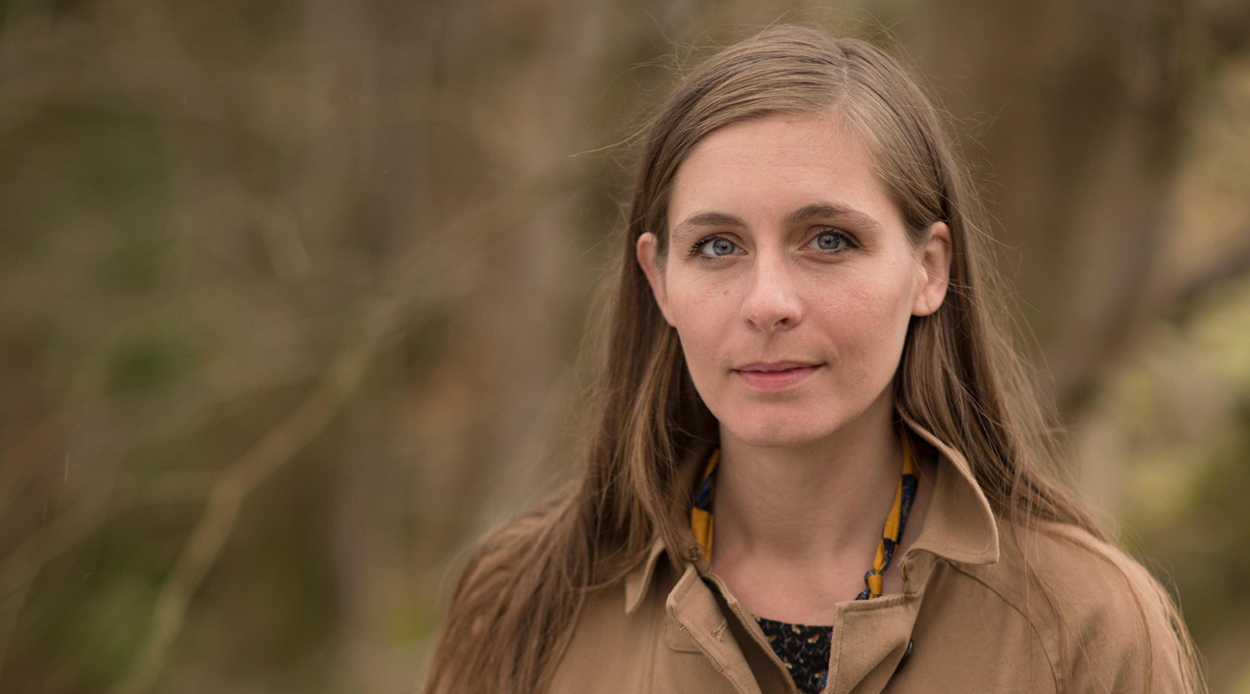
A decade in the making, esteemed New Zealand author Eleanor Catton has finally released Birnam Wood, the much-anticipated follow-up to her Booker Prize-winning The Luminaries, a famously lengthy but brilliant read. Having returned home for an appearance at the Auckland Writers Festival, we sat down with the lauded writer to discuss her craft, the pressures she felt for her third release, and how remaining firm in her ideals is perhaps her most tremendous talent of all.
The first thing that strikes me about Eleanor Catton is her humility. For anyone, not least a writer, speaking to a Booker Prize-winning author on her latest work is anxiety-inducing, especially when the book is one that fans around the world have waited close to a decade for. On this, it should be said that the pressure of trying to top such critical acclaim isn’t easily accomplished, nor is it an imaginable feat for most. Yet within the first few pages of Birnam Wood, it is evident that Catton has taken this in her stride.
If you have not yet acquainted yourself with the novel, it delves into the world of a guerrilla gardening group known as Birnam Wood (a Macbeth reference), whose members covertly plant crops in forgotten corners of society. Their founder, Mira, discovers an abandoned farm after a landslide and seizes it as an opportunity for their long-term success, only to encounter a formidable obstacle in the form of an American billionaire Robert Lemoine, who supposedly seeks to construct his end-of-times bunker on the same land. The result is a seriously gripping tale that intimately explores themes of trust, ideology and the primal human urge to ensure our own survival.
Calm and candid in her explanation of the book’s ideals, Catton cements her status as someone who is incredibly thoughtful and inquisitive about the world around her. She is never quick to jump to an answer, always considering exactly what she wants to say before speaking. This is perhaps symbolic of her greater craft; she tells me that regardless of the project, one of the first things she will always sit down to do is a wealth of research. In essence, to make great writing, she immerses herself in the work of others. The idea of this is humbling; most of us live with the belief that the words of writers seemingly flow onto the page from a place of divine inspiration. But as Catton shares, her take on the process couldn’t be more meticulous or planned.
The Luminaries and Birnam Wood both by Eleanor Catton
The grittier parts of our conversation aren’t around the technicalities of her work, however. Instead, we speak to ideas of success and determination and how one rises to a challenge they never really signed up to face. In Catton’s case, the challenge of penning the next novel off the back of such a successful predecessor. She tells me she actually enjoyed the pressure of it. The truth is, she is fascinating, her tenacity and almost intimidating intelligence underlying her gentle and cautious manner. In a sense, her story is about this challenge, and becoming more certain of herself in that. It’s about having the ability to listen, respond to her audiences, and evolve her craft with time. And to remain loyal to her authentic voice, which isn’t easy.
Catton isn’t one to stray from making damning statements, either (striking a familiar chord with those who can remember her previous successes). After all, Birnam Wood is a hugely political novel — but not in the agenda-setting manner one might expect. Instead, it argues the case that everything in life is political, and that, like it or not, all the decisions we make are political in one way or another. “I didn’t want to write a book that advanced a particular point of view,” she justifies. The result is a social and political satire, offering obvious and necessary commentary on our current state of affairs. Catton describes these as “the dangers of self rationalisation, self blindness, those human problems that underlie any political position.” In a way, this would almost be hilarious (and at times, we shared a few laughs over my interpretation of certain characters), if only the outcome wasn’t so tragic.
“Having a great faith in human beings is necessary… Writing is just one of the ways we express ourselves. We learn, we imagine, we dream, and we show that we’re capable of change.”
“I knew that I wanted to write something that negotiates these contemporary questions of how we deal with this unforeseeable future suddenly rushing at us very fast.” The author explains her reasoning for Birnam Wood, although she finds it hard to trace its exact origin. “It’s always quite difficult to pinpoint the exact moment where an idea becomes reality because quite often it comes in the collisions between two different intentions or notions.” Birnam Wood’s characters, for those yet to read, are headstrong about their beliefs, with a kind of stubbornness that is sure to lead to their inevitable demise. She speaks about characters like they’re mutual friends we both have, laying the blame on Tony purely because his bullheadedness “pissed the collective off”. It really is a greater commentary on something that Catton describes as a growing concern of the last decade, especially with the exponential rise of social media. “This terrifying slide towards certainty,” she calls it. Suggesting it would undoubtedly be a good thing if we were to be more open and accepting of the views of others.
We also explore what it means to Catton to be a successful New Zealander while leaving her home country behind (she now permanently resides in the United Kingdom) and how her lineage got her to where she is. But also, how in being removed from it, she can see the story more clearly, both on and off the page. She encourages readers to think about what’s been going on in our country when it comes to the battle between conservation and capitalism. After all, she says, New Zealand occupies a very particular space in people’s minds. Even if they never visit, or never intend to, knowing that countries like ours exist in the world offers a strange sense of solace that would be rare to find elsewhere. “Wilderness of the mind”, Catton calls it — a quote imparted by her uncle, a park ranger in America, where the landscape (environmentally and politically) is vastly different. She tells me how audiences overseas are surprised to learn that New Zealand isn’t entirely the ‘clean, green’ nation that our tourism slogans project. She tells me how surprised and how dismayed people are, that things like mining on national parks and offering billionaires citizenship to build bunkers have ever been on the table. “In a lot of ways, New Zealand occupies this space in the global imagination that is really important to think of as beautiful and benign and preserved and pristine, and all these staggering adjectives.” She tells me how people recoil when they learn about the states of our rivers and lakes, and our government being so welcoming to the influence (and money) of foreign billionaires, much akin to Birnam Wood’s deplorable antagonist. “That’s a form of complicity in global injustice and environmental degradation that New Zealand has been going at very enthusiastically for quite a long time,” she says, and I can’t say that I disagree.
Much of Catton’s story, right now, is about rising to the challenge when it feels like, to some extent the world wants you to fail. The author and I don’t talk about Tall Poppy Syndrome explicitly, but it hangs in the air of our conversation (a subject that often arises when discussing Kiwis who have achieved considerable success). Instead, she tells me of the joy she found in the post-award challenge. How she had used the last decade since the Booker (of which she was the youngest winner ever, at 28 — the very age I turn next month) to lean into a greater curiosity of the technical craft and the criticism it sometimes brought. This next book was about something very different; it was about engaging the reader. “I decided early on that I wanted this to be a book for the readers and not for the critical establishment,” she explains. “I wanted a book that was fun, unashamedly genre, with men in SUVs and guns, and all the trappings of the thriller.” Likely an emotional response, she believes, to feeling unmoored by how amazing the acknowledgement of her Booker-winning debut was, but also how extreme; to go from relative anonymity to being read around the world. “It’s endlessly interesting as a writer to see your book travel and talk to people in different cultures,” she says. “But at the same time, it made my head spin. I found it very alienating.”
It really needs to be said; this latest book deserves the notoriety it is receiving. To me, a fervent reader, the execution felt like perfect harmony between technical excellence and page-turning material, and it made sense that her process doesn’t begin with pen and paper but with screeds of research and that initial seed of truth, the idea that she hopes to impart on the reader. It’s a rarity, but in this instance, Catton knew the title of this work from inception and she always knew the outcome of the book too. Anyone familiar with Macbeth will see the similarities; “It was always taught that Macbeth was a play about ambition,” she explains. “But when I reread it, I thought, it’s not about ambition at all. It’s a story about how dangerous it can be to think the future is something that is fixed.” From here, the notion of satire and the seed of truth seemed to flourish of its own accord. “I’ve come to have great faith in the structural truth of dramatic action,” she explains. “The fact that stories need to escalate as they go along, I don’t think that’s accident or convention. It says something that’s very true about human nature and about the way that actions and consequences work.” To achieve the desired result, she believes writers need to approach the form with enough faith, and it will end up getting at something accessible to the reader because it’s fundamentally true. And in this instance, readers are left probing their own preconceptions of action and character. “You’re not what you say you are, you are what you do,” she imparts. That is the crux of her latest work.
Her ability to translate these kinds of grandiose ideas and concepts onto the page in innovative and enrapturing ways culminates in the kind of work most writers aim to create at least once in their career. A book that keeps the reader up past midnight and into the wee hours, desperate to discover what happens on the next page. To do this in Birnam Wood, among many other technical devices, Catton abolished the idea of chapters and instead only presented parts, which meant there were only two natural breaks in the text. I found it somewhat like theatre, which she explains to me as another nod to the book’s initial Shakespearean inspiration.
“I decided early on that I wanted this to be a book for the readers and not for the critical establishment,” she explains… “It’s endlessly interesting as a writer to see your book travel and talk to people in different cultures, but at the same time, it made my head spin. I found it very alienating.”
Recently, Catton was named one of literary magazine Granta’s Best Young British Novelists, a title that we’re desperate to contest, always wanting to lay claim to her as our own. Having lived in Cambridge, England since 2019 (her husband, poet Steven Toussaint began his PhD there pre-Covid), for Catton, the antipodes offers endless inspiration. Now, she explains, as she is delving more into the screenwriting realm, having access to London’s rich theatrical world on her doorstep has made the process so much more robust and fulfilling. It’s quite different to writing a book, as one could imagine, where in writing for the screen, Catton describes herself as “a gun for hire”. (A definite departure from the more self-indulgent process of novels.) It also brings the idea of ownership into play, as screenwriting doesn’t offer the same degree of accolade as the medium on which she built her reputation. “I’ve found that it’s loosened me up as a fiction writer,” she tells me. “I’ve been able to think in more broad strokes, especially in terms of character arcs and shapes a bit more.” To a degree, this influenced Birnam Wood, although the complexities of the characters and overlapping themes would be difficult to translate to the screen. That said, it’s not something that she rules out either.
For Catton, her life now exists on both the screen and page. Recently having penned the screenplay for Emma (directed by Autumn de Wilde and starring Anya Taylor Joy), a piece that she explains was her most revisited (purely because of the endless premieres and previews — the author makes a point not to re-read her work unless she has to), it is evident that Catton’s tremendous talent transcends the literary realm in which she got her start.
Still from Eleanor Catton’s Emma, directed by Autumn de Wilde and starring Anya Taylor Joy
Although Birnam Wood is still fresh, I, like many, am eager to know what notch the writer will be adding to her belt next. A few films, she tells me, are in different stages of development — some of them hailing from a pre-Covid era; although the details that she can share are hazy. “I still can’t talk about them, but I feel they’ve been part of my life for a long time now.” Familiar with the follow-through, she is already working on her next novel, a further foray into thriller territory, more psychological than satirical. (“You have to deliver. You can’t say that something’s a thriller and not make it thrilling.”) But we shouldn’t expect to see it on shelves anytime soon. If I’ve learned only one thing, it is that Catton is nothing if not meticulous. Her processes are well-versed, where research exists as the axis of her craft as she continues to build on her already impressive legacy (although she finds the notion of a legacy difficult to grapple with). “Now that it [Birnam Wood] is my third book, I can start seeing points of commonality, and I can start tracing my own preoccupations in a way that’s interesting and surprising to me,” Catton offers. Each novel, although unrelated, feels like an extension of the last, in a way that she uses her discerning eye to continuously respond to and evolve her craft, and the world around her, creating the kind of writing that endures.
As the two of us share tales, and our very real fears for what at times feels like a dying world, where things like art and literature may seem frivolous, Catton reminds me that not only are they essential, but that they address our very being. “It’s what makes us human,” she suggests. “We have this incredible ability as human beings to imagine and to project ourselves into situations that we’ve invented, or that we’ve imagined, or that have existed, but we’re not physically present. It’s only through doing that, that we’ve become such an interesting and sophisticated global civilisation. I think to continue to do that is critical, because if we forget our humanity, then we will forget why the earth is worth saving.” It, of course, goes back to her inherent belief that everything is political, and when she phrases it in such a way, the notion makes even more sense than before. “Having a great faith in human beings is necessary,” she goes on to explain. “Writing is just one of the ways we express ourselves. We learn, we imagine, we dream, and we show that we’re capable of change.” And with that, it strikes me that perhaps our future is less ill-fated than I thought.
Over the cooler months, our cravings turn to the warming sensation of spicy foods. That fire-cracking quality that ignites both our bellies and our seasonal discourse. Whether it’s a delicate flirtation or a full-throttle pursuit of flaming tastebuds, this is Auckland’s best spicy food that promises to bring some pep to our winter step.
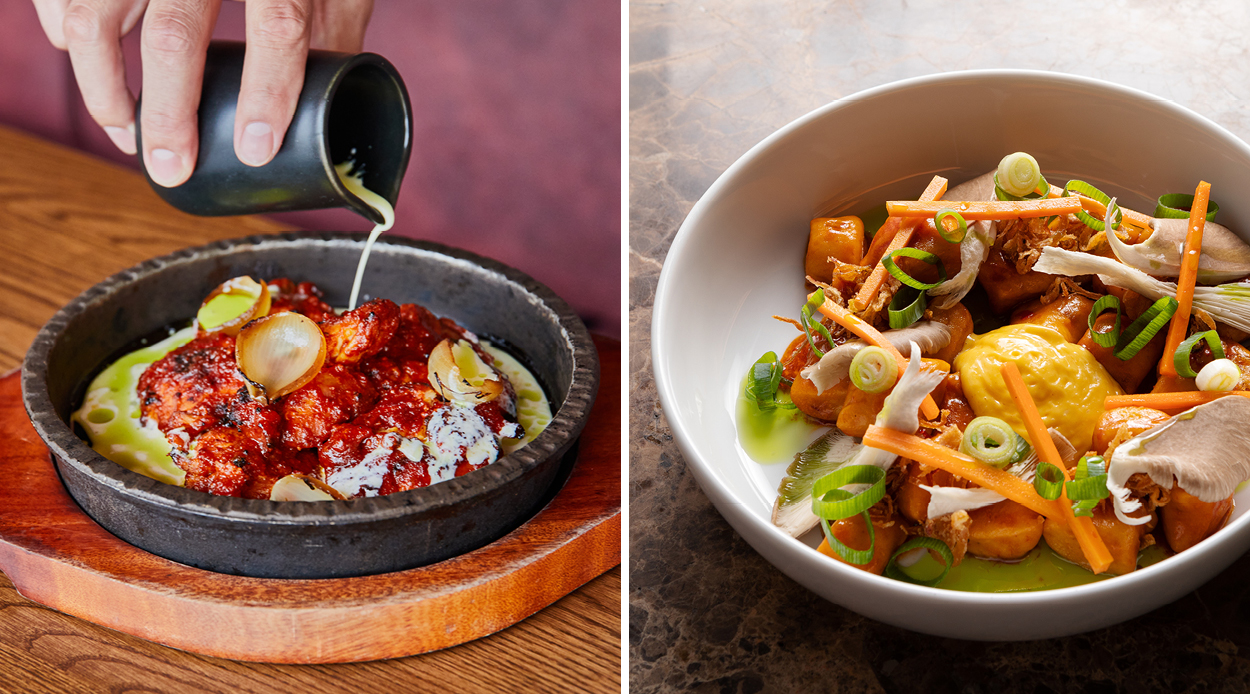
Left to right: Gochujang Chicken from Gochu & Spicy Potato Gnocchi from Bar Magda
Gochujang Chickenfrom Gochu This Commercial Bay eatery has become well-loved for its consistently delicious Korean food, and those familiar with the spot will know that the Gochujang Chicken makes for essential ordering. Served sizzling with a creamy comte sauce, this dish feels like a warm embrace for cold days. 21 Queen Street, Auckland CBD
Spicy Potato Gnocchifrom Bar Magda When we seek out fusion cuisine, this is exactly the kind of dish we find ourselves looking for. This new addition to Bar Magda’s winter menu showcases spiced gnocchi and is the ultimate winter comfort dish. Here, spiced potato gnocchi is served with oyster mushrooms, pickled carrots and scallions, plus healthy helpings of scrambled egg hollandaise and mee goreng sauce, which results in a dish that is both innovative and utterly delicious. 25b Cross Street, Auckland CBD
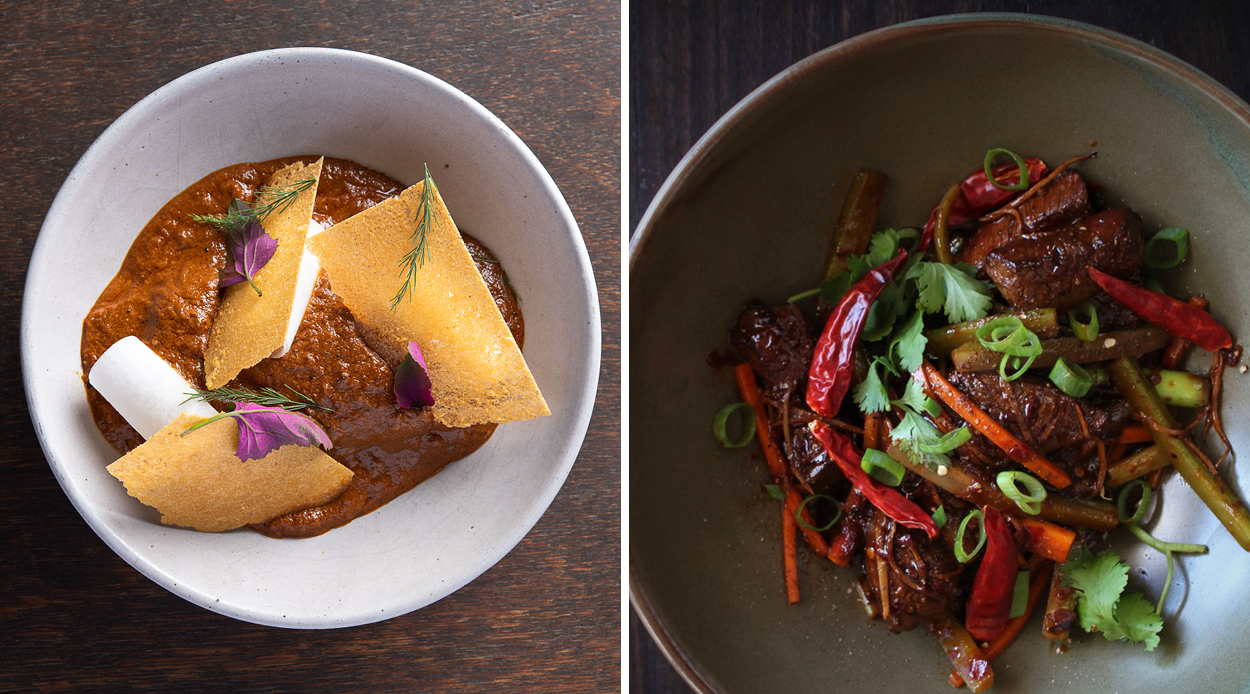
Left to right: Beef Short Rib, Laal Maas and Pickled Daikon from Cassia & Wok-Seared Eye Fillet with Doubanjiang & Dried Chillies from Ghost Street
Beef Short Rib, Laal Maas and Pickled Daikonfrom Cassia Showcasing his culinary brilliance, Sid Sahrawat’s curried beef short rib, draws inspiration from a traditional Rajasthani dish called Laal Maas, which translates to red meat curry. The sauce itself has lashings of chilli, and is served atop a bed of tender, slow-cooked meat. Find this indulgent dish at Cassia’s brand new SkyCity location. 90 Federal Street, Auckland CBD
Wok-Seared Eye Fillet with Doubanjiang & Dried Chilliesfrom Ghost Street With a menu centred around Beijing’s famous food street, it’s easy to find something with a bit of spice at this subterranean eatery. One of our favourites is the perfectly tender wok-seared eye fillet paired with a hot Chinese bean sauce, ginger and celery, finished with dried chillies for an extra layer of heat. Basement level, Tuawhiti Lane, 27 Galway Street, Britomart
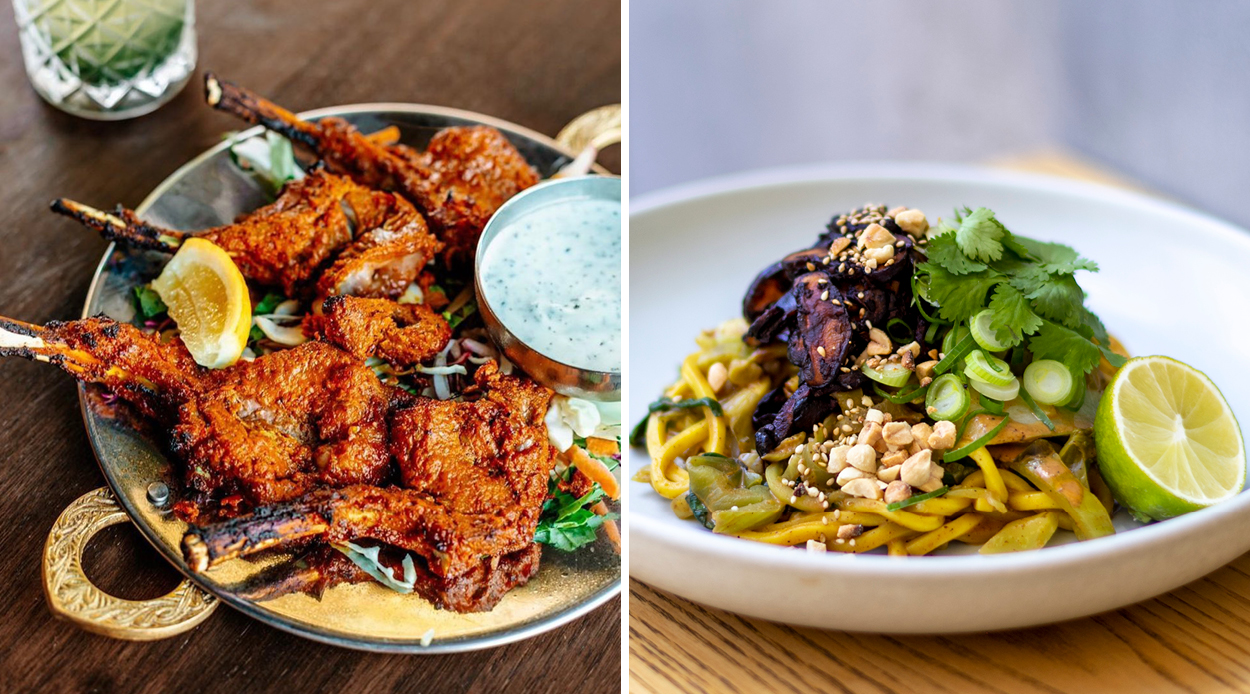
Left to right: Lamb Chops from Mumbaiwala & Spicy Sichuan Noodles from Hello Beasty
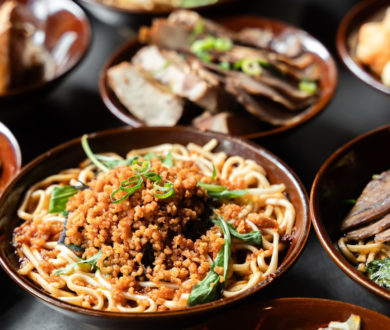
Spicy Sichuan Noodlesfrom Hello Beasty Hello Beasty’s Spicy Sichuan Noodles offer an elevated take on a truly authentic dish. Here, the noodles come in two iterations; a classic with mustard greens, crispy pork mince, sesame, chilli, roasted peanuts and black vinegar, or vegetarian, with shiitake, choy sum, bok choy, sesame, black vinegar, coriander, spring onion and roasted peanuts — the latter being our preference when we’re craving something a little more virtuous. 95-97 Customs Street West, Auckland CBD
Lamb Chopsfrom Mumbaiwala After marinating overnight in lime juice, warm dark spices, ginger and garlic, Mumbaiwala’s Lamb Chops are a seriously fragrant and flavoursome iteration of a Kiwi classic. Fired in the tandoor grill, and leaning into the gamey nature of lamb, the chops make an idyllic sharing dish, pairing perfectly with one of the eatery’s famous curries. 252 Ponsonby Road, Ponsonby
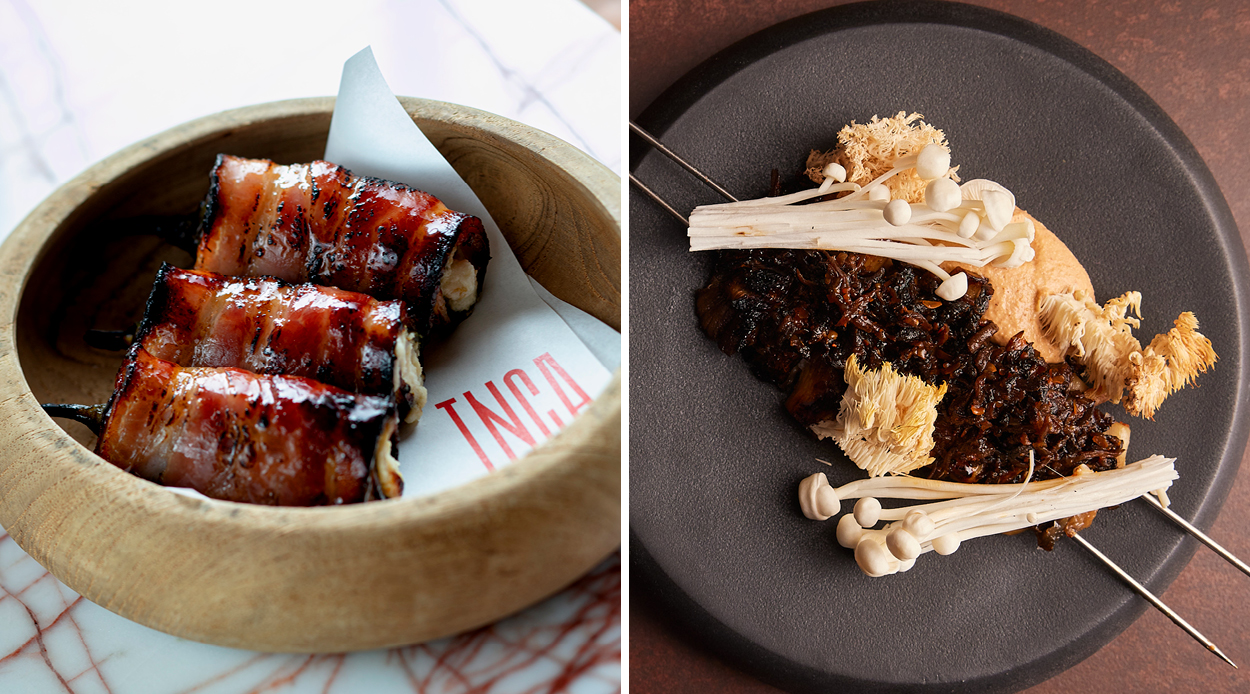
Left to right: BBQ Jalapeño Poppers, Goats Cheese, Bacon from Inca & Bush Honey & Oyster Mushrooms, Ghost Chilli & Macadamias from Kol
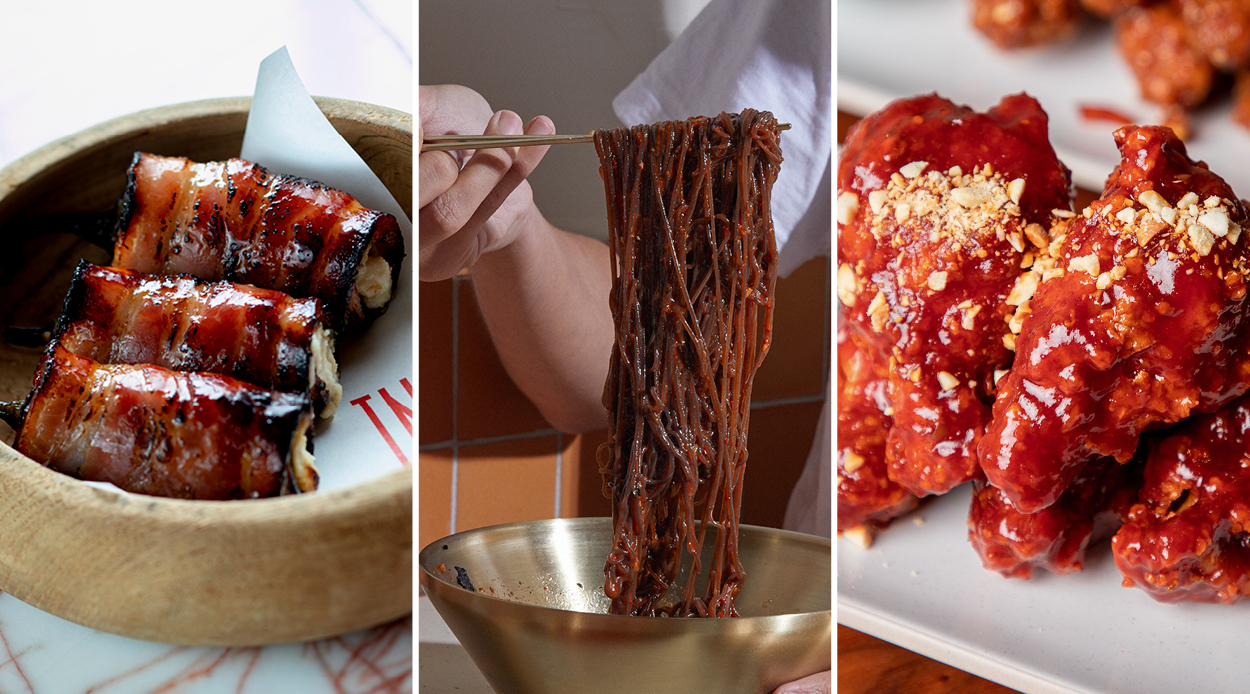
BBQ Jalapeño Poppers, Goats Cheese, Bacon & Bush Honeyfrom Inca A dish that restaurateur Nic Watt proudly calls “a total crowd pleaser” and “uniquely INCA”, these poppers turn up the heat in all the right ways. Here, the spicy peppers are stuffed with a welcome helping of goats cheese, before being wrapped in bacon, then crisped to a tee, and drizzled with bush honey. A certain kind of trans-seasonal, melt-in-your-mouth delight. 9 Richmond Road, Grey Lynn
Oyster Mushrooms, Ghost Chilli & Macadamiasfrom Kol Since opening late last year, Kol has cemented itself as the local authority on modern and inspired Indian cuisine. With ample dishes that are always guaranteed to bring the heat, we think an underrated star of the menu is the Oyster Mushrooms. A dish grounded in simplicity, it finds its heat from the addition of ghost chilli (certified as the world’s hottest pepper), and a creamy balance thanks to fresh macadamia. 23 Ponsonby Road, Grey Lynn
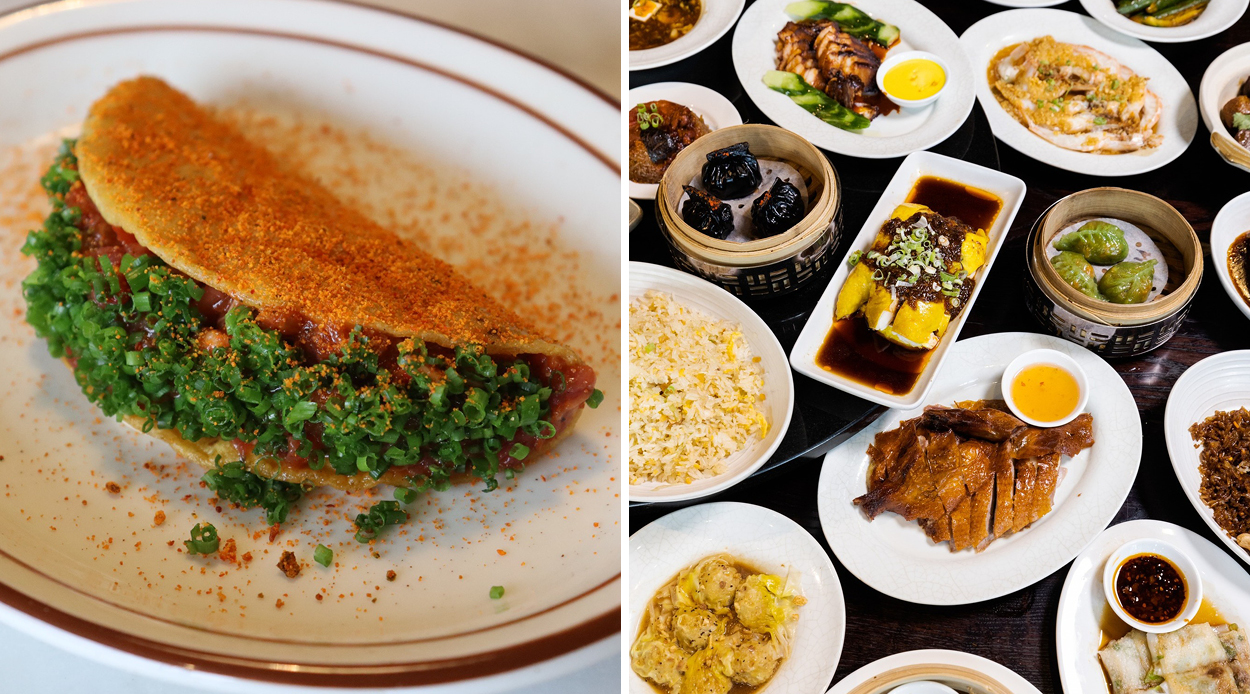
Left to right: Beef Tartare Taco from Ragtag & Yum Cha from Huami
Beef Tartare Tacofrom Ragtag Leave it to the innovative minds at Ragtag to conjure up a Beef Tartare Taco; a departure from the restaurant’s signature duck fat tortillas. Encased in a hard-shell taco, the spicy meat is a perfect complement to the crunchy texture of the shell and offers a texture and flavour sensation. It is a testament to the versatility and creativity of the Ragtag team, and proves that true culinary innovation often lies in the unexpected. 162 Garnet Road, Westmere
Yum Chafrom Huami Not strictly a singular dish, but rather a collision of warming (and oftentimes spicy) plates, Huami’s Yum Cha feels necessary for winter days like these. You’ll want to round up quite a crowd, as we suggest ordering at a very minimum: the marinated bang-bang chicken and spicy peanut sauce, the wok-fried radish cakes and xo chilli sauce, the beef ball and satay spicy sauce and the deep-fried seven-spice squid & salt and pepper — all catering to a deeply human desire to connect over food. SkyCity 87 Federal Street, Auckland CBD
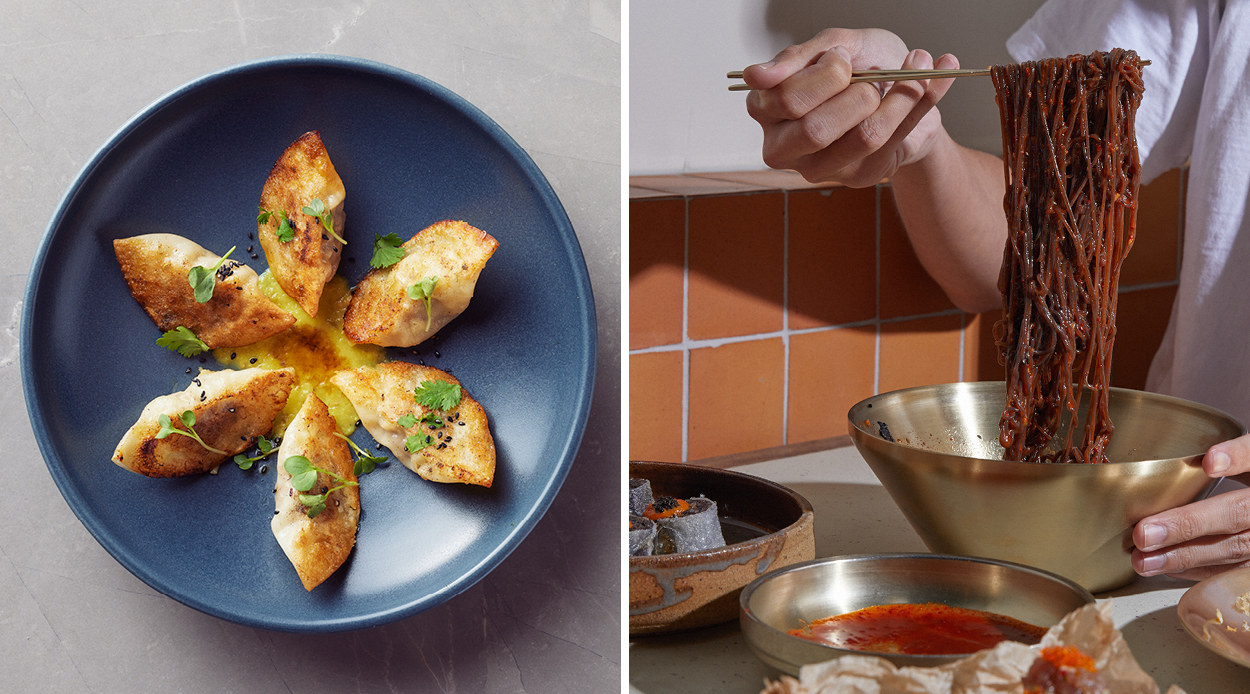
Left to right: Spicy Pork Gyoza from Azabu Ponsonby & Bibim Naengmyeon from Aigo
Spicy Pork Gyozafrom Azabu Ponsonby These spicy little morsels are an unsung hero of the stalwart’s menu; the kind of dish that is often overlooked, but packs a seriously flavoursome punch. Here, dumplings are stuffed with a healthy helping of succulent pork and spices, before being fried to crispy perfection. The heat comes from Sichuan pepper and aji amarillo, the latter encapsulating the Peruvian influence that Azabu is renowned for. 26 Ponsonby Road, Grey Lynn
Bibim Naengmyeonfrom Aigo Aigo’s Bibim Naengmyeon offers nothing of fusion trends that engulf contemporary cuisine. This dish (available at both the original Ponsonby and new Newmarket locations) is the epitome of authenticity, representing the traditional Korean food culture in all its glory. The cold buckwheat noodles, served with a flavourful broth and an array of toppings, are a refreshing delight that is typically enjoyed alongside Korean BBQ. The addition of a skewer of succulent pork elevates the dish to new heights, reminding us that there is something timeless and comforting about the foods that have been passed down through generations. 168 Ponsonby Road, Ponsonby & 2/8 Osborne Street, Newmarket
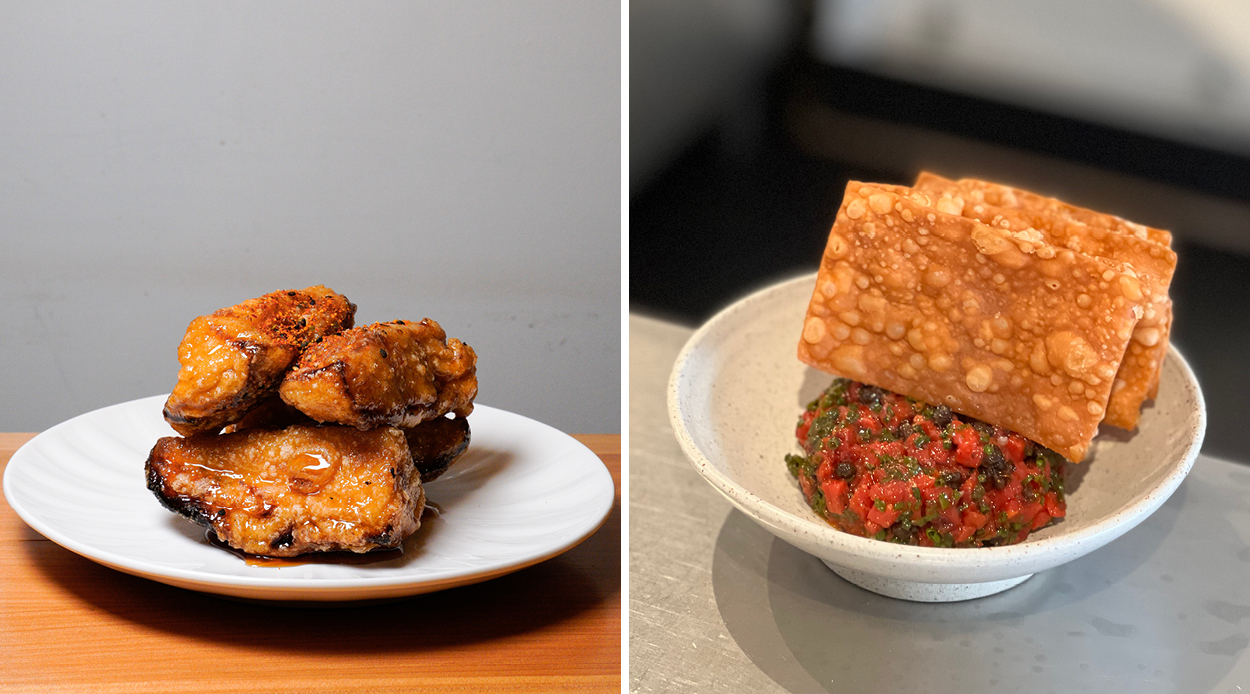
Left to right: Crispy Eggplant, Korean Soya from Tokki & Chilli Glaze & Steak Tartare from Omni
Crispy Eggplant, Korean Soya & Chilli Glazefrom Tokki This is the kind of dish that has all the hallmarks of a winter warmer. Gently spiced to appease the masses, under the crunchy layers lies soft, melt-in-your-mouth eggplant, of which every bite should be savoured. The Korean soya and chilli glaze adds just the right touch of heat and sweet, and although the intention is for this dish to be shared, it’s not unusual to want an entire serving to yourself. 87 Kitchener Road, Milford
Steak Tartarefrom Omni The crown jewel of this perennially chic eatery’s offering is the Beef Tartare, which finds its heat from the welcome addition of ‘nduja. Although sometimes a polarising dish, when served with ample capers, fresh herbs and crispy wonton skins as only Omni could do it, we’d be hard-pressed to find any flaws. 359 Dominion Road, Mount Eden
Rest of the Best
Cheap & Cheerful Eats
Dak Gang Jeongfrom Ockhee Packing a gochujang-spiked punch of flavour, Ockhee’s Korean fried chicken is not to be missed, with spice fans sure to love the mouthwatering, spicy soy and sesame glazed chicken; trust us, it brings the heat. We recommend pairing it with the Chun Sa Chae noodle salad for a deliciously fresh contrast. 171 Ponsonby Road, Ponsonby
Left to right: Dak Gang Jeong from Ockhee & Dumplings in Spicy Sauce from Eden Noodles
Dumplings in Spicy Saucefrom Eden Noodles This Dominion Road outpost is notorious for its noodles, but we’ve also heard that the chefs here handcraft upwards of 3000 dumplings every day. When drowned in the restaurant’s signature spicy sauce, it’s easy to see why. And while one could suggest a side of the cucumber salad for a cooling effect should you seek it, this similarly spiced dish only amps up the heat. 105 Dominion Road, Mount Eden
The OG Sandwichfrom Peach’s Hot Chicken Specialising in authentic Nashville hot chicken, Peach’s Hot Chicken is so popular that the former food truck transitioned to a restaurant in East Auckland’s Panmure. Choose your spice level (ranging from mild to Holy Cluck — described as a religious experience) and enjoy it served between two buttery brioche buns with homemade pickles and creamy aioli. 2 Queens Road, Panmure
Left to right: The OG Sandwich from Peach’s Hot Chicken & Boneless Chilli Chicken from Spicy House
Boneless Chilli Chickenfrom Spicy House Let’s be honest; anything from Balmoral’s Spicy House is sure to satisfy any and all spice cravings. However, the chilli fried chicken served here has made quite a name for itself, and after you taste it, you’ll understand the hype. Seasoned with a copious amount of chilli it has been so perfectly cooked that one taste will have you addicted for life — seriously. 557 Dominion Road, Mount Eden
A showstopping watch can be the inspiration for any fashion-forward outfit if you know how to build your look around it. Whether you err on the side of sleek minimalism and quiet luxury or are unafraid to make a sartorial splash, here’s how to unleash your inner fashion visionary and elevate your look based on a series of our favourite, most covetable timepieces.
For more exclusive access to what the city has to offer, engaging content, excellent imagery and thought provoking commentary on the life that surrounds you, subscribe to Denizen magazine now.