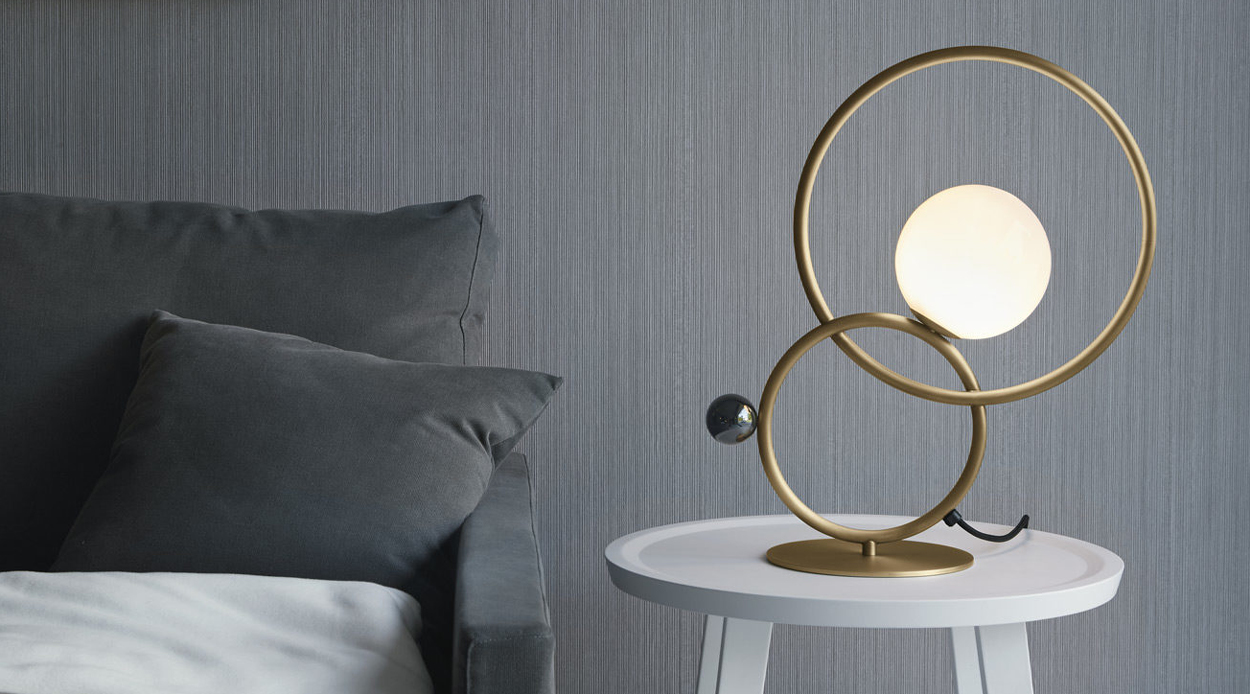
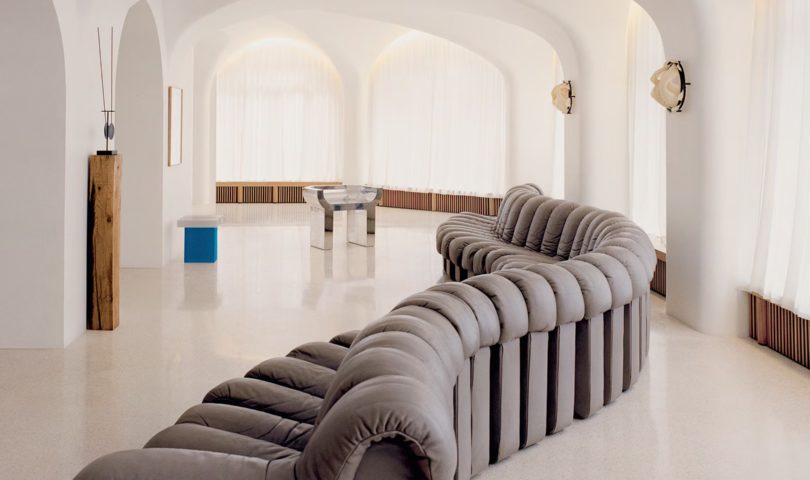
Seen as more of an embellishment to a room than an essential furnishing, it’s lighting fixtures that get acknowledged last when it comes to curating the ideal interior space. But some brands are making a case for propelling them into the spotlight — take iconic light design studio VeniceM, for example. Hand-made and inherently unique, each individual piece crafted by VeniceM is a work of art in itself, and so it’s no wonder that the local design aficionados Designers’ Collection are championing the brand’s swoon-worthy wares.
The brand, founded by Melissa Lunardi and Massimo Tonetto in 2013, is the definition of adept Italian craftsmanship. The vast array of lighting — which covers everything from table lamps, handmade chandeliers and floor lamps to pendants and sconces — has been created with such meticulous attention to detail that the finished products are always truly one-of-a-kind. The brand specialises in custom work, too, for those that are yearning for something particularly unique.
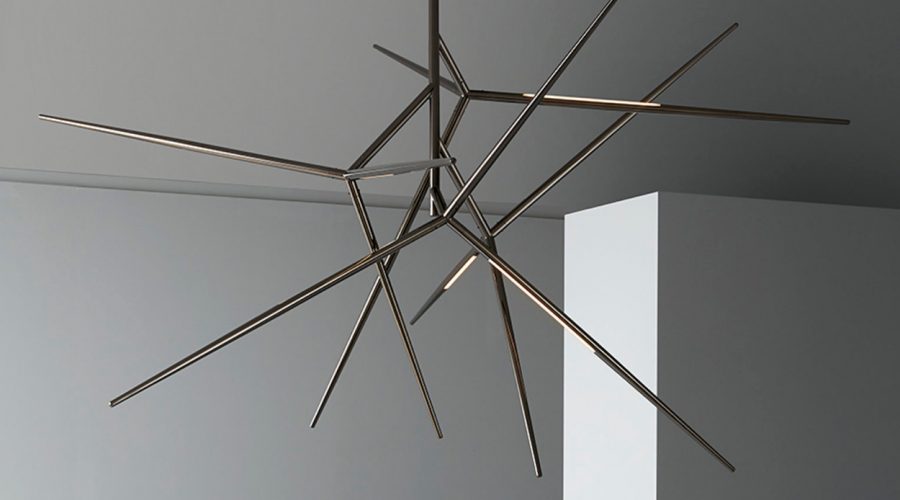
Spear Chandelier
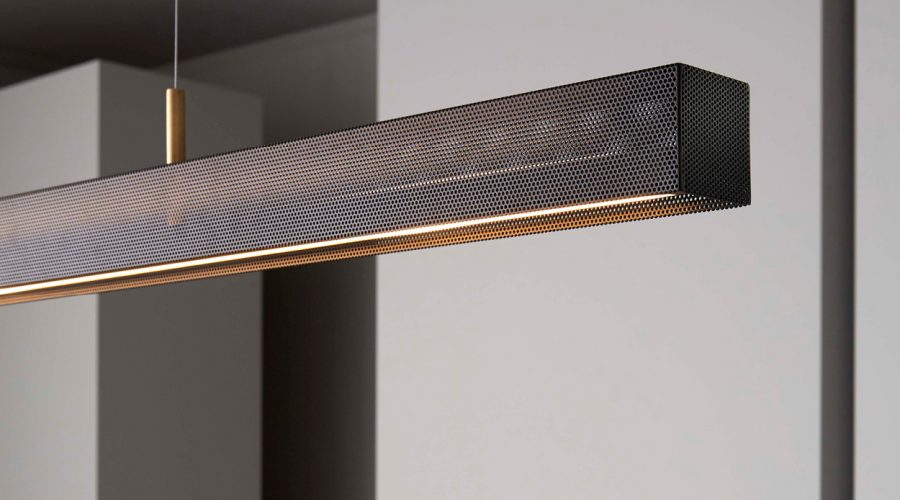
Take the attention-grabbing Spear Chandelier(shown above), for example. The strict geometry ventures into the abstract with direct and indirect LED lights, commandeering the attention of anyone who is within its vicinity. The Urban Lightline Suspension, shown below, is an example of how VeniceM can just as expertly nail the tradition with a twist, combining organic Italian Murano glass trihedrons with a refined dark brass structure.
Urban Lightline Suspension
VeniceM continues to lead the charge when it comes to experimentation and unique creativity, cementing them as the reigning purveyors of exquisite lighting fixtures that really go the extra mile.
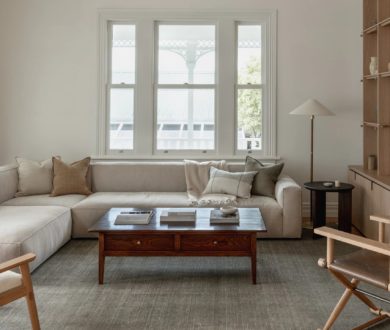
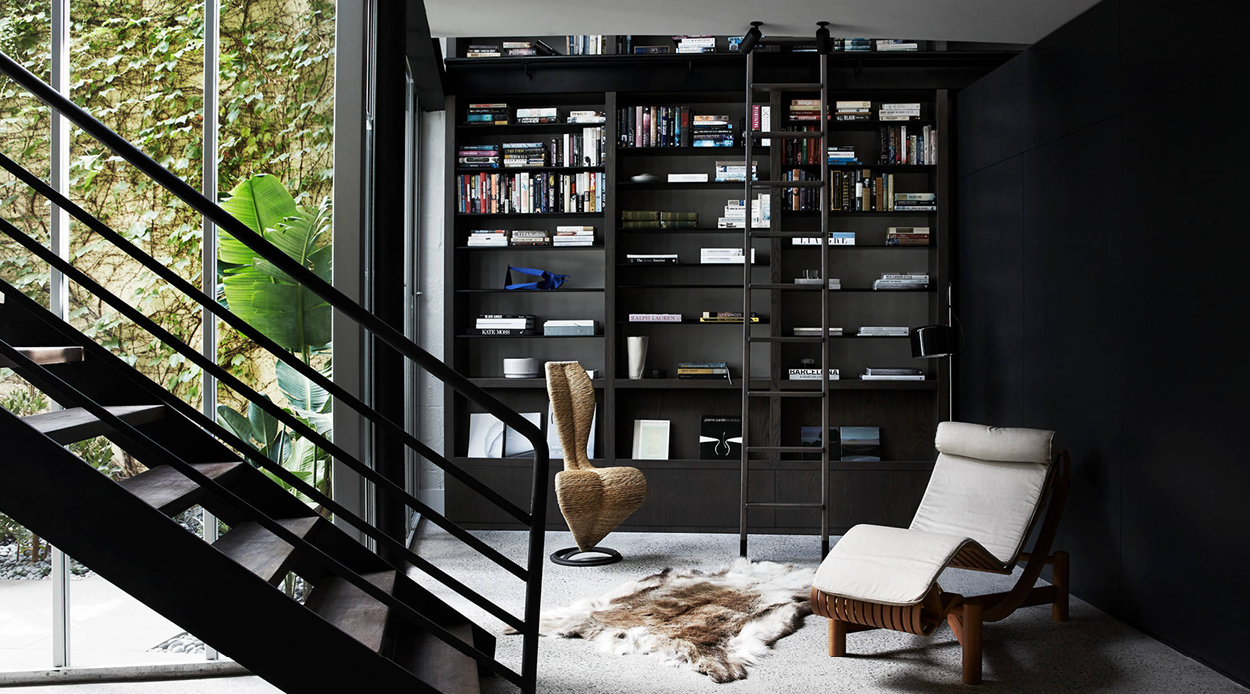
Despite the unrelenting onslaught of technology with tablets and smart phones, we continue to find ourselves yearning for a literary retreat, a place to devour a quality paperback and revel in the warming nostalgia of flicking through a magazine. An intimate home library can be refined and elegant, like the one above, created by Fiona Lynch for a home in Fitzroy, Melbourne, or cosy and informal with a mish-mash of battered and beloved novellas. Just as much a visual feast as the array of eye-catching covers that adorn them, imaginative bookcases can make an interesting focal point. Elevate your home library with these inspired options.
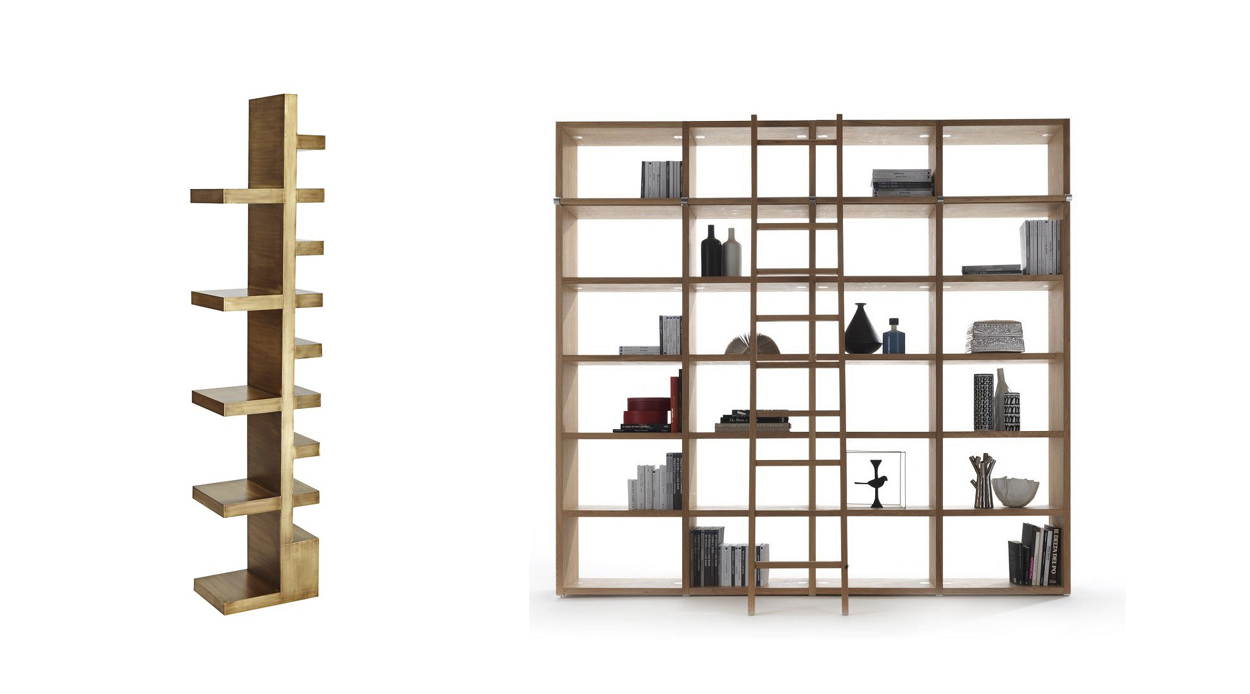
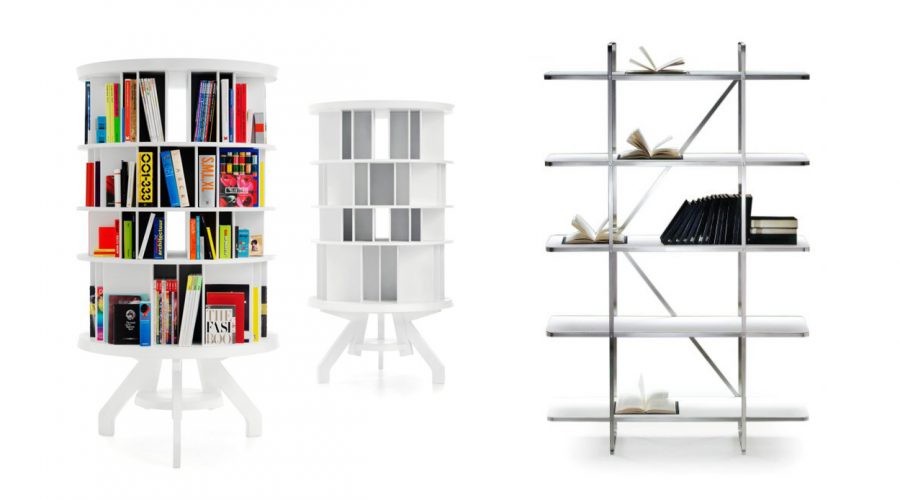
Mass bookshelf by Tom Dixon from ECC and the Wallstreet bookcase by Riva from Matisse
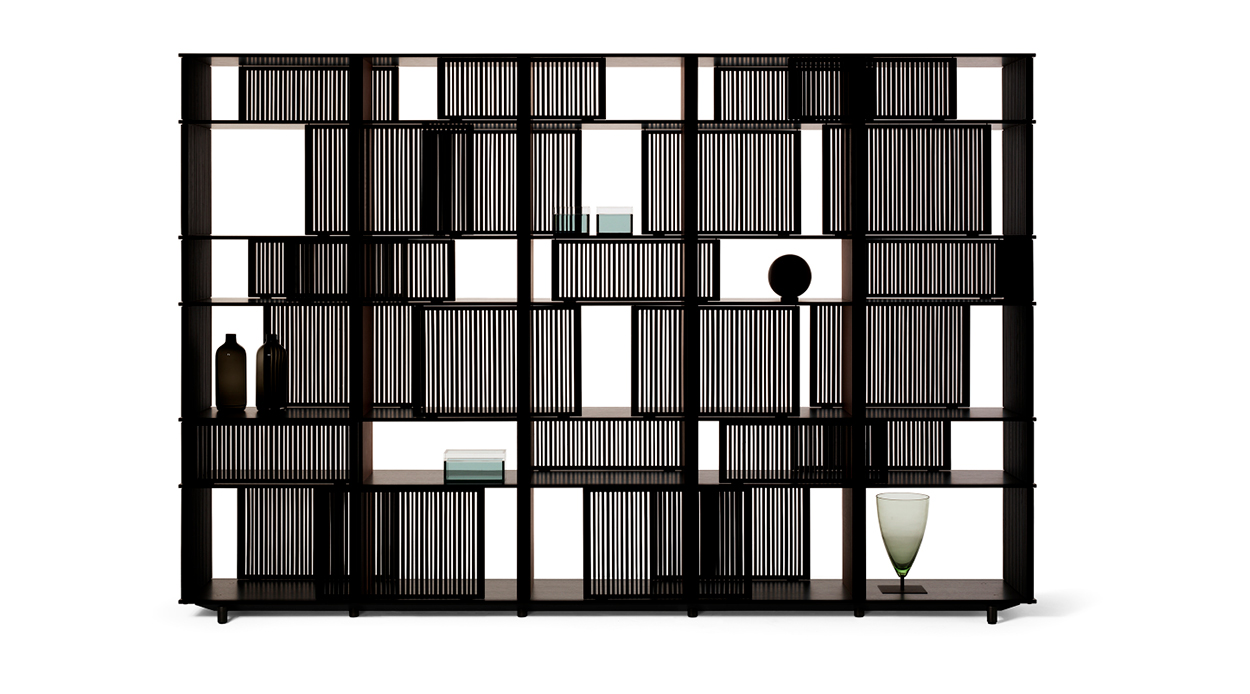
Lloyd bookcase by Jean-Marie Massaud for Poltrona Frau from Studio Italia
Nureyev book carousel by Roderick Vos from Linteloo from ECC and the Carlotta bookcase by Antonio Citterio for Flexform from Studio Italia
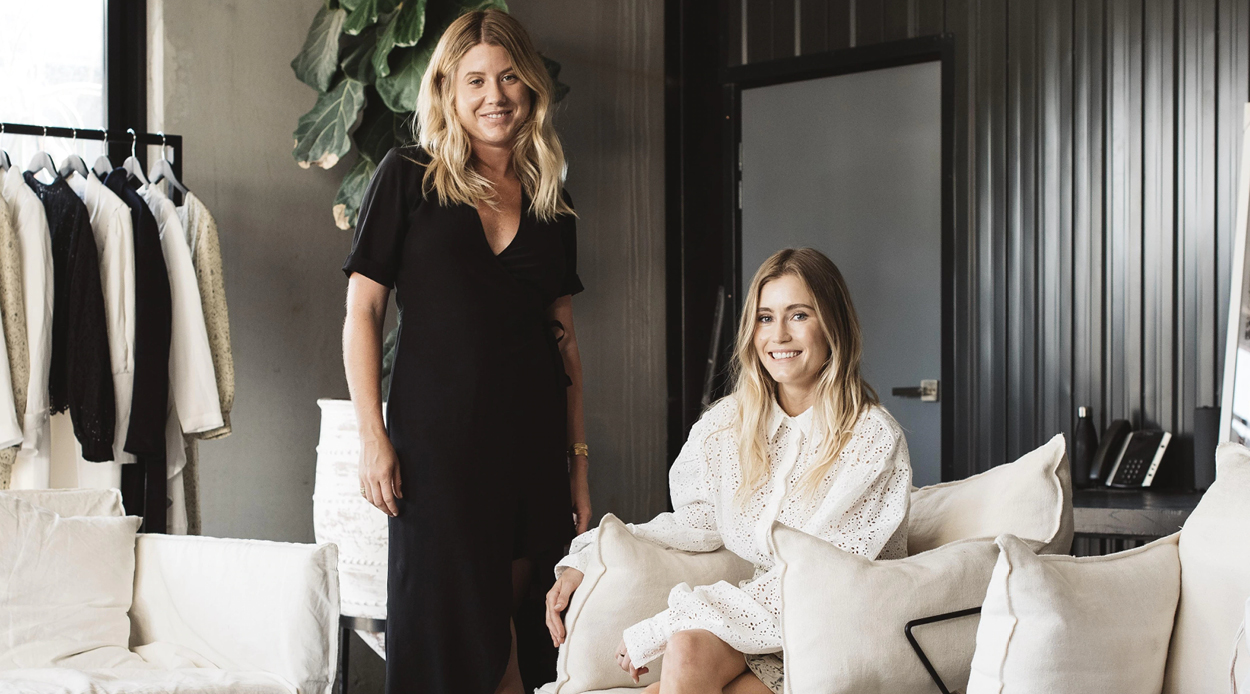
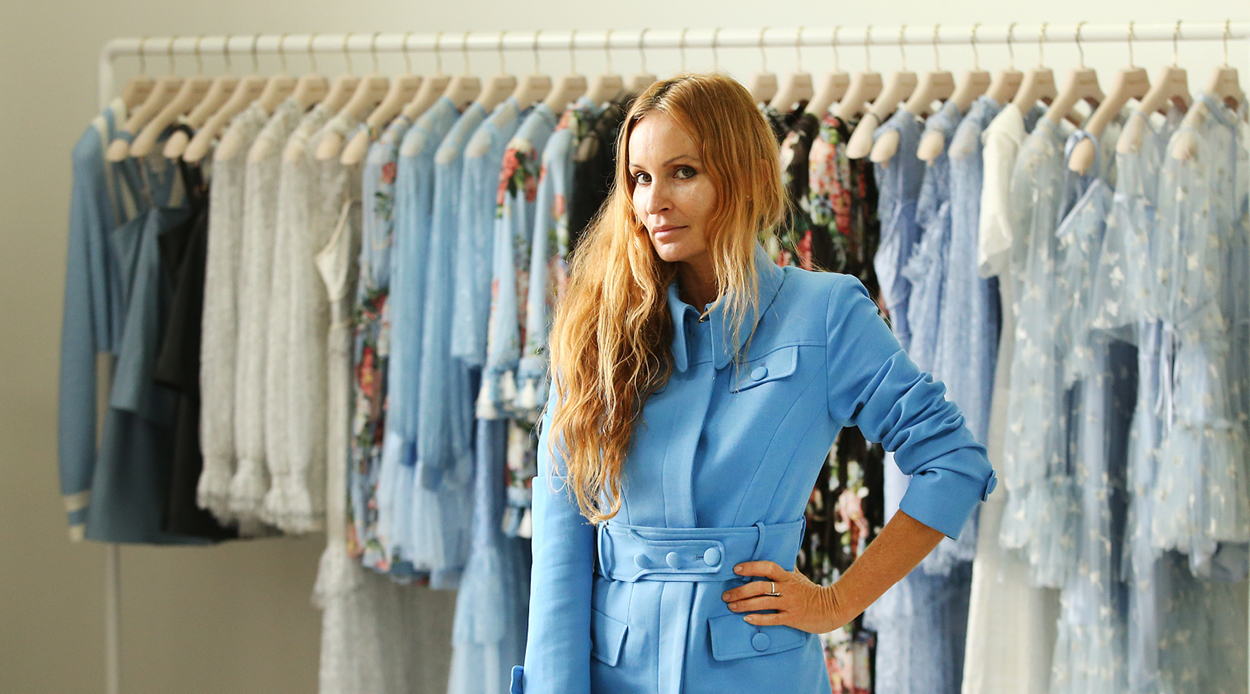
Best friends Nikki Campbell and Sophie Coote do everything together, having founded Sir The Label, a favourite for its feminine dresses, worn by the likes of Olivia Munn, Kate Hudson and Michelle Williams, the dynamic blonde duo also live together near bustling Bondi Beach in Sydney. Taking a break from designing their next collection (you can shop the most recent one at Superette), we asked Coote and Campbell to join forces and share what’s keeping them motivated.
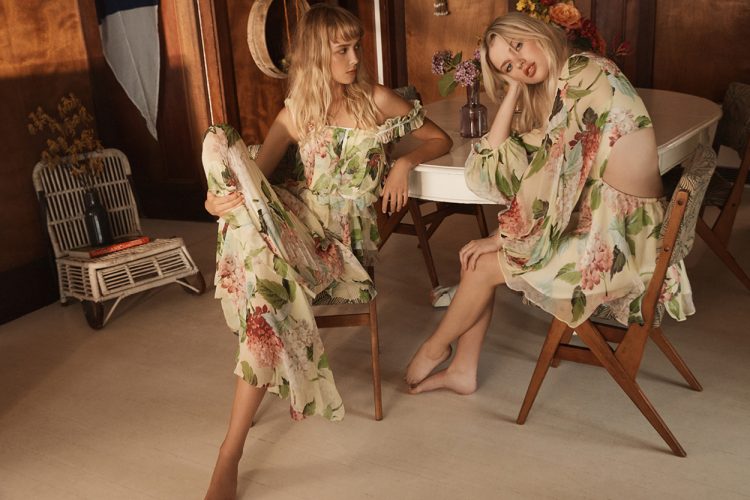
Sir the Label AW20 with Georgia Fowler
Our personal style can be defined as: Relaxed, classic and minimal.
The last thing we bought and loved was: New Levi’s jeans, ready for chunky sweaters and denim all winter.
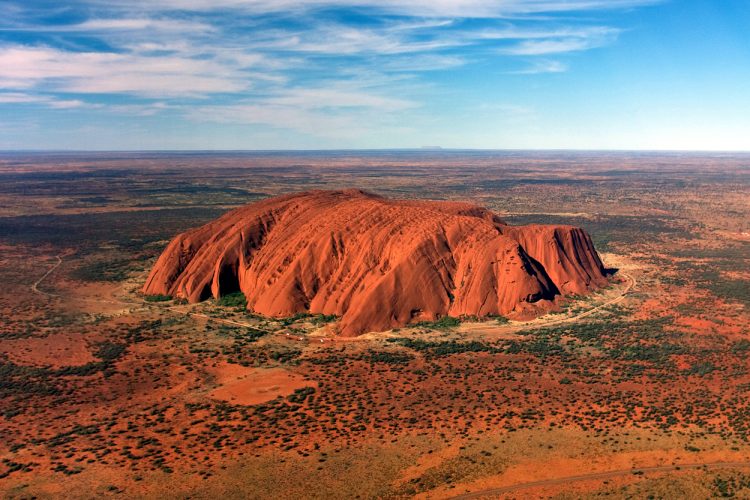
An unforgettable place we visited was: Ayers Rock, we went in February and stayed at Longitude 131. We had the most amazing and magical experience right here in Australia.
Next place we’d like to go to: South West Australia. We have friends living in Yallingup and would love to explore further. We are focusing on seeing what we can here at home.
An object we would never part with is: A Matcha whisk. It’s an everyday essential!
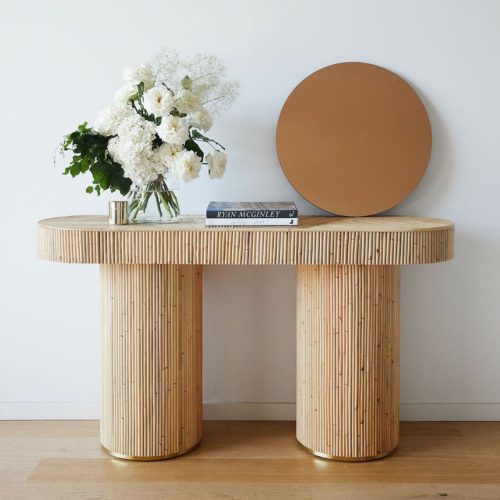
On our wish list is: A Sarah Ellison console for home at the moment, we are really focusing on our home space this year.
Halston Console by Sarah Ellison
Our favourite app is: At the moment, Nike Run Club. Let’s see how long that lasts.
An indulgence we would never forgo is: Chocolate. Dark chocolate gojis are a favourite at the moment.
If we had to limit my shopping to one neighbourhood in one city, it would be: Paris. From the vintage markets to amazing boutiques, it is our favourite place in the world to shop.
Our style icons are: Julie Pelipas, Princess Diana, Lauren Hutton. Just to name a few…
The best book we’ve read in the last year is:How to Do Nothing by Jenny Odell. It seems timely but turned out being so much more than just the title. We highly recommend it.
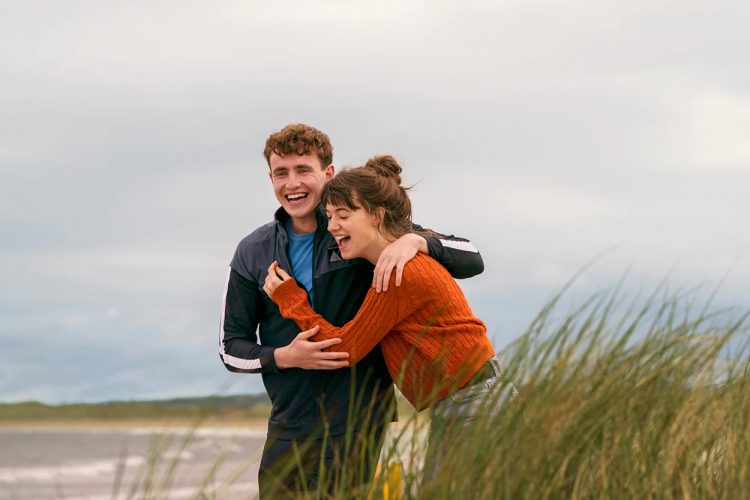
We can’t miss an episode of: Normal People, we only started the series two days ago and cannot stop.
In our fridge you’ll always find: Olives, Chilli, Taramasalata, Carrots, Eggs and Chocolate. The essentials.
Our favourite room in our house is: Dining room, it looks out over the ocean and is filled with all our favourite art.
We recently discovered: Painting. We have been getting very creative in quarantine and rekindled our love for painting.
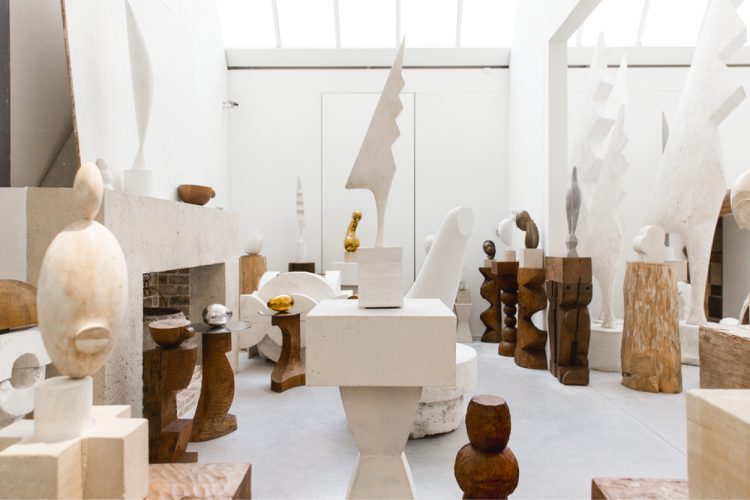
The one artist whose work we would collect is (if price is not an issue): Let’s dream big. Atelier Brancusi.
The last meal out we had that truly impressed us was: We had a long lunch at Bert’s [Paddington, Sydney]. The food, the wine, the sunshine, the people! Cannot wait to go back.
The podcasts we listen to are: The Daily, daily! And anything Goop.
The beauty product we can’t live without is: Our skincare routine, we both visit Solstice Skin here in Bondi regularly and absolutely can’t live without Hayley and her products.
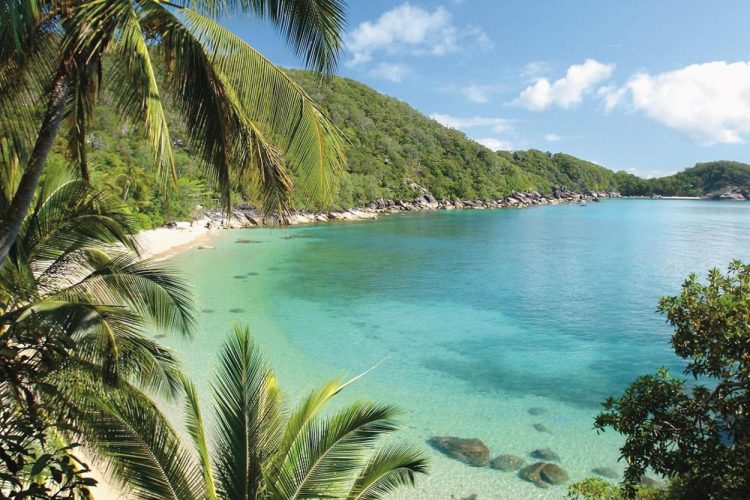
The best gift we ever received was: A surprise trip to Bedarra Island in QLD with our closest friends. They all surprised us at the airport, and we had 3 days on a remote island with no Wi-Fi. Definitely one to remember.
While Carrara marble has long been the stone of choice for its clean palette and versatility, a new breed of colourful slabs is encouraging us to indulge in something a bit more playful.
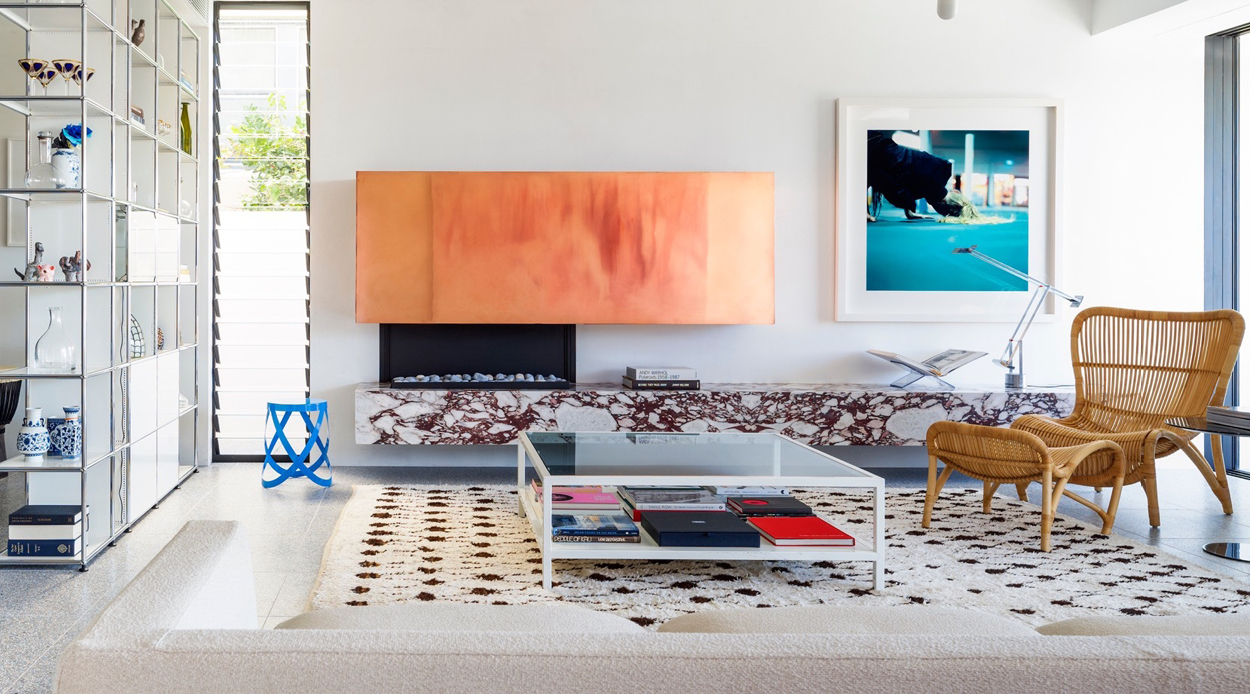
In the vibrant Bondi beach home by Tobias Partners, pictured above, the desire to avoid any interior design clichés of being ‘by the sea’ led to an unlikely mixture of terrazzo flooring flanked by a red and white stone plinth in the living room. Its clever application lent the space an air of sophistication while maintaining a relaxed, laid-back feel.
North Bondi Residence by Tobias Partners
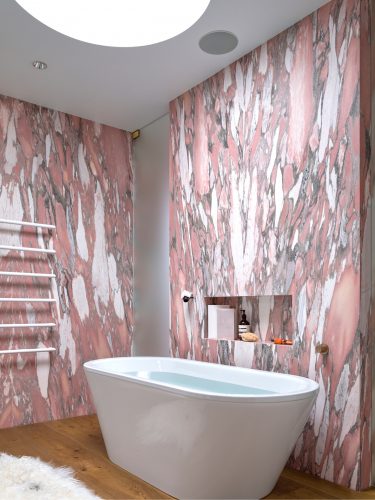
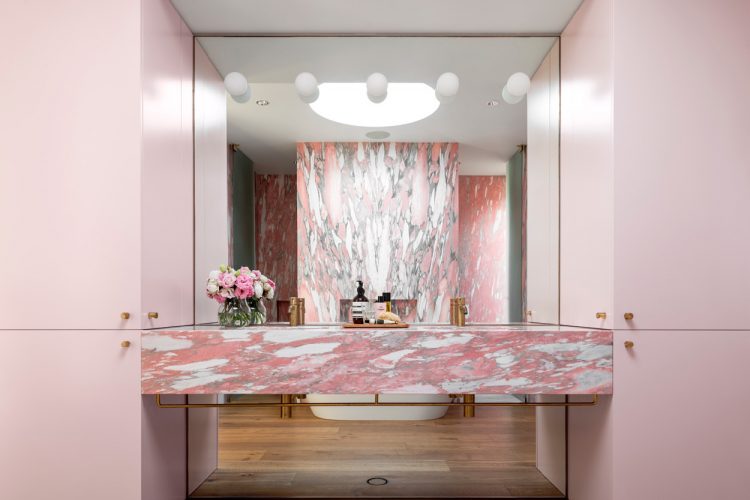
North Bondi Residence by Tobias Partners
In the bathroom of the same project, candy floss coloured floor-to-ceiling marble walls provide a show-stopping backdrop while rendering the washroom simultaneously bold and feminine.
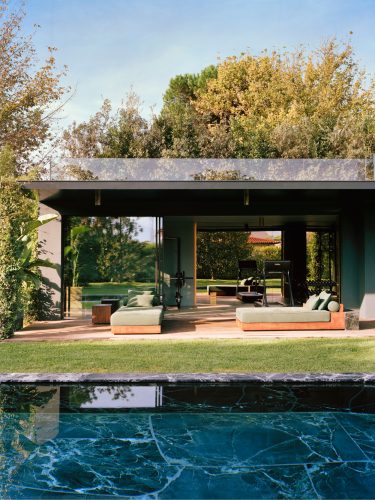
Art Deco Revival by Vincenzo De Cotiis Architects
Art Deco Revival by Vincenzo De Cotiis Architects
Art Deco Revival by Vincenzo De Cotiis Architects
Art Deco Revival by Vincenzo De Cotiis Architects
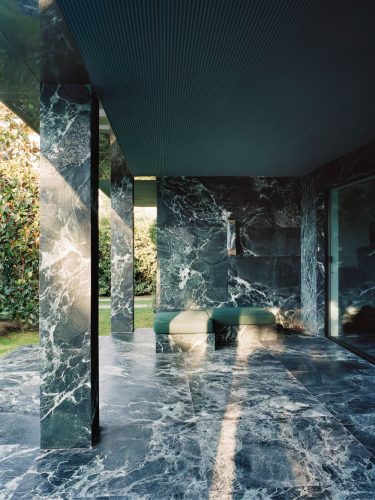
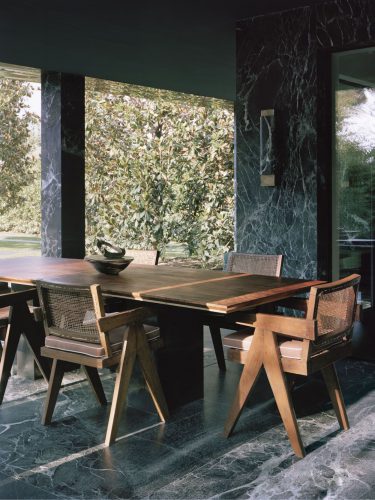
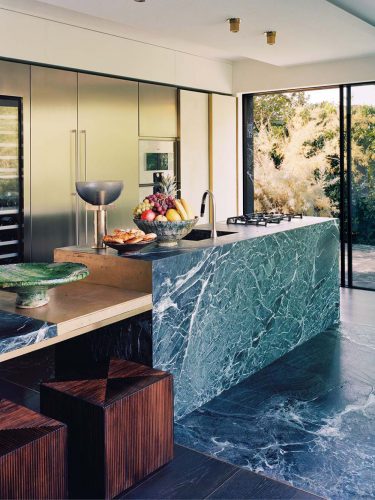
Graduating out of the powder room to places where a saturated marble can be an unexpected touch, such as the continuous use of jade granite that sees a kitchen island blend into the flooring in De Cotiis Architects’ Marble House, this robust new movement is proving that unusual marble hues really have no bounds.
A number of young artists in New Zealand are eschewing the ‘institution’ to pave intriguing pathways of their own. Together the small galleries they and their peers run are cultivating an intriguing art scene. We spoke with the creators behind three such galleries and discovered a trove of creative potential that had been right under our noses the whole time.
Sosâge 43C Dryden Street, Grey Lynn “I feel like the Auckland art scene is this massive sandwich and we’re just the little filler,” Léa Charron tells me, analogising where she and her new artist-run space fit into the wider landscape of art in this city. “We’re not the bread, we’re not the meat, we’re the nice little sauce that brings it all together.”
I’m meeting the artist and co-curator Nick Jamieson, for a drink to ask them more about Sosâge, the space Léa opened in Grey Lynn. But it was she who posed the first question, asking — an antipodean-inflection offsetting her native French accent — “how did you hear about us?”
Sosâge had been on my radar since I had driven past the space a month or so before. Occupying a small spot on Grey Lynn’s Dryden Street, the gallery maintains a neutral palette in line with something one might expect from an art space. But don’t let its white walls fool you. Sosâge’s offering is different from the norm.
Sosâge
Starting with its unexpected location, somewhere Léa calls, “between the city and suburbia,” the beautiful rows of villas seem to stand in contrast to Sosâge’s experimental windows and rowdy openings. This was something Léa admits she was worried about at first, telling me how events at Sosâge would spill out onto the street. “Actually, the whole neighbourhood has been so supportive,” she tells me, “dropping in to see shows or just to say hi… some people have even bought pieces.” But for both Léa and Nick, selling art (while celebrated when it does happen) is not what necessarily drives them. “Sosâge is a space where things can happen,” Léa tells me, “it blurs the boundaries of a typical gallery space because people can just come in and say ‘hey, I’m an artist can I talk to you,’ and there’s a lot more flexibility around what can be done and the type of art we can show.” Nick agrees, before adding, “it was really important for us that even in the early days we disrupted the proposal system… there is such a huge disconnect between making ‘good’ academic art and making art that commercial galleries will sell, and I think that Sosâge is working to bridge that gap.”
Léa and Nick have a goal to give the art often overlooked by commercial galleries a chance. As Nick tells me, “lots of hyper-academic people make amazing art but they don’t really get shown,” following up by divulging that a bulk of the proposals they’ve received are from people who fit this mould.
Together, Léa and Nick will look through the proposals they are sent and try to decide the kinds of artists and shows that will work for the gallery’s programming. “Bouncing off each other is really helpful,” Nick says, “because our tastes are worlds apart.” Léa laughs, “it’s true.” Where Nick’s work is mostly clean, graphic and often digital, Léa’s is grounded in sculpture. Nick explains how the artist who was about to exhibit at Sosâge (Claudia Dunes), presented one of the first occasions that he and Léa had almost immediately and unanimously agreed.
In order to exhibit at Sosâge, Léa explains that it’s more about connecting with not only her vision but the overall vibe of the space, as well as bringing something different to the table. Passion and drive override saleability as the central criteria. “It’s totally about removing the barrier,” Léa says, “you don’t have to have 100 shows under your belt, you don’t have to have big people talking about your work, all you need is to be able to show that you actually care about what you’re doing.”
Nick agrees, “some people have a scattergun approach to sending out proposals, and while they’re good for context, we’ve found that actually meeting people is where the business is done.” And when the pair say that they’re open to having anything in the space, they mean it. “We’ve had performance, weird ceramic sculptures, music video releases, a fashion launch,” Léa says, laughing, “honestly you can do whatever the fuck you want, but for me, it’s more about why you’re doing it, and more specifically why you want to do it at Sosâge.” For Léa, the work she finds compelling is, in her words, “something a little bit challenging, bizarre or highly conceptual.”
That said, running a small gallery demands almost constant attention when it comes to remaining afloat, and no matter what the exhibition is, bills still have to be paid. “Is funding available?” I ask, to which Léa acknowledges that Creative New Zealand (the body responsible for funding a number of creative pursuits in this country) is overwhelmed by the volume of applications they receive. “It’s still very, very hard to get to the point where organisations like CNZ will recognise and believe in you,” Léa says, before Nick chimes in, “you have to prove yourself first and put on shows that impress them… it’s that paradox about being able to fund something long enough on your own and then seek funding… but the question is always, will you make it that far?”
Hearing Léa’s and Nick’s plans for the future of Sosâge, however, I feel confident that it will continue to build. For Nick, this includes establishing a solid public programme around the gallery. “I keep coming back to what Serpentine Galleries do in the UK,” Nick says, “they run amazing programmes and will pair shows with academic events and podcasts and videos… they get incredible people from outside the art world in to speak, like lawyers and scientists,” Léa enthusiastically agrees, “scientists! That’s the dream.” She continues, “I also think the online gallery idea is really cool because it would allow us to accommodate different kinds of art that only exist digitally… it also doesn’t require artists to produce anything that creates waste, which is an idea I’m drawn to.”
For these two, it’s the marriage of art and education that will carry the concept of Sosâge into the future. “That’s culture, you know?” Léa says, “being able to educate people through art towards different avenues and ways of thinking.” Nick concurs, “when you put them together, you can really reach an audience… yeah, that’s what we want.”
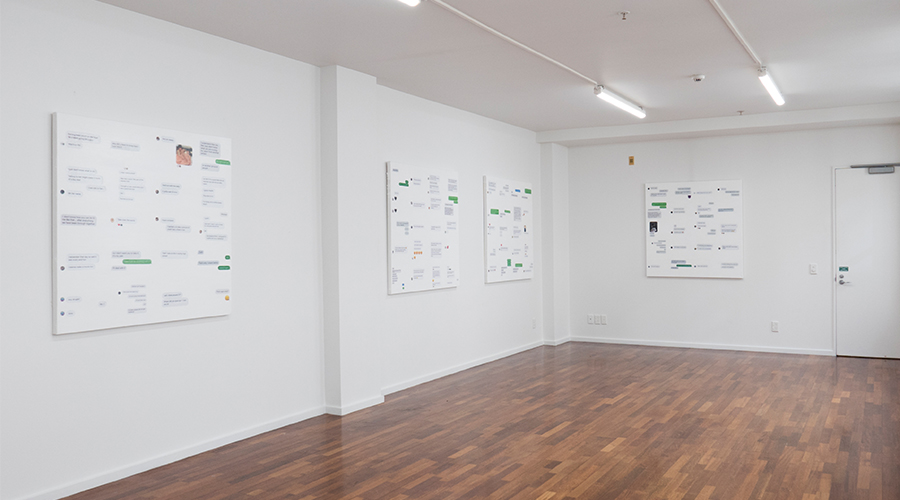
Mercy Pictures 6B Little High Street, Auckland CBD The first thing I noted, walking into Mercy Pictures (after catching my breath from the six flights of stairs it took me to get there) was the lightness of the space. “You know, there is an elevator,” Jerome Ngan-Kee says, leading me into the gallery he started with partner Teghan Burt. On the walls hung pieces that Teghan explained as part of her Touching Each Other exhibition — canvases on which iPhone message threads had been blown up — casting the white-walled space in a stark, modern light.
“The way it kind of works in Auckland at the moment,” Jerome says, after I ask what inspired the duo to start their own gallery, “is that if you want to keep doing shows, you have to do them yourself.” It was after attending Elam together (The University of Auckland’s School of Fine Arts) and spending a number of years running other galleries that Jerome and Teghan decided to start Mercy Pictures, armed with a shared desire to create opportunities for themselves and their peers in what they saw as a small market. “As opposed to just sitting back and waiting for someone to give you a show,” Jerome continues, “you’ve got to help yourself. It’s just a more robust way to engage in art.” I ask whether the perceived lack of opportunity is simply a question of size, New Zealand is, after all, a small country. “It’s just one of those banal truths,” says Jerome, “it is small, and with that size comes inevitable limitations.” Regardless, this doesn’t seem to be slowing the pair down.
“The thing is,” ventures Jerome, “when you’re a young person making art, people often say ‘oh that’s a nice thing that you’re doing,” he cocks his head, imitating the kind of patronising expression he has probably encountered a number of times. “So when we started Mercy,” Teghan pipes up, “we wanted to do something that was perhaps a little more serious.”
Teghan Burt, Touching Each Other, 2019 at Mercy Pictures
It’s a strategy that’s paying off. In 2018, Mercy Pictures hosted artist Amalia Ulman for her first solo exhibition in New Zealand. Ulman is the artist, if you remember, who made her name staging a piece of performance art on Instagram, where she adopted the persona of an aspiring ‘influencer’ on a quest for superficial perfection. Excellences & Perfections, as it was called, was eventually included in a group show at the Tate Modern, making Ulman the first ‘social media artist’ to be shown at a major institution.
Speaking about the artists they approach for shows, Teghan tells me that most of them do it “for the love of art,” which is also a nice summary of what seems to be this duo’s primary aim. “We’re not really driven by commercial imperatives,” Jerome tells me, “I mean the money would be nice but it’s not our main focus.” At the start of this year Mercy Pictures also held a group show curated by artist Rob McKenzie, that featured 22 artists from New York, “some of them were pretty massive,” Teghan tells me, like Bernadette Van-Huy — a big player in the New York art scene since founding Bernadette Corporation in the nineties.
But while the underlying imperative of Mercy Pictures is to share a love of art, I’m reminded not to underestimate how serious these two are, as Jerome explains their presence at the SPRING1883 art fair in Sydney. “The main way we fund Mercy Pictures is through selling art,” Jerome tells me, “as well as lump sum donations from patrons.” He articulates that Mercy Pictures is more like a dealer gallery than it is an artist-run space — the latter, a moniker they don’t feel aptly sums up what they’re trying to achieve. “We’ve both already run a number of artist-run spaces,” Teghan says with a laugh, “and so we wanted to move on to something different.”
This really comes back to the idea of being young and finding it difficult to get people to take you at your ability, not your age. “I feel like in other cultural spheres, young people seem to be empowered,” Jerome says, “but in art, I think a lot of young people don’t feel that.” For Jerome and Teghan, this comes down to the need for more education (at institutions like Elam) about the varied options available to young artists in the industry. “When I started at university, “Teghan tells me, “the head of Elam gave a speech where he said, ‘there are 100 of you, and only one of you will be an artist’… which might be the statistics… but if you go into the industry with that attitude then it just becomes like a luck of the draw thing.”
This narrow view is something that Jerome and Teghan wish would change. “Art can exist in a bit of an idealistic sphere,” Jerome says, “but people need to think about it practically too.” He goes on, “you can create art however you want and there are a number of things you can do to make it exist and survive,” explaining how, while there are, of course, struggles around creating opportunities, “you just have to be persistent.”
Persistence, it seems, has paid off for Jerome and Teghan. As Mercy Pictures continues to steadily build a reputation for itself in Auckland, the pair’s vision is to keep things steady and hopefully figure out how to turn the gallery into a proper, full-time job for them both.
Until then, people can still visit the light-filled, loft gallery on Little High Street if they’re looking to broaden their horizons. “It’s hard to know what people think,” says Jerome, “but I hope they view this as a good thing for Auckland.” Teghan adds, “people overseas say they like our programming, so that’s cool.”
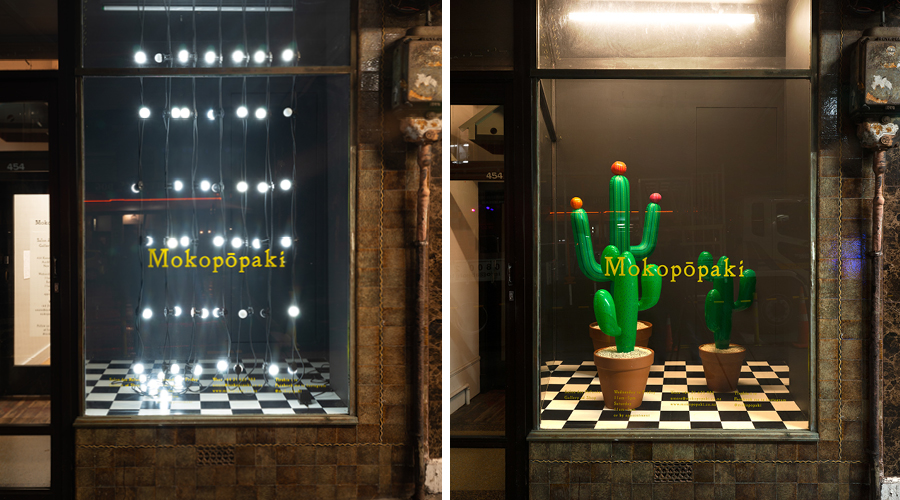
Mokopōpaki 454 Karangahape Road, Auckland CBD Tucked into Karangahape Road’s Ladies Mile, is a gallery making waves that belie its physical size. Mokopōpaki is, as its Associate Director and ‘Keeper of the House,’ Jacob Raniera tells me, “a commercial, dealer gallery” (as opposed to an artist-run space), something he deems necessary to be able to be successful and survive. And yet, walking into the space it feels devoid of the often stark commerciality that can come with the territory of being included in that breed.
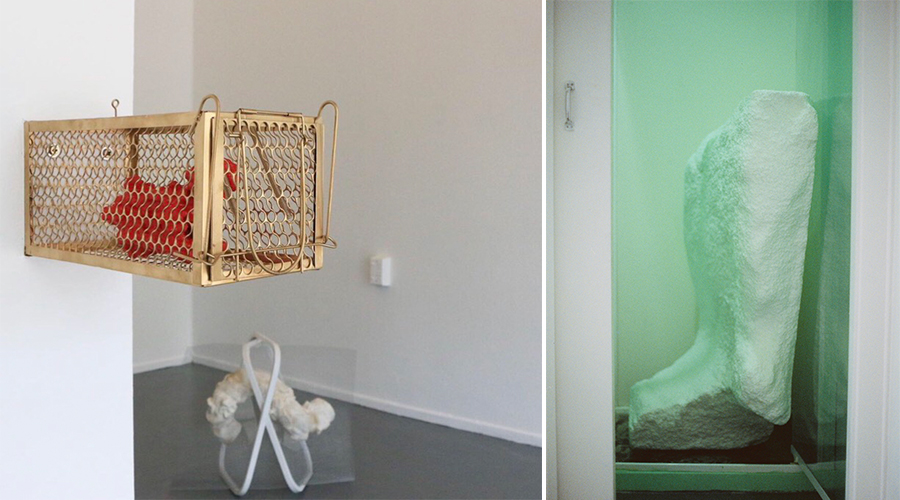
Left: Roman Mitch, Last Night, 2019. Right: PĀNiA!, Indian Country, 2019. Courtesy of the artists and Mokopopaki Auckland. Photos: Arekahanara
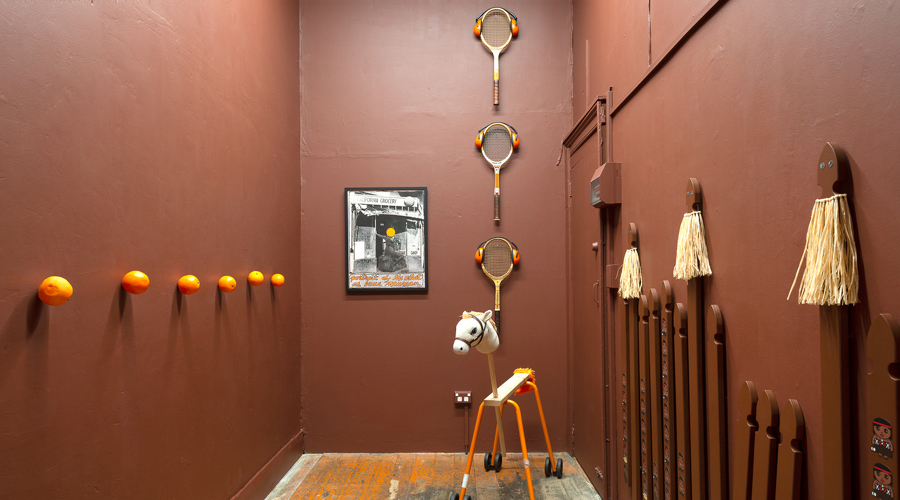
Mokopōpaki is inherently warm. It consists of only two rooms, set in a long, narrow space, and is not a place where you’ll find clean white walls or echo-y voids. “For us, changing the background that the art was to be seen on, changed how we looked at the art in the first place,” Jacob tells me, “the brown walls in the Brown Room… suggest both an actual and metaphoric shift in perspective.” Even the floors we’re standing on, he explains, are subject to artistic consideration, with artist Billy Apple removing the original vinyl flooring two years ago as part of his work Brown Room Subtraction. There is even an enclosed shower in one corner of the Brown Room, that Jacob says couldn’t be removed when they took over the space and as such, has been embraced as an active part of the exhibition experience.
The gallery is, as Jacob articulates, “an inclusive space with Māori ideas and values at its centre,” going on to explain, “we are a critical group or whānau who want to make ‘art for people’ accessible… we apply Māori approaches to exhibition-making and the production of artwork.” The artwork is cross-generational, experimental and is displayed in a way that makes it feel tangible to me, drawing me in with its presentation that is both raw and thoughtful.
“One of our main aims is to create an environment where everyone feels welcome and invited in,” Jacob says, which is exactly the effect the gallery has as I admire the various pieces that make up HĀTEPE, an exhibition organised by Roman Mitch. Jacob, walking me through the exhibition, points out various pieces that were made by artists’ family members — Te Kōkako and Te Kererū Māui, a pair of dolls that had been sent over from the UK by Jacob’s cousin Te Maari; woven tāniko by Dianne Rereina Potaka-Wade that was a gift to her daughter; an intriguing installation calledDecision-Making Bucket by Roman’s six-year-old son, Marcel Tautahi.
For Jacob, the idea of family lies at the heart of Mokopōpaki. “It is named after my Māori grandfather,” Jacob explains of the gallery’s unique moniker. “Pōpaki means ‘clear, fine night’… which may mean that my grandfather was named in celebration of a child or mokopuna born on a clear, fine night.” He goes on to explain how the Mokopōpaki logo also draws on abstract symbols borrowed from a Māori lunar calendar, underlining how “the light of the moon informs all that we do at Mokopōpaki… it’s our way of referencing, not only another logic or Māori-centric way of the world, but also demonstrates our commitment to women and women artists.”
In line with the way Mokopōpaki aims to ask questions and tell stories, Jacob explains how the gallery doesn’t accept random proposals, adopting a more collaborative approach to programming. “We want to show work that not only responds to the space,” he says, “but that also, in some way considers the core values that are at our centre.” Citing artists willing to embrace the unknown and explore experimental concepts as the kind that work well at Mokopōpaki, Jacob underlines why this gallery has established a reputation for what he calls, “promoting the wild card.”
Mokopōpaki has also collaborated with Te Tuhi, a contemporary art gallery in Pakuranga to present a series of works by local, anonymous artist PĀNiA!. It included her Pakuranga Customs House/Attitude Arrival Lounge, at which visitors were offered the opportunity to have their own, replica New Zealand ‘PĀNiA! Passport’ that was filled with their photo (quickly taken on a phone and printed on a portable printer) and stamped with the names of iconic international galleries — MoMA, Guggenheim, Tate Modern et al.
Just before I left Mokopōpaki, Jacob offered to issue me with my own ‘PĀNiA! Passport’, snapping a photo of me in front of Tiffany Thornley’s quilted piece, From the scraps of patriarchy I made myself anew and asking me to sign it before stamping it with the aforementioned insignia. Now, it sits on my desk, a daily reminder of the way that, as Jacob articulates, Mokopōpaki is seeking to take its unique, creative vision to the world.
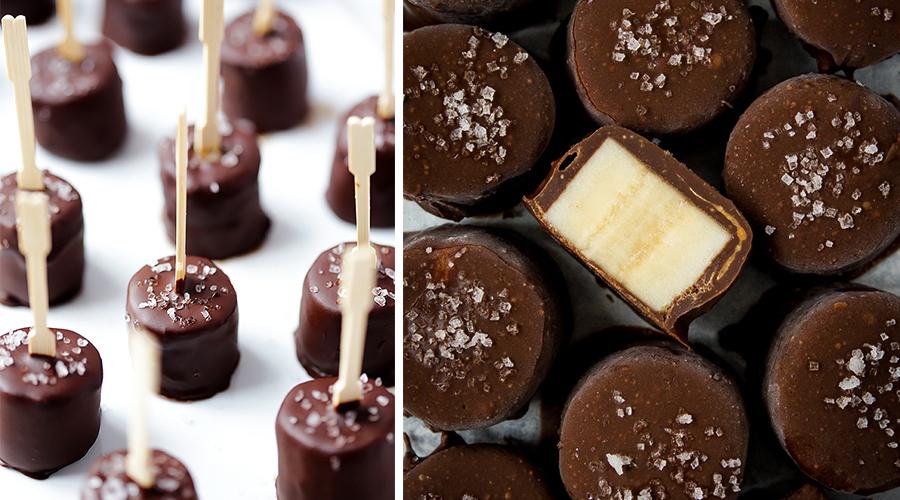
If, like us, you find yourself craving a snack come 3pm (ok, 11am), you’ll know how hard it is to steer clear of the sweet treats. A few nuts and seeds suddenly turns into some fruit, chips, half a block of chocolate — hell, why stop there, we’ll start the clean eating tomorrow. It’s difficult, to say the least. So, to help those of you who also have no willpower, or would just like a healthy snack alternative, here’s a little frozen dark chocolate banana bite recipe. The trick lies in just having a couple.
Ingredients 1 block of dark chocolate (we love Whittaker’s Fair Trade Dark Ghana) 4 almost ripe bananas
Optional Crushed nuts (such as peanuts) Peanut butter
Method Break up the chocolate block into pieces and melt in the microwave or a bain-marie, being careful not to let it burn. While melting, slice bananas into 2cm thick slices. Remove the chocolate from the heat. Now, you can choose to make mini banana sandwiches with peanut butter (see pic above) or leave as single pieces. Take a toothpick and dip each banana slice into the chocolate (we like to cover ours completely), then, either sprinkle with crushed nuts or just place onto a baking paper-covered tray and pop into the freezer. Once frozen (about an hour) empty into a zip lock bag and return to the freezer. Be a legend and take them to work for your colleagues to enjoy. Or give them to the kids, they’ll be playground royalty that day.
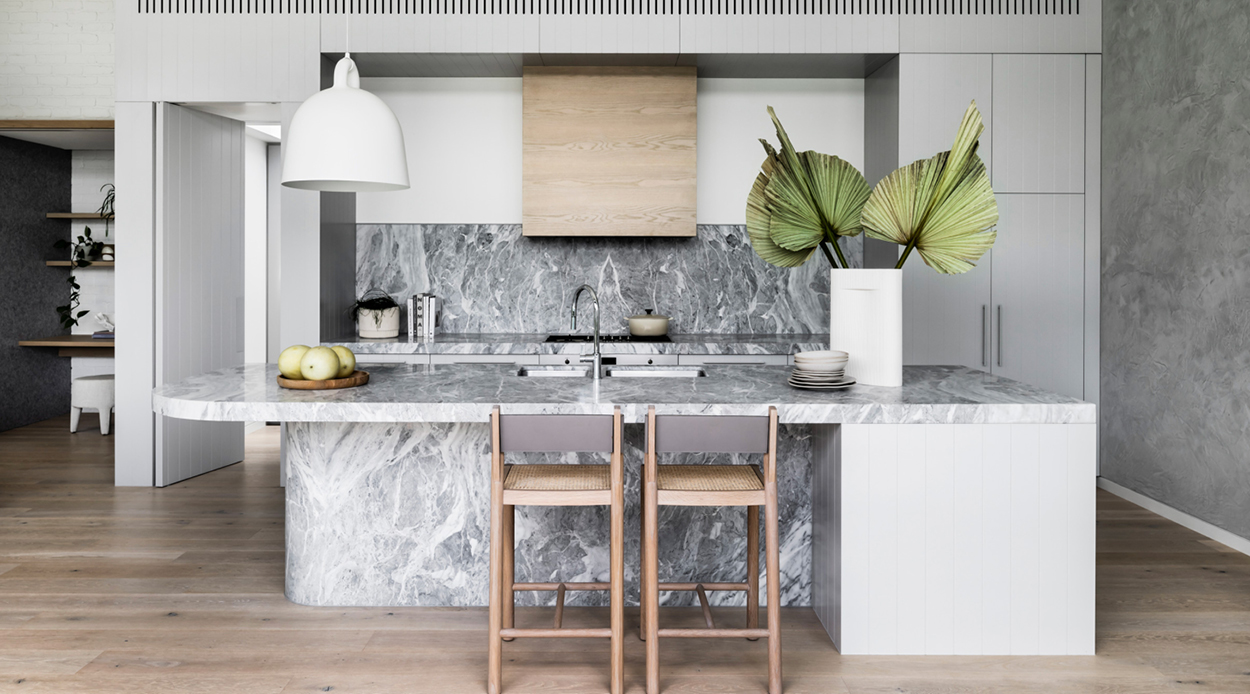
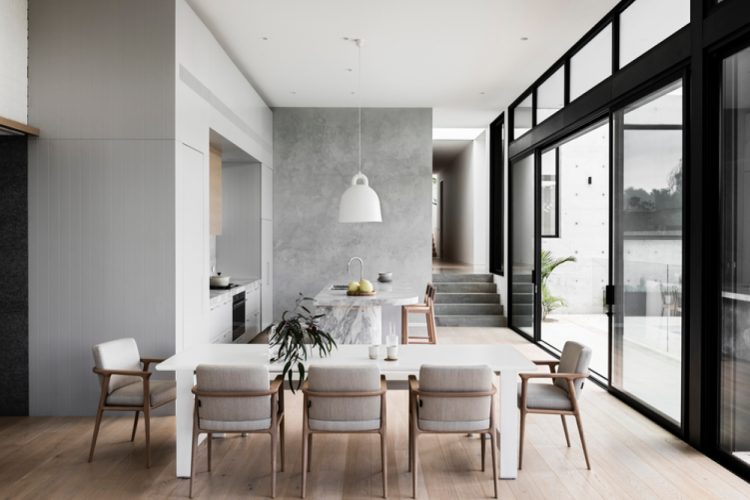
If you arrived at one of interior designer Mim Fanning’s most recent projects blindfolded, when the mask finally slipped you would easily be able to identify your location to the authorities, but with the attention to detail in this brilliant beach house, would you really want to be found?
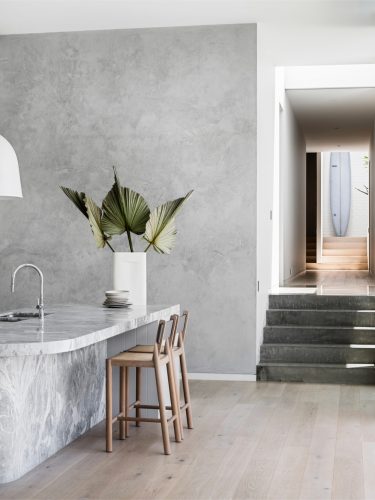
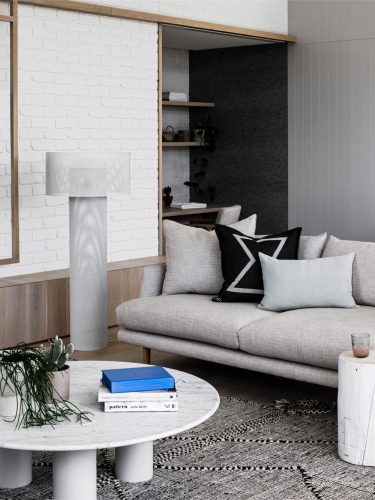
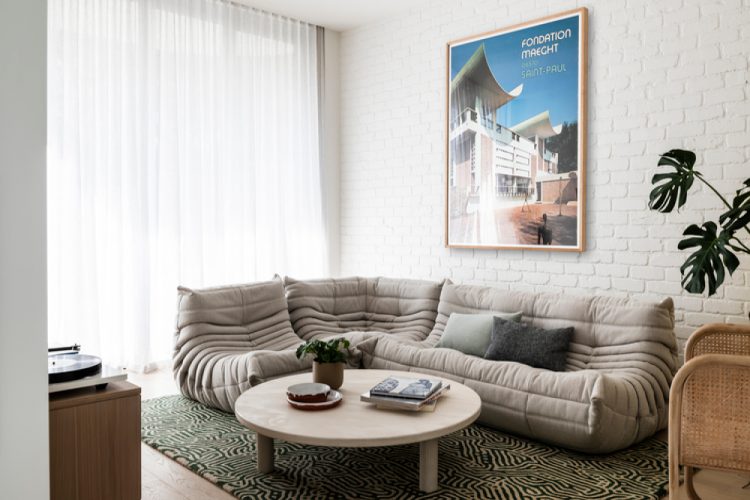
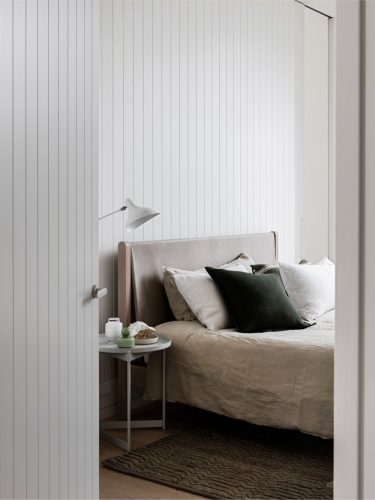
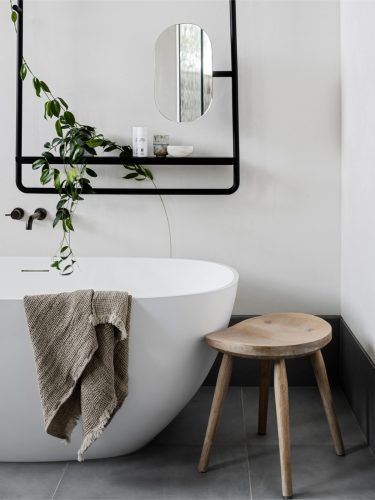
Perched moments from the rocky beach of Sorrento in Victoria, Fanning focused on subtle ways of referencing the raw elements of the outdoors by taking a minimalist route, where tactile furnishings and textured finishes enliven the restrained backdrop.
The generous living space, expansive dining table and substantial kitchen island, all emerged from Fanning’s long experience creating beach retreats and showcase homes in Australia. Her business Mim Design is celebrating 20 years of operation, with a strong clientele that return for her relaxed and refined approach.
“We are finding our clients also want to focus strongly on the family ‘hub’,” Fanning said in a recent interview. “Creating spaces that keep the family together, whether around a large open fire or centralised dining space; gone are the days where rumpus and theatre rooms have been added. It is all about family time and socialising together in one space.”
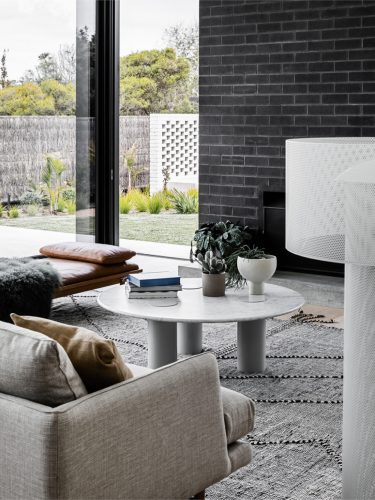
The flow between the inside and outdoors is regulated by sliding glazed walls, with the symmetry acknowledging the mid century styles at work throughout the home. With incredible views, inside and out, there’s no need for a blindfold ever again,
At this time of years designer Alice McCall would usually be busy putting together a knockout show for Australian Fashion Week but with the event on hiatus we asked her to reveal her inspirations and influences. A career that started with styling in London rapidly progressed to her launching her own label in Australia in 2004, which veers from sharp-edged street cool to Valley of the Dolls excess. Available at Superette, McCall’s latest collection offer dashes of disco glamour. We shimmied her out from beneath the mirror ball to get these answers.
My personal style can be defined by: My personal style is very eclectic and driven by my emotional mood of the day. Sometimes I will be an eighties power woman, sometimes I will have a Stevie Nicks seventies Woodstock vibe. The art of creative self-expression through dress is something I have always loved and is very important to me in my aesthetic and in my designs. It is the footprint of the brand’s DNA, being very eclectic and quite diverse.
The last thing I bought and loved was: Fantastic Valentino and Balenciaga sunglasses and a pair of Musier Paris Mary Jane platforms, which are very nineties Kate Moss style.
An unforgettable place I visited was: When I was around 16 years old, I visited the centre of Australia to Uluru. I would love to go back there again one day.
Next place I’d like to go to: South America.
An object I would never part with is: First I would say my children but they aren’t objects. It would have to be my crystal collection. They are energetic and spiritual objects.
On my wish list is: I am a big vintage shopper. Vintage pieces are always on my wish list. But at the moment I have my eye on a pair of Paris Texas snake skin boots.
The last thing I added to my wardrobe was: Amazing vintage pieces from Rose Bowl markets [Pasadena, US].
My favourite app is: I hate to state the obvious but it is Instagram. It allows me to directly connect with creatives that I want to collaborate with.
An indulgence I would never forgo is: Freedom, for me it is so important to have that unbounded creative freedom and it is something I never want to let go of.
If I had to limit my shopping to one neighbourhood in one city it would be: Brooklyn and Manhattan.
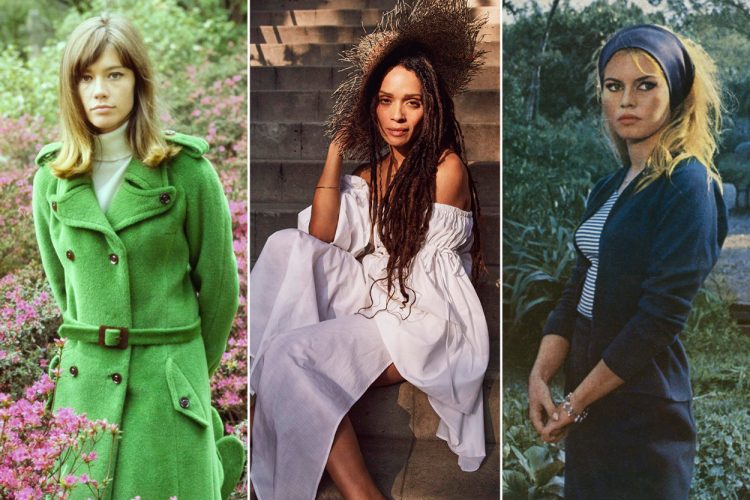
My style icon is: It changes regularly, but I’ll forever love Francoise Hardy, Lisa Bonet and Brigitte Bardot.
Francoise Hardy, Lisa Bonet and Brigitte Bardot
The best book I’ve read in the last year is: A book on psychedelics. How to Change Your Mind by Michael Pollan.
I can’t miss an episode of: I have recently started watching Zoë Kravitz on High Fidelity. It is an easy watch and she is so effortlessly cool.
In my fridge you’ll always find: Sparkling water and fresh veggies.
My favourite room in my house is: My bedroom, it is almost like a Parisian apartment. My bedroom and bathroom are all in one. I have the view of the ocean and it is the perfect place to meditate and unwind, it’s my sanctuary.
The people I rely on for my wellbeing are: Most definitely I rely on my children and my sisters.
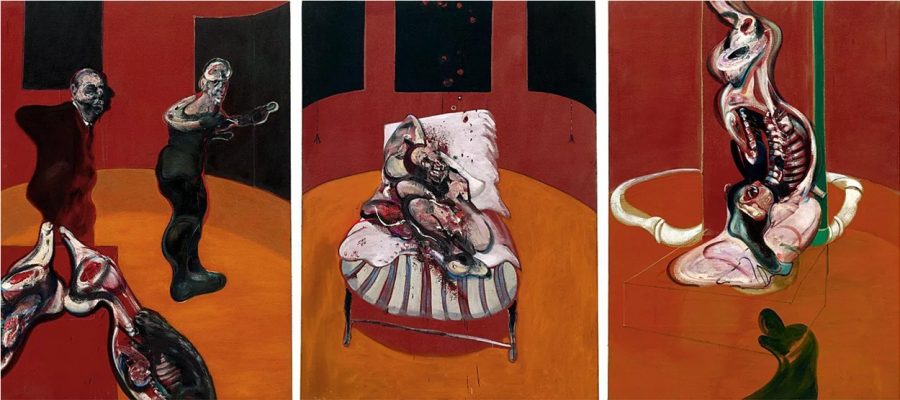
The one artist whose work I would collect is (if price is not an issue): Francis Bacon.
Francis Bacon, Three Studies for a Crucifixion, 1962, 78 x 57 inches (198.1 x 144.8 cm) each, Oil with sand on canvas, three panels
I recently discovered: Facebook marketplace, a fantastic place for vintage furniture finds.
My favourite website is: I love Farfetch, we are stocked on it, but they have a really good balance between high end brands and new cutting edge international brands.
The last meal out, I had that truly impressed me was:Pace in LA. It has understated Italian American food.
The best gift I ever received was: My children and black diamonds.
The beauty product I can’t live without is: I love a blush from M.A.C, particularly their Mineralize Blush and the Studio Sculpt SPF 15 Foundation.
The podcasts I listen to are: Russel Brand and anything he recommends, he always has guests on his show that are motivational and esoteric.
The last music I downloaded was: David Bowie, The Man Who Sold The World. I love that Nirvana covered this – it’s equally as good.
If I wasn’t doing what I am, I would be: A child psychologist.
I have a collection of: Crystals and killer designer heels.
Alongside his father Graham and brother Ollie, Andrew Wall has sold many of New Zealand’s most prestigious properties through their family business Wall Real Estate. His unerring eye for design is also applied to his work as an artist. Here, the fan of unbridled creativity and supporter of local talent shares a few of his favourite things.
My personal style can be defined by: Monochromatic simplicity. Black tees, jeans and sneakers primarily.
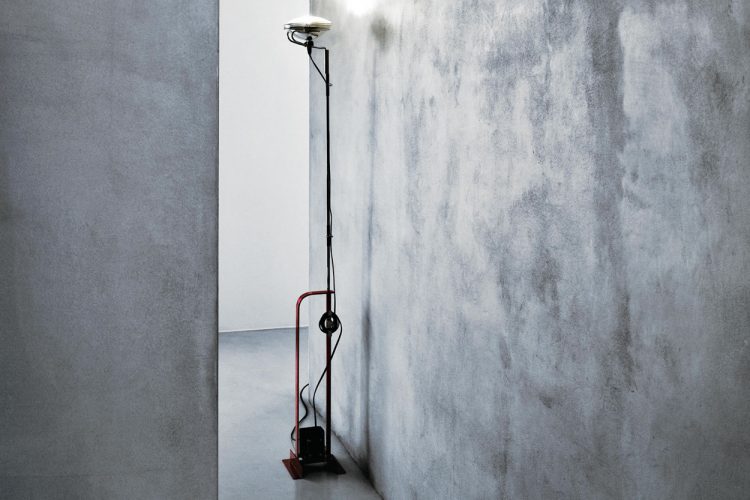
The last thing I bought and loved was: The Toio lamp by Achille and Pier Giacomo Castiglioni for Flos, from ECC. It’s such a fun idea, taking a headlamp from an American car, supported by a fishing rod stem. Hilarious.
The Toio lamp by Achille and Pier Giacomo Castiglioni for Flos
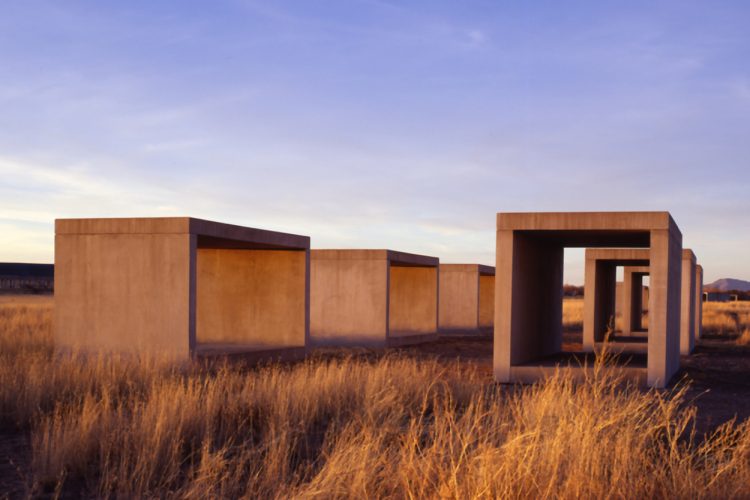
An unforgettable place I visited was: DIA Beacon. My idea of paradise.
Next place I’d like to go to: Marfa, Texas.
Donald Judd, 15 untitled works in concrete, 1980-1984. Permanent collection, the Chinati Foundation, Marfa, Texas.
The last thing I added to my wardrobe was: Cashmere from Doran and Doran.
If I had to limit my shopping to one neighbourhood in one city it would be: The golden triangle of Milano.
The best gift I ever received was: Luke Jacomb glass work.
The one artist whose work I would collect is (if price is not an issue): Glass work from Larry Bell, if I had the space, or Roni Horn. One of her glass ‘tablets’ would be amazing.
Larry Bell, Pacific Red II, 2017
The grooming product I can’t live without is: All Aesop.
The last music I downloaded was: Four Tet.
If I wasn’t doing what I am, I would be: A raconteur.
I have a collection of: New Zealand art of our generation.
Gourmet kitchen gurus Miele have enlisted leading chef Mark Rawlins to man their spectacular steam ovens and advise home cooks on nutritious and delicious meals during these unusual times. Using his experience honed in Michelin star restaurants and local eateries, Rawlins will next week appear live on Miele’s Facebook page, as well as uploading recorded tutorials to up your cooking game. Just look out for the list of ingredients required every Friday and prepare to impress the family with four recipes each week.
In the meantime we have a sneak preview of what’s on offer with a dessert recipe that focuses on tantalising your tastebuds. This steamy Banana Tarte Tatin is almost as pleasurable to say as it is to eat. Follow Rawlins’ lead, get set and go.
Banana Tarte Tatin with Milk Chocolate Sauce Serves 6 – 8 Preparation time: 30 minutes Cooking time: 30 minutes Cooking Program: Miele Moisture plus oven, Miele Steamer
Ingredients Tarte Tatin 75g butter 100g brown sugar 750g puff pastry, store bought 6 – 8 bananas, yellow with no brown spots, sliced 2cm thick rounds
Chocolate sauce 200ml cream 100g milk chocolate
To serve Ice cream of choice
Method 1. Add butter and sugar to an 26cm ovenproof frying pan and heat on induction setting 6 until bubbling and then continue cooking for 2 minutes. Remove from heat.
2. With pre-rolled pastry, layer the sheets on top of each other and roll to a size that overlaps the frying pan. Cut to size. Rest in the fridge for 10 minutes.
3. Arrange the bananas in the pan until full.
4. Place pastry over the bananas and tuck down into the base of the pan, make a couple of slits in the middle of the pastry for steam to escape.
5. Place the frying pan in the oven and select Moisture Plus at 180°C on Fan Plus and bake for 30 minutes, releasing a burst of steam immediately, until a deep golden crust has developed.
6. Allow to cool for 5 minutes then place a large plate that covers the frying pan on top and flip over, be careful of any caramel by using a tea towel to protect yourself.
Chocolate sauce 1. Add chocolate and cream to a glass bowl and cover with foil.
2. Steam at 65c for 20 minutes then stir to combine, alternatively heat in 30 second bursts in the microwave until melted. keep warm.
For more exclusive access to what the city has to offer, engaging content, excellent imagery and thought provoking commentary on the life that surrounds you, subscribe to Denizen magazine now.