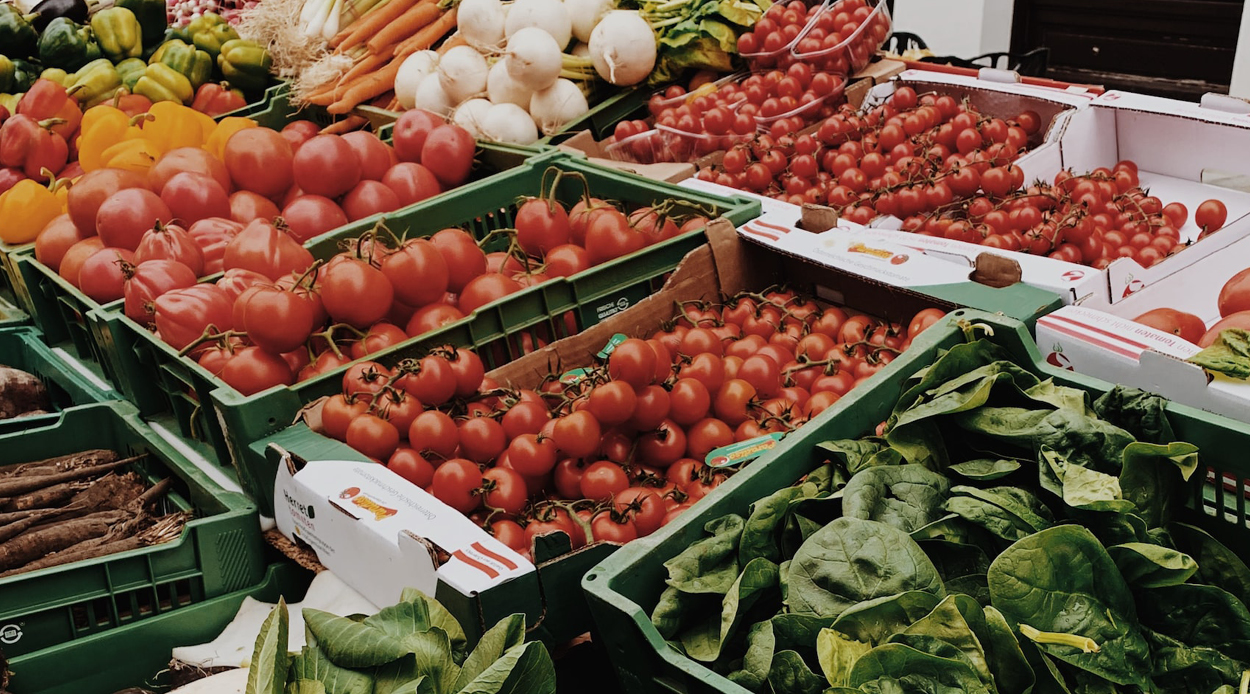
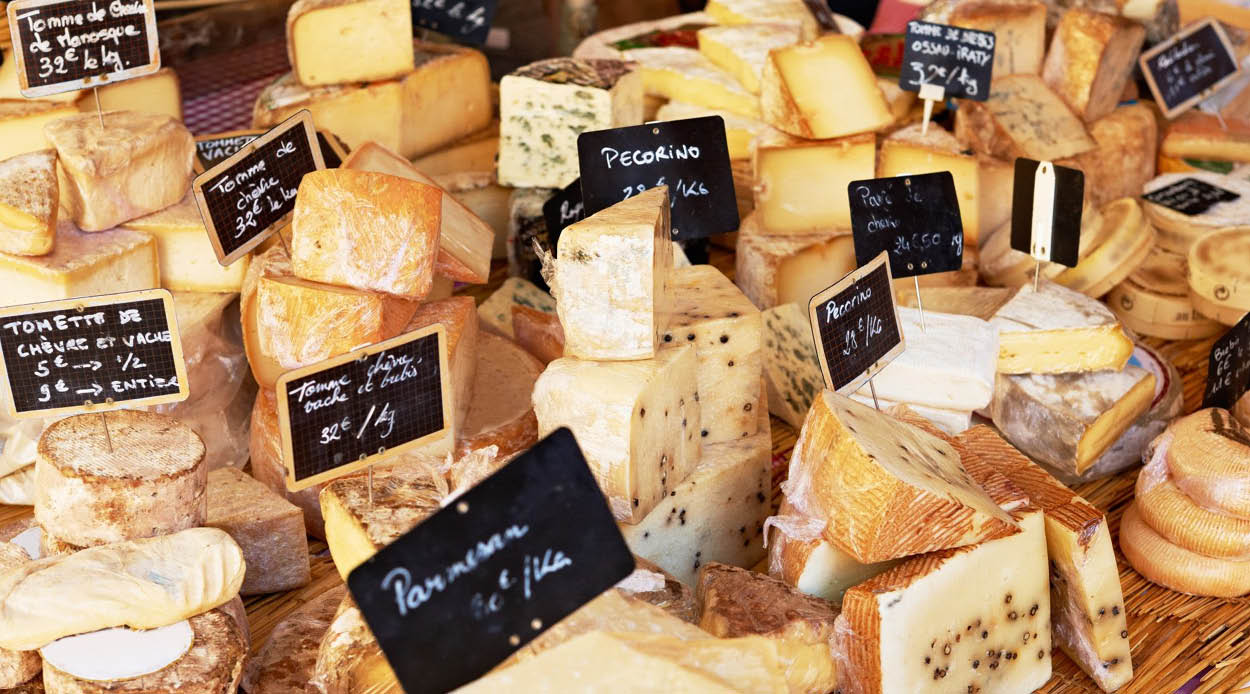
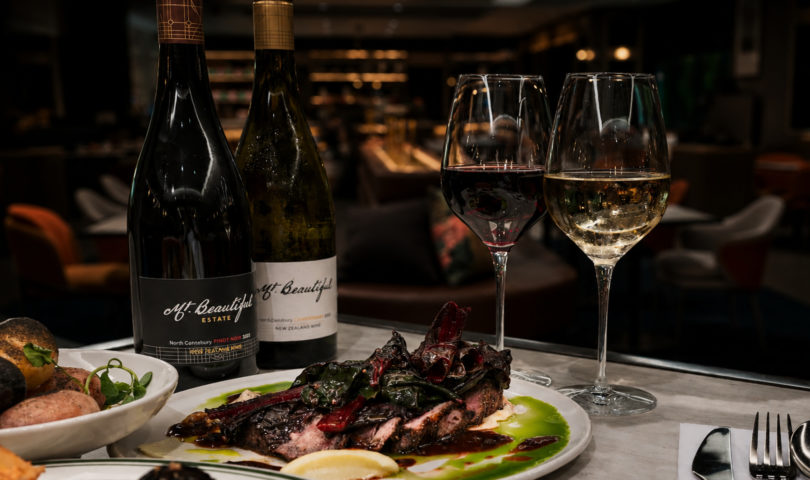
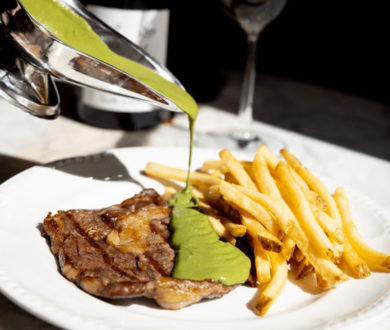
Since the unfortunate, Covid-forced closure of La Cigale Markets in Parnell, there has been a market-shaped hole in our hearts that few things have managed to fill. But lovers of sourdough and stracciatella can finally celebrate in style with the announcement that the beloved foodie market is set to return this weekend, with a fresh new face at the helm and a delicious new approach to boot.
Rebranded as Parnell Gastro Markets to reflect the variety of cultures and cuisines on offer (it is no longer French-skewed), the markets will continue to offer much of the same delicious splendour that made them so beloved by Aucklanders for nearly 25 years, and will be open on both Saturdays and Sundays for the foreseeable future.
Expect to see the return of a number of favourite stallholders from the past that have been missing their usual spot, alongside a new cohort of vendors — many of whom have only been running their food businesses since lockdown.
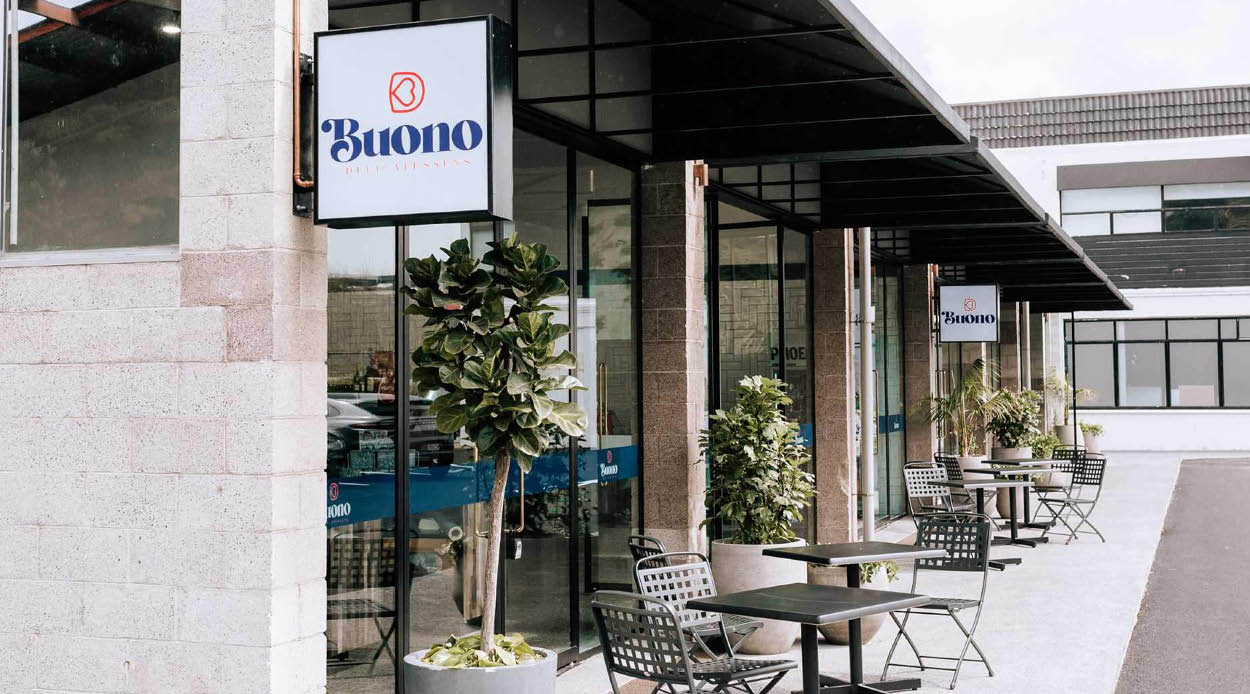
Realised via the devoted vision of new owner Richard Casey, who recently opened the neighbouring Buono Deli (also serving up some of the most delicious, authentic Italian foods), and a few neighbouring friends, the Parnell weekend market promising to make a triumphant return to its former glory. Wholefoods refillery GoodFor, who closed its Parnell store earlier this year, will even be there every weekend with their entire refillery offering in tow — ruling out the need for a trip to the supermarket for your pantry essentials.
On the odd chance you don’t find what you’re seeking in the market stalls, of course, Buono Deli will be on hand to cater to all of your gourmet foodie needs, and then some. And as far as pastries and produce are considered… I, for one, can’t wait to get back to this beautiful weekend spot.
Opening hours: Saturday — Sunday, 8.30am until 2pm.
Parnell Gastro Markets
69 Saint Georges Bay Road,
Parnell, Auckland Central
While there is an abundance of supplements on the market that intend to provide a calming, restorative return to homeostasis, the recently-launched offering by BioKodeLab considers how we can elevate our everyday state of being to meet the constant demands of the current world and excel without compromising our health and wellbeing. Through three delicious, easy-to-take products, the benefits of these new products are impressive, and (as I discover) far deeper than anything else of this kind I have tried before.
BioKodeLab was born from a quest for optimisation that grew from the innovative minds at Fonterra, where Sales and Marketing Disruption DirectorCarl MacInnes began by asking how they could use their collective knowledge to change the future of brain health. After all, it’s no secret that we’re constantly under pressure to perform. In a world driven by a demand for more, and how we now have to keep up with the likes of AI, computers and robots, it’s hardly surprising that we’re collectively burning ourselves out — big time, MacInnes explains to me.
“So we went about asking ourselves, what is the fundamental thing we can do to change people’s lives?,” he shares. “How do we help humans perform better? How do we help our bodies to live and thrive in the modern world?”
That question prompted a deep dive into the effects of daily exposure to blue light and whether there was a simple way to effectively combat those effects. Blue light is something we are all increasingly exposed to, whether via the computers we use for our desk jobs (eight hours in front of a screen can’t be good for anyone) or the late nights we spend scrolling on social media (we know it’s bad, but we do it anyway). Not only is this leaving us chronically tired, but it disrupts our natural circadian rhythms — the body’s innate function that deciphers between night and day, basically telling us when we should be awake, and when it’s time to sleep.
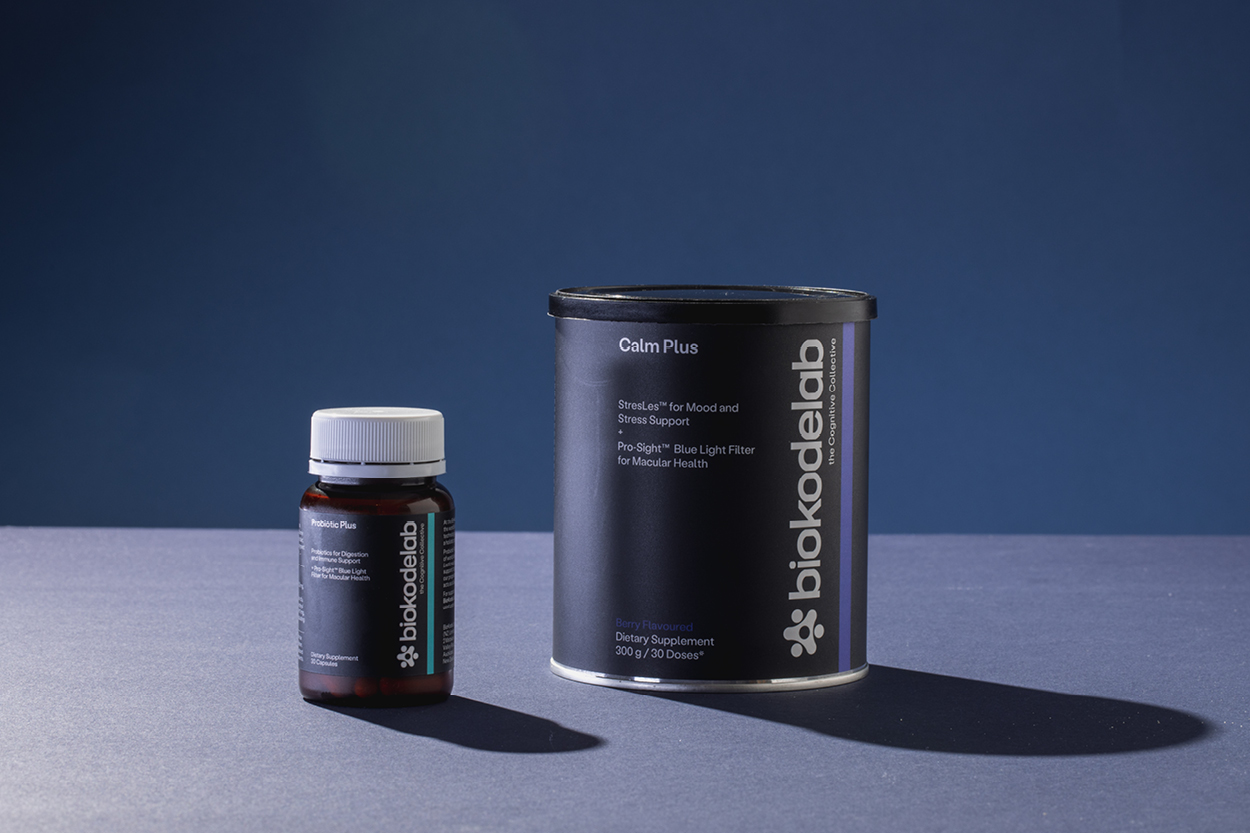
BioKodeLab Probiotic Plus & Calm Plus
And excessive exposure to blue light does more than just hurt our eyes. It is capable of impacting mood, cognition, and sleeping habits and contributing to those secondary strains of headaches and computer-associated neck and back pain. “Our understanding of blue light’s impacts just keeps growing,” MacInnes explains. Internationally, some governments are even beginning to regulate blue light, with China restricting how many hours children can be exposed to blue light strain.
For this reason, the team at Fonterra created its own, innovative Pro-Sight™ filter — an ingredient bundle included in all BioKodeLab products to tackle the depleting effects of blue light on our bodies’ essential functions. This, MacInnes tells me, was the baseline on which the more specific BioKodeLab benefits were layered, with each product designed to address different issues. Carefully formulated with a potent mix of high-quality dairy and plant ingredients, BioKodeLab’s products are unlike anything else, and are putting research and cutting-edge science at the forefront.
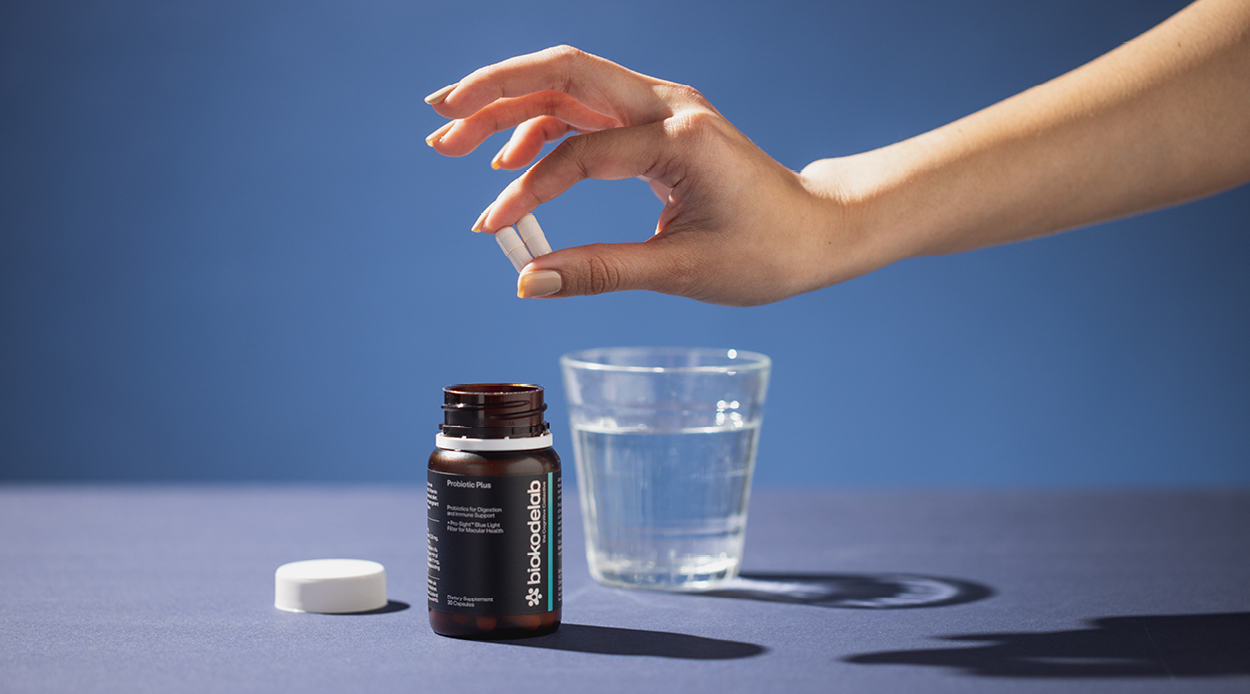
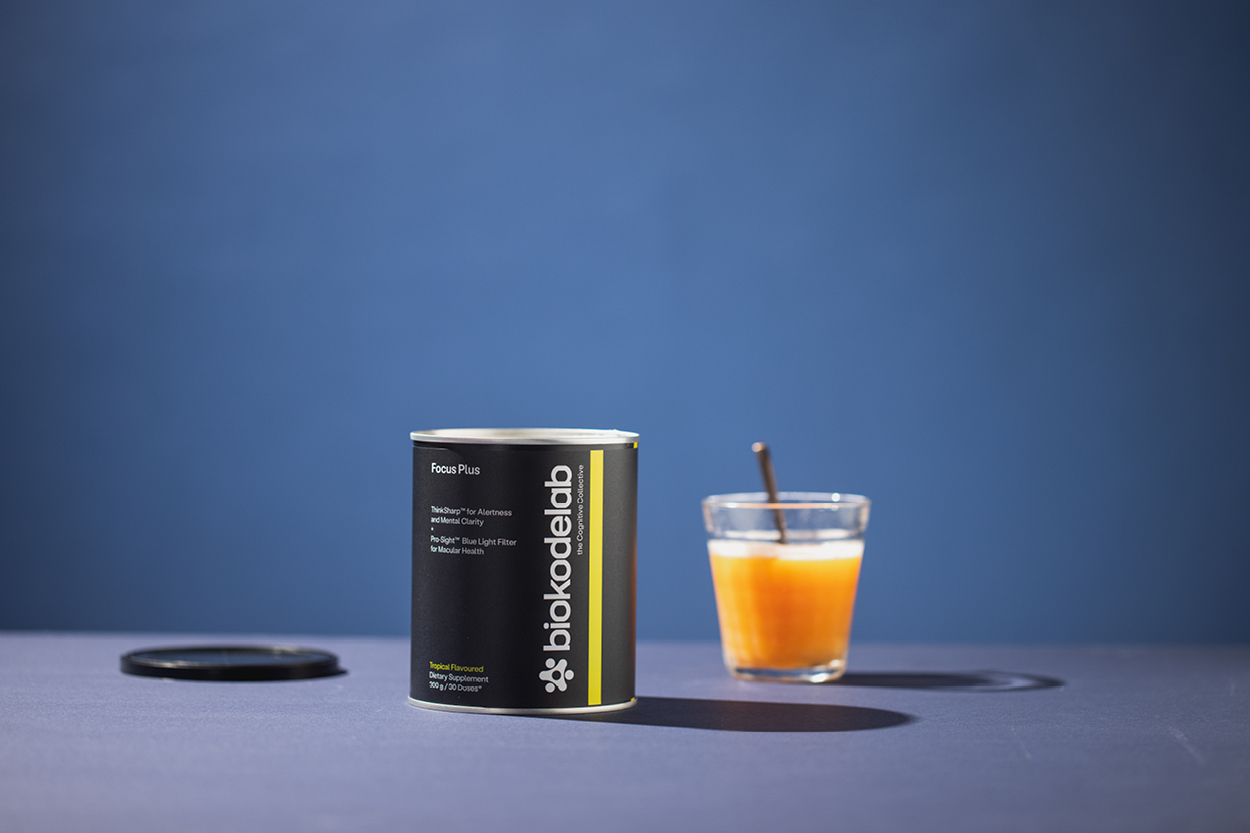
For the user, BioKodeLab products are made to be stacked. “First we protect, and then we build,” MacInnes shares. Each product takes an area that high-performing people are known to struggle with and offers targeted ingredients to address it. Be it Focus Plus (a tropical flavoured powder that can be mixed in water, using ThinkSharp™ for alertness and clarity) for those who find themselves bending backwards to meet their job’s mental demands or Calm Plus (a similar powder with a delicious berry taste, using StresLes™ for mood and stress support) for those who need some assistance with their stress response. Probiotic Plus is another welcome addition in simple, daily capsules, formulated to support the digestion and immune health, which has been proven essential for our collective wellbeing. MacInnes confesses it is one of his favourites, too, for ease of taking. But he also stacks the products depending on what he wants to target, which (he tells me) allows him to make the most of the benefits.
BioKodeLab Focus Plus
There is certainly an argument to be made that one might gain the same benefits from consuming whole foods, but you would have to drink 1.3 litres of milk to get the same amount of beneficial phosphatidylserine (one of the key ingredients for supporting cognitive function) as you would from a single serve of Focus. And that doesn’t even consider the other essential nutrients these supplements provide (personally, I’ve been noticing a number of significant benefits after only two weeks of taking them). With a background grounded in research and development of the highest calibre, each supplement is formulated to meet the right clinical dose to address our current needs. As MacInnes says, “Science is trusted. People deserve products that can be trusted.”
Given that BioKodeLab’s products have only just launched, it feels premature to ask what is next — but as MacInnes shares, he is most excited about where BioKodeLab goes from here. Whether it’s developing new flavours or diving deeper into their research of the human psyche. As part of charting your progress with the supplements (which is recommended, as lovers of hard data), BioKodeLab’s interface will host a range of key assessments you can undertake at your leisure that start to map the human brain and stack you up with how your strengths and qualities compare to others in your field. It all sounds a touch dystopian, but we would be lying if we said it didn’t excite us for the realm of possibilities to come. For now, we’ll continue to drink our delicious daily supplements. They have us feeling great, and is there anything more we could ask for?
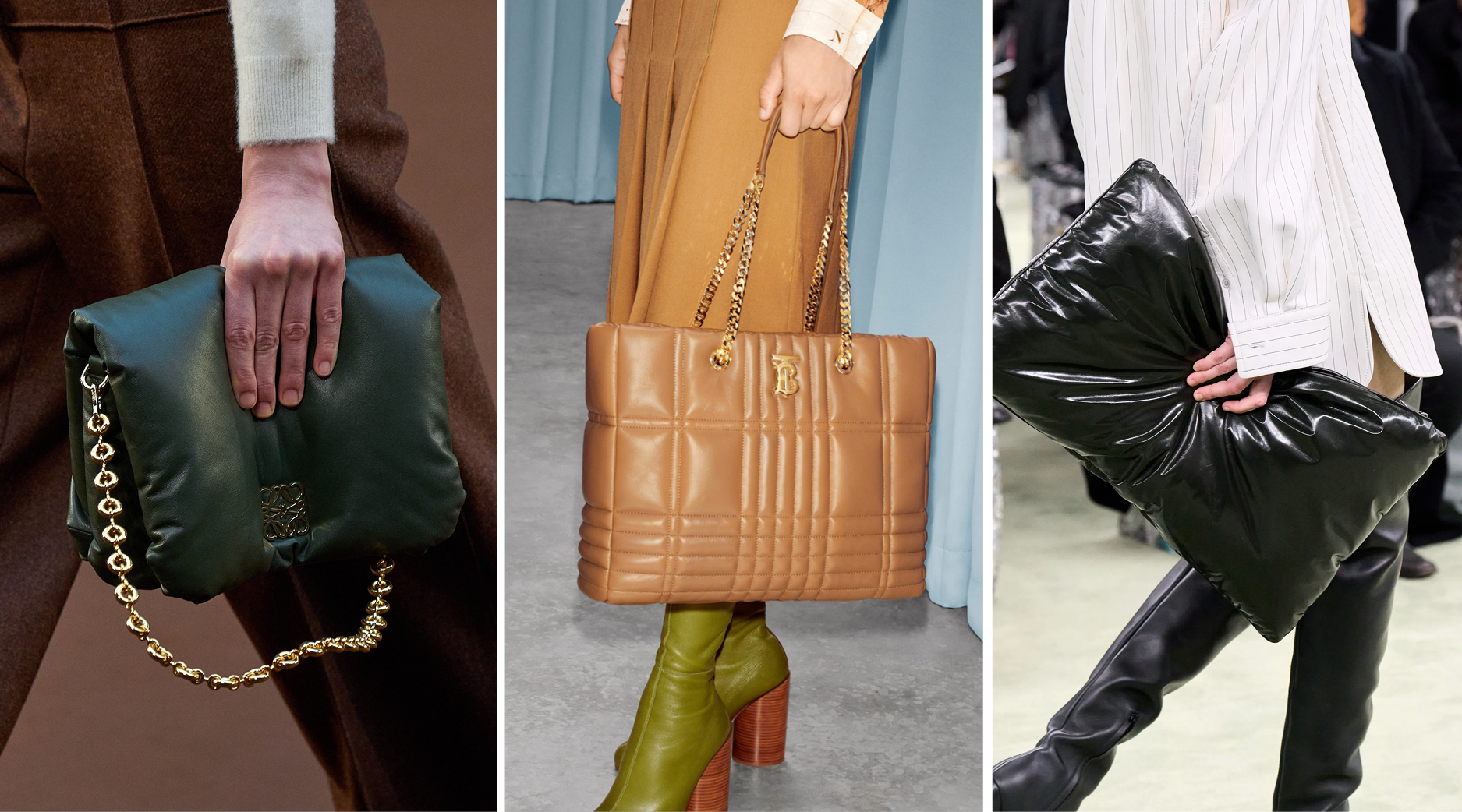
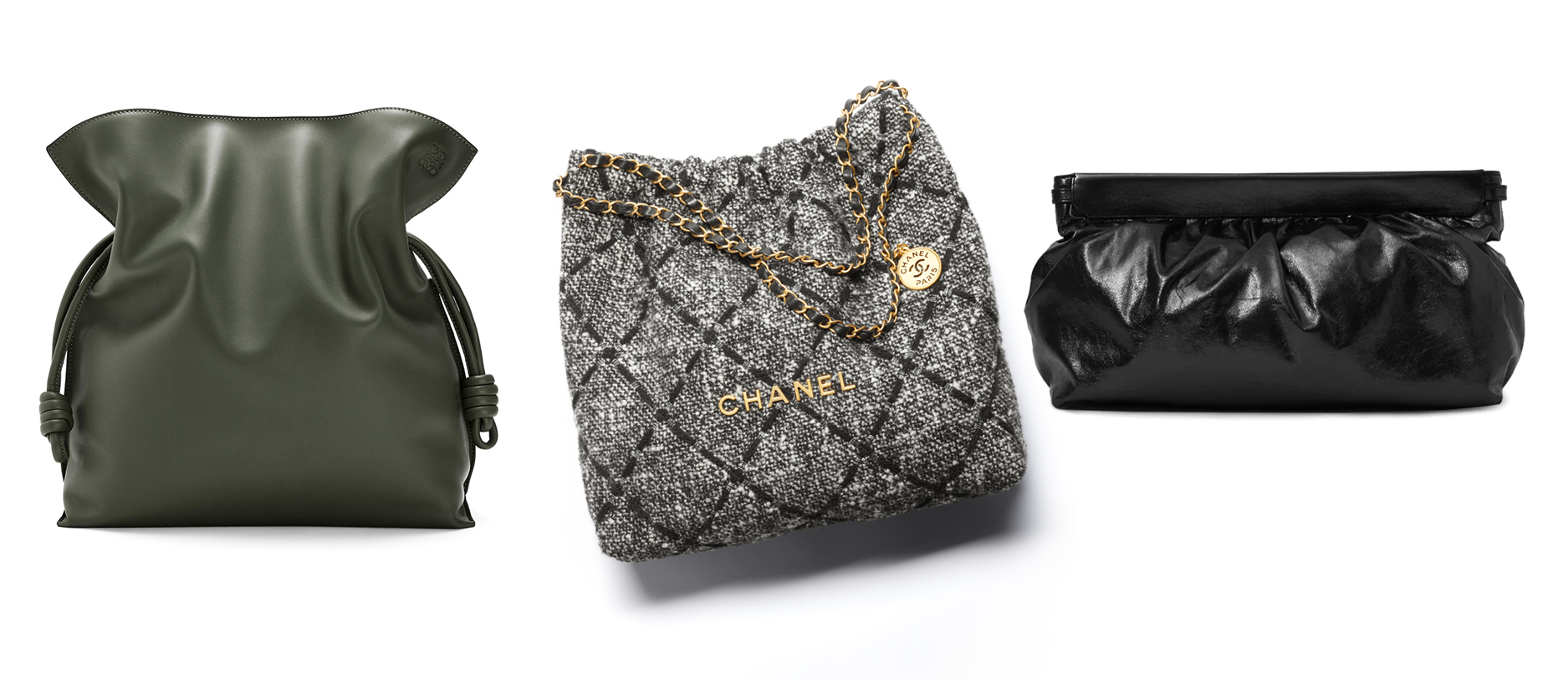
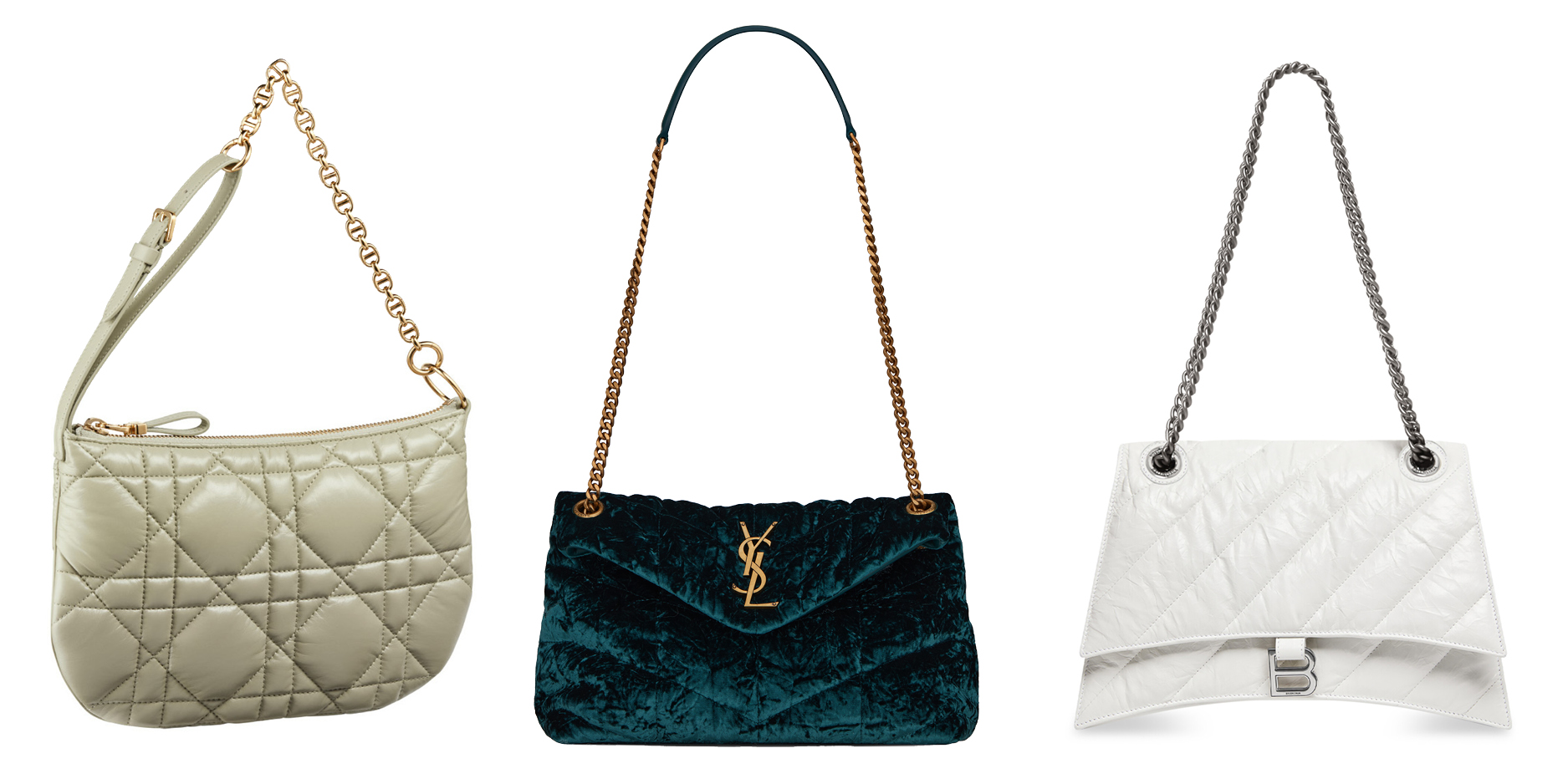
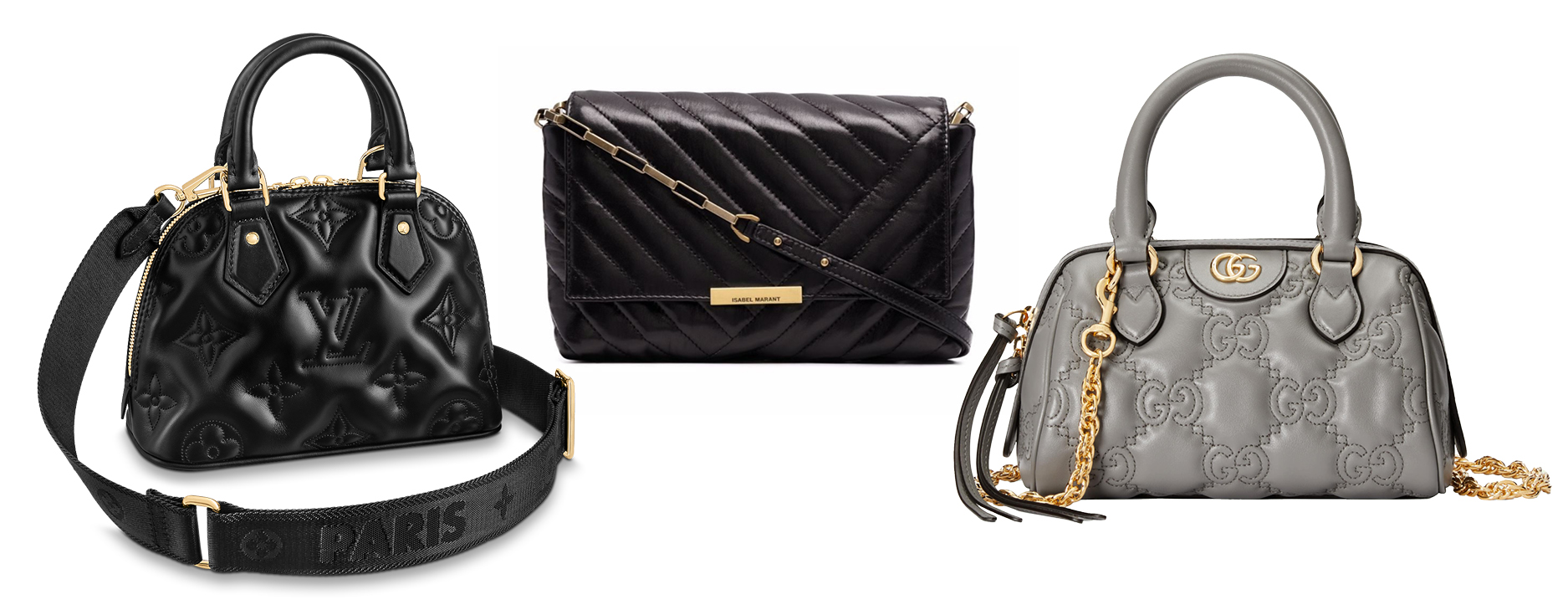
From cushioned quilting to supple leather, handbags in pillowy silhouettes are putting a decidedly soft spin on the statement sac de jour. Spotted on fashion week runways and hanging off the shoulders of style-savvy individuals, these cloud-like pieces are beautiful in form and promise to add interest to any outfit. So, if you’re looking to invest in a new bag for your wardrobe, scroll on to see some of our favourite iterations of this sumptuously soft accessory trend.
From left: Loeweflamenco bag from Faradays. 22 bag from Chanel. Isabel Marant Luz Pillow bag from Workshop.
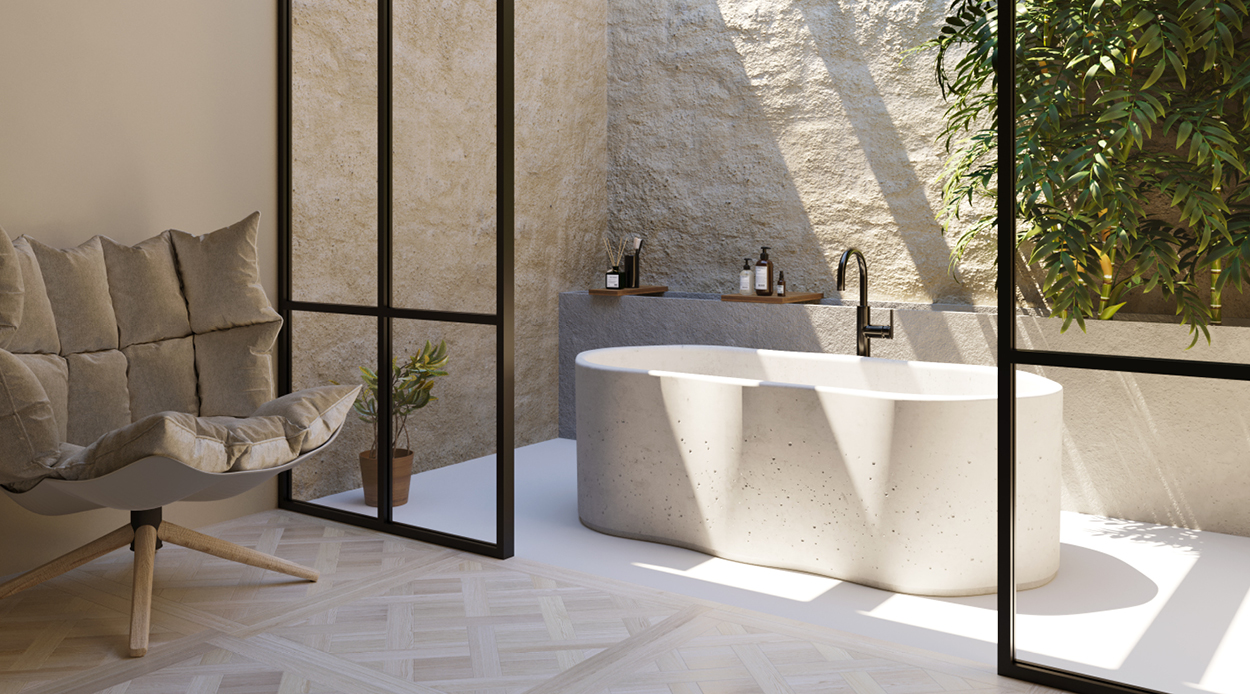
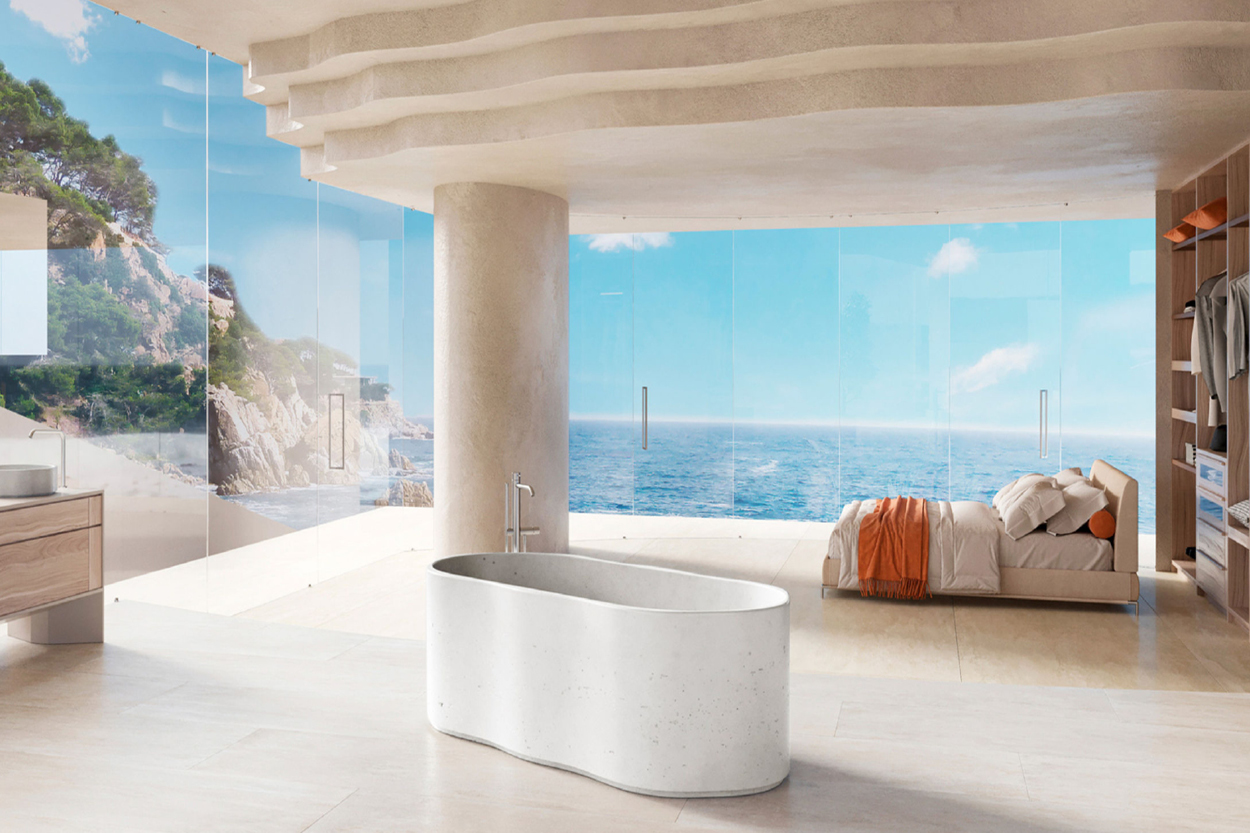
While drawing a bath is one of the most relaxing ways to unwind after a long day, it can be hard with our busy schedules to find time to actually sit back and soak. Here, we round up a selection of divine tubs that will transform your bathroom into a bona fide zen zone — and a place you will want to make time for, no matter how busy you are.
The centrepiece bath — Wave Bath by Meek Bathware from Plumbline Typically, baths are made from smooth, white porcelain (or something similar) to make them nothing more than a seamless addition to the bathroom — only noticed when in use. But the rise of design-led bathtubs is ushering in a new era. Recently, it is concrete iterations that have caught our eye, with pieces like the Wave Bath by Meek Bathware standing as both a bold design accent and a beautiful place to relax, with a unique shape and solid structure. It’s time to put the ‘bath’ in ‘bathroom.’
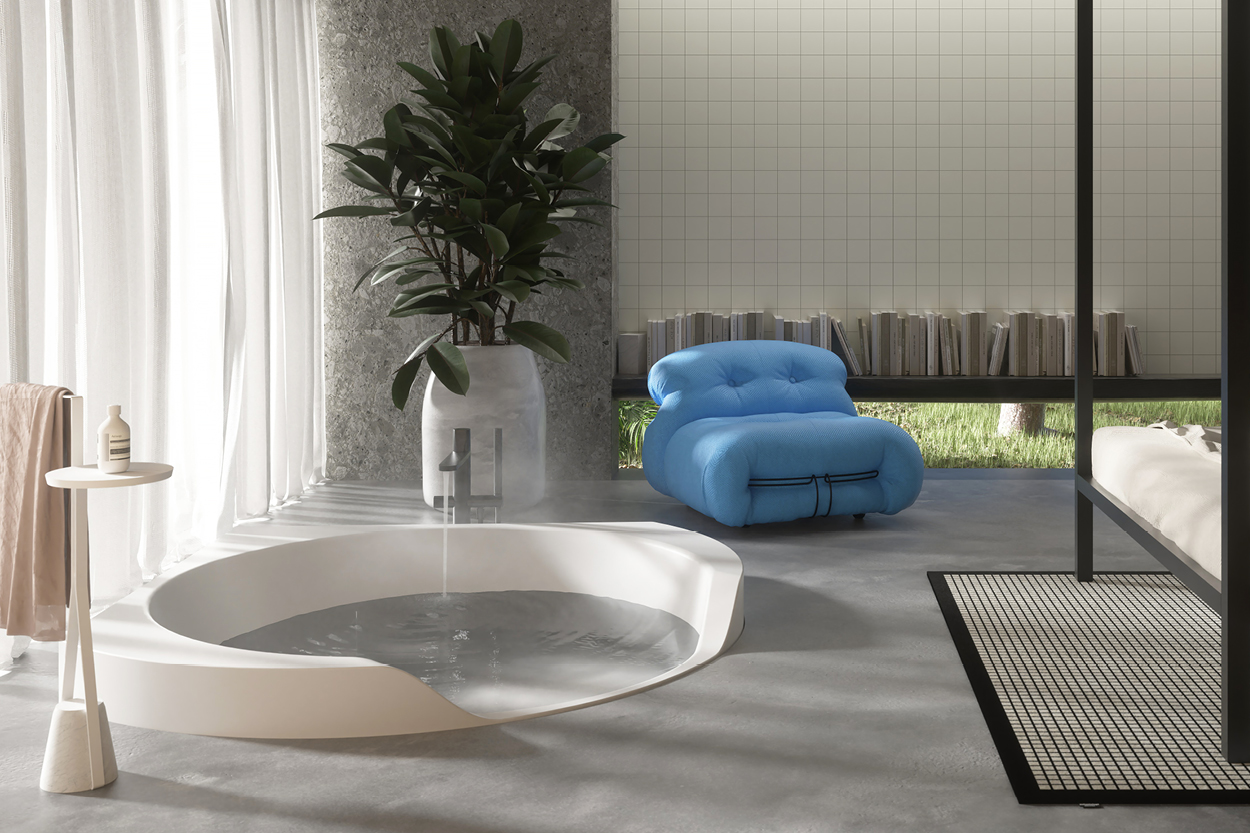
The built-in bath — Ofuro Bathtub by Antonio Lupi from Matisse Slipping into a bath should always make the world feel as though it’s melting away, which is something that Antonio Lupi’s Ofuro Bathtub from Matisse delivers in spades. Reminiscent of soaking in a natural hot spring, this bath is designed to be built into the ground and will bring a subtle touch of grandeur to any bathroom space. Trust us, this tub will remind you what true bliss feels like.
The classic bath —Warndon Freestanding Bath by Victoria + Albert from Robertson Made from smooth white Quarrycast (a finely-ground volcanic limestone and resin mix that is hand finished) and featuring a subtly-detailed rim, the Warndon freestanding bath is strictly symmetrical and flush with the floor. Sleek and sophisticated, this is the ultimate bath for the purists — those who will always opt for classic timelessness over anything overly ‘trendy.’
The warmer, longer days we’ve been waiting for are finally here, so of course, it is to one of our favourite Herne Bay haunts that we flock. As beloved for its delicious food as it is for its coveted outdoor tables that get the best of the late afternoon sun, Andiamo is the perfect place to mark the changing of seasons, and now, is giving us all the reason we need to lock in a long lunch.
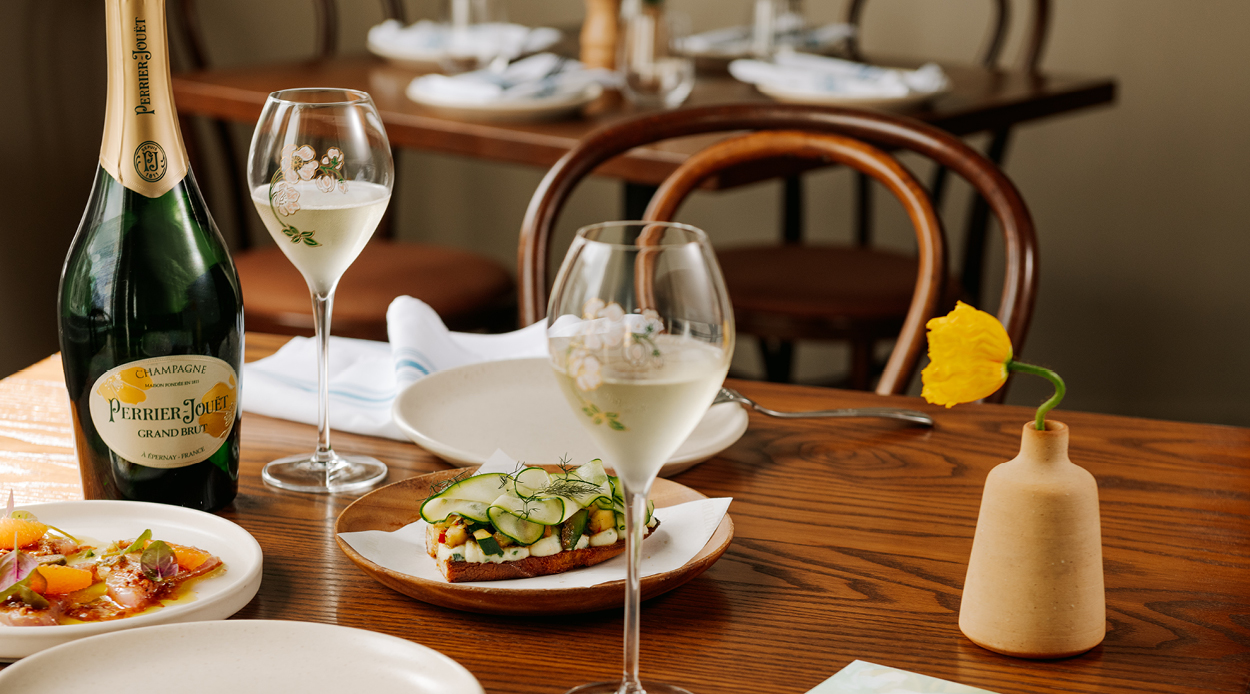
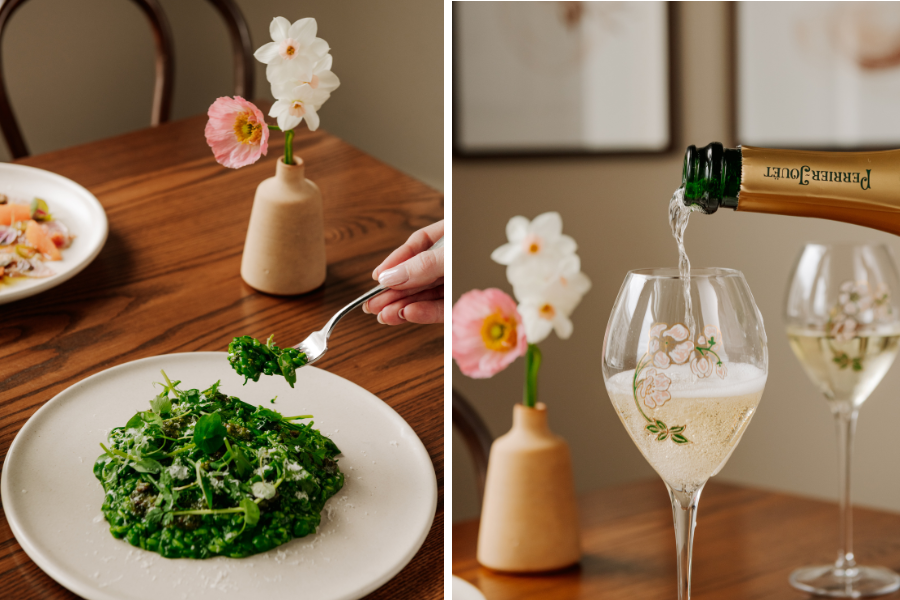
Harnessing the spirit of spring, Andiamo has created a celebratory Spring Soirée lunch menu with Perrier-Jouët which will launch on the 1st of October and run for a limited time only. The seasonal set menu will be available from Wednesdays to Sundays between 12pm and 3pm, and for $65 per person, will include a glass of Perrier-Jouët Grand Brut, followed by two delicious courses comprising dishes like market fish crudo with blood orange, pickled chilli and sorrel, bruschetta with whipped ricotta, grilled zucchini and basil, or risotto ‘primavera’ with soft herbs, pistachio pesto and ricotta salata.
All of this is to be enjoyed, of course, in Andiamo’s sunny surrounds, where the team has upped the springtime ante by adorning the restaurant’s facade with festive florals and decorating every table with its own colourful arrangement by Isadia Florists.
An essential part of embracing seasonal change is sloughing away the dulling effects that winter has imparted on our sad-looking skin (blame the colder climate and a lack of vitamin D). If we want to emerge into the new season looking (and feeling) fresh and rejuvenated, it is to the experts that we must turn — experts who prove time and time again the miracles they can perform with rigorous massage, cleverly-layered products and handy tools.
For that reason alone (although we really could find any excuse to justify a facial), we have decided to round up all the best, glow-giving facials in Auckland, in the hope of delivering some insider’s intel on what your skin actually needs this spring. Because after a season of sitting under a heat pump, or having your face whipped by the wind on your way to work, your skin deserves some TLC, and these are the treatments to deliver exactly that and then some.
LED Light Boot Camp at East Day Spa Nothing restores and renews the skin quite like concentrated LED light treatments (salon-quality LED, mind you), and there is irrefutable scientific evidence to prove it as well. Spring is the time we’re all about harnessing these rejuvenating treatments to inspire a new glow worthy of the season. East Day Spa knows this too, and as such, is offering a facial boot camp treatment that we’re obsessed with — three treatments over a week to relaunch your complexion. If you have a big event in the months ahead, the 28-day program is a completely transformative experience, and we couldn’t recommend it more.
ProCalm 60 at Skintopia Celebrating the shift of Skintopia to its new Herne Bay address, a suite of new Dermalogica treatments have been specifically designed to address skin of every concern. Under the guidance of Morgan and her wealth of knowledge, opt for the ProCalm 60 to shake off your winter shell and rehydrate any impaired barriers. Each treatment is slightly tailored and moves through three phases, including the employment of LED lights, relaxing massages and most importantly, deep, long-lasting hydration.
Augustinus Bader Methode 120 at Spring Spa Designed as a head-to-toe treatment, this facial morphs into a whole-body experience, with the welcome use of cult-favourite Augustinus Bader products that replenish tired complexions and deliver unparalleled hydration and rejuvenation. Bringing together a rigorous body brush and massage, using The Body Oil and The Body Cream, and a premium 75-minute facial with a combination of aloe vera, antioxidants, amino acids and Vitamin A, B and C, with a relaxing fascia massage and LED light — this treatment truly is the ultimate seasonal indulgence.
Buccal Massage at Skinography Nothing uplifts the face or leaves us feeling taut and about five years younger than this unique facial. Designed to get into every crevice and muscle of the face, the buccal massage is similar in nature to Manual Lymphatic Drainage (MLD), as it helps to move stagnant lymphatic systems and any associated puffiness away from the face. Specially-trained facialist Kate Michelmore (one of the only practitioners in New Zealand qualified to deliver this technique) will treat your face to a rigorous massage using repetitive strokes that awaken and lift your muscles and get rid of tension (particularly in the jaw and cheeks). We like to see this treatment as a ‘summer shred’ for your face because of the way it results in a noticeably slimmed-down and glowing visage. And while this is the perfect pre-event treatment, its effects are far more long-lasting when undertaken regularly.
Super Greens Algae Hydrojelly Mask at Society There’s a reason we fill our spring diets with delicious greens — they’re some of the most alkalising foods available, which help to ‘detox’ your body for summer. Of course, the same principles can be applied to skincare, and we gladly embrace any facials that incorporate greens into their process. Grey Lynn hair and beauty salon, Society, has garnered something of a cult following for their pretty hydrojelly masks, which look as beautiful as they feel. The super greens algae version is a sumptuous yet powerful treatment to book into for spring.
Deep Cleansing Facial at Tonic Room Tonic Room’s most beloved facial has been conceived with the intention of drawing those deep impurities from the layers of your skin to resurface an effortless, natural beauty for the summer months ahead. Dubbed ‘the ultimate skin transformation’, this facial is designed to eliminate the skin’s toxic load and restore its natural physiological functions with the considered use of the finest organic, naturally active botanical products. Be sure to follow it with Tonic Room’s signature massage and reiki experience for utter relaxation.
Sothy’s Micro Dermobooster Treatment at Exhibit Beauty It has been said that summer skin is made in winter, but there is still time for it to be made in spring too. The innovative new treatment from Sothy’s, conducted at Epsom’s Exhibit Beauty, is the kind of experience that transforms your skin for the better. Offering a trifecta of aesthetic microdermabrasion, controlled cosmetic microneedling, and a modelling massage, over six weekly treatments — the results are actually noticeable and long-lasting. Our Editor-in-chief confessed that she would do it again in a heartbeat, should she find the time in her self-care schedule. After reading about her experience, we’re inclined to embark on the process ourselves.
The Supernatural Emma Lewisham Facial at The Facialist With another focus on massage, The Facialist has joined with Emma Lewisham to offer a treatment that beauty aficionados can’t stop talking about. Reducing puffiness by adopting The Facialist’s signature massage technique and rehydrating through Emma Lewisham’s Supernatural Sleeping Mask and Skin Reset Serum, this facial offers a holistic approach in every way.
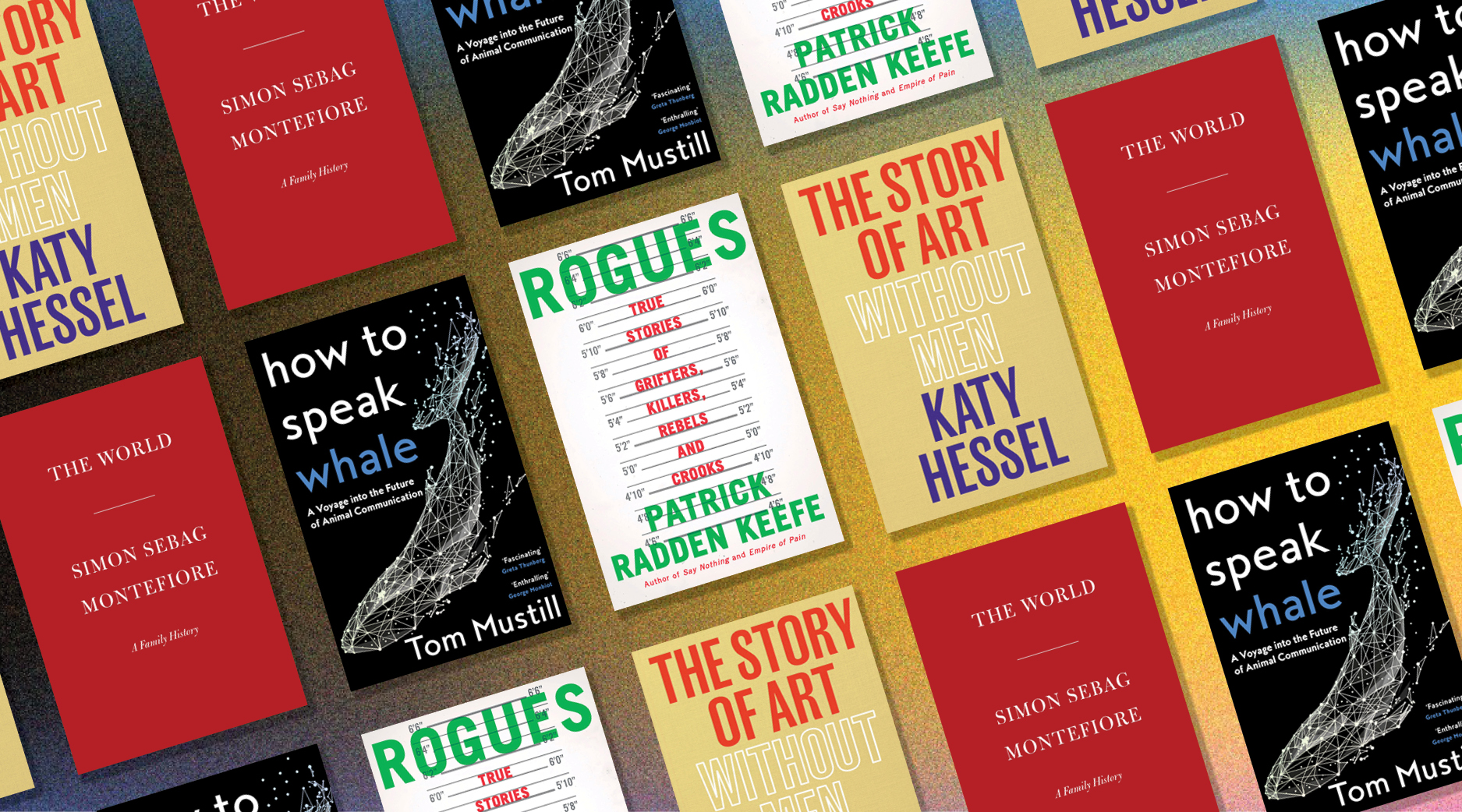
There are so many things that demand our attention today that it can feel hard to find the time for reading. But, when a book goes beyond compelling narrative alone and instead, offers up a trove of information on topics that are undeniably fascinating, it’s hard not to make time. Here, we round up four new, non-fiction books we have recently stumbled upon, each delving into a deeply interesting subject — from communication with animals to dynasties across human history.
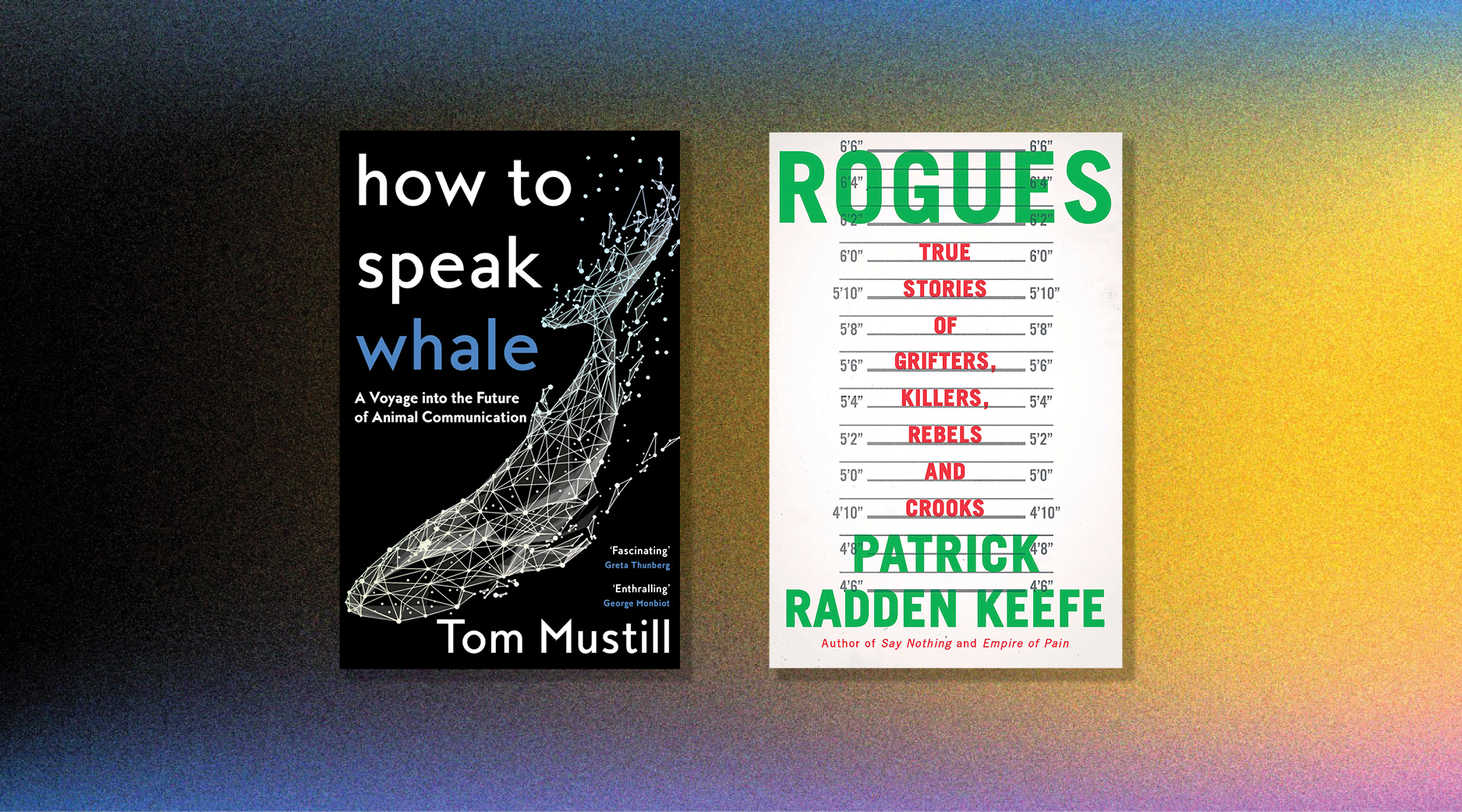
How To Speak Whale by Tom Mustill When footage of Tom Mustill having his kayak breached by a humpback while went viral, it set off a chain of events that led the nature documentarian on an investigation into whale science and animal communication. Offering a timely and poignant look into how science may change the ways we interact with animals, How To Speak Whale is an intriguing, informative read. Uncovering how close we really are to being able to communicate with animals via cutting-edge science and technology, this riveting book prompts questions of how human-animal relations have the potential to alter our worlds for good.
Rogues: True Stories of Grifters, Killers, Rebels and Crooks by Patrick Radden Keefe This new book by award-winning journalist, Patrick Radden Keefe features twelve stories of skulduggery and intrigue, gathered from Radden Keefe’s colourful career. From $150,000 forged wines to international black-market arms merchants, this book is a masterful and fascinating read.
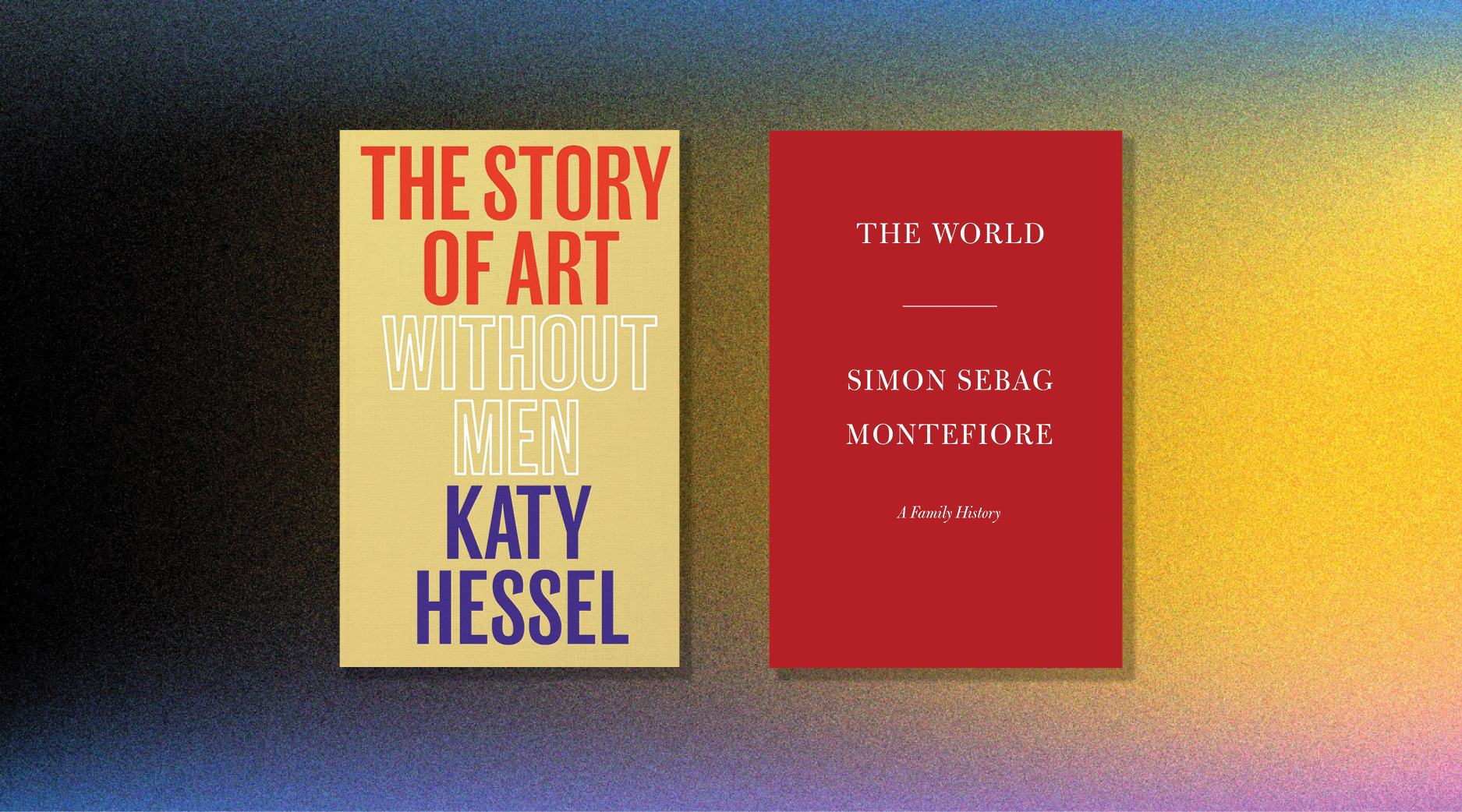
The Story of Art Without Men by Katy Hessel Discussing the landscape of art in a way that has never been done before, prolific art historian, curator and broadcaster Katy Hessel uncovers seminal female artists throughout history. From the Renaissance, to 19th Century America, these incredible women (who have remained largely unknown) are finally getting the attention they deserve.
The World by Simon Sebag Montefiore Glamour, intrigue and power collide in Simon Sebag Montefiore’s sprawling new release, in which the author chronicles the greatest dynasties across human history. Eye-opening and specific, this book moves from fearless Mayan leaders to ancient South Asian empires to the first female Pharaoh in a dazzling historical epic you won’t be able to put down.
It was the Karakorum down jacket that Moncler designed in 1954 for Italian explorers scaling the world’s second highest mountain that set the tone for what the brand would become. From the very beginning, Moncler has stood for innovation, exploration, collaboration and seeking out the extraordinary. And it is this impressive legacy of pushing creative boundaries and refusing to settle for anything other than excellence that is being celebrated around the world over the next couple of months, as the brand marks its milestone 70th anniversary with 70 days of extraordinary global events and activations.
Having officially started with a jaw-dropping, artistic takeover of Milan’s Piazza del Duomo over the weekend (for which renowned French choreographer, Sadeck Berrabah, created an incredible spectacle of contemporary dance featuring 1952 artists that explored the power of repetition) Moncler’s 70th-anniversary celebrations are now in full swing, with the brand running an ‘Extraordinary Forever’ global media campaign via archival images that showcase the seminal voices, faces and places that have contributed to its legacy and evolution. Alongside highlighting the brand’s history, the campaign will delve into Moncler’s unique genius, underlining its crucial contributions to our wider cultural landscape.
Moncler’s Maya 70 jacket
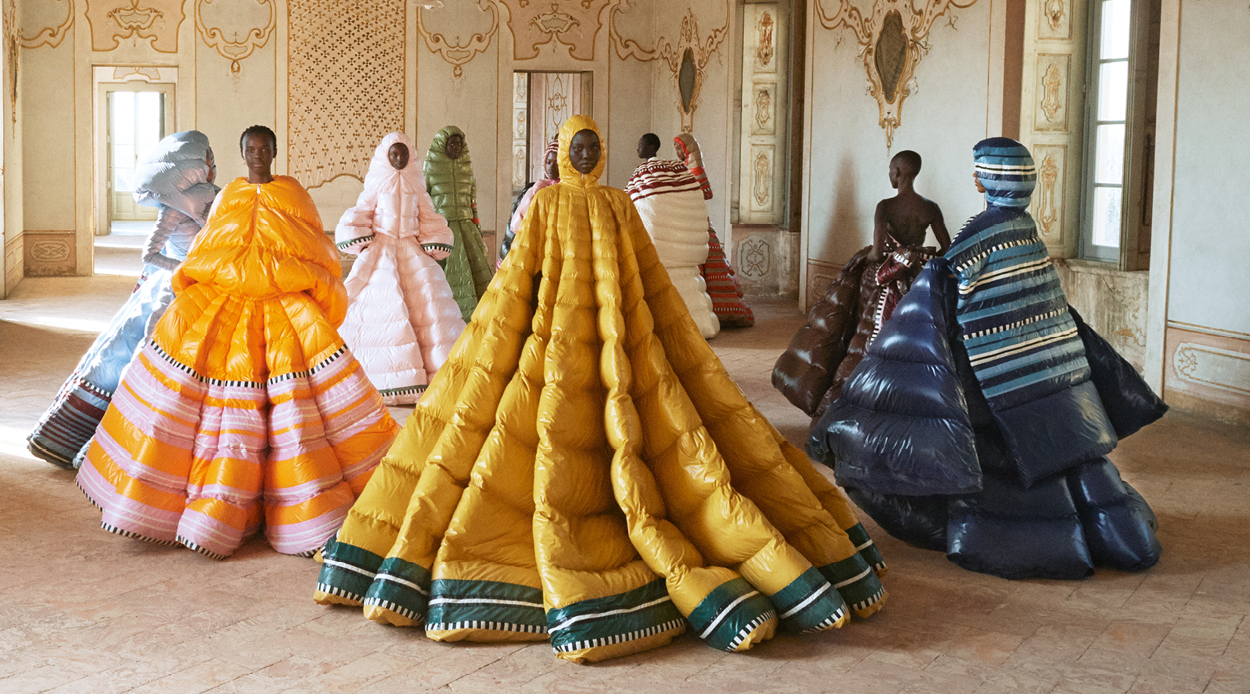
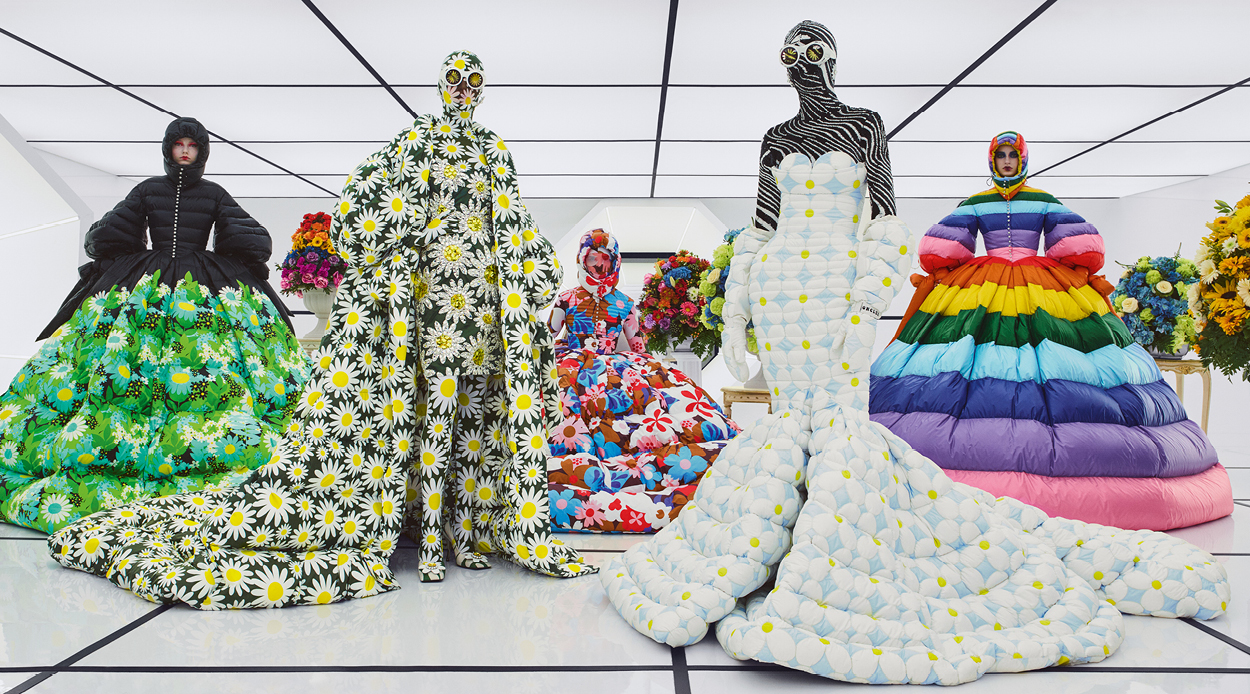
Beyond the campaign alone, Moncler has also reimagined its iconic Maya jacket, which presents as the physical culmination of the brand’s history of creative collaboration and clothes that exceed expectations. Available from the 1st of October, the limited-edition Moncler Maya 70 down jacket retains the signature design features of its original (including the classic, boudin-quilted quality), but has been rendered in 13 special-edition colours, from eye-catching metallics to soft, modern pastels and even some high-saturation hues for good measure. Each Maya 70 jacket will be made from Moncler’s new washed-nylon lux lacqué, and will be emblazoned with the exclusive ‘Extraordinary Forever’ anniversary logo — a fitting ode for a jacket that has enjoyed something of a cult status ever since its original release.
Moncler’s Maya 70 jacket
Furthermore, in a bid to highlight the extraordinary collaborations that have long kept Moncler at the forefront of fashion, the brand’s CEO has invited seven prolific designers to reimagine the Maya jacket in their own ways. From the 15th of October, inimitable, unique versions of the Maya jacket by the likes of Thom Browne, Hiroshi Fujiwara, Rick Owens, Pierpaolo Piccioli, Francesco Ragazzi, Giambattista Valli and Pharrell Williams will drop each week — the ultimate expression of Moncler’s admirable, creatively-driven philosophy and its focus on perpetual reinvention.
“Since the very first day, nothing at Moncler has been conventional or ordinary,” says the brand’s CEO, Remo Ruffini. “Who would have thought that a sleeping bag designed in 1952 would have reached cities all over the world as a down jacket, or would have been worn by all generations, stepped onto the runways and then be reinterpreted by various creative geniuses?” He continues, “since the beginning, we have always pushed the brand and our ambitions towards higher peaks.”
The Moncler down jacket goes universal, in a campaign, photographed by Annie Leibovitz, 2014.
Of course, Moncler isn’t stopping there. As a core part of the brand’s celebrations, Moncler will be running an ‘Extraordinary Expedition,’ comprising an immersive, globally-roaming exhibition starting at New York City’s Highline before moving to London and Tokyo and finishing in Seoul. In each city, the cutting-edge exhibition will recreate peak Moncler moments via vivid, multi-sensory technology that will harness cinematic video to showcase historical archives and contemporary fashion heirlooms.
These groundbreaking technological celebrations will (in typical fashion) see Moncler push into a whole new arena, as it enters the Metaverse with seven of its very own non-fungible tokens (NFTs), created in partnership with German digital artist Antoni Tudisco. In addition, the brand will release 500 original NFT artworks for each city on its ‘Extraordinary Expedition’ tour — an apt representation of the innovation and future-looking thinking that has kept Moncler at the forefront for 70 years — and will likely see it remain there for the next 70, too.
It’s that time of year again. Milan Fashion Week is back, bringing with it an array of new season presentations by some of the most significant, luxury fashion houses in the world. Last week, Gucci’s Creative Director Alessandro Michele presented the luxury fashion house’s spring-summer 2023 collection Gucci Twinsburg, in which he unveiled a collection that toyed with themes of self-reflection, reality and illusion — a captivating affair that saw actual twin models descend the runway in identical pairs.
Set in the Gucci Hub headquarters in Milan, watch the extraordinary fashion show below.
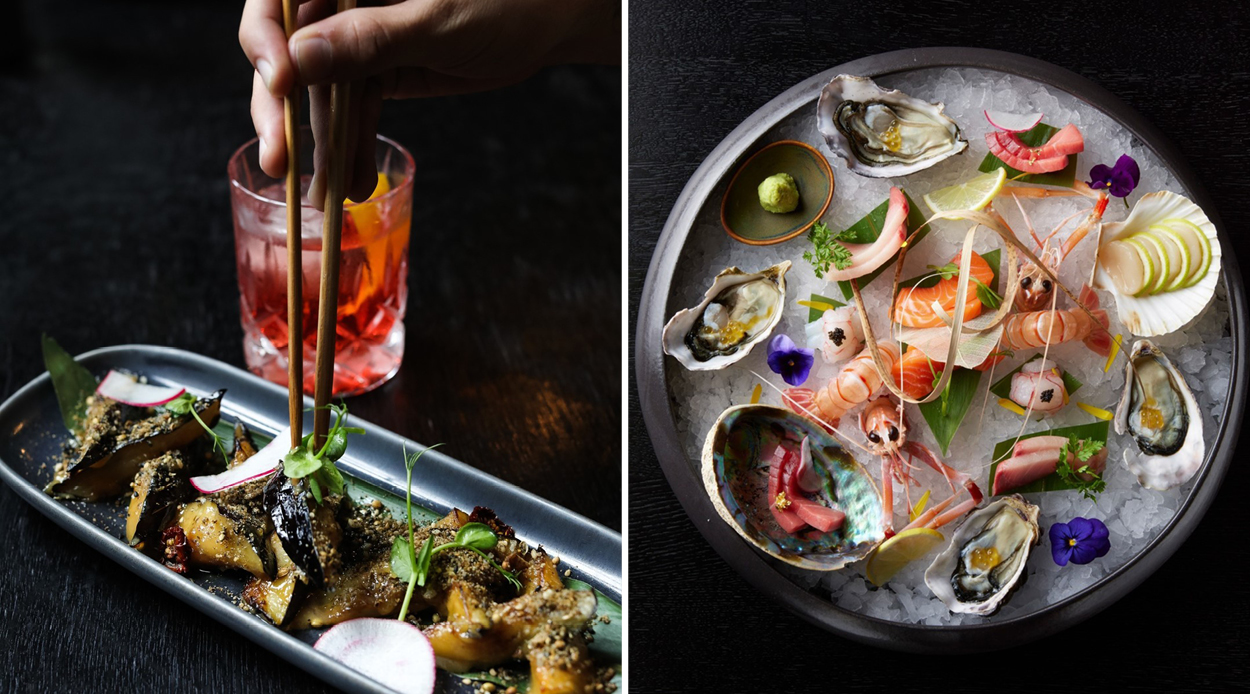
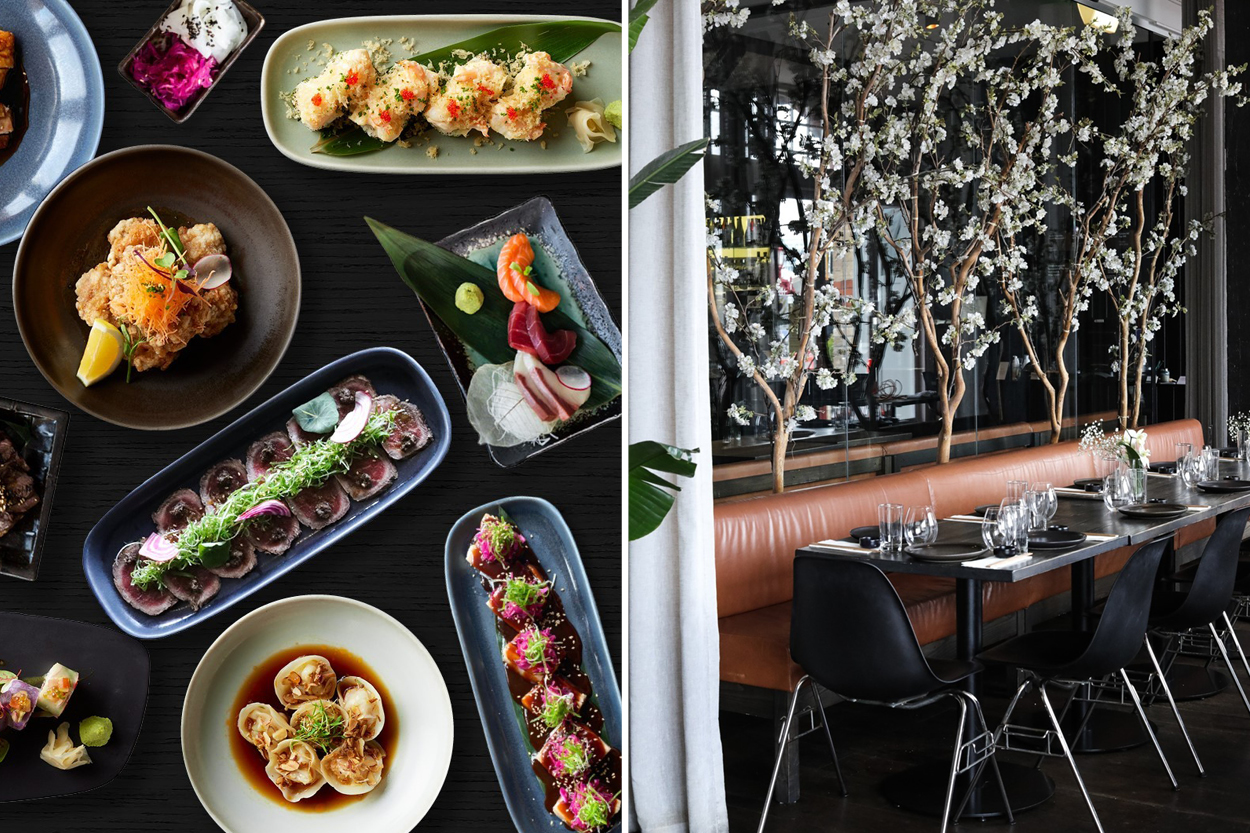
As the ritual of Friday long lunch makes a welcome return, thanks to our ventures back into city offices, we’re all about celebrating a team meeting that turns into an early knockoff. And honestly, is there anywhere better to do just that, than downtown stalwart Ebisu? Which has been serving up utterly deliciously Japanese fare from its sleek, Britomart dining room for more than 10years.
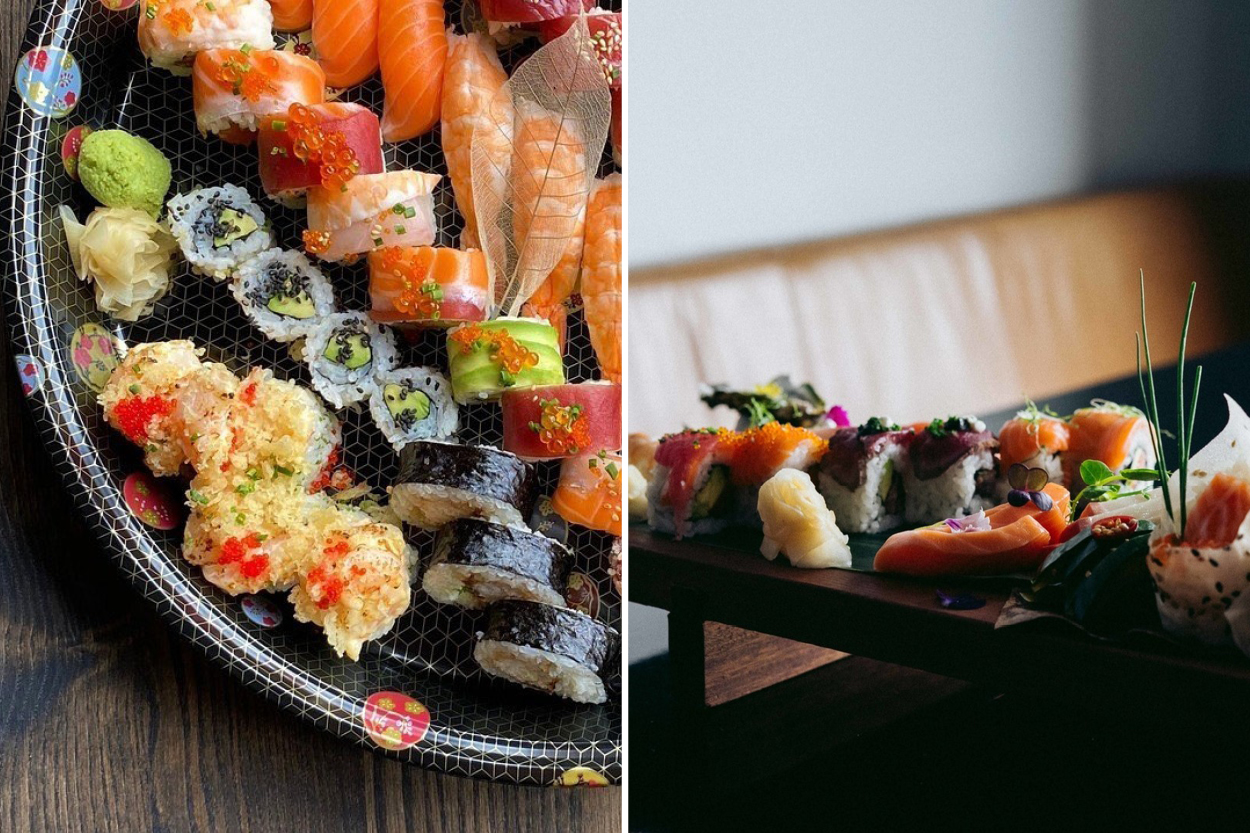
Setting the tone for its sibling restaurants that followed in the wake of its success (here’s looking at you, Azabu and Azabu Mission Bay), Ebisu has long been loved for its contemporary Japanese fare, married with subtle touches of European influence. From fresh sushi rolls and sashimi platters to mouth-watering meats (the free-range Karaage chicken and char-grilled Angus Scotch Fillet are both particular highlights) and flavourful umami bites, Ebisu’s menu is a comprehensive offering that truly has something to suit any persuasion. With this in mind, we wanted to ensure that your next Friday lunch was one to remember — so we’ve partnered with Ebisu to offer the ultimate long lunch experience, destined to make you the office favourite.
We are giving one lucky Denizen a long lunch table for six at Ebisu, and $500 to spend on food and drinks. Our advice? Gather your colleagues (or five fortunate friends) and order an assortment of dishes to share alongside a few bottles of satiating sake, and toast to the return of Friday lunch in the very best way.
There is something about the minimal lines of a freestanding basin that makes any bathroom feel sleek and inherently contemporary. Able to make your bathroom feel elevated, luxurious and design-focused, the freestanding basin is usurping its more practical counterparts thanks to the unmistakable aesthetic it delivers, and nowhere have we encountered a better iteration than the Meribel, from Robertson Bathware.
Boasting a solid, rectangular shape with straight lines undisrupted by fussy details or shelving, this basin features high-quality, Italian porcelain tiles attached to glass fibre reinforced board, which results in a piece that not only looks good, but is hardwearing enough to withstand its inevitable daily use.
Whether your bathroom adheres to the classic, monochromatic palette (white tiles and white porcelain with silver or black fixtures) or embraces a more colourful, richly-detailed look, the Meribel is available in a range of finishes (from undulating marble to dark grey concrete), promising to make a bold design statement in any kind of space.
And beyond aesthetics alone, this style of basin makes the collection of benchtop detritus basically impossible, resulting in a level of necessary cleanliness and organisation that promises to put the messy bathrooms of old to shame. (Or that’s the idea, at least.)
The perfect way to change up the look of your space without committing to anything too dramatic, the Meribel Freestanding Basin is a piece that will deliver a luxurious edge to its more practical surrounds, showcasing how something so simple can make such a significant impact.
Whether you’re relaxing or on the go, tuning into a podcast is always a pleasant pastime, particularly if you’re in the mood for some entertainment, education, or a fresh and interesting viewpoint that challenges your perspective on the world.
We’ve rounded up the highly-anticipated and best new podcasts to listen to this September, so have your headphones at the ready, and be prepared for some excellent playlist inspiration that will have you coming back for more.
Borderline Salty In this new, weekly call-in podcast, hosts Carla Lalli and Rick Martinez talk all things food. From their latest ingredient obsessions to their thoughts on trends, this is a show for anyone with an interest in food, whether you’re a professional, an amateur or simply love to eat.
Mother Country Radicals Offering a deep-dive into The Weather Underground (a radical activist group from the 1960s) and its role in America’s cultural and social revolution, this podcast is a personal, politically charged exploration of those who wanted change, by any means necessary.
Look at Moi Marking 20 years since foxy morons Kath and Kim burst onto our screens, this fun new podcast sees host Rowie Walden joined by various special acquaintances on a nostalgic trip back to Fountain Lakes to unpack one of the most iconic Australian television shows of all time.
Griftonomics An exploration of the various online trends, metaverse start-ups, cryptocurrencies, get-rich-quick schemes and more defining the landscape of our digital age, this podcast looks to provide some necessarily real conversations that cut through the ‘dizzying, unending roster of 2020-era rackets.’
First Person This new podcast from The New York Times, offers intimate, personal conversations with people living the realities behind our headlines. From a gay Ukrainian solider who must suppress his sexuality to fight for his country, to a woman’s reconciliation with abortion, this podcast is thoughtful and moving.
The classic scone is about as British as the Union Jack, no matter which side of the ’cream or jam first’ debate you fall on. (Queen Elizabeth II would always put the jam on first, by the way.) In fact, scones have apparently been served in cream teas since the 11th Century, their origins often credited to Scotland and Wales.
Technically considered more of a pastry, the humble scone has become a savoury mainstay in any high tea worth its salt — and while today, the cheese scone is arguably the most popular iteration of this dish (certainly the most common found in cafes across Auckland), it is the plain version, speckled with sultanas and topped with cream and jam that is the most traditional (and Crown approved).
So this weekend, as we all take an extra day off to honour the memory of Britain’s longest-serving monarch, why not take some time to whip up a batch of these fluffy, delicious scones at home? A bakery staple so important to the late Queen that, in 1960, she famously sent her very own recipe to President Eisenhower on a series of handwritten notes.
So, without further ado, we present the Queen’s own recipe for decidedly royal scones. Enjoy!
Ingredients 500g plain flour 28g baking powder 94g butter 86g sugar 2 whole eggs 140ml buttermilk 100g sultanas (optional, cover in hot water and leave to soak for 30 minutes)
Method 1. Preheat oven to 180C. 2. Mix the flour, baking powder, butter and sugar together in a bowl until a crumb is formed. 3. In a separate bowl, whisk the eggs and buttermilk together. 4. Add the liquid to the crumb mixture. Leave a small amount to egg wash later. 5. Continue to mix the dough until it is smooth. 6. Add the sultanas and mix until evenly distributed (optional). 7. Remove the dough from the bowl, flatten the dough and cover. 8. Leave to rest for approximately 30 minutes. 9. Roll out the dough to a thickness of 2.5 cm and cut to desired shape. 10. Rest the scones for another 20 minutes. 11. Gently egg wash the top of the scones. 12. Bake in the oven for 10-12 minutes until golden brown. 13. Cool before serving with jam and clotted cream.
As much as one’s jewellery collection should include conversation-starting pieces, it should also be curated with daily wear in mind. After all, most of us want to keep our special pieces close. So, when a brand creates head-turning jewellery that also feels inherently wearable, we sit up and take notice.
For local purveyors of iconic jewellery Naveya & Sloane, this idea is something that has long been at the forefront of its coveted collections — exquisite and timeless jewellery with enduring quality. Nowhere is this more clear than in the brand’s beautiful new collection, Romeo Flower, a line-up that captures ‘the essence of life’s breathtaking experiences that words can’t describe’, inspired by simple, organic forms, like a flower in bloom.
Grand Pave Ring in 18K Yellow Gold, with Petit Solid Ring in 18K Yellow Gold. Grand Pave Earrings in 18K White Gold, with Petit Solid Earrings in 18K Yellow Gold.
Conceived in lockdown 2020 while the brand’s Co-Founder and Creative Director, Rachel Sloane was dreaming of blooming spring days and the arrival of her firstborn, Romeo Flower grew from ideas of floral forms like the Winter Rose, a flower gifted by her mother when her daughter Amelie was born.
“I wanted to create a collection that was so beautiful, it would stop people in their tracks,” Sloane explains. “Similar to the feeling of coming across a beautiful flower in nature. A simple moment of pure magic and divine beauty — where time stands still and the moment takes your breath away.”
Petit Pave Necklace in 18K Yellow Gold.
Launching with 12 pieces, Naveya & Sloane’s new collection reimagines the classic floral jewellery trope with its domed flower motif, in which four structured Matisse petals are connected by a sparkling, central diamond and rendered in either 18 karat yellow or white gold or, for some selected pieces, entirely encrusted in diamonds. Here, the pieces offer a subtle nod to old-world glamour while still feeling aligned with the contemporary luxury that has become so synonymous with the brand’s designs, balancing ornamental details and modern finishes with skilful finesse.
Grand Pave Ring in 18K Yellow Gold, Grand Pave Ring in 18K White Gold, Petit Solid Ring in 18K White Gold.
By its very nature, Romeo Flower is a fine collection with wearability at its heart, where dainty pendants, intricately detailed, diamond-adorned rings (as perfect for stacking as they are on their own) and understated earrings stand as the kinds of pieces you could wear for days without taking off.
In reimagining the interiors of this residence in Sorrento, Fiona Lynch used the calm, coastal surrounds to inform her design. Taking the bones of this two-storey Merchant Builder-style home (originally constructed in the 1980s) and treating them to an extensive re-fitting, not only did the lauded designer create a sumptuous retreat to fit the client’s brief of pared-back, private sophistication, but she delivered a masterclass in modern minimalism.
Luna Chandelier 1 Tier pendant by Gabriel Scott from ECC.
Seeking to change the feel of the existing space without altering much of its structure, Fiona Lynch ensured the home was fit for the needs of its residents by removing a dated former renovation and making small changes via clever spatial planning and expert material layering. Proving how a little can go a long way, the designer’s use of textural wall treatments, organic and porous materials and impactful artworks in key positions created tranquil spaces that feel strong and inviting, all while evoking a sense of sumptuous luxury.
In the kitchen, for instance, a central island with a mottled limestone top and stoic travertine base is positioned to allow those enjoying a morning coffee to take in the view through the large window opposite. Careful not to sacrifice form to function, the designer conceived the kitchen as a space both befitting of family time and socialising as well as somewhere that would be practical for everyday pursuits. Here, polished brass joinery is used to deliver a golden warmth that one can only imagine would come to life when bathed in natural sunlight.
Mr Chair by Mies van der Rohe for Knoll available from Studio Italia.
Tolomeo Mega Terra floor lamp by Artemide from ECC, Togo Fireside chair by Michel Ducaroy for Ligne Roset, Offset coffee table by Resident from Simon James, Inout side table by Gervasoni from ECC.
Elsewhere, the living areas present as the perfect places to spend days reclined on a lounge or curled in a favourite chair, where softly-draped, open-weave linen curtains diffuse the daytime light and offer privacy and warmth, while furnishings like Ligne Roset’s Togo (upholstered in an earthy green that reflects the natural exterior landscape) invite rest and relaxation. Original details like raking ceiling beams and a fireplace have been retained and given new life; the former a coat of fresh paint, the latter ensconced in stone and polished plaster.
In fact, polished plaster is one of the materials that Fiona Lynch uses generously to lend depth and dimension throughout this home, an effect that is only bolstered when combined with woven wicker screens, pale timber, textured raffia wallpaper and a palette of calming pebble hues, sandy tones and chalky greens. In the bedrooms and bathrooms these tones and textures are used to calming effect, where subtle design statements are the ideal foundations against which injections of art and key furniture are showcased. And despite there being an overall sense of luxury, nothing feels ostentatious or attention-grabbing, which is what makes this residence so appealing.
Fiona Lynch has done an exceptional job at marrying hard materials with soft finishes, offsetting angular, sharp lines with rounded walls and using elements like solid timber and natural stone in an understated way. The Sorrento House is, as a result, an alluring example of restrained design. It embodies modern minimalism because it is warm and simple; layered but ultimately pared back. And while it’s a hard line to walk, Fiona Lynch does so with an expert hand and clever eye, creating a home on the coast to covet.
In the decades that I have existed on this planet, I have spent hours, days, weeks and enormous amounts of money elevating the quality of the skin on my face. Because, that is, after all, what we are encouraged to do. This has meant regular facials, multifaceted skincare regimes, and regularly subjecting myself to injectables, all in the name of a great visage. But while all this energy was going into my face, I regrettably had little care for the rest of my skin — that covering my body.
As a regular and enthusiastic proponent of exercise, I have believed for many years that if I commit to my routine of Pilates and walking at least five days a week, my body will remain as taught as it was in my twenties. I’m saddened to report that despite what your online fitness instructor may have suggested during lockdown (as you relentlessly squatted your way to a firmer tush or undertook 100 push-ups-a-day in search of taught biceps, a la Madonna), the truth of the matter is, our body’s skin needs just as much attention as that of our faces.
Sadly for this sassy lass, I missed that memo when it would have been most helpful, and am now left with a few… let’s call them, age-appropriate disappointments, when it comes to the firmness of several areas of my body.
So, it was music to my ears when I heard that leading Australian body-shaping and wellness clinic, Body Catalyst, would be landing our shores, promising non-invasive cutting-edge treatments that would help me to lose fat, treat cellulite, and tighten loose skin.
Because improving the shape and firmness of my body, would surely also have lasting benefits in enhancing my own self-image, right?
After a consultation with Body Catalyst specialist, Renee Bell, I was emailed an outline of a treatment plan that was designed to improve the areas that concerned me the most. My bottom, my arms and the backs and sides of my thighs.
To tone the saddlebags (yes, that’s what they’re called) on my outer thighs, Renee recommended three fortnightly treatments of High Intensity Focused Ultrasound (HIFU) which is used to target stubborn pockets of fat. It uses Macro-focused ultrasonic waves to permanently destroy the subcutaneous fat tissue using heat at 65-75 degrees. Unlike Fat Freezing, the high frequency of the ultrasonic waves results in heating under the skin which works to tighten, lift and reduce stubborn pockets.
Elsewhere, to help improve the muscle tone on my glutes the recommended programme was ten, 45-minute sessions of TeslaFormer (a machine found exclusively at Body Catalyst in NZ). The TeslaFormer uses Functional Magnetic Stimulation (FMS) to build muscle tissue and reduce fat. During a treatment, the TeslaFormer induces strong supramaximal muscle contractions above the level that is possible during exercise, and consequently, the muscle remodels itself, building fibres and growing in size. The result is increased muscle density and volume. TeslaFormer lifts and firms the treated area, targeting muscle groups that are not accessible via a normal workout.
And to give me the toned biceps I had always dreamed of, Renee recommended ten, 30-minute sessions of skin tightening using Radio Frequency. The Radio Frequency energy penetrates the skin layers to selectively heat the skin tissue. The local heating causes an immediate contraction of collagen fibres, and at the same time increases metabolism of the fibroblasts (cells that produce collagen fibres) thereby accelerating the production of new collagen and elastic fibres. The result is a tightening effect on the skin, creating a smoother and younger appearance.
At the time of writing, I am only halfway through my Body Catalyst treatments, however it’s clear that things are headed very firmly (literally) in the right direction. While there is a reasonable commitment of my time involved in undertaking each treatment concurrently, the procedures themselves are painless and in some cases actually quite relaxing. I often take my laptop so I can work while the fat is being flushed from my system.
So for anyone needing an extra, self-esteem boost (without resorting to drastic and invasive measures), Body Catalyst’s innovative, gentle and effective treatments are certainly worth your time and a good reminder to care for and invest in your body’s outer layer, just as you would your face.
In a bid to capture the boldness and bravery that underpinned the rest of Denizen’s Spring issue, it was to high-octane hues and showstopping silhouettes that we turned in our fashion editorial. From Balenciaga’s unmistakable block colours and Gucci’s unique detailing to Prada’s polished touches, the mood of the season was audacious and the clothes a confident step away from minimalism. They do say that fortune favours the brave, after all.
Makeup & Hair: Ivan Kuz using La Bouche Rouge makeup, available from Faradays. Talent: Vita from MMG Models. Thiago from Bareface Models. Fashion Assistant: Christina Arrighi. Video: Klaudia Adamski.
Thanks to the local purveyors of some of the finest rugs around, a new wave of vibrant hues is set to take over our interiors, suggesting that colour in the home should be employed on every surface, starting from the ground up.
Nodi (known for creating collections that reimagine the classic rug in a bold, luxuirous way) has recently expanded its highly-coveted Bamboo Silk Wool Blend collection by adding tones like Brick, Indigo and Charcoal to the line-up, and making a strong case for colour in any living or bedroom space. Forever inspired by nature and our connection to mother earth, Nodi introduced these hues to echo the natural world while still offering the kind of cool, cosy, contemporary luxury that has made this brand so widely sought-after — and the results really speak for themselves.
For Nodi, the rug is an essential centrepiece, and a detail that (although often underestimated) has the ability to pull together an interior like nothing else. And while the brand’s collections comprise a variety of weaves, it is its handmade, 100 percent bamboo silk combined with pure New Zealand wool additions that offer the perfect combination of modernity and luxury, thanks to their sustainable materials, sumptuous silky texture and luminescent, sheen-like finish.
The expansion of Nodi’s Bamboo Silk Wool Blend range reflects not only on the popularity of the texture, but offers tangible proof that people are willing to embrace colour in their homes once more — moving away from stark monochrome as the only harbinger of a sleek, contemporary aesthetic.
So, for anyone seeking a seasonal refresh, look no further than Nodi’s newest Bamboo Silk Wool Blend colours. After all, the simple act of adding or swapping a rug is the most effective way to give any interior space a new lease on life, requiring barely any effort at all.
Julie Pelipas is talking to me from London, but it’s not her home. And while home is only a three-and-a-half hour flight from London, returning right now is not an option. Pelipas, the former fashion director of Vogue Ukraine and founder of upcycled clothing platform, Bettter, is one of the roughly 12 million Ukrainians who have been forced to flee their country since its invasion by Russian forces in February, with millions more displaced within Ukraine, and hundreds of thousands left without any home at all. Considering the circumstances, Pelipas is one of the lucky ones, but talking to her, it’s clear that the emotional toll of war has weighed heavy.
“I’m safe but I feel enormously tired,” Pelipas says when we first speak, “it’s not easy to work normally and live life while trying to handle the huge mental pressure of everything we see happening in our country every day… particularly now that the media has stopped covering Ukraine as much.” For Pelipas, London is a haven, but it will never feel the same as the dream home she had meticulously designed and only recently moved into, set in the heart of Kyiv and surrounded by beautiful gardens and a sparkling river. If anything, the rushed relocation of her and her family has only made her appreciate her country more. “I love my country, I love my people,” she tells me, explaining how she recently went back for a visit, surprised to find that the people there were choosing to continue on as normally as they could. It’s a testament to the incredible resilience that has defined the Ukrainians’ retaliatory fight and utter refusal to back down. “Being back in Ukraine was a very surreal experience,” Pelipas explains, “there are parts that feel so normal but you can be killed at any moment… when we were shooting for Bettter’s MRIYA project with Dover Street Market, rockets hit the city centre, about two-kilometres from our studio.” This comes as Russia is reportedly ramping up its attacks on Ukrainian civilians, a result of what Pelipas says, is an attempt to break their spirit. “There’s no military logic anymore,” she tells me, “they’re trying to lower our bravery, they want us to be scared.” But, fear, I learn, is not in Julie Pelipas’ vocabulary.
For those of you who haven’t heard of Julie Pelipas, there is a high chance you’ll have seen a photo of her on Instagram, probably at fashion week, probably surrounded by photographers. Tall and slender, with a strong, memorable face and a particularly elegant way of dressing (usually in a suit), Pelipas has long been the subject of ardour from those in the fashion industry — as much for her personal style as for the globally-renowned work she has produced over her decades-long career. An integral part of the teams that set-up both Harpers Bazaar and Vogue in Ukraine, Pelipas has, since her earliest days in fashion, been an advocate for creatives in her country — magnanimously giving them a platform in print to publish their work, opening doors for them internationally and encouraging them to push the envelope and to rewrite the traditional editorial rules. It is something that has underpinned much of her work, and now, she tells me, is more important than ever.
“At Vogue, we really didn’t have any budgets,” Pelipas explains, “so we used to pay young, local creatives with the freedom to do whatever they wanted, which saw most of them take incredible risks to produce these beautiful shoots and covers for us.” Indeed, the covers released under Pelipas’ tenure at Vogue Ukraine redefined the style for publications the world over. They were pared-back and artistic, often anchored by an overarching or esoteric theme that lent them the kind of depth and gravitas that other fashion titles were sorely lacking. Importantly, they also thrust Ukraine into the international fashion spotlight, showcasing the country’s burgeoning industry, and giving it an impetus for growth.
Vogue Covers by Julie Pelipas.
Through her experiences building Vogue Ukraine into the visually-renowned and globally-replicated magazine it now is, Pelipas was able to hone a unique ability to create greatness out of virtually nothing, explaining how in the early days of Vogue, not only was there no local industry (aside from models, of course) but no international brands or creatives were interested in working with them. It was only due to some scrappy determination, as well as a clear vision and the decision to never take ‘no’ for an answer, that Pelipas and her team were able to build Vogue’s reputation and bring Ukraine’s talented pool of designers to the world. “A lot of people didn’t even know what Ukraine was in the beginning,” she says, with a laugh, “but when we started producing all this different content and changed our covers, I remember being in Paris at a dinner for International Condé Nast editors and Jonathan Newhouse said to everyone in his speech, ‘have you all seen the amazing work that Vogue Ukraine is doing with their artistic covers?’ It was such a proud moment because we had worked so hard for so long and we were finally getting recognition.”
Because far from the glamorous world that ‘Vogue’ might conjure, those years, Pelipas explains, were marred by a level of dedication and grit that really eclipsed anything else in her life. “When you are working with no budgets, no connections, no system behind you, you dedicate yourself completely to your work… you have to put in extraordinary hours to get extraordinary results,” she reveals, “I was sleeping in the office some nights… I lost a lot, and I missed a lot of things in my life but it really turned me into a person who wasn’t afraid of anything. After that, anything felt possible.”
For Pelipas, who I discover is deeply empathetic, with a disarming authenticity and a particularly strong moral compass, the work at Vogue started to feel like it no longer aligned with her values. “I realised that I couldn’t serve this classic system anymore,” she explains, “I wasn’t bringing happiness to people but really, just the opposite, because at its core it was all about telling people that they weren’t good enough or skinny enough or trendy enough… and I felt a responsibility around the messages we were sending.” Sustainability was one issue that Pelipas tells me she pushed to cover more consistently at Vogue, despite it often being shut down for fear that raising the idea on a cover would do nothing for magazine sales. “I wanted to talk about sustainability in a really honest way, without all of the greenwashing,” she says, “because when I would travel for fashion weeks, and go to the trunk shows and the showrooms, I would see so many clothes and how similar they all were and the amount of deadstock that was left behind… so I started thinking about how we could stop producing so much while still creating beautiful clothes with that timeless quality that our parents’ generation had… that was where my idea for an upcycling system began, and it was in my head for three years before I decided to quit Vogue and do my own thing.”
That thing was Bettter, a company reimagining our current fashion system and now, Pelipas’ main focus. Bettter identifies itself, not as a fashion brand, but is a multifaceted platform based around the idea of upcycling. For Pelipas, it was the only feasible way to combat the rampant over production she had witnessed over her years in publishing — years that instilled in her a belief that all the clothing we need has already been produced. So, she founded Bettter as a way to take deadstock and vintage textiles — including men’s suiting, old athletic-wear and even beach towels — and repurpose them into sleek, beautifully-made contemporary clothing with quality, cut and fabrication at the forefront. “I hope that Bettter will become a system that can change global production,” Pelipas tells me, “upcycling is transparent and truly a green technology…and the idea behind it is actually very old, much like mending or patching clothes.”
To look at Bettter’s collections is to see Pelipas’ unmistakable aesthetic stamp. The suits have that Phoebe Philo-esque androgenous quality (perfectly proportioned and effortlessly chic) while the more casual pieces are all made with a tailored edge. Crucially, Bettter stands apart from its ‘sustainable fashion’ contemporaries for the way in which it eschews catchy marketing lines or shouting about its ‘green’ goals. Instead, as with most things Pelipas does, the work speaks for itself. “We are all about sustainability but we don’t scream about it,” she tells me, “we have never used PR or influencer marketing, it has all been organic… At the beginning, I wanted to prove that the product was actually something people needed, and now we have such high return rates from our customers, which makes me really happy.” She continues, “One hundred percent of our products are upcycled and we are fully transparent about every step in the process, from where we source fabrics to exactly how a piece was produced… because beyond the clothes, we want to communicate our vision to our clients and we want them to buy into it too.”
Unsurprisingly, Pelipas has big dreams for Bettter. Her “north star,” she revealed, would see Bettter open a number of R&D facilities around the world, each of which would source, produce and sell their collections locally. “If the platform I build now is around much longer than I am, and inspires people to shift the way they produce and consume and the way they think, that would be amazing. But we need to grow more before we get there,” she clarifies.
I wonder how Bettter has fared in the face of the ongoing conflict. “Seventy percent of the team left Ukraine,” Pelipas says, “and the thirty percent who remained, absolutely refused to leave.” For Pelipas, not only did the start of the war mean the necessary shut-down of Bettter’s ability to produce and sell, it also meant a fracturing of her team, as she shifted to putting their wellbeing as her first priority and thinking about how the platform she had worked so hard to build could become useful in other ways. “My team is like my family,” she explains, “and even when we didn’t have any sales, I continued to pay full salaries.” It was during the early days of the war that Pelipas realised the critical importance of creative work, not only for the sense of purpose it offered, but because, as she says, it was healing.
“I just realised that we had to keep moving forward… once you stop, you’re lost” she tells me, with a hint of that steely determination that has long underpinned her success. “So we did this pivot at Bettter and we created Bettter.Community as a way to support creatives in Ukraine.” Tapping into her vast, global network of brands, designers and publishers, Pelipas transformed Bettter’s platform into a database of talented, Ukrainian creatives in a bid to get them work and money. “When I was in Paris for fashion week I had all these people from my old life asking how they could help and I realised that we needed a very clear, transparent structure that would help them direct their support into something meaningful,” she says. “I know so many young, talented creatives and it’s so easy for them to get lost in the system, especially during wartime… So this way, not only were they able to be financially supported but I think the process of being on a shoot or creating again allowed them… allowed all of us… to temporarily forget about all the horrible things that were happening.”
Now, Bettter.Community has merged with Given Name (who will take on more of the administrative responsibilities of artist management), to become more of an official agency and continue in its quest of supporting and uplifting Ukrainian creatives globally, while Bettter resumes its original work.
Photo: Haris Farsarakis
“I had relocated most of the Bettter team to Portugal, where we had set up an R&D facility and found some great production locally,” Pelipas explains, “but a few weeks ago, we actually made the unexpected decision to reopen our facility in Kyiv, with most of my team telling me how, in spite of everything, they just want to go home.” Having recently undertaken a collaborative pop-up in Paris’ Dover Street Market (in which Bettter’s MRIYA collection was unveiled via an immersive VR experience) and with Pelipas revealing a number of new collaborations in the works, it would seem that Bettter is on the brink of big things. “This is just a new chapter for Bettter,” she says, “it’s becoming more about collaborating with other brands and doing drops together… it feels new and exciting, and while there are so many challenges at the moment, I feel optimistic… I’m a very optimistic person.”
Indeed, the fact that Pelipas manages to hold onto her positivity even in the face of such gruelling circumstances is a testament to her spirit — what she would call “the mystery of the Ukrainian soul.” And while it’s obvious that she is incredibly hard-working and clearly cares about her country and countrymen, what strikes me most about her is her deep authenticity. It is rare to encounter someone with such a strong sense of self and an intuition that seems to have never led her astray. Her creative inspiration, she tells me, comes from a place within her that she can’t quite pinpoint (“my father told me once that I have a connection with the universe,” she says laughing) and when she was working her way up the ranks at Harpers Bazaar, on the brink of a big promotion, she fell pregnant and took two years off to live in Bali and enjoy time with her baby. “It was the smartest decision I ever made,” she says. “My advice to anyone is that if you’re talented, if you have brains, you will always be able to come back and build your career at any time… but it’s only a few times in your life that you have babies… to me it was very important.”
Pelipas has a track record of doing what she knows in herself to be right. Recently, she was involved in styling Ukrainian first lady Olena Zelenska for Vogue’s October digital cover — a powerful portrait of wartime leadership, shot by Annie Leibowitz. The photographs sparked a backlash, with some claiming they glamorised war and others bristling at the juxtaposition of Vogue (and its elitist connotations and past editorial missteps) with the realities that so many are facing in Ukraine right now. That said, most critics missed the crucial nuance of the shoot; the powerful image it portrayed of strength and leadership in the face of conflict, and the platform it gave the Ukrainian designers that Zelenska was wearing, their names listed simply below each image. More than any of that, it lent the war a human face and thrust Ukraine back into the international conversation, just as mainstream coverage seemed to be dwindling. As Vanessa Fridman wrote for The New York Times, “is the magazine romanticising war, or is the first lady weaponising glossies?”
“Spreading the word really works,” Pelipas tells me, “it’s the only benefit of social media… use it to talk about the truth, because if there is silence then nothing will change.” With Ukraine’s economy predicted to shrink by 45.1 percent this year and Russian forces having already damaged an estimated $105.5 billion worth of infrastructure, both those still living in Ukraine and those supporting from afar are painfully aware of the difficult road ahead. As Pelipas explains, this war is more than just a territorial or ideological conflict. It is a battle for the soul of Ukraine and for its independence from a neighbour who wants to rewrite history. “I do have hope that something extraordinary can come out of this,” Pelipas says, “but we have to win the war… a Ukrainian victory will be a win for humanity, for light over darkness.” As far as what the rest of us can do to help, Pelipas points to the significant impact just a small donation can make. “Every day we wake up and donate what money we can, and in the end, that becomes an important part of the Ukrainian effort… it literally saves lives.”
Having recently stepped back from her social media after months of relentlessly posting about the hardships being faced by the country she loves so much, Pelipas is finally taking some time for herself. Time, I hope, she uses to recharge her creative battery and return with the kind of purpose that has long been a driving force in her life.
Whatever she does next, Pelipas’ career proves the power of fashion far beyond its glossy facade. Scratch the surface and it is about community, people and creating a path for the future. A future that, to those like Julie Pelipas, is full of hope and potential.
It’s rather widely agreed that, unless you’re a certain kind of person, cleaning up the house is nothing short of a drag. Quite honestly, there are more enjoyable ways to spend our days, so we’re all about celebrating solutions that make this tedious task all the more enjoyable.
We know that Denizens have an affinity for interior design trends, and with emerging research from Ecovacs Robotics suggesting that more than 82% of New Zealanders are embracing home robots and smart technology, this recent discovery of ours is poised to be a game-changer for homes across the country.
Despite only recently entering the local market, Ecovacs has been a global pioneer in robotic home solutions for two decades. It makes sense then that the newest iteration of the Ecovacs range is design-led, the brand combining forces with the European prowess of Jacob Jensen Design. The result is a beautiful design that doesn’t compromise on output, fulfilled in the recent release of the Deebot X1 Plus.
Sure, we could wow you with the Deebot X1 Plus’ technical details of horsepower and speed (in case you were wondering, it offers an impressive industry advancement of 5,000pa of suction, literally double the power of what suction used to be). Yet where competitors’ designs have been woefully lacking, this model embraces the philosophy of no detail left unconsidered.
Functioning as a vacuum and mop, the Deebot X1 Plus is powered by AI, 3D and mapping technologies, and a YIKO interactive voice assistant for the times you need it most. The voice assistant is another industry first for the model, offering a realm of possibilities never seen before on the market (and something that Ecovacs’ engineers are extremely proud of), where you can speak directly to the robot and it will follow your every command. With this innovation, you can direct it to collect the crumbs under the sofa or mop up muddy footprints on fresh floors.
Adding to the Deebot X1 Plus’ capabilities is an intuitive air freshener (the first and only robot vacuum with this feature included), and it leaves behind no trace of a mess. Of course, when the job is done, Deebot X1 Plus returns to its home base — a docking station that automatically empties waste, seals dust and allergens, and in doing so, holds up to 60 days of everyday household mess before it requires refreshing.
Where the Deebot X1 Plus excites us most (aside from a pretty exterior) is the realm of possibilities that open up with an addition like this at home; a new mode of housekeeping that adapts to the needs of modern living. Be those in-the-moment commands, like a kitchen mishap, or the daily purge that busy lives need, the Deebot X1 Plus has proven itself capable of taking care of everything.
Ultimately, Ecovacs’ commitment to a vacuum that integrates seamlessly into everyday life is a detail that shouldn’t have to be sacrificed when living in the age of innovation.
Ecovacs’ Deebox X1 Plus is available locally from Godfreys, JB Hi-Fi and Robomate.
For more exclusive access to what the city has to offer, engaging content, excellent imagery and thought provoking commentary on the life that surrounds you, subscribe to Denizen magazine now.