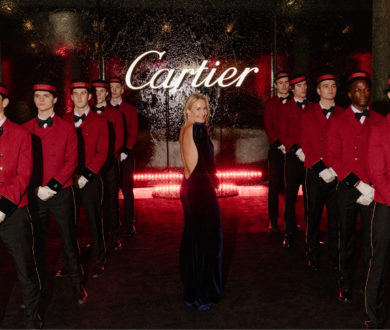





There are exhibitions worth seeing, should an itinerary allow, and then there are those around which the itinerary ought to be built. CARTIER, the 2026 Melbourne Winter Masterpieces exhibition at the National Gallery of Victoria, belongs firmly to the latter category, bringing together an extraordinary concentration of jewels, timepieces, drawings and precious objects that may never be assembled in this part of the world again.
Presented direct from London’s Victoria and Albert Museum and expanded for Melbourne, the exhibition contains nearly 500 objects and archival materials, including more than 300 jewels, many never previously shown in Australia. For New Zealand audiences, accustomed to travelling considerably further for exhibitions of this calibre, its arrival across the Tasman is reason enough to book the flight before it closes on 4 October.

Jewellery is too often dismissed as decoration, detached from the serious business of cultural history, when its materials, patrons and changing forms can reveal as much about power, trade, technology and taste as any painting or piece of architecture. CARTIER makes that argument with considerable force, tracing the transformation of a Parisian family jeweller into an international house whose work became inseparable from royalty, aristocracy, cinema, fashion and the public image of some of the twentieth century’s most compelling figures.

The story begins with Louis, Pierre and Jacques Cartier, the three brothers whose complementary ambitions established branches in Paris, London and New York, while bringing design and production under increasingly disciplined control. From the delicacy of the early Garland style to the graphic assurance of Art Deco, and from Islamic and Indian influences to the geometry of ancient Egypt, the rooms reveal how Cartier absorbed ideas from across cultures while maintaining the precision of its own design language.


Provenance gives these objects their particular electricity. The exhibition includes jewels associated with Elizabeth Taylor, Princess Margaret, the Duchess of Windsor, Grace Kelly, Rihanna, Dame Nellie Melba, Barbara Hutton, Daisy Fellowes, the Maharaja of Patiala, and the Begum Aga Khan III, allowing private taste and public mythology to meet within the same display cases.


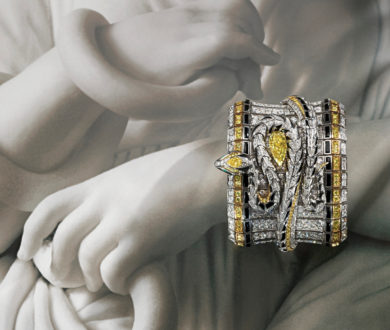
Among them is the celebrated Hindu necklace commissioned by Daisy Fellowes, a composition of sapphires, emeralds, rubies and diamonds that captures Cartier’s command of colour with almost insolent confidence. Elizabeth Taylor’s Burmese ruby necklace, given to her by Mike Todd, is equally arresting, while the Duchess of Windsor’s Flamingo brooch and great sapphire Panther clip belong to a particular history of jewellery used as wit, theatre and self-invention.


María Félix’s articulated Crocodile necklace offers one of the exhibition’s most memorable displays of technical imagination. Created in 1975 as two fully articulated creatures, one set with yellow diamonds and the other with emeralds, it arose from the Mexican actress’s singular request that Cartier reproduce her baby crocodiles in precious form. Barbara Hutton’s jadeite necklace, assembled from beads of exceptional scale and quality, provides a quieter but equally formidable expression of material rarity.

The exhibition design, conceived by New Zealand-raised Sabine Marcelis with Paul Cournet of Rotterdam studio CLOUD, gives the historical material a thoroughly contemporary setting. Saturated colour, luminous surfaces and controlled reflections respond to the optical properties of gemstones, creating an immersive environment that remains judiciously secondary to the jewels. The result encourages the close looking these pieces deserve.

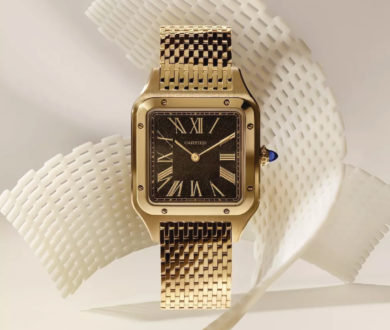
That attention extends beyond finished creations. Sketchbooks, original drawings, photographs and Cartier’s Book of Ideas disclose the intellectual and technical work that precedes each object, revealing how proportion, movement, setting and engineering are resolved long before a stone reaches the body. Watches and mystery clocks provide further evidence of a house as interested in mechanics as magnificence, while the Melbourne presentation’s expanded attention to Jeanne Toussaint examines the formidable creative director who shaped Cartier from 1933 to 1970 and gave the panther its lasting authority.


The final gallery gathers 24 tiaras in a display of almost unreasonable beauty. These ceremonial ornaments are feats of architecture in miniature, engineered to hold significant stones while appearing weightless upon the head. The Scroll tiara, worn by Clementine Churchill at the coronation of Queen Elizabeth II and later by Rihanna, demonstrates how one object can move between monarchy, fashion and contemporary image-making while retaining its original force.
In person, the stones possess qualities photography inevitably flattens: the depth of an opal, the scale of an emerald, the movement of an articulated creature and the disciplined delicacy of platinum become physical rather than theoretical. For anyone interested in jewellery, design, fashion, decorative arts or the cultural history of luxury, CARTIER is among the most significant exhibitions currently within reach of New Zealand. It deserves the journey.
Melbourne Winter Masterpieces: CARTIER is on display at NGV International, Melbourne, from 12 June – 4 October 2026
Tickets are available here