



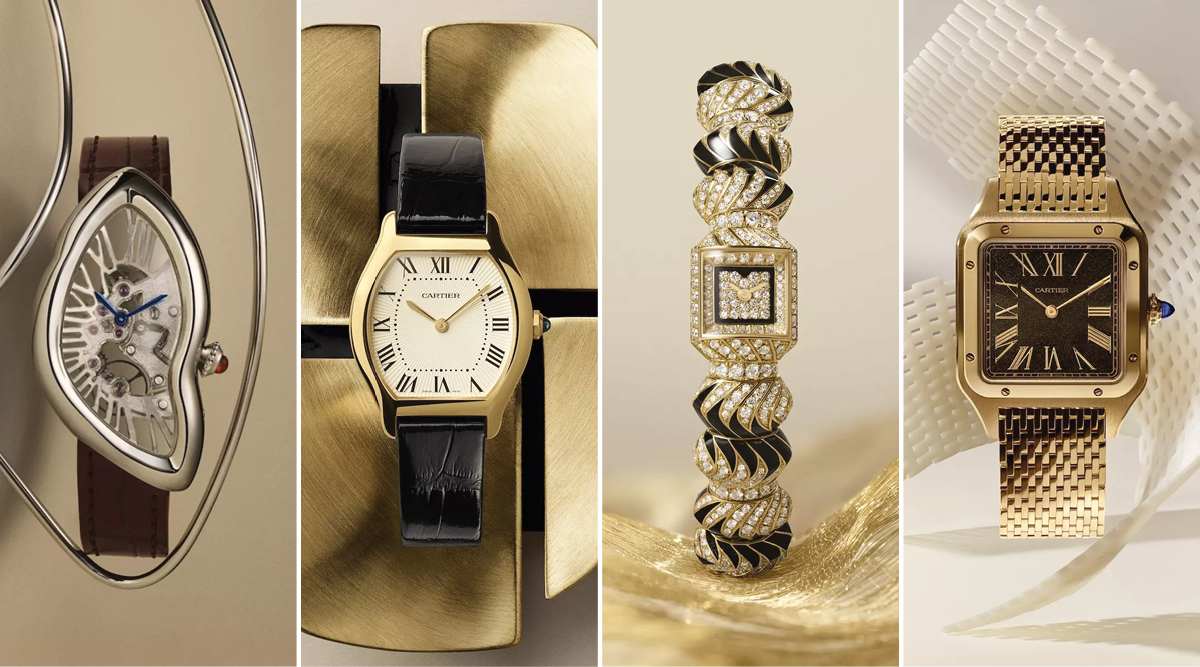
Few maisons arrive at Watches and Wonders with the kind of authority Cartier commands. The shapes alone, the Crash, the Santos, the Tortue, the Baignoire, the Roadster, are among the most recognised silhouettes in the history of watchmaking, and in 2026 Cartier does something impressive with that inheritance. Rather than resting on it, they interrogate it. Every canonical form returns, but each one has been taken apart, reconsidered, and rebuilt with fresh conviction. The shape theme running through this year’s collection is not a retrospective exercise. It is a confident statement of intent, and wearing several of these pieces in Geneva, it lands exactly as intended.
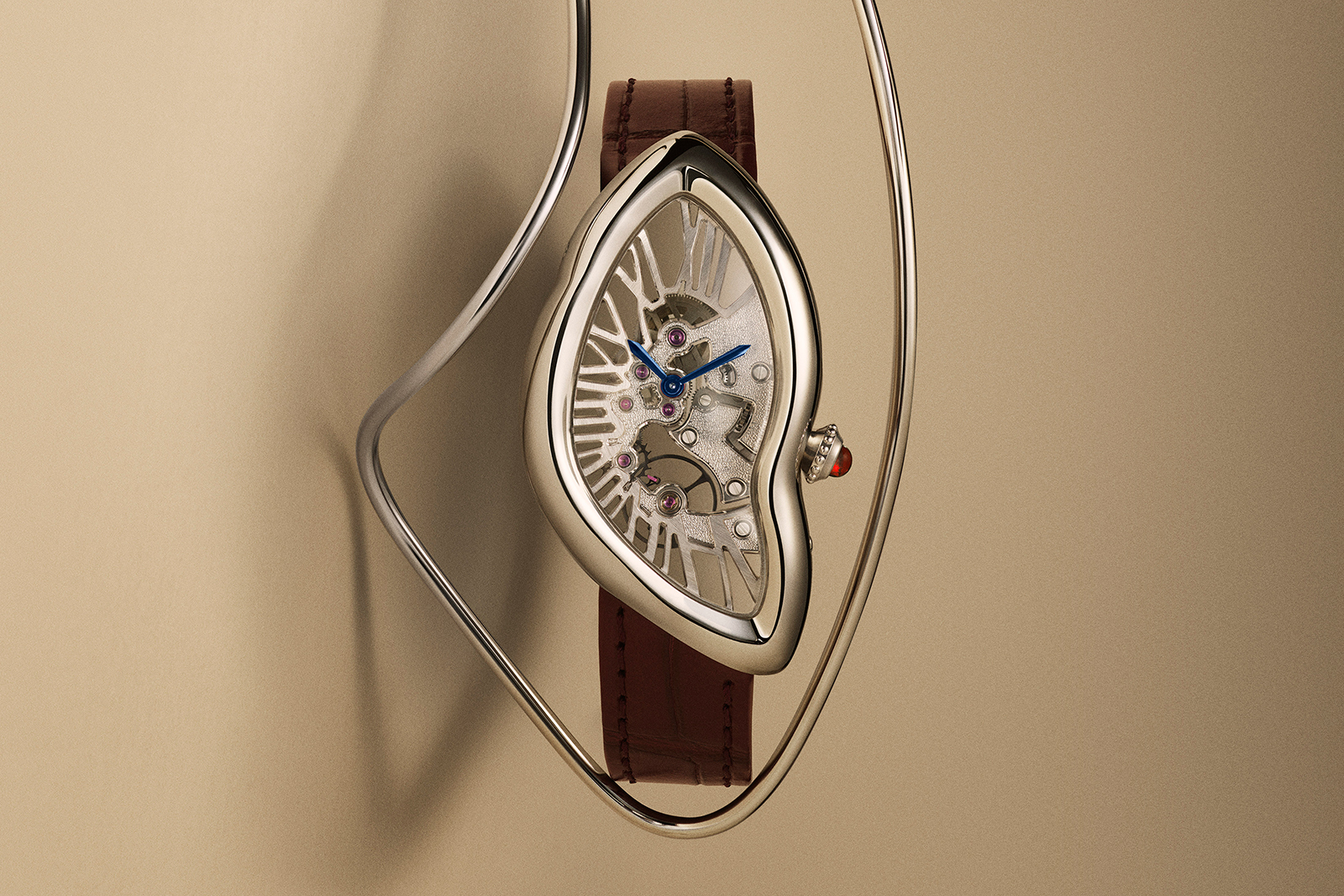
Cartier Privé Les Opus: Crash Squelette
The Crash has been winning auctions and unsettling people in the best possible way since 1967, when a fire-damaged Baguette watch allegedly inspired its distorted case. The origin story may be partly apocryphal. The watch is real, and in skeleton form for the Privé Les Opus tenth edition, it becomes something that stretches the definition of what a dial can even be. The Manufacture 1967 MC movement is visible through the case, its bridges hand-hammered into the forms of Roman numerals, 142 components arranged within a shape that offers them none of the usual spatial courtesies. Platinum throughout, with burgundy on the strap, dial details and the ruby cabochon crown, a detail shared across all three Les Opus pieces this year. Limited to 150. The most technically involved Privé release to date, and the one everyone in Geneva was talking about. The tenth edition also returns the Tank Normale and the Tortue Chronographe Monopoussoir in platinum with the same burgundy accent, completing a trio that reads as a deliberate survey of Cartier’s formal vocabulary.

Roadster
The Roadster was introduced in 2002 and left the catalogue without much ceremony. Its return in 2026 is more triumphant. As someone with a longstanding appreciation for a well-proportioned dial, this is the piece from the Cartier presentation I could wear every day. The trapezoidal case, the large tactile conical crown, the speedometer-inspired striated dial: all present and better than I remembered. Proportions, finishes and ergonomics reworked by over 100 artisans, available in steel, yellow gold and two-tone. A watch that spent two decades away and came back with its point of view intact.
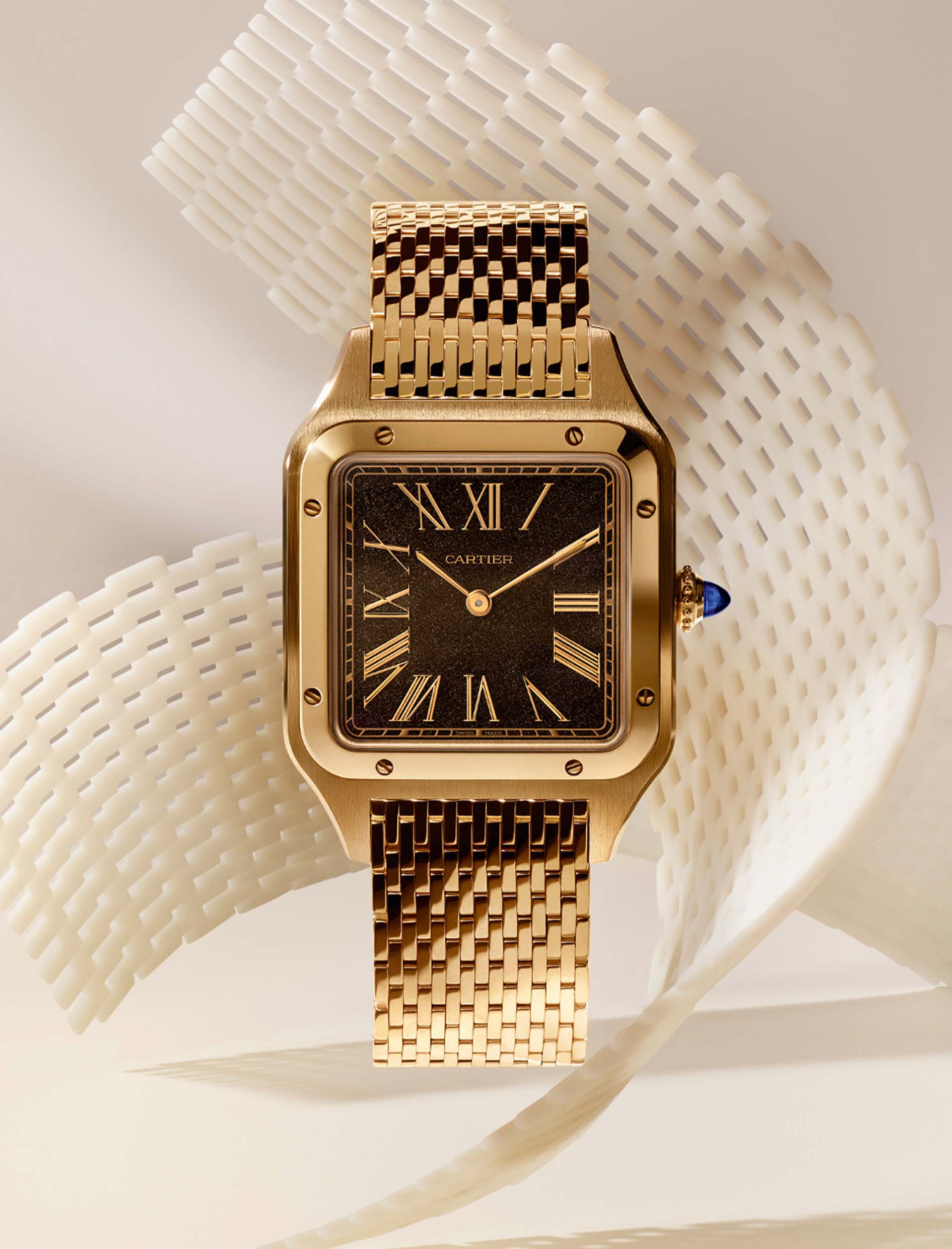

Santos-Dumont Large in Yellow Gold
The dial is the reason to stop. Polished obsidian from Mexico, sliced to 0.3mm, trapping tiny air bubbles as it forms, each one giving the surface a unique iridescent quality that shifts through different shades depending on the light falling across it. No two dials are identical, which feels appropriate for a watch this considered. The fine-mesh bracelet, with 394 individual links referencing Cartier’s flexible gold bracelets of the 1920s, adds an elegance that carries the whole piece. One of those releases that photographs well but rewards the in-person encounter more.

Santos de Cartier Chronograph
The Santos de Cartier Chronograph scales to 47.5 x 39.8mm with a reworked dial in alternating satin and sunray finishes, three subdials with gold or rhodium rings, and the automatic 1904-CH MC movement. Available in steel, two-tone and yellow gold, each with a second strap and both SmartLink and QuickSwitch systems. More instrument than icon, and the revised proportions make that distinction sharper.
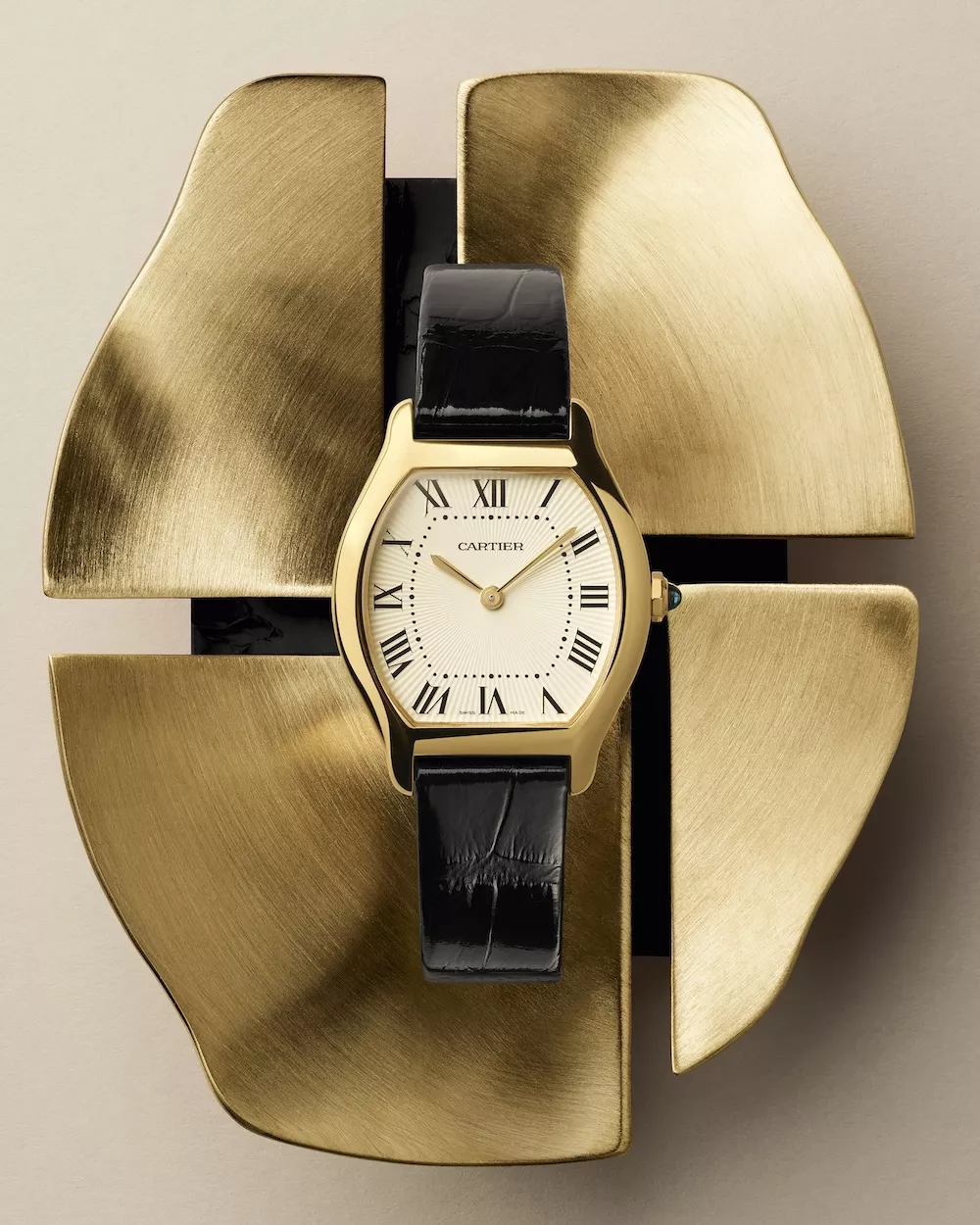
Tortue
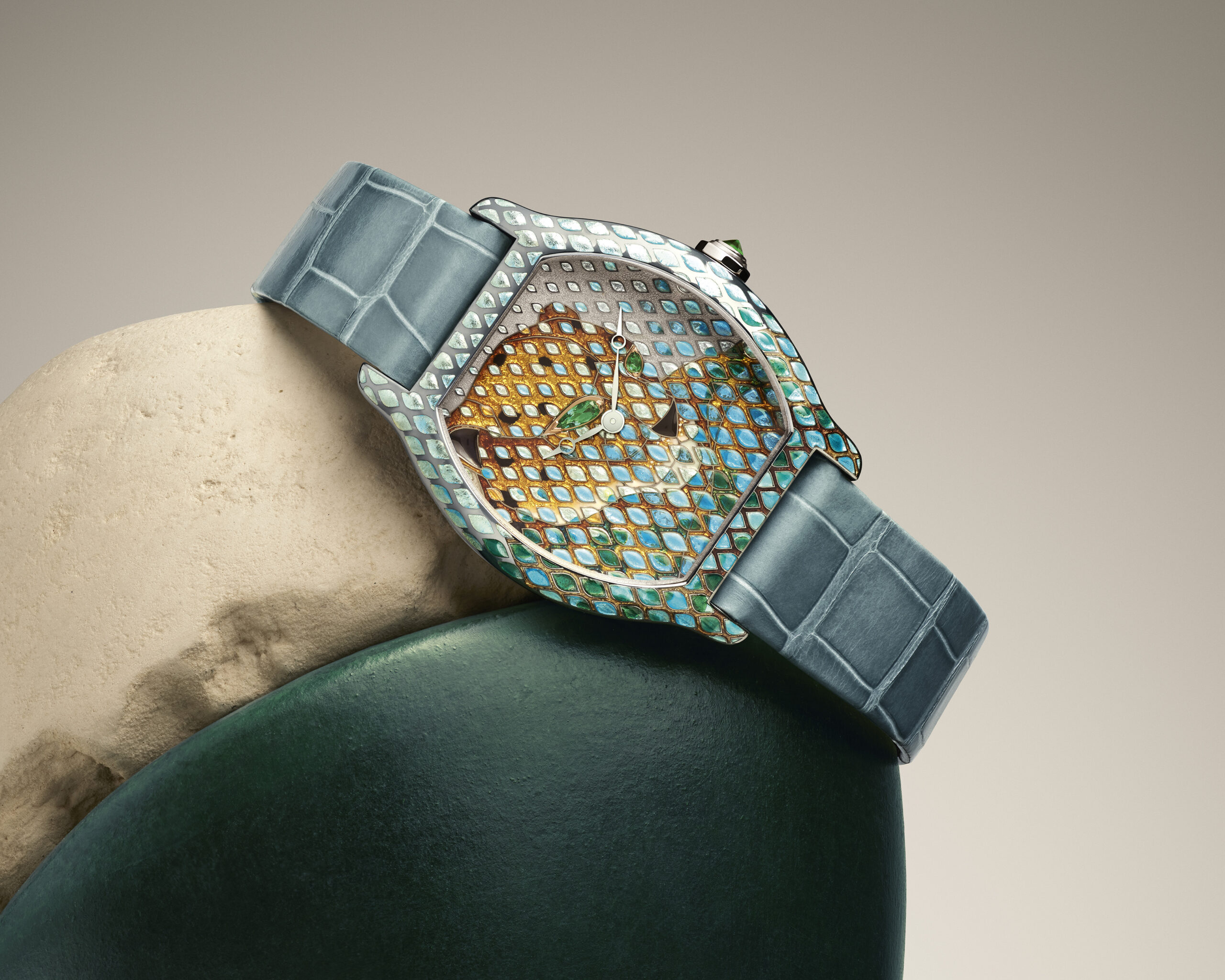
The Tortue needs no introduction. The 2026 version arrives with softened and enlarged proportions, the traditional guilloché dial replaced by an embossed relief motif, and the rail track simplified to a row of dots drawn from an archive piece from 1922. Five versions across yellow, white and rose gold. A platinum model with 46 baguette-cut stones on the bezel. And the Tortue Panthère Métiers d’Art in champlevé enamel, extending the panther motif from dial to case middle, limited to 100 pieces in each of white and yellow gold. The connoisseur’s choice, as it has always been, and the Panthère edition in particular, is not one to overlook.
Baignoire with Clou de Paris
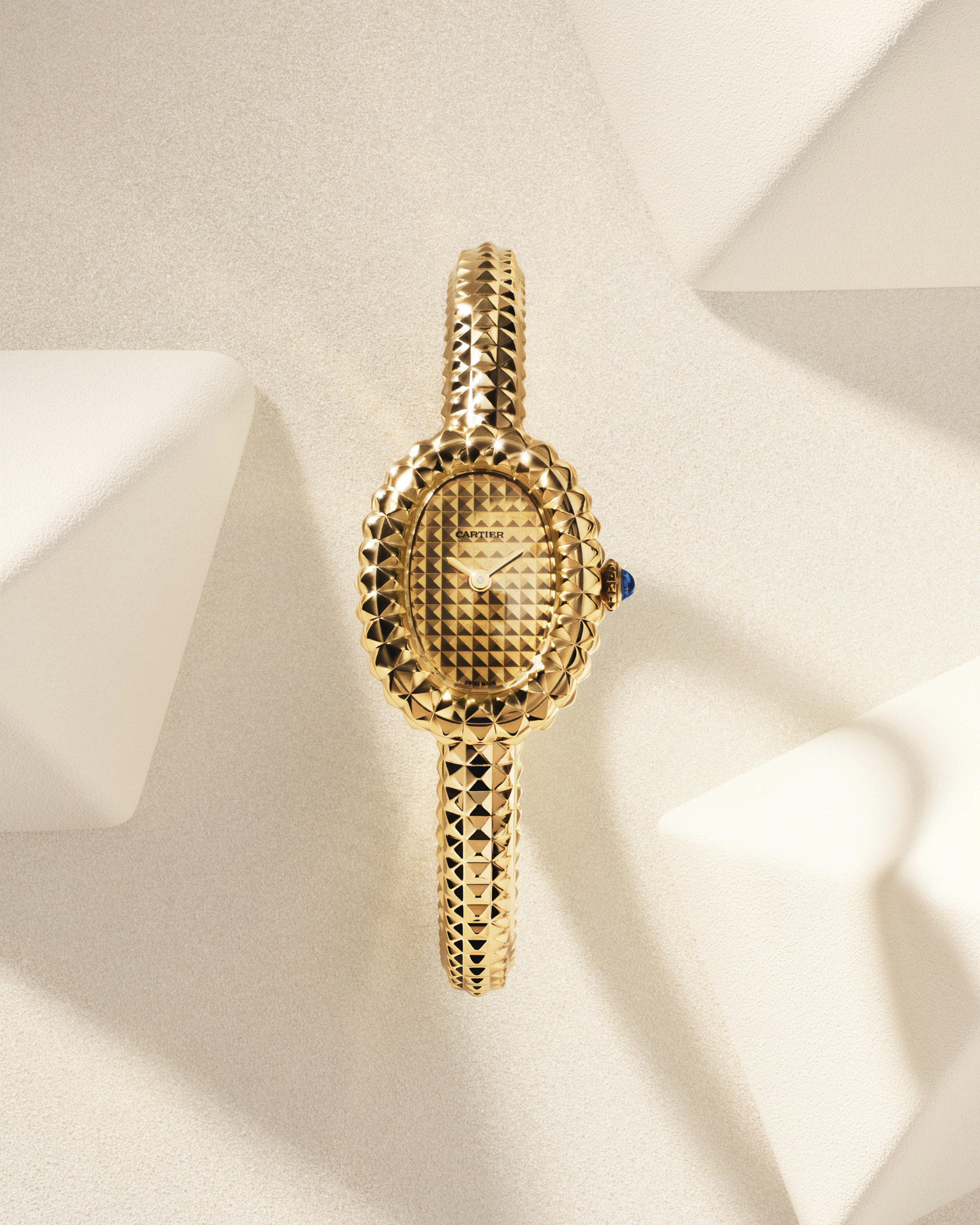
The Baignoire has long been a personal favourite, and the 2026 iteration is the one I have been waiting for. The Clou de Paris hobnail motif, pressed across the case, bracelet, and dial, adds a graphic, geometric dimension that makes it impossible to ignore on the wrist, catching the light in a way that feels new for this watch while remaining unmistakably Cartier. In person, it is tactile and compelling in equal measure. A must-have addition to the collection, and one I suspect will be difficult to get your hands on quickly.

Myst de Cartier
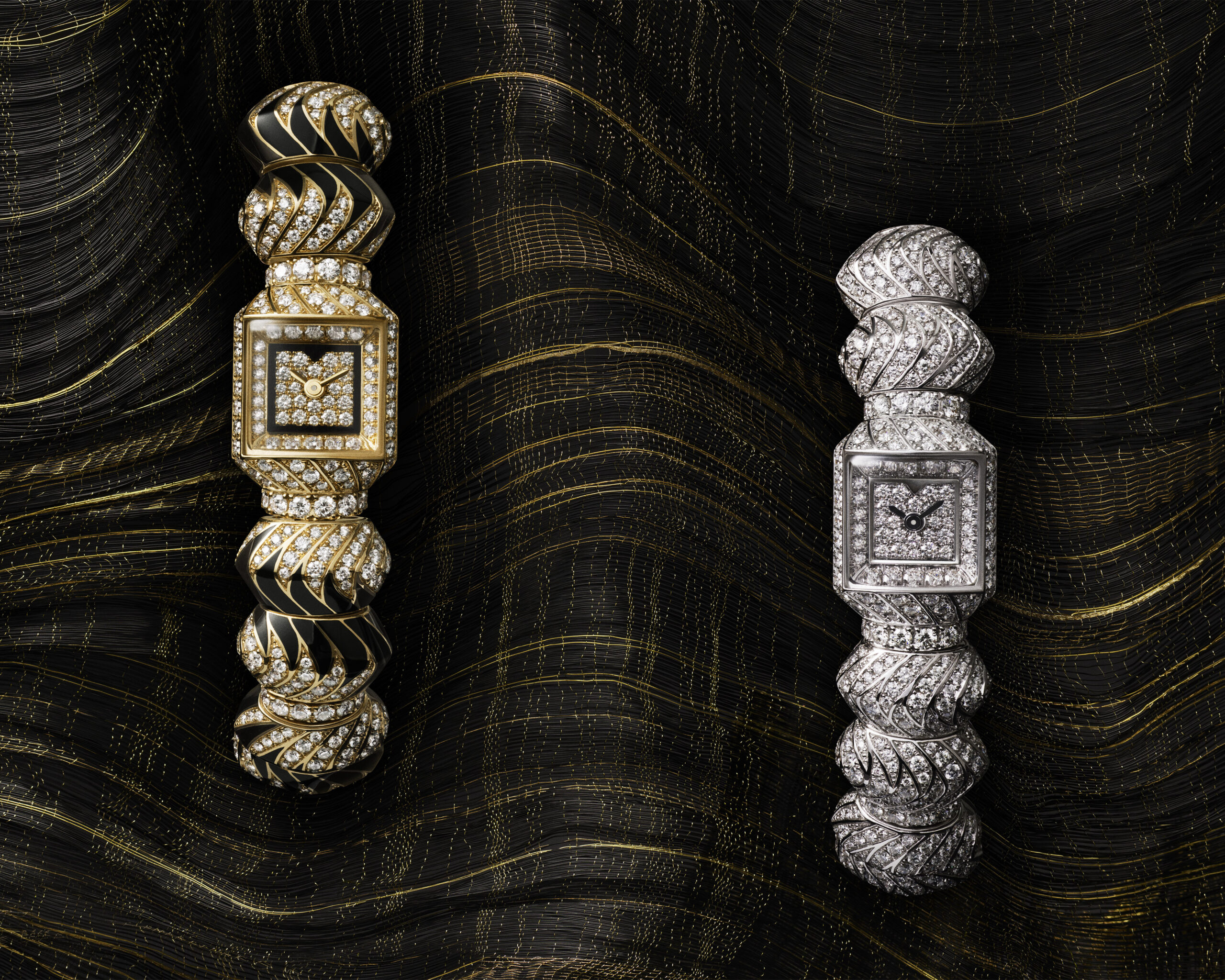
For moments when time should not really matter. The Myst de Cartier does not fasten. It slides over the wrist, structured as a flexible bracelet of alternating talisman modules with a square case sitting quietly at the centre. On the yellow gold version, 634 brilliant-cut diamonds are paired with hand-painted black lacquer, applied individually at the Maison des Métiers d’Art in Switzerland, and 30 hours of gem-setting produce a depth that has to be seen to be understood. The white gold version features the same architecture, set with 986 diamonds. Everyone deserves a piece of jewellery that also happens to tell the time, and this is Cartier’s most elegant argument for it.
Cartier is available through Partridge Jewellers