


Universally recognised for its timeless designs, storied history, and the cultural weight it carries, Rolex is a name known even to those who claim complete watch-novice status. And while the house has long set the standard for refined, versatile timepieces rendered in classic tones, its colourful references have quietly become some of the most sought-after watches in the collection, proving that a bold dial is one of the most compelling ways to make a Rolex distinctly your own.
If you already own a Rolex, or keep a few on rotation and are considering your next, we’d encourage you to look beyond the classically neutral comfort zone. From turquoise stone dials on the Day-Date to matte pistachio on the Oyster Perpetual, Rolex’s current catalogue is rich with colour, and every option is worth your attention.
The Oyster Perpetual: where it starts
If Rolex has a gateway to colour, it’s the Oyster Perpetual, the house’s purest expression of time-only watchmaking, rendered in Oystersteel with nothing to distract from the dial. In 2020, Rolex sent the watch world into a tailspin with a range of glossy, saturated dials, candy pink, coral red, turquoise blue, bright yellow, that created queues, grey-market premiums, and an entirely new audience for what had been considered an entry-level reference.
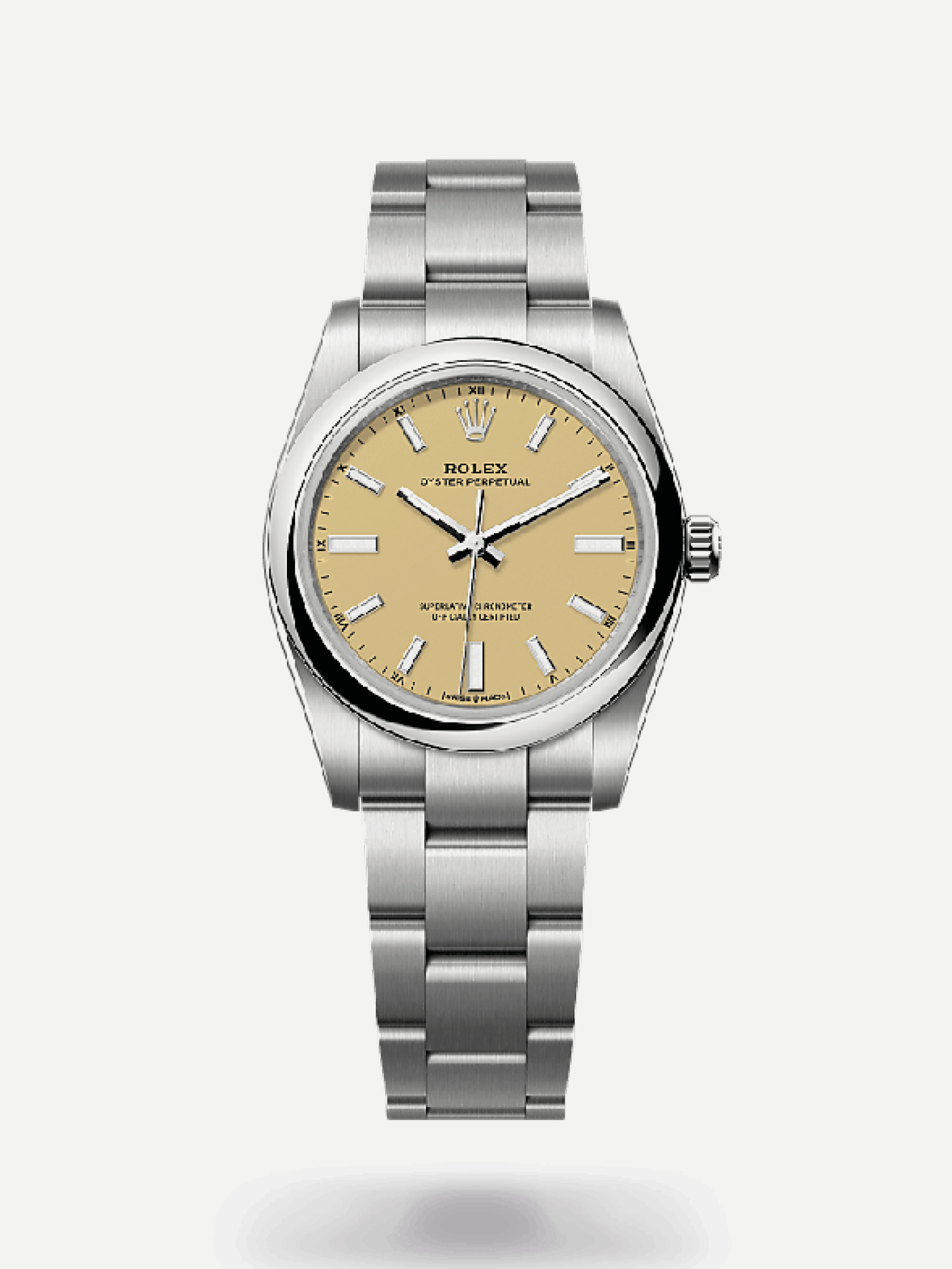
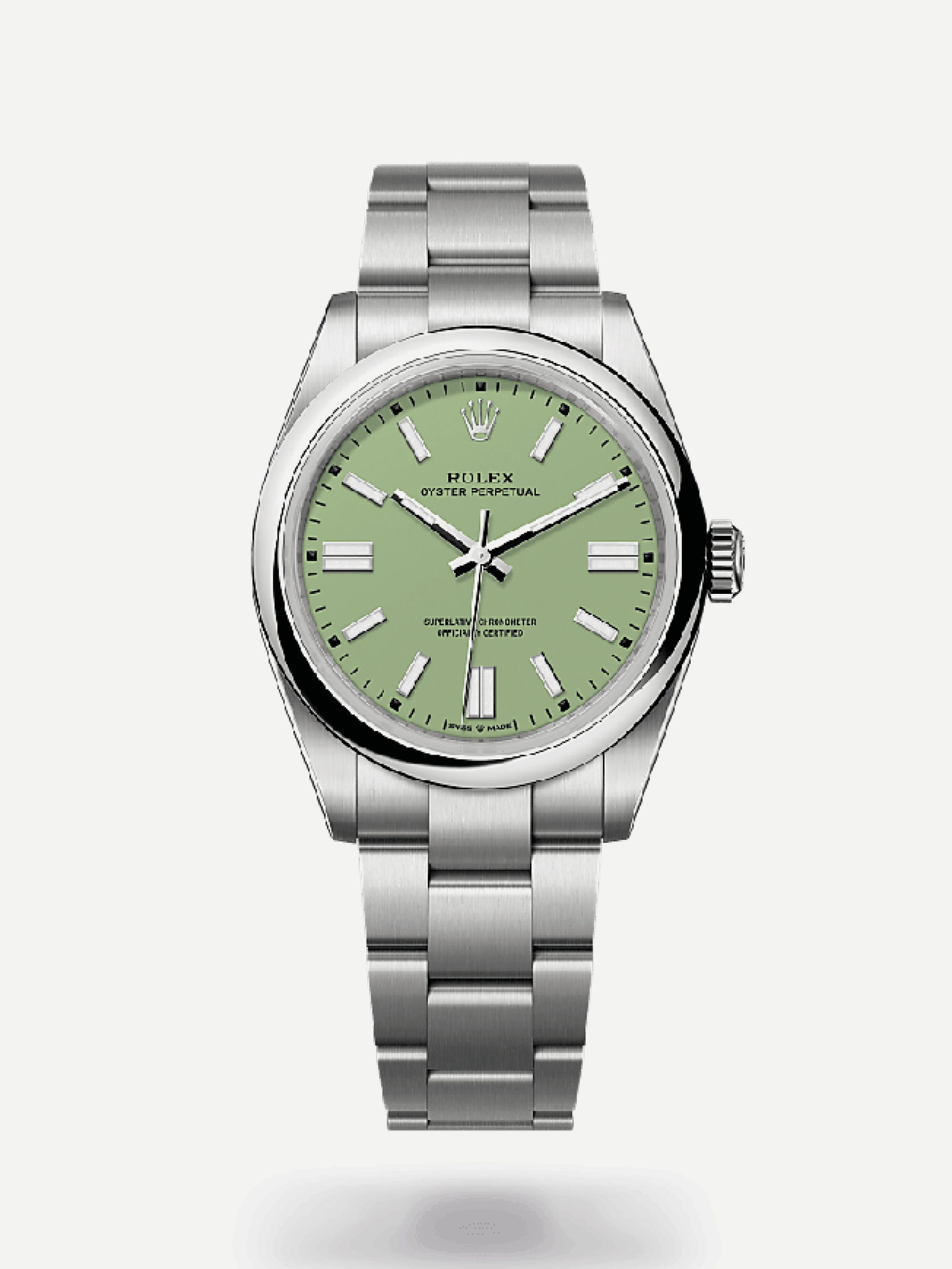
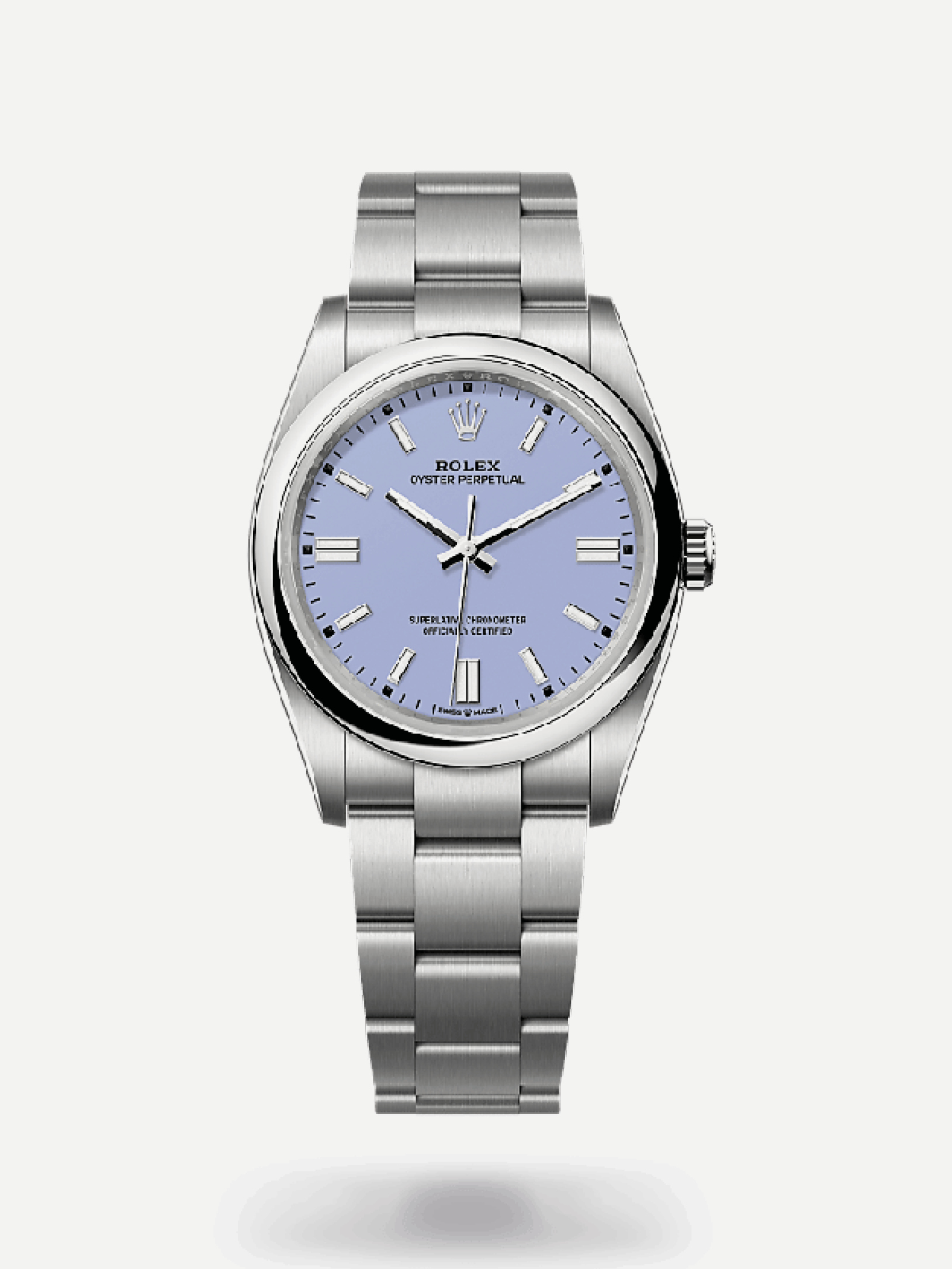
In 2025, Rolex shifted register. The saturated dials were largely retired, replaced by a trio of matte lacquer finishes in pistachio green, sandy beige, and lavender, softer, more considered, and finished with a texture that scatters light rather than reflecting it. The effect is closer to the shell of a French macaron than the gloss of a sports car. Available across the 28mm, 31mm, 34mm, 36mm, and 41mm cases, these are watches that feel quietly modern without demanding attention. The pistachio, in particular, has already become one of the most sought-after Oyster Perpetuals in recent memory.
For anyone testing the waters of a colourful Rolex, this is the place to begin, the price of entry is accessible by Rolex standards, the steel construction means it wears without preciousness, and the matte pastel palette is the kind of understated confidence that makes people look twice without quite knowing why.
The Day-Date 36: Rolex’s most expressive canvas
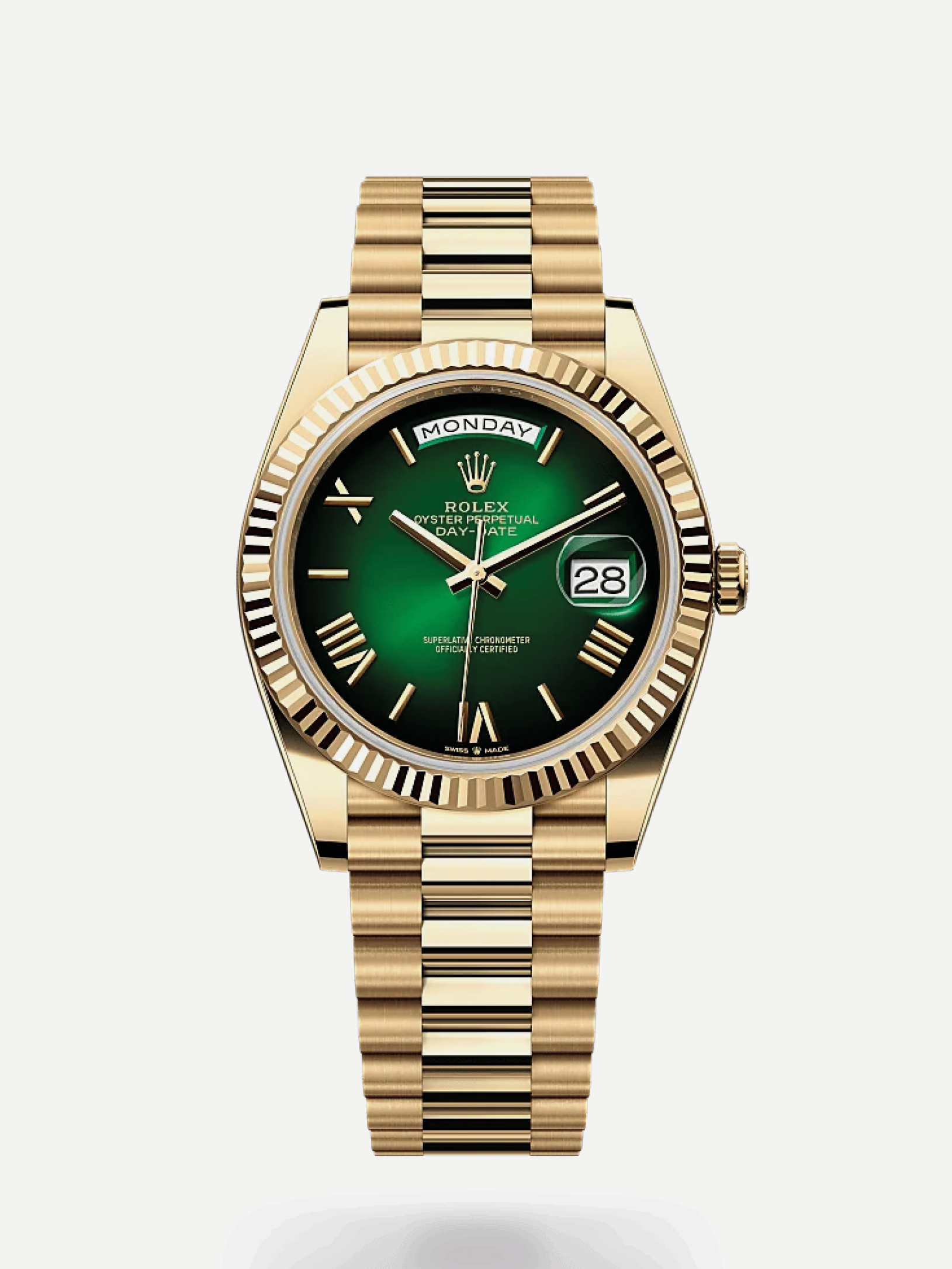
Where the Oyster Perpetual democratises colour, the Day-Date claims it as a birthright. This has always been Rolex’s creative playground, the only collection produced exclusively in precious metals, and the one where the house has historically taken its most adventurous dial risks. Stone dials, meteorite faces, ombré gradients, if Rolex is going to experiment, it happens here first.
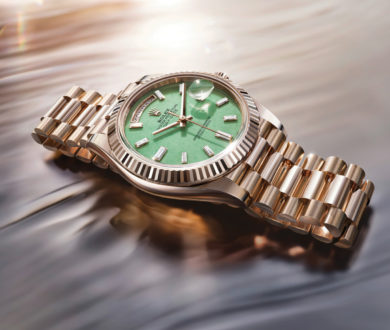
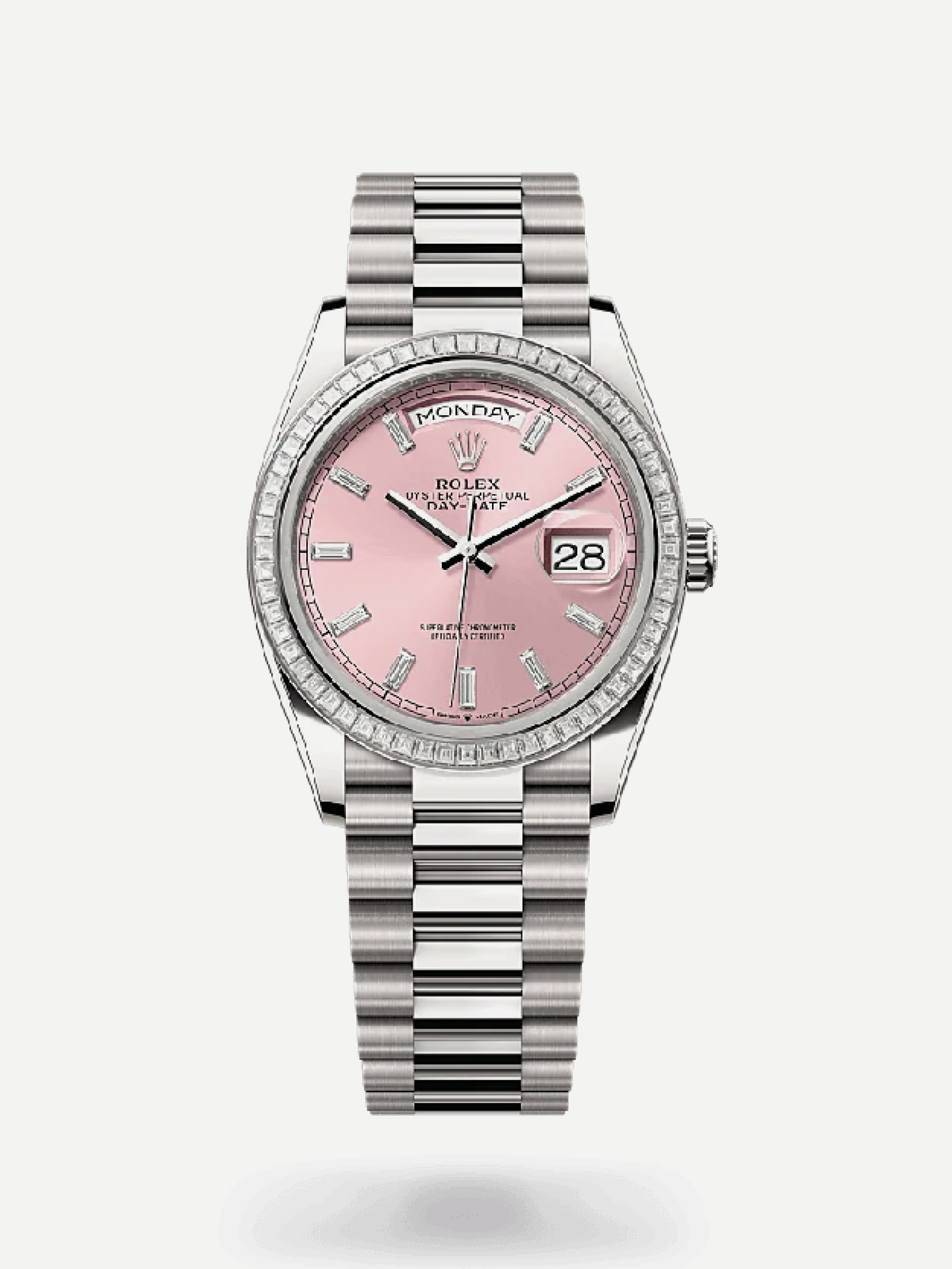
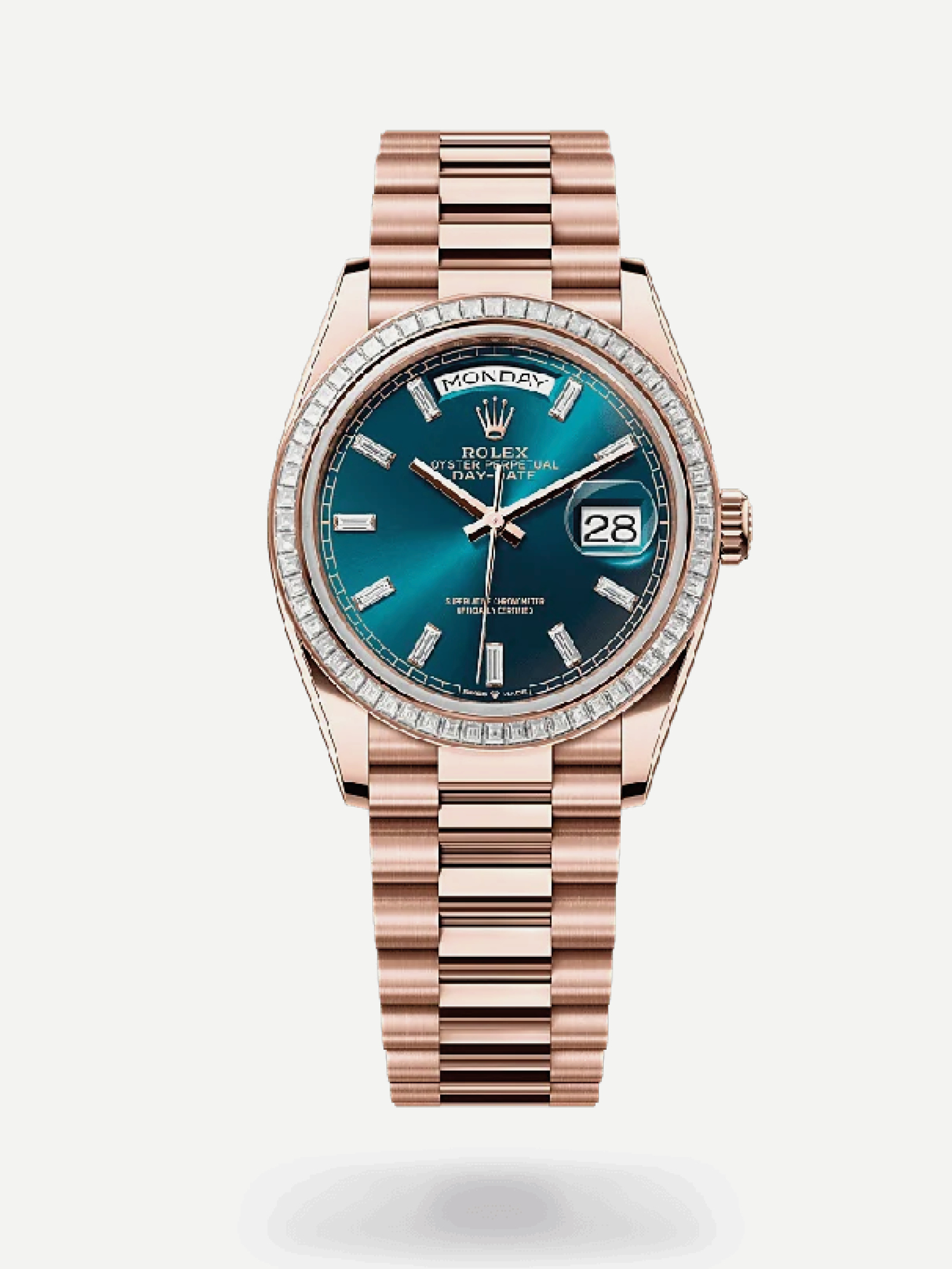
The current Day-Date 36 catalogue reads like a jeweller’s colour chart. The turquoise stone dial, carved from natural turquoise and paired with diamond-set hour markers, remains one of the most striking watches in the entire Rolex range, available in yellow gold, Everose gold, and platinum configurations. There’s a carnelian dial in warm burnt orange for the yellow gold model, and a green aventurine with its fine crystalline shimmer for Everose gold. Each stone is unique, which means each watch is, in practice, a one-of-one.
For those drawn to colour without the commitment of semi-precious stone, the Day-Date also offers lacquered dials in bright blue, olive green, and champagne across its gold and platinum variants. The rainbow sapphire-set bezel models, with ten baguette-cut sapphires graduating through the colour spectrum, take the concept further still, though these sit firmly in the realm of statement jewellery rather than everyday wearing.
The Cosmograph Daytona: colour with consequence
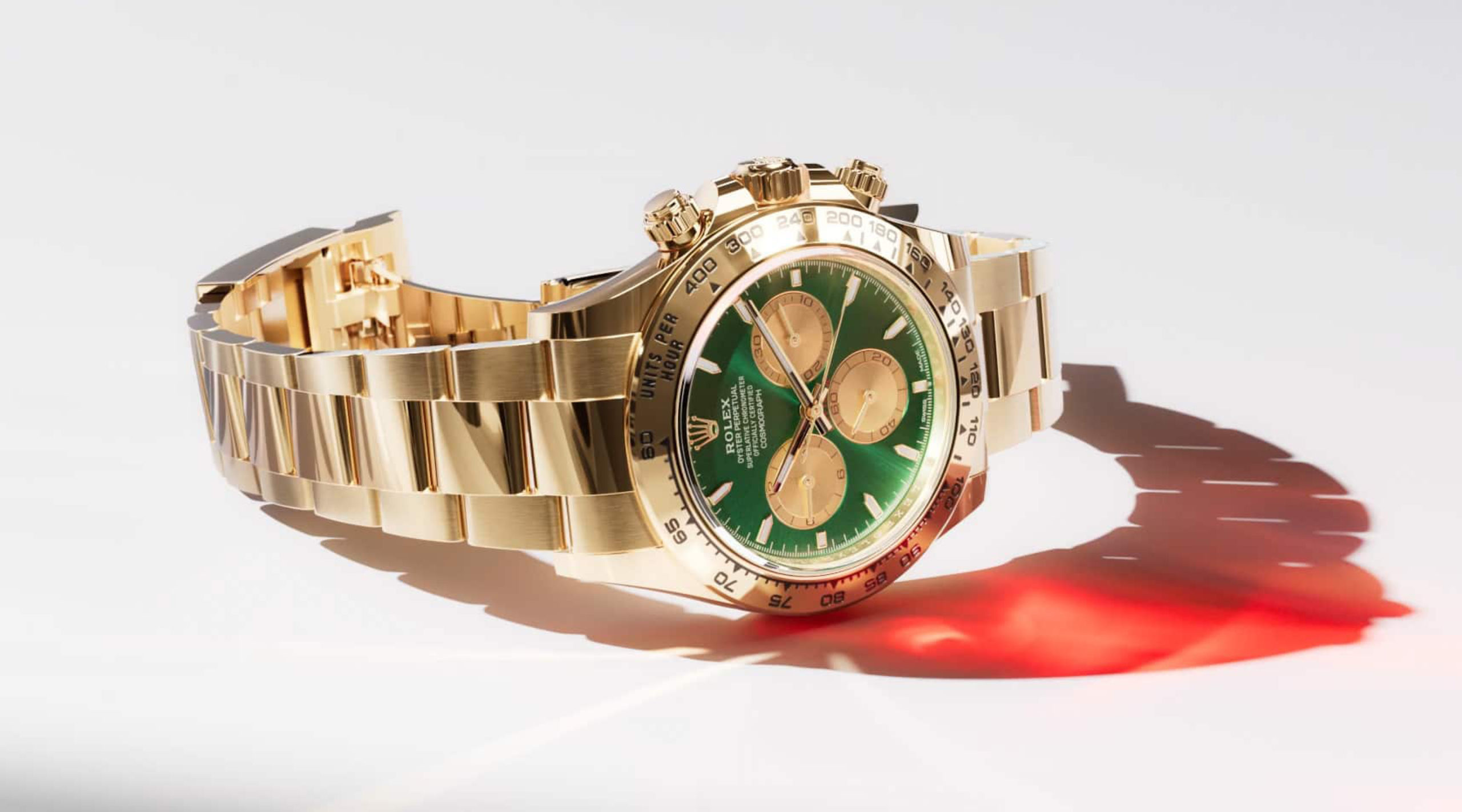
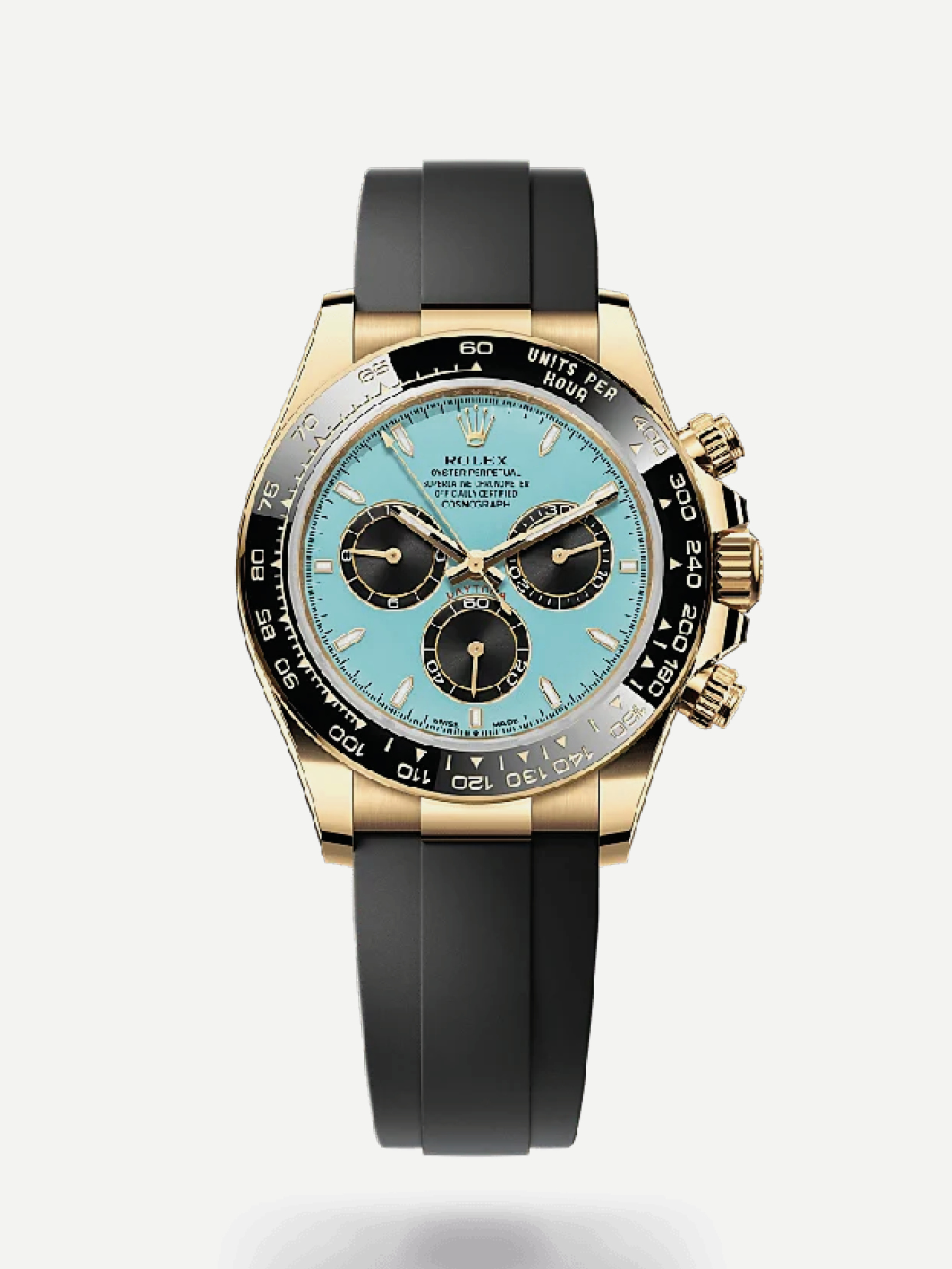
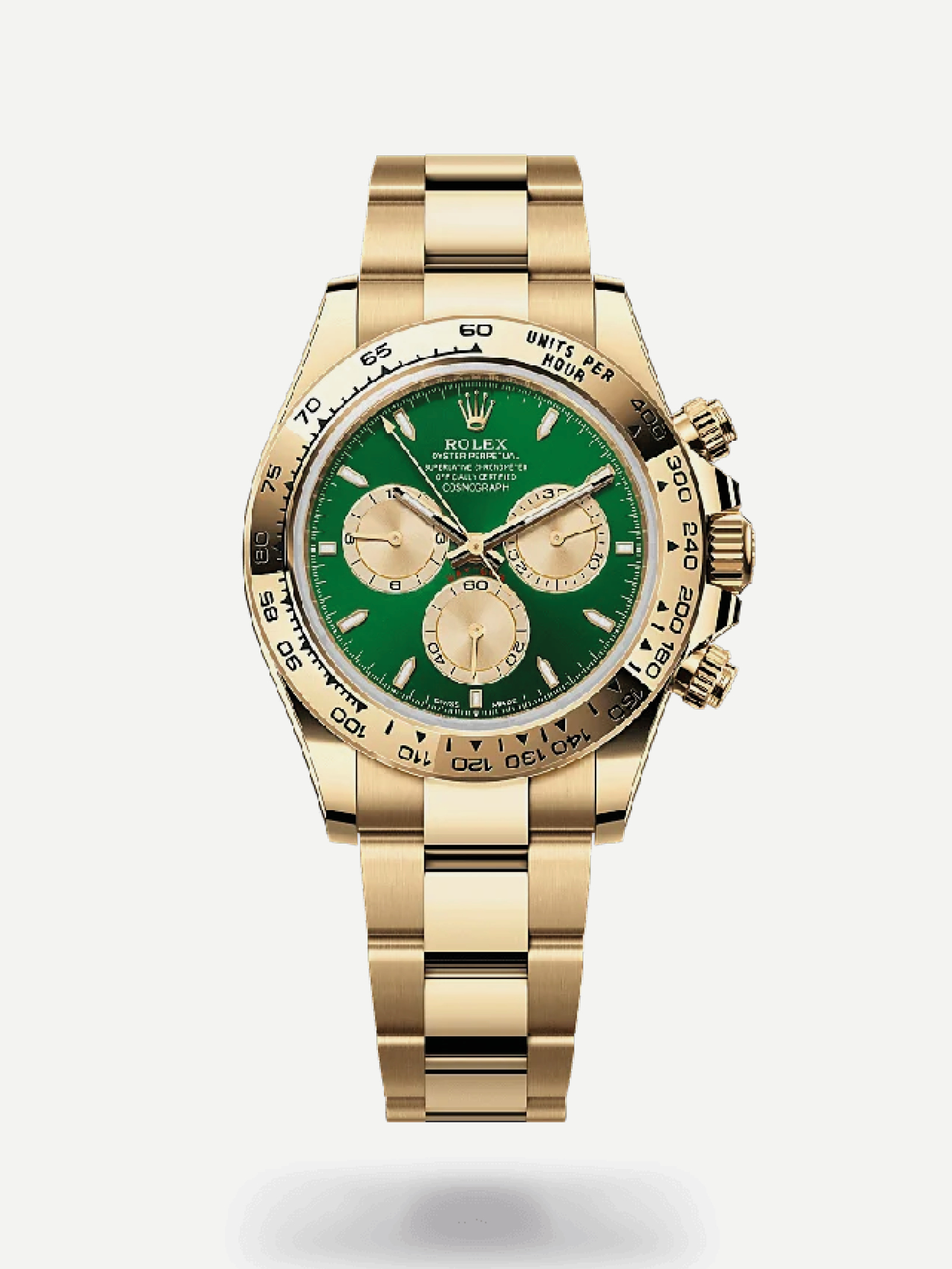
If the Day-Date is Rolex’s colour laboratory, the Daytona is where colour becomes mythology. The previous-generation reference 116508, an 18-carat yellow gold Daytona with a vivid green sunburst dial, earned the unofficial title of the “John Mayer” Daytona after the musician championed it publicly, and when Rolex discontinued the entire 116-series Daytona line in 2023, secondary market prices surged.
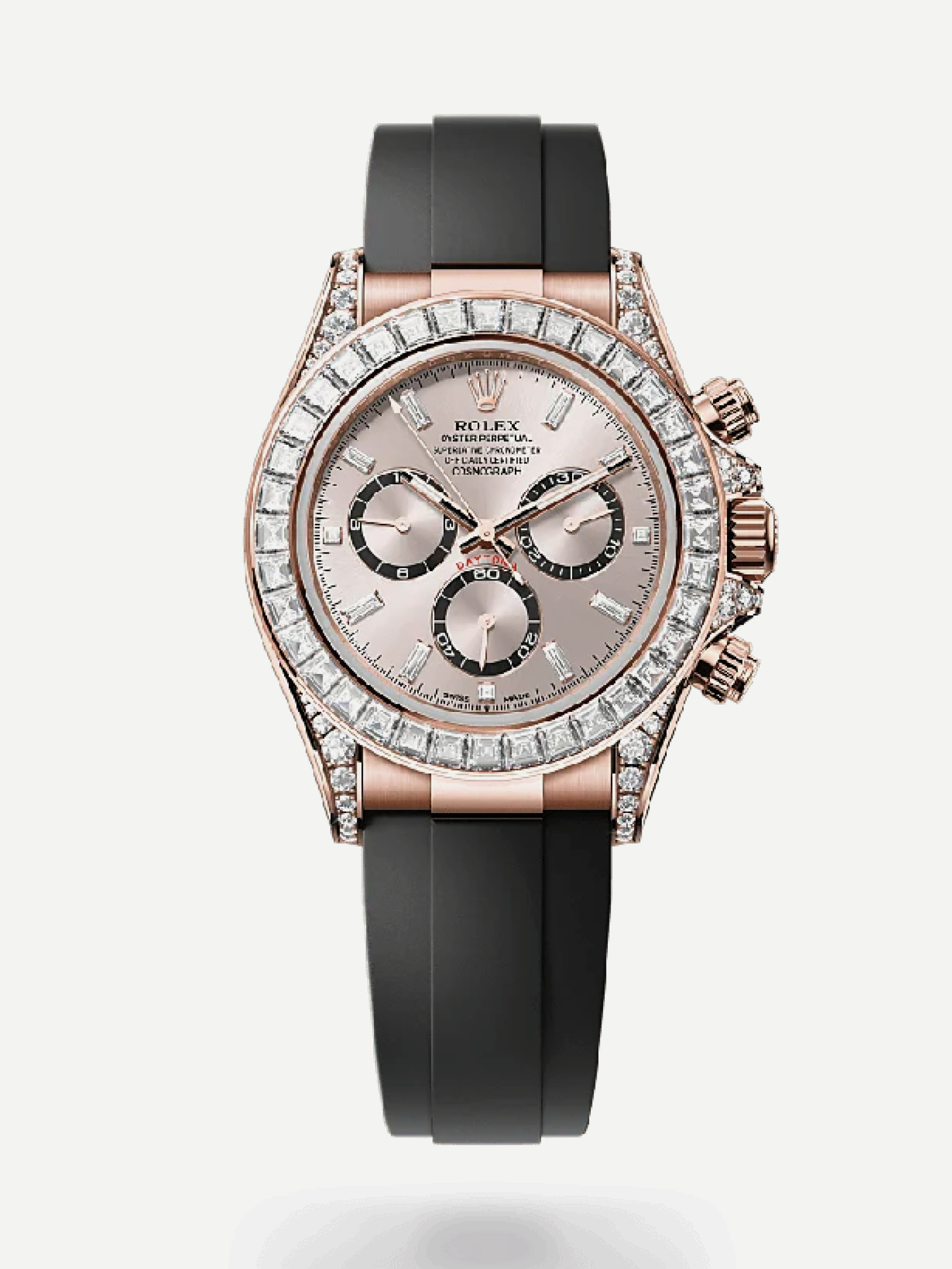
Its successor, the reference 126508, arrived in 2025 with an updated case profile, revised dial proportions, and Rolex’s newer calibre 4131 movement. The green-and-gold combination returned, though the dial finish has been subtly recalibrated, and the secondary market responded immediately, with examples trading at multiples of their retail price. An Everose gold Daytona with a meteorite dial has joined the current lineup, too, each face cut from the remnant of a disintegrated asteroid, making it among the more extraordinary dials in production watchmaking.
The Daytona proves that colour on a Rolex isn’t merely decorative. The right dial on the right reference becomes a cultural moment, and, for those fortunate enough to secure one, an appreciating asset.
The Datejust: colour for your every day
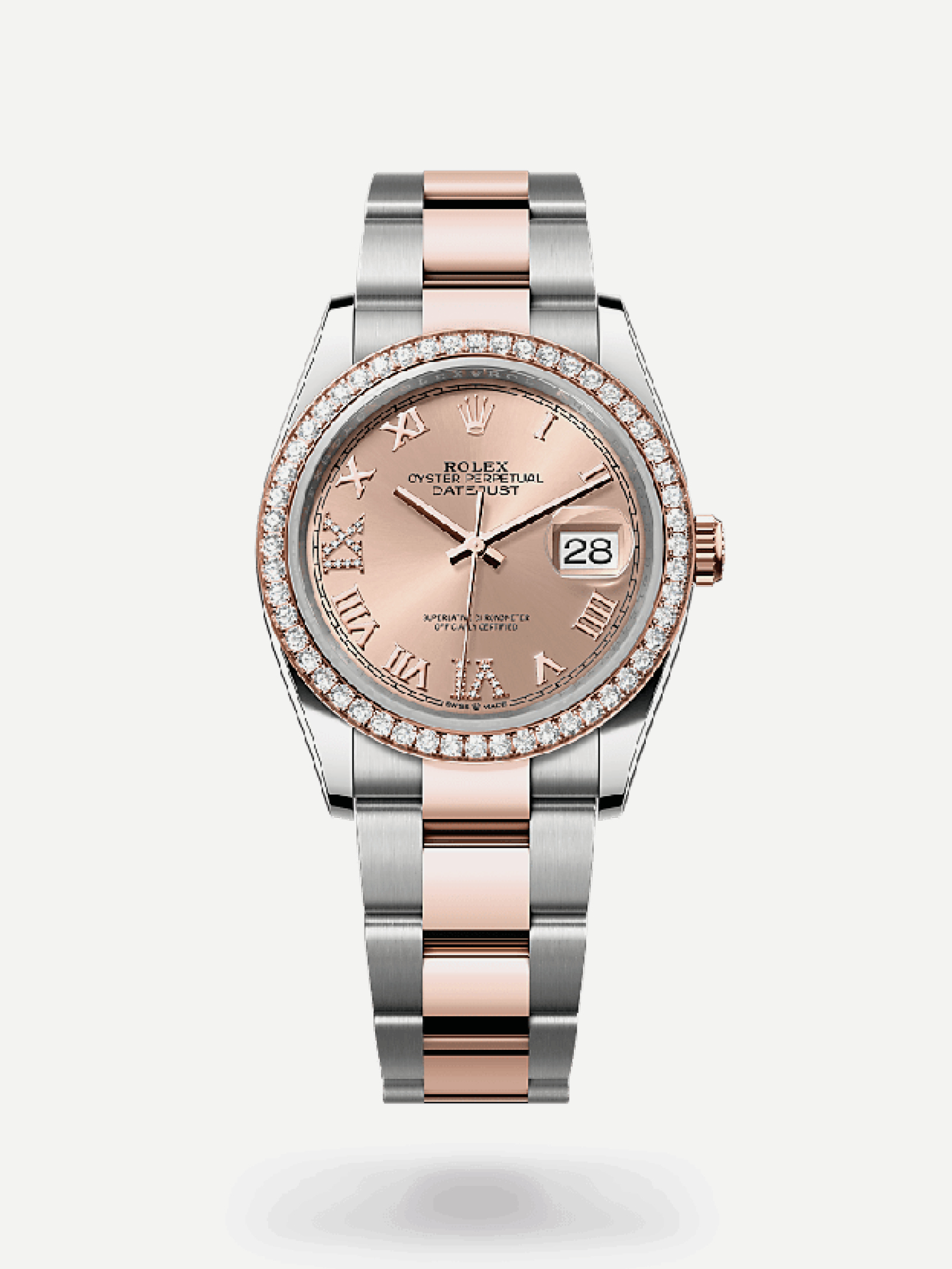
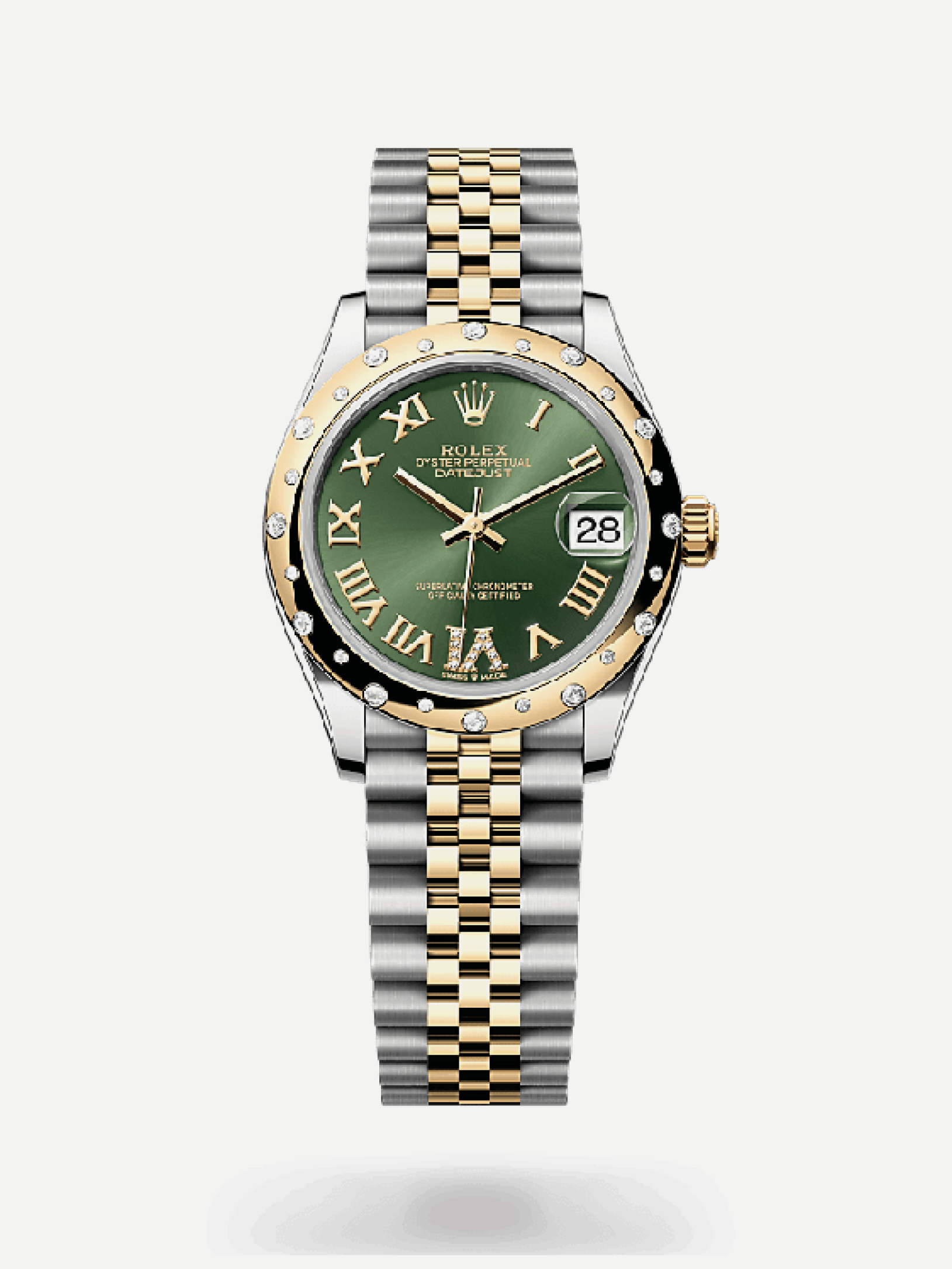
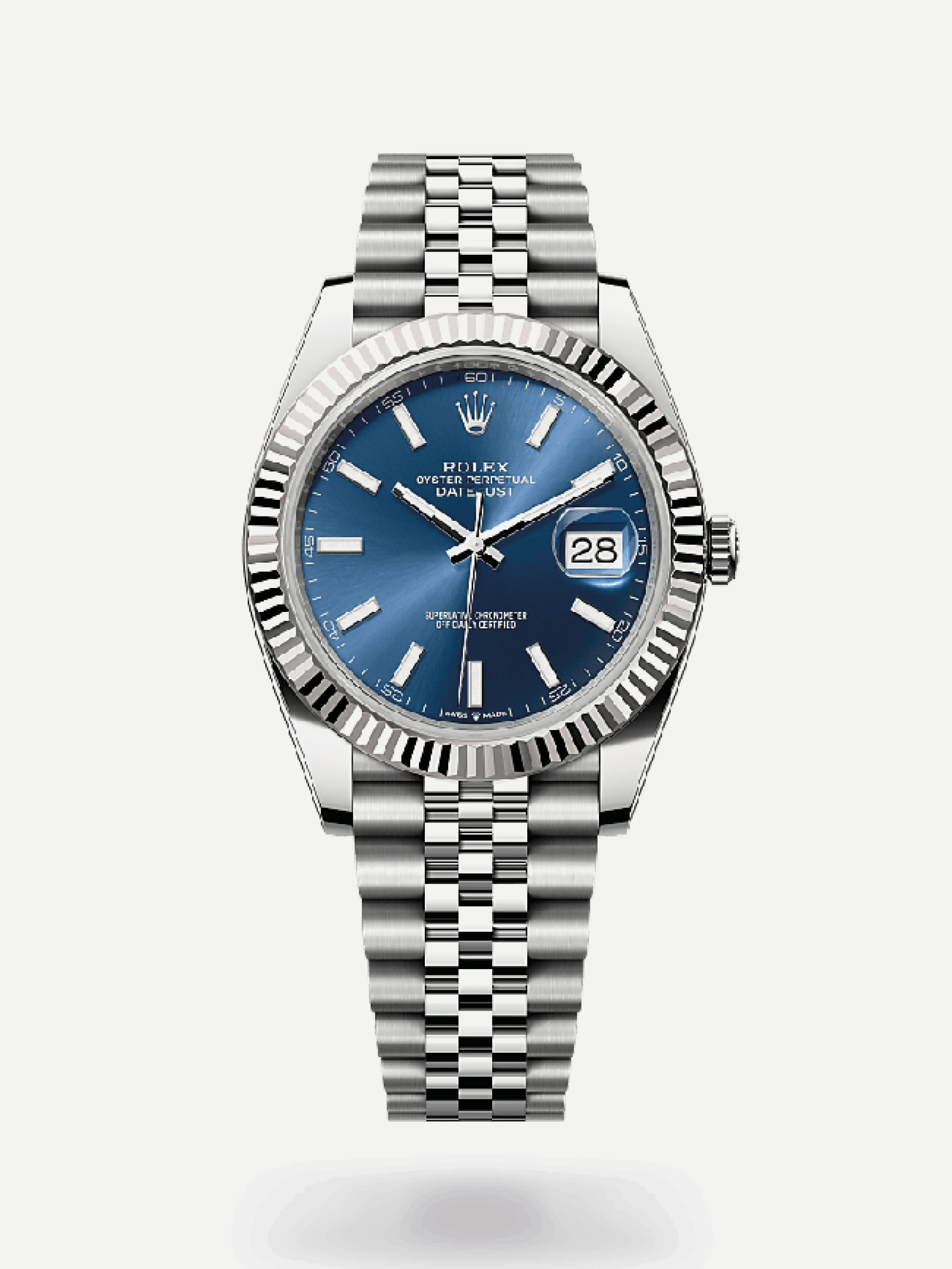
Not every colourful Rolex needs to announce itself. The Datejust, Rolex’s most versatile collection, has been absorbing colour in subtler ways. The Datejust 31 now features a red ombré dial that transitions from a fiery centre to deep darkness at its edges, enhanced by a diamond-set bezel. Mint green, palm-motif, and aubergine dials appear across the Datejust 36 and 41 in various metal and bezel configurations.
These are watches designed to be worn every day, and their colour choices reflect that, less spectacle, more personality. A fluted-bezel Datejust 36 in Oystersteel and yellow gold with an olive green dial is the kind of watch that becomes invisible to everyone except the people whose taste you trust.