


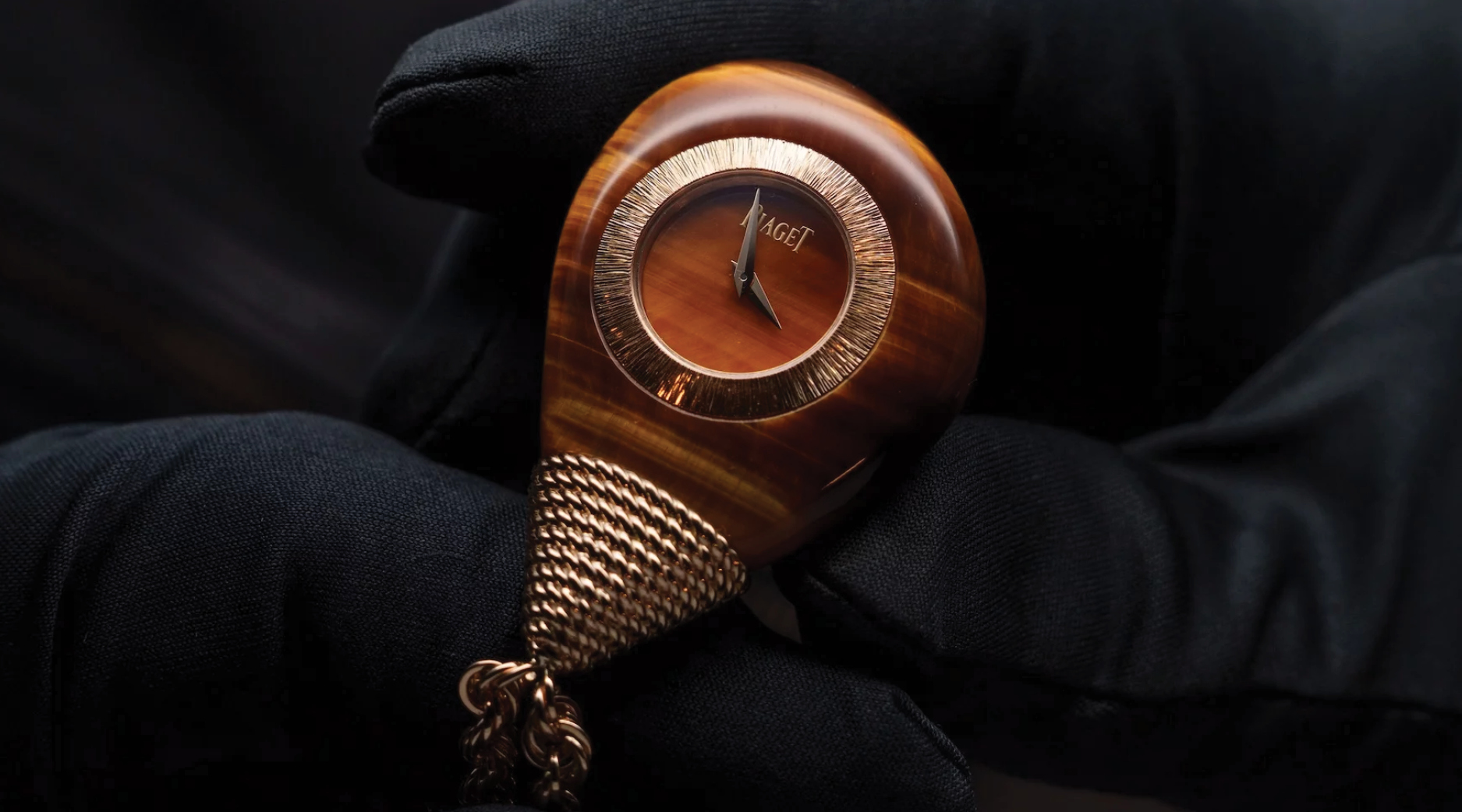
There is a particular kind of design confidence required to hollow out a single piece of semiprecious stone, insert a watch movement, smooth the surface back over, and present the result as a pendant watch on a gold chain. It assumes that the stone is the object, the movement is incidental, and the person wearing it understands the difference between a timepiece and a talisman. This is, and has always been, very Piaget. The Swinging Pebbles collection revisits the spirit of the Maison’s 1969 ‘21st Century Collection’, where watches swung from long gold chains and Yves Piaget’s conviction that jewellery and watchmaking were the same discipline in different materials went largely unchallenged. Seeing the three new pieces in Geneva, that conviction feels as current as ever.
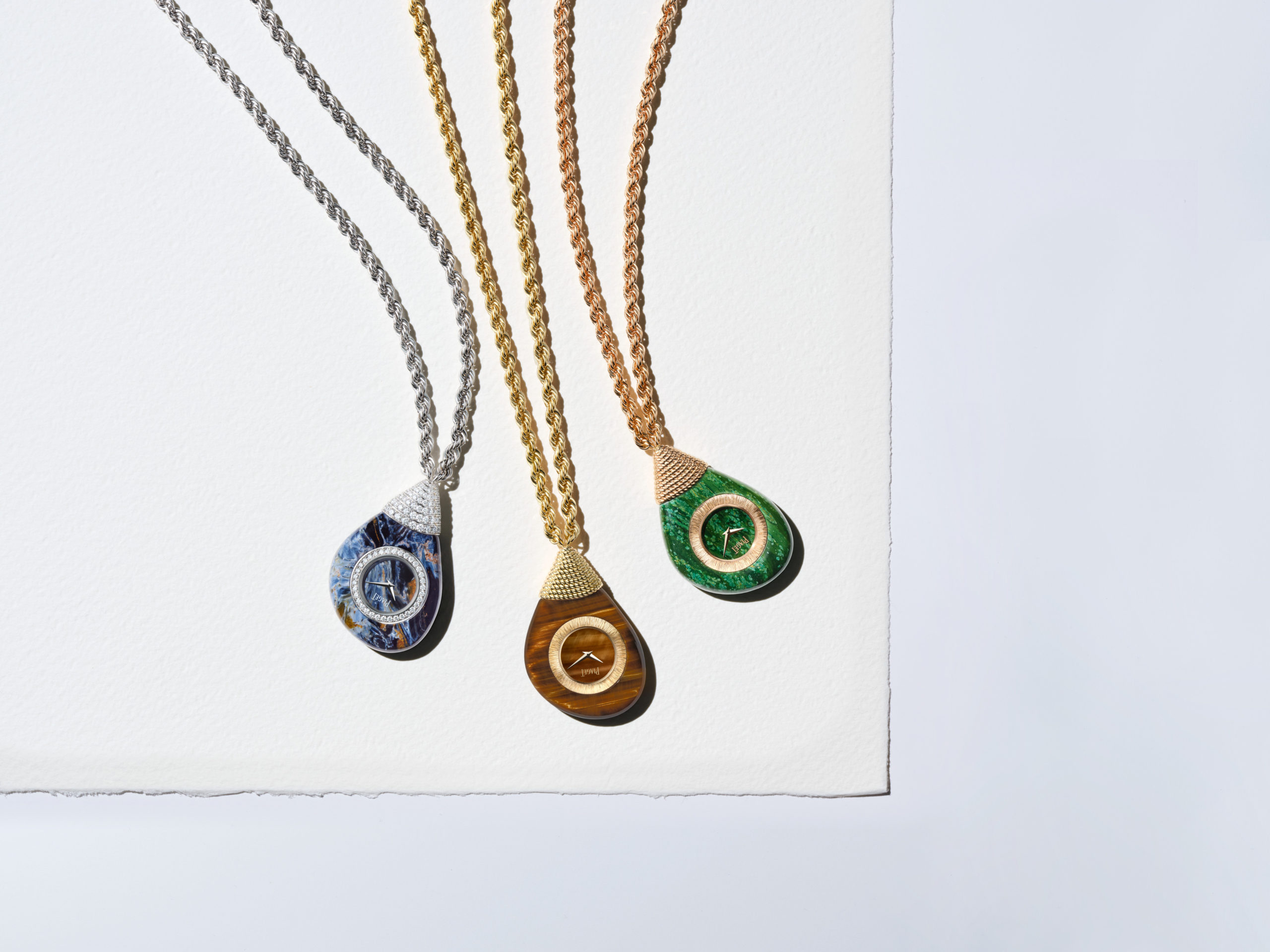
Swinging Pebbles: Tiger’s Eye, Verdite and Pietersite
Piaget creative director Stéphanie Sivrière found the inspiration in the archives: a kimono pocket watch from the early 1970s, made for the Japanese market, sculpted from malachite and described, accurately, as bold, flamboyant and singular. The challenge with the Swinging Pebbles was achieving what Sivrière calls seamlessness: a watch that does not look like a watch with a stone on it, but a stone from which a watch has always been inherent. Each piece is sculpted from a single block, hollowed for the movement’s insertion, then smoothed over so the join disappears. In person, the effect is quietly astonishing.

Tiger’s eye, with its warm bronze chatoyance. Verdite, a rare South African stone in deep forest green. Pietersite, with its turbulent blue-grey and gold inclusions, is sometimes called the tempest stone. Three pieces that wear as jewellery, keep time as watches, and belong primarily to the tradition of Piaget treating both as the same thing.
Piaget is available in New Zealand through Partridge