



Like everything that now falls under the umbrella of ‘wellness’, at some point, drinking water became a full-time job. Between supersized bottles with by-the-hour drinking calibrations, the extolled virtues of electrolyte drinks and ‘smart waters’, and apps devoted to reminding us to do the very thing we’re biologically programmed to do, one of life’s most straightforward tasks has become bizarrely overcomplicated (and over-commodified).
Long before the $6.8 trillion wellness industry set its sights on H2O, there was one simple rule that we unquestioningly took as gospel: drink eight glasses of water daily. So, in 2026, does that number still stand?
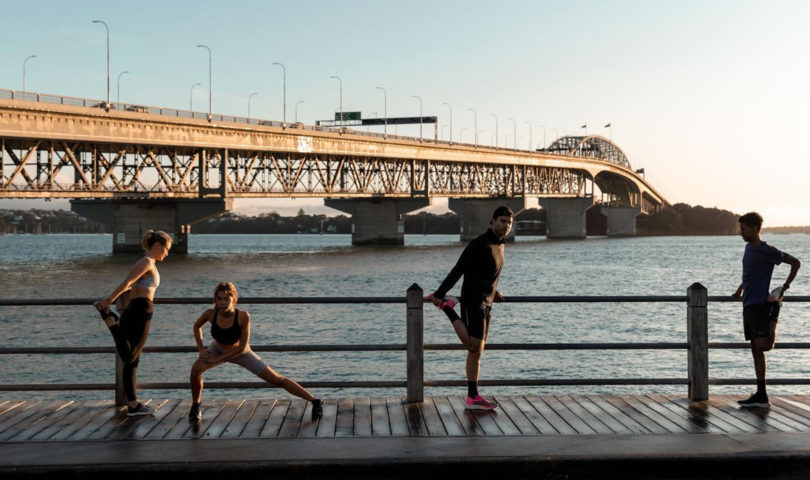
It’s complicated. As a baseline, yes, but as a universal prescription, absolutely not. Think about it: how can hydration needs be the same for everyone, all of the time? Our needs are constantly in flux, dictated by everything from exercise and weather to our health and body size. A long run in Auckland’s humidity is not physiologically the same as an afternoon spent answering emails with the AC blasting, just as our fluid needs at the peak of summer are substantially higher than in the depths of winter. Ultimately, context matters more than a tally.
So, what is the right amount of water to be drinking, roughly? The NHS recommends that adults aim for between 1.5 and 2 litres of fluid per day, but this figure can (and does) change dramatically from day to day and person to person. And plenty of us aren’t even reaching the baseline. In fact, a large international study across 13 countries revealed that around 60 per cent of men and almost half of women failed to meet those numbers. Another study reported that nearly half of all Americans drink fewer than four glasses of water daily, and another, staggeringly, revealed that 60 per cent of the UK population drink just one glass of water daily.
Another factor to bear in mind is how quickly needs can increase. According to Healthify NZ, someone working outdoors in summertime (such as a builder) might require up to 5 litres of water on any given day, while official Australian and New Zealand reference values recommend 2.3 litres during pregnancy, or 3.1 litres once water and food are both taken into account.
That distinction matters, too. It’s important to remember that water doesn’t have to come directly from the tap. Fluid from water-rich foods counts towards your daily total, as does tea, coffee, and your mid-afternoon Moodi.
And if that all still sounds a bit convoluted, perhaps an easier rule is this: start with around eight glasses, then adjust for the weather, your activity, and your body. Hydration needs change daily, so treat the eight-glasses-a-day rule as a loose guide, and let your intuition do the rest.