




A second home becomes convincing when it carries its owners’ habits, humour, and accumulated eye with the assurance of a primary residence. For one international family of four, that meant transforming a 372-square-metre listed apartment into an artist’s residence of sorts: cultured, tactile, faintly eccentric, and comfortable enough for ordinary rituals. Bergman Design House was asked to create an interior with longevity, allowing the collection to deepen as objects acquired meaning rather than merely occupying space.


The challenge lay in reconciling the building’s protected fabric with an exacting contemporary life. Co-founders Marie Soliman and Albin Berglund retained the generous proportions and natural light, then reorganised the plan to move fluently between formal entertaining and family retreat. A generous kitchen with a bespoke breakfast corner attends to the morning routine, while the den and home office borrow the intimacy of a private members’ club without importing its more exhausting social obligations.
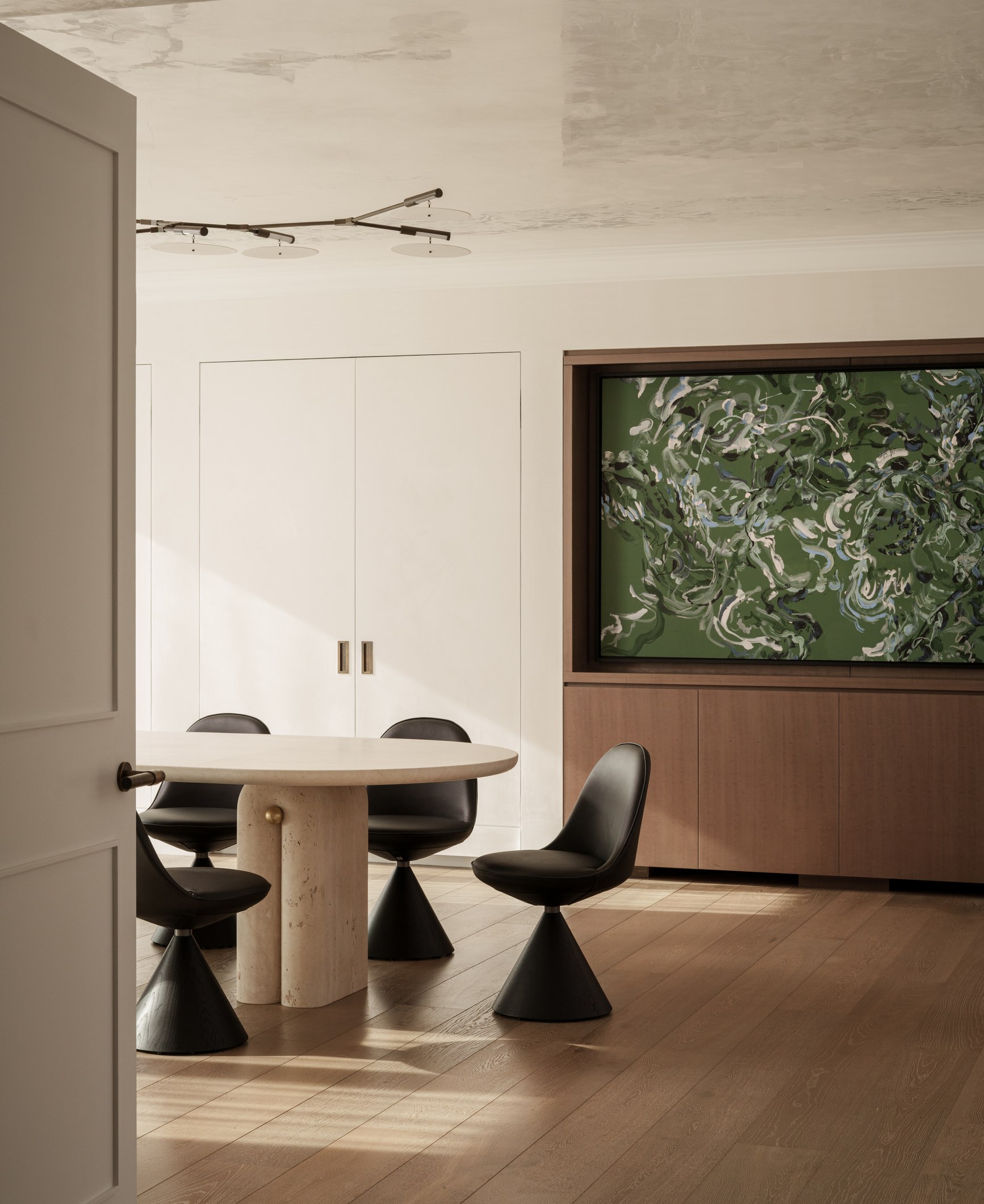
Only later does the London setting become relevant, largely because the apartment’s architectural gravitas can withstand considerable material richness. Warm off-whites, muted earth tones, travertine, and quartz moonstone create a mineral foundation, enriched by bespoke plaster, natural marquetry, and hand-painted Fromental wall coverings. Custom joinery by James Wellesley and stonework by Marco Pacitti give the rooms their permanence, with the evidence of skilled hands present in every fitted edge and carefully resolved junction.

Against that quiet framework, the owners’ collection is allowed to be wonderfully particular. A Marcin Rusak bar cabinet, whose surface is rooted in the artist’s botanical experimentation, occupies the living room, somewhere between functional furniture and contemporary sculpture. Nearby, a three-dimensional wall installation by Swiss studio Beyond changes with the light, while pieces sourced through Philippe Hurel, DeMuro Das, Holly Hunt, Twenty First Gallery, and StudioTwentySeven extend the conversation across continents.
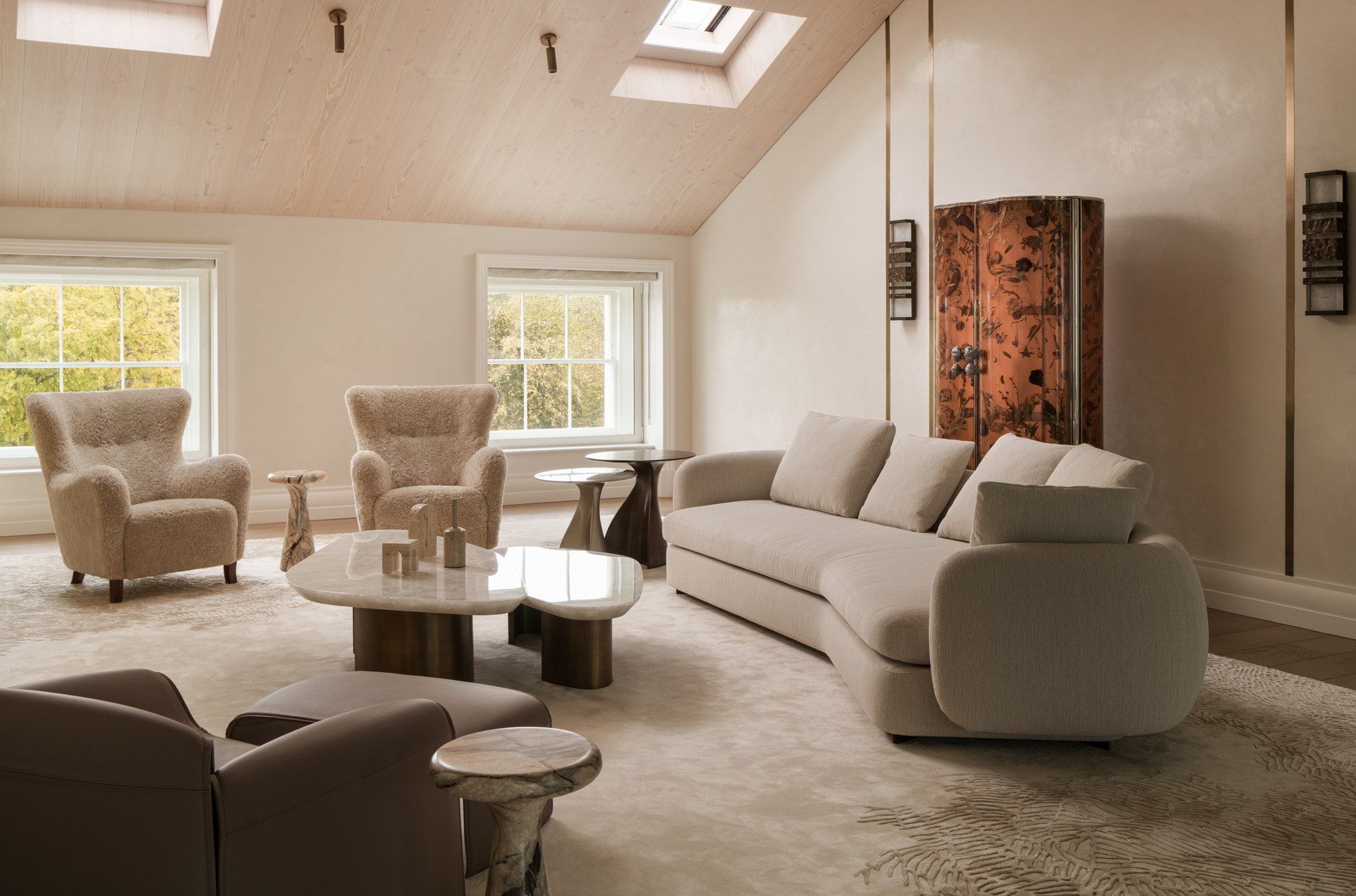
Alongside GamFratesi-designed seating and numerous bespoke commissions, Poliform’s Le Club chair holds the fireside in supple leather. Here, however, pedigree remains secondary to placement, proportion, and the chemistry between objects.


That chemistry prevents the neutral palette from becoming merely polite. Sculptural lighting by Lindsey Adelman Studio, Bocci, and Porta Romana provides punctuation, while Hermès objects, collectible furniture, tactile upholstery, and richly worked surfaces introduce moments of wit. The family’s bedrooms continue the sense of enveloping calm, with craftsmanship taking precedence over conspicuous decoration and softness used as an architectural device rather than a finishing flourish.


Soliman describes the interior as a place where art, craftsmanship, and collected beauty can tell a lifelong story, which explains its refusal to arrive at a pristine conclusion. The rooms have been composed to absorb future discoveries, changing habits, and the minor disorder of family life, since the finest collections are rarely completed and the most enduring homes know better than to pretend otherwise.