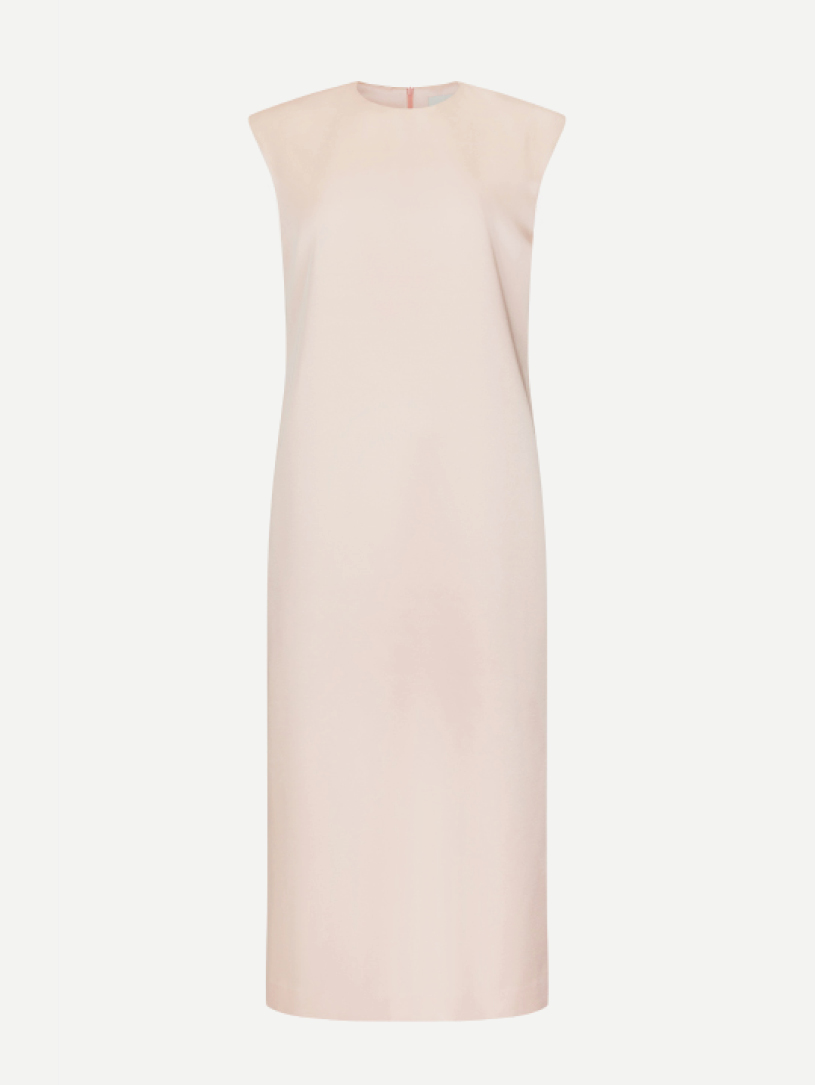
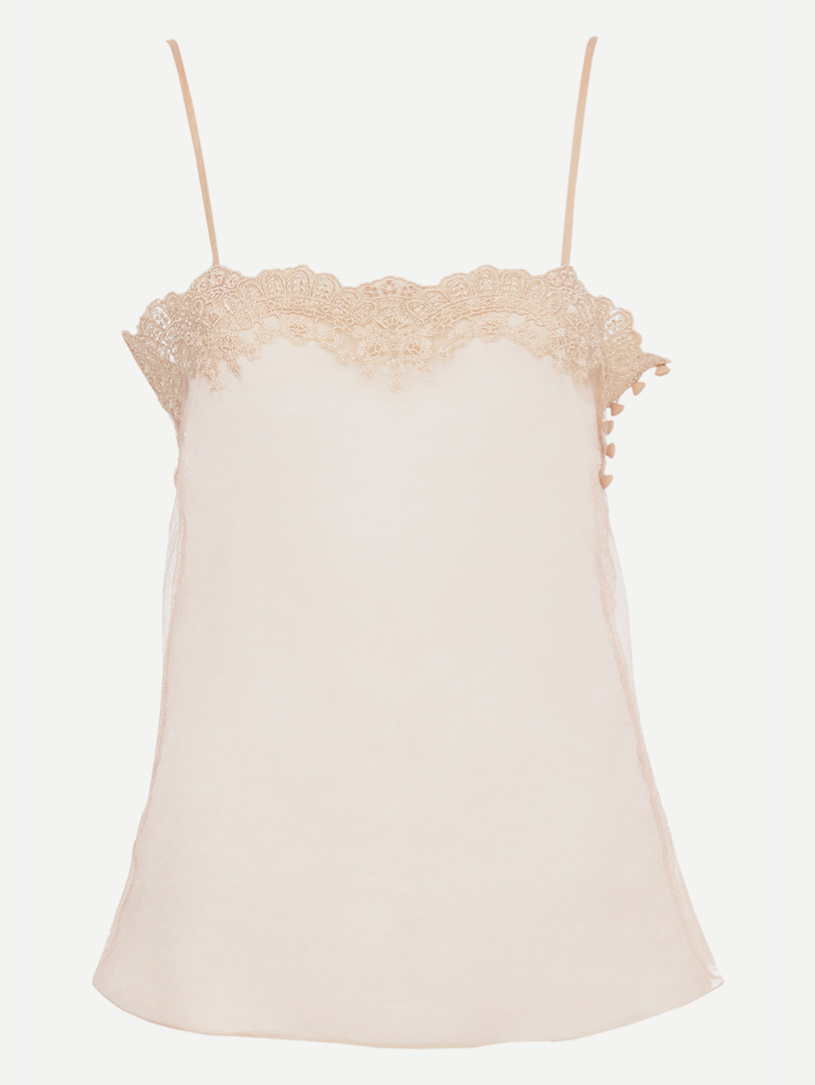
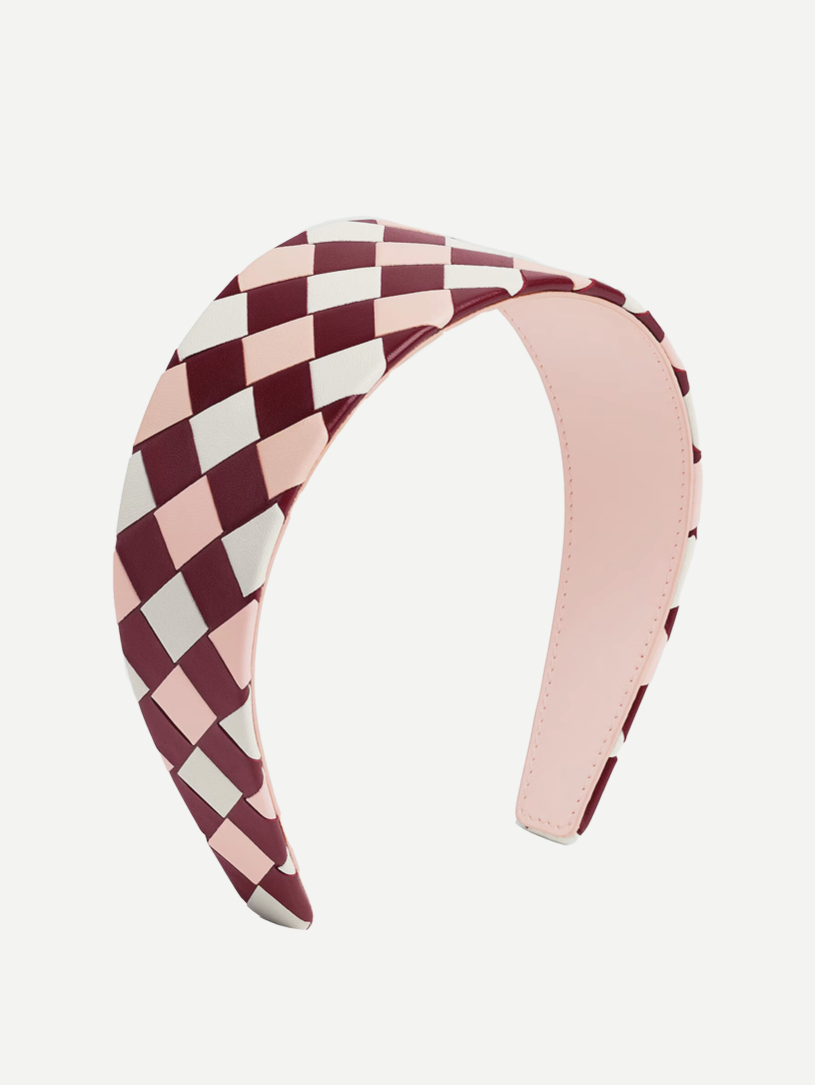
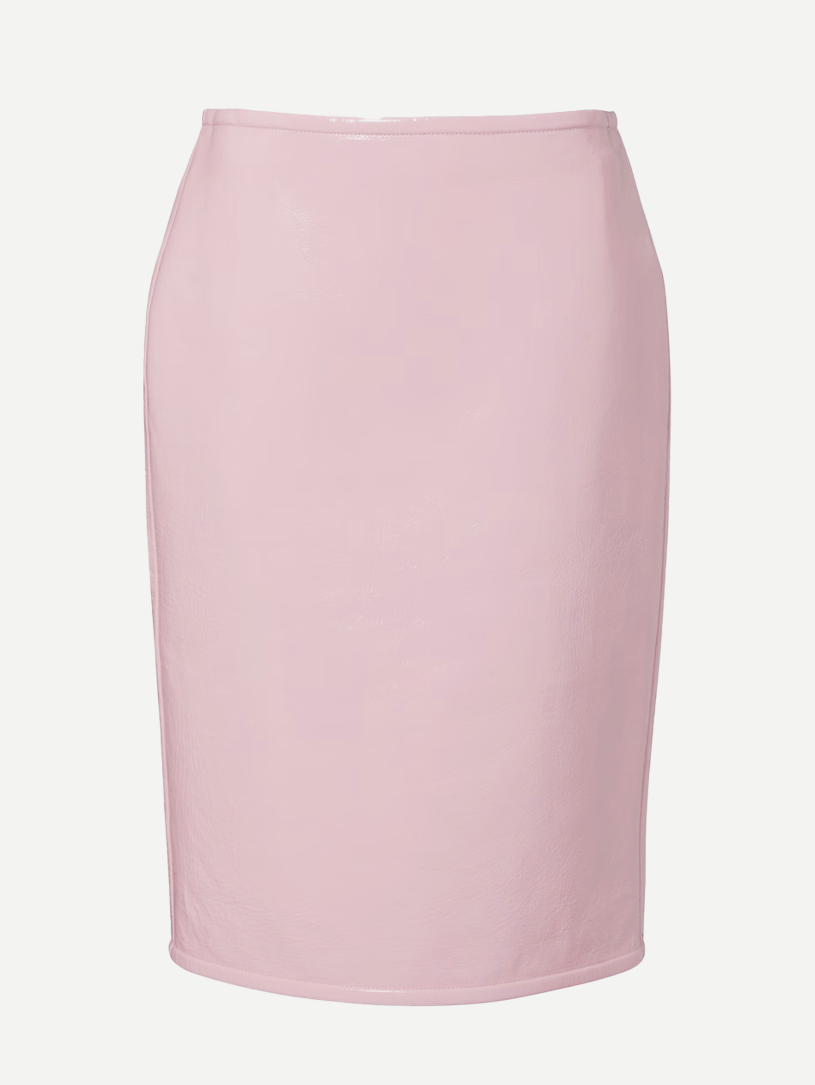
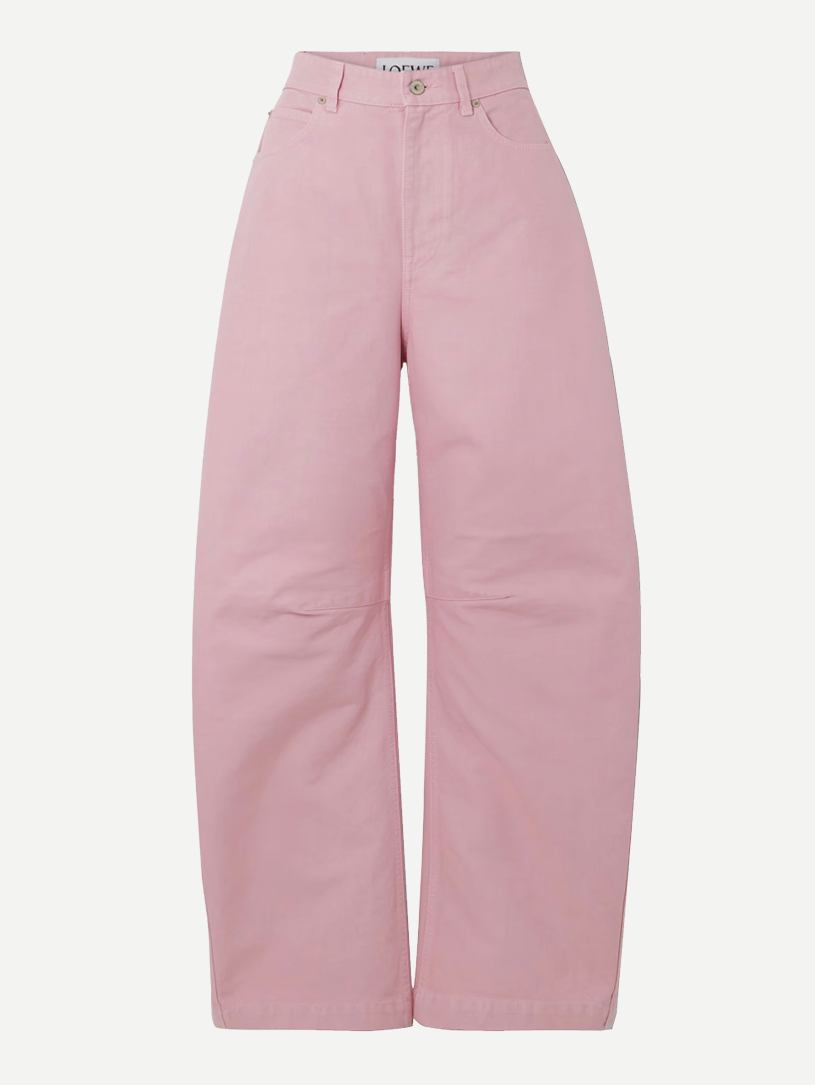
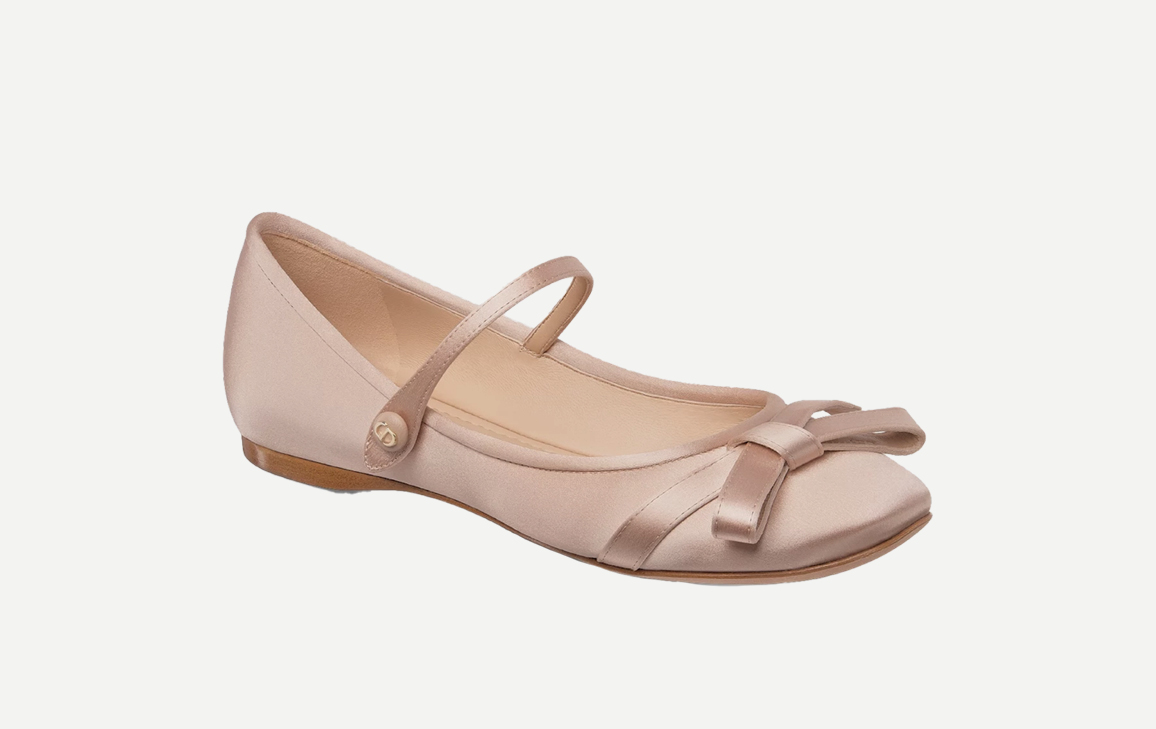
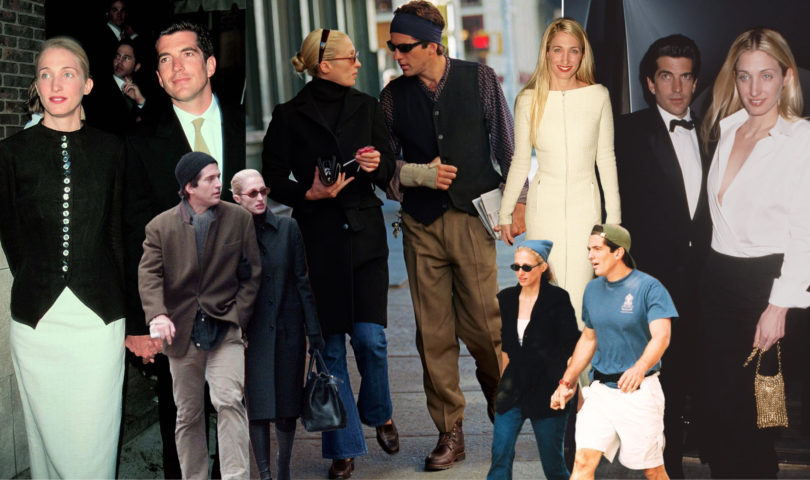
Far from flirty or frivolous, this season’s collections are giving the most traditionally feminine hue a bold reimagining.
It’s high time to consider pink — from bubblegum to blush — back, in a major way. From structured tailoring to stiffer denim or a cashmere cardigan, the shade we’re currently coveting is anything but cutesie. There’s the simplicity of Harris Tapper’s Garbo Dress, powder pink power suiting à la Alex Perry, and LOEWE’s Low-Rise Barrel Jean all currently vying for our attention.
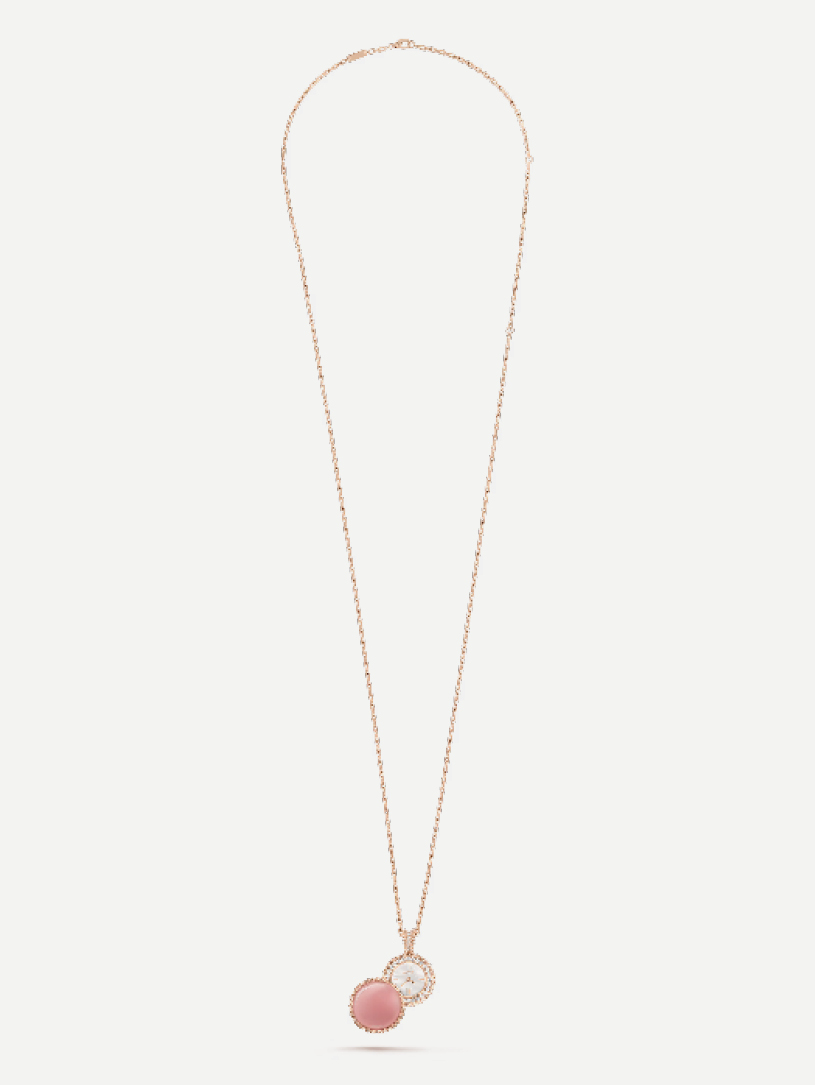
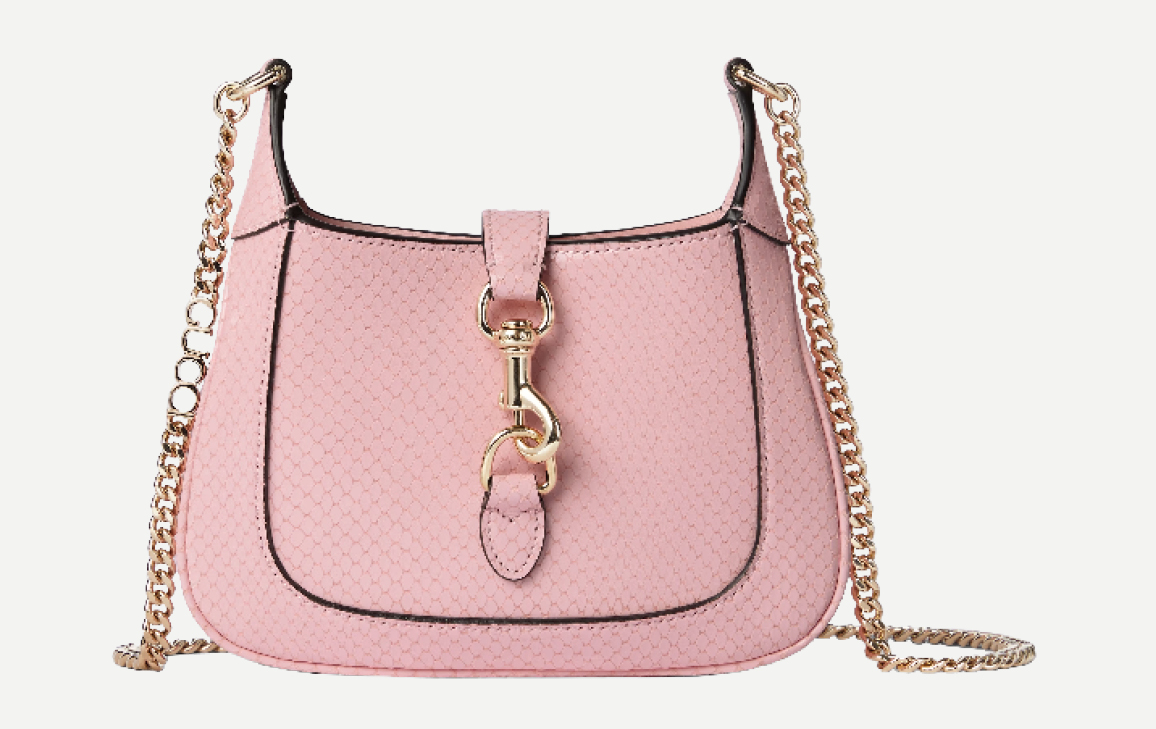
Not totally sold? Start small and dip a toe in the colour pool by first accessorising with fine jewellery or reach for that patent leather clutch. Baby (pink) steps before you’re rose-tinted everything.
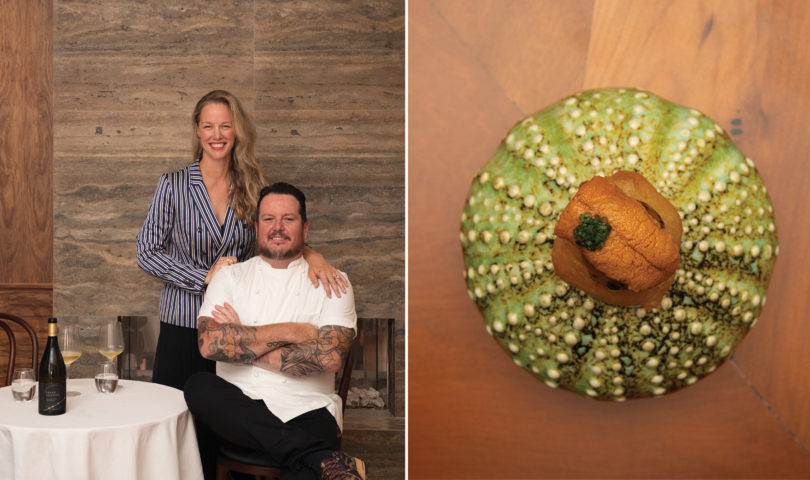
Wine expert David Nash of Studio Nash and The Wine Room shares his expertise on why fine wine is a sound investment.
Once upon a time, your typical fine wine investor had to fit a certain profile. Nowadays, things are opening right up, explains The Wine Room‘s expert and connoisseur, David Nash.
David Nash of Studio Nash and The Wine Room
“Until very recently, the wine world was a closed society,” Nash begins. “You had to earn your stripes just to meet the gatekeepers and buy serious investment pieces.”
“At The Wine Room, for example, you can use our concierge service when taking a cellar space underground. This taps you into a global network of access and a knowledge base of what to buy and when,” he notes. “We encourage new clients to attend our wine dinners to learn about the rarity and why these wines are so exceptional and sought after. This kind of experience is attracting a financially savvy (and much younger) buyer, plus a lot more women than ever before. It’s the best part of launching on Auckland’s College Hill, seeing this new wave of people getting the wine bug. Any wine industry report will tell you that young people don’t drink wine. Believe me, they do, they just don’t want to do it in the way the industry has prescribed for the past 100 years.”
Below, take heed of Nash’s top tips for anyone looking to dip a toe into the ever-illusive world of investing in fine wine.
01.
Think of wine as a liquid investment— and one that’s already proven its resilience. “The first major positive, fine wine or rare whisky, unlike equities, is an asset that you can lend against; it’s one of the only markets that has maintained or increased in value during volatile economic times,” Nash notes. “Over the past two years, investment in wine gave better returns than gold and crude oil. So it’s no wonder that people are switching to it as a portfolio diversifier. The other positive? You can drink it.”
02.
Consider your returns. “When you think about the major market crashes in the late 1980s, 2000s and Covid era up until now, a solid long-term 10 percent return would have been rather pleasant for those in the know.”
03.
Cellar and store correctly to reap the rewards. “It’s hard to think of any other consumable product that in most cases, will get incrementally better over time,” Nash explains. “There’s a pretty euphoric moment that follows opening up a prized bottle someone may have inherited with some serious age. The cork comes out in one and it’s pure liquid gold inside.”
04.
Do your due diligence. “Similar to buying a house, the seller of an investment piece must disclose everything they know about the wine and how it was stored,” Nash explains. “Upon purchase, you can request a condition report. You would be horrified at the incredible bottles that have been hiding in a hall cupboard, the dusty garage, or worse, under the house for twenty-something years. These conditions will dull the wines if not render them to vinegar. At The Wine Room, we have double redundancy in temperature and humidity control, fixed at the perfect conditions for long-term storage. We can certify these conditions for investors, so they can re-enter the market with the confidence that they can reach maximum return.”
05.
Diversify your portfolio. “I see a lot of very impressively sized cellars around the world, and you can instantly see, ‘oh, 1990 to 2000 was your Pinot Noir era.’ Or error. Buying too much of one thing or one producer based on an experience or passion. I know there are a few New Zealand producers who have marketed wines for a long time now as serious collectors’ pieces — now all that wine is hitting the market at the exact same time, fifteen years later. Prices have dropped due to the sudden influx.”
06.
Start local. “As New Zealanders, we’re in the box seat to take advantage of these gains,” says Nash. “Producers like Kumeu River, Bilancia and Felton Road are three good examples — producers that are at the ceiling of how much wine they can produce vs global demand. So what’s next? The market will drive the prices up. All three of those producers could sell all their top wines before they’re even made. I always buy as much as I can from these producers.”
07.
Consider the holy trinity — vintage, brand and scarcity value. “While critics and wine scores do play a role, in the true fine wine space, many producers choose not to engage too heavily with reviews as it can be dangerous. A critic is just one opinion — many are experts, but an unjust review can have a lasting impact.”
08.
Lean on the experts and do your homework. “For novice investors looking for guidance, start with one of our many wine dinners. All are either hosted by myself or by the very best winemakers in the country who are incredibly generous with their knowledge and have a fantastic way of making wine easy, accessible and fun. When guiding clients in building a cellar that balances both pleasure and potential, we have the traffic light system in all the cellars we set up. Green, grab and enjoy anytime with anyone. Amber will increase in value over time and offer serious drinking enjoyment. As for red? Consider these bottles very special wines that you should consider holding.”
09.
Forecast what’s next. “In terms of trends, the classics still reign supreme as there is a global market for them. Bordeaux is falling out of fashion with collectors, despite historically being the foundation of a great cellar. Personally, I believe in looking to the sides as a great investment strategy. What are the winemakers drinking? They usually have their great finger on the pulse of what’s next. Germany, South Africa, South America, Japan and China — all savvy regions that could seriously skyrocket in time.”
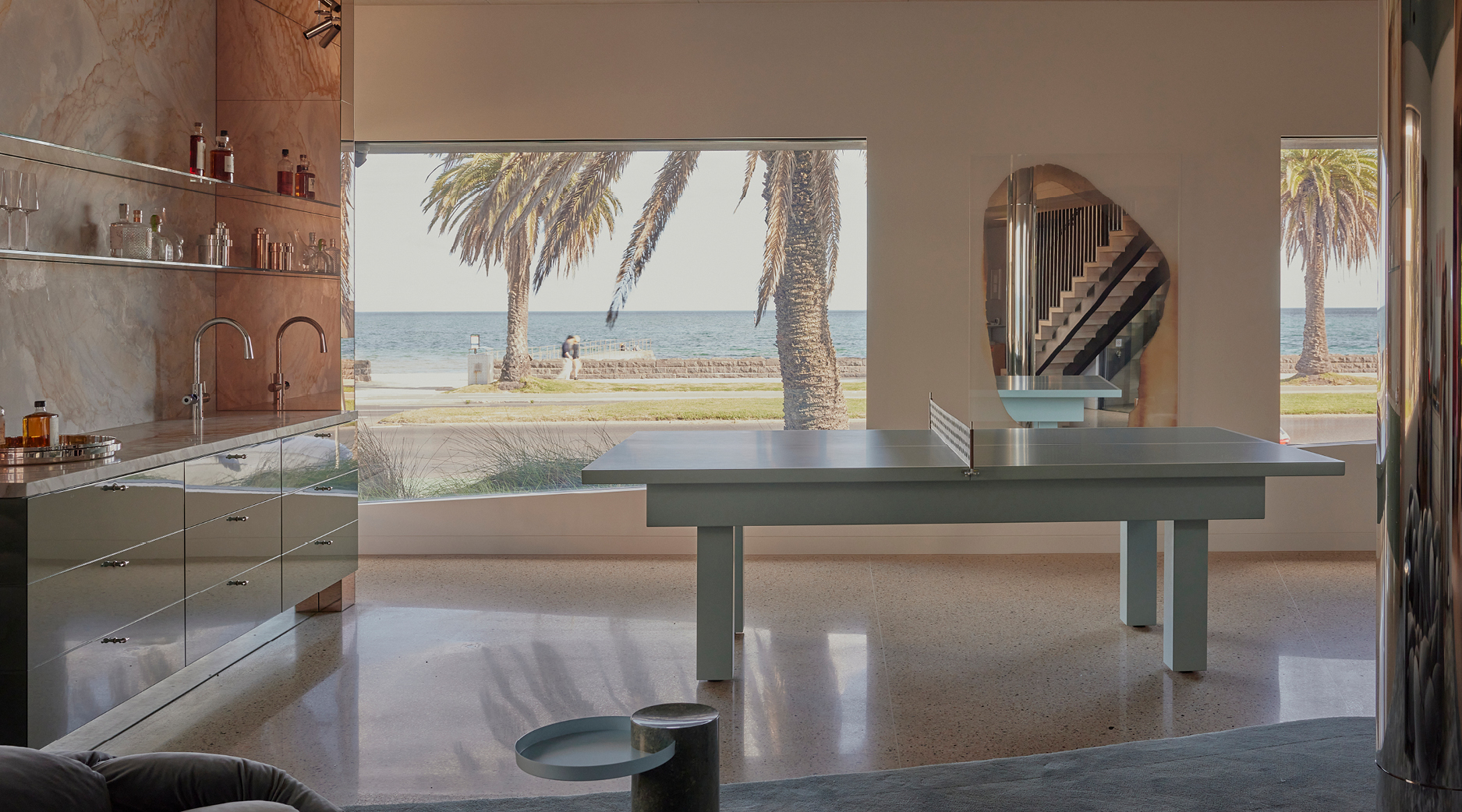
Victoria-based designer Sally Knibbs of Sally Caroline utilises natural stone and the versatility of mixed metals in this playful seaside residence, located on the fringes of Melbourne’s leafy Middle Park.
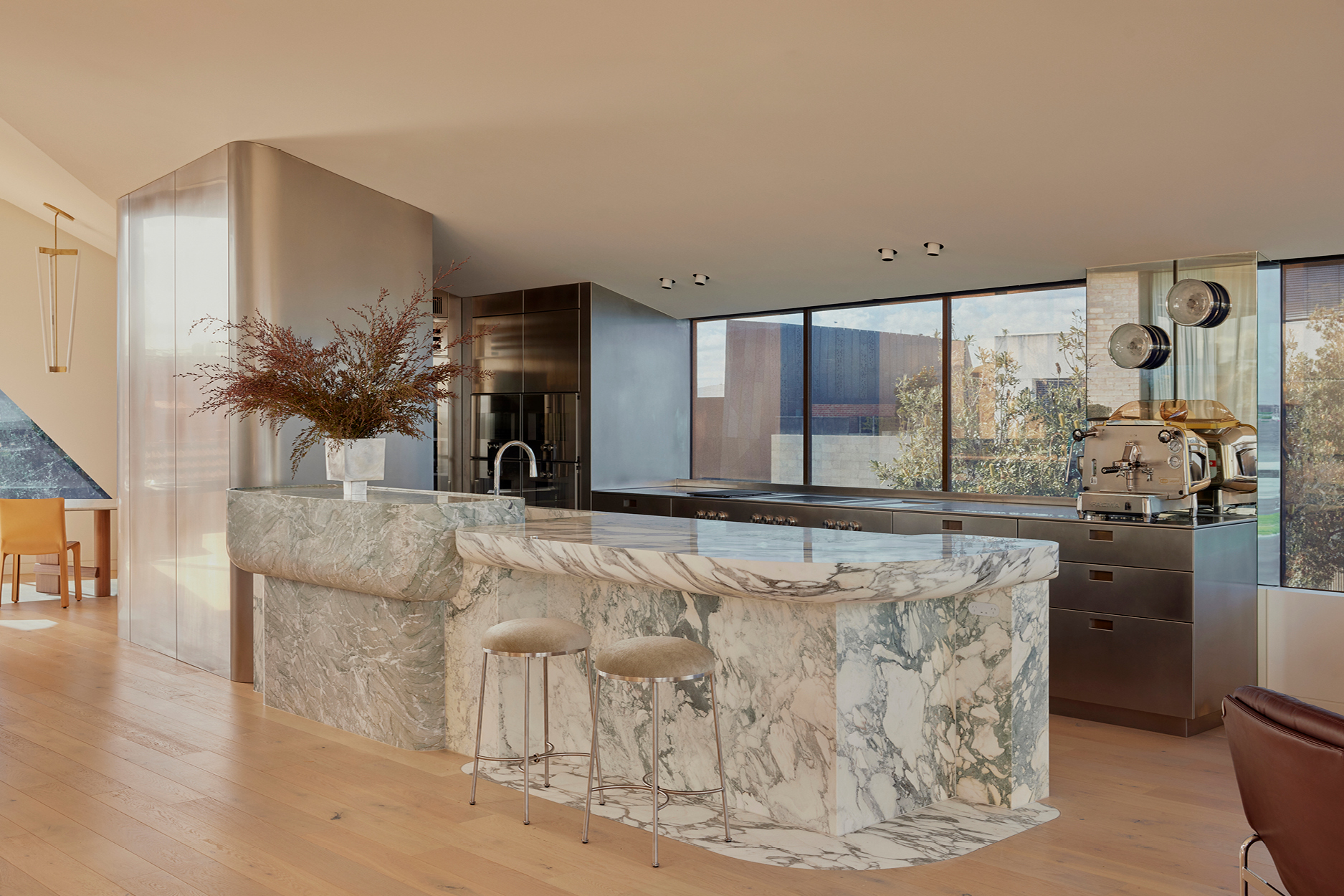
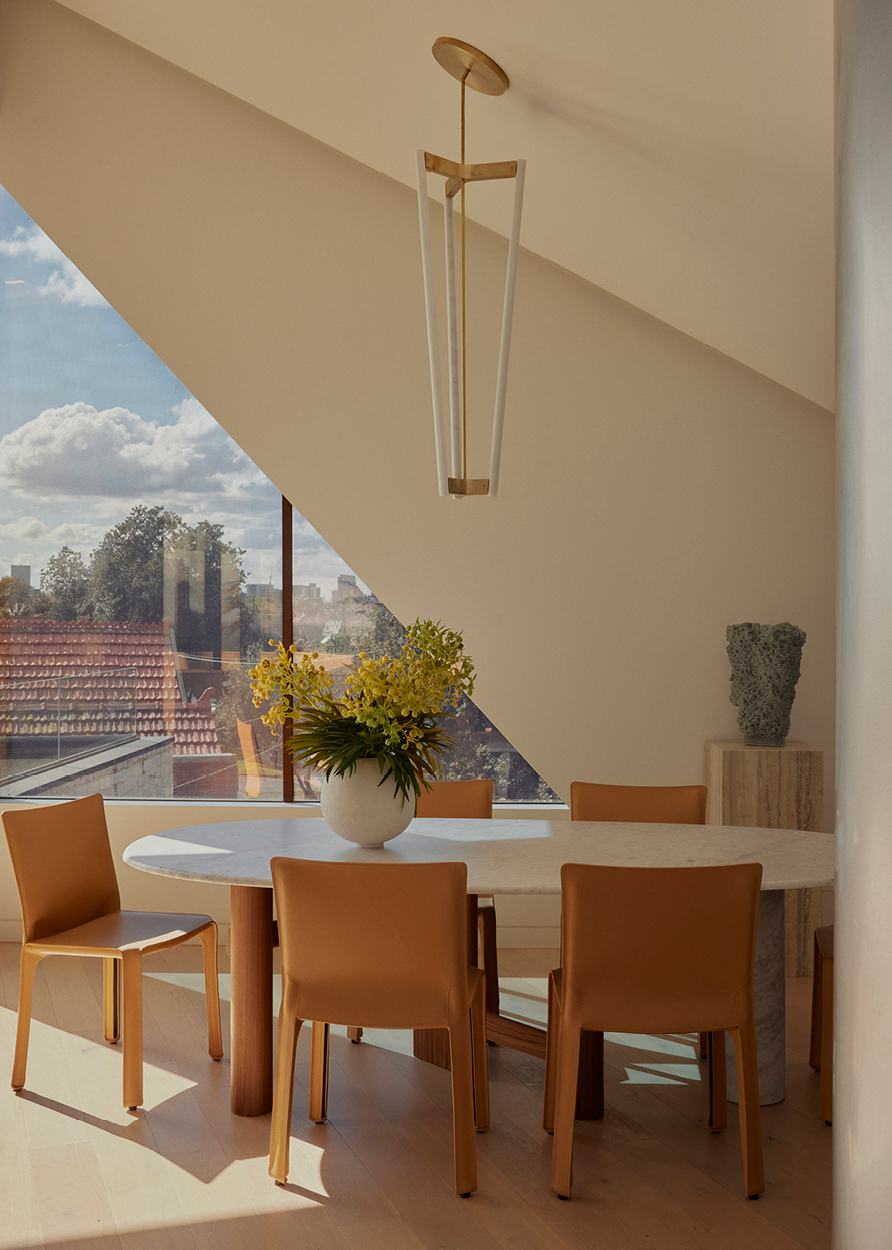
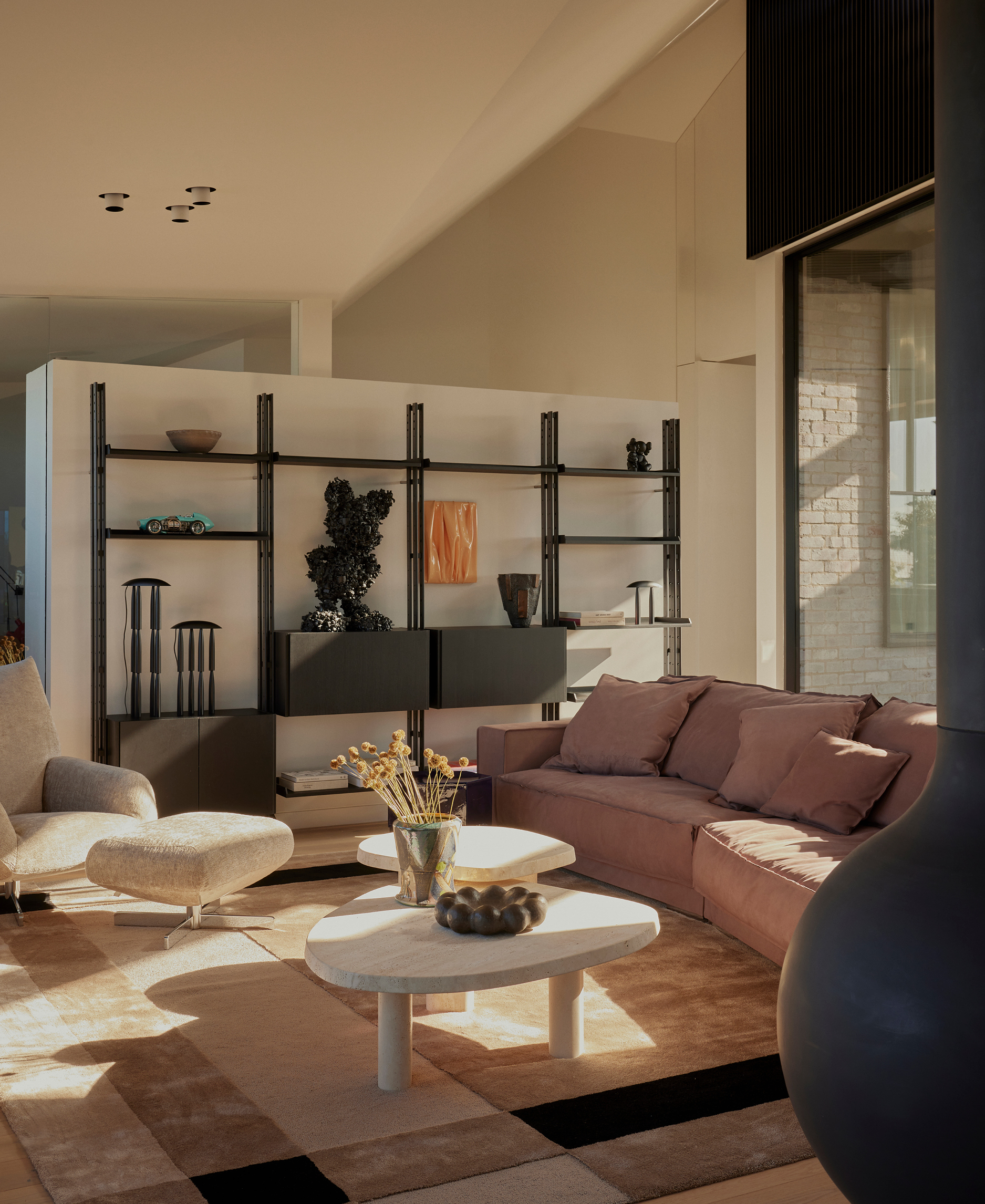
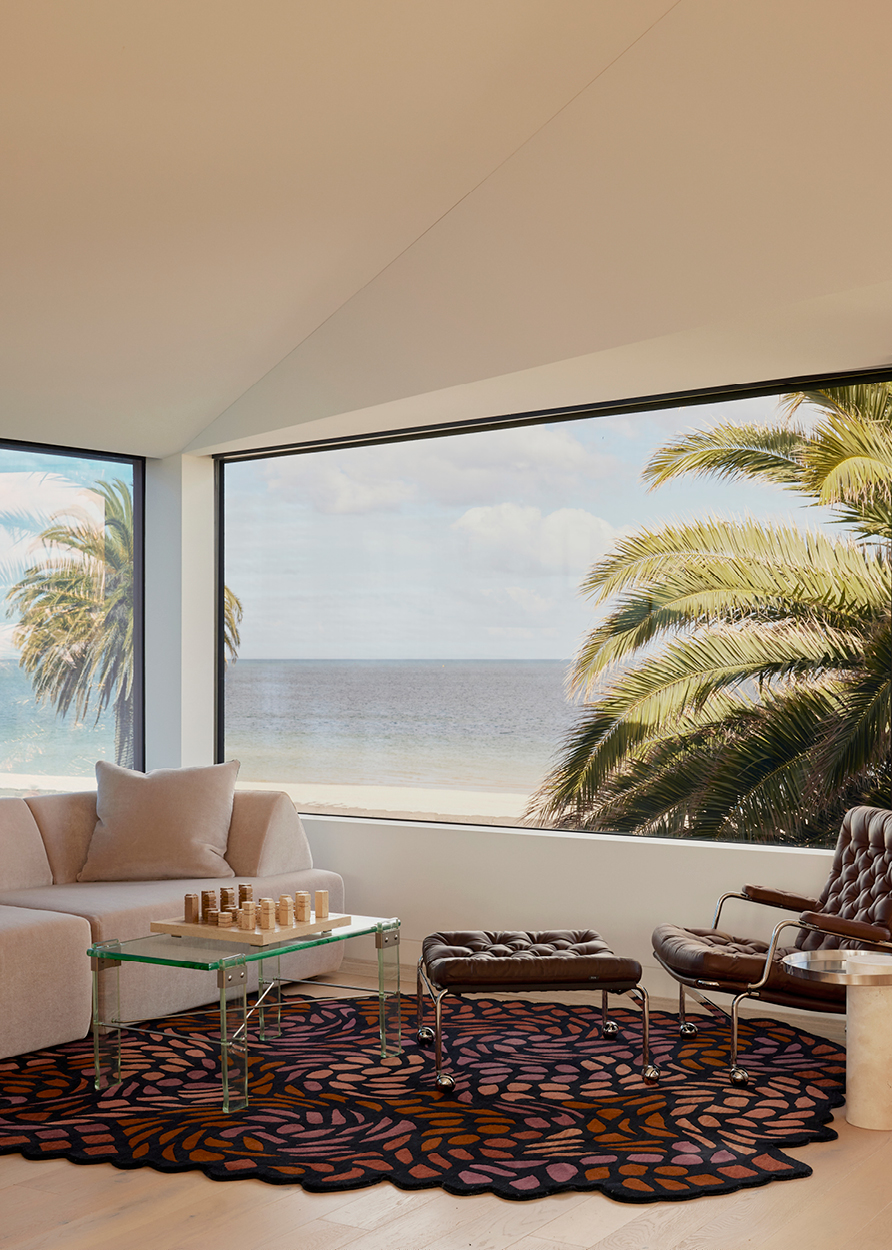
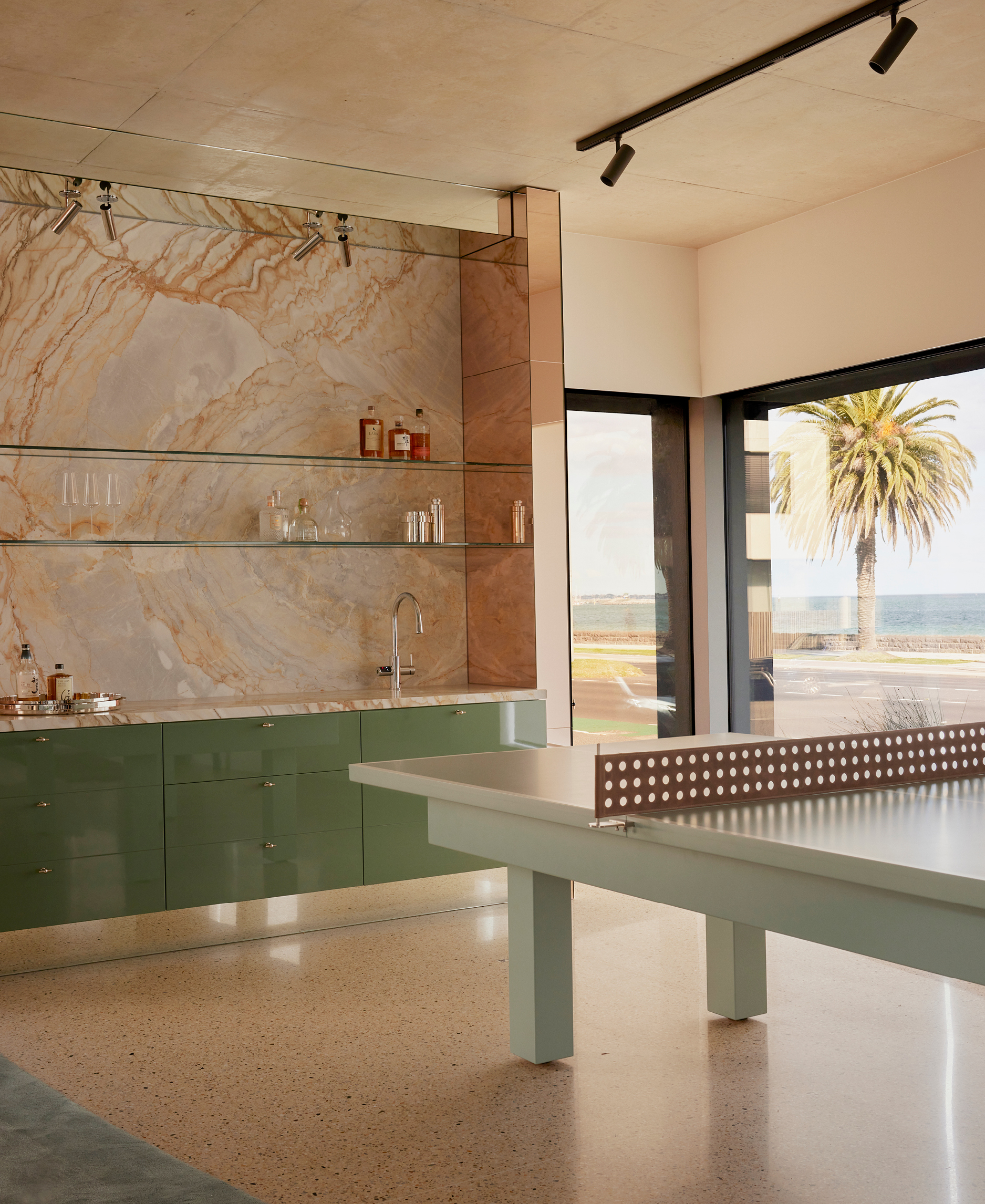
Sally Knibbs of Sally Caroline‘s directive was clear when tasked with reimagining a bayside Melbourne residence — optimise the view and soften sharp edges for a young family of four. Yet Knibbs’ approach throughout the 760 square-metre Middle Park home is anything but simplistic. Layered textiles, hand-rendered stonemasonry and molten metals collide, bringing depth and dimension to a previously angular and otherwise restricted architectural home. The interiors atelier paid close attention to the heart of the home — the kitchen — reworking the floor plan in a bid to herald the horizon line and better highlight the home’s spectacular outlook, a calming combination of cityscape and coastal views.
The result? A masterclass in nuanced, natural materials (think sheets of warped stainless and solid blocks of green veined marble) all while ushering in the coastline.
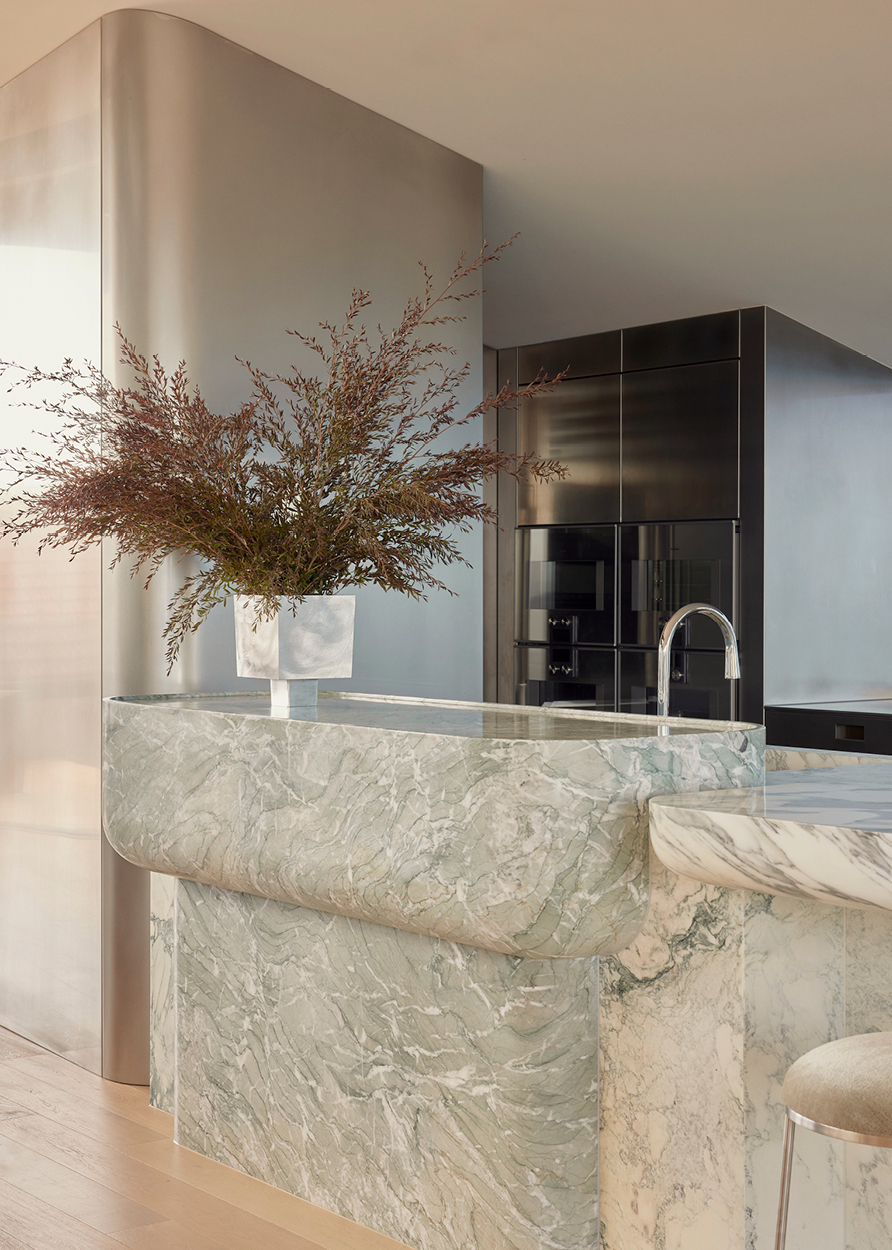
In the kitchen, Knibbs reoriented the focal point to face the bay. The space, now anchored by a monastic kitchen island hand-crafted from solid blocks of Arebescato, Brescia Green and Menta marble, speaks to both the designer’s penchant for natural stone and the necessity of modern family living. The stainless steel cabinetry is finished with bronze pulls, adding both artistry and warmth.
Upstairs, Knibbs looked to the light, removing heavy banquette seating in favour of a whimsical lounge setting, now positioned toward the bay to offer unobstructed views of the water. The dining den — now located to the northern side of the split level property — opts for warmth and convivial togetherness over fuss and formality. The designer leaned on materials wherever possible, cladding custom pieces in leather, bronze or stainless steel, to better reflect the home’s unparalleled outlook.
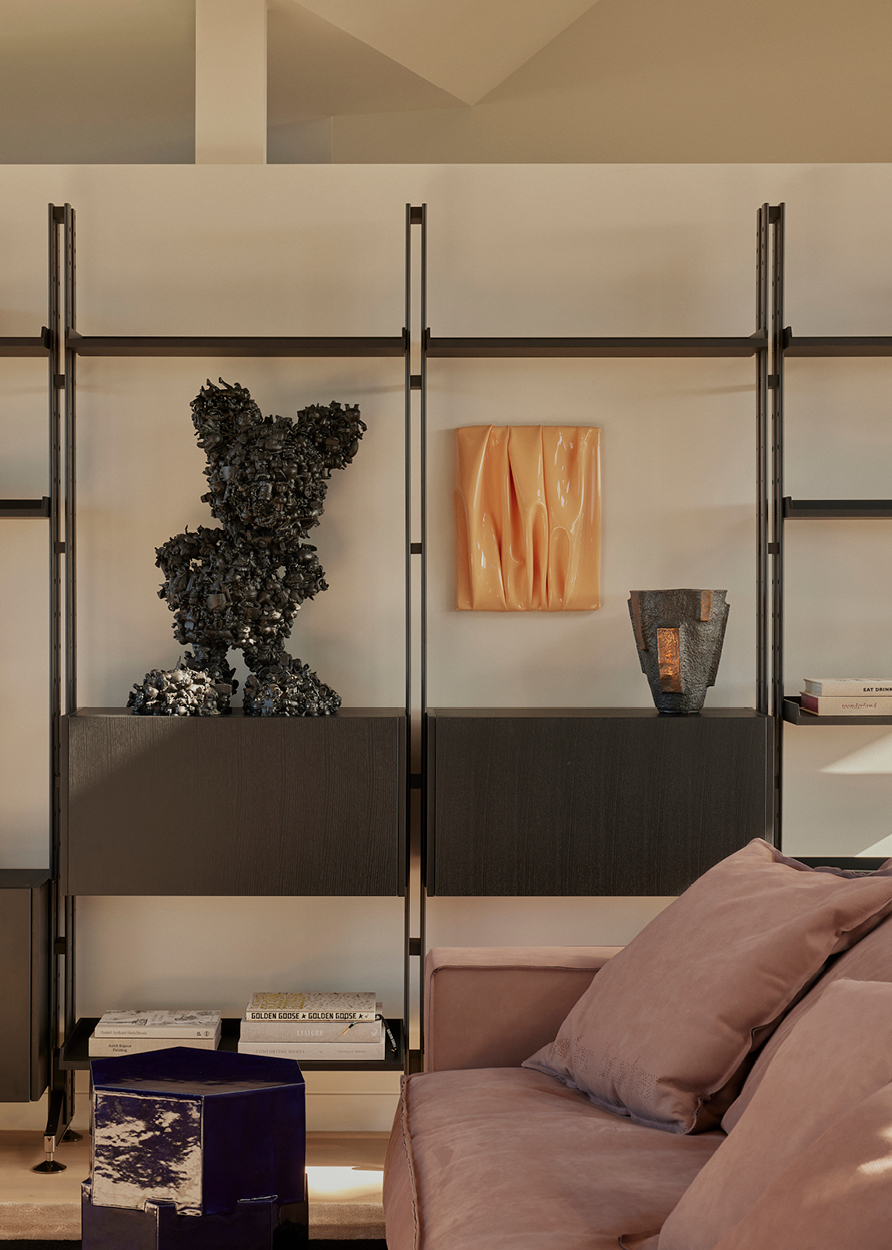
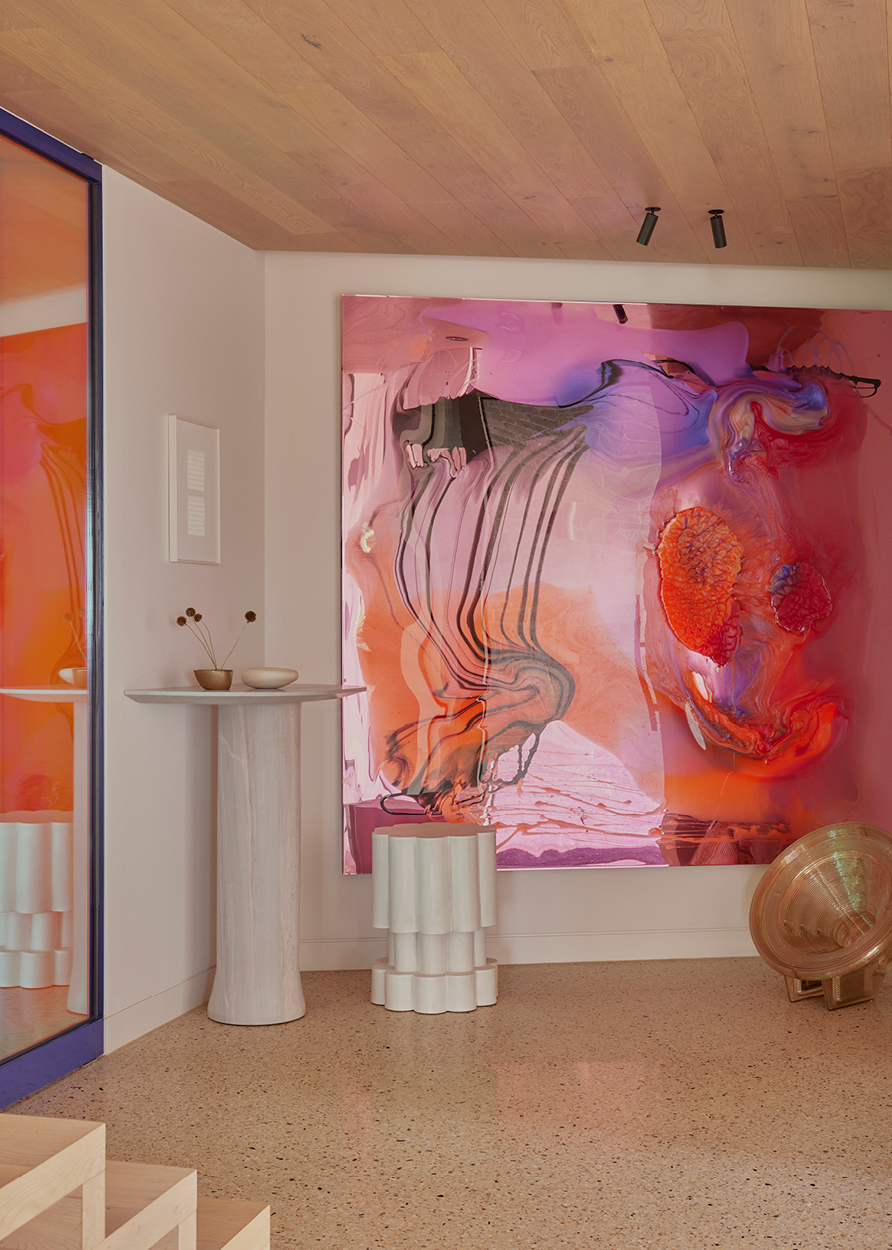
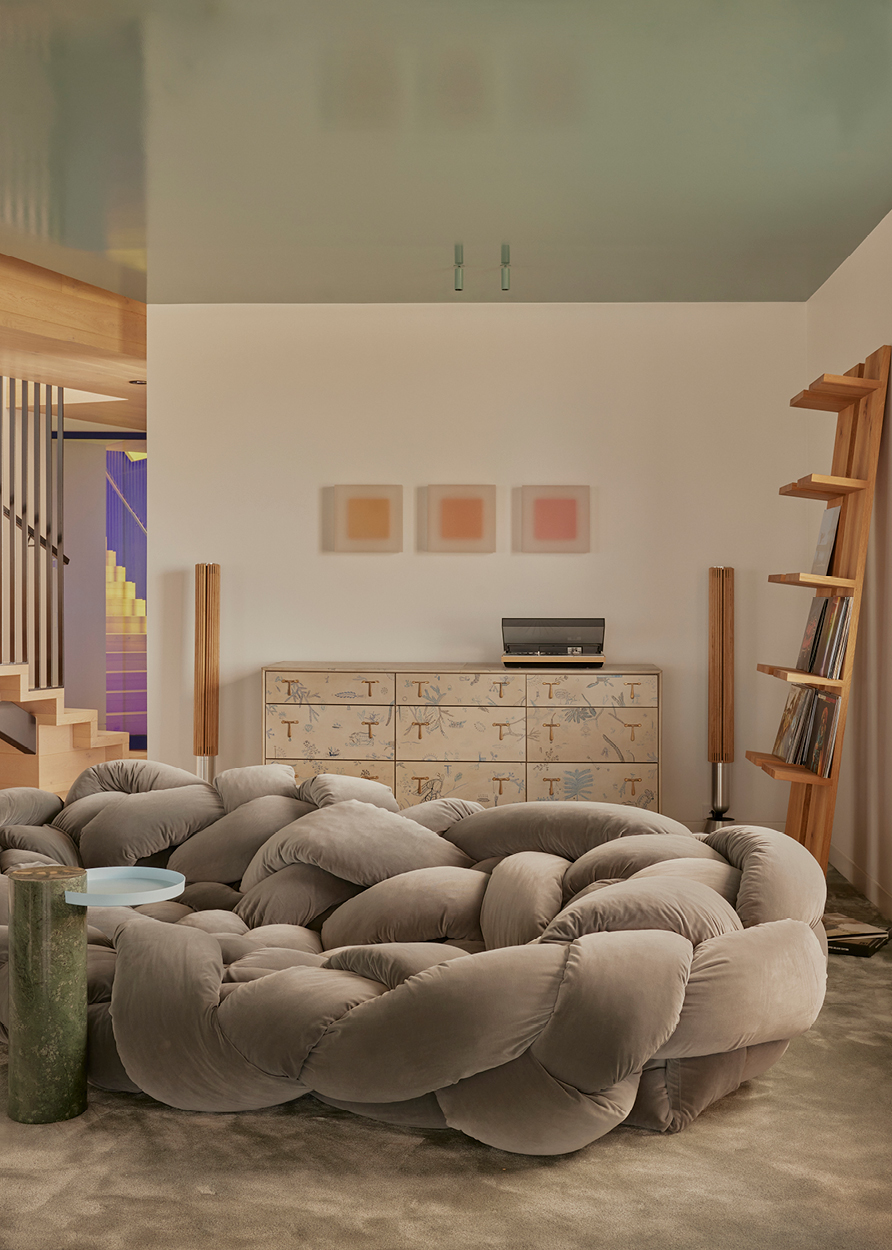
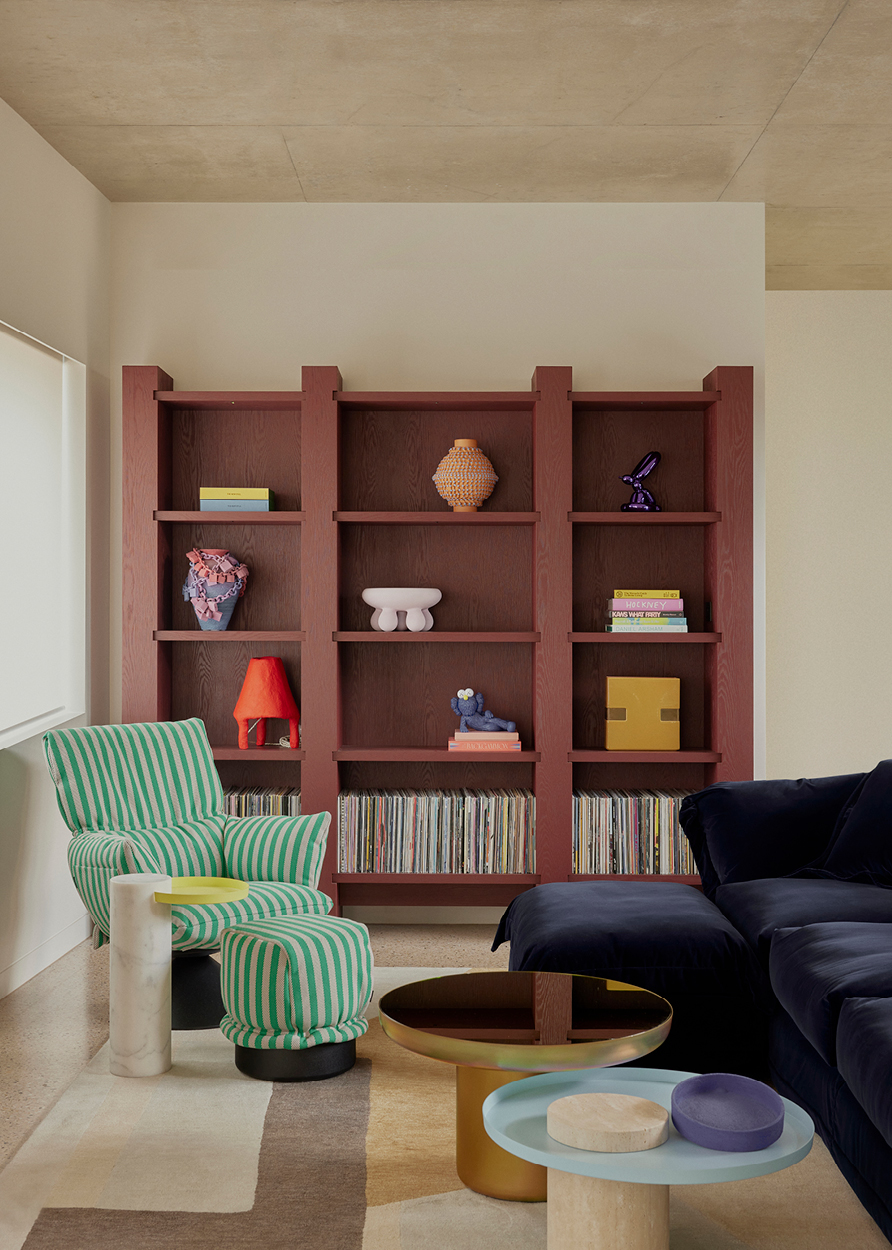
Custom pieces by the designer’s own studio decorate all three floors — leather-clad or hammered in bronze — in keeping with Knibbs’ own design sensibility. A whimsical perspex artwork by Sydney-based Dale Frank, a sourced rug by California core Kelly Wearstler and a tattooed credenza by Tyler Hays of American design studio BDDW all feel ultimately at home in a space that finely balances coastal calm, creativity and craftsmanship.
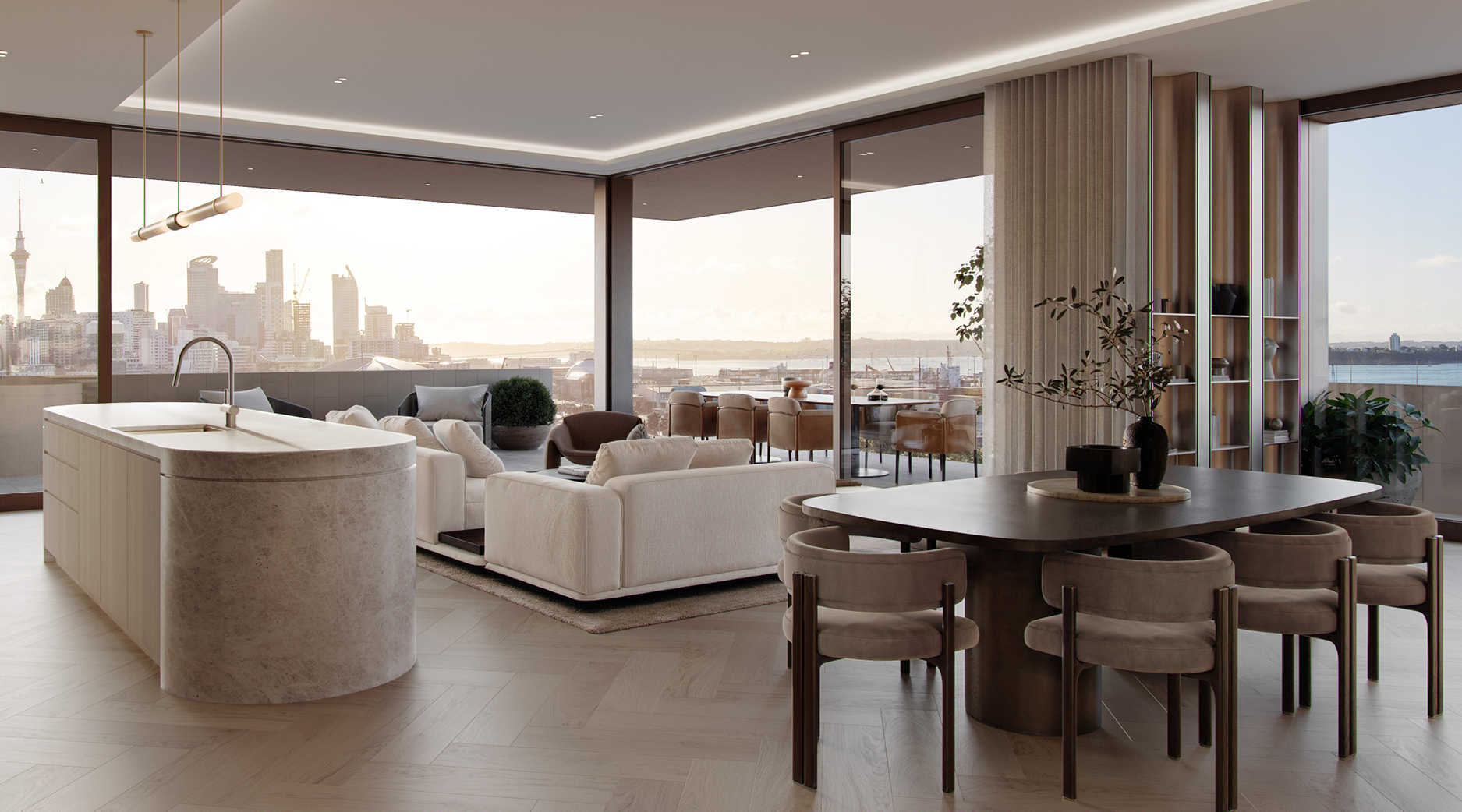
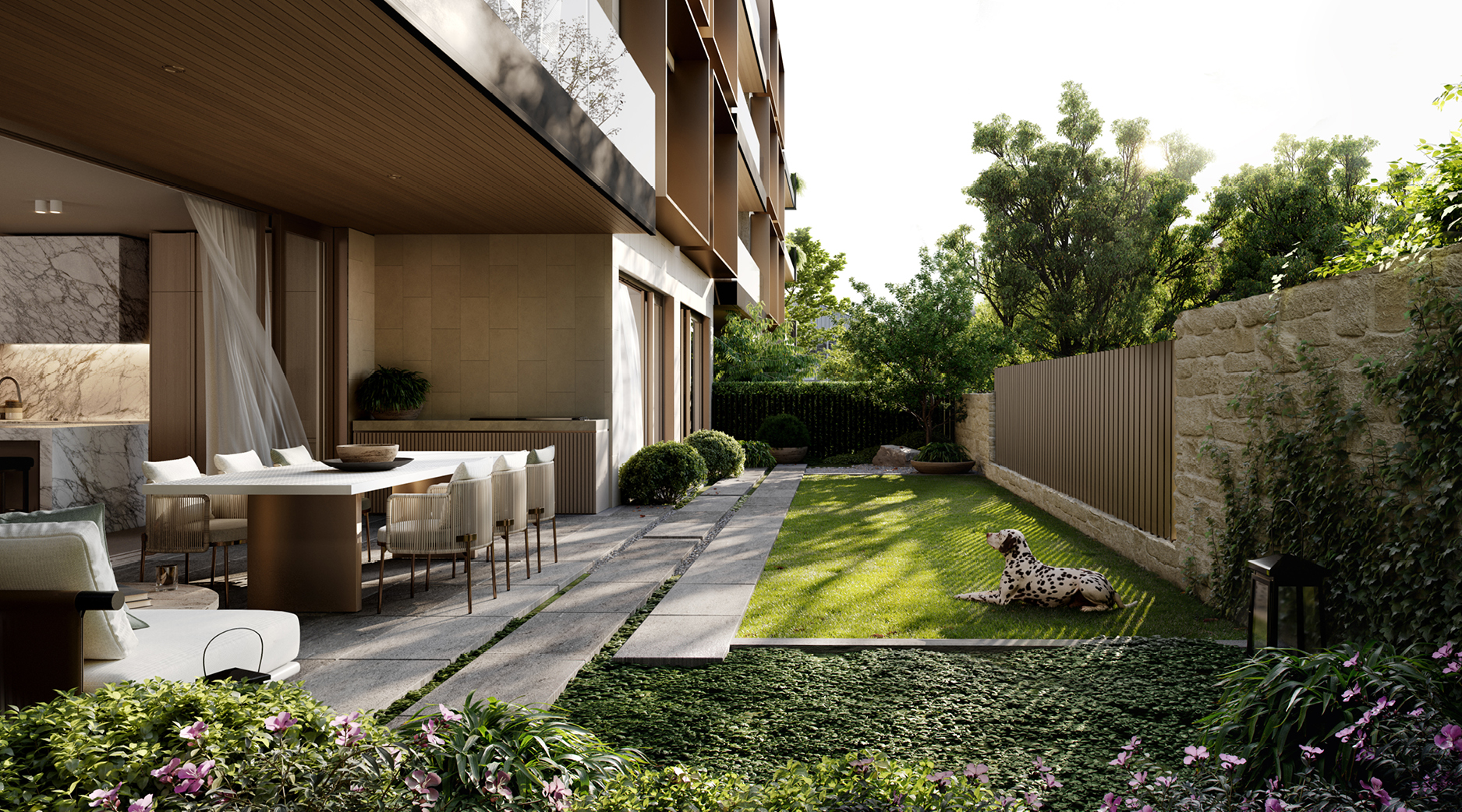
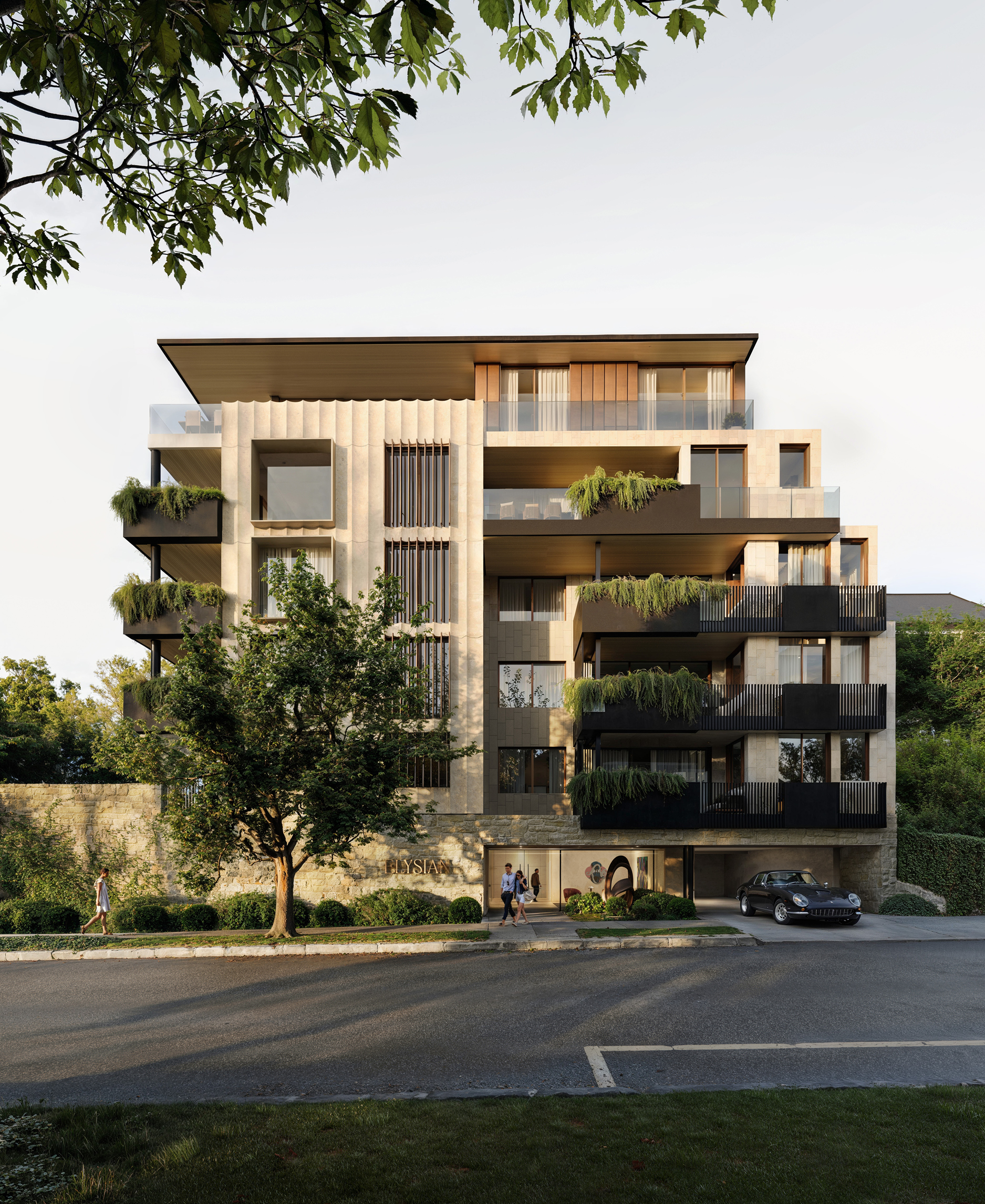
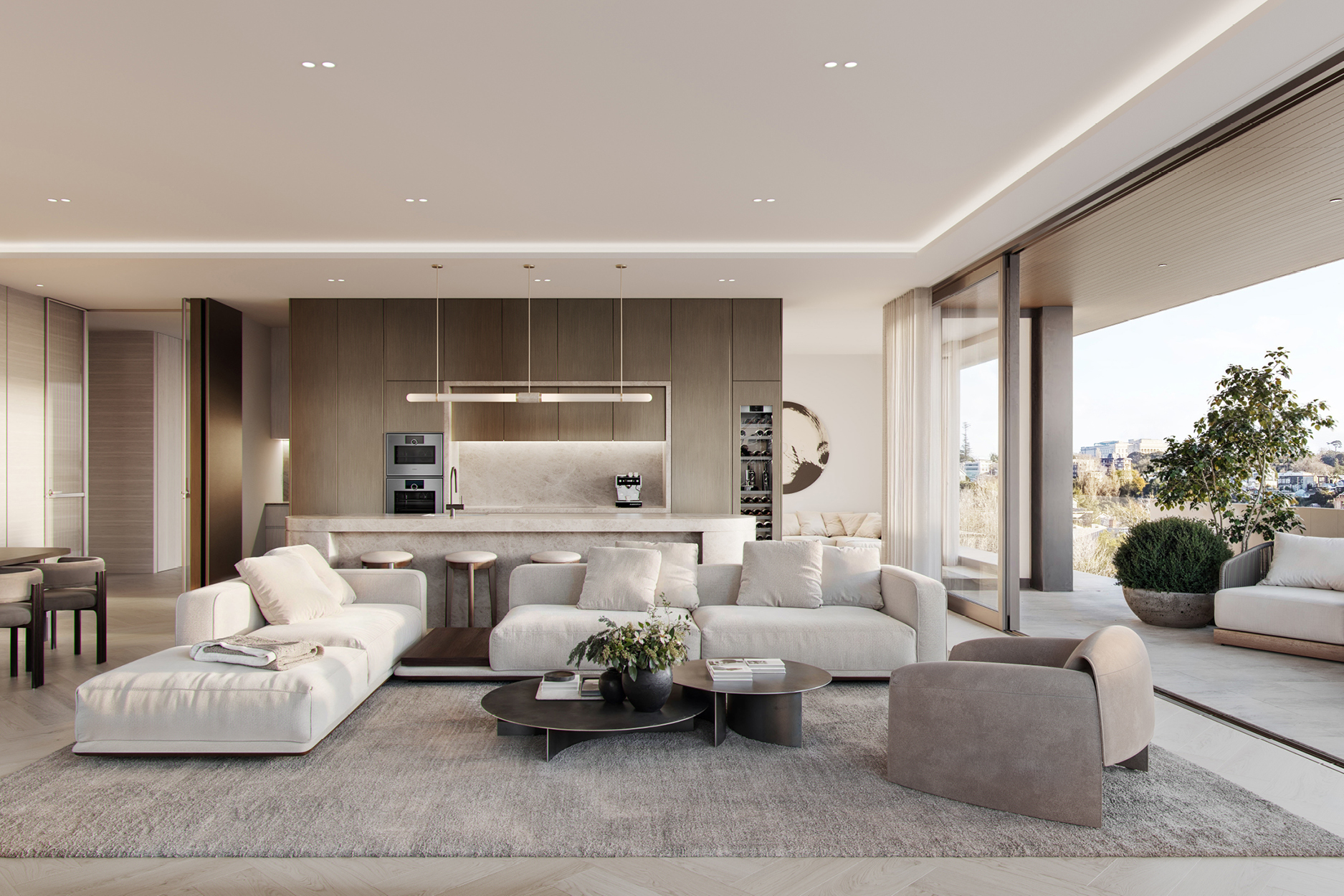
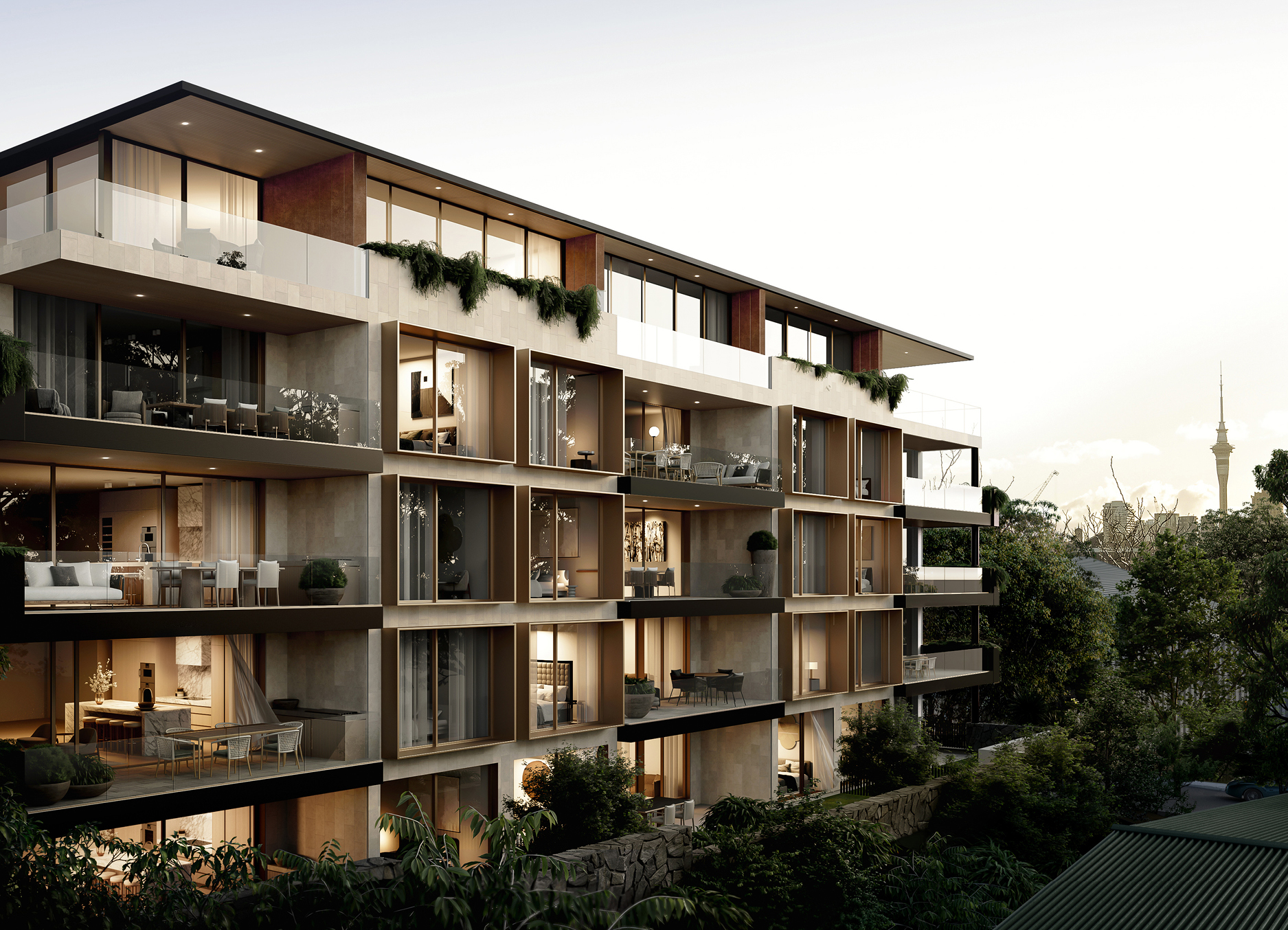
In the heart of Parnell, Elysian introduces a rare opportunity. Developed with Crosson Architects with interiors by Sarah Foote, the luxury residences sit across five levels, including two sweeping penthouses, setting a new benchmark for apartment living.
For many, the appeal of downsizing is not about living with less — it’s about living with more freedom. More time, more ease, more connection to the things that truly matter. In Parnell, Elysian presents an opportunity that speaks directly to this shift: 16 luxury residences, including two landmark penthouses, designed to offer permanence, privacy, and a new way of living well.
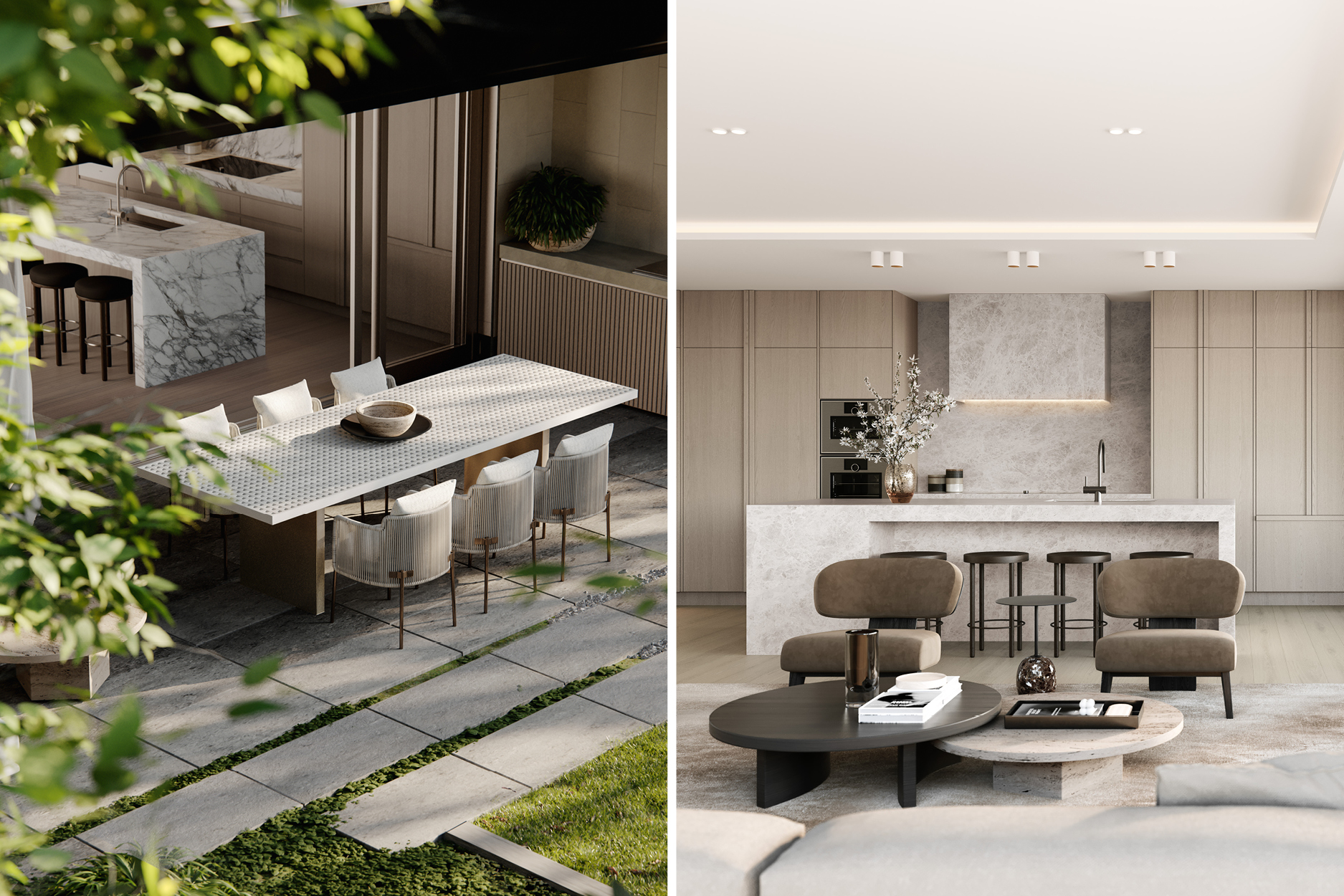
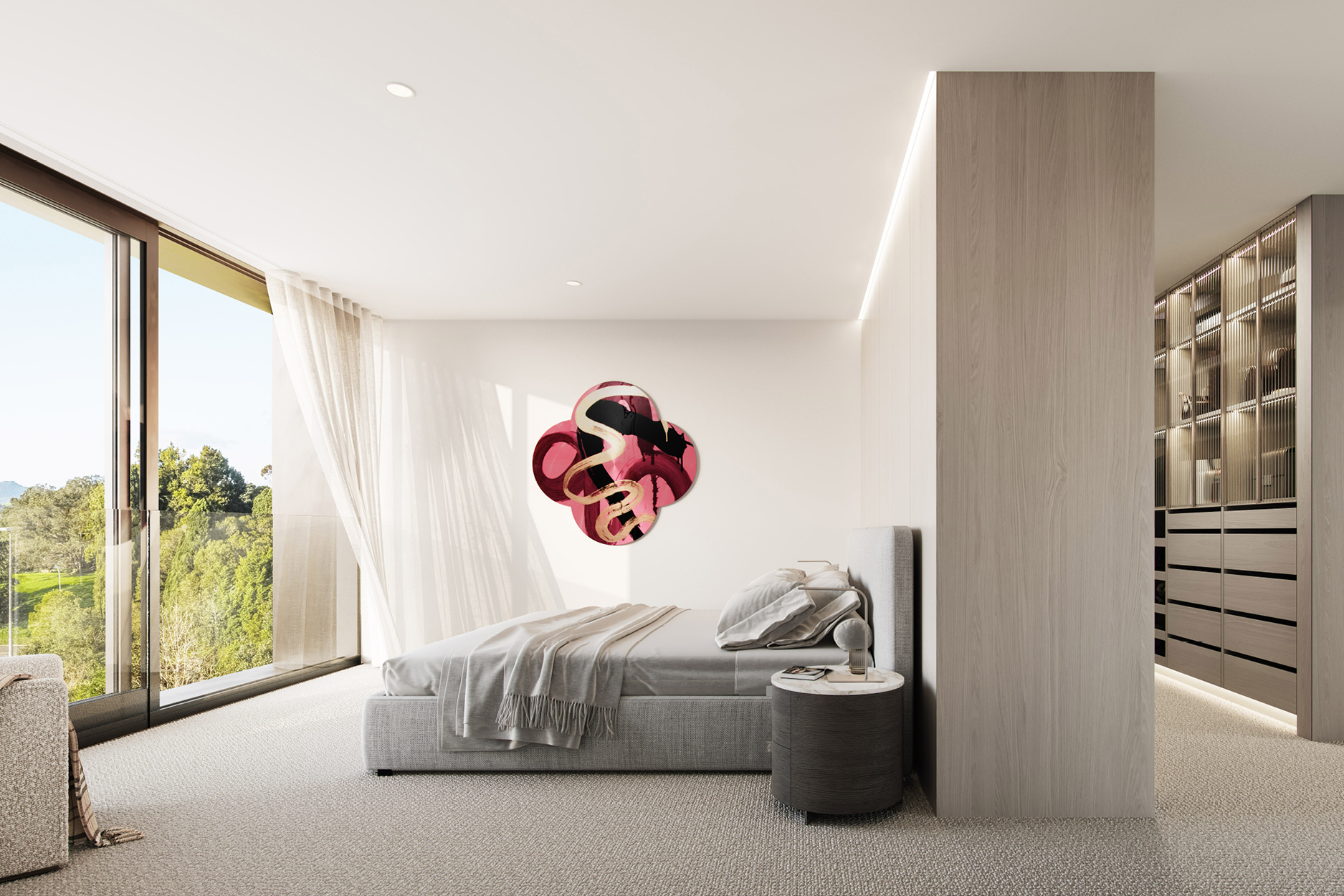
Left: Apartment 103. Right: Apartment 303
Developed with Crosson Architects with interiors by Sarah Foote, Elysian has been conceived as a place where quality and longevity take precedence over excess. Clad in stone with bronze-toned detailing, the architecture feels timeless; within, interiors are intentionally calm and effortless, allowing each home to reflect the lives and personalities of its residents. “Quiet luxury is the foundation,” notes Foote. “These are spaces designed for ease, with materials and layouts that will feel just as relevant decades from now.”
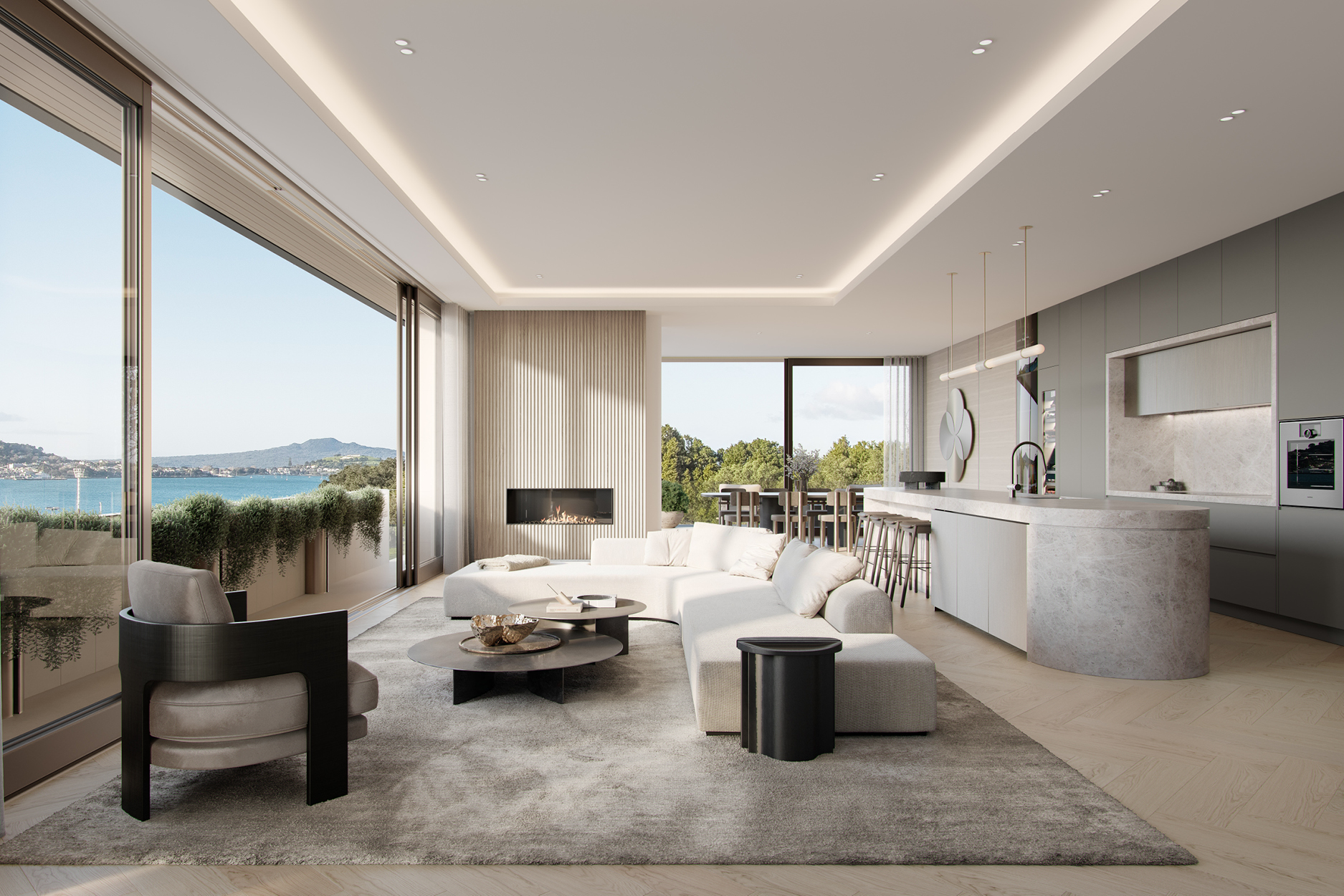
The Penthouse 502
For downsizers, the penthouses crown the experience. Spanning 308m² (including a 66m² terrace) and 295m² (including a 54m² terrace), they combine expansive scale with low-maintenance ease. Minimum 2.9-metre ceilings and floor-to-ceiling glazing open the homes to uninterrupted harbour views, while wraparound terraces offer privacy and seamless indoor-outdoor living — without the upkeep of a standalone house. Here, the shift to apartment living doesn’t mean compromise; it means gaining a new level of light, space, and simplicity.
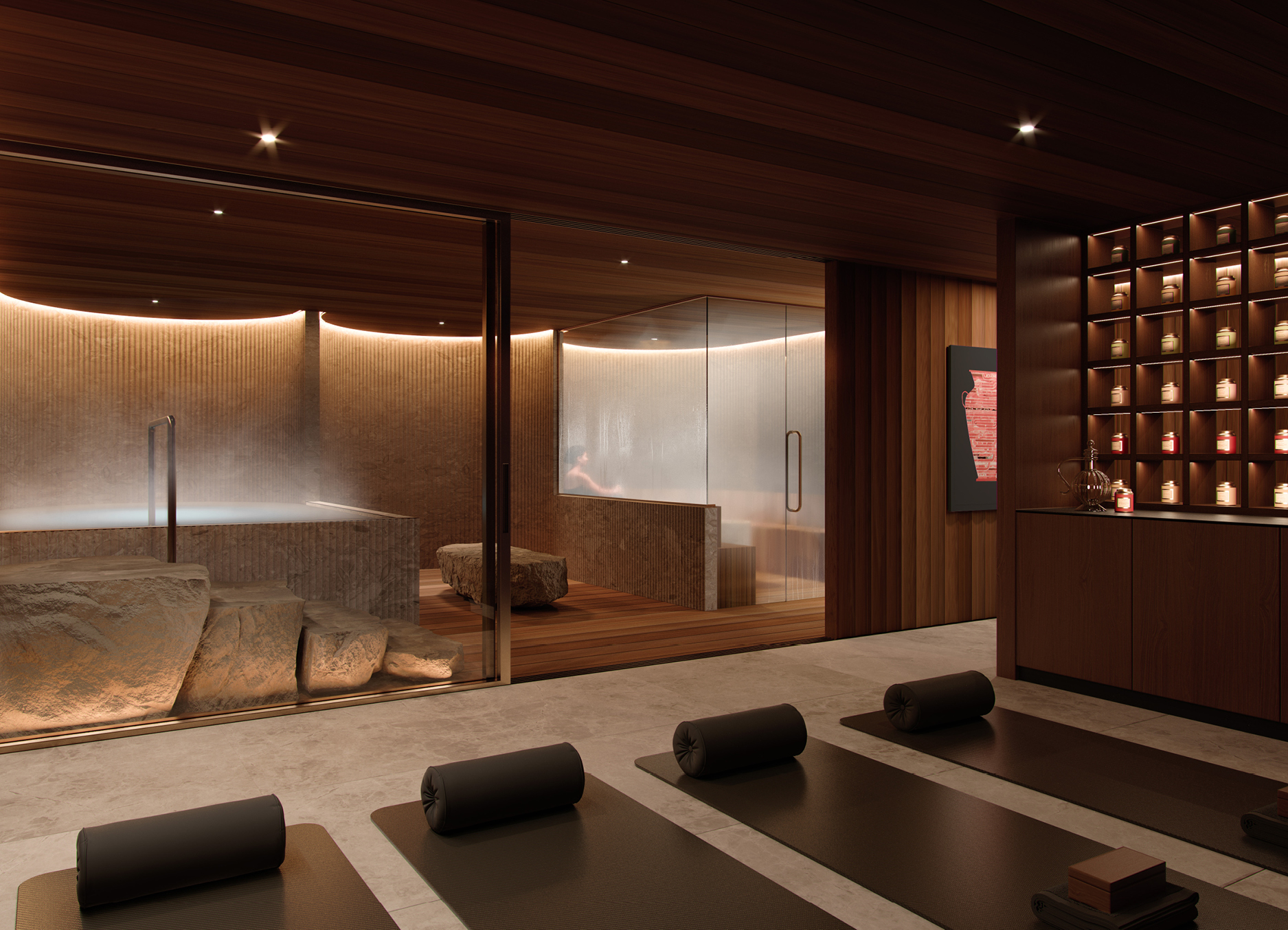
The Residents’ Retreat by Studio Red Wellness
Lifestyle here extends far beyond the residences. The Residents’ Retreat by Studio Red Wellness includes a mineral pool, sauna, yoga and pilates studio, and private treatment room, ensuring health and wellbeing are part of the everyday. The executive garage makes daily life practical, with EV charging at every park, e-bike power, and even a detailing bay. In shared spaces, art by Max Gimblett and custom furniture by Tim Webber further the sense of luxury living, weaving in yet another element of considered design.
The Shared Courtyard
The executive garage
Equally compelling is the location. Elysian places residents at the heart of Parnell, within walking distance to galleries, restaurants, boutiques, and green spaces. It is a neighbourhood that offers connection and culture, yet the residences themselves provide sanctuary — a lock-and-leave lifestyle that balances vibrancy with retreat. For many moving from larger homes, this blend of accessibility and security is key: the chance to simplify, without sacrificing the richness of daily life.
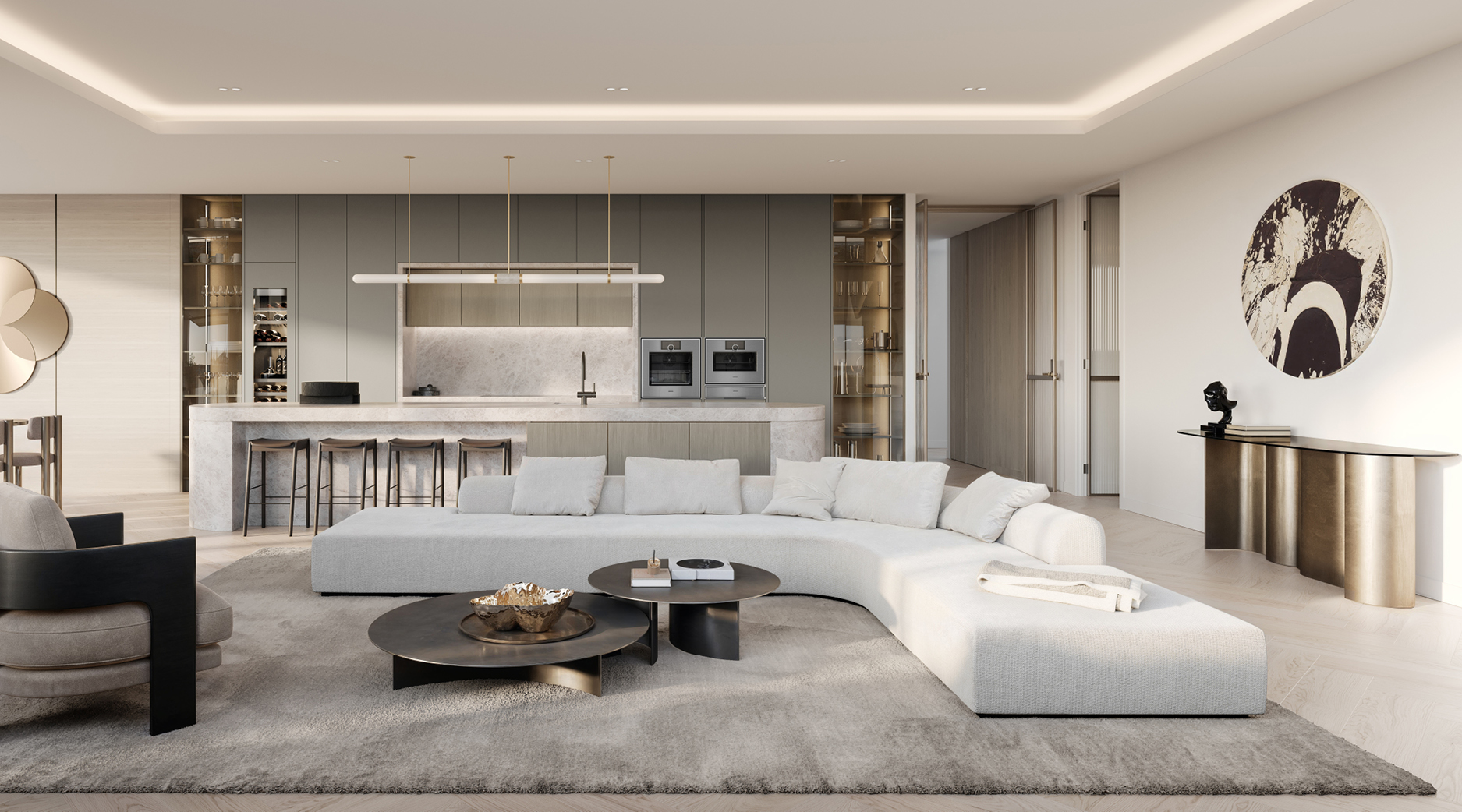
The Penthouse 501 with Poliform Kitchen and Gaggenau appliances
Every detail speaks to the needs of those trading in the burden of maintenance for a home that is secure, connected, and uncompromising in its quality. Kitchens with Poliform cabinetry and Gaggenau appliances, oak flooring by Forté, and stone selected and fabricated in Italy are designed for longevity as much as beauty. Bedrooms are sanctuaries with generous storage and ensuites complete with dual basins, freestanding baths, and precision-planned layouts.
The bedroom sanctuarie in Apartment 402
Elysian is more than a place to live — it’s a way to live lighter, without losing the depth and character of home. For those ready to embrace the next chapter, these residences offer a sense of permanence, the ease of a lock-and-leave lifestyle, and the kind of luxury that becomes more rewarding with time.
Completion is set for late 2026. To experience Elysian and its rare penthouses, visit the display suite at 114 Saint Georges Bay Road, Parnell.
We love a birthday month — and so too, it seems, does Britomart’s Kingi. To celebrate turning five, our go-to inner-city eatery for a seafood-centric power lunch is offering five-dollar Te Matuku Oysters (naturally) alongside five-dollar affogatos or matcha from Wednesday, October 8 — with the option to upgrade to something a little headier.
In keeping with the festivities — and to beckon in the warmer weather — those who visit throughout October will be offered a glass of The Landing Rosé and a trio of snacks for $39.
To further sweeten the offer, anyone who purchases a glass of The Landing Rosé at Kingi during birthday month will automatically go into the draw to win an intimate tasting and lunch at The Landing. What’s more, throughout October, Kingi’s donating $1 for every cocktail spent directly to the Breast Cancer Foundation — in case you needed any further incentive to visit.
As Paris Fashion Week barrels towards a close, we’re dubbing this season one for the debutantes. Notable debuts took centre stage — Pierpaolo Piccioli’s Balenciaga, Jonathan Anderson at Dior and Matthieu Blazy for Chanel — while sartorial stalwarts made triumphant returns, dominating the City of Lights and its iconic landmarks, one arrondissement at a time.
There were supersized starchy bows and billowy silhouettes at Saint Laurent, draped tailoring at Louis Vuitton and peplumed pinstripes and coordinated minis at Stella McCartney. A visual feast of prints, hemlines, cinched waistlines, demure darting and sheer fabrications decorated the runways and sauntered down city streets.
For the fashion fandom, the FROW did not cease to disappoint — notably Greta Lee, Jenna Ortega, Rosalia, Johnny Depp, Kylie Jenner and Robin Wright sat front and centre, while Dame Helen Mirren leant her voice to Stella McCartney’s off-beat homage to mother nature, featuring sinuous tailoring and a spoken rendition of The Beatles’ ‘Come Together.’
Givenchy and Schiaparelli embraced the barely there trend and leant all the way into the naked dress while others — think Miu Miu and Chemena Kamali’s Chloé — harped back to their respective brand DNA with the sixties’ shift and romantic ruching. The ateliers at Victoria Beckham, Celiné and Chanel approached menswear and casual suiting with the kind of ease and confidence that’s become synonymous with all three, while Valentino and ALAÏA took a rose-tinted lens, cladding models in sequins, delicate lace appliqué and full plumage.
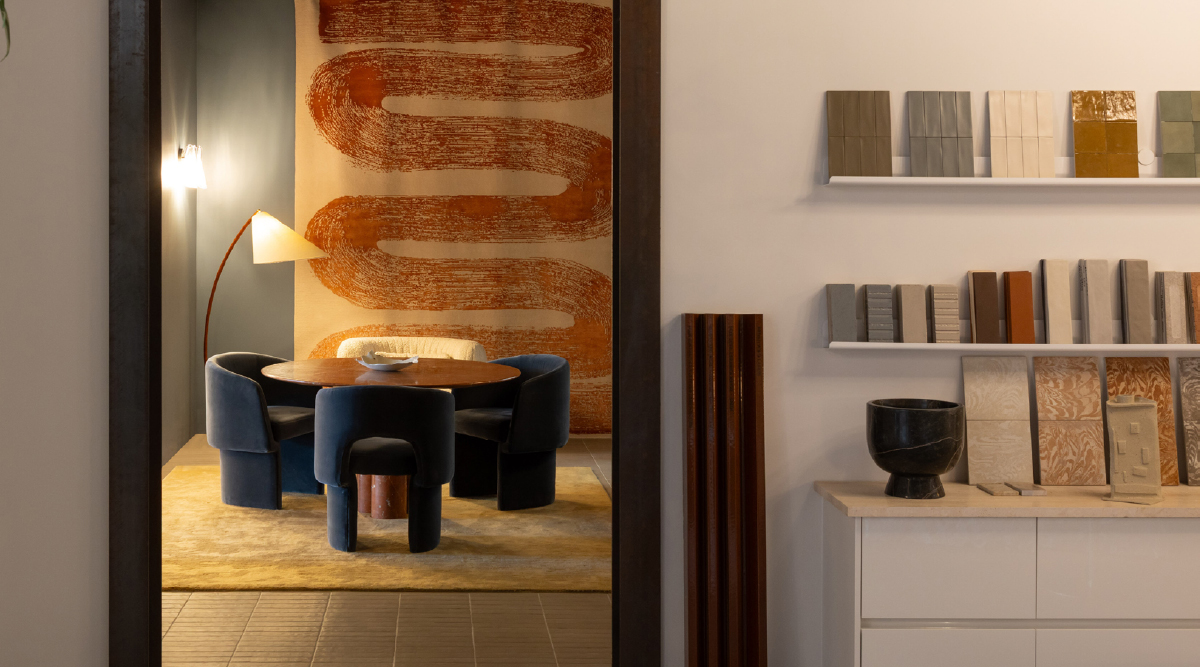
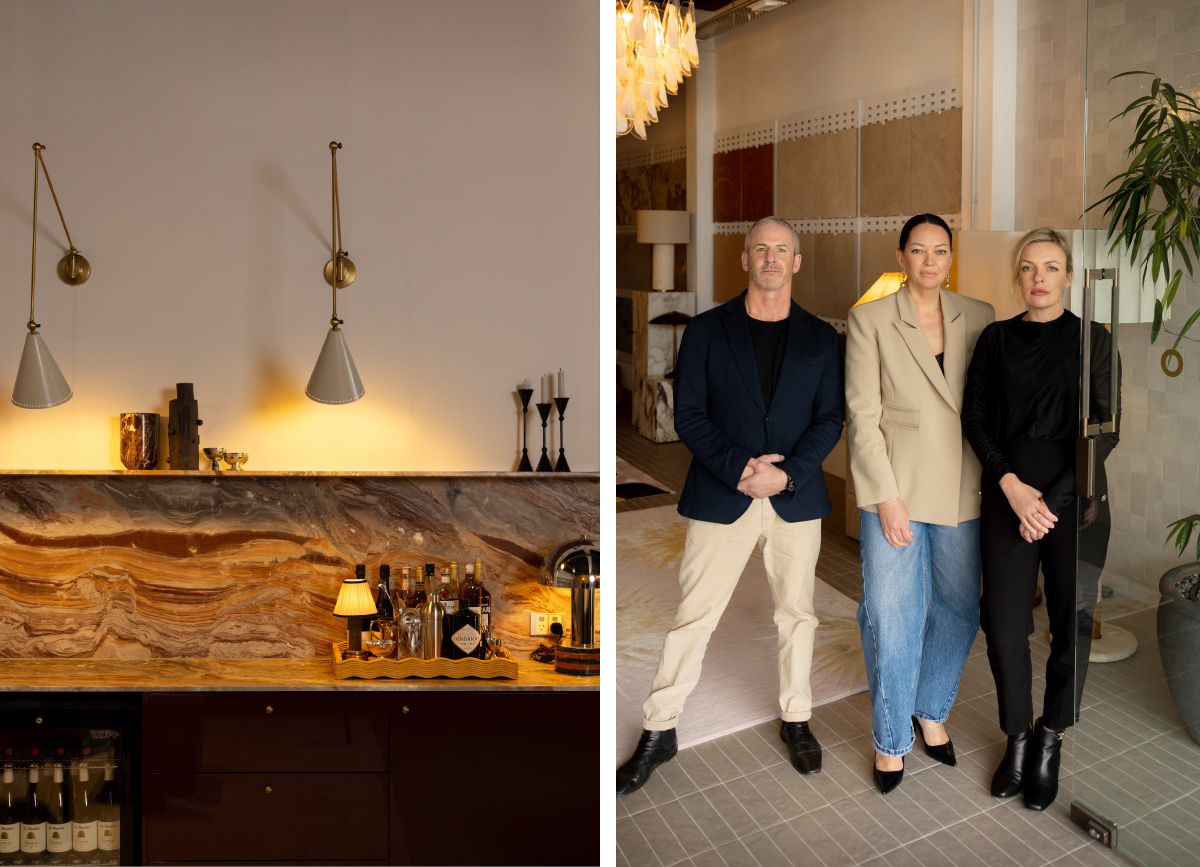
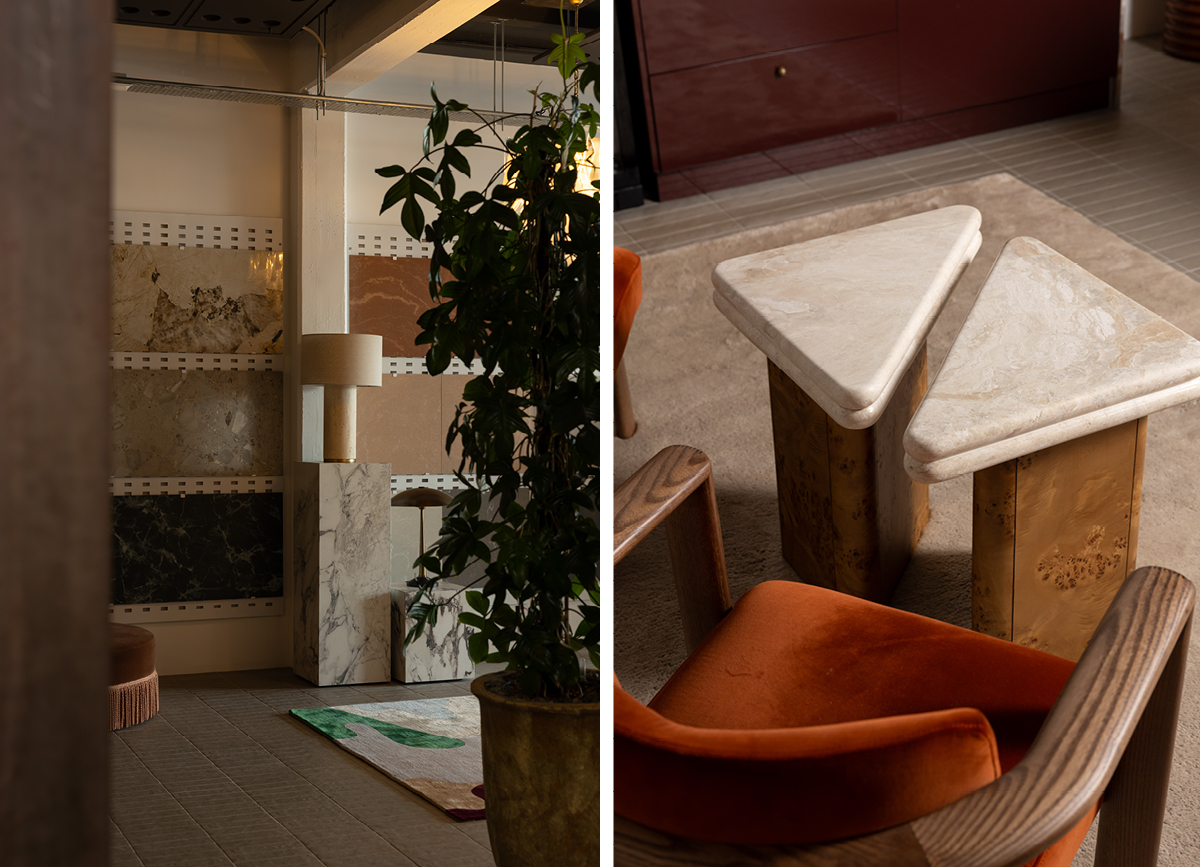
Since opening the doors to what was then Design Central in 2019, director Lindy Messam has witnessed the changing nature of our interior design landscape. Responding to this, Messam and her team have taken the decision to evolve into Obery, a destination atelier where materiality, artistry, and vision converge. Conceived as more than a showroom, this elevated atelier offers an immersive environment for exploration, connection, and discovery. It’s here that New Zealand’s most considered designers and architects are invited to engage deeply with a curated assemblage of rugs, handmade surfaces, and soon-to-be-released collections in sculptural furniture and lighting — each of which centres on quality and artistry, with an emphasis on unique materiality.
Rooted in the vision that shaped its name, Obery (named for founder and CEO Glenn Obery) is defined by a commitment to craft and creative collaboration. “Our heritage lies in the vision and expertise that shaped our name,” says Messam, “innovation emerges through the unique, handmade surfaces we champion and the artistry woven into each piece. Within Obery’s atelier, these threads converge, offering an immersive place where craft and creativity can be experienced in tangible form.” In this space, tradition and experimentation are not opposing forces, but parallel threads, each enriching the other.
In fact, creative director Jane Mason describes the studio’s evolution as one shaped by dualities: “New Zealand design leans into intimacy, heritage, and craft. Yet we’re equally inspired by a bolder creative lens; one that embraces scale, composition, and expressive form.” Obery bridges these perspectives through an offering that feels both grounded and expansive, inviting new interpretations of space, texture, and tone. The experience in Obery’s atelier is intentionally tactile. Sunlight drapes across heirloom rugs and unique hard surfaces, while artist-led furniture and lighting highlights the boldness and depth of each piece’s materiality, revealing unexpected nuance. Here, designers are encouraged to pause, linger, and engage. Every piece has been curated not simply to be placed, but to hold presence. The resulting atelier is less a presentation of objects, and more a series of immersive moments.
As its collection grows, so too does Obery’s ambition to shape a richer, more layered design experience in Aotearoa. “We envision Obery as a destination atelier,” Mason explains, “a space for brand discovery, inspiration, and collaboration, where the design community can explore, experiment, and create with confidence.”
For those seeking to work with objects of depth, Obery offers not only the tools, but the setting to transform creative intent into enduring design.
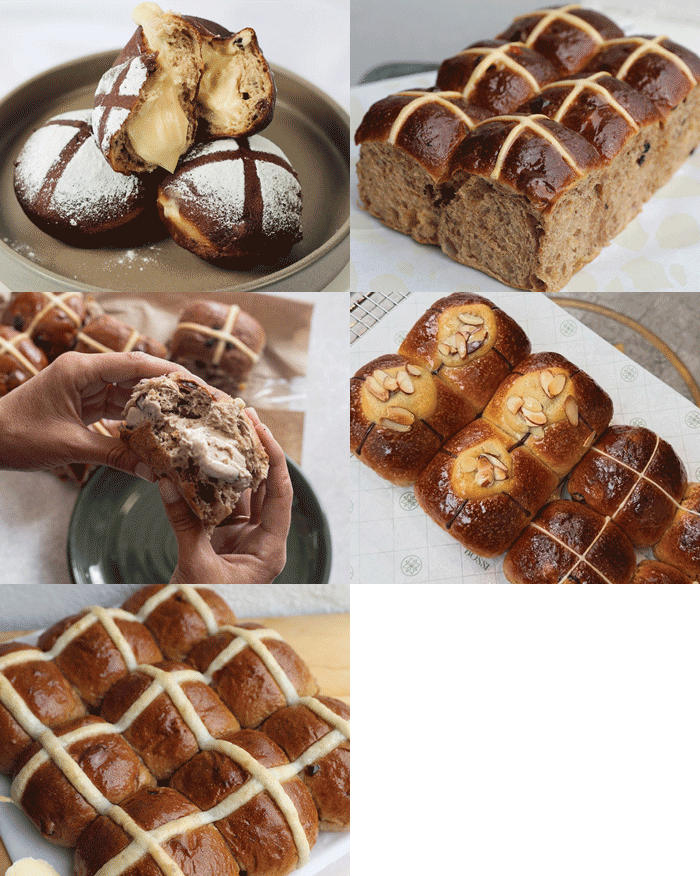
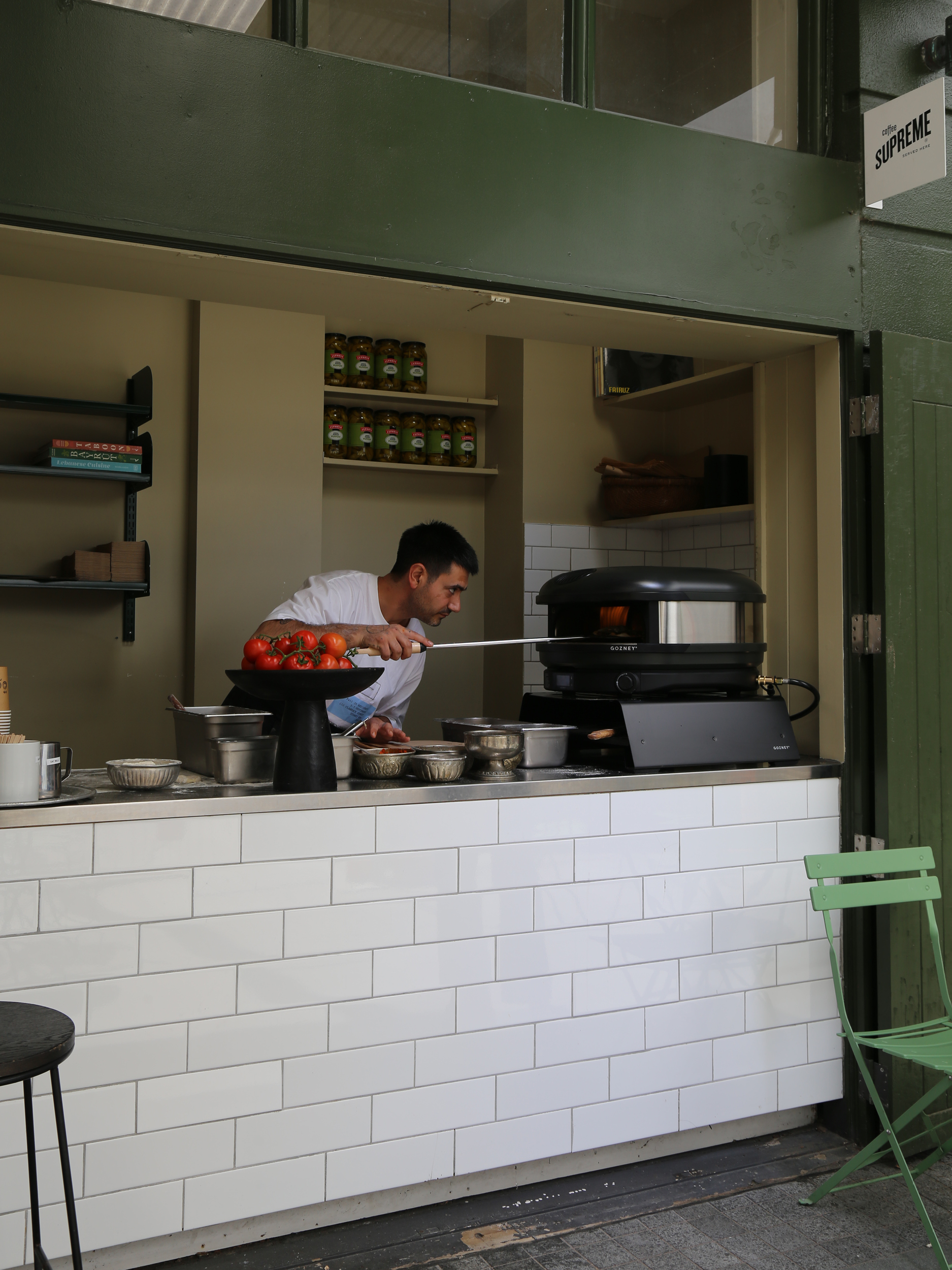
There’s something irresistible about bread pulled fresh from the oven — especially when it comes in the form of manoushe, Lebanon’s answer to the perfect breakfast flatbread. So it feels fitting that Elie Assaf, the exceptional chef behind Lebanese Grocer, has opened a new pop-up window next door dedicated entirely to just that.
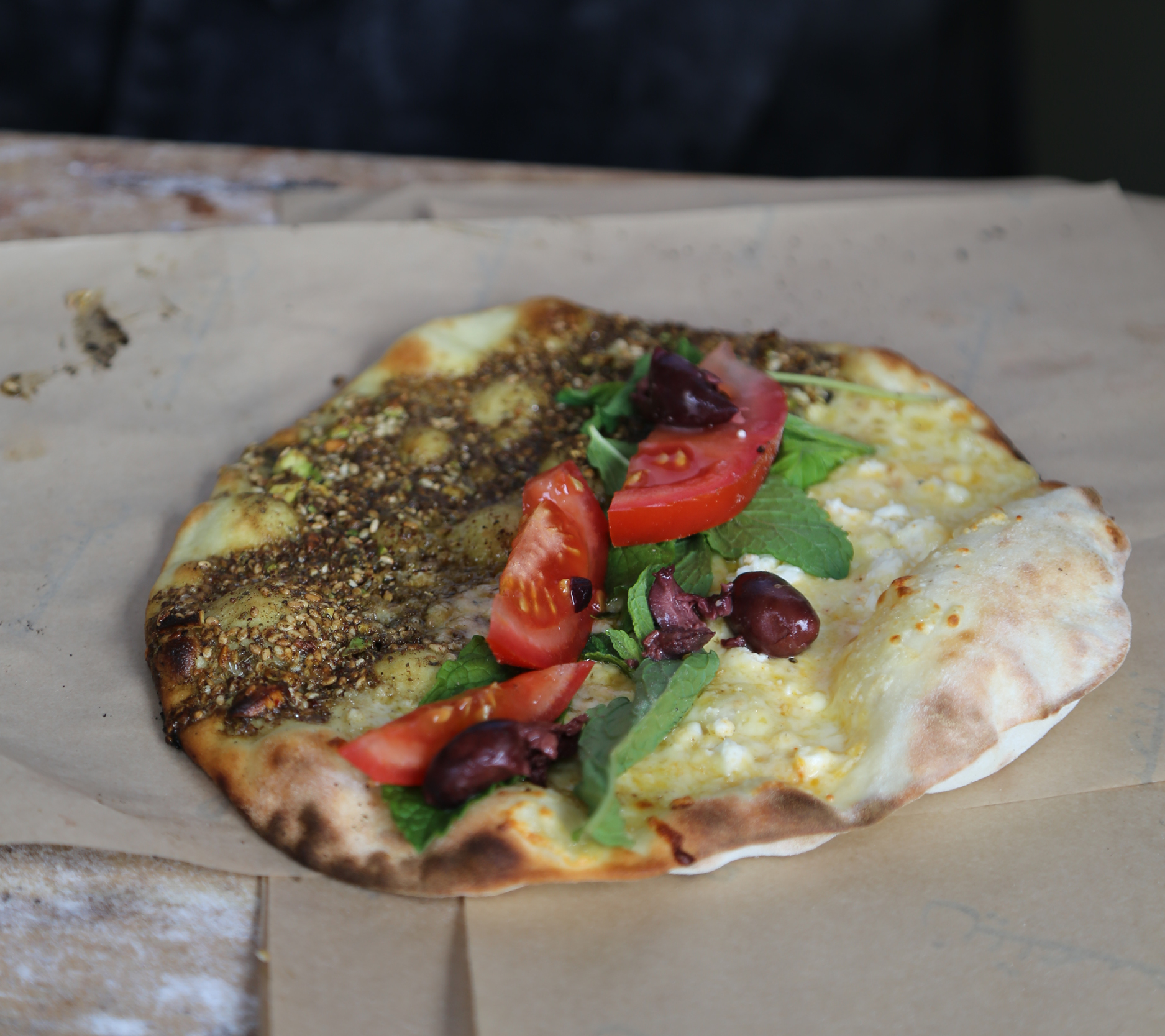
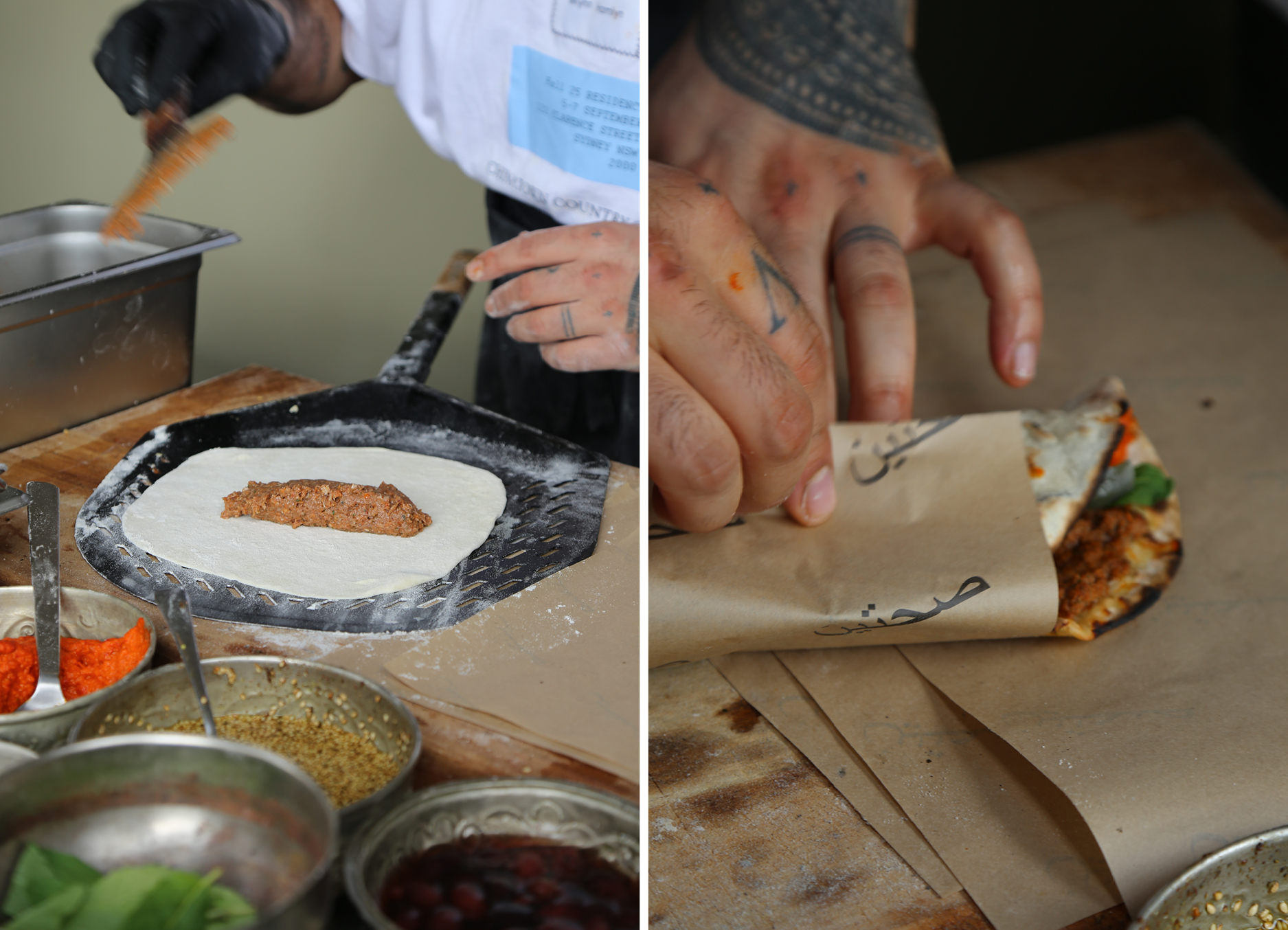
Manoushe Cheese & Za’atar
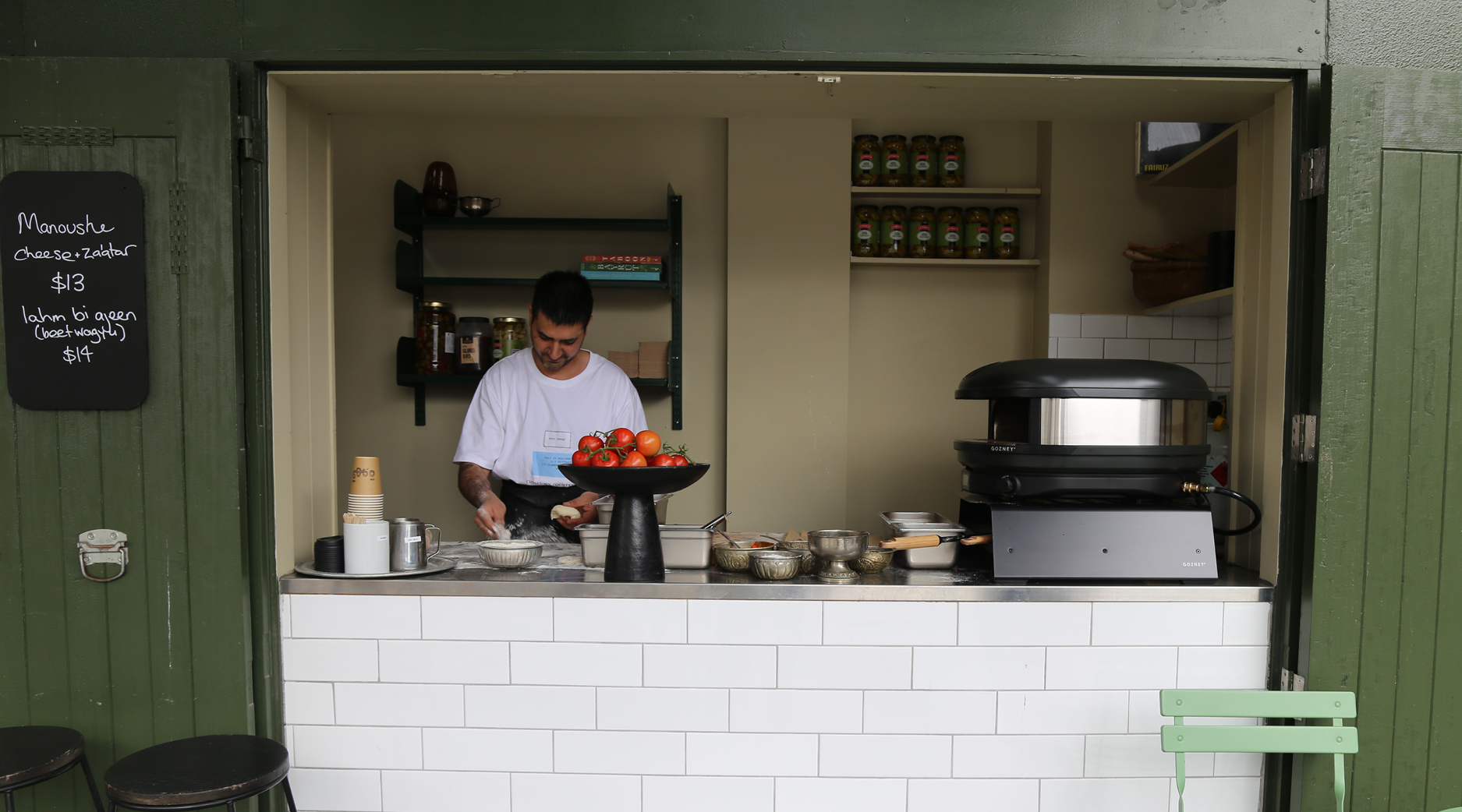
Za’atar Bakehouse by Lebanese Grocer is as simple as it sounds: a hatch, a hot oven, and a short list of flavours designed to transport you straight to the streets of Beirut. Think gooey Manoushe Cheese & Za’atar, or Lahm Bi Ajeen, a wagyu beef-topped flatbread that reimagines the iconic Lebanese staple. Assaf calls it “our take on the iconic Lebanese breakfast flatbreads from my childhood” — and it’s clear this is food made with nostalgia as much as skill.
Za’atar Bakehouse Window
Lahm Bi Ajeen (beef wagyu)
Open on an ad-hoc basis (with the next outing happening Saturday, October 4th from 10am until sold out), the Bakehouse is very much a catch-it-while-you-can experience. Those in the know will already be glued to Instagram for updates, because like everything Assaf touches, it’s destined to sell out fast.
For Aucklanders who have already fallen in love with Lebanese Grocer’s shelves of pickles, za’atar, and housemade ba’alawa (not to mention the exceptional shawarma come lunchtime), this new venture feels like a natural, and delicious, evolution.
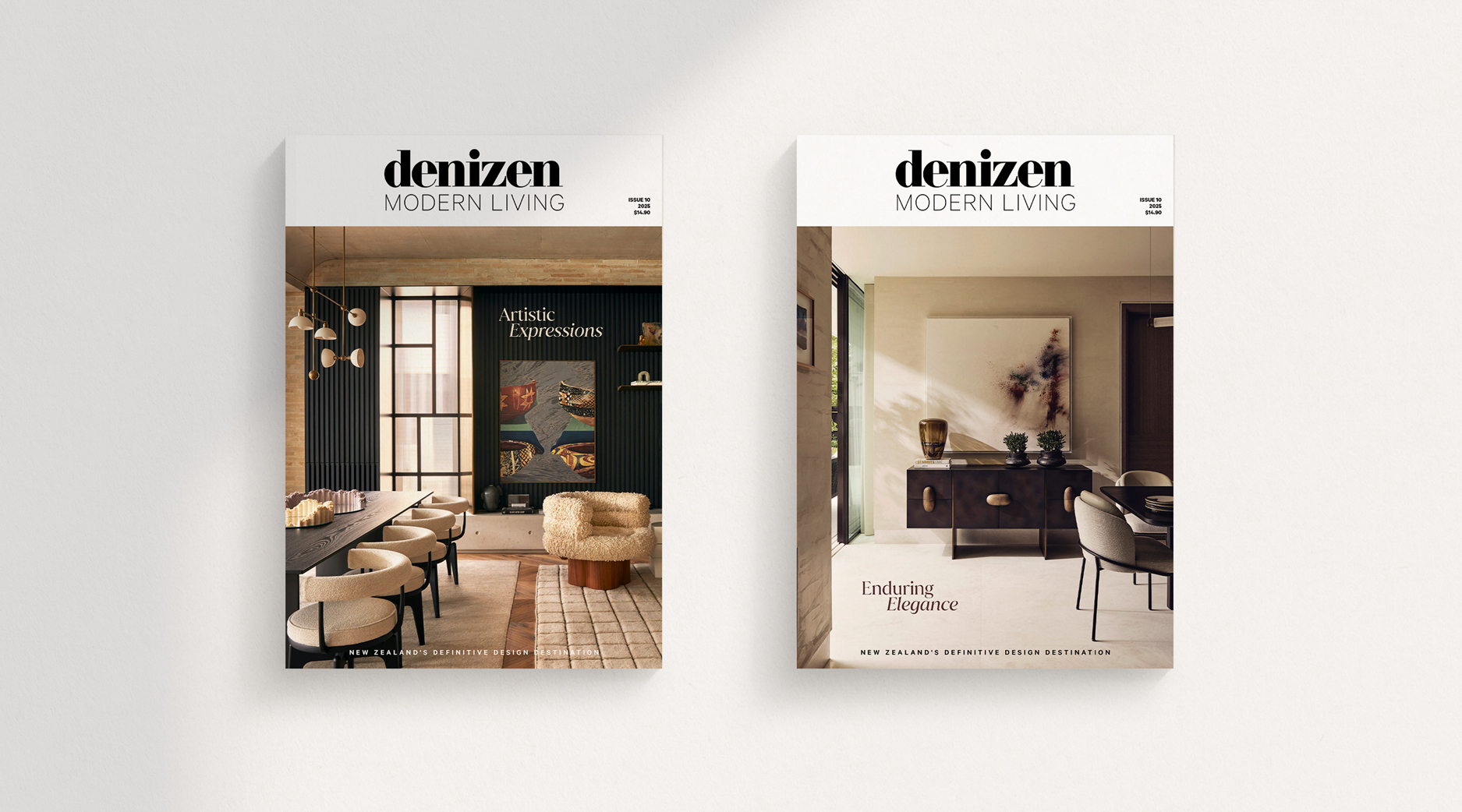
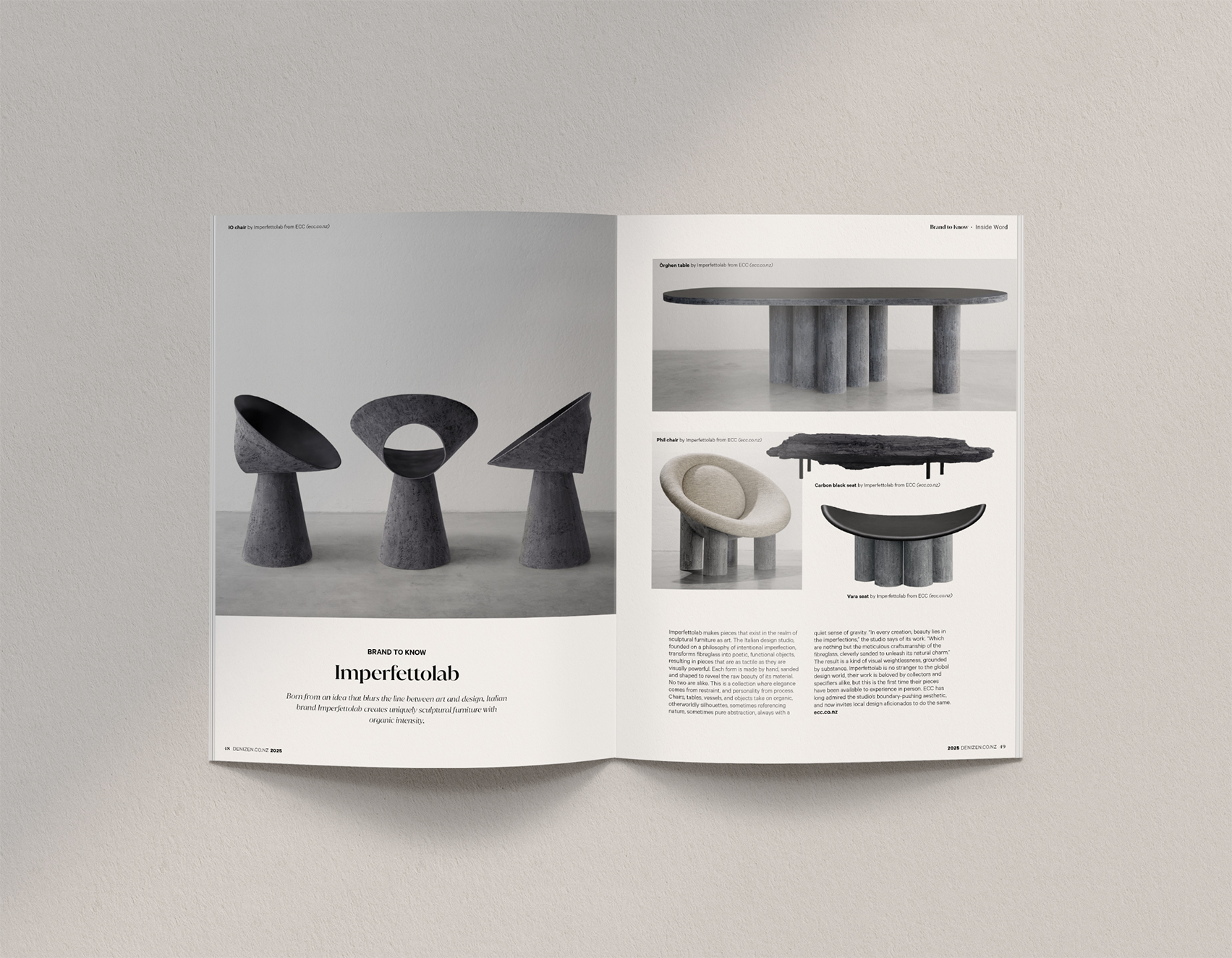
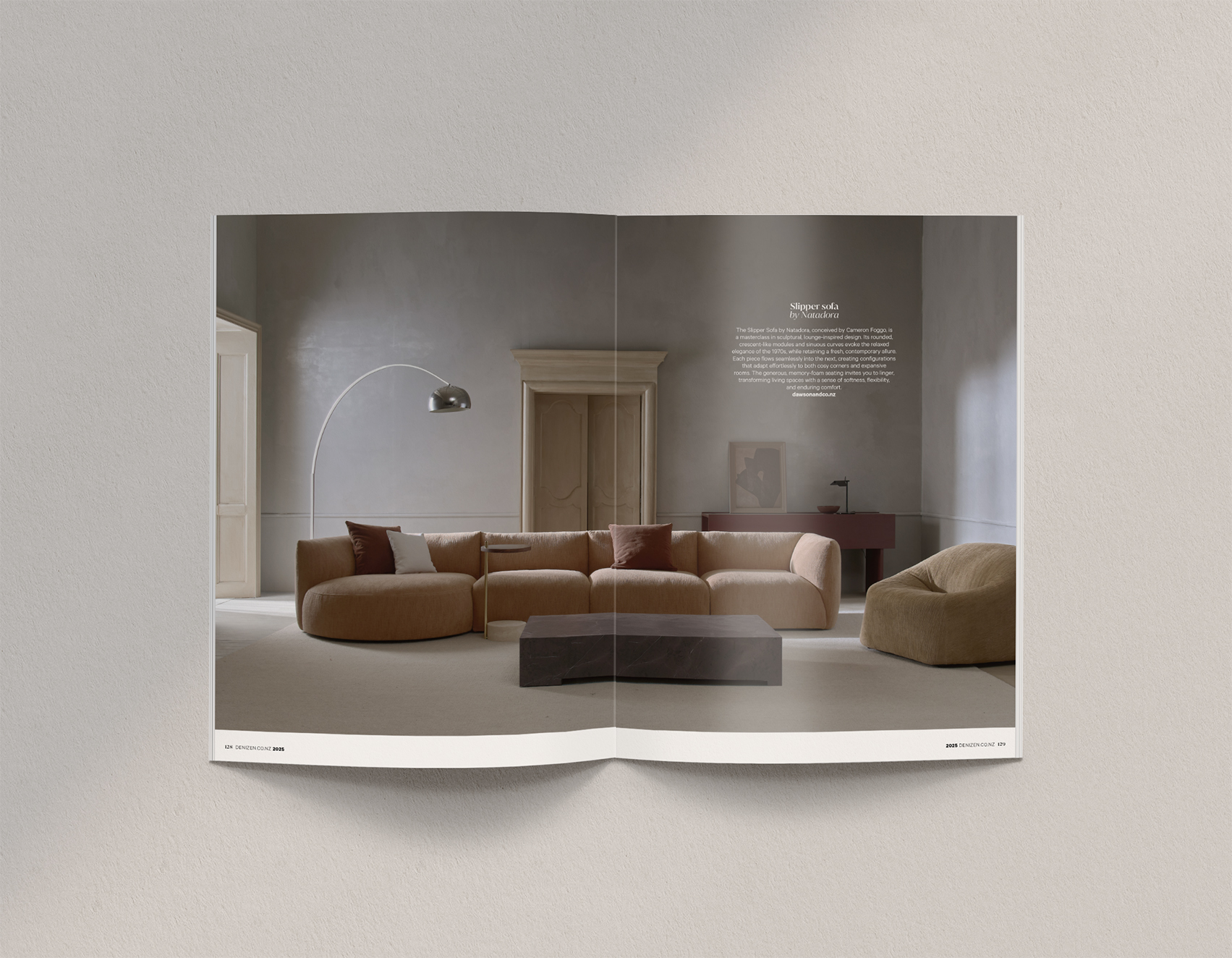
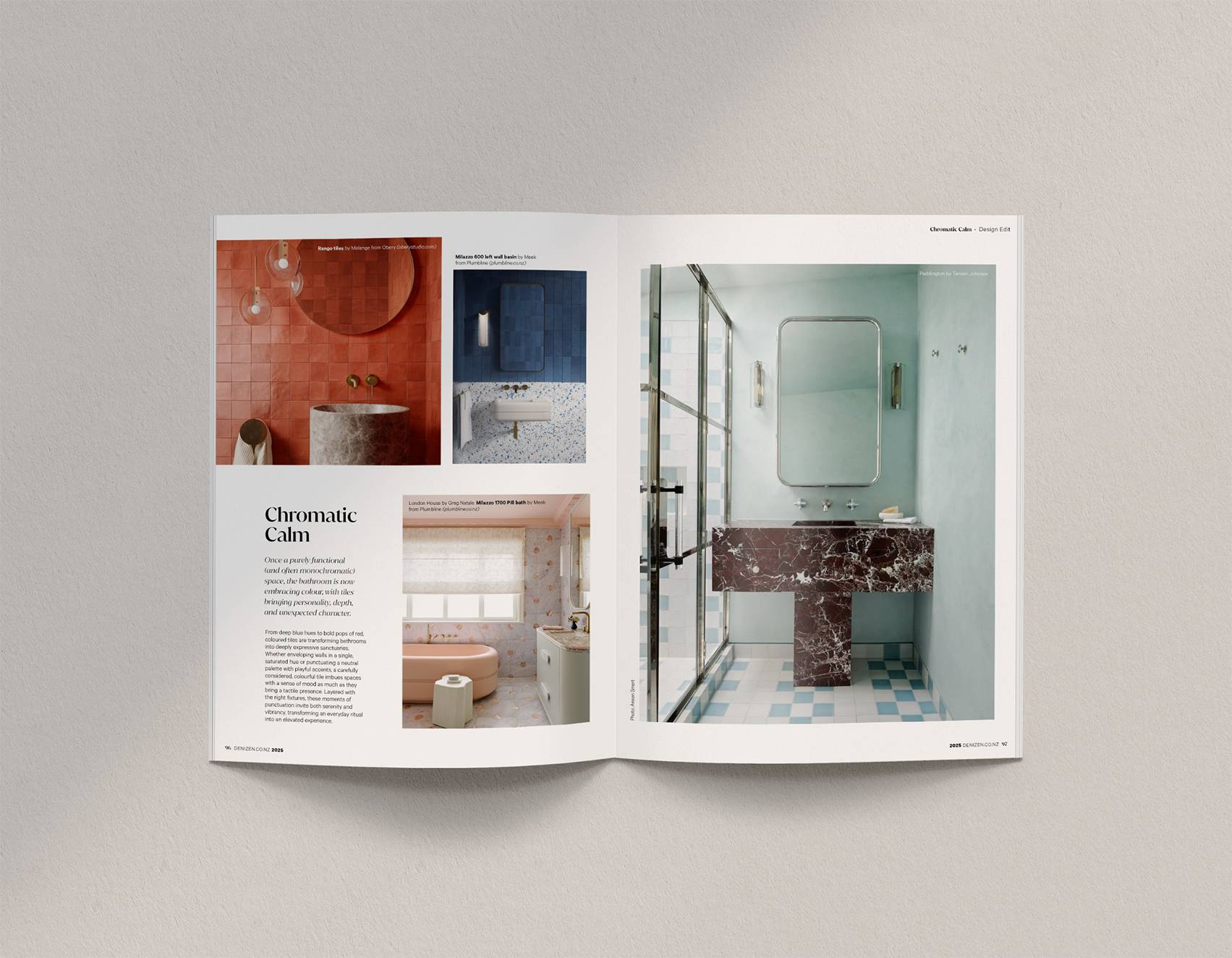
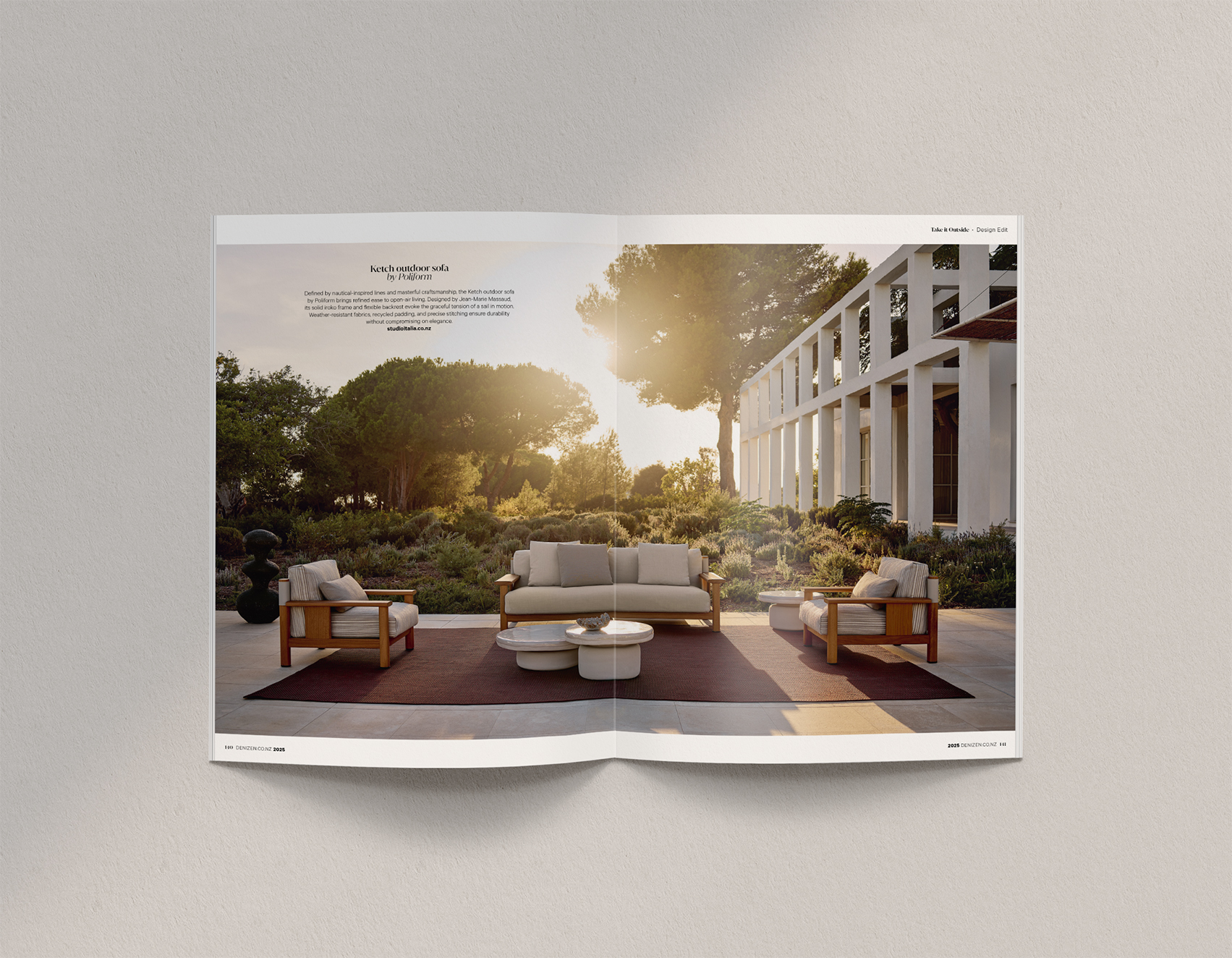
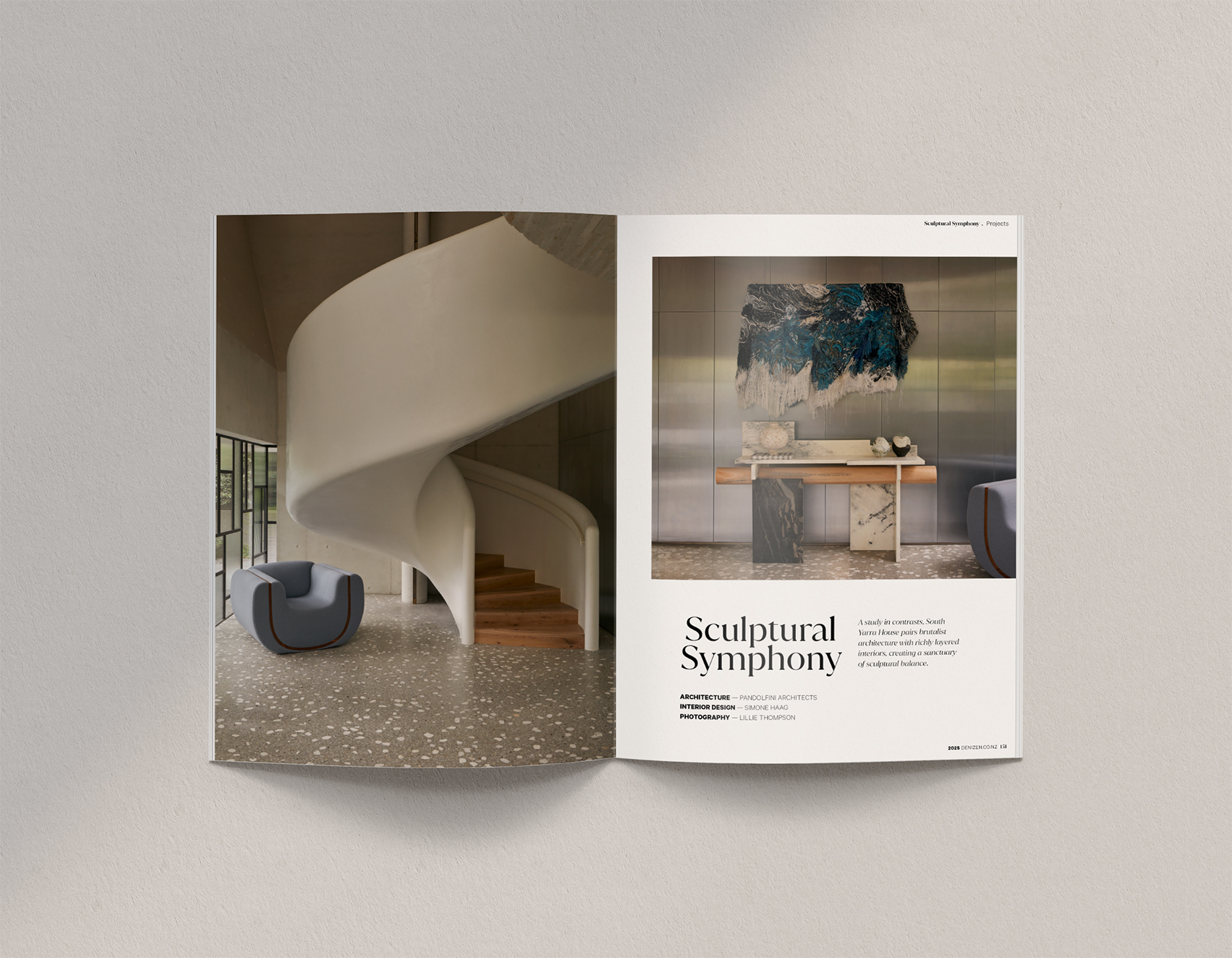
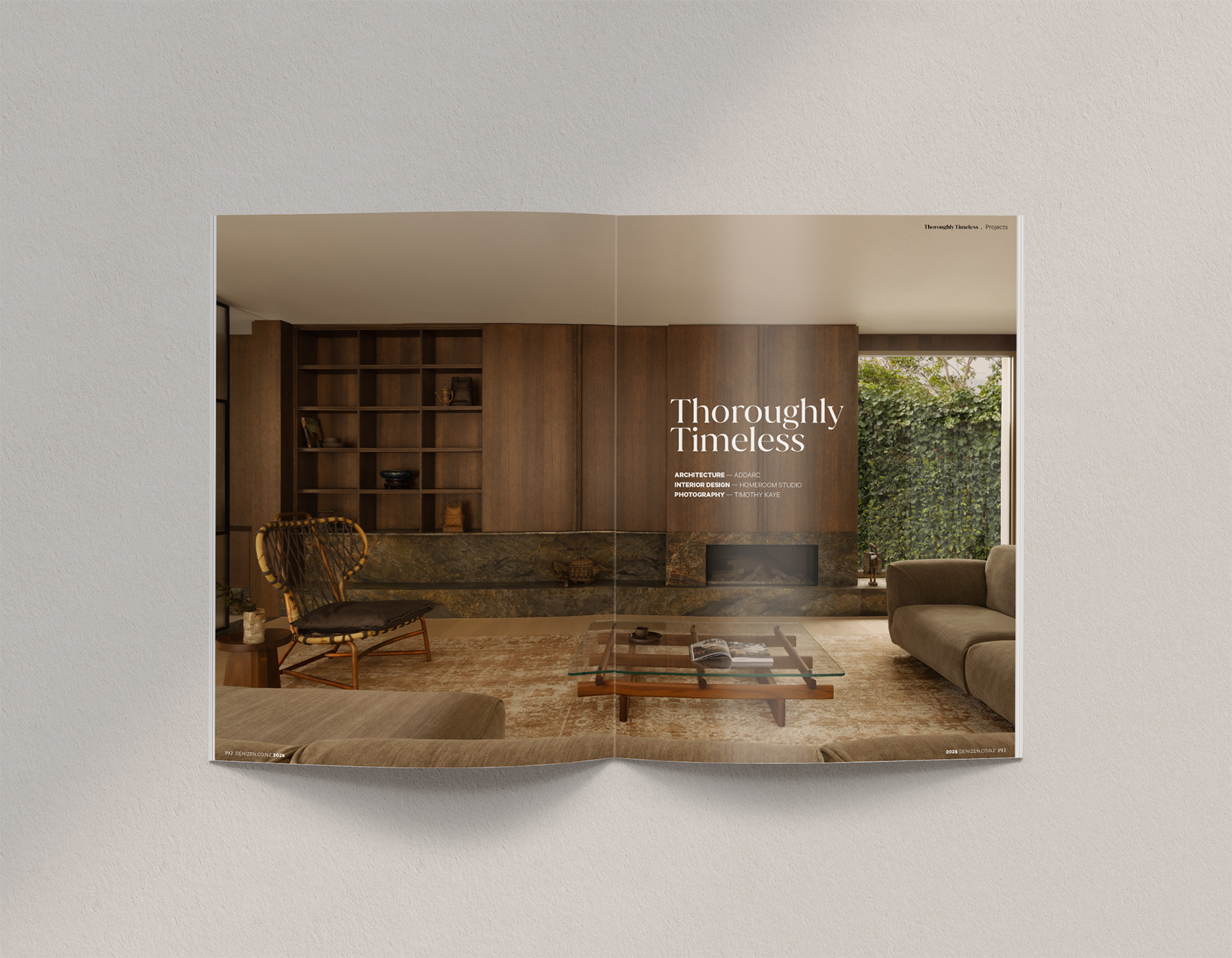
If you’re dreaming of a home that feels both timeless and deeply personal, consider the new issue of Denizen Modern Living your guidebook. Our annual design issue explores the evolving language of contemporary design — softer, sensorial, and rooted in self-expression. From the interplay of art and interiors to the honest beauty of raw materials, these pages celebrate spaces that prioritise authenticity, comfort, and individuality.
Whether you’re building, renovating, or simply seeking inspiration, this issue offers ideas to help you design for not just how you want to live, but how you want to feel at home.
Denizen Modern Living is available in two stunning covers and is on sale now at all good news agents. Want to guarantee your copy and never miss an issue? Subscribe below today.
In a bid to discover the true, wellness-enhancing benefits of a deep, restorative sleep, weconsulted Olivia Arezzolo, a renowned Australian sleep expert, who divulged the 10 crucial steps that will change your evening routine for the better.
It’s been a long held belief that the cure-all for many of our wellbeing woes is simply getting more sleep. But we all know that this is much easier said than done. Queenstown-based, Australian sleep expert and best-selling author Olivia Arezzolo, however, is one person who seems to have cracked the code.
Sleep Expert — Olivia Arezzolo
While her ritual may seem rigorous, Arezzolo strongly believes that to truly improve your sleep you must be vigilant. It not only shifts lingering fatigue, but helps to curb illness, alleviate cognitive issues and support mental health. So if you too want to improve your sleep, these are Arezzolo’s 10 essential steps to a restful and fulfilling night.
01. Block Blue Light
According to research, blue light is one of the biggest triggers for a bad night’s sleep. You can (and should) remedy this by investing in a pair of blue light-blocking glasses, which filter the overstimulating blue light from any screens, and offer a nice, soothing lens similar in colour to candlelight. Put these on for at least two hours before bed.
02. Use Lavender Oils
An age old cure-all that even your grandmother swore by, lavender is scientifically proven to induce sleep. Two hours before bedtime, either rub a couple of drops on your temples or ideally, diffuse some in your bedroom.
03. Disconnect From Tech
Whether you use a blue light blocking filter on your device or not, the evidence still insists that you turn your screens off at least an hour before bed. With the world at your fingertips, laptops, tablets, phones and even televisions are a hive for hyperactivity. If you can, remove them from the bedroom altogether.
04. Wash Off The Day
A nighttime shower is always a relaxing ritual to wash off the stresses (and dirt) of the day. Warm water moves your body into a gentle, relaxed state, and a little self-care routine like this is always soothing.
05. Take Magnesium-Based Supplements
Magnesium is the best micronutrient for inducing deep sleep, and when deficient, it’s noticeable; creating symptoms like hyperactivity and restless, twitching legs. When you hop out of the shower, take a magnesium-based supplement. Even better when paired with a calming, chamomile tea.
06. Read A Book
Research has shown that even as little as six minutes of reading reduces stress levels by up to 68 percent. It’s the perfect way to unwind before bed, and it doesn’t need to be a challenging read. (But it does need to be a proper, analogue book — no Kindles after nine o’clock.) See our recommendations on what to read right now here.
07. Use An Eyemask
A simple silk eyemask is one of the best investments you can make for your slumber. It supports sleep habits by blocking out any small, bright distractions, and the textural feel is surprisingly soothing. This is the last thing to do before drifting off.
08. Keep A Checklist
Somewhere handy, keep a checklist nearby. This isn’t forever, but it is to ensure you do every step, every night. Over time it will become more ritualistic and natural. For now, this checklist is essential.
09. Be Consistent
Arezzolo recommends undertaking this routine for at least a week — including all elements — before you knock its efficacy. Good things take time, but with this approach, it’s a matter of days, not months.
10. Stay Accountable
Embarking on a quest for a good night’s sleep is best when done together. The easiest person to undertake this with is your partner, as they’re often either the victim or the culprit of any bad sleep habits.
For more exclusive access to what the city has to offer, engaging content, excellent imagery and thought provoking commentary on the life that surrounds you, subscribe to Denizen magazine now.