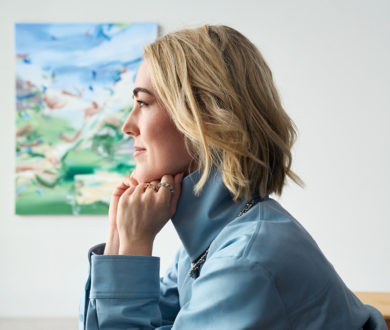




The loyalty reserved for the salon chair is often built on habit and hope. Six-week appointments are booked with near-religious consistency, even when the hair itself is suggesting that perhaps enough is enough. It is a rhythm the industry has long encouraged, despite growing expert advice that advises limiting colour to no more than four times annually, a threshold that feels almost radical when set against the reality of modern maintenance.
At the centre of a subtle but significant shift is Auckland salon owner Louise Moore of Touslé Studio, whose work reads less like a revolving door of appointments and more like a considered edit, where restraint is not only encouraged but, in many cases, insisted upon. “Most of the clients who come to me have been doing the six-week cycle for years,” she says, “and their hair is just not coping anymore.”
What she offers is not an instant transformation, but a recalibration, one that often begins by doing the unthinkable and taking blondes darker, softening contrast and reworking highlights so they grow out with ease rather than urgency, allowing the hair to regain some semblance of strength before anything more ambitious is attempted. It is, as she describes it, “about getting the hair back to a place where it can actually handle colour again.”

From there, the process slows, with full foils reserved for when they are truly needed, replaced more often by half-head work or what she calls a light “dusting” through the hairline, enough to maintain brightness without repeatedly pushing the hair past its limits. “Three to four times a year for major colour work is plenty,” Moore says. “Anything more and you’re just overprocessing, whether you realise it or not.”
The difference, while not immediate, is unmistakable over time, particularly when paired with a broader focus on hair health that moves beyond the usual carousel of products and into the less glamorous territory of diet, consistency and, occasionally, doing nothing at all. “People think it’s about finding the right mask,” she says, “but a lot of the time it’s about what you’re putting into your body and how often you’re stressing your hair in the first place.”
It is an approach that runs counter to the commercial logic of the category, where frequency has long been rewarded, yet the results speak with a quiet confidence, visible in before and after images that show not just better colour, but stronger, fuller hair that no longer relies on constant intervention to look its best.
Or, as Moore puts it, with a degree of understatement that feels earned, “I want my clients to get to a point where they don’t feel like they have to be here all the time.”