


There is a quality of light along the bay end of Brighton. Flatter than the Mornington Peninsula, softer than St Kilda, drawn out by the proximity of so much water and sand. It moves through this house in a way that feels almost choreographed. Late morning, it falls across custom-stained timber floors and pulls the grain forward as though the floor is being lit from within. By mid-afternoon, it has migrated to the travertine, warming a surface that was already warm to begin with. You notice the light here before you notice the architecture, which is one of the more sophisticated things a house can ask of you.
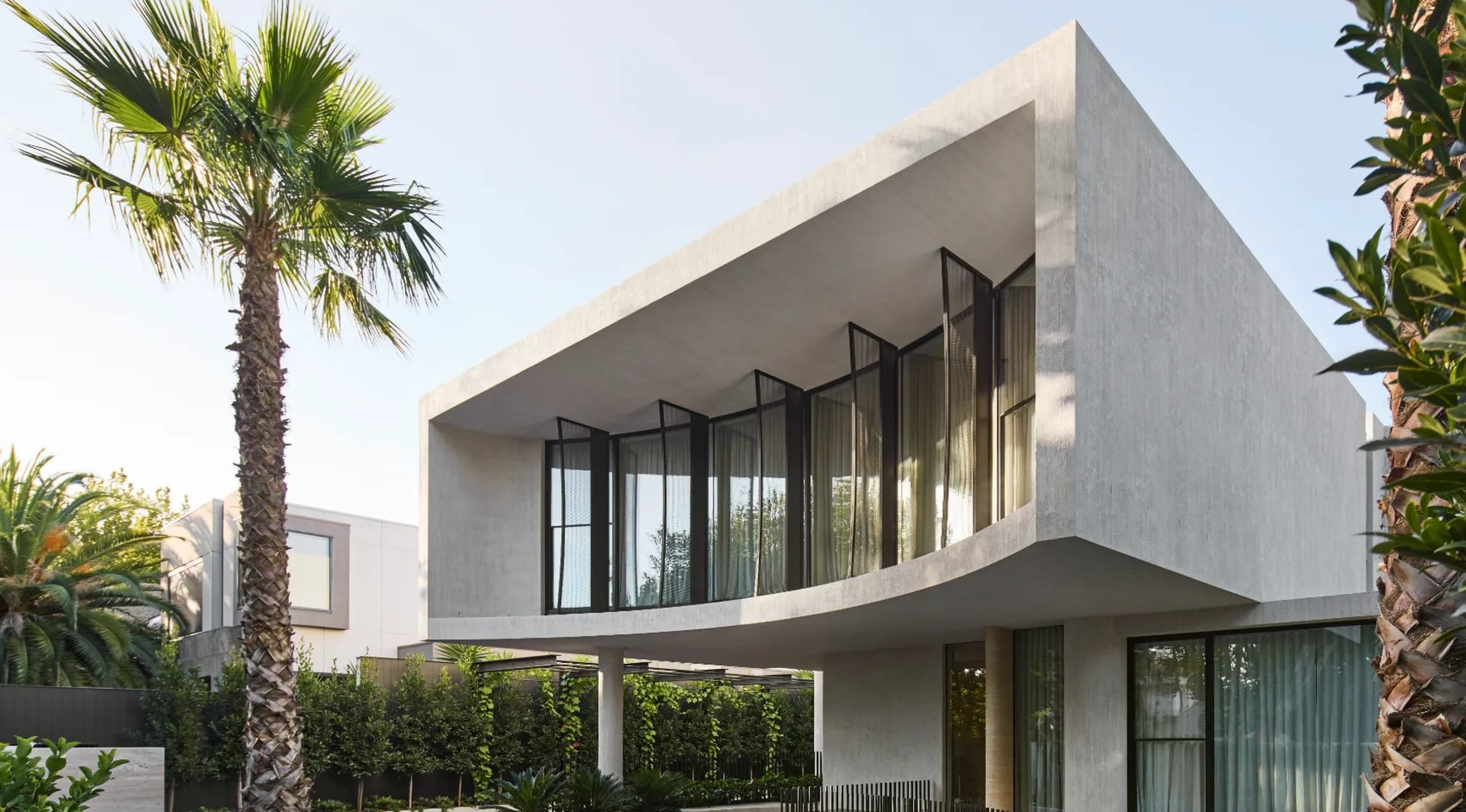
The residence sits on the so-called Golden Mile, two hundred metres from the beach, and was designed by Melbourne practice McKimm for Bondi Sands co-founder Shaun Wilson and his wife Tess Shanahan, model, presenter, and host of the Tess Talks podcast. The brief, by the couple’s own account, drew on a particular set of references: the canyon-cradled houses of the Los Angeles Hills, the stripped-back tonal palette of Rosie Huntington-Whiteley’s home, the scaled grandeur of Kim Kardashian’s. The intent was clear: a home that could hold international ambition while remaining unmistakably grounded in its Australian setting. McKimm has met that brief with real fluency. The house is international in vocabulary, Australian in sensibility, and entirely its own thing.
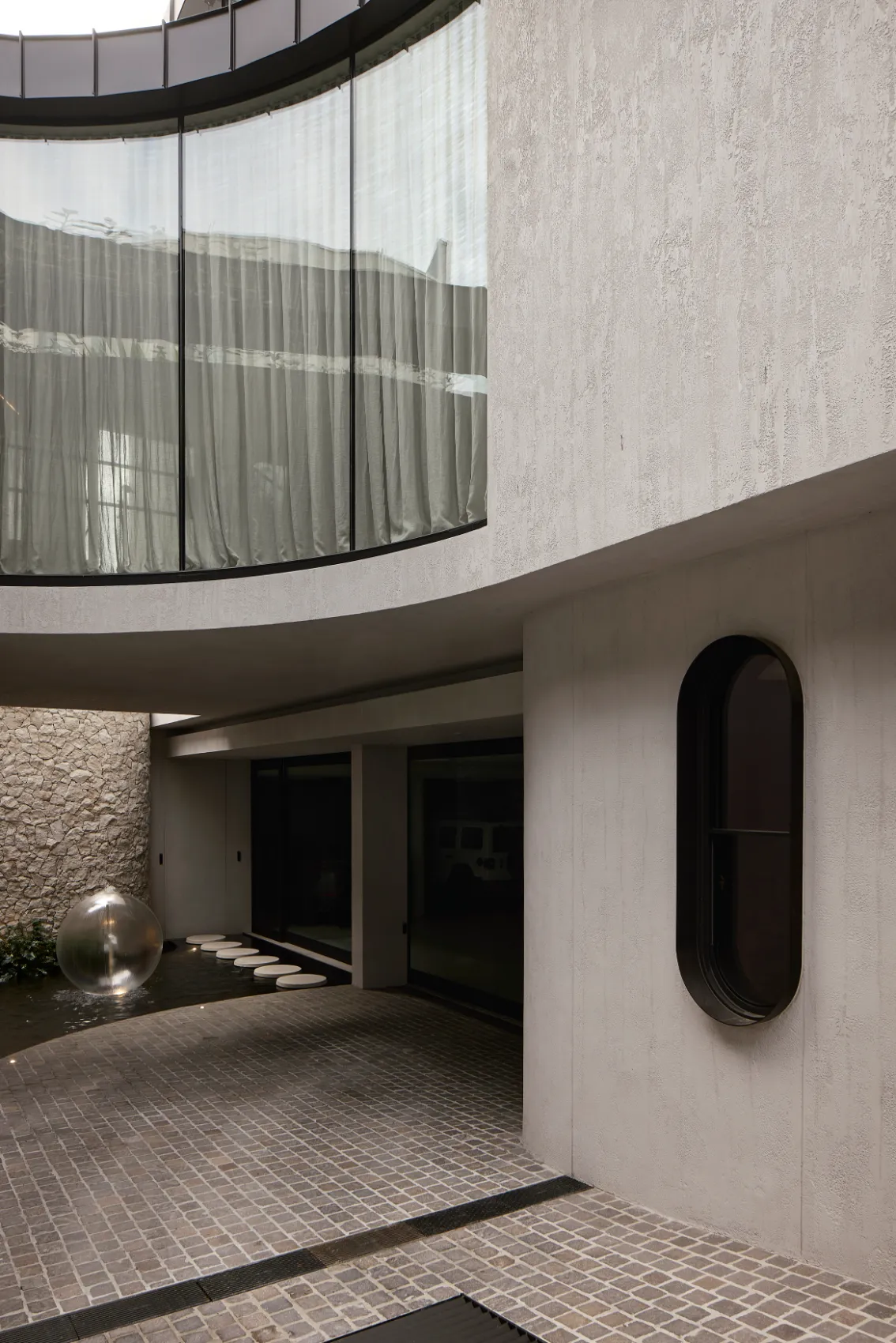
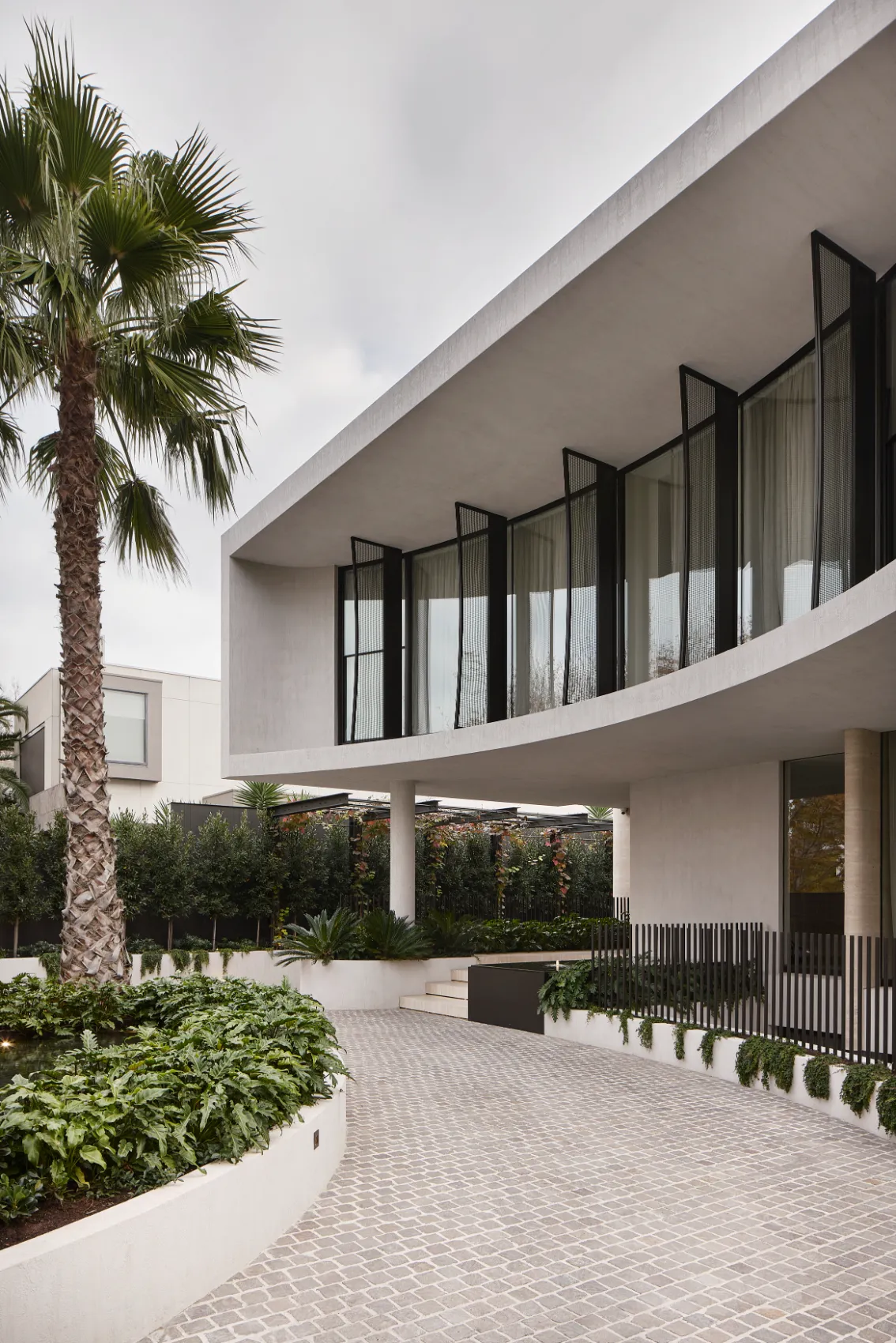
The site offered both an opportunity and a puzzle. A southern street frontage and a northern aspect meant solar access had to be carefully drawn into the principal living zones, with the light pulled deep into the home from the back rather than the front. The architectural response is graceful: a sequence of rooms that opens, almost insistently, toward the garden and terrace, with framed views and biophilic gestures threaded throughout. Indoor-outdoor flow can be a difficult thing to do well. McKimm has done it with the kind of ease that takes a great deal of work to achieve.
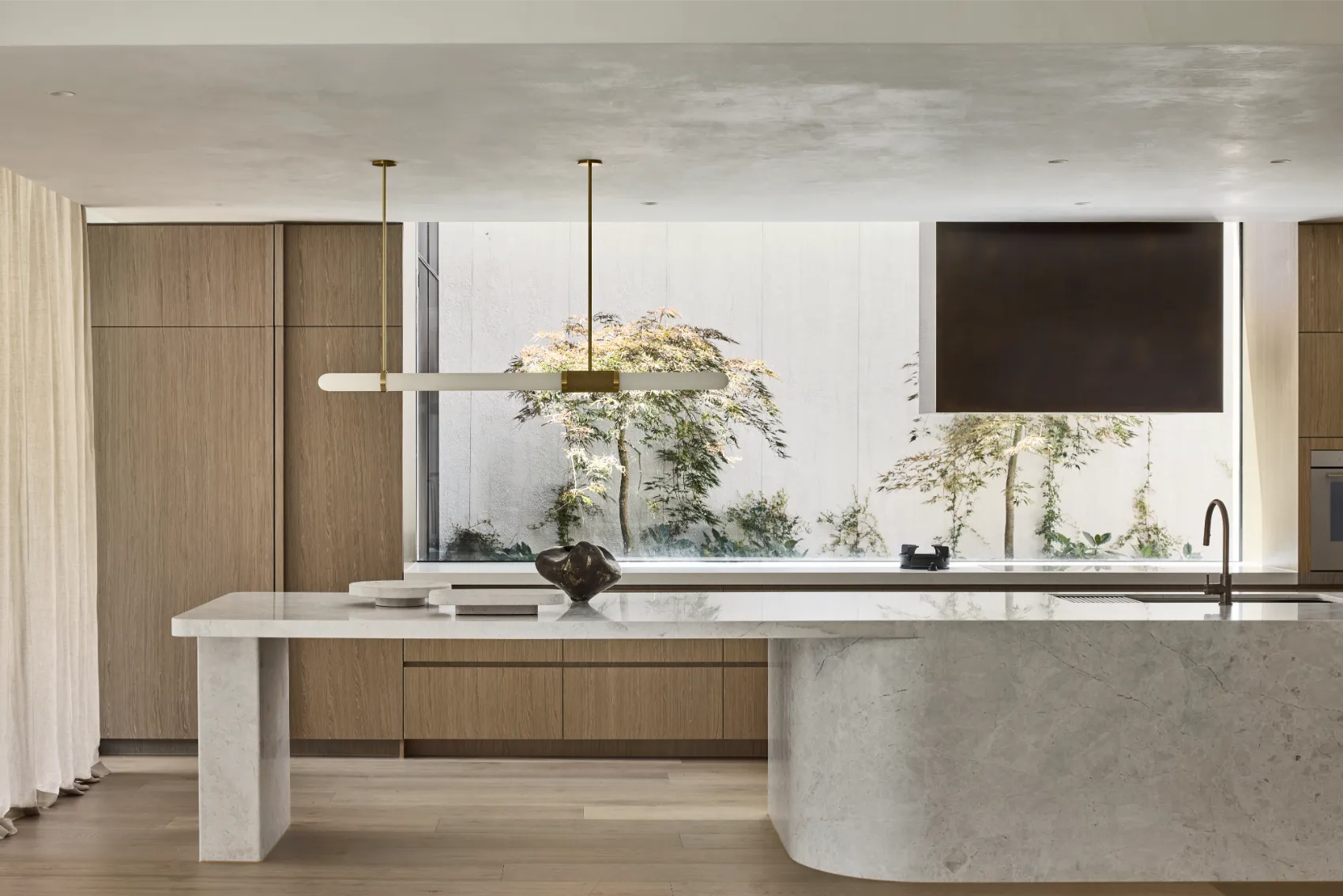
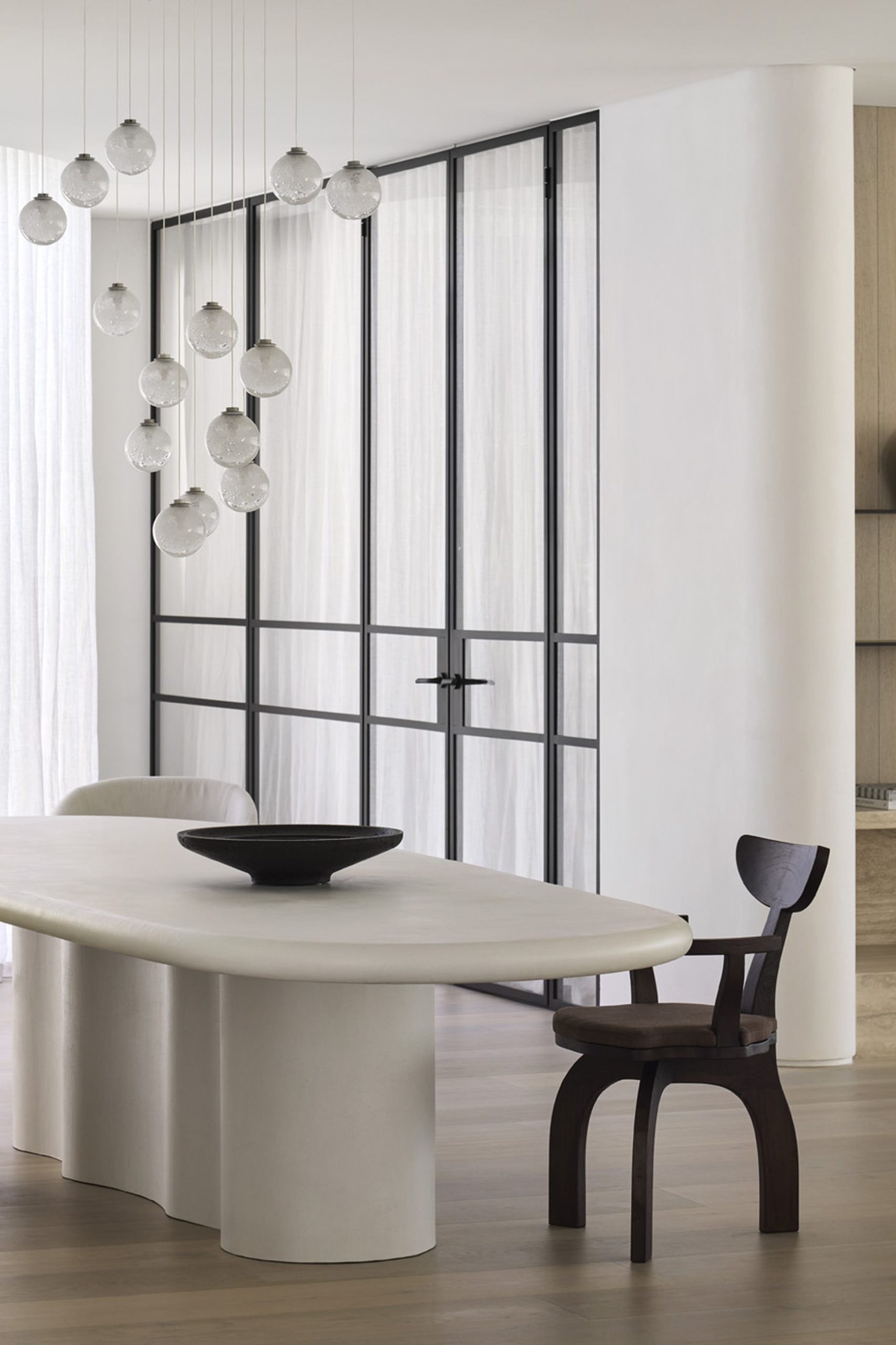
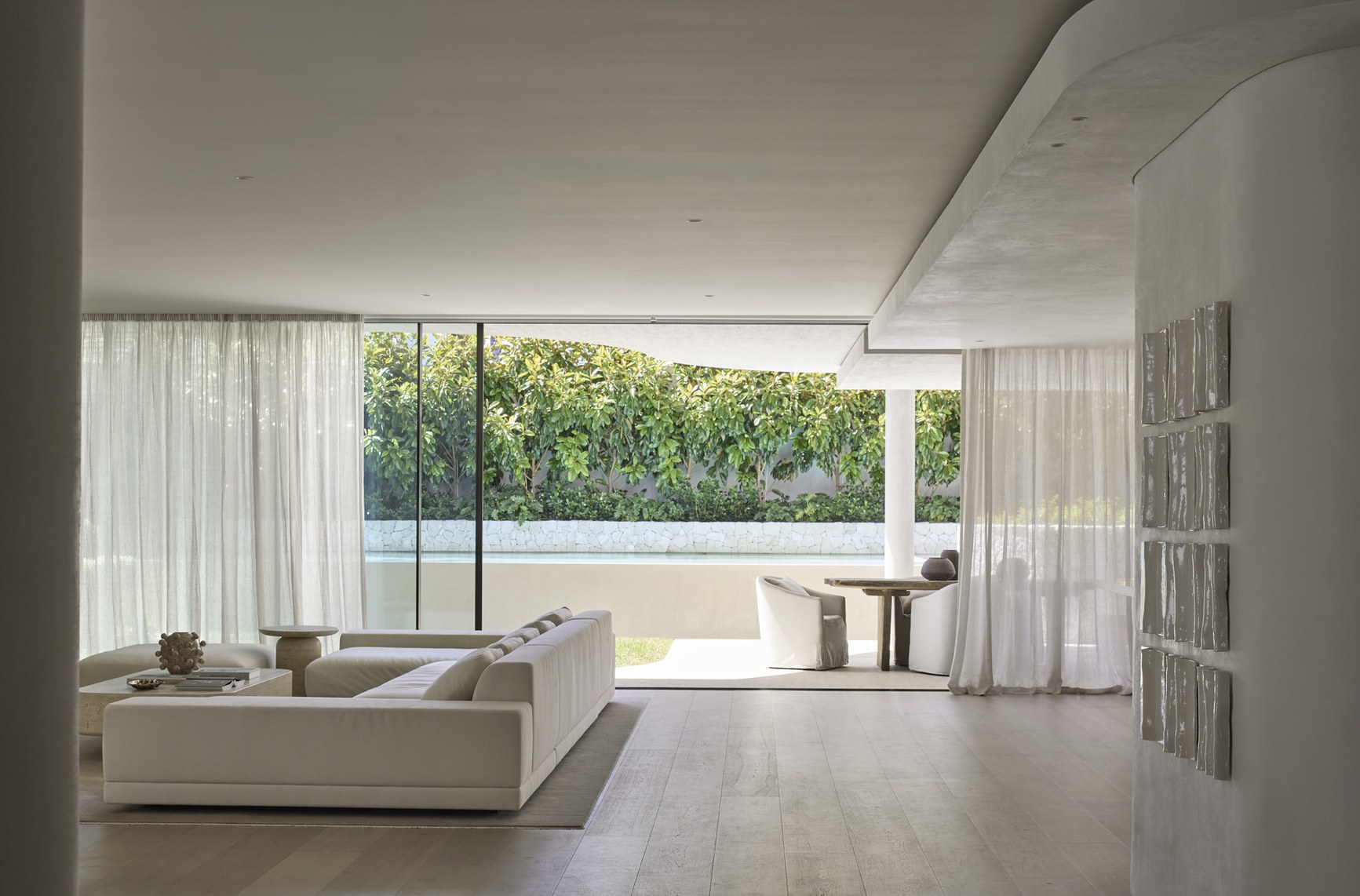
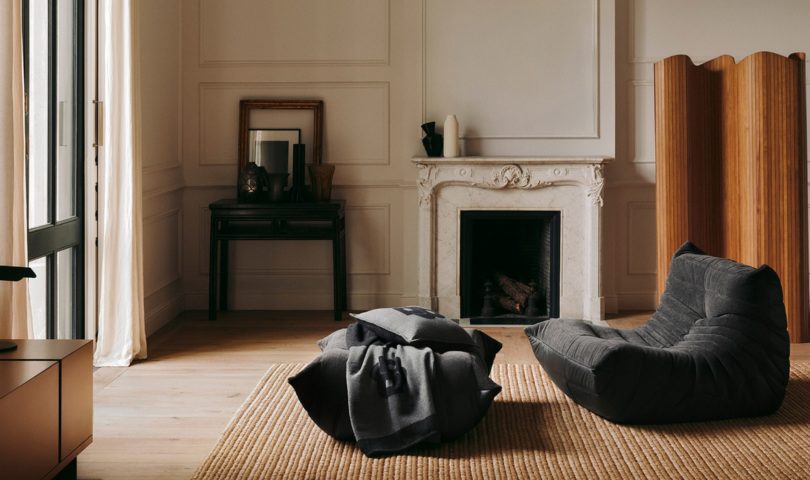
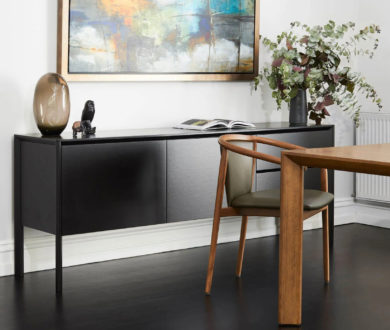
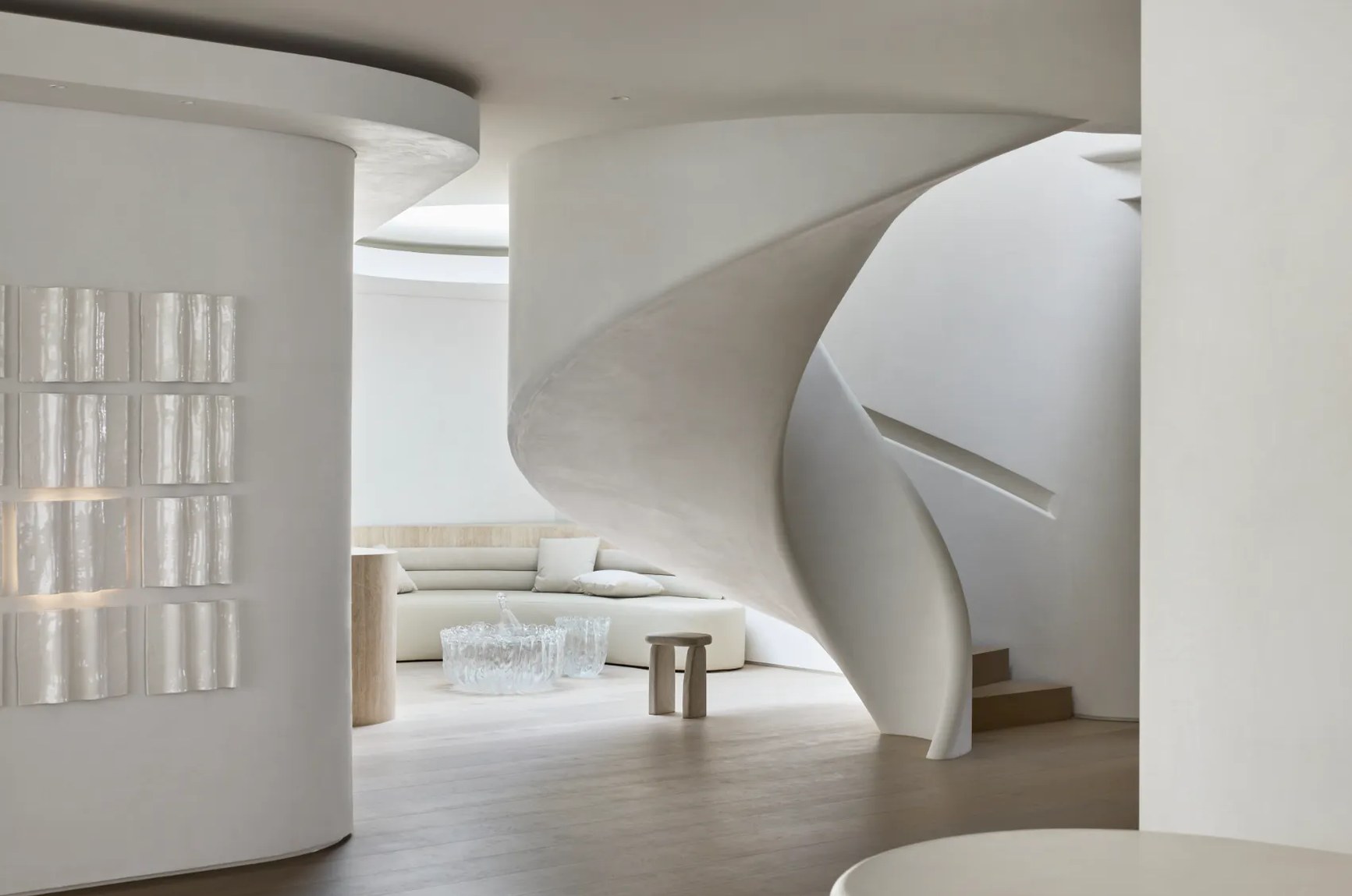
Materiality is where the house quietly shows off. Custom-stained timber flooring runs underfoot, dark enough to anchor the eye, warm enough to live alongside the bay light filtering in from the north. Venetian plaster appears on key walls, that slightly hand-applied, slightly imperfect surface that catches light in a way painted plasterboard never quite does. Aged bronze is used as connective tissue: door hardware, joinery details, the cocktail bar that anchors the living zones with a presence the architects describe as subtle and rightly so. Travertine, a stone with its own quiet weather, brings a cooler counterweight. The result is a palette that is genuinely cohesive, where every material is in conversation with the next.
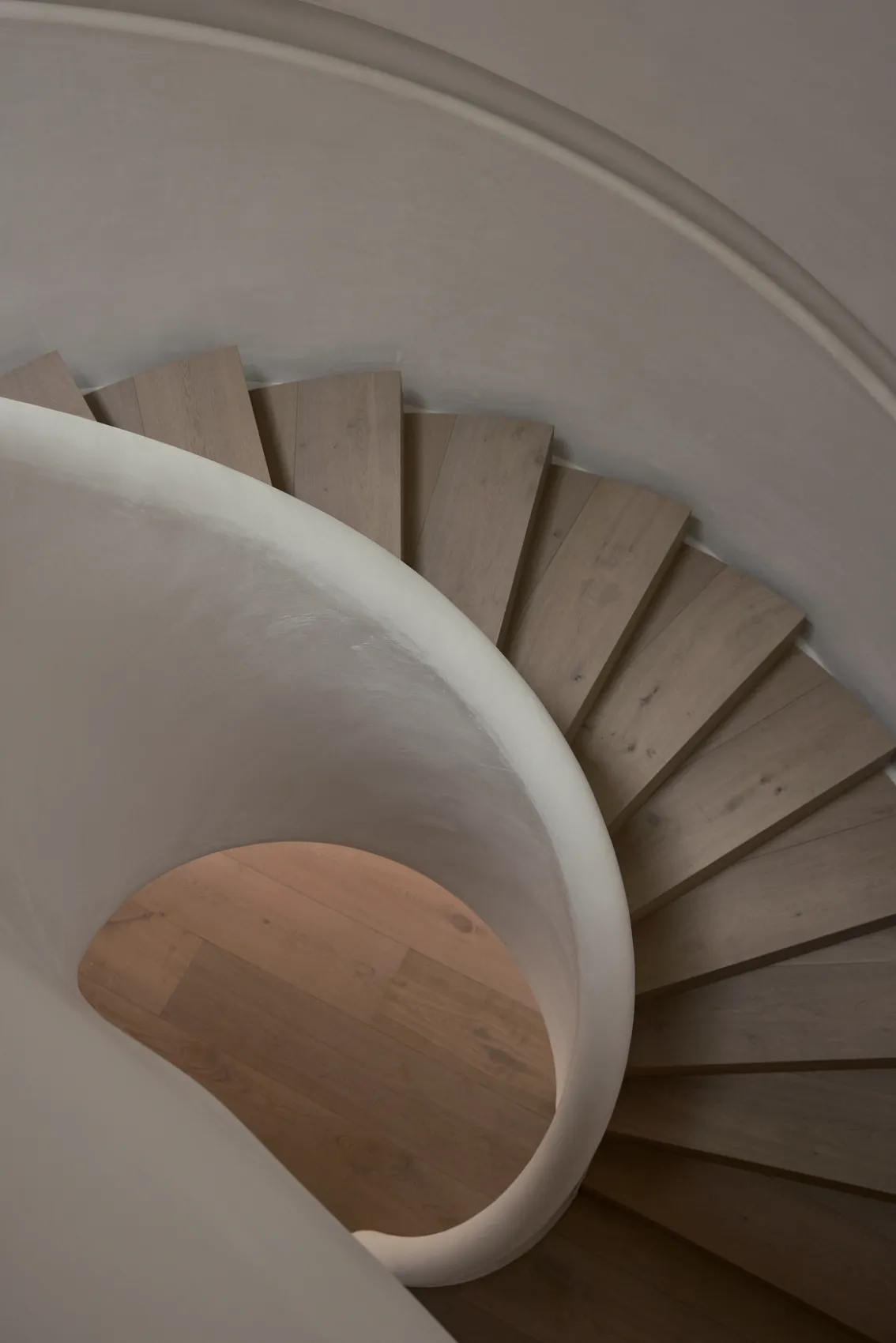
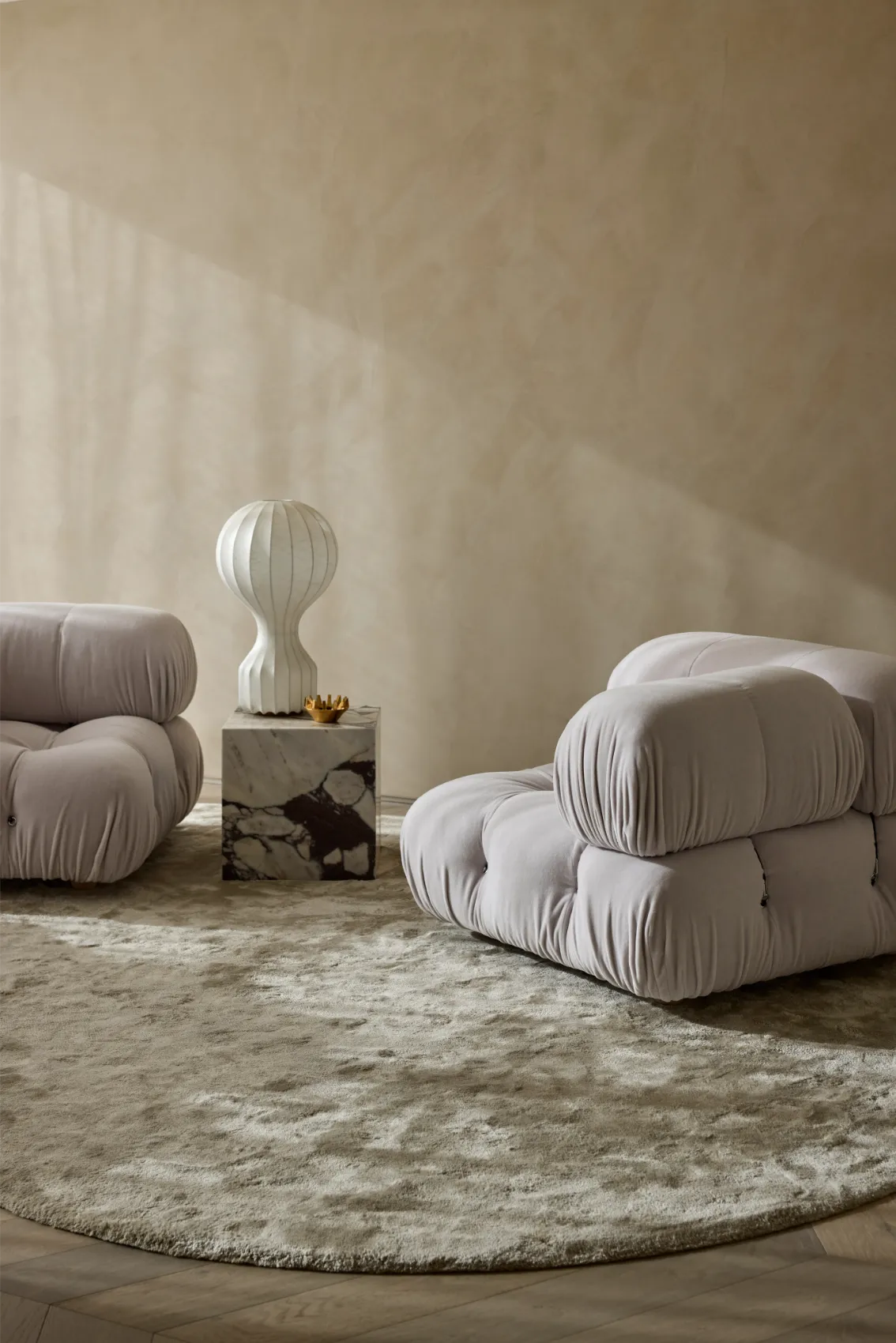
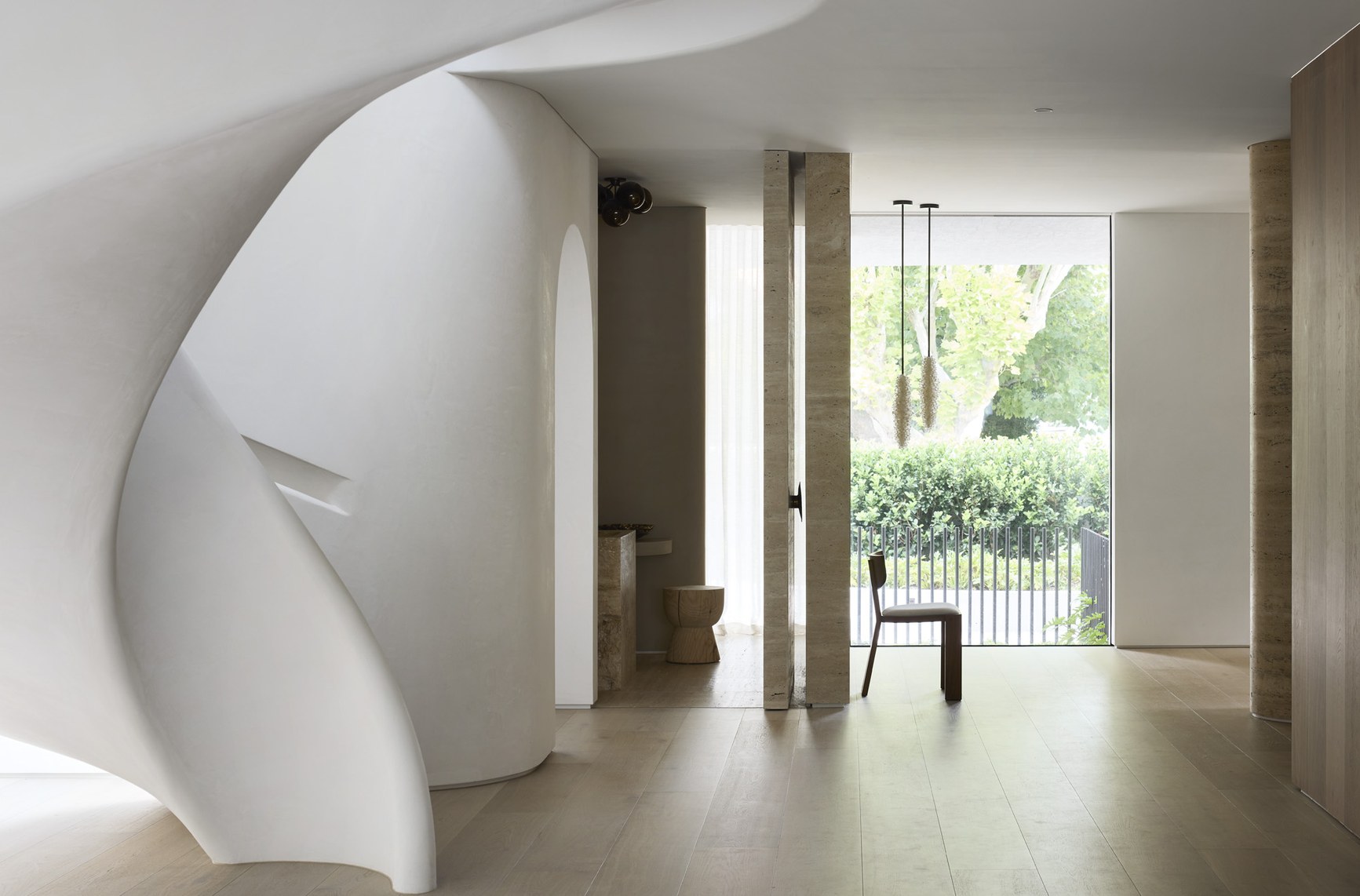
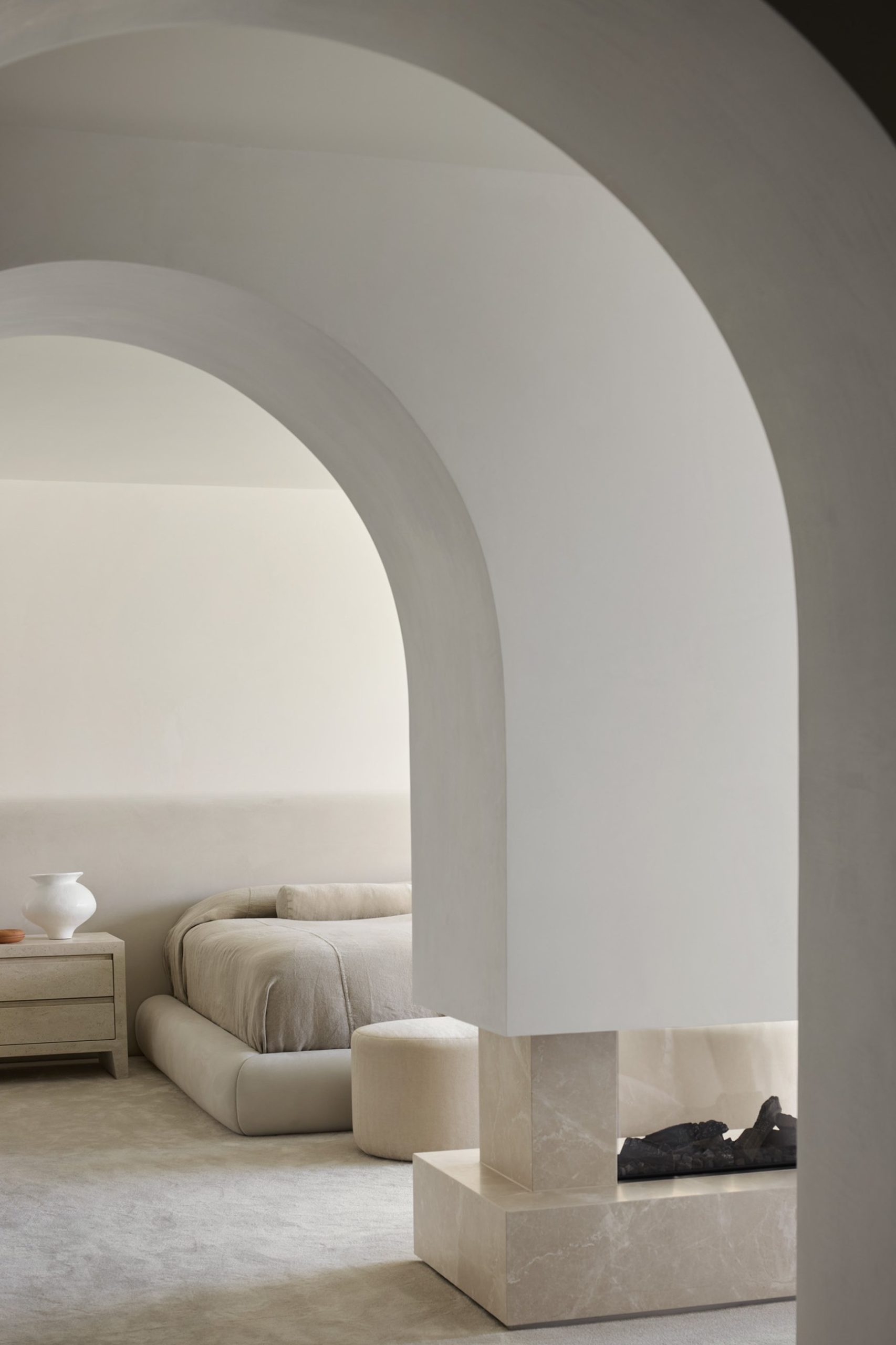
Curves carry much of the visible storytelling. Barrel archways soften the geometry of room-to-room transitions. Domed ceilings appear in moments where you would expect a flat plane and shift the air around you accordingly. Water elements thread the home together: a feature skylight installation that pulls the sky inside, an ice bath in the wellness floor below. The practice has been candid about its biophilic ambitions, and the application here is the most thoughtful interpretation of the term you’ll see this year. There are no token planters, no green walls performing the idea of nature. What there is, instead, is a sustained interest in light, in air, in the way water moves and stills. This is biophilia as architectural conviction, not as decorative claim.
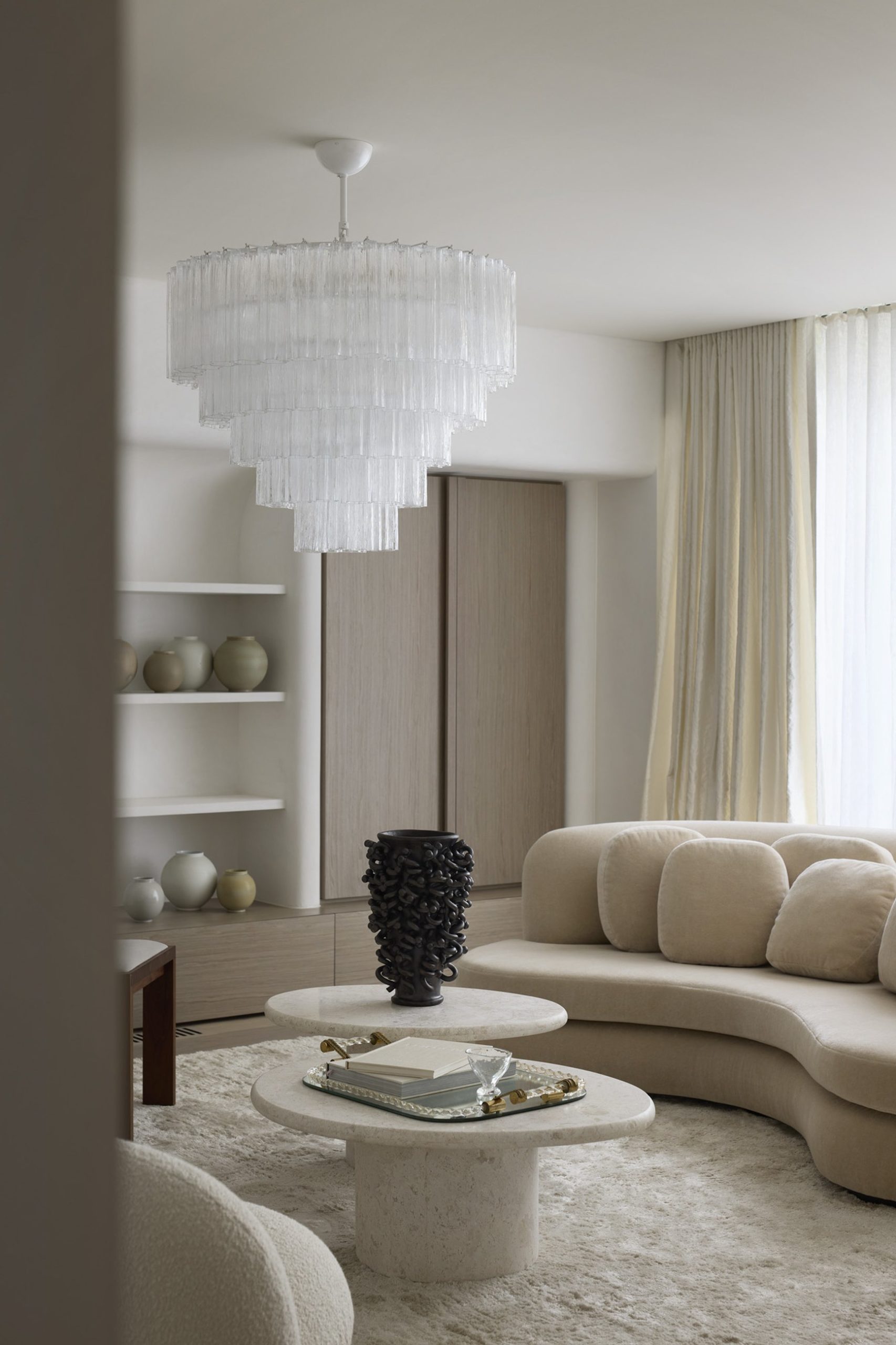
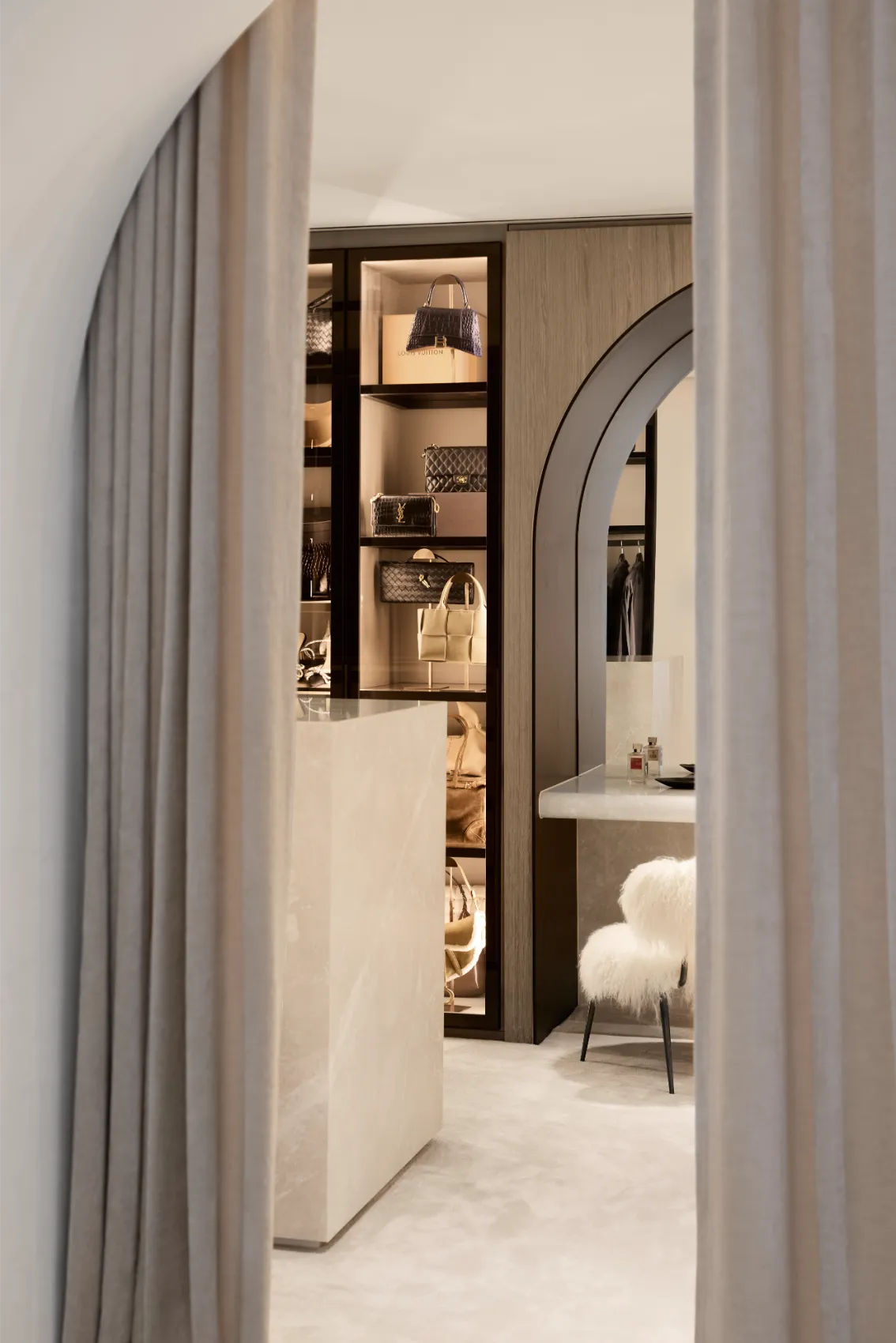
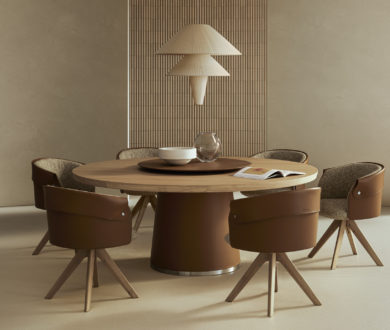
Furniture has been treated with the same editorial fluency as the architecture. McKimm’s Design Manager, Isabella Cini, curated a scheme of real intelligence. In the front lounge, Pierre Augustin Rose’s Saint Honoré sofa sits with Gubi’s Pacha chairs, Wabi tables by Fleur Studios, and a vintage Tronchi chandelier whose Murano arms catch the late light. The room reads as gallery-adjacent: layered, deliberate, beautifully composed. Lighting throughout has been treated as sculpture in its own right. Crystal fixtures by Christopher Boots punctuate the principal spaces. Tubular chandeliers from Castorina and E-Moderno introduce a more architectural geometry. Selected pendants by Kelly Wearstler appear where their American restraint suits the room. The coherence of the lighting strategy is one of the project’s quiet triumphs.
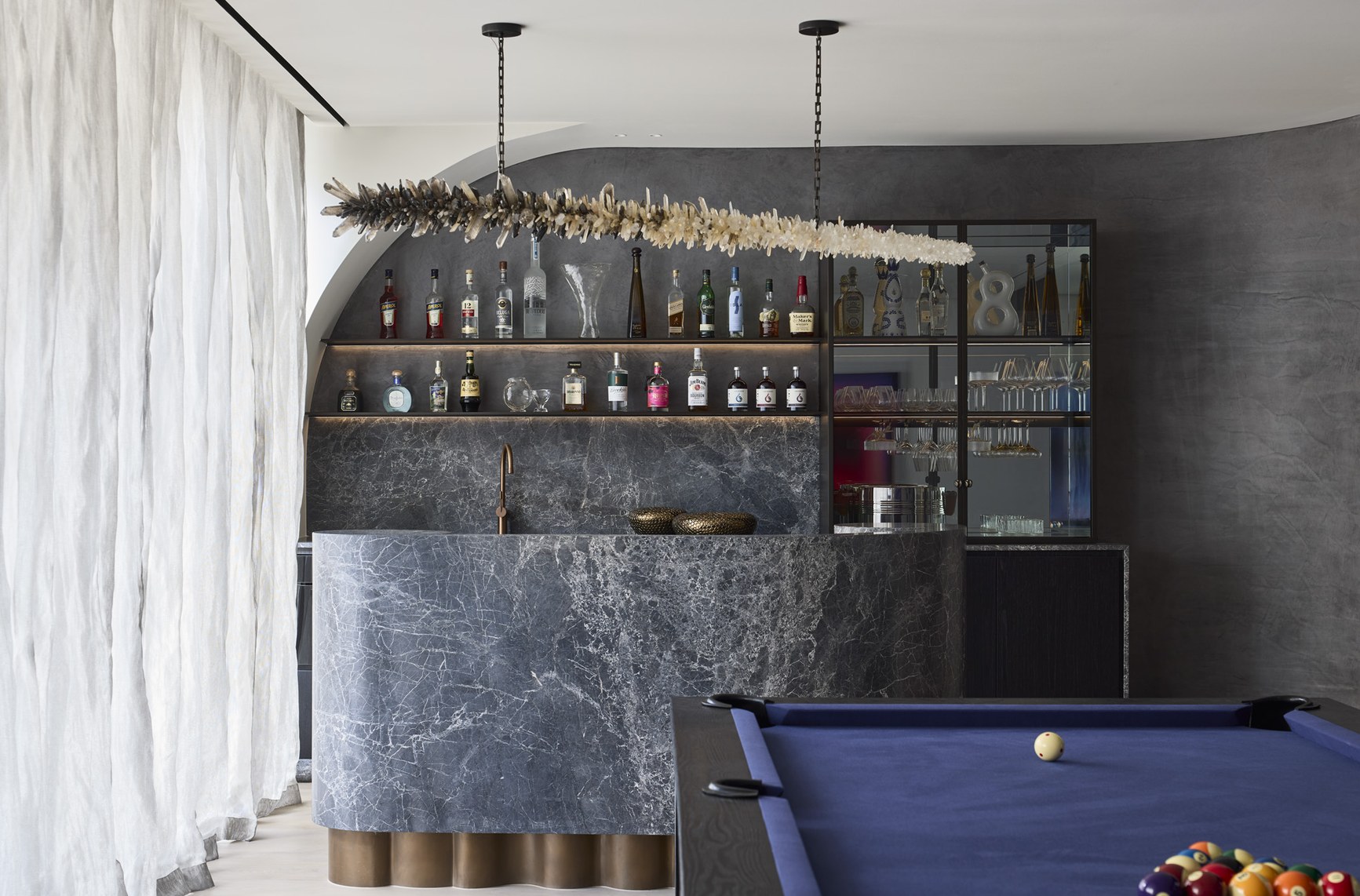

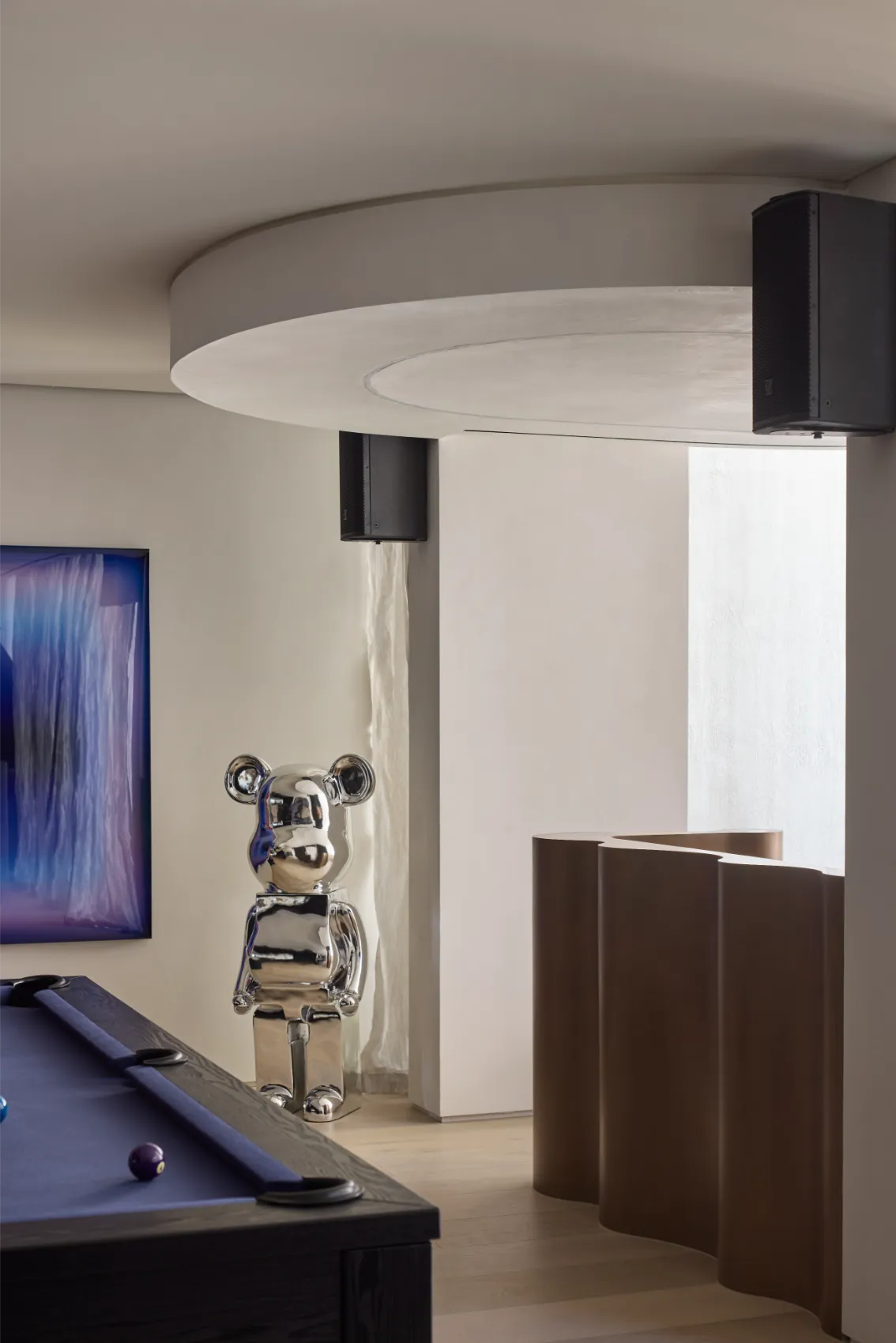
The most genuinely thrilling move, however, lies in the basement of a house, where almost by definition, it is typically the level where projects play it safe. Here, McKimm has done something far more interesting. A lower courtyard cuts daylight down into a level that accommodates six cars, a guest suite, an entertainment zone with a bar and DJ booth, and a wellness centre of substantial proportion.
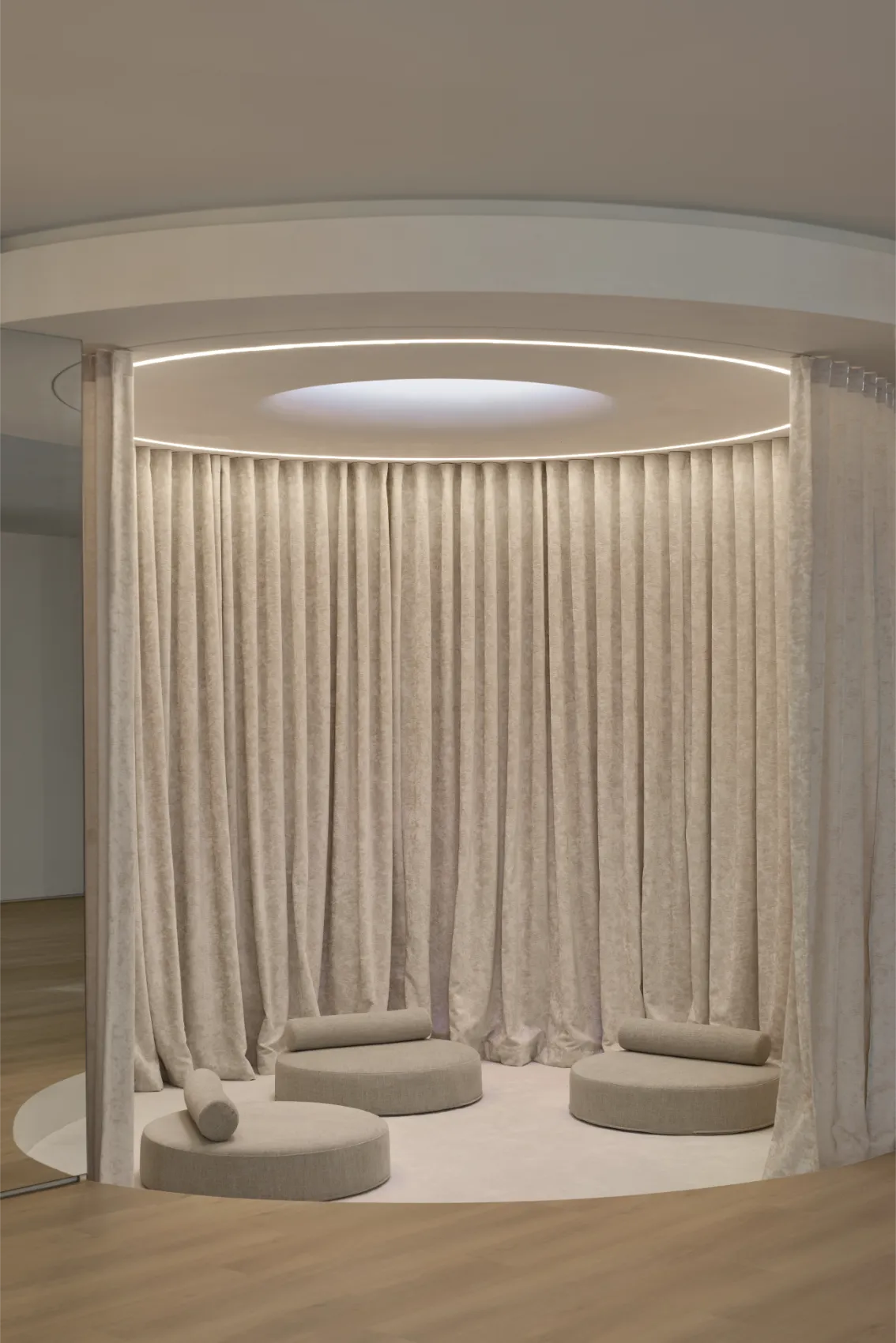
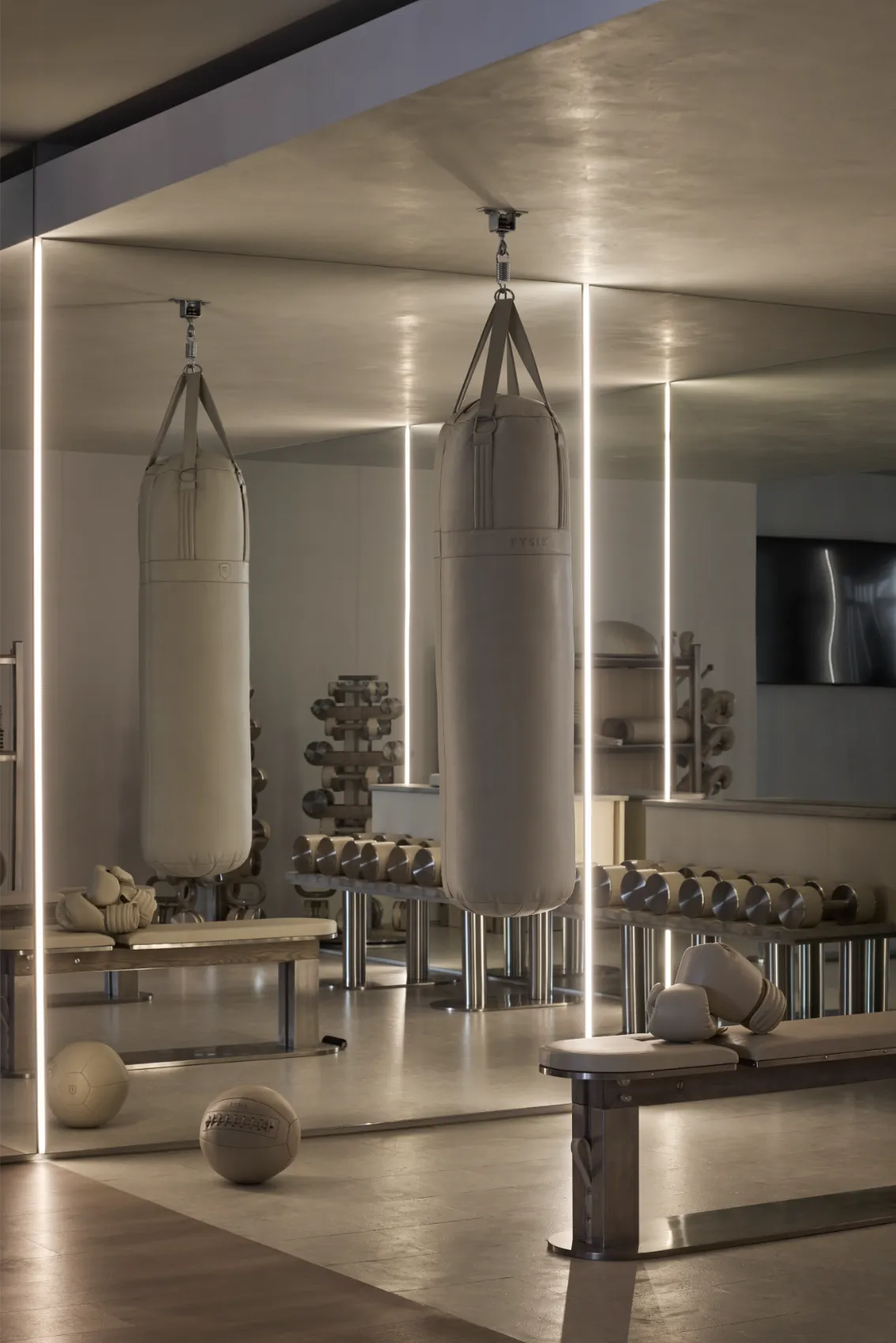
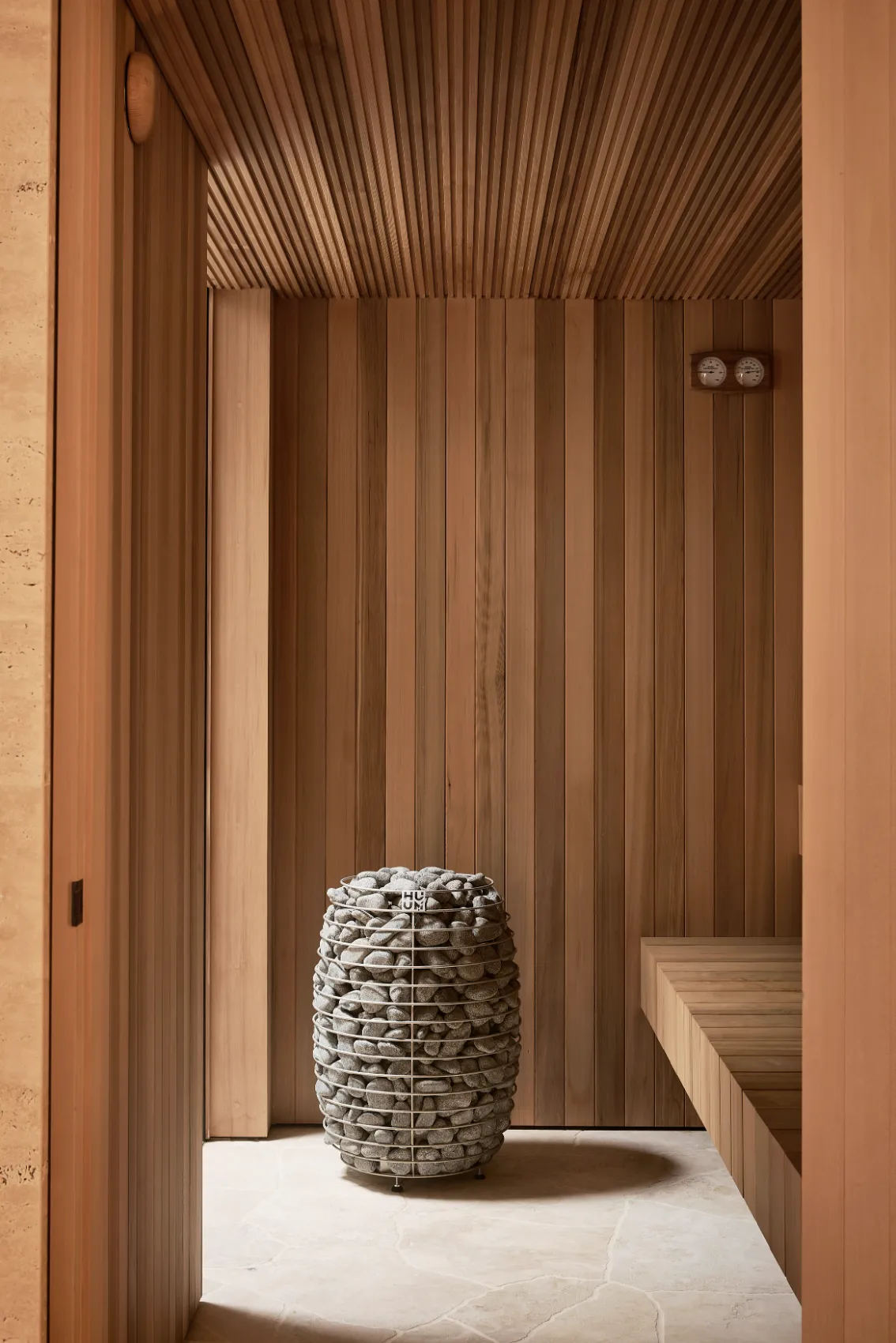
Inside the wellness centre sits a meditation dome lit from above by a skylight; alongside it, a gym, a sauna, a steam shower, and an ice bath. The dome is the move that lingers. Subterranean meditation rooms are difficult to get right, given the absence of sky and the weight of the ceiling. McKimm has resolved the problem with what amounts to an impressive architectural detail. Sitting beneath the skylight and the room reads as ground-level, even though it isn’t.
On the rooftop, the architecture extends in the opposite direction. The view captures both the city skyline and the bay, and the home’s living experience is pushed outdoors in a way that feels less like an amenity and more like a culmination. There is something genuinely satisfying about a house that begins underground in stillness and finishes in the air with a view. It’s a vertical narrative that mirrors, almost poetically, the way a day in this part of Melbourne actually unfolds.
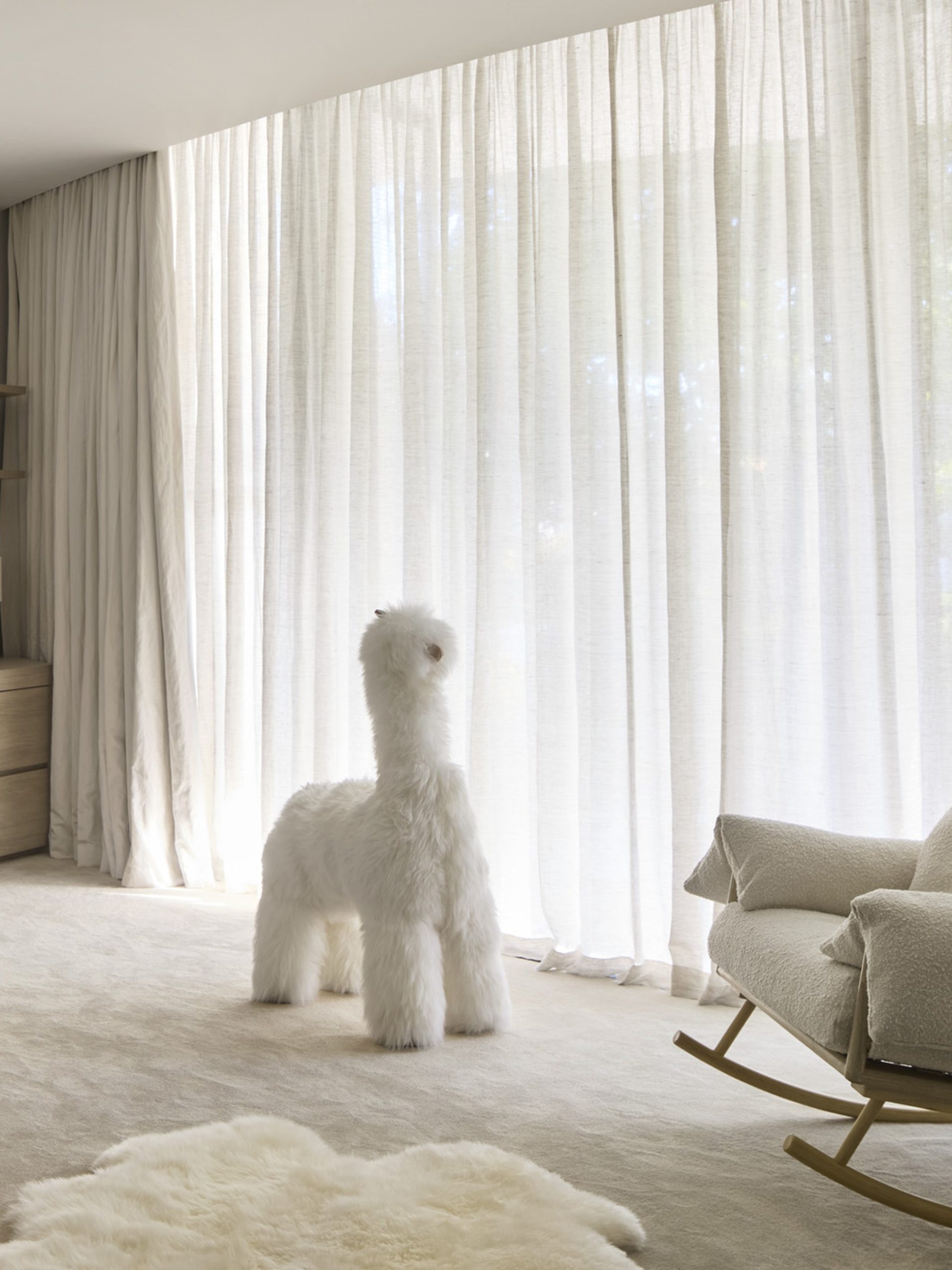
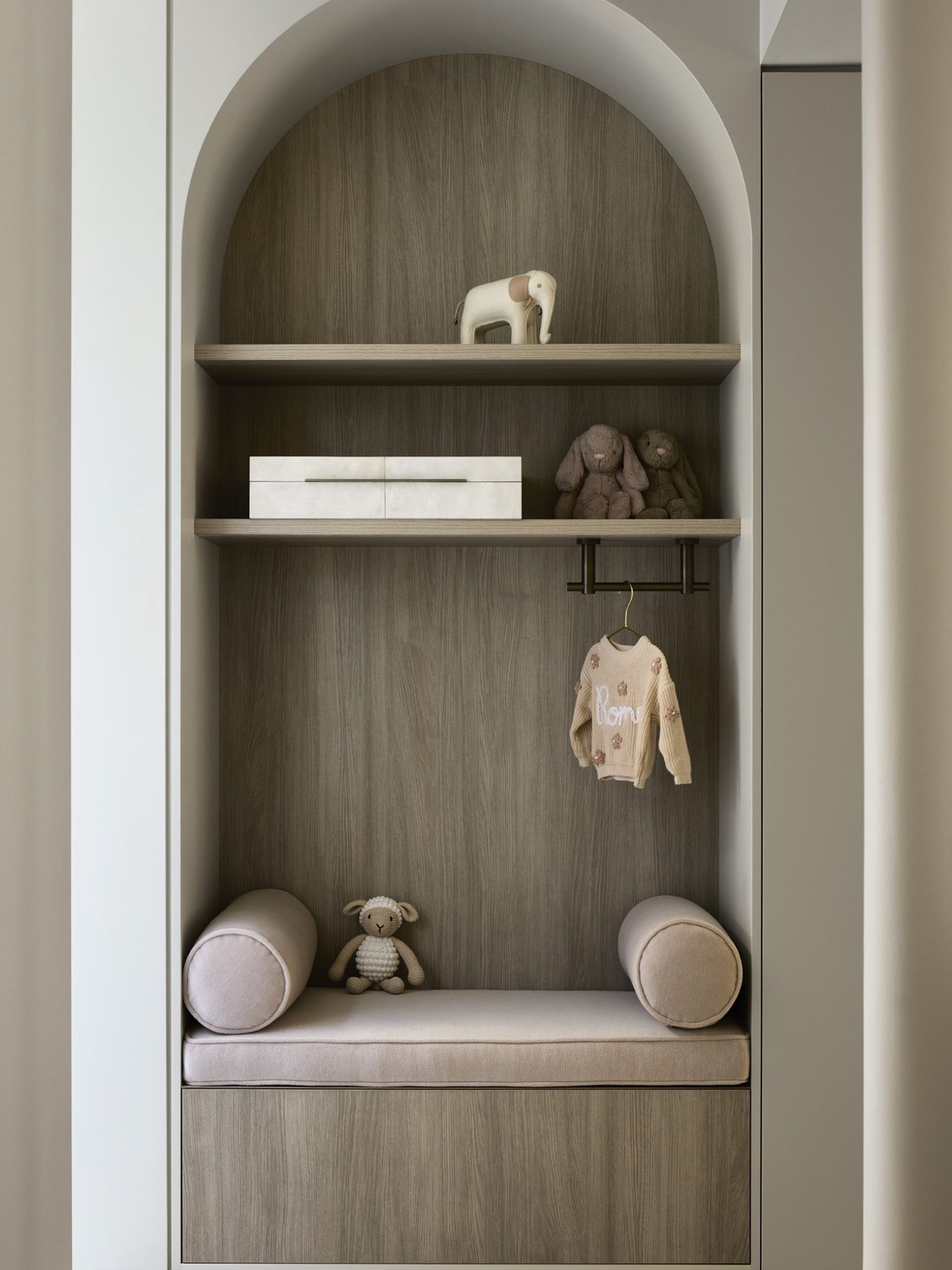
What’s most impressive about the Sands Residence is its composure. The clients are public figures with public lives; the brief invoked some of the most photographed houses in the world; the budget is plainly considerable. McKimm has answered all of it with a project that has scale without pageantry, glamour without theatre, and ambition expressed as craft. The grandeur is unmistakably present, in the proportions, in the wellness floor’s sheer scale, in the precision of the joinery, and it has been delivered with poise.
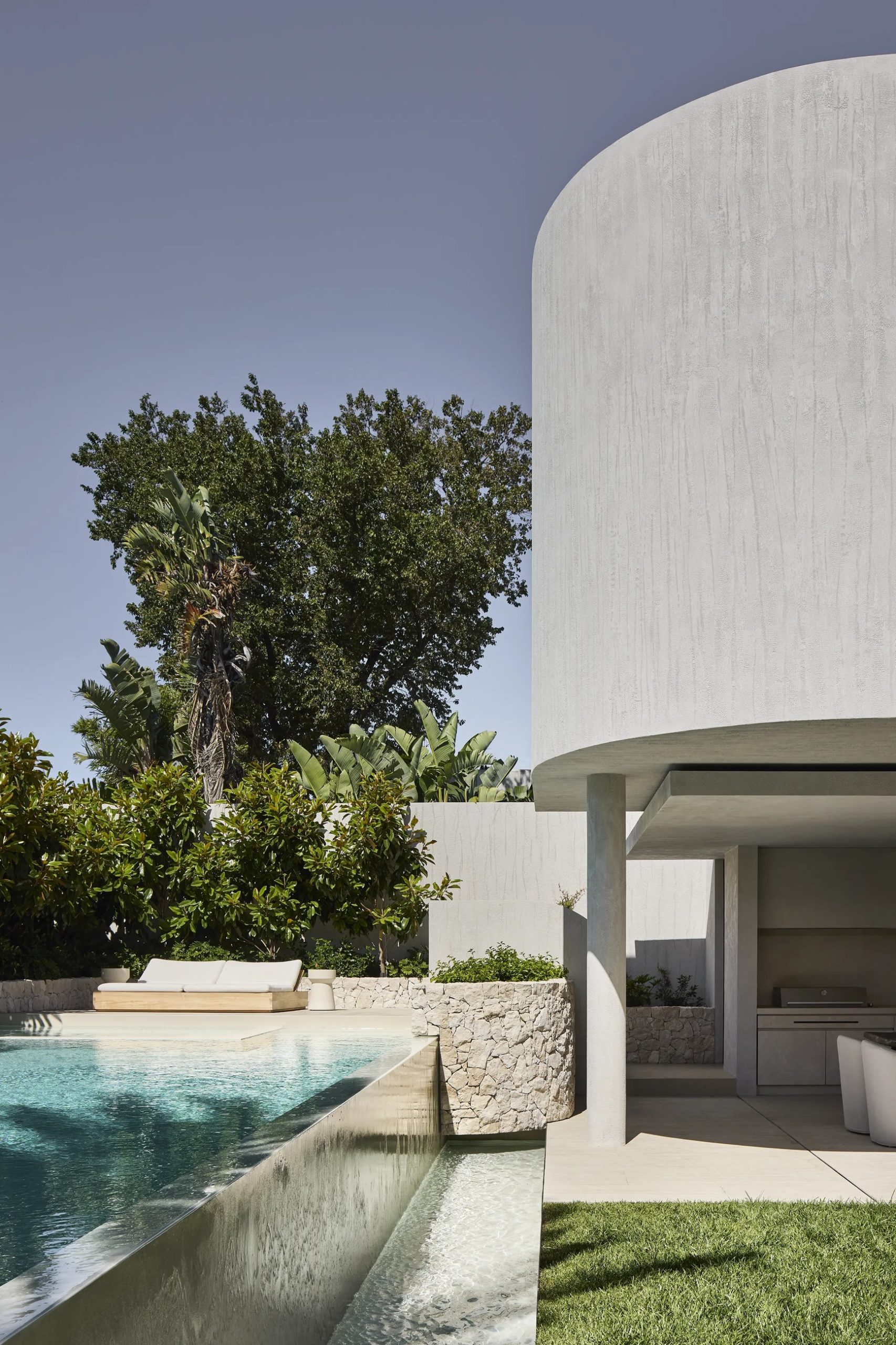
That poise may be the real achievement here. The Sands Residence is a house designed for a way of living that has space for both the spectacular and the still: the rooftop entertaining and the subterranean meditation, the cocktail bar and the ice bath, the international references and the deeply Australian light. McKimm has held all of it in balance. The light moves. The water moves. The house, beautifully, holds its place.