



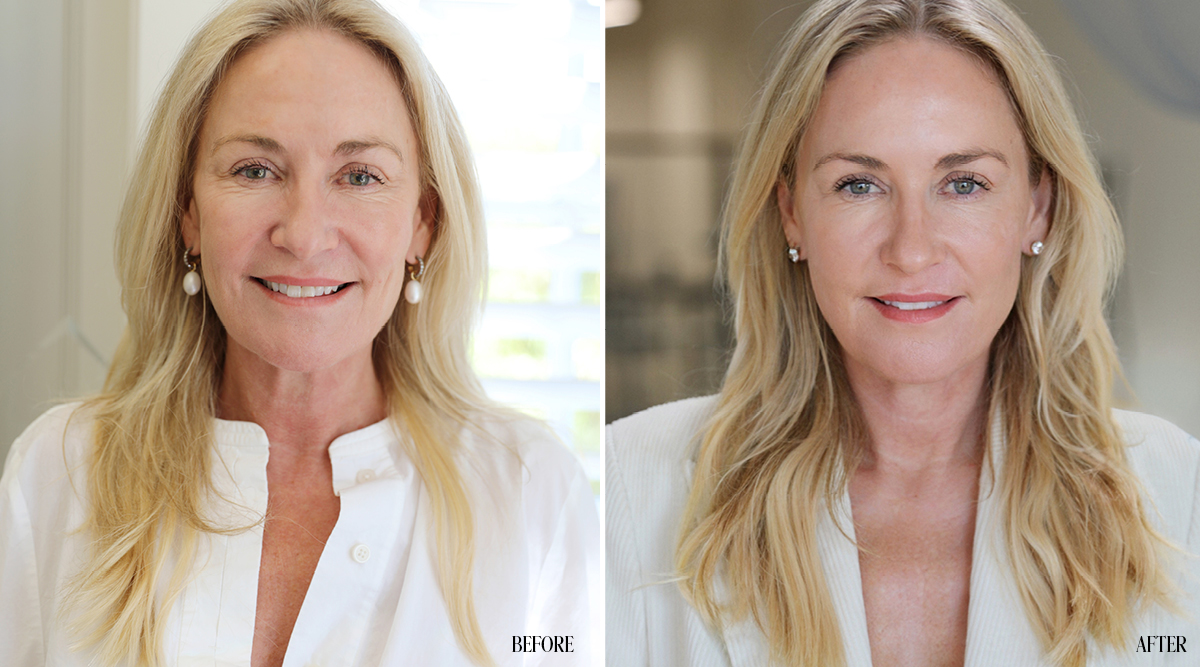
At my age and stage, Botox is neither scandalous nor aspirational. It is maintenance, filed somewhere between the dental hygienist and reformer Pilates sessions. I was somewhat of a late bloomer. I only started in my thirties, when the lines on my forehead were no longer hypothetical and charmingly expressive; instead, they began to resemble a permanent look of administrative concern.
For years, traditional toxins behaved impeccably. A few discreet injections and, within the week, my brow would relax into something less prosecutorial. Then, rather inconveniently, it stopped cooperating. I found myself waiting for the familiar smoothing effect, only to discover that my forehead had decided to retain full authorship of its lines. The explanation, as it turns out, is simple enough. With repeated use, the body can become less responsive. In essence, mine had grown bored with the whole arrangement.
“Within 24 hours, there was a very discernible softening. By the end of the second day, the furrow that had begun to look like a personal trademark had eased considerably.”
I suspect I have not helped matters. A disciplined exercise regime, a metabolism that operates like a competitive sport, and a devotion to sauna and cold plunge therapy mean my body is highly efficient at processing anything that dares enter it. On the rare occasions the toxin did take hold, it clung on with the conviction of a New Year’s resolution. The results grew increasingly fleeting, and the regularity of administration rather less charming. Naturally, I responded with my usual time-poor complacency. I ignored it until an important international engagement loomed, then booked a last-minute appointment, boarded long-haul flights, hoping that by the time I landed in the northern hemisphere, I would look marginally less furrowed. Instead, I often arrived exactly as I had departed. Crossing time zones, it seems, does not count as aesthetic renewal.
A cautionary note for the enthusiastic. Botox is not a pension plan for your face. It does not guarantee immunity from gravity or habitually raised eyebrows. Used too often, it can simply lose its edge. Experience, as ever, is the sternest consultant. So when I heard about Relfydess, Galderma’s new relabotulinumtoxinA neuromodulator, designed for faster onset and refined precision and results lasting four to six months, I was intrigued. It works in the same fundamental way as its predecessors, temporarily blocking nerve signals to reduce muscle contraction and soften moderate to severe lines. The difference lies in its formulation, designed for longevity and a quicker visible effect, often within one to two days.

Under the stealth expertise of Clinic 42’s Dr Ellen Selkon, widely regarded as one of this country’s leading authorities on skin and longevity treatments and, crucially, someone who understands the difference between looking well rested, not embalmed. She targeted the usual suspects: my forehead creases and the increasingly present crow’s feet.
Within 24 hours, there was a very discernible softening. By the end of the second day, the furrow that had begun to look like a personal trademark had eased considerably. What it did not do was render me expressionless. I can still raise an eyebrow in disbelief and frown at a dubious pitch from a public relations agency, both important attributes at this stage of my career. It is too early to declare undying loyalty, but if the promised four to six months materialise, this may well be the evolution I have been waiting for. At this point in life, I prefer convenience and long-term efficacy over looking permanently vexed. If a new-generation toxin can deliver, it earns a place in this modern woman’s maintenance portfolio.