


A century is a long time to be right. In 1926, Rolex introduced the Oyster, the world’s first waterproof wristwatch, and proceeded to build an entire universe of nomenclature around it: Oystersteel, Oyster bracelet, Oysterflex, Oyster Perpetual. If you own a Rolex, there is a very good chance you own a piece of that legacy. At Watches & Wonders 2026 in Geneva, the house marked the centenary not with a single commemorative release but with a broad, considered sweep of its portfolio, threading the anniversary story through almost every model family on the table. The result is a collection that feels simultaneously like a celebration and a statement of intent.
The Oyster Perpetual 41: the watch that says “100 years” and means it
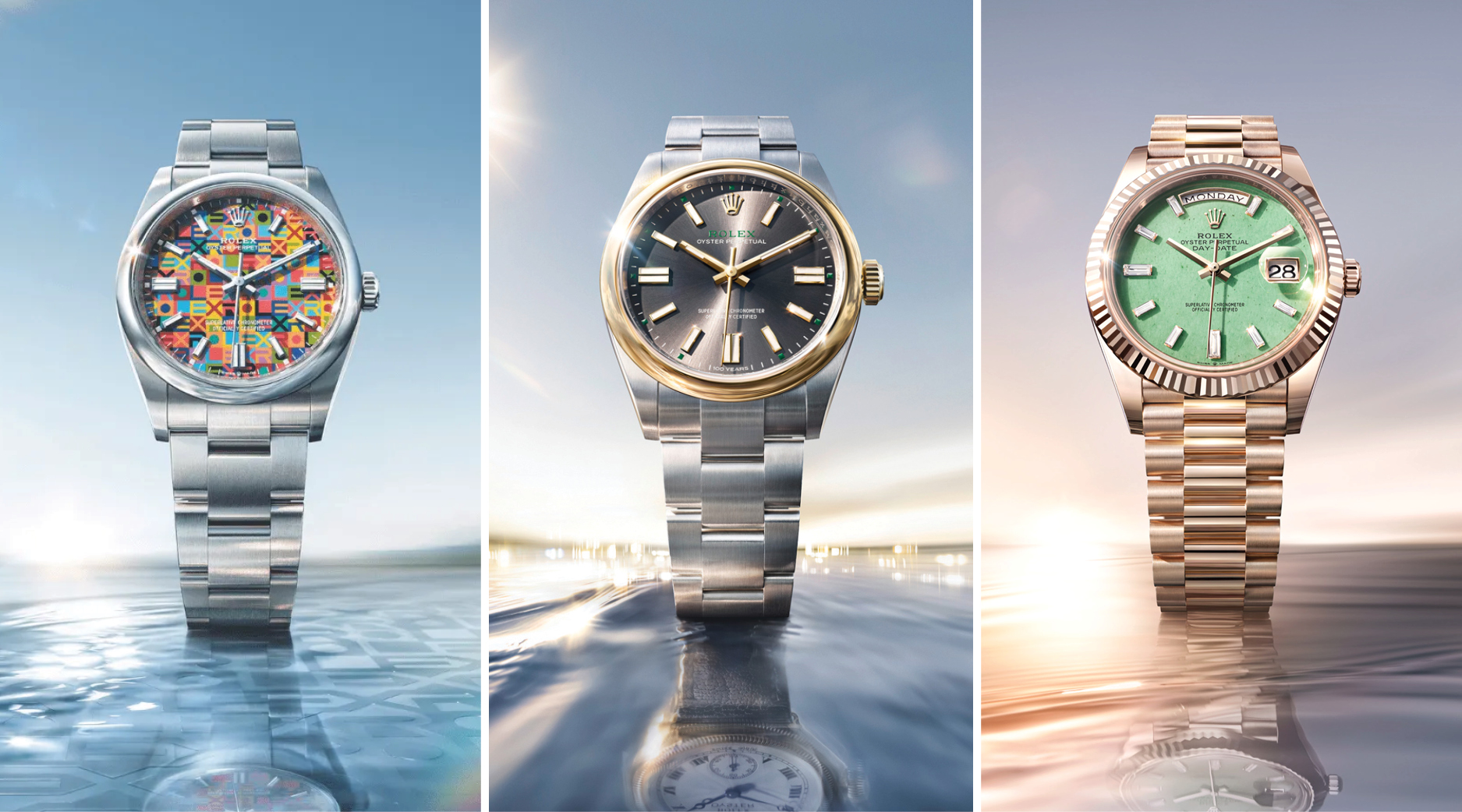
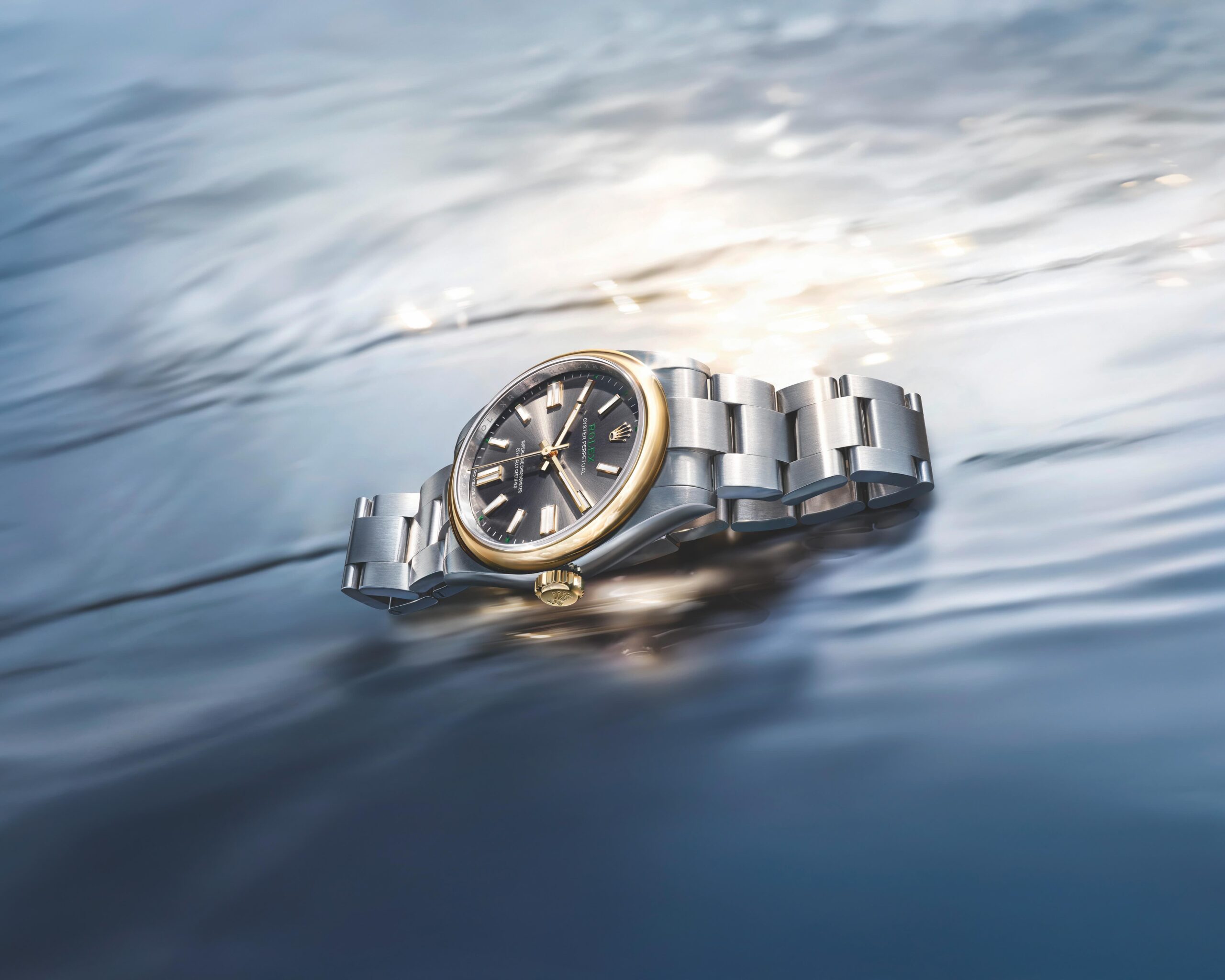
The centenary flagship is disarmingly understated for something carrying this much symbolic weight. The Oyster Perpetual 41 arrives in yellow Rolesor, pairing an Oystersteel case and bracelet with a yellow gold bezel and crown. The dial is slate grey with a sunray finish, the Rolex logo rendered in green, and the hour plots picked out in gold. At six o’clock, where “Swiss Made” would ordinarily sit, the dial reads “100 years.” The crown is engraved with the same inscription. It is, for Rolex, a remarkably direct declaration. The brand rarely shouts. This is, by its standards, a megaphone.
Oyster Perpetual 36: the Jubilee dial that will be very hard to get
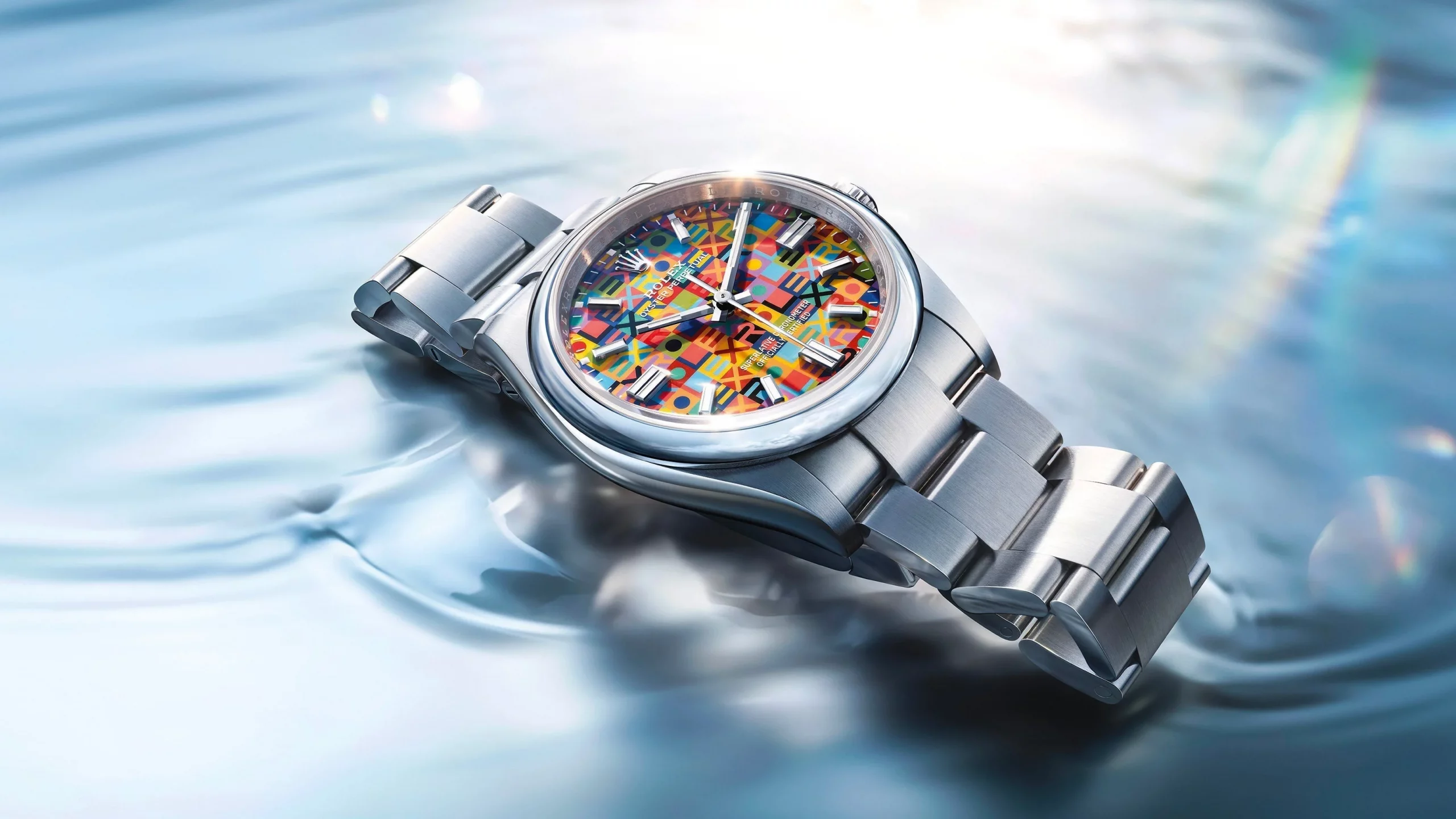
If the centenary OP 41 is the official commemorative model, the Oyster Perpetual 36 Jubilee Edition is the one that collectors will lose sleep over. The dial is a lacquer rainbow, built around the Jubilee motif that traces its lineage to celebratory models from the late 1970s. Each colour, and there are many, is applied individually, layer by layer. The technical patience required to achieve something that looks this deliberately exuberant is, characteristically, something Rolex will never fully explain. At 36mm in Oystersteel, it fits most wrists. The production, almost certainly, will not fit most waitlists.
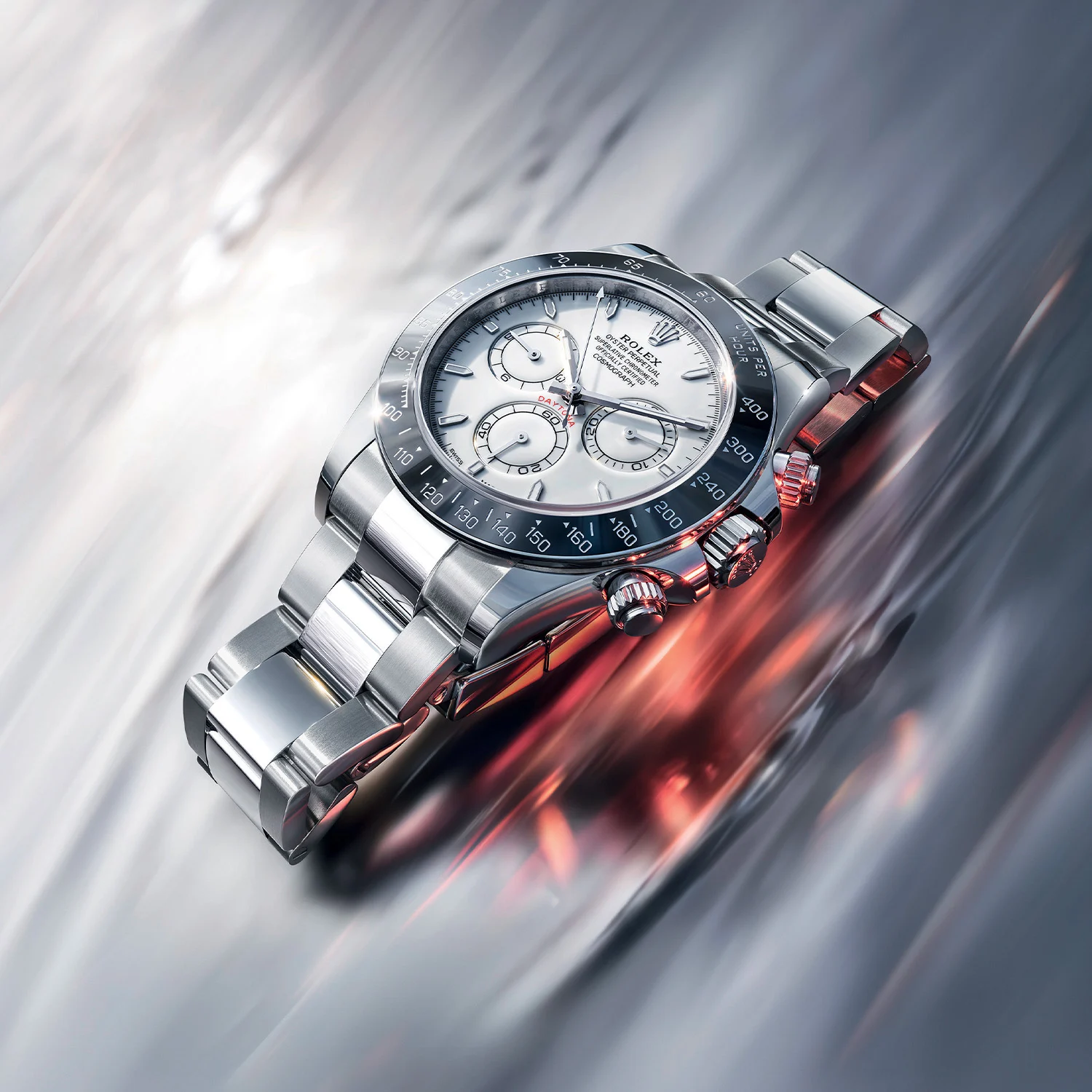
Daytona 126502 Rolesium: a first for the chronograph
The Cosmograph Daytona has never appeared in Rolesium, the combination of Oystersteel and platinum that Rolex deploys when it wants to occupy a register between steel and full precious metal. That changes in 2026. The reference 126502 pairs the 40mm case with a white Grand Feu enamel dial, a material choice that immediately elevates the reading experience: enamel has a depth and warmth that printed or lacquer dials simply cannot replicate. The bezel is a newly developed anthracite ceramic, with recessed tachymetre graduations coated in platinum. The caseback is open, revealing the Calibre 4131 beneath. For a model line that trades heavily on heritage, this is a surprisingly experimental combination. The restraint of the grey and white palette makes it work.
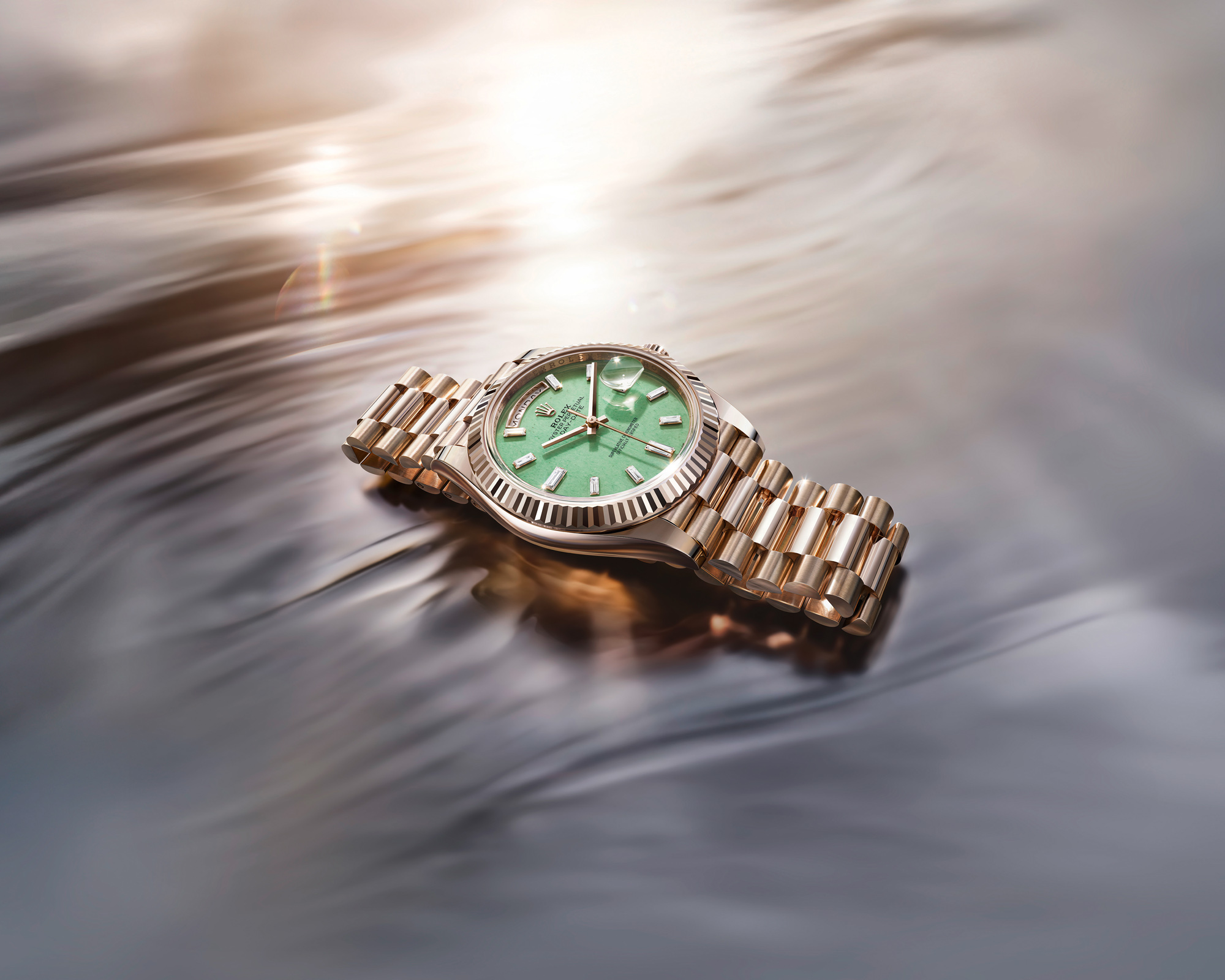
Day-Date 40: Jubilee gold and a dial from the earth
The story of the Day-Date this year is less about a new reference and more about a new material. Rolex has developed Jubilee gold, an 18-carat alloy produced entirely in-house, described as glowing with tones of tender yellow, warm grey and soft pink simultaneously. The metal is exclusive to this watch, at least for now, and the house pairs it with a light green aventurine dial in natural stone, scattered with fine grey inclusions, and ten baguette-cut diamond hour markers. The President bracelet matches in Jubilee gold throughout. An off-catalogue reference, and one that makes the point about Rolex’s vertical integration more eloquently than any press material could.
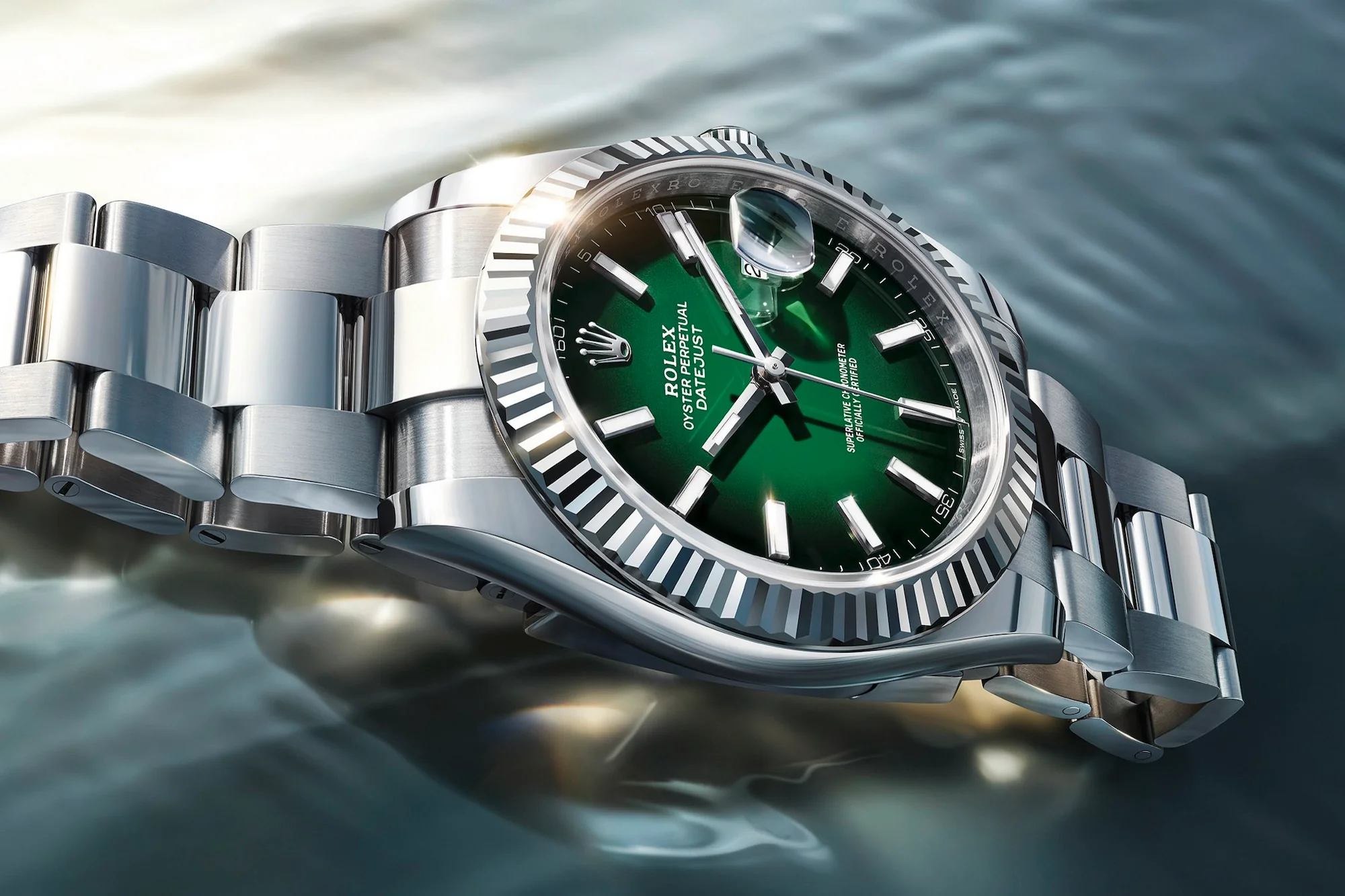
Datejust 41: the green ombré that earns its moment
The Datejust is the broadest church in the Rolex universe, which means a new dial has to work hard to feel like news. The green ombré introduced for 2026 manages it. The dial begins in deep green lacquer at the centre, then fades through successive layers of black lacquer sprayed outward toward the edges. The gradient is achieved in stages rather than in a single application, which is why it reads as dimensional rather than flat. The configuration pairs it with a white Rolesor case in Oystersteel and white gold, with a fluted bezel. The two-tone metal gives the muted dial combination a quiet lustre that straight steel would not. The green ombré is understood to be exclusive to the anniversary year, which makes it the most time-sensitive dial in the collection, in every sense.
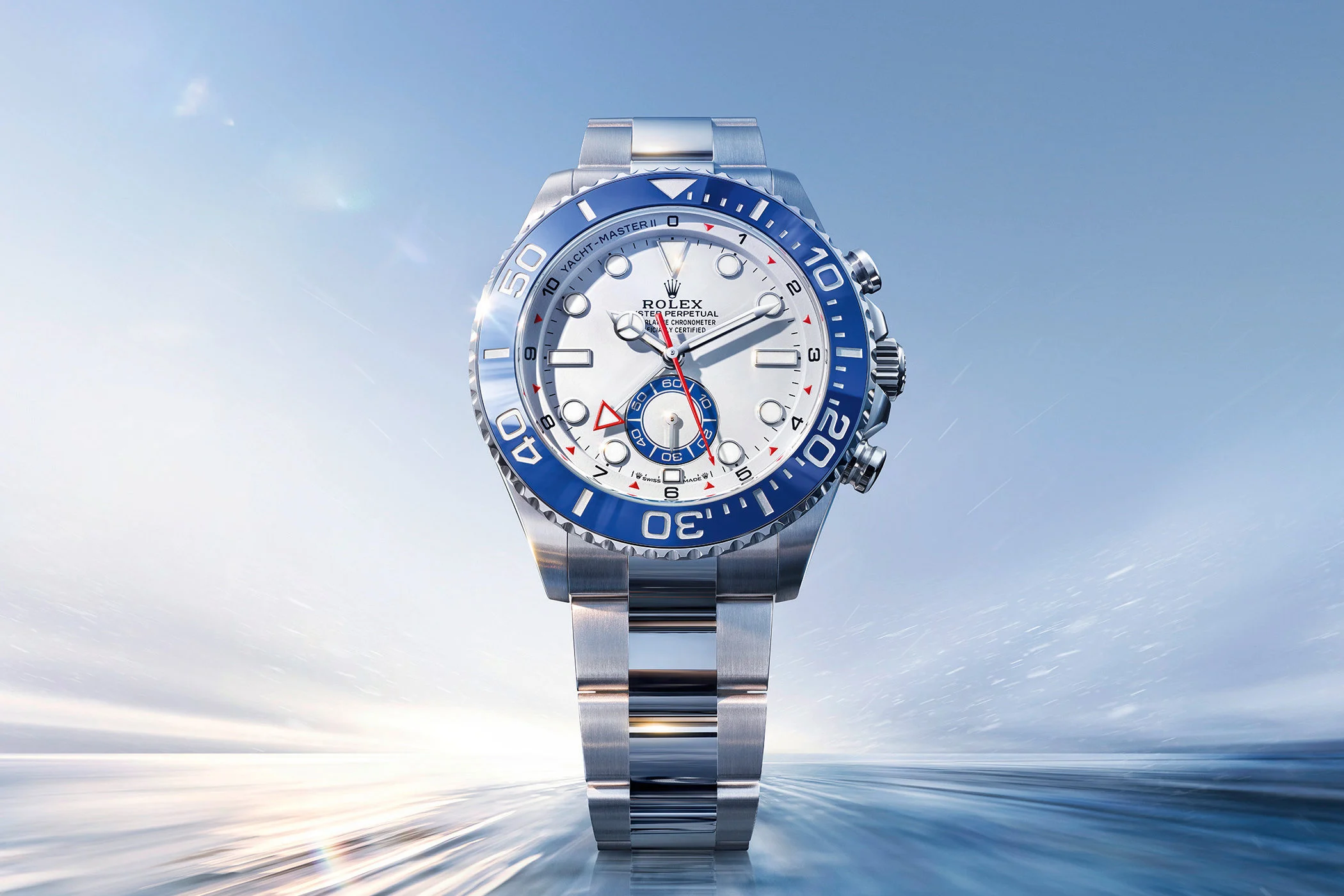
Yacht-Master II: the return nobody saw coming
Discontinued in 2024, the Yacht-Master II is back, and it arrives with a complete mechanical overhaul. The new movement is the Calibre 4162, purpose-built for the regatta countdown function, which now appears on the dial as a flange rather than through the previous generation’s architecture. A small seconds dial sits at six o’clock. The overall dial reads with considerably more balance than its predecessor, with rounded hour markers that bring it closer to the broader Rolex family aesthetic. Two references: Oystersteel with blue Cerachrom bezel, and 18-carat yellow gold in the same configuration. The Yacht-Master II was always a niche proposition. With this generation, it makes a cleaner case for itself than it ever has.
What Rolex has done in 2026 is use a centenary as editorial permission to reach further than it typically does. A new gold alloy. An enamel dial on the Daytona. A lacquer technique on the Oyster Perpetual that verges on the painterly. A discontinued complication brought back with a new movement. None of these decisions look like a brand coasting on legacy. They look like a house that has spent a century earning the right to experiment, and has decided that now is precisely the time.
Rolex is available in New Zealand through Partridge Jewellers