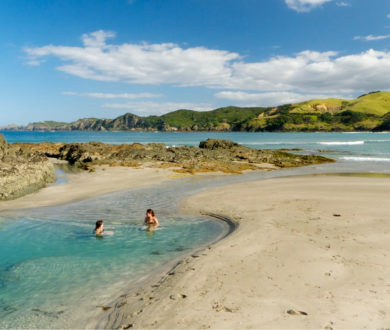



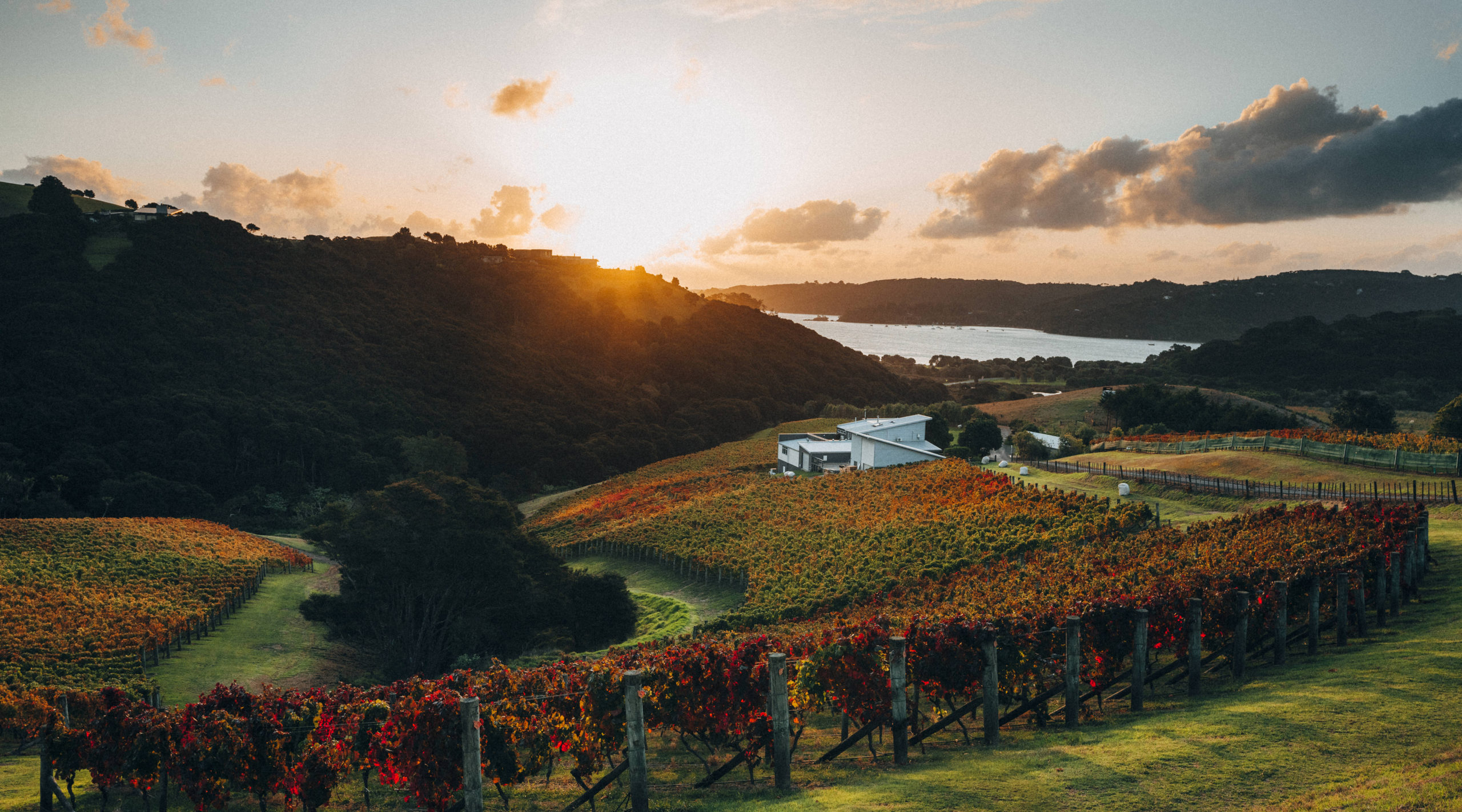
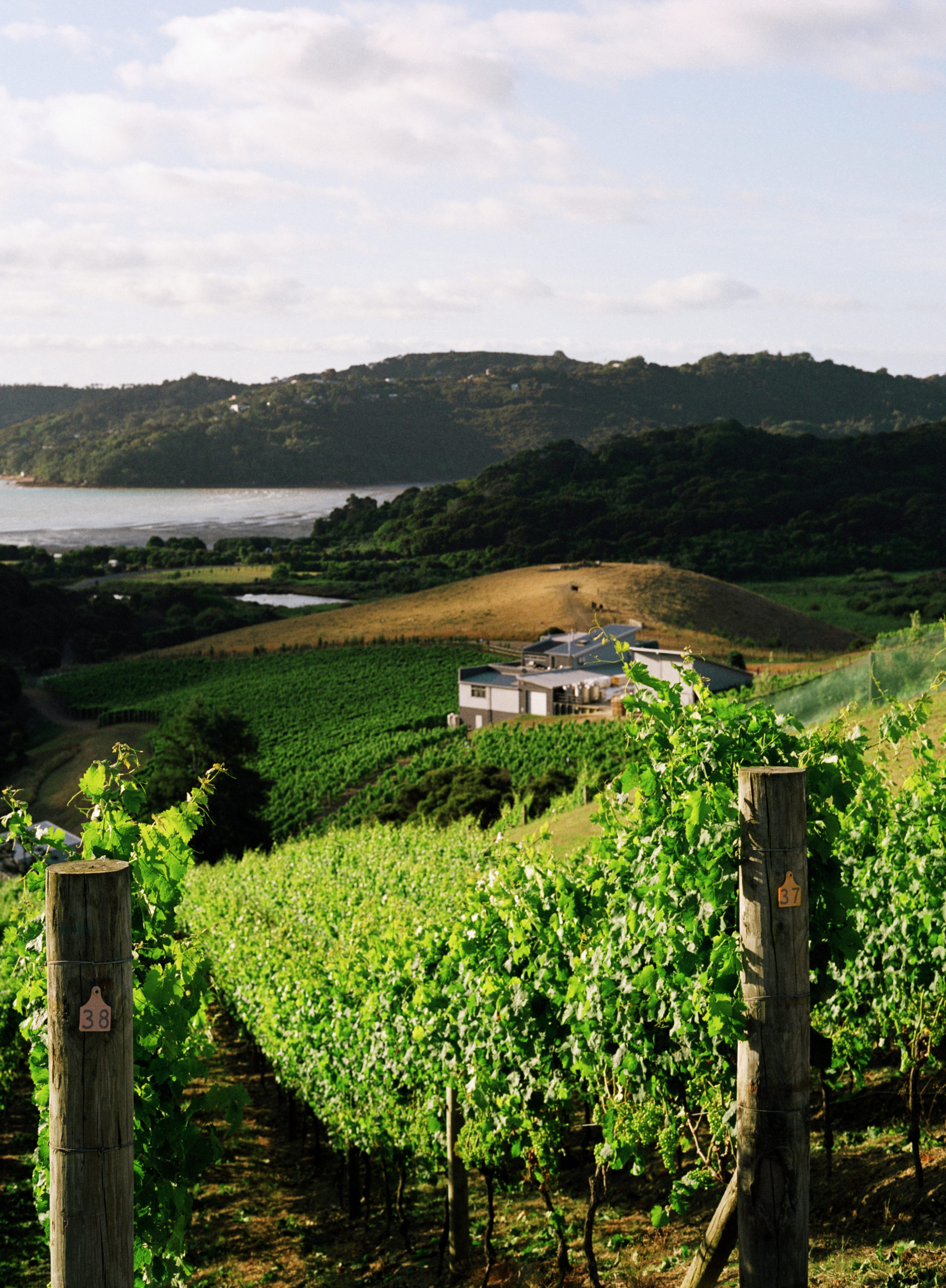
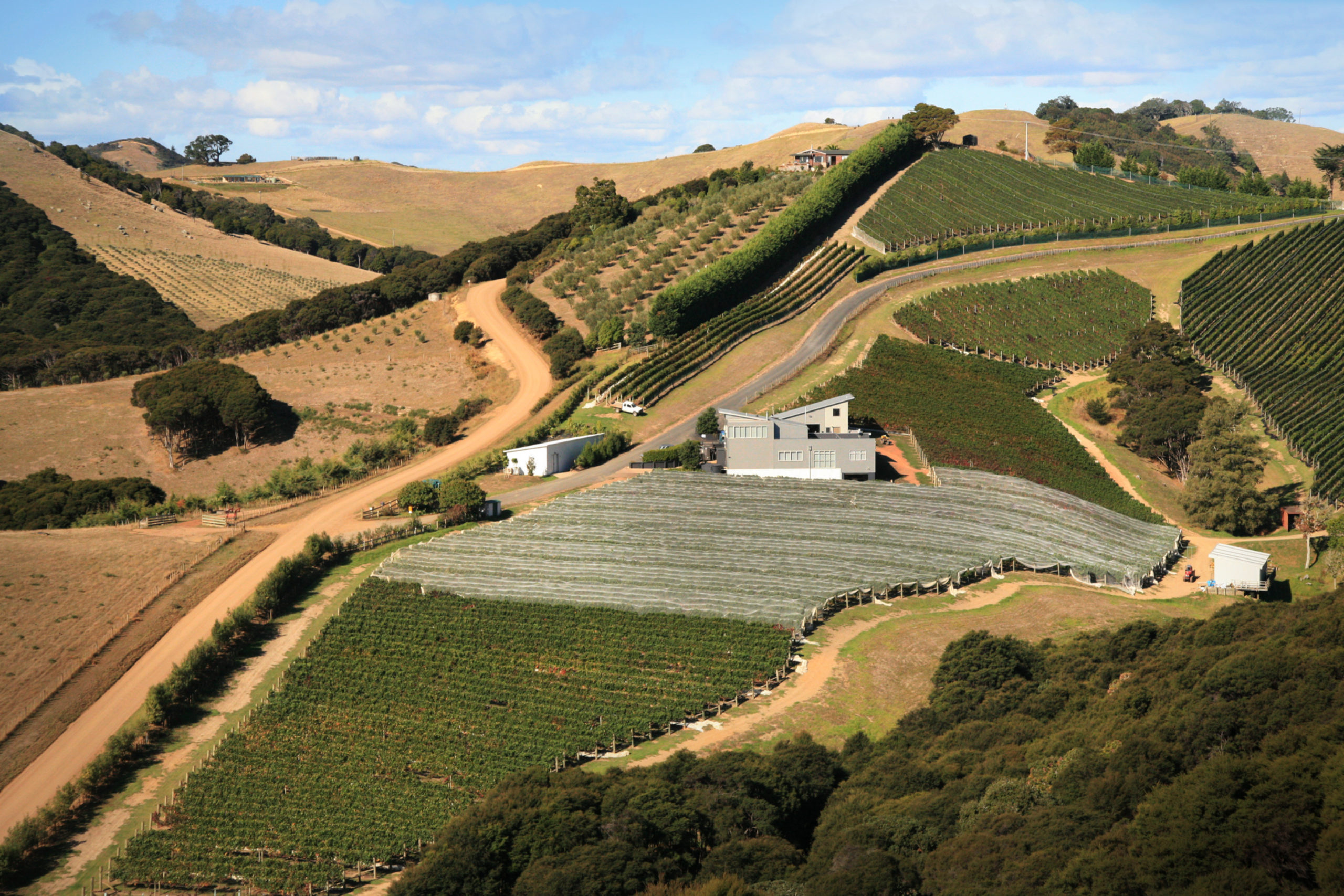
Stand at the crest of Destiny Bay’s vineyard, and the logic of the place reveals itself slowly. The valley curves inward in a north-facing amphitheatre, a natural bowl that gathers heat and holds it. Vines run down slopes too steep for comfort, let alone convenience. Beyond them, the Hauraki Gulf catches the light. Nothing about it feels accidental. It is beautiful, certainly, but beauty is incidental, as Mike Spratt describes it: “When we say this little valley is distinctive, that’s a factual statement, not a marketing statement,” he says. “It’s basically a geological miracle.”
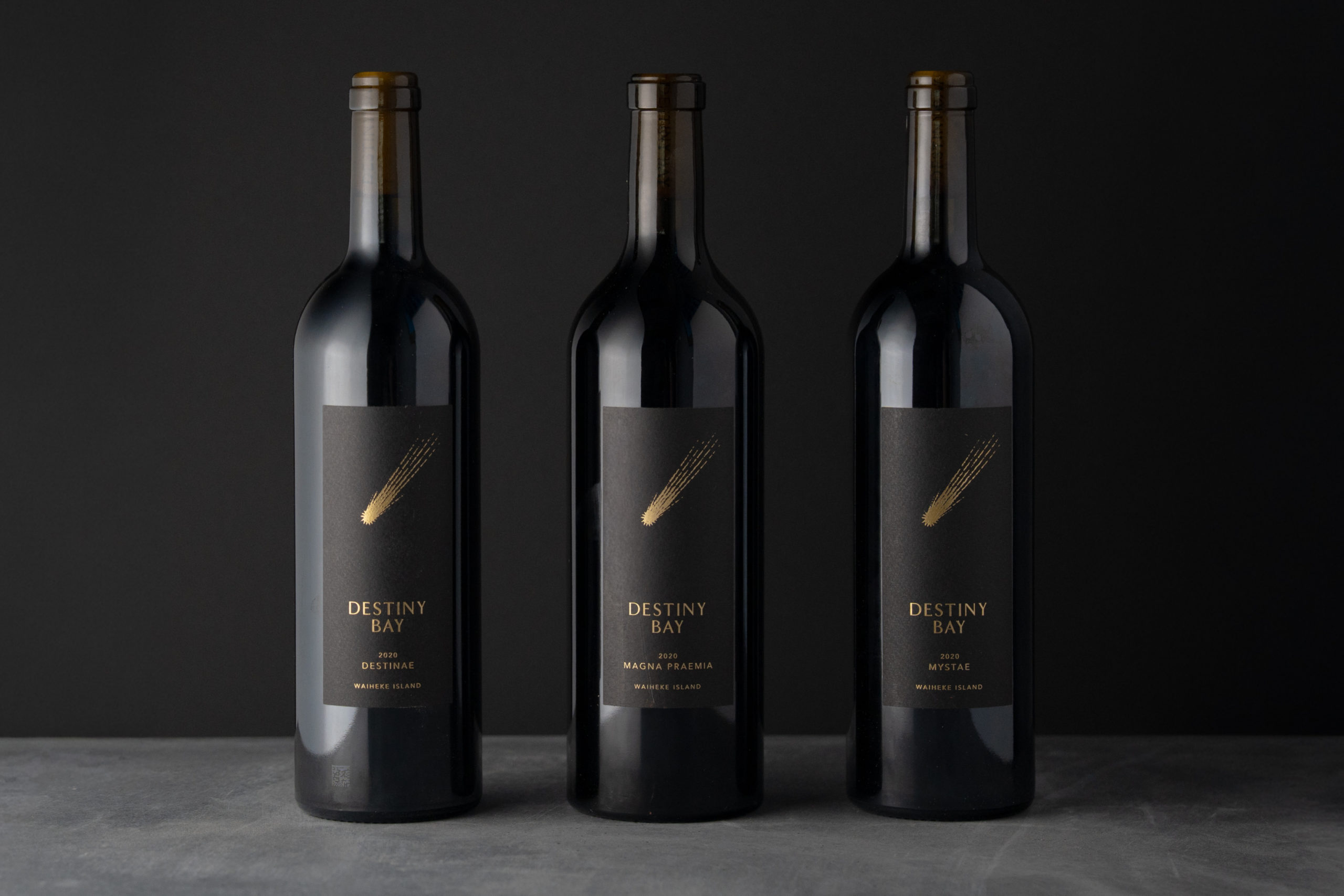
New Zealand’s global wine identity was built on Sauvignon Blanc and Pinot Noir. Cabernet Sauvignon was never meant to be the headline act. Yet here, on five hectares of sloping Waiheke terrain, sits a producer whose Cabernet-led blends have quietly entered the upper echelon of the world’s fine wines. In the Real Review rankings, Destiny Bay was named New Zealand’s top winery in 2021 and has held second place every year since. Mike Spratt notes the consistency with a hint of competitive pride. “If the past five years were a regatta, we’d be sitting in first place on nine points, with Felton Road second on thirteen and Craggy Range third on twenty-two.” It is the sort of statistic that says as much about sustained excellence as it does about ambition. The wines have also found their way into the cellars of serious collectors around the world, including Hollywood devotees such as Tommy Lee Jones, Eva Longoria and Matthew Fox. This is not a cellar door curiosity. It is a serious house of wine.
If there were any doubt about positioning, the events of 2023 provided an unexpected footnote. A high-end heist at a prominent Auckland wine shop saw 56 bottles stolen, many of them international icons. Only one New Zealand wine made the cut: Destiny Bay’s Magna Praemia 2015. “Whoever commissioned that theft knew exactly what they wanted,” Mike says. “They were stealing extremely valuable, expensive wines, to order.” In a single detail, the winery’s standing was reframed. This was not provincial pride. It was a highly valuable global currency.
The Spratts did not arrive on Waiheke with an ambition to rewrite New Zealand’s red wine narrative. Mike and his wife Ann had effectively retired when they first visited the island in the late 1990s. The plan was to build a house. The land below was grazing country. The idea of planting vines was closer to a hobby than a vocation. A consultation with viticulturist Dr David Jordan shifted the tone. The verdict was decisive. The site was not merely suitable. It was exceptional.
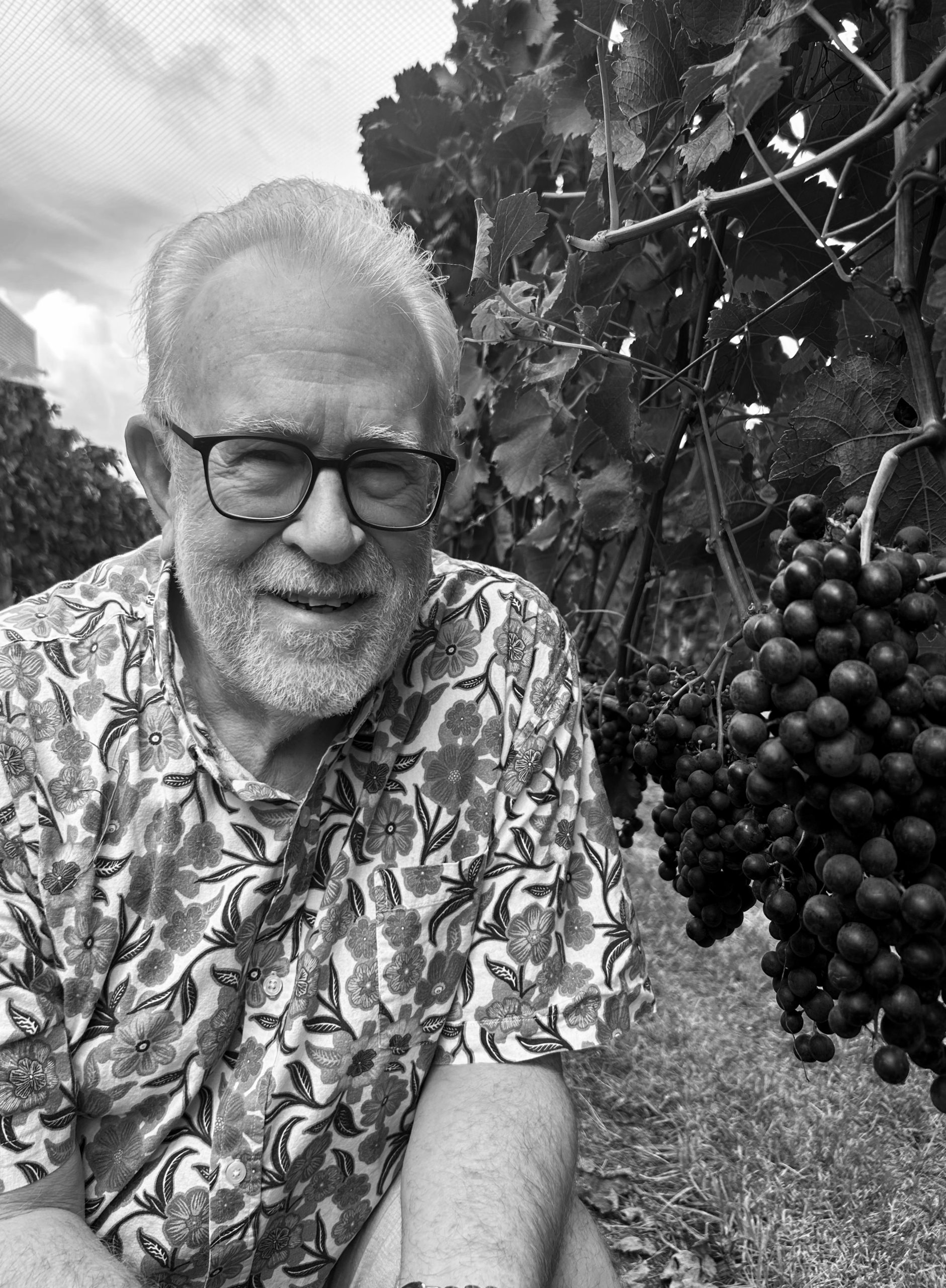
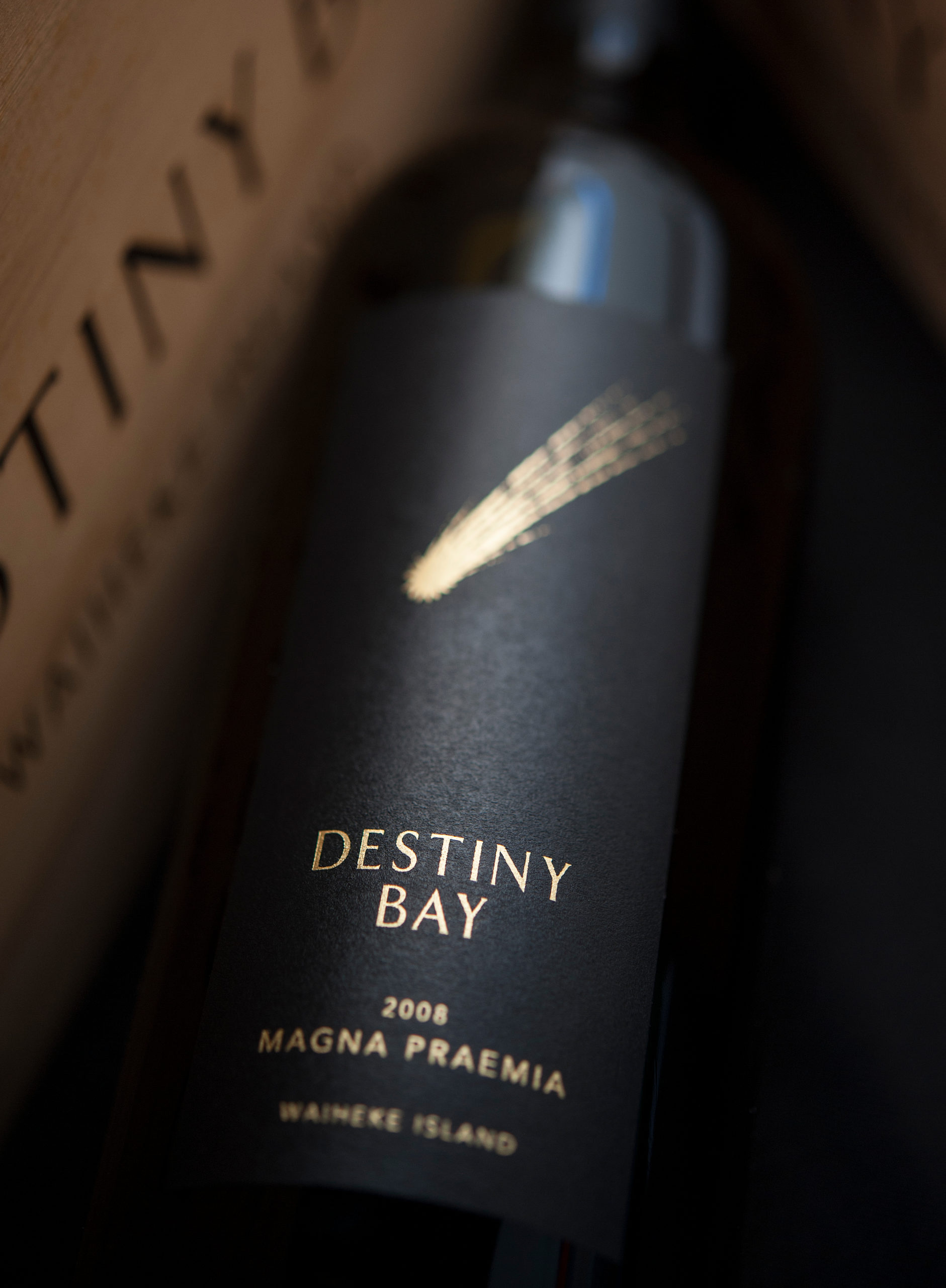
“The role that fate or destiny played was really 25 years ago,” Mike says. “It is an impossible place that meets improbable people.” He does not romanticise their credentials. He is a psychologist by training. Sean, his son and now the estate’s winemaker and managing director, brings an analytical mind and, as Mike calls it, “an extraordinary palate.” Ann anchors the operation. “We were not vintners,” Mike says. “We were completely improbable as people who would do this.” The name Destiny Bay was less a branding exercise than an acknowledgement. They had found something rare without setting out to do so.
Waiheke, he points out, is not an extension of Marlborough or Central Otago. “Waiheke Island, it turns out, is not at all like the rest of New Zealand when it comes to a viticulture region,” he says. “The two rarest wine varieties produced on the island are Sauvignon Blanc and Pinot Noir.” The island’s maritime climate is warmer and drier, almost a separate country in viticultural terms. But it’s Destiny Bay’s valley that stands out most within that context.
“This one valley that we discovered quite accidentally, had both the soil, site and climate… that had the potential to do something that couldn’t be done anywhere else… in the world.”
Many assume Waiheke’s success is rooted in volcanic romance. Mike is quick to dismantle that notion. “Most of Waiheke is not volcanic soil,” he explains. Instead, the island sits largely on sedimentary clay derived from greywacke and argillite, soils that are notably poor in nutrients. For vines, that apparent disadvantage is precisely the point. “It’s basically sedimentary clay with topsoil on top,” he says. The scarcity forces the vines to struggle, concentrating flavour and structure in the fruit rather than encouraging easy abundance. The island’s geological story traces back to the ancient formation of Zealandia, but within that wider narrative, this particular amphitheatre presents an unusual convergence of soil composition, orientation and microclimate. “It just happens that this one valley that we discovered quite accidentally has both the soil, site and climate,” Mike reflects, “that had the potential to do something that couldn’t be done anywhere else on Waiheke and, more impressively, anywhere in the world.”
The decision to focus on Bordeaux varietals in a country celebrated for aromatic whites was not contrarian for its own sake. It was logical. The site favoured Cabernet Sauvignon and its classical companions. Destiny Bay grows the five traditional Bordeaux varieties, with Cabernet dominant. Three blends are produced, stylistically distinct yet all drawn from the same vineyard fruit. “They all come from the exact same fruit,” Mike explains. He reaches for a metaphor that feels apt. “You can have a beautiful piece of music by a single instrument, but it’s not going to sound the same as a symphony.” Destiny Bay’s wines are built like an orchestration, layered and deliberate, Cabernet-led but shaped by Merlot, Cabernet Franc, Malbec and Petit Verdot.
For all the science underpinning the process, what’s more important is the sensory aspect. “The most important decisions we make are when we pick, how long we macerate and which fractions go into each blend,” he says, “those are all driven by taste.” Science ensures consistency and eliminates fault. The palate determines the final form.
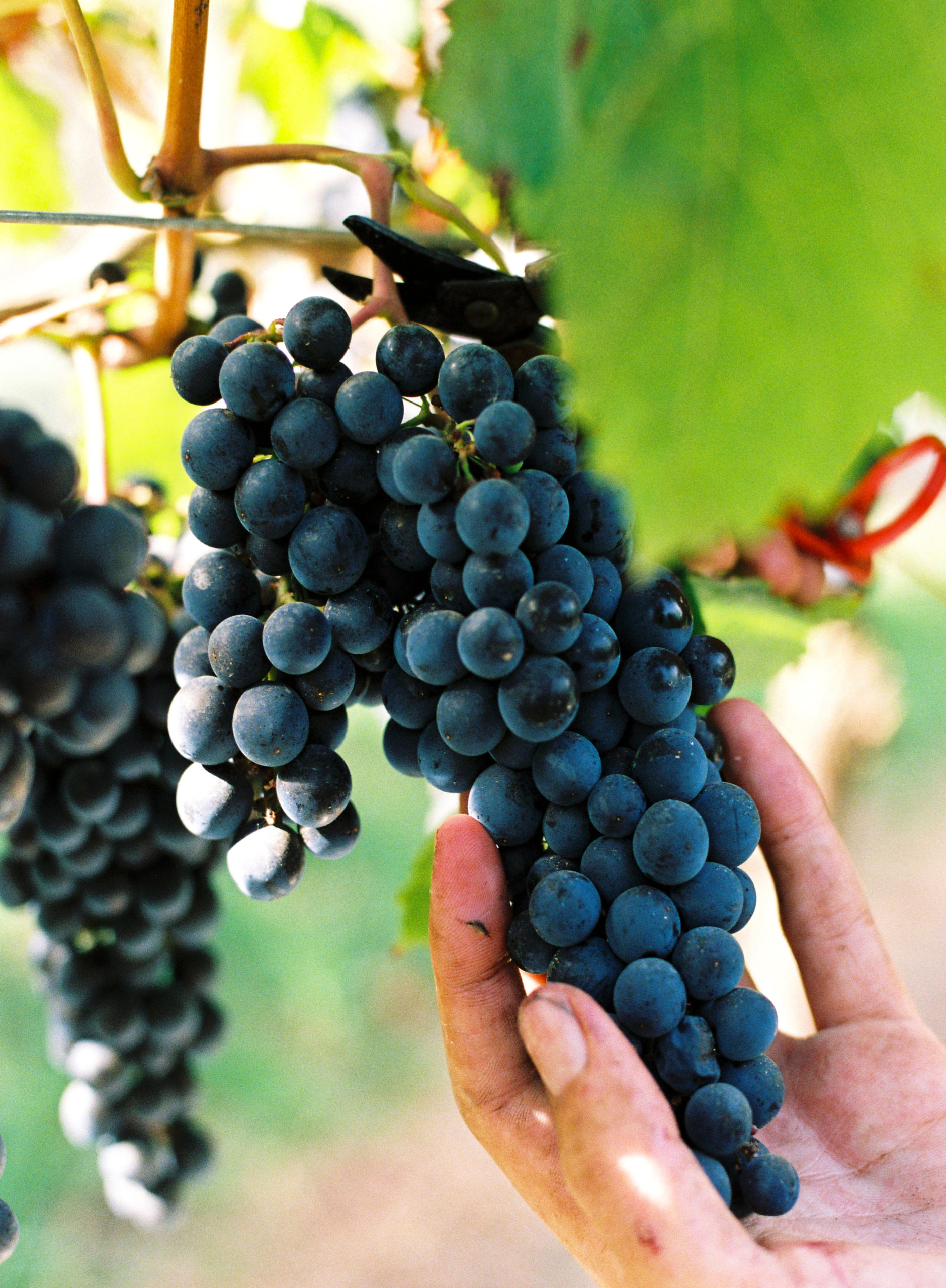
The intellectual backbone of Destiny Bay lies in its understanding of grape maturity. Around their fifth or sixth vintage, before they had sold a single bottle, Mike, Ann and Sean began questioning the unusually advanced fruit development they were seeing. “We were like, how come we’re able to get these levels?” he recalls. What many people think of simply as ripeness, he explains, is far more complex than sugar. “A grape probably has over a thousand different chemical compounds in it, and they don’t all mature at the same rate.” Sugar converts to alcohol, but the compounds that shape aroma, structure, tannin and texture must reach harmony as well. The aim is phenolic ripeness, the moment when every element of the grape has come into balance, and the fruit is capable of producing a wine of depth, structure and longevity.
Climate change has complicated that alignment across the world’s established wine-growing regions. Late-season heat drives sugar accumulation while other compounds lag, forcing winemakers into compromise. “It’s very hard to do that in the world right now,” Mike says. Destiny Bay’s amphitheatre appears to mitigate that tension. “We stumbled into this site that allows us to get the fruit completely right.” Then he distils their philosophy to its essence. “Our mission is basically not to mess that up.”
The vineyard itself demands labour and precision. There is no truly flat ground. Slopes reach angles that challenge machinery and reward careful tending. Harvesting is done by hand. Blocks and sub-blocks are picked at different moments as each reaches maturity. By the time the fruit arrives in the barrel hall, it has been separated into numerous components. Free run, first press, second press, third press, each offering nuance. Blending is not guesswork; it is a deliberate composition informed by palate and experience. Science ensures cleanliness and consistency. “The most important decisions you make in a vineyard are when you harvest the fruit,” Mike says, “and how long you let it macerate.” Those calls are driven by taste, not science.
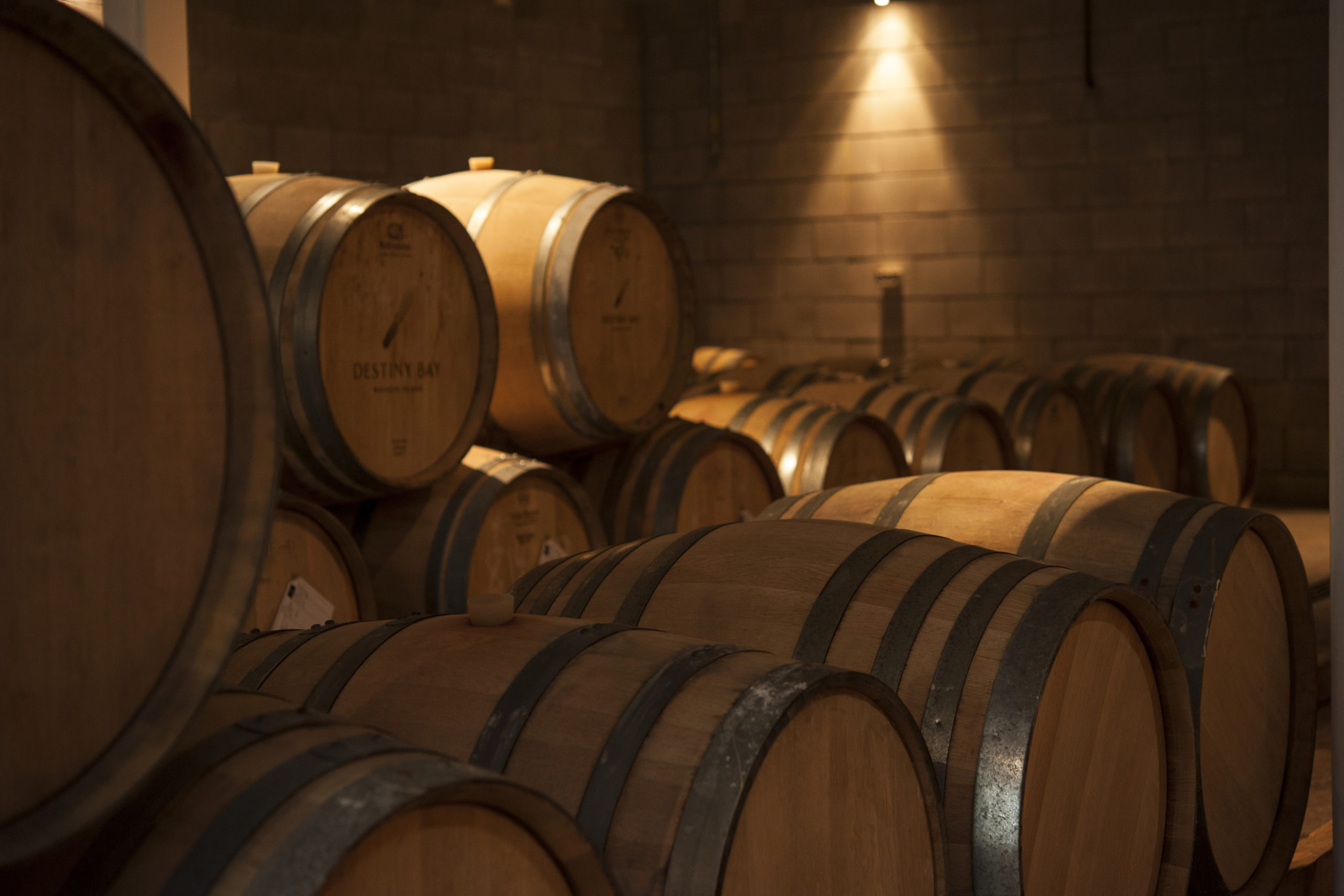
Scarcity in the case of Destiny is not marketing theatrics; it’s reality: the average yearly production hovers around 18,000 bottles, roughly 1,500 cases. In both 2017 and 2023, production was abandoned altogether. “Mother nature didn’t just rain on us,” Mike says of those seasons. “She tried to drown us.” In a category where reputation depends on restraint, the willingness to forgo release reinforces credibility and scarcity even further.
Destiny Bay’s commercial model aligns with its positioning. Much of its allocation flows through an exclusive Patron Club, offering access to current releases and a library of past vintages. Mike refers to the estate as a Veblen good, a term from economic theory describing luxury products for which demand increases with price. “Sometimes its lack of broad awareness adds to its mystique and its attractiveness,” he says. In this context, obscurity is not failure. It is filtration.
Despite their significant international recognition, Mike insists New Zealand remains central to their following. “More than half of our patrons are New Zealanders,” he says. The estate’s reputation among well-connected collectors has grown organically. Word travels efficiently within that world. The absence of broad marketing has not impeded demand.
Their integrity and values also extend beyond viticulture. Destiny Bay’s decision to remove foil capsules from its bottles is emblematic of its refusal to indulge unnecessary ornamentation. “A capsule serves no purpose other than for cosmetic appeal,” Mike says. Tin mining, particularly in parts of Indonesia, carries environmental and labour costs that the Spratts found untenable. “There are children as young as 12 years old doing this.” For a purely decorative addition, the justification did not hold. The bottles now remain unadorned at the neck, a quiet signal that ethics can coexist with prestige.
Throughout our conversation, what resonates most is the Spratt family’s sense of stewardship rather than ownership. Mike ponders the estate’s future in centuries rather than vintages, imagines it two hundred years hence, and thinks about who will carry it forward. “We’re the founders,” he says, “but there’s a legacy here that will continue.” In wine terms, twenty-five years is infancy. Yet Destiny Bay has already entered a global dialogue typically reserved for estates with far longer histories.
When I mention how proud he must feel, Mike resists the urge to be grandiose. “I’d really like to say we’re brilliant winemakers,” he says, “the fact is, we’re not.” What they are, he insists, is meticulous, intelligent enough to recognise what the land offers and disciplined enough not to compromise it. They discovered a site capable of producing fruit of unusual completeness. Their task has been to honour it.
What stands out is the beauty of how some of the most compelling luxury stories can, in fact, materialise organically. They are unforced by commerce, evolve quietly, are shaped by geology, and are guarded by people who understand restraint. And when they happen on a tiny island in a tiny country like New Zealand, the argument feels even more resolved. Destiny Bay did not set out to challenge Bordeaux or Napa. It set out to respect a valley that favoured the grape as nowhere had done prior. The global acclaim that followed is something to be proud of, and we are grateful to the Spratts as custodians of this geological paradise. The future, if Mike is correct, will belong to those who continue to listen to the land.
To join Destiny Bay’s exclusive Patron Club, apply via the link here.