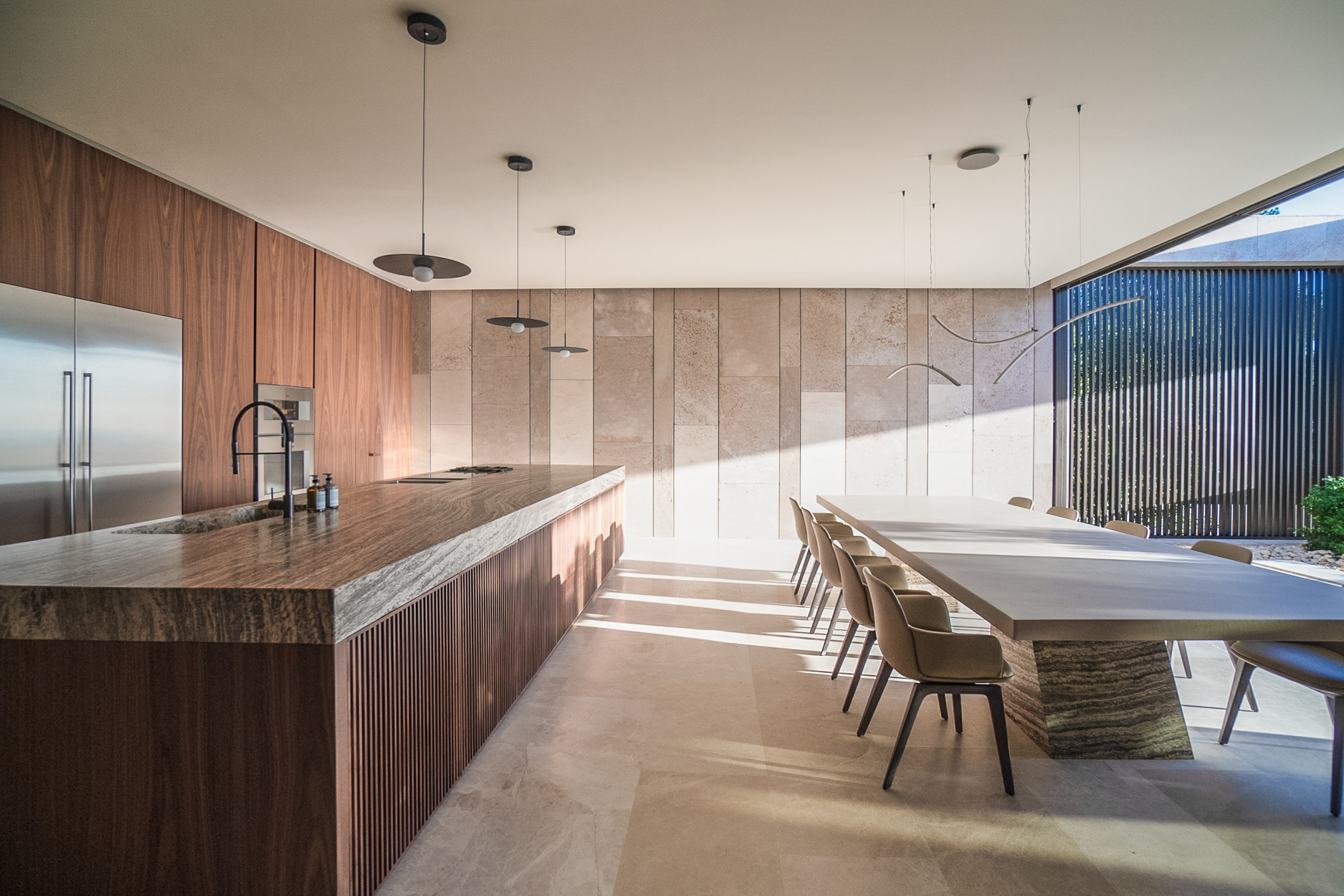
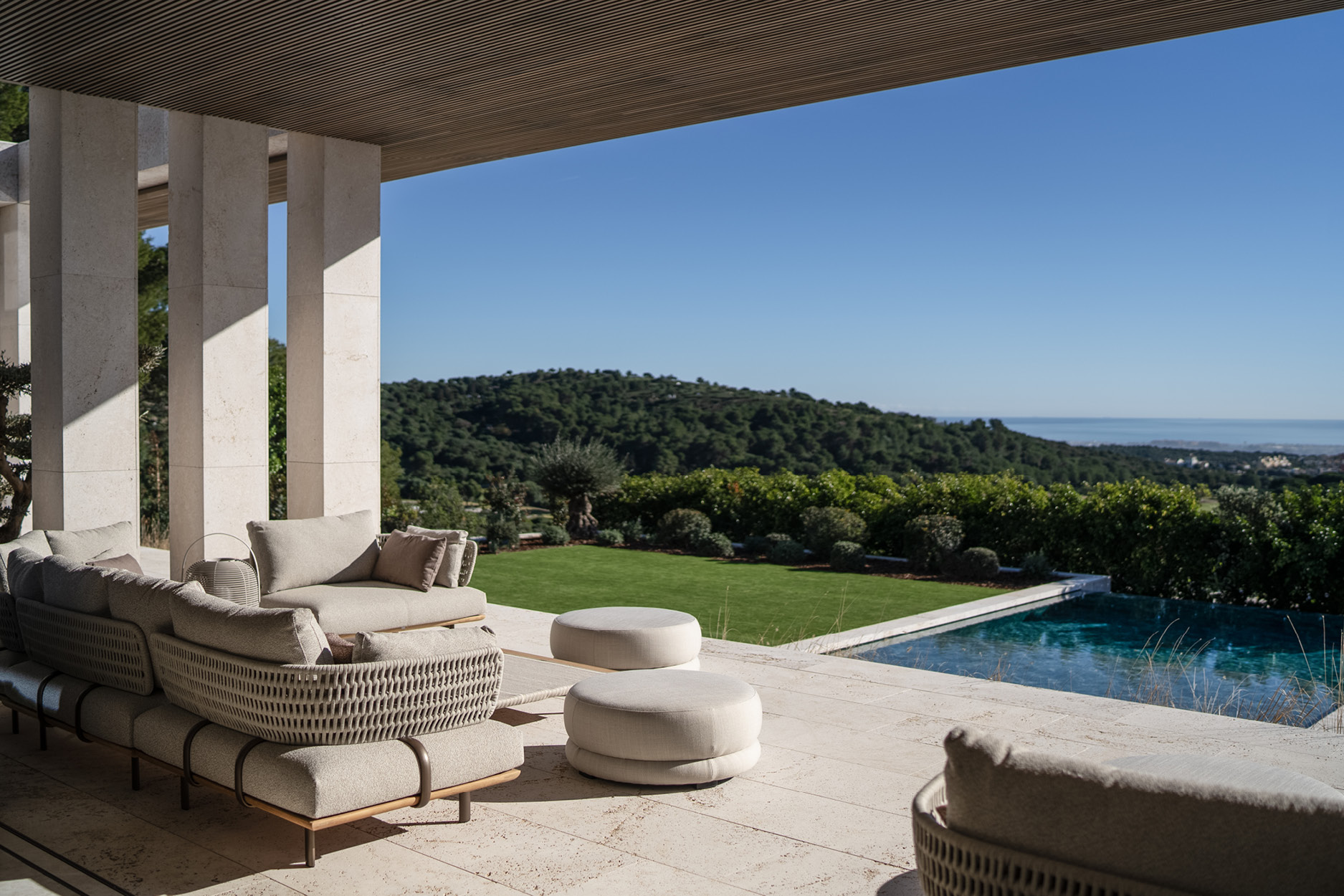
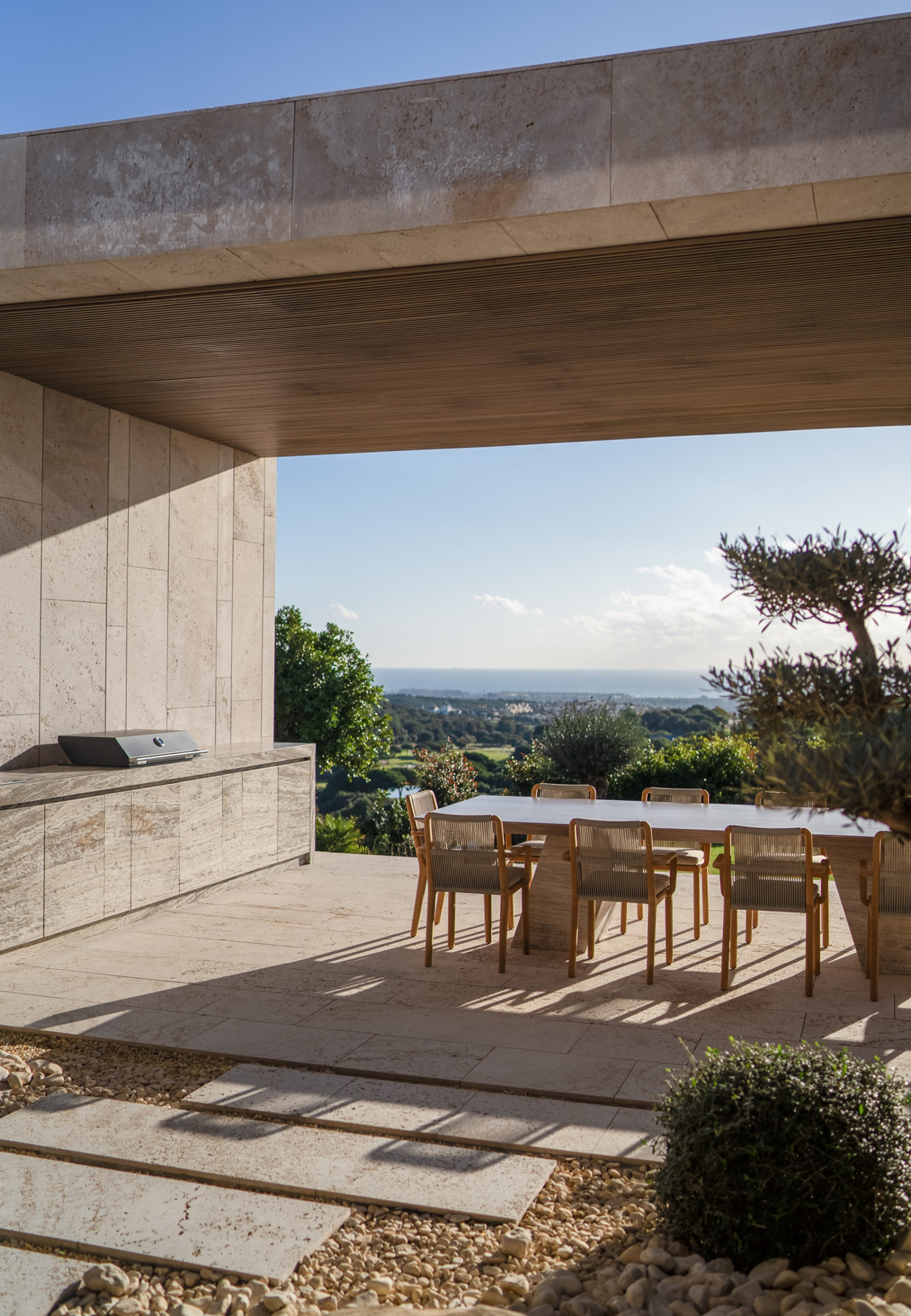
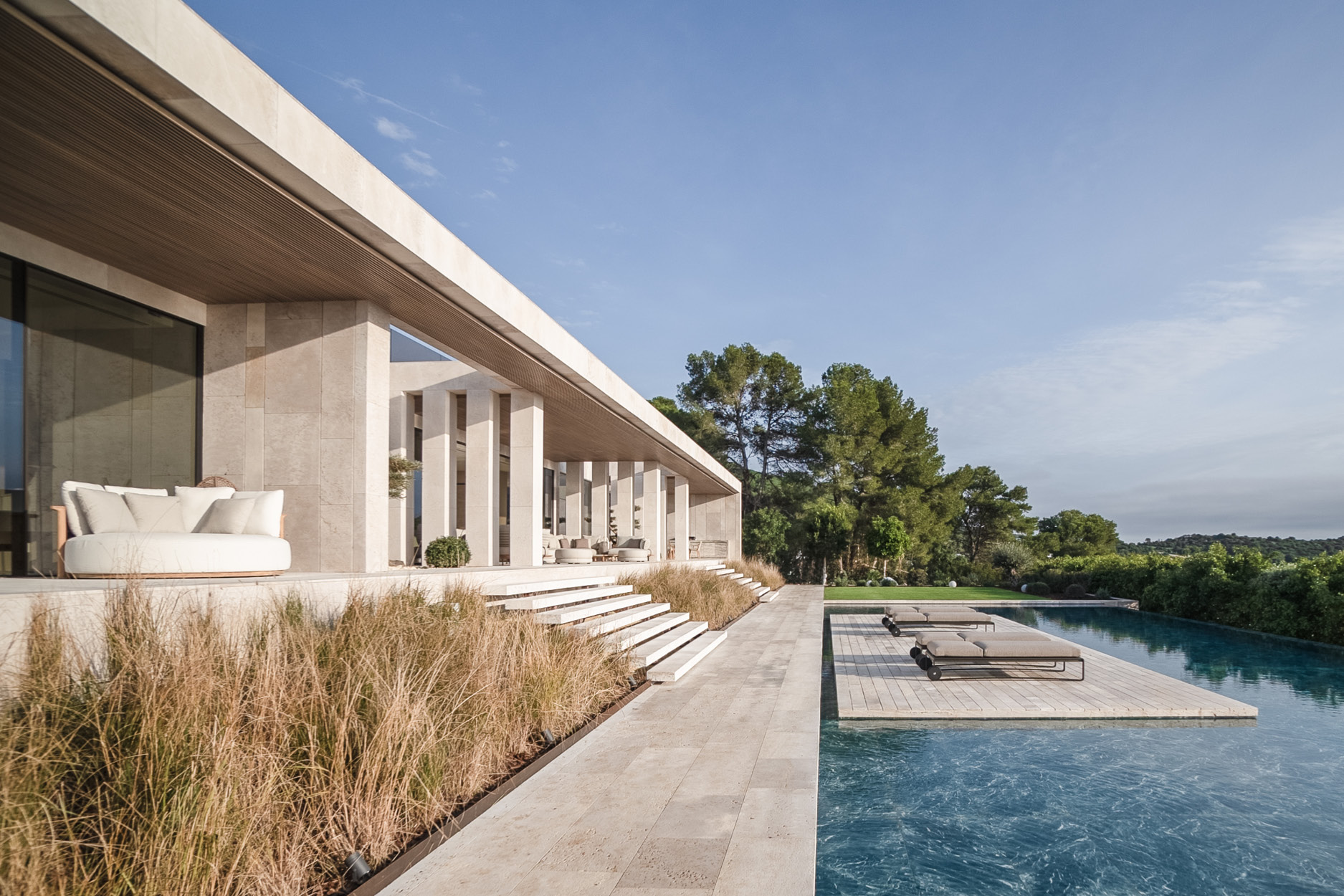
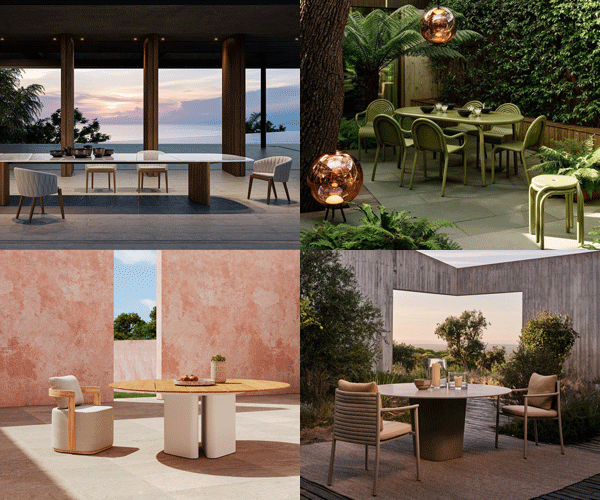
Perched above the Mediterranean, TAI Villa unites contemporary architecture and Molteni&C’s timeless furnishings in a sanctuary of refined elegance.
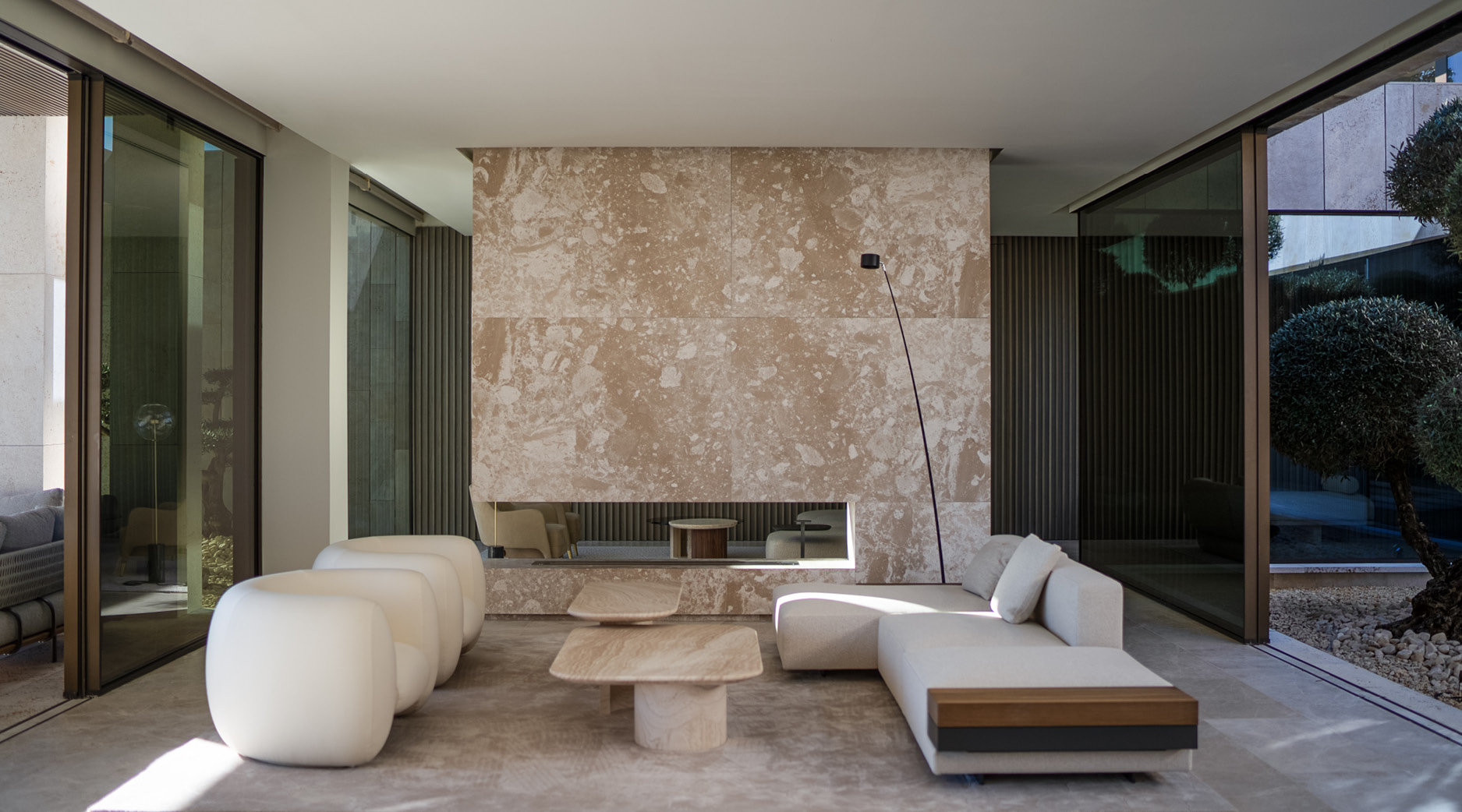
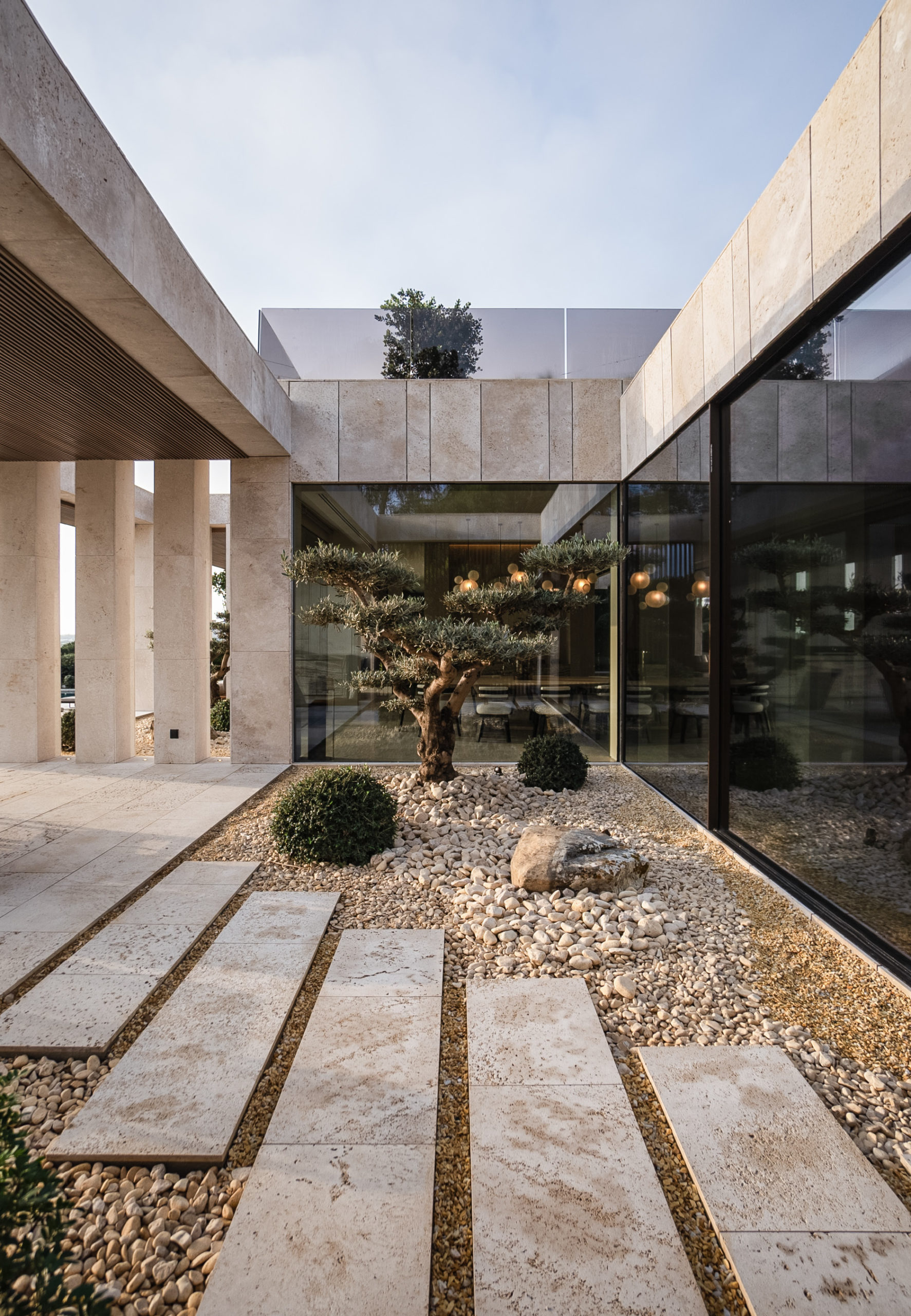
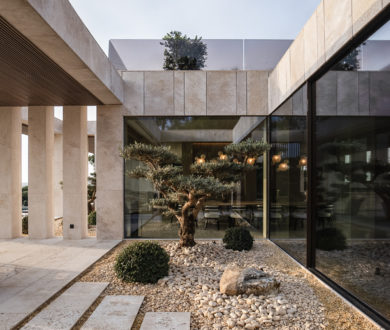
Set high on the hillside of La Reserva in Sotogrande, Spain, TAI Villa is a study in balance — a work of contemporary architecture that looks outward to the Mediterranean Sea while grounding itself in the textures and tones of its Andalusian setting. Designed by Manuel Ruiz Moriche of ARK Architects, the residence embodies openness, harmony with nature, and an enduring Mediterranean spirit.
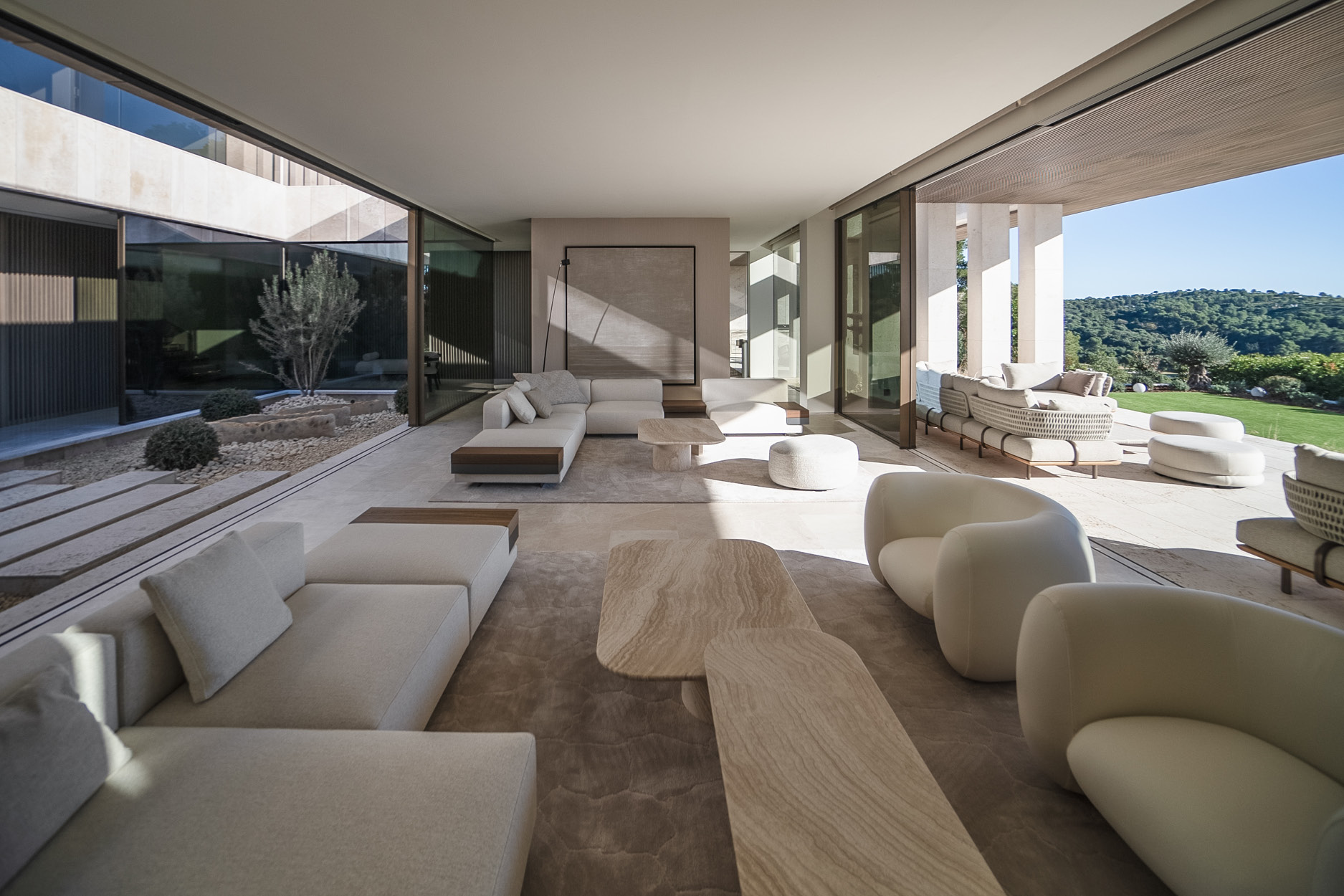
The villa’s exterior, defined by its elevated stone-and-glass form, sits embedded into the landscape, while expansive terraces and fluid interior volumes dissolve the boundary between inside and out, framing long horizons of sea and sky. Natural light plays a central role, filtering through generous openings to animate surfaces of stone, wood, and glass. Sustainability underpins the design, from passive ventilation and bioclimatic efficiency to the integration of native plantings that preserve the local ecology, creating a residence that marries comfort and elegance with environmental intelligence.
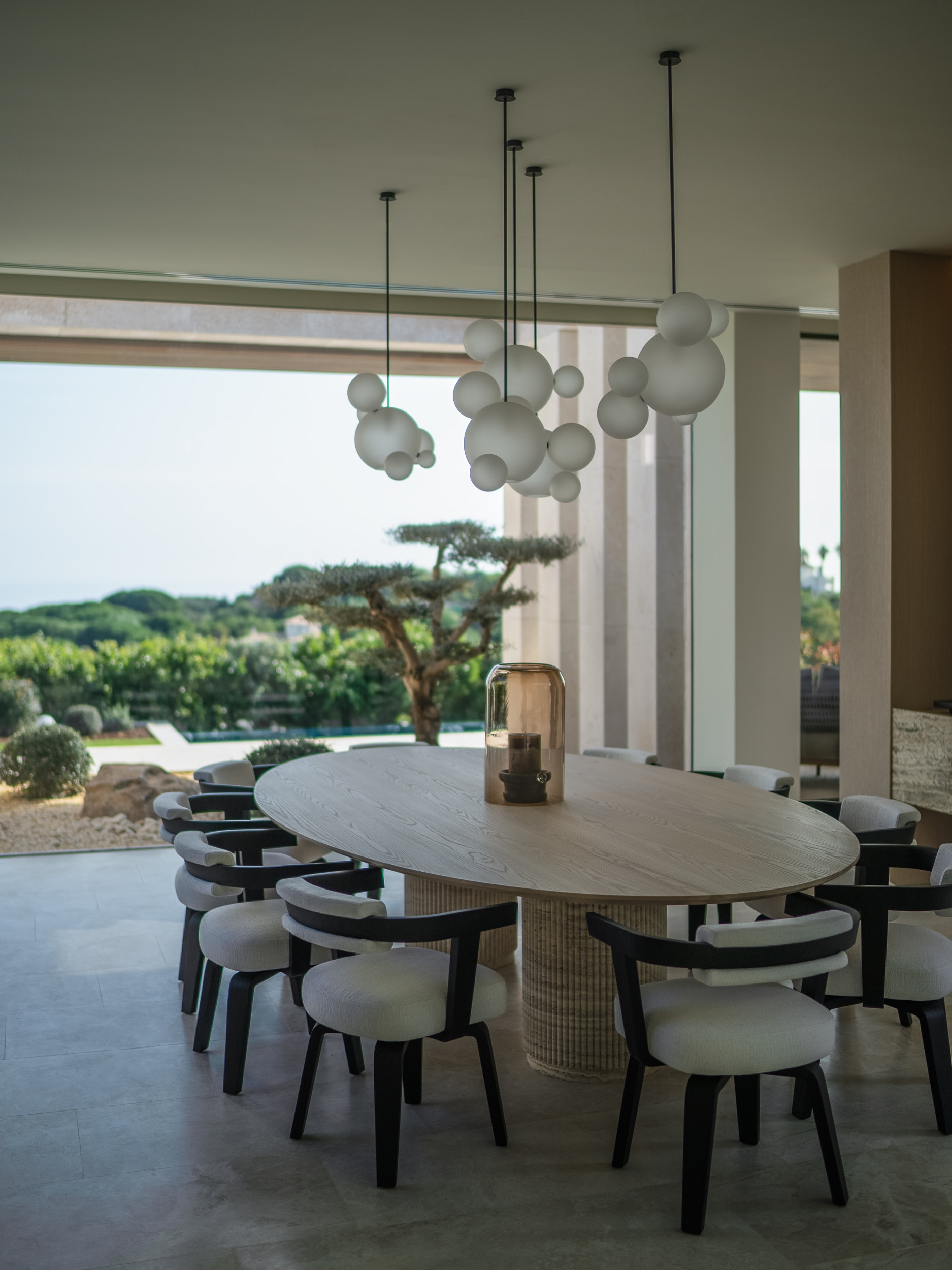
It is within this architectural framework that Molteni&C’s furnishings take on a defining role. Carefully curated across each space, the selection reinforces the villa’s dialogue between modernity and timelessness. In living areas, Vincent Van Duysen’s Marteen sofa and Cinnamon armchair by Naoto Fukasawa anchor rooms with warmth, their sculptural forms softened by tactile upholstery. The Porta Volta armchair by Herzog & de Meuron introduces a sharper contemporary accent in the dining room, while Gio Ponti’s D.151.4 armchair recalls the elegance of Italian modernism in a second leisure zone. A series of outdoor terraces continue this narrative, with Yabu Pushelberg’s Sway sofa and Van Duysen’s Cobea dining chairs setting an inviting tone.
“ARK Architects’ sculptural volumes and Molteni&C’s curated furnishings converge in a vision of Mediterranean living that is both contemporary and timeless”
Throughout, furnishings are treated less as accessories and more as architectural companions, aligning with the home’s structural clarity while enriching its atmosphere. In bedrooms, pieces such as Rodolfo Dordoni’s Aldgate bed and Devon armchair, Van Duysen’s Ribbon and Ovidio beds, and the Alisee side table by Matteo Nunziati establish sanctuaries of repose, each distinguished by a quiet, understated luxury. The home office and spa are treated with equal consideration, their furniture selections ensuring functionality does not come at the expense of refinement.
What emerges is a residence where architecture and interior design speak a shared language. ARK Architects’ sculptural volumes and Molteni&C’s curated furnishings converge in a vision of Mediterranean living that is both contemporary and timeless; an environment defined by harmony, restraint, and connection to nature.
Universally recognised for its timeless designs, storied history, and the cultural weight it carries, Rolex is a name known even to those who claim complete watch-novice status. And while the house has long set the standard for refined, versatile timepieces rendered in classic tones, its colourful references have quietly become some of the most sought-after watches in the collection, proving that a bold dial is one of the most compelling ways to make a Rolex distinctly your own.
If you already own a Rolex, or keep a few on rotation and are considering your next, we’d encourage you to look beyond the classically neutral comfort zone. From turquoise stone dials on the Day-Date to matte pistachio on the Oyster Perpetual, Rolex’s current catalogue is rich with colour, and every option is worth your attention.
The Oyster Perpetual: where it starts
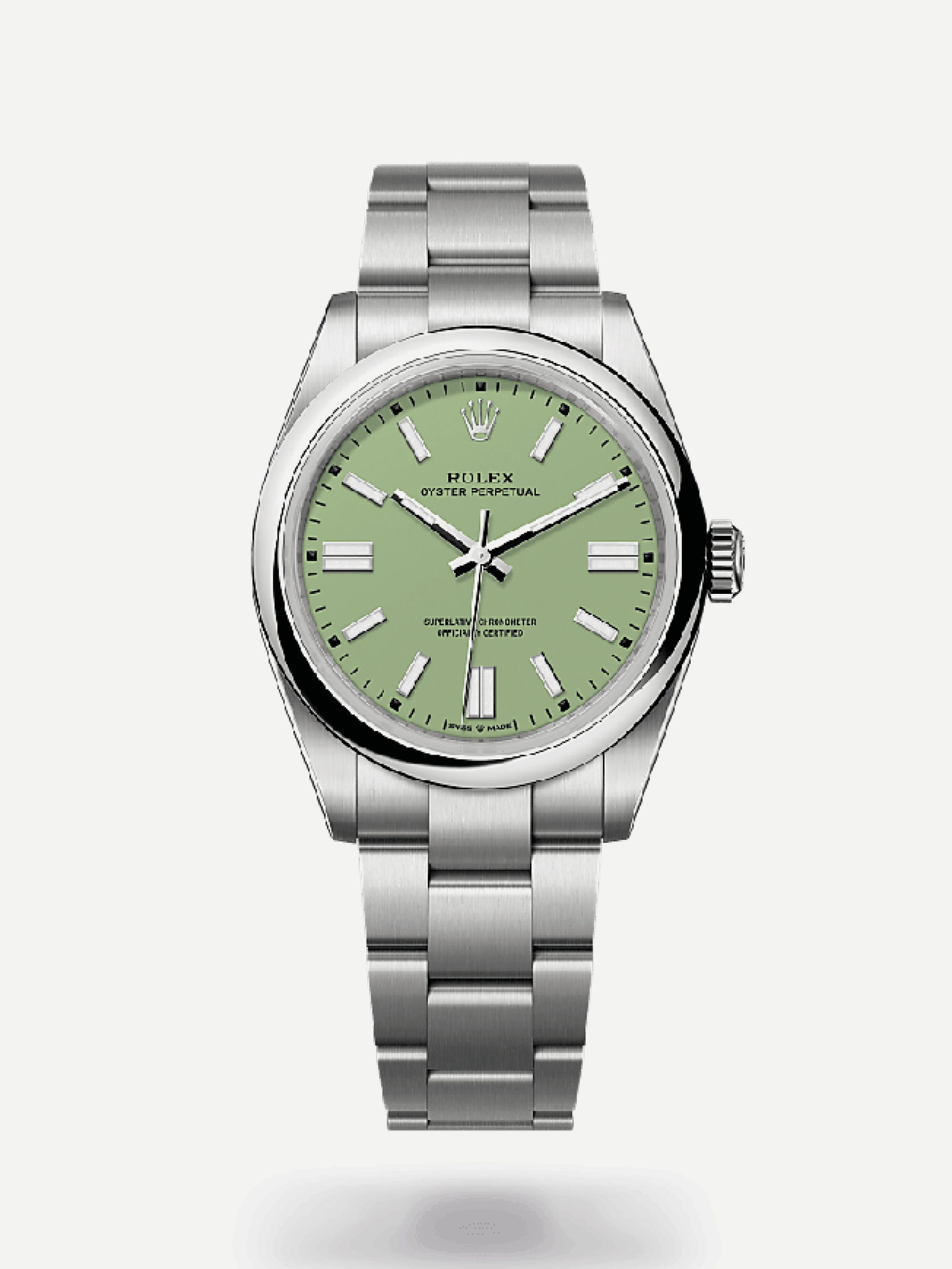
If Rolex has a gateway to colour, it’s the Oyster Perpetual, the house’s purest expression of time-only watchmaking, rendered in Oystersteel with nothing to distract from the dial. In 2020, Rolex sent the watch world into a tailspin with a range of glossy, saturated dials, candy pink, coral red, turquoise blue, bright yellow, that created queues, grey-market premiums, and an entirely new audience for what had been considered an entry-level reference.
In 2025, Rolex shifted register. The saturated dials were largely retired, replaced by a trio of matte lacquer finishes in pistachio green, sandy beige, and lavender, softer, more considered, and finished with a texture that scatters light rather than reflecting it. The effect is closer to the shell of a French macaron than the gloss of a sports car. Available across the 28mm, 31mm, 34mm, 36mm, and 41mm cases, these are watches that feel quietly modern without demanding attention. The pistachio, in particular, has already become one of the most sought-after Oyster Perpetuals in recent memory.
For anyone testing the waters of a colourful Rolex, this is the place to begin, the price of entry is accessible by Rolex standards, the steel construction means it wears without preciousness, and the matte pastel palette is the kind of understated confidence that makes people look twice without quite knowing why.
Where the Oyster Perpetual democratises colour, the Day-Date claims it as a birthright. This has always been Rolex’s creative playground, the only collection produced exclusively in precious metals, and the one where the house has historically taken its most adventurous dial risks. Stone dials, meteorite faces, ombré gradients, if Rolex is going to experiment, it happens here first.
The current Day-Date 36 catalogue reads like a jeweller’s colour chart. The turquoise stone dial, carved from natural turquoise and paired with diamond-set hour markers, remains one of the most striking watches in the entire Rolex range, available in yellow gold, Everose gold, and platinum configurations. There’s a carnelian dial in warm burnt orange for the yellow gold model, and a green aventurine with its fine crystalline shimmer for Everose gold. Each stone is unique, which means each watch is, in practice, a one-of-one.
For those drawn to colour without the commitment of semi-precious stone, the Day-Date also offers lacquered dials in bright blue, olive green, and champagne across its gold and platinum variants. The rainbow sapphire-set bezel models, with ten baguette-cut sapphires graduating through the colour spectrum, take the concept further still, though these sit firmly in the realm of statement jewellery rather than everyday wearing.
Day-Date 40Oyster, 40 mm, yellow gold, Green ombré from Partridge
Day-Date 36 Oyster, 36 mm, white gold and Pink set with diamonds from Partridge
Day-Date 36 Oyster, 36 mm, Everose gold and blue-green with diamonds from Partridge
The Cosmograph Daytona: colour with consequence
If the Day-Date is Rolex’s colour laboratory, the Daytona is where colour becomes mythology. The previous-generation reference 116508, an 18-carat yellow gold Daytona with a vivid green sunburst dial, earned the unofficial title of the “John Mayer” Daytona after the musician championed it publicly, and when Rolex discontinued the entire 116-series Daytona line in 2023, secondary market prices surged.
Its successor, the reference 126508, arrived in 2025 with an updated case profile, revised dial proportions, and Rolex’s newer calibre 4131 movement. The green-and-gold combination returned, though the dial finish has been subtly recalibrated, and the secondary market responded immediately, with examples trading at multiples of their retail price. An Everose gold Daytona with a meteorite dial has joined the current lineup, too, each face cut from the remnant of a disintegrated asteroid, making it among the more extraordinary dials in production watchmaking.
The Daytona proves that colour on a Rolex isn’t merely decorative. The right dial on the right reference becomes a cultural moment, and, for those fortunate enough to secure one, an appreciating asset.
Cosmograph Daytona Oyster, 40 mm, yellow gold Turquoise blue and black dial from Partridge
Cosmograph Daytona Oyster, 40 mm, yellow gold Bright green and golden dial from Partridge
Cosmograph Daytona Oyster, 40 mm, Everose gold Sundust, bright black counter rings set with diamonds from Partridge
The Datejust: colour for your every day
Not every colourful Rolex needs to announce itself. The Datejust, Rolex’s most versatile collection, has been absorbing colour in subtler ways. The Datejust 31 now features a red ombré dial that transitions from a fiery centre to deep darkness at its edges, enhanced by a diamond-set bezel. Mint green, palm-motif, and aubergine dials appear across the Datejust 36 and 41 in various metal and bezel configurations.
These are watches designed to be worn every day, and their colour choices reflect that, less spectacle, more personality. A fluted-bezel Datejust 36 in Oystersteel and yellow gold with an olive green dial is the kind of watch that becomes invisible to everyone except the people whose taste you trust.
Datejust 36Oyster, 36 mm, Oystersteel, Everose gold, Rosé-colour set with diamonds from Partridge
Datejust 31 Oyster, Oystersteel, white gold, Olive green set with diamonds from Partridge
Datejust 41 Oyster, Oystersteel and white gold, bright blue dial from Partridge
There’s a fine art to mastering the perfect running routine. Some runners slip into an easy rhythm without apparent effort; you’ll spot them along the waterfront in every weather Auckland throws at them, unbothered by sideways rain or a 6 am chill. For the rest of us, motivation tends to arrive only on those perfectly overcast days when the temperature sits in that narrow, cooperative range. The problem, of course, is that Auckland’s winter rarely cooperates for long enough to build any real stamina.
The good news is that running in the rain doesn’t have to be an endurance test of misery. With the right preparation, a wet run can be one of the most satisfying, emptier roads, cleaner air, and the kind of head-clearing focus that fair-weather kilometres rarely deliver. Here are a few ideas from seasoned runners that might just give you your wet-weather mojo back.
Dressing is a delicate balance
Don’t overdress or underdress. As the kilometres stack up, the impulse to shed layers will come quickly. A lightweight, easily removable layer, something you can pull off and tie around your waist mid-stride, is the move.
Invest in a lightweight spray jacket
With that delicate balance in mind, a waterproof outer layer to stave off the chill is critical on a rainy day. Avoid anything too tight, which will trap heat as the run progresses, but opt for something that keeps the worst of the weather at bay.
Wear a hat with a brim
Not essential, but a running cap or visor with a decent brim will keep driving rain off your face. A light drizzle might feel refreshing for the first five minutes — 45 minutes of rain in your eyes is another matter entirely. A brim works just as hard in the rain as it does in the sun.
Keep your tech waterproof
Phones, earbuds, fitness trackers, runners tend to carry a fair amount of technology, none of it cheap. A small running belt with a phone pouch is worth the investment, as is a waterproof case for any device that’s coming along for the ride.
Wear pants that prevent chafing
Chafing is unpleasant at the best of times, and rain makes it decidedly worse. On wet days, reach for a longer pair of leggings and a shirt with sleeves to prevent the skin-on-skin friction that promises discomfort for days.
Wear the right shoes
This depends entirely on terrain, but it’s worth considering what your usual track looks like after heavy rain. Trail running can turn muddy quickly, and footpaths become noticeably more slippery, a shoe with a little extra grip in the sole is never a bad call.
Join a running collective
When a dark, wet Saturday morning has you reaching for the snooze button, the accountability of a group makes all the difference. Auckland’s running community has never been stronger, with collectives to suit every pace and personality. Slow Sunday Run Club, Grave Runners, Run4 and more offer a community-driven crew with serious credentials.
Embrace it
It takes a while to get there, but seasoned runners will tell you that wet-weather running is some of their favourite running. The crowds disappear, the roads empty out, and there’s a clarity to a rain-soaked run that sunshine rarely matches. The day you stop dreading it and start choosing it is the day your running changes for good.
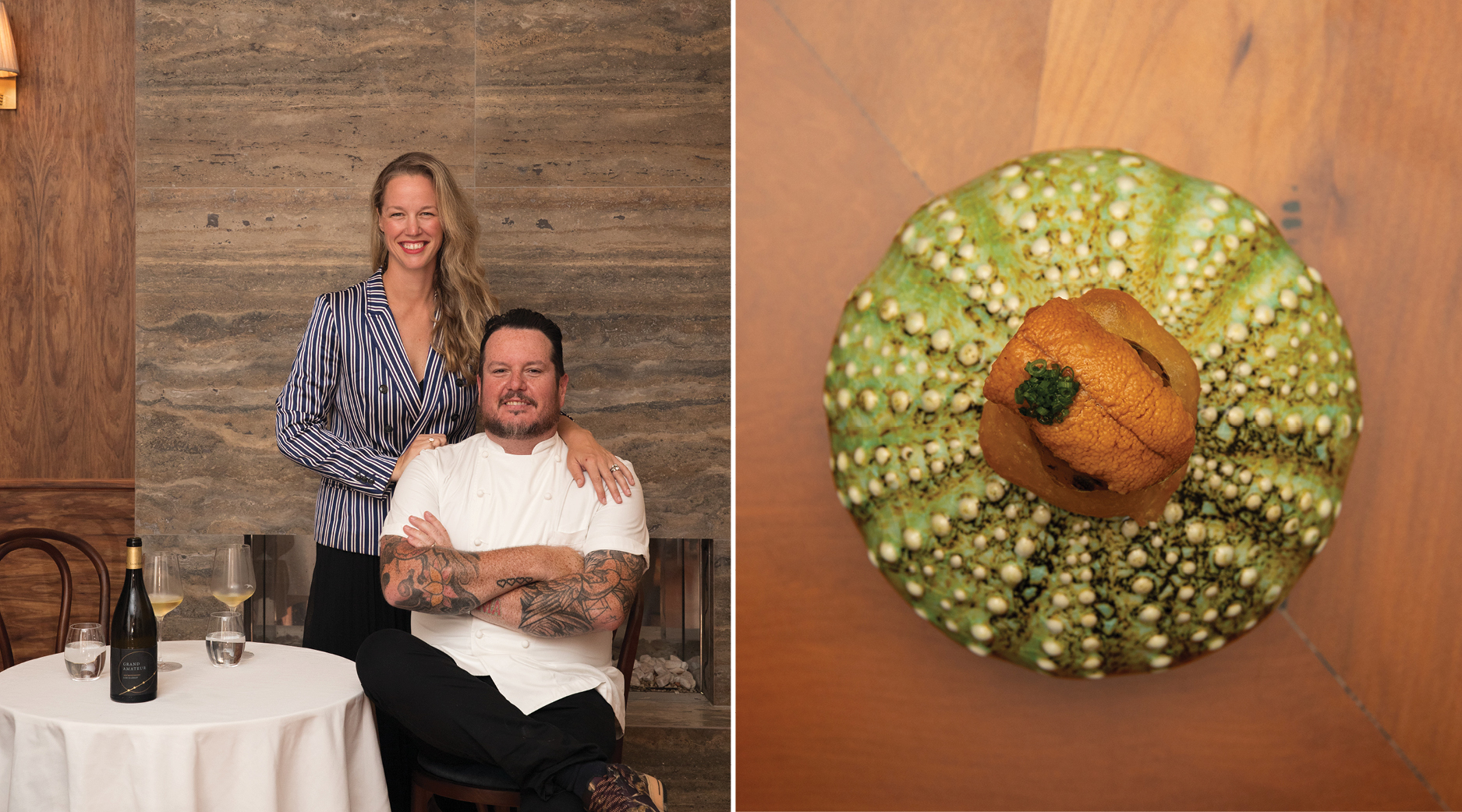
There is a particular kind of confidence that comes from earning a Michelin star within four months of opening a restaurant in Manhattan, holding it for seven years, then walking away from it all to come home. Matt Lambert has that confidence. And now, along with his wife and business partner Barbara, he’s channelling every ounce of it into Return, a 62-seat restaurant that opens tonight at 165 Ponsonby Road.
The name is not subtle, and it’s not trying to be. Return is a homecoming for the Lamberts, who spent a decade building The Musket Room into one of New York’s most respected New Zealand-influenced restaurants. It is also a statement of intent: after five years back in Aotearoa (most recently heading up Rodd & Gunn’s Lodge Bar kitchens in Auckland and Queenstown), Lambert is done cooking for other people. This is his room again.
That the room happens to be the former Ponsonby Road Bistro site is no accident. The Lamberts looked at several locations, but 165 Ponsonby Road, a building with decades of hospitality embedded in its walls, felt like the only real option. “We are entering a continuum and will treat it accordingly,” Lambert says, with the quiet seriousness of someone who understands that a restaurant’s address carries its own biography.
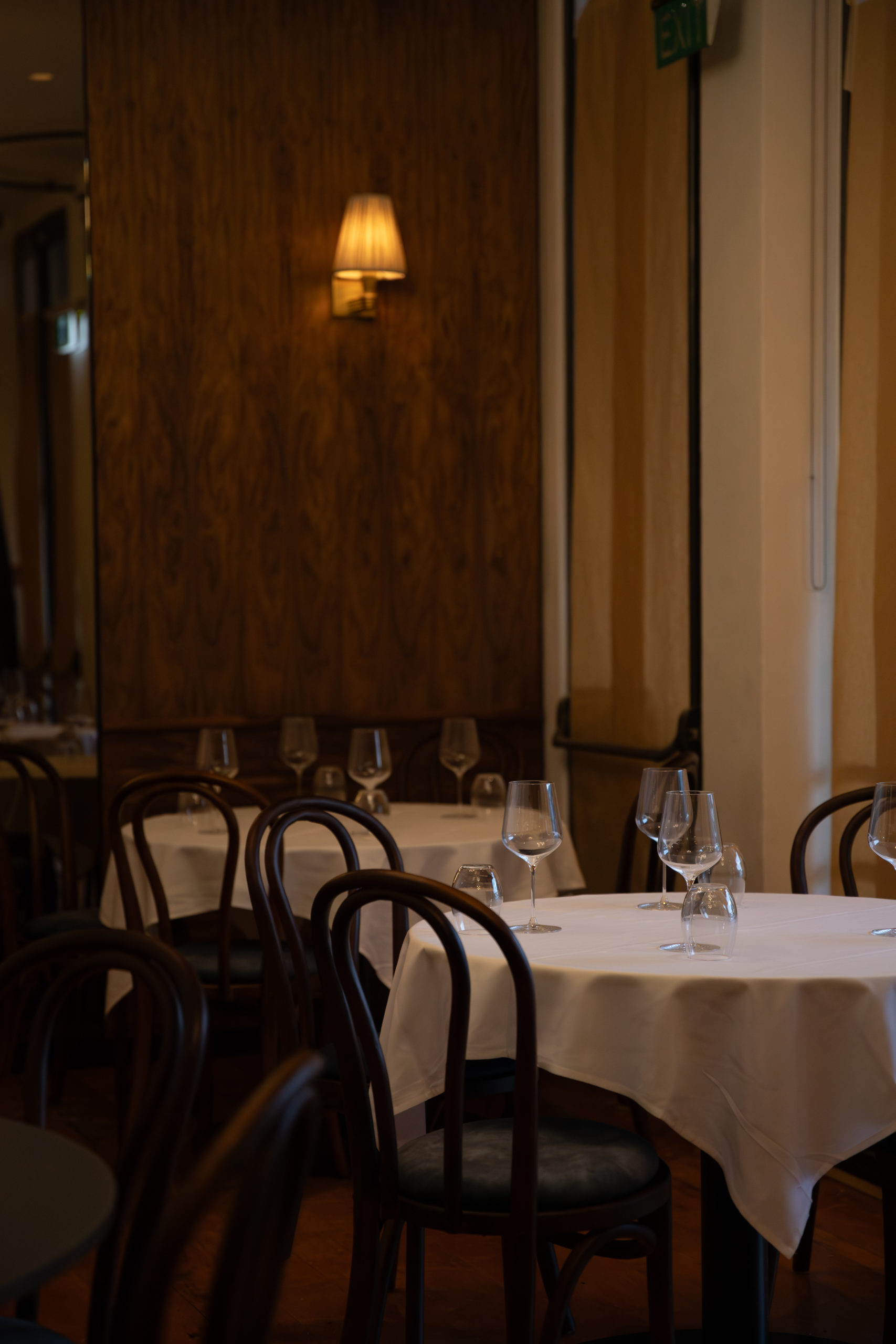
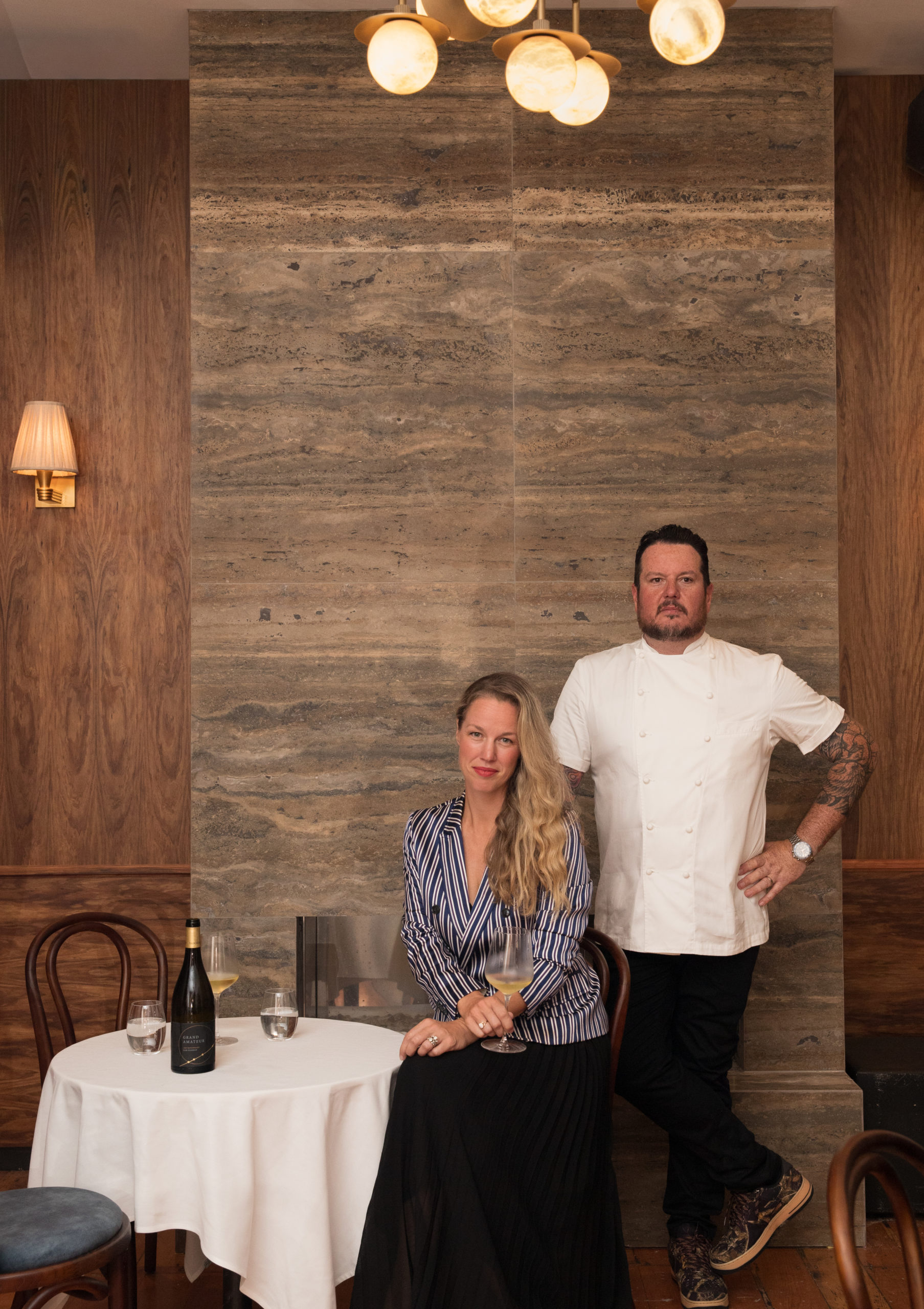
The space has been reimagined by Obery with a brief that draws directly from The Musket Room’s DNA. At its centre, a live-edge kauri bar anchors the room, the timber responsibly sourced and given the kind of prominence it deserves. A chocolate travertine fireplace greets you at the entrance, deep blue drapes part to reveal two distinct dining areas: the first, bright and outward-facing with floor-to-ceiling windows onto Ponsonby Road; the second, more intimate, cocooned around the bar with rice blue tiles, wooden panelling, gold velvet dining chairs, deep blue banquettes and white tablecloths. It is a room that feels simultaneously new and familiar, as if someone took the best version of a classic New York neighbourhood restaurant and rebuilt it with materials that could only belong here.
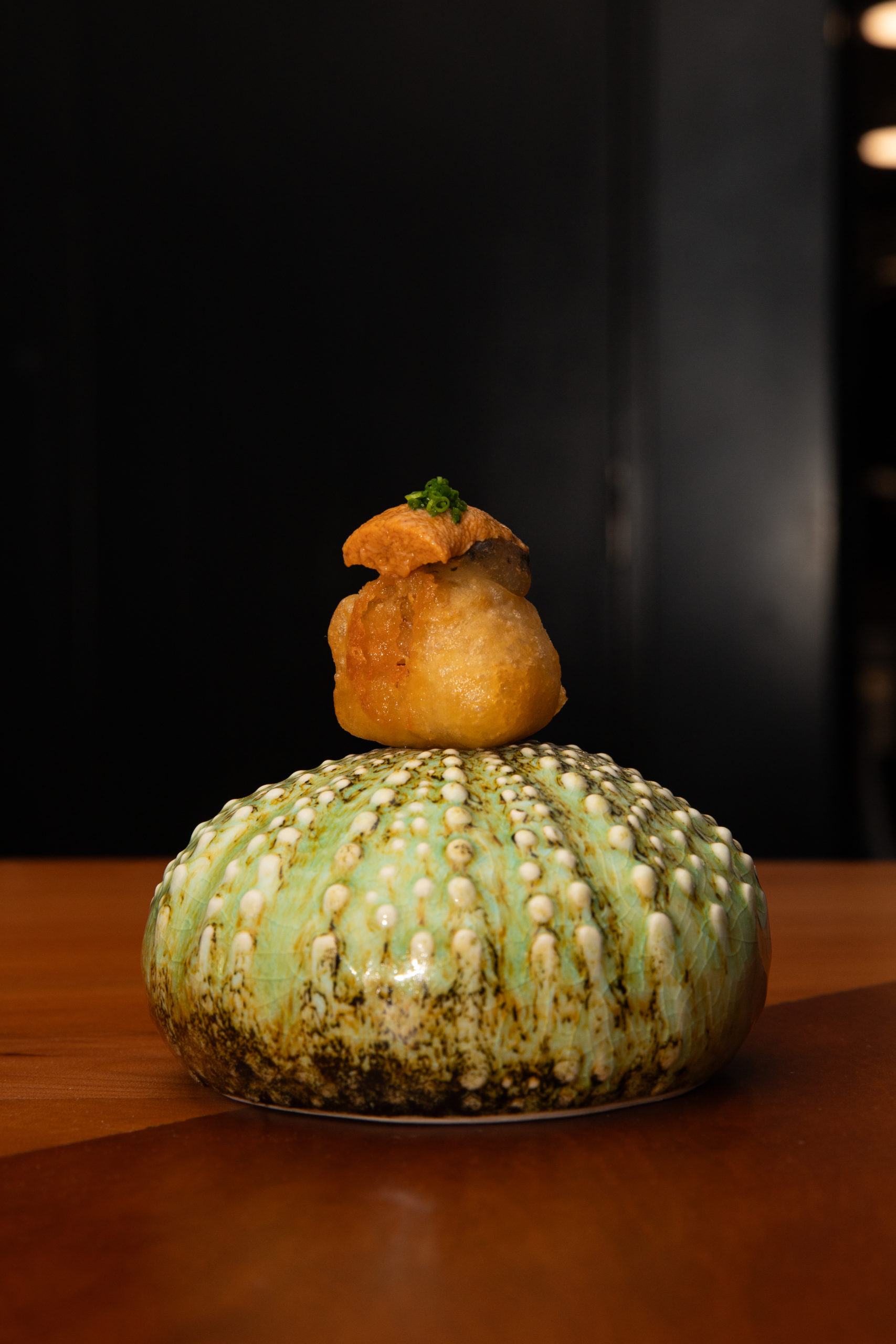
fried bone marrow, kina
The menu, like the space, is deliberately concise. Structured across snacks, appetisers, mains and desserts, it favours individual plates over shared dining, a format that echoes The Musket Room but has been entirely rethought for this kitchen and this produce landscape. Guests choose from à la carte, the six-course tasting menu (Short Story) or the ten-course (Long Story), the names alone suggesting that Lambert wants you to settle in and let the kitchen do the talking.
What becomes clear, quickly, is that Lambert is cooking New Zealand in the way only someone who left it and came back can. The menu reads like a love letter written in the language of fine technique: ‘fish and chips’ appears in quotation marks on the snack menu, a playful wink at the national dish reimagined with the precision of a chef who spent a decade in Manhattan. Steak and cheese gets the same treatment. There is a pavlova with late harvest strawberries and passionfruit, a study of feijoa, and on the Long Story tasting menu, a hāngī course that feels less like a nod to tradition and more like a claim on it.
‘fish and chips’
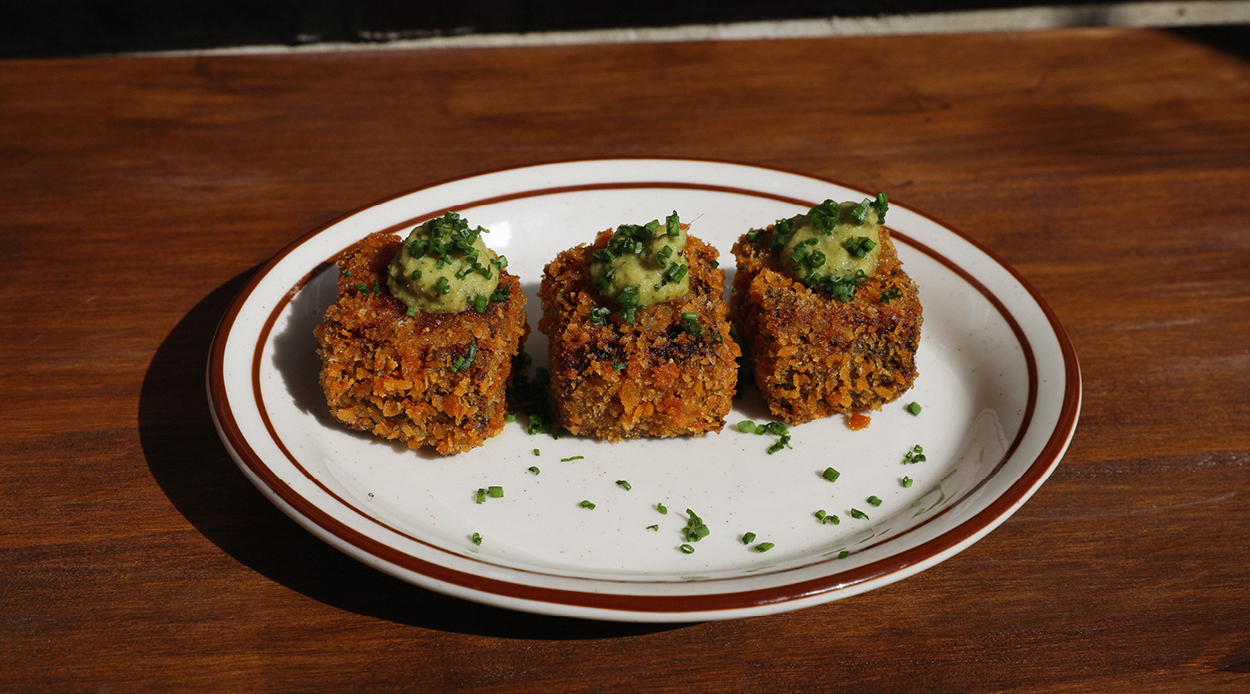
The snack section, which opens both tasting menus, sets the register. Creamed Tora pāua arrives as a single, concentrated bite, the kind of opener that tells you immediately what kind of kitchen you’re dealing with. The fried bone marrow with kina is rich, briny, and unapologetically bold, two of New Zealand’s most prized ingredients treated with the confidence they deserve. These are not canapés. They are statements of intent, served before you’ve even settled into your chair.
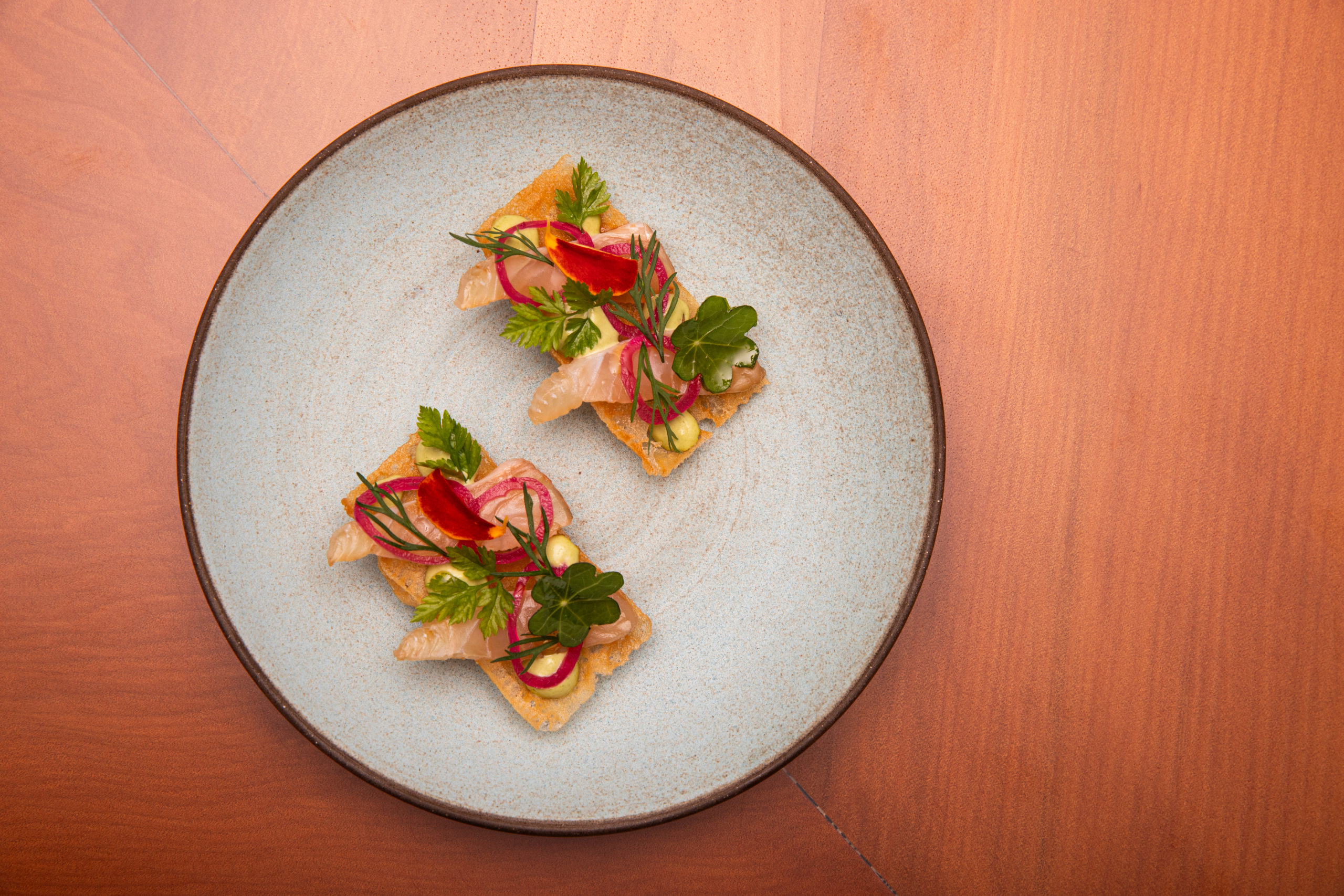
From the entrees, the raw kingfish with celery, dill and sour cream is the dish that best demonstrates Lambert’s restraint. Clean, precise, every element there for a reason and nothing competing for attention. The Ōra King salmon with fennel and lemon speaks the same language, and quail with onions, bread sauce and jus hints at the more classical instincts that underpin the menu’s contemporary surface.
The mains hold their own weight. Wild deer with beets and grains anchors the Short Story tasting menu, while the Long Story expands to include Troy’s crays with citrus, the named supplier a quiet signal that Lambert knows exactly where his produce is coming from and wants you to know it too. A vegetable pithivier with root vegetable jus offers a meatless option with genuine substance and craft, not an afterthought.
The couple describe Return as “a more grown-up version of The Musket Room,” and the culinary philosophy reflects that maturity. Lambert works with a tight network of small-scale farmers, growers and producers, and the menu is built around what arrives, not what a spreadsheet dictates. “Return seeks to represent New Zealand in a way that is both authentic and forward-looking,” he says. “We want to champion local biodiversity, support small producers, and contribute to a more sustainable hospitality ecosystem.”
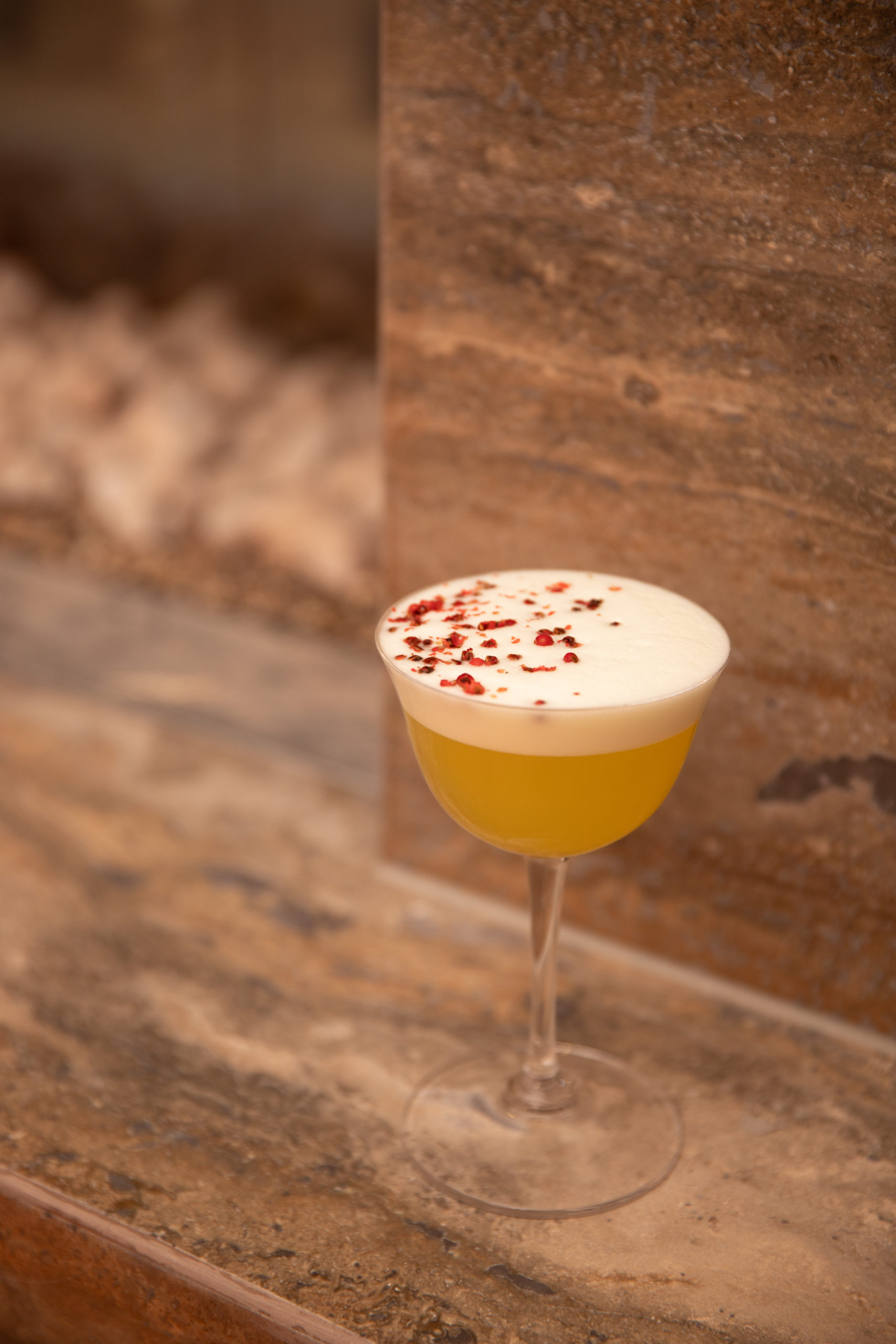
Flightless Bird cocktail
The beverage programme sits in the hands of sommelier Jim Turner, whose list champions local growers and producers with the same intentionality that defines the kitchen. Both tasting menus come with considered pairings, and the bar (with its 12 seats) is very much a destination in its own right.
Barbara Lambert, who ran The Musket Room’s floor with a precision that New York food media regularly noted, is overseeing front-of-house with the same exacting standards. “After so many years in New York, coming back to New Zealand and opening Return feels like a full-circle moment,” she says. “We’ve poured everything we’ve learned into this space, but at its heart, it’s about creating something warm, generous and deeply connected to people and place.”
Matt and Barbara Lambert
Lambert himself puts it more bluntly: “At Return, the standards are serious, but the environment is welcoming. This is not fine dining. It is intentional dining. Nothing here is accidental; everything is deliberate.”
Secure one of those gold velvet chairs on a Tuesday evening, when the room is still finding its rhythm and the Ponsonby foot traffic hasn’t yet caught on. Order the Long Story, let Jim Turner guide the wine, and be among the first to experience what happens when a chef who proved himself on the toughest stage in the world decides that home was always the point.
Opening hours: Tuesday–Saturday, 5pm till late
A limited number of walk-in tables and outdoor seats are offered on a first-come, first-served basis.
Scroll any wellness-adjacent corner of social media, and you’ll find biohackers self-injecting compounds with names like satellite coordinates. BPC-157, CJC-1295, and TB-500 each promise faster recovery, sharper cognition, deeper sleep, greater muscle mass, and less fat. The implication is clear: the future of health is injectable, and you’re falling behind.
The conversation has reached critical mass in 2026. In the United States, regulation around peptides remains complex and evolving. While some compounded products are available in specific circumstances, there is ongoing FDA scrutiny regarding safety, quality, and legality. Regulatory approaches to peptides continue to shift globally, reflecting growing interest in their therapeutic potential alongside ongoing concerns around safety, quality, and misuse. In New Zealand, Medsafe classified ten groups of peptides as prescription medicines in late 2025, making it illegal to sell them for therapeutic purposes, while continuing to seize unregulated imports at the border.
Meanwhile, New Zealanders are ordering from overseas suppliers with little oversight, no dosing guidance, and no understanding of what their own biochemistry actually needs. Which raises the question most peptide enthusiasts skip entirely: what problem are you actually trying to solve?
The gap between mechanism and outcome
Peptides are short chains of amino acids. Many of your body’s most important signalling molecules, such as insulin, GLP-1, and growth hormone-releasing hormones, are peptides. Synthetic versions can mimic or influence these pathways, and some have become rigorously studied treatments. GLP-1 receptor agonists like semaglutide have been tested across thousands of patients over the years, with well-defined dosing and known side-effect profiles.
The compounds proliferating on TikTok are a different proposition. Many show promise in animal studies and early-stage human research, yet lack the long-term safety data and quality controls that separate a medicine from an experiment.
Dr Ula, co-founder and lead physician at Auckland’s Autonomy health practice, draws the line plainly. “We are not anti-peptide. We are anti-hype,” she says. “In medicine, promising mechanism does not equal proven outcome.” It’s a distinction that gets lost when the loudest voices in the room are influencers rather than clinicians.
“We are not anti-peptide. We are anti-hype. In medicine, promising mechanism does not equal proven outcome.”
Why your foundations matter more than any intervention
The philosophy that underpins Autonomy isn’t opposed to peptide-based medicines — where strong human data, regulatory oversight, and a clear clinical indication exist, they can play a legitimate role. Autonomy already works with approved GLP-1 therapies as part of its metabolic programmes. But the practice draws a firm line at experimental compounds without robust safety data and regulated supply pathways.
More pointedly, Dr Ula sees a pattern the peptide conversation consistently ignores. “Most importantly, we do not treat peptides as a shortcut,” she says. “They are tools, and tools only work within stable systems.”
Peptides influence your signalling pathways, metabolism, inflammation, recovery, and appetite. But those same pathways are heavily shaped by your sleep quality, glucose stability, alcohol exposure, stress physiology, and resistance training. If those foundations are unstable — and for many high-performing, time-poor New Zealanders, they are — adding a peptide rarely produces durable results. It creates temporary shifts without correcting the underlying drivers.
“Biology responds to environment first,” Dr Ula says. That’s not a dismissal of innovation. It’s a recognition of hierarchy.
What Autonomy does, and why it matters now
Autonomy was built for people who’ve outgrown surface-level wellness but don’t know where to go next. You eat well, you exercise, yet something is off. Your annual blood tests come back “normal”, while your energy, sleep, and cognitive clarity tell a different story.
It starts with a Discovery Consultation — a structured session designed to understand your health history, current symptoms, and goals, and to determine whether further investigation is appropriate. The team performs five key biomarker tests and takes the time to understand the full picture before drawing conclusions.
From there, the Early Wins programme explores more than 100 advanced biomarkers — insulin sensitivity, inflammation markers, thyroid balance, cortisol rhythms, and nutrient status — creating a detailed map of how your body is actually performing beneath the surface. The results can be revelatory. You might discover you’re insulin resistant, a silent precursor to diabetes that routine testing misses. In some cases, an altered cortisol rhythm may contribute to patterns such as poor sleep, evening alertness, or morning fatigue. These findings need to be interpreted in the context of the broader clinical picture, which is precisely what Autonomy’s medical team provides.
Each client receives an ongoing plan led by a personal doctor and supported by a dedicated health coach and nurse. Nutrition is tailored to stabilise blood sugar and reduce inflammation. Movement is programmed to strengthen mitochondria and preserve muscle mass. Stress recovery is guided by measurable data — sleep quality, heart rate variability, and cortisol patterns — and every plan evolves as your body does.
For those who want to go further, Autonomy offers DNA testing, GLP-1 support, and Whole Body MRI Wellness Scans. Whole Body MRI is a radiation-free imaging modality that can identify certain structural abnormalities before symptoms arise. Autonomy’s medical team interprets every result with context and care, never alarm.
“They are tools, and tools only work within stable systems.”
The smarter question
The peptide conversation isn’t going away. Regulatory shifts and growing consumer awareness will only accelerate it. But the clinicians who will serve you best are the ones asking harder questions before reaching for a syringe.
Dr Ula’s framework is direct: “What problem are we actually trying to solve? What objective data supports using this intervention? Is the product regulated and quality-controlled? What markers will we measure to assess benefit and risk? Have foundational drivers been stabilised first?” If those questions are answered clearly, she says, peptide-based therapies may have a role. If they’re not, caution is appropriate.
Autonomy’s 40-day Early Wins programme is where most people should start — and for many, it’s the intervention that renders the peptide question moot. Within weeks, energy steadies, focus sharpens, and sleep becomes genuinely restorative. Your body begins functioning as it should, long before anything experimental enters the conversation.
The most advanced health strategy in 2026 might not be an injection at all. It might be knowing — with clinical precision — what your body actually needs.
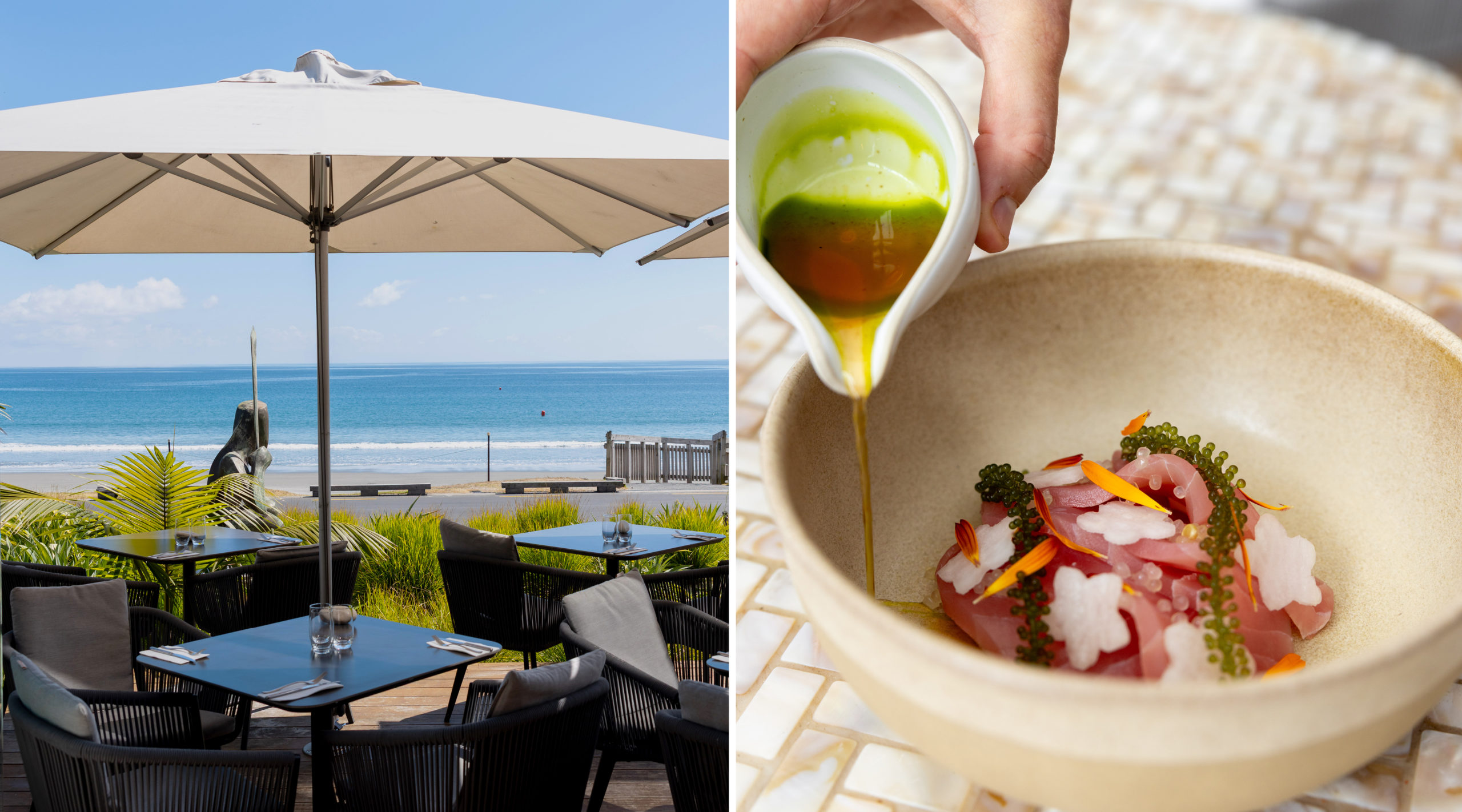
There is a particular species of Aucklander who spends every long weekend negotiating with themselves about whether they really need to go anywhere. The couch is comfortable. The fridge is full. The intention is noble. But by Saturday afternoon, the staycation has revealed itself for what it truly is: a slightly glamorised day off with worse lighting. Ki Māha offers a considerably better proposition. Your long weekend doesn’t need a suitcase. It needs a lunch reservation on Onetangi Beach.
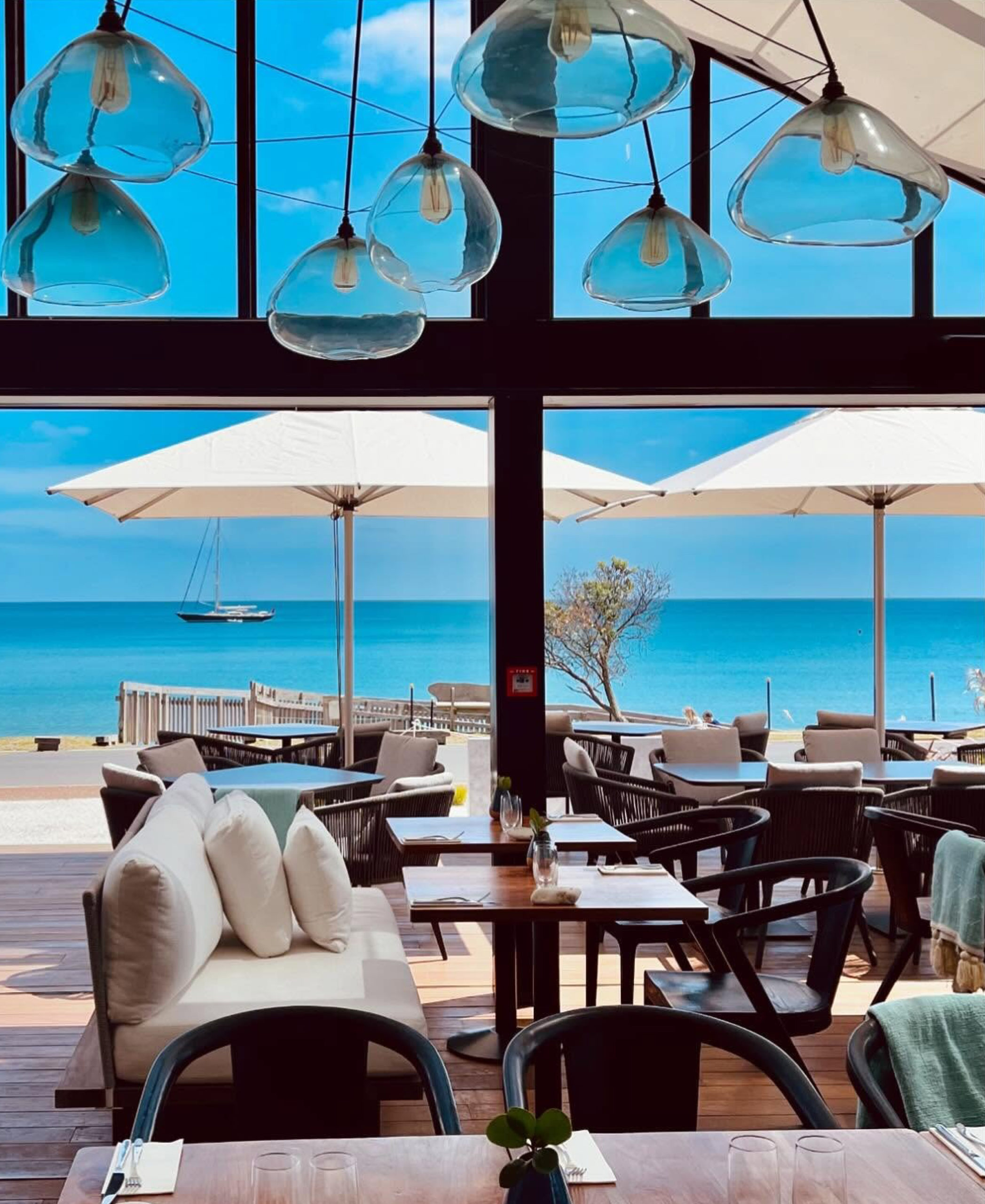
Waiheke in autumn is the island’s best-kept open secret, guarded quietly by locals who have long understood that the real magic begins when the summer crowds leave. The sea is still warm, the golden light lingers like a guest who knows they’re the most interesting person in the room, and the pace of life slows to something that feels genuinely restorative. It’s in this window that Ki Māha, perched above the pale arc of Onetangi, transforms from a very good beachside restaurant into the strongest possible argument against staying home.
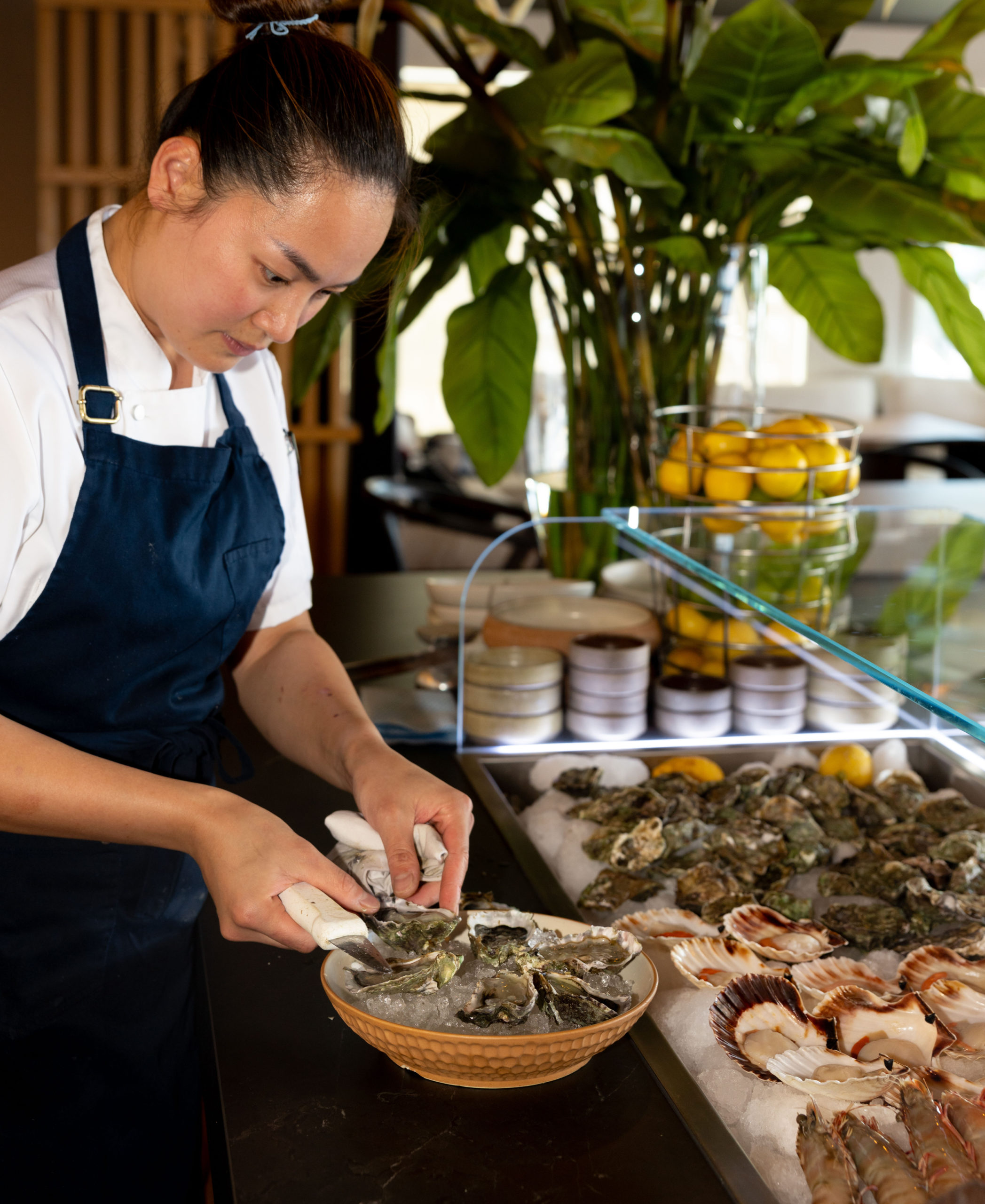
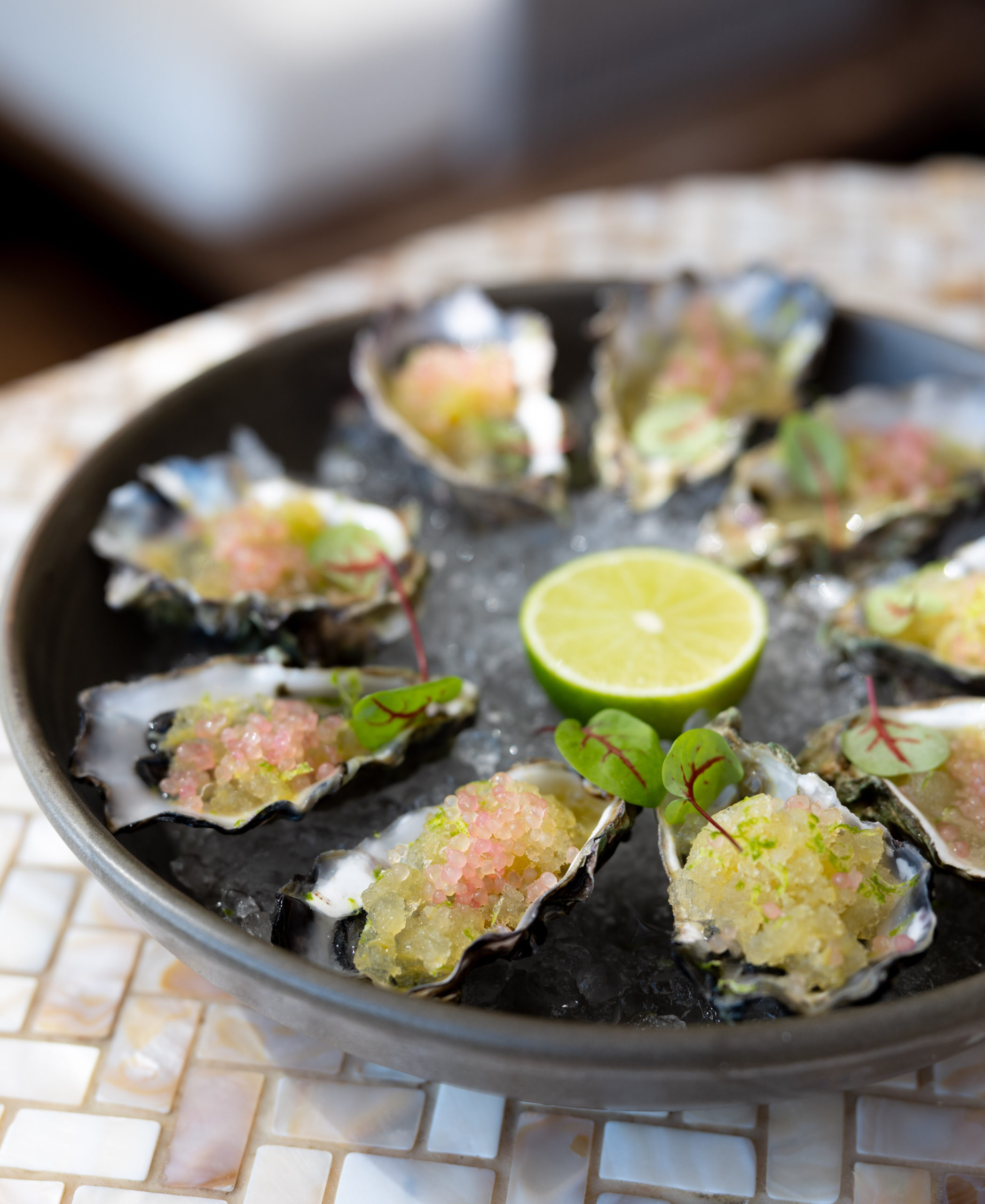
Freshly shucked market oysters
If the summer menu was a linen shirt and bare feet, the autumn offering is a cashmere knit and a glass of something you’ve been saving. The kitchen has built a menu around provenance and seasonal intelligence, where sustainably harvested seafood and ethically farmed meats meet produce sourced as close to the island as possible. The philosophy is deceptively simple. The results are not.
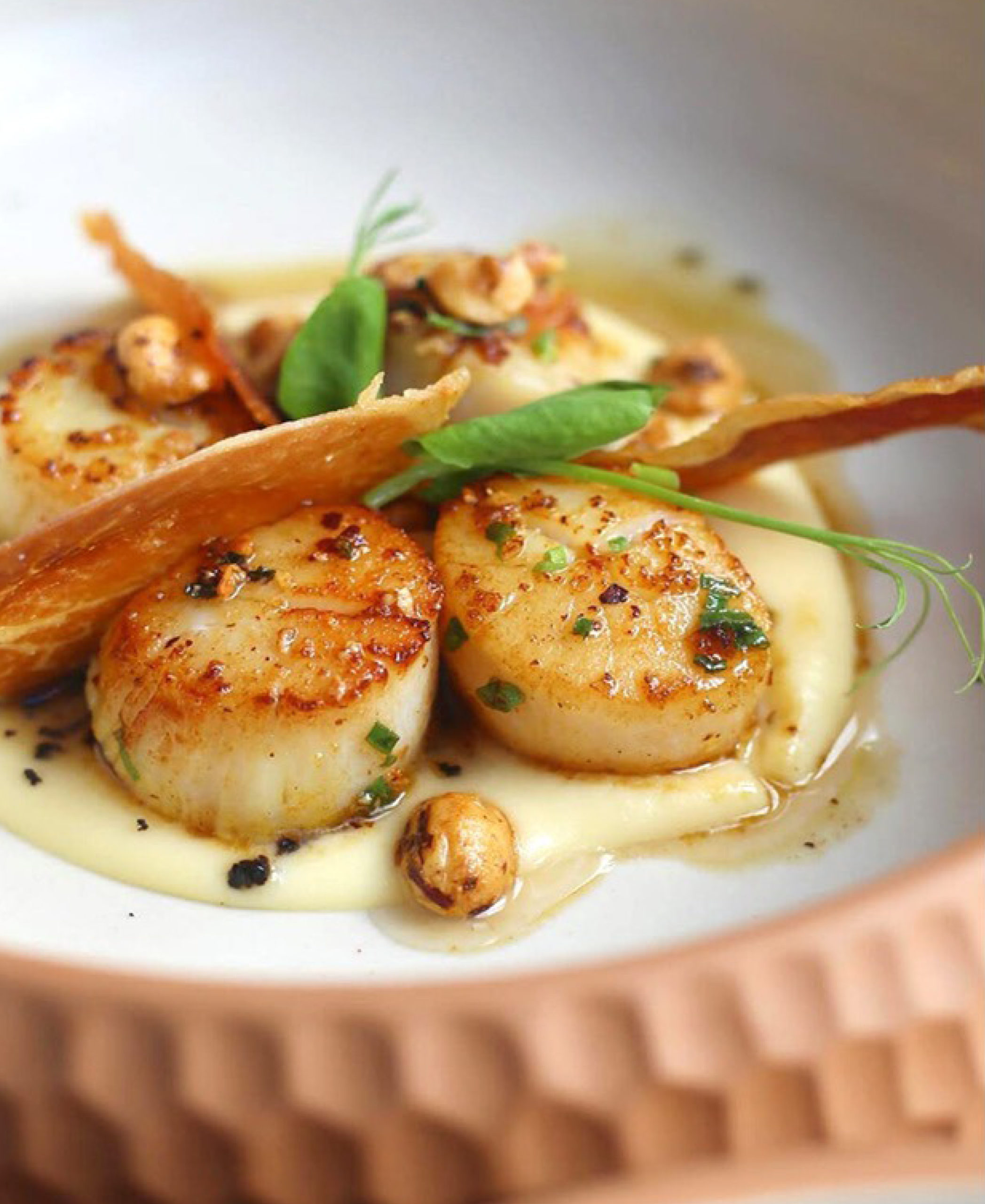
Start at the raw bar, where freshly shucked oysters arrive alongside green apple ice so sharp and clean it recalibrates your entire palate in a single bite. The pan-seared scallops, cushioned on a silky parsnip purée with shards of crispy jamón, deliver the kind of textural conversation that makes you go quiet mid-sentence. But the undisputed star of the autumn lineup is the 55-day-aged eye fillet with black garlic and tarragon mustard. It arrives with the quiet confidence of something that knows exactly how good it is, the char carrying a mineral depth that suggests a kitchen operating at full, serious intensity. Order it. Cancel your return plans accordingly.
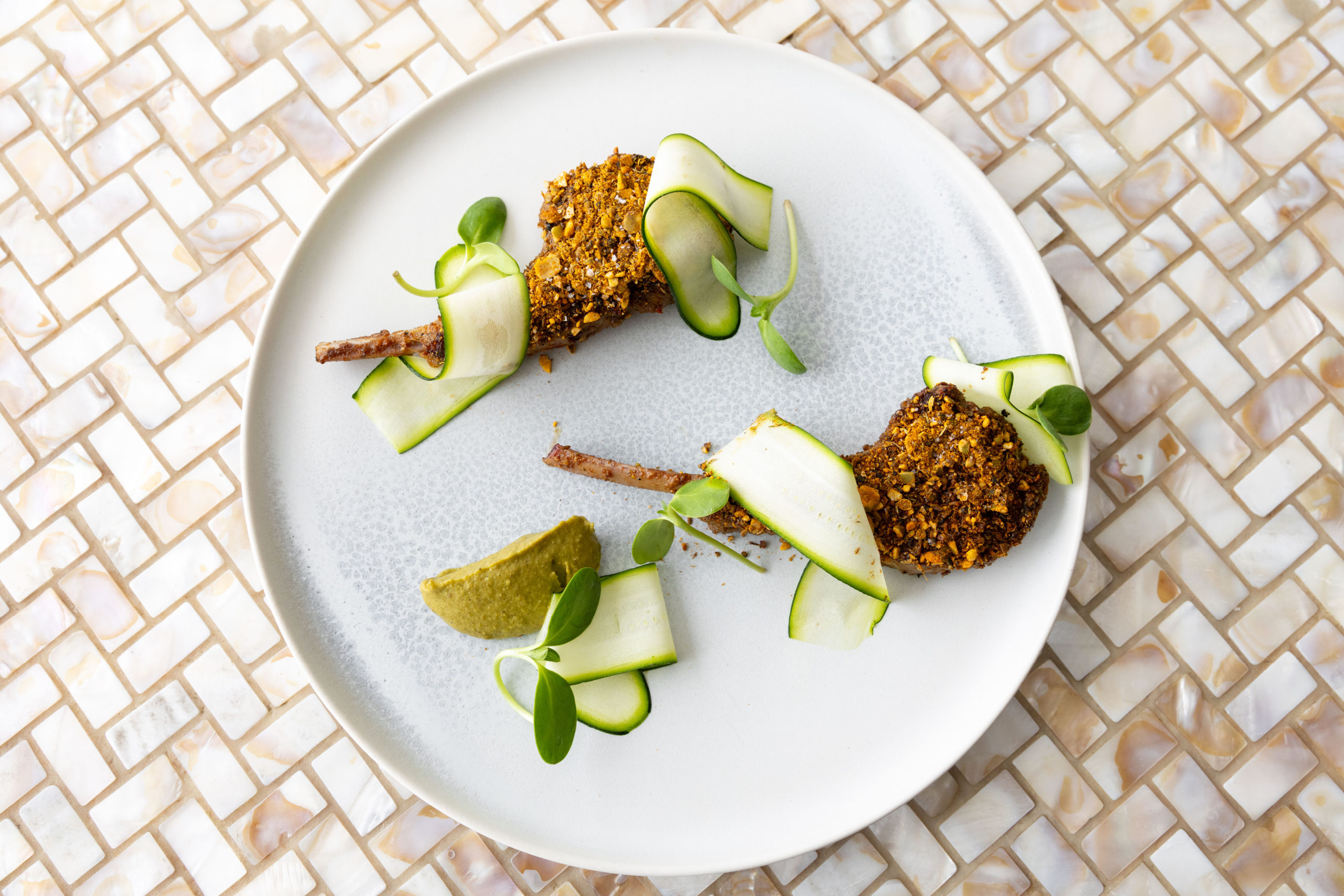
BBQ lamb chops with burnt aubergine puree and pistachio dukkha
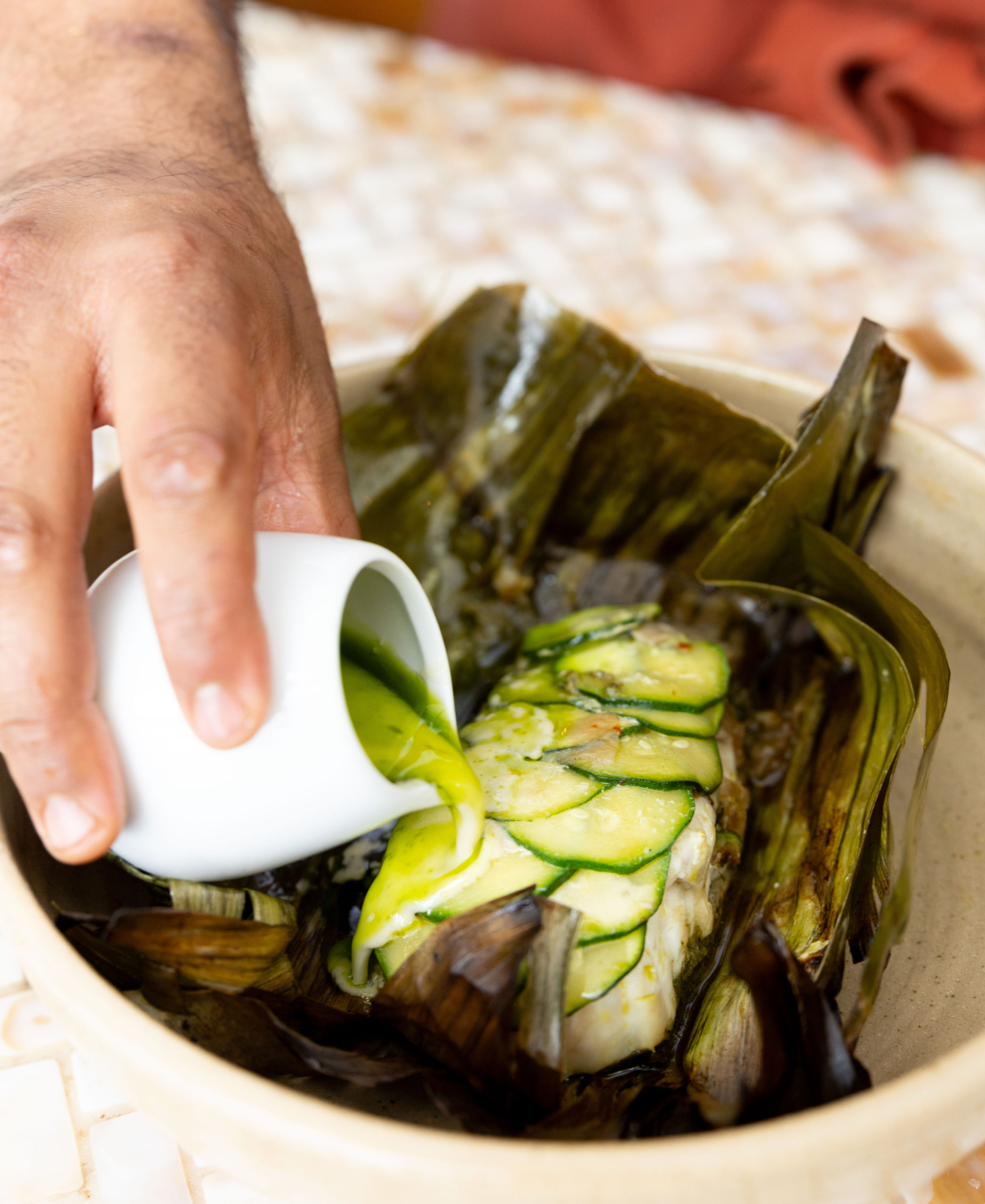
Market fish with burnt leek butter and confit fennel
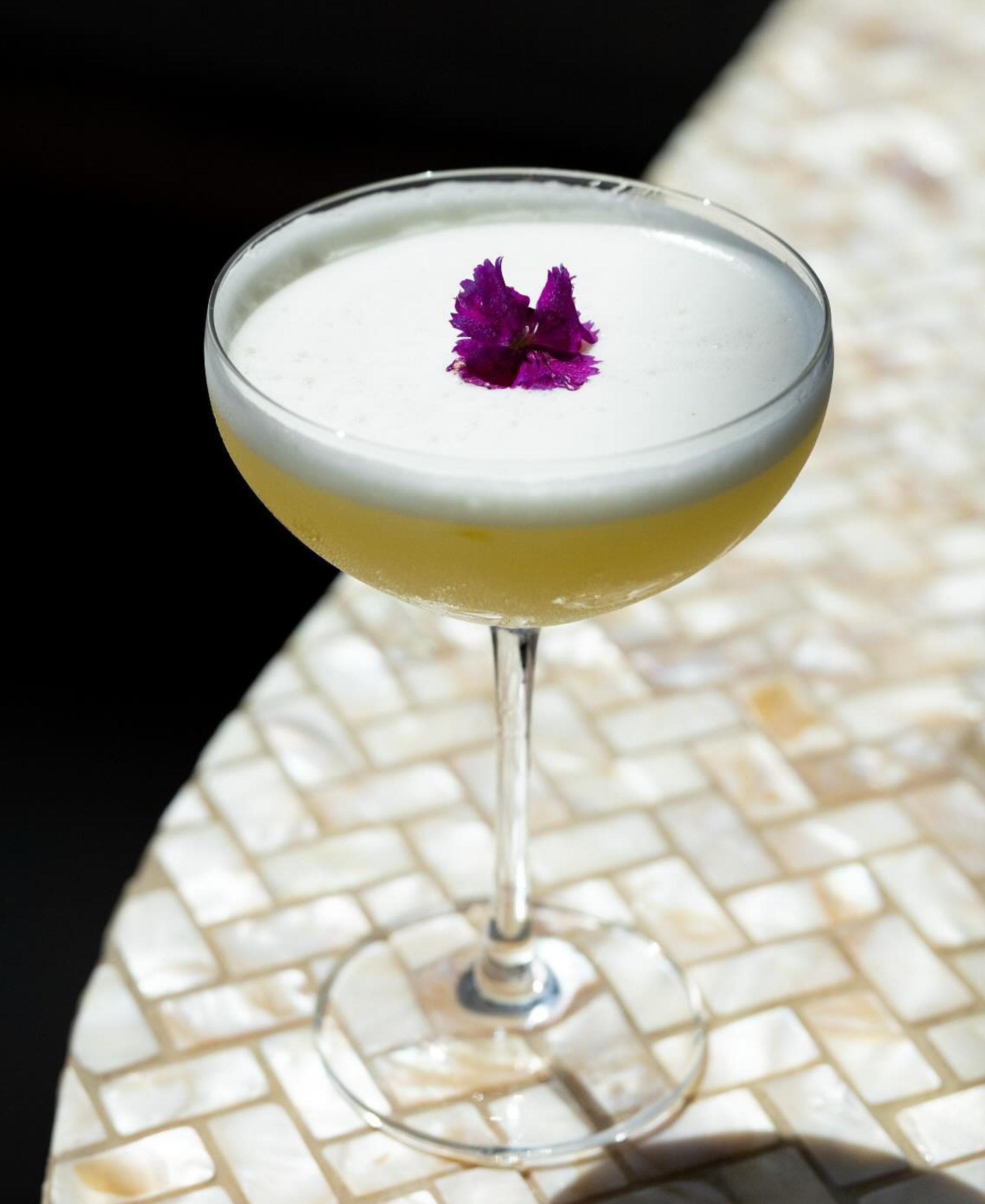
The drinks list deserves its own moment. The O-ne-tangi cocktail, a bright, knowing collision of pineapple, dark rum, amaro di angostura, and yuzu, tastes the way the view looks on a still April afternoon. It is entirely possible to order two and still consider yourself a person of restraint.
O-Ne-Tangy cocktail
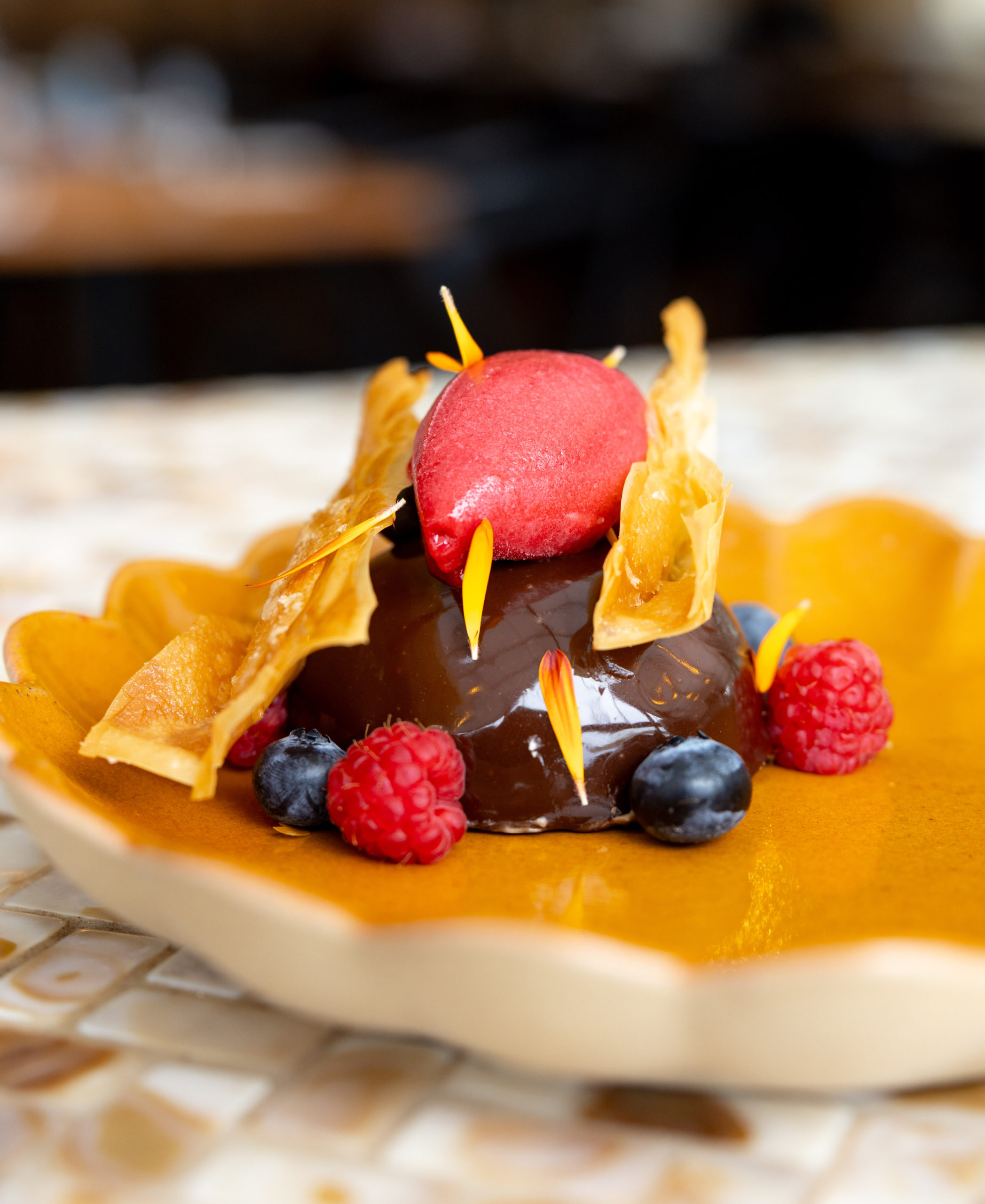
Dark chocolate ganache with hazelnut and raspberry
Service at Ki Māha moves at a pace set by the afternoon light, not the clock. There’s an ease to the team that suggests they understand the meal is only part of what you’re there for. The rest is the view, the warmth, the particular contentment of an afternoon spent exactly where you should be.
pan-seared scallops
Here is your long weekend, simplified: an autumn afternoon on Onetangi, the sun low and gold, scallops on the table, something cold in hand, and the slowly dawning realisation that a four-hour lunch on Waiheke is worth more than four days on your couch. The staycation can wait. The daycation is calling.
April arrives loaded, and with the school holidays stretching across the middle of the month, there’s every reason to fill the diary early. From the pop musical everyone has been waiting for finally landing on our shores, and a Grammy-nominated arena act wrapping up a world tour in Auckland, to immersive light experiences, a brilliant shark exhibition, a free comedy preview and gallery exhibitions well worth the detour — this month has something for everyone worth caring about.
When: 9th April – 3rd May 2026 Where: The Civic, Auckland
After conquering the West End — earning eight Olivier Award nominations — and Broadway, where Forbes declared it the best musical of the year, & Juliet finally makes its New Zealand debut inside one of the world’s great atmospheric theatres. The premise is disarming in its simplicity: what if Juliet’s famous ending was really just her beginning?
Created by Emmy Award-winning Schitt’s Creek writer David West Read, the show is powered by an era-defining playlist of Max Martin pop anthems — Roar, Since U Been Gone, Baby One More Time, Larger Than Life and more — performed by a company of Kiwi talent. Expect a concert-scale event that is funny, surprisingly moving and genuinely joyful. Book tickets here.
When: 3rd –12th April 2026 Where:Conventional Centre, Auckland CBD
Brand new this year, Dreamer transforms the spectacular New Zealand International Convention Centre into a glowing world of colour and light for ten days only. Large-scale immersive installations, luminous pathways and interactive environments fill the grand interior spaces — a school holiday experience with a scale and polish that outdoor festivals rarely match.
Fully indoors and entirely weather-proof, sessions run from 10 am to 4 pm daily. Smart, well-produced and genuinely transportive — the kind of thing Auckland does well when it puts its mind to it. Book tickets here.
When: 9th–18th April 2026 Where:Aotea Centre, Auckland
After two sold-out seasons, the acclaimed indoor light exhibition Darklight returns for its most ambitious edition yet. The Hidden World occupies the Hunua Rooms of the Aotea Centre and is worth the visit as much for design-minded adults as for families. By day, the space glows with colour, moving light and mist projections; as evening falls, the atmosphere shifts into something altogether more introspective.
Created by New Zealand lighting designers Angus Muir Design and Dan Move, Darklight sits in that rare, rewarding space between art installation and sensory experience. Sessions run from $10 and approximately 30 minutes — evening sessions are particularly worth seeking out. Book tickets here.
When: Now, until 1st June 2026 Where:Auckland Museum
Due to exceptional public interest, Auckland Museum’s blockbuster touring exhibition from the Australian Museum has been extended through to June, making it an ideal school holiday destination. Step inside a specially designed digital oceanarium, come face-to-fin with scientifically accurate life-sized models, and get hands-on with touchable fossils and teeth.
The exhibition spans 450 million years of evolution, weaving together cutting-edge science, indigenous perspectives and immersive design with real rigour. During school holidays, Swimming with Sharks — a live puppet theatre experience created with company Erth — runs alongside (3rd –19th April), with sessions at 10 am, 11 am, 12 pm, 2 pm and 3 pm. Tickets are offered on a pay-what-you-can basis. Book tickets here.
Multi-platinum artist MGK wraps his massive Lost Americana world tour in Auckland — the final stop after Perth, Melbourne, Sydney and Brisbane — with the full arena-scale spectacle his live shows have become known for. Rolling Stone described the album as updating the heartland rock tradition of Mellencamp and Springsteen with alt-pop instincts and cinematic production values.
With more than 20 billion streams globally and two consecutive Billboard number one albums, this is a performer who has fully earned the arena format. Special guest on the Auckland show is US artist Honestav. Book tickets here.
When: 3rd –19th April 2026 Where:SkyCity, Auckland
The Sky Tower gets a galactic makeover for the April school holidays, with interactive gaming activations and a game zone spread across the observation levels. The combination of 360° panoramic views, interactive installations and the glass floor panels — always a reliable source of child-fuelled drama — makes for an easy, enjoyable afternoon.
A discounted School Holiday Family Pack (two adults and up to two children) is available for $99 when booked online. Entirely weather-proof and open daily — the sensible choice for the middle of a busy holiday fortnight. Book tickets here.
When: 3rd April – 3rd May 2026 Where:Aotea Square, AucklandCBD
Running all month and available around the clock at no cost, this free outdoor installation by Australian studio ENESS places sixteen towering inflatable forms across Aotea Square, pulsing with rhythmic light and an enveloping choral soundscape. Serene and otherworldly after dark, playful and surprising in daylight.
A perfect five-minute detour before or after the theatre, or a destination in itself on a clear Auckland evening. The kind of free public art that makes the city feel worth living in. More information here.
When: Now until 17th May 2026 Where:Auckland Art Gallery
Still running and still essential. The first solo exhibition of Louise Bourgeois ever mounted in Aotearoa draws together over six decades of work from an international private collection, exhibited publicly for the first time. Bourgeois (1911–2010) remains one of the most psychologically charged and influential artists of the last century.
During school holidays, the Gallery runs its Kids & Whanau Create sessions daily. A guided tour of the Bourgeois exhibition takes place on Tuesday, 7th April (1.30 pm) for $30; worth booking ahead. More information here.
A free, one-day preview of the New Zealand International Comedy Festival lands on the Britomart waterfront this April. A selection of the country’s funniest performers will take to the outdoor stage with their best material from 12.30 pm until 8 pm — something for everyone and not a ticket in sight.
As a taster for the wider festival running through May, it’s an irresistible proposition for Friday afternoon. Check the Britomart website for the full lineup, to be announced shortly. Arrive early — the square fills quickly. More information here.
When: Now until 21st April 2026 Where:Foenander Galleries
Foenander Galleries — one of the more thoughtful and quietly influential dealer galleries in the city — presents new work by two of its most compelling artists this month. Gavin Chai’s oil-on-panel interiors carry a particular charge: domestic and composed on the surface, psychologically loaded beneath it. His hauntingly still waiting rooms and interior spaces are as much about longing and introspection as they are about the scenes depicted.
Rupert Travis brings a different energy to the pairing. Together they make for an exhibition well worth the trip to Parnell — a fine and intimate counterpoint to the larger institutional offerings elsewhere this month. More information here.
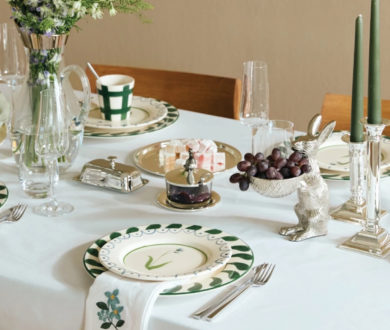
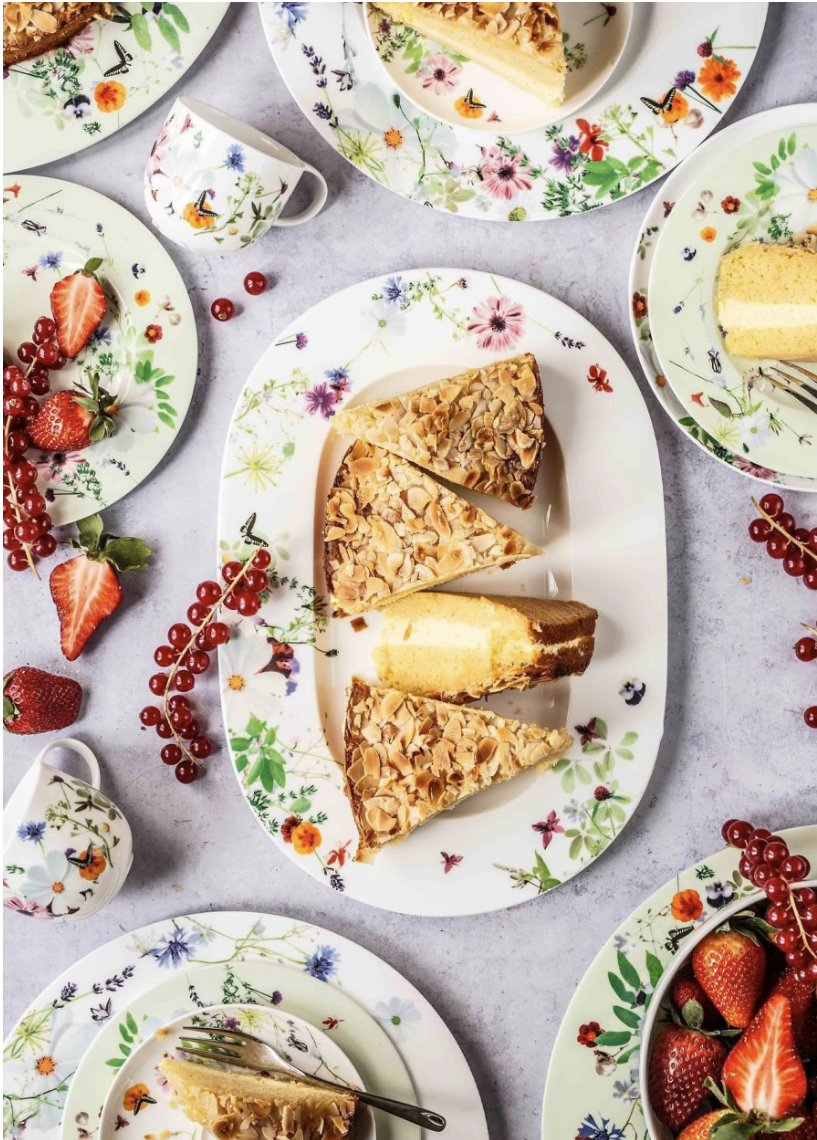
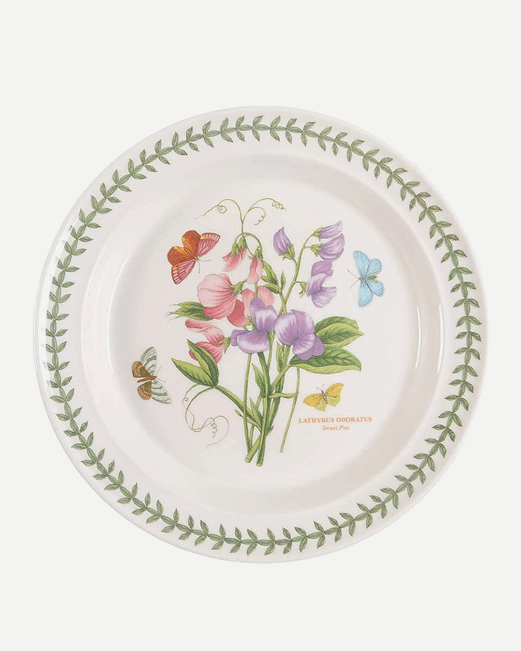
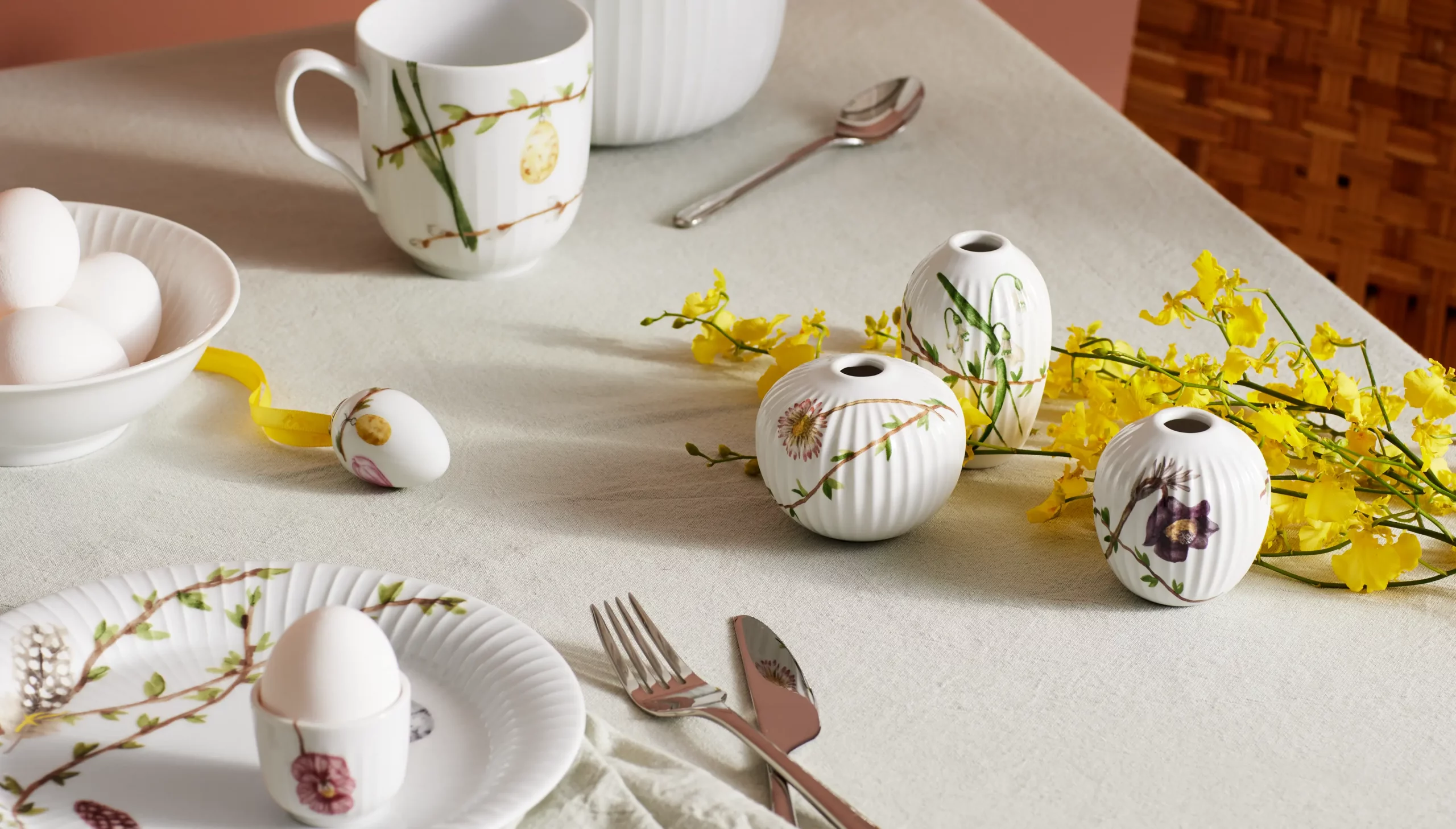
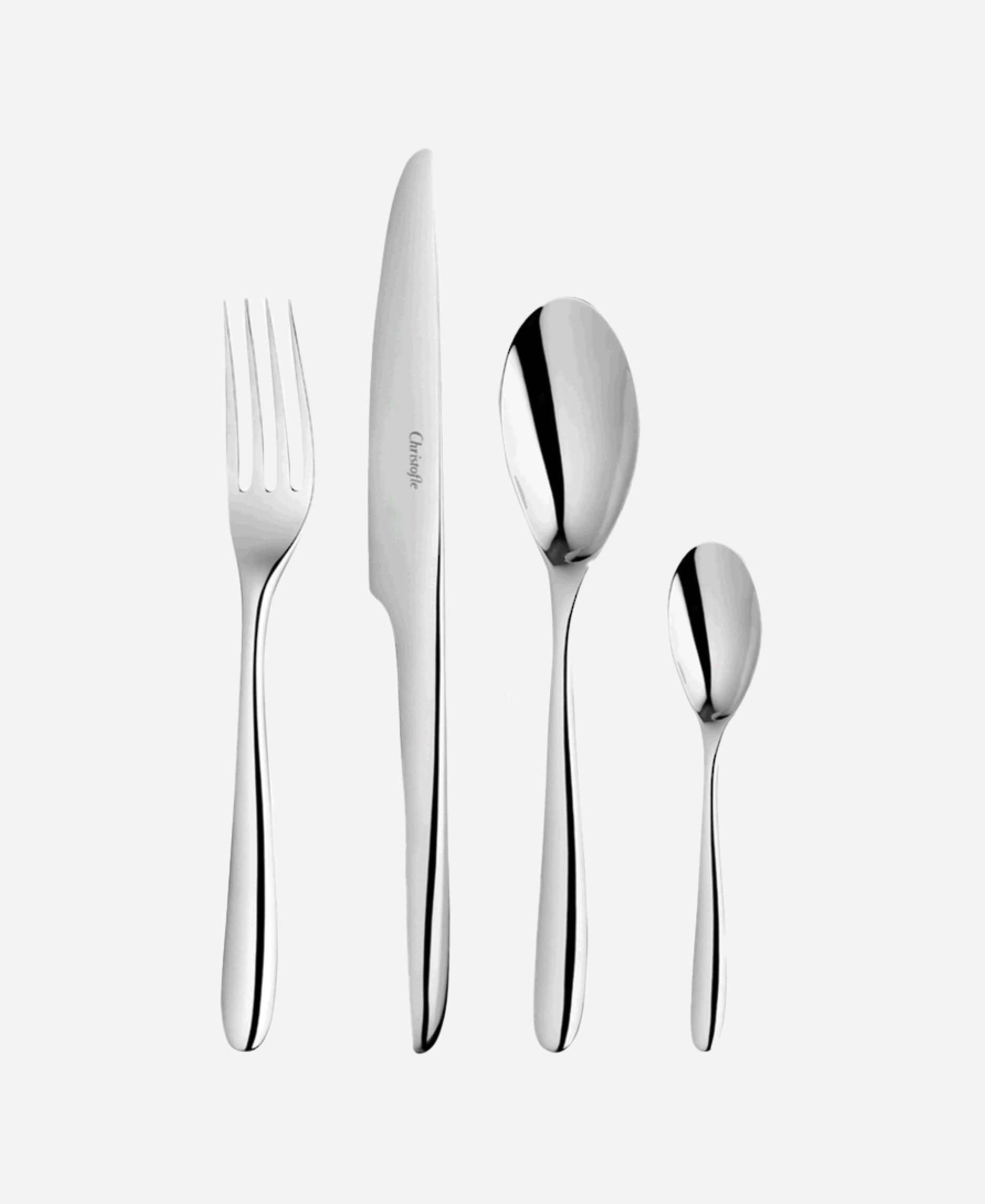
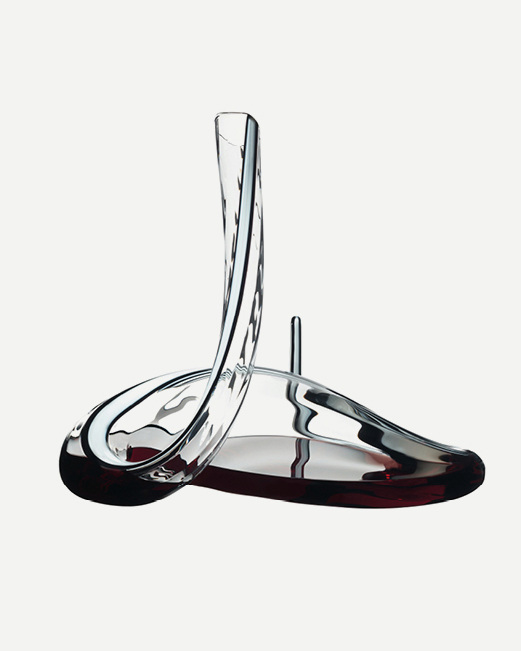
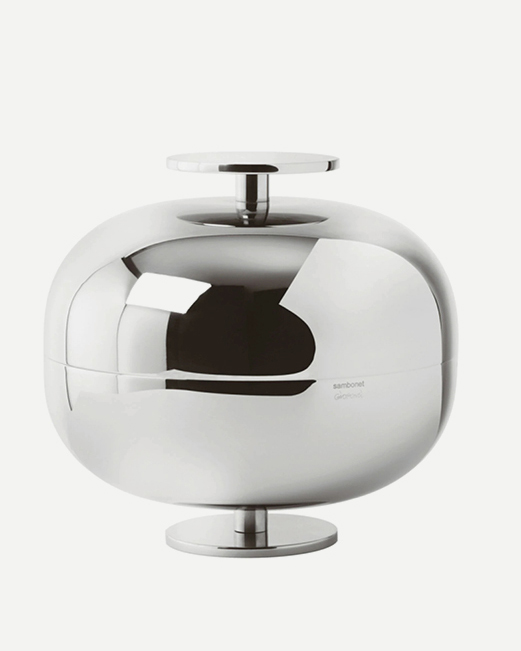
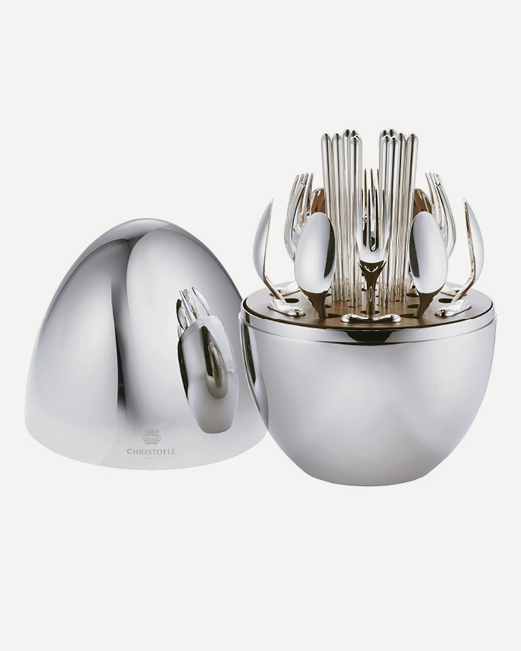
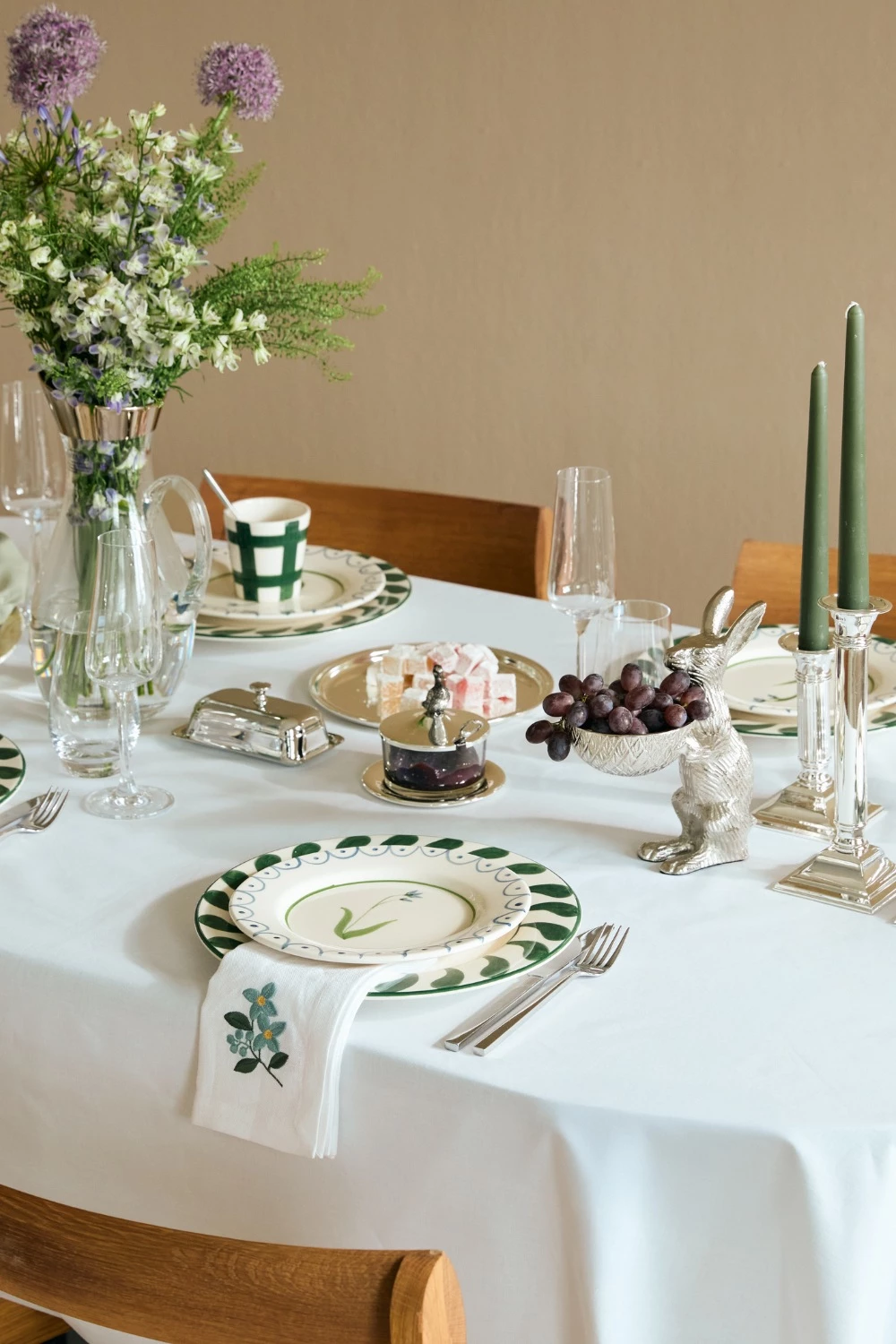
There’s a particular kind of magic to an Easter table done well. The long weekend stretching ahead, autumn light softening through the window, a gathering that feels unhurried from the first course to the last. Whether you’re hosting a relaxed brunch on Good Friday, a Sunday lunch that extends well into the afternoon, or an intimate Saturday evening with a few people you’ve been meaning to see, the table itself sets the tone before a single dish is served. Think soft pastels layered with seasonal florals, considered details that feel generous rather than fussy, and pieces chosen with enough care that even the simplest roast feels like an occasion. With Easter weekend approaching, consider this your guide to creating a table setting that invites your guests to sit down and stay a while.
Consider this your edit of the series worth pressing play on now, from dark, psychologically driven dramas to slow-burn thrillers and quietly compelling character studies. Bringing together the latest releases and returning favourites already generating conversation, these are the shows setting the tone for what to watch now.
Your Friends & Neighbours Season 2
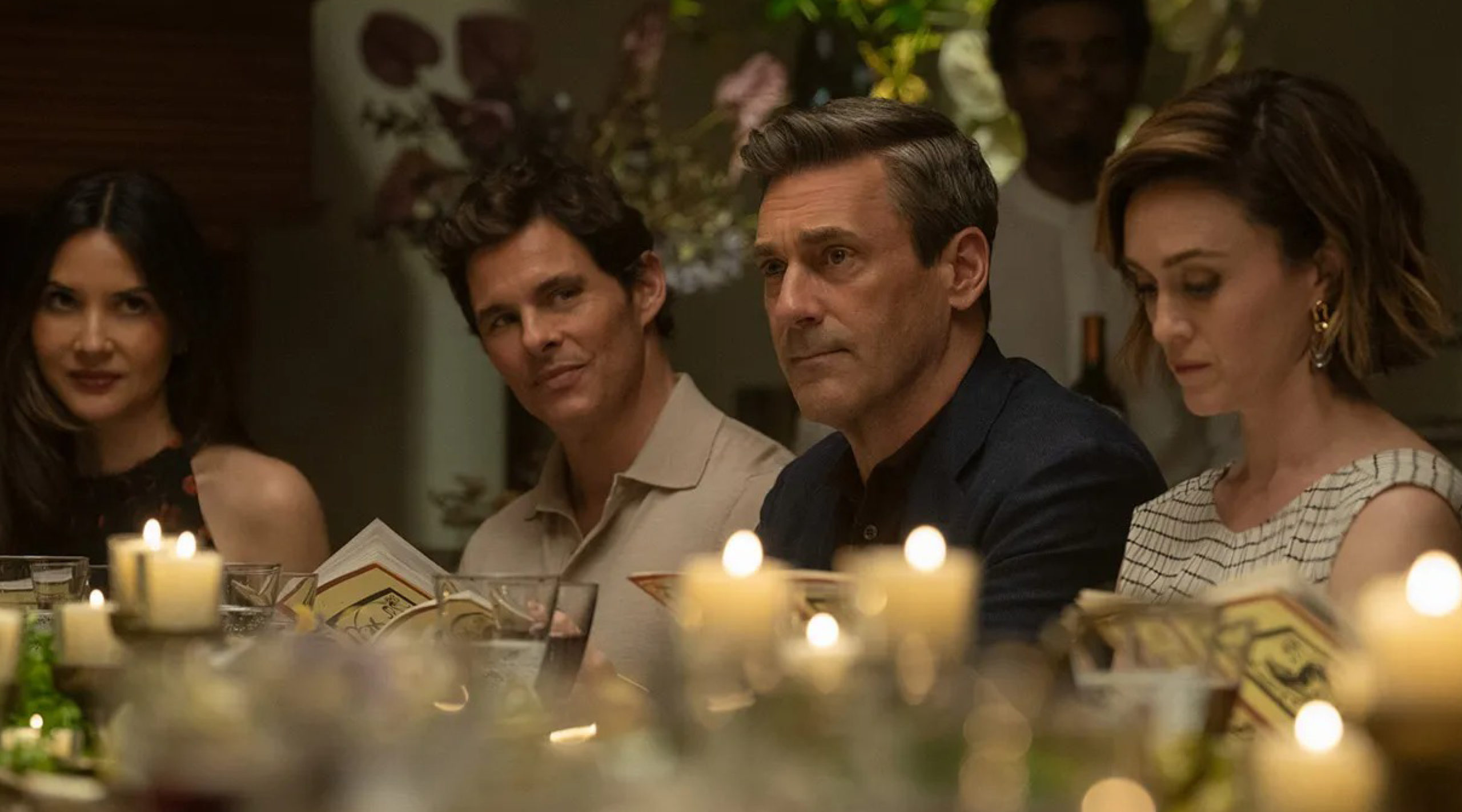
When & Where to Watch: 3rd April, Apple TV Starring: Jon Hamm, Amanda Peet, Olivia Munn
Andrew Cooper (Hamm) doubles down on his life as an unlikely suburban thief, until the arrival of a new neighbour threatens to expose his secrets and place his family at risk.
Euphoria Season 3
When & Where to Watch: 13th April, Neon Starring: Zendaya, Sydney Sweeney, Jacob Elordi
The long-awaited return after a four-year hiatus. Five years have passed for the former students of East Highland High, with Rue now in Mexico, Cassie and Nate engaged in the suburbs, and Jules navigating art school. Creator Sam Levinson has conceived the third season as a film noir.
The Boys Season 5
When & Where to Watch: 8th April, Prime Video Starring: Karl Urban, Jack Quaid, Antony Starr
The long-awaited return after a four-year hiatus. Five years have passed for the former students of East Highland High, with Rue now in Mexico, Cassie and Nate engaged in the suburbs, and Jules navigating art school. Creator Sam Levinson has conceived the third season as a film noir.
Margo’s Got Money Troubles
When & Where to Watch: 15th April, AppleTV Starring: Elle Fanning, Michelle Pfeiffer, Nicole Kidman, Nick Offerman
Based on Rufi Thorpe’s bestselling novel, this bold comedy-drama follows Margo, a college dropout and new mum — the daughter of an ex-Hooters waitress and ex-pro wrestler — who turns to OnlyFans to pay the bills. When her estranged father re-enters her life, his advice from the wrestling world proves unexpectedly useful. From David E. Kelley (Big Little Lies, The Undoing) and A24.
Beef Season 2
When & Where to Watch: 17th April, Netflix Starring: Oscar Isaac, Carey Mulligan, Charles Melton, Cailee Spaeny
Set at an elite country club, two young employees film an alarming fight between their boss and his wife — and ignite a blackmail war neither side can win. Fresh cast, same sharp writing.
Running Point Season 2
When & Where to Watch: 23rd April, Netflix Starring: Kate Hudson, Justin Theroux, Brenda Song
Isla Gordon is no longer the surprise choice to lead the Los Angeles Waves — she’s the one everyone is watching. With the franchise rebounding after last year’s scandal, Isla is determined to prove she’s not just keeping the seat warm for her brother Cam.
Young Sherlock
When & Where to Watch: Prime Video Starring: Hero Fiennes Tiffin, Dónal Finn, Zine Tseng
A fresh take on a familiar figure, Young Sherlock revisits the world’s most famous detective in his formative years. Less about polished deduction and more about curiosity and instinct, the series traces the early experiences that begin to shape the mind behind the legend.
The Madison
When & Where to Watch: Neon Starring: Michelle Pfeiffer, Kurt Russell, Matthew Fox
he series follows the Clyburn family, originally from New York City, who relocate to the Madison River valley of southwest Montana for emotional recovery following a life-changing tragedy. From Taylor Sheridan, the creator of Yellowstone.
Scarpetta
When & Where to Watch: Prime Video Starring: Nicole Kidman, Jamie Lee Curtis, Simon Baker
A sleek, psychologically driven crime drama, Scarpetta follows a brilliant forensic pathologist navigating a series of complex cases where science and instinct collide. Dark, atmospheric and quietly gripping, it leans into the intricacies of investigation while exploring the personal cost of living so close to death.
DTF St. Louis
When & Where to Watch: Neon Starring: Jason Bateman, David Harbour, Linda Cardellini
Provocative and unfiltered, DTF St. Louis dives into the complexities of modern relationships, intimacy and identity. Set against the backdrop of midwestern America, it’s a candid, often confronting exploration of connection in an era where nothing feels entirely straightforward.
Rooster
When & Where to Watch: Neon Starring:Steve Carell, Charly Clive, Scott MacArthur
Grounded and character-led, Rooster centres on a small-town figure navigating shifting loyalties and quiet tensions beneath the surface. With a slow, deliberate pace, it leans into mood and nuance, revealing the weight of community, reputation and personal history.
Paradise Season 2
When & Where to Watch: Disney+ Starring: Sterling K. Brown, James Marsden, Julianne Nicholson
Returning with greater scale and sharper stakes, Paradise builds on its first season with a deeper dive into power, control and the illusion of perfection. Sun-drenched on the surface but simmering underneath, it’s a continuation that promises more intrigue, tension and unexpected turns.
The Dinosaurs
When & Where to Watch: Netflix Starring: Morgan Freeman
Blending nostalgia with contemporary storytelling, The Dinosaurs reimagines prehistoric life through a modern lens. With sharp humour and unexpected emotional depth, it offers a playful yet thoughtful take on family, survival and the rhythms of everyday life, just set several million years earlier.
56 Days
When & Where to Watch: Prime Video Starring: Dove Cameron, Avan Jogia, Megan Peta Hill
Taut and twist-laden, 56 Days unfolds within the confines of a pandemic lockdown, where a seemingly chance romance quickly unravels into something far more sinister. What begins as an intimate two-hander evolves into a slow-burn thriller, peeling back layers of deception with each episode.
Imperfect Women
When & Where to Watch: Apple TV+ Starring: Elisabeth Moss, Kerry Washington, Kate Mara
Glossy on the surface but quietly unraveling beneath, Imperfect Women centres on three lifelong friends whose seemingly perfect lives are disrupted by a shocking crime. What follows is a slow-burn unpicking of friendship, loyalty and long-held secrets, where every revelation feels more personal than the last. Polished, tense and character-driven, it’s the kind of series that lingers well beyond its final episode.
Dining out doesn’t always have to mean going all out. Across the city, a handful of exceptional eateries are serving food that punches well above its price point: from hand-pulled noodles and birria tacos to Korean fried chicken and toasties built on house-made sourdough. These are the places worth knowing.
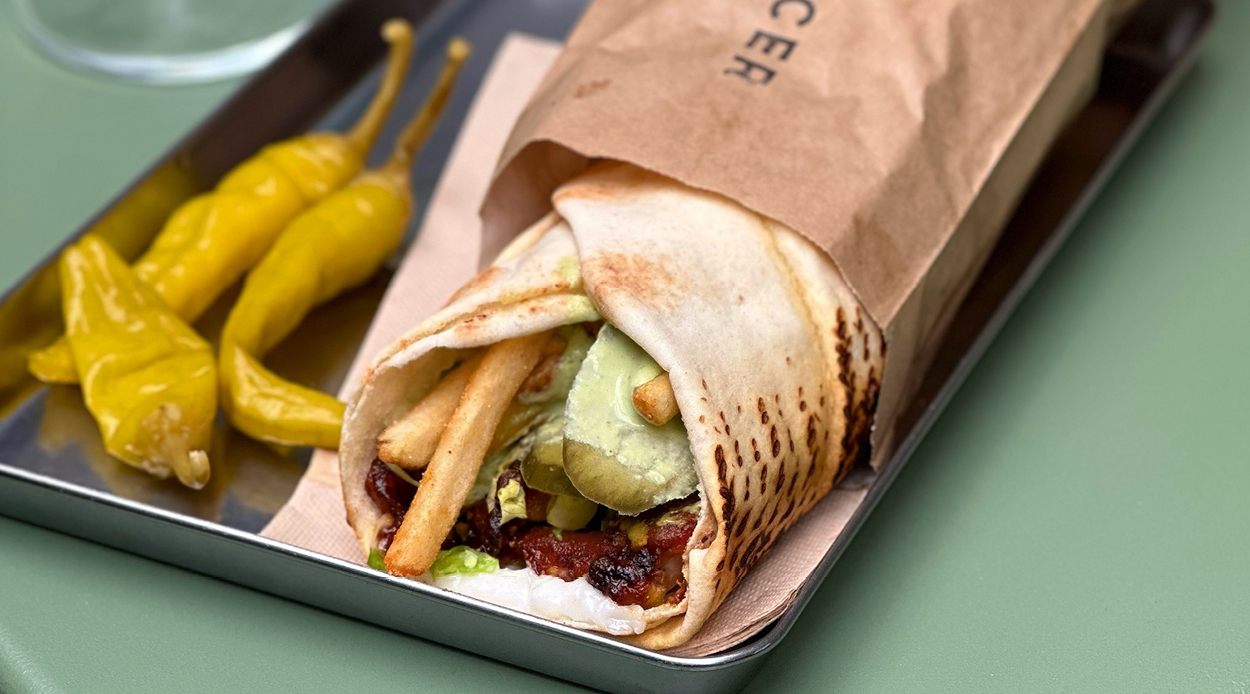
A delicious deli on Pitt Street serving shawarma, falafel, and traditional pantry staples, Lebanese Grocer is one of our go-to spots in the city centre for exceptional grab-and-go food. The menu shifts with the seasons and whatever Elie Assaf has his hands on that day, which means it’s always worth a look, and always worth eating. A courtyard space at the back gives you somewhere to sit and take your time with it.
From the trio behind Parade and Rosalita’s, Bodega on Ponsonby Road is a New York-style deli that runs at a different pace from most of the city. Mornings bring Italian pastries baked in house — cannoli, lobster tails, maritozzi — alongside build-your-own Kaiser rolls until 10.30am. From 11am the sandwiches take over: made to order, concise, and built with the kind of care that makes a $19 lunch feel like considerably more. The French Dip, with slow-braised beef and onion jus, is the one people come back for. Come Thursday to Saturday afternoon, the room shifts again into aperitivo mode, with focaccia, stracciatella, charcuterie, and wine. Open Wednesday to Sunday, and sells out early most days — plan accordingly.
This Thai eatery was designed for big group gatherings, with spacious seating, colourful lighting, and a fit-out that puts you in the mood before the food arrives. Kiss Kiss is a firm favourite for a relaxed, casual dinner with friends and family, and on weekend nights, the place is heaving. The pricing is as generous as the portions: baos at $12, a mountain of pad Thai just over $20.
Only open Thursday to Saturday on France Street in Eden Terrace, Carmel runs its own hours on its own terms — and the falafel is good enough that you work around them. Founded by Carmel Davidovitch, who grew up in Israel and returned to New Zealand with partner Tomer Shabo, the shop began as a market stall and found its permanent home in a blue-fronted Eden Terrace shopfront. The pita is handmade and cloud-soft, stuffed with fillings that change with the season but always anchor around crispy falafel, hummus, pickled cucumbers, and tahini. The baked goods cabinet — rugelach, babka, kouign-amann — is its own reason to visit. One of those places where the simplicity of the concept is exactly the point.
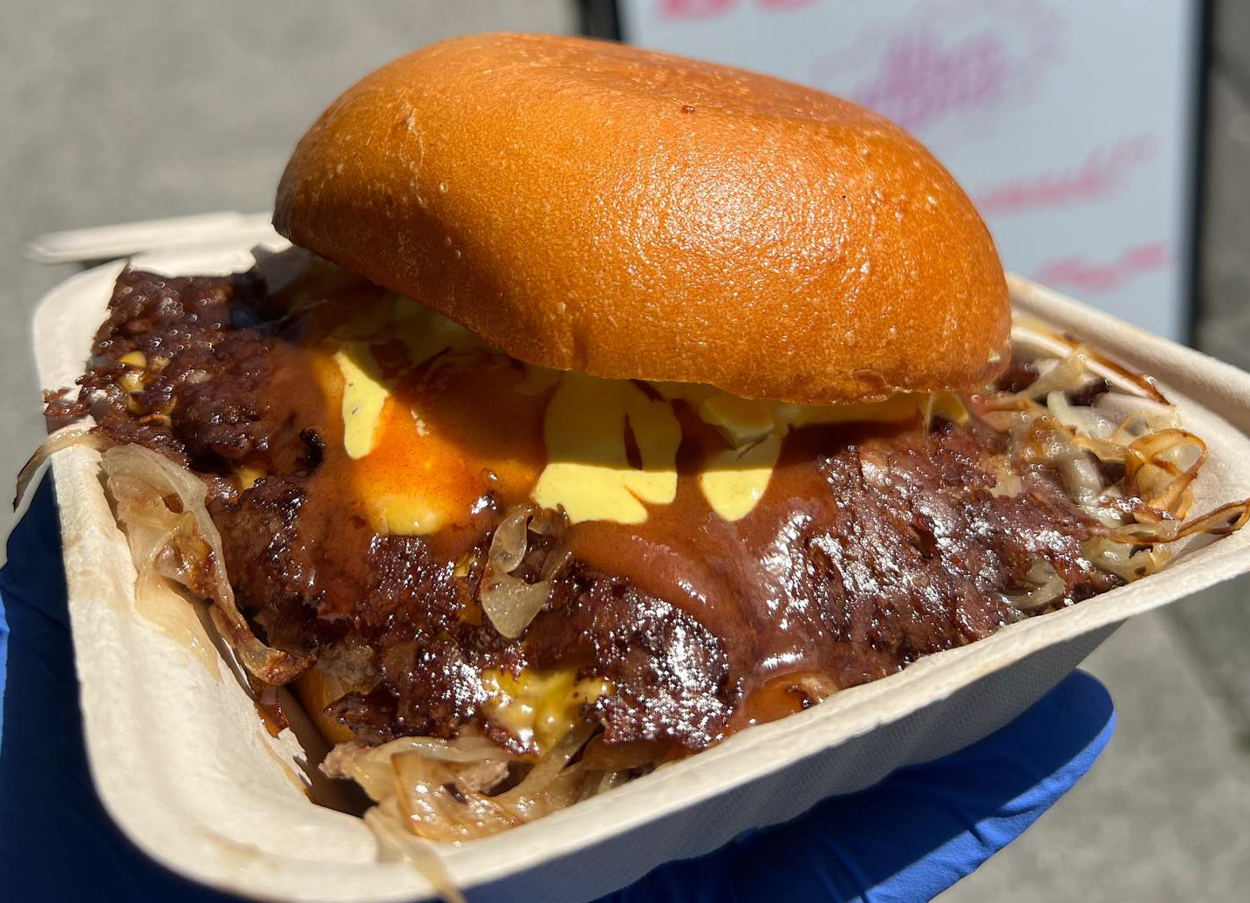
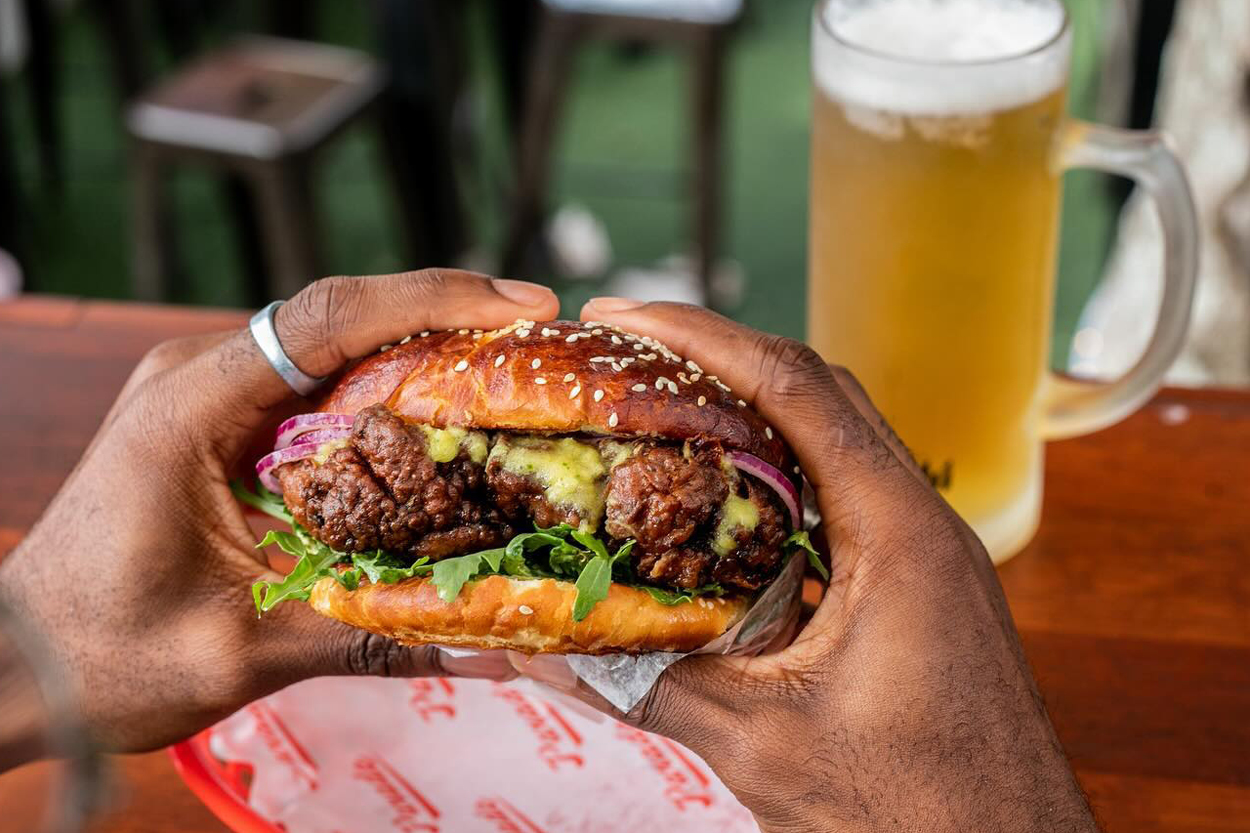
Baby G is widely credited with serving some of the best burgers in Auckland, and the case is hard to argue with. The signature American-style smash patties are crispy-edged, thick-centred, layered with American cheese, pickles, mustard, and hot sauce between pillowy soft buns. Exactly what a burger should be and rarely is. The permanent Avondale spot keeps things concise: a tight edit of burgers and a few sides, all of which have our full endorsement.
Umu’s sourdough pizzas hit the spot every time. Petite enough to eat solo, though sharing a few between friends is the better move, since the exceptional dough and fresh toppings mean you want to try more than one. A few pizzas between friends makes for an easy, inexpensive evening that never feels like a compromise.
From the team behind Pici, Ooh-Fa occupies a 22-seat space on Dominion Road with a wood-fired oven that takes up more room than the tables, and a menu that earns every inch of it. The sourdough base undergoes more than 70 hours of fermentation before a 60-second cook in the oven produces something blistered, tangy, and light in all the right places. Toppings are seasonal and change regularly, but the nduja with ricotta, mozzarella, and garlic honey has become something of a signature, and the woodfired carrots with whipped ricotta and pistachios on the side are not to be overlooked. The wine list leans natural and organic. Book ahead — tables go quickly and the room is small by design.
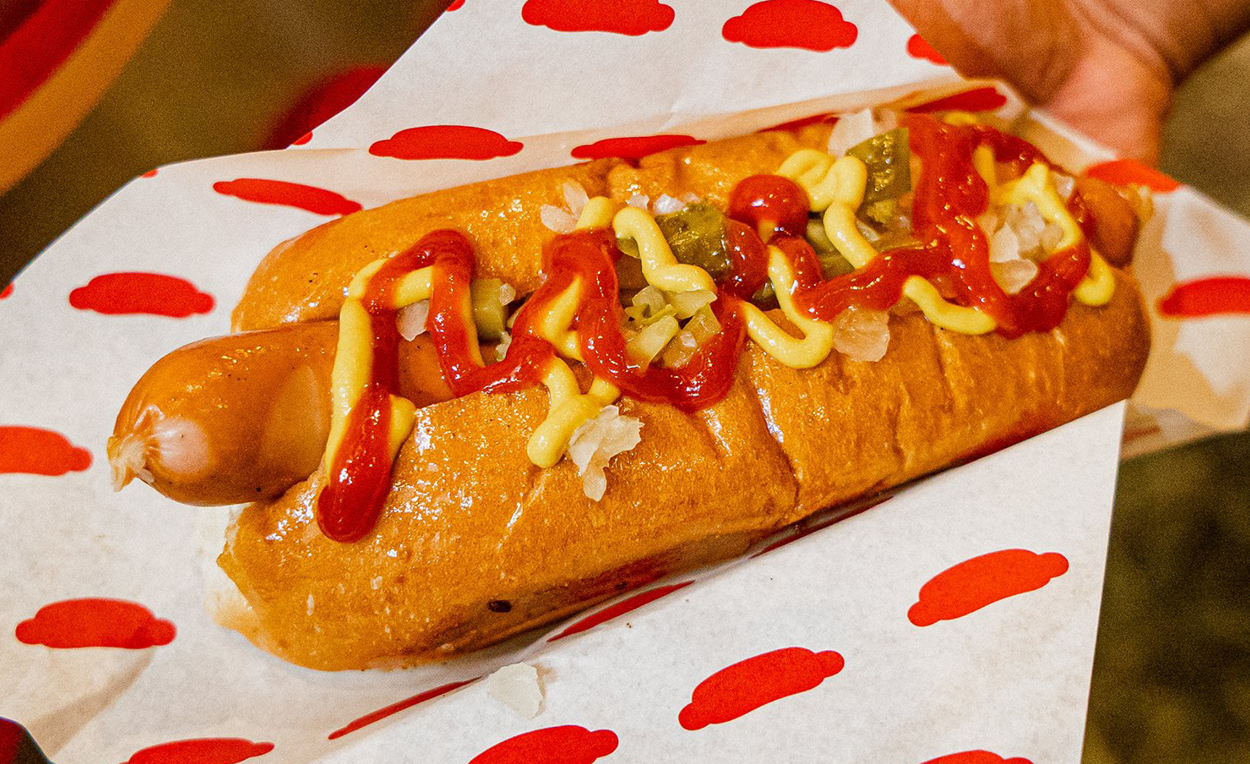
For a proper hot dog craving, Good Dog Bad Dog remains the answer. The team behind Gochu started with a Newmarket pop-up and now runs four locations: Point Chevalier, Onehunga, Ormiston, and Commercial Bay’s Harbour Eats food hall. The menu works its way through the classics, including the Chilli Cheese Dog, Good Dog, Pepperoni Pizza Dog, and Mac n’ Cheese Dog, and the hoagies are worth serious attention too.
Cheese on Toast has been making a convincing case for the humble toastie since its market-stall days, and now with three outposts in Three Kings, Birkenhead, and Newmarket, the argument is harder than ever to ignore. Built on house-made sourdough, with a core menu starting at $10, it’s the kind of place you find yourself returning to with suspicious regularity. The specials board keeps things interesting.
From cult pop-up to a three-location operation with queues that show no sign of thinning, Broke Boy Taco has become one of the city’s most talked-about cheap eats. Kentucky-born Sean Yarbrough’s birria empire now runs out of Mount Albert, Birkenhead, and Papakura, the latter housed in the Broadway Food Company hall on Broadway, open Tuesday through Sunday. The menu is admirably concise: slow-cooked birria tacos, birria ramen made with the consommé as broth and thick Shin Ramyun noodles, loaded quesadillas, and chips with Yarbrough’s house salsa. No frills, faultlessly executed.
If queues are any measure of a restaurant’s standing, Eden Noodles is doing very well indeed. The 2023 Hospo Heroes Cheap & Cheerful winner and 2025 Iconic Auckland Eats award recipient for its dumplings in spicy sauce has become a household name across the city for its hand-pulled noodles and dumplings, with chefs reportedly handcrafting upwards of 3,000 of the latter every day. With outposts on Dominion Road, the city centre, Newmarket, Albany, and Commercial Bay, the excuse not to have tried it is running thin.
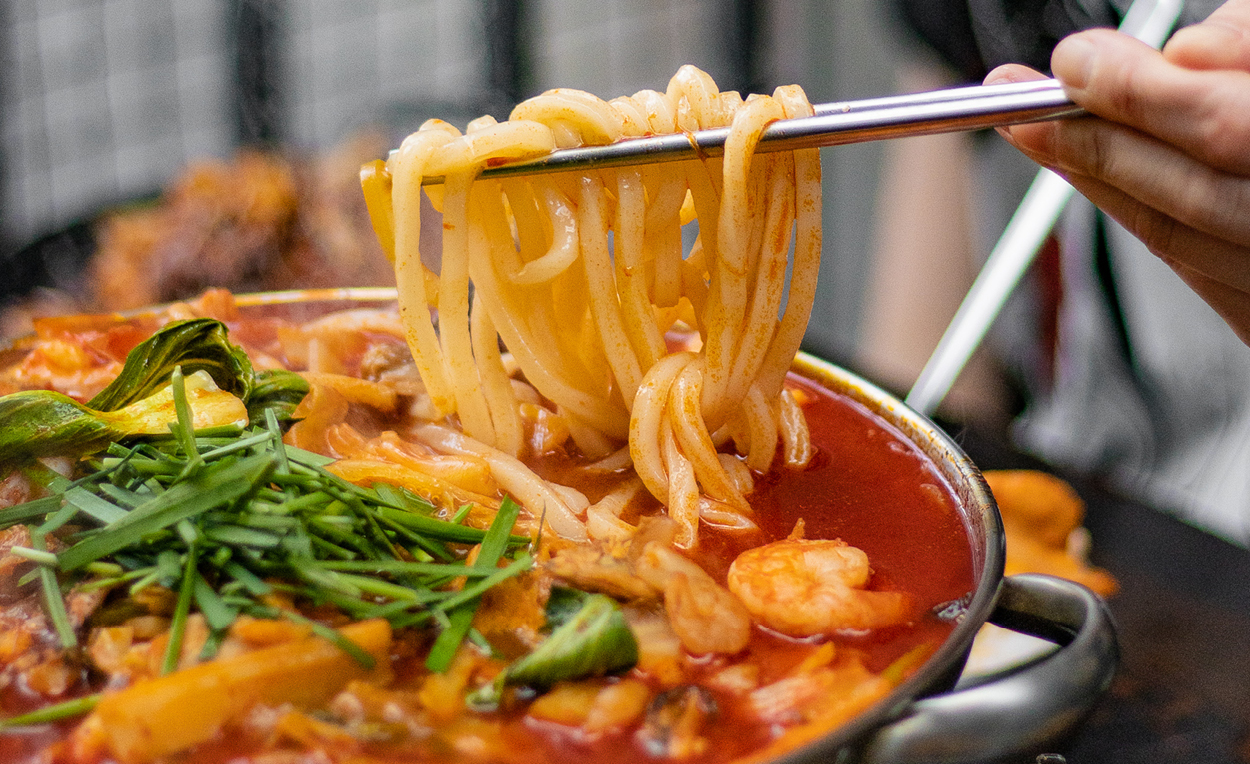
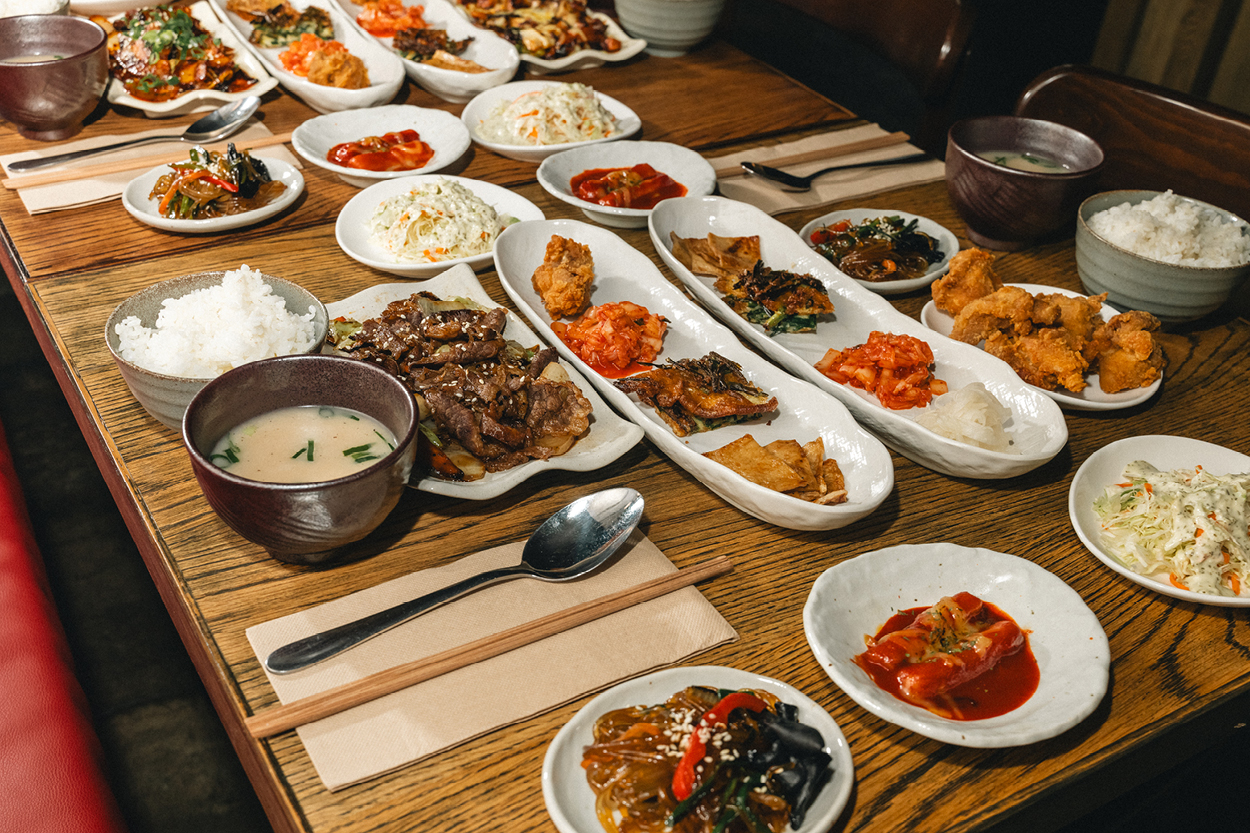
If you haven’t eaten the Korean way, Pocha is a good place to start. It’s been doing this for over a decade and knows how to set the tone. The dishes are large and designed to share, because in Korean drinking culture, eating and drinking are firmly the same occasion. Order soju, exercise some caution since it earns its reputation, and work your way around the table.
Self-described as “100% not authentic,” Ragtag in Westmere is doing something entirely its own with the taco. Chef Dan Freeman hand-makes over 400 duck fat flour tortillas daily: rich, light, and impossibly fluffy, serving not just as a vessel but as the main event. The fillings draw from Taiwan, American BBQ, and British pub culture rather than anything remotely Mexican, with the confit duck tacos and raw fish tostada earning near-universal praise. Natural wines on the list, a private dining room upstairs: proof that cheap and cheerful can also be clever and considered.
A permanent food truck on Takapuna’s main street, Lil Ragù serves pasta “just like Nonna makes it” and largely delivers on the promise. Fresh pappardelle, tagliatelle, bucatino, and rigatoni grace the menu; some are smothered in a three-hour slow-cooked ragù, others doused in cacio e pepe with guanciale on top. The details, namely handmade pasta and a commitment to good ingredients, are what set it apart.
What started as a cult food truck has settled into a permanent home on Ponsonby Road, and the move suits it. Founded by Jiaxin Qi and VeeShen Teoh, the team behind Phat Philly’s in Morningside, The Sando Guy crafts Japanese and Korean-inspired sandwiches daily on authentic Japanese milk bread sourced from local artisan bakeries. The Premium Beef Sando and Philly Cheese Sando are the bestsellers. Save room for the seasonal fruit sandos if that’s your inclination.
This faithful Ponsonby institution has been feeding hungry Aucklanders since 1995, and the formula hasn’t needed much adjustment. Pitas, shawarmas, salads, and easy bites that are filling, flavoursome, and reliably good. The flagship store has been refreshed in recent years, with additional locations in Takapuna and Commercial Bay’s Harbour Eats. The kind of spot you stop thinking about until you’re standing in front of it, then wonder why you waited so long.
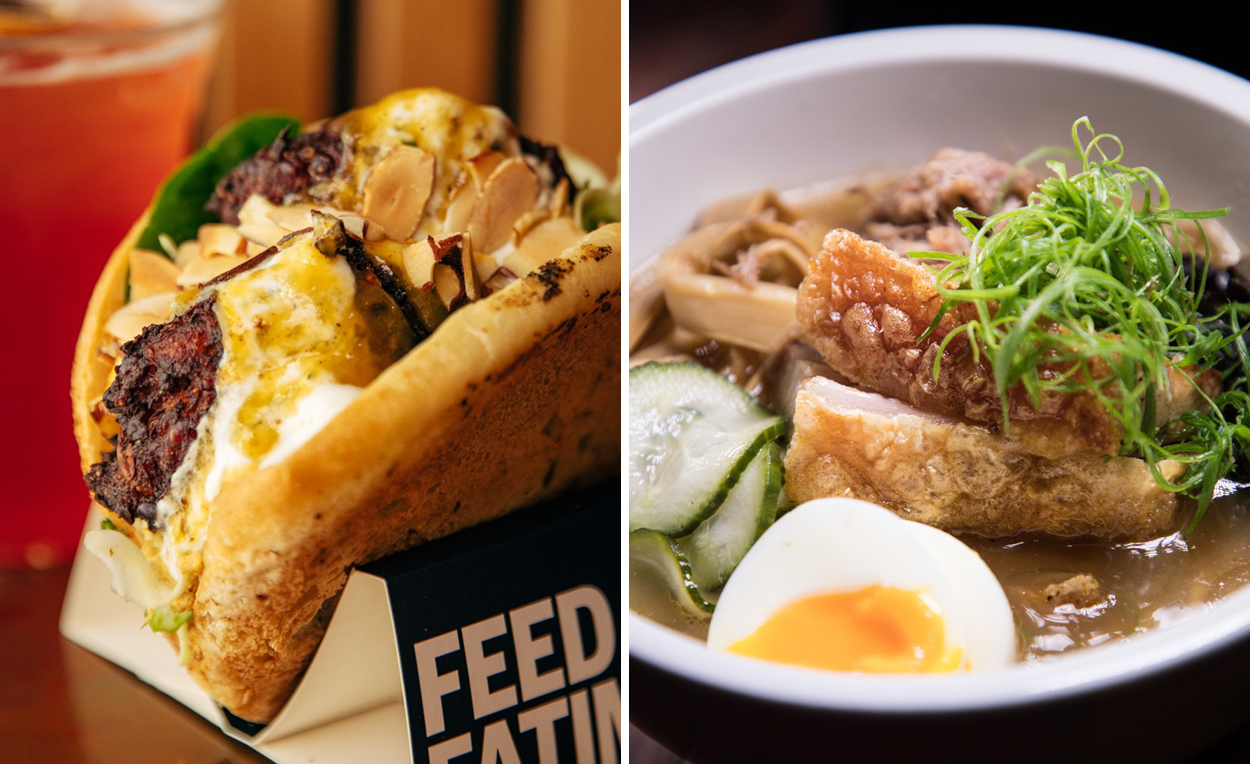
Left: Fatima’s Chawarma Right: Chop Chop’s Cobra Kai
A Denizen Hospo Heroes Cheap & Cheerful stalwart for years running, Ponsonby Central’s Chop Chop Noodle House earns its reputation. The ramen and rice bowls are solid across the board, but the Cobra Kai is the one to order: BBQ pork, pork belly, kimchi, vegetables, a jammy boiled egg, and a flourish of fried chicken, all in one bowl. It’s a lot, in the best possible way.
Tucked along Garnet Road in Westmere, Esarn Rocket has quickly established itself as one of the most authentic Thai eateries in Auckland. Drawing on the bold, punchy flavours of Thailand’s Isan region, the menu moves from fiery som tum and larb to fragrant curries and smoky charcoal-grilled meats, all executed with a precision that has regulars declaring they no longer need to fly to Bangkok. The prices are refreshingly accessible given the quality, and the laid-back, street-food energy of the space makes it the kind of place where a casual midweek dinner turns into a full tour of the menu. Takeaways are handled well, too.
From the outside, you wouldn’t pick Sri Pinang as one of the better BYO spots in the city, but on weekend evenings it turns into something of a party, and those who know it have the good sense to show Aunty Angie the respect she’s due. Order the beef rendang: fragrant, deeply flavoured, and precisely the right texture. Finish with the signature creamy sago coconut pudding, and don’t skip it.
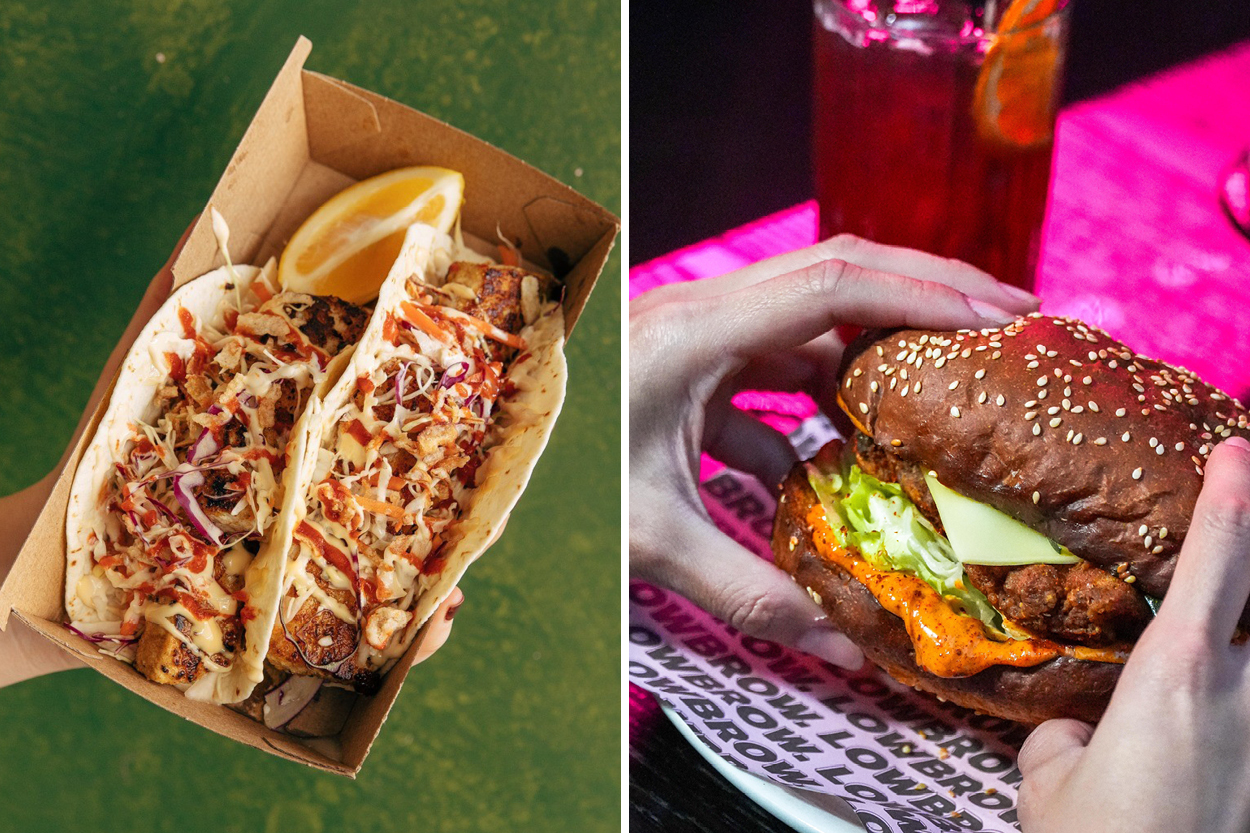
Fast, fun, and a cut above what the category usually suggests, Lowbrow has cracked the code on serving fried chicken and hot sandos as genuinely good food by insisting on genuinely good ingredients. The prices sit above regular fast food, but the gap in quality more than accounts for the difference. St Kevin’s Arcade is a fine place to be on a Tuesday afternoon.
A Herne Bay stalwart that becomes one of Jervois Road’s busiest spots through summer, Fishsmith has built a loyal following on the strength of its fish and chips: classic, properly done, and worth the walk. The fish burger is among the best in the city, and the spicy fish tacos with slaw are worth ordering alongside. Simple food, executed without compromise.
Sammy Akuthota is a well-loved figure on the Auckland hospo scene, and his Satya restaurants, rooted in the South Indian street food his parents Swamy and Padmaja Akuthota began serving in 1999, have remained firm favourites. Satya Chai Lounge specialises in South Indian street food alongside craft beer, with a warmth and sociability to the space that makes it hard to leave. The dosa and idli are reliably excellent, and the dahi puri is the side you don’t skip.
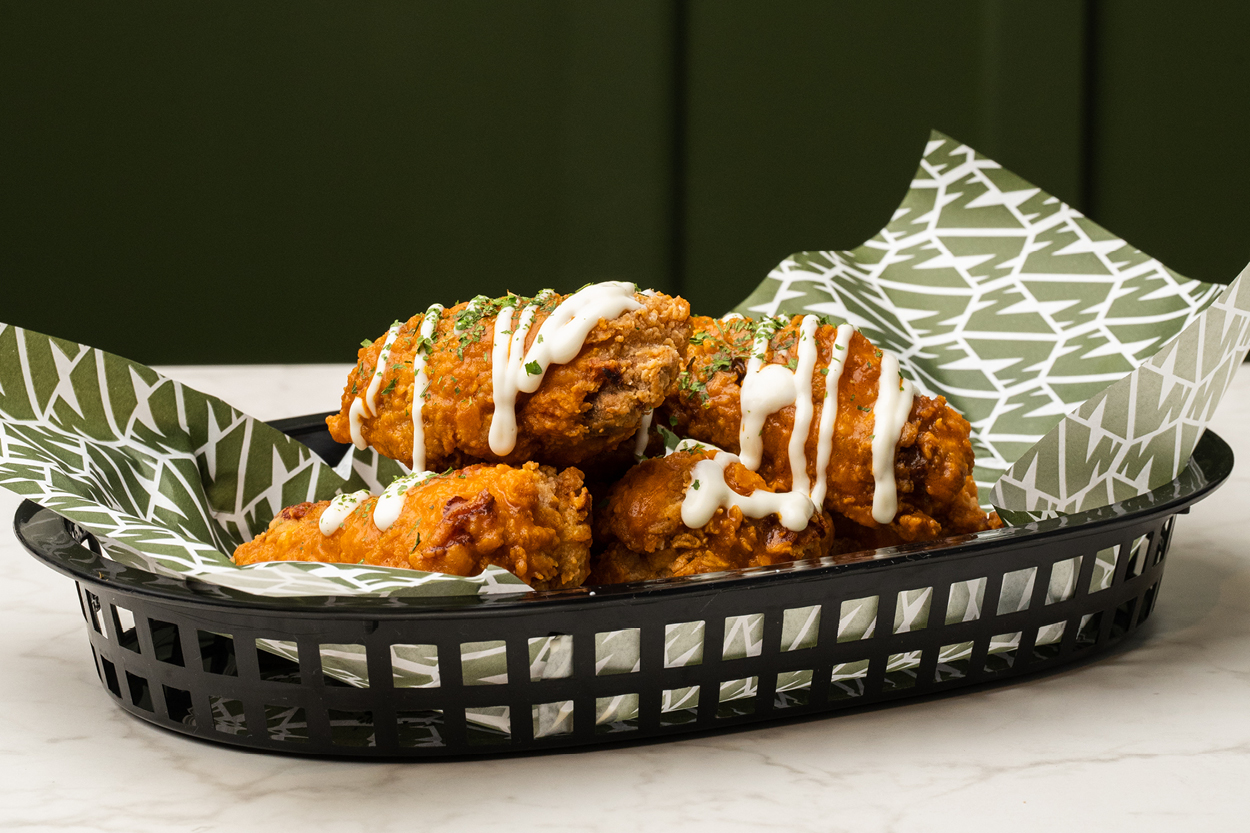
Brew’d Hawt does one thing and does it well: fried chicken. Now with two locations, the original and a second outpost on Victoria Street in the city centre, the offering spans wings, burgers, and boneless chicken alongside a concise list of salads and fries. The kitchen has taken particular care with the crust, which holds up impressively even as a takeaway eaten 20 minutes later.
Starting from a Titirangi taqueria and now with a second outpost in Commercial Bay, Loco Bro’s pays genuine homage to Central American flavours: everything made from scratch, the ingredients doing the talking. Tacos, burritos, nachos, and fried chicken, all at prices that feel almost unreasonable given the quality and portion size.
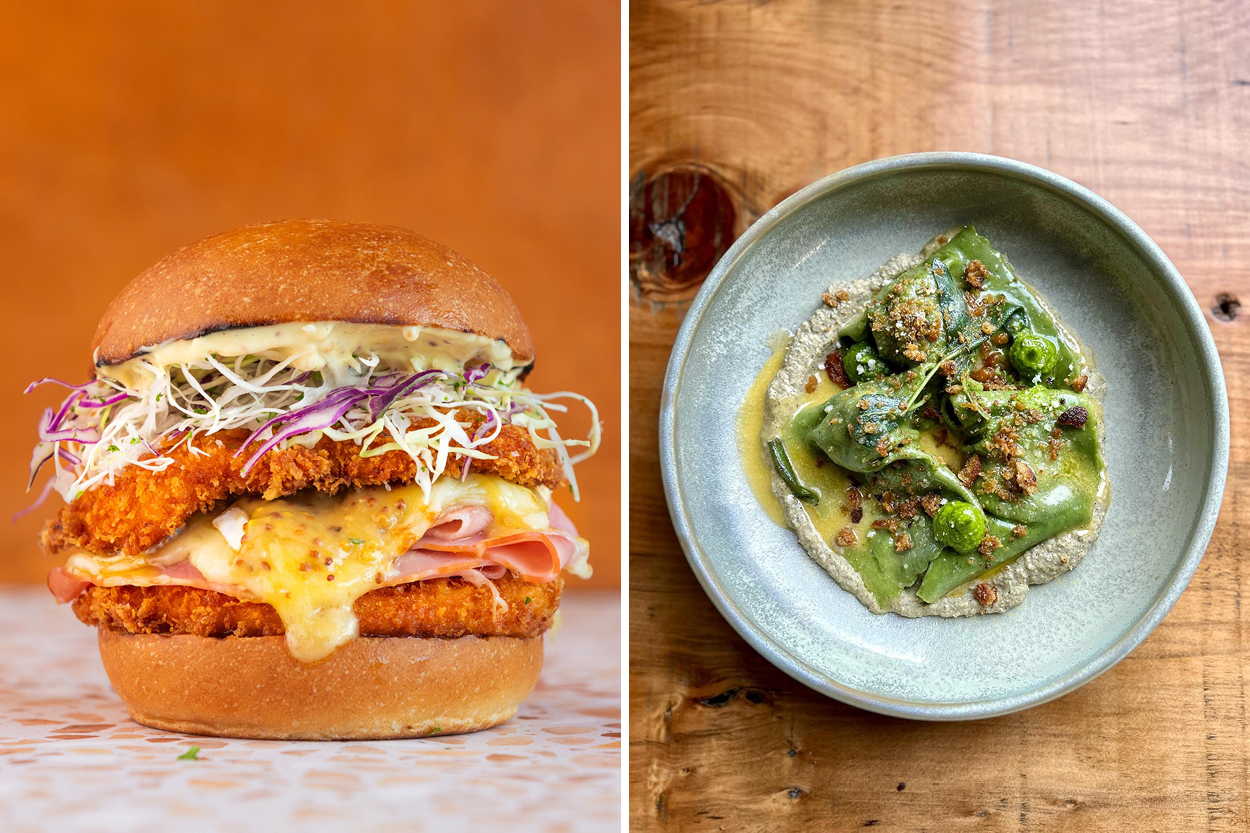
A night of pasta and wine sounds like a treat; at Otto, it’s also an affordable one. Nothing on the Italian-inspired menu exceeds $28, and plenty sits around $18, including the handmade pasta. The smoked ricotta beetroot ravioli and kumara gnocchi are crowd favourites, the lamb ribs a strong opening move, and the burnt orange panna cotta a fitting close.
Burger Burger takes the classic burger and executes it at its best: quality meat, a properly considered patty, buns that earn their place. The beef and cheese burger is the benchmark. The cocktail list is worth a look, since pairing one with your order is a small upgrade that makes an already good meal feel like more of an occasion.
Since opening in Ponsonby Central in 2019, My Fried Chicken has grown into one of Auckland’s most recognisable Korean fried chicken operations. Now with five locations across Ponsonby, Newmarket, Mission Bay, Takapuna, and Britomart, the menu extends well beyond chicken into Korean street food, vegan options, natural wines, and inventive cocktails. The recent addition of Endless Chicken, offering 90 minutes of endless free-range drumsticks across all locations, is the kind of offer that makes a midweek dinner feel like a proper event.
Born from a couple’s longing for the Taiwanese street food of home, Kai Eatery has grown from a market stall into one of the city’s most sought-after operations, with locations in Albany, Takapuna, the city centre, Commercial Bay, and Ellerslie. The fried chicken is some of the best in Auckland: distinctive, Taiwanese in character, and consistently good, alongside crispy kumara fries, bao buns, and boba tea.
If Korean fried chicken has become a staple of your dining rotation, and given what Auckland now has to offer it’s hard to blame you, Henderson’s Munch is worth the trip west. High-quality chicken at accessible prices, across a range of flavours from spicy to more restrained. A neighbourhood spot that quietly holds its own.
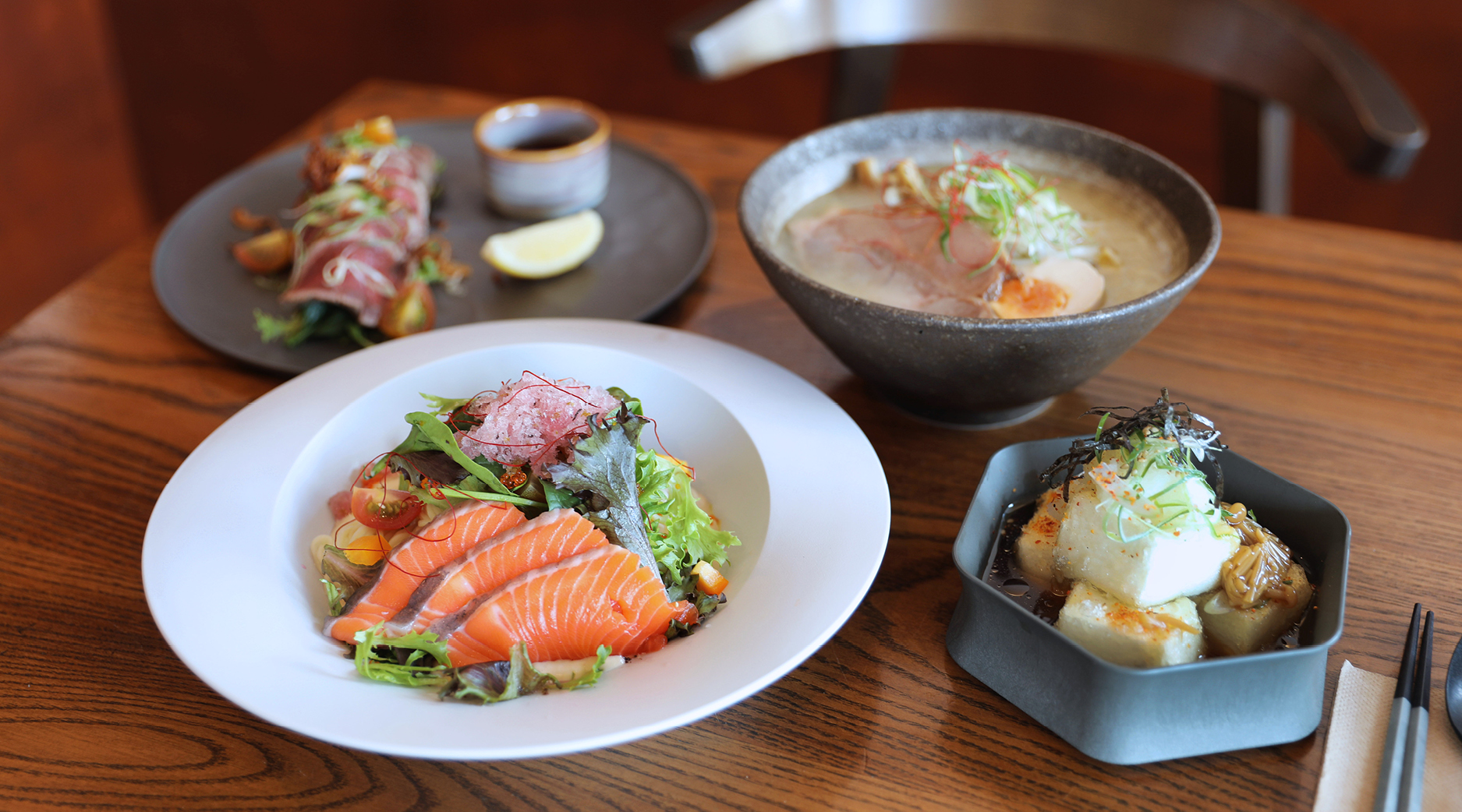
Chef Kenta Kawano spent years in fine dining kitchens across New Zealand before opening this intimate Japanese eatery on West End Road in Westmere, right alongside Esarn Rocket, and the two together have quietly made this stretch one of the more interesting dining destinations in the city. The focus at Hocho is simple, precise Japanese food at accessible prices: a clear chicken broth ramen topped with oyster mushrooms, beef tataki, miso eggplant, agedashi tofu, and the dish that has people coming back, a chilled salmon ramen at $26 topped with fish roe and shiso granita that is one of the better summer bowls in Auckland. The space is minimal and the atmosphere is calm. Order carefully, eat slowly.
Tucked into Freemans Bay, Nishiki satisfies Japanese cravings with the added pleasure of an iPad ordering system that makes the whole experience feel slightly more enjoyable than it has any right to. The must-order dish is the miso and cheese eggplant: tender, indulgent, and a reminder that a vegetable can be the best thing on the table. Cold Asahi alongside.
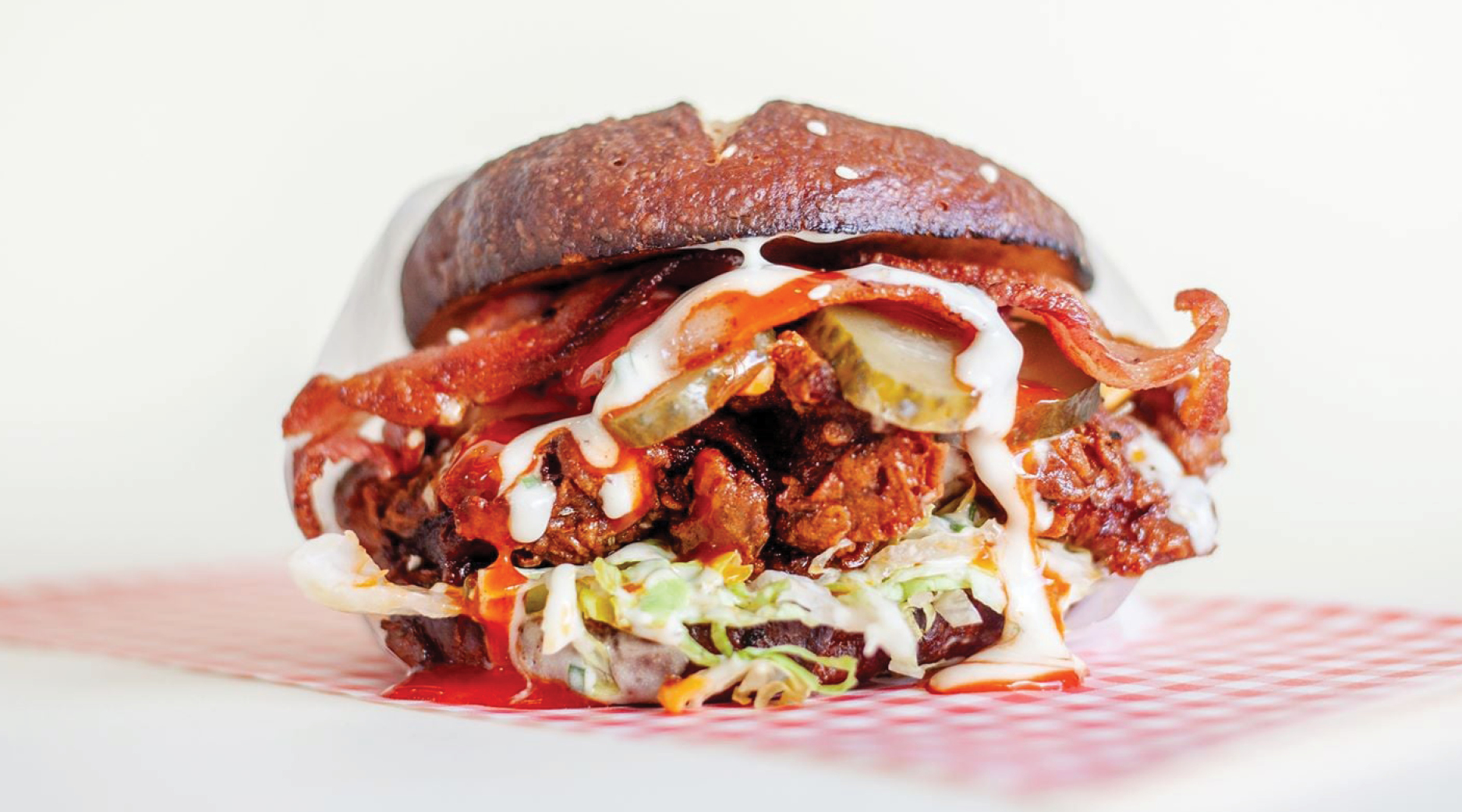
Even if you haven’t tried Parade, and if you haven’t this is the nudge, you’ll have seen the burgers. Served in house-made pretzel buns with fillings that have included fried chicken with macaroni and cheese, or smashed beef with nacho chips and cheese sauce, they are the definition of committed eating. The team on Ponsonby Road is never afraid to push the concept further. Pull up with friends and commit to at least two.
Nobody wants the token vege burger, and that’s precisely the problem Wise Boys set out to solve. Starting as a food truck before opening in Grey Lynn in 2019, and now operating a second spot at Commercial Bay’s Harbour Eats, Wise Boys makes plant-based burgers that don’t ask you to lower your standards. They’re just good burgers.
Clean, well-executed burgers without the fuss: Shake Out, with locations at The Goodside on the North Shore and Commercial Bay, does what it says. Quality ingredients, properly cooked fries with cheesy sauce if you want them, house-made sodas, and a few sweet things to finish. The kind of takeaway that still feels good an hour later.
Tianze’s dumplings are excellent, but stopping there would be a mistake. At this Sandringham Chinese eatery, the mapo tofu is deeply good, the green beans are a revelation (both can be made without pork mince), and the crispy fried chicken in hot chilli sauce is the kind of thing you keep picking at long after you’re full. The jellyfish and Chinese cabbage salad is worth ordering if you’re feeling exploratory. Portions are generous; leaving without leftovers would be an achievement.
For more exclusive access to what the city has to offer, engaging content, excellent imagery and thought provoking commentary on the life that surrounds you, subscribe to Denizen magazine now.