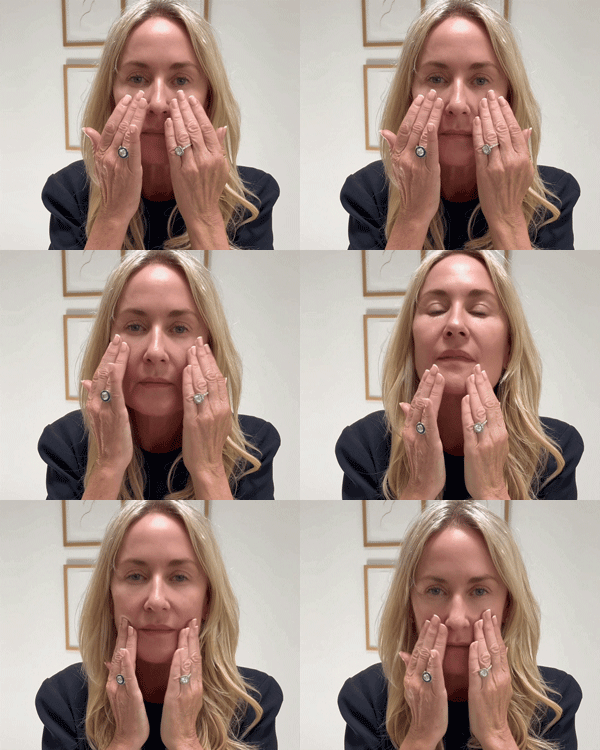




The new year brings with it bold intentions. Gym memberships spike, routines reset and weight loss goals feel newly achievable. As the numbers on the scale move, there is a sense of momentum and control many people have been chasing for years. What often goes unconsidered is how quickly losing weight can change the face as well as the body.
At Clinic 42, Medical Director Dr Ellen Selkon sees this pattern repeatedly. “Weight loss is usually framed as an all-positive outcome,” she says. “But facial fat plays a crucial structural role. When it reduces rapidly, the face can lose support in ways people are not prepared for.”
This is particularly relevant for patients losing weight quickly, including those using GLP-1 therapies. While these medications are highly effective for metabolic health and appetite regulation, the speed at which fat loss occurs can accelerate facial volume depletion. “GLP-1s are powerful tools,” Dr Selkon notes. “But the face does not always keep pace with the body, especially when weight loss is fast.”
The most common changes appear through the mid-face, temples and under-eye area. Cheeks flatten, shadows deepen and the skin can appear looser or more tired, even when overall health is improving. “Patients often tell us they feel fantastic, but their reflection looks like it skipped a few years ahead,” she explains.
Rather than treating volume loss as an aesthetic issue to fix later, Clinic 42 integrates facial support into the weight loss journey itself. The focus is on maintaining balance and structure so the face evolves alongside the body.
Revolumising is approached with restraint and precision. For deeper structural loss, Sculptra is often used as a foundation treatment. Rather than filling, it stimulates collagen production, gradually restoring firmness and volume over time. “It is ideal for patients who want longevity and subtlety,” says Dr Selkon.
For early depletion or skin laxity, Profhilo and Profhilo Structura improve hydration, elasticity and tissue quality, helping the skin better support underlying volume. Where targeted reinforcement is needed, dermal fillers are used conservatively to support areas such as the cheeks or temples, always prioritising harmony.
Skin quality is addressed in parallel. Treatments including Dermapen, IPL, nano-fractionated laser and Tribella stimulate collagen and elastin, strengthening the skin so restored volume is held more effectively. This is particularly important for patients on GLP-1 therapies, where changes in collagen support can also occur.
The result is a considered, cohesive transformation. “Weight loss should never feel like a trade-off,” Dr Selkon concludes. “When facial structure is supported early, patients can enjoy the health benefits they worked for and recognise themselves in the mirror along the way.”