


Cartier has never been one for quiet luxury. With its latest evolution of the Clash de Cartier collection, the maison doubles down on attitude, movement, and a kind of deliberate audacity that feels perfectly timed. This is Clash as you know it, but louder, more tactile, and unapologetically expressive.

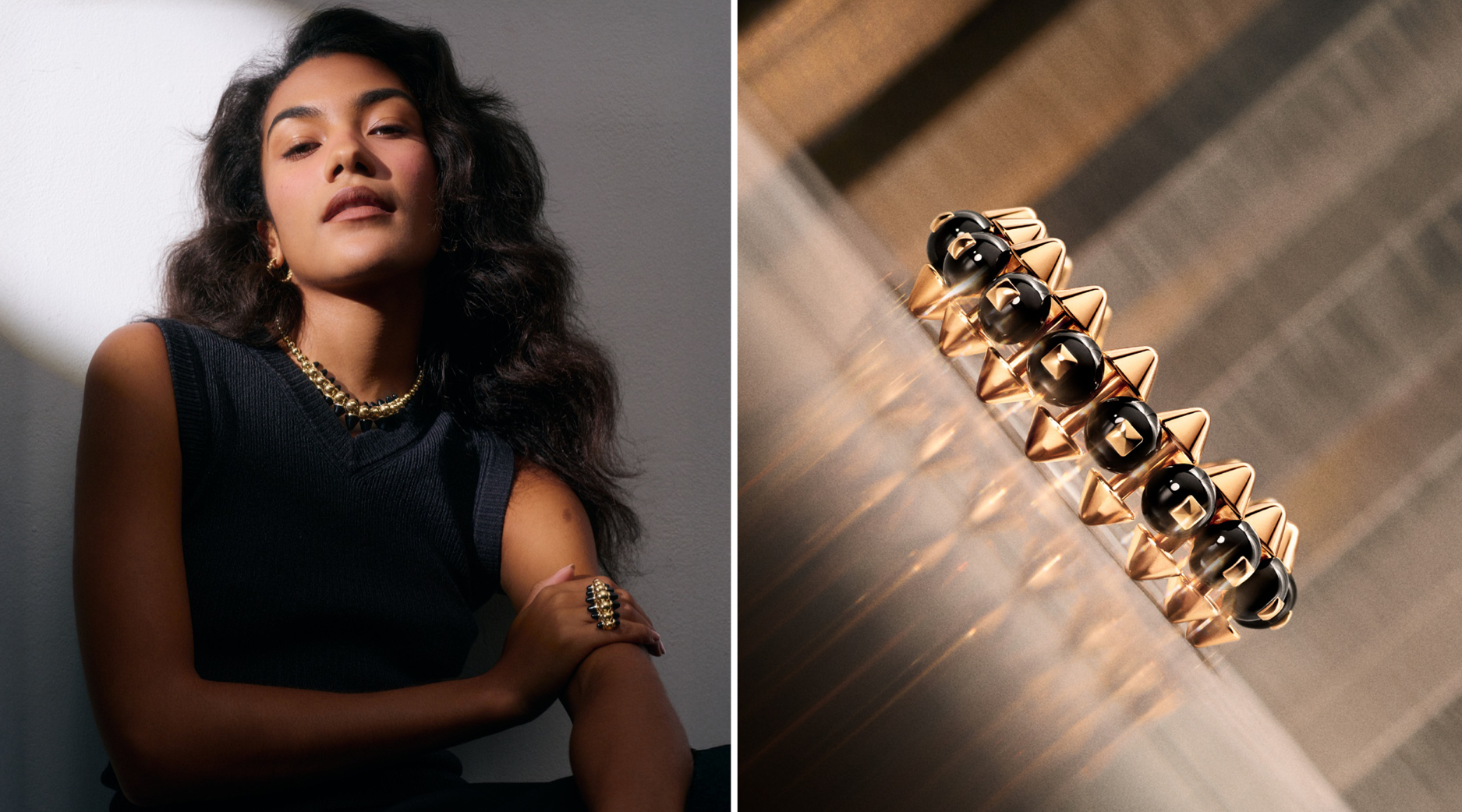
Designed as a counterpoint to Cartier’s famously disciplined geometry, Clash is where precision meets provocation. The newest release pushes that tension further, introducing yellow gold iterations of necklaces and bracelets previously realised in rose gold. The shift is subtle on paper, but powerful in execution. Yellow gold sharpens the silhouette, adds weight, and gives the collection a bolder, more declarative edge. These are not pieces designed to disappear into an outfit. They assert themselves.
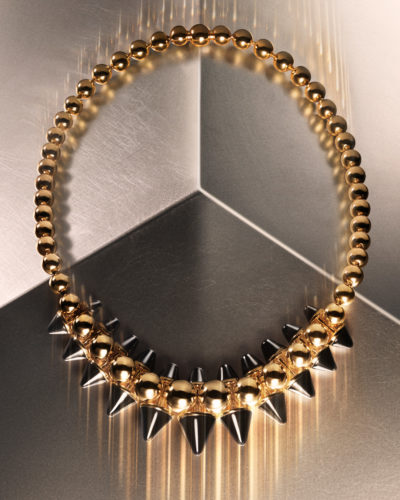
What appears fluid and effortless is, in fact, a triumph of technical complexity. Each jewel is constructed from hundreds of individual components, some featuring up to 600 articulated elements. Traditional lost-wax casting sits alongside high-precision machining, with every link polished by hand before being assembled into a structure that moves with the body. Linked, but never locked, the pieces flex, ripple, and respond, creating a sensorial experience that goes beyond aesthetics.
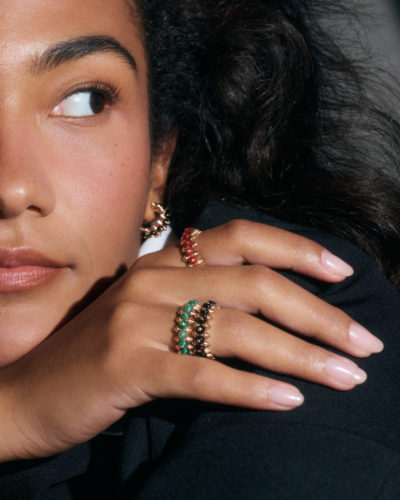
Sound, too, has been considered. The gentle vibration of the studded mesh produces a subtle, refined murmur as it moves, a detail meticulously tuned by Cartier’s design and engineering teams. It is jewellery you feel, hear, and inhabit.
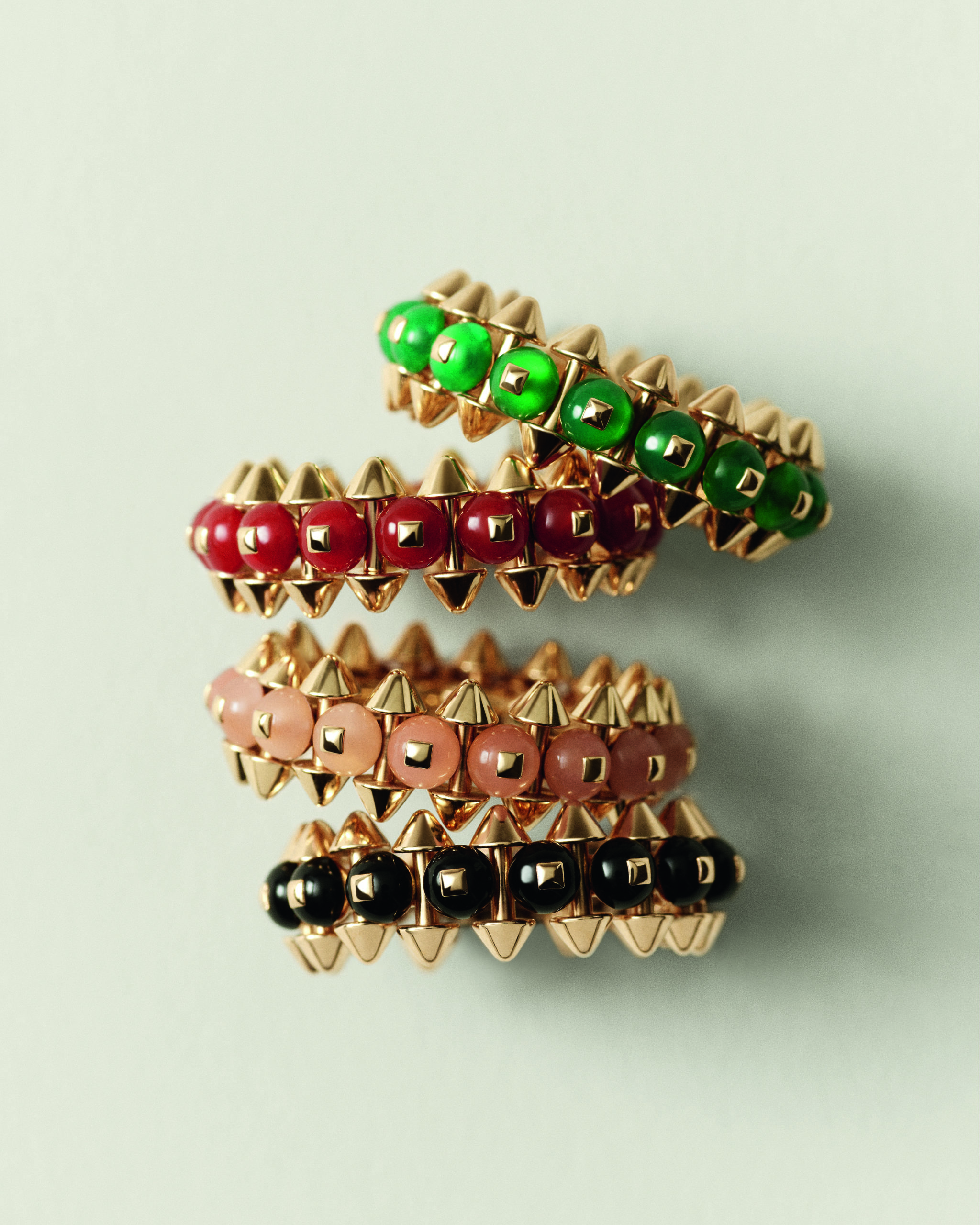
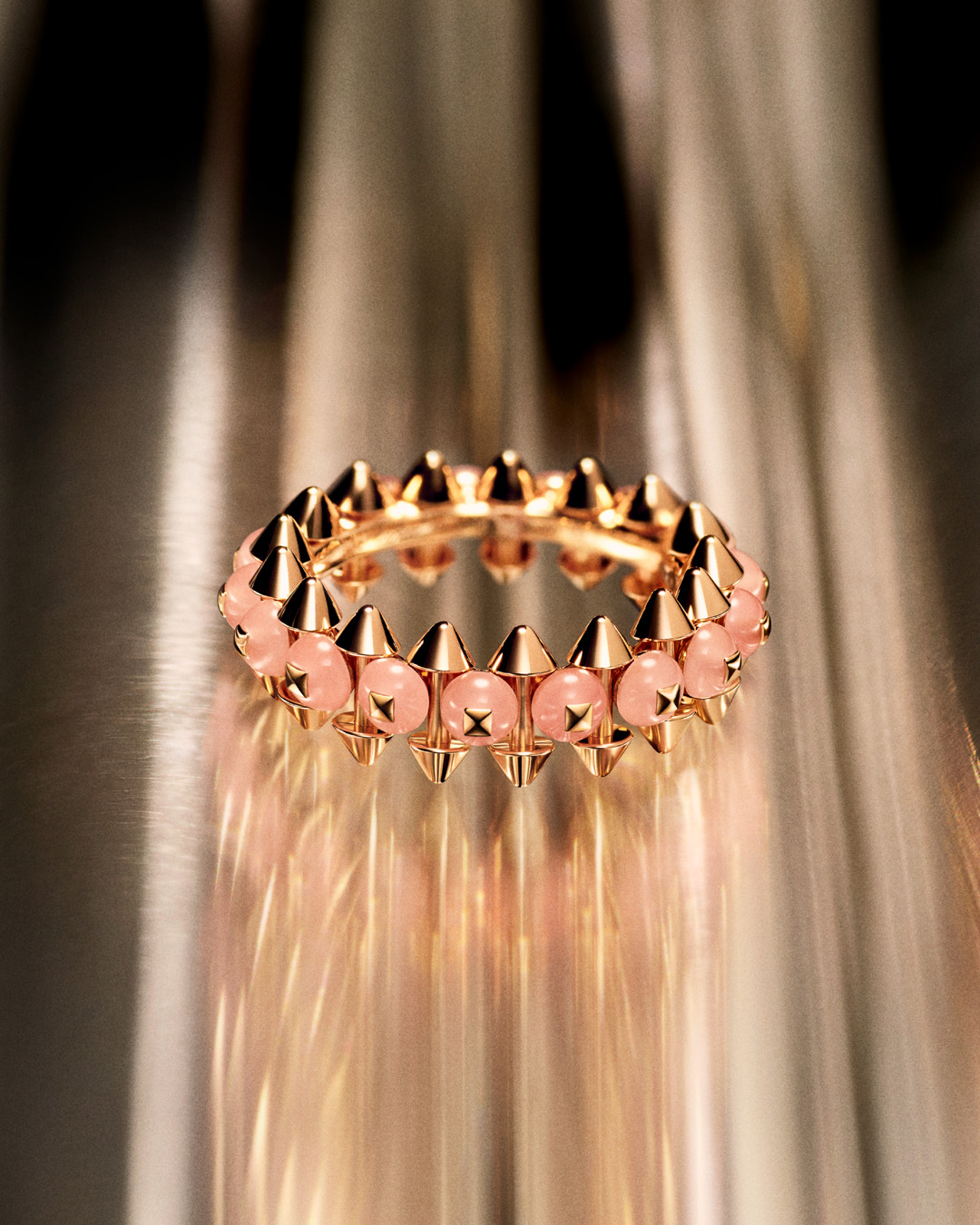
Colour plays a starring role in this latest chapter. Red and green dyed agate, pink chalcedony, and glossy onyx are woven into the Clash vocabulary, each bead carefully selected, pierced, and secured with a Clou de Paris nail. The result is a palette that feels bold yet balanced, graphic yet organic. Dyed agate, a material with centuries of history, becomes a contemporary canvas in Cartier’s hands.
At its heart, Clash de Cartier is a statement of individuality. Designed for stacking, layering, and personal interpretation, the collection invites wearers to play, experiment, and make it their own. It is a philosophy that echoes the original spirit of Jeanne Toussaint, whose fearless elegance helped define Cartier’s modern identity. The Belgian-born French jeweller and fashion designer exerted considerable influence on jewellery design after Louis Cartier appointed her Director of Fine Jewellery in 1933, and her iconic influence is still prevalent in the Cartier jewellery of today.