


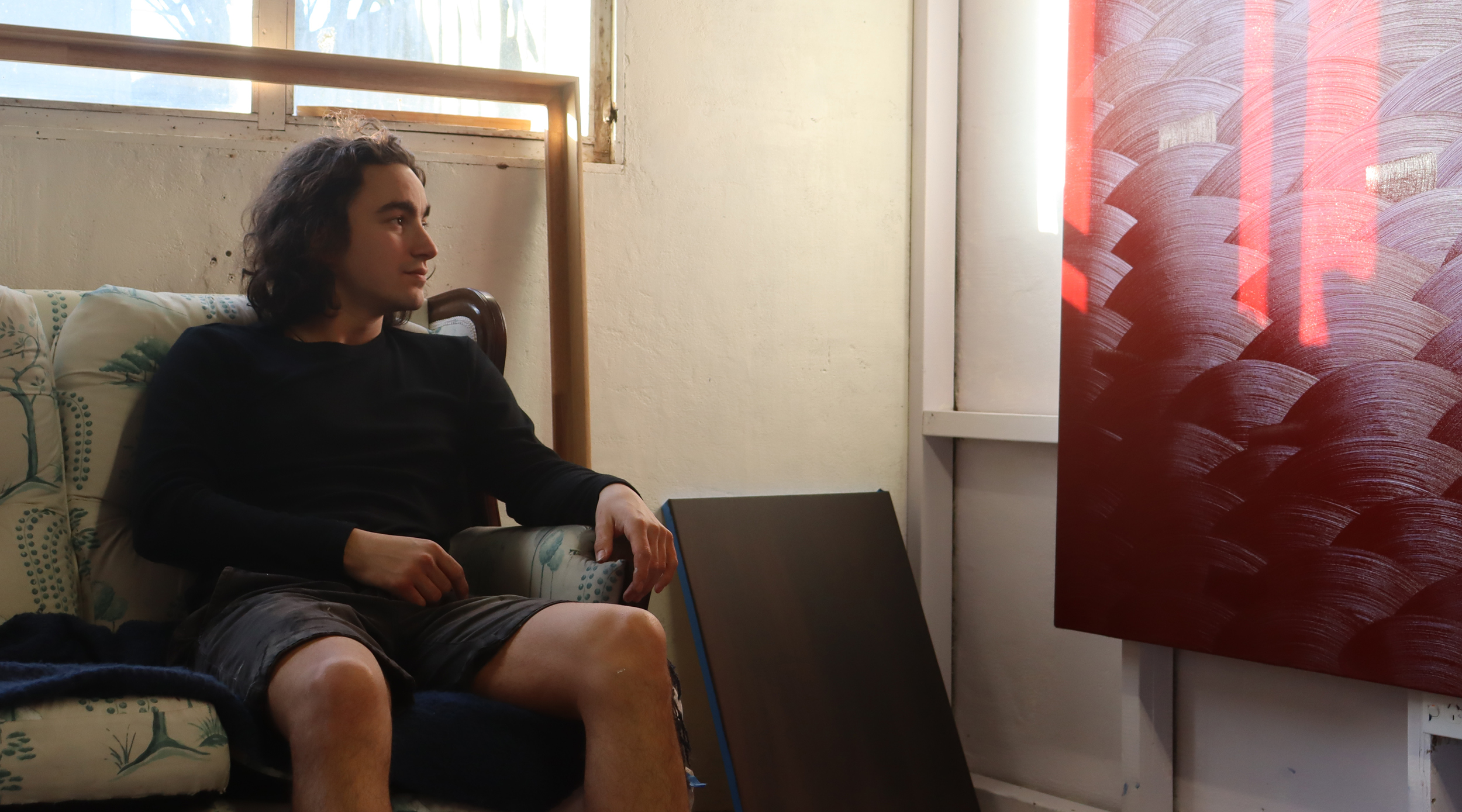
Jamie Te Heuheu’s thought-provoking monochrome paintings explore texture and tone in a way that has garnered him critical praise and plenty of admirers. Since producing his first solo exhibition just two years out of art school, the young painter’s career has moved swiftly, collecting representation from two of Aotearoa’s most distinguished galleries along the way. When we spoke, Te Heuheu was preparing to tick off the next milestone showing at the Sydney Contemporary Art Fair, and contemplating the future, wherever that may lie.
When he was 17 years old, Jamie Te Heuheu (Ngāti Tūwharetoa) “didn’t really have a plan” for life post-high school. Born in Ōtautahi Christchurch, he had just shifted to Hagley College to complete Year 13 when the idea of pursuing a tertiary education in the arts was put forward to him by his teacher and artist, Brenda Nightingale. “She was fantastic, a huge encouragement who gave me the nudge to go for it,” Te Heuheu remembers. “I kind of thought, well, why not? What else am I going to do?” Allowing that fortuitous nudge to lead him to Christchurch’s Ilam School of Fine Arts, it wasn’t until his third year that the young painter began to see a career in his creativity. After that realisation dawned, things started to happen—quickly.
Just months after graduating with First Class Honours in 2020, Tim Melville invited Te Heuheu to participate in the group show A New Net: Four Early-career Māori Artists. Describing his practice at the time as “An ongoing study in the formal qualities of abstract art-making,” the works emphasised materiality, process and minimalism with broad brushstrokes and monochrome palettes playing out on canvas and jute. Soon after that inaugural exhibition, renowned Wellington gallerist Hamish McKay came calling. “I’d had offers to do solo shows a few times, but I’d always turned them down because I wasn’t ready,” says the artist. “But when Hamish rang, I was finally at the point in my practice that I felt prepared.”
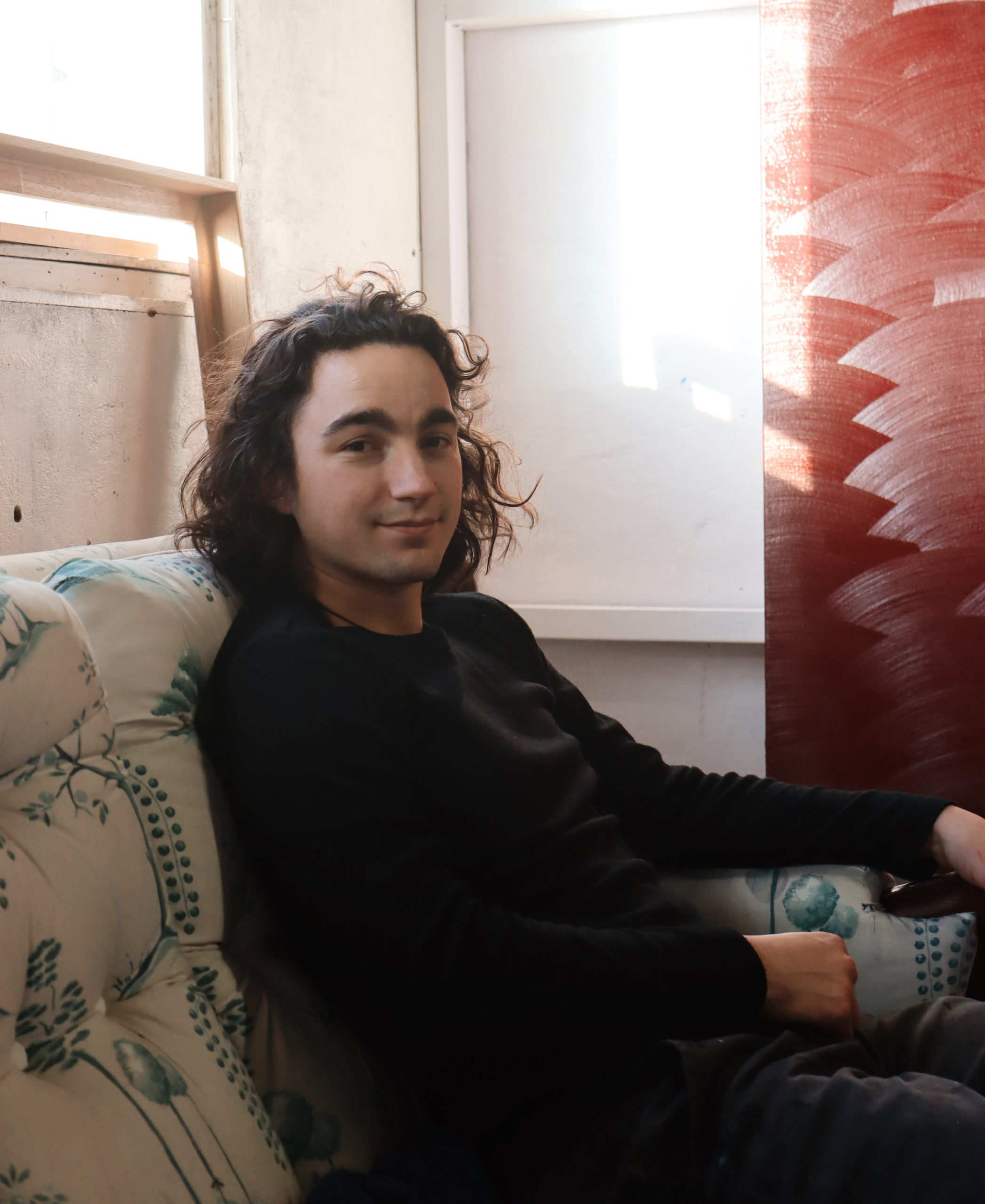
That’s not to say it was all smooth sailing. Barely two years out of art school, Te Heuheu was showing with one of Aotearoa’s most prestigious galleries. “I put a lot of pressure on myself, and starting fresh with only a few months to pull it off was incredibly stressful,” he says. “But I did it and had a lot of fun in the process.” Though those first exhibitions were separated by mere months, the evolution in his practice is unmistakable. The artist’s exploration of contemplative tones and impactful brushstrokes develops as his work refines, allowing each exhibition to stand as an independent body of work. Discerning audiences have noted the influence of Hotere and McCahon within his past portfolio, but for now, Te Heuheu names his key inspiration as “light”.
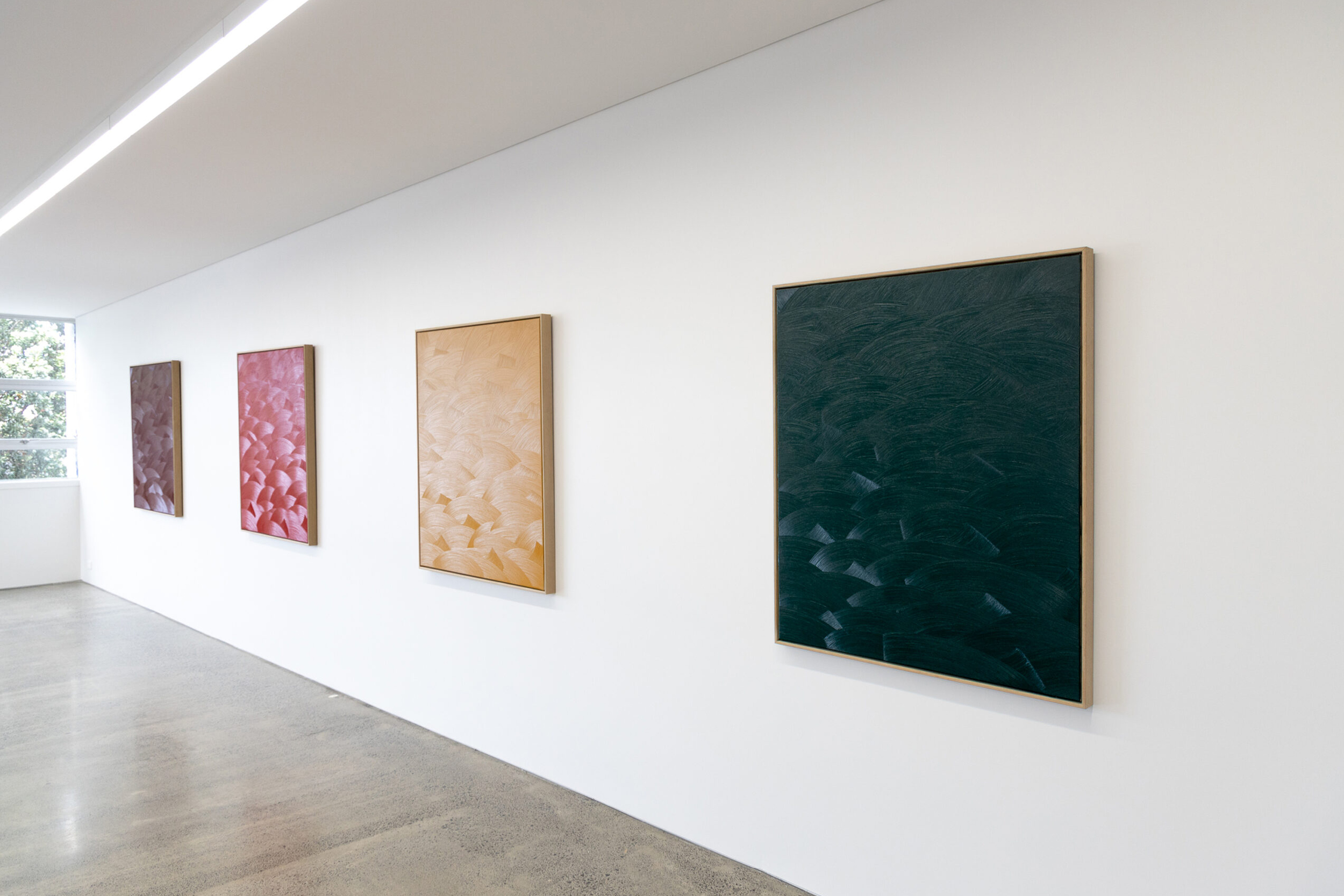
“I draw from the light around us, the colours I see,” the artist explains, often using tones that are culturally significant to Māori. “I see it as a tying between the two worlds, aesthetic histories and personal histories. My culture is so important to me, but I haven’t connected with Te Ao Māori as much as I would like. It’s just a case of timing.”
“[Te Heuheu’s]exploration of contemplative tones and impactful brushstrokes develops as his work refines.”
Currently, Te Heuheu is working on pieces to show with Starkwhite at the Sydney Contemporary Art Fair and is in conversations about another solo show—but it all hinges on time. There’s also a hint of imposter syndrome that quietly nags at the back of his mind. “I don’t think I expected representation from a gallery like Starkwhite at such a young age,” he explains. “When their offer came up, I really had to consider it. Maybe it was too much too soon? Especially when you look at the extensive careers of the artists on their roster. But if you want to run with the bulls, this is the place to do it.”
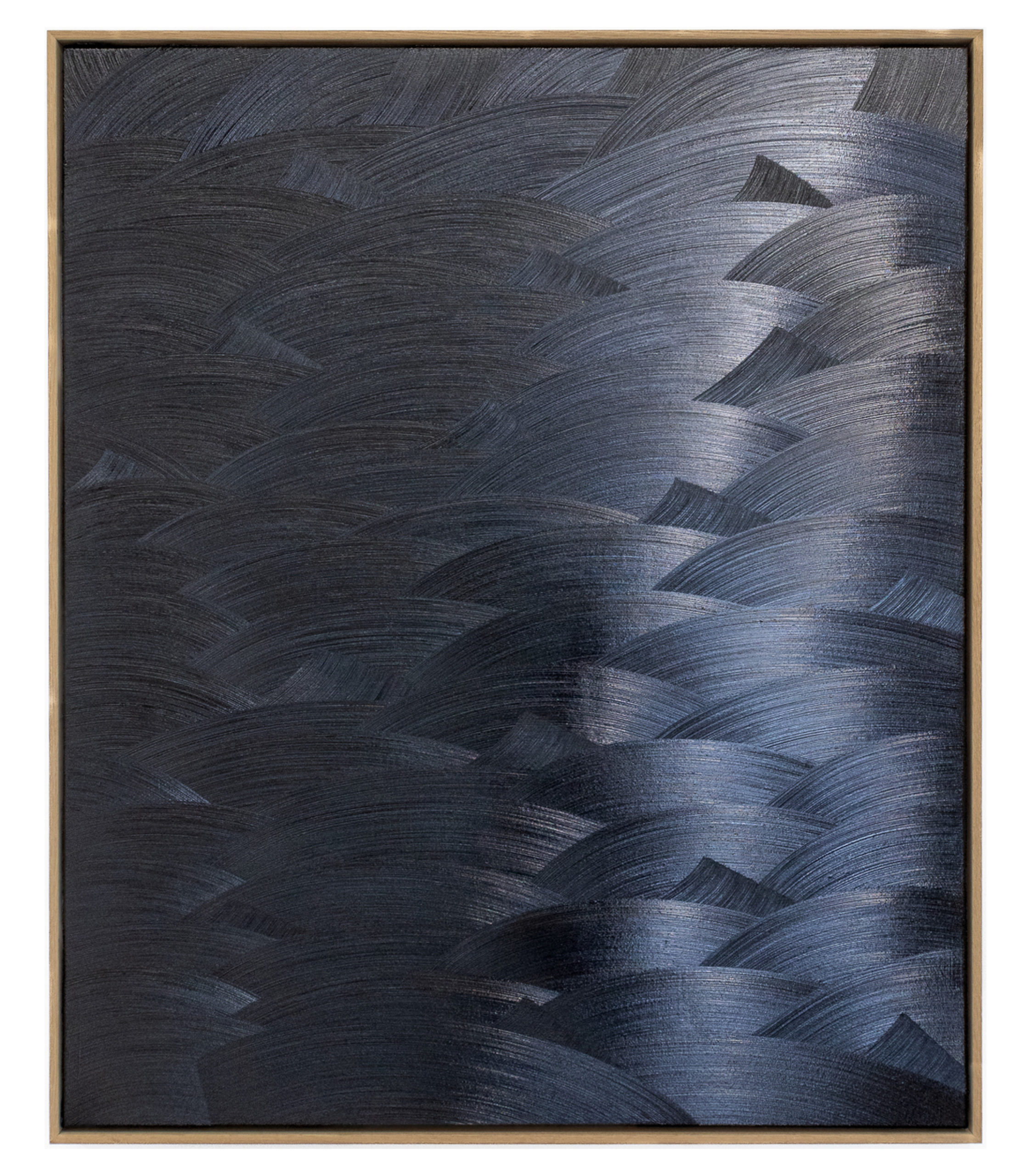
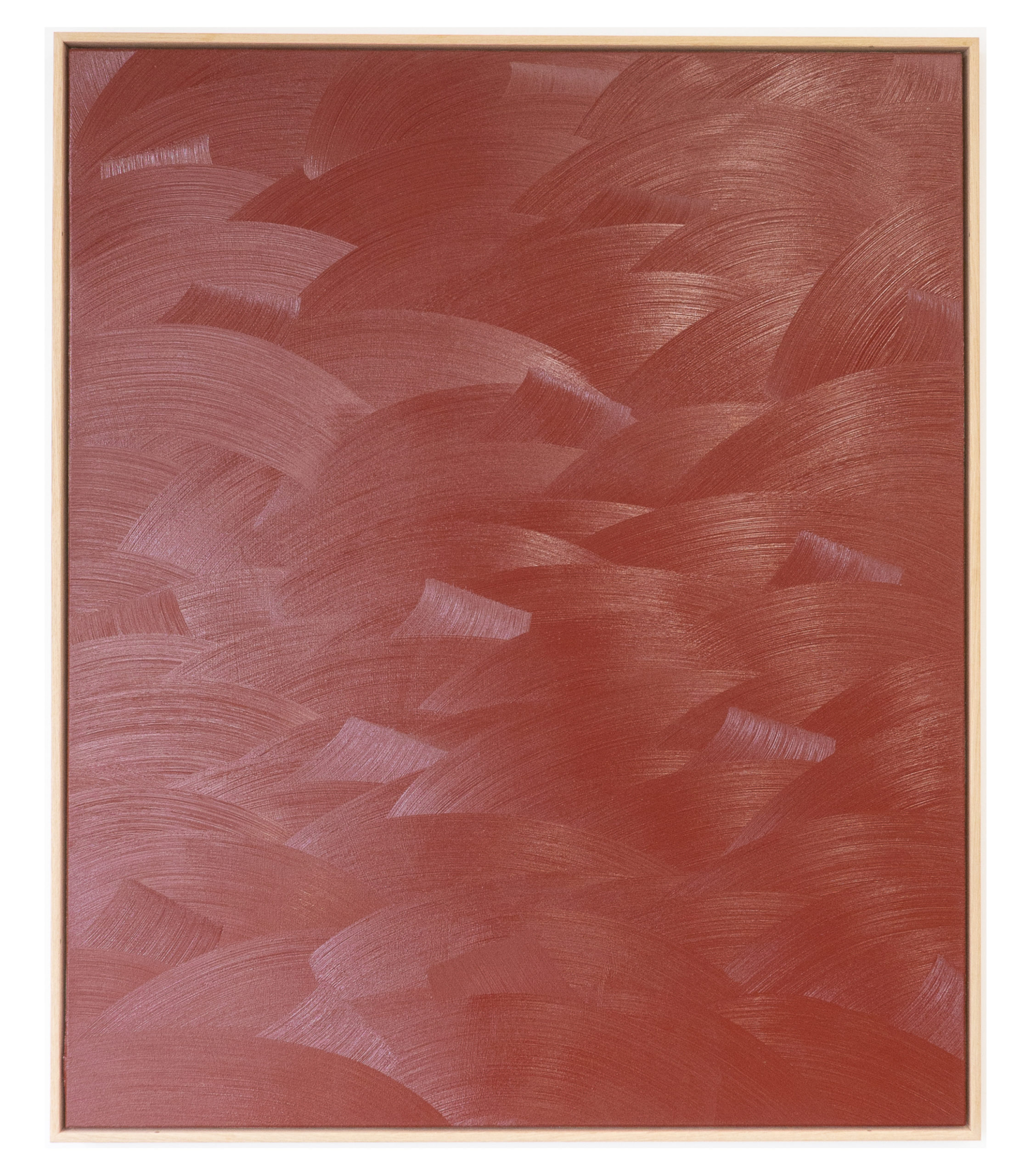
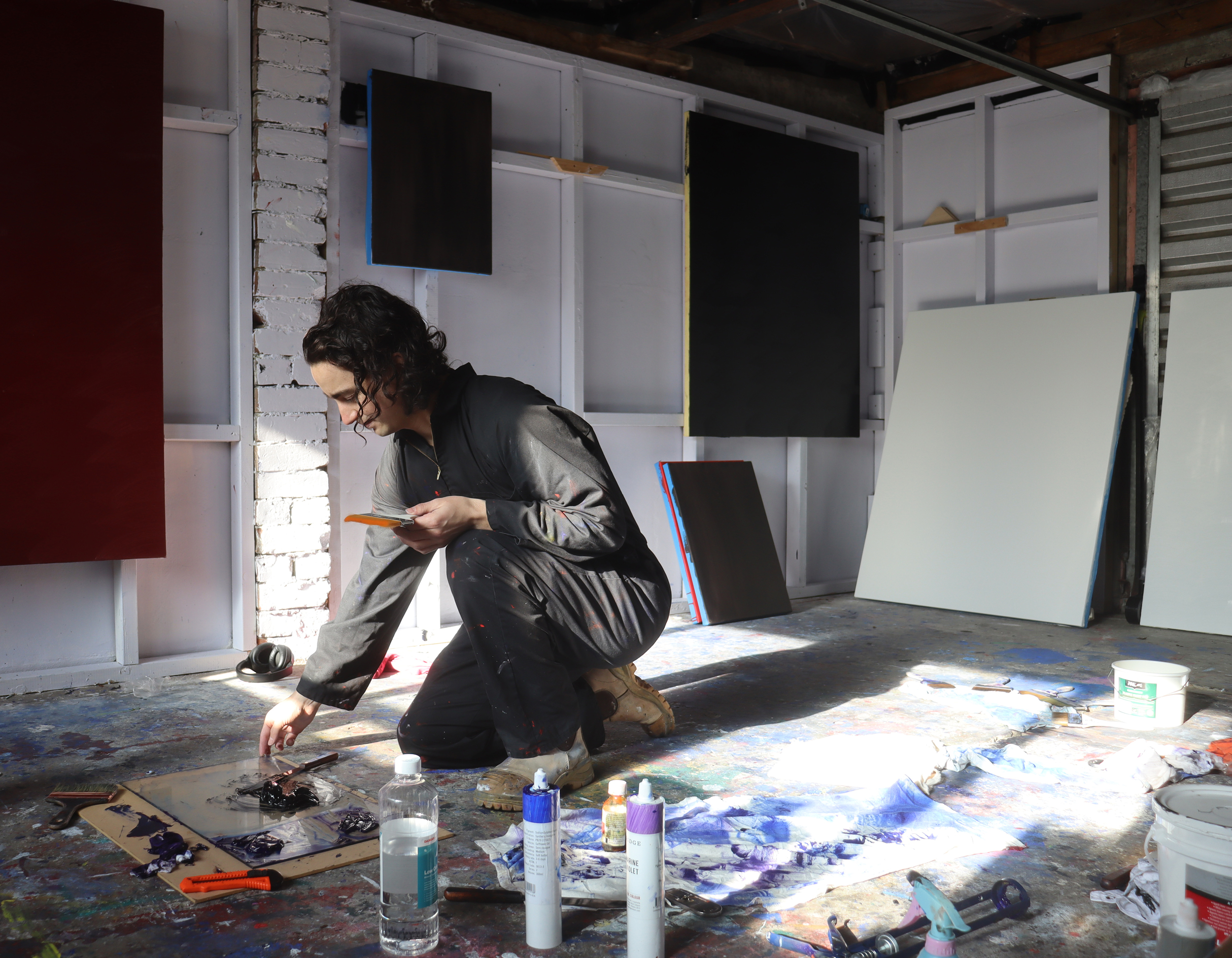
The artist is exploring diptychs and triptychs in the new works, straying from his monochromatic narrative with long, narrow, horizon-like paintings. “At least that’s the plan,” says Te Heuheu. “I don’t have a studio space at the moment, so I’m using a garage with just one usable wall. It means that the works are playing out one at a time.” Painting in a draughty garage amid Christchurch winter sounds far from ideal. “It does the job,” he shrugs. “But yeah, it’s definitely freezing.” Through all of the early success of his career, Te Heuheu remains an unaffected young painter, aware of the hard graft the job demands.
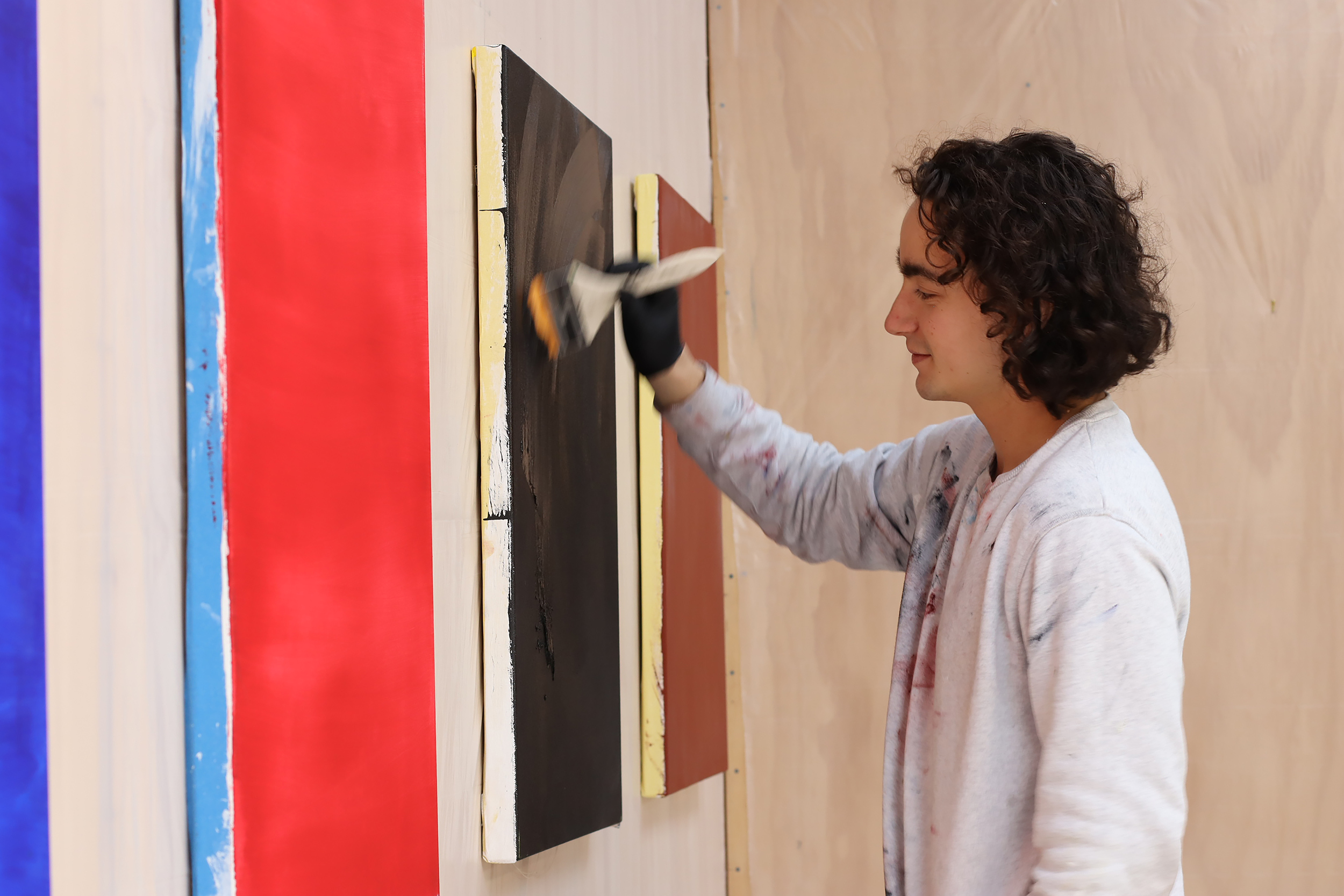
Just four years after graduating, Jamie Te Heuheu is carving out his place in the Aotearoa art scene with his work, and soon, in the classroom as he heads back to his alma mater to teach third-year painting. Looking further ahead, there are global aspirations. A shift abroad or an international residency certainly feels like a natural progression. “The world is so accessible now,” he says. “It’s daunting, sure. But at the same time, it’s good to feel out of your depths, in a bit of danger. That’s when it starts to get interesting.”