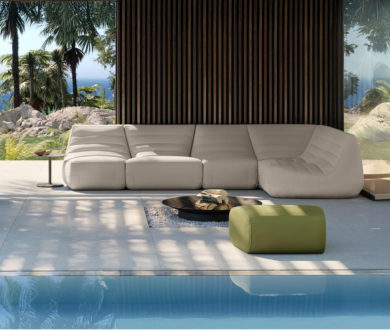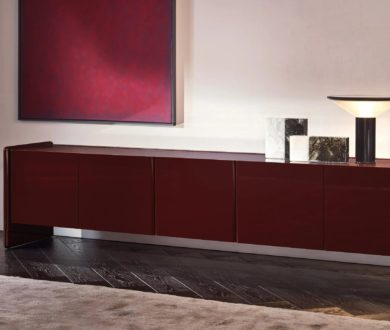



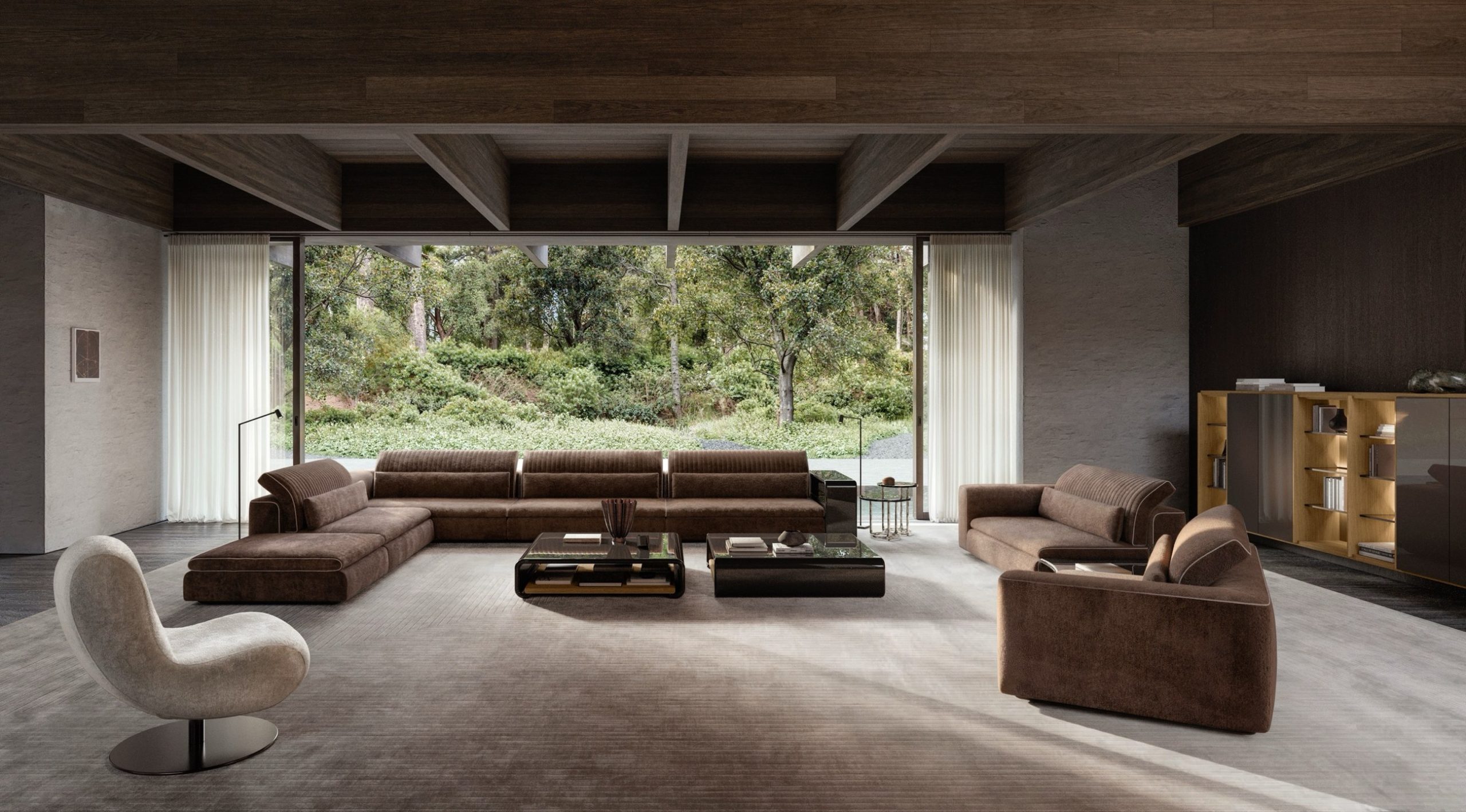
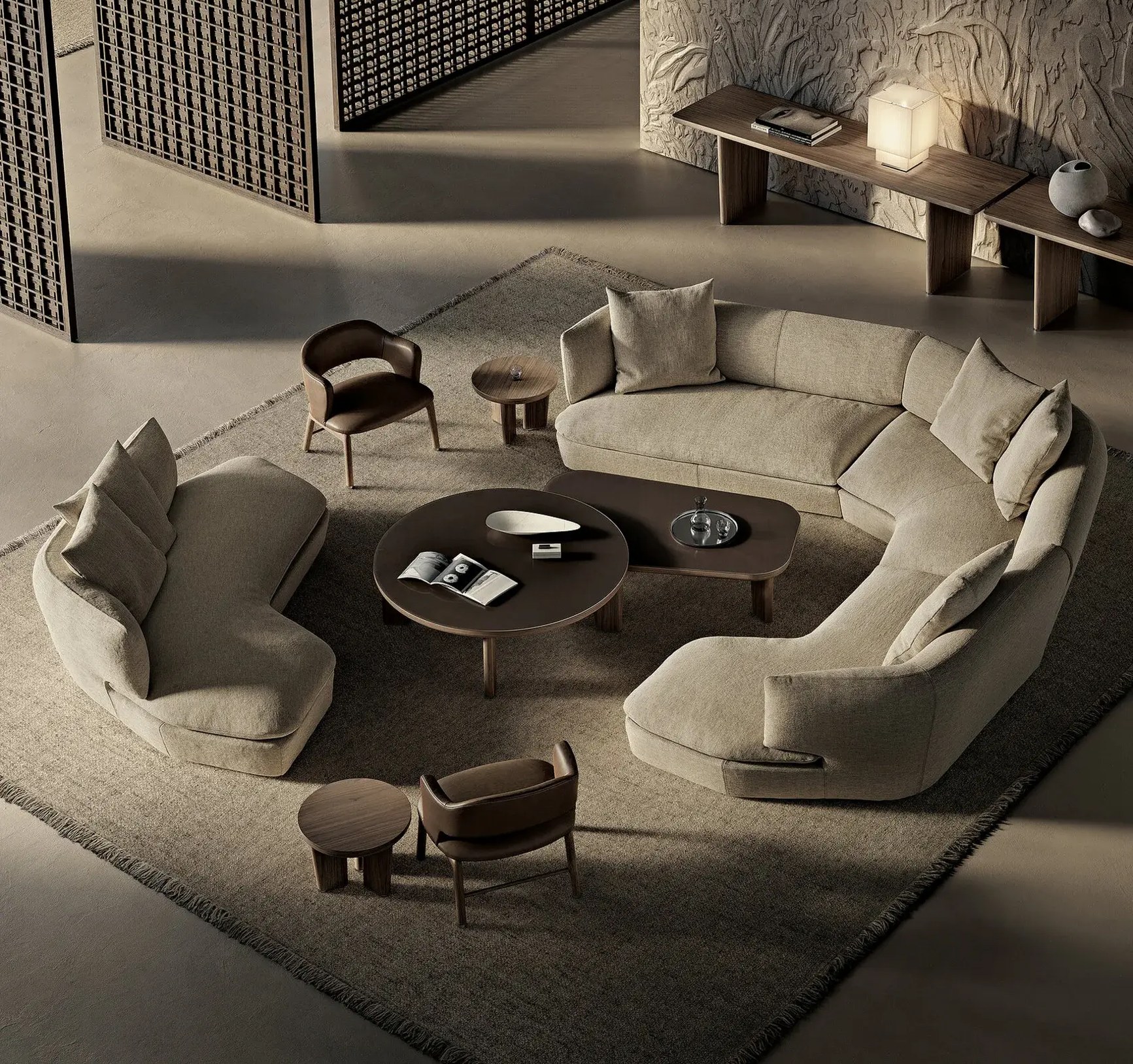
The living room still runs the show, though this year it did so with a clearer sense of purpose, in which softness moved beyond aesthetic preference to become a defining principle that shapes how furniture is conceived, experienced, and ultimately lived with. Sofas have evolved into modular, responsive systems that adapt to space and mood, yet what lingered most was not flexibility alone but tactility, with cocooning forms, generous seat cushions, quilted textures, and fabrics that invite a slower, more deliberate engagement.
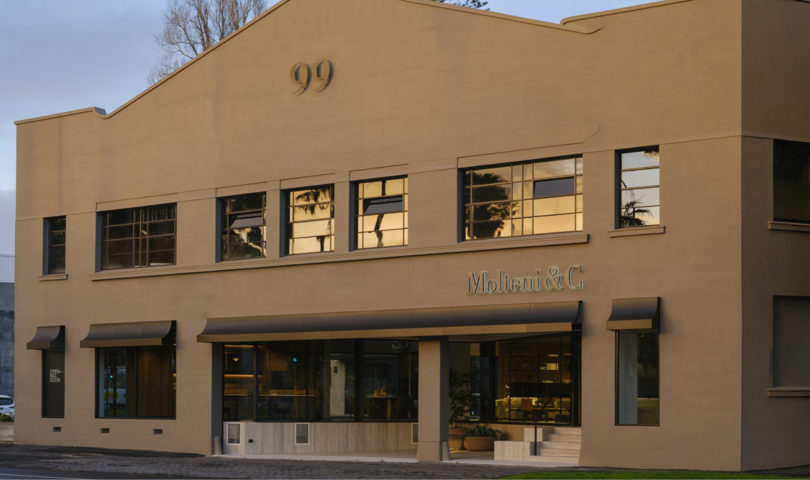
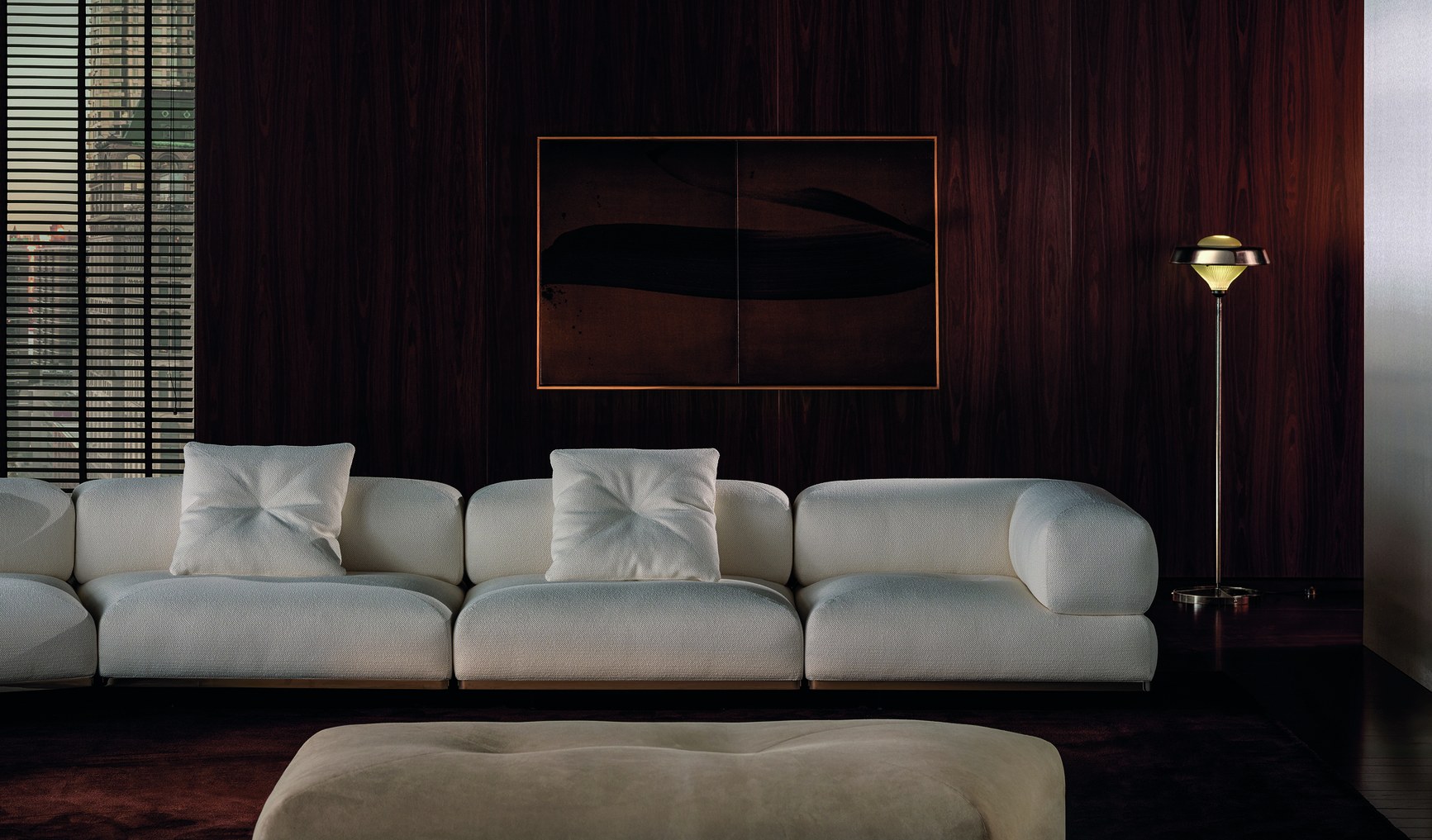
Comfort is now the starting point. Across the fair, there was a noticeable shift toward enveloping, unapologetic comfort, paired with a growing interest in contrast, where lacquered elements began to intersect with softer forms, introducing structure without diminishing warmth. This balance was resolved with particular clarity through the Julian sofa by Molteni&C, in which Vincent Van Duysen explored the relationship between generosity and control, allowing light to articulate the surface and reveal the depth of the material rather than flatten it.
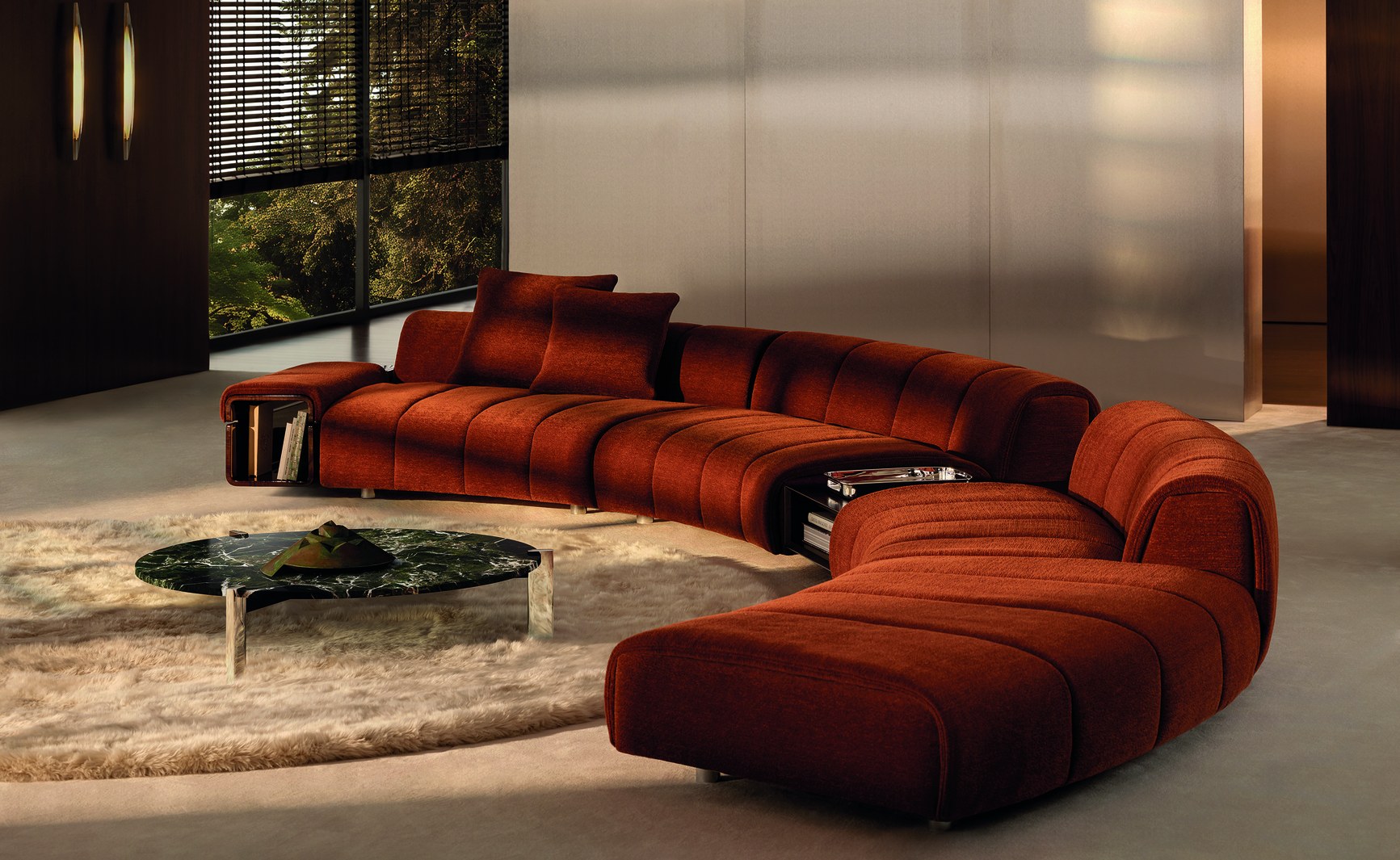
A more expansive interpretation of softness emerged through Minotti, where the Orion sofa by Giampiero Tagliaferri introduced a spatial composition of overlapping volumes that extends beyond traditional seating, while the Ruffle system by GamFratesi approached the same idea through a more tactile lens, wrapping the structure in continuous padded bands that emphasise both comfort and construction. In both, there is a clear intention to move beyond static furniture toward something more fluid, more responsive, and better aligned with how we actually occupy a room.
A lighter counterpoint appeared through Poliform, where Jean-Marie Massaud’s Attimo chaise longue reduced seating to a singular, fluid gesture, offering a sense of ease that sits comfortably alongside the more complex modular systems, while maintaining a clarity of form that feels instinctive rather than imposed.
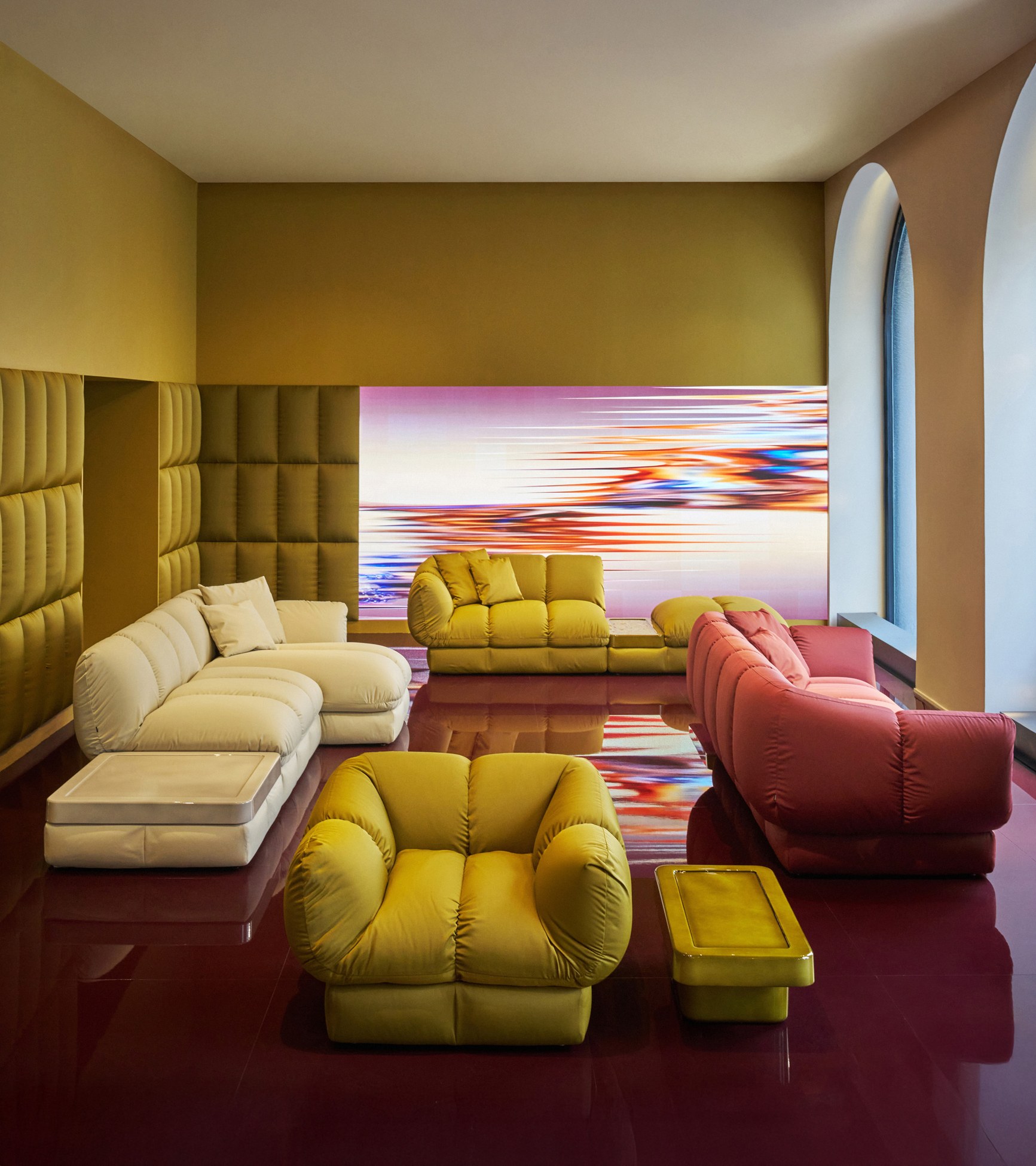
This language of softness extends naturally into the bedroom, where the distinction between spaces continues to dissolve, most notably through the Lanai bed by Poliform, designed by Yabu Pushelberg, which reimagines the sleeping area as a layered environment that accommodates rest, storage, and informal living within a single composition. A similarly assured approach could be observed at Cassina, where Patricia Urquiola’s Ardys sofa translated seamlessly into a broader conversation about volume and comfort, with its duvet-like softness and visible stitching reinforcing the idea that upholstery now carries both structural and visual weight.
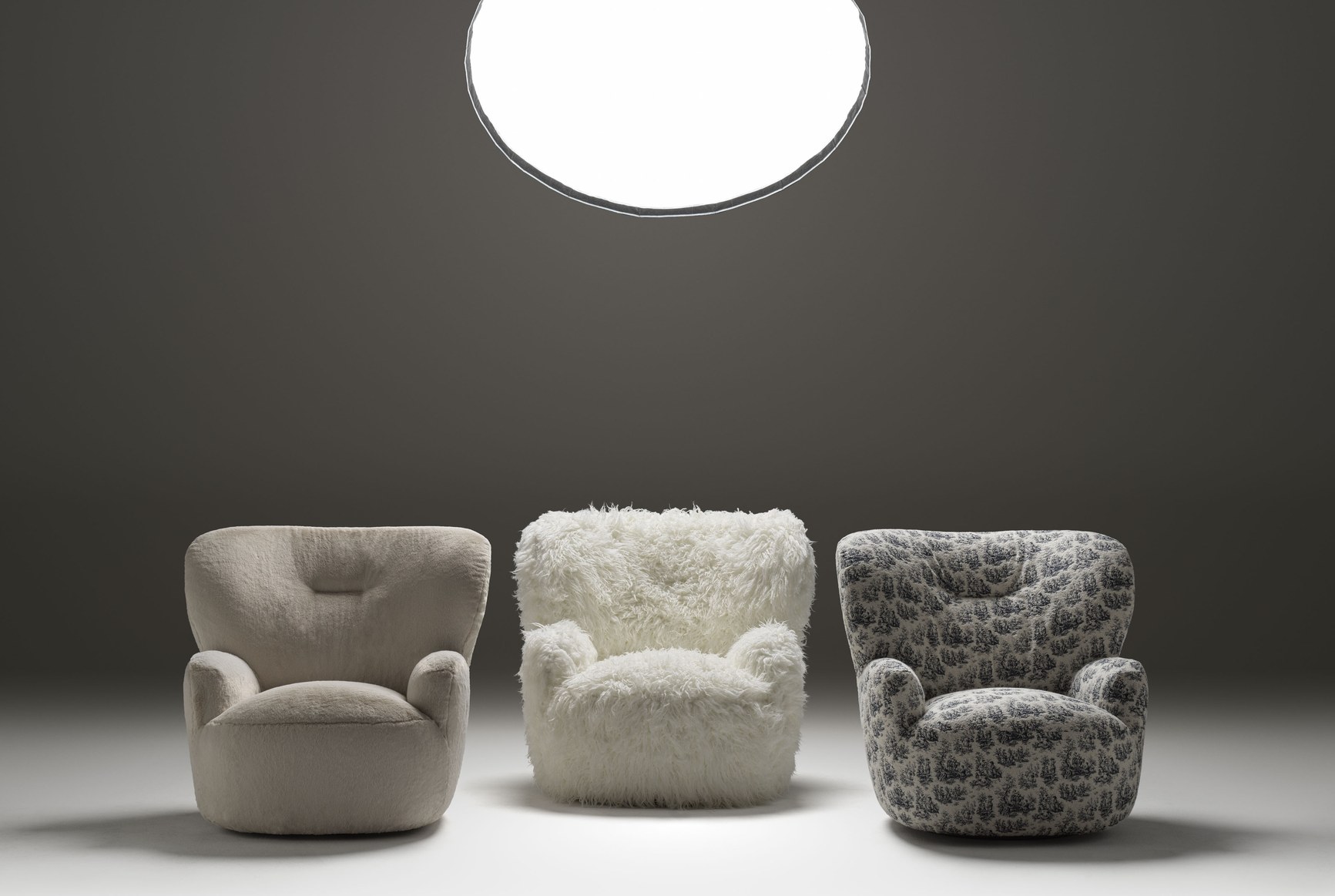
While at Gervasoni, Paola Navone approached the question from a material perspective, treating fabric as a means of reinterpretation, where the Loll armchairs and poufs shift character depending on their ‘outfit’, reinforcing the idea that upholstery has become an active, expressive layer rather than a passive finish.
Beyond the sofa, the chair revealed its own evolution, where the resurgence of the tubular frame felt less like nostalgia and more like a considered re-examination of a familiar material language, allowing designers to explore structure with both precision and personality. This was evident in the work of Flexform, where Antonio Citterio’s ‘Avalon’ combined structural honesty with a refined approach to comfort, while a reissued cantilevered design by Cassina, developed in collaboration with Karakter, revisited modernist principles with a subtle recalibration of proportion.
A more playful interpretation emerged through Lema, where Carlo Colombo’s ‘Graffetta’ armchair reduced the concept to a single, recognisable gesture, while the Lie Low bed by Poltrona Frau, designed by Faye Toogood, extended the conversation around organic form and material expression, suggesting that the frame itself has become a surface for design exploration rather than merely a support structure.